Biodiversity Heritage Library - Program news and collection highlights from BHL
  • Home
  • News
  • Featured Books
    • All Featured Books
    • Book of the Month Series
    • BHL at 20
  • User Stories
  • Campaigns
    • Fossil Stories
    • Garden Stories
    • Monsters Are Real
    • Page Frights
    • Her Natural History
    • Earth Optimism 2020
  • Tech Blog
  • Visit BHL
Home
News
Featured Books
    All Featured Books
    Book of the Month Series
    BHL at 20
User Stories
Campaigns
    Fossil Stories
    Garden Stories
    Monsters Are Real
    Page Frights
    Her Natural History
    Earth Optimism 2020
Tech Blog
Visit BHL
  • Home
  • News
  • Featured Books
    • All Featured Books
    • Book of the Month Series
    • BHL at 20
  • User Stories
  • Campaigns
    • Fossil Stories
    • Garden Stories
    • Monsters Are Real
    • Page Frights
    • Her Natural History
    • Earth Optimism 2020
  • Tech Blog
  • Visit BHL
Biodiversity Heritage Library - Program news and collection highlights from BHL
Blog Reel, Featured Books

Celebrating Mary Gunn and 100 Years of Library Excellence in South Africa

In 2013, BHL Africa officially launched with the mission to provide open access to the valuable biodiversity literature found within African libraries and institutions. Today, eleven institutions have signed the BHL Africa MOU and, thanks to support from the JRS Biodiversity Foundation, each is working to contribute content from their collections to BHL. The South African National Biodiversity Institute (SANBI), which has been a member of BHL Africa since its inception, leads the current JRS-funded work.

SANBI has two libraries: the Harry Molteno Library at the Kirstenbosch National Botanical Garden in Cape Town, and the Mary Gunn Library at the Pretoria National Botanical Garden. The mission of SANBI libraries is to meet the information needs of all SANBI staff and to address a public demand for comprehensive, easily accessible information on the biodiversity of southern Africa.

The Mary Gunn Library dates back to 1916 and will celebrate its centenary this year. Today, Ms Mary Gunn’s efforts are reflected in this library’s being one of the most important botanical and biodiversity resources in Africa. Subjects covered in the collection include taxonomy, biodiversity, climate change, global warming, morphology, plant anatomy, plant geography, ethnobotany, conservation ecology, history of botany, palaeobotany and plant exploration.

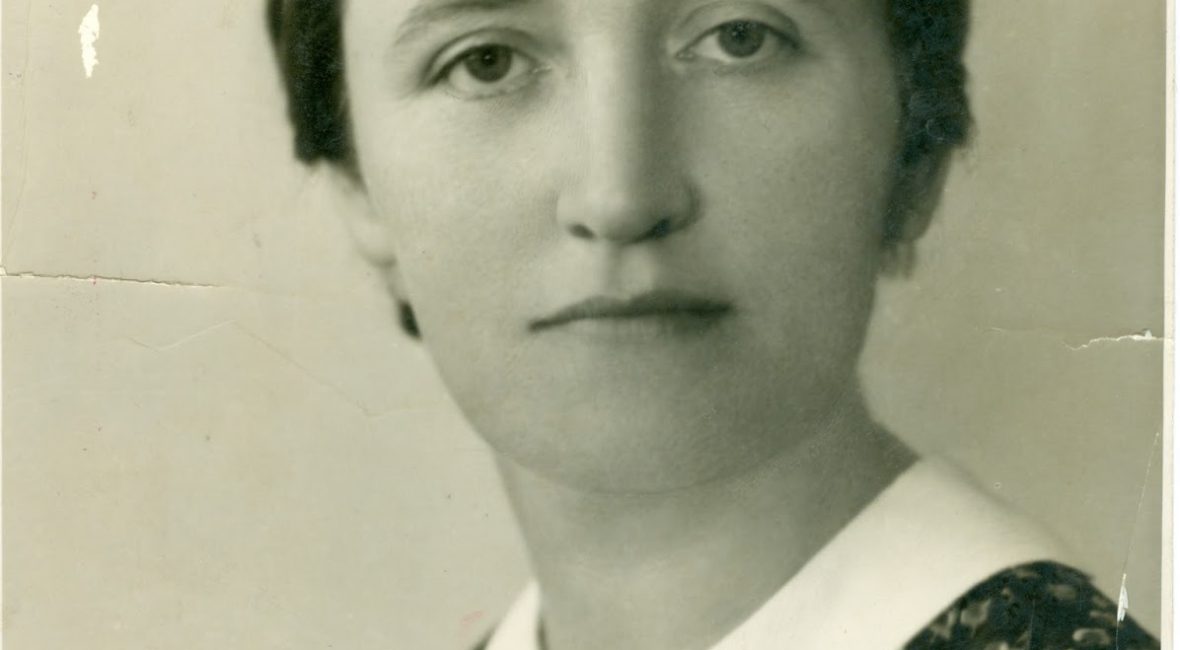
Mary Davidson Gunn (1899–1989) 

View Full Size Image
Mary Davidson Gunn. 1919-20.

Mary Davidson Gunn was born on 15 May 1899 in Kirriemuir, Scotland. Her father served in a Scottish regiment during the Anglo Boer War in South Africa and after the war, he decided to immigrate his family to South Africa. They settled in Pretoria where Ms Gunn attended the now defunct State Gymnasium. In September 1916, Ms Gunn was appointed as a clerk with ‘knowledge of typing’ in the Department of Agriculture’s Botany Division. She was not constantly busy and to keep herself occupied, she would dismantle and study the workings of her watch. Caught in the act by the chief of the division, Dr Pole Evans, she was tasked with the job of taking care of the books and building up a library. She approached her new responsibilities with great enthusiasm even though the few books did not even fill one shelf. Every night at home, she would describe each book she catalogued in detail to her father.

As Ms Gunn did not have a botanical background, she studied the catalogues of well-known antiquarian booksellers to establish which works were available and how she could purchase them. She became more and more interested in botanical literature and her knowledge developed rapidly. With enthusiasm and dedication she purchased relevant books and journals and even obtained a great number of publications as gifts – the basis of the current extensive antiquarian collection of the library. Her love for old botanical works became one of her main passions in life and made her one of the country’s most knowledgeable persons on rare botanical books and plant collectors of southern Africa.

Because of limited funds, various ways and means were devised to acquire treasures. She was very persuasive in getting rare and expensive books donated or sponsored to the library during her time as librarian. In her own words, ‘I frequently had to go hat-in-hand asking for money from influential people so that I can buy what I wanted!’ Her acquiring gifts, as well as purchasing and exchanging books and journals, populated Ms Gunn’s library until she had enough of a variety for the public. To this day, the global exchange programme remains one of the chief ways in which the Mary Gunn Library receives new journals.

View Full Size Image
Redouté, Pierre Joseph. Les liliacees. v. 1 (1805). http://biodiversitylibrary.org/page/287202. Image from the copy in BHL digitized by the Missouri Botanical Garden, Peter H. Raven Library.

The Mary Gunn Library houses a magnificent Rare Antiquarian Book Collection that includes publications such as the broadsheet edition of Pierre-Joseph Redouté’s Les Liliacées. Redouté published Les Liliacées from 1802–1816 and the institute’s copy is one of only 18 broadsheet editions published. Redouté himself finished the plates in this edition by hand. Ms Gunn bought this rare work in England and conveyed it to South Africa in General Jan Smuts’ personal luggage after attending the signing of the Versailles Treaty. Smuts was a good friend of Ms Gunn and introduced her to businessmen such as Myles Bourke, Charles Maggs and J.J. Kirkness who donated funds to the library for purchasing rare books.

Nikolas Joseph Jacquin published Stapeliarum in 1808. The book contains 64 colour plates of stapeliads grown in the botanic garden of the University of Vienna. In 1938, Ms Gunn spotted the book in a booksellers’ catalogue and, with donations, she managed to purchase this rare book. The library now also houses other rare works by Jacquin.

View Full Size Image
Bergius, Peter Jonas. Descriptiones plantarum ex Capite Bonae Spei. (1767). http://bibdigital.rjb.csic.es/ing/Libro.php?Libro=5028. Image from the copy in BHL digitized by the Biblioteca Digital del Real Jardin Botanico de Madrid.

One of the rarest and oldest works on the botany of the Cape of Good Hope is Descriptions plantarum ex Capite Bonae Spei (1767) by Peter Jonas Bergius, based in part on specimens collected at the Cape by the Swede, Mikael Grubb. It predates Linnaeus’s famous Mantissa Plantarum by one month. The library’s copy of this work was once owned by Prof. W.H. Harvey, the co-initiator of Flora Capensis. A handwritten note in the book explains that the book once belonged to a young botanist, George Forster, who, with his father, accompanied Captain Cook on his second voyage around the world with this very book.

View Full Size Image
Xylotheque (wooden) book set by C.H. Wehdemann.

The unique 52 xylotheque (wooden) book set by C.H. Wehdemann is the only South African example ever made. Wehdemann came to the Cape Colony in the early 1800s as part of the army of the Dutch East India Company. After his dismissal in 1806, he moved to the Eastern Cape settling on a farm near Somerset East where he died in 1836. Each wooden book represents an indigenous tree. At the top of the book is a slide which gives you access to the inside of the book. Inside is a short description of the tree, some illustrations and a small cane tube with seeds inside. Of the original set of 60, the Mary Gunn Library has the remaining 52 books.

View Full Size Image
Selection from the Xylotheque (wooden) book set by C.H. Wehdemann held in The Mary Gunn Library.

Other treasures in the library:

  • J.C. Commelin: Horti medici Amstelodamensis rariorum tam orientalis, qum occidentalis Indiae, aliaumque Peregrinarum plantarum; descriptio et icones. (colour copy, BHL has the black and white) •
  • E. Sweert: Florilegium Amplissimum et Selectissimum.
  • Curtis’s Botanical Magazine.
  • C.J. Trew: Plantae Selectae, with illustrations by Georg Dionysius Egret.
  • C.-L. L’Hèritier de Brutelle: Geraniologia, seu Erodii, Pelargonii, Geranii, Monsoniae et Grieli historia icanibus illustrata.
  • H. Andrews: The botanist’s repository, for new and rare plants.
  • C.W.L. Pappe: Florae capensis medicae prodromus: or, An enumeration of South African indigenous plants, used as remedies by the colonists of the Cape of Good Hope.
  • W.H. Harvey: The genera of South African plants: arranged according to the natural system (1st Ed.). This book is considered to be the first scientific book published in South Africa. The library’s copy contains handwritten notes by the author. (BHL has the 2nd Ed.)

Dr Pole Evans’ continuous queries about botanical explorers led Ms Gunn to her second passion, namely biographical research of early botanists and plant collectors. Information on Thunberg, Burchell, Masson, Ecklon, Drège and more were collected from all corners of the world. In 1981 the major part of this information was used to publish Botanical exploration of southern Africa: an illustrated history of early botanical literature on the Cape flora. This work, produced in collaboration with Dr Leslie Codd, was the culmination of more than 60 years of research. In 2010 the work was revised and published as part of SANBI’s Strelitzia series.

Ms Gunn possessed charm, coupled with a sharp wit, a sense of humour, steely determination and a high regard for those she felt warranted respect. After her official retirement in 1954, she continued working at the institute until 1973. In honour of Ms Gunn’s devotion to botanical literature for 60 years of her life, the National Herbarium Library was renamed the Mary Gunn Library in 1969.

View Full Size Image
The official opening of the Mary Gunn Library, 15th January 1970. From left to right: Dr. B de Winter, Deputy Director, Botanical Research Institute; Dr JW Geyer, Chief Director of Research, Department of Agriculture; Ms Gunn and Dr. LE Codd, Director, Botanical Research Institute.

Through their participation in BHL Africa, SANBI will work to digitize the treasures in the Mary Gunn Library and make them openly, globally, and freely available in BHL. In the meantime, you can view many of the books mentioned in this post in the BHL collection thanks to contributions from several of our other partner libraries.

We are excited to see the continued growth of BHL and its collections thanks to the dedicated efforts of our partners around the world. We have a feeling that Ms Gunn would heartily concur.

View Full Size Image
Ms Gunn in her later years.

References 

  1. Fourie, D. Obituary of Mary Davidson Gunn. Bothalia 20, 1: 127-130 1990.
  2. Fourie, D. The history of the Botanical Research Institute 1903-1989. Bothalia 28, 2 1998.
  3. Glen, H.F. Botanical Exploration of Southern Africa: An illustrated history of early botanical literature on the Cape Flora, Biographical accounts of the leading plant collectors and their activities in southern Africa form the days of the East India Company until the modern times. 2nd ed. Pretoria: SANBI, 2010.
  4. Gunn, M. and Codd, L. Botanical exploration of southern Africa: an illustrated history of early botanical literature on the Cape flora. Cape Town: Balkema, 1981.
  5. Killick, D.J.B. The Mary Gunn Library. 1992. Pamphlet.
January 28, 2016by ulib-libraryjobs
BHL News, Blog Reel

Happy New In-Copyright Materials!

Welcome to 2016 and BHL’s latest batch of in-copyright content! We have 8 new titles to add to the list since our last post.

Over the course of 2015, BHL secured the following:

View Full Size Image


Where possible, BHL acquires permission in the form of a signed license agreement from copyright holders to digitize post-1922 publications. These publications are available for open access under a Creative Commons Attribution-NonCommercial-ShareAlike 4.0 (CC BY-NC-SA 4.0) license. Users are welcome to reuse the in-copyright content in BHL so long as they adhere to the terms of the CC license, meaning:

  • you attribute the content to the copyright holder
  • use the content for non-commercial purposes such as educational or personal use
  • share the content under the same license (CC-BY-NC-SA 4.0)
 
This time around we have contributions from South Africa, United States, Scotland, Italy and England:
Special thanks to our Affiliate partners with BHL Africa from the South African National Biodiversity Institute (SANBI) who are contributing 3 new titles to the BHL collection. 
View Full Size Image

  1. Bothalia (1918 to present) – named after General Botha, South Africa’s first Union Premier and Minister of Agriculture, the journal continues to this day as a principal publication about South Africa’s flora and fauna. Most recently, it is expanding in scope to include more information about African biodiversity and conservation topics.
  2. “Atlas and red list of the reptiles of South Africa, Lesotho and Swaziland” (2014)
  3. Flora of Southern Africa (1963 to present)
View Full Size ImageSmithsonian Institution Scholarly Press has contributed “Watershed Research Perspectives” (1986) edited by David L. Correll. This publication is a collection of papers resulting from a 1985 watershed research workshop held at the Smithsonian’s Environmental Research Center.
The earliest issues of the newsletter Nemophila, published by the California Botanical Society, are now in BHL from 1919 to 1927. CBS is better known for its premier publication, Madroño which is also in BHL. We are very pleased to support the digital archives of this 103 year old society who support the scientific research initiatives and community outreach for Western American botany.

The quarterly magazine and journal for members of the Scottish Ornithologists’ Club, Scottish Bird News, will be in BHL soon. The following graphic summarizes nicely the importance of the SOC for Scotland’s bird enthusiasts and researchers alike. For now, selected back files are available via the organization’s website. 
View Full Size Image

Dating back to the 1870s, Italy’s foremost organization dedicated to malacological research, the Società Italiana di Malacologia (SIM), has generously contributed later volumes of its Bollettino Malacologico (1979 to present, with 3 yr embargo) to the BHL collection. Its earliest volumes actually preceded the formalization of the society and are available in BHL as the Bullettino malacologico italiano. Stay tuned for the later volumes to come.

Now in their 155th year, the Yorkshire Naturalists’ Union “is devoted to studying and recording Yorkshire’s flora and fauna…as an association of amateur and professional naturalists covering a wide range of aspects of natural history.” BHL will soon include later volumes of their triannual publication The Naturalist in our online collection. You can see its earliest volumes in BHL from 1864.
Digitization is in progress for these titles and you can see them appearing via our recent additions list.

Want to see more in-copyright content in BHL? Let us know what you’d like to see!
January 20, 2016by [email protected]
BHL News, Blog Reel

BHL in Africa! Workshop & TDWG

Portrait version of the Biodiversity Heritage Library logo.

An international ensemble of biodiversity-minded professionals recently gathered in Nairobi, Kenya for two weeks of trainings and conferences. From 24-26 September, 2015, fifteen representatives from eleven institutions throughout South Africa, Kenya, and Uganda attended a BHL Africa training workshop at the National Museums of Kenya. Following the workshop, 28 September – 1 October, 2015, the TDWG Annual Conference was held at the Windsor Golf Hotel and Country Club in Nairobi.

The BHL Africa Workshop was an opportunity to provide training and help build capacity amongst the current signatories of the BHL Africa MOU. The workshop was funded as part of the 2015 JRS Biodiversity Foundation grant, awarded to the South African National Biodiversity Institute (SANBI), to facilitate the growth of BHL Africa.

“This workshop is yet another example of the exciting strides the BHL Africa libraries are making towards digitizing and providing open access to their unique and important collections,” said Robert Guralnick of the Board of Trustees, JRS Biodiversity Foundation.

View Full Size Image
Attendees at the BHL Africa Workshop at the National Museums of Kenya in Nairobi.

Representatives from the National Museums of Kenya, the University of Nairobi, the International Centre of Insect Physiology and Ecology, the African Conservation Centre, the Kenya Wildlife Service, the Uganda National Council for Science and Technology, The Uganda Society, the National Library of Uganda, the South African National Aquatic Biodiversity Institute, the South African National Biodiversity Institute, and the University of Pretoria attended the workshop. Training was provided by four BHL representatives from the U.S., including BHL’s Program Director, Martin Kalfatovic, Program Manager, Carolyn Sheffield, Outreach and Communication Manager, Grace Costantino, and Smithsonian Digital Collections Librarian, Jacqueline Chapman.

Trainings included an overview of the structure and governance of BHL; demoes of the BHL website and administrative functions; in-depth discussions about BHL collection scope, development, digitization and curation workflows, and metadata requirements; guidance on copyright and permissions issues; methods for communication and outreach collaboration; and intensive hands-on training for several BHL tools, including the issue tracking system Gemini and the digitization workflow tool Macaw.

View Full Size Image
BHL Africa workshop attendees enjoying the beautiful grounds at the National Museums of Kenya during a lunch break.

Chief among the discussion topics was a focus on building capacity within Africa and amongst current and future participating institutions. The goal of the workshop was to not only train attendees on the many aspects of BHL participation and workflows, but to ensure that attendees could return to their own institutions and provide training to their colleagues. There was also extensive discussion on the various ways that participants could share digitization equipment amongst institutions, ensuring efficiency and a responsible use of funds.

Following the workshop, Martin Kalfatovic, Anne-Lise Fourie (Head of BHL Africa and Assistant Director of SANBI Libraries), Carolyn Sheffield, and Jacqueline Chapman continued on to the TDWG 2015 conference where they were joined by BHL Technical Director William Ulate and the Vice Chair of the Global BHL Executive Committee, Dr. Jiri Frank.  On 1 October, BHL hosted a Symposium that provided updates on the BHL consortium in general; BHL Africa’s JRS-funded capacity-building initiatives; BHL workshops; BHL projects; and a special guest, Prabhakar Rajagopal, who presented on the participation in the India Biodiversity Portal.  The session was well-attended with 137 conference attendees in the audience.

We are excited to see such wonderful progress from our colleagues in Africa, and look forward to the growth of BHL Africa content in and contributions to BHL.

October 7, 2015by michelle.underhill
BHL News, Blog Reel

Empowering Access to Biodiversity Information in Africa

View Full Size Image

Almost two years ago, BHL Africa officially launched during a three-day workshop hosted by the South African National Biodiversity Institute (SANBI) at the Pretoria National Botanical Garden in Pretoria, South Africa. In the subsequent two years, BHLA has begun digitization at some participating institutions and has drafted a governance framework for the node. Recent developments, including a grant from the JRS Biodiversity Foundation and a new status within the global BHL community, have brought our colleagues significantly closer to achieving their vision of global access to biodiversity resources in sub-Saharan African institutions.

On January 30, 2015, the JRS Biodiversity Foundation, which is committed to enhancing the understanding of biological diversity for the benefit and sustainability of life on earth, announced an award of $150,000 to facilitate the growth of BHL Africa. JRS’ support of BHL Africa began in 2011 with a sponsorship for African attendance at the BHL Life and Literature Conference in Chicago, IL, followed by additional support for the launch ceremony and corresponding workshop in April, 2013.

View Full Size Image
Group photo at the BHL Africa launch ceremony. Pretoria, South Africa. April, 2013.

Awarded to SANBI, this new grant will grow BHLA through assessment, collaboration, and digitization, resulting in a wealth of collections unique to African institutions being added to BHL. This new JRS support will allow BHLA to:

  • Conduct outreach to expand active BHLA participation through engagement with current members and recruitment of new participants
  • Improve communications and host workshops and trainings for 13 BHLA member institutions
  • Analyze the existing capacity for participation and content aggregation
  • Stabilize the governance of the organization and infrastructure through sustainability planning

In order to accomplish these objectives, Anne-Lise Fourie, Assistant Director of SANBI Libraries, Chair of BHLA and PI on the JRS Africa project, plans to survey current members and potential partners and conduct site visits to Kenya and Uganda to establish capacities and collection profiles. This information will help inform future trainings regarding identification of unique content for inclusion in BHL and the selection of digitization service providers.

Learn more about the project, planned outputs, and project staff on the BHL Africa web page on the JRS website.

We are also pleased to announce that BHL Africa has joined BHL as an Affiliate, following the example of BHL Singapore and BHL Mexico, which participate in BHL both as autonomous regional nodes and Members of the BHL. As an Affiliate, BHLA may participate in BHL committees, task forces, and working groups and will collaborate more extensively within the global BHL community. See a list of current BHL Members and Affiliates here.

We are thrilled at BHL Africa’s progress and look forward to witnessing the continued growth of the project.

Contributions from BHL Africa


View Full Size Image
Important Birds Areas in Kenya. Contributed by Nature Kenya, East Africa Natural History Society for BHL Africa. http://biodiversitylibrary.org/bibliography/87589.

Current BHL Africa partner contributions to the BHL Collection include:

  • Publications from the South African National Biodiversity Institute
  • Articles and Publications from Nature Kenya, East Africa Natural History Society
  • The South African Institute for Aquatic Biodiversity’s “Ichthyological Papers of J.L.B. Smith 1931-1943”
February 11, 2015by ulib-libraryjobs

Help Support BHL

BHL's existence depends on the financial support of its patrons. Help us keep this free resource alive!

search

About BHL

The Biodiversity Heritage Library (BHL) is the world’s largest open access digital library for biodiversity literature and archives. BHL operates as a worldwide consortium of natural history, botanical, research, and national libraries working together to digitize the natural history literature held in their collections and make it freely available for open access as part of a global “biodiversity community.”

Follow BHL

  • Bluesky logo
  • Instagram logo
  • Facebook logo
  • Flickr logo
  • Twitter logo

Join Our Mailing List

Sign up to receive the latest news, content highlights, and promotions.

Subscribe Now

Subscribe to Blog via Email

Enter your email address to subscribe to this blog and receive notifications of new posts by email.

Join 319 other subscribers

Subscribe to Blog Via RSS

Subscribe to the blog RSS feed to stay up-to-date on all the latest BHL posts.

Access RSS Feed


64+ Million Pages of
Biodiversity Literature Online.

EXPLORE

Tools and Services
to Transform Research.

EXPLORE

300,000+
Illustrations on Flickr.

EXPLORE

ABOUT | HARMFUL CONTENT | PRIVACY | SITE MAP | TERMS OF USE