Biodiversity Heritage Library - Program news and collection highlights from BHL
  • Home
  • News
  • Featured Books
    • All Featured Books
    • Book of the Month Series
    • BHL at 20
  • User Stories
  • Campaigns
    • Fossil Stories
    • Garden Stories
    • Monsters Are Real
    • Page Frights
    • Her Natural History
    • Earth Optimism 2020
  • Tech Blog
  • Visit BHL
Home
News
Featured Books
    All Featured Books
    Book of the Month Series
    BHL at 20
User Stories
Campaigns
    Fossil Stories
    Garden Stories
    Monsters Are Real
    Page Frights
    Her Natural History
    Earth Optimism 2020
Tech Blog
Visit BHL
  • Home
  • News
  • Featured Books
    • All Featured Books
    • Book of the Month Series
    • BHL at 20
  • User Stories
  • Campaigns
    • Fossil Stories
    • Garden Stories
    • Monsters Are Real
    • Page Frights
    • Her Natural History
    • Earth Optimism 2020
  • Tech Blog
  • Visit BHL
Biodiversity Heritage Library - Program news and collection highlights from BHL
BHL News, Blog Reel, Tech Updates

New Article Download Features

We first launched our article download functionality back in January of 2009, giving users the ability to create their own PDF of selected pages from an item in BHL. Since that time, over 79,000 articles have been created by our users. That’s an average of 80 articles created each day (thanks WolframAlpha.com)! Clearly the ability to create your own PDF of selected pages, rather than download the entire book or volume, is a useful service; something we have been working on to make improvements whenever possible.

Today we are releasing new features that will make it easier for you to create your own articles:

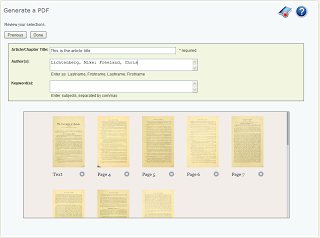
  1. We’ve simplified the start page for the PDF Generator to make the process more efficient.
  2. We’ve added a Yes/No option, asking if users are interested in contributing the content they are creating to BHL’s citation repository, CiteBank http://www.citebank.org. CiteBank is a domain-specific repository of citations and content files about biodiversity. It evolved out of a need to access content from the BHL at a more granular level. CiteBank is a work in progress and continues to develop its collection and services. By contributing title, author and subject data to the PDF you are creating, you will allow other users to gain access to this content through CiteBank.
  3. Selecting “Yes” will allow you to enter the title, author and/or keyword data we need to index the content in our citation repository. Selecting “No” will skip over this step, eliminating any opportunity for other users to benefit from the content you’ve already taken the time to create (please say Yes!).
  4. Drawing from the functionality provided by our colleagues on the BHL-Australia web site, http://bhl.ala.org.au, we have added the ability for you to review your page selections before you generate your PDF. You will also have the opportunity to review the title, author and/or keyword data you’ve provided and make any necessary corrections/edits.

View Full Size Image

We surveyed some of our most active PDF creators and received positive feedback about these changes and many good ideas about changes that could be made for the future. As always, we welcome input from our users, especially regarding the changes we make in an effort to improve BHL functionality and services. If you have any questions/comments, please do not hesitate to send us your feedback or comment directly to this post.

September 29, 2011by [email protected]
Blog Reel, User Stories

BHL and Our Users: Megan Raby and the History of Biology

View Full Size ImageTaking a break from our miniseries of the past few months, featuring EOL Rubenstein fellows, this week we feature Megan Raby, who uses BHL to support her research involving the history of biology.

What is your title, institutional affiliation (or alternative place of employment), and area of interest?

I am a dissertator in the History of Science at the University of Wisconsin-Madison. My dissertation focuses on the history of American involvement in tropical biology in the Caribbean in the early twentieth century. I’m interested in the intersection of the history of biology and environmental history, and the role of science in the changing relationships between the US and the rest of the world.

How long have you been in your field of study?

I began to get interested in graduate work in the history of science while finishing my BS in Earth Sciences at Montana State University. That would make it about 7 years.

When did you first discover BHL?

I’m not quite sure when I first stumbled upon the site, but certainly over the past 4 years I have begun to use it more consciously.

What is your opinion of BHL and how has it impacted your research?

It has been incredibly helpful. While we have a wonderful library system here at UW, there are times when I just need a quick look at a relatively obscure volume. Checking it online rather than running over to a library or having to ILL saves me a lot of time. Actually though, I have found it most useful to be able to search within texts, in conjunction with the physical book. For example, I went through many decades of the Annual Reports of the Smithsonian Institution while holed up in the Wisconsin Historical Society stacks, but I searched with BHL alongside. It’s easier and faster to read the physical copy, and flip between text and contents when you are sure the information you are looking for is in there. But searching the text electronically can help you find references that are not expected from the contents or index. I’ll also mention that I found a couple scanning errors while going through the Smithsonian annual reports, and BHL fixed them immediately. It was amazing. One point I want to make is that BHL doesn’t replace the original books­­––but it does make them easier to find and use. I really see physical libraries and BHL as complementary tools.

How often do you use BHL?

Depending on what phase of research I am in, it could be from a few times a month to a few times a day.

How do you usually use BHL (read the titles online/download whole PDFs/Selecting Pages to Download/etc.)

I usually download whole PDFs, because it is easier to search within the whole text, and take notes, this way. If I am looking for a particular piece of information, or just skimming to see if a text might be useful, then I read online. I have sometimes made custom PDFs for articles within larger volumes.

What are your favorite features/services on BHL?

I am just glad that so many of the kinds of texts I need are accessible there, from expedition reports and regional floras, to the bulletins of various botanical gardens and museums. I am happy that they can be downloaded as PDFs which makes reading, searching, and note-taking very easy. I also like the links to BHL from http://plants.jstor.org.

If you could change one thing about BHL, what would it be, or what developmental aspect would you like the BHL team to focus on next?

First, it would be amazing to be able to search in-text across multiple volumes. As it is, I either come to BHL looking for a particular text or else happen upon one through a Google search. Subject terms and titles are useful, but sometimes I am looking for very brief references within the text that would not show up in a subject term. Being able to search across the texts in BHL would help me find surprising and unexpected references. Second, it is currently a bit difficult to find articles within larger volumes unless you already know where they are. You can go through each volume of the Bulletin of the New York Botanical Garden individually and search, but you can’t see or search the titles or authors of articles within volumes using advanced search. Finally, tools similar to Google Ngrams or JSTOR Data For Research would allow you to take advantage of the texts in aggregate. I would love to be able to graph references to tropical organisms, or to terms related to ideas about tropical “biodiversity,” over time using the BHL sources.

If you had to choose one title/item in BHL that has most impacted your research, or one item that you prefer above any other in BHL, what would it be and why?

That’s a tough one. Probably the Smithsonian annual reports have been the most useful, as they helped me get a solid chronology for one part of my dissertation when I was just starting. But I will mention another “neat” source I used in the chapter I just wrote: Living Plants and Their Properties: A Collection of Essays, edited by Joseph Charles Arthur and Daniel T. MacDougal, 1898. In it, I was able to find a reprint of a talk, “Mimosa: A Typical Sensitive Plant,” that MacDougal, an American botanist, gave to a Jamaican natural history society while in the colony looking for a potential site to establish an American tropical research station. I had not known at the time that a copy of that talk was available in print, and it gave me evidence about why MacDougal thought more research needed to be done on living tropical plants in their own environments, as well as how he interacted with scientists in Jamaica. Also, the book includes some articles in which J. C. Arthur muses about whether plants can feel pain­­––but that will have to wait for another research project!

Thanks, Megan, for giving us a glimpse into your work and the role BHL plays in your research! You may be interested in some of the work Roderic Page has been doing graphing the occurrence of names in literature over time using BHL or Ryan Schenk’s work visualizing taxonomic synonyms over time, as you mentioned that you would love to “graph references to tropical organisms, or to terms related to ideas about tropical “biodiversity,” over time using the BHL sources.” Additionally, the Code Challenge for the Life and Literature Conference that BHL is hosting (Nov. 14-15, Chicago, IL), which encourages individuals to submit applications that provide new or interesting ways to use or display BHL data, might yield further innovative, graphical interactions with our information. Until then, we hope that BHL continues to meet your research needs as we also continue to develop and improve our services!

September 27, 2011by Grace Costantino
Blog Reel, Featured Books

Book of the Week: Birds and Their Nests

View Full Size Image

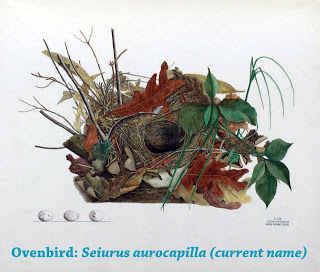
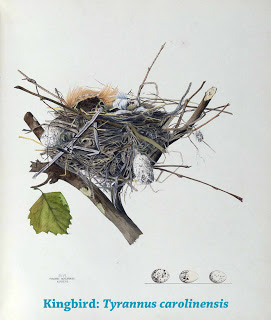
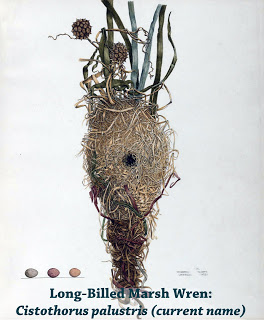
Have you ever been out and about, enjoying the beauty of nature, looked up in a tree, noticed a bird’s nest, and wondered what species of bird made the nest? If so, and if you happen to live in Ohio, or somewhere close to it, we’ve got the book for you: Illustrations of the Nests and Eggs of Birds of Ohio (1886), v.1–2, text by Howard Jones and illustrations by a variety of artists, including Miss Genevieve Estelle Jones, Miss Eliza J. Schulze, Mrs. N. E. Jones, Miss Nellie D. Jacob, Miss Josephine Klippart and Miss Kate Gephart. What really struck us about this book was the charming nature of the illustrations. And after reading the preface, it became quite clear that obtaining these illustrations for the work was no easy task.

View Full Size Image

In 1877, Genevieve Jones decided to create a series of plates for a publication depicting the nests and eggs of Ohio birds. She enlisted the help of close friend Eliza Schulze, and together the two women, amateur artists but having no formal training, embarked on the

venture. To make matters more complicated, the plates themselves needed to be completed as lithographs so that they could be printed for mass production – a method that neither lady was familiar with. However, after many months of practice, Miss Jones and Miss Schulze produced plates 1-3, and these, along with the accompanying text by Howard Jones, were sent to publication in 1879. Favorably received, the ladies continued their partnership.

Unfortunately, on August 17th, 1879, Genevieve Jones died of typhoid fever. Desiring to continue the work, Miss Schulze enlisted the help of Genevieve’s mother, Mrs. N. E. Jones. Eventually, Miss Schulze relinquished all of her interests in the title to Mrs. Jones. Determined to move forward, Mrs. Jones undertook the responsibility for all of the illustrations herself, eventually employing three additional artists, Miss Nellie D. Jacob, Miss Josephine Klippart, and Miss Kate Gephart. Despite all the hardships encountered over the life of this publication, the authors and artists were thankful and proud of the work, remarking,

View Full Size Image

“Aside from the entertainment and instruction accompanying the study of birds in their homes, and the delineation of their various styles of architecture, it has been a great pleasure to us to continue to completion an undertaking so unfortunately interrupted at almost its very beginning. It has also been a satisfaction to us to know that, however poor our efforts, we were breaking new ground in a field, which, with the cultivation of time, will yield a rich and beautiful harvest.”

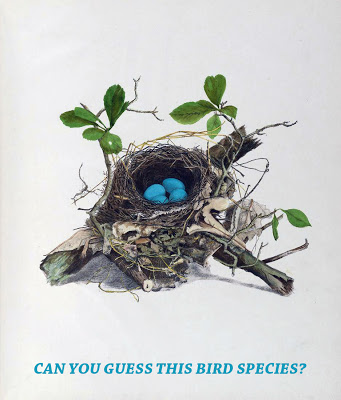
For our post, we’re featuring a few of the nest illustrations found in this title, identifying them for the bird species to which they correlate. However, we’ll leave the last picture unidentified. Can you tell which bird species made the nest below (of course, you could always just check in the book, but where’s the fun in that)? Let us know what species you think it is via Twitter (@BioDivLibrary), Facebook, or by leaving a comment on this blog. To see all of the images from this title, visit the set in Flickr: v. 1 and v. 2.

View Full Size Image

September 22, 2011by michelle.underhill
BHL News, Blog Reel

Another Way for You to Help BHL: Make a Donation

View Full Size Image
Funding for the Biodiversity Heritage Library (BHL) comes from a number of sources. Over the past few years, we have been reliant on the generous support of a number of different foundations, directly or through grants to individual BHL members. These foundations include the MacArthur Foundation, the Moore Foundation, the Lounsberry Foundation, the Mellon Foundation, and the Keck Foundation. A number of the BHL members have also received grants from the United States government, the Institute of Museum and Library Services, and the National Science Foundation.

2011 marked the fourth year since the BHL portal officially went live, and in that time we’ve made great strides, just recently reaching 35 million scanned pages. Scientists all over the world use the library to identify and classify new species. The student in her backyard, the forestry manager and ecologist, the museum habitat builder, the artist and the designer – whether the need is for a scientific description of a spider or a beautifully illustrated drawing of an amaryllis, all can benefit from being able to search the biodiversity literature.

As part of the initial redesign of the BHL site, we are now offering the ability for individuals to support the BHL. These transactions are processed through the Smithsonian Institution Libraries’ (SIL) financial system. The SIL hosts the BHL Secretariat and program staff. The Smithsonian Institution is a tax-exempt organization and gifts are tax deductible.

Click on the button on any BHL page (or click here now!) to add your donation to your shopping cart. You can donate preset amounts, or, using the “other” option, a custom amount of your choice.

It is our mission to provide free and open access to biodiversity literature for the long term. With demonstrated support from our users, both in terms of financial contributions and praise, we can continue to seek funding from major foundations, government bodies, BHL member libraries, and private donors. Donations from our users, no matter how small, go a long way in showing how important the BHL is to your work. We thank you, in advance, for considering a donation in support of the Biodiversity Heritage Library.
September 20, 2011by joelrichard
Blog Reel

Book of the Week: The Memory of a Museum Dissolved but Not Forgotten

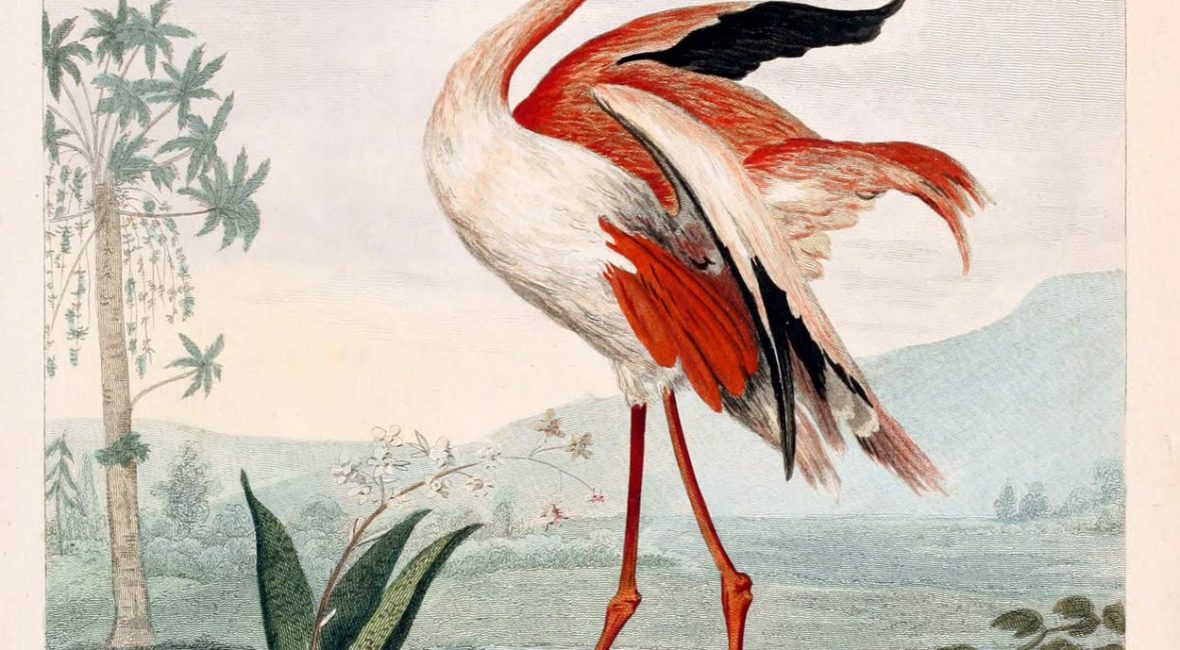
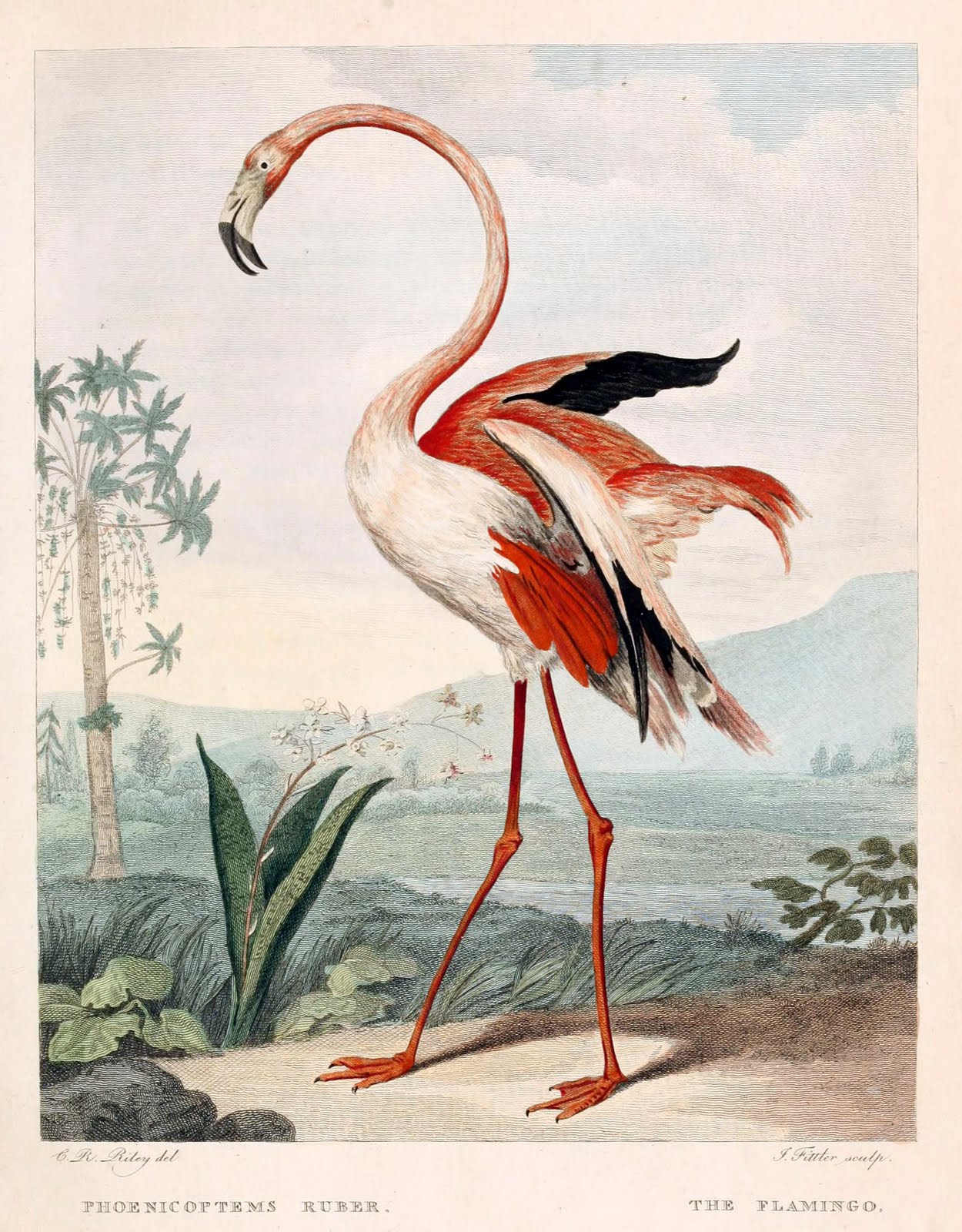
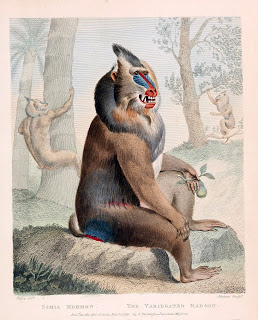
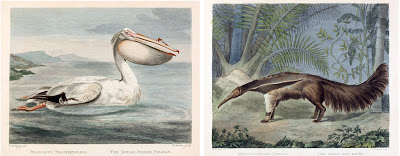
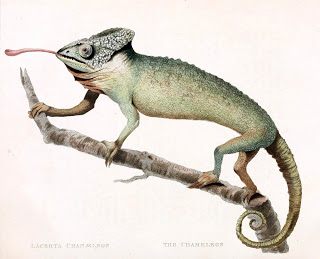
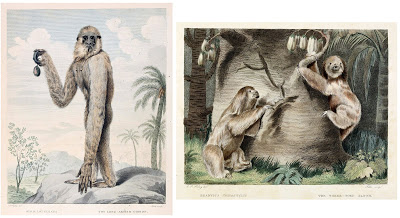
View Full Size Image of this FlamingoWhen Musei Leveriani Explicatio, Anblica et Latina (1792-96), by George Shaw, went up for auction at Christie’s Auction House in April of 2008 it was described as “one of the most comprehensive natural history collections of the eighteenth century.” It sold for $3,926 USD. The work documents the specimens found in Sir Ashton Lever’s museum (the Museum Leverianum), which was originally housed in his home at Alkrington Hall. The book contains 72 hand-colored engraved plates after, among others, Charles Reuben Ryley, Sarah Stone, and Philip Reinagle. With such a claim as “most comprehensive natural history collection,” we had to check it out, and the quality of the illustrations blew us away. So: Voila! Here you have our book of the week!

As stated, Sir Ashton’s museum, which comprised approximately 28,000 items, was originally housed in his home. However, hoping to make the museum self-financing, Lever moved the collection to Leicester House in London in 1774, opening it to the public in 1775 with an admission fee of half a guinea. The museum was popular but not as financially successful as Lever had hoped. In 1784, he was forced to sell the collection, which had been valued at £53,000. He did so by public lottery. 8,000 tickets, priced at 1 guinea each, were sold. James Parkinson won the collection with a ticket purchased by his late wife. Parkinson successfully ran the museum until May of 1806, when, despite the continued popularity of the museum, he was also forced to sell the collection by piece at an auction lasting 65 days.

View Full Size Image of this Baboon

While the two volumes of this work on BHL contain dozens of gorgeous illustrations (all of which you can browse at your leisure on Flickr!), we’ve selected just a few of our favorites to feature here. Sir Ashton and Mr. Parkinson would have been proud that, though the museum itself did not endure, a record of the enchanting and impressive specimens contained within it has lasted these 200+ years. And now, thanks to BHL and the modern digital era, you don’t have to spend $4,000 at auction to enjoy the marvels that one composed the Museum Leverianum! All you need is a computer and Internet connection!

View Full Size Image of these Birds

View Full Size Image of this ChameleonView Full Size Image of these Monkeys
Musei Leveriani Explicatio, Anblica et Latina (1792-96), by George Shaw, was contributed by the Smithsonian Institution Libraries. See the images from this book on Flickr!

September 15, 2011by michelle.underhill
Blog Reel, User Stories

BHL and Our Users: EOL Rubenstein Fellow, Dr. John Sullivan

Portrait version of the Biodiversity Heritage Library logo.

View Full Size Image

Today, we continue with our mini-series featuring EOL Rubenstein Fellows and their research activities. For this installment, meet Dr. John Sullivan, a passionate ichthyologist dedicated to discovering and describing fish species all over the world, but particularly in Africa.

What are your research interests, where you do the bulk of your work (country), and what is your institutional affiliation?

I am an evolutionary biologist who studies the phylogenetic interrelationships and evolution of freshwater fishes. I focus on two groups in particular: weakly electric fishes (Mormyridae and Gymnotiformes) which are found in Africa and South America, respectively, and catfishes (Siluriformes), which are distributed pretty much all over the world. In addition to using molecular techniques to work out phylogenies for these fishes, I describe species and work on the taxonomy of all three groups. My most recent collecting field trips have been to Ethiopia, the Democratic Republic of Congo, and Gabon. I am affiliated with two institutions, the Academy of Natural Sciences in Philadelphia, where I am a Research Associate, and the Cornell University Museum of Vertebrates in Ithaca, New York, where I am a Curatorial Affiliate. I live with my wife in Ithaca.

In the program, Fellowships are expected to serve as a complementary funding source to existing funding you have that supports your primary research activities. Please describe what you primary research activities are.

I used the Rubenstein Fellowship to supplement a nine-month Fulbright Research Fellowship in the Democratic Republic of the Congo. My Fulbright work was to make an inventory of fish species found in the vicinity of Kisangani, a city on the Congo River at the base of the Upper Congo rapids and to help build capacity at the University of Kisangani in ichthyology. As a Rubenstein Fellow, I made creation of EOL species pages for Congo River freshwater fishes a key activity of my time there. And since my return from Congo, I’ve been continuing to add many of the hundreds of photographs of fish specimens I took as we identify the specimens. We’ve already found several undescribed species from our collections, and I and my colleagues are beginning work on their descriptions.

Please describe how you use EOL to disseminate or support your primary research activities, or what your primary duties related to EOL are.

Eventually, I’d like to see great photos, descriptions and keys available online through EOL for all African freshwater fishes. We still have a lot of work to do to get there, but one can now see that this is the future. It still takes a lot of time to do careful taxonomic work, but now as soon as it’s published, we can get the name into a classification and a picture and description up online. For instance, we got the new mormyrid species Petrocephalus similis into EOL the week it was published in July. Taxonomy is a dynamic discipline: names and classifications frequently change to reflect our improving knowledge of the organisms (a sometime annoyance to end-users of taxonomies, but unavoidable). So static books are in some ways poor repositories of this information. Taxonomy and the Web are really made for each other and in hindsight something like EOL was inevitable.

How has the EOL Fellows program made a difference in your career/research?

The Rubenstein EOL Fellows program gave me an easy way to help make knowledge about African fishes available to everyone, including Africans who often have internet access but nothing in the way of libraries. The more informed my African colleagues are about their own fish fauna, the more effective our collaborations can be. While it doesn’t take the place of getting published in the primary literature, contributing to EOL tells your colleagues that you’re committed to the “broader impacts” of what we taxonomists do and that you’re at the forefront of where the field of taxonomy is headed. I am looking forward to the day when publishing a new species description and publishing content on EOL are one and the same thing. In fact, that future is already here with the journal ZooKeys that automatically exports to EOL. We plan to use that journal for our next mormyrid description.

Who is your Mentor, what is their area of interest (research activities), and how have they supported you throughout your Fellowship?

My mentor is Dr. Melanie Stiassny, curator of fishes at the American Museum of Natural History in New York. Melanie has really reinvigorated the study of fish diversity of the Congo River over the past few years and has made a number of stunning discoveries in the rapids area of the Lower Congo. She was great at providing me the logistical and moral support I needed for my project in Kisangani.

How does BHL support your Fellows activities, as well as those research activities that fall outside of your duties as an EOL Fellow?

I tend to think of BHL as my personal ichthyology library (although I know there’s a bit more archived in it than that). I have retrieved dozens and dozens of species descriptions from it that are now on my personal computer for instant reference and also appended to species pages in one of my two EOL Lifedesks: http://mormyrids.lifedesks.org/ and http://congofishes.lifedesks.org/.

I’ll give you a concrete example of how BHL supports my work. In systematics, the old literature is often just as important as the new. For instance, the systematics of a genus of mormyrid fish we work on was really blocked by our inability to establish the identity of Mormyrus sphekodes (now Paramormyrops sphekodes), described in 1879 by French ichthyologist H.E. Sauvage. The type specimen still exists, but is in bad condition in the Paris Museum collection. If we were to describe new species without knowing what P. sphekodes really was, we risked redescribing it under a different name and creating a synonym.

So this past May I arranged to go back to the type locality mentioned by Sauvage, the “Chutes de Doumé” on the Ogooué River in Gabon to make a new collection of it. I’m happy to report I succeeded! Before going there, I had downloaded Sauvage’s description of this fish from BHL, published in the Bulletin de la Société Philomatique de Paris. It had taken me just a few minutes to locate this paper and customize the pdf. I had it on my Kindle as I stood at the site, a place I don’t think ichthyologists had revisited since the 1870s.

When did you first discover BHL?

Some time before I started my Fellowship, probably in 2008.

What are your favorite features/services on BHL?

I love how it takes me no time at all to find a species description in some old serial like the Annals and Magazine of Natural History and, using the web interface, generate a pdf of just those pages that I want. Even if I lived in a library that had these volumes on the shelf, it would take me longer to locate what I was looking for. I can then take those pdfs BHL generates for me and attach them to the species pages I create on my Lifedesks. Now anybody in the world has instant access to the original species description in a couple of clicks!

If you could change one thing about BHL, or suggest one thing to be the next developmental priority for BHL, what would it be?

It seems like you are doing the right thing: continue to expand and add content. It is great to see a number of biodiversity journals allowing BHL to digitize their back catalog, including material still under copyright, and very encouraging to see BHL go international with BHL-Europe and other initiatives. Now that much of the really old stuff is available, it’s the material from the 1930’s – 1970’s that is notably hard to obtain if you don’t have a world-class library, so I hope more of it finds its way onto BHL in the near future.

Please describe why you think services like EOL and BHL are important for today’s scientific community.

Science is all about disseminating knowledge and building upon what has come before, yet so much of our knowledge of plants and animals has remained inaccessible to those who could make use of it. This has been a big part of the “taxonomic impediment.” BHL is radically changing the status quo and democratizing access to knowledge about biodiversity. Now that access to the works of so many great 18th and 19th Century biologists is an easy affair, I expect we’ll see them cited a lot more in the modern literature. In this way, BHL is contributing to the continuity of biodiversity science.

Do you have a favorite book in BHL, or a book that has most supported your research activities or EOL responsibilities?

My favorite book in BHL would have to be the four volumes of George Albert Boulenger’s Catalogue of the Fresh-Water Fishes of Africa, published from 1909 to 1916. This work remains the single-most important publication on African ichthyology. While many more species have been described in the subsequent century and generic names have undergone changes, it is still a remarkably useful resource for identifying African fishes. Until BHL made pdfs of all four volumes freely available, you had to pay dearly even for a reprinted version. Now all my African colleagues who never had these advantages have the pdfs on their laptops.

Thank you, Dr. Sullivan, for taking the time to give us a glimpse into your world and research, and for articulating how important BHL has been to your endeavors. As we continue to grow our collection, we hope to be able to establish more and more relationships with publishers and provide access to a plethora of in-copyright materials, freeing, as you so eloquently describe, this information from the static written page to the future of dynamic electronic access for the world.

Information on the photo from Dr. Sullivan: “The photo is of me on the Ogooué River in Gabon, Africa in May of this year. The site is a famous one for African ichthyology: it is the “Chutes de Doumé” from which H.-E. Sauvage described the catfish Doumea typica and the mormyrid electric fish Mormyrus sphekodes – now Paramormyrops sphekodes – (among others) in an 1879 publication published in the Bulletin de la Société philomathique de Paris, a pdf of which I downloaded from BHL!”

September 13, 2011by michelle.underhill
Blog Reel, Featured Books

Book of the Week: Mollusks, Naples, and Anton Dohrn

View Full Size Image

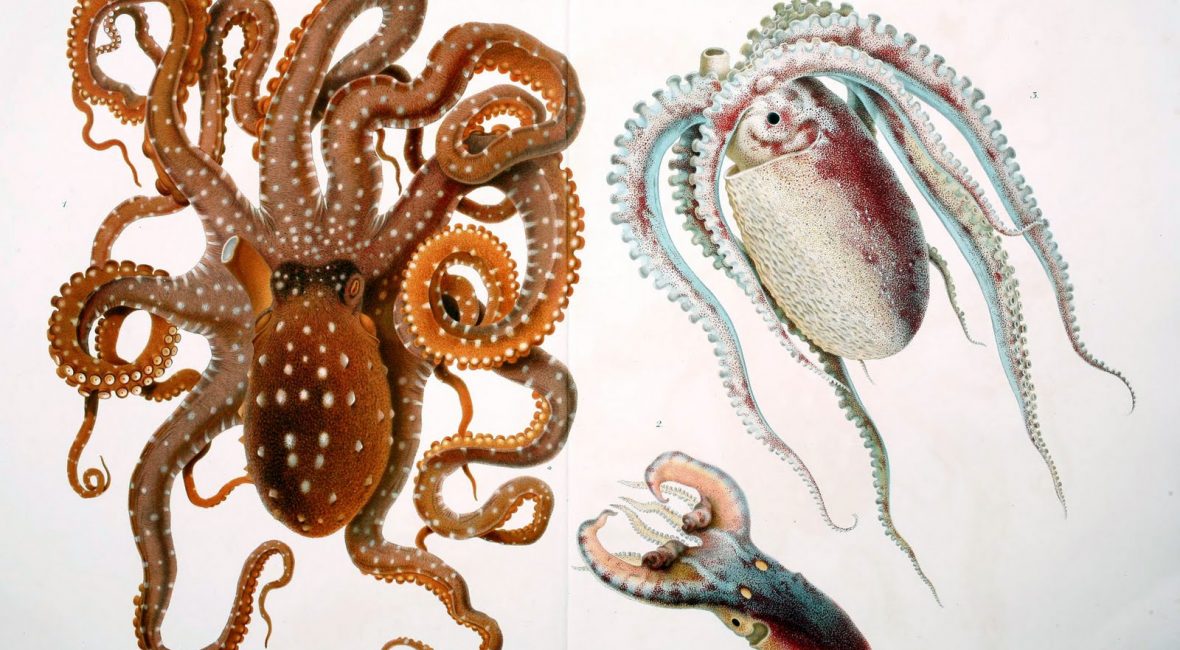
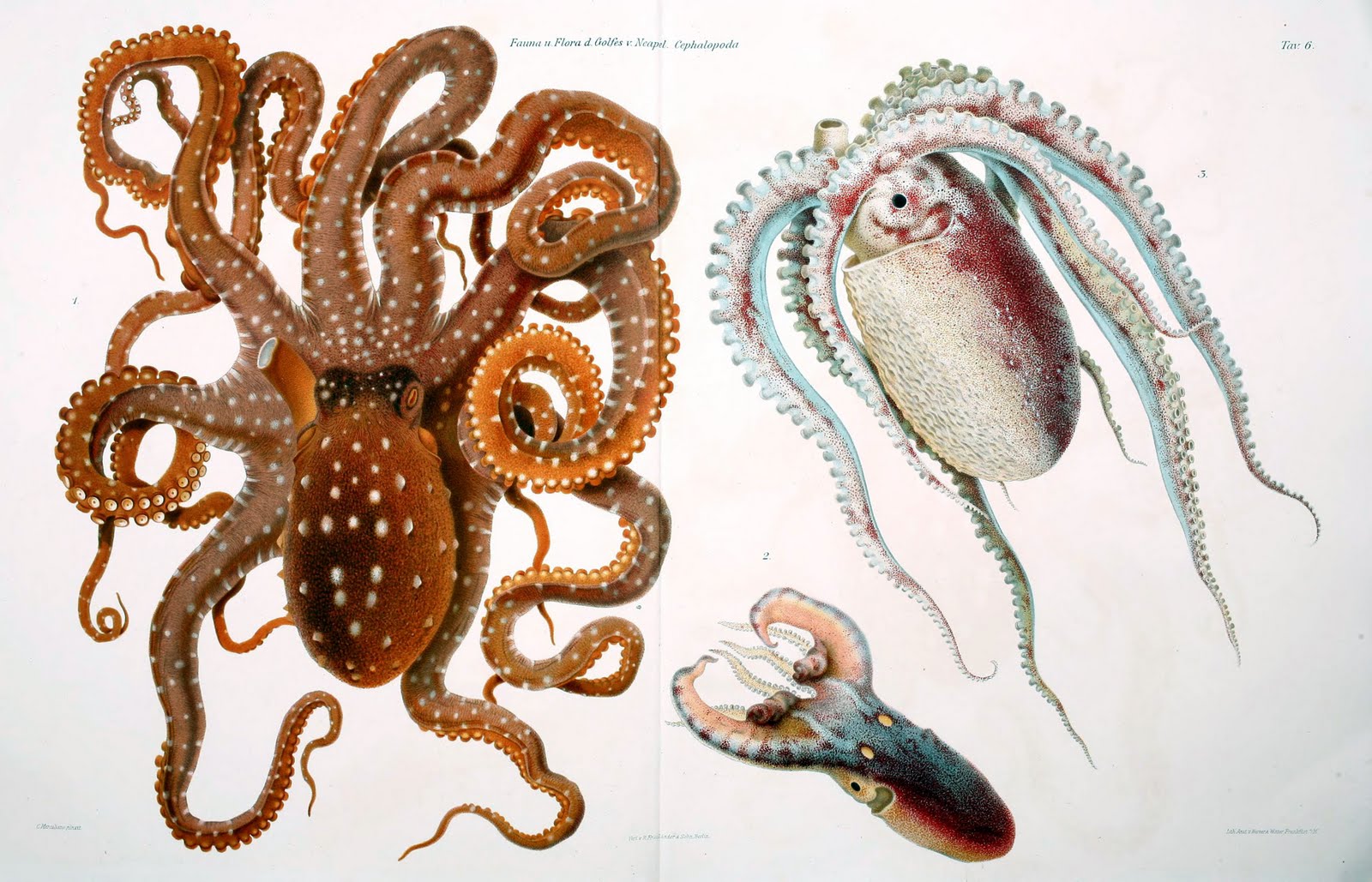
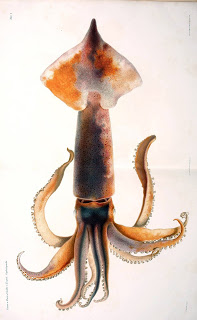
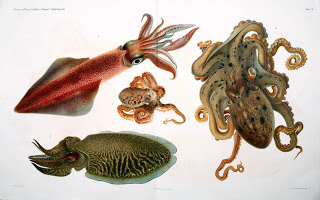
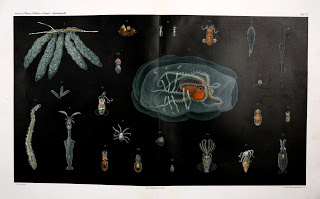
We’re all about mollusks in our book of the week this week, with our featured title being one brimming with some really spectacular watercolors by Comingio Merculiano. What, you might ask, is the title of this exceptional work? I Cefalopodi Viventi nel Golfo di Napoli (Sistematica) (1896). While the copy on BHL consists of only the plates from this title, the entire volume (with text) constitutes the 23rd monograph in the series Fauna and Flora of the Gulf of Naples, published by the Stazione Zoologica. This particular monograph, written by Giuseppe Jatta, presents, as the name suggests, detailed information on the Cephalopods of the Mediterranean.

View Full Size Image

The Fauna and Flora series was the brain child of Anton Dohrn, prominent German Darwinist and founder of the Stazione Zoologica in Naples. In the winter of 1868, Dorhn and his colleague Nicholai Miklukho-Maklai conceived of the idea of a global network of zoological stations, in which scientists could visit various stations around the world, collect material, and conduct research in ready laboratories. The first of these stations, “Stazione Zoologica di Messina,” consisted of two rented rooms in Messina, but impediments such as the absence of a library (oh, how they would have loved BHL!) and permanent trained personnel made it quickly apparent that the idea was wrought with difficulties.

In the 1870s, Dohrn moved the location of the station to Naples, as the breadth of biological richness in the Gulf of Naples, and the proximity to a large university, made it an extremely attractive location. This time, the station was a much greater success! Encouraged, Dohrn decided it was time to move on to another pet project, and one for which the Station was well-equipped to support. Burdened by the lack of systematic studies on marine fauna in the Mediterranean, Dohrn developed the Fauna and Flora of the Gulf of Naples project, assigning groups of marine organisms to subject experts with instructions to write a monograph on each of the assigned groups. Each monograph was to deal with the morphology, development, systematics or ecology of the topic assigned. Disappointed by the quality of scientific illustrations accompanying many of the monographs, Dohrn also hired professional artists to create illustrations for the works. As Dohrn explained in v. 48 of Nature,

View Full Size Image

“I wished to lay great stress upon illustrations. In looking over the existing iconography of the lower marine animals, and comparing them with those of the terrestrial animals, the inferiority of existing illustrations of the former was apparent, and especially as regards the reproduction of the colouring of the living marine organisms. Colour in animals may have relatively little scientific interest compared with structure, nevertheless it has a meaning, and its good reproduction facilitates greatly the recognition of the species. Besides, practical reasons spoke very much in favor of good coloured illustrations as a means to facilitate the sale of the monographs, which were to be published on subscription, and as the safest way for covering the great expenses which were to be incurred.”

View Full Size Image

The first artist selected was Merculiano, who began his collaboration in 1885, and it is thanks to the incredible talent of this artist that we have such a glorious collection of illustrations to present this week! Indeed, Dohrn himself attributed the success of the series in large part to the quality of the illustrations contained within the volumes, which were reproduced for the publications via lithographs by Werner and Winter. We’re certainly glad Dohrn decided to incur the costs of quality scientific artwork, and we hope you enjoy the few images we’ve selected for this post. Be sure to check out the entire collection of illustrations from this work in Flickr!

September 9, 2011by michelle.underhill
Page 1 of 212»

Help Support BHL

BHL's existence depends on the financial support of its patrons. Help us keep this free resource alive!

search

About BHL

The Biodiversity Heritage Library (BHL) is the world’s largest open access digital library for biodiversity literature and archives. BHL operates as a worldwide consortium of natural history, botanical, research, and national libraries working together to digitize the natural history literature held in their collections and make it freely available for open access as part of a global “biodiversity community.”

Join Our Mailing List

Sign up to receive the latest news, content highlights, and promotions.

Subscribe Now

Subscribe to Blog via Email

Enter your email address to subscribe to this blog and receive notifications of new posts by email.

Join 319 other subscribers

Subscribe to Blog Via RSS

Subscribe to the blog RSS feed to stay up-to-date on all the latest BHL posts.

Access RSS Feed

Inspiring Discovery through Free Access to Biodiversity Knowledge.

The Biodiversity Heritage Library makes it easier than ever for you to access the information you need to study and explore life on Earth…for free, anytime, anywhere.


64+ Million Pages of
Biodiversity Literature Online.

EXPLORE

Tools and Services
to Transform Research.

EXPLORE

300,000+
Illustrations on Flickr.

EXPLORE

ABOUT | HARMFUL CONTENT | PRIVACY | SITE MAP | TERMS OF USE