Biodiversity Heritage Library - Program news and collection highlights from BHL
  • Home
  • News
  • Featured Books
    • All Featured Books
    • Book of the Month Series
    • BHL at 20
  • User Stories
  • Campaigns
    • Fossil Stories
    • Garden Stories
    • Monsters Are Real
    • Page Frights
    • Her Natural History
    • Earth Optimism 2020
  • Tech Blog
  • Visit BHL
Home
News
Featured Books
    All Featured Books
    Book of the Month Series
    BHL at 20
User Stories
Campaigns
    Fossil Stories
    Garden Stories
    Monsters Are Real
    Page Frights
    Her Natural History
    Earth Optimism 2020
Tech Blog
Visit BHL
  • Home
  • News
  • Featured Books
    • All Featured Books
    • Book of the Month Series
    • BHL at 20
  • User Stories
  • Campaigns
    • Fossil Stories
    • Garden Stories
    • Monsters Are Real
    • Page Frights
    • Her Natural History
    • Earth Optimism 2020
  • Tech Blog
  • Visit BHL
Biodiversity Heritage Library - Program news and collection highlights from BHL
BHL News, Blog Reel

New Grant Helps The Field Museum Digitize Rare and Interesting Books!

View Full Size Image
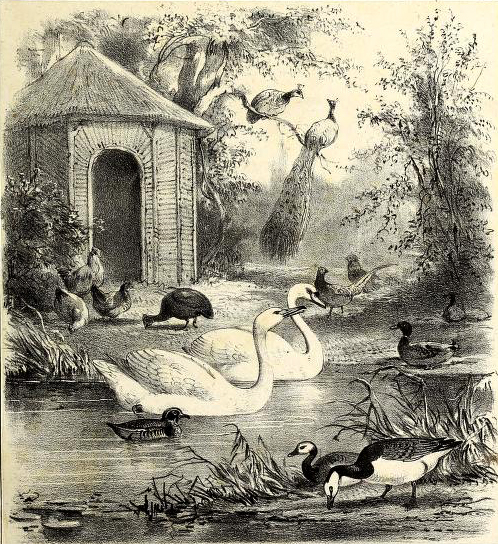
Title Page Image, v. 3, Onze vogels in huis en tuin

One of the BHL partner institutions, The Field Museum Library, was recently awarded a small grant from the Consortium of Academic and Research Libraries in Illinois (CARLI) to contribute titles to the growing BHL corpus. The proposal entitled “Empowering Biodiversity Research,” allowed The Field Museum Library to contribute 34 new titles to the BHL.

Several titles chosen for digitization came from the Library’s impressive Edward E. Ayer Ornithological Library, housed in the collections of the Mary W. Runnells Rare Book Room.

The titles were chosen for digitization via several means:

View Full Size Image
Blue Macaw. v. 3,

Onze vogels in huis en tuin

Requests received from users, which are processed via BHL’s issue tracking system, Gemini, allows us to fulfill user requests, complete series fill-in’s, and keep us organized! One item specifically requested was the famous work of Dutch illustrator John Gerard Keulemans (1842-1912), Onze vogels in huis en tuin (‘Our Birds in House and Garden’). Published in 3 volumes between 1869-1876, this collection of 200 lithographed plates were hand colored by the author. Noted for his beautiful and scientifically accurate work, Keulemans also provided illustrations for both Proceedings of the Zoological Society of London, The Ibis as well as numerous other monographs throughout the late 19th and early 20th centuries. With only 4 copies held in U.S. libraries, The Field Museum Library is the only BHL partner to own Onze vogels.


View Full Size Image
Neue Alpina, v. 1

In-demand titles were also identified via the Library’s active Interlibrary Loan (ILL) program. This service allows institutions from all over the world to request loans of books or scans of articles from The Field Museum Library. Items that are out of copyright and related to biodiversity are flagged for potential digitization. The title, Neue Alpina, has been requested via ILL twice in the last six months. This periodical, complete in two volumes, was published 1821-1827 and is focused on the natural history of Switzerland. Also part of the Ayer Collection, The Field Museum Library is the only holder of this title in the U.S.

View Full Size Image
Dissected Frog. Les animaux de laboratoire

And finally, we often find pretty amazing items just by browsing the shelves! We came across an interesting item in our Herpetology Library from the collection of renowned herpetologist, Karl P. Schmidt. Les animaux de laboratoire: La grenouille (Anatomie et Dissection) is a short monograph about frog anatomy and a guide to dissection techniques. The amazing (and honestly, pretty fun) part of the book is the illustrations. The frog’s anatomy is dissected via multi-part anatomical flaps. The staff of the Internet Archive scanning center in Ft. Wayne, Indiana did a great job of capturing all of these flap elements during digitization.

Explore all items in the BHL contributed by The Field Museum Library here!

April 30, 2013by Kathryn Stine
Blog Reel, Featured Books

Guess Whose 228th Birthday is Today?

View Full Size Image
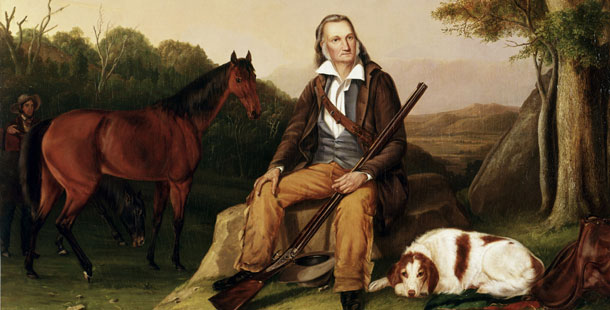
John Woodhouse Audubon, John James Audubon (1785-1851). Oil on linen.

It’s time to take a break from work and celebrate John James Audubon’s Birthday with the BHL! This was the man who is best remembered for his masterpiece Birds of America which is arguably the most prized Natural History work in existence. Just last year, the Smithsonian successfully digitized their entire set of all 435 copperplate etchings that contain 1,065 life-size birds representing around 500 species. Audubons’ birds are now available to be enjoyed and freely downloaded by all.

Book of the week: The Birds of America by J. Audubon

Audubon, the man, has been immortalized in history books as a larger than life figure. His life-story transcends the typical ins and outs of human existence and mirrors more closely a Romantic era novel extolling the promise of the American dream. His story follows the monomyth plot, i.e. the “Hero’s Journey”, that we readers so delightfully relish in: French man is born of low-birth (his father’s illegitimate child), called forth to adventure in the New World, undergoes a series of challenges and failures, overcomes a terrible rock-bottom, only to become wildly successful overnight and live happily ever after as a legendary ornithologist and illustrator, retiring on his wildlife sanctuary estate in America. Last year’s Audubon birthday post covered some really important biographical details and is definitely worth a read. However, this year we decided to scrounge-up some lesser-known juicy tidbits to humanize this incredibly famous bird lover. He may have been one of America’s great men, but he was also just like you and I. Well, sorta.

Lesser Known Facts About Audubon

View Full Size Image
Laforest, the Popinjay

Audubon might have had better hair than you

Audubon was extremely handsome in his youth. And he knew it. He actually refers to himself as a “popinjay” in his journals. He and everyone else were particularly enamored with his hair: “My locks flew freely from under my hat, and every lady that I met looked at them and then at me until – she could see no more.” We have to admit his hair was pretty fantastic and in no portrait of him is it ever seen shorn. Long hair, don’t care!

Audubon had a secret codename

It was “Laforest.” Okay, maybe it wasn’t a secret codename but rather his second middle name that always gets dropped-off when people refer to him. Only his father and his wife ever called him by this name. In a letter to a Mrs. Rathbone in 1827 he writes, “My name is John James Laforest Audubon. The name Laforest I never sign except when writing to my wife, and she is the only being, since my father’s death, who calls me by it.” Evidently the name held sacred meaning for Audubon’s most dearly beloved.

Audubon was jailed how many times? 

Three times that we were able to count, maybe more. Audubon was notoriously poor at managing his finances and was arrested for financial hardships and debts in the years of 1819, 1828 and 1833. These dates are according to several biographies that you may read on the BHL, however there may have been even more undocumented arrests. Clearly this man just wanted to chase birds; he certainly wasn’t cut out to be hedge fund portfolio manager — but, aren’t we all rather glad of it?

Rats not jail-time were the cause of Audubon’s “rock-bottom”

Rats you say? Yes, the years between 1815-1820 were a very inactive period for Audubon in regards to ornithological endeavor. He pretty much turned his back on birds entirely. Many speculate that he gave-up on his dream for a time after he left hundreds prints in the care of a relative that remains unknown to this day. While his illustrations were in this relative’s care, rats had decided to nest and make their new family using the box that held Audubon’s bird illustrations as the material for their new home. Upon returning from a business trip, John James found his watercolor masterpieces shredded to bits. Naturally, he was crushed at the site of the ruined heap which represented thousands of observation and illustration hours in the field. Audubon needed a period of mourning, weeping, and insomnia before he resurfaced years later with the most incredible illustrations of birds the world had ever seen. Call him the comeback kid!

View Full Size Image
“Minnie’s Land”

Where did this adventurous fellow call home?

Believe it or not you can still visit Audubon’s home even though it was levelled in 1931 by a developer after it was deemed irreparable. Where? Online, of course. “Minnie’s Land” was Audubon’s final American home and it was located just outside of New York City along the Hudson at 155th and 156 Streets just west of Riverside Drive.

Historical price tag for Birds of America

The original cost of the double-elephant folio work of life- sized birds was $1000 for the entire subscription series. This was an exhorbitant amount at the time (1838) but, considering that the work sold at an auction in December 2010 for a record-breaking 11.5M, its original price seems like a bargain. According to Audubon he believed there to be about 175 copies of Birds of America in existence and that around 80 were in America. It’s speculated that 119 complete sets have survived.

Audubon was a man of many talents

Besides being a walking bird encyclopedia, Audubon was a great dancer, marksman, fencer, musician, horseman, basket weaver, and of course quite the lady killer

Birds of America That Are Now Extinct

By the time Audubon was finishing his masterpiece he began to notice a decline in bird populations. Once an avid hunter, like Teddy Roosevelt, he quickly changed his tune and became a champion of conservation. In his writings, he often laments about decreasing species populations.  In fact, six species that were alive during Audubon’s time are now considered extinct. Luckily, we have Audubon’s depictions of these birds that once flourished here in America, as they no longer can be observed in wild:

View Full Size Image
Carolina Parakeet = Conuropsis carolinensis (Linnaeus, 1758)

According to Audubon, the Carolina Parakeet was an avid fruit eater and thus found itself a favorite target for angry farm owners.

View Full Size Image
Eskimo Curlew = Numenius borealis (J. R. Forster, 1772)

Also called the “Dough Bird,” because these birds were known to engorge themselves on their favorite foods:  grasshoppers and berries. These sea-shore dwelling birds thus became the favorite meal of hunters.

 
View Full Size Image
Great Auk = Pinguinus impennis (Linnaeus, 1758)

Of these six extinct bird species, the Auk is one that Audubon never actually was able to observe in the field. Their populations had already dwindled to near extinction in his time. 

View Full Size Image
Pinnated Grouse = Tympanuchus cupido (Linnaeus, 1758)

Audubon’s first observation of the Pinnated Grouse came 25 years before the publishing of Birds of America. He remarked in his accounts that once this species was incredibly common to see and was somewhat shocked at how quickly it was being driven to extinction. Some sub-species of this hen are still in existence so there is still some hope that they won’t be completely wiped-out.

View Full Size Image
Pied Duck or Labrador Duck = Camptorhynchus labradorius (Gmelin, 1789)

According to hunters, this duck tasted bad and causes for their extinction remains a bit of mystery. Always a rare species, many speculate that a decline in their food supply of mollusks and mussels accounts for their eventual disappearance.

View Full Size Image
Passenger Pigeon = Ectopistes migratorius (Linnaeus, 1766)

The passenger pigeon was one of America’s most amazing birds. Audubon calculated that they could travel between 300-400 miles in six hours which is almost a mile a minute. This means that the Passenger Pigeon would be able to travel from America to Europe in less than three days!

View all of Audubon’s engravings @ Biodivlibrary’s Flickr! Free downloads!

While it is very unfortunate that these six bird species no longer exist on this planet, there is still much YOU can do as a citizen scientist to save Audubons’ birds of America that are on the endangered species list. These species include the Californian Condor, Bachman’s Warbler, Red-cockaded Woodpecker, and the Whooping Crane.

Ornithologists and birders should take pause today to remember our dear Laforest, who like so many Nature lovers often looked to escape everyday life and venture deep into the wilderness in search of the sublime:

“Thus almost every day, instead of going to school when I ought to have gone, I usually made for the fields, where I spent the day ; my little basket went with me, filled with good eatables, and when I returned home, during either winter or summer, it was replenished with what I called curiosities, such as birds’ nests, birds’ eggs, curious lichens, flowers of all sorts, and even pebbles gathered along the shore of some rivulet” – Audubon and His Journals (1899)

Audubon, will be remembered as man who was adventurous, fearless, passionate, and incredibly talented but, also flawed and very human. He had much to teach us about how a life should be lived, reminding us that while we are given a short time here on this Earth we must make the most of it. He was man who lived in his work and his work will live on forever.

Birder Links

The Academy of Natural Sciences | Audubon Page Turning

The Viviparous Quadrupeds of North America.

New York Historical Society | Audubon’s Aviary

Audubon Society | Citizen Science – Get involved!

Cornell Lab of Ornithology | Citizen Science

BHL Twitter: #Audubon #BirdsOfAmerica

Birds of America | State Bird Database

We hope you enjoyed this post. Interested in guest-blogging for BHL? We’d love that! Natural history, biodiversity and conservation topics are especially welcomed. Email us your ideas at [email protected]

April 26, 2013by BeccaQ_92
BHL News, Blog Reel

Making the BHL-Africa a Reality: The BHL-Africa Launch and Workshop

Group photo on the stairs at the South African National Biodiversity Institute.
View Full Size Image
BHL-Africa logo at Pretoria National Botanical Garden

On April 15, 2013, BHL-Africa officially launched. BHL-Africa’s mission is to provide open access to the valuable biodiversity literature found within African libraries and institutions. The African consortium is hard at work identifying partners throughout the continent to sign an MOU and commit to working towards this noble objective.

The three-day BHL-Africa launch and workshop was hosted by the South African National Biodiversity Institute (SANBI) at the Pretoria National Botanical Garden in Pretoria, South Africa, from April 15-17, 2013. The meetings occurred simultaneously with the GBIF meetings also held at the botanical garden last week. Over two dozen representatives from institutions that have either signed or intend to sign the BHL-Africa MOU were present. Additionally, six colleagues from the BHL-US/UK program node were invited to attend: Nancy Gwinn (Director, Smithsonian Libraries, BHL Executive Committee Chair); Constance Rinaldo (Director, MCZ-Harvard Library, BHL Executive Committee Vice-Chair); Doug Holland (Director, Missouri Botanical Garden Library); William Ulate (Missouri Botanical Garden, BHL Technical Director); Bianca Crowley (Smithsonian Libraries, BHL Collections Coordinator); and Grace Costantino (Smithsonian Libraries, BHL Program Manager).

Monday, April 15, began with a launch ceremony, detailed in our blog post last week, during which the BHL MOU with SANBI was signed by Dr. Nancy Gwinn and Dr. Tanya Abrahamse (SANBI CEO). The real work began after the launch, with the start of the BHL-Africa workshop.

View Full Size Image
Dr. Nancy Gwinn and Dr. Tanya Abrahamse sign the BHL-Africa MOU

Day one of the workshop (Monday, April 15, afternoon) was devoted to addressing final MOU questions and outlining participants’ expectations for the meeting. Key expectations and areas in need of discussion included: Clarifying BHL’s open access policy and its implications for African participants; a concise description of the value of BHL for participating institutions in order to secure managerial buy-in; organization of clear fundraising strategies; the need for extensive training; identification of available resources and digitization capacity building; and the best way to collaborate and share resources amongst participating members. Overall meeting expectations were to elect a BHL-Africa Steering Committee and establish an outline for a two-year work plan.

View Full Size Image
The BHL-Africa Group Photo!

Much of day two (Tuesday, April 16) was spent investigating workflow and organizational questions, including collections development, copyright, communication, and infrastructure. The primary reason for the presence of the BHL-US/UK team was to offer our African colleagues the expertise we have gained in these areas over the past six years, as well as to help define global expectations for our new members.

Towards this end, Nancy Gwinn began by identifying four main expectations for BHL-Africa: Content Creation; Audience Building; Content Identification; and Partnership Building. In short, these expectations translate to not only growing the BHL corpus by digitizing African collections, but also helping BHL identify content to scan, both within and outside of Africa. Furthermore, BHL Africa must work to both build the BHL audience by promoting the project throughout the continent, but also expand the BHL consortium by identifying institutions that can contribute to the initiative.

Constance Rinaldo then gave a presentation on copyright, defining public domain, open access, and the Creative Commons licenses employed by BHL-US/UK. She was quick to stress, however, that each BHL node and institution must follow the copyright laws of their own countries, and, as BHL is not a legal entity, it is ultimately each scanning institution that is legally responsible for the content they contribute to the collection.

View Full Size Image
Bianca Crowley on BHL Collections Development

Bianca Crowley then gave our African colleagues some insight into the BHL-US/UK collection development process, outlining our selection and de-duplication process, digitization principles, metadata requirements, and content integration. Communication and collaboration methods were a key point of discussion, as they are critical for successful collections development.

Grace Costantino followed with a presentation on BHL-US/UK’s use of social media, which allows us to communicate project developments, provide context to the books in our collection, reach new audiences on new platforms, and uncover hidden gems in our collection. Following the presentation, an open discussion about each institution’s current use of social media, social media in the context of Africa, and how BHL-Africa might use social media occurred.

Finally, William Ulate detailed the BHL infrastructure, demoing the Macaw tool developed by Joel Richard at the Smithsonian Libraries, which is used to ingest books through Internet Archive into BHL. A remote installation of Macaw is running at the University of Pretoria and can be accessed via the web by any BHL-Africa participant to load digitized content into BHL.

BHL-African participants were also given a chance, on day two, to break out into two working groups, dedicated to Collections Development/Copyright and Outreach/Communication. These sessions allowed participants to apply the information given during the presentations to the realities of the BHL-Africa project.

The final day of the meeting (Wednesday, April 17) was spent identifying preliminary tasks for a two-year BHL-Africa workplan and electing a BHL-Africa Steering Committee. Workplan components include establishing a list of titles that each institution wishes to contribute to BHL; drafting documentation, based largely on existing files from gBHL, for workflow and collaboration guidance; and drafting a preliminary communication and outreach plan, which addresses not only external, but also internal, communication needs.

View Full Size Image
BHL-Africa Steering Committee (Left to Right): Lawrence Monda (Technical Advisor), Ashah Owano, Loi Namugenyi, Anne-Lise Fourie, Ria Groenewald

The BHL-Africa Steering Committee was also elected at the meeting. BHL-Africa has been divided into three regional nodes: North/Central; Eastern; Southern. Each regional node elects two representatives for the Steering Committee. Currently, there is no representation in North/Central Africa within the project, so only four members (two from Southern, two from Eastern) were elected at the meeting. Elected members include: Anne-Lise Fourie (SANBI, Southern); Ria Groenewald (University of Pretoria, Southern); Ashah Owano (National Museums of Kenya, Eastern); and Loi Namugenyi (Uganda National Council for Science and Technology, Eastern). Lawrence Monda (National Museums of Kenya) was elected as the BHL-Africa Technical Representative. Two additional members will be elected as North/Central institutions are added to the BHL fold. The Steering Committee will be responsible for providing strategic guidance, developing fundraising plans and approving budgets, and organizing pan-continental efforts.

The three-day BHL-Africa launch and workshop was an extremely successful event which resulted in the creation of an actionable plan for project development and the identification of notably capable leadership. Meeting attendees left feeling energized, with a clear sense of purpose. Just one and a half years ago, at the Life and Literature conference, the concept of BHL-Africa was born. Today, it is a reality. We congratulate our colleagues on the astounding progress they have made and look forward to seeing great things from BHL-Africa!

April 24, 2013by michelle.underhill
Blog Reel, User Stories

Tarsiers, Evolutionary Biology, and a Woman Named Frieda

View Full Size Image
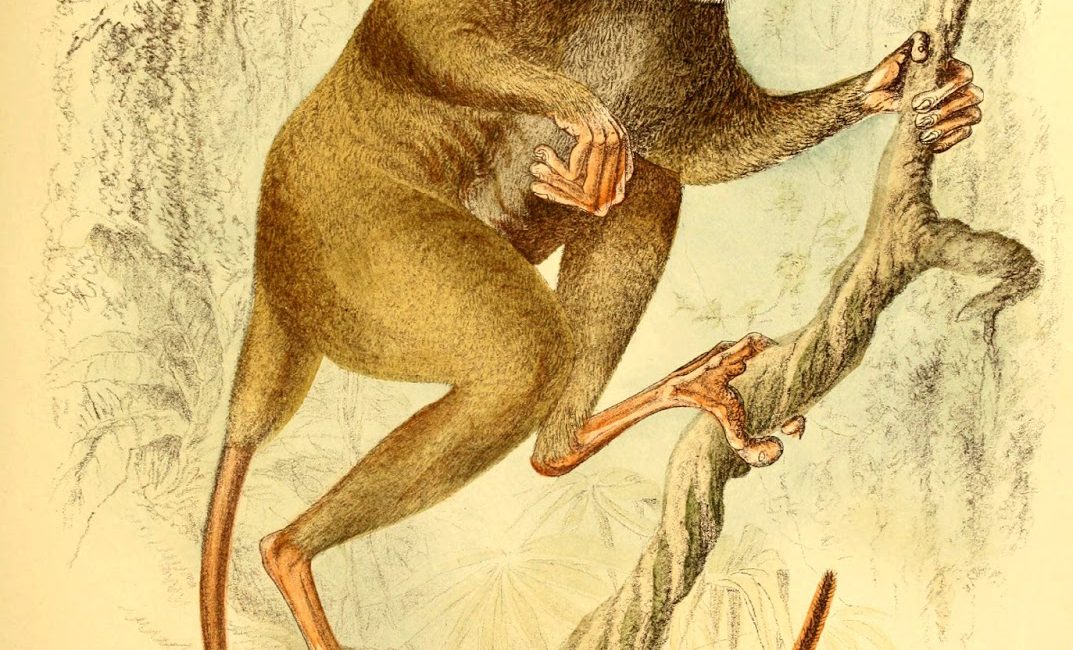
Philippine Tarsier. Säugethiere vom Celebes- und Philippinen-Archipel (1896).

Tarsiers are a family of small primates that today are found only in the islands of Southeast Asia. Among the species in the family is one of the world’s smallest primates – the Philippine Tarsier – weighing between 3.9-5.4 ounces (the world’s smallest primate is the Berthe’s Mouse Lemur). Tarsiers are perhaps most recognized for their enormous eyeballs, which are approximately as large as their entire brain.

Frieda Benun Sutton has a soft spot for these remarkable primates. For her thesis project at CUNY Macaulay Honors College at Brooklyn College (from which she graduated in December, 2012, with a Bachelor of Science degree in Biology), Frieda wanted to compare scientific literature on the classification of tarsiers before and after the cladistics revolution. BHL played a crucial role in helping her do so.

“I was looking for a very specific and somewhat obscure symposium from 1919 to use as my pre-cladistics platform, and miraculously, I was able to find it online! Through the BHL, I was able to download pdf files and text of the pages I wanted from the symposium (Proceedings of the Zoological Society of London, 1919) and search through the pages with ease. Often, I would be looking for just a key word to link me to an idea or person and I could easily find it with just a quick search of the documents downloaded from the database.”


View Full Size Image
Frieda Benun Sutton

Frieda discovered BHL through a Google search, while she was looking for that 1919 Proceedings symposium (“Discussion on The Zoological Position and Affinities of Tarsius“), which is not surprising, considering that nearly half of all BHL traffic originates from Google searches.

With plans to begin a PhD program in Evolutionary Biology in the Fall, 2013, Frieda currently teaches after-school classes and camps on evolution at the American Museum of Natural History (AMNH). A recent meeting with one of our own BHL affiliates, Tom Baione (Director of the Library at AMNH and BHL Steering Committee member) gave her the perfect opportunity to express just how much BHL has meant to her work.

“I am greatly indebted to BHL. I honestly do not know if my thesis project would have been possible without it. At the very least, it made my research significantly easier. I’m happy to know that there are resources and people out there that are committed to digitizing and making available scientific literature, old and new.”

Frieda met Tom during an interview with the Richard Gilder Graduate School (RGGS) at AMNH – one of the programs she is considering for her PhD work. With a plan to concentrate her research on primate evolution, Frieda’s relationship with BHL has clearly just begun. With that in mind, we asked her what improvements she would like to see in BHL. Her response?

“I have no complaints. I would only like to see more scientific publications digitized and made available free of charge!”

We hear you loud and clear, Frieda! We’re adding more content to our 40 million+ pages each week! We’re also working to secure permission to digitize in-copyright (publish post-1923) titles, with over 250 title permissions obtained thus far. You can help us curate our collection by suggesting titles for scanning. While we will digitize the requested works free-of-charge, financial donations from our users allow us to scan even more content and help protect our open access model.

So, whether you’re interested in tiny primates with big eyes, deciduous vines that smell like rotting meat, extra-long insects, or anything in between, BHL has something for you! Search our newly-improved BHL website today and explore more of our collection in Flickr and Pinterest. Follow all the latest project developments and learn more about Earth’s awesome biodiversity on Facebook and Twitter.

Have an awesome story like Frieda’s? Tell us about it! We’d love to feature you on our blog. Leave a comment on this post, write to [email protected], or send us a message!

April 19, 2013by ulib-libraryjobs
BHL News, Blog Reel

Some BHL services will be unavailable during planned outages 16-17 April 2013

Portrait version of the Biodiversity Heritage Library logo.

BHL image files are hosted by the Internet Archive (IA). The IA will be upgrading their power 16-17 April 2013. This will result in planned outages to the system. These outages will affect BHL’s ability to serve page images, generate PDFs, and downloads of certain file types.

Searching and browsing BHL metadata will not be affected by this outage.

Please be aware that in addition to the planned outages listed below, there may be residual and temporary outages around planned downtime.

Scheduled downtimes:

  • 16 April 2013: 14:00 – 19:00 UTC
  • 17 April 2013 22:00 – 02:00 UTC

In the event of any additional major outages, please monitor this site for more information.

Sorry for the inconvenience that this will cause our BHL users, but in the end this will provide better service.

From the Internet Archive blog:

Brace yourselves, outages are coming

This week, we are doubling the power coming into our primary data center so that we can archive and serve even more web pages, books, music and moving images. During those upgrades, there will be times when many of our web sites and services will not be available. Details below.

To keep the data safe, we will proactively shut down most of our services served from our primary data center. archive.org, openlibrary.org, iafcu.org and our blogs will be unavailable during the outages. The upgrades will happen over a two day period. We anticipate two prolonged outages, the first one from about 7am to 12noon PDT (14:00-19:00 UTC) on Tuesday, April 16. And the another one from 3pm to 7pm PDT (22:00-02:00 UTC) on Wednesday, April 17. Work might require additional outages between those two major ones.

During the outages, we’ll post updates to our @internetarchive twitter feed. Sorry for the inconvenience.

April 15, 2013by
BHL News, Blog Reel

BHL Africa Officially Launches!

View Full Size Image

We’re so excited to announce that today, Monday, April 15, 2013, BHL-Africa has officially launched!

Today’s launch ceremony (hosted by the South African National Biodiversity Institute (SANBI) at the Pretoria National Botanical Garden in Pretoria, South Africa) began with a welcome by Dr. Tanya Abrahamse, SANBI CEO, after which she and Nancy Gwinn (Chair of the BHL Executive Committee) signed the BHL-Africa MOU (Memorandum of Understanding). Nancy Gwinn then gave a presentation detailing the history of BHL’s development, and Anne-Lise Fourie, Assistant Director for SANBI libraries, gave an overview of the BHL-Africa vision, mission, and benefits.

Working within the BHL consortium, BHL-Africa aims to provide open access to the valuable information held in Africa’s biodiversity institutions. Towards this end, the global BHL family works with the international taxonomic community, rights holders, and other interested parties to ensure that this biodiversity heritage is made available to a global audience through open access principles.

The next two days will consist of workshops aimed at outlining funding strategies, the responsibilities of BHL-African institutions, BHL-Africa’s role in the larger global BHL environment, and the contributions BHL-Africa will make to BHL. Check back on our blog for more detailed information about the launch and workshops, and follow the hashtag #bhlafrica on our Twitter (@BioDivLibrary) for real time news via live tweets!

Learn more about BHL-Africa in our past blog post and video. Take a break from your day job to enjoy an Africa safari!

And finally, enjoy images of Africa’s biodiversity from the African Biodiversity Flickr Collection.

April 15, 2013by ulib-libraryjobs
Blog Reel, Featured Books

Seals? Seal Lions? Walruses? Do you know your fin-footed mammals?

Illustration of a sea lion on rocks
View Full Size Image
Pier 39 Sea Lions

On a trip in the fall of 2012 to San Francisco to attend the Internet Archives’ Leaders’ Forum, a couple of us paid a visit to Pier 39 to visit the semi-aquatic mammals that hang out there.

Since January 1990, these colorful creatures have been “hauling up” at Pier 39. At first considered a bit of a nuisance (they can be a bit loud and smelly), they soon turned into a beloved tourist attraction. See more about their story on the Pier 39 site.

But what exactly are these creatures? Well, three families make up the group of fin footed mammals of the order, Pinnipedia: Odobenidae (the walrus), Otariidae (eared seals, sea lions, and fur seals), and Phocidae (earless seals).

View Full Size Image

Now your first question might be “what are these seals doing here?”, but are they seals? How does a seal differ from a sea lion? Or for that matter, how do either of them differ from a walrus? Walrus are pretty clear, they have tusks. No tusks here, so these must be either Otariidae or Phocidae. If we could get up close enough, we would see that these are indeed, Otariidae, or members of the sea lion family.

Phocidae (true seals) lack external ears, have streamlined snouts, and are more aquatic. Otariidae (sea lions, eared seals, and fur seals) hang out on land more than true seals, their fins more suited to “walking”. They’re furrier and more vocal. The so-called “circus seal” is actually a California Sea Lion, Zalophus californianus, the same as we find at San Francisco’s Pier 39.

The California Sea Lion (Zalophus californianus) was first illustrated in Louis Choris’s (1795-1828) Voyage pittoresque autour du monde avec des portraits de sauvages d’Amérique, d’Asie, d’Afrique, et des îles du Grand océan : des paysages, des vues maritimes, et plusieurs objets d’histoire naturelle (1822). However, the animal was not taxonomically described until 1828 when René Primevère Lesson first described it as Otaria californiana (in Dictionnaire classique d’histoire naturelle, par Messieurs Audouin, Isid. Bourdon, Ad. Brongniart, de Candolle, et Bory de Saint-Vincent. Ouvrage dirigé par ce dernier collaborateur…, 1822-31).

View Full Size Image

Taxonomic revision of the species occurred throughout the 19th and 20th centuries. It was recombined as Eumetopias californiana by Gill (1866); it was recombined as Eumetopias (Zalophus) californianus by Trouessart (1898) and Trouessart (1904); it was recombined as Eumetopias californianus by Turner (1912); it was recombined as Zalophus californiana by Hay (1930); it was recombined as Zalophus californianus by Allen (1880), Scheffer and Rice (1963), Vidal (1991), Rice (1998), Demere et al. (2003) and Wilson and Reeder (2005).

Though the Pier 39 seal lions are now a popular tourist attraction, the “seals” of the California coast have been remarked on for years. In his 1906 publication, California Mammals, Frank Stephens commented:

The following extracts from my notebook may be of interest. April first, 1893. This morning Mr. Fenn and I rowed to the ‘seal rocks’ near the south end of Santa Catalina Island to get sketches of the Sea Lions. As we neared the rocks we saw several Sea Lions on them and heard their loud ‘hong-hong.’ Several were on the outer group of islets, but none were on the outermost rock, which was perhaps a hundred feet from the islet on which the greatest number were lying. The morning was cloudy and calm, with but little sea, and we cautiously pulled up behind the rock which rose five or six feet above the water. Mr. Fenn got out on a little shelf that was awash when the larger swells passed. In front the rock was low enough to see over and made a rest for the sketch book. I had to keep clear of the rock to avoid smashing the boat and out of sight as much as possible, which was no easy job in the long swell.

And if you want to see what those Pier 39 Sea Lions are up to right now, take a look at the Sea Lion webcam!


View Full Size Image

View Full Size Image

April 11, 2013by joelrichard
Page 1 of 212»

Help Support BHL

BHL's existence depends on the financial support of its patrons. Help us keep this free resource alive!

search

About BHL

The Biodiversity Heritage Library (BHL) is the world’s largest open access digital library for biodiversity literature and archives. BHL operates as a worldwide consortium of natural history, botanical, research, and national libraries working together to digitize the natural history literature held in their collections and make it freely available for open access as part of a global “biodiversity community.”

Join Our Mailing List

Sign up to receive the latest news, content highlights, and promotions.

Subscribe Now

Subscribe to Blog via Email

Enter your email address to subscribe to this blog and receive notifications of new posts by email.

Join 319 other subscribers

Subscribe to Blog Via RSS

Subscribe to the blog RSS feed to stay up-to-date on all the latest BHL posts.

Access RSS Feed

Inspiring Discovery through Free Access to Biodiversity Knowledge.

The Biodiversity Heritage Library makes it easier than ever for you to access the information you need to study and explore life on Earth…for free, anytime, anywhere.


64+ Million Pages of
Biodiversity Literature Online.

EXPLORE

Tools and Services
to Transform Research.

EXPLORE

300,000+
Illustrations on Flickr.

EXPLORE

ABOUT | HARMFUL CONTENT | PRIVACY | SITE MAP | TERMS OF USE