Biodiversity Heritage Library - Program news and collection highlights from BHL
  • Home
  • News
  • Featured Books
    • All Featured Books
    • Book of the Month Series
    • BHL at 20
  • User Stories
  • Campaigns
    • Fossil Stories
    • Garden Stories
    • Monsters Are Real
    • Page Frights
    • Her Natural History
    • Earth Optimism 2020
  • Tech Blog
  • Visit BHL
Home
News
Featured Books
    All Featured Books
    Book of the Month Series
    BHL at 20
User Stories
Campaigns
    Fossil Stories
    Garden Stories
    Monsters Are Real
    Page Frights
    Her Natural History
    Earth Optimism 2020
Tech Blog
Visit BHL
  • Home
  • News
  • Featured Books
    • All Featured Books
    • Book of the Month Series
    • BHL at 20
  • User Stories
  • Campaigns
    • Fossil Stories
    • Garden Stories
    • Monsters Are Real
    • Page Frights
    • Her Natural History
    • Earth Optimism 2020
  • Tech Blog
  • Visit BHL
Biodiversity Heritage Library - Program news and collection highlights from BHL
Blog Reel, User Stories

BHL Helps Unravel the Mysteries of the Paraguayan Fauna

Lack of access to published information about biodiversity is one of the major inhibitors to efficient scientific research today. It’s such a longstanding problem, in fact, that it has a name. The taxonomic impediment.

For hundreds of years, scientists and naturalists have published information about Earth’s species in books and journals. Many of these works, however, are available in only a few select libraries, and information about species is often not available within the countries in which those species live.

The taxonomic impediment is a very poignant reality for Paul Smith and his colleagues working in Paraguay. Paul is a freelance naturalist working with FAUNA Paraguay and the Para La Tiera Research Station.

View Full Size Image
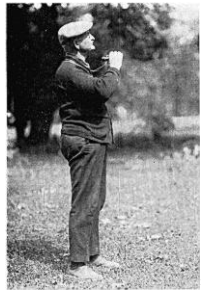
Paul Smith, freelance naturalist working with FAUNA Paraguay and Para La Tiera Research Station.

FAUNA Paraguay is dedicated to the magnificent Paraguayan fauna and serves as an online community promoting the study, conservation, and protection of this fauna and related habitats. The community is working to educate the public about Paraguayan biodiversity, produce related scientific and educational papers, and amass the first open access zoological and ecological library in Paraguay.

The Para La Tiera Research Station is based at the Reserva Natural Laguna Blanca and is working to protect globally threatened South American ecoregions through conservation and research projects and is spreading awareness about these regions through community outreach and scientific publications about related biodiversity.

Paul specializes in the natural history, ecology and distribution of Paraguayan fauna, publishing widely on ornithology, herpetology, mammalogy and entomology. His discovery of BHL through a Google search had a dramatic impact on this work.

“BHL is a gamechanger for people like me working in countries where literature is hard to come by,” lauds Paul. “To be able to consult at the click of a mouse classic old works that used to be impossible to find is revolutionising the way we work here, and the ability to trace modern citations back to their original sources is beginning to provide answers to a lot of the ‘mysteries’ that have stumped us for some time! There is no doubt that this has benefited the scientific community here in Paraguay, and has changed the way we do things. It has certainly opened up biology to a wider audience, and young Paraguayan biologists are finally beginning to flourish. I have no doubt that wider access to key literature has played a key role in that development.”
View Full Size Image
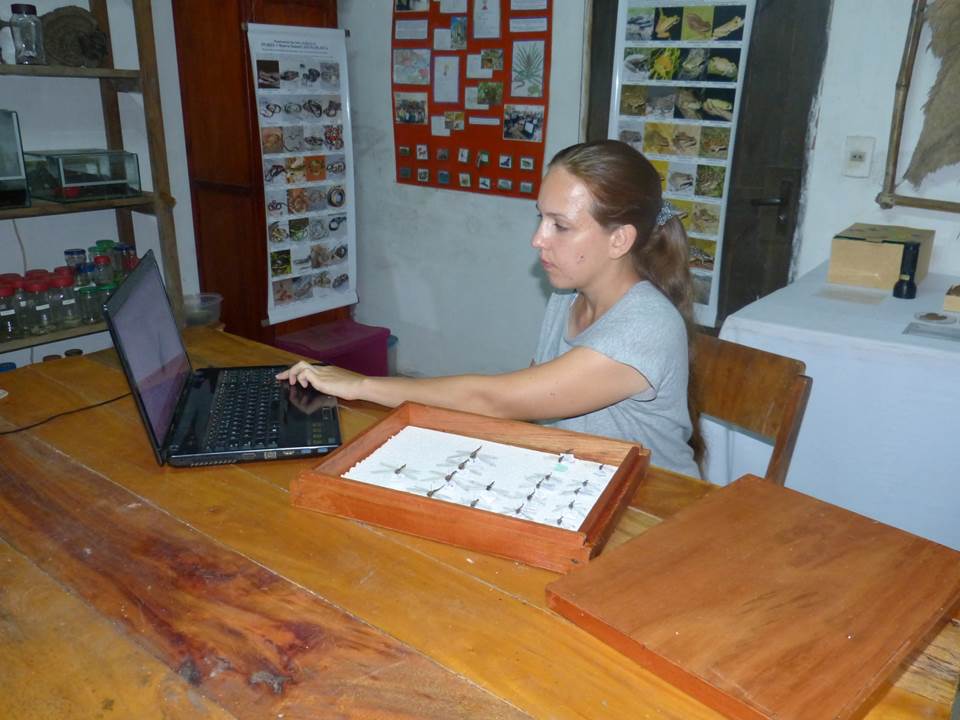
FAUNA Paraguay ELibrary (which includes many resources from BHL) being used by Para La Tierra museum curator Olga Petko for the identification of specimens in the Laguna Blanca research station.

These days, Paul consults BHL at least weekly, but often more frequently. Furthermore, it has been a major contributor to FAUNA Paraguay’s Library, which is the largest natural history library in the country. A major component of the initiative is the ELibrary. While remote access to books through electronic copies greatly increases the efficiency of scientific research, spotty and slow Internet connections in Paraguay made relying only on online access to books and journals less than ideal and necessitated the creation of an ELibrary that could host local copies of required materials. BHL has served as a major backbone to this ELibrary.

“We have a very slow internet connection here in Paraguay,” explains Paul, “So we habitually download everything we can for inclusion in our ELibrary, especially books and complete runs of journals. That way we know we can have access to it when we need it and not be dependent on internet connection speeds!

“The gigantic collection of PDFs [from BHL] that we have put together forms a notable part of the FAUNA Paraguay library, which is consulted regularly by professionals, students and educators. It has become a major resource for me personally as well as many others, and of course I perform all my literature searches through BHL before looking for the references in our library.

“Access to literature has long been a problem here as of course are funds to visit libraries in other cities. Our library can be consulted in person, but we also provide a service where people can consult our collection at a distance via email and we can carry out literature searches for them and send them PDFs of relevant literature. Of course we always take the opportunity to direct users to BHL, but in some cases it is more convenient for students to request PDFs of specific articles or pages which we can make from the bigger files from BHL that we already have downloaded and then email these to the person who requested it.”

We asked Paul what he would like to see BHL develop or focus on in the future. His response? More partnerships with institutions in developing countries.

“One thing I’d like to see happen is reaching out to institutions in developing countries and asking them to join the digitalization process,” emphasized Paul. “I realise this comes with difficulties, but using the region I work in as an example, there are countless journals, monographs and books produced by museums, scientific societies and clubs (especially in Brazil, Chile and Argentina), many of which have been in print for well over 100 years, and which are still difficult to obtain even now (even if you physically visit the places to try and get copies of them!). Some of these journal titles are no longer in print, some continue to function, but they hold vast amounts of information that is not in copyright and risks being lost forever as the number of hard copies slowly dwindles (it’s becoming more and more the case that old journals are just being thrown away!). I’m sure this is the case all over the developing world, but getting some of those really obscure journals digitalised would be another massive step forward. There is certainly interest in doing this in some of the institutions I have spoken with, but a lack of resources/opportunity seems to be the major stumbling block. Having the opportunity to make their titles available on BHL would I’m sure be the answer that many of these institutions are looking for.”

We are always interested in exploring collaborative opportunities with institutions. You can learn more about our partnership process on this page, and if you’re interested in talking further about collaborations, send us feedback!

So what’s Paul’s favorite feature on BHL? The recent additions page, which provides updates of all the new titles added to BHL each week. As Paul praised, “Searching through the BHL collection online is like finding a treasure chest! The good thing about this treasure chest though is that it keeps getting fuller each week!”

Thank you, Paul, for sharing with us the impact that BHL has on your work and country. Do you use BHL to support your own research? Want to tell us about it? Send an email to [email protected]!
July 9, 2015by michelle.underhill
Blog Reel, Featured Books

The Most Influential Birder Most of Us Have Never Heard Of

I’m sure it’s just a coincidence, an accident of the calendar, which after all leaves us only 365 days to choose from. But this year’s National Bird Day just happens to fall on the 150th anniversary of the birth of a founding figure in North American birding: Lynds Jones.

Who?

View Full Size Image

The span of communicative memory—events and ideas and traditions passed live from one person to the next—is fixed at 80 or 100 years, the equivalent of three human generations. Few and ever fewer of us were there to witness the publication of the first Peterson guide or the passage of the Migratory Bird Treaty Act, but the culture of American birdwatching in 2015 still “remembers” those events and the people involved in them. Anything or anyone much older, though, is not memory but history.

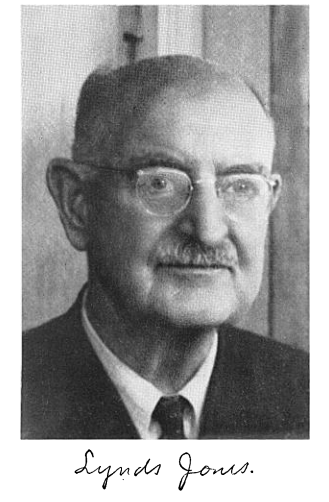
Lynds Jones, alas, is history. But on this significant birthday, we should make an effort to remember this 150-year-old, too, as the founder of many of what we think of as characteristic activities in American birding.

View Full Size Image
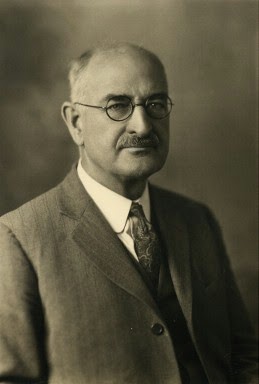
Lynds Jones.

Jones was an academic ornithologist—his was the first ornithology course ever offered at an American university, beginning at Oberlin in 1895—but it is in recreational birdwatching where his influence is still most deeply felt, if nowadays only rarely recognized.

Today ends the 2014-2015 season of the Christmas Bird Count. A highlight of many birders’ holiday season, this CBC was officially the 115th since Frank Chapman organized the first tally in December 1900. Noble as Chapman’s initiative was, and as invaluable as it has proved over the years, the idea wasn’t entirely his. Three years before the first count, on December 28, 1897, Lynds Jones and his best birding buddy and frequent co-author, William Leon Dawson, conducted what was a Christmas Count in all but name. The day was “just sharp enough to give zest to out-door life without discomfort,” and Jones and Dawson’s census detected 74 individuals of 11 species within a circle centered on downtown Oberlin. Jones noted that the little party was undeterred by “such little things as high picket and wire fences, thorny hedge-rows, inquisitive house-keepers, and threatened incarceration as lunatics”—plus ça change….

Counting—listing—would be the defining activity in Jones’s birding for the rest of his life. He required of his ornithology students at Oberlin that they keep a daily bird list in

a quadrille-ruled note-book dated at the top, with a line for weather, one for start and return, one for locality…. In the squares, on a level with the name of each species, and under the date, abbreviations are entered indicating where the species was seen… about how many seen, whether singing or silent….

And the professor was right there with them, keeping obsessive track. In 1898, Jones and Dawson took 87 birding trips from Oberlin. They reported in the Wilson Bulletin—Jones was the journal’s editor—that those excursions had recorded no fewer than 175 bird species for the year in Lorain County, Ohio. The year’s tally included twelve noteworthy rarities, among them a first county record of the Bewick’s Wren; Jones added four species to his county list, Dawson seven.

It’s all very familiar, isn’t it? So, too, are the justifications Jones offers for what must have seemed even then an otherwise rather pointless endeavor: the year’s “horizon,” as he and Dawson termed their efforts, had been occasion for the observers to improve their health by spending more time outdoors, and the team had “aroused public sentiment in favor of the birds.”

Not everyone had the leisure to conduct a big year, but almost any birder could get away for a “daily bird horizon.” In several of the years just before and after 1900, Jones was running a big day almost every month, reporting excitedly on new record tallies in the pages of the Wilson Bulletin. His account of a March effort strikes all of the same rhetorical notes that remain obligatory in writing about such activities even now:

The birds were everywhere…. At the end of the third mile there were 23 species recorded in my book, equaling the best previous record…. Had the weather been more favorable, it seems reasonable to suppose that the list for the day would have been even larger…. In the vicinity of the lake many of the species literally swarmed…. The list does not include ten species that were beyond question in the county on March 12. In spite of that this record is a phenomenal one in every way and will not soon be broken.

Not until the next year, at least.

Jones was an enthusiastic “patch birder,” happiest, it seems, birding in his own Ohio county. In the summer of 1900, though, he and Dawson made a 7000-mile trip west to the Pacific and back; Jones kept the lists, obsessively, tallying every species seen from the train window and in the field. The Wilson Bulletin began to look like an eBird report avant la lettre as Jones listed the 309 species recorded on the journey, “181 of them being new to the writer’s life list.”

It was a sign of the growing gulf between scientific ornithology and birdwatching that Jones and Dawson’s “Reconnoissance” attracted swift and withering criticism. The Condor reviewer admitted in the abstract that keeping lists “when speeding through the country on a railway flyer” could be useful, but Jones’s lists from various localities were “worthless.” Jones’s only defense was that “it was not intended that the results have any general scientific value,” a fateful admission if ever there was one. Nonetheless, he continued to publish censuses and horizons, his own and others’, in the pages of the Wilson Bulletin.

By 1916, however, the enthusiasm for publishing species lists appears to have peaked. Jones’s solicitation of reports went largely unanswered, and in the following year, Waldron DeWitt Miller and Charles H. Rogers published a truly serious criticism of big days on the Jonesian plan:

The value of [a] census… lies more in the accuracy of the count of individual birds … than in the total number of species noted.

Jones came around to the same view in an editorial note published in the Wilson Bulletin in 1924:

Time was when a mere enumeration of the birds that were to be found in some political division could be looked upon as a contribution to our knowledge of the science of Ornithology. For a large part of North America that is no longer true…. Your Editor… does not believe that mere enumeration of the species warrants the cost of publication.

Jones retired as Editor at the end of the year.

The Wilson Bulletin—now the Wilson Journal of Ornithology—would go on to become one of the preeminent scientific publications in the world. And it would largely leave American birdwatching behind. As ornithology became increasingly technical, birding grew ever more recreational, taking for its model the censuses, the horizons, and the frantic—and usually meaningless—record-keeping pioneered by Lynds Jones, the most influential birder most of us have never heard of.

View Full Size Image
Lynds Jones.


January 5, 2015by ulib-libraryjobs
Blog Reel, Featured Books

Of Birds and Poetry: Alexander Wilson and The Foresters

View Full Size Image
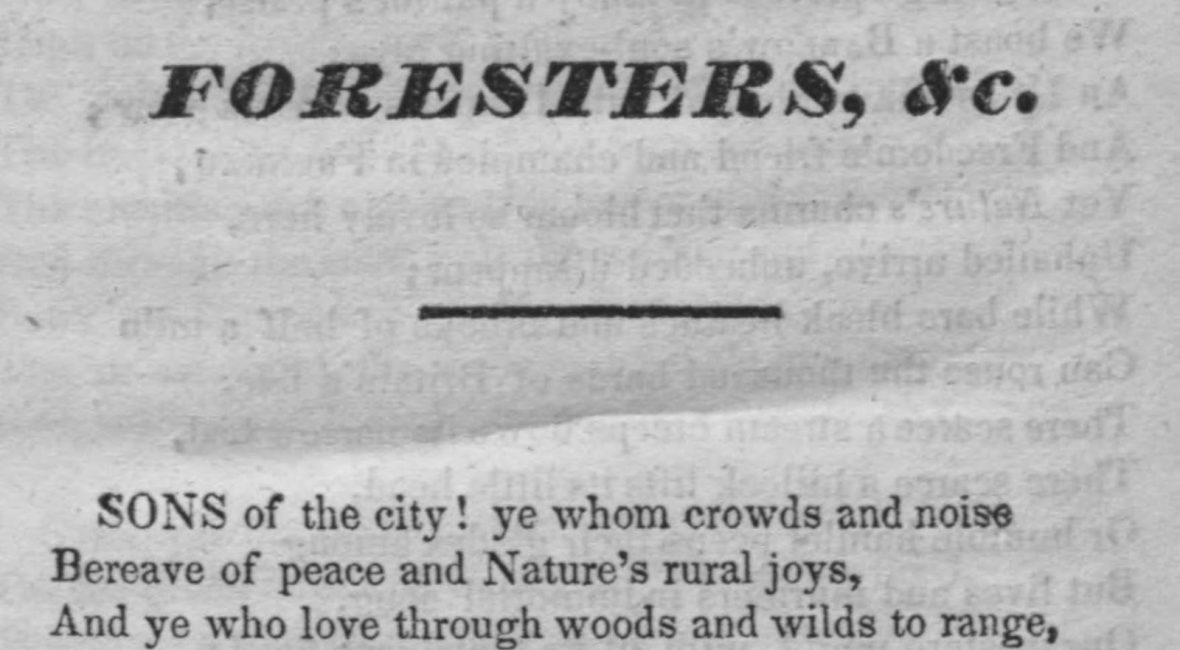
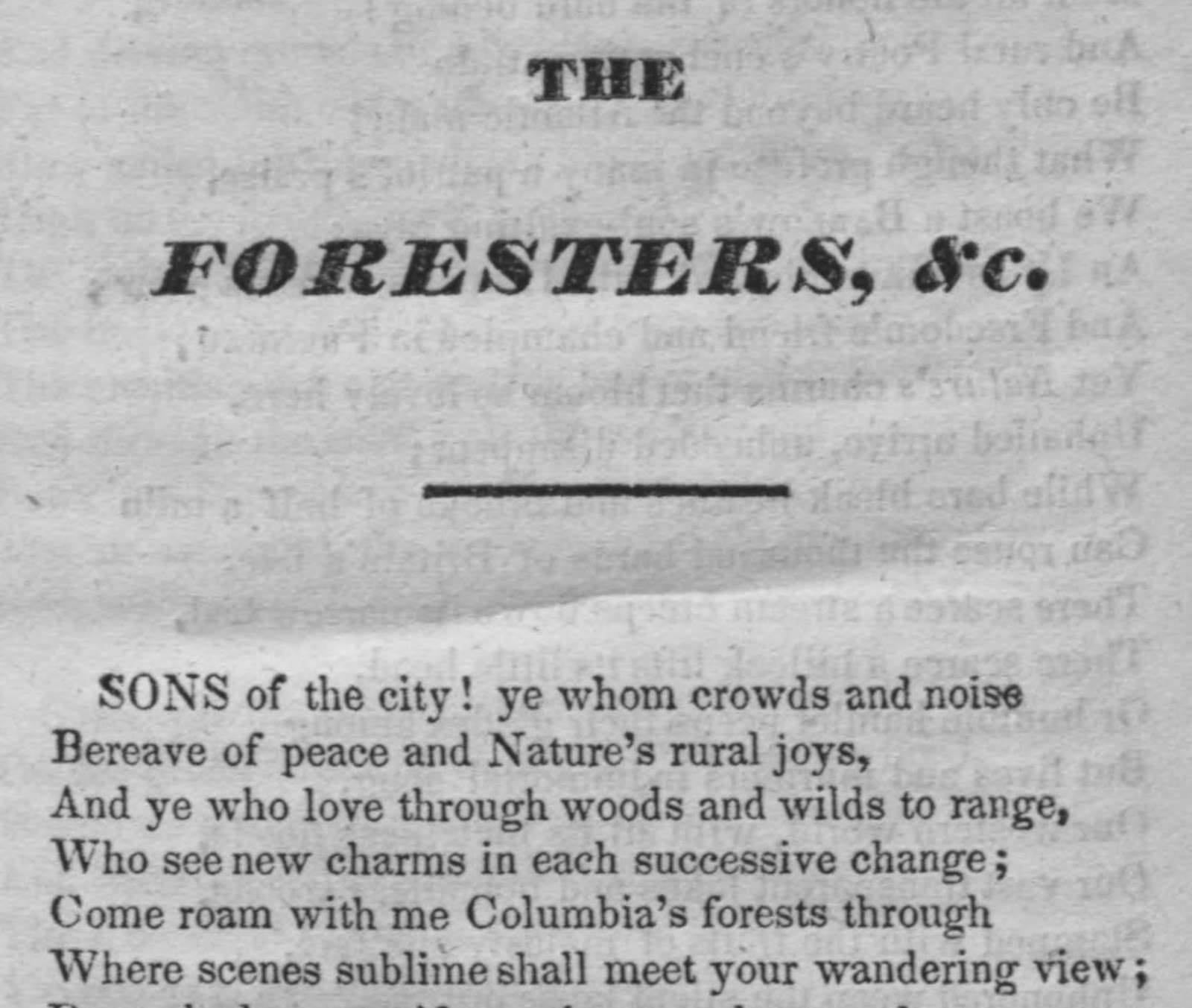
Wilson, Alexander. The Foresters. 1838. http://biodiversitylibrary.org/page/42435615.

210 years ago, in an autumn not unlike our own today, Alexander Wilson set out with two companions on a 1,300 mile trek, mostly on foot, from Philadelphia to Niagara Falls. Enchanted by the natural beauty of his adopted homeland, Wilson, Scottish by birth, detailed his two-month-long adventure in an epic 2,219 line poem entitled The Foresters: A Poem Descriptive of a Pedestrian Journey to the Falls of Niagara in the Autumn of 1804.

View Full Size Image
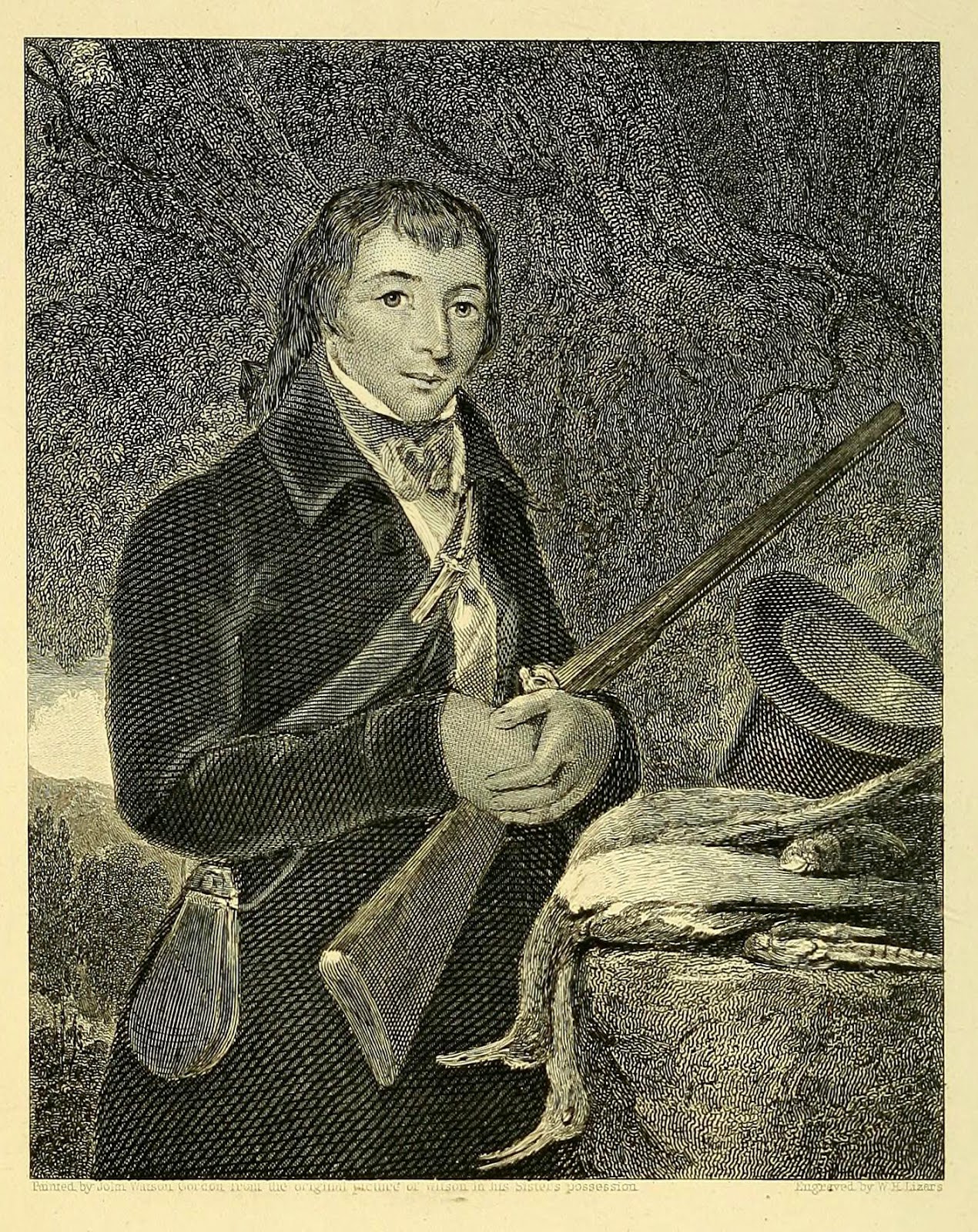
Portrait of Alexander Wilson. American Ornithology. http://biodiversitylibrary.org/page/41411265.

Wilson was born in Paisley, Scotland in 1766, but he emigrated to the United States in 1794 with his nephew, William Duncan. Although today known as one of the greatest ornithologists America has ever seen, Wilson’s interest in poetry was deeply rooted in his youth. During his time in Scotland, he wrote a great deal of poetry, much of which was satirical. In fact, it was after his arrest and imprisonment for writing a severely satirical poem against a local mill owner that Wilson decided to move to America.

Poetry and ornithology were not the only hats Wilson wore throughout his life. He was somewhat of a jack-of-all-trades. He earned his living as a weaver in Scotland, and upon moving to America he worked as a schoolteacher, peddler, engraver, surveyor, and editor. Nature, birds, and poetry, however, were his true passion.

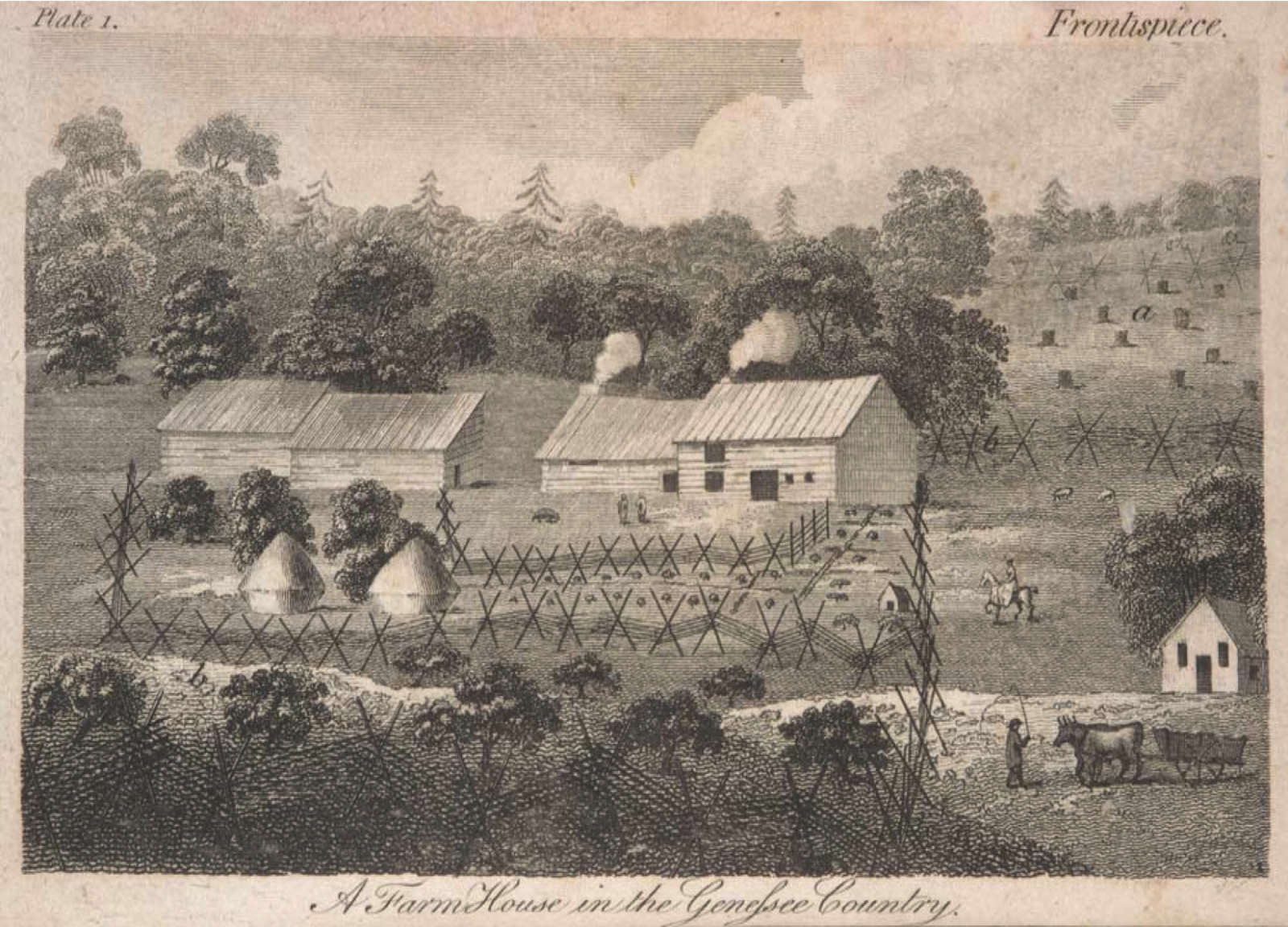
In 1798, four years after they had moved to America, Wilson and his nephew William Duncan, purchased a farm in Ovid between Seneca and Cayuga Lakes, New York, securing 150 acres of uncleared land for $750. Wide-spread outbreaks of yellow fever in Philadelphia, where they had been living, and family ties in upstate New York, prompted their relocation to this rich, largely untapped land in the Finger Lakes region. After the purchase, Duncan began clearing the land for farming while Wilson resumed his teaching activities in a school in Milestown near Philadelphia and accepted odd jobs such as surveying to raise money for the farm.

View Full Size Image
A farmhouse in Genesee Country, perhaps like what Wilson and Duncan would have had. Sutcliff, Robert. Travels In Some Parts of North America, In the Years 1804, 1805 and 1806. York [England]: Printed by C. Peacock … for W. Alexander, and sold by him, 1811.

In late October, 1804, Wilson, Duncan, and one of Wilson’s students, Isaac Leech, embarked on their great adventure through the Western Frontier, leaving from Philadelphia and heading west through Pennsylvania towards Niagara Falls.

The journey was an ambitious, enlightening, and multi-faceted one. Within his Foresters poem, Wilson provides descriptions of the homes, taverns, and inns they stayed in, reflects upon the virtues of teaching (a profession he clearly believes is under-valued), and describes in vivid narrative the natural beauty and wildlife they encounter. His writings also reveal the progression of human settlement and land development along the Susquehanna, with Wilson remarking on how changed the wilderness was since last he visited it.

View Full Size Image
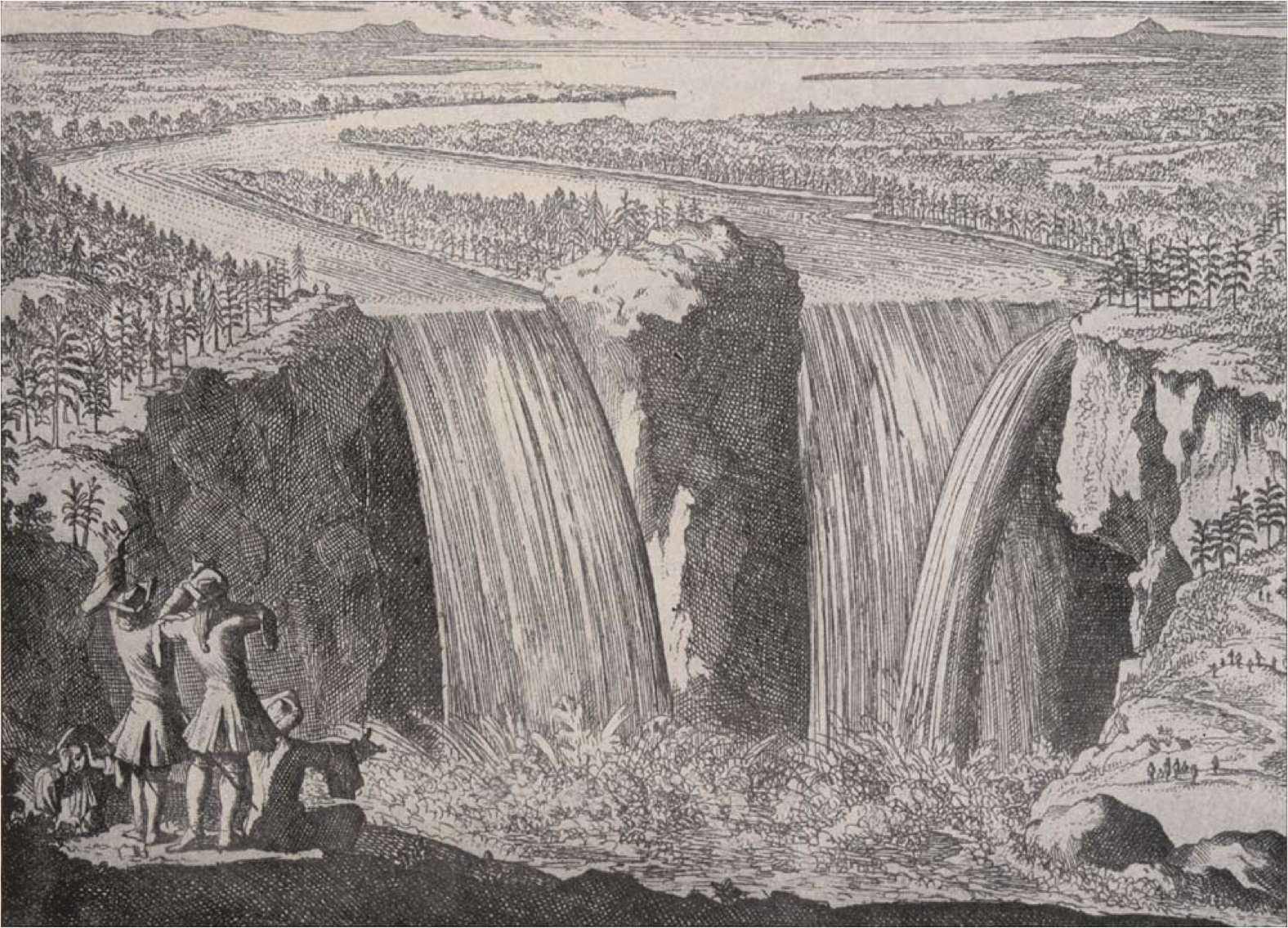
Niagara Falls. Dow, Charles M. Anthology and Bibliography of Niagara Falls. Albany [N.Y.]: State of New York, 1921. Vol 1. http://biodiversitylibrary.org/page/39062520.

Finally, in late November, the travelers reach the climax of their expedition: Niagara Falls. The Falls, a nearly inaccessible wonder of the New World in the early 1800s, is a thing of matchless beauty in Wilson’s mind.

“Fixed to the rock, like monuments we stood,
On its flat face, above th’ outrageous flood,
There, while our eyes th’ amazing whole explored,
The Deep loud roar our loudest voice devoured.
 
High o’er the wat’ry uproar, silent seen,
Sailing sedate, in majesty serene,
Now ‘midst the pillard spray sublimely lost,
And now, emerging, down the rapids tost,
Swept the gray eagles, grazing calm and slow,
On all the horrors of the gulf below;” (pg. 75-76)

With their purpose accomplished, Wilson, Duncan, and Leech set their sights homeward. On December 7, 1804, Wilson returned once again to Philadelphia, penniless but enthused by his adventure. Wilson published his poem in serial form in 10 issues of “The Port Folio,” a leading literary magazine in Philadelphia, from 1809-10. The poem was first published in book format in 1818 and again in 1838, with little difference between the editions. The 1838 edition of The Foresters is available in BHL from Cornell University Library.

The adventure represented not only an important literary venture for Wilson, but solidified in him the desire to pursue his dream to classify, describe, and illustrate all bird species in the United States. Wilson, in fact, viewed this trip as an opportunity to collect and observe American birds. Early on in the poem, Wilson indicates that he came prepared to sketch, bringing along “colors, paper, and pencils.” What’s more, he frequently describes hunting various birds, including ducks, egrets, herons, eagles and geese, which he would later use as reference for his great masterpiece, American Ornithology.

View Full Size Image
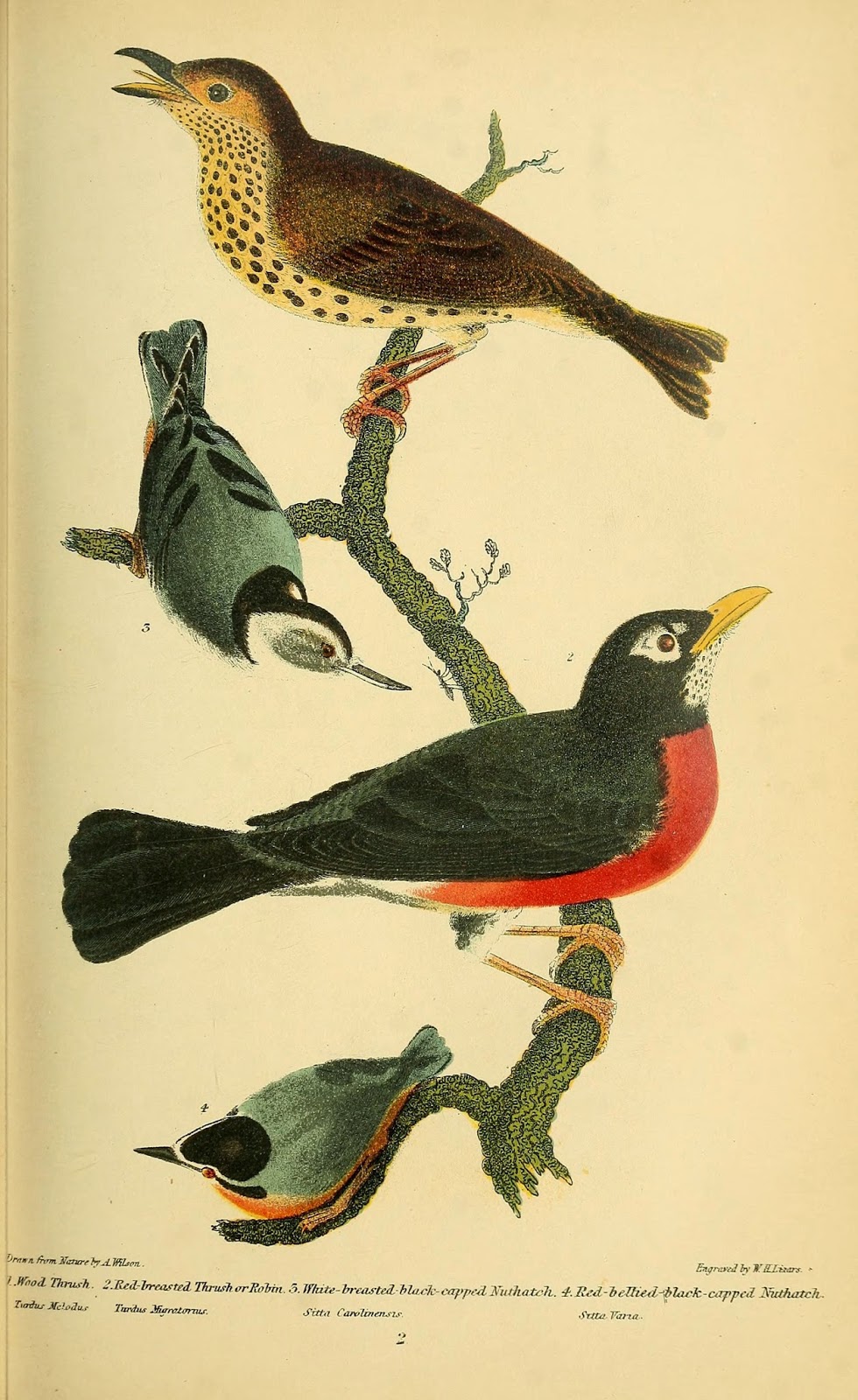
Wood Thrush, Robin and Nuthatches. Wilson, Alexander. American Ornithology. http://biodiversitylibrary.org/page/41411340.

At the age of 40, just seven years before he died of dysentery and exhaustion, Wilson left teaching and spent the rest of his life traveling over 10,000 miles observing and collecting birds, which he chronicled and illustrated in American Ornithology. The publication included over 260 species, 48 of which were new to science, and was published in at least 10 editions over 70 years.

View Full Size Image
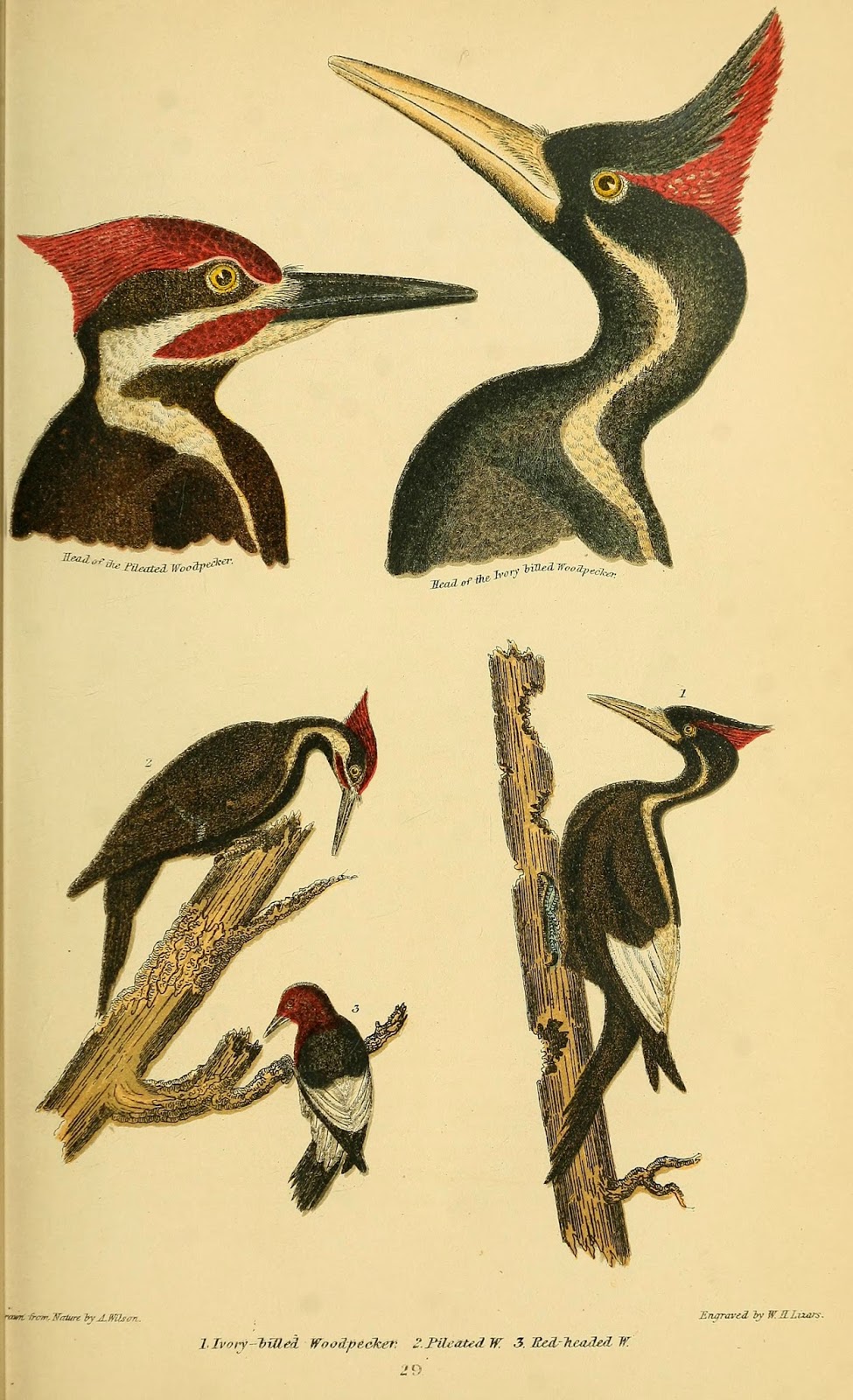
Ivory-Billed, Red-Headed, and Pileated Woodpeckers. Wilson, Alexander. American Ornithology. http://biodiversitylibrary.org/page/41424289.

Alexander Wilson was a remarkable man who laid the foundations for American ornithology. Though his formal education ended at the age of thirteen, his natural intelligence, creativity, and curiosity propelled him to explore his natural world and fueled a thirst for knowledge that rivaled the greatest intellectuals of the day. His wonderful poetic descriptions within The Foresters offer a unique opportunity to experience Wilson at a personal level and appreciate the awestruck wonder he felt within the wilds of America.

Far spreading forests from its shores ascend;
And tow’ring headlands o’er the flood impend;
These, deep below, in softened tints are seen,
Where Nature smiles upon herself serene,
O lovely scenes! In ecstasy I cried,
That sink to nothing all the work of pride! (pg. 52)

Learn more about Alexander Wilson, his Niagara adventure, and ornithological contributions in Cornell University Library’s Majesty Sublime exhibition.

View Full Size Image
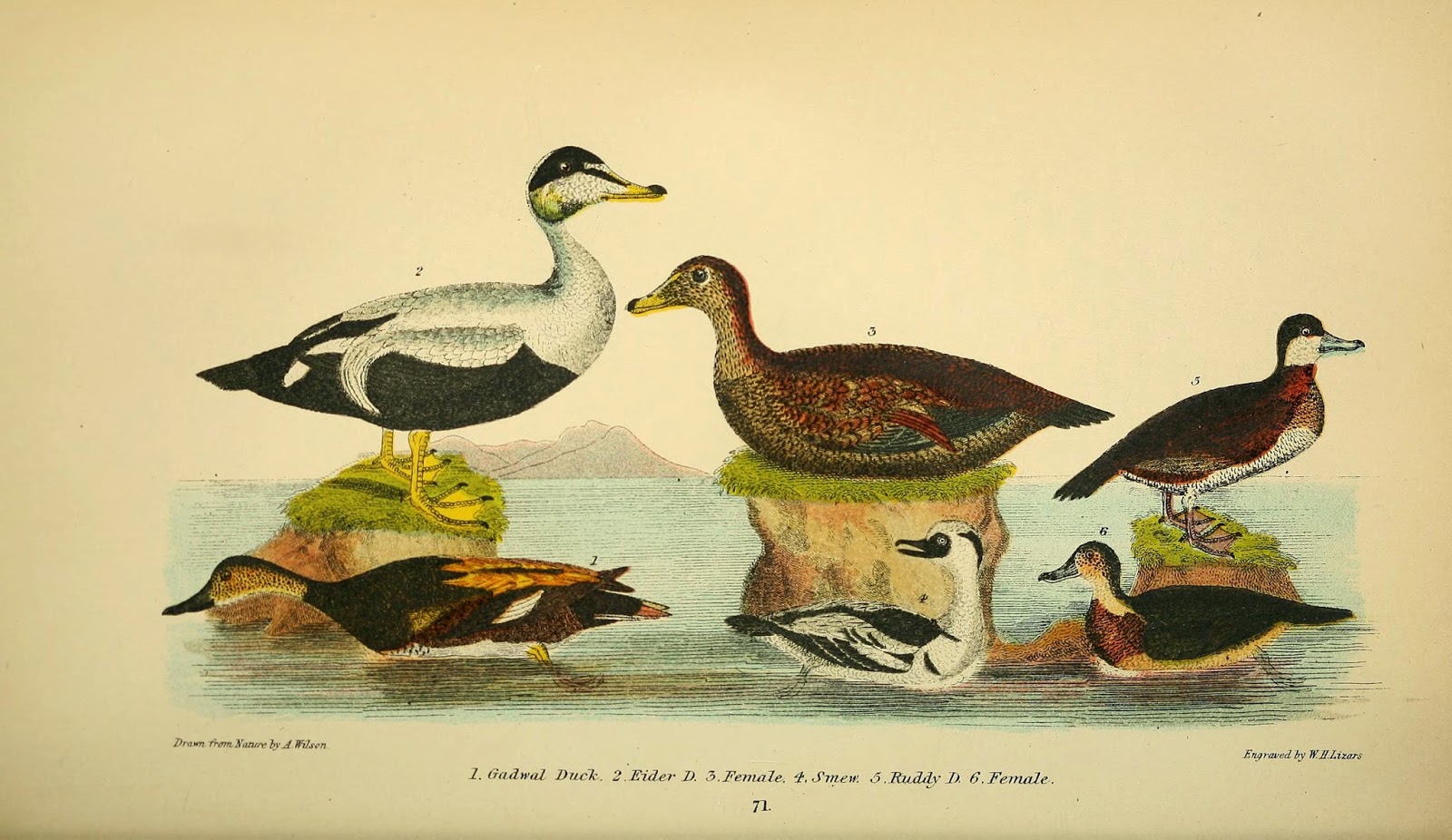
Ducks. Wilson, Alexander. American Ornithology. http://biodiversitylibrary.org/page/41423704.

This post by Grace Costantino based on a presentation by Marty Schlabach (Food and Agriculture Librarian, Mann Library, Cornell University) entitled “Of Birds and Poetry: Alexander Wilson’s 1804 Expedition to Niagara Falls,” presented to the Buffalo Ornithological Society on November 9, 2005. Additional information obtained from the Majesty Sublime exhibition by Ashley Miller (Mann Library, Cornell University).

November 25, 2014by ulib-libraryjobs
Blog Reel, Featured Books

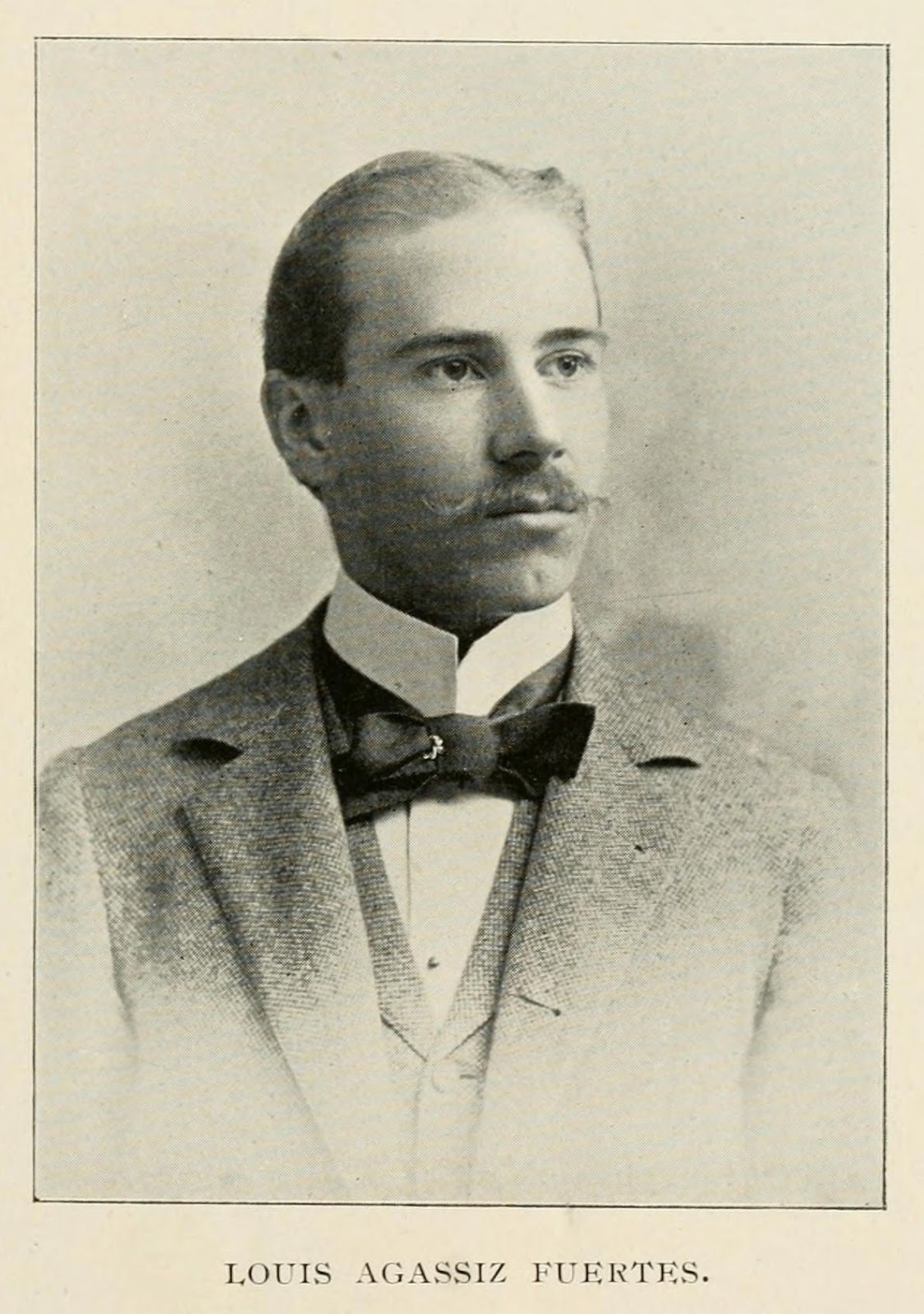
Hispanic Heritage Month: The Life and Work of Louis Agassiz Fuertes

View Full Size Image
Louis Agassiz Fuertes. The Osprey. v. 1 (1896-97). http://biodiversitylibrary.org/page/8767127

The artwork of Puerto Rican-American Louis Agassiz Fuertes has been featured a few times before on the BHL blog. His paintings are beautiful and eye-catching, and always a treat to visit. Through titles available in BHL, we can even see the evolution of Fuertes’s career— from his earliest professional work to his last.

The Ithaca-born ornithologist and artist often drew as a young child, sketching domestic animals and wild birds alike. Earliest recording of his painting birds was at the age of 14 when he was determined to capture the unusual beak of a Red Crossbill. At a young age, his work started to garner him some notoriety with professors at Cornell and the local community, even resulting in an exhibit hosted by the local Christian Association. By 17 he’d even become an Associate Member of the American Ornithologists Union.

However, when he entered Cornell University, Fuertes’s career was still in question. At the time there weren’t any courses in ornithology at Cornell, and his father (despite urgings from his peers) at first did not see how his son’s artistic leanings could provide a suitable life. As a result, Fuertes took courses in architecture.

It was a chance meeting that changed everything. On a trip to Washington, D.C. with the Cornell University Glee Club, Fuertes met with a friend’s uncle. This uncle just happened to be ornithologist Elliot Coues, a founding member of the American Ornithologists Union.

View Full Size Image
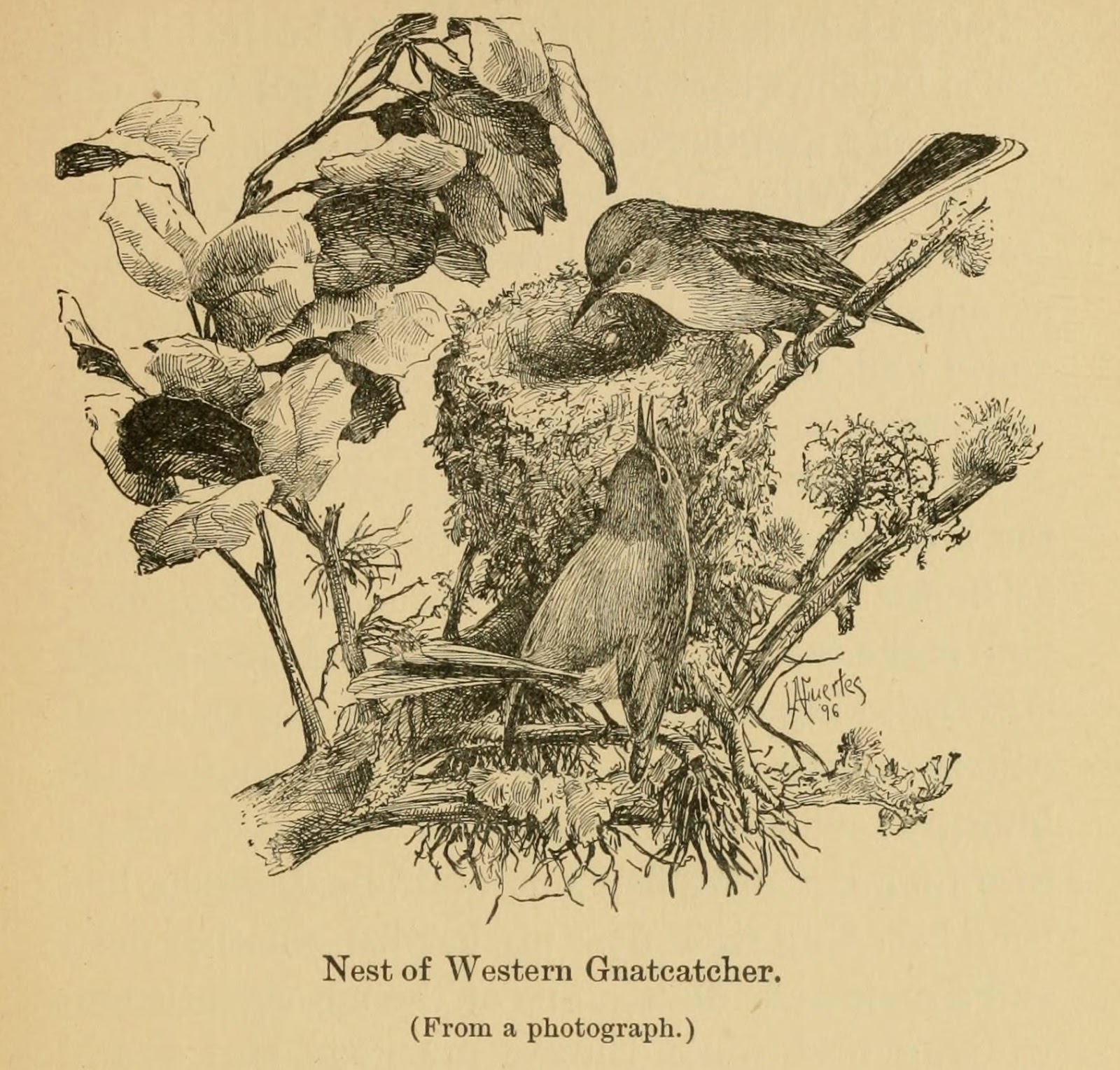
Nest of Western Gnatcatcher. A-Birding on a Bronco. (1896) http://biodiversitylibrary.org/page/12789735

Coues recognized Fuertes’s potential, and provided him with advice and material support to encourage his scientific and artistic pursuits. It was clear Fuertes was to become a professional painter of birds, and after college he studied under naturalist and artist Abbott H. Thayer. The two would become quite close, even so far as considering one another family.

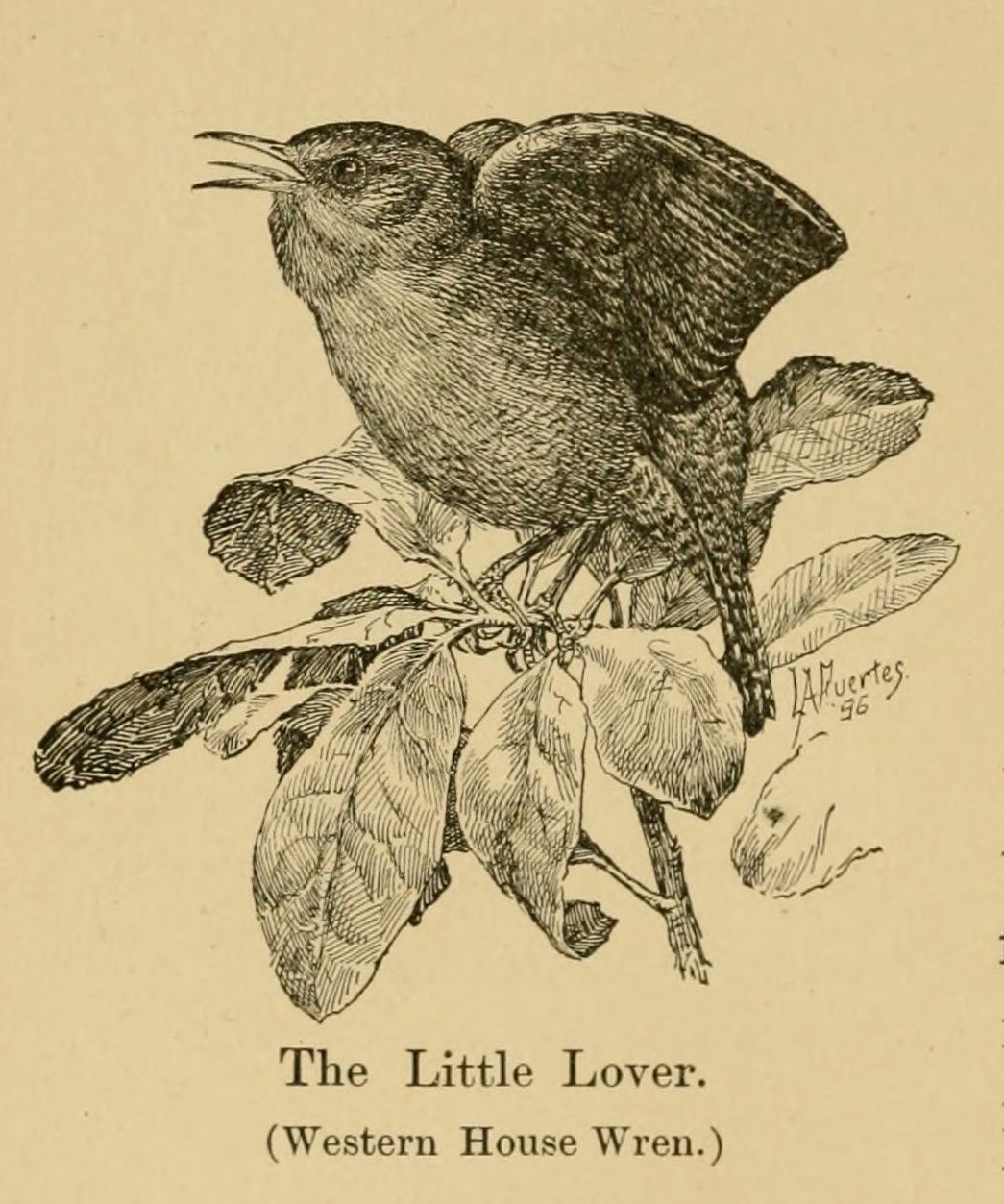
Some of Fuertes’s earliest artwork can be found in publications for Cornell University. However his first professional illustrations were printed in A-birding on a Bronco (1896) by Florence Merriam Bailey, published just one year before Fuertes graduated from Cornell. The pen-and-ink drawings mark the start of a career that would eventually have Fuertes in high demand. Although considered his early works, it is clear Fuertes’s youthful sketching had paid off, resulting in a well-developed style demonstrated in detailed images of birds, their nests, and the surrounding flora.

View Full Size Image
The Little Lover. A-Birding on a Bronco. (1896) http://biodiversitylibrary.org/page/12789693

It’s no surprise that Coues would write to The Osprey to note: “[My] examination of a great many of his designs, both in black-and-white and in natural colors, makes me think Mr. Fuertes the most promising young artist of birds now living, and one whose work already places him in the very first rank.”

It’s an interesting look at the early period of Fuertes’s thirty-year career, during which he would become, not just a prolific artist, but a well-liked and admired colleague and professor. His contemporaries would note his kind, light-hearted nature, and his lectures at Cornell would garner a full house at attention. In the tradition of 19th-century professors who considered themselves poets, Albert W. Smith would recite a memorial poem about Fuertes wherein he says, “under touches of his magic brush,/The canvass [sic] came alive.” Smith would go on to say:

All children knew at once he was their friend;
All men and women felt his lasting charm.
He loved all lovely things that love men’s hearts;
And when he found new beauty, lo, he turned
To share it with some friend.

His kind nature would extend to how he treated his specimens, one account noting how he would stroke and coo at a recently shot bird. This love of birds and sympathetic nature are often repeated in articles and obituaries written about him.

In the end Louis shared the natural beauty of the world not just with those around him, but with the general public who had a growing interest in the natural world. His final contributions were the paintings for Album of Abyssinian Birds and Mammals (1930), the originals of which managed to survive unscathed in the car accident which killed Fuertes in 1927. Many publications which feature Fuertes’s artwork remain available to the public, dozens of which are offered through the BHL.

View Full Size Image

This blog post is a preview of two upcoming Biodiversity Library Exhibitions on women naturalists, and Latino natural history. The exhibitions are sponsored by the Smithsonian Women’s Committee, and will highlight several women and Latino naturalists represented in the BHL collection.

October 2, 2014by mkahn
Blog Reel, Featured Books

Visitors from Paradise: The Paradiseidae

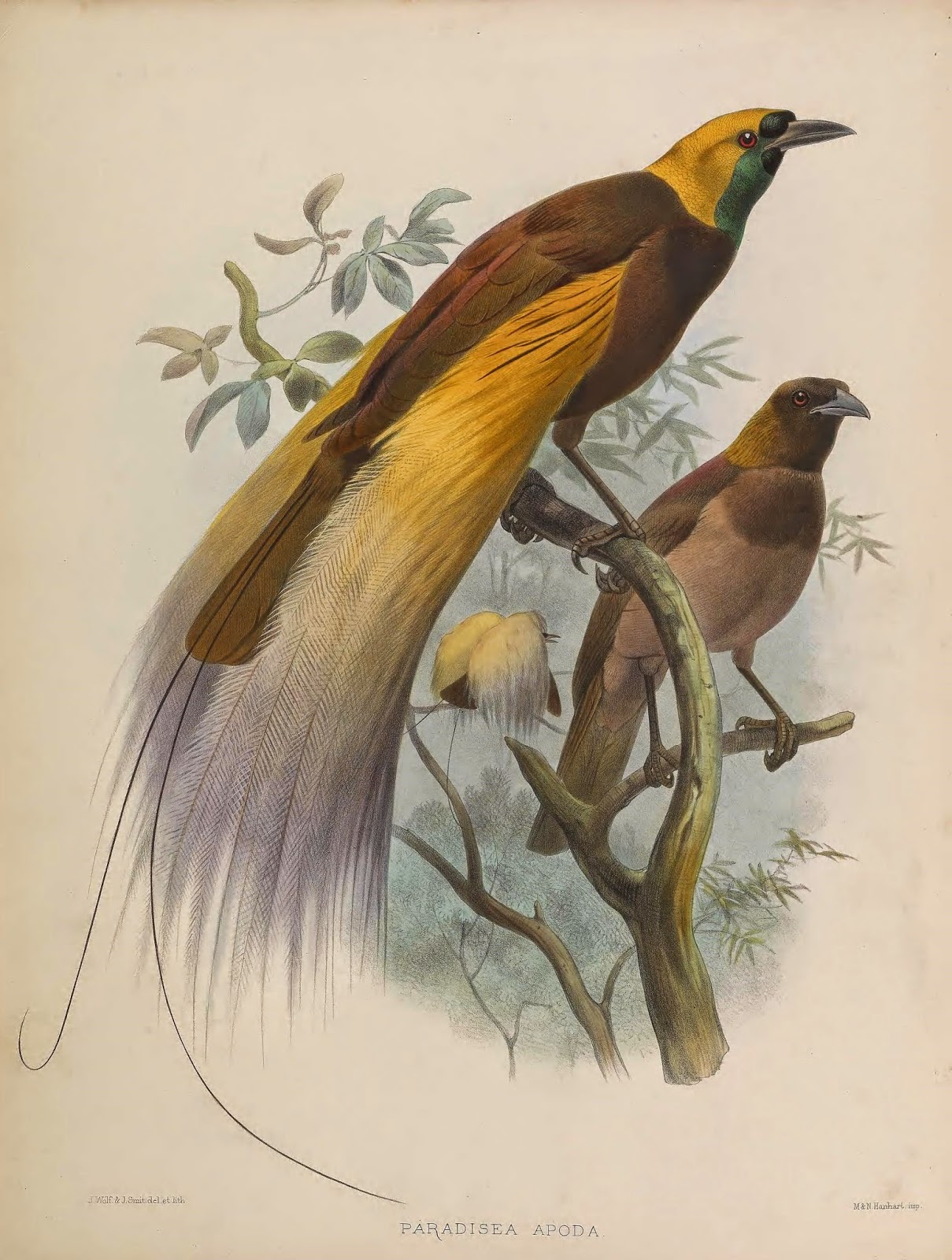
Deep within the rainforest canopy of the Aru Islands, just west of New Guinea, two male Greater Birds-of-Paradise dance among the branches in carefully coordinated steps, their magnificent yellow, white, and maroon plumage undulating gracefully to the rhythm of their own unique song.

Carl Linnaeus named this species Paradisaea apoda, meaning “legless bird-of-paradise.” The misnomer was based on early trade-skins prepared and shipped to Europe without feet, feeding a notion that these “visitors from paradise” glided endlessly through the air, remaining aloft until death.

Naturalist and explorer Alfred Russel Wallace (who simultaneous to Darwin developed the concept of evolution by means of natural selection), spent extensive time in the Aru Islands during the mid-1800s, collecting and describing many species, including P. apoda. Upon receiving a specimen, Wallace declared the bird “the most perfectly lovely of the many lovely productions of nature,” but lamented that, should “civilized man” ever reach these “virgin forests,” he would surely disturb nature’s balance and cause the creature’s extinction.

View Full Size Image
Paradisaea apoda. Elliot, Giraud Daniel. A Monograph of the Paradiseidae.
http://biodiversitylibrary.org/page/44792765

Daniel Giraud Elliot, one of the most important American ornithologists and naturalists of the nineteenth century, was enthralled with Wallace’s work, and his descriptions of birds of paradise. While Wallace was not the first western naturalist to see Birds-of-Paradise in the wild (a distinction held by René Primevère Lesson during the 1822-25 circumnavigation voyage of the French La Coquille), his accounts are poetic and highly detailed. They provided inspiration for one of Elliot’s crown-jewels, A Monograph of the Paradiseidae.

View Full Size Image
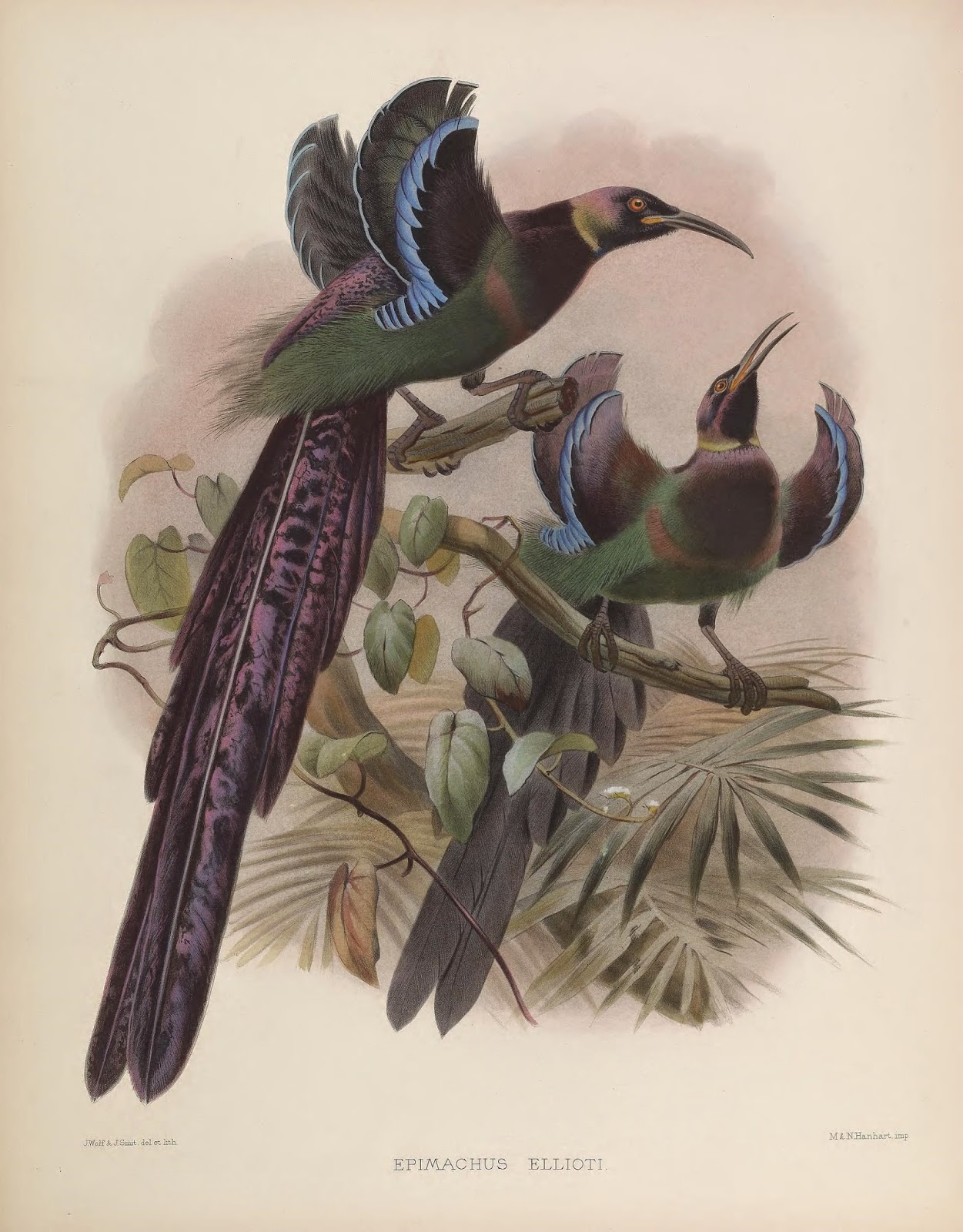
Epimachus ellioti (named after Elliot). Elliot, Giraud Daniel. A Monograph of the Paradiseidae.
http://biodiversitylibrary.org/page/44792854

Born in 1835, Elliot achieved many prestigious accomplishments over his lifetime. In 1869, he became one of the scientific founders of the American Museum of Natural History (for which his personal collection of North American birds comprised some of the museum’s first accessioned specimens). In 1894, Elliot became the curator of the Department of Zoology for the Field Museum of Natural History. He also traveled extensively, often for years at a time, and published hundreds of papers and multiple monographs relating his findings and experiences. These considerable accomplishments are even more impressive considering Elliot’s limited formal education.

While Elliot produced many works on mammals, his true passion was birds. He became famous for his monographs on bird families, which summarized previous taxonomic information about the species included, while also providing new observations and analysis based on his travels and museum specimens. He used his own wealth and formidable connections with elite European contacts to finance these publications.

View Full Size Image
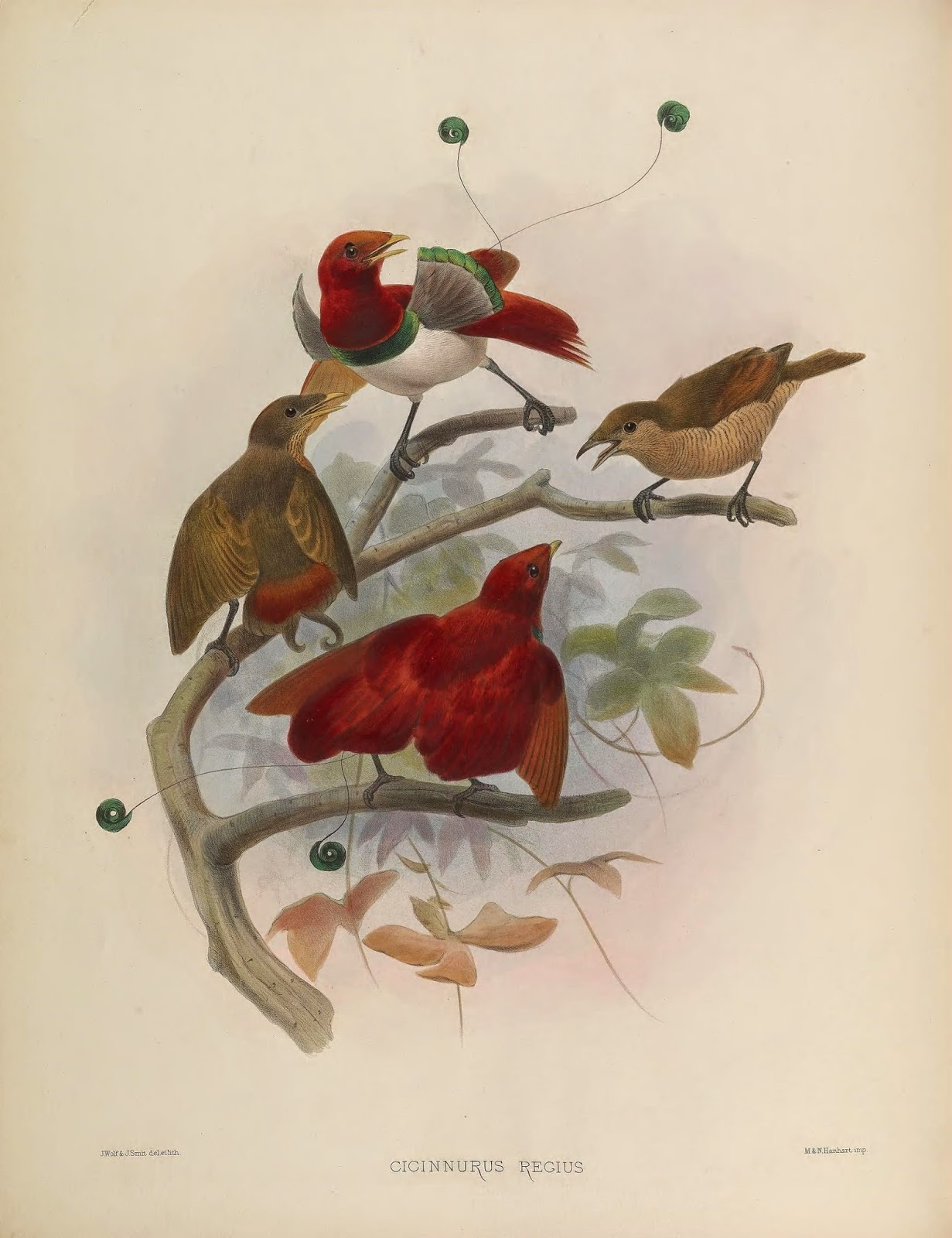
Cicinnurus regius. Elliot, Giraud Daniel. A Monograph of the Paradiseidae.
http://biodiversitylibrary.org/page/44792836

A Monograph of the Paradiseidae, published in London in 1873, is a large folio with 37 lithographs (36 of which are hand-colored) detailing typical Bird-of-Paradise species from the Paradiseae family, as well as members of the Epimachinae (now Epimachus genus) and Tectonarchinae (now Ptilonorhynchidae) families. His fourth illustrated monograph, Elliot chose the Birds-of-Paradise as his subject in order to finally present a “correct idea” of the birds’ appearance. At the time of his writing, quality specimens were finally making their way to Europe, replacing the “mutilated” skins that naturalists has previously relied upon. Elliot also acknowledges the contributions of Prof. Schlegel from the Museum at Leyden, John Gould, and M.J.P. Verreaux, all of whom allowed him to examine their own specimens to inform his publication.

The original watercolor paintings on which Paradiseidae’s lithographs are based were created by German artist Joseph Wolf, who also executed work for David Livingstone, Henry Walter Bates, John Gould (think the incredible Birds of Asia masterpiece), and Wallace himself. Of Wolf, Elliot wrote, “The drawings of Mr. Wolf will, I am sure, receive the admiration of those who see them; for, like all that artist’s productions, they cannot be surpassed, if equalled, at the present time.” The lithography for the work was performed by Joseph Smit, with coloration undertaken by John Douglas White.

View Full Size Image
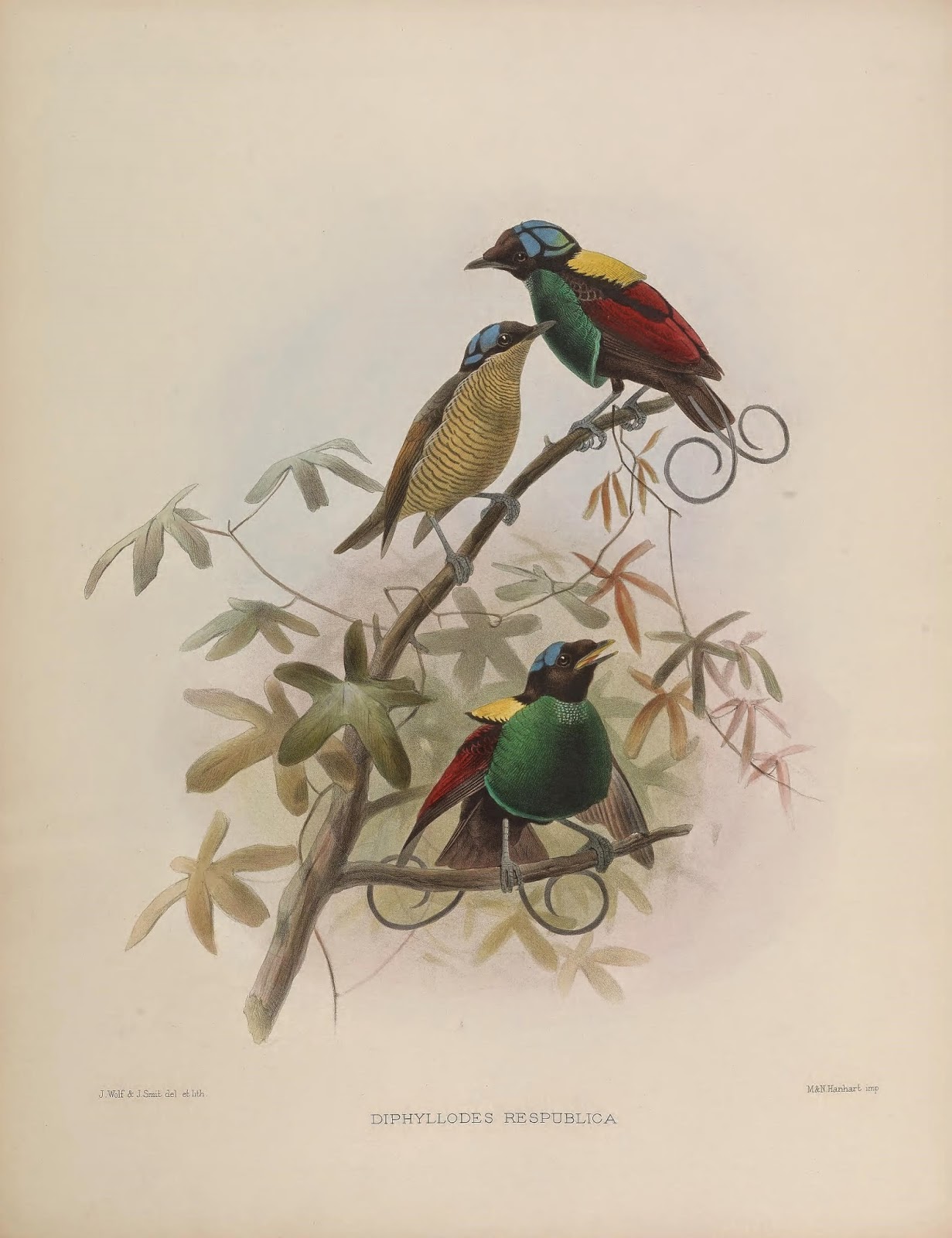
Cicinnurus respublica. Elliot, Giraud Daniel. A Monograph of the Paradiseidae.
http://biodiversitylibrary.org/page/44792828

Elliot’s regard for Wallace cannot be mistaken. For the book’s dedication, he writes, “To Alfred Russel Wallace, whose fame as a traveler is only eclipsed by that which he has gained as a naturalist; and to whom we are indebted for nearly all our authentic information regarding the habits of the many species of the Birds of Paradise.”

Elliot’s A Monograph of the Paradiseidae is one of the “most admired bird books ever produced.” As a commodity, it is also very valuable, fetching a hefty $45,924 USD price tag at a 2007 Christie’s auction. Thanks to the Smithsonian Libraries, however, you can view and download this book for free in BHL.

The digitized Smithsonian copy comes from the Joseph F. Cullman 3rd Library of Natural History, which holds the Smithsonian’s collection of over 10,000 rare books in anthropology and the natural sciences. The full collection of illustrations can also be found in the BHL Flickr.

View Full Size Image
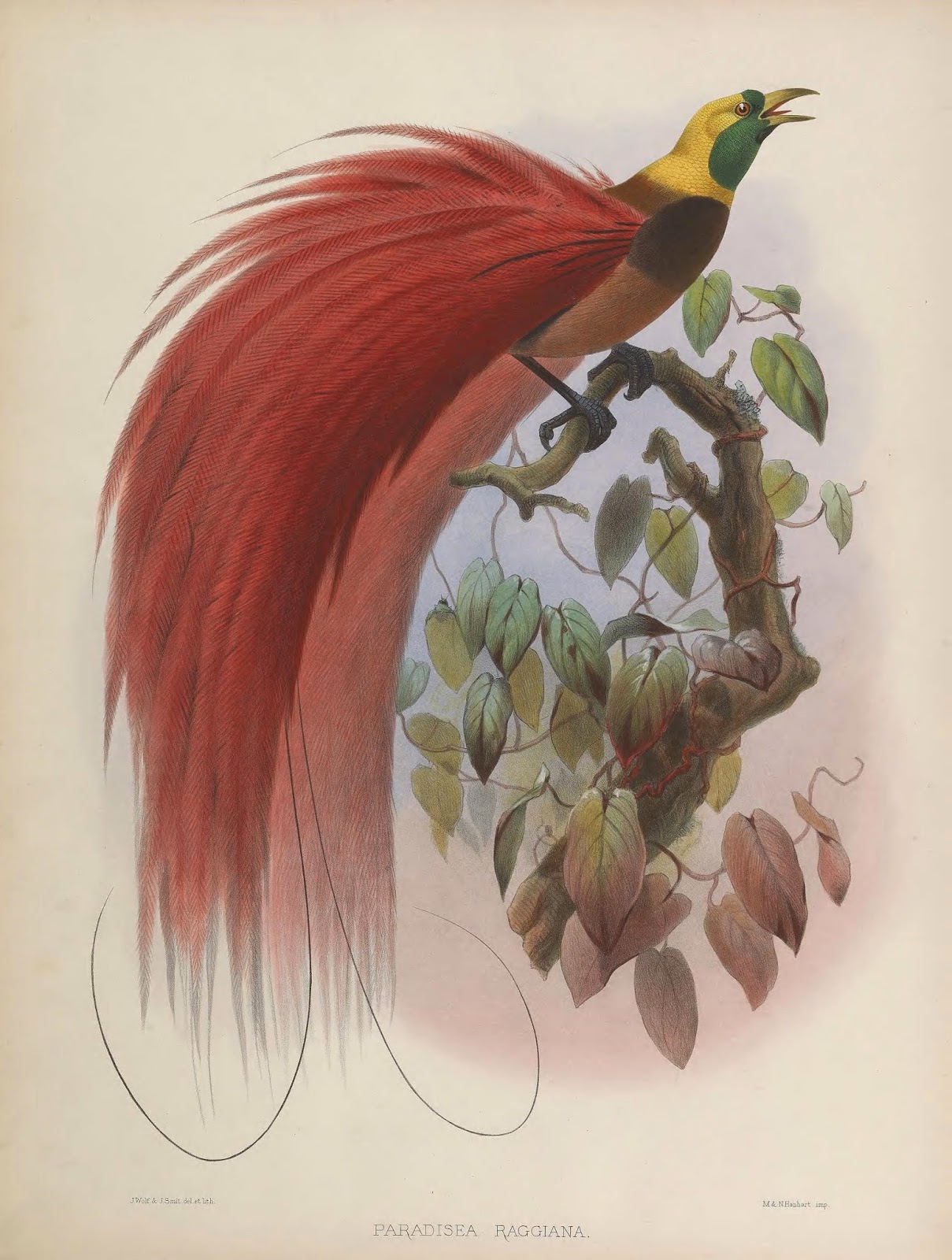
Paradisaea raggiana. Elliot, Giraud Daniel. A Monograph of the Paradiseidae.
http://biodiversitylibrary.org/page/44792727

Today, there are 41 recognized species of birds of paradise. They are all found almost exclusively in New Guinea and its satellites, with a few exceptions in the Maluku Islands and eastern Australia. Fortunately, Wallace’s prophecy has not come true. The Greater Bird of Paradise is common throughout its range, evaluated as a species of “least concern” by the IUCN. Currently, only 3 of the 41 recognized species are listed as “threatened”: Wahnes’s Parotia, the Blue Bird of Paradise, and the Black Sicklebill. Several are “near-threatened,” however, and hunting and habitat loss continues to be a concern.

As you enjoy the spectacular Paradiseidae illustrations, remember that awareness is a key component in conservation. We can all play a part in mitigating factors that contribute to species loss. And a tax-deductible gift to BHL can help us continue to provide scientists with the information they need to identify and protect our biodiversity. Let’s ensure that these beautiful birds are here for generations to come!

View Full Size Image
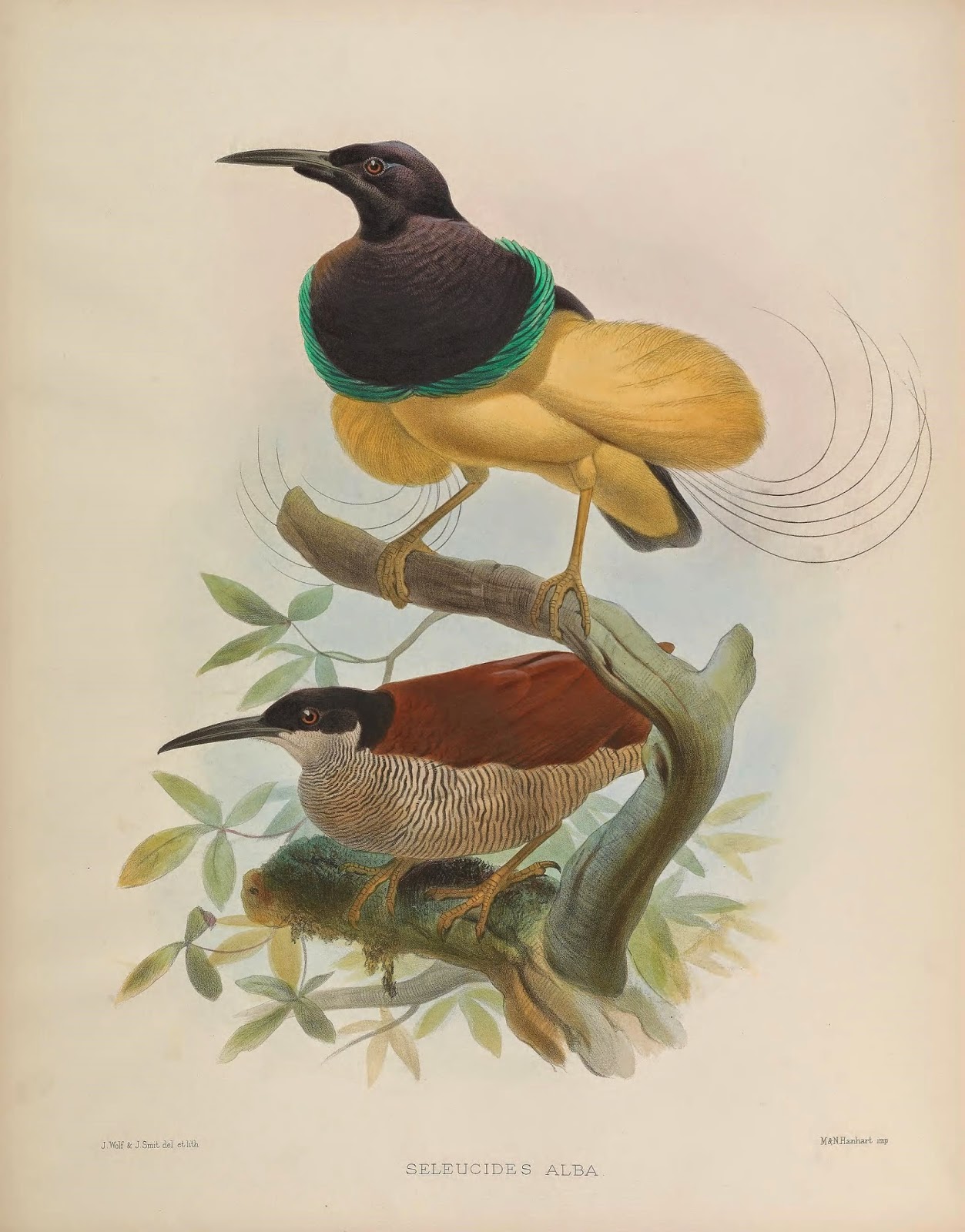
Seleucidis melanoleucus. Elliot, Giraud Daniel. A Monograph of the Paradiseidae.
http://biodiversitylibrary.org/page/44792862


September 25, 2014by michelle.underhill
Blog Reel, Featured Books

A Bookplate for the Birds

Swann, H. Kirke, 1871-1926. A Synopsis of the Accipitres (Diurnal Birds of Prey), Comprising Species and Subspecies Described up to 1920, with their Characters and Distribution. 2nd edition, revised and corrected throughout. London: Privately Printed for the Author, 1921-1922.
This post originally published on the Smithsonian Collections blog, April 16, 2013. 
View Full Size Image
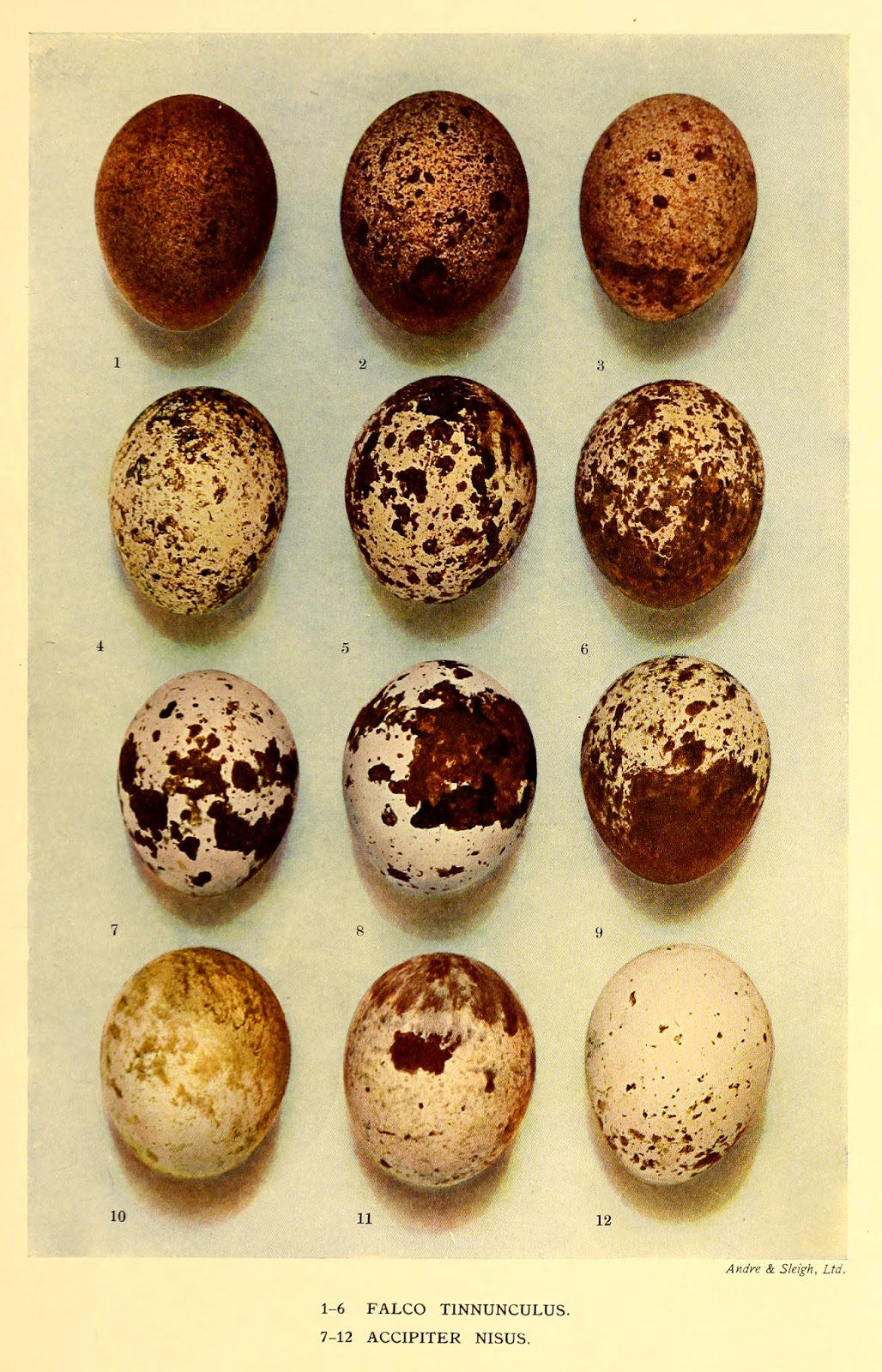
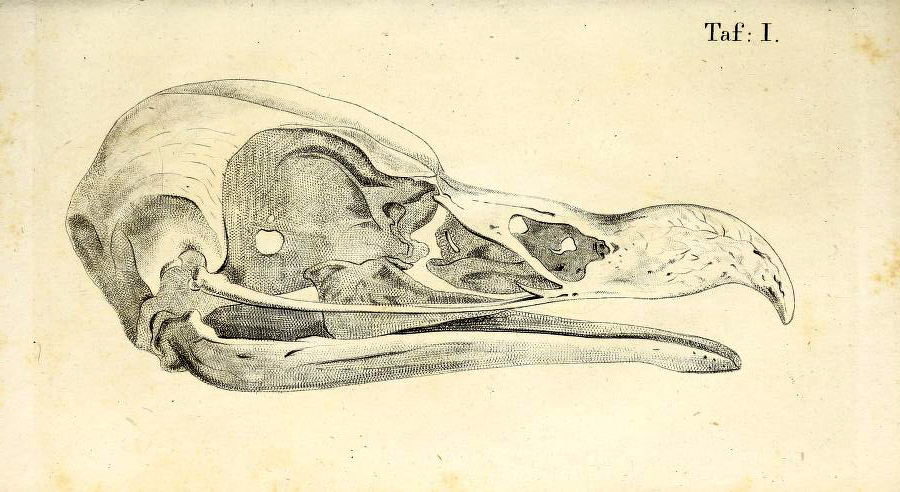
Plate illustrating Swann’s Synopsis of the Accipitres

The Joseph F. Cullman 3rd Library of Natural History has a number of rare volumes formerly owned by naturalists. Some of the books have autographs or inscriptions attesting to their provenance. Occasionally, a book may have a special binding design or stamp to honor its former owner. However, my favorite symbol of ownership happens to be the custom bookplate, and the book featured this week has a particularly elegant example.

The book, recently acquired by the Cullman Library, is A Synopsis of the Accipitres (Diurnal Birds of Prey), by H. Kirke Swann (isn’t that a great name for the author of a bird book!). A noted ornithologist, Swann (1871-1926) worked for the natural history bookseller, Wheldon & Wesley, in Great Britain. Swann’s research on the Accipitres was based on his own collection of bird eggs and skins, as well as the fabulous collections at the British Museum.

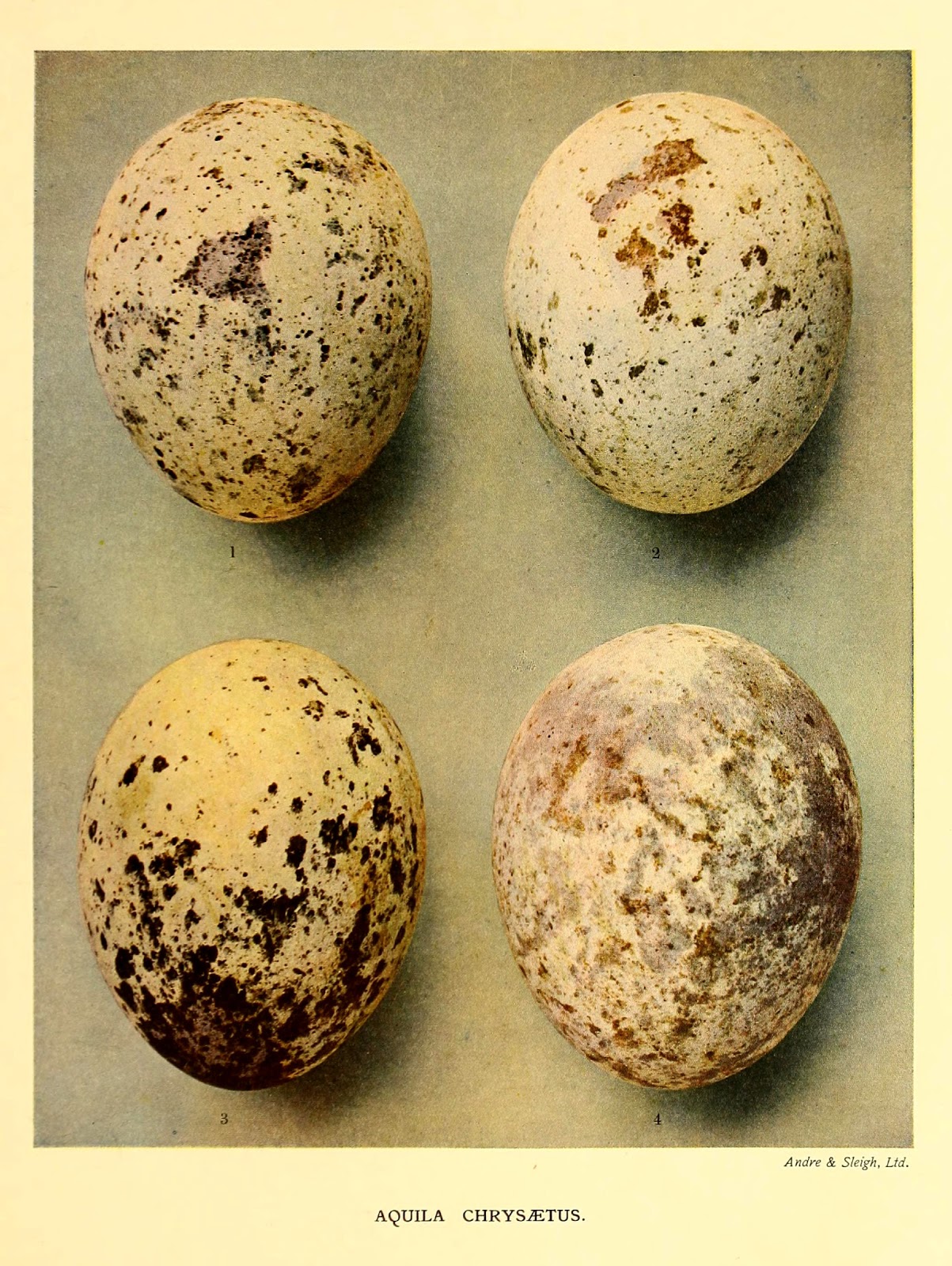
This copy of Swann’s Synopsis of the Accipitres is from the second revised and corrected edition, privately printed for the author on large paper during the years 1921 and 1922. Only twenty-eight copies were printed in this edition. The text includes twenty-two leaves of colored plates illustrating eggs from the species featured in Swann’s book. A smaller, octavo-sized version of the second edition, lacking the colored plates, was also issued in 1921-1922.

View Full Size Image
Plate illustrating Swann’s Synopsis of the Accipitres


View Full Size Image
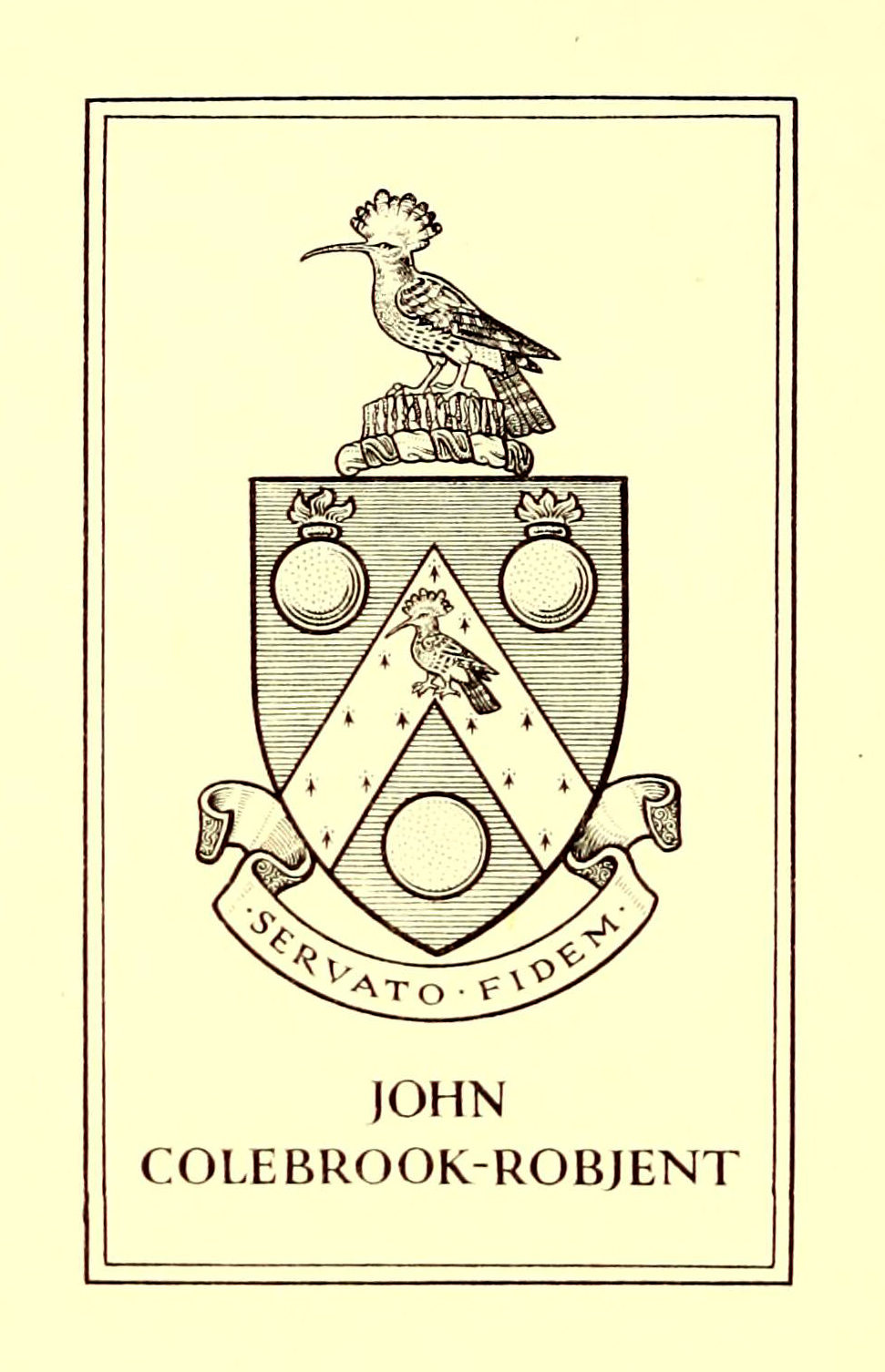
Bookplate of John Colebrook-Robjent

The Cullman Library’s copy of the Synopsis of the Accipitres has a handsome bookplate identifying its former owner, Major John Frederick Robert Colebrook-Robjent. An accomplished ornithologist who lived on a farm in Zambia and specialized in the study of wild birds’ eggs, Major Colebrook-Robjent commissioned this bookplate which reflected his interest in birds. The design features a Hoopoe, an Old World bird with a dashing feather headdress that resembles a crown, which sits atop a heraldic device with the Latin motto “Servato Fidem” (meaning “Keep Faith”).

View this rare 2nd revised and corrected edition in BHL.

June 20, 2013by ulib-libraryjobs
BHL News, Blog Reel

New Grant Helps The Field Museum Digitize Rare and Interesting Books!

View Full Size Image
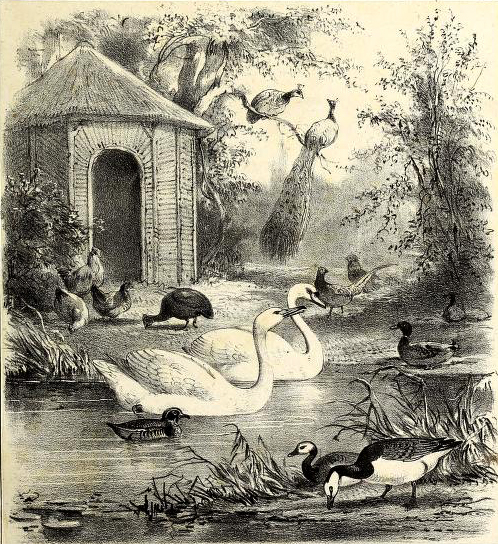
Title Page Image, v. 3, Onze vogels in huis en tuin

One of the BHL partner institutions, The Field Museum Library, was recently awarded a small grant from the Consortium of Academic and Research Libraries in Illinois (CARLI) to contribute titles to the growing BHL corpus. The proposal entitled “Empowering Biodiversity Research,” allowed The Field Museum Library to contribute 34 new titles to the BHL.

Several titles chosen for digitization came from the Library’s impressive Edward E. Ayer Ornithological Library, housed in the collections of the Mary W. Runnells Rare Book Room.

The titles were chosen for digitization via several means:

View Full Size Image
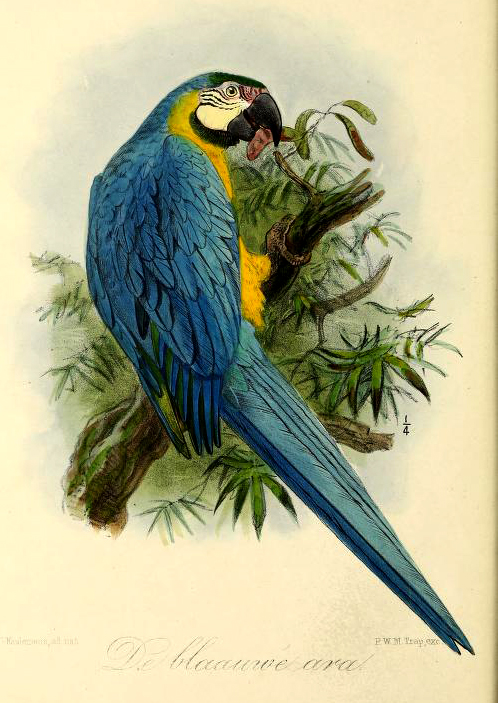
Blue Macaw. v. 3,

Onze vogels in huis en tuin

Requests received from users, which are processed via BHL’s issue tracking system, Gemini, allows us to fulfill user requests, complete series fill-in’s, and keep us organized! One item specifically requested was the famous work of Dutch illustrator John Gerard Keulemans (1842-1912), Onze vogels in huis en tuin (‘Our Birds in House and Garden’). Published in 3 volumes between 1869-1876, this collection of 200 lithographed plates were hand colored by the author. Noted for his beautiful and scientifically accurate work, Keulemans also provided illustrations for both Proceedings of the Zoological Society of London, The Ibis as well as numerous other monographs throughout the late 19th and early 20th centuries. With only 4 copies held in U.S. libraries, The Field Museum Library is the only BHL partner to own Onze vogels.


View Full Size Image
Neue Alpina, v. 1

In-demand titles were also identified via the Library’s active Interlibrary Loan (ILL) program. This service allows institutions from all over the world to request loans of books or scans of articles from The Field Museum Library. Items that are out of copyright and related to biodiversity are flagged for potential digitization. The title, Neue Alpina, has been requested via ILL twice in the last six months. This periodical, complete in two volumes, was published 1821-1827 and is focused on the natural history of Switzerland. Also part of the Ayer Collection, The Field Museum Library is the only holder of this title in the U.S.

View Full Size Image
Dissected Frog. Les animaux de laboratoire

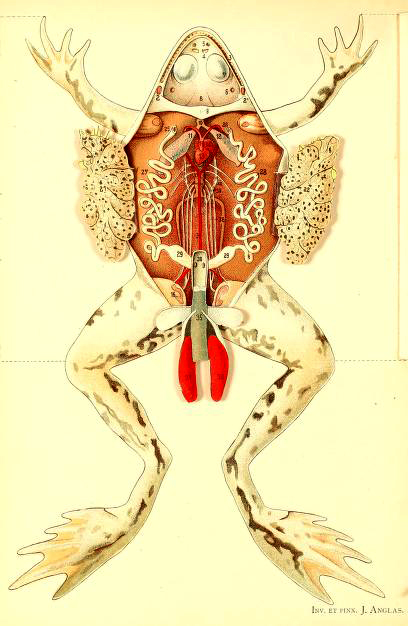
And finally, we often find pretty amazing items just by browsing the shelves! We came across an interesting item in our Herpetology Library from the collection of renowned herpetologist, Karl P. Schmidt. Les animaux de laboratoire: La grenouille (Anatomie et Dissection) is a short monograph about frog anatomy and a guide to dissection techniques. The amazing (and honestly, pretty fun) part of the book is the illustrations. The frog’s anatomy is dissected via multi-part anatomical flaps. The staff of the Internet Archive scanning center in Ft. Wayne, Indiana did a great job of capturing all of these flap elements during digitization.

Explore all items in the BHL contributed by The Field Museum Library here!

April 30, 2013by Kathryn Stine
Page 5 of 7« First...«4567»

Help Support BHL

BHL's existence depends on the financial support of its patrons. Help us keep this free resource alive!

search

About BHL

The Biodiversity Heritage Library (BHL) is the world’s largest open access digital library for biodiversity literature and archives. BHL operates as a worldwide consortium of natural history, botanical, research, and national libraries working together to digitize the natural history literature held in their collections and make it freely available for open access as part of a global “biodiversity community.”

Join Our Mailing List

Sign up to receive the latest news, content highlights, and promotions.

Subscribe Now

Subscribe to Blog via Email

Enter your email address to subscribe to this blog and receive notifications of new posts by email.

Join 319 other subscribers

Subscribe to Blog Via RSS

Subscribe to the blog RSS feed to stay up-to-date on all the latest BHL posts.

Access RSS Feed

Inspiring Discovery through Free Access to Biodiversity Knowledge.

The Biodiversity Heritage Library makes it easier than ever for you to access the information you need to study and explore life on Earth…for free, anytime, anywhere.


ABOUT | HARMFUL CONTENT | PRIVACY | SITE MAP | TERMS OF USE