Biodiversity Heritage Library - Program news and collection highlights from BHL
  • Home
  • News
  • Featured Books
    • All Featured Books
    • Book of the Month Series
    • BHL at 20
  • User Stories
  • Campaigns
    • Fossil Stories
    • Garden Stories
    • Monsters Are Real
    • Page Frights
    • Her Natural History
    • Earth Optimism 2020
  • Tech Blog
  • Visit BHL
Home
News
Featured Books
    All Featured Books
    Book of the Month Series
    BHL at 20
User Stories
Campaigns
    Fossil Stories
    Garden Stories
    Monsters Are Real
    Page Frights
    Her Natural History
    Earth Optimism 2020
Tech Blog
Visit BHL
  • Home
  • News
  • Featured Books
    • All Featured Books
    • Book of the Month Series
    • BHL at 20
  • User Stories
  • Campaigns
    • Fossil Stories
    • Garden Stories
    • Monsters Are Real
    • Page Frights
    • Her Natural History
    • Earth Optimism 2020
  • Tech Blog
  • Visit BHL
Biodiversity Heritage Library - Program news and collection highlights from BHL
Blog Reel, Featured Books

Book of the Week: A monograph of the Trochilidæ

View Full Size Image

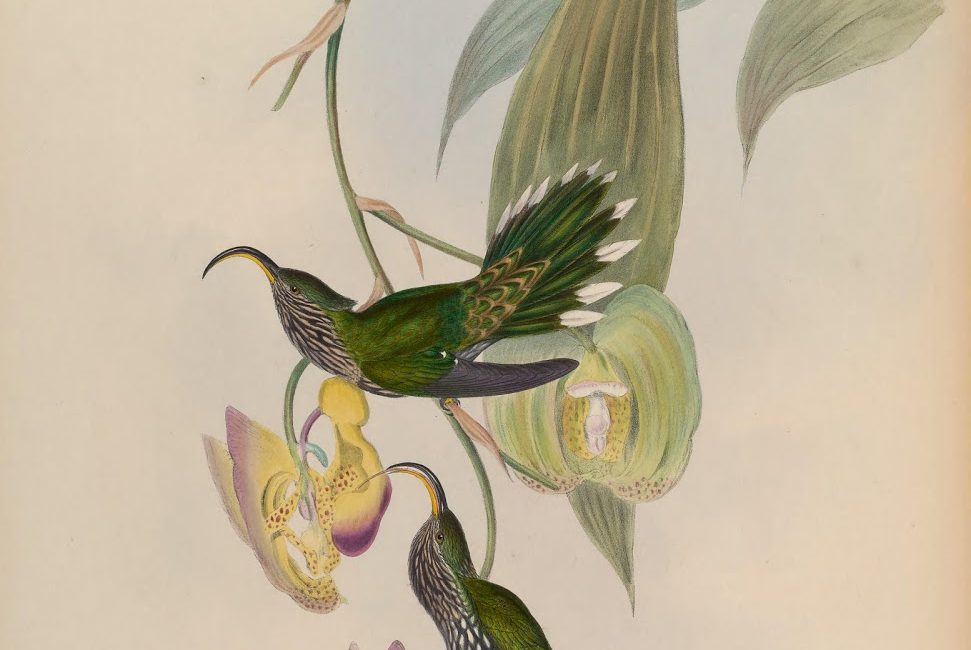
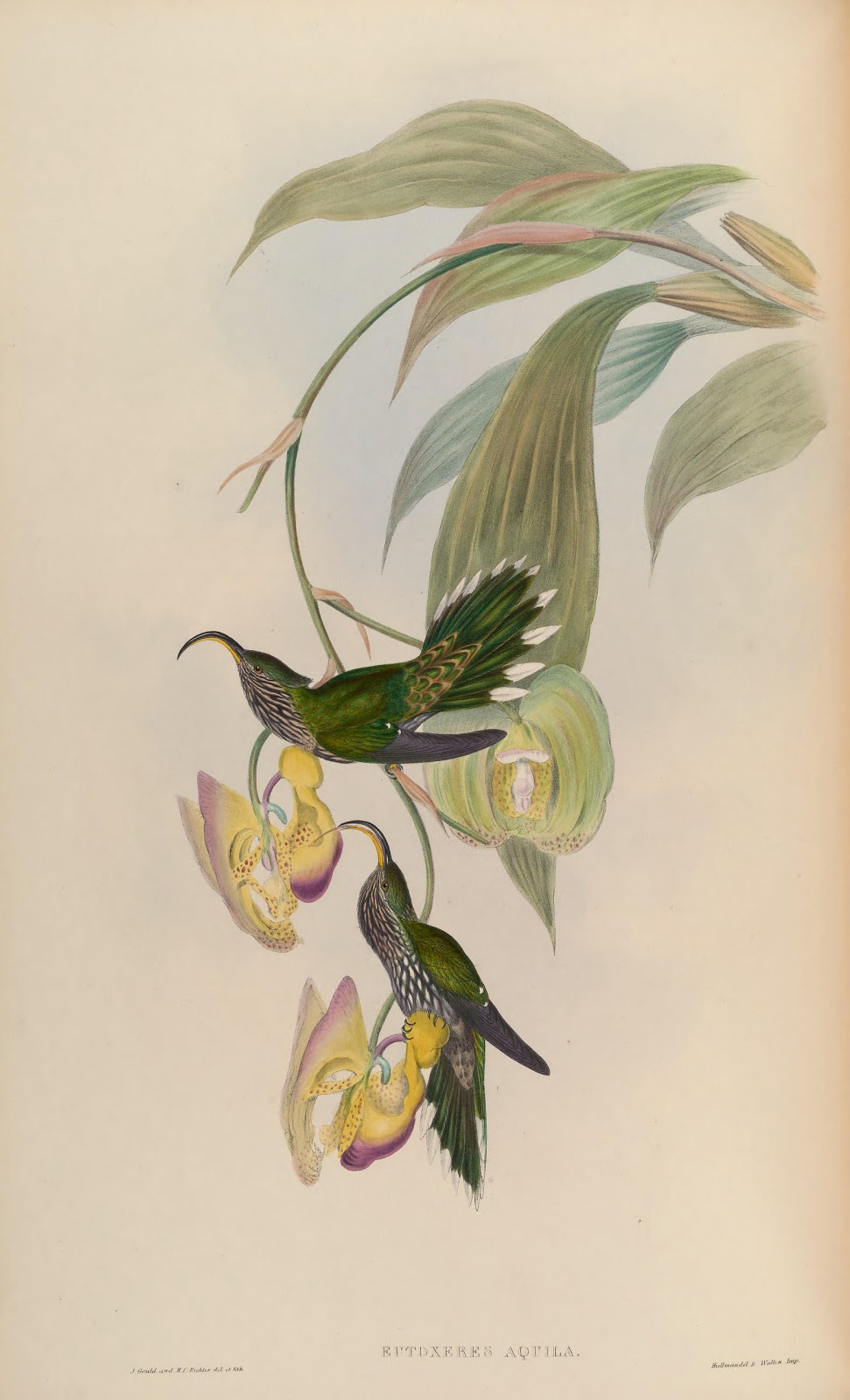
“A feast of beauty and a source of wonder” was the phrase used by Sacheverell Sitwell, Handasyde Buchanan, and James Fisher to describe the images in ornithologist and artist John Gould’s A monograph of the Trochilidæ, or family of humming-birds.* It seems there are few who would disagree with this statement, as a five volume set plus supplement sold at Christie’s Auction House in 2011 for $217,845.

Published in parts between 1849-1861, over 480 species of humming birds were described within this title. The work represents extreme attention to detail, down to the use of pure gold leaf under transparent oil colors to recreate the iridescent nature of a humming bird’s feathers.

A monograph of the Trochilidæ, or family of humming-birds is considered Gould’s masterpiece. It was originally issued in 30 parts (the final three finished by R. Bowdler Sharpe after Gould’s death). Many of the humming birds depicted are from Gould’s own collection – a collection that went on exhibit at the Zoological Gardens, Regent’s Park in 1851.

Considered the “father of bird study in Australia,” Gould assisted Charles Darwin in identifying the finches he had collected on his voyage aboard the HMS Beagle. Throughout his professional life, Gould maintained a strong interest in hummingbirds, though it was not until May, 1857 – nearly 30 years after he began his ornithological career – that Gould saw his first live hummingbird on a visit to Philadelphia.

The illustrations within this work are positively breathtaking. We’ve prepared a slideshow of them for you below. You can find the illustrations from volumes 1 in our Flickr account. Enjoy images from all five volumes without emptying your pocketbook by visiting BHL.

*Quote from Fine Bird Books, by Sacheverell Sitwell, Handasyde Buchanan, and James Fisher

June 28, 2012by ulib-libraryjobs
Blog Reel, Featured Books

Book of the Week: Mother Carey’s Chickens

View Full Size Image

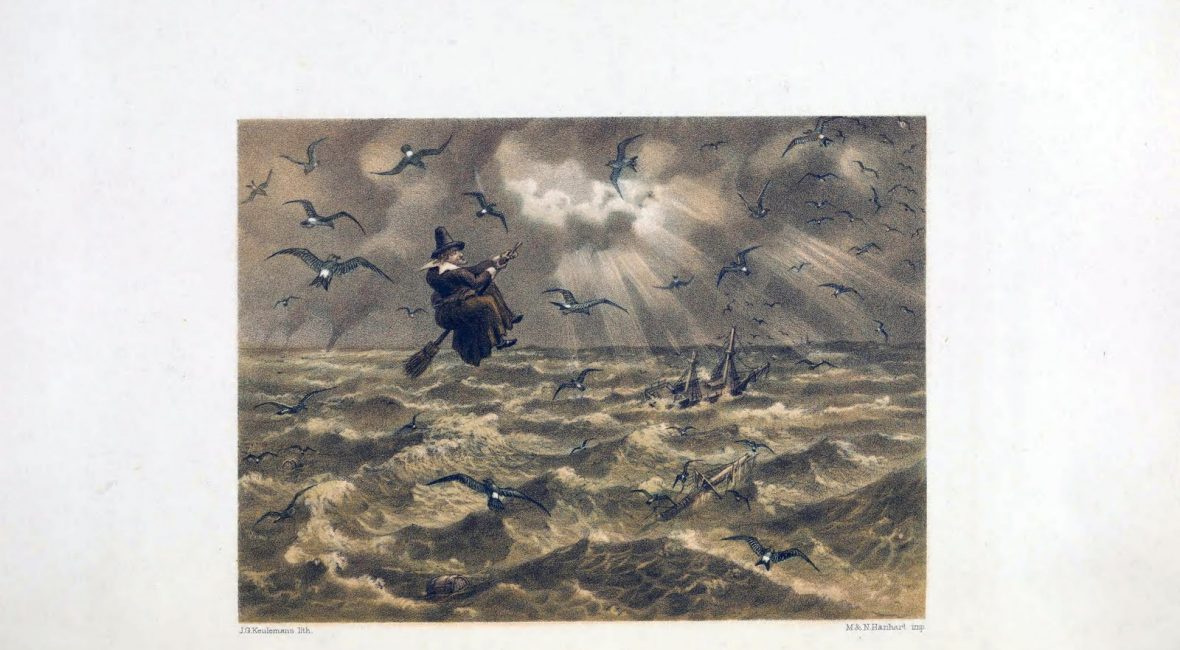
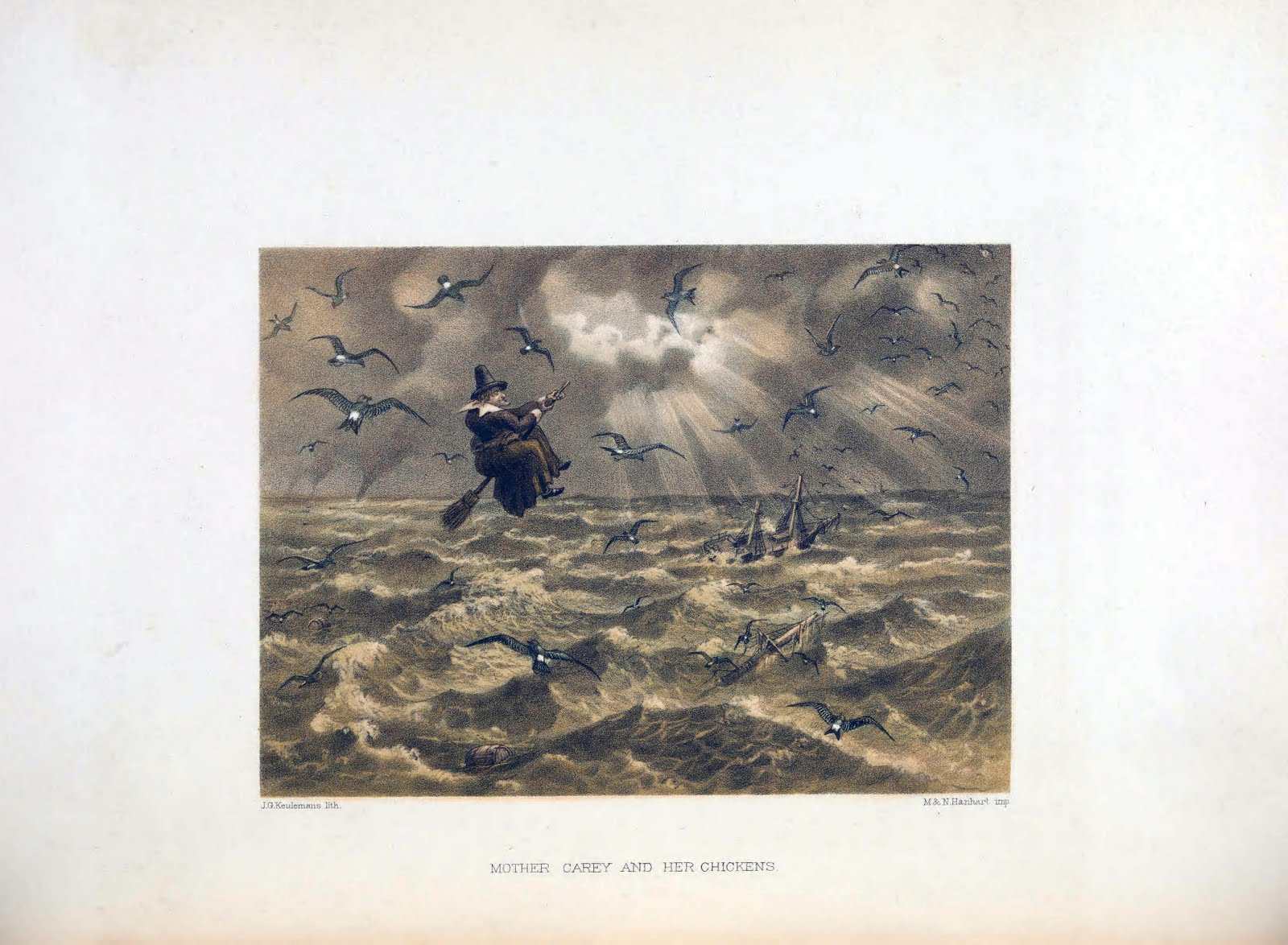
There are some things you just don’t expect to find in BHL, and a witch on a broomstick is one of them. So when one of our book scanners sent a few of us here at BHL an image from one of the books he was scanning, we all did a double take. Indeed, smack-dab in the middle of a book on birds was an illustration of the epitome of a Halloween hag soaring over stormy waters, surrounded by birds. So, of course, we had to ask ourselves, why is there a witch in BHL?

To get more answers, naturally, we went to the source material. The illustration can be found in v. 2 of Ornithological Miscellany. According to this volume, Thalassidroma bullockii and Thalassidroma pelagica have both been given the nickname “Mother Carey’s Chickens” by sailors, who had also given them the delightful alias of “Devil’s Birds.” The origin of this epithet is, apparently, in some dispute, at least according to our book of the week. The author writes that, according to Yarrell,

“These birds are supposed to be seen only before stormy weather, and therefore are not welcome visitors to sailors, who call them Devil’s birds, witches, and Mother Carey’s chickens – the last name said to have been originally bestowed upon them by Captain Carteret’s sailors, probably from some celebrated ideal hag of that name.”

However, the author points out that Hawksworth has a different story to tell. On his authority, Philip Carteret, Esquire, Commander of His Majesty’s sloop the “Swallow,” wrote in his journal, “We also saw a great many Pintado birds, which are prettily spotted with black and white, and constantly on the wing, though they frequently appear as if they were walking upon the water, like Peterels, to which sailors have given the name of Mother Carey’s chickens.”

As the author relates, here Carteret speaks of this nickname as though it is “familiar to them and current in his time.” Encountering such inconsistencies and dead ends, the author finished with, “Not being able to trace the pedigree of ‘Mother Carey,’ the only thing to be done is to have an illustration of herself and her work, with her brood around her.” Indeed, our own research into the subject yielded very few additional discoveries.

We did find that Mother Carey is a supernatural figure that “personif[ied] the cruel and threatening sea” in the same way that Davy Jones does. Indeed, some assert that she is his wife. According to myth, she and Davy Jones are responsible for shipwrecks. Some claim that her name is a derivation of the latin name Mater cara, meaning “Precious Mother,” but there is no concrete evidence to support this. When and where the name was first used in relation to storm-petrels, no one seems to know.

But, perhaps this enigma makes the phrase, and the corresponding illustration, all the more interesting! True, we cannot tell you why or when Mother Carey came into the picture, but we can still enjoy these little nuggets of fascinating art and contextual tidbits that we uncover in BHL. So, for your enjoyment, ladies and gentlemen, Mother Carey and her Chickens, as featured in v. 2 of Ornithological Miscellany!

This week’s book of the week, v. 2 of Ornithological Miscellany, was contributed by the Smithsonian Institution. Love the illustrations and want to see all of them (lots of lovely birds illustrations in addition to witches!) from all volumes of Ornithological Miscellany? Then visit our Flickr site and see the collection on this week’s book of the week!

Flickr: v. 1
Flickr: v. 2
Flickr: v. 3

July 26, 2011by michelle.underhill
Blog Reel, Featured Books

Book of the Week: Serendipity, Twitter, and Louis Agassiz Fuertes

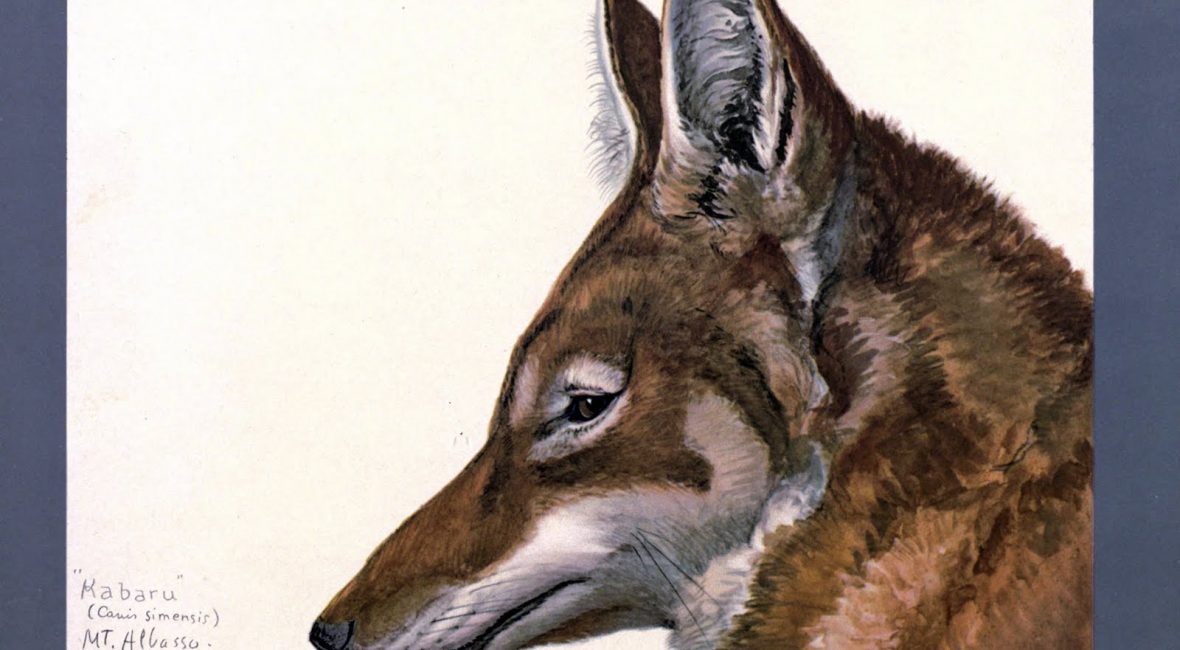
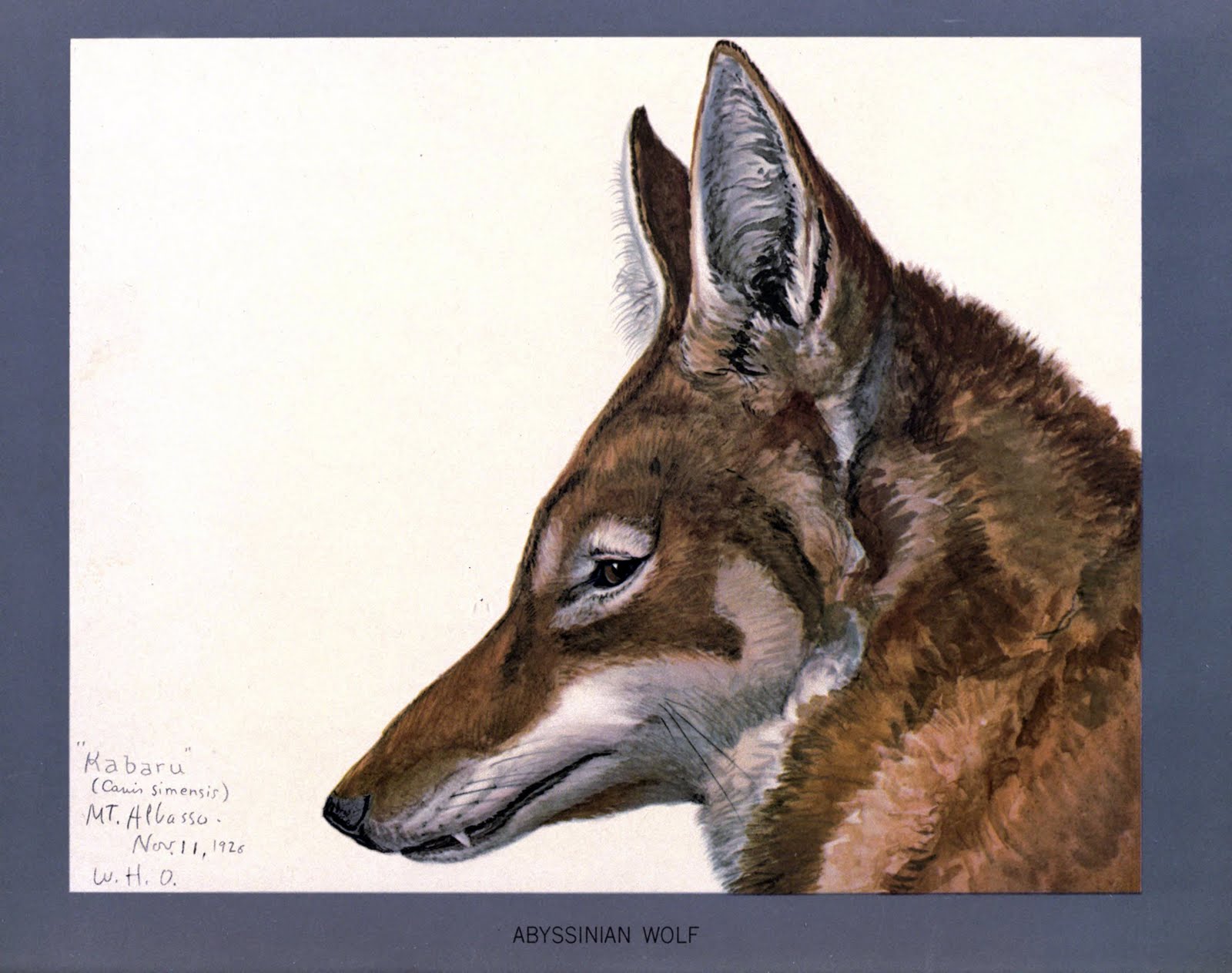
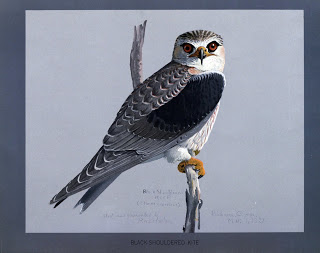
View Full Size ImageEarlier this week we did a Species of the Day tweet on Twitter (@BioDivLibrary) about the Abyssinian or Ethiopian Wolf – the most endangered canine in the world. For the tweet, we linked to a lovely portrait of the animal in Album of Abyssinian Birds and Mammals (1930), illustrated by Louis Agassiz Fuertes. Little did we know what a fascinating work this actually is. One of our followers on Twitter, John Pittman, known to the Twitter universe as@drhypercube, responded to our tweet with a link to his blog. Made aware of this book on BHL by our tweet & subsequent posting of the illustration to our Flickr account, John’s post highlights the genius of this ornithologist and painter – a genius that we had only partially appreciated when we did the original tweet. As John writes,

“This is the peanut butter cup of Biodiversity Heritage Library serendipity – two wonderful things that are even better in combination. Via the BioDivLibrary Flickrstream, the Album of Abyssinian Birds and Mammals from Paintings by Louis Aggasiz Fuertes.

Fuertes, for those who don’t know him or his work, was an ornithologist and painter. I’ve loved his art since I first encountered it (I was maybe 10 years old?) in a coffee table book that was, at that point, way out of my price range. His National Geographic article, Falconry, the Sport of Kings is still a favorite…”
View Full Size Image

Intrigued by John’s post, we decided to feature this work as our book of the week. We started by contacting John to get a little more information about Louis Agassiz Fuertes. He obliged by telling us that, not only was Fuertes an accomplished ornithologist and painter, but he was actually one of the members on the 1899 Harriman Alaskan trip, an expedition that spent two months voyaging from Seattle, along the Alaskan coast to Siberia, and back to Seattle. The accomplishment included discovering approximately 600 new species, 38 of which were new fossil species, charting the geographic distribution of Arctic species, discovering an unmapped fiord, and naming several glaciers. There were also important studies and documentation done of the indigenous people of the region, including a recording of a Tlingit song on a graphophonic recording machine brought along by Harriman.

This expedition was not the only one that Fuertes took part in. Indeed, our book of the week was the result of Fuertes’ involvement in a Field Museum expedition to Ethiopia, for which he not only painted, but personally collected, prepared, labeled and packed “no less than one thousand bird skins” for the Museum. Known as the Field Museum – Chicago Daily News Abyssinian Expedition (1926-27), the participants “traversed a large part of Abyssinia (Ethiopia), making collections which cover a wide range of conditions.” Wilfred H. Osgood, a curator of zoology at the Field Museum who wrote the introduction of our book of the week, said of Fuertes,
View Full Size Image

“The opportunity [the expedition] gave Fuertes for life studies of African birds was varied and unusual. Theretofore engaged solely in painting American birds, he found tremendous enthusiasm in a new field and plunged into it with joyous abandon and tireless energy…The painting was in almost all cases done in the tent, the artist sitting on his sleeping cot and his materials and specimens scattered about him.”

Fuertes produced 108 painting and sketches for the expedition. After his death, Mr. C. Suydam Cutting purchased these works and gave them to the Field Museum. As Osgood wrote,

“The great popularity and the prominence of Mr. Fuertes as the leading American painter of birds, together with the opinion freely expressed that these final studies represented the height of his power, brought a demand for their reproduction in some form that would make them available to a wide circle.”
View Full Size Image

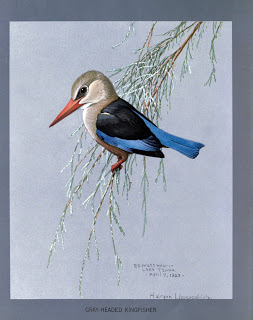
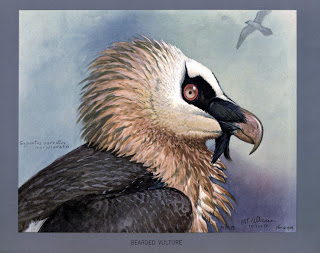
Thus came our book of the week, which presents 32 of these paintings “reproduced by offset lithography.” We’ve featured only a few of these in our post today. We invite you to take some time to look at the rest, and visit John Pittman’s blog for more illustrations and information. We send out a special thanks to Mr. Pittman for inspiring this book of the week and providing us with such valuable additional information. There’s no limit to the things you can learn via social media conversations!

June 30, 2011by michelle.underhill
Page 7 of 7« First...«4567

Help Support BHL

BHL's existence depends on the financial support of its patrons. Help us keep this free resource alive!

search

About BHL

The Biodiversity Heritage Library (BHL) is the world’s largest open access digital library for biodiversity literature and archives. BHL operates as a worldwide consortium of natural history, botanical, research, and national libraries working together to digitize the natural history literature held in their collections and make it freely available for open access as part of a global “biodiversity community.”

Join Our Mailing List

Sign up to receive the latest news, content highlights, and promotions.

Subscribe Now

Subscribe to Blog via Email

Enter your email address to subscribe to this blog and receive notifications of new posts by email.

Join 319 other subscribers

Subscribe to Blog Via RSS

Subscribe to the blog RSS feed to stay up-to-date on all the latest BHL posts.

Access RSS Feed

Inspiring Discovery through Free Access to Biodiversity Knowledge.

The Biodiversity Heritage Library makes it easier than ever for you to access the information you need to study and explore life on Earth…for free, anytime, anywhere.


ABOUT | HARMFUL CONTENT | PRIVACY | SITE MAP | TERMS OF USE