Biodiversity Heritage Library - Program news and collection highlights from BHL
  • Home
  • News
  • Featured Books
    • All Featured Books
    • Book of the Month Series
    • BHL at 20
  • User Stories
  • Campaigns
    • Fossil Stories
    • Garden Stories
    • Monsters Are Real
    • Page Frights
    • Her Natural History
    • Earth Optimism 2020
  • Tech Blog
  • Visit BHL
Home
News
Featured Books
    All Featured Books
    Book of the Month Series
    BHL at 20
User Stories
Campaigns
    Fossil Stories
    Garden Stories
    Monsters Are Real
    Page Frights
    Her Natural History
    Earth Optimism 2020
Tech Blog
Visit BHL
  • Home
  • News
  • Featured Books
    • All Featured Books
    • Book of the Month Series
    • BHL at 20
  • User Stories
  • Campaigns
    • Fossil Stories
    • Garden Stories
    • Monsters Are Real
    • Page Frights
    • Her Natural History
    • Earth Optimism 2020
  • Tech Blog
  • Visit BHL
Biodiversity Heritage Library - Program news and collection highlights from BHL
BHL News, Blog Reel

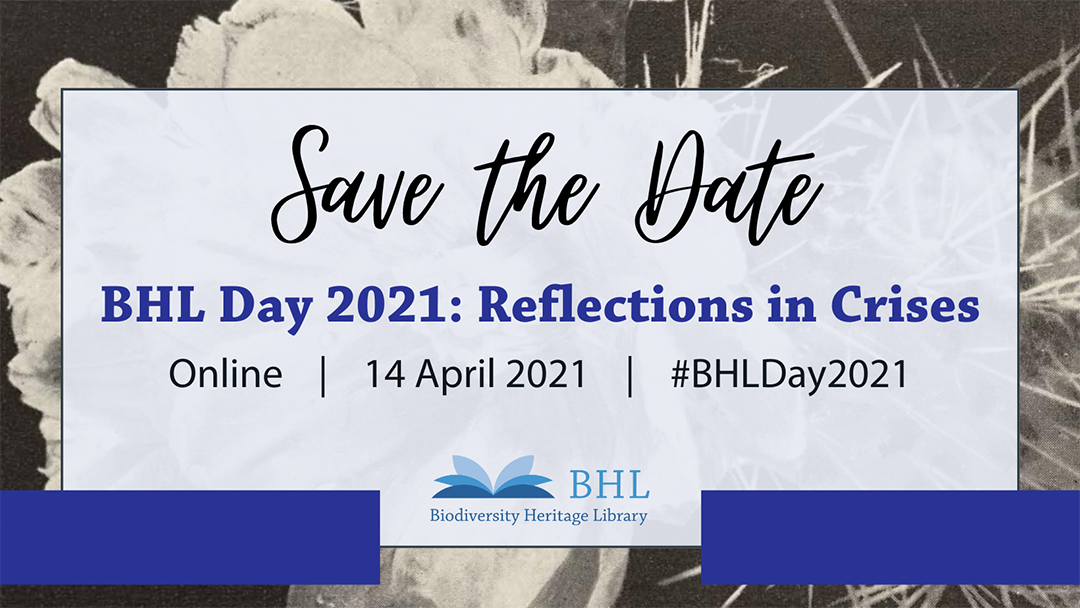
Save the Date for BHL Day 2021 on 14 April!

Save the Date graphic for BHL Day 2021: Reflections in Crises

Save the Date graphic for BHL Day 2021: Reflections in Crises

Save the date for a virtual BHL Day 2021 on 14 April, presented as part of our 2021 Annual Meeting! Themed “Reflections In Crises”, the program will include sessions reflecting on BHL’s roles in addressing the biodiversity crisis, challenges arising from COVID-19, and systemic racism in natural history collections.

Date and Time: 14 April 2021 (approx. 1200-1700 UTC, exact session times TBD)

Location: Online (via Zoom webinar)

Registration: The event is free but registration is required. Registration will go live on 29 March 2021 and will be shared via the BHL Day 2021 event page.

Program Details:

BHL Day 2021: Reflections in Crises will include an opening keynote from Dr. Ian Owens (Deputy Director at the Smithsonian’s National Museum of Natural History) addressing the biodiversity crisis and a closing keynote from Lidia Ponce de la Vega (Doctoral Candidate in Hispanic Studies at McGill University) discussing how BHL can help decolonise biodiversity collections and archival practices. The program will also include a Partner Reflection Panel with representatives from BHL partner institutions focused on BHL’s impact during the COVID-19 pandemic.

More Information can be found on the BHL Day 2021 event page. That event page will be updated with further program details over the coming weeks.

March 18, 2021by michelle.underhill
BHL News, Blog Reel

Celebrating the Career of Susan Fraser, Recently-Retired Thomas J. Hubbard Vice President and Director of the LuEsther T. Mertz Library at The New York Botanical Garden (NYBG)

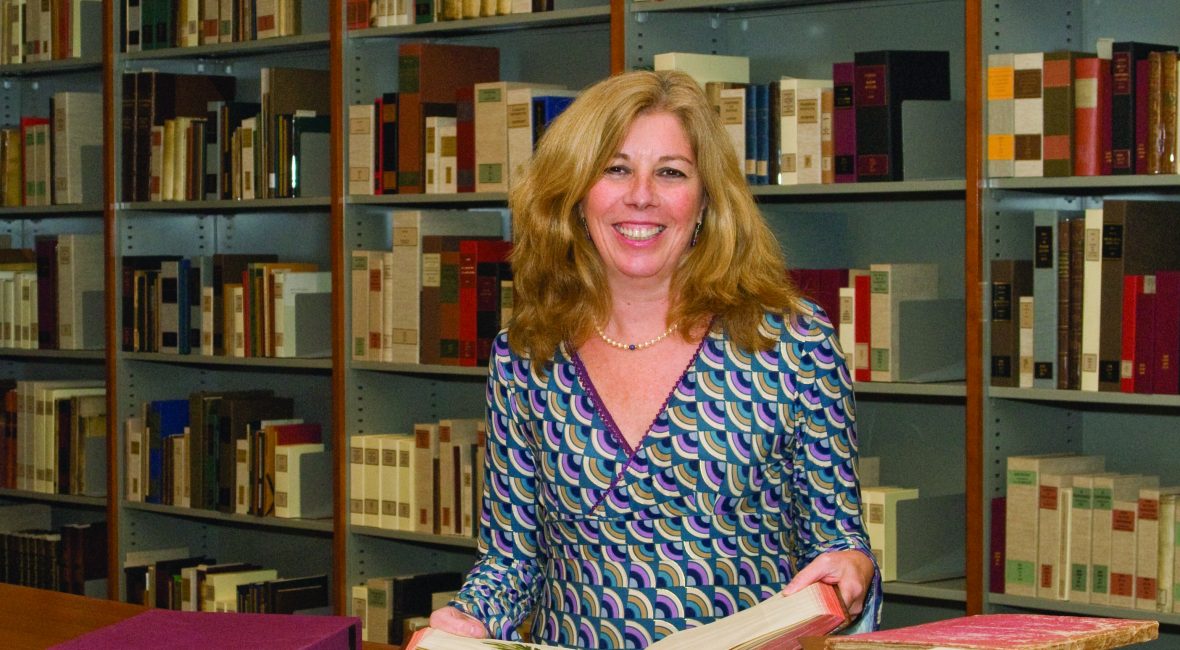
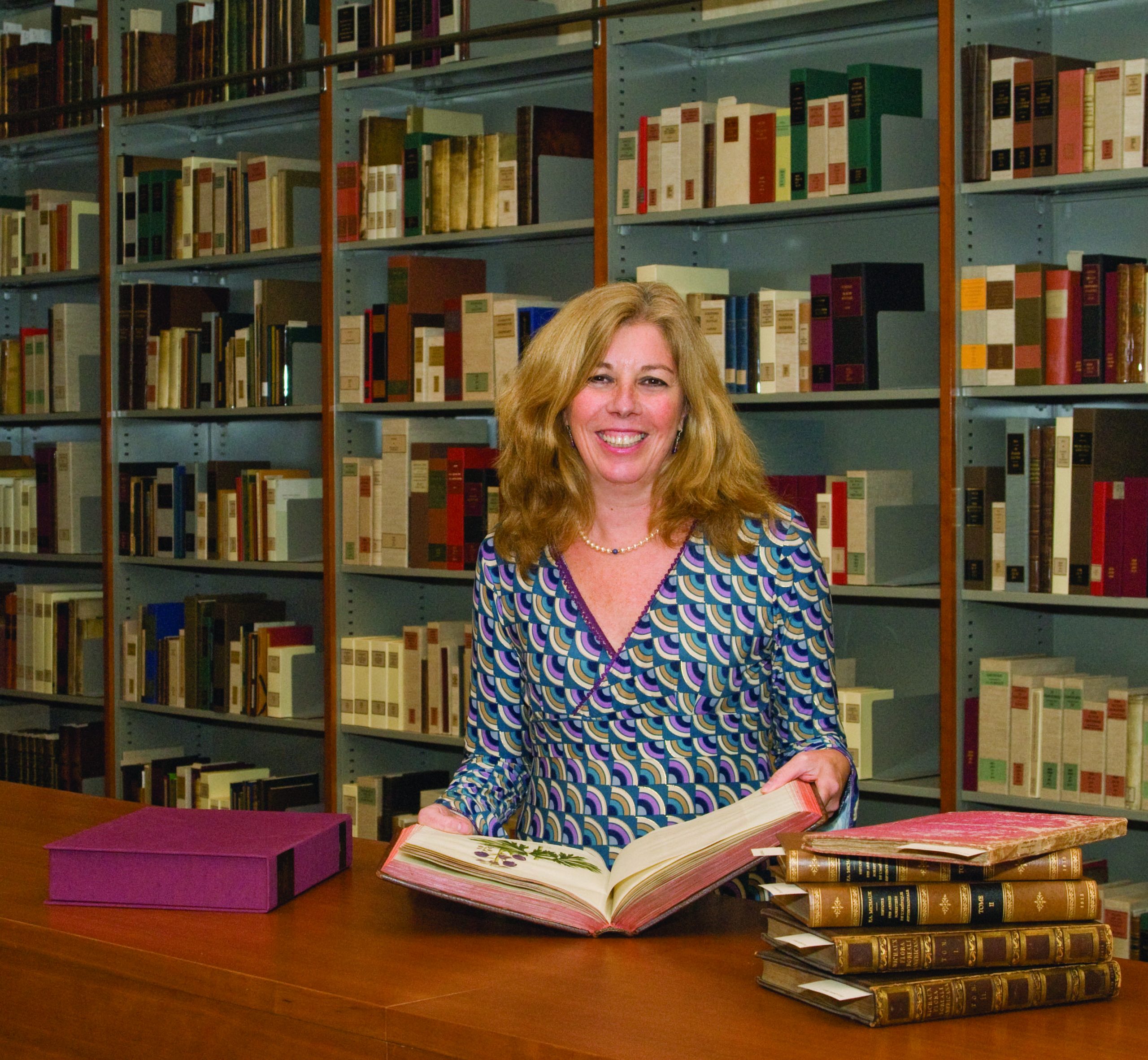
A person with shoulder length blonde hair standing in front of a large wooden table holding open a large book with a plant illustration. A pile of books is on the table next, and a bookshelf full of books is in the background.

Susan Fraser, recently-retired Thomas J. Hubbard Vice President and Director of the LuEsther T. Mertz Library at The New York Botanical Garden (NYBG).

We are honored to celebrate the career of Susan Fraser, who last month retired as the Thomas J. Hubbard Vice President and Director of the LuEsther T. Mertz Library at The New York Botanical Garden (NYBG). During her 36 years at NYBG, Susan made significant contributions to the Garden, the global library and botanical community, and the Biodiversity Heritage Library (BHL).

The New York Botanical Garden is one of ten BHL founding members. Susan, who fondly recalls early discussions with colleagues fifteen years ago when the BHL dream was conceived, was instrumental in the creation of the Library. Since these earliest discussions, Susan has seen the Library grow from a consortium of ten US/UK organizations to a global network of over 80 partners across six continents. Beyond her role as NYBG’s Member representative, Susan contributed directly to BHL’s governance and strategic direction as a member of the BHL Executive Committee, where she served as Secretary from 2011-2015.

Under Susan’s leadership, NYBG contributed over four million pages from its collection to BHL and participated in major BHL projects including The Field Notes Project and Purposeful Gaming. NYBG, with Susan as the Principal Investigator, also served as the lead institution for the incredibly successful IMLS-funded project, Expanding Access to Biodiversity Literature, which enabled biodiversity content providers to contribute to the national digital library infrastructure through the Digital Public Library of America (DPLA) via BHL. Thanks to the project, over one million new pages and 260 new in-copyright titles were made freely available via BHL and DPLA.

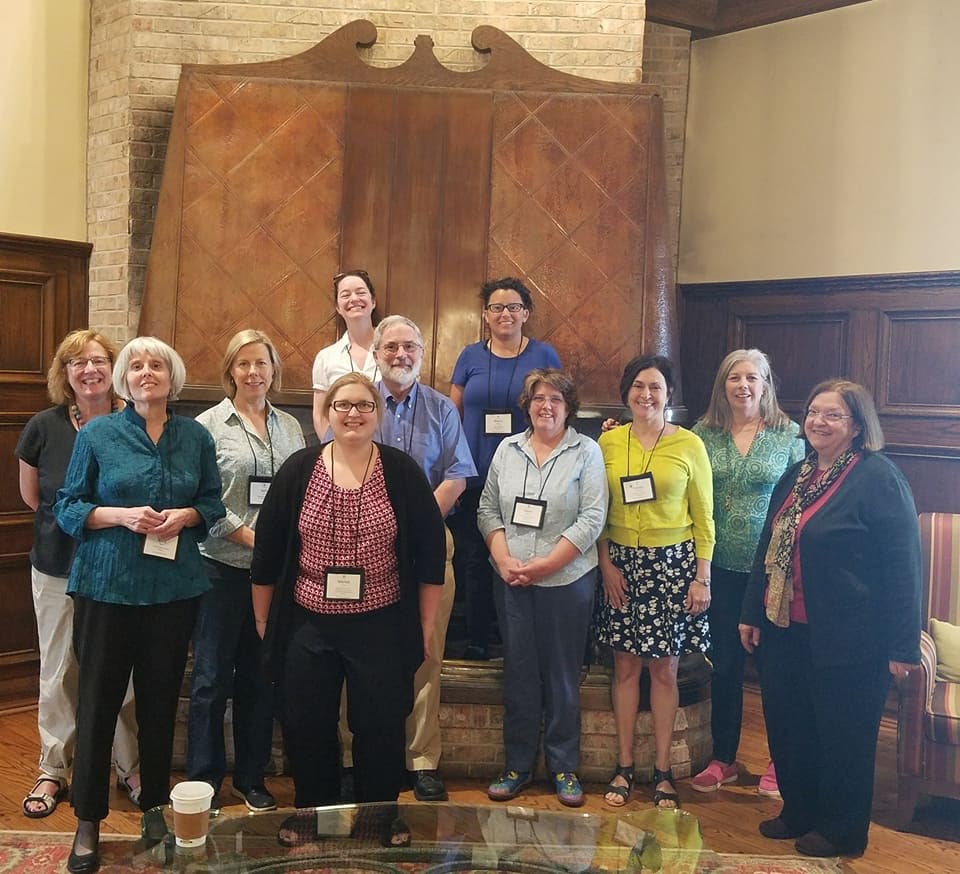
A group of people standing in front of a large wooden display case.

Susan Fraser (second from right) with her Expanding Access team members Susan Lynch (right) and Mariah Lewis (center front) and attendees at “Contributing to a National Digital Infrastructure, with Help Every Step of the Way”, a 2017 CBHL pre-conference workshop dedicated to the Expanding Access project.

BHL Program Director Martin R. Kalfatovic noted: “Susan was a key figure in the founding of BHL. Her excellent design and management of the Expanding Access grant engaged a range of new partners for BHL and resulted in a vast expansion of content. It was a pleasure to work with her during her time on the Executive Committee, and her knowledge and professionalism will be a loss not just to BHL but to the wider botanical garden library community.”

In addition to her accomplishments for BHL, under Susan’s tenure the Mertz Library attained many significant advances and achievements, including:

  • Expanding access to its collections through its digitization program and through the creation and implementation of new tools to increase access.
  • Developing an award-winning preservation program that grew beyond the Book Conservation Lab to incorporate environmental monitoring and the care and treatment of all special collections materials.
  • Launching the Humanities Institute—exploring the intersections among art, science, and culture and creating fellowships and sponsoring innovative programs to a diverse and broad audience.
  • Successfully promoting the use of its unique special collections, particularly the Lord and Burnham Archive, the historical Nursery and Seed Trade Catalogs, and the Botanical Art and Illustration Collection.
  • Facilitating the development of an exhibition and publication program for the Rondina and LoFaro Gallery (now Art Gallery) to showcase the depth and breadth of the Library’s treasures to the wider public.
  • Contributing through NACO-trained catalogers to the Library of Congress Name Authority files, creating hundreds of authority records and adding them to the important database using Mertz Library Collections.
  • Publishing Flora Illustrata (2014), a celebration of key works from the collections of the Mertz Library. This work co-edited by Fraser was honored with two prestigious awards: the 2015 American Horticultural Society Book Award and the CBHL 2015 Annual Literature Award.
  • Publishing The Trees of North America (2018), which discusses and reproduces Michaux and Redouté’s landmark volume of American forestry. Susan edited and wrote the preface for this work, which received the 2018 American Horticultural Society Book Award.

During her career, Susan also contributed to several prestigious botanical and library organizations, including:

  • The Council on Botanical and Horticultural Libraries (CBHL), which awarded Susan the Charles Robert Long Award of Extraordinary Merit on 22 June 2018.
  • The European Botanical and Horticultural Libraries Group (EBHL), an association to promote and facilitate cooperation and communication between European botanical and horticultural libraries.
  • The Linnaeus Link Project, an international collaboration between libraries to provide a comprehensive online Union Catalogue of Linnaean publications.

As Susan shared: “One of the most important things I learned during my career is the importance of collaboration. And one of the most gratifying experiences of my career was being a founding member of BHL and being part of the team that was long on determination as we persevered to ultimately transform the way biodiversity research is conducted.”

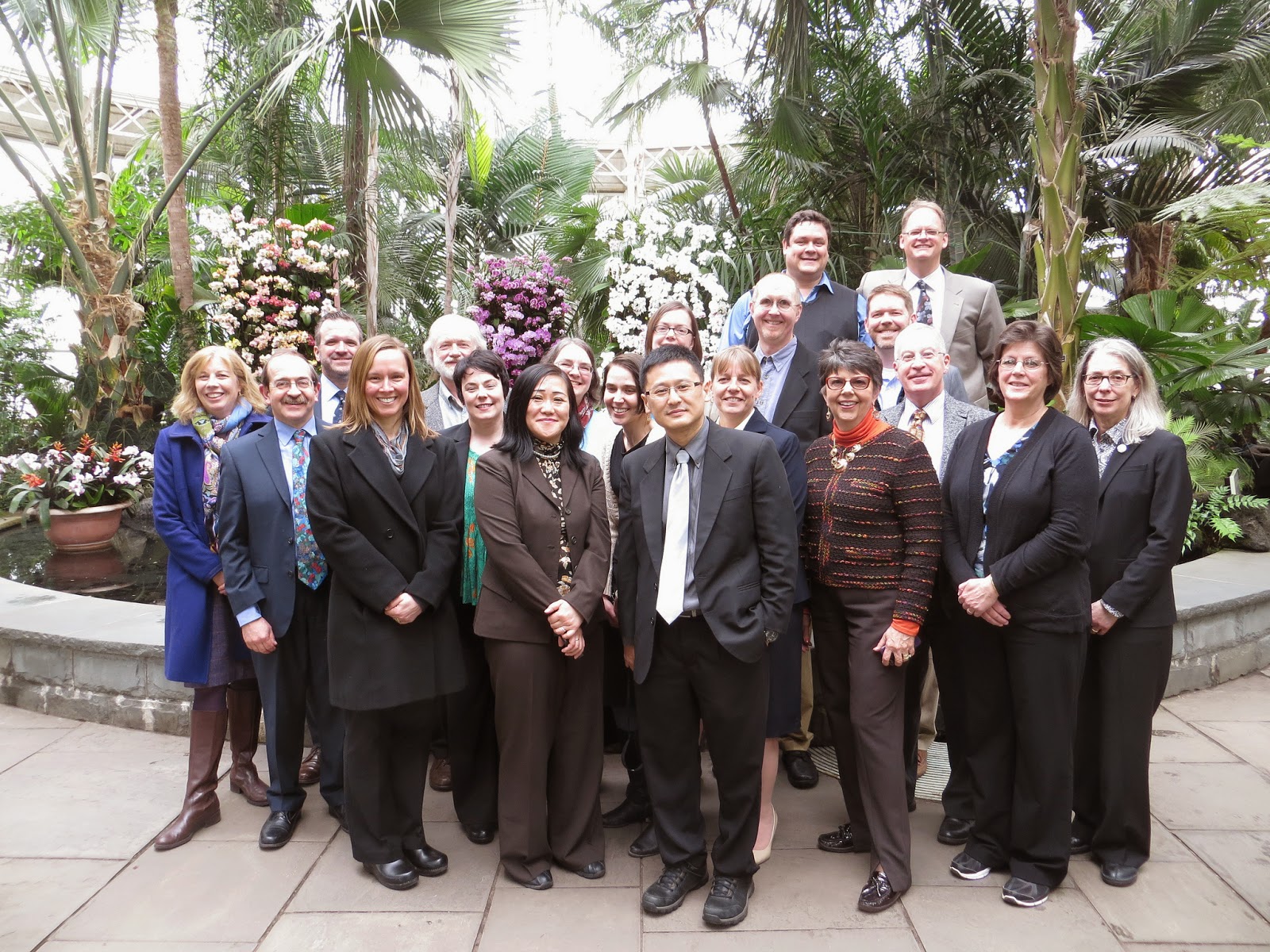
A group of people standing outside in front of a tropical garden of plants.

Susan Fraser (far left) with fellow BHL colleagues at the 2014 BHL Annual Meeting in New York, jointly hosted by The New York Botanical Garden and the American Museum of Natural History.

Please join us in thanking Susan Fraser for her impact on librarianship, the botanical community, NYBG, and BHL. While officially retired as of 14 August 2020, we are delighted that Susan will continue her association with NYBG under emeritus status. We are glad that retirement does not mean “goodbye” and look forward to continuing our collaborative work with Susan in her new capacity. As her passion and legacy continue to inspire us, we at BHL extend our heartfelt gratitude and best wishes in retirement.

September 29, 2020by michelle.underhill
BHL News, Blog Reel

We’ve Expanded the BHL FAQ!

BHL FAQ now expanded

BHL FAQ now expanded

We’ve expanded the BHL FAQ, providing answers to the most common questions we receive from our users. For example…

Do you need help searching BHL? There’s an FAQ for that.

Do you want to know how to download content from BHL? The FAQ has you covered.

Wondering if you can reuse material from BHL? Learn more about reuse in our FAQ.

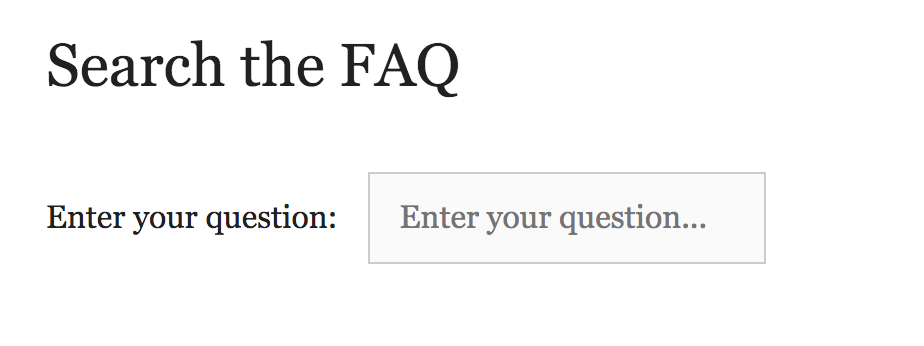
The FAQ is the best place to find answers to your questions about BHL, our collection, and our services. The best way to find an answer for a specific question is to use the FAQ search box. You can also browse by topics using the FAQ categories (e.g. Download, Search, Scientific Names, etc.).

Search box for the BHL FAQ.

Use the FAQ search box to find an answer to a specific question.

The week of 15 July 2019, we’ll be updating the BHL website to replace the links to our Feedback form with links to the FAQ. BHL is voluntarily staffed by our Partner Libraries, and we are limited in our ability to personally respond to individual feedback submitted by our patrons. We encourage you to consult the FAQ first if you need help and to find answers to your questions. We will continue to expand this resource over time. The FAQ also provides information on how to contact us if needed.

Thank you for using the FAQ as your first stop for any BHL-related questions!

July 8, 2019by michelle.underhill
BHL News, Blog Reel

BHL at the GBIF 25th Governing Board Annual Meeting

GBIF 25th Annual Meeting logoAs Chair of the BHL Members’ Council, I had the privilege of attending the 25th Meeting of the GBIF Global Governing Board convened in Kilkenny, Ireland, 15-18 October 2018. I represent BHL in its capacity as an Associate Participant in GBIF at the governing board meeting. BHL has been a participant since 2014.

The Global Biodiversity Information Facility (GBIF) operates through a network of global nodes to develop and maintain an open data infrastructure for sharing digital biodiversity data.

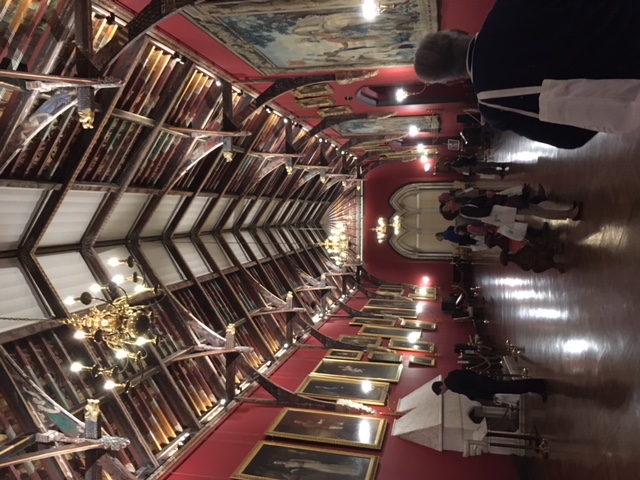
Tour of Kilkenny Castle

Tour of Kilkenny Castle as part of the opening reception at the GBIF 25th Governing Board Annual Meeting. Photo credit: Constance Rinaldo.

GBIF Governing Board Chair Tanya Abrahamse (former CEO South African National Biodiversity Institute) and Donald Hobern (GBIF Executive Secretary), along with the host, Liam Lysaght (National Biodiversity Data Centre, Ireland) led the meeting. Abrahamse and Hobern provided an overview of GBIF activities over the past year, including a discussion of the GBIF Strategic Plan Goals and Work Program updates. The various GBIF Committee chairs (Science, Nodes, Budget) all reported the past year’s activities. Around 4 July 2018, GBIF reached the one billion record mark. The GBIF 26 Governing Board meeting will be part of the Biodiversity_next joint conference in Leiden, The Netherlands.

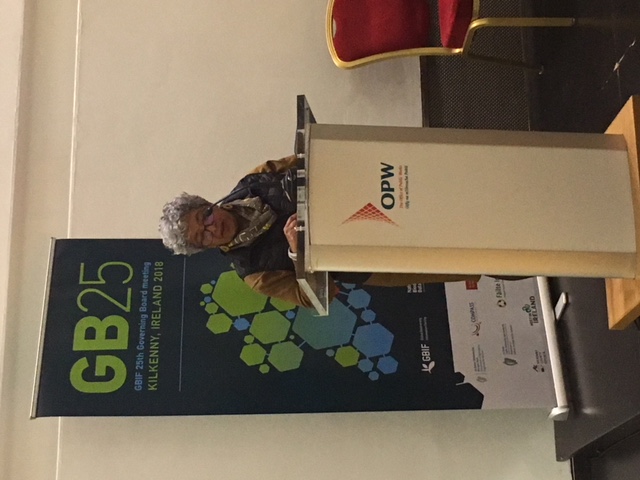
Tanya Abrahmse speaking

Tanya Abrahmse, chair of GBIF governing board, speaking at the GBIF 25th Governing Board Annual Meeting. Photo credit: Constance Rinaldo.

Results of the Governing Board elections with terms ending in 2020:

  • 1st Vice-Chair, Governing Board: Christoph Hauser, Deputy Director General, Museum fur Naturkunde, Berlin
  • 3rd Vice-Chair, Governing Board: Leonard Krishtalka, Director University of Kansas, Biodiversity Institute and Natural History Museum
  • Nodes Committee Chair: André Heughebaert, Belgian Biodiversity Platform
  • Nodes Committee 1st ViceChair : Anders Telenius, Swedish Museum of Natural History
  • Nodes Committee 2nd Vice-chair : Hulda Gideon, Tanzania Commission for Science and Technology
  • Science Committee 1st ViceChair: Gregory Riccardi, iDigBio/Institute of Scientific Data, Florida State University
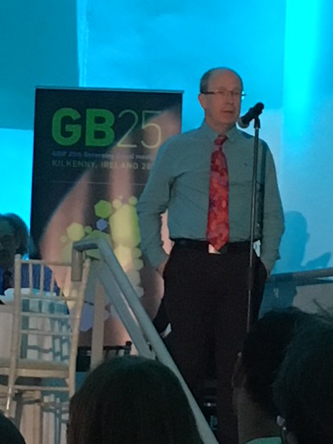
Donald Hoburn speaking

Donald Hobern, Executive Secretary of GBIF, speaking during the GBIF 25th Annual Governing Board Meeting. Photo credit: Constance Rinaldo.

Public Session of GBIF Governing Board. GBIF applications and relevance: progress and next steps.

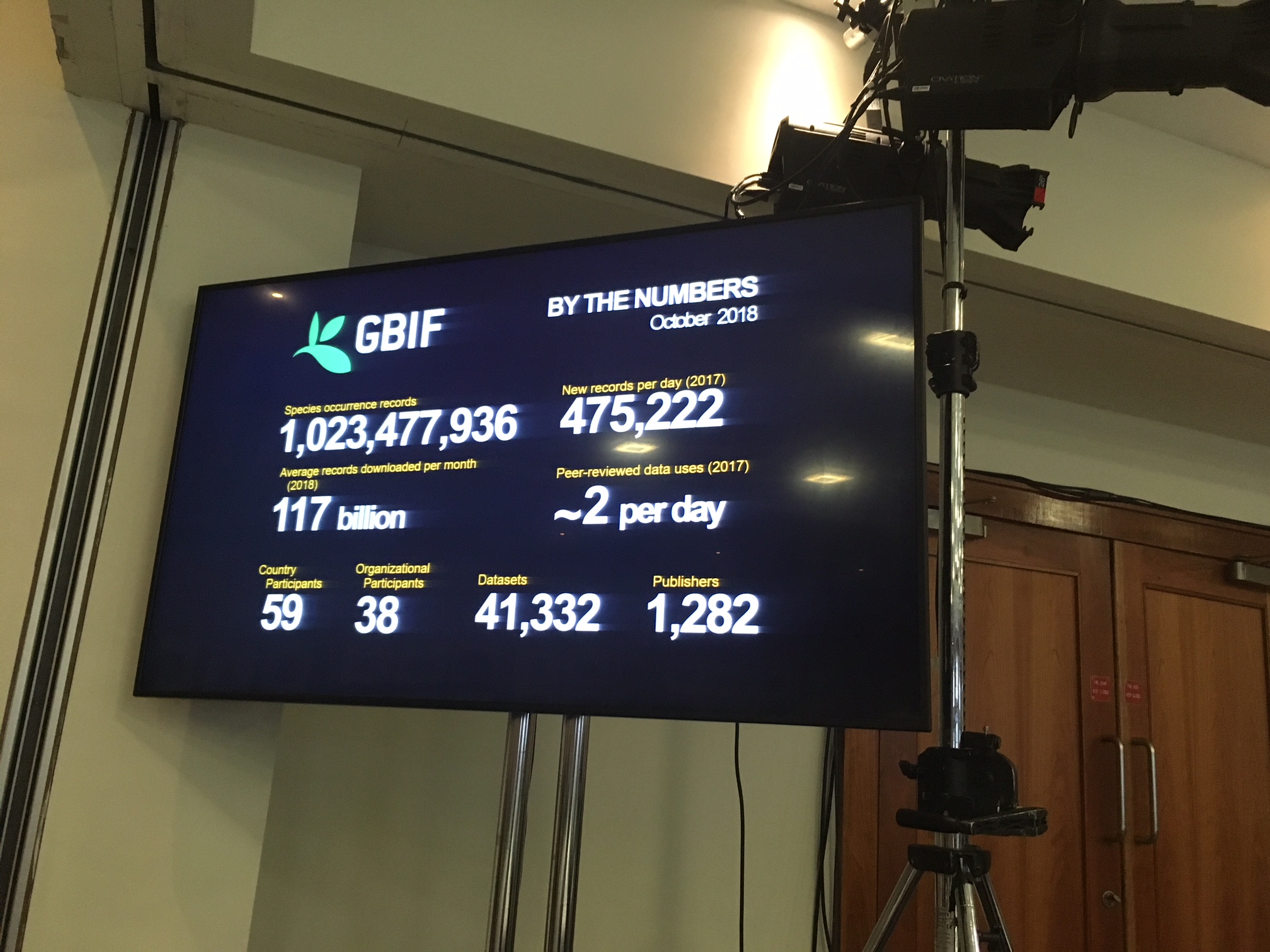
GBIF by the numbers. Photo credit: Constance Rinaldo.

All GBIF delegates and others from the greater biodiversity community in Ireland were invited to the public session. Many of the talks focused on data discovery and mobilization, improving functionality and relevance to policy.

Presentations were introduced by Tim Hirsch (GBIF).

  • org at 1 billion records: trends in data publication and research use
    Kyle Copas, Communications Manager, GBIF Secretariat | presentation
  • Encouraging a data citation culture
    Daniel Noesgaard, Science Communications Coordinator, GBIF Secretariat | presentation
  • Shining a light on ‘dark taxa’: naming and discovering DNA-based biodiversity data, Part 1
    Dmitry Schigel, Scientific Officer, GBIF Secretariat | presentation
  • Shining a light on ‘dark taxa’: naming and discovering DNA-based biodiversity data, Part 2
    Urmas Kõljalg, University of Tartu Natural History Museum & Botanic Garden, Estonia
  • Shining a light on ‘dark taxa’: naming and discovering DNA-based biodiversity data, Part 3
    Dmitry Schigel, Scientific Officer, GBIF Secretariat
  • Improved information on invasive and alien species, Part 1
    Shyama Pagad, IUCN Invasive Species Specialist Group (via video), New Zealand
  • Improved information on invasive and alien species, Part 2
    Tim Hirsch, Deputy Director, GBIF Secretariat | presentation
  • Improved ecological data capture and Essential Biodiversity Variables
    introduced by Donald Hobern, Executive Secretary, GBIF Secretariat
  • Improved ecological data capture and Essential Biodiversity Variables Laetitia Navarro, GEO BON: Group on Earth Observations – Biodiversity Observation Network, Germany | presentation
  • Overcoming the taxonomic challenge Olaf Bánki, Species 2000| Catalogue of Life, Netherlands | presentation
  • Biodiversity data for national reporting Liam Lysaght, National Biodiversity Data Centre, Ireland | presentation

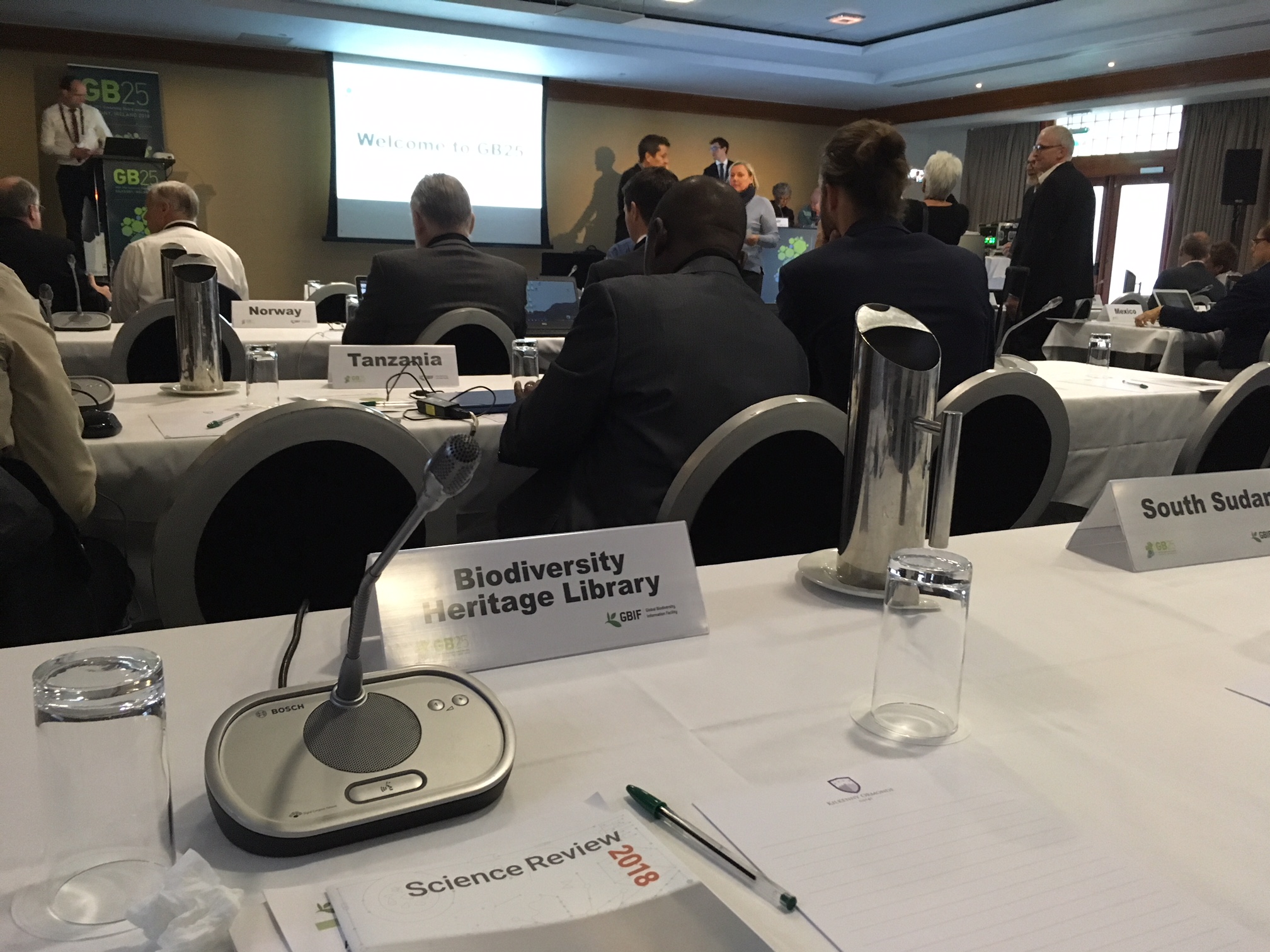
View from Constance Rinaldo’s seat at the GBIF 25th Governing Board Annual Meeting. Photo credit: Constance RInaldo.

The winners of the 2018 Young Researchers Award and Ebbe Nielsen Challenge were presented at the end of the public session. The Young Researchers Award honors projects that foster innovative research and discovery in biodiversity informatics and provides financial support for winners.

  • Raquel Gaião Silva, University of Algarve, Portugal: Raquel is a Master’s student in International Science/ Marine Biodiversity Conservation. She has used GBIF mediated data in her work on climate-driven changes in seaweed distribution in Atlantic Iberian marine forests.
  • Kate Ingenloff, University of Kansas Biodiversity Institute is a doctoral student who used GBIF mediated data along with time-specific environmental and behavioral data to develop better niche models for highly mobile species such as pelagic birds.

The Ebbe Nielsen Challenge annual prize honors the memory of Dr Ebbe Schmidt Nielsen, a principal founder of GBIF and leader in biodiversity informatics. The six recipients shared prize money, some provided by the Swedish Research Council.

  • Checklist recipe: a template for reproducible standardization of species checklist data Lien Reyserhove, Damiano Oldoniand Peter Desmet, INBO: Research Institute for Nature and Forest, Belgium First prize
  • Ozymandias: a biodiversity knowledge graph Roderic D. M. Page, University of Glasgow, United Kingdom First prize
  • The bdverse. Tomer Guetaand Yohay Carmel, The Technion – Israel Institute of Technology, Israel, Vijay Barve, Florida Museum of Natural History, United States, Thiloshon Nagarajah, Informatics Institute of Technology, Sri Lanka, Povilas Gibas, Vilnius University, Lithuania, Ashwin Agrawal, Indian Institute of Technology (BHU), India Second prize
  • GBIF Issues Explorer. Luis J. Villanueva, Smithsonian Institution, United States Second prize
  • Smart mosquito trap to DwC pipeline. Connor Howingtonand Samuel Rund, VectorBase, United States Second prize
  • Taxonomy Tree Editor. Ashish Singh Tomar, University of Granada, Spain | BIG4 Second prize

Videos of the public sessions of the meeting are available on the GBIF website.

Other Explorations

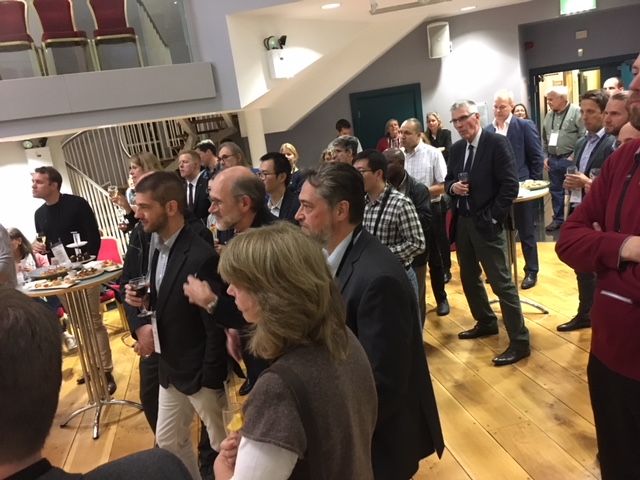
people during an opening reception

Attendees at the opening reception of the GBIF 25th Governing Board Annual Meeting. Photo credit: Constance Rinaldo.

I had some productive, informal meetings with BHL partners and potential partners providing opportunities to explore new partnerships or deepen existing ones. During the reception and other networking events, I learned about GBIF’s Biodiversity Open Ambassador program, a chance to promote the principles of open data sharing in presentations, whether or not the work is about GBIF. GBIF will provide slides and information or you can develop your own to add to appropriate presentations. Discussions with Ana Casino of the Consortium of European Taxonomic Facilities (CETAF), Donald Hobern and Dmitry Shigel (GBIF), Dmitris Koureas (TDWG) and Patricia Koleff (BHL México), among others, determined that BHL’s future plans will augment interoperability in the biodiversity community and that BHL is a critical resource for many GBIF participants.

November 27, 2018by michelle.underhill
BHL News, Blog Reel

BHL at the Northeast Natural History Conference

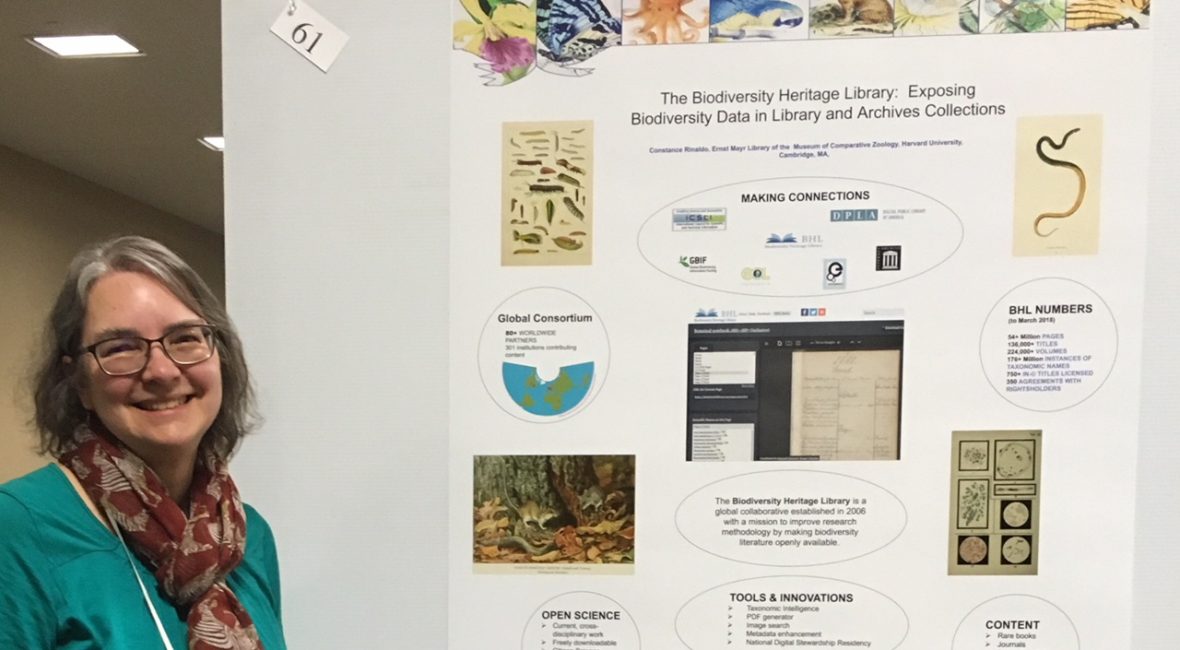
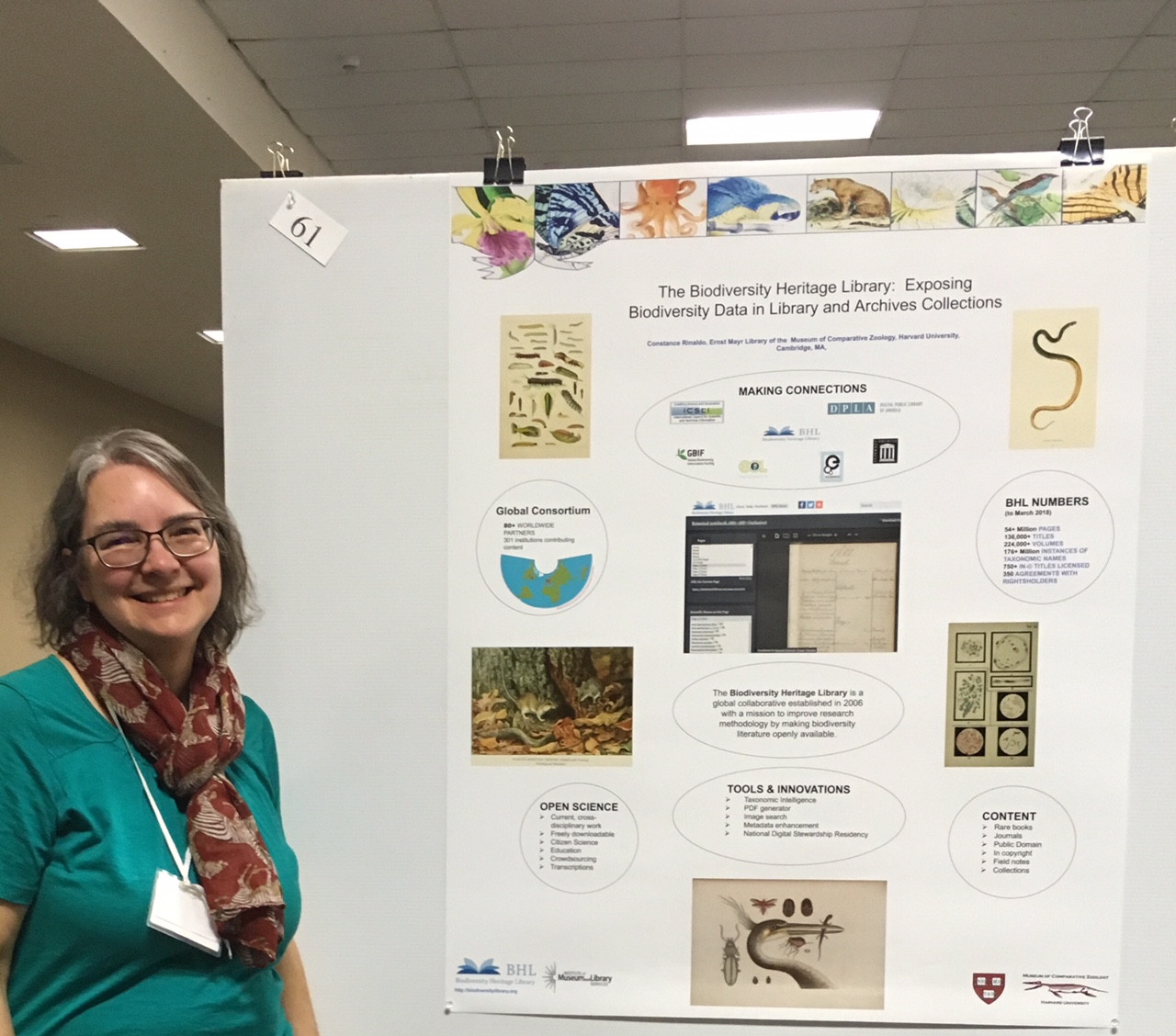
woman in green shirt standing in front of a poster.

The weekend looked promising:  a lovely clear Friday night for a drive to Burlington, Vermont, USA from southern New Hampshire to attend the Northeast Natural History Conference (13-15 April 2018).  What could be better than a hotel humming with botanists and zoologists and activities for them?  The conference was packed—five concurrent sessions (often standing room only) and around 140 posters Saturday and Sunday along with workshops (Bat houses anyone?) and demonstrations throughout the weekend.  Students, faculty and naturalists from colleges, universities and small research or rescue organizations presented posters and talks that focused on New England, New York and Eastern Canadian native vertebrates, invertebrates, plant species diversity and distribution, invasive species and wetland habitats.

woman in green shirt standing in front of a poster.

Constance Rinaldo (Librarian of the Ernst Mayr Library and Museum of Comparative Zoology Archives; Chair of the BHL Executive Committee) standing with her BHL poster at the Northeast Natural History Conference.

Some of the posters that caught my eye (beyond the BHL poster that I presented) included “Restoring Northeast Understory Species: A case of the Primary Literature” presented by Isabel A. Schmitt and Dr. James H. Graves.  They presented a literature review that led to practical methods to reintroduce native species.  Another interesting poster was the “Use of Point-and-Shoot Photography to Compare Regional Differences in Coyote (Canis latrans) Skull Size”.  Osrica Mclean et al developed an online collection of digital images of skulls and calibrated the images so that they could be measured accurately online.

I attended a talk about how specialist and generalist rodents disperse mycorrhizae (Ryan Stephens and Rebecca Rowe) along with a presentation that detailed 42 years of vegetation change on Franconia Ridge in New Hampshire by Charles Cogbill.  Dr. Cogbill used an archive of photographs (from 1860 to present) to identify the effects of hikers on the trail vegetation (much damage is done). Another conference theme was bats and how white nose syndrome has affected bats in New England.   In a talk by Meghan Lout, she described a house in Middlebury, VT from which 550 bats were seen exiting one evening.  The owners were unaware that their house was a haven for bats.

Interacting with so many enthusiastic people studying nature—from observational work to highly experimental research—was inspiring and exciting.  The BHL poster was well received.  University faculty members and naturalists from small organizations stopped by to tell me how much BHL has improved their research workflows. Many students discovered BHL at this conference and were suitably impressed.  I asked for suggestions to enhance BHL and the common theme was “more”.  More content (with some individuals offering resources) and more current materials.  New potential users were surprised that content is available for free download. A few of the more sophisticated users suggested that we needed a taxonomic name authority file so names can be plugged in and the historical names and current names could be viewed as a complete set.

Leaving was somewhat deflating—snow, sleet and freezing rain as only the north country can do it.  Miserable driving, 45 mph tops, cars off the road, 4 hours on the road instead of 3. But so worth it to be among so many people studying the natural world.

May 2, 2018by michelle.underhill
BHL News, Blog Reel

A Look at the 2018 BHL Annual Meeting in Los Angeles

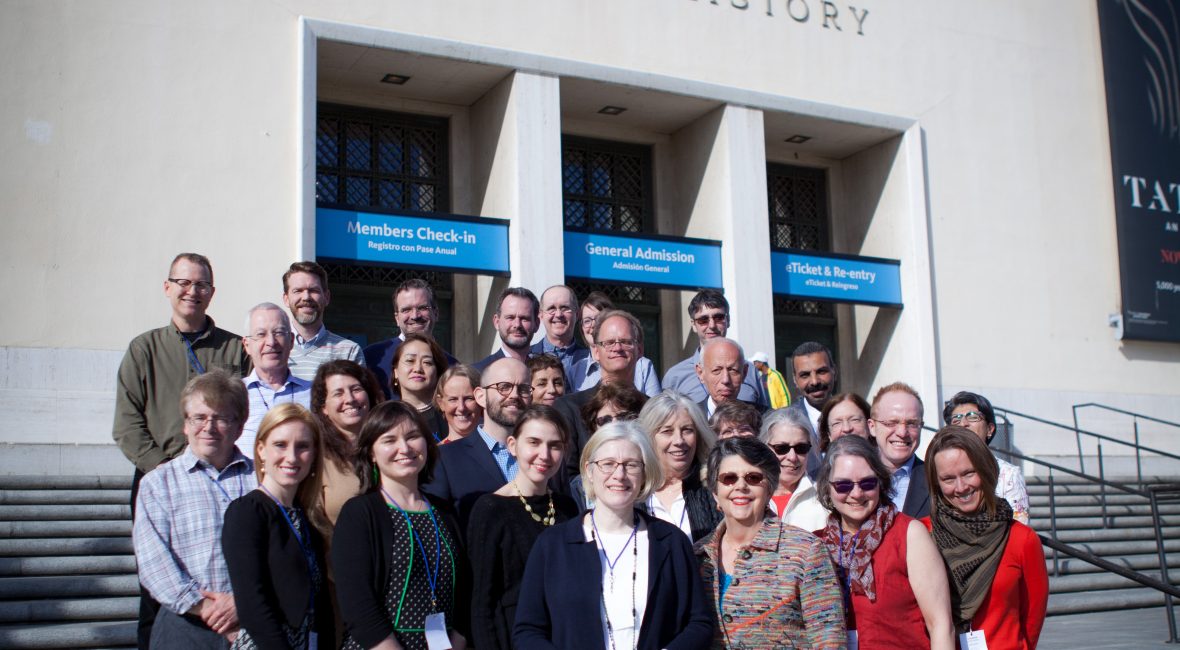
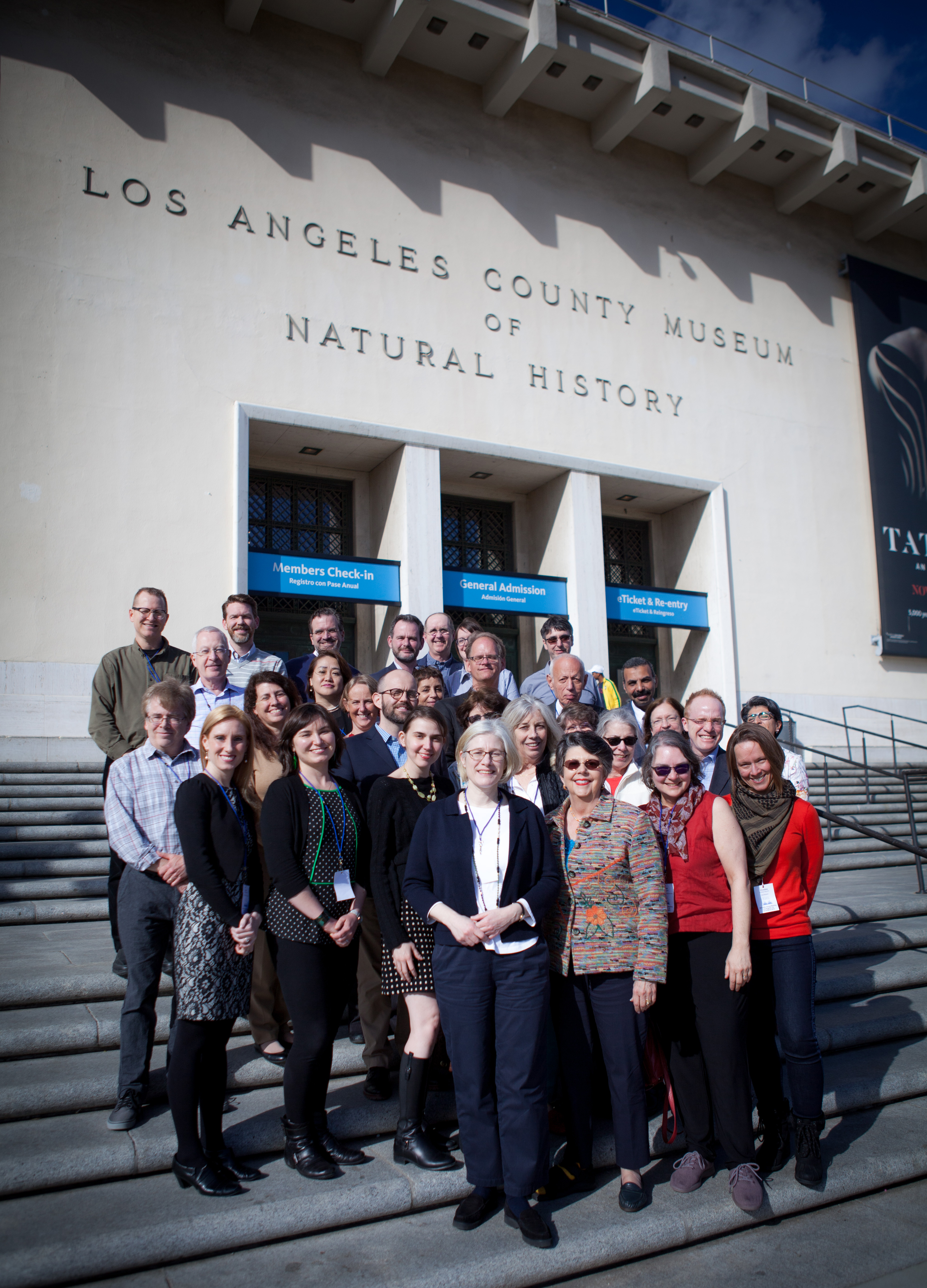
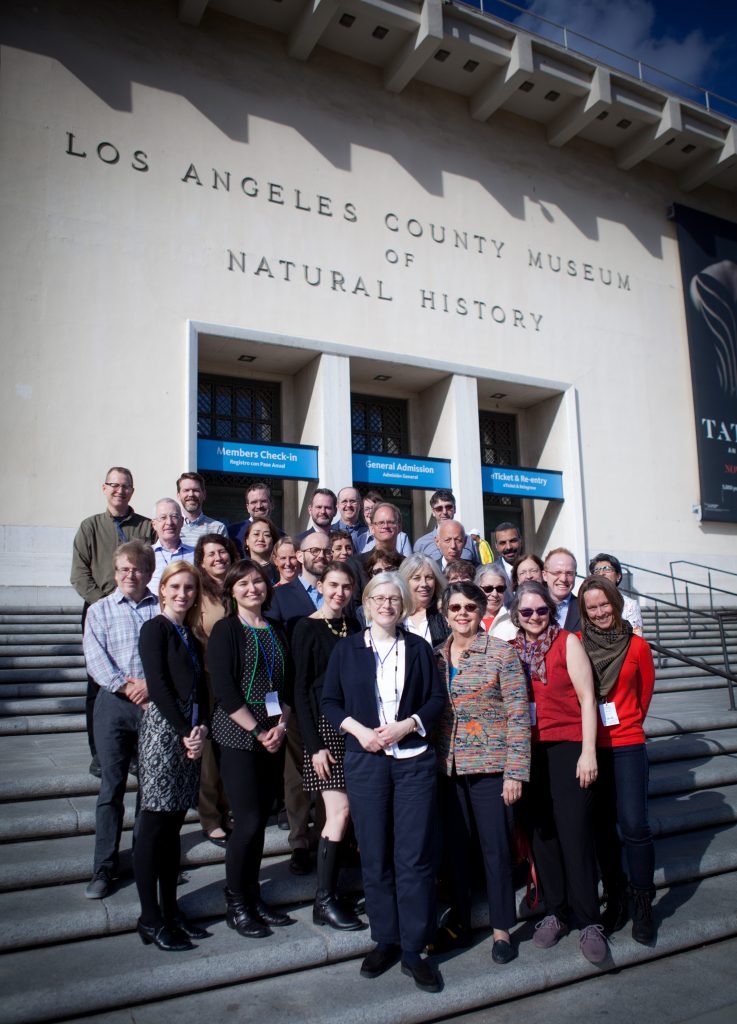
group of men and women standing in front of a white building labeled "Los Angeles County Museum of Natural History"

Group photo of attendees at the 2018 BHL Annual Meeting. Photo taken in front of the Los Angeles County Museum of Natural History. Photo credit: Edgar Chamorro.

The 2018 BHL Annual Meeting was held in Los Angeles at the Natural History Museum of Los Angeles County and Los Angeles County Arboretum and Botanic Garden. The meeting was attended by 35 representatives of BHL partners from 11 countries.

Four  guest speakers discussed how biodiversity literature is relevant to their work : Dr. Austin Hendy, Collections Manager, Invertebrate Paleontology, NHMLAC; Dr. Jody Martin, Associate VP of Research and Collections and Curator of Crustacea, NHMLAC (Marine Invertebrate Larvae and the BHL); Dr. Gary Wallace, Research Associate at Rancho Santa Ana Botanic Garden and Botanist, Retired, United States Fish and Wildlife Service (BHL at LACM); and Dr. Victoria Vesna, Professor, Dept. of Design, Media Arts, UCLA and Founder and Director of the Art | Sci Center + Lab, CNSI, and Visiting Professor, Empowerment Informatics Program, University of Tsukuba, Japan.
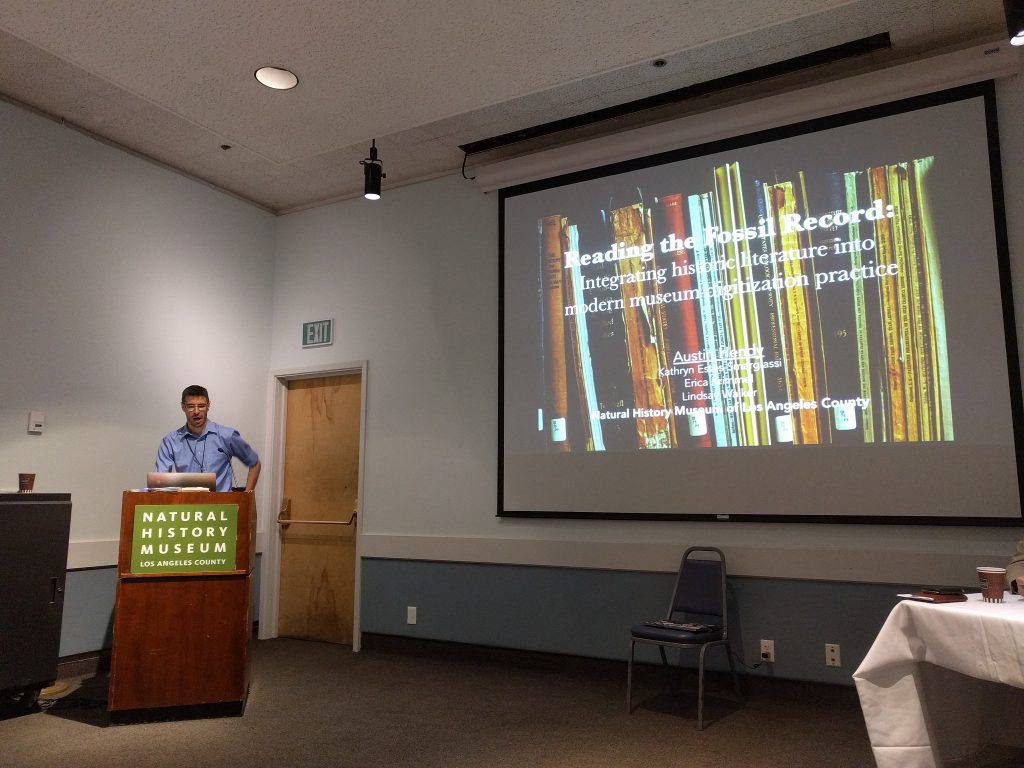
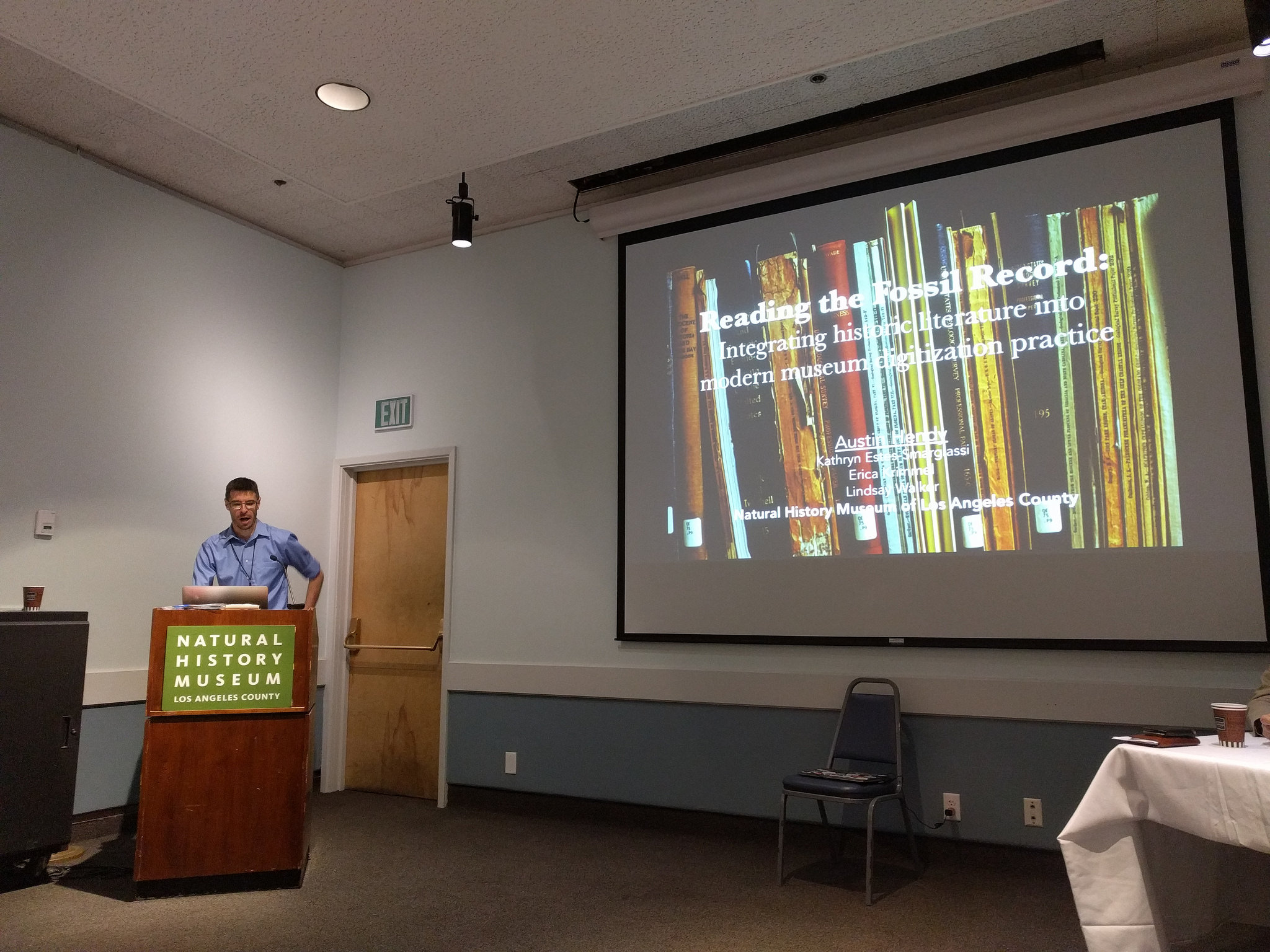
man in blue shirt talking into a microphone behind a podium. Slides are visible on a screen behind him.

Dr. Austin Hendy, Collections Manager, Invertebrate Paleontology, NHMLAC, presenting during the BHL Users Symposium at the 2018 BHL Annual Meeting. Photo credit: Martin R. Kalfatovic.

At an evening reception hosted by the Natural History Museum of Los Angeles County, BHL Outreach and Communication Manager Grace Costantino was joined by two Postdoctoral Fellows at the Rancho La Brea Tar Pits, Dr. Alexis Mychajiliw and Dr. Libby Ellwood, as the featured speakers. The topic of the evening talks was BHL and our users; Grace gave examples from conversations with our users (Empowering Global Research) and Drs. Ellwood (Passenger Pigeons in the Western United State) and Mychajiliw (Eyewitness to Extinction) spoke of their use of BHL in their work.

In the business portion of the meeting, BHL Chair Constance Rinaldo gave an inspiring look to the future of BHL based on her ongoing discussions with the science community and BHL members and staff (BHL 2018: Looking to the Future). The BHL Secretariat provided updates on their work. Bianca Crowley (BHL Collections Manager) talked about the growth of the BHL collections and Grace Costantino (BHL Outreach and Communication Manager) gave an update on outreach activities.
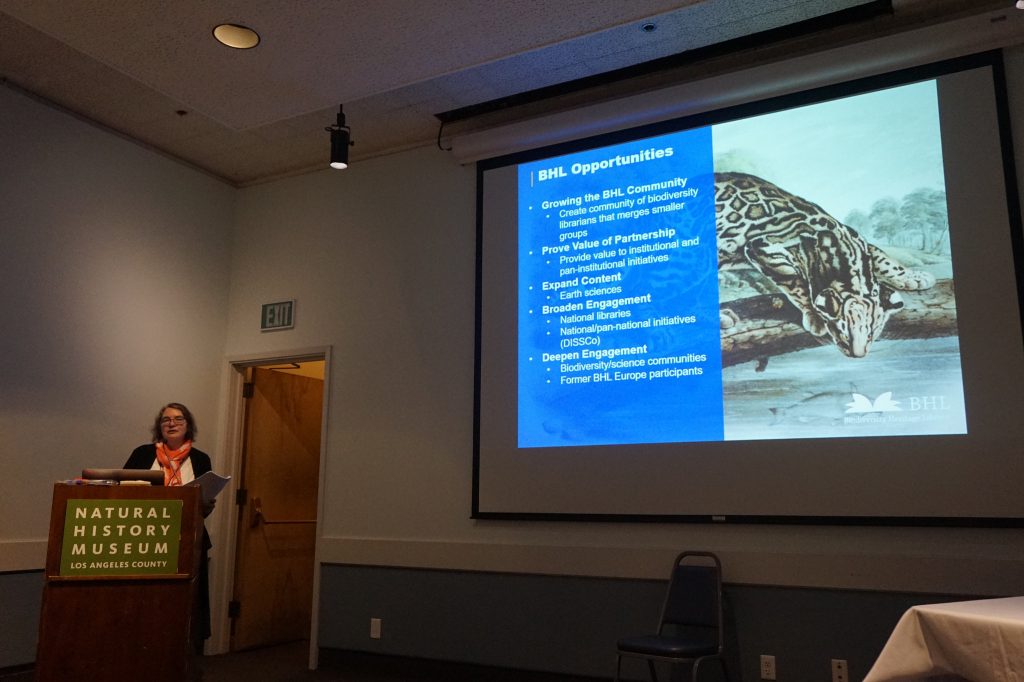
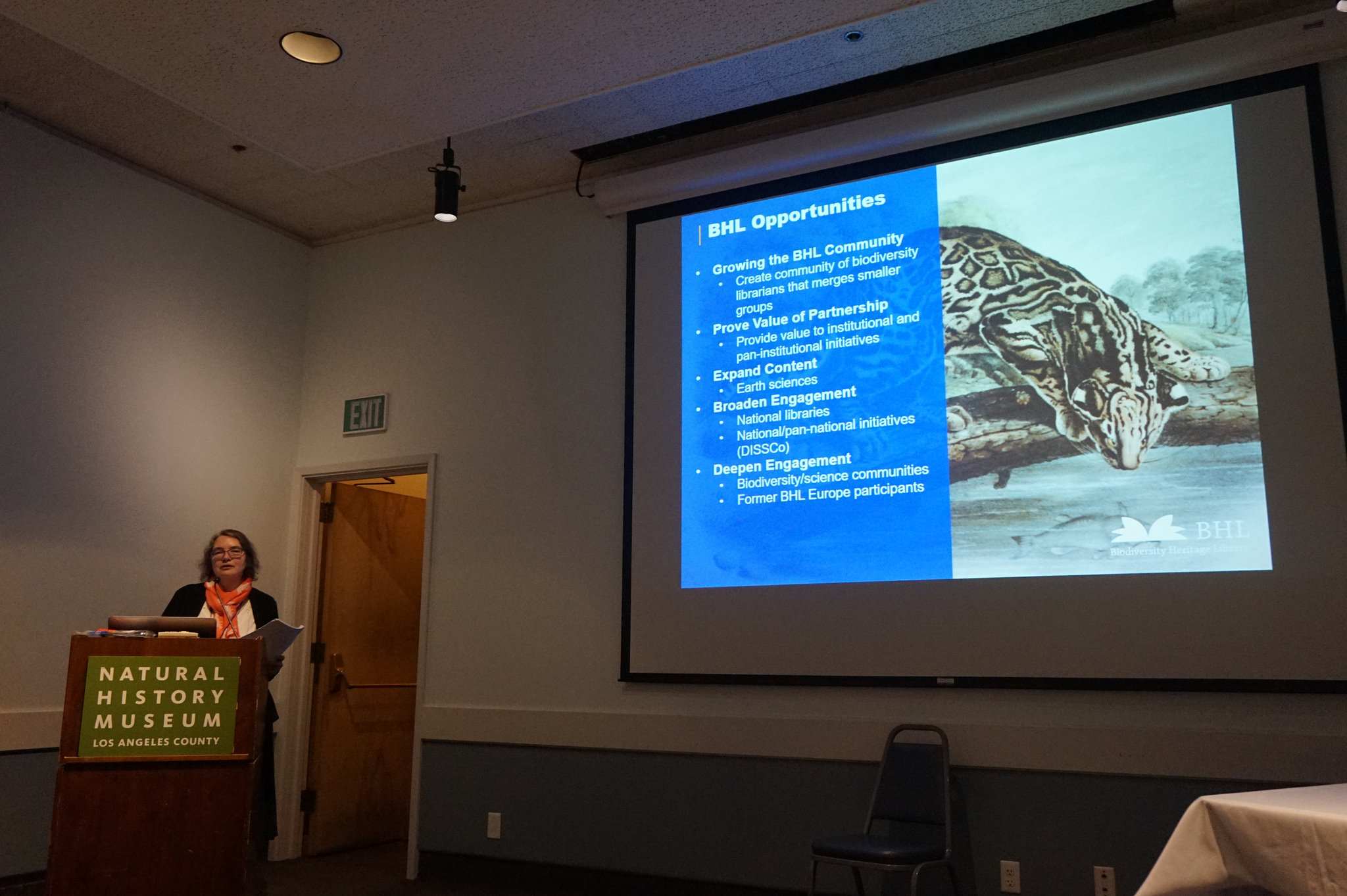
woman talking into a microphone behind a podium. Slides are visible on a screen behind her.

BHL Chair Constance Rinaldo presenting on “BHL 2018: Looking to the Future” at the 2018 BHL Annual Meeting. Photo credit: Martin R. Kalfatovic.

BHL Program Director Martin R. Kalfatovic and Program Manager Carolyn A. Sheffield gave updates on the work of the past year and the financial health of the BHL. The BHL Program Director’s Secretariat & Technical Update is available online.

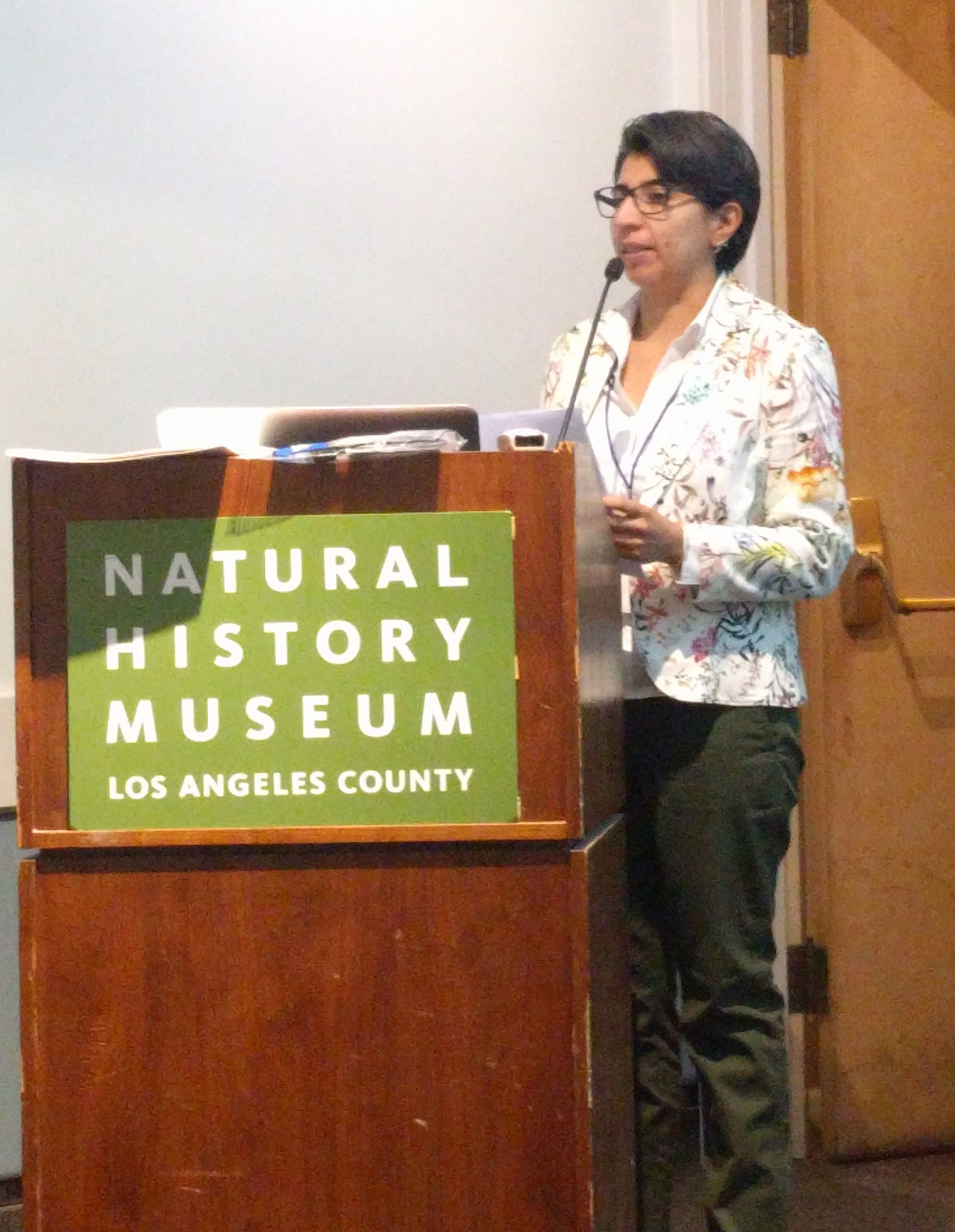
A new feature added to this year’s meeting was the Consortium Introspective: A BHL Symposium. BHL Chair Constance Rinaldo facilitated talks by Kelli Trei, Biosciences Librarian & Assistant Professor, University of Illinois (What Scientists Value about the Biodiversity Heritage Library: A BHL Blog Analysis); Susan Fraser, Thomas J. Hubbard Vice President and Director, LuEstherT. Mertz Library, The New York Botanical Garden (BHL — A Bright Constellation in the Biodiversity Universe); Mrs Wai Yin Pryke, Director of the National Library Singapore (BHL Singapore: Stories Our Collections Tell); and Mónica Aguilar Rocha, Digital Library Coordinator BHL México (Integrating digital content: issues and challenges to face in BHL México).
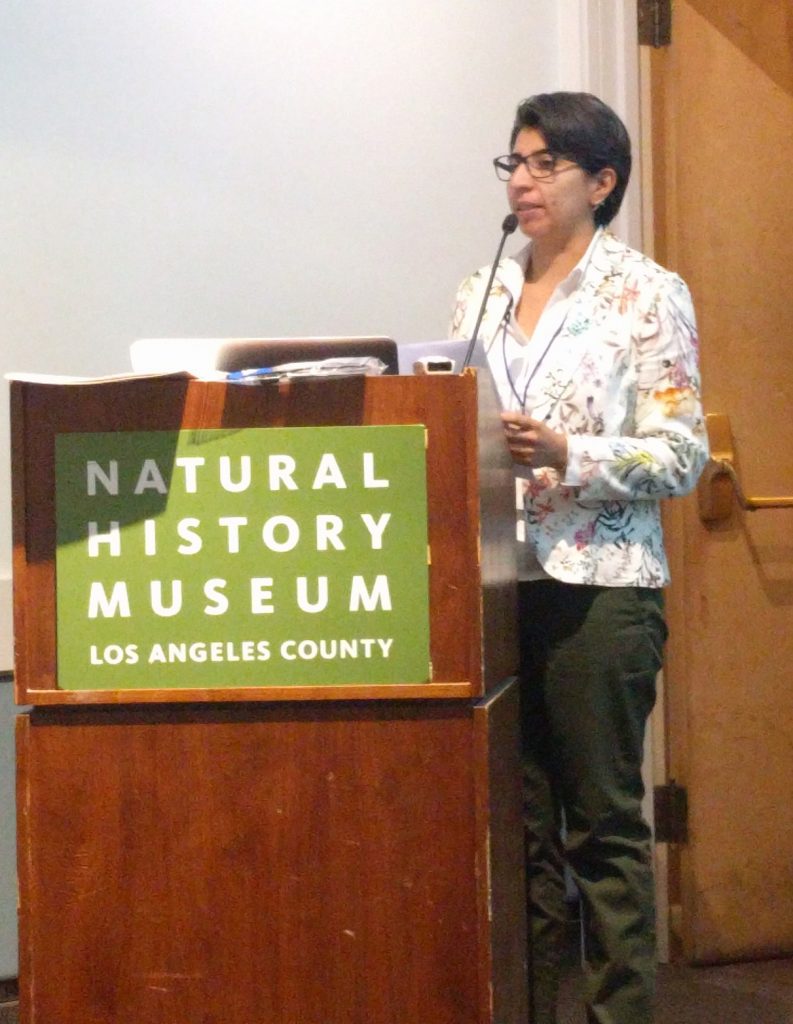
woman with brown hair talking into a microphone behind a podium

Mónica Aguilar Rocha, Digital Library Coordinator BHL México, presenting during the Consortium Introspective: A BHL Symposium at the 2018 BHL Annual Meeting. Photo credit: Martin R. Kalfatovic.

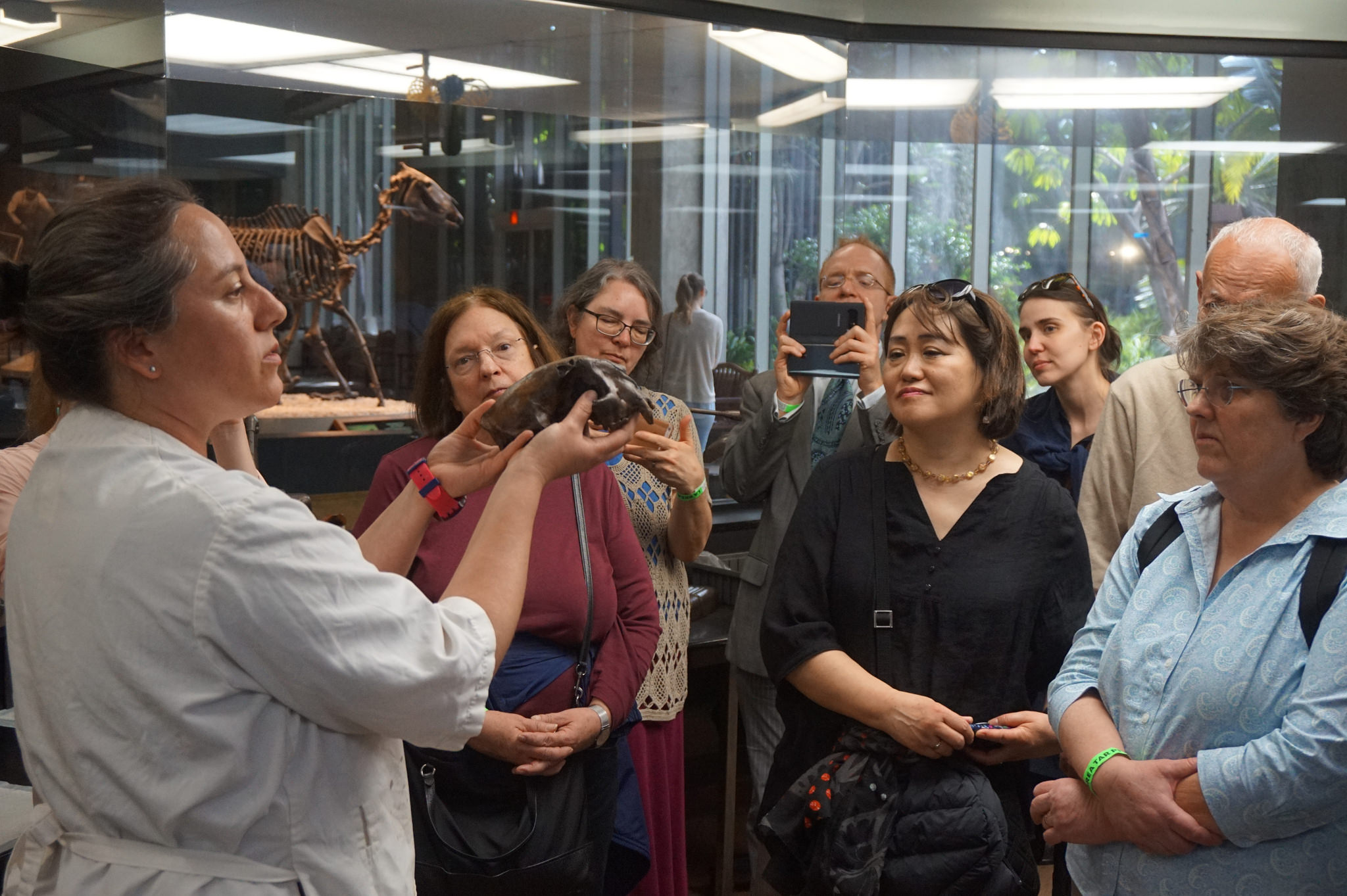
Attendees at the meeting had the opportunity to participate in some wonderful tours. The first was to the La Brea Tar Pits and Museum. The tour of the La Brea Tar Pits had two components – an overview and visit to the active fossil excavation sites in Hancock Park as well as a “behind the scenes” tour of work that goes on in the Fossil Laboratory. Among the items seen in the Fossil Laboratory were macrofossil (bones of dire wolves, sabre-tooth cats, etc.) preparation techniques, conservation and restoration work, and the large scale microfossil sorting project.
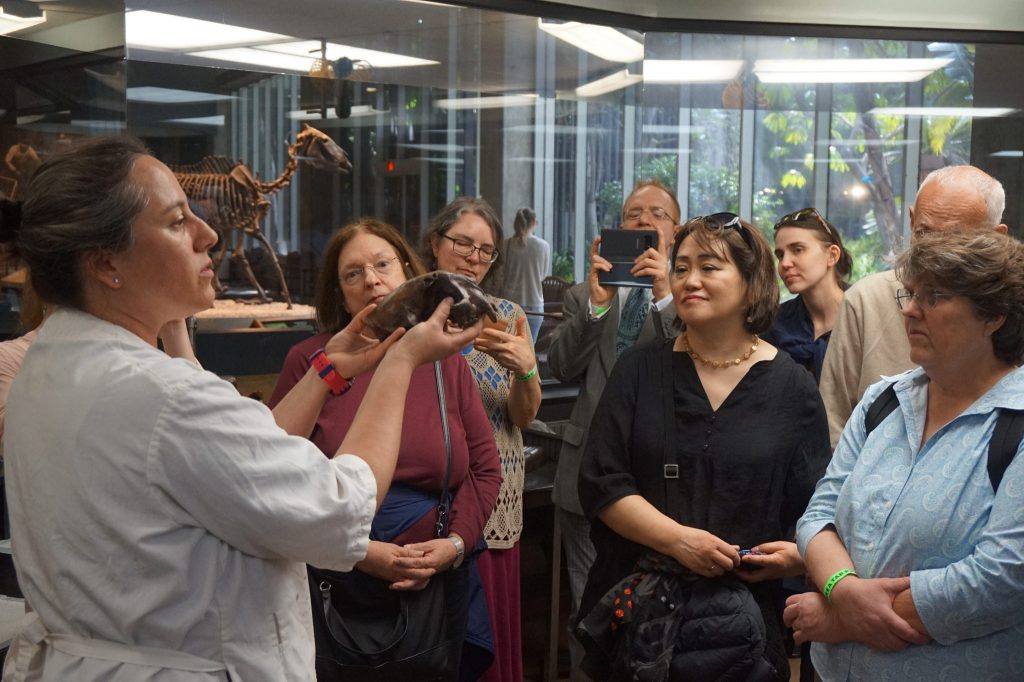
woman in white lab coat holding animal skull while group of men and women stand around her.

Stephany Potze (Fossil Lab Manager) showing off macrofossils during a tour of the Fossil Lab at the La Brea Tar Pits. Photo credit: Martin R. Kalfatovic.

Susan Eubank facilitated a visit to the world-renowned Huntington Library, Art Collections and Botanical Gardens, where a tour of the Library as well as the Botanical Gardens was provided. The library and garden professionals highlighted their conservation and digital imaging labs along with the botanical and garden collections during a walking  tour.
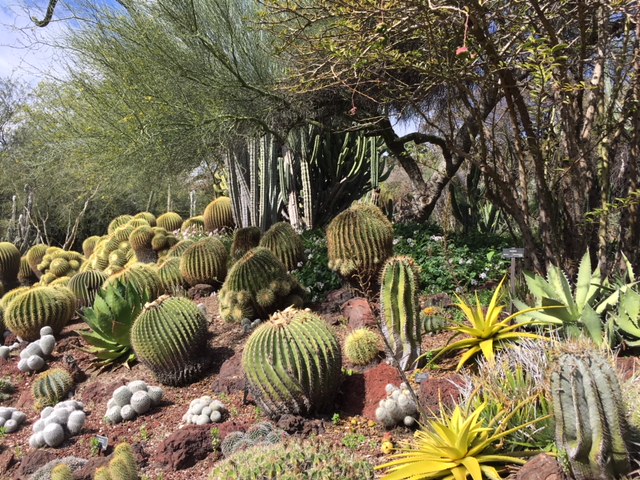
collection of cacti and other succulents at an outdoor garden

Photo of the Desert Garden at The Huntington Library, Art Collections, and Botanical Gardens, taken during tour of the Gardens. Photo credit: Constance Rinaldo.

The culmination of the meeting was the selection of the host for the 2019 BHL Annual Meeting, and much excitement was generated as we waited for the voting results. The three contenders were the University of Toronto, Cornell University and the Smithsonian Tropical Research Institute in Panama. The Members voted to accept the bid of Cornell University. We look forward to gathering in Ithaca next year.

The BHL community wishes to thank again our hosts, Richard Hulser (Natural History Museum of Los Angeles County) and Susan Eubank (Los Angeles County Arboretum and Botanic Garden).

April 9, 2018by

Help Support BHL

BHL's existence depends on the financial support of its patrons. Help us keep this free resource alive!

search

About BHL

The Biodiversity Heritage Library (BHL) is the world’s largest open access digital library for biodiversity literature and archives. BHL operates as a worldwide consortium of natural history, botanical, research, and national libraries working together to digitize the natural history literature held in their collections and make it freely available for open access as part of a global “biodiversity community.”

Join Our Mailing List

Sign up to receive the latest news, content highlights, and promotions.

Subscribe Now

Subscribe to Blog via Email

Enter your email address to subscribe to this blog and receive notifications of new posts by email.

Join 319 other subscribers

Subscribe to Blog Via RSS

Subscribe to the blog RSS feed to stay up-to-date on all the latest BHL posts.

Access RSS Feed

Inspiring Discovery through Free Access to Biodiversity Knowledge.

The Biodiversity Heritage Library makes it easier than ever for you to access the information you need to study and explore life on Earth…for free, anytime, anywhere.


64+ Million Pages of
Biodiversity Literature Online.

EXPLORE

Tools and Services
to Transform Research.

EXPLORE

300,000+
Illustrations on Flickr.

EXPLORE

ABOUT | HARMFUL CONTENT | PRIVACY | SITE MAP | TERMS OF USE