Biodiversity Heritage Library - Program news and collection highlights from BHL
  • Home
  • News
  • Featured Books
    • All Featured Books
    • Book of the Month Series
    • BHL at 20
  • User Stories
  • Campaigns
    • Fossil Stories
    • Garden Stories
    • Monsters Are Real
    • Page Frights
    • Her Natural History
    • Earth Optimism 2020
  • Tech Blog
  • Visit BHL
Home
News
Featured Books
    All Featured Books
    Book of the Month Series
    BHL at 20
User Stories
Campaigns
    Fossil Stories
    Garden Stories
    Monsters Are Real
    Page Frights
    Her Natural History
    Earth Optimism 2020
Tech Blog
Visit BHL
  • Home
  • News
  • Featured Books
    • All Featured Books
    • Book of the Month Series
    • BHL at 20
  • User Stories
  • Campaigns
    • Fossil Stories
    • Garden Stories
    • Monsters Are Real
    • Page Frights
    • Her Natural History
    • Earth Optimism 2020
  • Tech Blog
  • Visit BHL
Biodiversity Heritage Library - Program news and collection highlights from BHL
Blog Reel, User Stories

Bringing Natural History Art to Life: Installation Artist Uses BHL to Create Fantastic Worlds Through Immersive Artworks

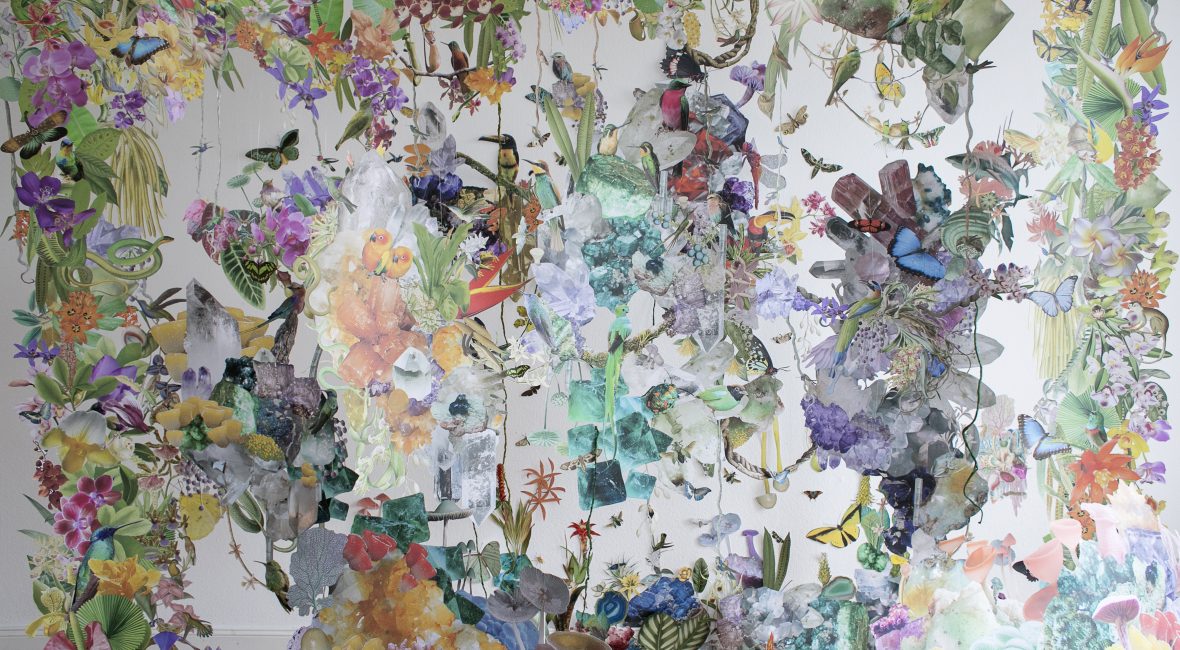
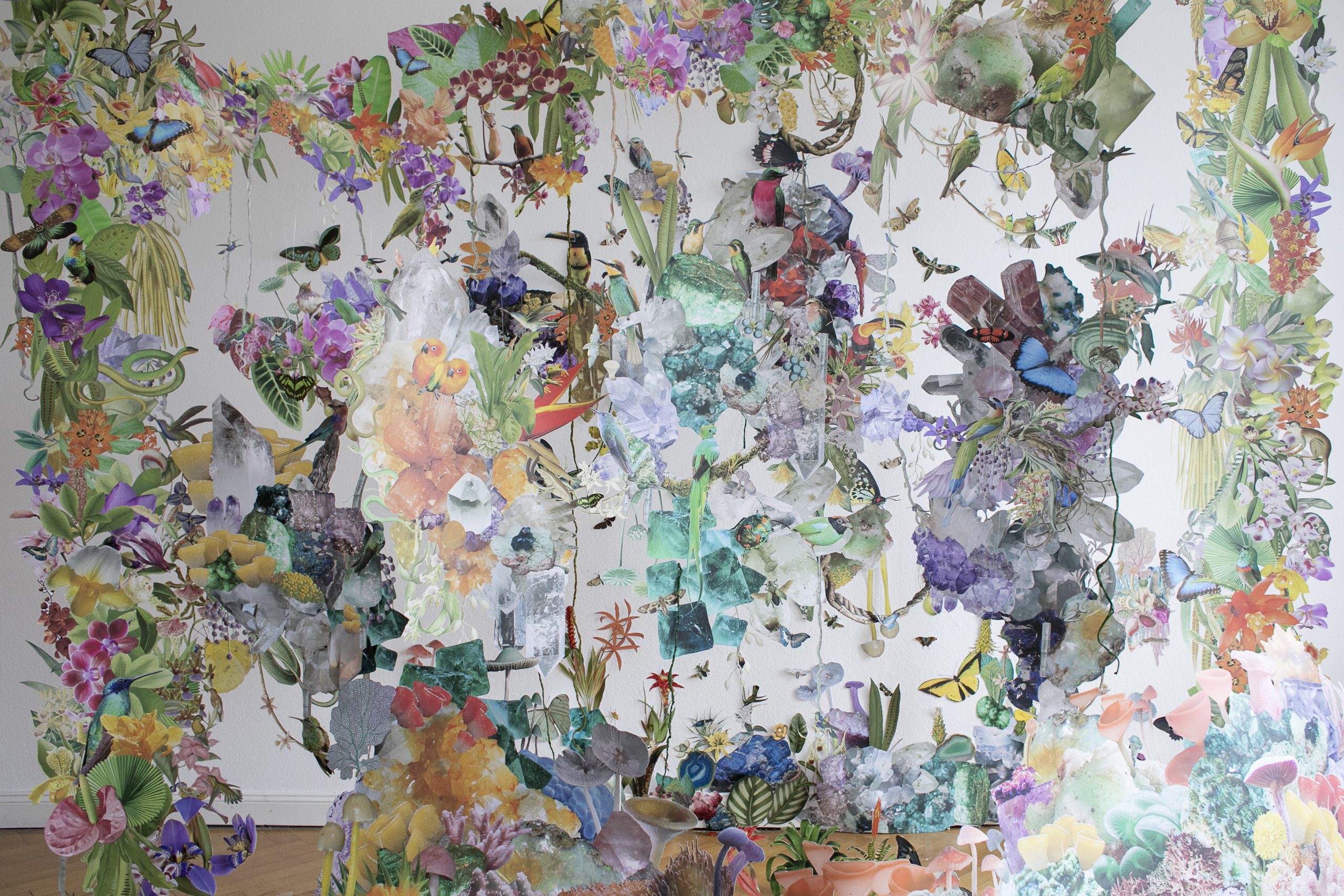
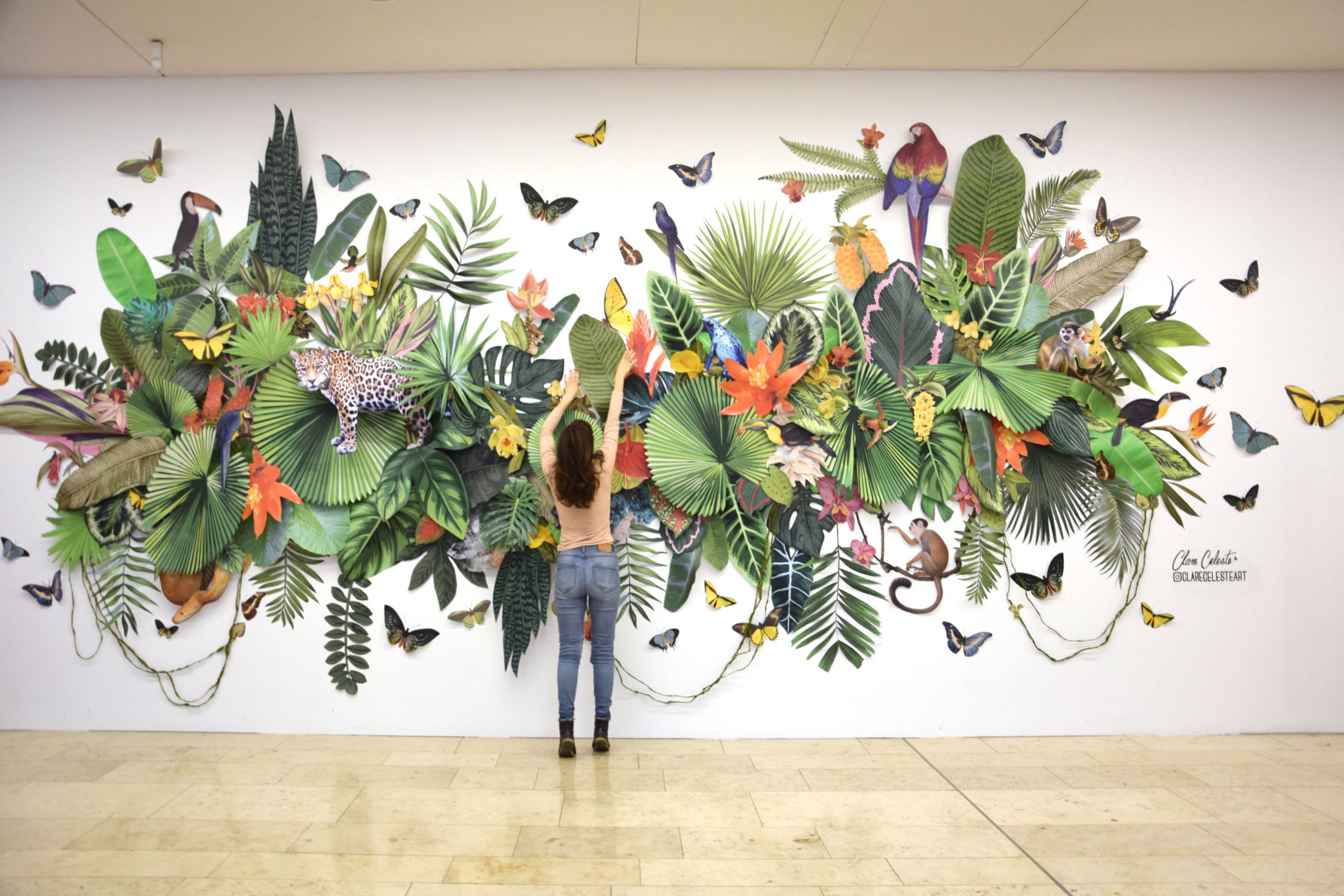
Collage installation art with various biodiversity figures.

Biodiversity (2020), a collaged art installation by Clare Börsch. The installation uses illustrations and photographs sourced mainly from open access collections like the Biodiversity Heritage Library (BHL). Photo courtesy of Clare Börsch. Photo by Patricia Schichl.

Imagine stepping into a world teeming with dazzling biodiversity. Everywhere you turn, colorful birds perch amidst exotic blooms, glimmering butterflies and energetic hummingbirds flit from flower to flower, shimmering serpents wind their way through a jungle of foliage, and an array of mushrooms add color and dimension to the forest floor.

This world, seemingly alive with biodiversity, is composed not of flesh and blood, but of ink and paper. It is a world brought to life from the imagination of Berlin-based American artist Clare Börsch using illustrations and photographs sourced mainly from open access collections like the Biodiversity Heritage Library (BHL) and painstakingly cut and arranged into a marvelous, three-dimensional ecosystem. Within this Biodiversity installation of collaged nature art, a wondrous world awaits.
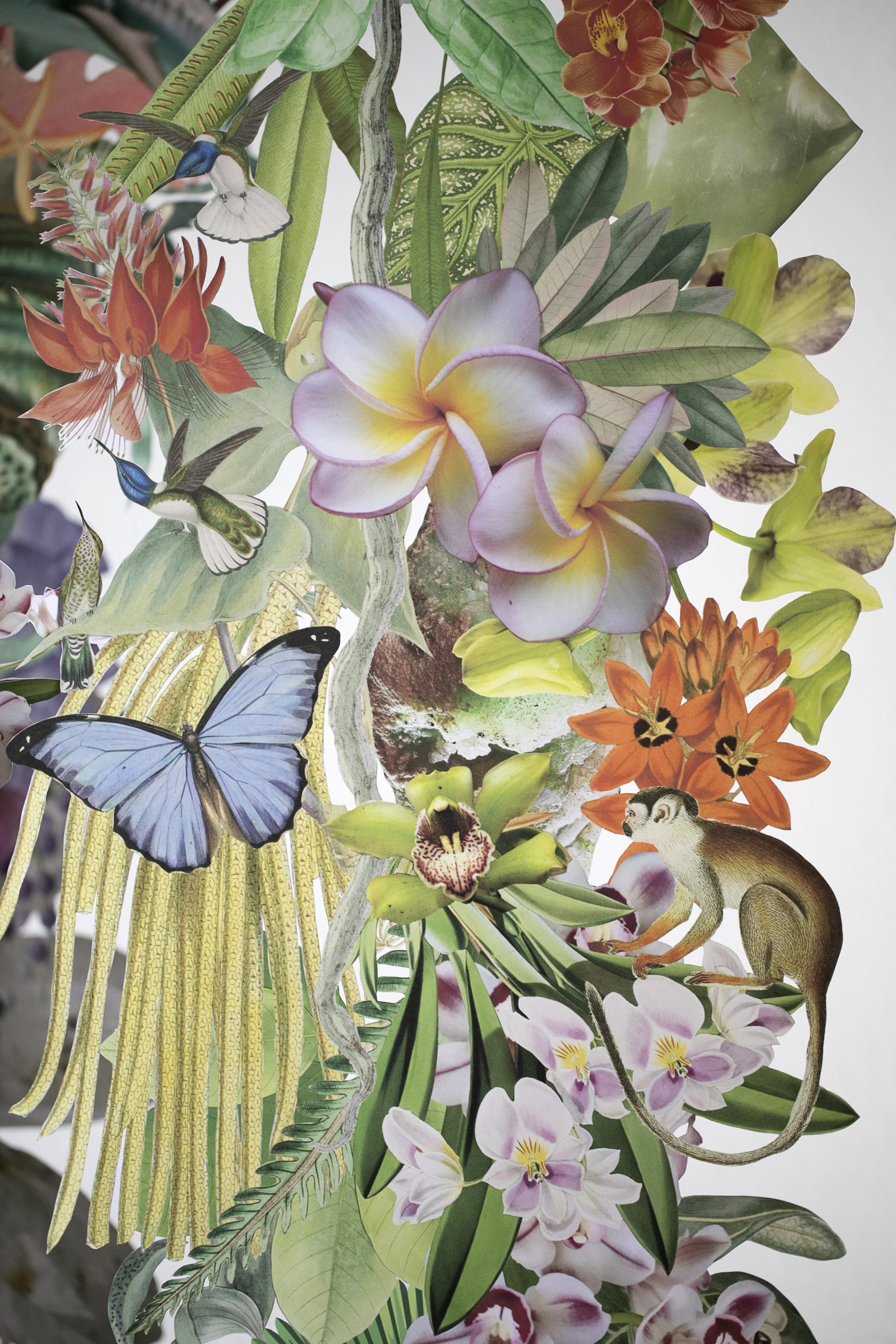
collages illustrations of various bird heads and feet

Close-up from the collaged art installation Biodiversity (2020) by Clare Börsch. Photo courtesy of Clare Börsch. Photo by: Patricia Schichl.

Beneath this enchanting beauty, however, lies a graver message—a warning—for this installation is also a commentary on the biodiversity and climate crises facing our planet today.

“Humanity has wiped out 68% of all our planet’s biodiversity in just the last 50 years,” says Börsch within her video for the Biodiversity installation. “My latest artwork and video shares a message of love, urgency and hope. Love for our planet, our future selves, our children and future generations. Urgency, because climate change is upon us and the predictions of what to come are dire. And Hope, because there is still a narrow window of time to act and there is still so much we can save.”
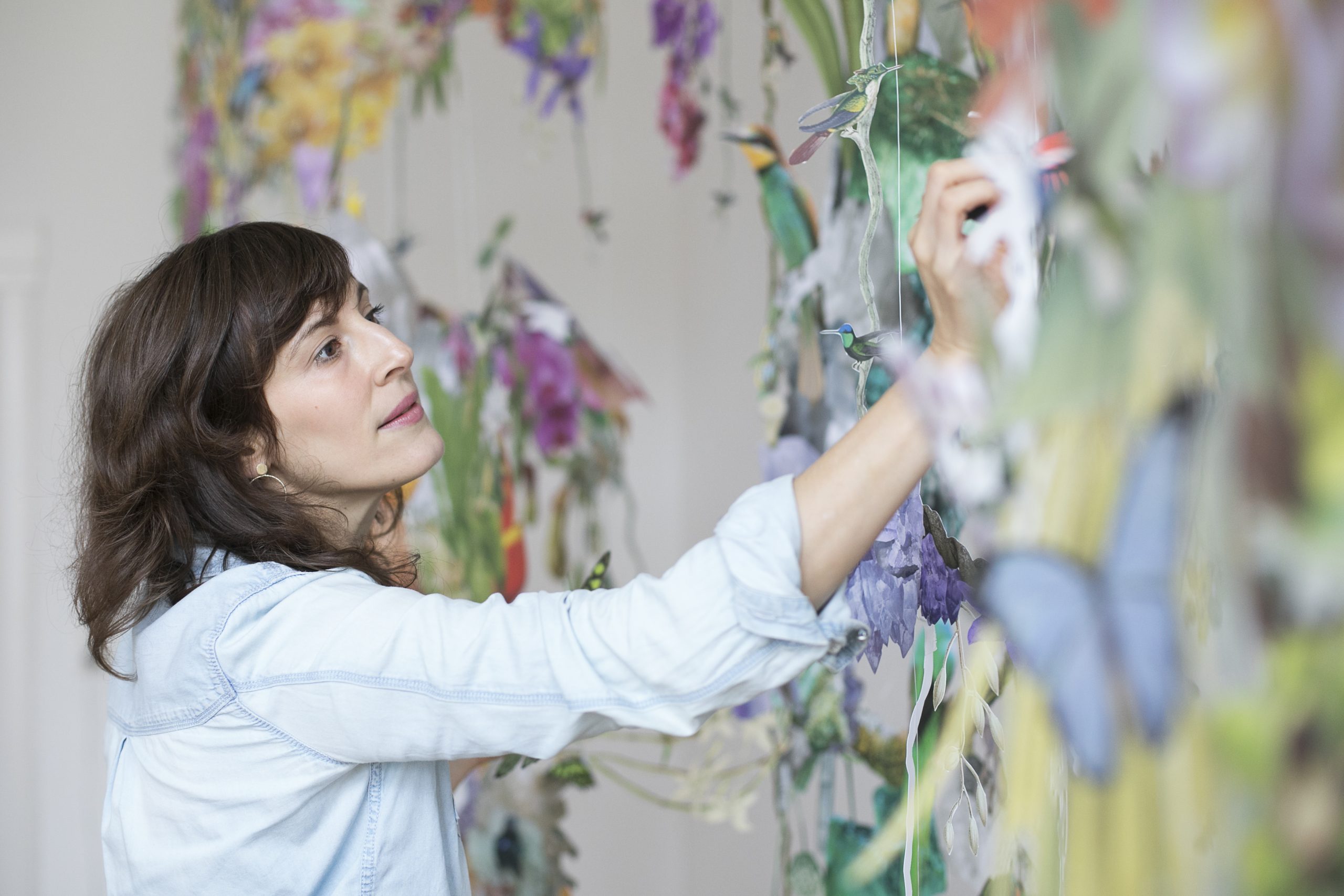
collage installation art featuring various biodiversity figures

Artist Clare Börsch building her collaged art installation, Biodiversity (2020). Photo courtesy of Clare Börsch. Photo by: Patricia Schichl.

With a background in public policy, Börsch has been a full-time artist for the past three years. Having lived in Brazil, the United States, Italy, Honduras, Argentina and Germany, her personal experiences with nature are global and diverse. Installation collage art allows Börsch to bring together flora and fauna from around the world to create an environment that reflects this global perspective and immerses the viewer within this incredible diversity through the use of historic naturalist imagery. This same imagery can also be emblematic of the threats facing this biodiversity.

“As I use naturalist imagery from 1900 and earlier, many species in my artwork have already vanished or are vanishing,” shares Börsch in her artist statement. “This adds a layer of ecological urgency to my work.”
collage installation art featuring various biodiversity figures

Collaged art installation in process. Installation by Clare Börsch incorporating imagery from BHL. Photo courtesy of Clare Börsch. Photo by: Artist.

Much of the naturalist imagery Börsch uses for her installations is sourced from BHL. The BHL Flickr, which contains over 240,000 images extracted from publications and archival materials in the Library, allows her to easily browse and download high resolution materials for her own artworks.

“Discovering BHL has transformed the scale and complexity of my installations,” asserts Börsch. “The archive is an incredible resource and allows me to really execute and realize the ideas I have.”
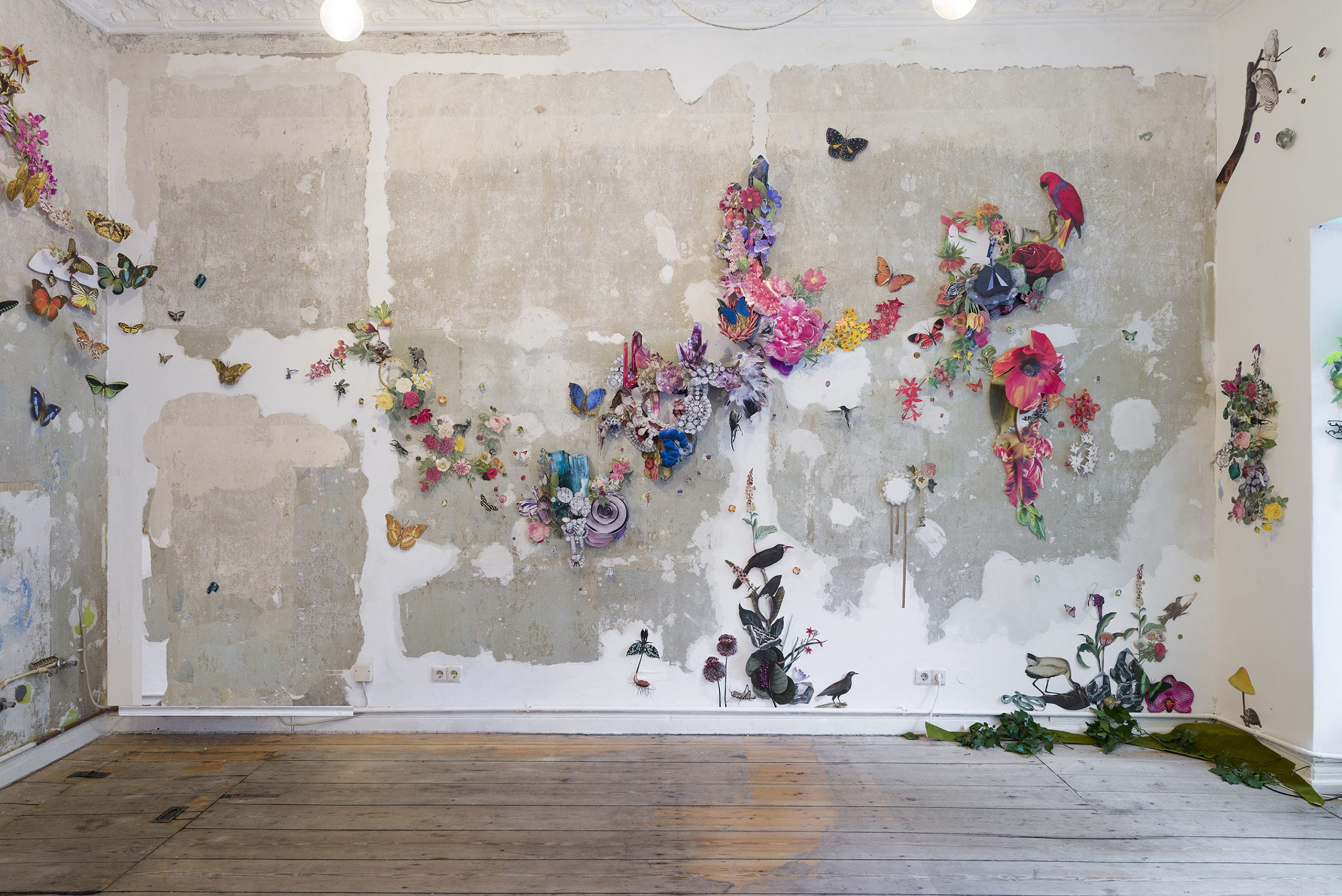
collage installation art featuring various biodiversity figures

Intimate Immensity installation by Clare Börsch incorporating imagery from BHL. Photo courtesy of Clare Börsch. Photo by: Trevor Good.

Over the past year, as many of our partners have transitioned to a telework environment due to the COVID-19 pandemic, we’ve focused on projects to improve our collections remotely—including building our image library on Flickr. Since March, we’ve uploaded over 75,000 new images to the BHL Flickr, all freely available for download and reuse. The growing collection offers an ever-expanding source of inspiration for everyone, including artists like Börsch, to explore.

Börsch takes full advantage of this wealth of imagery, using the BHL Flickr daily. She is especially appreciative of the curated collections, which facilitate discovery around particular topics. In the future, she’d love to see the images enhanced with more geographic information, allowing her to search for species by specific ecosystems, and information on each depicted species’ status, such as whether it is extinct or endangered.

Imagery from BHL has appeared in many of Börsch’s works, including her previous installation, The Mushroom Hunters, which created an immersive world inspired by Neil Gaiman’s poem of the same name.
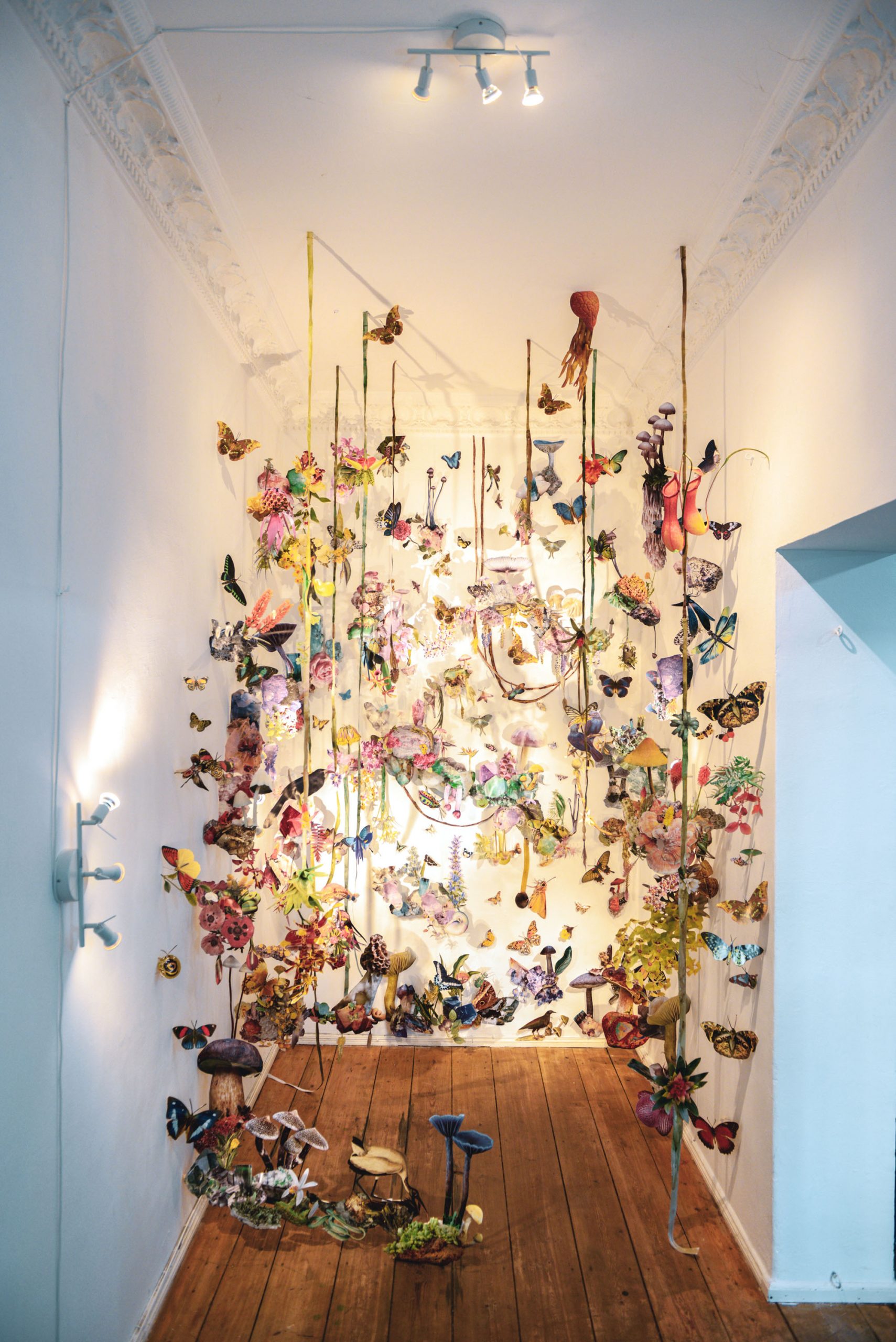
collage installation art featuring various biodiversity figures

The Mushroom Hunters, a collaged art installation by Clare Börsch that includes imagery from BHL. Photo courtesy of Clare Börsch. Photo by: Kolja Raschke.

“I create immersive installations so that others can join me in being moved by the beauty of our planet,” asserts Börsch in the artist video for Biodiversity. “2020 has been hard, but I think the grief we feel is a symptom of our love, of an ecological awakening. Our grief reminds us that we are connected in our humanity, that one group’s suffering impacts us all, and that we are connected to our shared and finite home, our planet.”

BHL’s open access collections not only empower the work of scientists striving to study and conserve biodiversity, but they also allow everyone to explore the wonders of nature—to help develop a connection to our planet that galvanizes us to action. Artists like Börsch breathe new life into the work of naturalist artists from centuries past and allow us to experience the beauty they captured in new ways. This art—old and new—is a powerful reminder of what we have…and what we stand to lose.
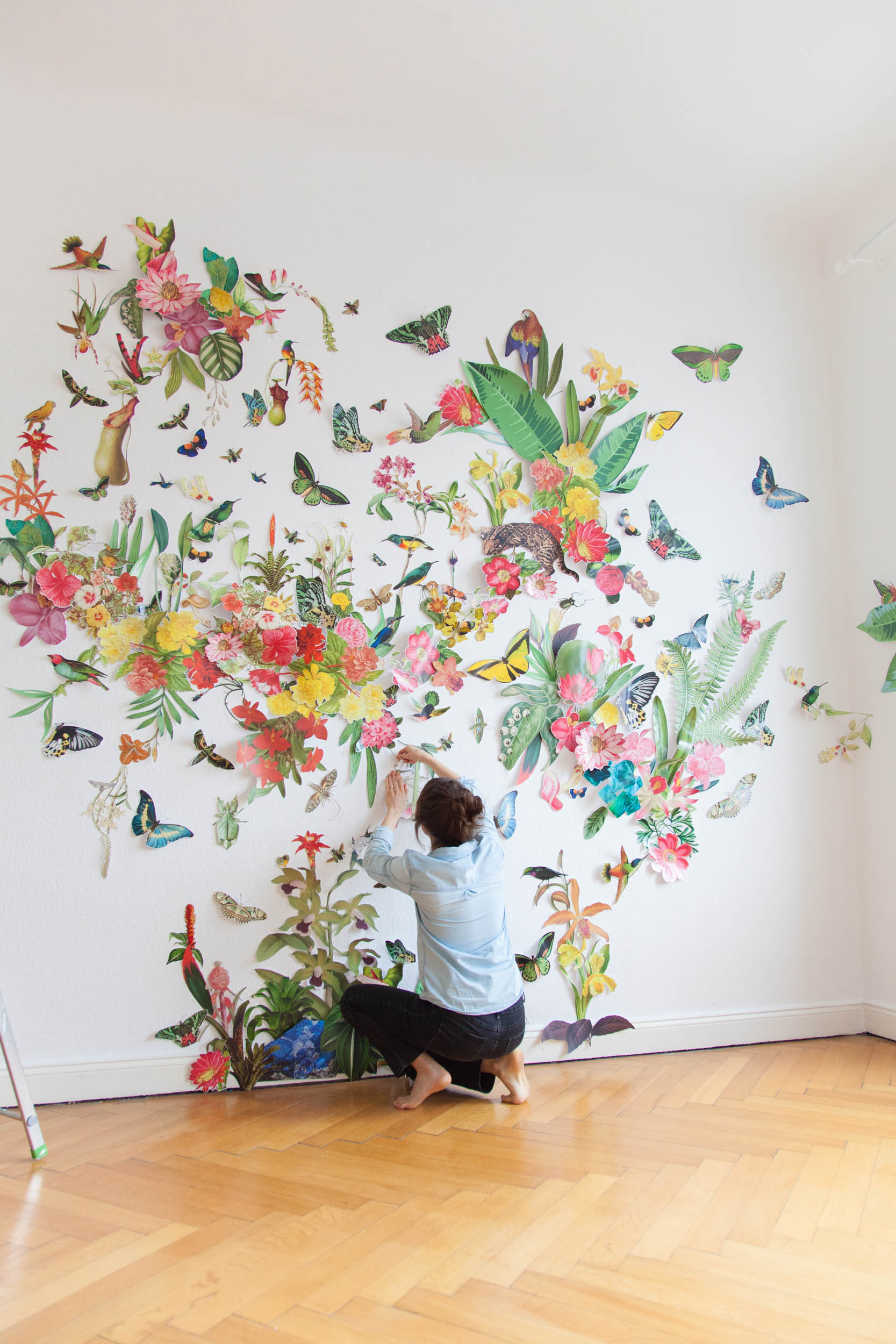
collage installation art featuring various biodiversity figures

Collaged art installation in process. Installation by Clare Börsch incorporating imagery from BHL. Photo courtesy of Clare Börsch. Photo by: Christiane Meyer.

“In twenty years from now, I do not want my art to be a memorial for everything we could have saved,” asserts Börsch. “I rather want it to inspire change and action today.”

In keeping with this aspiration, within the artist video for Biodiversity, Börsch suggests actions that can have a positive impact on the environment, such as choosing greener transportation options and eating locally. Supporting organizations whose work empowers science and conservation, like the Biodiversity Heritage Library, is another way that you can make a difference today.

Our planet’s biodiversity is experiencing unprecedented declines, with at least one million species currently threatened with extinction [1], but there is still time to act. Together, we can build a better future for our planet and every species that calls it home, ensuring that Earth’s ecosystems remain as wondrous and diverse as those born from Börsch’s imagination.
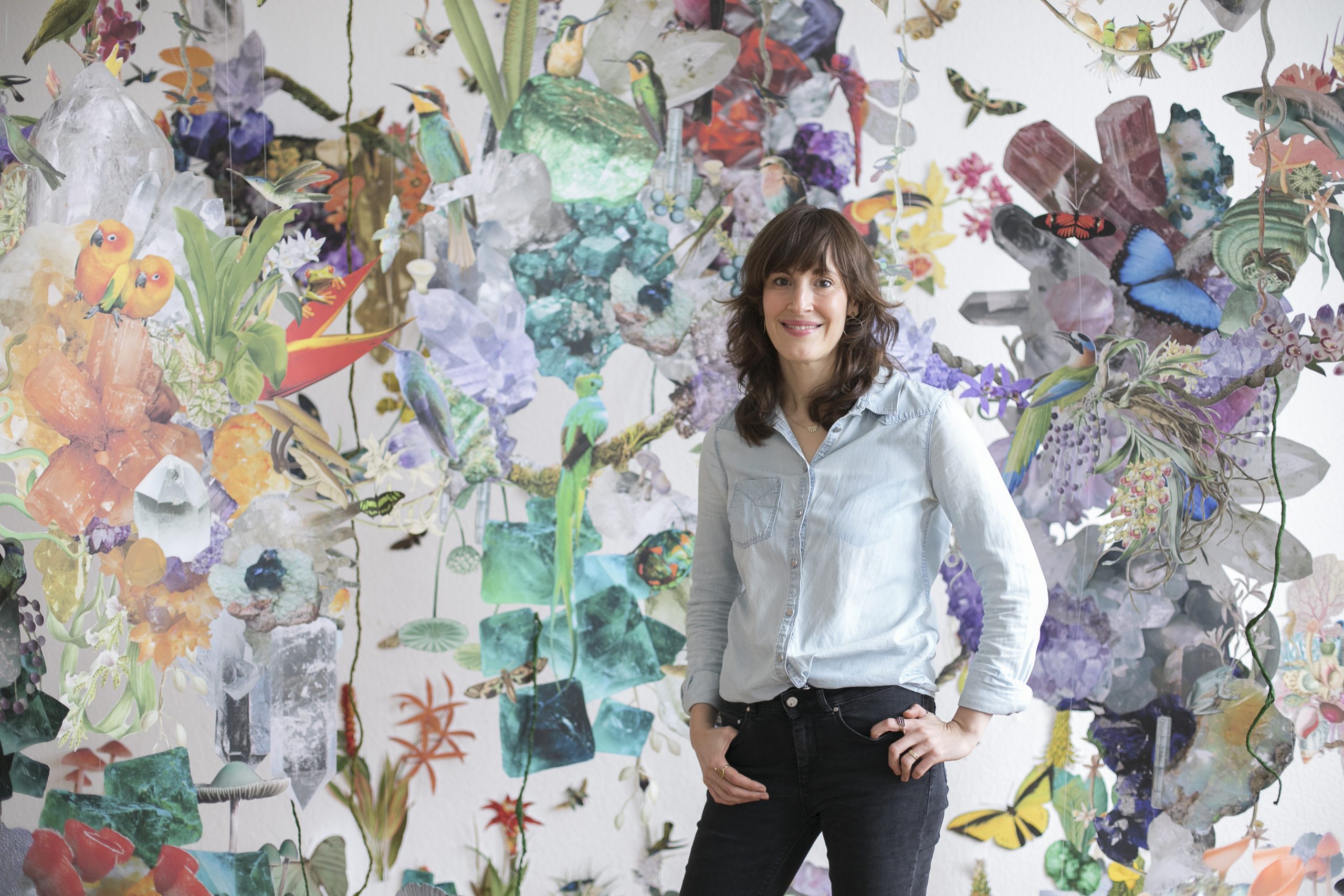
collage installation art featuring various biodiversity figures

Clare Börsch with her collaged art installation, Biodiversity (2020). Photo courtesy of Clare Börsch. Photo by: Patricia Schichl.
References

[1] Intergovernmental Science-Policy Platform on Biodiversity and Ecosystem Services. (2019). Nature’s Dangerous Decline ‘Unprecedented’; Species Extinction Rates ‘Accelerating’. Available at https://www.ipbes.net/news/Media-Release-Global-Assessment.

December 15, 2020by Grace Costantino
BHL News, Blog Reel

You Can Empower Global Biodiversity Research by Supporting BHL This Giving Tuesday

"As a researcher, the Biodiversity Heritage Library gives me the opportunity to seek and find scientific literature especially from home, during this pandemic—that's something so valuable to me, when I'm far away from the Smithsonian Libraries’ many branches and deep storage archives." Dr. Nicholas Pyenson, Curator of Fossil Marine Mammals in the Smithsonian's National Museum of Natural History’s Department of Paleobiology

As we come to the end of 2020, we reflect on the challenges that have profoundly impacted us as societies and individuals this year, requiring us to rethink how we do our jobs, interact with friends and colleagues, and access and share information. Facing these unprecedented challenges together, we continue to work with our partners to ensure that you have free access to the resources you need to empower your research—no matter where you are.

"As a researcher, the Biodiversity Heritage Library gives me the opportunity to seek and find scientific literature especially from home, during this pandemic—that's something so valuable to me, when I'm far away from the Smithsonian Libraries’ many branches and deep storage archives." Dr. Nicholas Pyenson, Curator of Fossil Marine Mammals in the Smithsonian's National Museum of Natural History’s Department of Paleobiology

With many of our partners working virtually this year, we’ve focused on projects to improve our digital collections remotely. We’ve uploaded previously digitized and born-digital content, including recent issues of publications like Records of the Australian Museum, Journal of the Royal Society of Western Australia, and American Museum Novitates. We’ve improved our metadata, reconciling duplicate entries for and editing over 2,000 author names and defining tens of thousands of additional articles and correspondence in the collection. We’ve also enhanced page-level descriptions for over 3,000 volumes since March. This work includes articulating illustrations within these volumes, allowing us to upload over 75,000 new images to the BHL Flickr over the past nine months—bringing our total Flickr collection to over 240,000 free nature images.

"My graduate-level museum studies class was taken online when New York University shut down. Since the shut-down, the biggest issue for my students has been in conducting research [...] BHL has emerged as one of the most popular databases for primary source work!" Dr. Elaine Ayers, Faculty Fellow at New York University

This work ensures that BHL continues to support your research needs…anytime, anywhere. It is thanks to the generosity and support of our community that we were able to pivot quickly and meet the needs of our users in a rapidly-changing environment throughout 2020. Please consider making a gift in support of BHL this Giving Tuesday, and help ensure that we can rise to meet whatever comes our way, together.

Support BHL today!


From Us to You: The Gift of Free Nature Art

Your support makes it possible for everyone to discover the wonders of biodiversity…not just through text, but through art as well! Visit the BHL Flickr to explore over 240,000 nature images—all free to download and reuse.

Visit Flickr Today!

Visit our About site for tips on how to search and download the images in Flickr. Keep scrolling to explore a selection of some of the most popular images on the BHL Flickr.

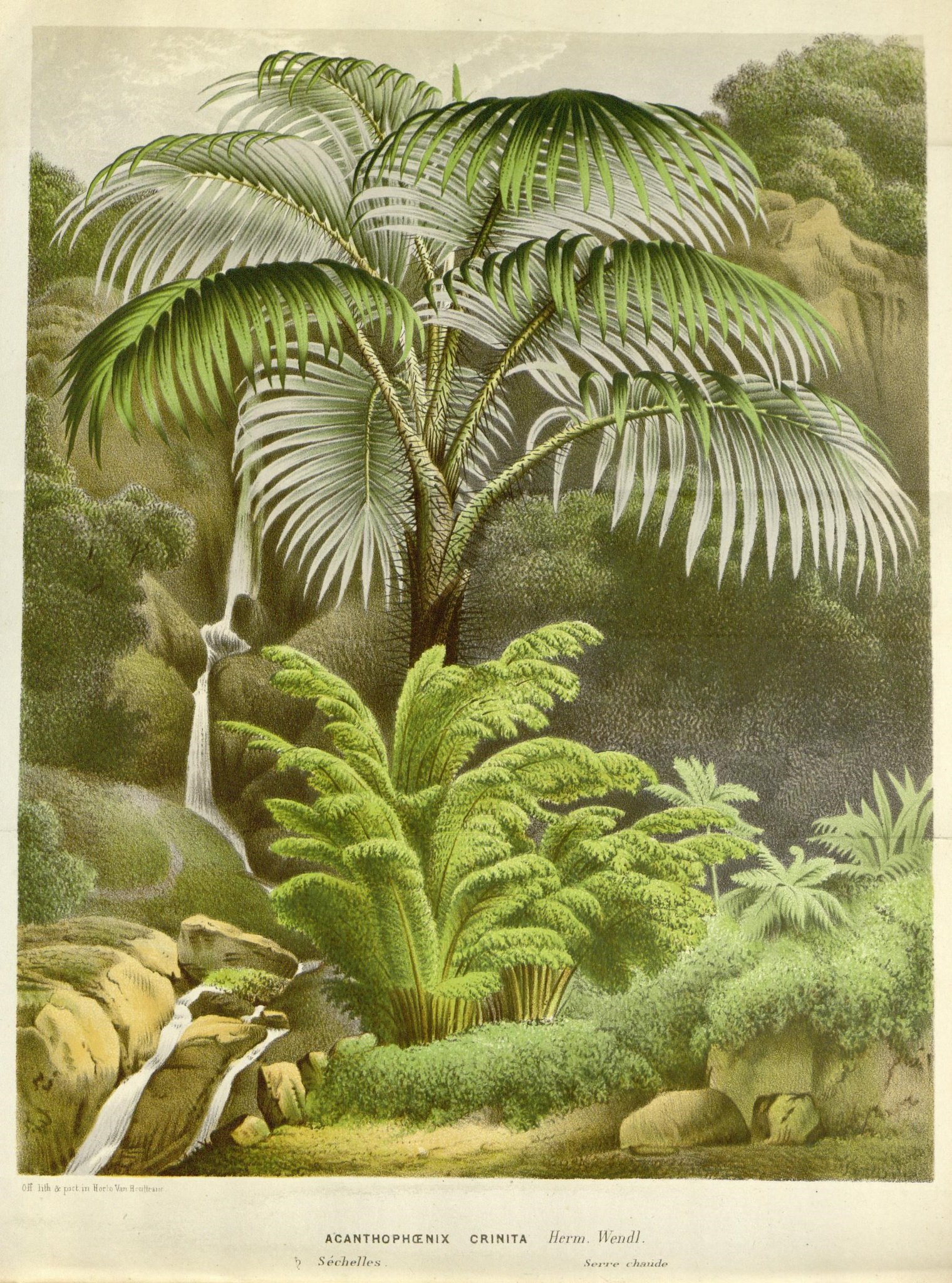
Various green plants in a jungle setting with a waterfall in the background.

Acanthophoenix crinita. Flore des serres et des jardins de l’Europe. v. 16 (1865-67). Contributed in BHL from the Missouri Botanical Garden, Peter H. Raven Library. View in Flickr.

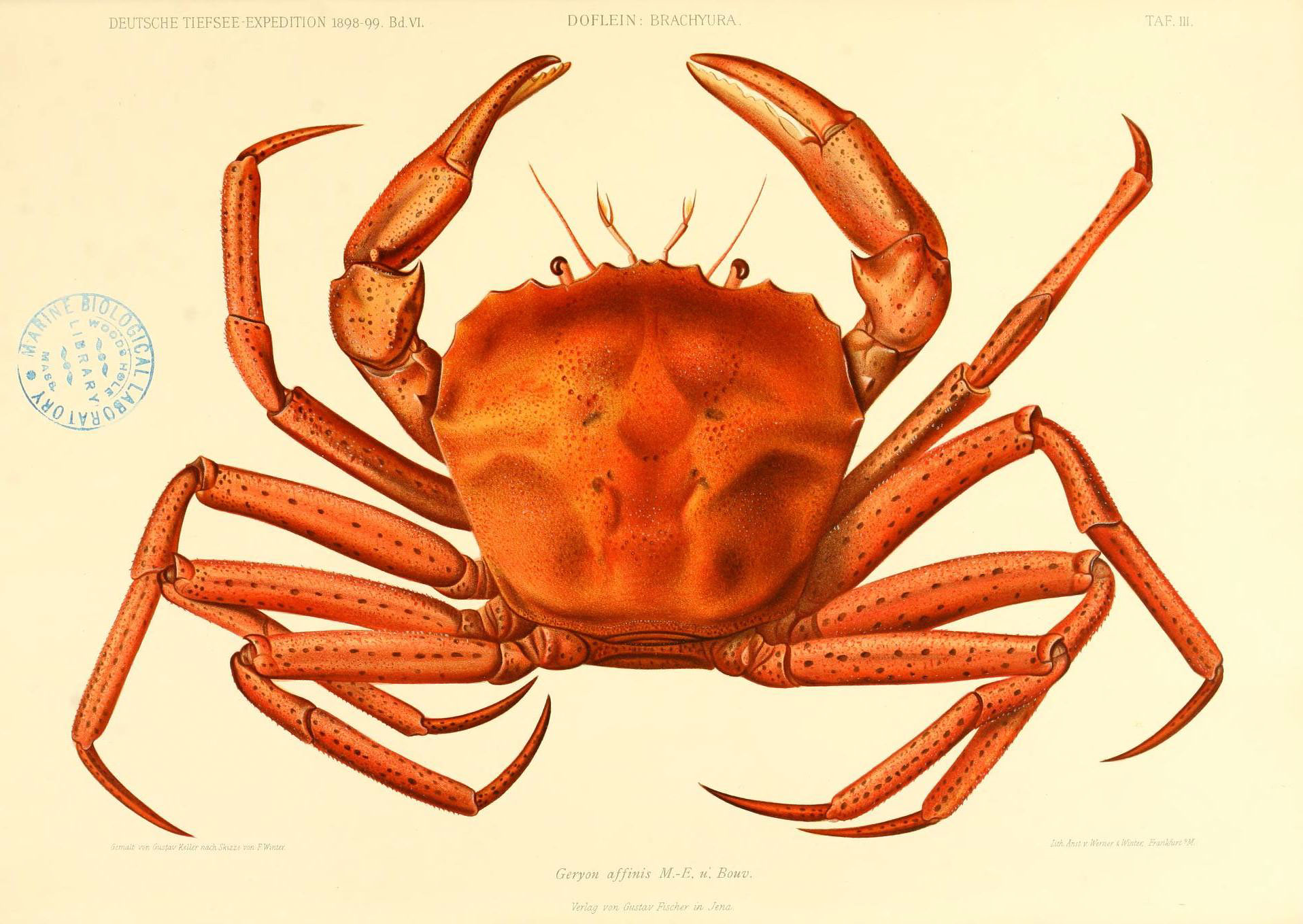
top body illustration of a red crab

Taf. III (Chaceon affinis). Wissenschaftliche Ergebnisse der Deutschen Tiefsee-Expedition auf dem Dampfer “Valdivia” 1898-1899. Bd. 6 (1904). Contributed in BHL from the MBLWHOI Library. View in Flickr.

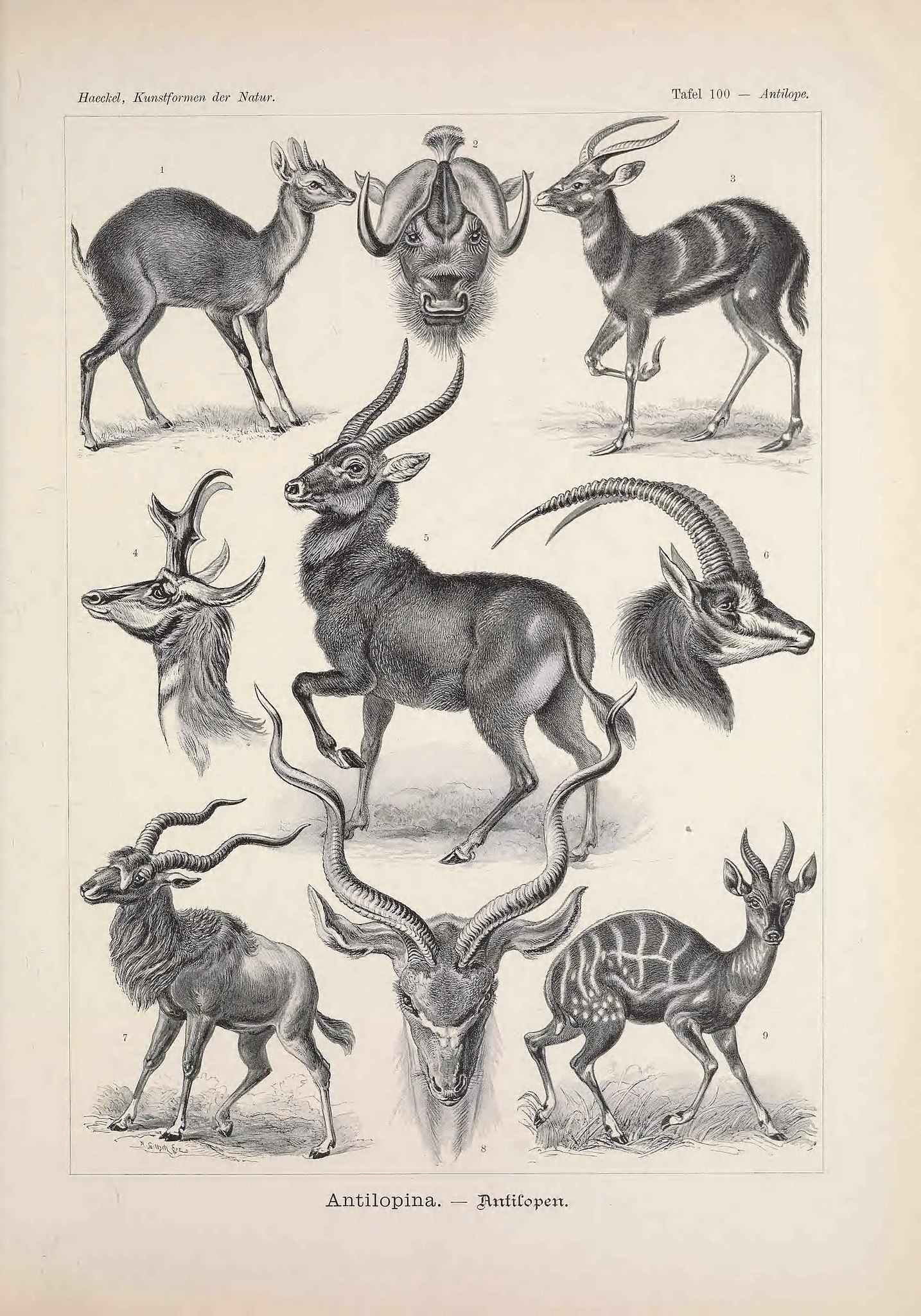
Collage of various black and white drawings of antelopes, some full body, others head only.

Taf. 100 (Antelopes). Kunstformen der Natur. (1899-1904). Contributed in BHL from Smithsonian Libraries. View in Flickr.

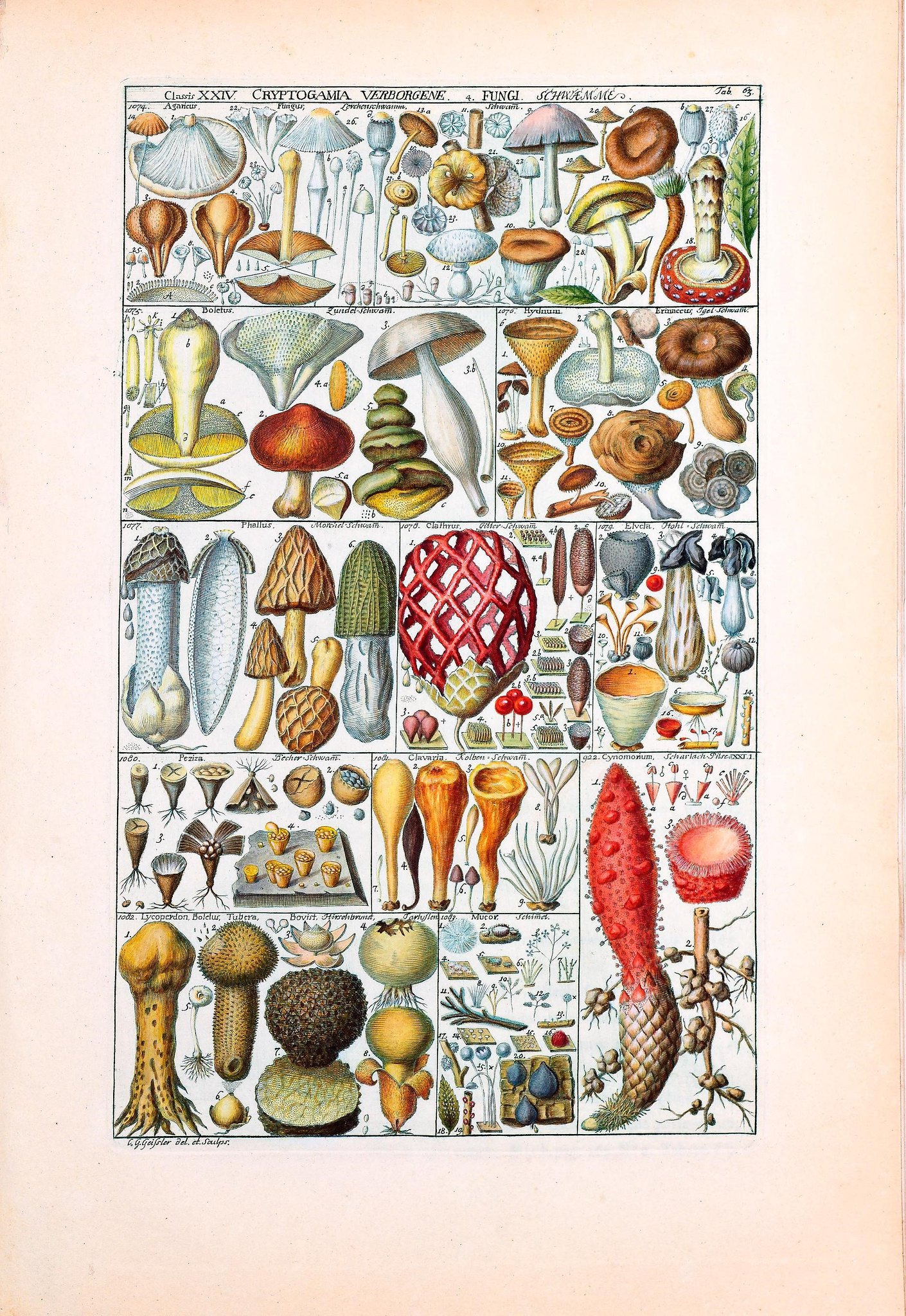
collage plate displaying various fungi specimens

Tab. 63. Tabulae phytographicae, analysin generum plantarum exhibentes. v. 2 (1804). Contributed in BHL from the New York Botanical Garden, LuEsther T. Mertz Library. View in Flickr.

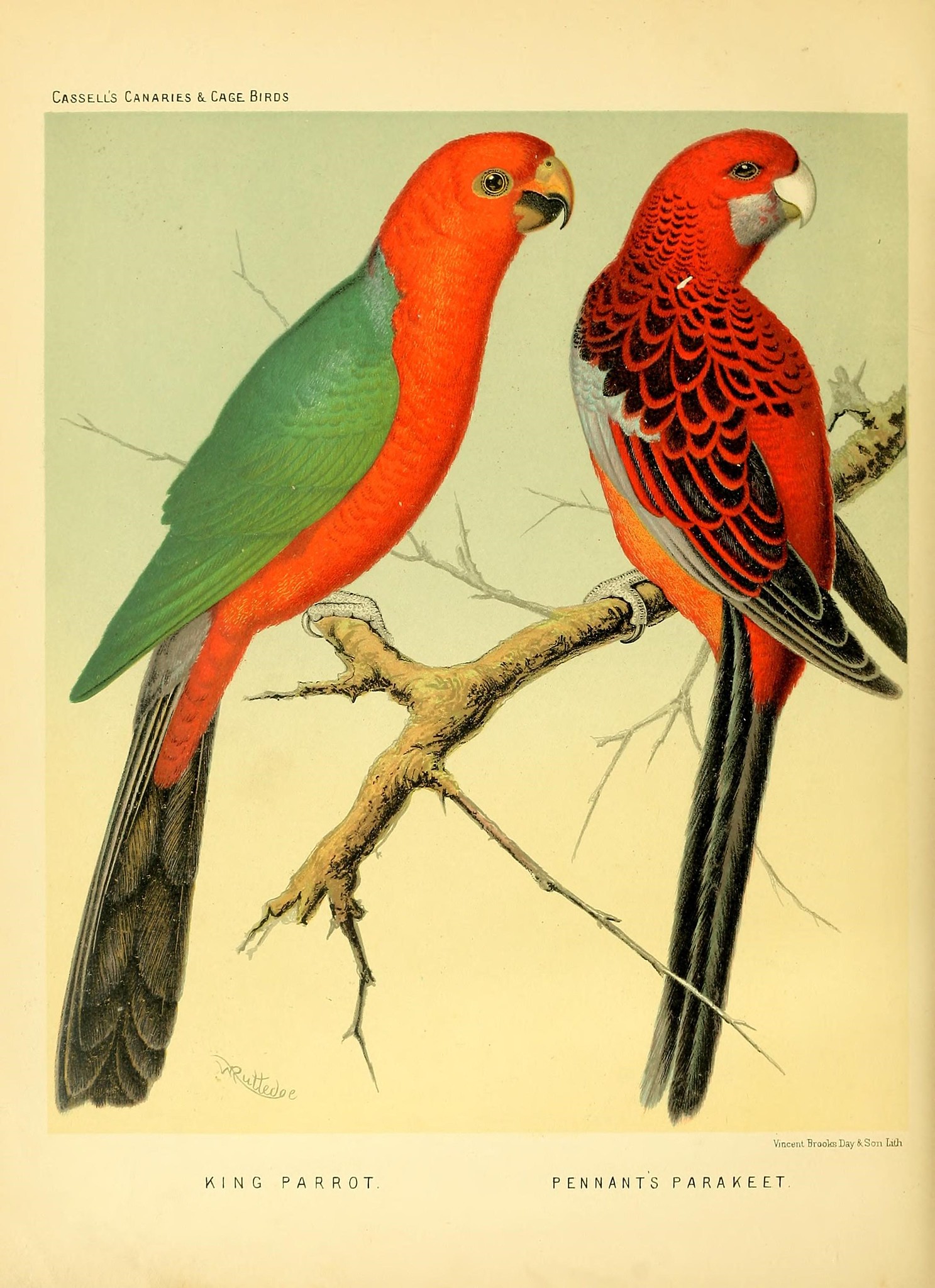
two birds perched on a stem. One if red with green wings and the other is red with black spots on the wings.

King parrot and Pennant’s parakeet. The illustrated book of canaries and cage-birds, British and foreign. (c. 1878). Contributed in BHL from the Harvard University, Museum of Comparative Zoology, Ernst Mayr Library. View in Flickr.

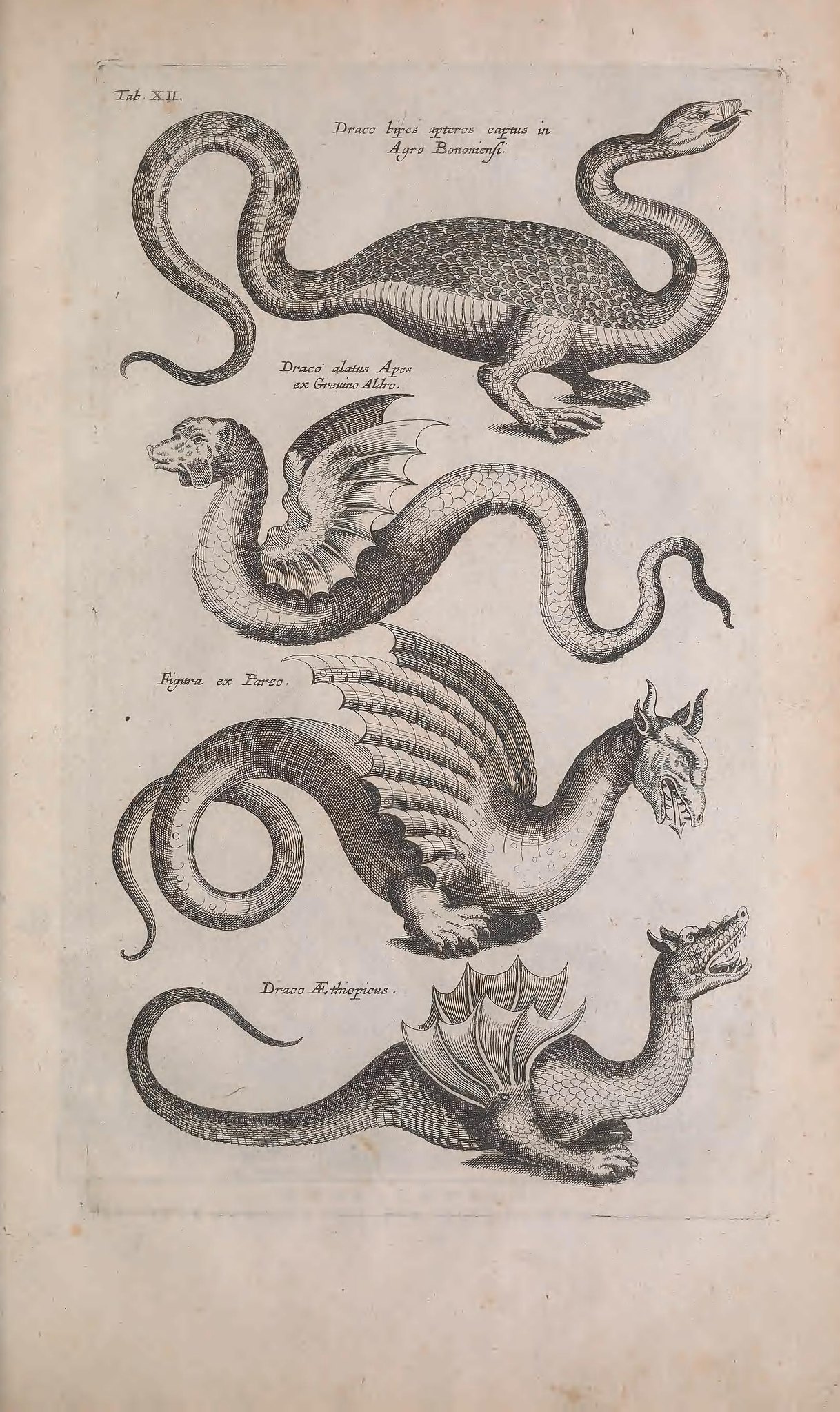
four dragons in various styles

Tab. XII (dragons). Historiae naturalis de quadrupedibus libri. (1657). Contributed in BHL from Smithsonian Libraries. View in Flickr.

December 1, 2020by Grace Costantino
BHL News, Blog Reel

BHL Quarterly Newsletter (November 2020) Now Available!

Screenshot of the November quarterly newsletter

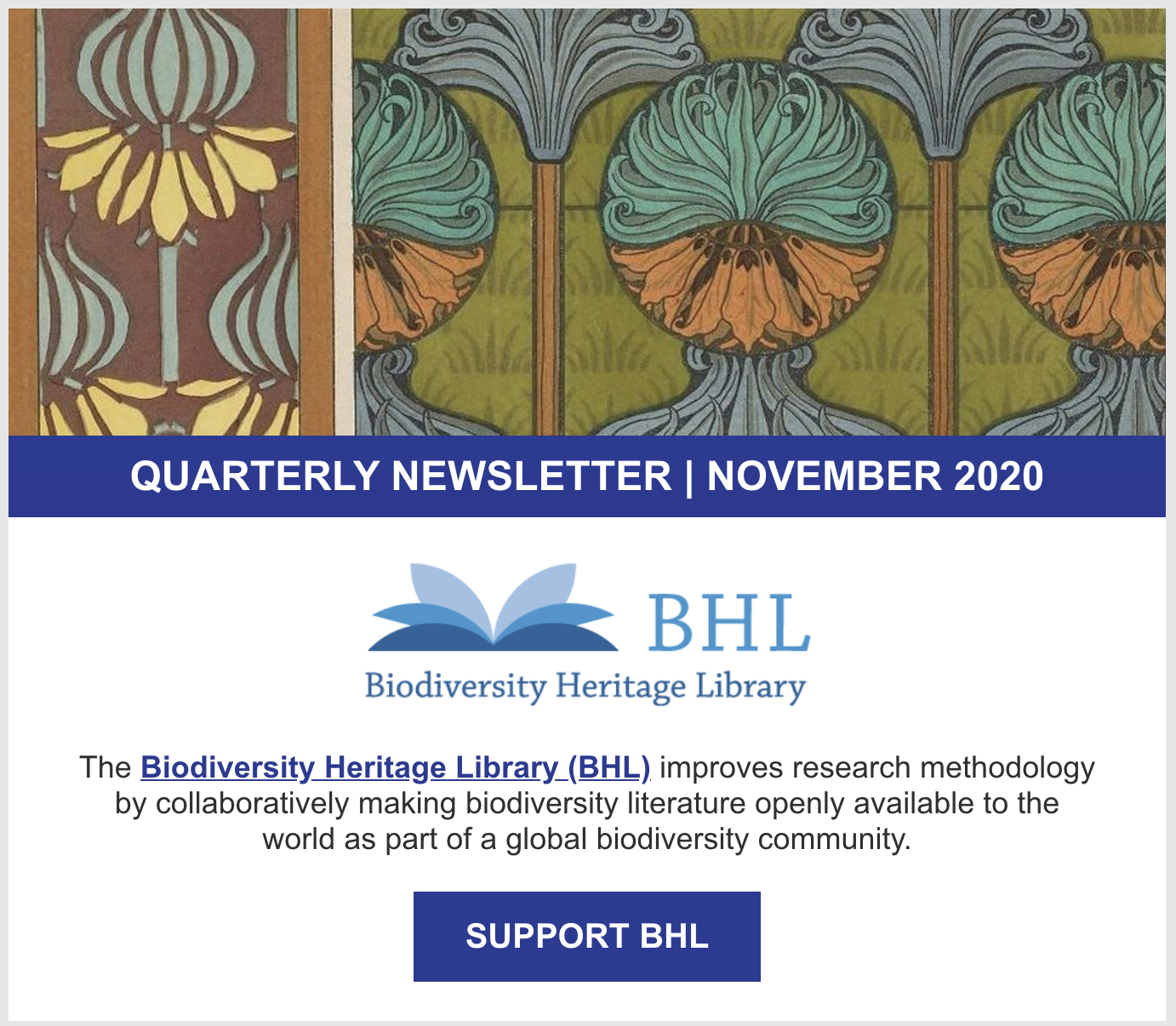
Screenshot of the November quarterly newsletter

Our latest quarterly newsletter is now available! From our BHL symposium at the virtual TDWG 2020 conference to the most recent additions to our Earth Optimism series, don’t miss the latest news from the BHL community.

View our November 2020 Quarterly Newsletter.

Be sure to subscribe to our mailing list to keep up to date with all the latest BHL news.

November 23, 2020by Grace Costantino
Blog Reel, Campaigns, Earth Optimism 2020, User Stories

The Case of the Florida Nutmeg: Empowering Research on Endangered Plants

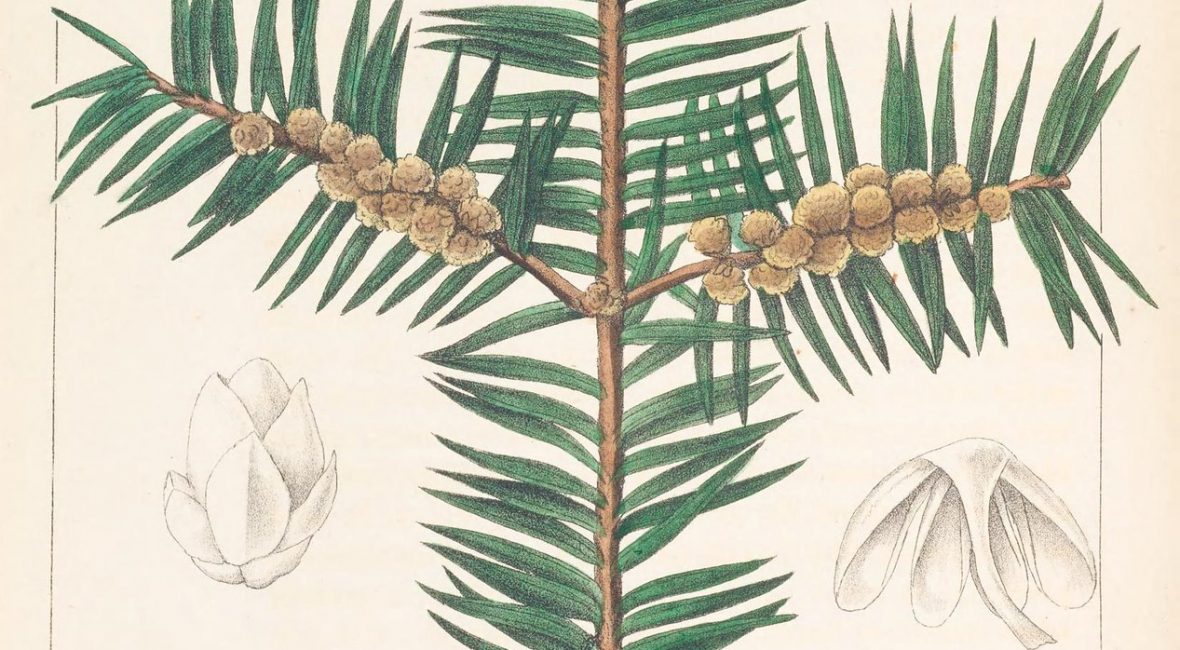
Colored drawing of a conifer tree branch with cones.

April 2020 marks the 50th anniversary of Earth Day. Organizations around the world have commemorated the occasion by participating in the global Earth Optimism movement — an initiative spearheaded by the Smithsonian to “turn the conservation conversation from doom and gloom to optimism and opportunity”.

Throughout 2020, the Biodiversity Heritage Library (BHL) and our partners are joining the movement by sharing conservation success stories from and made possible by the BHL collection. Follow our blog for conservation stories — past and present — and visit our website for more information and to explore our Earth Optimism book collection.

———————

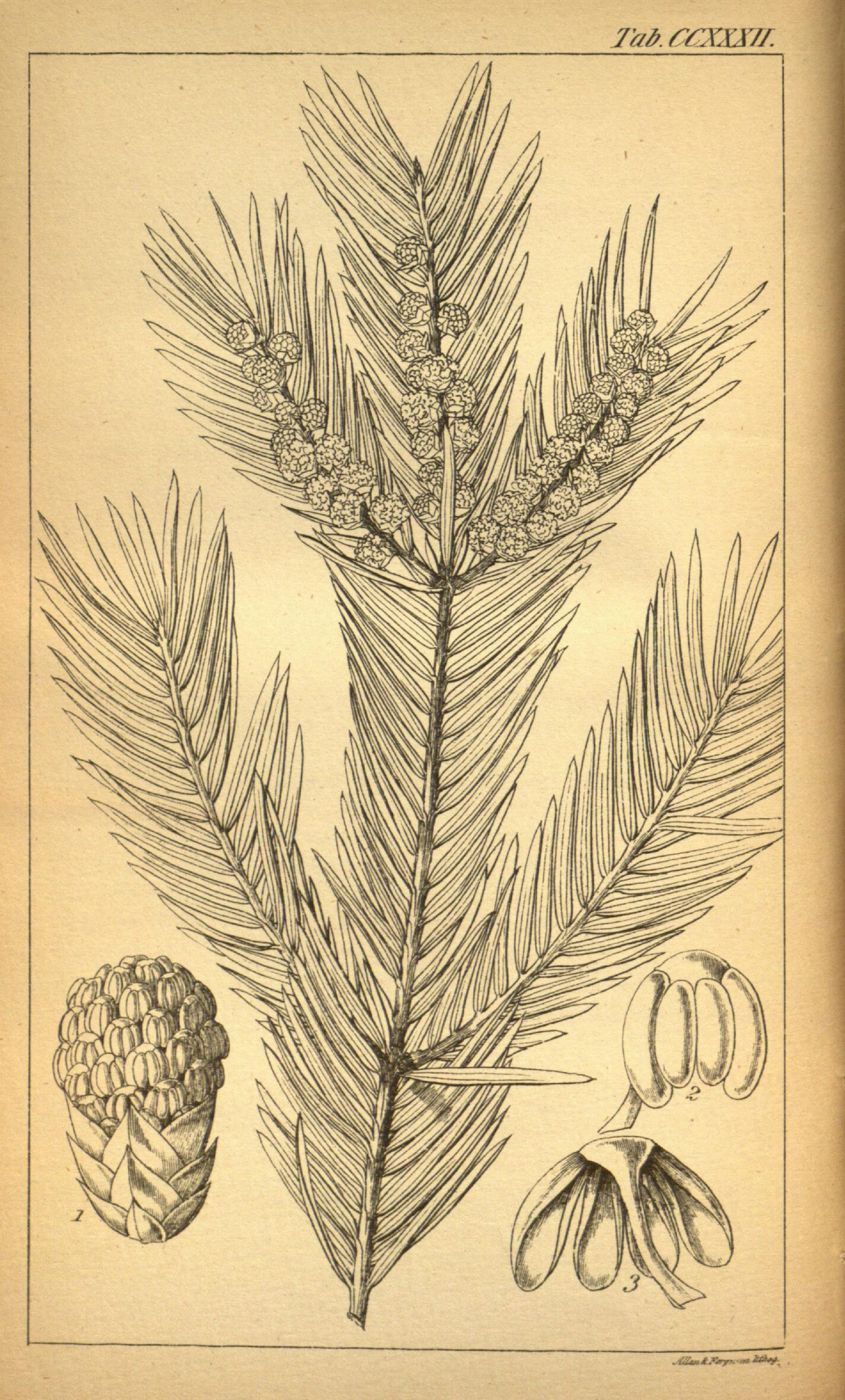
Black and white line drawing of a conifer tree branch with cones.

Florida nutmeg, Torreya taxifolia (male). This illustration, along with that of the female tree, represents the first published illustration of this species. Plate 232. Hooker’s Icones plantarum, vol. 3 (1840). Contributed in BHL from the Missouri Botanical Garden, Peter H. Raven Library.

On 5 June 1834, avid amateur botanist Hardy Bryan Croom wrote a letter to botanist John Torrey describing a gymnosperm tree in northern Florida that he was struggling to identify. In this letter, he postulated—with some degree of confidence—that the tree was Taxus baccata, the common yew, and he hoped to acquire some specimens to send to Torrey for investigation.

Torrey was one of the most important 19th century botanists in America. He corresponded with hundreds of scientists in North America and Europe, many of whom sent him specimens from their various explorations for study and identification. As such a well-respected expert and advisor on botanical science, it comes as no surprise that Croom sought Torrey’s expertise regarding this mysterious Florida tree.

The next year, in a letter dated 18 November 1835, Croom wrote again to Torrey, stating:

“The letter which I wrote last summer has had the effect to procure me some perfect fruit of that remarkable Taxoid tree at Aspalaga. The result surprises me. It is an ovate one celled nut entirely enclosed in fleshy covering! as large as a pigeon’s egg! Calix imbricated; thus agreeing neither with Taxus nor with Podocarpus. Besides, the tree, I think, is dioecious, but of this I am not yet certain. What will you do with it? Will it make a new genus?”

The following year, Croom again wrote to Torrey in a letter dated 18 May 1836 that he had determined that the tree represented a new genus. He proposed the genus name Torreya and provided a description and habitat details for “this fine tree,” for which he remarked:

“It is so abundant about Aspalaga (especially on Flat Creek) as to have been sawed into plank and lumber. It is an elegant tree with dark green foliage.”

With this letter, Croom provided the first recorded description of the habitat and abundance of the Florida nutmeg, Torreya taxifolia.

Sadly, Croom and his family drowned in a shipwreck in the Atlantic Ocean near Cape Hatteras on 8 October 1837. As such, Torrey arranged that the new genus and species were formally named and described by botanist George Arnott Walker-Arnott in 1838.

While Croom characterized Torreya taxifolia as abundant in 1836, today the species is critically endangered. With a distribution restricted to the limestone ravines and bluffs along the Apalachicola River in northern Florida and southern Georgia, fewer than a thousand individual trees persist in their native habitat. The most significant threat to the species is continued reproductive failure resulting from fungal pathogens—a threat which is continuing but not well-understood [1].

Torreya taxifolia is one of the species highlighted in a recent study to be published in the Memoirs of the Torrey Botanical Society. Authors Dr. Brian M. Boom (Curator Emeritus and former Vice President for Conservation Strategy and Bassett Maguire Curator of Botany at The New York Botanical Garden) and Susan Fraser (Recently-retired Thomas J. Hubbard Vice President and Director of the LuEsther T. Mertz Library) review John Torrey’s botanical legacy, drawing heavily on Torrey’s extensive correspondence, most of which, along with drawings, books, and artifacts from Torrey’s collections, can be found in the holdings of the LuEsther T. Mertz Library of The New York Botanical Garden (NYBG) [2].

In 2016, NYBG embarked on a project to digitize and transcribe Torrey’s correspondence and make both freely available through the Biodiversity Heritage Library (BHL). To date, more than 9,500 pages of correspondence—including those from Croom regarding Torreya taxifolia—are available in BHL, and over 7,000 of those pages have been transcribed.

The Torrey correspondence available through BHL was an invaluable resource during Boom and Fraser’s research for their study, which highlights several rare, restricted-range, or threatened plant species for which Torrey was directly involved in the scientific discovery and description phases. This was especially true with regards to Torreya taxifolia.

“BHL was instrumental in researching the circumstances surrounding the discovery and naming of this species, particularly through access to the correspondence of Hardy Bryan Croom and John Torrey between 1834-1837,” asserts Boom.

Caucasian male in a white button up shirt with a green tie. He smiles at the camera and wears glasses.

Dr. Brian M. Boom, Curator Emeritus and former Vice President for Conservation Strategy and Bassett Maguire Curator of Botany at The New York Botanical Garden. Photo Credit: The New York Botanical Garden.

Boom has been studying plant conservation, systematics, and ethnobotany for 40 years. His conservation work focuses on rare, restricted-range and threatened plant species in the American tropics and North Temperate areas, or, alternatively, on invasive species that pose threats to native flora in these regions. An important aspect of his research is aimed at understanding these species from the circumstances surrounding their discovery in the field and description and publication as a new species, through to subsequent documentation of their occurrence in the landscape, and with regards to the threats they are under, in the case of rare plants, or the threats they cause, in the case of invasives.

“Plant species with restricted geographic ranges, or that are rare or threatened, are of conservation concern because it could take relatively little perturbation to cause populations of such species to become further restricted, fragmented, or to become extinct,” states Boom.

Understanding the history of a species’ scientific discovery and subsequent changes in its population and distribution over time require access to historical data. As Boom articulates, BHL’s collections are rich in such data and thus play a vital role in research on threatened species.

“Conservation-related research benefits greatly from BHL in terms of providing access to some of the classic and most iconic images of plant species and to the early texts and archival materials, especially correspondence, pertaining to the focal species,” affirms Boom.

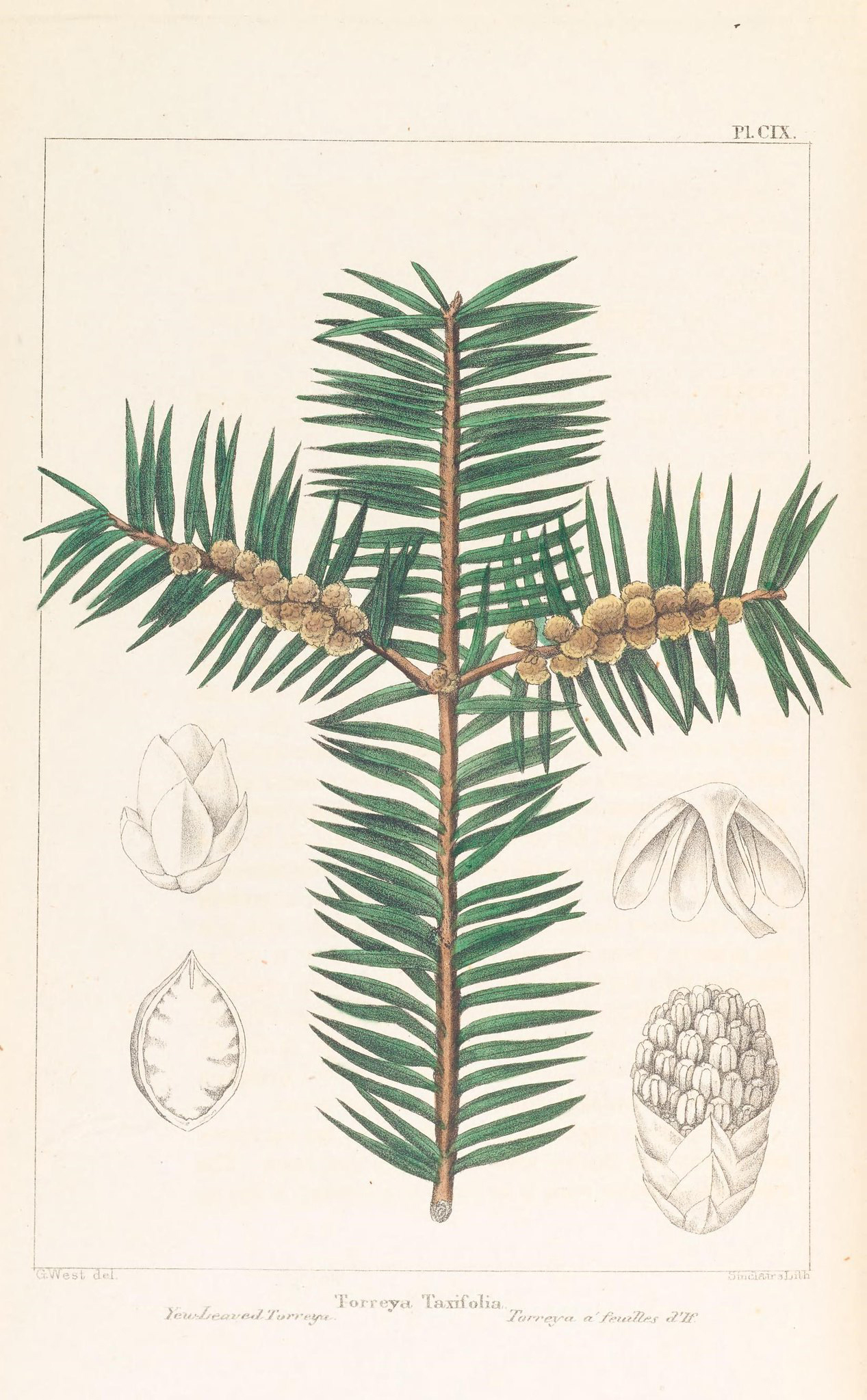
Colored drawing of a conifer tree branch with cones.

Torreya taxifolia. Plate 109. The North American Sylva, vol. 6 (1849). Art drawn by G. West. Contributed in BHL from New York Botanical Garden, LuEsther T. Mertz Library.

Beyond the published literature, correspondence and field notes are especially valuable as they may contain information that is not included in the published literature or on the herbarium labels of the specimens collected. For example, in the case of Torreya taxifolia, the type specimen is in the herbarium of the Royal Botanic Gardens, Kew. While there is no collector indicated on the actual specimen, John Torrey is listed as the collector in the Kew specimen database. However, Boom stresses that he knows of no record of Torrey visiting Florida before he made a five-week trip to the state in 1872, during which he did not observe Torreya taxifolia in its natural habitat, although in March of that year he did collect a cultivated specimen of this species in a garden near Tallahassee that he believed had been planted there by Croom (NY Barcode 9506).

“It seems very likely that the holotype was in fact collected by Hardy Bryan Croom, and that Torrey passed a specimen that Croom had sent to him on to Scottish botanist George Arnott Walker-Arnott, who described the new species in 1838,” explains Boom.

As further evidence for this hypothesis, the holotype specimen (K Barcode K000287662) contains a pencil notation, written in Croom’s handwriting, stating: “New genus of Coniferae allied to Taxus. To be described in the next number of the Lyceum of Natural History.”

Torreya taxifolia is a testament to the important role that BHL’s open access collections play in research on endangered species. The historical conservation and systematics research conducted for this species was made possible by reviewing the John Torrey correspondence that is available in BHL and enhanced with crowdsourced transcriptions generated via From the Page. BHL also provided access to the first known published illustrations of Torreya taxifolia, which appeared in Hooker’s Icones plantarum.

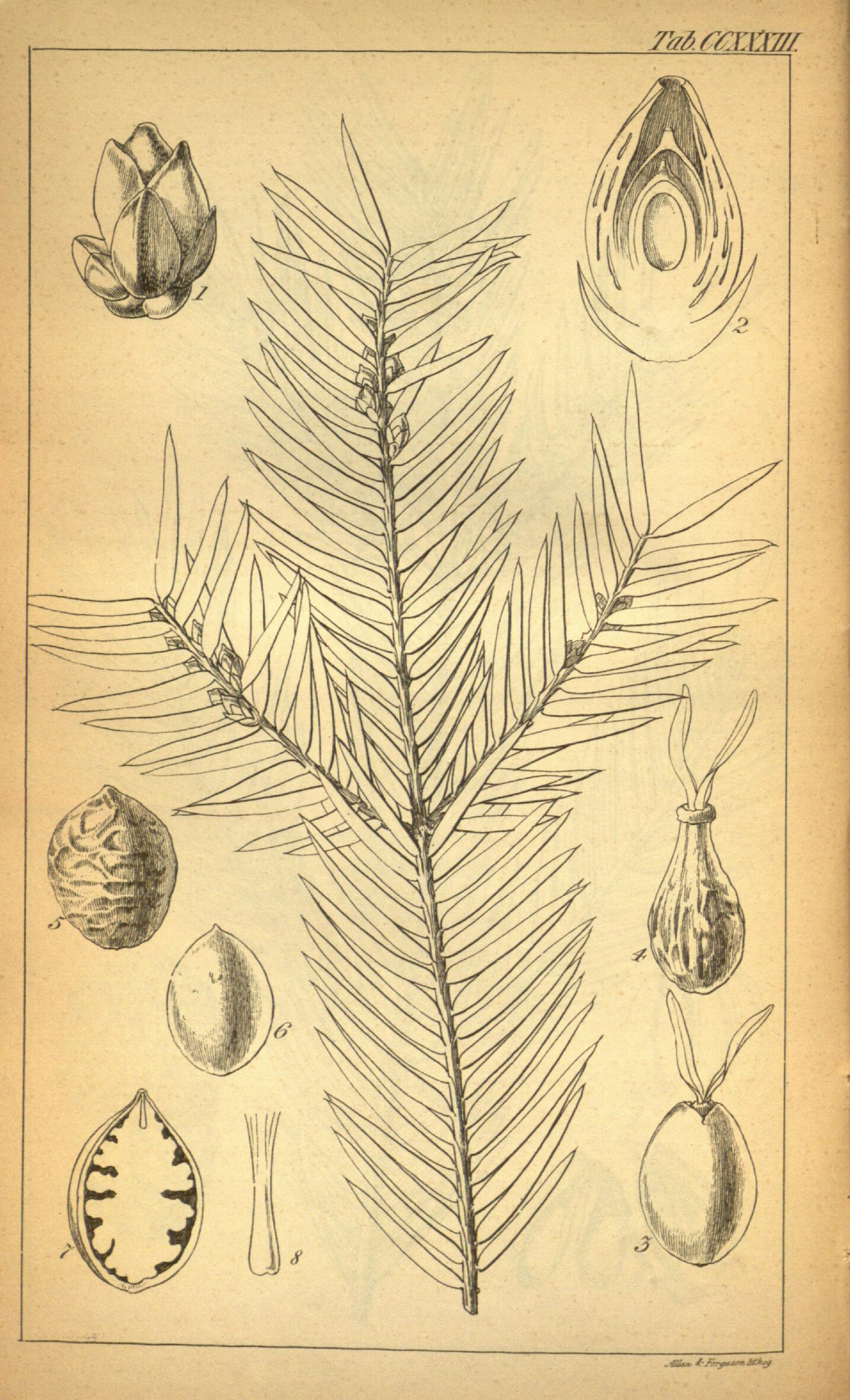
Black and white line drawing of a conifer tree branch with cones.

Florida nutmeg, Torreya taxifolia (female). This illustration, along with that of the male tree, represent the first published illustrations of this species. Plate 233. Hooker’s Icones plantarum, vol. 3 (1840). Contributed in BHL from the Missouri Botanical Garden, Peter H. Raven Library.

By providing open access to essential literature and archives, BHL is empowering the work of conservationists around the world. Easy and immediate online access to these materials allows scientists to conduct their research more quickly and efficiently—which is ever-more important as biodiversity faces unprecedented threats today, with at least one million species threatened with extinction [3].

“The BHL resources are the only or most readily available ones for accessing certain older titles and certainly for images of plants and correspondence of botanists involved with the discovery and description of new species and of their habitat,” asserts Boom. “Such literature is important for conservation work because the historical materials often contain first-hand commentary about the collection and discovery of threatened species, including information about their population size at the place of discovery and of the habitat in which the species occurred at the time.”

By providing conservationists with the information they need to help save biodiversity, the Biodiversity Heritage Library is improving our ability to respond to today’s biodiversity crisis. As such, free and open access to biodiversity knowledge is a reason to be an Earth Optimist.

References

[1] Spector, T., Determann, R. & Gardner, M. 2011. Torreya taxifolia. The IUCN Red List of Threatened Species 2011: e.T30968A9585489. Accessed on 4 February 2020. https://dx.doi.org/10.2305/IUCN.UK.2011-2.RLTS.T30968A9585489.en.

[2] The New York Botanical Garden. 2019. John Torrey: American Botanist. NYBG.org. Accessed on 4 February 2020. https://www.nybg.org/john-torrey-american-botanist/?_ga=2.197485295.1948631947.1568819719-1112387120.1548794658.

[3] Intergovernmental Science-Policy Platform on Biodiversity and Ecosystem Services. (2019). Nature’s Dangerous Decline ‘Unprecedented’; Species Extinction Rates ‘Accelerating’. Available at https://www.ipbes.net/news/Media-Release-Global-Assessment.

November 12, 2020by Grace Costantino
BHL News, Blog Reel

BHL at TDWG 2020

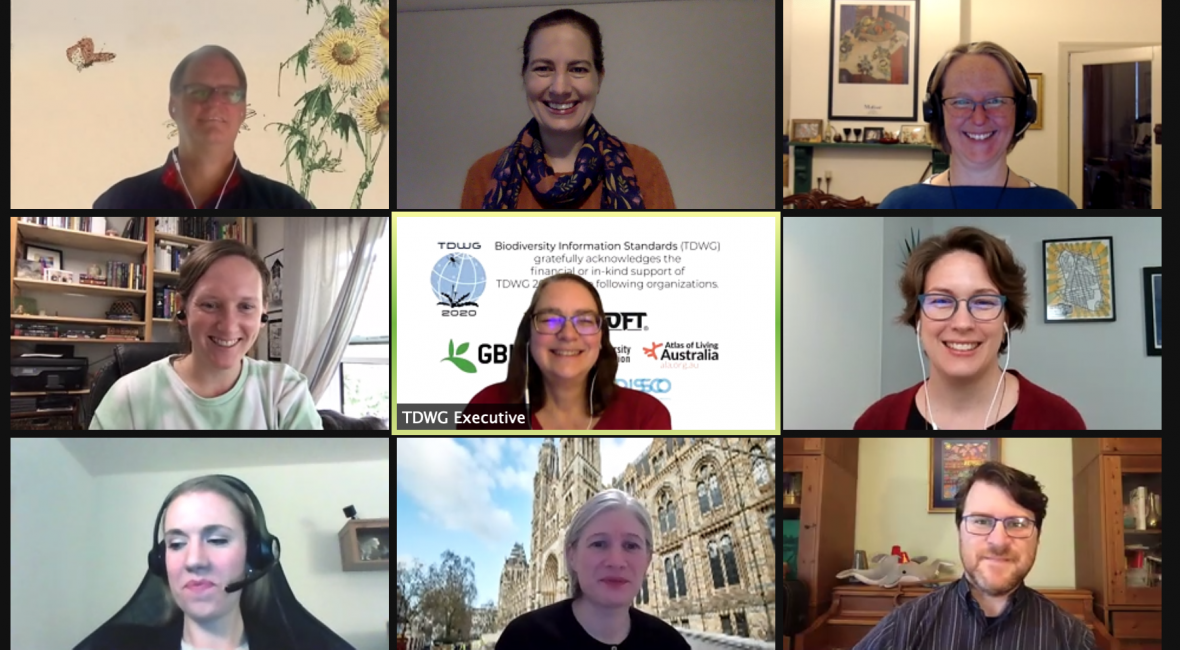
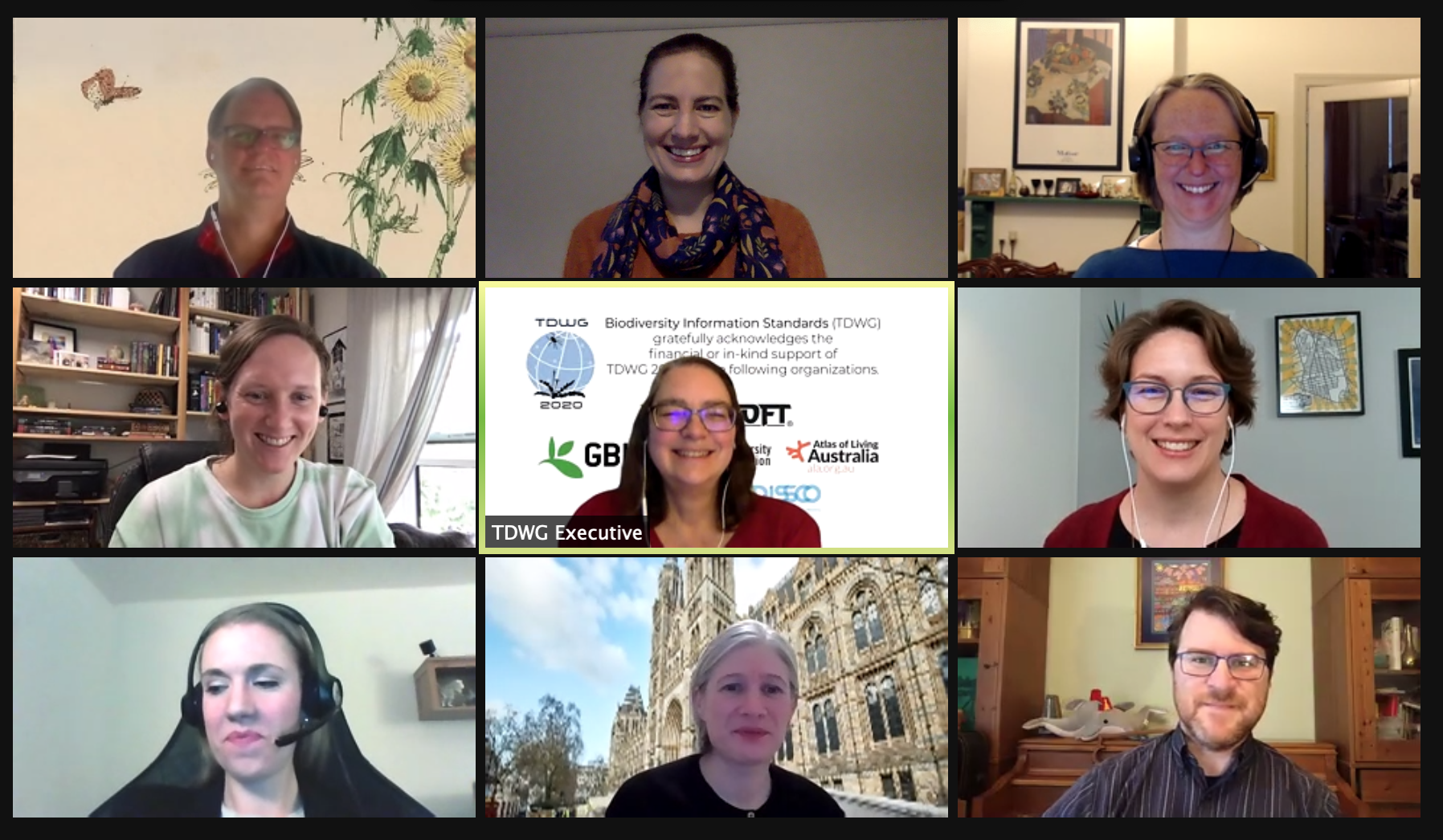
Screenshot of a Zoom call with a collage of various people's faces.

logo for TDWG 2020 conferenceThis year, as organizations around the world have done in response to the global COVID-19 pandemic, Biodiversity Information Standards (TDWG) held its annual conference virtually. With a mix of online working sessions, webinar-style symposia, presentations, panel discussions, and recorded presentations, this year’s conference was held across two separate periods—the first dedicated to working sessions during the week of 21-25 September 2020 and the second to symposia and panel sessions the week of 19-23 October 2020.
As the TDWG 2020 Annual Conference website states, the conference “serve two purposes:

  • to provide a forum for developing, refining, and extending standards in response to new challenges and opportunities;
  • and to provide a showcase for biodiversity informatics – much of which relies on the standards created by TDWG and other organizations.”

You can view the complete list of working session and symposia and discussion session descriptions on the TDWG website. Conference sessions were also recorded and are available for viewing on the TDWG YouTube channel.

BHL Symposium at TDWG 2020

On 20 October 2020 as part of the TDWG 2020 virtual conference, BHL hosted a symposium, “SYM03 Enhancing Connections With the Global Neighbourhood Through Expanding Partnerships”, organized by Constance Rinaldo (Librarian of the Ernst Mayr Library, Harvard and Chair of the BHL Executive Committee) and Colleen Funkhouser (BHL Program Manager, Smithsonian Libraries).

The symposium consisted of four talks, covering topics including building BHL’s technical strategy, digital object identifiers (DOIs), taxonomic name finding services, and BHL’s response to the global COVID-19 pandemic. See more details about the symposium and each talk below.

Screenshot of a Zoom call with a collage of various people's faces.

Organizers, presenters, and facilitators for the BHL Symposium at TDWG 2020. Top, L to R: Martin Kalfatovic, Nicole Kearney, Ely Wallis; Middle, L to R: Holly Little, Constance Rinaldo, Colleen Funkhouser; Bottom, L to R: Elisa Herrmann, Jane Smith, Joel Richard. Image courtesy of Nicole Kearney.

SYM03 Enhancing Connections With the Global Neighbourhood Through Expanding Partnerships
Abstract: The Biodiversity Heritage Library (BHL) is more than a digital library, it is a key resource for data related to biodiversity. Data such as museum specimens, taxonomic names, environmental and geolocation variables is embedded in the published and unpublished literature found in BHL. Over the past year, BHL has developed a five year strategic plan designed to bring more focus on data, technology and partnerships. BHL is already well-established within the global bibliographical knowledge base. The plan for the symposium is to highlight some new directions and identify synergies and connections with current, new and potential partners in the biodiversity knowledge infrastructure.

  • Building the Biodiversity Heritage Library’s Technical Strategy — Elisa Herrmann (Museum für Naturkunde Berlin)
    • Presentation Slides
  • Discovering the Platypus: From Its Scientific Description to Its DOI — Nicole Kearney (BHL Australia, Museums Victoria)
    • Presentation Slides
  • Improving Taxonomic Name Finding in the Biodiversity Heritage Library — Joel Richard (Smithsonian Libraries)
    • Presentation Slides
  • The Biodiversity Heritage Library Response to the Global COVID-19 Pandemic — Delivered by Martin Kalfatovic (BHL Secretariat, Smithsonian Libraries). Co-authors: Constance Rinaldo (Ernst Mayr Library, Harvard); Jane Smith (Library and Archives, Natural History Museum, London); David Iggulden (Library, Art & Archives at the Royal Botanic Gardens, Kew); Colleen Funkhouser (BHL Secretariat, Smithsonian Libraries).
    • Presentation Slides
Screenshot of a slide discussing BHL's objectives for its technical development goal.

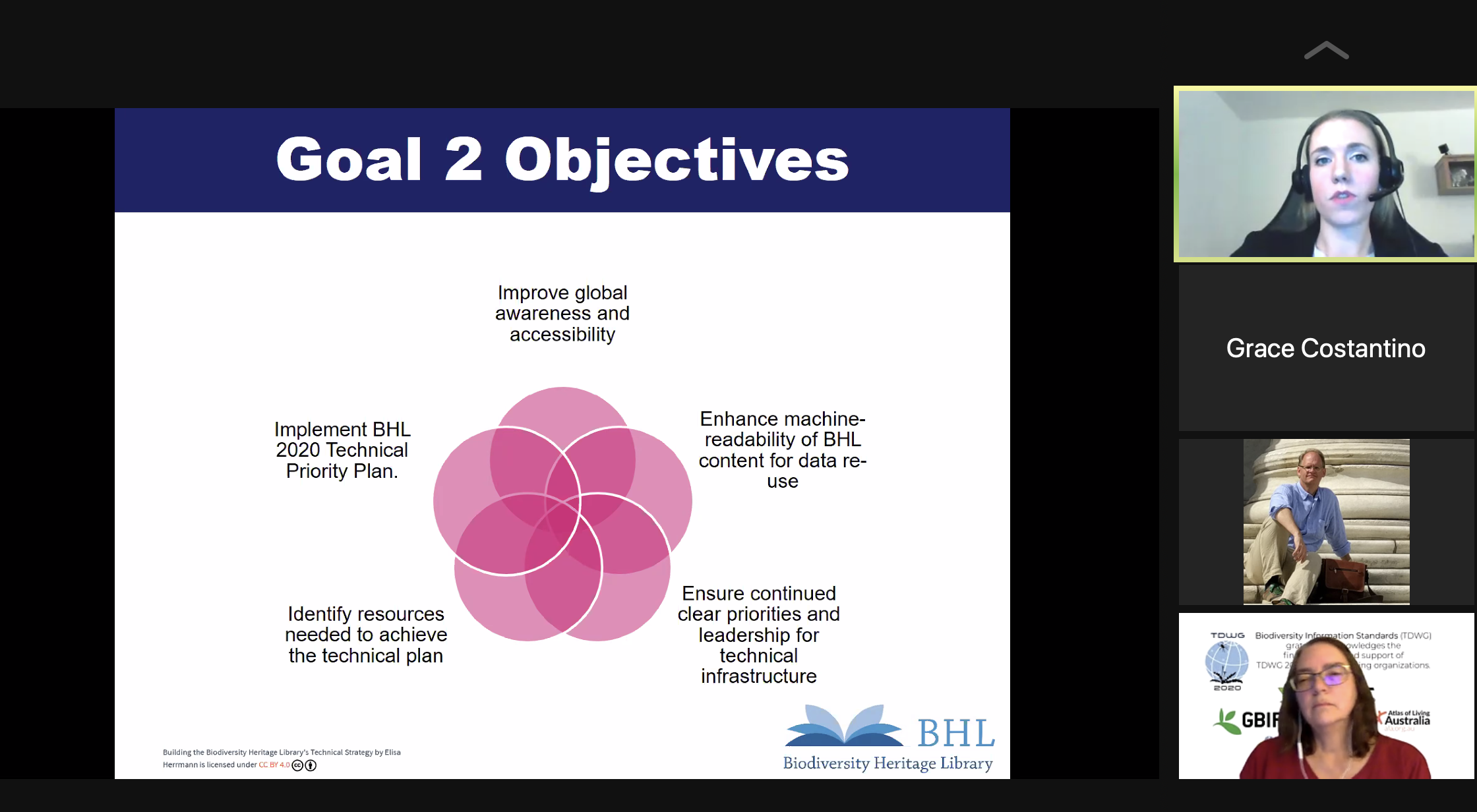
Goal 2 of BHL’s 2020-2025 Strategic Plan focuses on developing the Library’s tools and services. During her talk, Building the Biodiversity Heritage Library’s Technical Strategy, Elisa Herrmann (Museum für Naturkunde Berlin) discussed the five objectives of that goal and BHL’s plans to implement those objectives. Image courtesy of Grace Costantino.

Screenshot of a Zoom call showing a slide with the BHL digital library interface on the landing page for the DOI of the platypus.

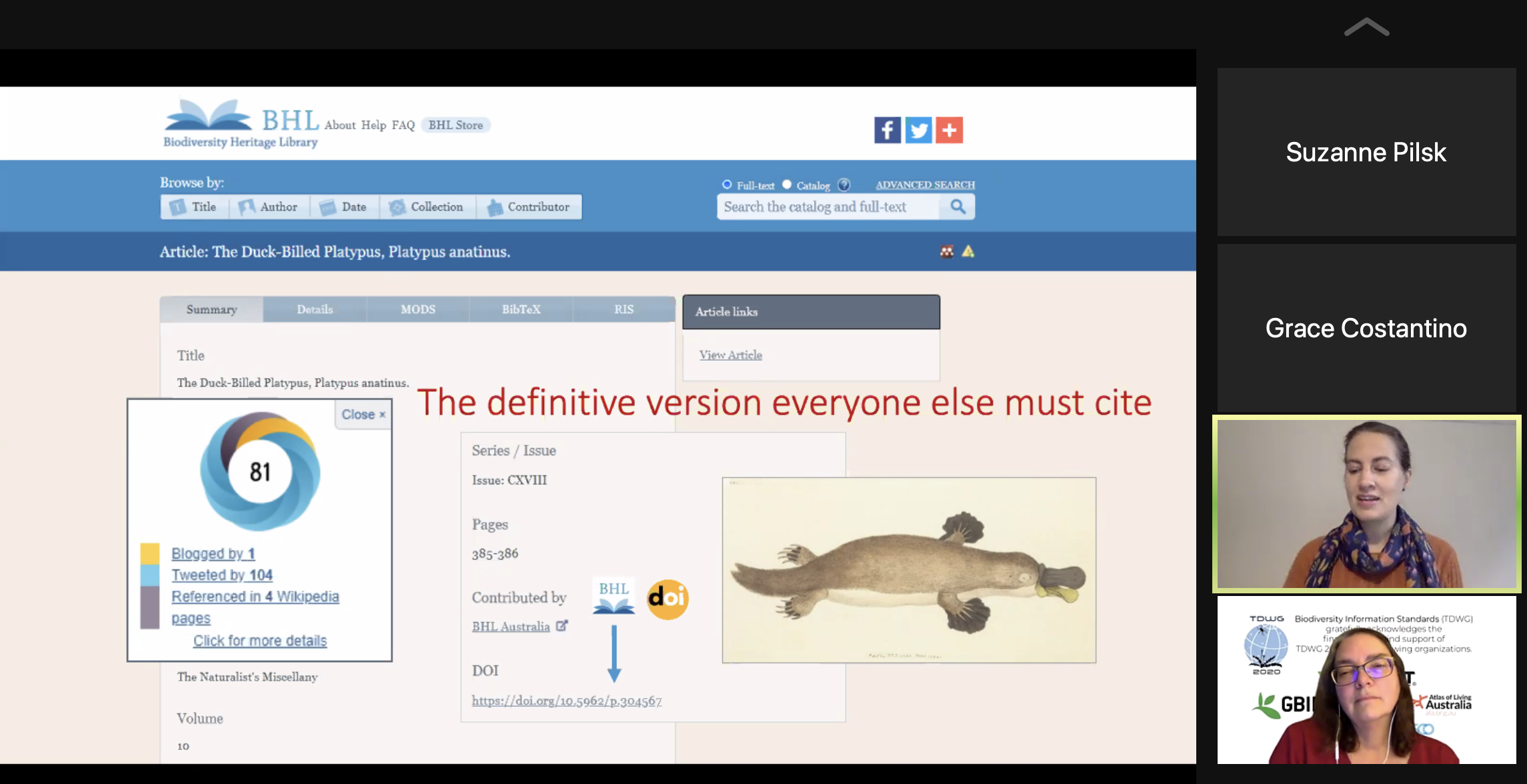
As Nicole Kearney (BHL Australia, Museums Victoria) shared during her talk, Discovering the Platypus: From Its Scientific Description to Its DOI, the first scientific description of the platypus (Ornithorhynchus anatinus) now has a DOI (https://doi.org/10.5962/p.304567), assigned by BHL. This allows anyone to easily cite this description directly and enables easier tracking of those citations. Image courtesy of Grace Costantino.

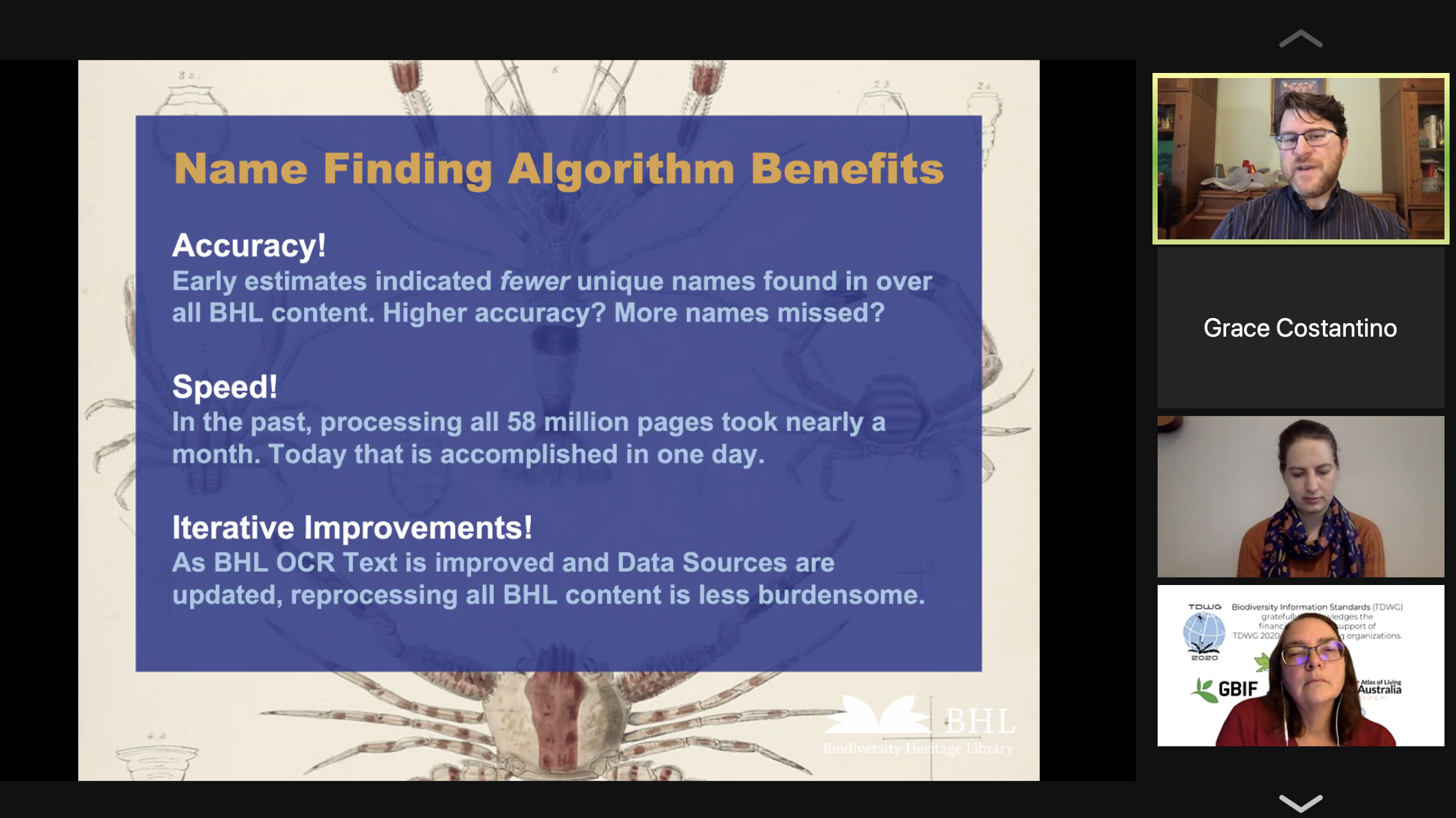
Screenshot of a Zoom call with a slide showing benefits of BHL's new name finding algorithm.

During his talk, Improving Taxonomic Name Finding in the Biodiversity Heritage Library, Joel Richard (Smithsonian Libraries) shared some of the benefits of implementing the new Global Names gnfinder tool to support taxonomic name finding in BHL. Image courtesy of Grace Costantino.

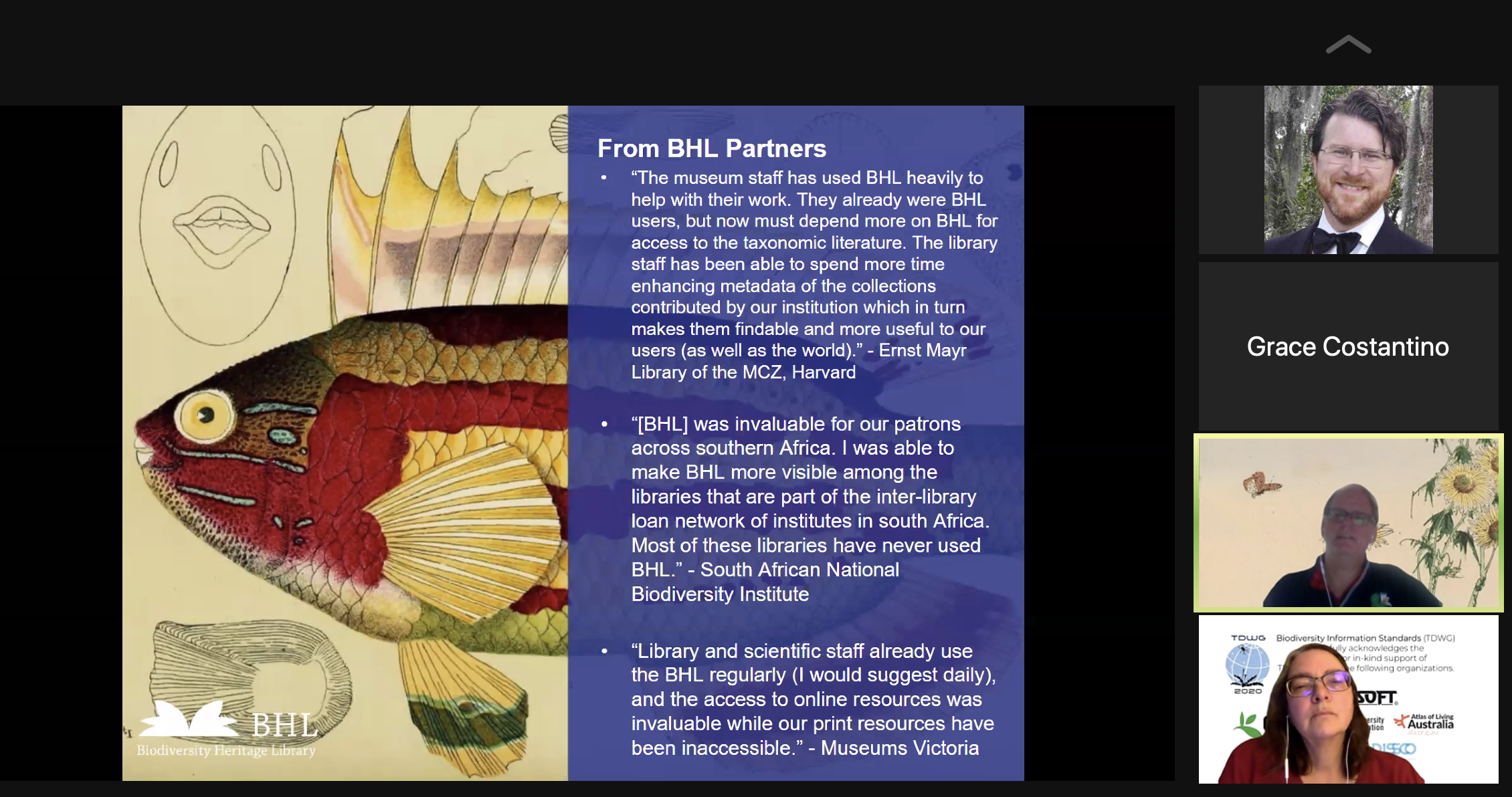
Screenshot of a Zoom call with a slide stating quotes from partners about BHL's impact during the COVID-19 pandemic.

During the presentation The Biodiversity Heritage Library Response to the Global COVID-19 Pandemic, Martin Kalfatovic (BHL Secretariat, Smithsonian Libraries) shared statements from partners about BHL’s impact during the pandemic. Image courtesy of Grace Costantino.

The symposium was well-received, with approximately 100 people attending. The talks sparked interesting discussions, with questions around such topics as opportunities for Wikidata integration; supporting annotations as part of a future IIIF integration; strategies for improving optical character recognition (OCR); development of visualizations using BHL data; identification of additional useful data access points, such as collection and specimen codes and locality names; and potential strategies for supporting third-party application development using BHL data, such as through researcher prizes and challenges.

You can view a recording of the symposium on YouTube and all session presentation files in this Google folder.

October 30, 2020by Grace Costantino
Blog Reel, User Stories

Exploring the People and Stories Behind the Names: BHL Empowers Research on Taxonomic History

white and green bird sitting atop a black and white sketch of a branch

In 1780, French naturalist François Le Vaillant traveled to the Cape of Good Hope and subsequently spent several years studying the region’s biodiversity. During his three journeys—the first around Cape Town and Saldanha Bay (April to August 1781), the second eastwards from the Cape (December 1781 to May 1783), and the third to the Orange River and into Great Namaqualand (June 1783 to c. May 1784)—Le Vaillant amassed a collection of thousands of specimens. Upon returning to Europe, he published accounts of his travels within Voyage dans l’intérieur de l’Afrique (1790, 2 vols.) and Second voyage dans l’intérieur de l’Afrique (1796, 3 vols.)—both of which were best sellers and were translated into several languages.

Within these narratives, Le Vaillant writes repeatedly of his Khoikhoi guide, whom he called Klaas (but whose name in Klaas’s own Khoe language seems to be unrecorded). Le Vaillant’s respect and affection for Klaas is evident. In the first volume of his Voyage dans l’intérieur de l’Afrique, Le Vaillant writes:

“…le bon Klaas fut déclaré mon égal, mon frère, le confident de tous mes plaisirs, de mes disgrâces, de toutes mes pensées ; il a plus d’une fois calmé mes ennuis, & ranimé mon courage abattu.” [“…the good Klaas is declared my equal, my brother, the confidant of all my pleasures, of my disgraces, of all my thoughts; he has more than once calmed my troubles, & revived my shattered courage.”]

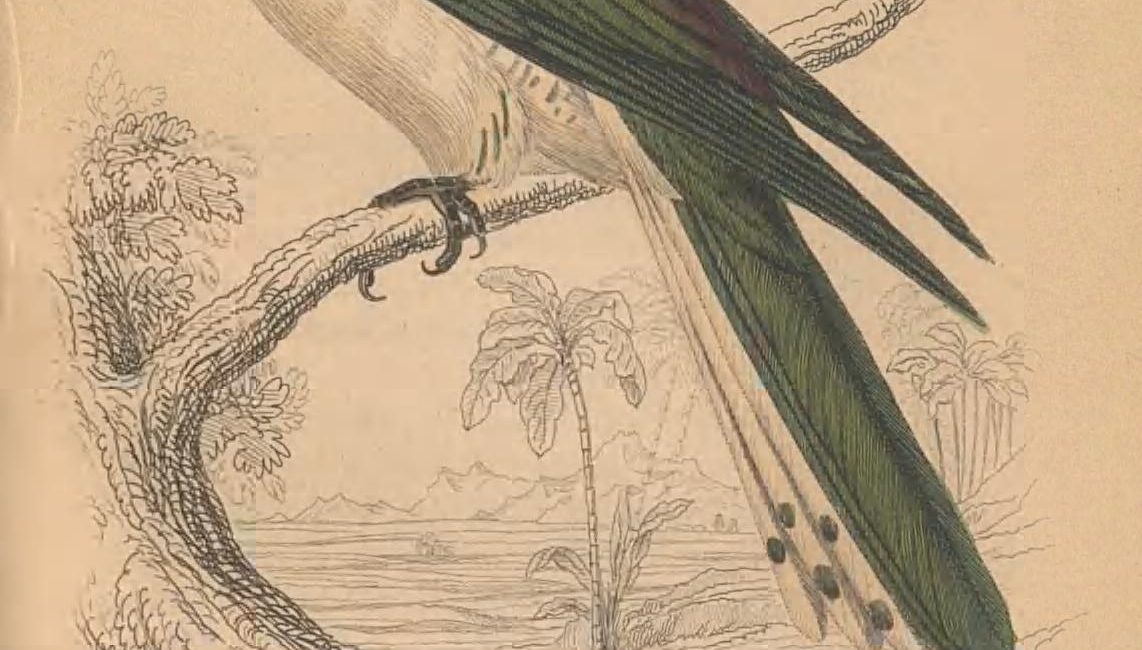
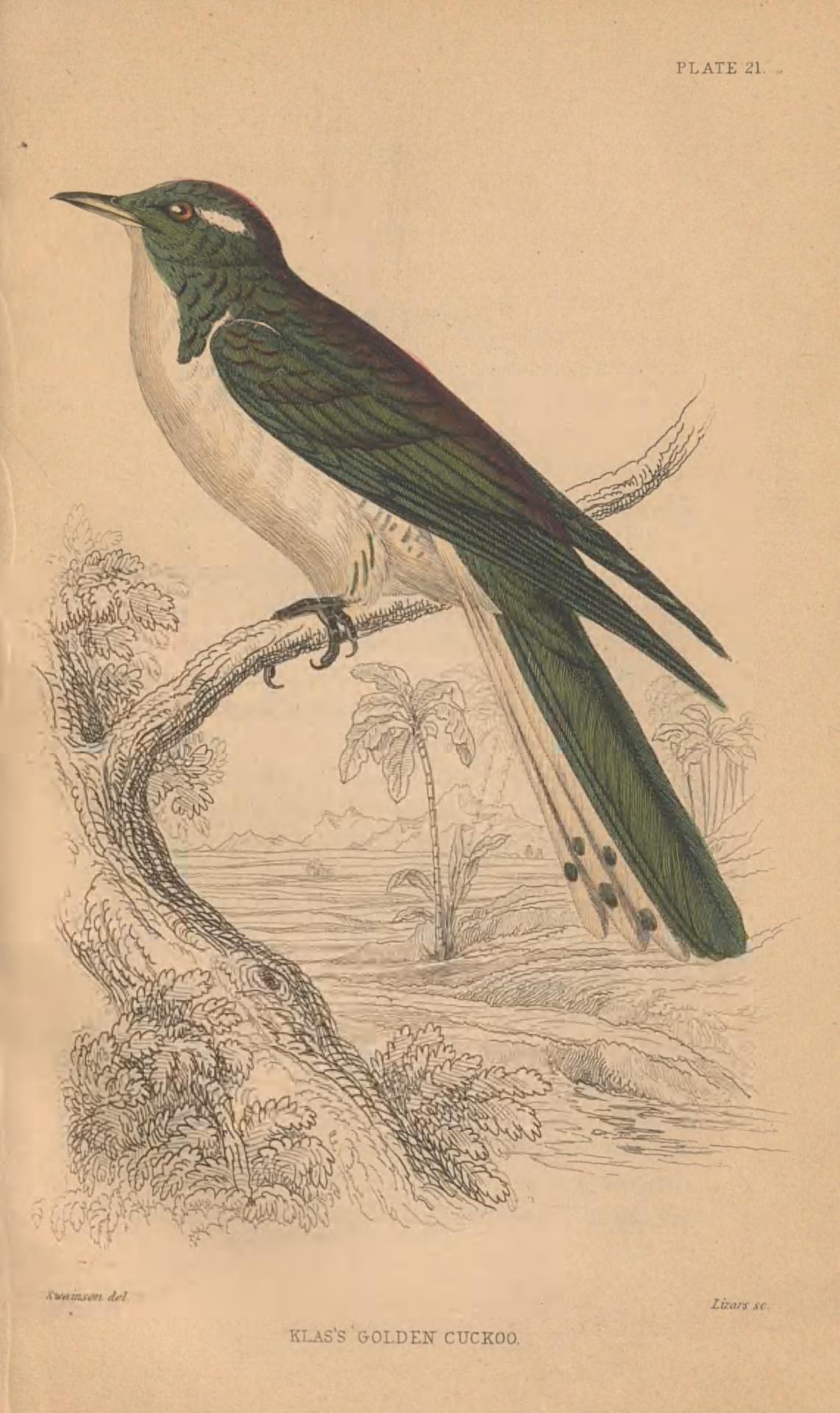
Klaas, of whom Le Vaillant wrote “by long practice [he] had become a naturalist”, also collected specimens for the French naturalist, which Le Vaillant later described within publications such as Histoire naturelle des oiseaux d’Afrique (1796–1808, 6 vols.). One such specimen was that of Klaas’s cuckoo, a species native to the wooded regions of sub-Saharan Africa. According to Le Vaillant, Klaas collected the specimen “près de la rivière Platte” (“near the Platte river”). It was the only individual of this species that the company encountered during their expedition.

When Le Vaillant published his account of the species within Histoire naturelle des oiseaux d’Afrique (v. 5, 1806), he named it “Le Coucou de Klaas” in honor of “mon ami Klaas”, writing:

“Puissent les naturalistes conserver à l’espèce que je vais décrire, le nom que je lui donne, et consacre ainsi les services que tu m’as rendus: ils me prouveront par là que mes travaux ont eu quelque prix à leurs yeux.” [“May naturalists preserve for the species I am going to describe, the name I give it, and thus consecrate the services you have rendered me: they will prove to me by this that my work has had some value in their eyes.”]

white and green bird sitting atop a black and white sketch of a branch

Klaas’s cuckoo (Chrysococcyx klaas). Engraving by William Lizars after William Swainson from Sir William Jardine’s Naturalist’s Library: Ornithology (v. 12, 1853 edition). Contributed in BHL from the Musée cantonal de zoologie, Lausanne.

While Le Vaillant, who opposed the Linnaean classification system, provided only French names to the species he described, future naturalists did fortunately honor Le Vaillant’s commemoration of Klaas. Some ten years after Le Vaillant’s description was published, English zoologist James Francis Stephens made a formal redescription of the species, designating it Cuculus klaas (now Chrysococcyx klaas).

Eponymous scientific naming, or the practice of naming a species after an individual, is the subject of Dr. Stephen B. Heard’s book, Charles Darwin’s Barnacle and David Bowie’s Spider (2020). Klaas’s cuckoo is the earliest example of a species being named after an Indigenous person that Heard has been able to trace. While researching the name for his book, Heard relied on the Biodiversity Heritage Library (BHL) to access Le Vaillant’s description of Klaas’s cuckoo and uncover more about the story behind the name.

“BHL is an incredibly rich resource,” lauds Heard. “These older names are often frustrating to puzzle out. In general, there’s no single index of name etymologies—you have to look for the paper that originally described the species and hope the name is explained. When I’m working on books or blog posts where I can explore my interests in the history of science, I use BHL every day.”

man in dark t-shirt with brown jacket standing in mossy landscape

Dr. Stephen B. Heard, pictured in the Wesman Islands of Iceland. Photo by: Kristie S. Heard.

Heard, an evolutionary ecologist, is a Professor of Biology at the University of New Brunswick in Canada. His “everyday” research concerns the ecology and evolution of plant-insect interactions, for which he relies on modern literature. However, some of his recent projects have taken a more historical turn—a turn that led him to BHL.

“My first book, The Scientist’s Guide to Writing, explores some of the history and social context of scientific writing,” shares Heard. “In trying to explain the evolution of what’s now a quite standardized writing form (the scientific paper), I dipped into writing as far back as the 1660s. BHL is a wonderful place to find that old literature.”

Heard found himself relying on BHL once again during his research on eponymous names for Charles Darwin’s Barnacle and David Bowie’s Spider.

“As I began work on Charles Darwin’s Barnacle and David Bowie’s Spider, I discovered that an enormous amount of taxonomic literature, in particular, is available online via BHL—and not just the obvious major journals,” says Heard. “The collection includes books, obscure memoirs of regional natural history societies, you name it. Most of that older and more obscure literature is not available through my university library, so BHL is a critical resource for me.”

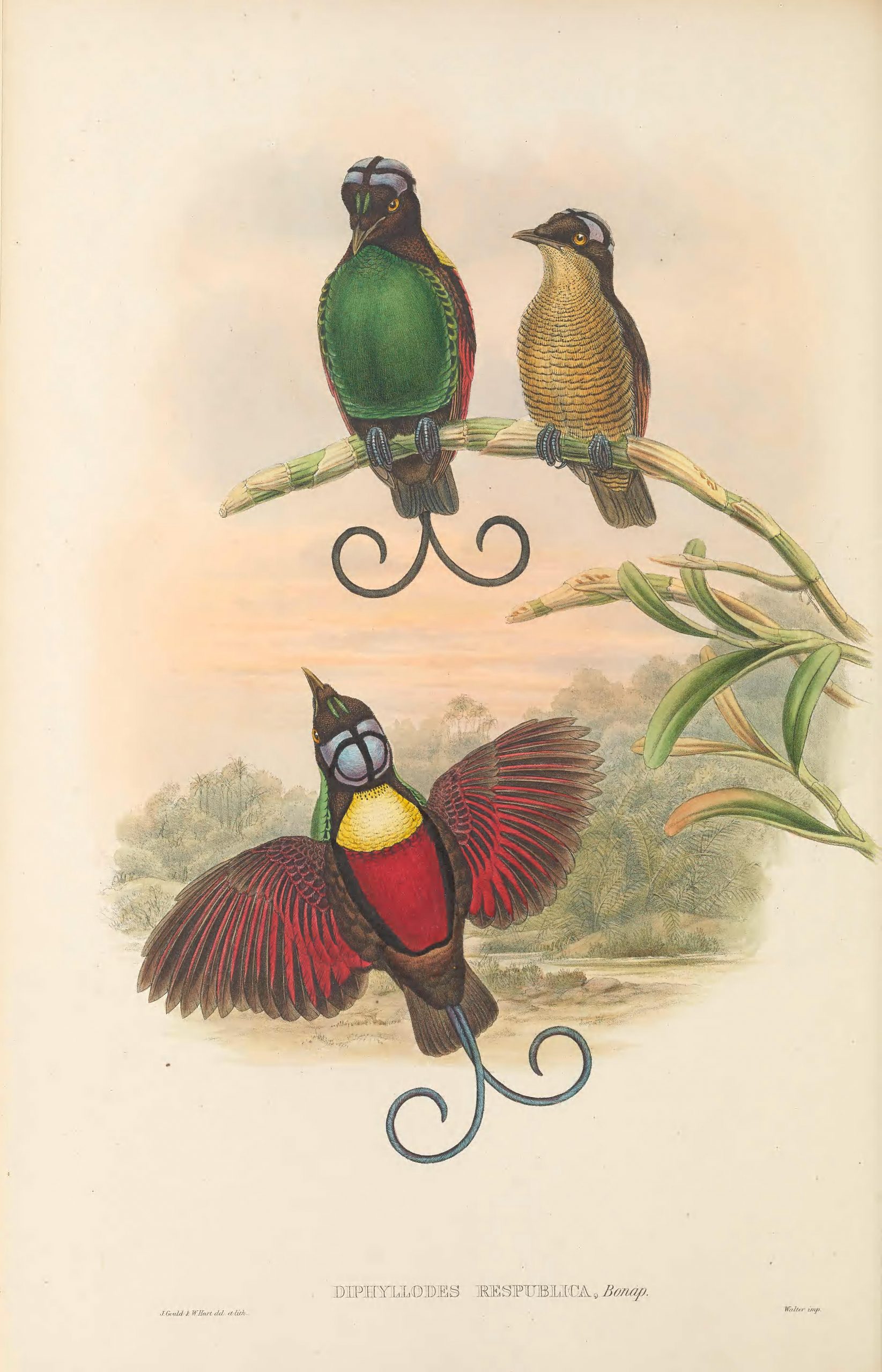
For Heard, one of the best things about eponymous scientific names is the insight they provide on the personality and humanity of scientists. Take, for example, French ornithologist Charles Lucien Bonaparte (nephew of Napoleon Bonaparte), who named over 200 bird species and over 250 bird genera. Heard was particularly struck by a paradox in two of Bonaparte’s namings: the bird of paradise Diphyllodes respublica and the imperial pigeon Ptilocolpa carola.

three birds, one red and in flights, one green, one yellow, the latter two seated on a branch

Bird of paradise (Diphyllodes respublica). Illustration by John Gould and William Matthew Hart from Gould’s The birds of New Guinea and the adjacent Papuan islands, v. 1 (1875-1888). Contributed in BHL from Smithsonian Libraries.

“Bonaparte named the bird of paradise as a statement of his republican ideals (perhaps a bit risky for a nephew of Napoleon), but he named the pigeon for his ‘daughter the countess Primoli, Charlotte, herself worthy of her illustrious name,’” explains Heard. “The inconsistency between Bonaparte’s republicanism and his mention of his daughter’s title and ‘illustrious name’ is fascinating—a good illustration of how scientific practice isn’t immune to the foibles and humanity of scientists themselves. As I worked on Charles Darwin’s Barnacle and David Bowie’s Spider, and spent more and more time with the writing of those who describe and (eponymously) name species, I was more and more struck by the creativity and humanity behind the act.”

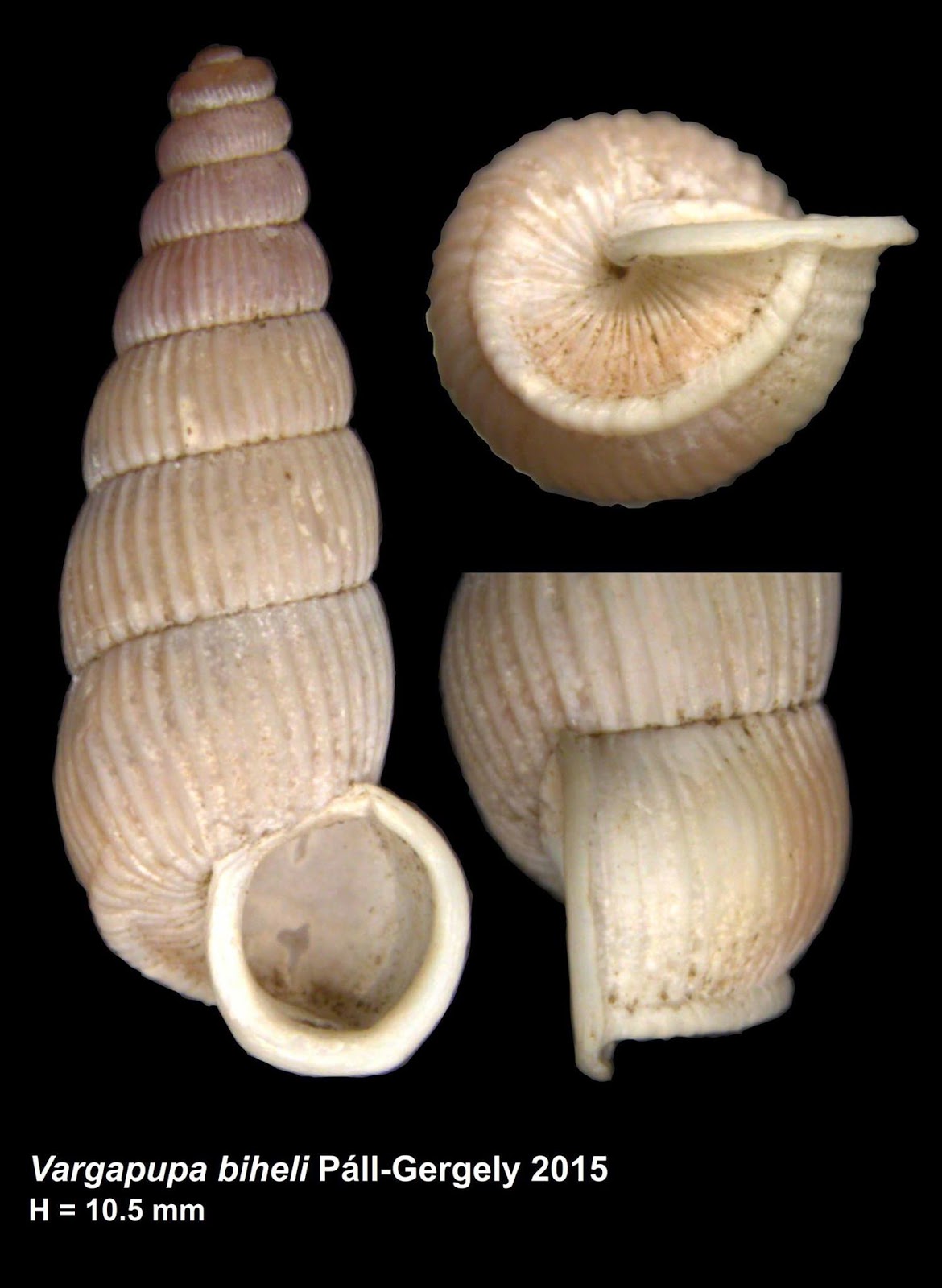
By providing free and open access to scientific literature, BHL is not only empowering modern taxonomic research, but also allowing researchers like Dr. Heard to learn more about the history of taxonomy and the people and stories behind the names. BHL’s impact on science has been recognized through modern-day eponymous naming. In 2015, a new land snail species from Laos—Vargapupa biheli Páll-Gergely, 2015—was named in honor of BHL. As author Dr. Barna Páll-Gergely wrote in the paper publishing the name:

“The new species is named after the Biodiversity Heritage Library (www.biodiversitylibrary.org) to thank the multitude of rare literature made available to us. The name ‘biheli’ is an acronym derived from the name BIodiversity HEritage Library.”

one full and two dissected shells, in a light cream color against a black background

Vargapupa biheli Páll-Gergely, 2015, named in honor of BHL. Photo by: Barna Páll-Gergely.

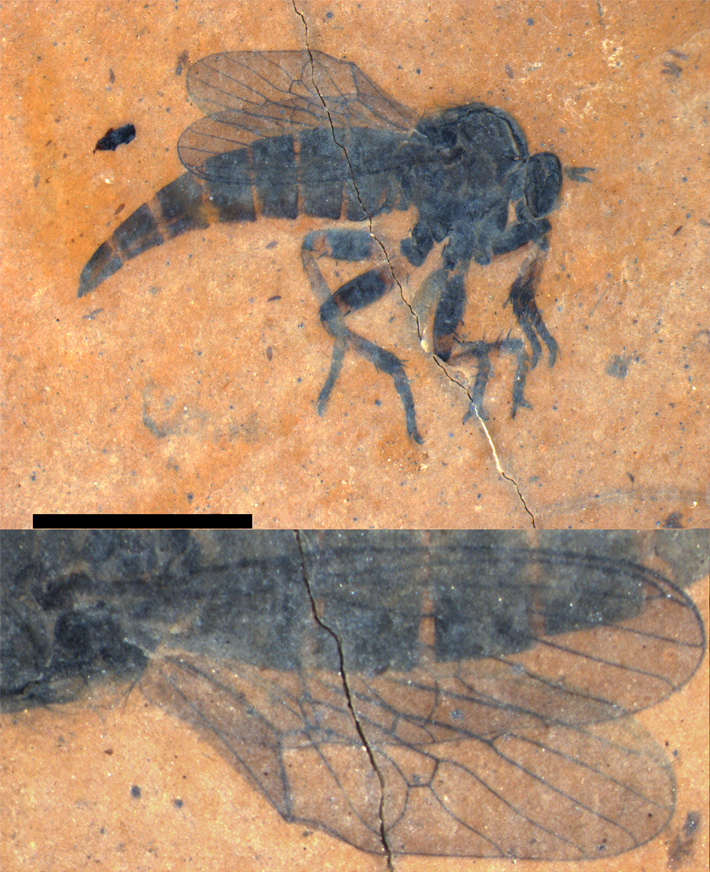
In 2019, a new species of fossil robber fly—Kishenehnoasilus bhl Dikow, 2019—was named in honor of BHL. On selecting this name, author Dr. Torsten Dikow shared:

“Taxonomic research involves not only the study of specimens, but also the review of often old literature. Having digital access to publications enhanced with tools such as scientific name recognition makes my research so much more efficient. The Biodiversity Heritage Library provides a lens into the literature published a long time ago. The same is true for this new species of robber fly, as it helps us to understand and document the past of biodiversity.”

a black fossilized fly preserved in orange amber.

Kishenehnoasilus bhl Dikow, 2019, named in honor of BHL. Photo by: Dale Greenwalt.

Whether it be as a vehicle to teach us more about an individual recognized in a species name, a window into the personalities and lives of the scientists naming species, or an opportunity to highlight the impact of policies like open access on global research, a species name is often a story waiting to be told—stories that BHL and its open access collections can help tell.

October 22, 2020by Grace Costantino
Blog Reel, Campaigns, Earth Optimism 2020, User Stories

Empowering Research on Marine Bioinvasions to Support Conservation of Native Species and Ecosystems

April 2020 marks the 50th anniversary of Earth Day. Organizations around the world have commemorated the occasion by participating in the global Earth Optimism movement — an initiative spearheaded by the Smithsonian to “turn the conservation conversation from doom and gloom to optimism and opportunity”.

Throughout 2020, the Biodiversity Heritage Library (BHL) and our partners are joining the movement by sharing conservation success stories from and made possible by the BHL collection. Follow our blog for conservation stories — past and present — and visit our website for more information and to explore our Earth Optimism book collection.

———————

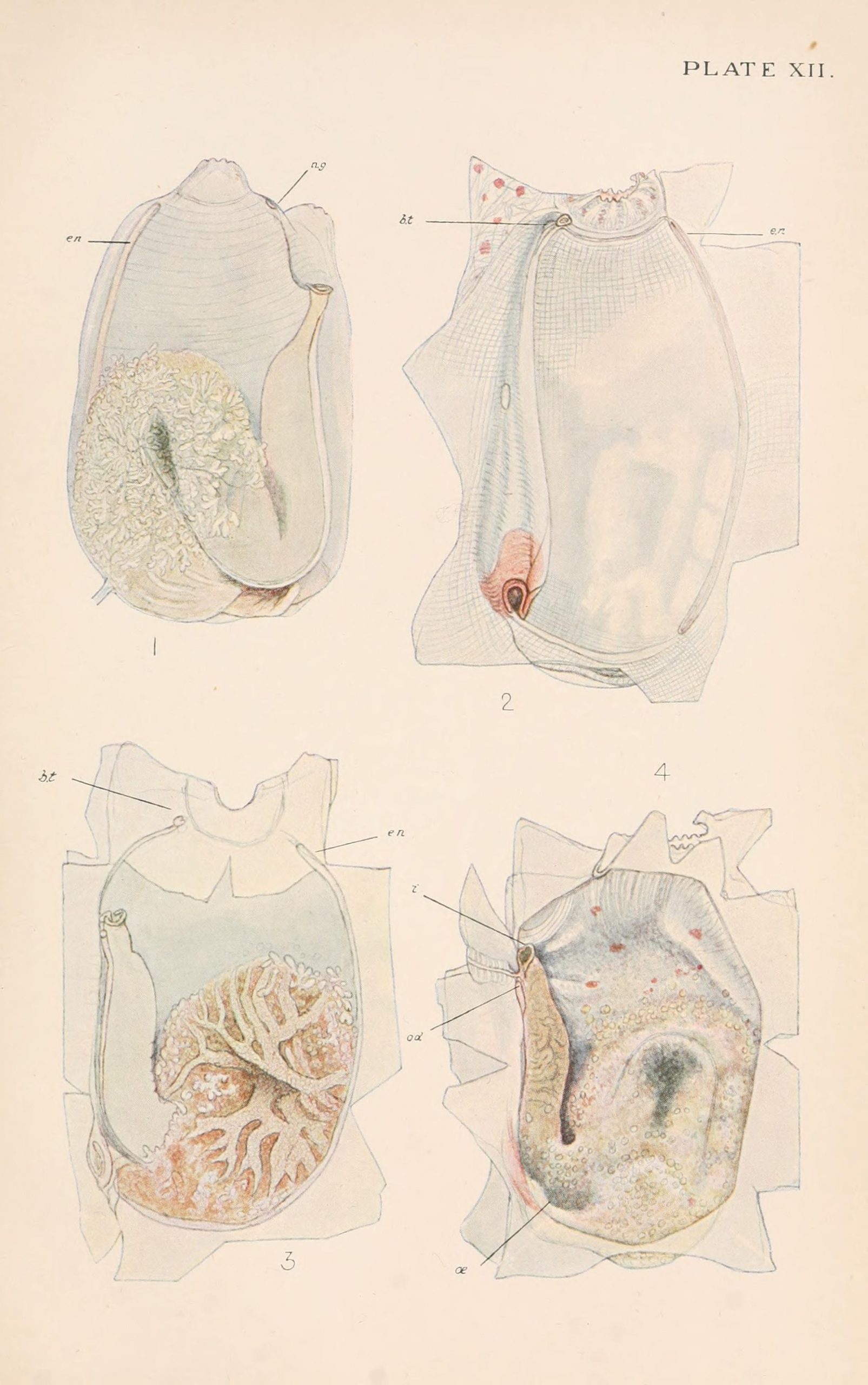
Dissected views of a sea squirt

Ascidiella aspersa. Plate XII. Alder, Joshua and Albany Hancock. The British Tunicata. v. 1 (1905). Contributed in BHL from the MBLWHOI Library.

The solitary sea squirt Ascidiella aspersa is native to the Northeastern Atlantic, from the Mediterranean Sea to Norway. Living in shallow sheltered sites and harbors, this species has a fast growth rate and is able to produce a large number of larvae.

These attributes have helped make it a successful colonizer of non-native environments, such as the Southwestern Atlantic, where it has become an invasive species introduced likely via ships.

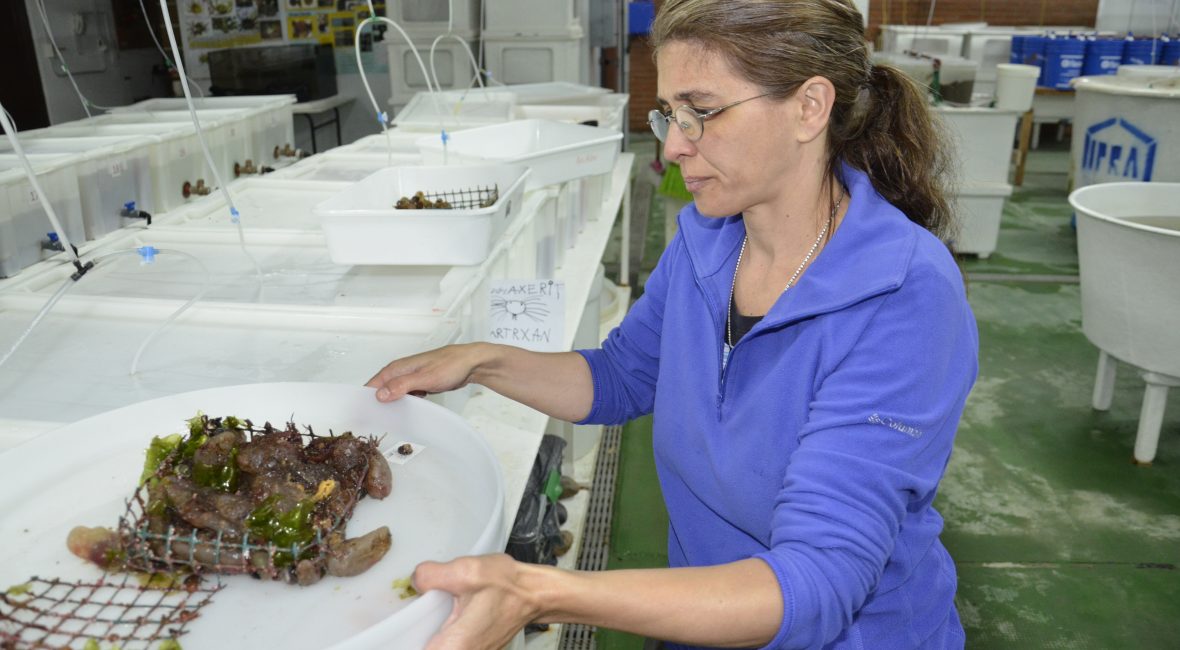
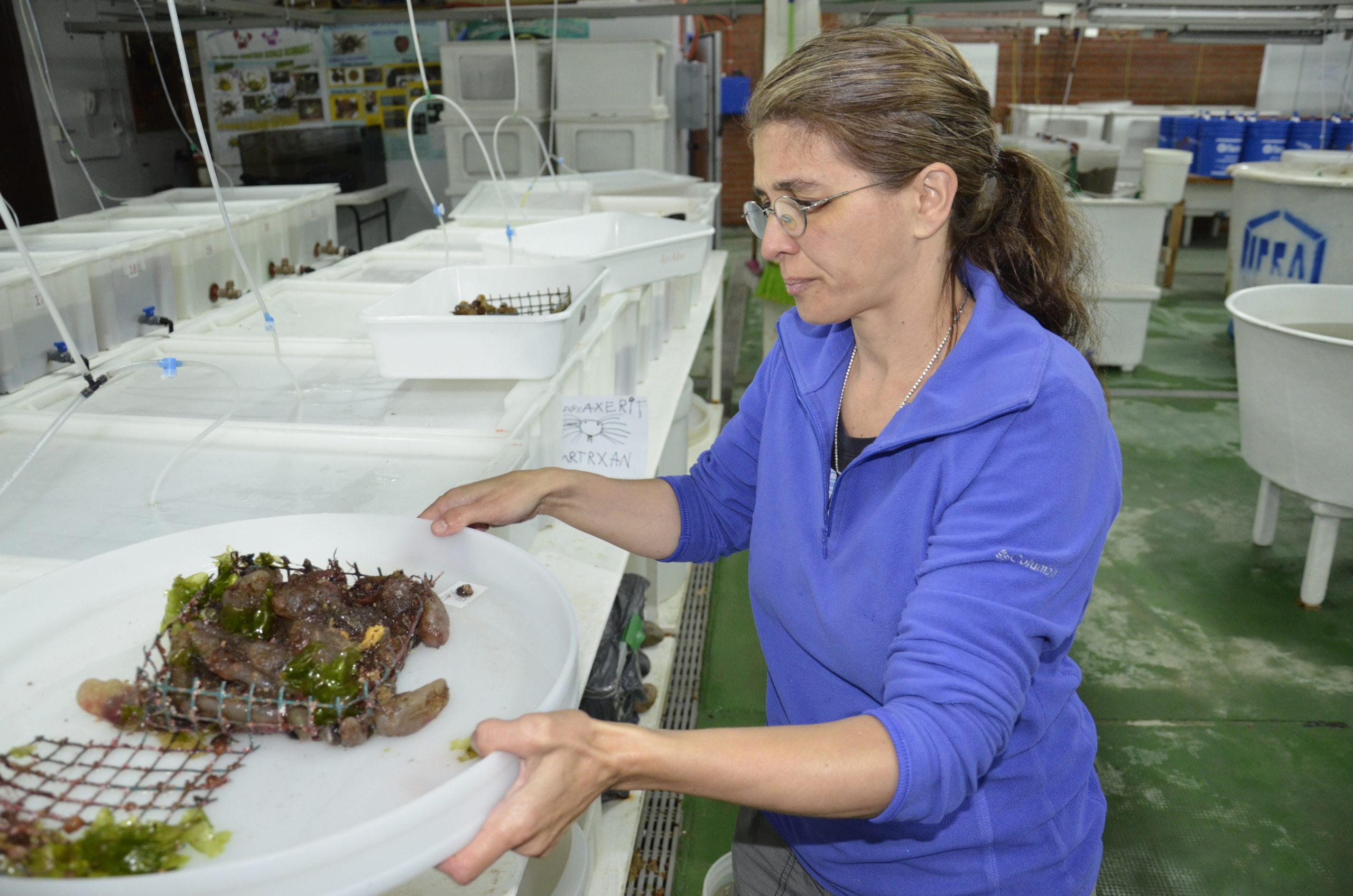
A woman with dark hair in a blue sweatshirt examining fouling communities in a white bucket.

Dr. Evangelina Schwindt, Head of the Grupo de Ecología en Ambientes Costeros from CONICET in Argentina, finishing an experiment with fouling communities. Photo by: Alejandro Bortolus.

Dr. Evangelina Schwindt, Head of the Grupo de Ecología en Ambientes Costeros from CONICET in Argentina, studies Ascidiella aspersa as part of her research as a marine invasive ecologist. Her work involves researching the interactions between invasive and native species, the patterns and processes occurring in biological invasions from the historical and present-day perspectives, the impact caused by invasive species, and the management strategies that can be applied.

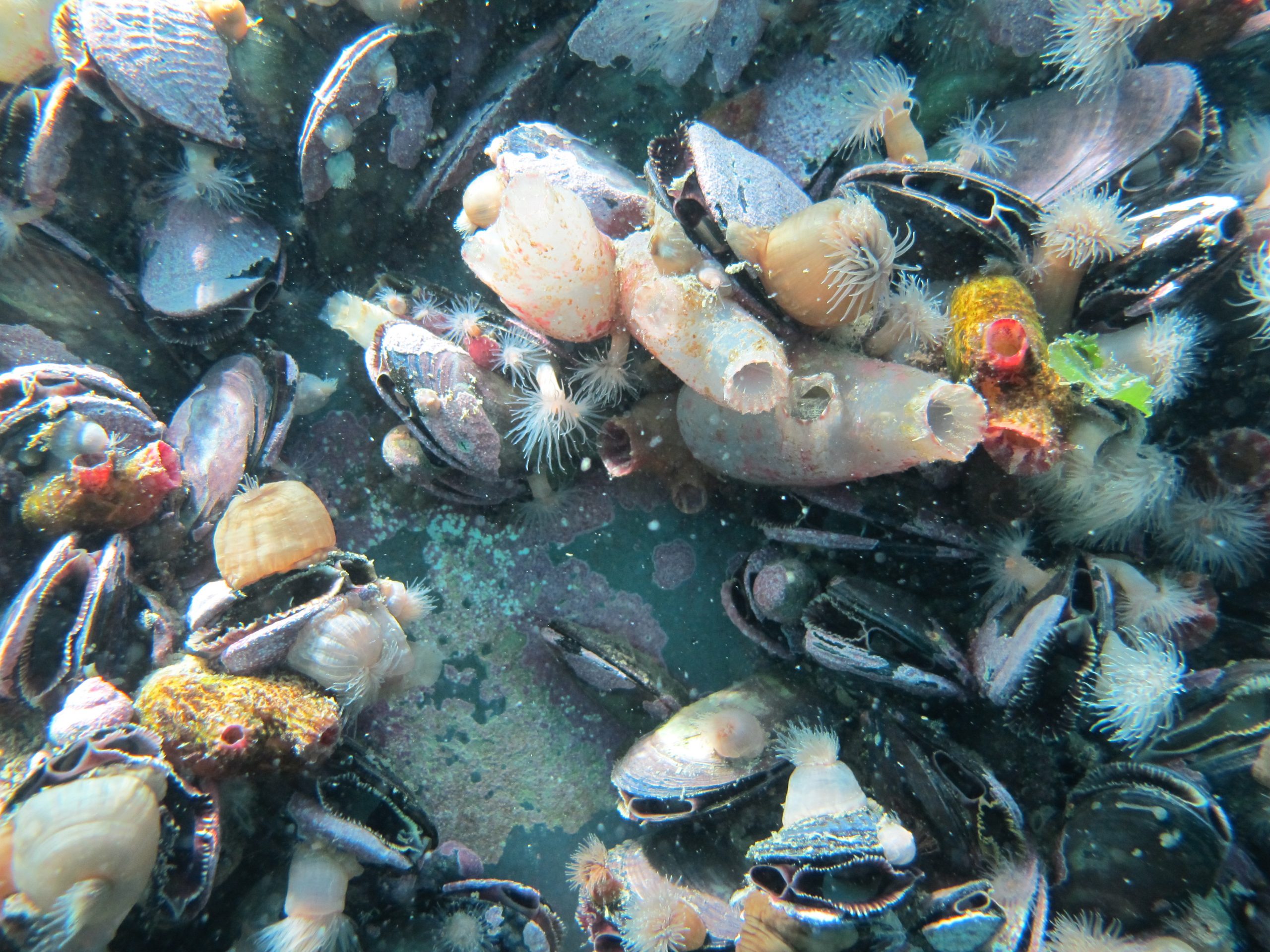
Much of her research focuses on fouling communities living in artificial habitats such as ports, harbors, and ships. Species like Ascidiella aspersa are having a major impact on these communities, outcompeting and displacing native species and disrupting the ecological balance of the habitats they invade. As such, the management of invasive species is of vital importance to the successful conservation of native biodiversity and ecosystems.

“Invasive species are one of the five major drivers of biodiversity change, affecting also ecosystem services, food, health and economy,” asserts Schwindt. “The protection of native species and ecosystems in general improves overall quality of life and is an indicator of wellbeing and health.”

A fouling community at Puerto Madryn port in Argentina

A fouling community at Puerto Madryn port in Argentina. Photo by: Evangelina Schwindt.

Research to support the management of invasive species requires an understanding of the species’ taxonomy, genetics, global distribution and the earliest record of introduction in different regions worldwide. Studies on marine invasive species can be particularly challenging, as marine biodiversity is less well-understood compared to species living in terrestrial or freshwater environments.

Not surprisingly, research on invasive species can be time consuming, and tracking down their spatial and temporal patterns and history is labor intensive. Unfortunately, in the face of today’s biodiversity crisis, time is not on our side. To understand the impact of invasives and integrate their management as part of a successful conservation strategy for an ecosystem or threatened species, researchers need tools to help improve the efficiency of their work.

Fortunately, the Biodiversity Heritage Library (BHL) is just such a tool, providing researchers with free and open access to critical data to support conservation work.

“BHL provides free access to literature for researchers around the world that don’t have good libraries in their institutions,” lauds Schwindt. “Research is much faster and better when the bibliography needed to work is freely available.”

Schwindt first discovered BHL over ten years ago while conducting online searches for historic literature. Since then, it has become an invaluable asset for her research.

“My work requires historical literature and records from scientific expeditions in different languages,” explains Schwindt. “BHL is the best place to find the bibliography I need to reconstruct the past and present of marine species.”

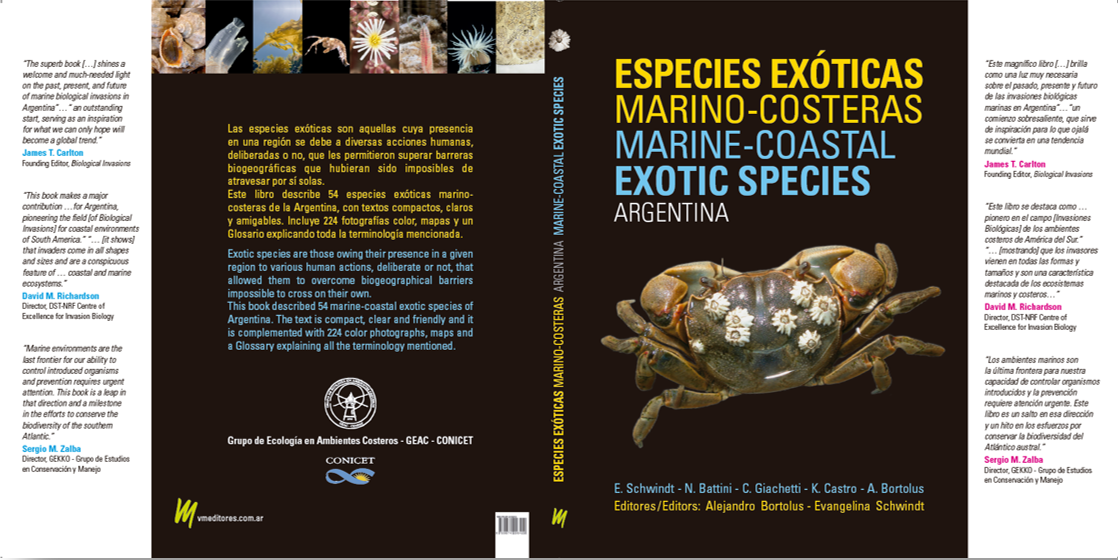
Screenshot of a cover of a book with the title "Especies Exóticas Marino-Costeras de Argentina". The cover is black with yellow and blue letters and there is a crab on the cover.

Especies Exóticas Marino-Costeras de Argentina (2018), the first book on exotic marine coastal species of Argentina. Schwindt is the lead author for the book.

For example, BHL was a particularly useful resource for Schwindt and her colleagues during the production of their book Especies Exóticas Marino-Costeras de Argentina (2018), the first book on exotic marine coastal species of Argentina. The book, which has been made freely available in BHL, describes 45 marine-coastal exotic species, with exotic species being defined as “those owing their presence in a given region to various human actions, deliberate or not, that allowed them to overcome biogeographical barriers impossible to cross on their own” (Schwindt et al. 2018).

“The vast archives of BHL were particularly significant for us during the elaboration of this book because it provided us with the historical first records and accounts associated with several exotic species detailed some centuries ago by early explorers, naturalists and scientists traveling along the Southwestern Atlantic,” explains Schwindt.

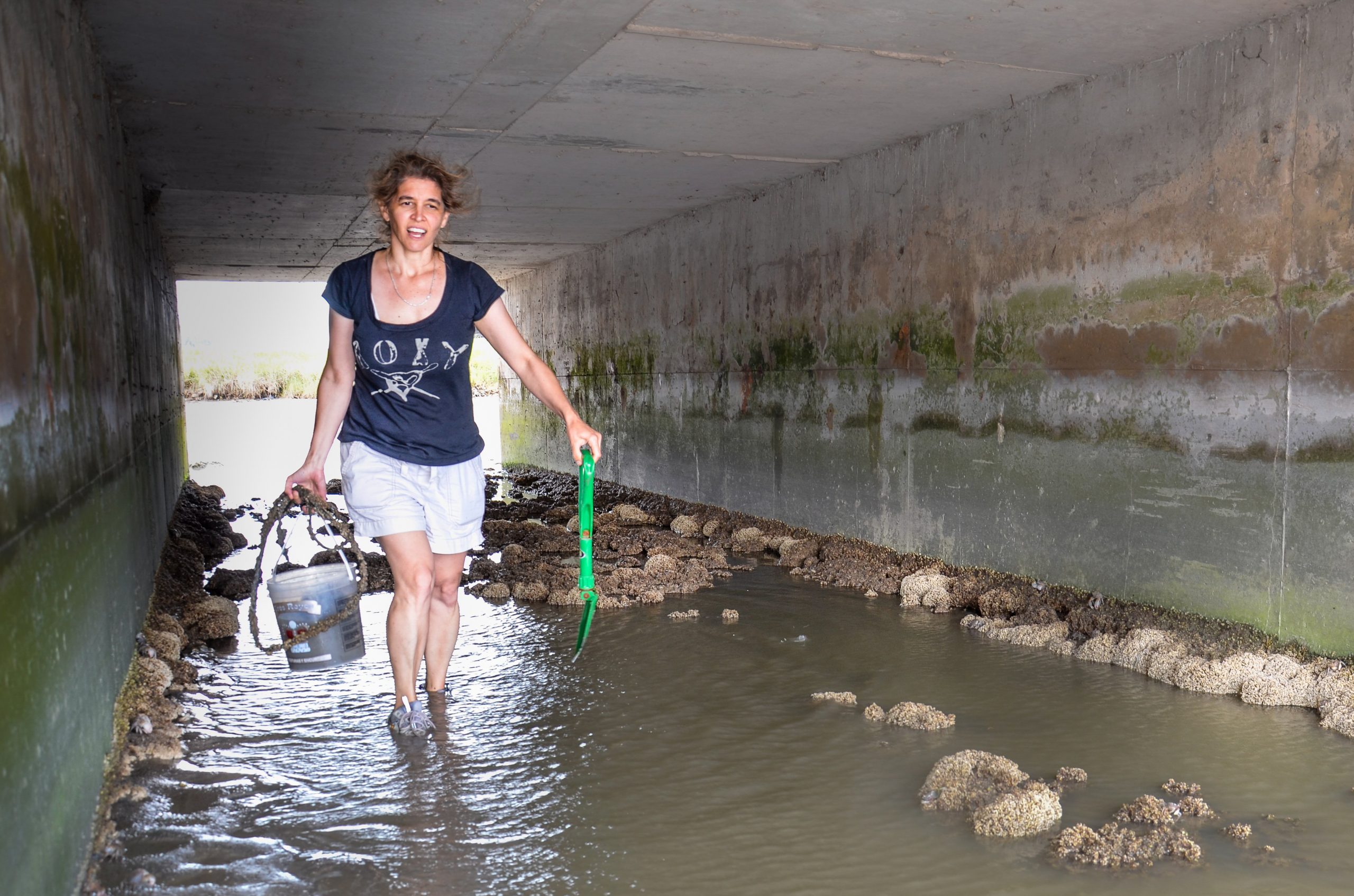
A woman in a blue shirt and white shorts walking through a tunnel with ankle high water.

Schwindt surveying reefs of the polychaete Ficopomatus enigmaticus colonizing channels in urban areas. Photo by: Alejandro Bortolus.

BHL is also a valuable asset for Schwindt’s work as the coordinating lead author of the Intergovernmental Science-Policy Platform on Biodiversity and Ecosystem Services’ (IPBES) Thematic Assessment of Invasive Alien Species and Their Control, which is intended to “assess the threat that invasive alien species pose to biodiversity, ecosystem services and livelihoods and the global status of and trends in impacts of invasive alien species” (IPBES 2020).

“I found BHL extremely helpful for my work on the IPBES Thematic Assessment,” shares Schwindt. “All literature cited in the assessment should be open access, and the fact that BHL’s archives are extremely complete and open access made it a reliable tool to share and to use.”

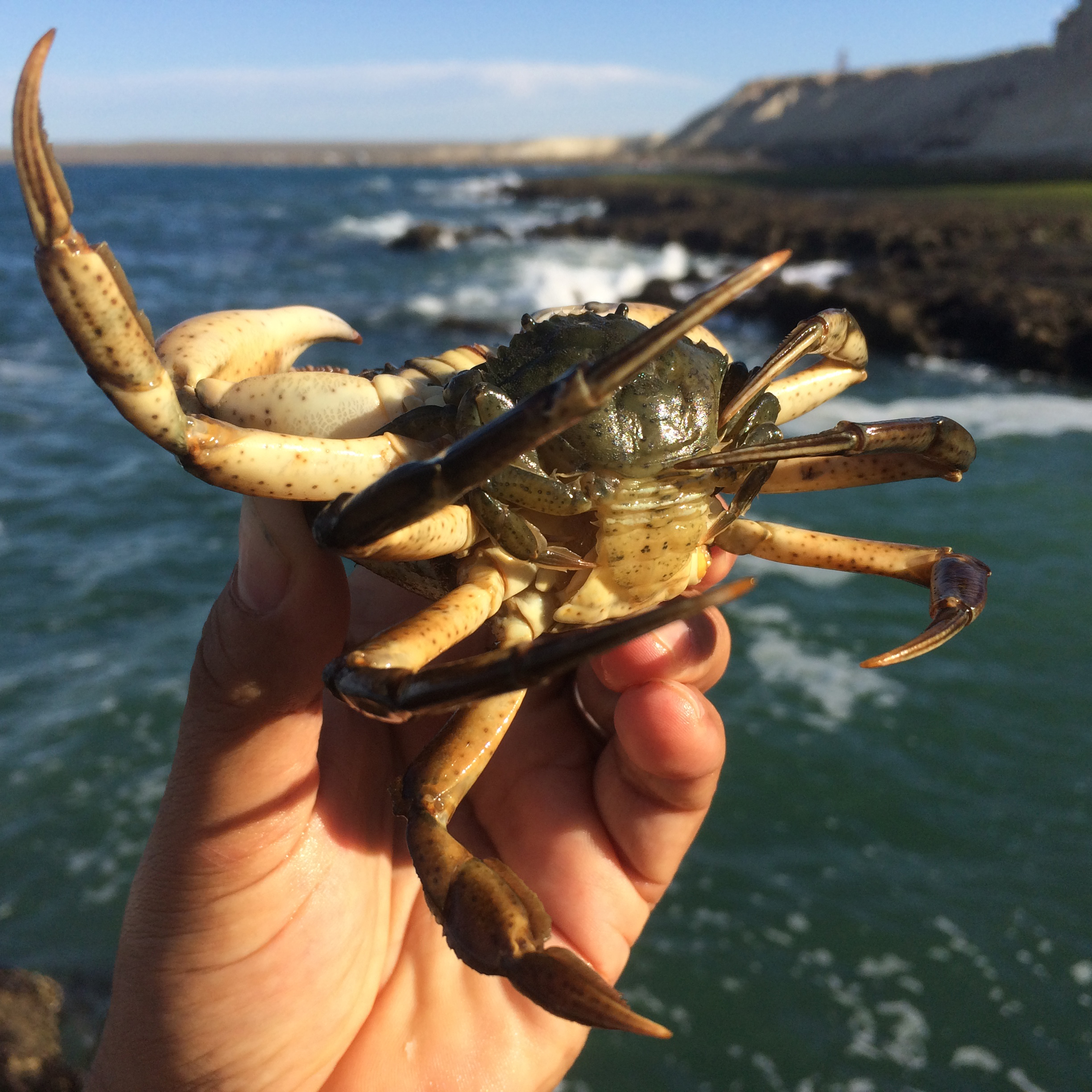
A yellow and green crab held in someone's hand.

The exotic green crab Carcinus maenas is one of the invasive species studied by Schwindt. Photo by: Alejandro Bortolus.

BHL also provided important information for Schwindt’s most recent paper on marine bioinvasions—”Past and Future of the Marine Bioinvasions Along the Southwestern Atlantic” (Schwindt et al. 2020). The Library provided the first record of several relevant introduced species.

For example, Agardh’s Species genera et ordines algarum (1876) documents the introduced macroalgae Lomentaria clavellosa, probably native to the NE Atlantic Ocean and recorded in the SW Atlantic around 1876. Similarly, Giambiagi’s Cuatro nuevos isópodos de la Argentina (1922) records the introduced isopod Synidotea laevidorsalis, probably native to Japan and China and found in the SW Atlantic in 1902. Fauvel’s Annélides polychètes des Iles Falkland recueillies par M. Rupert Vallentin Esqre (1902-1910) (1916) likewise documents the cryptogenic polychaete Procerastea halleziana, recorded from the region in 1902.

In total, the paper documents 129 introduced and 72 cryptogenic marine species for the Southwestern Atlantic, with 33 new invasions occurring since 2002—translating to one new invasion every 178 days. Ships were identified as the most likely vector for these introductions. By documenting the historic and persistent introductions in the region, this paper underscores the need to establish long-term assessment programs to generate ongoing baseline data and support efficient environmental management.

This paper also illustrates how legacy literature, like that provided through BHL, is a valuable source of historic baseline data, which researchers can use to assess the patterns and evolution of invasions over time.

As the authors write:

“We cannot make progress in our understanding of the impact of invaders if the scale of invasion diversity remains poorly assessed, and if the abundance and distribution of already established invaders remain uncertain. The most direct consequences of delays in recognizing invasions are delays in early detection of and rapid response to new invasions, and the hampering of the design of strong, effective management strategies to prevent future introductions” (Schwindt et al. 2020, 15).

Clearly, successful conservation strategies require not just an understanding of a specific threatened species, but also of the forces—such as invasive species—that affect their well-being. Researchers like Dr. Schwindt are working to strengthen our understanding of these forces and improve our ability to address them. Open access to the vital literature provided through the Biodiversity Heritage Library helps make this work possible, ensuring that researchers around the globe have the data and tools they need to help save biodiversity—and that is a very good reason to be optimistic as we celebrate Earth Optimism.

References

IPBES. Thematic Assessment of Invasive Alien Species and Their Control. 2020. Work Programme. Accessed on 29 January 2020. https://ipbes.net/invasive-alien-species-assessment.

Schwindt et al. 2018 Especies Exóticas Marino-Costeras de Argentina. Buenos Aires, Argentina: Vazquez Mazzini Editores.

Schwindt et al. 2020. “Past and Future of the Marine Bioinvasions Along the Southwestern Atlantic.” Aquatic Invasions 15.

October 8, 2020by Grace Costantino
Page 3 of 71« First...«2345»102030...Last »

Help Support BHL

BHL's existence depends on the financial support of its patrons. Help us keep this free resource alive!

search

About BHL

The Biodiversity Heritage Library (BHL) is the world’s largest open access digital library for biodiversity literature and archives. BHL operates as a worldwide consortium of natural history, botanical, research, and national libraries working together to digitize the natural history literature held in their collections and make it freely available for open access as part of a global “biodiversity community.”

Join Our Mailing List

Sign up to receive the latest news, content highlights, and promotions.

Subscribe Now

Subscribe to Blog via Email

Enter your email address to subscribe to this blog and receive notifications of new posts by email.

Join 319 other subscribers

Subscribe to Blog Via RSS

Subscribe to the blog RSS feed to stay up-to-date on all the latest BHL posts.

Access RSS Feed

Inspiring Discovery through Free Access to Biodiversity Knowledge.

The Biodiversity Heritage Library makes it easier than ever for you to access the information you need to study and explore life on Earth…for free, anytime, anywhere.


64+ Million Pages of
Biodiversity Literature Online.

EXPLORE

Tools and Services
to Transform Research.

EXPLORE

300,000+
Illustrations on Flickr.

EXPLORE

ABOUT | HARMFUL CONTENT | PRIVACY | SITE MAP | TERMS OF USE