Biodiversity Heritage Library - Program news and collection highlights from BHL
  • Home
  • News
  • Featured Books
    • All Featured Books
    • Book of the Month Series
    • BHL at 20
  • User Stories
  • Campaigns
    • Fossil Stories
    • Garden Stories
    • Monsters Are Real
    • Page Frights
    • Her Natural History
    • Earth Optimism 2020
  • Tech Blog
  • Visit BHL
Home
News
Featured Books
    All Featured Books
    Book of the Month Series
    BHL at 20
User Stories
Campaigns
    Fossil Stories
    Garden Stories
    Monsters Are Real
    Page Frights
    Her Natural History
    Earth Optimism 2020
Tech Blog
Visit BHL
  • Home
  • News
  • Featured Books
    • All Featured Books
    • Book of the Month Series
    • BHL at 20
  • User Stories
  • Campaigns
    • Fossil Stories
    • Garden Stories
    • Monsters Are Real
    • Page Frights
    • Her Natural History
    • Earth Optimism 2020
  • Tech Blog
  • Visit BHL
Biodiversity Heritage Library - Program news and collection highlights from BHL
Blog Reel, Campaigns, Featured Books

Holmes, Shells, and the Intersection of Art & Science

View Full Size Image
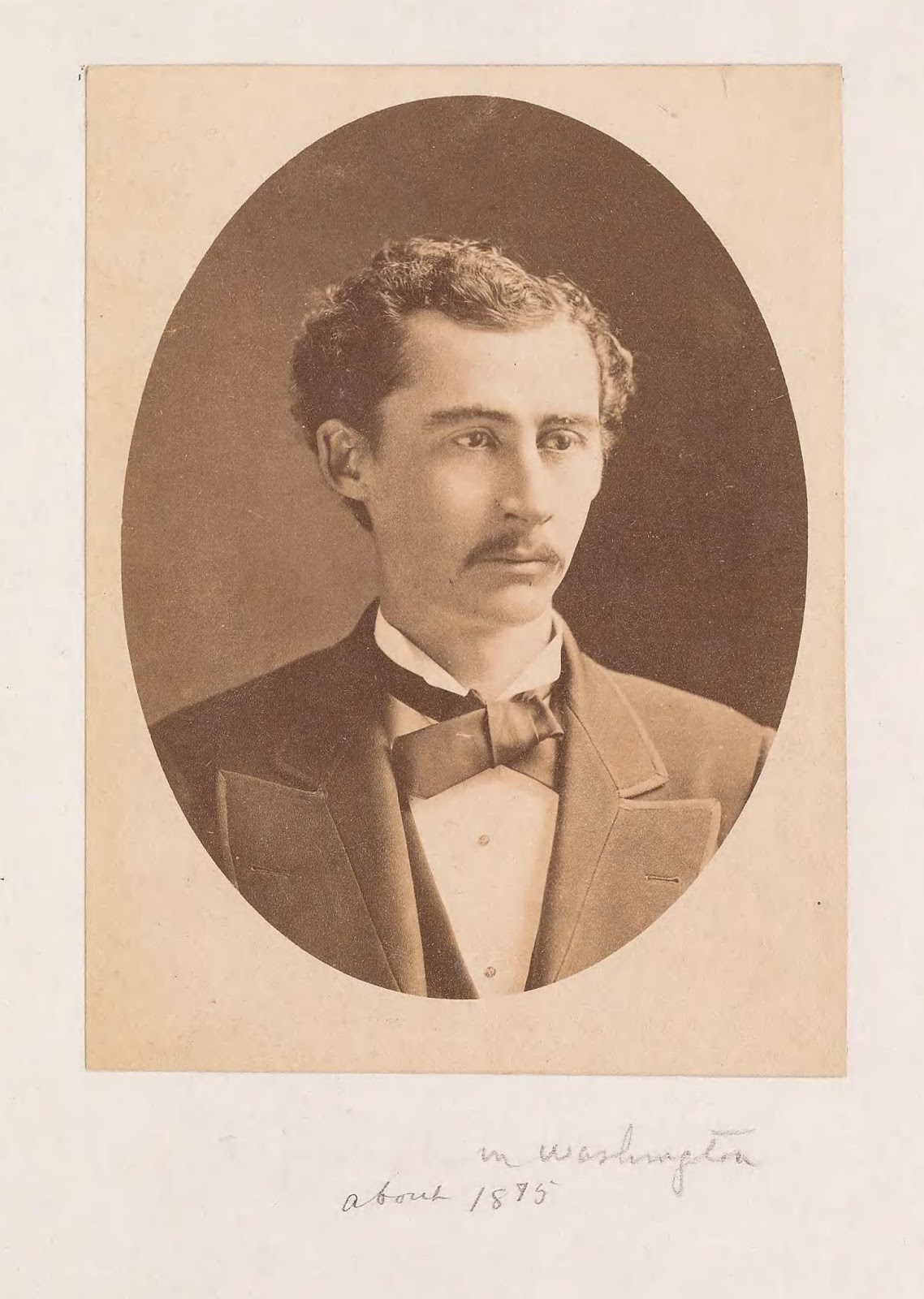
William Henry Holmes, about 1875. Random Records of a Lifetime. v. 1. http://www.biodiversitylibrary.org/page/52009570. Digitized by Smithsonian Libraries.

From November 28th through December 9th, BHL is joining the Smithsonian Libraries, Smithsonian Institution Archives, Smithsonian Field Book Project, and Smithsonian Transcription Center in hosting the #ManyHatsofHolmes transcription event. This event challenges volunteers around the world to help us transcribe William Henry Holmes’ archival materials. Learn more on the Smithsonian Libraries’ blog.

As the hashtag implies, William Henry Holmes (1846-1933) studied a variety of topics throughout his distinguished career, including anthropology, archaeology, art, and geology. He spent much of his career affiliated with the Smithsonian Institution. He studied art under Theodore Kauffman and went on to work as a scientific illustrator with Smithsonian staff. In 1872, he was appointed artist-topographer to the United States survey of the territories under Ferdinand V. Hayden and in 1874 was appointed assistant geologist. He went on to work with the United States Geological Survey (USGS) and the Bureau of American Ethnology (BAE) before returning to the Smithsonian’s United States National Museum (USNM). Holmes eventually became head curator of the Smithsonian Institution’s Department of Anthropology and Director of the National Gallery of Art.

Many of Holmes’ field notes and personal records have been digitized by Smithsonian Libraries and Smithsonian Institution Archives as part of The Field Book Project. These are available in BHL. In addition to these archival materials, BHL also holds a number of publications by Holmes.
View Full Size Image
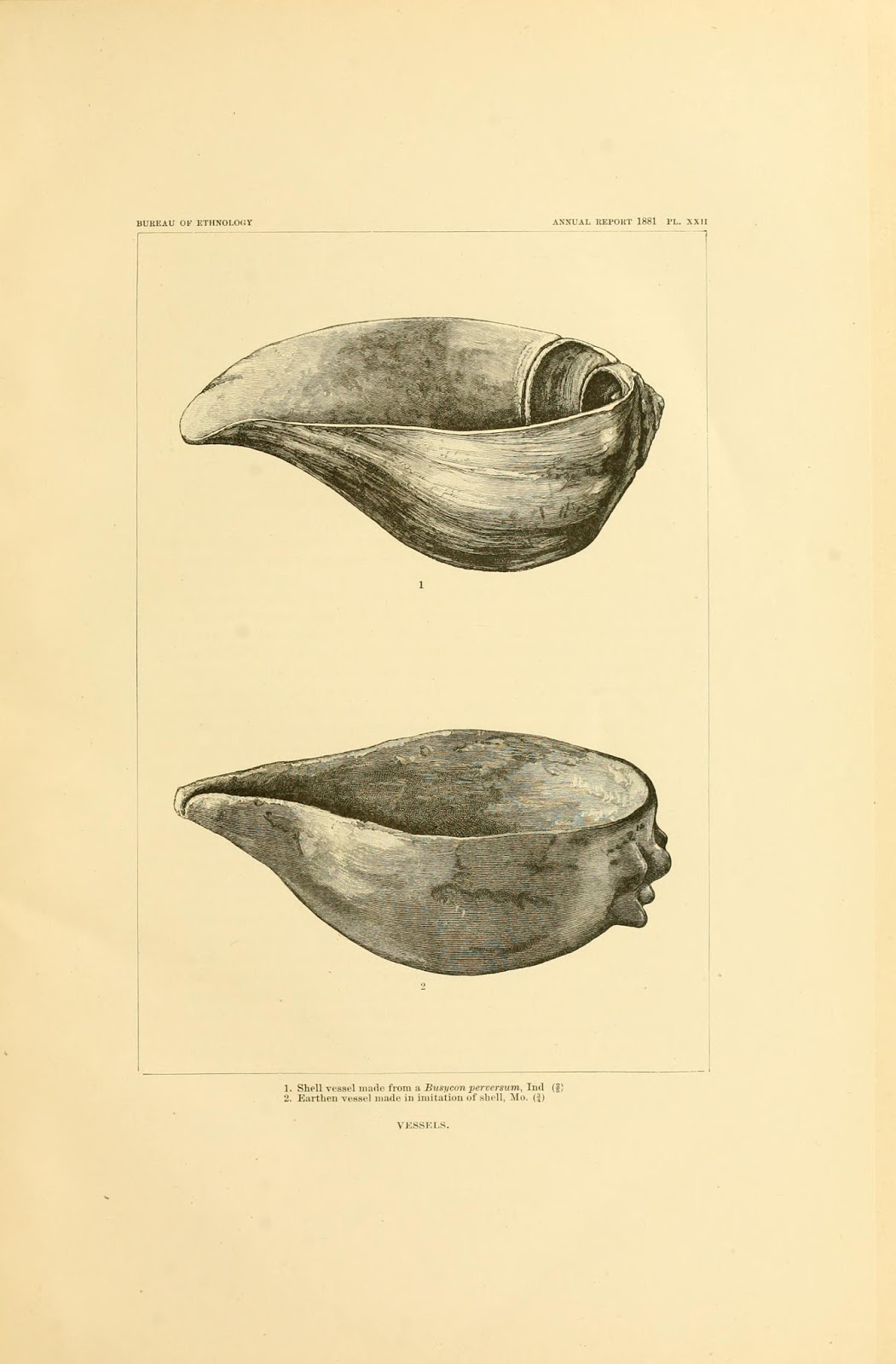
Top figure: Vessel made from a lightning whelk (Sinistrofulgur perversum) – synonym Busycon perversum – shell. Bottom figure: Earthen vessel made in imitation of a shell. Holmes, William Henry. Art in Shell of the Ancient Americans. 1883. http://biodiversitylibrary.org/page/11258636. Digitized by Smithsonian Libraries.

One of those publications is Art in Shell of the Ancient Americans, which was published in 1883 as part of the second annual report of the Bureau of Ethnology.

Holmes intended this publication to be a preliminary study of the ways in which Native Americans in the distant past used shells as a medium for artistic expression and how this artwork represents a phase in the evolution of human culture. It discusses the use of shells as implements, utensils, and objects of ornamentation (such as jewelry).

Most of the objects presented in the publication were obtained from graves and tumuli (ancient burial mounds), which explains how such delicate pieces survived throughout the centuries. But, while these pieces can be deemed ancient, Holmes did not have enough data to provide a reliable estimation of age.

At this point, you might be wondering why a book about shell art would be relevant for a biodiversity library and what bearing it might have on scientific research. The simple answer is that these shells are remnants of living creatures – mollusks that died long ago but still left behind a legacy in shell. However, Art in Shell has relevance for scientific research beyond this vague connection with the natural world.
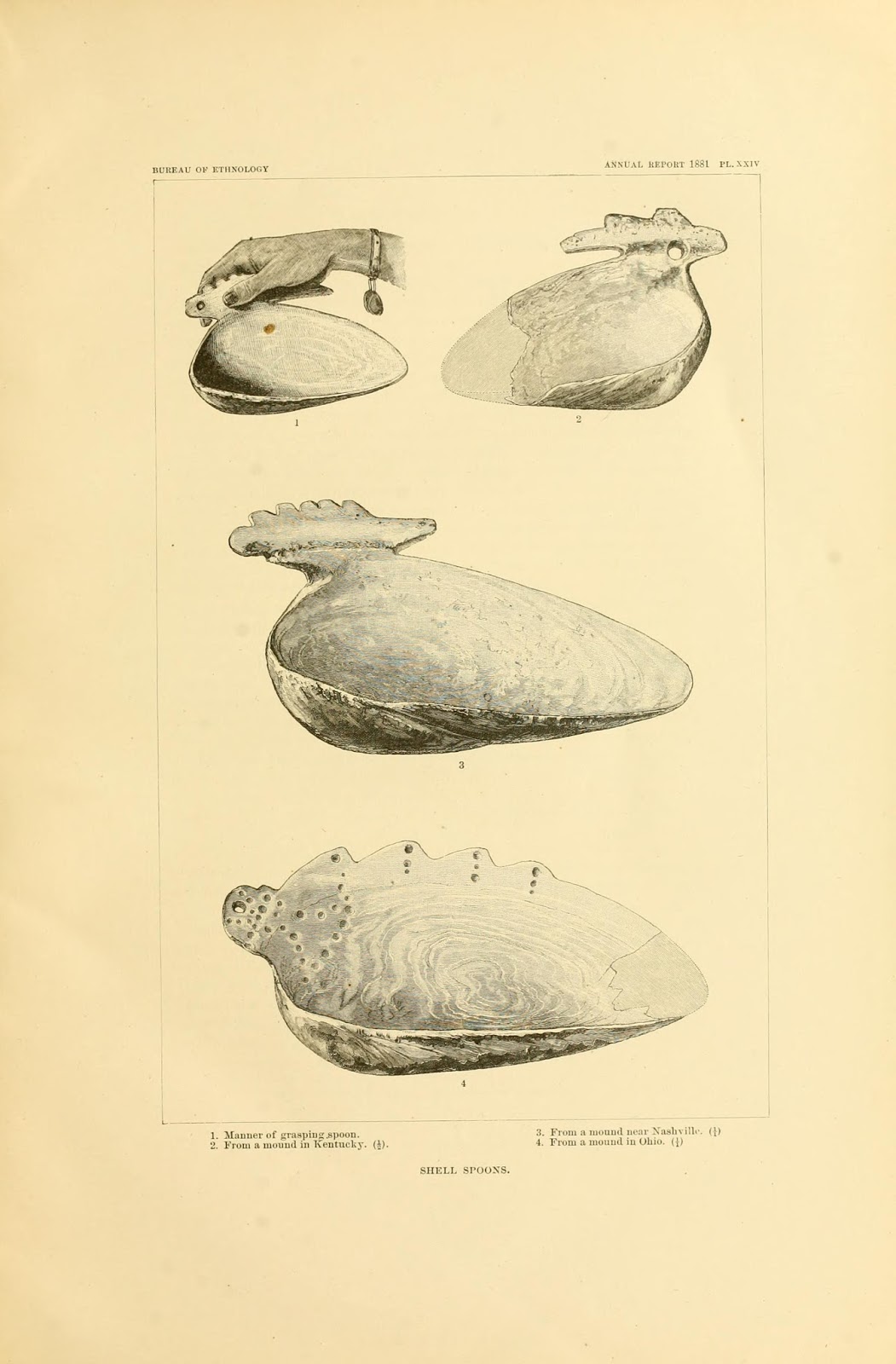
View Full Size Image
Shell spoons made from Lampsilis ovata (synonym Unio ovatus) – top and center – and Potamilus alatus (synonym Unio alatus) – bottom. Holmes, William Henry. Art in Shell of the Ancient Americans. 1883. http://www.biodiversitylibrary.org/page/11258608. Digitized by Smithsonian Libraries.

In the publication, Holmes attempts to identify the species (or most-specific taxa possible) to which the shell used for the object belongs. This information provides a valuable record of human interaction with various mollusk species and helps document the diversity of species present in ancient America. The presence of shells in various regions, when coupled with species distribution data that demonstrates the transport of these shells from their source, can also provide insight into historic Native American migration paths, tribal contacts, and trade.

Thus, this book is not just a book about art. It represents a beautiful union of art and science. And considering the many disciplinary hats that Holmes wore throughout his career, it’s no surprise that his publication would bridge these two worlds. Art in Shell is therefore not only a very fitting book to highlight as a representation of the union of Holmes’ many interests, but the insights it provides into Native American culture also make it particularly relevant this month as we celebrate Native American Heritage Month.
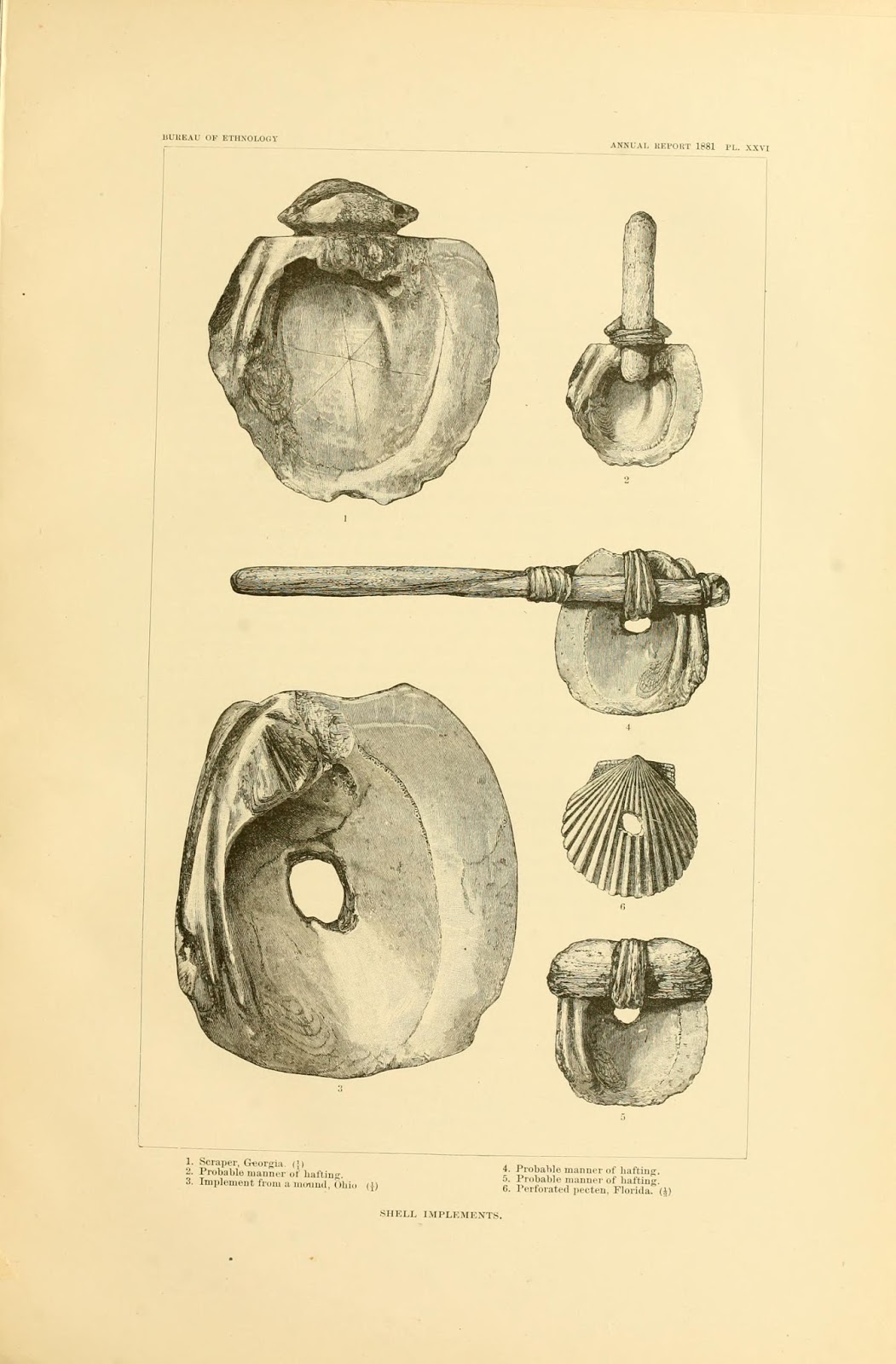
View Full Size Image
Implements made from Unio vericosus (figs. 1 and 2), Cyclonaias tuberculata (synonym Unio tuberculosus, figs. 3-5) and Pecten (fig. 6). Holmes, William Henry. Art in Shell of the Ancient Americans. 1883. http://www.biodiversitylibrary.org/page/11258618. Digitized by Smithsonian Libraries.

So, can we tie this publication back to the Random Records of a Lifetime series that is the subject of our #ManyHatsofHolmes transcription event? Holmes’ discussion about his work with shell art in these records seems to be fairly limited, but in his biographical sketch in volume I, Holmes does report that, “The years 1882-3-4 and 5 were devoted largely to Museum work and the study of primitive art in its various branches.” As Art in Shell was published in 1883, this account is likely a reference in part to his work on this publication (as well as the many others on ancient American art that he produced during this time period).

As you participate in the challenge, can you find additional references in the Random Records that can be linked back to Art in Shell? If you do, share them on social media with #ManyHatsofHolmes.

Additionally, if you need a break from transcription or want another challenge, try taxon tagging the illustrations from Holmes’ Art in Shell on Flickr. By tagging the shell art with the taxonomic name of the species to which the shell belongs, you can help researchers more easily discover which species ancient Americans were using to create these objects. Learn more about taxon tagging in this article and see our detailed instructions here. Find the Art in Shell images in Flickr here.

See this video for basic instructions on how to tag the illustrations in Art in Shell:

Holmes was truly a man of many trades and talents. As you dig deeper into his work during the #ManyHatsofHolmes event, be sure to share your findings on social media with the hashtag. Thanks so much for participating in our Holmes extravaganza!
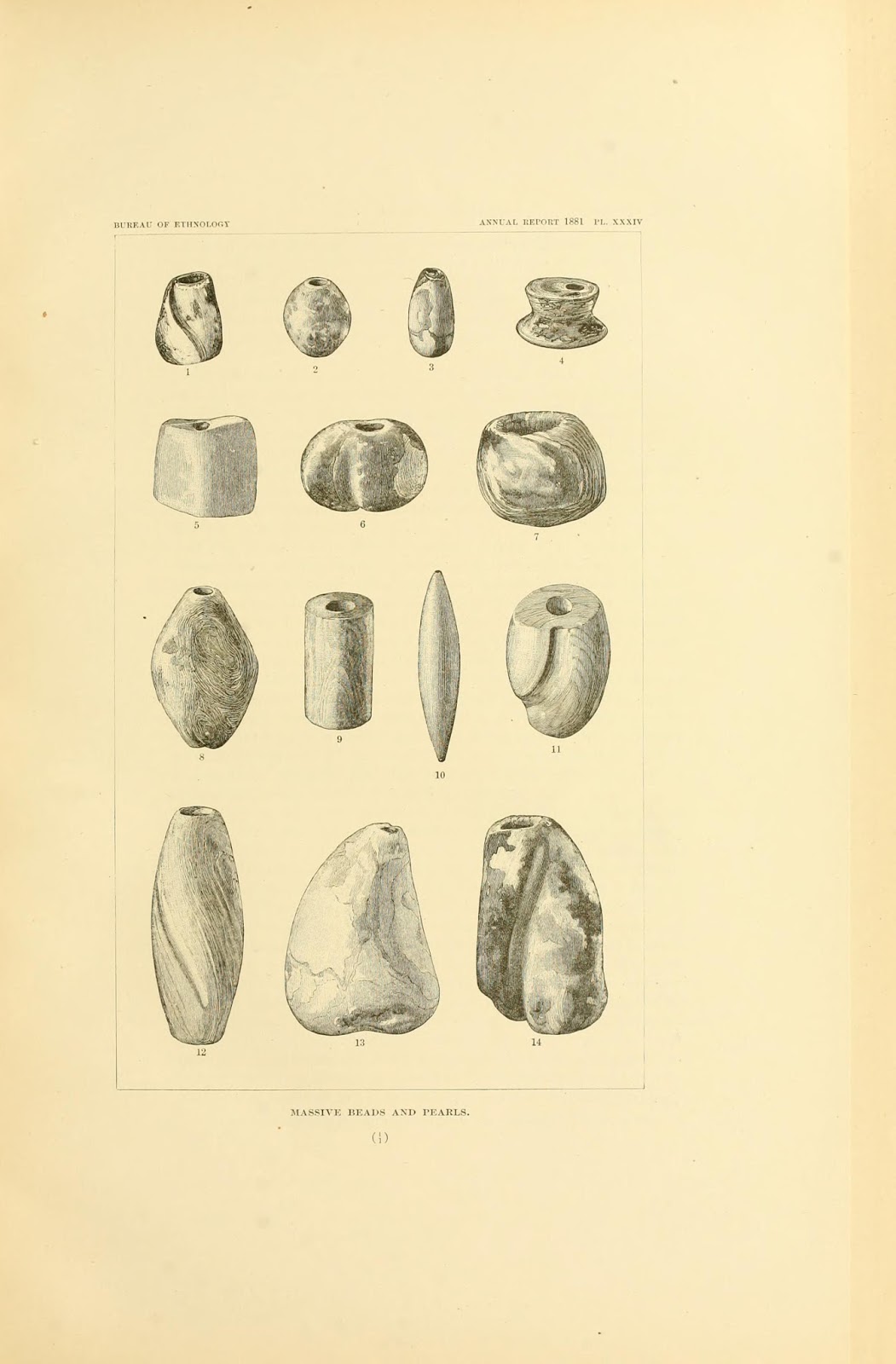
View Full Size Image
Beads and pearls. Figs. 1, 7, 12, and 9: Sinistrofulgur perversum (synonym Busycon perversum); Fig. 2: Crassadoma gigantea (synonym Hinnites giganteus); Fig. 3 and 13: pearls, latter from Haliotis californianus; Fig. 4: unknown univalve; Fig. 5: ivory?; Figs. 6 and 11: unknown dextral whorled shell; Fig. 14: Strombus or Busycon. Holmes, William Henry. Art in Shell of the Ancient Americans. 1883. http://www.biodiversitylibrary.org/page/11258675. Digitized by Smithsonian Libraries.
November 30, 2016by Grace Costantino
BHL News, Blog Reel

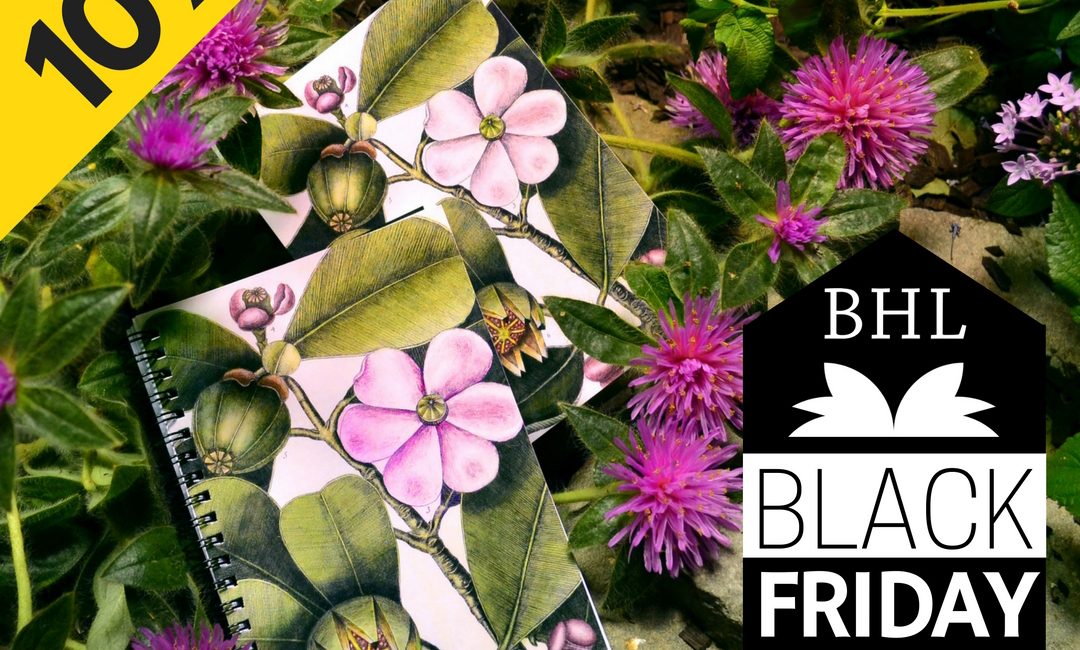
Black Friday Sale Nov. 23-27! Save 10% Off in the BHL Store

Are you planning to do some shopping for Black Friday? Do you want your purchase to make an impact on biodiversity conservation and research?

Then the BHL Black Friday Sale is perfect for you!

View Full Size Image
Save 10% off select products in the BHL store for our Black Friday Sale. 100% of the proceeds will be used to digitize more books for BHL. Hurry! Sale ends Sunday, Nov. 27.
SHOP NOW!

From November 23-27, save 10% off select products in the BHL store. In our Black Friday Sale Collection, you’ll find notebooks, greeting cards, mugs, home decor, and more great items featuring beautiful scientific illustrations from the BHL collection.

Visit the Black Friday Sale Collection and start shopping today!

Not only are these products 10% off for our sale, but 100% of the proceeds will be used to digitize more books for BHL. Researchers around the world rely on the information contained in books and archival materials to study and conserve biodiversity. Learn more about how BHL helps save biodiversity and how your purchase can have a lasting, positive impact on our planet.

View Full Size Image
You’ll find this badge in our store and on all of our marketing materials. It means that your purchase will help support research around the world. SHOP TODAY and help save biodiversity!

Shop today to find that perfect gift and help support biodiversity research around the world! Hurry! The sale ends Sunday!

November 23, 2016by Grace Costantino
Blog Reel, User Stories

Cetaceans and Cephalopods: Supporting the Work of Collections Managers One Specimen at a Time

Have you ever been to a museum and wondered about the history of the specimens on display?

If you have, then you’d probably be interested in talking to the museum’s collections managers, as their jobs include not only caring for and improving accessibility to the collections, but also serving as a living knowledge repository for information about the history of the collections.

View Full Size Image
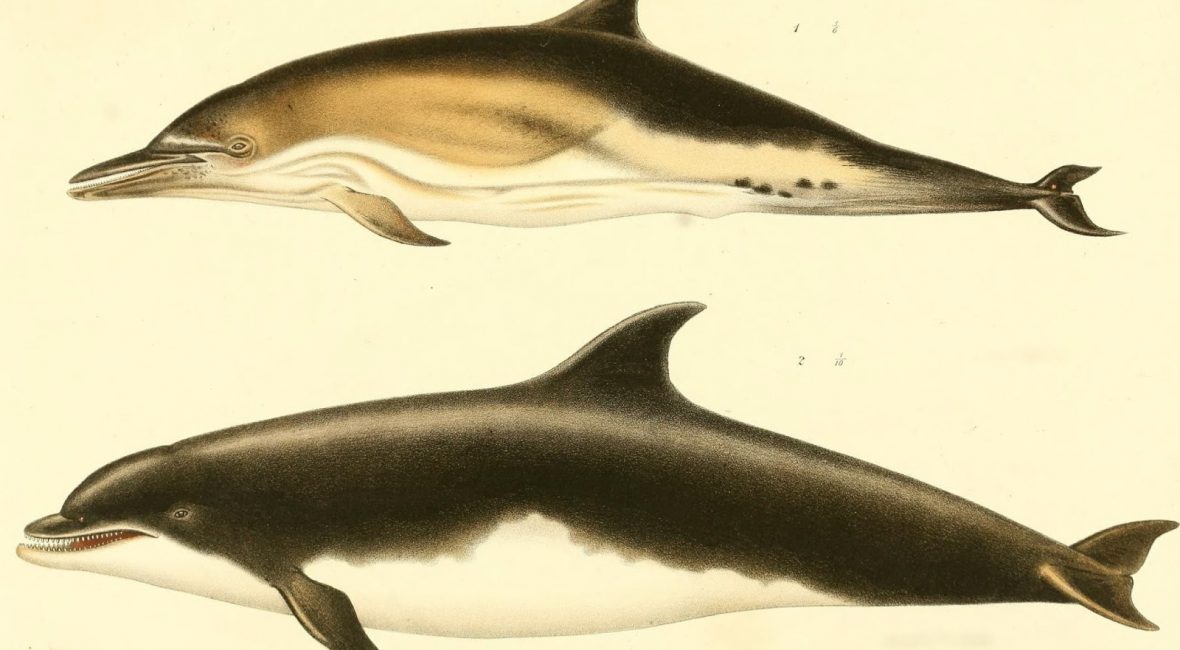
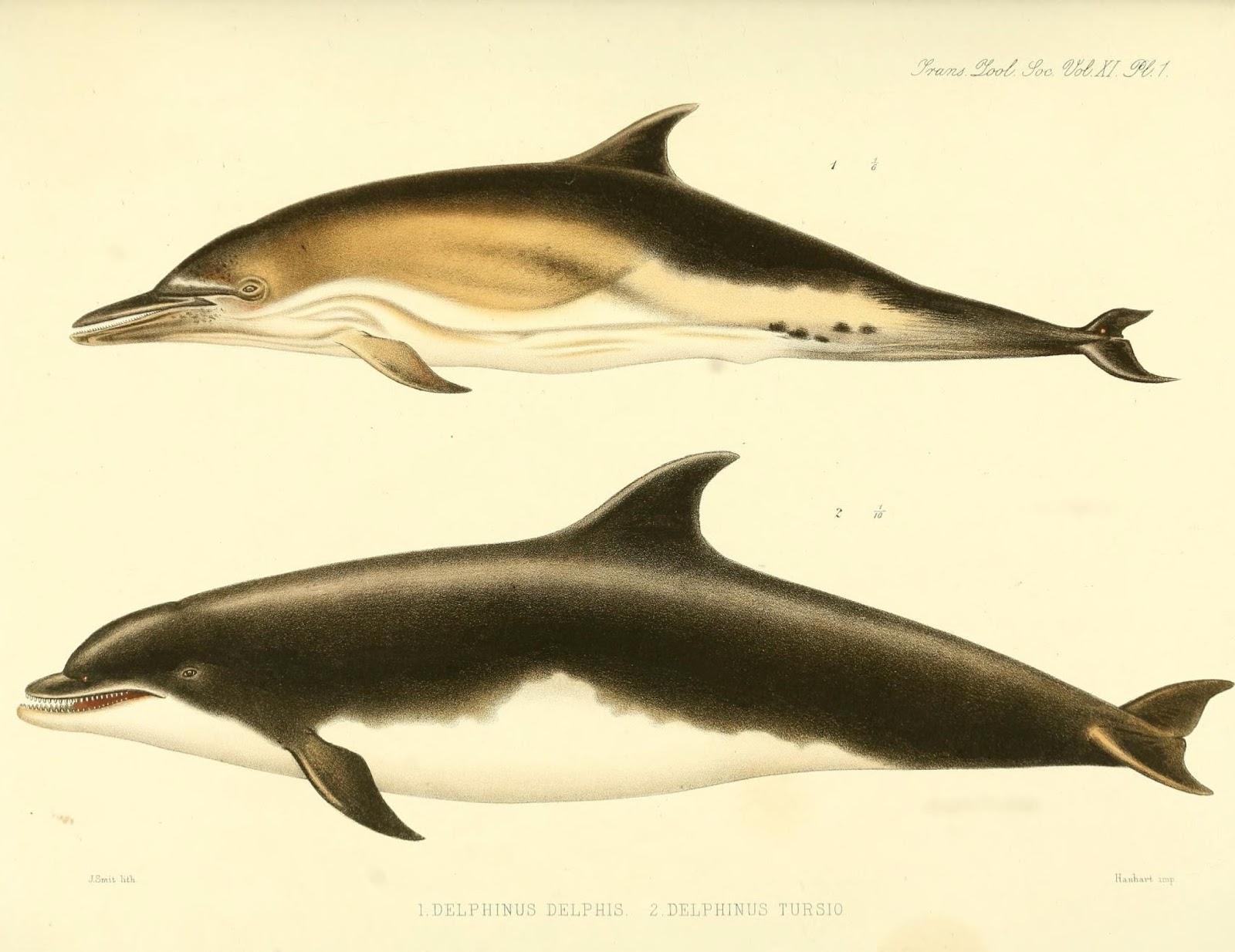
William Flower’s drawing of the bottlenose dolphin (lower). The skeleton from this individual is on display in the Oxford University Museum of Natural History. Flower, W. H. (1880), I. On the External Characters of two Species of British Dolphins (Delphinus delphis, Linn., and Delphinus tursio, Fabr.). The Transactions of the Zoological Society of London, 11: no 1. Digitized by the Natural History Museum, London. http://www.biodiversitylibrary.org/page/28725656.

Take the Oxford University Museum of Natural History, for example. Amongst the many treasures on display in that museum are five whale skeletons suspended from the roof. Where did those specimens come from? Mark Carnall, Collections Manager for the Life Collections at the museum, knows that these specimens are linked to some very prestigious individuals in the world of ‘whaleologists’, including Daniel Frederick Eschricht and William Henry Flower. Curious? Learn more in Mark’s blog post for More than a Dodo.

View Full Size Image
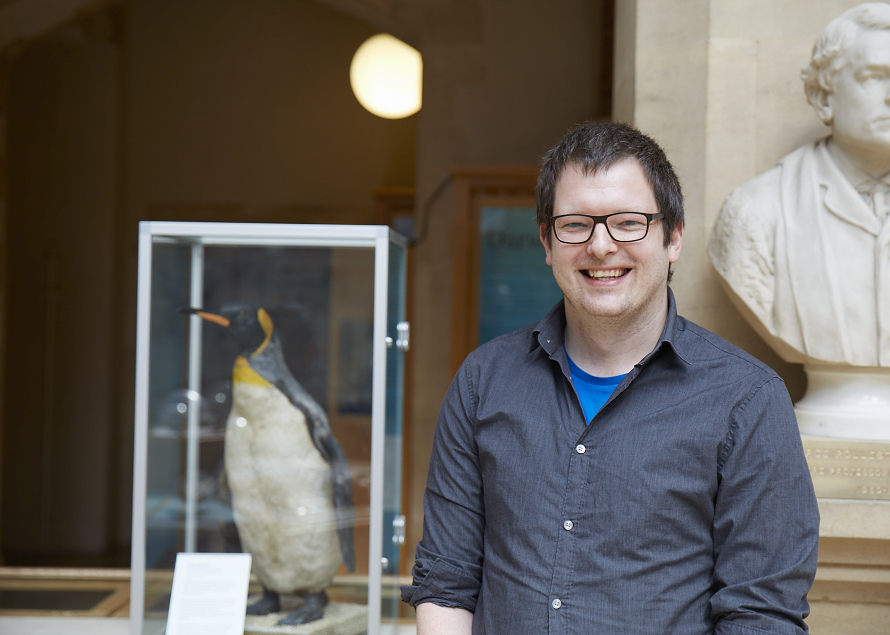
Mark Carnall. Image by John Cardwell courtesy Oxford University Museum of Natural History.

As a collections manager for the Oxford University Museum of Natural History, and during his tenure at other major UK museums, Mark has spent a great deal of time researching the history of the specimens in his care. BHL plays an important role in this research.

“Having worked at some of the older UK natural history museums, including the Grant Museum of Zoology at University College London, the Natural History Museum London and currently the Oxford University Museum of Natural History, I’ve been very fortunate in that some of the early references to the specimens that I curate are ‘THE’ original works when it comes to unravelling the physiology, taxonomy and ecology of major groups of animals, and it is rare that these aren’t already on BHL,” says Mark.


View Full Size Image
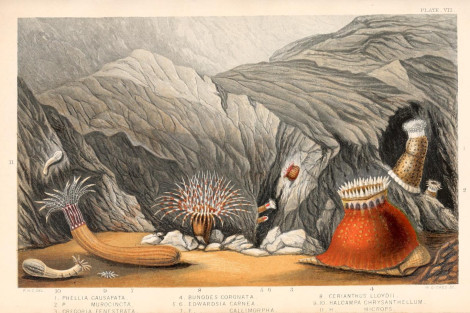
British Sea-Anemones, showing many of the species in the Oxford University Museum of Natural History series. Gosse, Philip Henry. Actinologia britannica (1860). Digitized by Smithsonian Libraries. http://biodiversitylibrary.org/page/12042290.

Mark first discovered BHL when looking for references and citations for specimens during his time at University College London. Today, he uses BHL about once a week as part of his research to answer inquiries about the museum’s collections. This research can be very time-intensive, and thus having online access to relevant publications is very important.

“As a collections manager, my role is dictated by priorities in improving accessibility to the collections, so often there isn’t much time for going in to depth with the history of specimens,” explains Mark. “Some specimens could be researched for weeks or months; however, with easy access to biodiversity heritage publications through BHL, it means that I can do some of this research on the fly rather than earmark it to return to later.”

In addition to discovering publications as part of his research process, Mark also discovers additional content of personal interest through BHL’s social media activities.

“One of my favourite features of BHL is the ‘curated content’ such as the blog posts that BHL users and staff write about discoveries or fascinatingly esoteric publications,” says Mark. “I am also a huge fan of the Flickr sets. As a collections manager, I’m always thinking about how people can access our specimens and content. A dry item by item database is fine for people who know what they are specifically looking for, but it doesn’t facilitate browsing such a vast amount of content or expose people to new knowledge or information. I’ve spent more than a few evenings starting by browsing a Flickr album I’ve been directed to by a BHL blog and ending up reading papers completely unrelated because making those fluid connections is so easy. The BHL social media team is also fantastic at raising awareness about the latest content on BHL. Additionally, I really appreciate that it’s clear how to reuse and credit resources, be it from reusing an image on Twitter to a bibliographic reference.”

When it comes to favorite content, Mark has a soft spot for the cephalopod material.

“I’m a huge cephalopod nerd,” admits Mark. “For such an interesting group there’s actually a paucity of published material. Browsing through BHL images, however, I’ve gone from sea monsters to beautifully illustrated plates (see for yourself), which I would have otherwise not stumbled upon or overlooked in the hunt for a taxon description.”


View Full Size Image
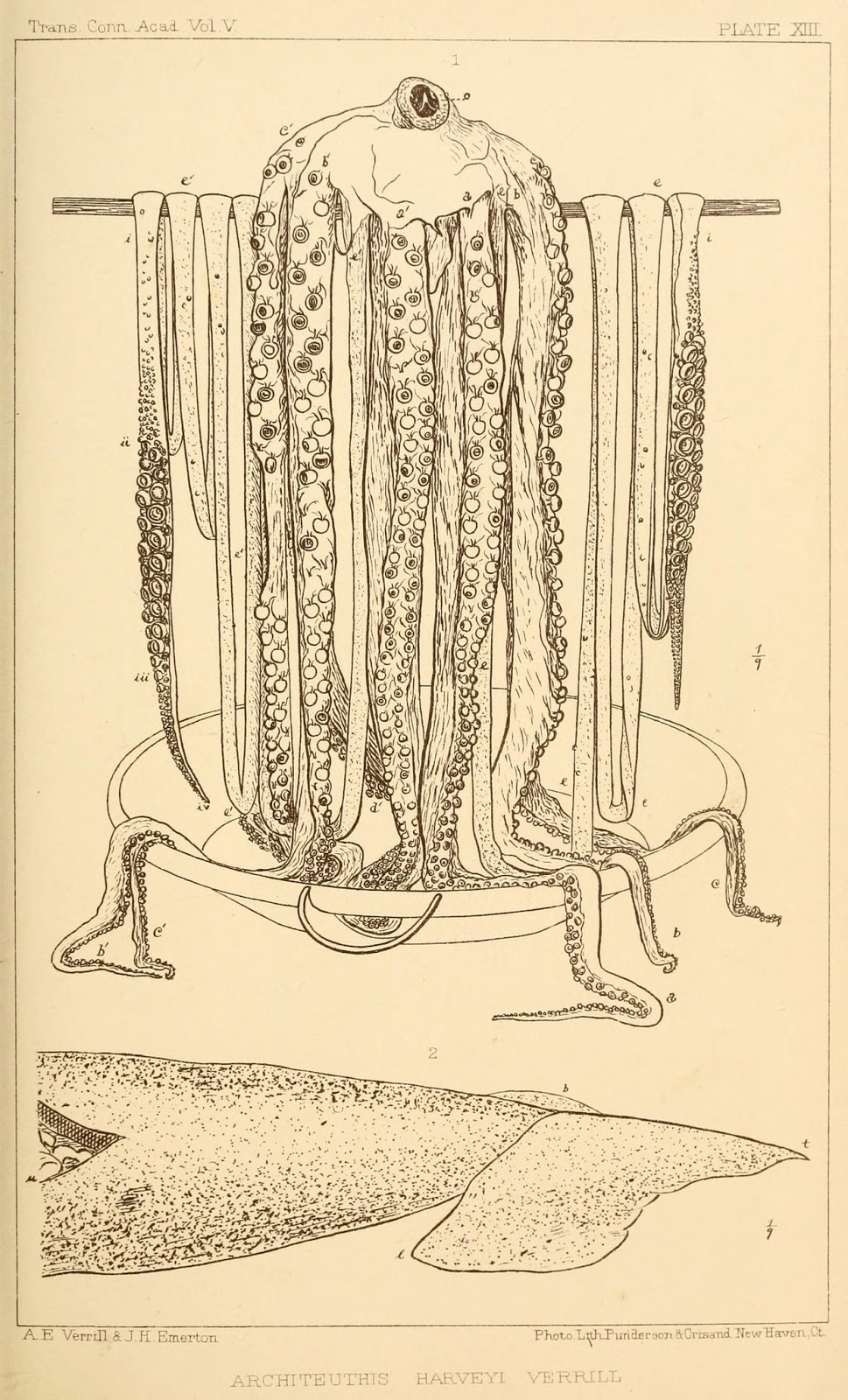
The rather sad-looking but earliest bona fide remains of a giant squid. Verrill, A.E. The cephalopods of the north-eastern coast of America. (1879-1881). Digitized by MBLWHOI Library. http://www.biodiversitylibrary.org/page/11826545.

Currently, his favorite item on BHL is the poem Spirula spirula by C. W. Johnson in the Nautilus (1926). According to Mark, “It’s a quirky (but accurate at the time) poem about the ram’s horn squid and formally captures a geekery and whimsy that you just don’t see as much in modern formal science publishing.”

While the historic collections and curated content on BHL are extremely valuable to Mark, he would love to see the amount of content from the mid-twentieth century expanded. This content, especially that from the 1930s-1970s, can be extremely difficult to access but can contain very valuable information for research.

You can help us obtain permission to include this content in BHL! If you or an organization you work with owns the copyright to a biodiversity-related publication, you can help us broker permission to digitize the work. Learn more on our website.

So, the next time you’re at a museum, take a moment to think about the history of the specimens on display and the people who work so hard to care for and preserve knowledge about those pieces. And just maybe, indulge your curiosity by searching for some related publications or browsing related images in BHL. You never know what kind of history you might dig up.

______________________________________

This post may contain the personal opinions of BHL users or affiliated staff and does not necessarily represent the official Biodiversity Heritage Library (BHL) position on these matters.

November 10, 2016by Grace Costantino
BHL News, Blog Reel

BHL Recognized for Award at the DLF Forum

View Full Size Image
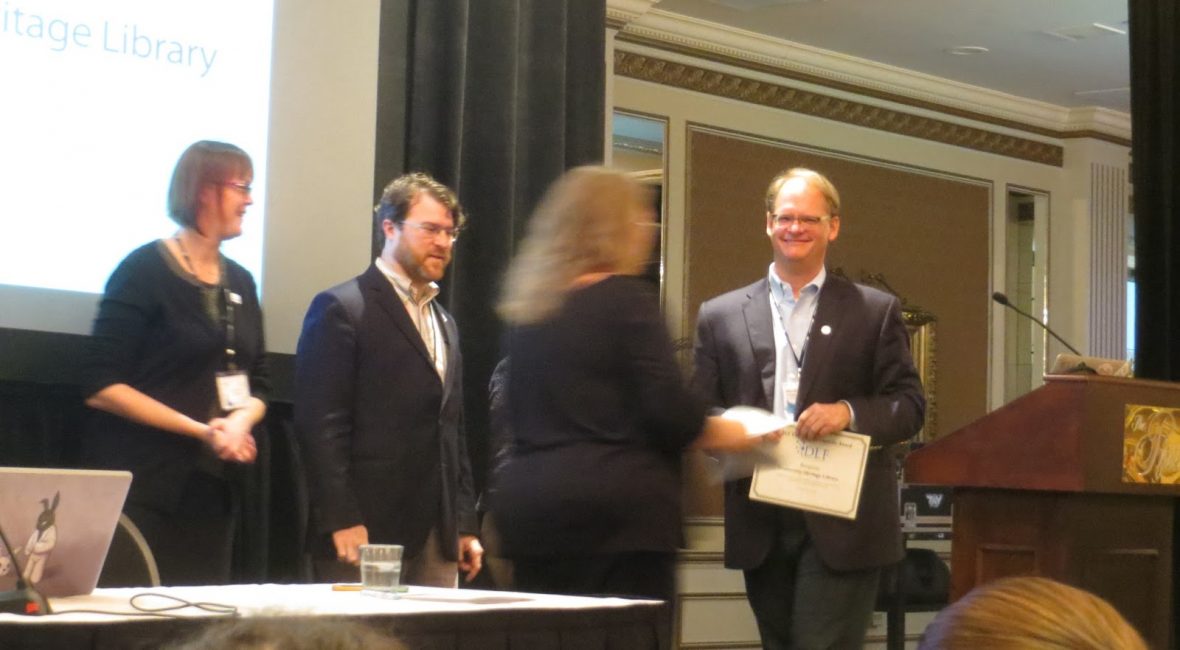
BHL Program Director Martin R. Kalfatovic accepts the Community/Capacity Award on behalf of the BHL consortium at the 2016 DLF Forum in Milwaukee, Wisconsin.

During an award ceremony at the Digital Library Federation (DLF) Forum in Milwaukee, Wisconsin on November 7, the Biodiversity Heritage Library was recognized as a co-recipient of the inaugural DLF Community/Capacity award, along with the American Archive of Public Broadcasting.

The Community/Capacity Award honors cross-institutional collaboration and constructive, community-minded capacity building in digital libraries, archives, and museums. During the month of June, DLF member organizations voted on an impressive list of 16 nominees to determine the award winner. In a tie-vote, the DLF community selected BHL and AAPB as the first-ever winners of the Community/Capacity Award.

The Biodiversity Heritage Library collaborates to build and maximize capacity across its international consortium of over 30 institutions in order to provide free and open online access to library collections from around the world. This highly collaborative approach serves BHL’s users with a constantly growing collection of open access biodiversity literature, including materials often physically available in limited locations throughout the world.

The DLF Community/Capacity Award celebrates BHL’s commitment to collaboration, openness, and community spirit, which has transformed the way researchers around the world access biodiversity information. As former Smithsonian Secretary G. Wayne Clough stated in Best of Both Worlds, BHL is “an impressive example of what can be accomplished by digitization of library resources through a collaborative approach.”

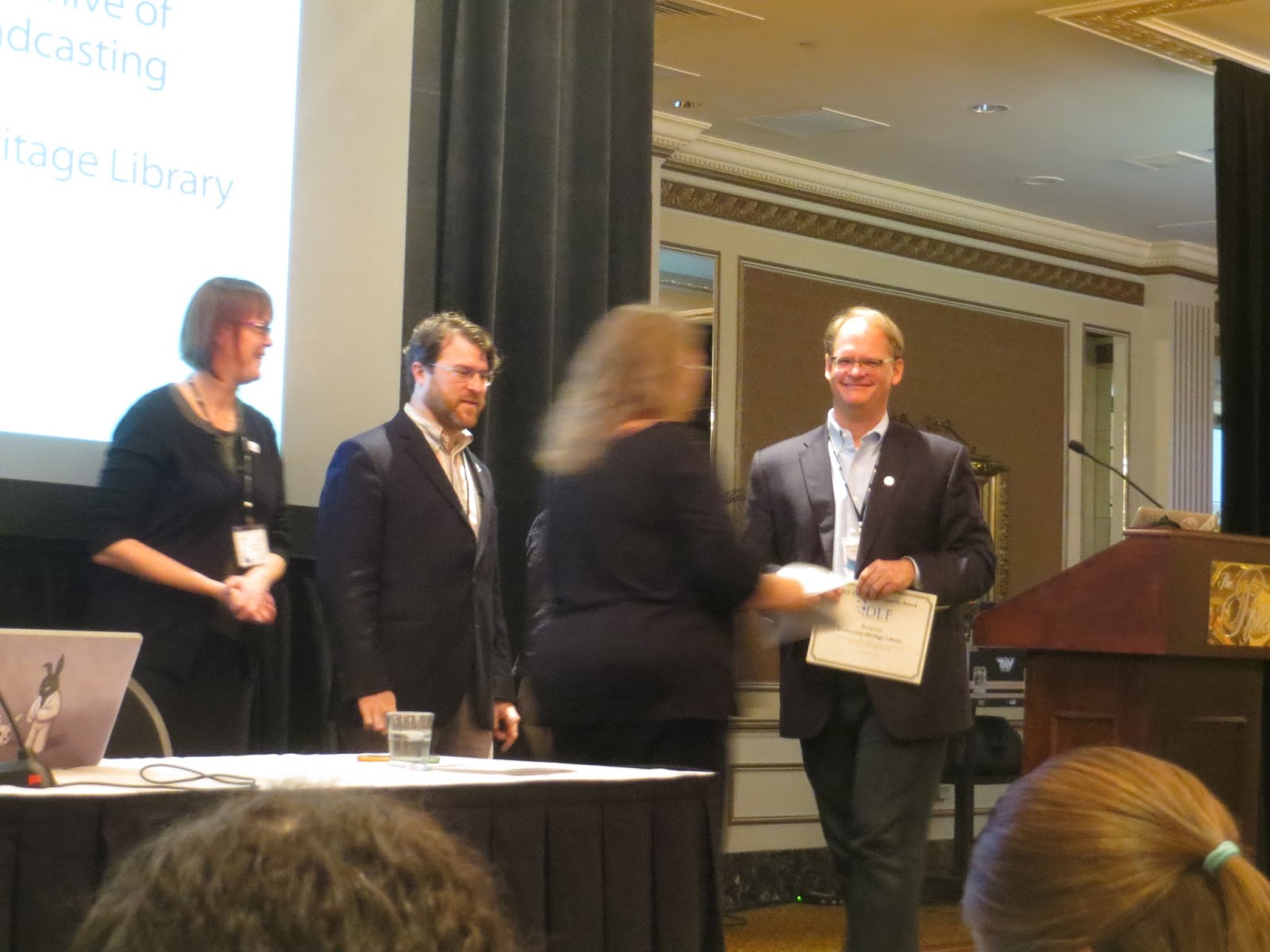
Joining BHL Program Director Martin R. Kalfatovic on stage to accept the award from DLF Director Bethany Nowviskie were BHL Member representative Kelli Trei (University of Illinois, Urbana-Champaign), and Jacqueline Chapman and Joel Richard from Smithsonian Libraries. Additional representatives from BHL included Anne Kenney (University Librarian, Cornell University Library), Keri Thompson (Smithsonian Libraries), and Karl Blumenthal (Internet Archive).

Congrats to the @BioDivLibrary! Unlocking knowledge in Special libraries to share with the world. #DLFforum pic.twitter.com/UKmkqTlr6e

— talytr (@tltroup) November 7, 2016

We are honored to have received this award along with the American Archive of Public Broadcasting. We would like to thank the DLF community for selecting BHL as a co-recipient of the award and to especially recognize the contributions of each and every one of our consortium partners whose dedication, support, and unwavering commitment make BHL a reality.

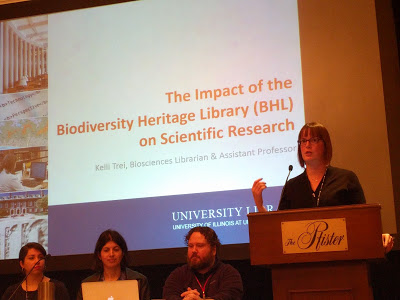
The 2016 DLF Forum also included a presentation by Trei, “The Impact of the Biodiversity Heritage Library on Scientific Research.” The presentation details a study evaluating the scientific impact of the digital Biodiversity Heritage Library (BHL) through topic modeling and analysis of a series of interviews with scientific researchers featured in a BHL blog.

View Full Size Image
Kelli Trei, BHL Member representative, University of Illinois, Urbana-Champaign, presenting at the 2016 DLF Forum on “The Impact of the Biodiversity Heritage Library on Scientific Research.”


November 9, 2016by Grace Costantino
Blog Reel, Campaigns, Featured Books, Page Frights

Bishops in the Sea for Halloween!

View Full Size Image
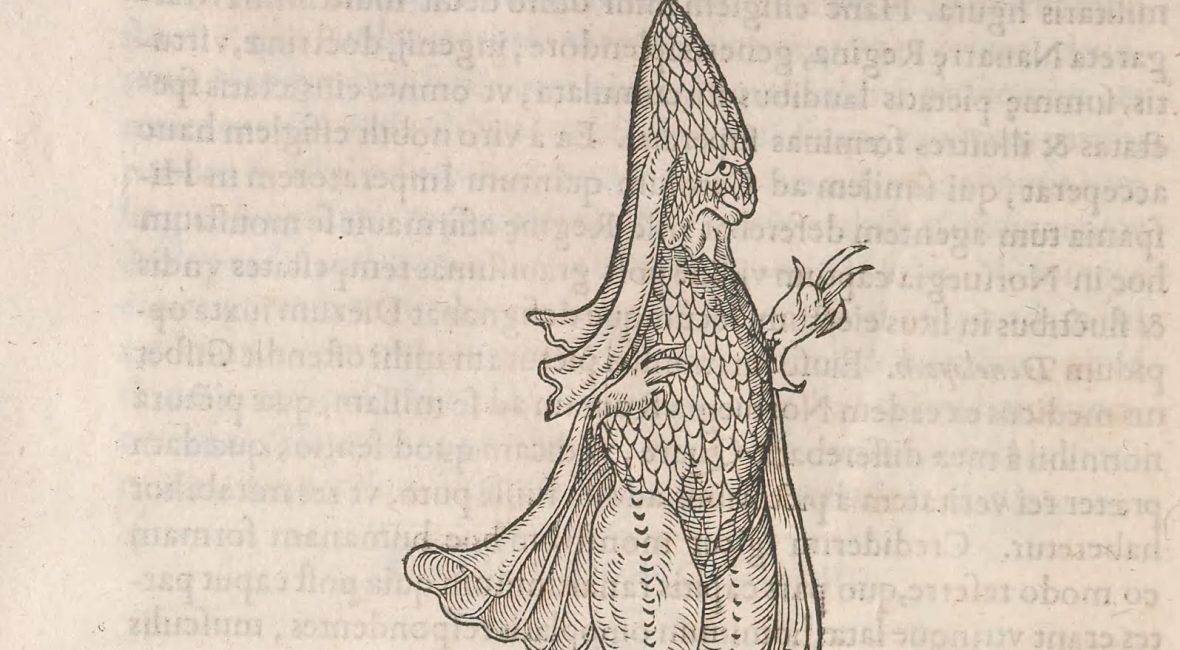
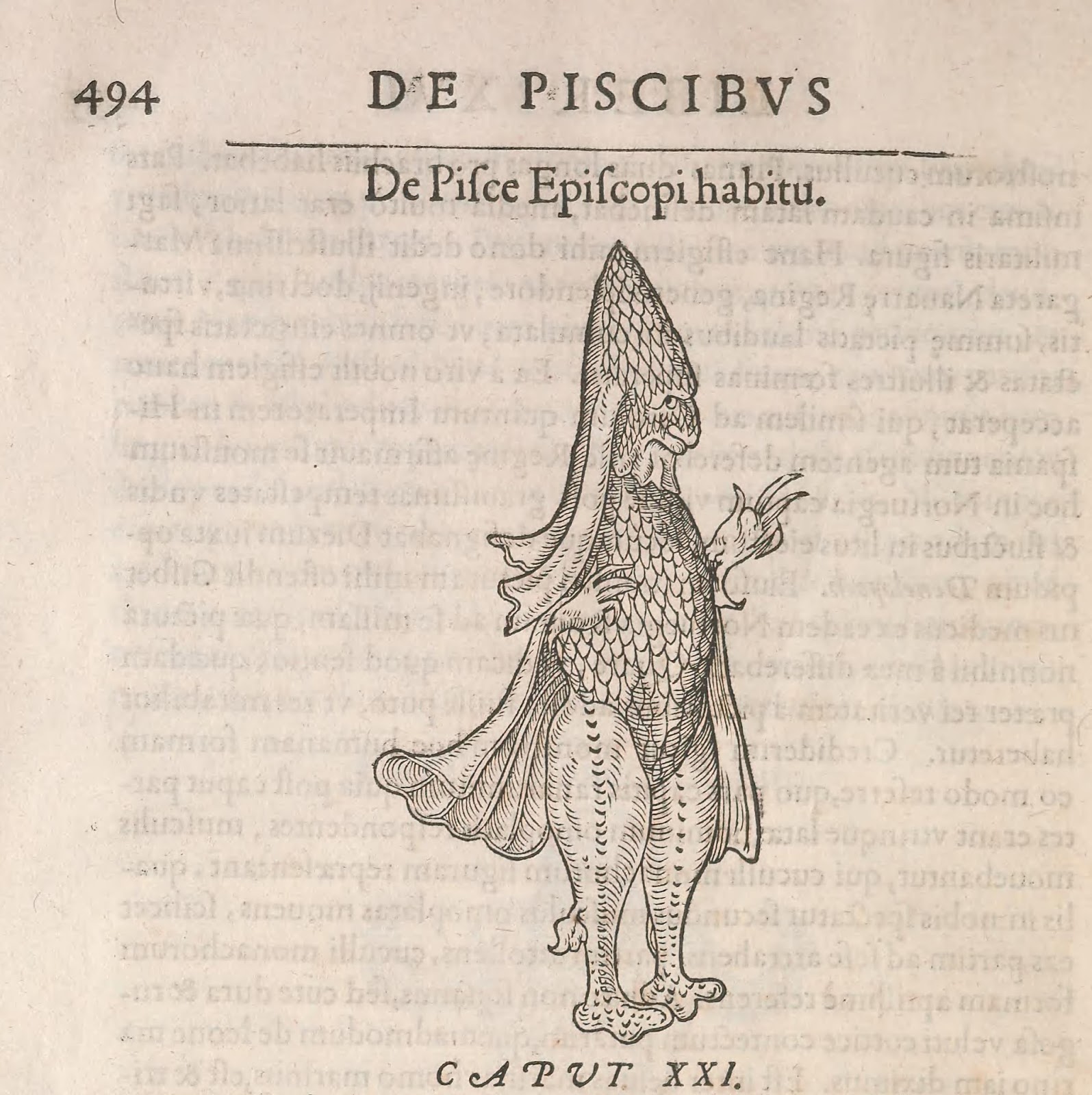
The ‘bishop fish’. Rondelet, Guillaume. Libri de Piscibus Marinis. 1554. http://biodiversitylibrary.org/page/42089973. Digitized by Smithsonian Libraries.

Apparently, clergymen in the 16th century had a lot of extra time on their hands to masquerade as sea monsters and make their marks on the annals of natural history as sea monks and bishop fish.

All this month, we’ve been exploring curious creatures in natural history as part of Page Frights. Today being Halloween, we thought we’d continue the fun by highlighting another “clergyman monster in disguise,” the bishop fish!

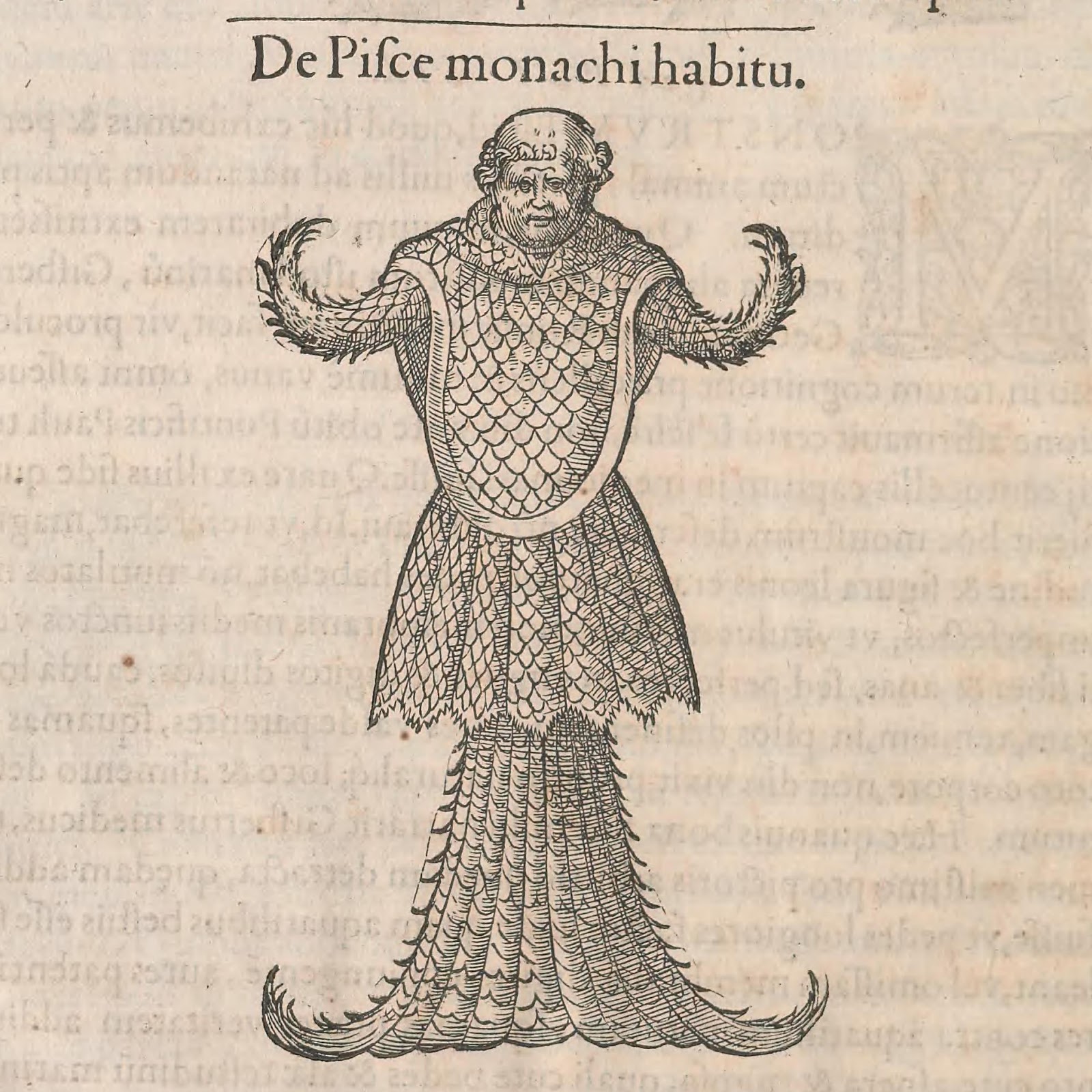
Earlier this month, we highlighted the ‘sea monk,’ or Piscis monachi habitu (“Fish with the habit of a monk”), a specimen of which was reportedly caught in the seas between Sweden and Denmark in the 1540s. The creature was said to resemble a monk, with “a human head and face, resembling in appearance the men with shorn heads.” The sea monk made its way into many natural history books of the era, including Belon’s De Aquatilibus (1553), Rondelet’s Libri de Piscibus Marinis (1554), and Gessner’s Historia Animalium (1558).

View Full Size Image
Piscis monachi habitu, “fish with the habit of a monk”. Rondelet, Guillaume. Libri de Piscibus Marinis. 1554. http://biodiversitylibrary.org/page/42089971. Digitized by Smithsonian Libraries.

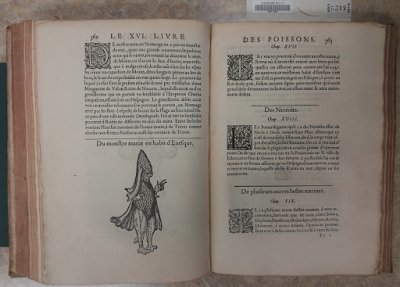
Rondelet and Gessner also depict another similar monster: the ‘bishop fish’ or “monstre marin en habit d’évêque.” The monster was said to have two projections resembling claws in place of pectoral fins, tail fins resembling legs, and a projection resembling a bishop’s miter on its head. In his Libri de Piscibus Marinis, Rondelet writes that,

“I have seen a portrait of another sea-monster at Rome, whither it had been sent with letters that affirmed for certain that in 1531 one had seen this monster in a bishop’s garb, as here portrayed, in Poland. Carried to the king of that country, it made certain signs that it had a great desire to return to the sea. Being taken thither it threw itself instantly into the water” (translation David Starr Jordan)

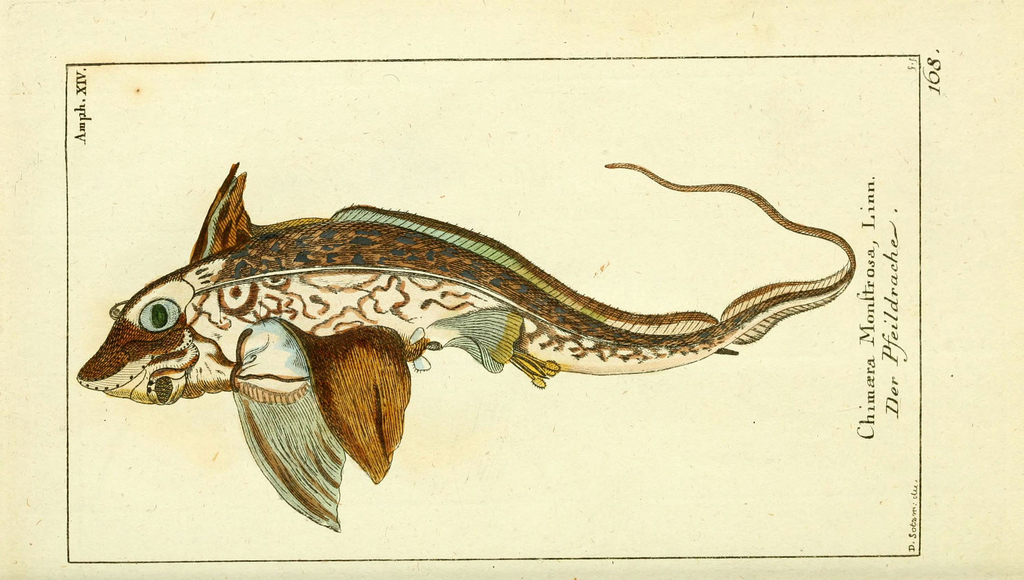
Some researchers have postulated, as with the monk fish, that legends of the bishop fish may have been inspired by giant squids. In v. 5 of his General Zoology, George Shaw suggested that the northern chimaera (Chimaera monstrosa) may have been responsible for the myth. He writes,

“I have sometimes found it not improbable that the Bishop-Fish, described and figured in the works of Rondeletius, may have taken its rise from distorted preparations of the upper part of this animal, with the addition of some other articles to form the lower part.”

View Full Size Image
Could Chimaera monstrosa have been the inspiration for the bishop fish? Borowski, Georg Heinrich. Gemeinnüzzige Naturgeschichte des Thierreichs. Bd. 4, plates (1783). http://biodiversitylibrary.org/page/28346493. Digitized by Smithsonian Libraries.

Rondelet’s Libri de Piscibus Marinis (literally “Book of Marine Fish”) described nearly 250 marine animals, including fish, whales, marine invertebrates, and seals (all of which were referred to as fish), and was the standard ichthyological reference work for over a century. Given the importance of this title, it is not surprising that the legend of the bishop fish was perpetuated throughout many future natural history publications.

View Full Size Image
Bishop fish in the Canadian Museum of Nature’s copy of the French edition (1558, Histoire Entière des Poissons) of Rondelet’s Libri de Piscibus Marinis. This copy will be digitized for BHL.

BHL’s first Canadian partner, the Canadian Museum of Nature, holds the French edition (1558) of Rondelet’s Libri de Piscibus Marinis, which will be digitized for inclusion in BHL. Roberto Lima, Acquisitions and Cataloguing Officer in the museum’s library, provides some insight on the publication and the museum’s copy.

“The exact provenance of our copy of Rondelet’s Histoire entière des poissons is as intriguing as the depicted bishop fish itself, which makes it even more relevant for Halloween! We believe we acquired it through inheritance from the Geological Survey of Canada, the country’s oldest scientific agency. The copy still shows the now dissolved National Museums of Canada Library stamp, which reflects both the item’s as well as the Canadian Museum of Nature’s history within the Government of Canada. Mysterious as it may be as far as its actual origin goes, the presence of this item in the GSC collections is no surprise if one considers the importance of this publication. This is also why this book is on our priority list for digitisation in the context of the Biodiversity Heritage Library. It is appealing to think that this 1558 French translation will rejoin its 1554-5 Latin counterpart in the BHL’s digital space, similar to what happened during the XVI century when both works saw the light of the day in the print world.”

We too look forward to comparing the different versions of these works, and the curious creatures they depict, in BHL’s digital space. You can subscribe to BHL’s RSS feed of recent additions to be notified when this and other interesting titles are added to BHL.

So, as you don your Halloween costumes today, give a thought to the mysterious clerical sea monsters of bygone centuries. Perhaps the clergymen of the era had an affinity for costumes as well…. 😉

Happy Halloween!

October 31, 2016by Grace Costantino
Blog Reel, Campaigns, Featured Books, Page Frights

Arachnophobes Beware! The Birth of Spider Nomenclature Just in Time for Halloween!

View Full Size Image
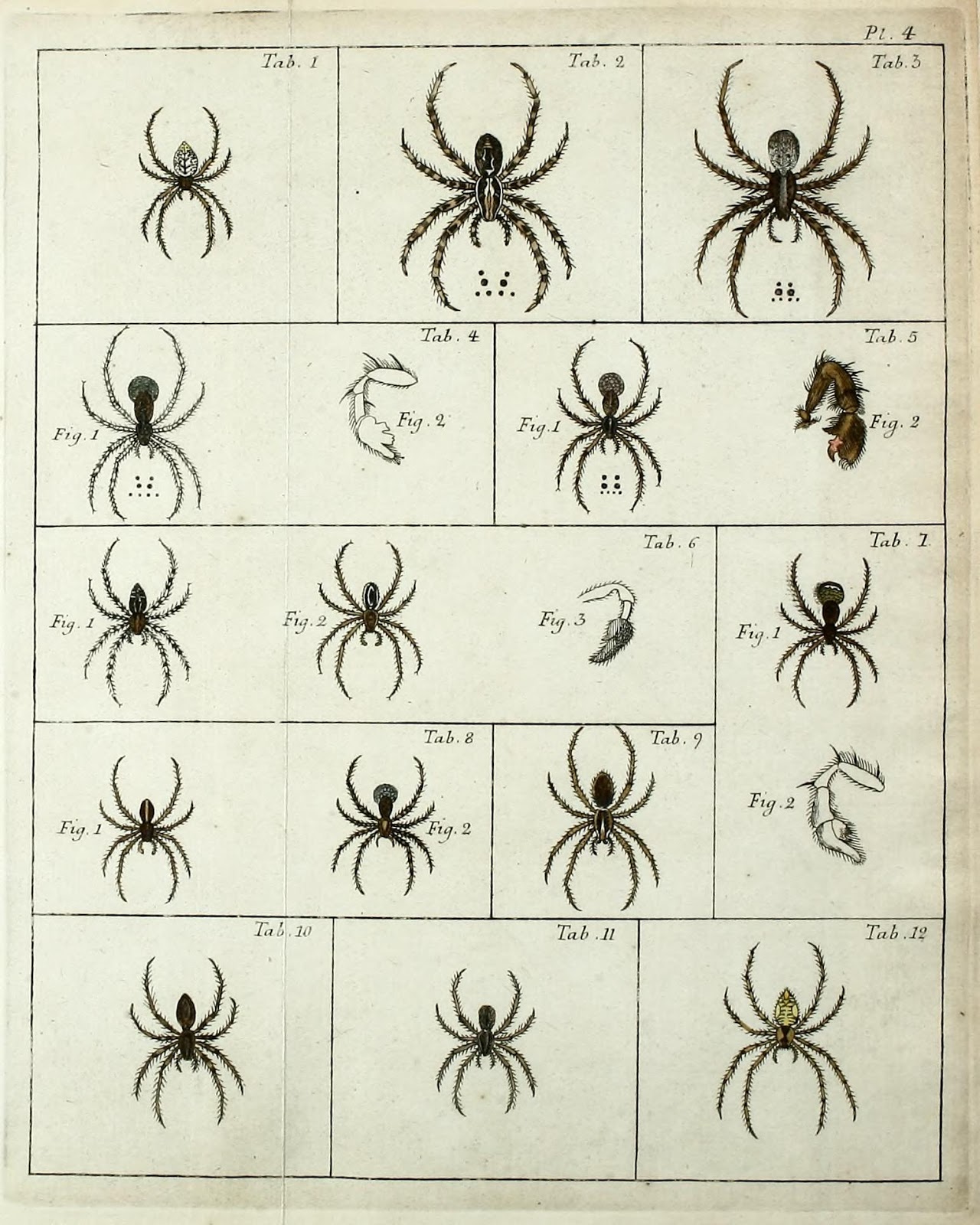
Clerck, Carl. Svenska Spindlar. 1757. Digitized by Smithsonian Libraries. http://www.biodiversitylibrary.org/page/51379398.

Arachnophobia (the fear of spiders and other arachnids) is one of the most prevalent phobias in the world, and some estimates suggest that over 30.5% of people in the United States alone have a fear of arachnids (Health Research Funding 2014).

Given the pervasiveness of this phobia, we thought it only appropriate to spend some time on the subject of spiders as part of our Page Frights celebration. Being the science-focused organization that we are, we decided to look at the topic of arachnids from a taxonomic point of view.

View Full Size Image
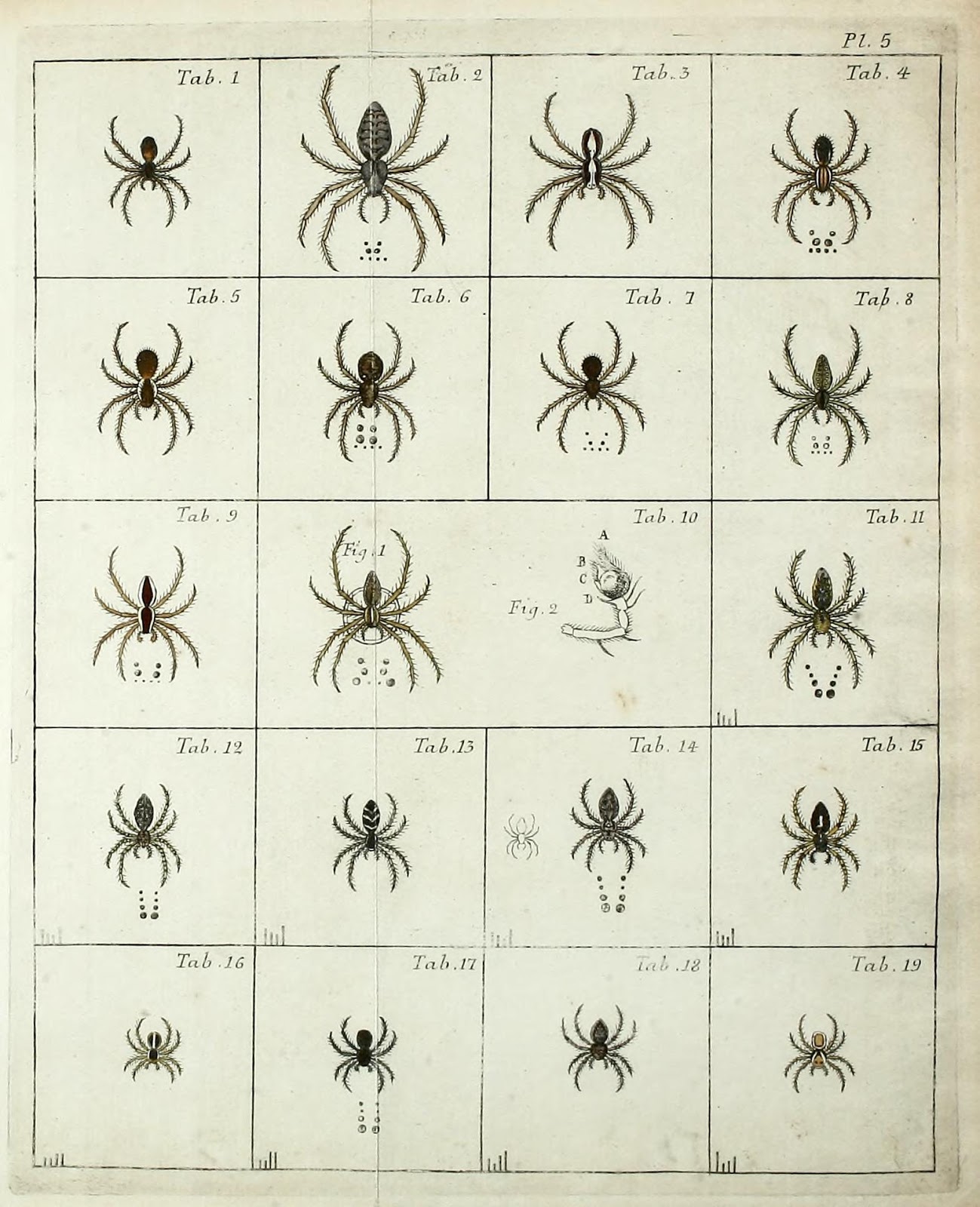
Clerck, Carl. Svenska Spindlar. 1757. Digitized by Smithsonian Libraries.  http://www.biodiversitylibrary.org/page/51379410.

The founding text on spider nomenclature is Svenska Spindlar. It was published in 1757 by Carl Clerck, a member of the Swedish nobility. If you’re familiar with the history of taxonomy, you may notice something interesting about the date of this publication. The International Commission on Zoological Nomenclature considers Carl Linnaeus’ Systema Naturae, published in 1758, to be the starting point of zoological nomenclature. How then could a book published in 1757 be considered the starting point of spider nomenclature?

Leslie Overstreet, Curator of Natural History Rare Books at the Smithsonian Libraries (who recently digitized this title for BHL), helped shed some light on the situation.

Clerck became a friend and correspondent of Linnaeus’ after attending Uppsala University, where Linnaeus had received most of his own higher education and served as a professor beginning in 1741. In 1753, Linnaeus applied his binomial system for botanical names within Species Plantarum. When Clerck went to publish his descriptions of the large number of Swedish spiders that he had collected and studied, he did so following Linnaeus’ binomial system. As Linnaeus would not publish his own foundational text on zoological nomenclature until 1758, Clerck’s spiders became the first animals in modern zoology to receive valid scientific names according to the Linnaean system.

View Full Size Image
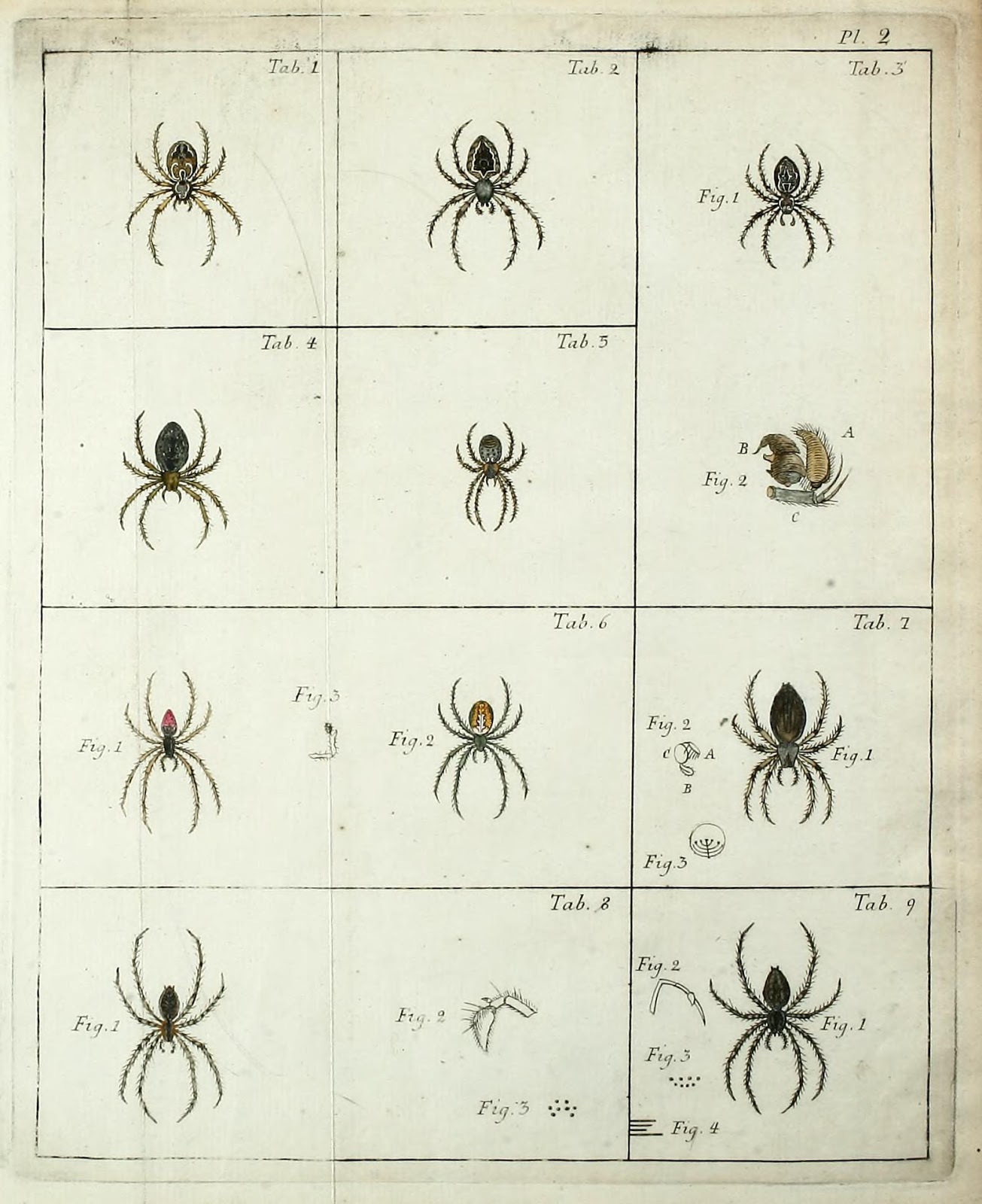
Clerck, Carl. Svenska Spindlar. 1757. Digitized by Smithsonian Libraries.  http://www.biodiversitylibrary.org/page/51379414.

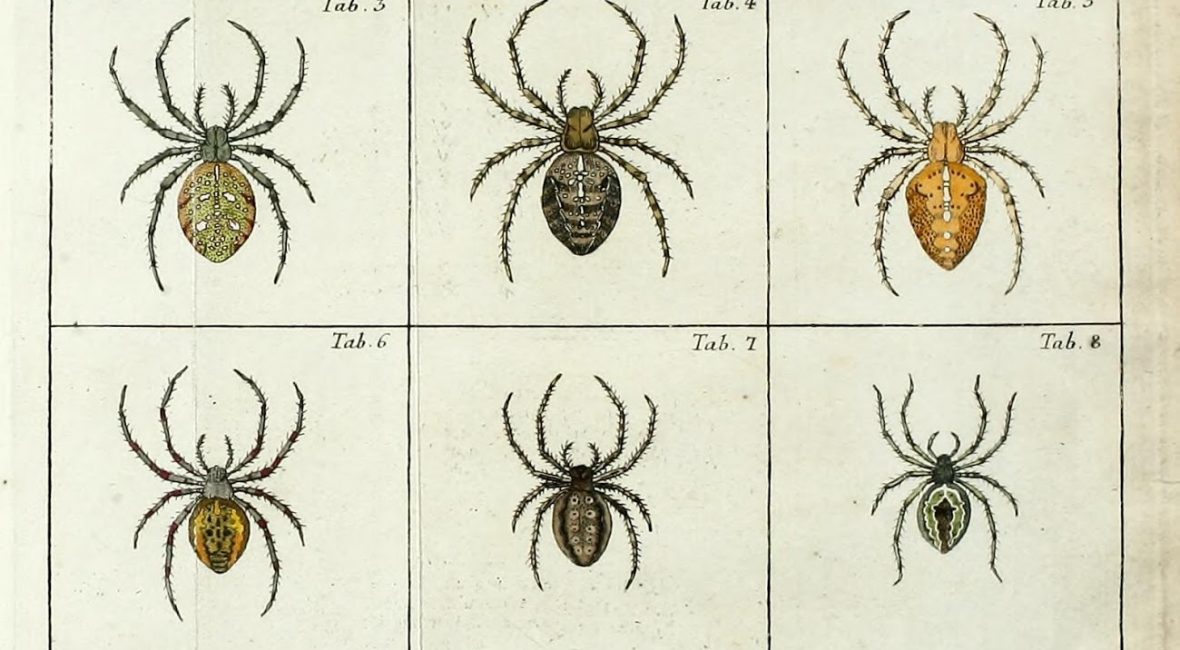
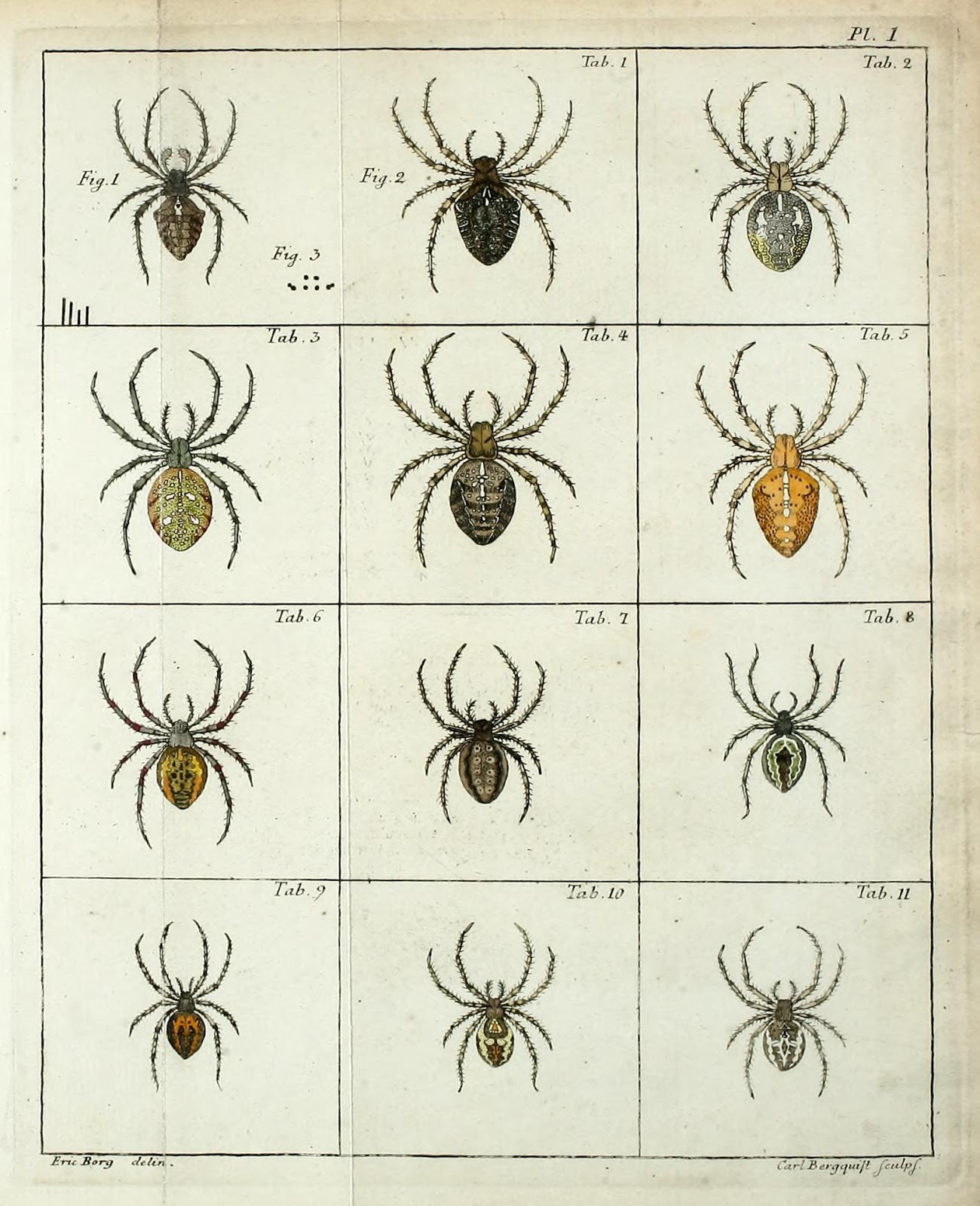
Clerck’s Svenska Spindlar describes and illustrates 70 species and includes 6 hand-colored plates containing 89 figures. Artists for the work include Eric Borg and L. Gottman, and the plates were engraved by Carl Bergquist. The text is printed in both Swedish and Latin, and for each species, Clerck uses the single generic name Araneus followed by a specific, one-word name (constituting the species name).  Clerck then provides detailed information about each species, from the dates that he collected his specimens to descriptions of anatomical features and differences between sexes.

Clerck also restricted his use of the term “spider” to those species possessing eight eyes and separated prosoma and opisthosoma. As such, he, unlike many previous authors, excluded Opiliones (harvestmen) and other arachnids from his treatment of the subject.

View Full Size Image
Clerck, Carl. Svenska Spindlar. 1757. Digitized by Smithsonian Libraries. http://www.biodiversitylibrary.org/page/51379402.

The International Commission for Zoological Nomenclature recognizes Clerck’s names as having precedence over any varieties that may have been proposed by Linnaeus, and as such the names in Svenska Spindlar have the unique distinction of being considered valid despite having been published a year before Linnaeus’ Systema Naturae. For example, while Linnaeus used the generic name Aranea, Clerck’s Araneus is considered the valid generic name.

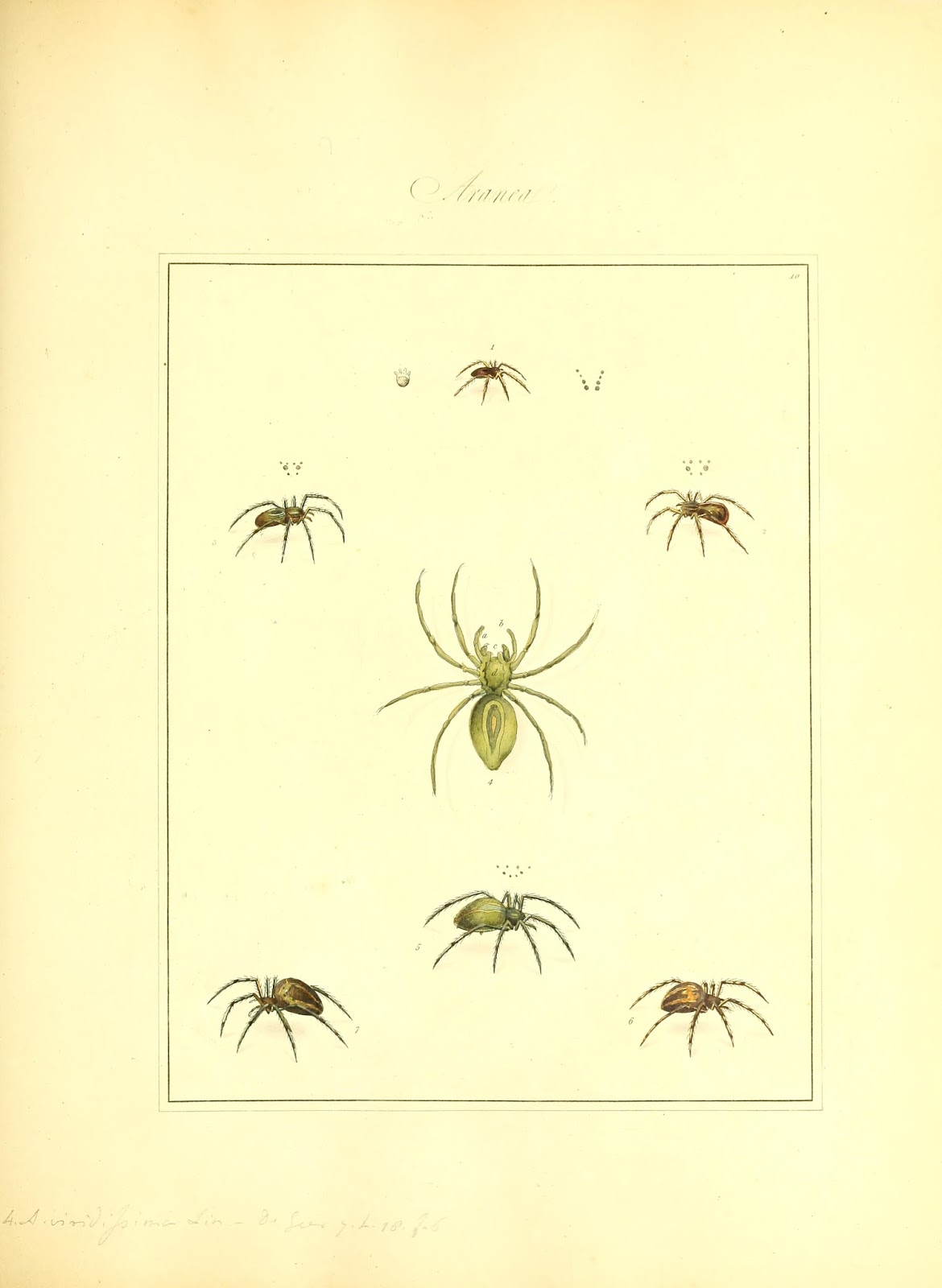
In 1793, the first English translation of Clerck’s Svenska Spindlar appeared under the title Aranei, or, A natural history of spiders, by Thomas Martyn. Martyn supplemented the text with additional illustrations originally published in Eleazar Albin’s Natural history of spiders (1736).

View Full Size Image
Martyn, Thomas. Aranei, or, A natural history of spiders. 1793. Digitized by Smithsonian Libraries. http://www.biodiversitylibrary.org/page/51378856.

So, as you gear up for Halloween this weekend, take a moment to look through the book that started it all when it comes to spider nomenclature. If you’re one of those 30.5% of U.S. people with arachnophobia, you’re sure to consider it a true Page Frights experience!

Special thanks to Leslie Overstreet, Curator of Natural History Rare Books at Smithsonian Libraries, for providing information about this title for this post.

Reference

Health Research Funding. 2014. “7 Uncommon Arachnophobia Statistics.” September 22. Accessed October 25, 2016. http://healthresearchfunding.org/7-arachnophobia-statistics/.

October 27, 2016by Grace Costantino
BHL News, Blog Reel, Campaigns

Of Dragons and Interns: Meet the Woman Who’s Helping Us Add Dragons and Other Fun Products to the BHL Store!

View Full Size Image
Carolina Murcia. BHL Product Development and Marketing Intern.

BHL is excited to welcome Carolina Murcia, our new Product Development and Marketing Intern!

Over her eight-month internship through the Smithsonian Libraries in Washington, D.C., Carolina will conduct market research and create products and marketing materials for the BHL CafePress store. Coming to us from her home in Colombia, Carolina just finished her bachelor’s degree in industrial design and is excited for this opportunity to build her professional experience and contribute to projects that support the sciences, arts and cultural development.

Carolina has already put her artistic skills to excellent use designing dragon products for the BHL Page Frights CafePress store. Get your own dragon today and help support biodiversity research – 100% of the proceeds will be used to digitize more books for BHL! How does BHL and these digital books help support biodiversity research? Click here to find out!

View Full Size Image
A social media graphic created by Carolina for the BHL Page Frights CafePress store. Shop today!

When she’s not doing design projects, Carolina enjoys long walks, good coffee, home dinners, sci-fi books, spending time with her loved ones, and watching soccer – especially when Colombia’s team is playing! She is especially passionate about architectural photography and looks forward to taking advantage of the wonderful landscapes and buildings in D.C. to pursue this passion.

We’re so excited to welcome Carolina to the BHL team and look forward to seeing our product selection and marketing activities expand thanks to her contributions. Welcome to the family, Carolina!

October 19, 2016by Grace Costantino
Page 20 of 71« First...10«19202122»304050...Last »

Help Support BHL

BHL's existence depends on the financial support of its patrons. Help us keep this free resource alive!

search

About BHL

The Biodiversity Heritage Library (BHL) is the world’s largest open access digital library for biodiversity literature and archives. BHL operates as a worldwide consortium of natural history, botanical, research, and national libraries working together to digitize the natural history literature held in their collections and make it freely available for open access as part of a global “biodiversity community.”

Join Our Mailing List

Sign up to receive the latest news, content highlights, and promotions.

Subscribe Now

Subscribe to Blog via Email

Enter your email address to subscribe to this blog and receive notifications of new posts by email.

Join 319 other subscribers

Subscribe to Blog Via RSS

Subscribe to the blog RSS feed to stay up-to-date on all the latest BHL posts.

Access RSS Feed

Inspiring Discovery through Free Access to Biodiversity Knowledge.

The Biodiversity Heritage Library makes it easier than ever for you to access the information you need to study and explore life on Earth…for free, anytime, anywhere.


64+ Million Pages of
Biodiversity Literature Online.

EXPLORE

Tools and Services
to Transform Research.

EXPLORE

300,000+
Illustrations on Flickr.

EXPLORE

ABOUT | HARMFUL CONTENT | PRIVACY | SITE MAP | TERMS OF USE