Biodiversity Heritage Library - Program news and collection highlights from BHL
  • Home
  • News
  • Featured Books
    • All Featured Books
    • Book of the Month Series
    • BHL at 20
  • User Stories
  • Campaigns
    • Fossil Stories
    • Garden Stories
    • Monsters Are Real
    • Page Frights
    • Her Natural History
    • Earth Optimism 2020
  • Tech Blog
  • Visit BHL
Home
News
Featured Books
    All Featured Books
    Book of the Month Series
    BHL at 20
User Stories
Campaigns
    Fossil Stories
    Garden Stories
    Monsters Are Real
    Page Frights
    Her Natural History
    Earth Optimism 2020
Tech Blog
Visit BHL
  • Home
  • News
  • Featured Books
    • All Featured Books
    • Book of the Month Series
    • BHL at 20
  • User Stories
  • Campaigns
    • Fossil Stories
    • Garden Stories
    • Monsters Are Real
    • Page Frights
    • Her Natural History
    • Earth Optimism 2020
  • Tech Blog
  • Visit BHL
Biodiversity Heritage Library - Program news and collection highlights from BHL
BHL News, Blog Reel

Spreading Holiday Cheer

How does BHL celebrate the holidays?

As a project, we work to raise awareness about the plight facing the Earth’s biodiversity today and provide ways to help preserve scientific knowledge, support research, and conserve species. As a consortium, our BHL member institutions spread some fantastic holiday cheer by featuring some exciting seasonal exhibits.

We decided to celebrate the holidays this year by taking you through a virtual tour of the seasonal exhibitions at some of our member institutions and, as an added bonus, showcase this year’s BHL “superstars” for each member. What’s a BHL “superstar,” you ask? Well, today, it’s each member’s most popular book in BHL this year. Some of them just might surprise you!


American Museum of Natural History

Did you know that a group of jellyfish is called a smack? Or that a group of kangaroos is called a mob? A group of wise owls? It’s called a parliament.

View Full Size Image
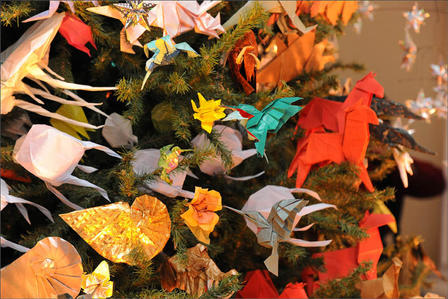
“Smack” of jellyfish (far left). Origami Art on the AMNH Holiday Tree. © AMNH/R. Mickens


View Full Size Image
© AMNH

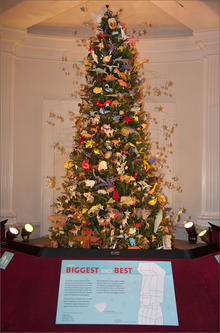
The American Museum of Natural History has decorated its annual 13-foot tall holiday tree with origami “groups” of animals, inspired by the museum’s collections. These “groups” highlight the fact that even solitary animals spend at least some time with others of their species. The 500 delightful origami ornaments took volunteers from OrigamiUSA approximately 5 months to construct, and include groups of zebras, giraffes, and even bacteria!

The origami tree has been a hallmark of the museum’s holiday celebrations for more than 30 years and will be on display through January 6. Don’t miss your chance to experience biodiversity through paper art! How about using the over 50,000 images in the BHL Flickr to inspire your own origami art?!


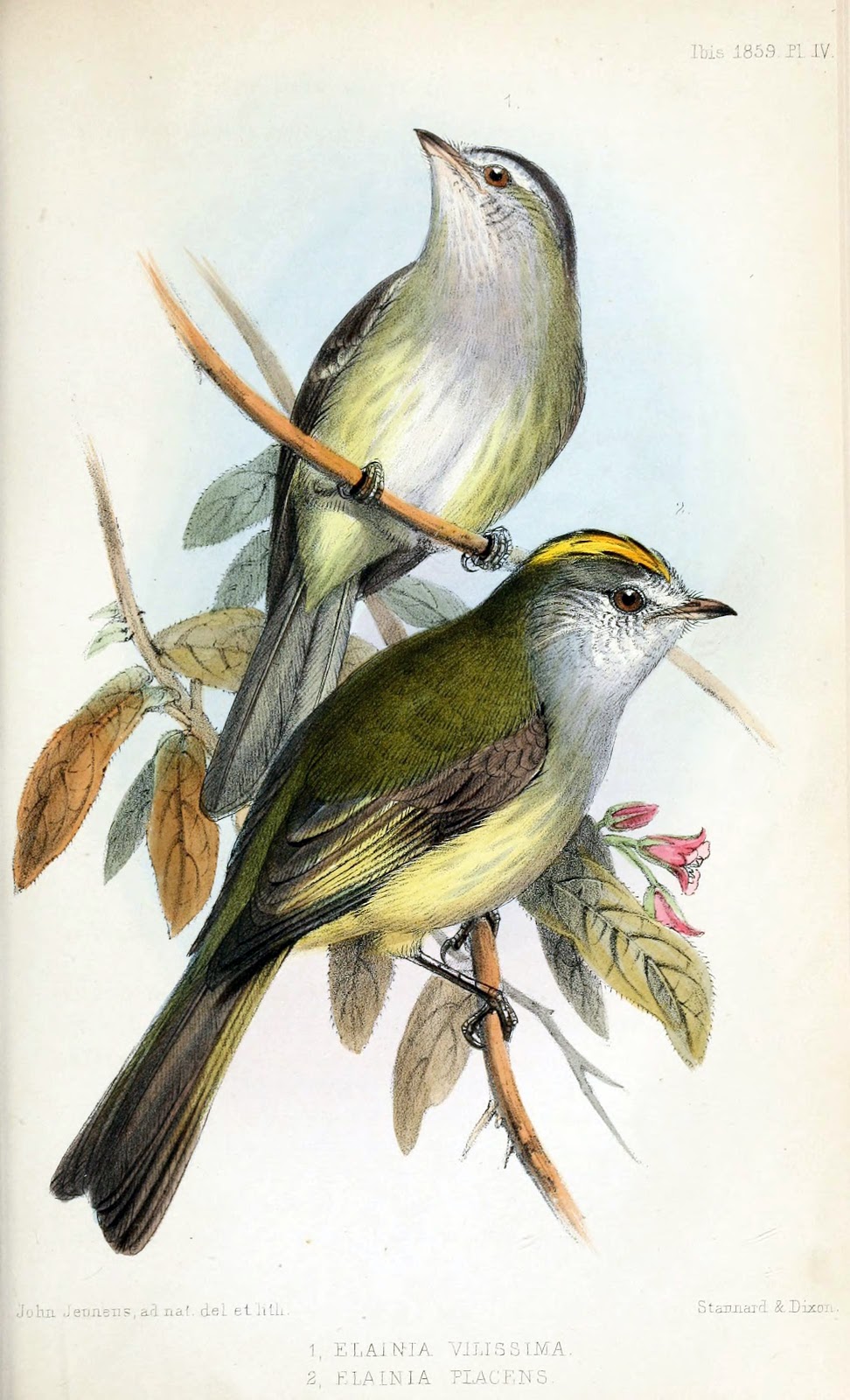
The winner of the AMNH 2012 Most Popular Book? Ibis (1859), v. 1. 
View Full Size Image
Two Tyrannulets, from the Zimmerius genus. Plate 4 from v. 1, Ibis (1859)

The American Museum of Natural History has an extremely strong ornithology collection. Therefore, it’s no surprise that the most popular book contributed by this library would be one of the cornerstones of ornithological literature. Frederick Godman and Osbert Salvin, the authors of Biologia Centrali Americana – arguably the most authoritative work on Mexican and Central American biodiversity – were two of twenty ornithology enthusiasts to establish this journal, which is still published today, in 1859. Explore the illustrations of the Ibis in our past blog post.


California Academy of Sciences
View Full Size Image
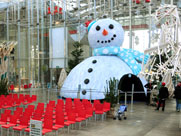
Snowman Dome at CAS. © CAS

Think you won’t find much snow this Holiday Season in California? Think again! The ‘Tis the Season for Science event at the California Academy of Sciences features live reindeer, research specimens illustrating how various species cope with cold temperatures, a snowman-shaped digital dome featuring programming about the science of the seasons, and, yes, snow in the piazza every 30 minutes!
View Full Size Image
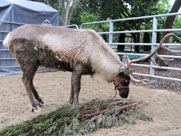
Live reindeer at CAS! © CAS

Some interesting tidbits from CAS: Did you know that the reindeer is the only deer species in which both males and females exhibit antlers? Did you know that species deal with harsh winters, generally, by adopting 1 of 2 strategies: heading south or hibernating? Perplexed by the bi-hourly snow falling at CAS? It’s temperature-resistant and biodegradable!

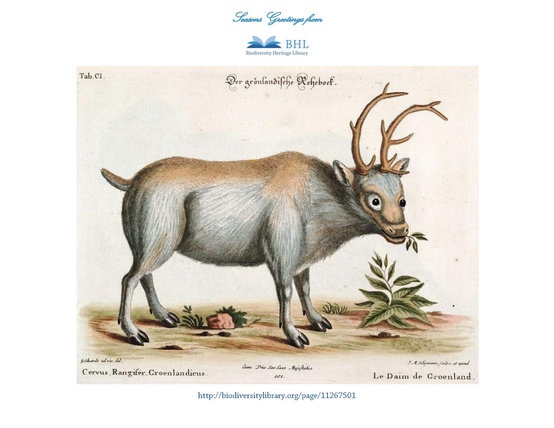
The CAS Holiday Exhibit ‘Tis the Season for Science will be open through January 6. Don’t miss your chance to experience polar bears, geese, reindeer, and snow in California! In honor of the CAS caribou attraction, enjoy this Reindeer Holiday Greeting Card from BHL!
View Full Size Image
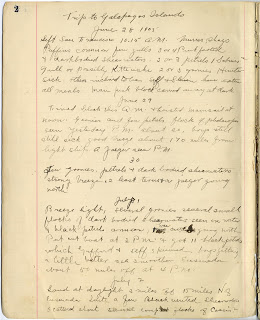
Excerpt from the Rollo Beck Galapagos expedition journal.

The most popular book from the California Academy of Sciences this year? The Rollo Beck Galapagos Expedition Journal!

The Rollo Beck Journal was the first field notebook to be ingested into BHL. As part of the IMLS Connecting Content project, CAS is digitizing field notebooks (essentially the scientific journals kept by researchers while on expeditions and/or performing field work) in its collection. This journal gives a broad overview of the 1905-06 expedition to the Galapagos, led by Rollo H. Beck. An interesting highlight from this journal? It includes a passage relating the first news Beck received of the 1906 fire that destroyed nearly all of CAS’s collections. Learn more about the journal and the Connecting Content grant in this past blog post.


Missouri Botanical Garden
 

View Full Size Image
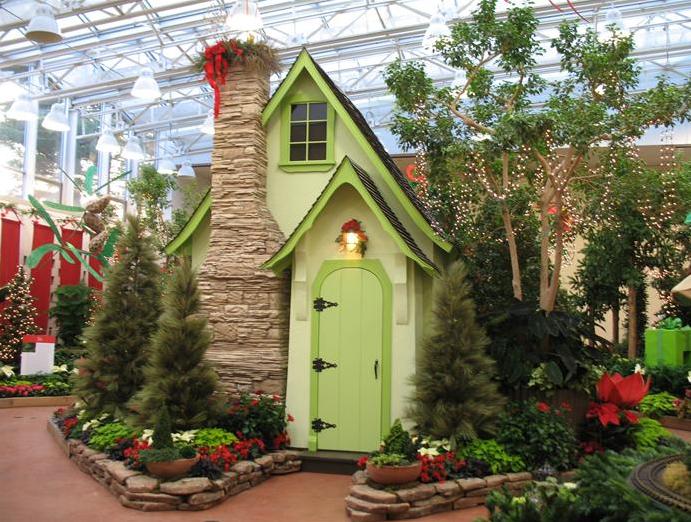
Fairy Tale Cottage at MOBOT’s Gardenland Express. © MOBOT

It’s a holiday wonderland in St. Louis this year with the Gardenland Express! Staff and volunteers have transformed the Garden’s Orthwein Floral Display Hall into a whimsical fantasy complete with a fairy tale cottage, 900 feet of miniature train tracks, and a stunning array of traditional holiday plants. The exhibit, celebrating “Merry Botanical Traditions,” took years to plan and even features silk poinsettia, holly, and Christmas Cactus constructed by artisans from the Garden’s previous Lantern Festival.

Find out what it takes to transform a barren room into a holiday treat in the video below. If you’re in St. Louis anytime before January 1, don’t miss your chance to experience the wonder for yourself! Maybe you can use our botanical illustrations to identify some of the plants featured in the exhibit!

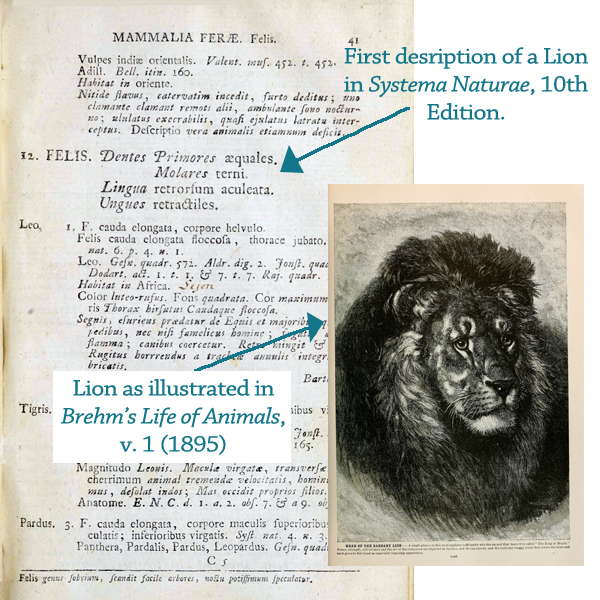
This year, the MOBOT “Superstar” award goes to…..Systema Naturae (1758), v. 1, 10th Ed., by Carl Linnaeus.
View Full Size Image
The first description of a lion in the 10th Ed. of Systema Naturae, with an illustration of a lion in Brehm’s Life of Animals.

It’s probably not very surprising that the publication that marked the beginning of zoological nomenclature is the 2012 most popular book contributed by the Missouri Botanical Garden. But did you know that, though Linnaeus’ first edition of Species Plantarum and this tenth edition of Systema Naturae are heralded as the starting points of binomial nomenclature for botany and zoology, respectively, the concept for the system was partially developed by Gaspard and Johann Bauhin in the late 1500s? Learn more about Linnaeus, Species Plantarum and Systema Naturae in our previous blog post.

New York Botanical Garden

It’s all about the trains this year for BHL’s botanical partners! Celebrating the season with the Holiday Train Show, the New York Botanical Garden has laid a quarter of a mile of miniature train tracks throughout a lush botanical backdrop populated by reconstructions of 140 of New York’s famous landmarks. The best part? These reconstructions, the products of Applied Imagination, are crafted using natural materials like bark, twigs, fruit, seeds, and stems!

What delightful icons will visitors to the seasonally-converted Enid A. Haupt Conservatory at NYBG encounter? To name just a few: Yankee Stadium, New York Public Library, the Brooklyn Bridge, and, new this year, the Macy’s location made famous by “A Miracle on 34th Street.” The Artists’ Studio, part of the exhibit, gives visitors a behind-the-scenes view of how these marvelous buildings are constructed, as well as a chance to experience some international icons, including the Sphinx and Parthenon.

Have kids? Then NYBG’s Gingerbread Adventures, which gives children a chance to play inside a life-size gingerbread house and decorate gingersnaps, is right up your alley!

The Holiday Train Show runs through January 13. Don’t miss your chance to experience New York with botanical eyes!

The most popular book this year contributed by NYBG? Again in the spirit of BHL botanical institutions, it’s v.1, pt.1 of the 11th edition of Systema Naturae (1760). The next twelfth edition, the last published under Linnaeus’ authorship, was comprised of 2,400 pages, expanded from the original eleven pages of the first edition (published in 1735).
Smithsonian’s National Zoo


View Full Size Image
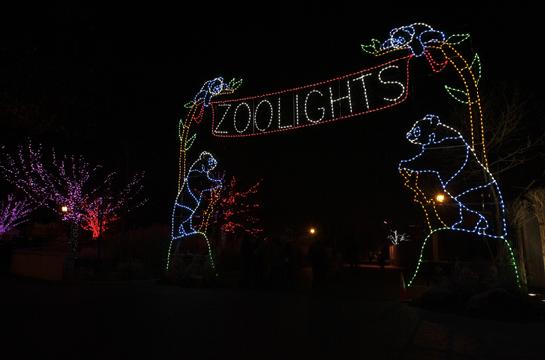
ZooLights Entrance. See more ZooLights Images. © SI.

Every year, the Smithsonian’s National Zoo lights up the dark winter nights with thousands of Christmas lights strung together to form animal silhouettes. This year is no exception, with more than 500,000 environmentally-friendly LED lights depicting dozens of dazzling species. Free to the public, the ZooLights event runs until January 1 on select days. Don’t miss this opportunity to see a mamma and baby panda, brown kiwi, elephants, a python, a lion, and even a cow like you’ve never seen them before!

And not to spoil the train theme, the National Zoo is also featuring a farm-themed miniature train at the Visitor Center.

View Full Size Image
Farm-Themed Train at National Zoo Visitor Center. © SI.

The most popular book contributed to BHL by the Smithsonian Libraries also happens to be the most popular item in BHL. What is it? Taxonomic Literature (1976), v. 1.
View Full Size Image
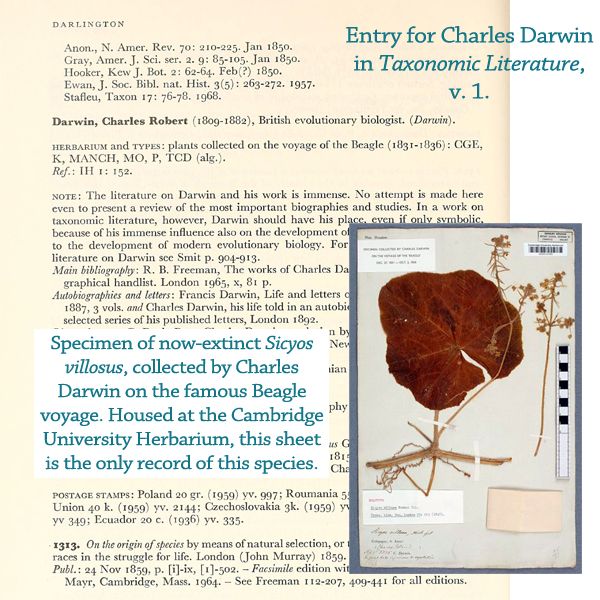
Charles Darwin in TL2. Specimen from Cambridge University Herbarium collected by Darwin on Beagle Voyage.

More commonly known as TL2, Taxonomic Literature: a selective guide to botanical publications and collections with dates, commentaries and types “provides the most comprehensive biographical and bibliographical analysis for systematic botany literature published between 1753 and 1940.” In all, TL2 is comprised of 15 volumes, organized by author name. The volumes represent an extensive list of botanists who have published botanical literature between 1753 and 1940. Each entry provides a short biography of the author, the location of any specimens they may have collected, a list of publications that author has published, and, based on analysis of more than 100 library collections, information about which libraries may hold a copy of each publication.

The Smithsonian Libraries’ online TL2 project indexes corrected OCR for the TL2 volumes scanned for BHL to provide additional search and analysis functionality, including author, author name abbreviation, and title abbreviation search support.

______________________________

We hope you get a chance to visit one of the exceptional Holiday Exhibits at our BHL member institutions.  From all of us here at BHL, we wish you very Happy Holidays!
View Full Size Image
Happy Holidays from BHL! Find this and other Holiday Greeting Cards on Pinterest.


December 14, 2012by Grace Costantino
BHL News, Blog Reel

The Perfect Holiday Gift

Preserving Biodiversity Knowledge and Strengthening Conservation Efforts

View Full Size Image
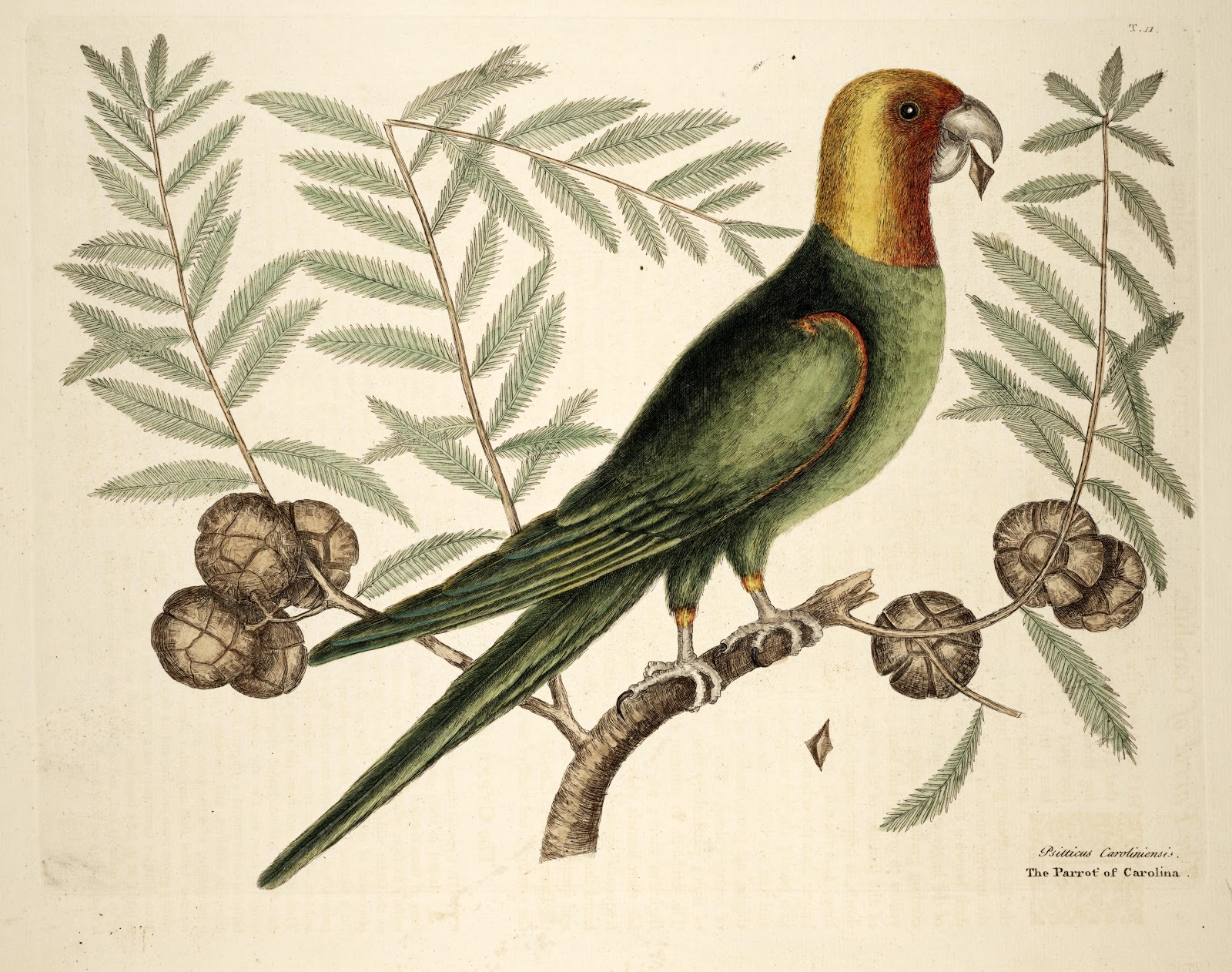
The Extinct Carolina Parakeet. Captured by Mark Catesby.

In 1918, the last known surviving Carolina Parakeet, the only parrot species native to the eastern United States, died. While museum specimens may help us retain some information about this species, for many others, everything we know is contained in a single description found within a hard to find book or article. While there is nothing we can do to bring these extinct species back, we can preserve our knowledge of them to help avoid future extinctions.

The Biodiversity Heritage Library (BHL), in its global efforts to digitize biodiversity literature and make it freely available to the world, ensures that the knowledge needed to identify species, facilitate further scientific research, and support conservation efforts is available to everyone, everywhere. Thanks in part to donations from users like you, BHL currently provides access to nearly 40 million pages and over 50,000 images.

View Full Size Image
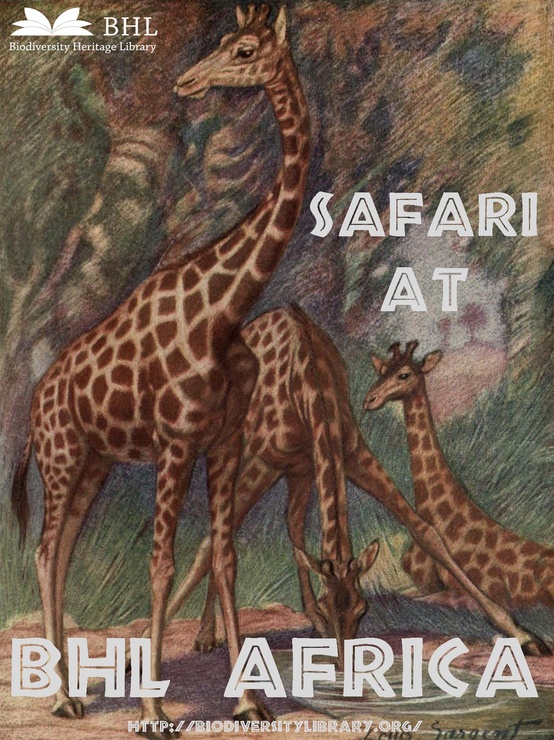
Celebrating the BHL-Africa via Travel Posters!

In 2012, BHL significantly advanced the breadth and depth of its collections and the opportunities to engage with its digitized resources. BHL added over 12,000 items and over 3.7 million pages to its collections this year, supported in part by the addition of two new members to the BHL consortium: the United States Geological Survey and Cornell University. Furthermore, BHL continued to serve new and widespread audiences by establishing a greater presence across social media channels, resulting in over 30,000 new images in Flickr this year; biodiversity facts, history, and trivia communicated via Tweets, Blog and Facebook posts; and downloads through iTunes U, all free to the public. BHL continues to expand globally, as evidenced by the June, 2012, BHL meeting in Cape Town, South Africa, designed to support the development of a BHL-Africa.

The most rewarding measure of BHL’s successes comes from the frequent testimonials received from users:

“The BHL website is an extremely valuable resource and is crucial to my research.”

“Being in a small town in Africa made accessing literature especially difficult, but I no longer feel so disadvantaged with the advent of BHL.”

“BHL makes my research so much easier! I absolutely love it. A million times thank you!”

 
The BHL’s substantial growth and activity has been supported by our dedicated patrons whose gifts we depend on to fund the digitization of additional texts, technical development for the program, and improvement of data curation. This holiday season, as you continue to seek the perfect gift for your loved ones, consider giving a gift to the planet by supporting scientific research and conservation efforts across the globe through a tax-deductible donation to the Biodiversity Heritage Library.

As a gift from our BHL family to yours, enjoy these BHL Holiday Greeting Cards and Travel Posters! Download them for free from the BHL Pinterest. Happy Holidays!

December 11, 2012by Grace Costantino
Blog Reel, Featured Books

Conservation, Alaska, and John Muir

“I am hopelessly and forever a mountaineer…I care to live only to entice people to look at Nature’s loveliness.” – John Muir

He has been praised as “saving the American soul from total surrender to materialism.” Remembered as the Father of the National Parks, he was instrumental in establishing the Yosemite and Sequoia National Parks. He founded the Sierra Club, one of the largest and most influential conservation organizations in the United States. Though born in Scotland, he is acclaimed as “one of the patron saints of twentieth-century American environmental activity.” His travel notes, amassed within the publication Travels in Alaska, represent an extremelyheartfelt account of the Alaskan frontier. He is none other than John Muir, one of the most important nature advocates America has ever known.

A Personal Journey Towards American Preservation

View Full Size Image
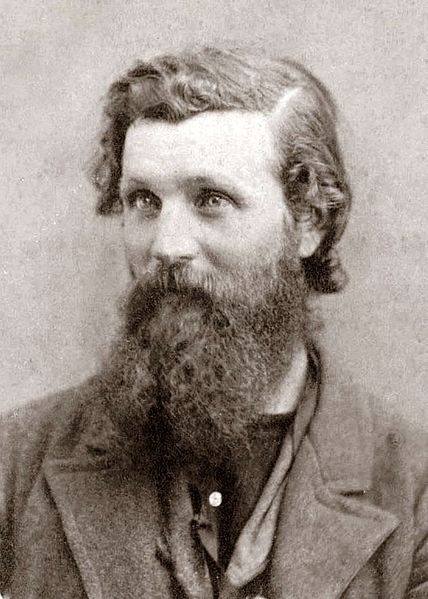
John Muir

Born in Dunbar, East Lothian, Scotland, in 1838, Muir moved to Wisconsin with his family in 1849. Just before his 29th birthday, following an accident in a sawmill that nearly cost him his sight, Muir embraced his true calling in life – the study and conservation of nature. That same year, Muir embarked on his first wild adventure – a 1,000 mile walk from Indiana to Florida, documented in his book A Thousand Mile Walk to the Gulf. However, it was his subsequent trip to California that sparked the true passion of Muir’s career – the untamed beauty of the American mountain wilderness.

In March, 1868, Muir had his first encounter with Yosemite, an experience that shaped the rest of his life. On seeing the rugged peaks of the Sierra Nevada Mountains, Muir exclaimed, “No temple made with hands can compare with Yosemite…The grandest of all special temples of nature.” Muir spent the rest of his years in the shadows of mountainous peaks, devoting his life to studying nature and raising awareness about the implications of human activities. He formed relationships with Ralph Waldo Emerson, Theodore Roosevelt and Louis Agassiz. He worked diligently to limit grazing activities in Yosemite, which eventually led to the introduction of a bill that established Yosemite as a national park. His assertion, backed by Louis Agassiz, that the valley in Yosemite was the result of glacial activity, not, as was formerly purported, an earthquake, helped establish his name in the scientific community.

Preservation, not Conservation

Though known for his conservation work, Muir identified himself as a preservationist, rather than a conservationist. The distinction resulted from a fall-out with his former friend, Gifford Pinchot. Pinchot, a renowned conservationist, focused on managing natural resources for sustainable commercial use. Muir ardently opposed this view, believing that nature should be preserved in-tact, not managed for human consumption. To Muir, nature was a spiritual experience, not one to be exploited.

Celebrating American Indian and Alaska Native Heritage Month with Muir

Muir visited Alaska for the first time in 1879. He returned to “nature’s last frontier” repeatedly over the next 30+ years of his life, amassing a mountain of notes on his travels. His study of Alaskan glaciers was instrumental in the development of theories on landscape formation via glacial activity. Muir viewed the native people of Alaska and their reverential relationship with the Earth as an inspirational example of co-dependency with nature. He spent the last months of his life aggregating his notes into his book Travels in Alaska, which was completed posthumously by Marion Randall Parsons. In celebration of National American Indian and Alaska Native Heritage Month, we highlight this tender account of one man’s journeys through the Alaskan wilderness.

“To the lover of pure wilderness, Alaska is one of the most wonderful countries in the world.”

 The Glaciers that Move Mountains

View Full Size Image
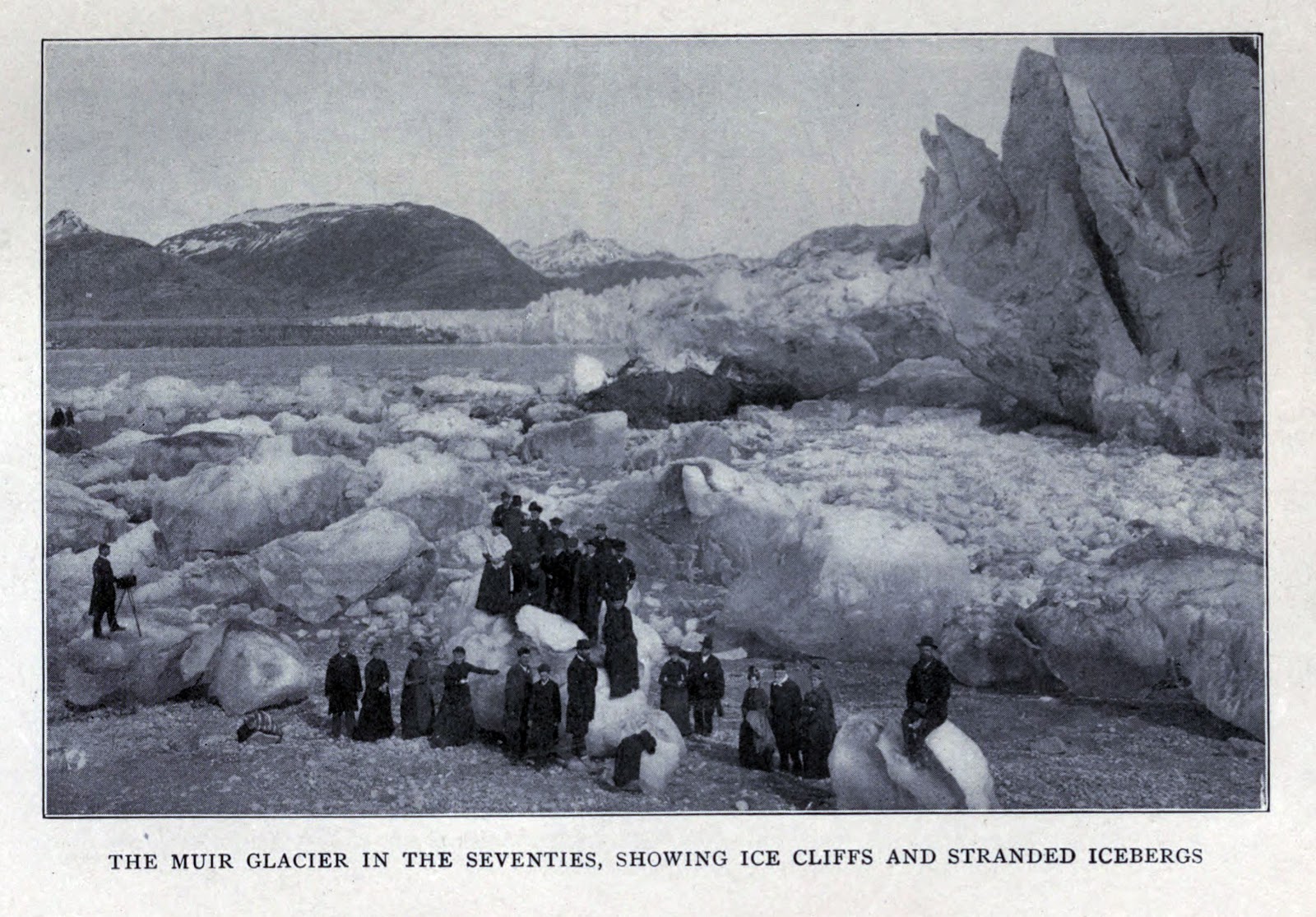
Muir Glacier in Glacier Bay

Glacier Bay covers 1,375 square miles, and the Glacier Bay National Park and Preserve represents the largest UNESCO protected biosphere in the world. Muir first encountered Glacier Bay during his first trip to Alaska. Long-interested in the impact of glacial activity on landmasses, Muir was eager to validate Agassiz’s earlier theory that much of the earth had once been covered by glaciers, and that their movement and retreat was responsible for many of the land features we see today. On a brisk Sunday morning, venturing out from his camp alone and burdened by damp clothes and tired limbs, Muir climbed 1,500 feet to catch his first glimpse of Glacier Bay:


“This was my first general view of Glacier Bay, a solitude of ice and snow and newborn rocks, dim, dreary, mysterious. I held the ground I had so dearly won for an hour or two, sheltering myself from the blast as best I could, while with benumbed fingers I sketched what I could see of the landscape, and wrote a few lines in my notebook. Then, breasting the snow again, crossing the shifting avalanche slopes and torrents, I reached camp about dark, wet and weary and glad.”


At the time of his first visit, the Bay was 44 miles from the sea. Muir returned to the Bay in 1899 with the Harriman Alaskan Expedition. This trip was instrumental in documenting the extreme retreat of the Bay, which now stands at 65 miles from the sea. This represents the fastest documented glacial retreat in history.

Alaska Through Native Eyes

View Full Size Image
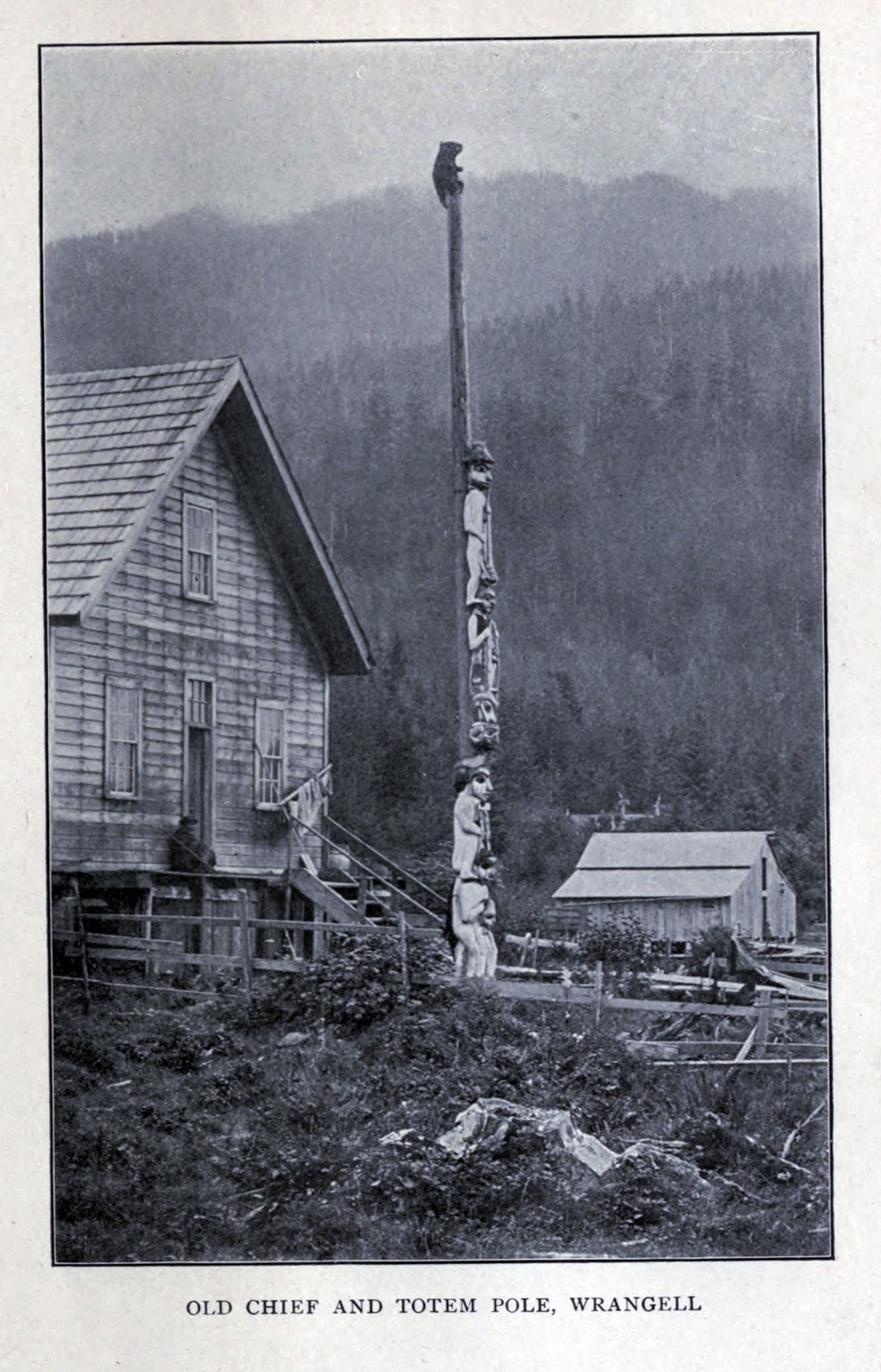
Totem Pole at Stickeen Village

During his voyages through Alaska, Muir encountered many of the indigenous people of the land – namely, the Thlinkit (Tlingit) tribes. The Tlingit people have occupied the Alaskan territory for approximately 10,000 years. Muir wrote that the Tlingit people were compassionate and honorable, validating this assertion with a recount of the valor of one of their chiefs. 20-30 years before Muir’s arrival, a war ensued between a Tlingit tribe and the Sitka tribe. The fighting lasted through the summer months, preventing any tribal members from gathering food supplies for the winter. As the cold months approached, it became apparent that the tribes would starve if the fighting did not cease.


“At this crisis one of the Stickeen chiefs came out of his block-house fort into an open space midway between their fortified camps, and shouted that he wished to speak to the leader of the Sitkas.

When the Sitka chief appeared he said: ‘My people are hungry. They dare not go to the salmon-streams or berry-fields for winter supplies, and if this war goes on much longer most of my people will die of hunger. We have fought long enough; let us make peace. You brave Sitka warriors go home, and we will go home, and we will all set out to dry salmon and berries before it is too late.’

The Sitka chief replied: ‘You may well say let us stop fighting, when you have had the best of it. You have killed ten more of my tribe than we have killed of yours. Give us ten Stickeen men to balance our blood-account; then, and not till then, we will make peace and go home.’

‘Very well,’ replied the Stickeen chief, ‘You know my rank. You know that I am worth ten common men and more. Take me and make peace.’

This noble offer was promptly accepted; the Stickeen chief stepped forward and was shot down in sight of the fighting bands. Peace was thus established, and all made haste to their homes and ordinary work. That chief literally gave himself a sacrifice for his people. He died that they might live.”


View Full Size Image
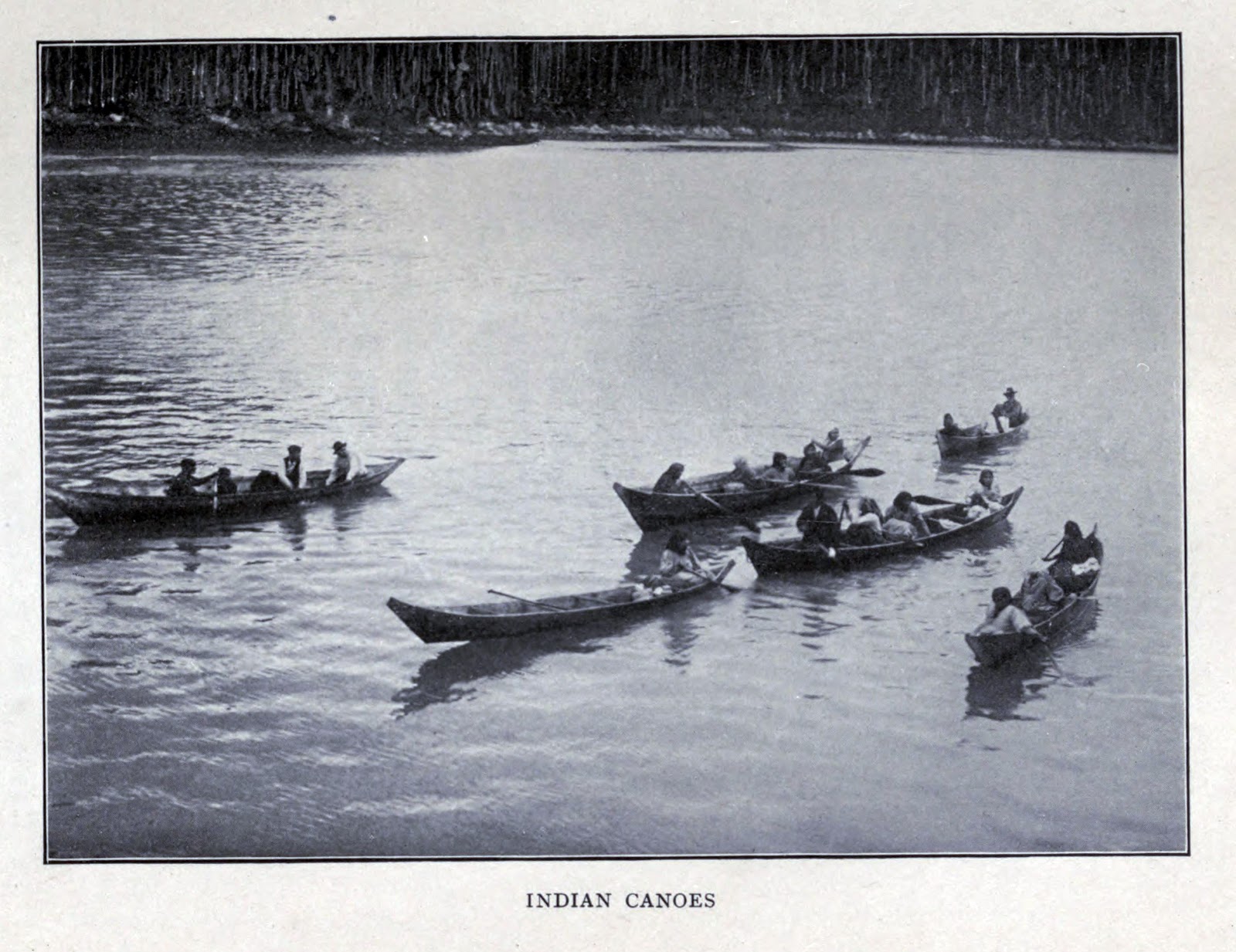
Native Alaskans in Canoes near Wrangell Island

Over the course of his visits to Alaska, Muir established a friendship with a member of the Stickeen tribe named Toyatte. Killed trying to bring peace in a feud between his and a neighboring tribe, Muir wrote at his death, “Thus died for his people the noblest old Roman of them all.” Of Toyatte, Muir revealed,

He often deplored the fact that he had no son to take his name at his death, and expressed himself very grateful when I told him that his name would not be forgotten, – that I had named one of the Stickeen glaciers for him.

A Legacy Not Forgotten

John Muir died of pneumonia at age 76. His legacy, however, remains in the parks he tirelessly worked to preserve, in the 12 books and over 300 articles he penned, in his captivating accounts of the Alaskan wilderness, and through the Sierra Club, which to this day works to continue the cause Muir dedicated his life to achieving – the humble appreciation and passionate enjoyment of nature. And today, as such a man would have desired, Muir slumbers “among trees planted by his own hand.”

We hope you enjoyed this post. Interested in guest-blogging for BHL? We’d love that! Natural history, biodiversity and conservation topics are especially welcomed. Email us your ideas at[email protected]

November 29, 2012by Grace Costantino
Blog Reel, User Stories

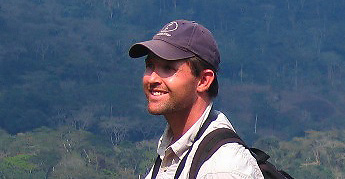
Bird Watching and Conservation with Michael Mills

View Full Size Image
Michael Mills

For many of us, leading bird watching expeditions throughout Africa would be a dream job. For Michael Mills, Angola Country Program Manager for the Percy FitzPatrick Institute of African Ornithology, The A. P. Leventis Ornithological Research Institute, and BirdLife South Africa, it’s all part of the job. It probably comes as no surprise, then, that BHL is an extremely useful resource for Michael, providing him with primary source material about and fantastic illustrations of the birds he works to conserve and share with bird watching participants. 

Michael has studied African birds for ten years, focusing on their natural history, identification and conservation, with particular interest in Angolan birds. He discovered BHL about four years ago, via the Internet Archive, our digitization partner, website. Since then, Michael says that BHL “has been a great help with accessing some of the older and more obscure literature, which is often important in the work I do.” Accessing BHL 3-4 times a month on average, Michael most often downloads PDFs of the content he seeks, building a personal, digital library of the often rare books that formerly had limited distribution outside of the physical library space, not to mention outside of the countries in which the material is housed. When asked what his favorite feature on BHL was, he simply replied, “Being able to access old literature.” 

View Full Size Image

His number one priority for the BHL project? “Make more texts available online.” We’re sure many of you can also second this request.

BHL has been making significant advances towards building a program node on the African continent beyond our current partners in Egypt at the Bibliotheca Alexandrina. Our colleagues in Africa have been hard at work establishing the initiative following our organizational meeting in Cape Town, South Africa, in June, 2012. We hope to officially announce the project in the coming year, which will significantly increase our reach throughout this magnificent continent and enhance our corpus with the invaluable literature held in our African partners’ collections. We have no doubt that such endeavors will help us fulfill Michael’s and others’ desire to see more digitized literature online, particularly in the realm of African Ornithology. 

Many of you are also familiar with our Flickr project, which is bringing unprecedented access to the thousands of incredible scientific illustrations held in the BHL collection. Now constituting over 50,000 images, freely available for browsing, download, and reuse, the BHL Flickr contains a treasure trove of illustrations of African birds. We’ve selected a few of our favorites from v. 2 of The Birds of Africa to present below.

Thanks to Michael for his dedication to the field of bird conservation and for helping others enjoy these marvelous creatures. Want to read a report of one of his bird watching expeditions? Well, you’re in luck.  We send our best wishes to Michael, and hope we can continue to build our collections to provide free, open access to the material he and other researchers need to protect our planet’s biodiversity into the future.

November 20, 2012by Grace Costantino
Blog Reel

Bird Watching & Conservation with Michael Mills

Michael Mills

For many of us, leading bird watching expeditions throughout Africa would be a dream job. For Michael Mills, Angola Country Program Manager for the Percy FitzPatrick Institute of African Ornithology, The A. P. Leventis Ornithological Research Institute, and BirdLife South Africa, it’s all part of the job. It probably comes as no surprise, then, that BHL is an extremely useful resource for Michael, providing him with primary source material about and fantastic illustrations of the birds he works to conserve and share with bird watching participants. 

Michael has studied African birds for ten years, focusing on their natural history, identification and conservation, with particular interest in Angolan birds. He discovered BHL about four years ago, via the
Internet Archive, our digitization partner, website. Since then, Michael says that BHL “has been a great help with accessing some of the older and more obscure literature, which is often important in the work I do.” Accessing BHL 3-4 times a month on average, Michael most often downloads PDFs of the content he seeks, building a personal, digital library of the often rare books that formerly had limited distribution outside of the physical library space, not to mention outside of the countries in which the material is housed. When asked what his favorite feature on BHL was, he simply replied, “Being able to access old literature.” 

His number one priority for the BHL project? “Make more texts available online.” We’re sure many of you can also second this request.

BHL has been making significant advances towards building a program node on the African continent beyond our current partners in
Egypt at the Bibliotheca Alexandrina. Our colleagues in Africa have been hard at work establishing the initiative following our organizational meeting in Cape Town, South Africa, in June, 2012. We hope to officially announce the project in the coming year, which will significantly increase our reach throughout this magnificent continent and enhance our corpus with the invaluable literature held in our African partners’ collections. We have no doubt that such endeavors will help us fulfill Michael’s and others’ desire to see more digitized literature online, particularly in the realm of African Ornithology. 

Many of you are also familiar with our
Flickr project, which is bringing unprecedented access to the thousands of incredible scientific illustrations held in the BHL collection. Now constituting over 50,000 images, freely available for browsing, download, and reuse, the BHL Flickr contains a treasure trove of illustrations of African birds. We’ve selected a few of our favorites from v. 2 of The Birds of Africa to present below.

Thanks to Michael for his dedication to the field of bird conservation and for helping others enjoy these marvelous creatures. Want to read a report of one of his bird watching expeditions? Well,
you’re in luck.  We send our best wishes to Michael, and hope we can continue to build our collections to provide free, open access to the material he and other researchers need to protect our planet’s biodiversity into the future. 

Created with flickr slideshow.
November 20, 2012by Grace Costantino
BHL News, Blog Reel

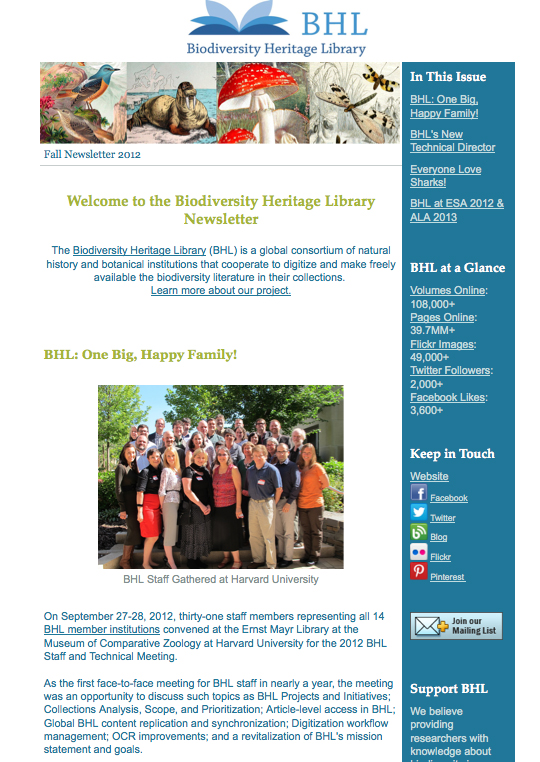
Fall 2012 BHL Newsletter

Want to keep up with all the latest BHL project updates? Then subscribe to our quarterly newsletter! It’s full of great information about all the fun things BHL is doing. The Fall 2012 Newsletter (excerpt below) highlights the 2012 BHL Staff and Technical Meeting; our new Technical Director, William Ulate, and the formation of the Technical Advisory Group; BHL’s Shark Week campaign; and BHL at ESA 2012 and ALA Midwinter 2013.

Click here to subscribe to the BHL Newsletter.

Newsletters will be archived on our public wiki.

View Full Size Image
November 14, 2012by Grace Costantino
Blog Reel, Featured Books

Halloween Biodiversity: Myths & Legends

Happy Halloween from BHL!

It’s that time of year again, when the ghosts, ghouls, and goblins come out to play, the dead walk, and little children dress up as their favorite monsters and scurry from house to house cramming countless pieces of candy into bulging bags.

BHL has been celebrating Halloween all week with tweets, Facebook posts and quizzes, and a Flickr collection dedicated to the holiday. While doing research for our festivities, we gathered countless myths and legends associated with the biodiversity of Hallow’s Eve. Come along with us as we explore Halloween from nature’s viewpoint, and, thanks to some inspiration provided by Smithsonian.com, find out how you can use BHL to transform yourself into the precise likeness of your favorite species!

The Bat

View Full Size Image
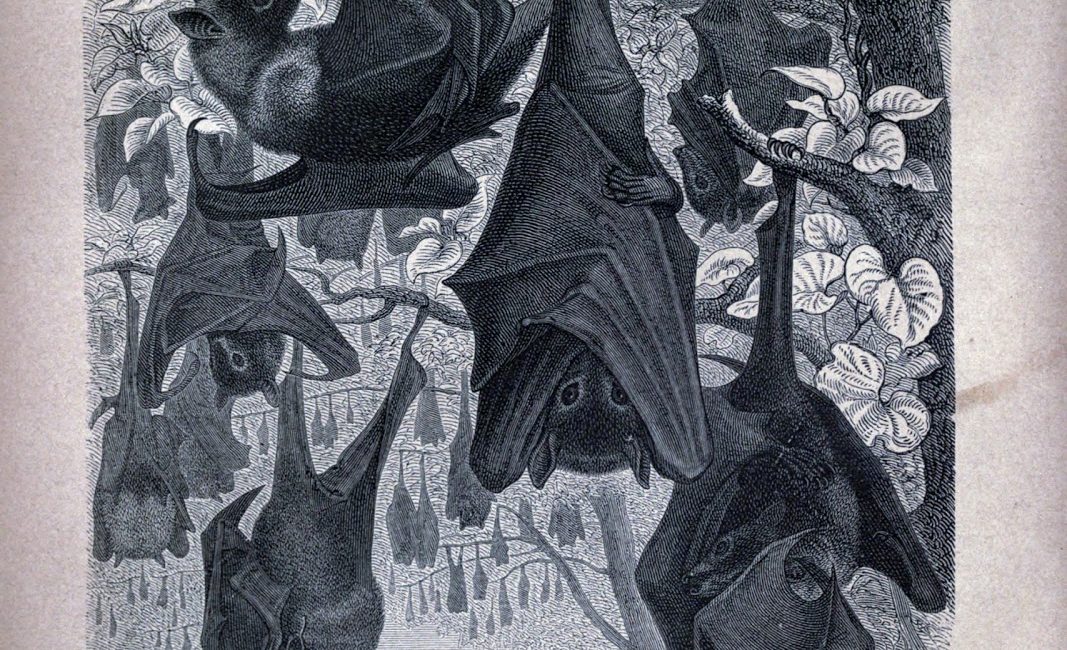
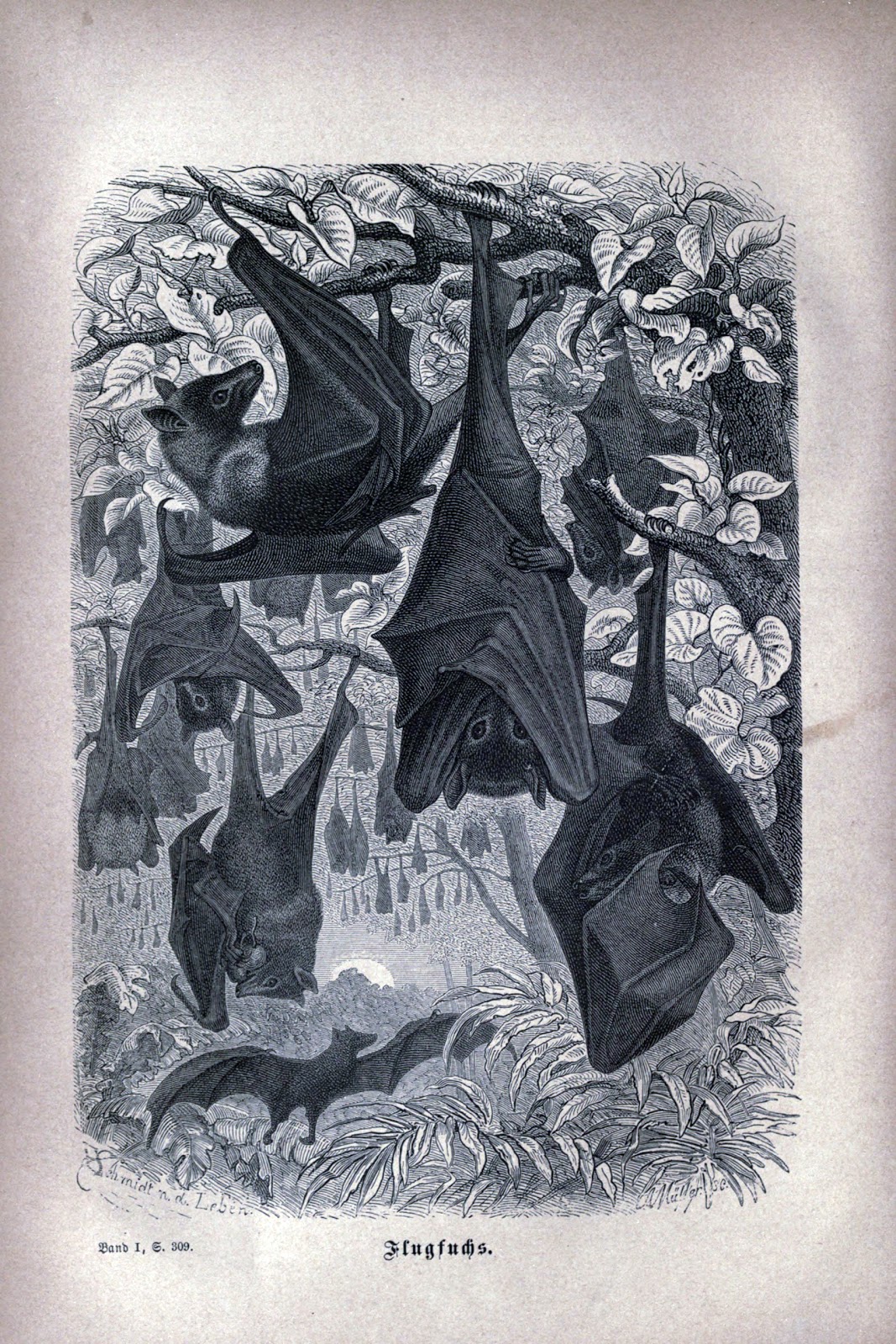
1870s depiction of bats in BHL

Most people associate bats with Halloween because of vampires. Many vampire legends claim that the undead monsters can transform into bats, helping them cover long distances quickly and sneak into the open windows of angelic young girls.

The bat’s original association with Halloween, however, is significantly less ominous. In early times, when the threat of the dead rising from their graves during All Hallow’s Eve was more credited, people would build large bonfires to ward off evil spirits. These fires attracted insects, constituting a small feast for the local bat populations, which would swarm around the fires to catch a midnight snack.

As the association of bats and evil spirits became more imprinted in the minds of credulous civilizations, rumors of bat species from the New World that drank blood only served to further intensify the belief. Unquestionable documentation of the curious species, now known as the vampire bat, by early Spanish explorers sealed the affiliation between bats and evil, and eventually helped give rise to the myths involving vampires (the epitome of blood-sucking monsters) and bats.

View Full Size Image
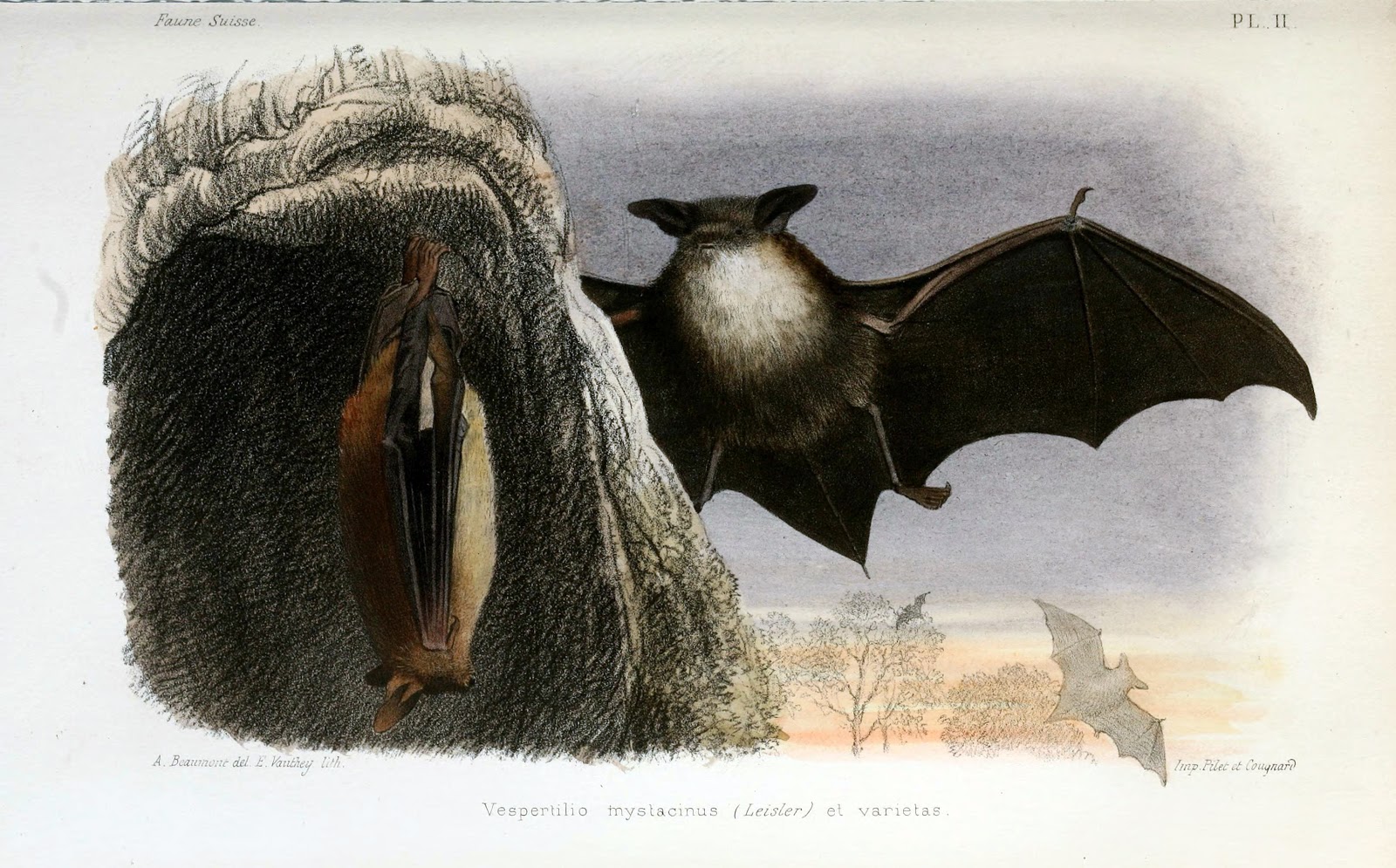
The Whiskered Bat in BHL

Learn about the Bat in BHL with two of our favorite images from our collection: an 1876 illustration from v. 1 of Brehms thierleben, allgemeine kunde des thierreichs and an 1869 illustration from Faune des vertébrés de la Suisse.

Pumpkins

View Full Size Image
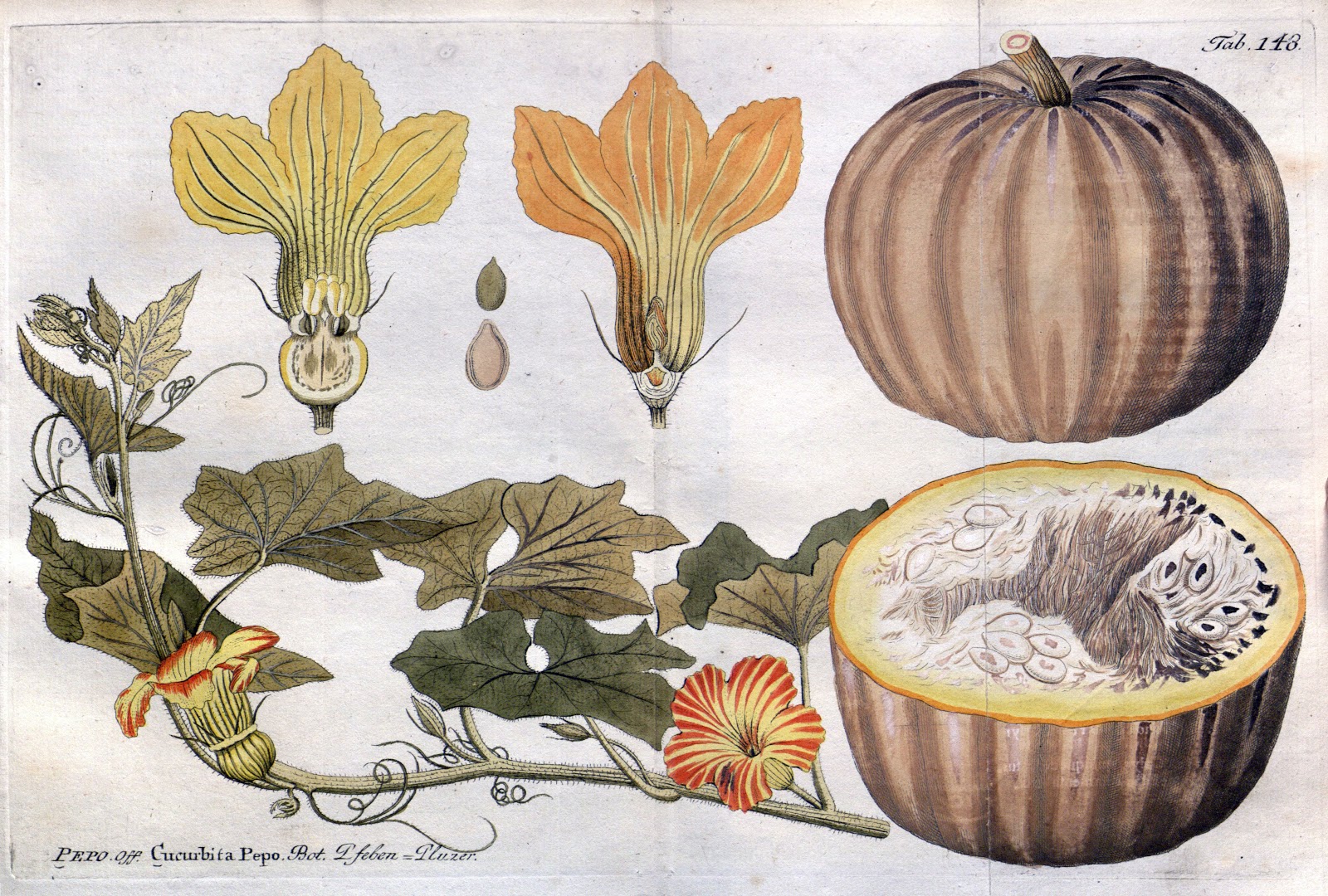
1804 rendering of a pumpkin in BHL

The pumpkin’s role in Halloween is tied to the legend of the Jack-o’-Lantern and the Gaelic festival Samhain. Samhain, whose origins date at least to the eighth century, marked the end of the harvest season and the beginning of winter. It was a day when the “door” to the land of the dead opened just enough to let souls and evil spirits escape into ours. While the souls of one’s dead kindred might be welcomed to a feast, precautions were taken to protect oneself from evil spirits that also wandered the earth on that day. One of those precautions involved “guising,” or dressing in costumes to conceal your identity from the spirits (a tradition we still carry out by dressing up in Halloween costumes). Another involved the Jack-o’-Lantern.

In the nineteenth century, the Irish and Scottish carved turnips or potatoes in the likeness of human faces and lit them with interior candles. These lanterns served several purposes: to light the darkness during Samhain festivities; to represent the spirits present during the night; and to ward off evil beings. When Irish settlers came to America, they found that pumpkins, native to the New World and thus foreign to the British Isles, were more prevalent and easier to carve. The carved pumpkin lantern is first associated with Halloween in an excerpt from Daily News on November 1, 1866:

“The old time custom of keeping up Hallowe’en was not forgotten last night by the youngsters of the city. They had their maskings and their merry-makings, and perambulated the streets after dark in a way which was no doubt amusing to themselves. There was a great sacrifice of pumpkins from which to make transparent heads and face, lighted up by the unfailing two inches of tallow candle.”

Learn more about the pumpkin in BHL and enjoy this fantastic 1804 illustration of this squash in Icones plantarum from 1804.

The Owl

View Full Size Image
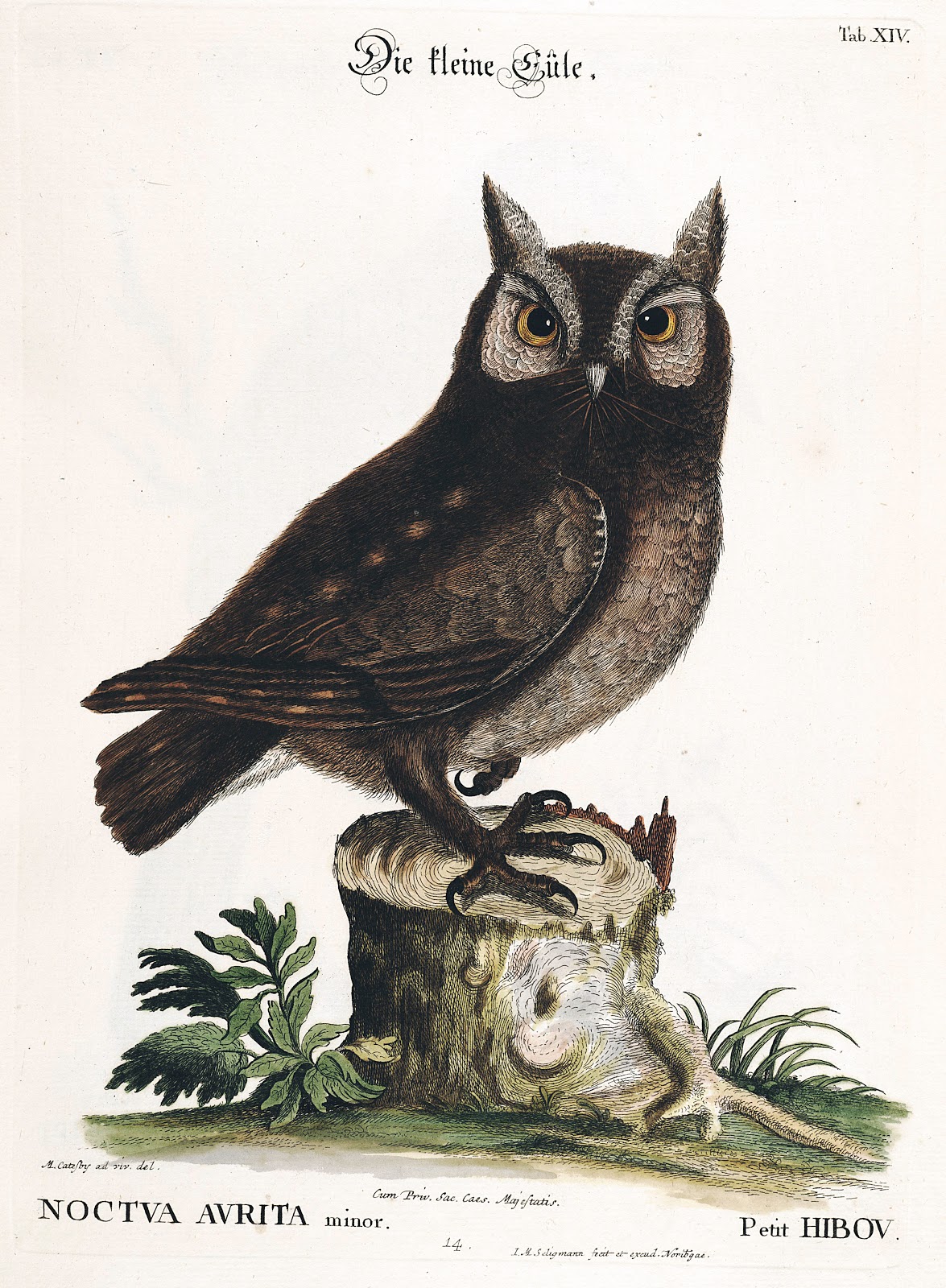
The Owl with Piercing eyes from 1772

Owls have long been sorcery companions. For example, in ancient England, cooking owl eggs until they were ash, and consuming the ashes, was said to improve eyesight. An ancient Greek and Roman superstition asserts that witches could change into owls and after doing so, would swoop down and drink the blood of innocent babes. It has been claimed that owls are the messengers of witches and their hoot relays the approach of a hag.

Though in many ways adorable, when carefully considered, it is not really surprising that owls find themselves so closely tied to mischief. After all, their horn-like head feathers (eerily reminiscent of the Devil himself), their habit of turning their heads as much as 270 degrees in either direction, and their piercing, unblinking eyes may understandably raise the hair on anyone’s arms.

Over the centuries, the owl has become associated with a variety of dark superstitions. For instance, if you hear an owl screech during the night, take heed of your child, for the screech may either kill it or condemn it to become a witch! Other legends claim that only owls can live with ghosts, and the presence of an owl near a house indicates that it’s haunted. If an owl takes up residence on your roof, death is sure to visit soon!

We think the owl was never more captivatingly pictured than in this 1772 illustration from Verzameling van uitlandsche en zeldzaame vogelen.

Corn

View Full Size Image
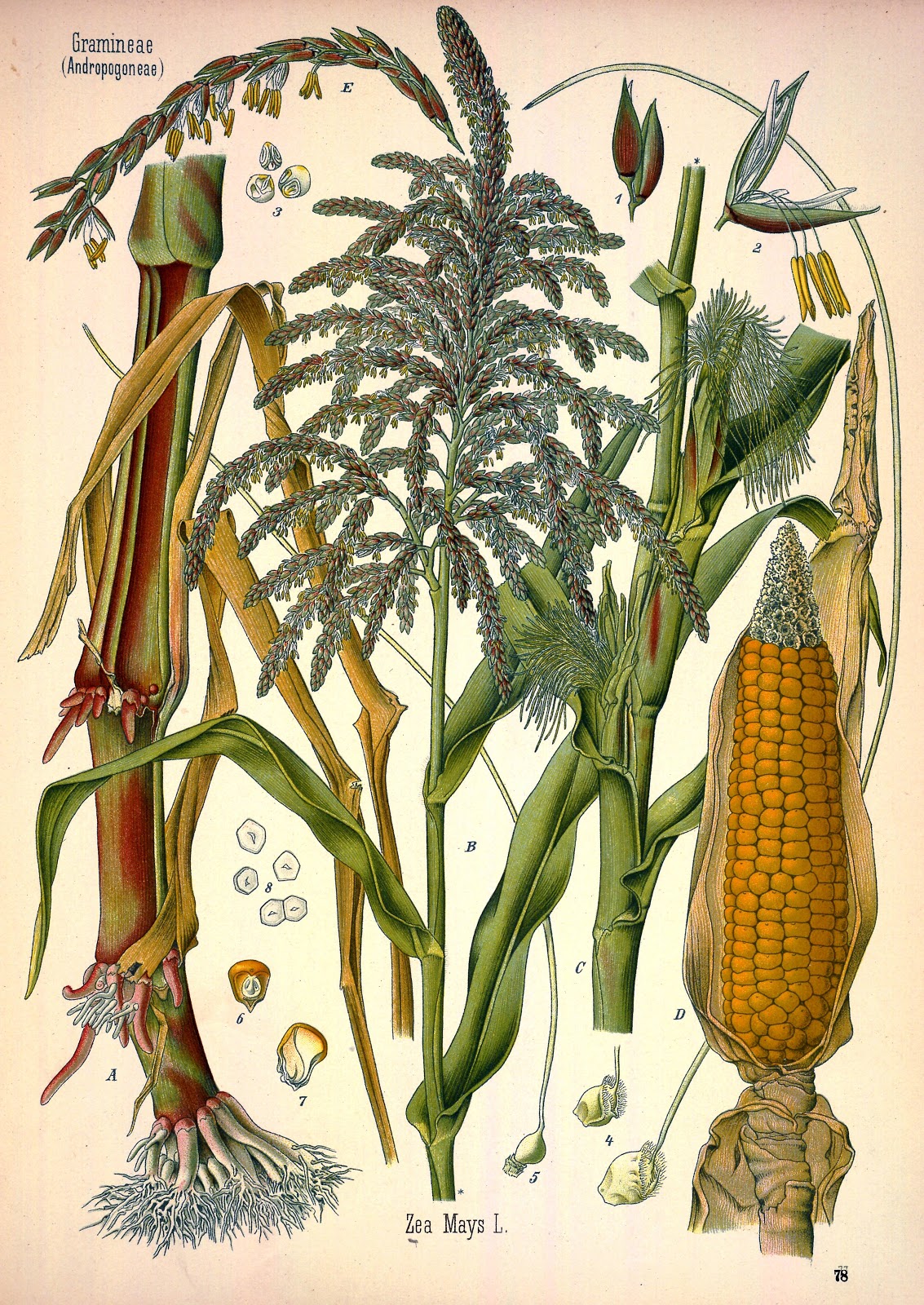
The inspiration for Candy Corn – Zea Mays!

Yesterday was National Candy Corn Day! Candy companies sell more than 20 million pounds of candy corn each year! The colors of a candy corn are meant to reflect the orange and yellow of corn kernels. The sugary treat was first crafted by George Renninger in the 1880s at the Wunderlee Candy Company. The confection, made largely of sugar, corn syrup, wax, and artificial coloring, has remained unchanged in over 100 years.

Think candy corn is limited to the pyramid-shaped treats? Think again! Plenty of companies have jumped on the Candy Corn bandwagon, producing their own versions of this Halloween favorite. Try Jones Soda Company’s candy corn flavored soda! Hershey features candy corn Kisses! Not a huge fan of the classic candy corn flavor? Try Brach’s Caramel, Caramel Apple, and Chocolate Caramel candy corn varieties.

We love this image of Zea mays from v. 3 of Köhler’s Medizinal-Pflanzen in naturgetreuen Abbildungen mit kurz erläuterndem1896-98) that we feature it as one of four designs on our BHL business cards!

The Witch

You may not have been expecting BHL to have any comment on one of Halloween’s most iconic figures – the witch – but with over 39 million pages, we found a way to make a witch scope-appropriate.

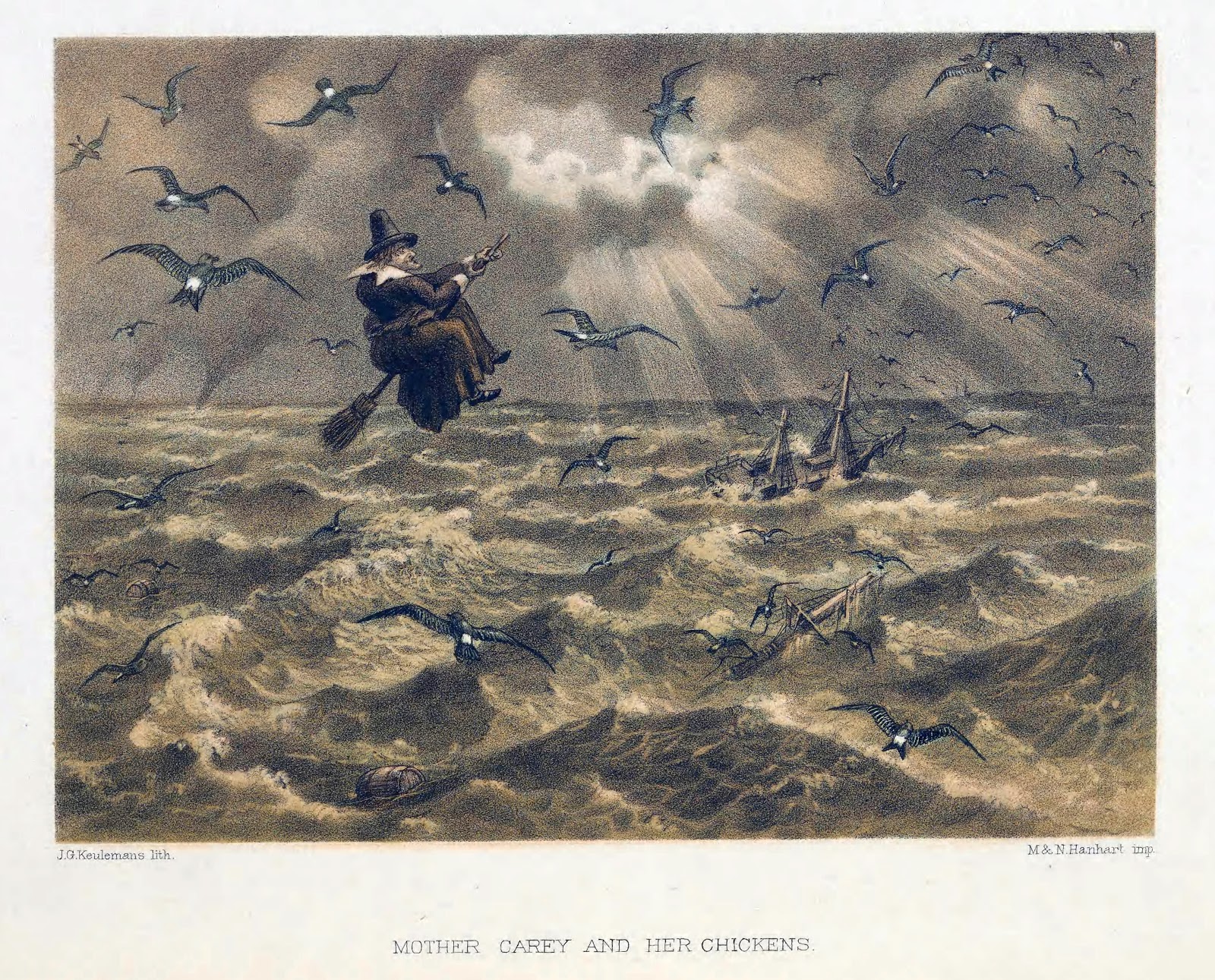
Meet Mother Carey.

View Full Size Image
BHL’s resident witch – Mother Carey

A supernatural figure apparently well-known to nineteenth century sailors, Mother Carey “personif[ied] the cruel and threatening sea,” orchestrating, along with Davy Jones (whom some purport as her husband) shipwrecks and claiming the lives of countless helpless victims. As the petrel species Thalassidroma bullockii and Thalassidroma pelagica are often seen before storms, sailors began branding them as Mother Carey’s minions, bestowing on them the somewhat confusing epithet Mother Carey’s Chickens.

Learn more about BHL’s witch in a past book of the week post.

Anatomically-Correct Biodiverse Costumes

Need a last-minute Halloween costume idea? Try BHL!

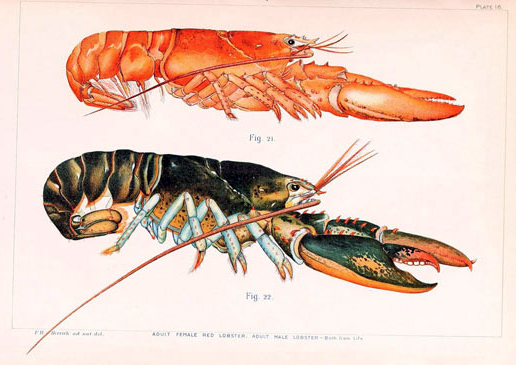
Megan Gambino of Smithsonian.com posted a great blog piece about drawing ingenuous costume inspiration from BHL. With the anatomically-detailed scientific illustrations found throughout BHL, and easily browse-able thanks to the over 46,000 images in our Flickr account, it’s child’s play to pick a species, say a bat or something more unexpected, like a lobster, and design a guise around the creature.

View Full Size Image
Be an anatomically-correct American Lobster for Halloween! Suggestion courtesy Megan Gambino, Smithsonian.com.

So, be bold this year. It’s never been easier to have a biodiverse Halloween!

We hope you enjoyed this post. Interested in guest-blogging for BHL? We’d love that! Natural history, biodiversity and conservation topics are especially welcomed. Email us your ideas at [email protected].

October 31, 2012by Grace Costantino
Page 50 of 71« First...102030«49505152»6070...Last »

Help Support BHL

BHL's existence depends on the financial support of its patrons. Help us keep this free resource alive!

search

About BHL

The Biodiversity Heritage Library (BHL) is the world’s largest open access digital library for biodiversity literature and archives. BHL operates as a worldwide consortium of natural history, botanical, research, and national libraries working together to digitize the natural history literature held in their collections and make it freely available for open access as part of a global “biodiversity community.”

Join Our Mailing List

Sign up to receive the latest news, content highlights, and promotions.

Subscribe Now

Subscribe to Blog via Email

Enter your email address to subscribe to this blog and receive notifications of new posts by email.

Join 319 other subscribers

Subscribe to Blog Via RSS

Subscribe to the blog RSS feed to stay up-to-date on all the latest BHL posts.

Access RSS Feed

Inspiring Discovery through Free Access to Biodiversity Knowledge.

The Biodiversity Heritage Library makes it easier than ever for you to access the information you need to study and explore life on Earth…for free, anytime, anywhere.


64+ Million Pages of
Biodiversity Literature Online.

EXPLORE

Tools and Services
to Transform Research.

EXPLORE

300,000+
Illustrations on Flickr.

EXPLORE

ABOUT | HARMFUL CONTENT | PRIVACY | SITE MAP | TERMS OF USE