Biodiversity Heritage Library - Program news and collection highlights from BHL
  • Home
  • News
  • Featured Books
    • All Featured Books
    • Book of the Month Series
    • BHL at 20
  • User Stories
  • Campaigns
    • Fossil Stories
    • Garden Stories
    • Monsters Are Real
    • Page Frights
    • Her Natural History
    • Earth Optimism 2020
  • Tech Blog
  • Visit BHL
Home
News
Featured Books
    All Featured Books
    Book of the Month Series
    BHL at 20
User Stories
Campaigns
    Fossil Stories
    Garden Stories
    Monsters Are Real
    Page Frights
    Her Natural History
    Earth Optimism 2020
Tech Blog
Visit BHL
  • Home
  • News
  • Featured Books
    • All Featured Books
    • Book of the Month Series
    • BHL at 20
  • User Stories
  • Campaigns
    • Fossil Stories
    • Garden Stories
    • Monsters Are Real
    • Page Frights
    • Her Natural History
    • Earth Optimism 2020
  • Tech Blog
  • Visit BHL
Biodiversity Heritage Library - Program news and collection highlights from BHL
BHL News, Blog Reel, User Stories

Life and Literature Conference Attendee Interviews: Part 1

Portrait version of the Biodiversity Heritage Library logo.

As we continue to explore the various outcomes of the Life and Literature conference, two common questions we receive are, “Who was at the conference” and “What did they have to say about it or BHL?” If you are also asking yourself these questions, then you’re in luck! While at the conference, we conducted interviews with several of the attendees, asking them these very things. And we’ve made these interviews available on the Life and Literature website.

This week on the BHL blog, we’ll post a few of the 17 interviews each day, giving you the chance to get to know the thoughts and opinions of those at Life and Literature. And if these interviews stimulate ideas and opinions about the conference or BHL in you, be sure to share those on our Titan Pad discussion pages! Don’t forget that conference notes and speaker presentations can also be found on the website. If you attended the Life and Literature conference, be sure to take the survey, which will be closing November 30th.

We would like to extend a special thanks to Jennifer Rubin, Matthew Regan, and Bianca Crowley for conducting these interviews, and to all those who participated and shared their valuable thoughts with us. Enjoy the first 3 of the 17 interviews below, and see them all on the Life and Literature website.

George Dyson:

Edward Valauskas:

Lucy Waruingi:

November 28, 2011by Grace Costantino
BHL News, Blog Reel

Post Life & Literature: Themes and Outcomes

View Full Size ImageIf you happened to be living under a rock for the past two weeks and missed our blog posts, tweets, and posts on Facebook, you might have missed the fact that last week was the Life and Literature Conference, an event hosted by BHL with the express purpose of generating conversations about the priorities for biodiversity literature digitization, particularly as it pertains to BHL, for the next 4-5 years. The conference, which took place November 14-15, 2011, in Chicago, IL, brought together interested parties in a variety of disciplines, including science, education, informatics, and the humanities. Lively discussions and insightful presentations ensued both days, with dozens of live tweets (hashtag #lifelit) constantly streaming for those who could not participate in person.

The conference was divided into four panel discussions, followed on the second day by break-out sessions that allowed attendees to delve deeply into the various topics discussed during panel sessions, ultimately leading to an outline of the various areas deemed most important for BHL to focus on in the next 4-5 years. The four panel sessions included “Research, Informatics, and the Published Record;” “Publishers, Aggregators, and Authors – New Models and Access;” “Learning and Education;” and “Building Collaborative Networks for Science and the Humanities through Scientific Literature.” A synopsis of the four panels can be found on the Life and Literature site, as well as a list of each of the presenters and their biographies. Session presentations are being loaded to the BHL wiki and can be accessed on the Presentations page. Notes from the sessions can be found on the Life and Literature website. You can also view interviews of conference attendees on the website.

View Full Size ImageIn order to facilitate a discussion with the audience during panel and breakout sessions, BHL staff used an application called Titan Pad, which provides a collaborative environment that allows anyone to access a document to view, edit, or make comments in real time. There were Titan Pad pages for each of the panels and breakouts, and live notes, as well as live discussion, occurred via those avenues. These pages remain live, and we encourage anyone interested to continue the discussion in the weeks to come!

While many ideas and themes resulted from the discussion generated at the conference, perhaps the most recurring topic involved the connection between science and the humanities. Presentations by speakers at the Humanities panel highlighted some of the possible intersections between art and science, and each breakout session touched upon the various ways that BHL could partner with the humanities and make the biodiversity illustrations already in BHL more accessible. The BHL Flickr site, which currently houses more than 20,000 images, was a huge success, and attendees discussed additional ideas about how BHL could further promote its illustrations and engage the arts and humanities communities. Such ideas as specific image searching interfaces, image-specific collections, and collaborations with artist communities were discussed, and BHL staff outlined some art-related grant projects currently in the works.

The winner of the Life and Literature Code Challenge was also presented at the conference. The Code Challenge asked users to create applications that would use, disseminate, or display BHL data in new and meaningful ways. The winner? Ryan Schenk, with his application Synynyms. Synynyms works as a taxonomic name aggregator, finding all of the different names given to a species over the years and displaying the frequency of each name variety throughout history. The names are provided by the Encyclopedia of Life, and the publications come from, you guessed it, BHL! Congratulations to Ryan, and thanks for sharing such an awesome tool with us!

View Full Size ImageLast, but certainly not least, two new members of the BHL family were announced, Cornell University Library and the United States Geological Survey (USGS) Libraries. With these new members joining the fold the BHL consortium is now 14 members strong! Stay tuned for more information about BHL’s newest members to come in future posts.

The Life and Literature conference was also surrounded by a variety of other important BHL meetings, including a BHL Global Meeting (see previous post on the event), a BHL Staff meeting, and a meeting devoted to a discussion on the digitization of biodiversity literature in Africa. Watch for posts on the latter two meetings in the days to come.

As we think about the outcomes of the conference, we are excited to explore the possibilities for the future and inform our development through user feedback. For BHL to serve its purpose, it must meet the needs of its user community, and events like Life and Literature allow us to gather and assess those needs. However, if you couldn’t make it to Life and Literature, or if you did but still have more thoughts on BHL’s future, you can still share them! Contribute your ideas through our Titan Pad discussions, by submitting feedback to our website, or posting your ideas via twitter (@biodivlibrary) and Facebook! We’re waiting to hear from you, and thanks to everyone who made Life and Literature such an exciting and successful venture!

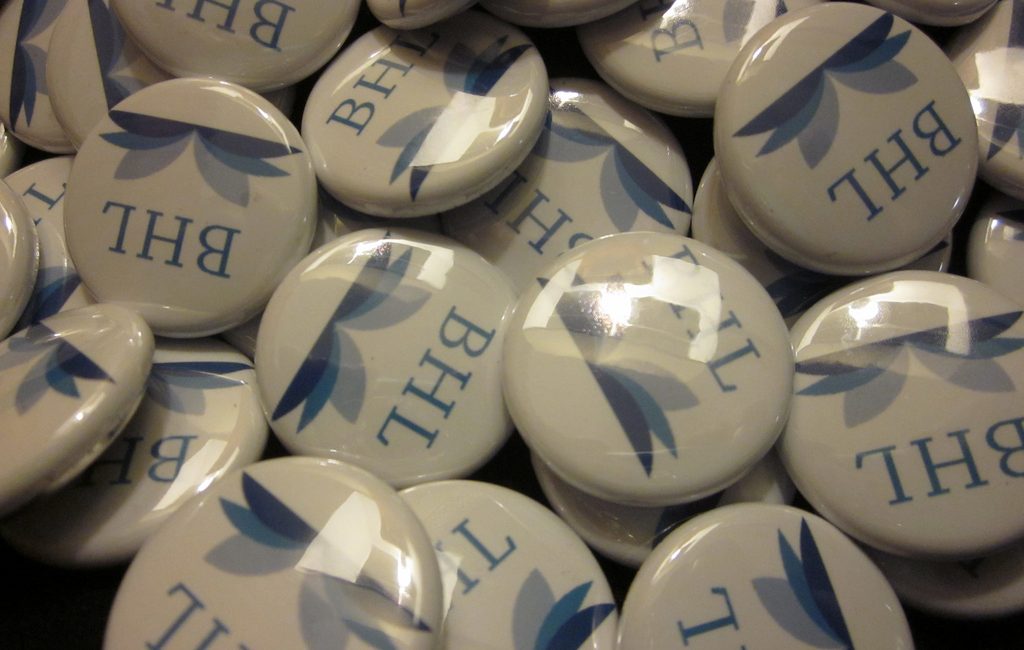
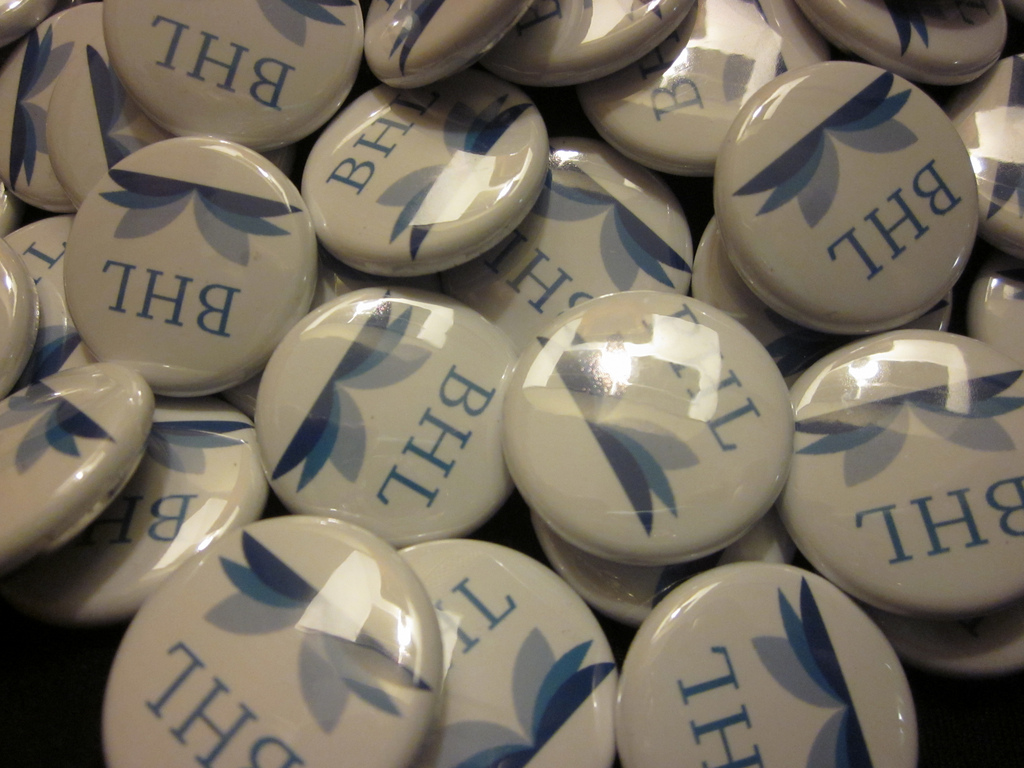
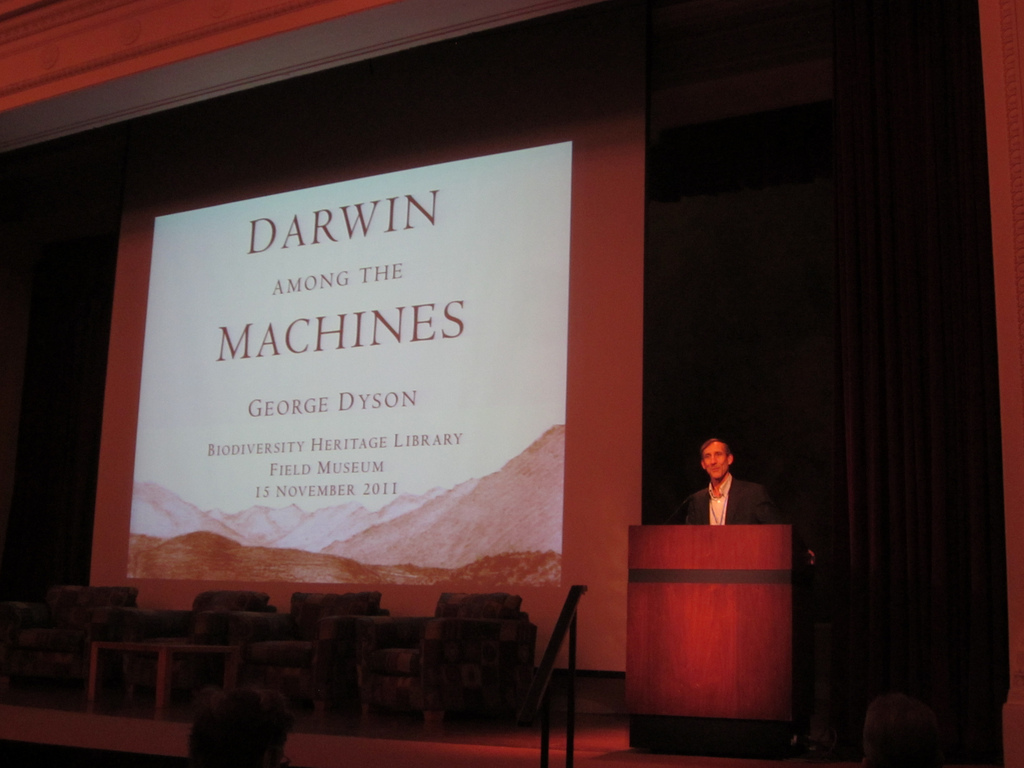
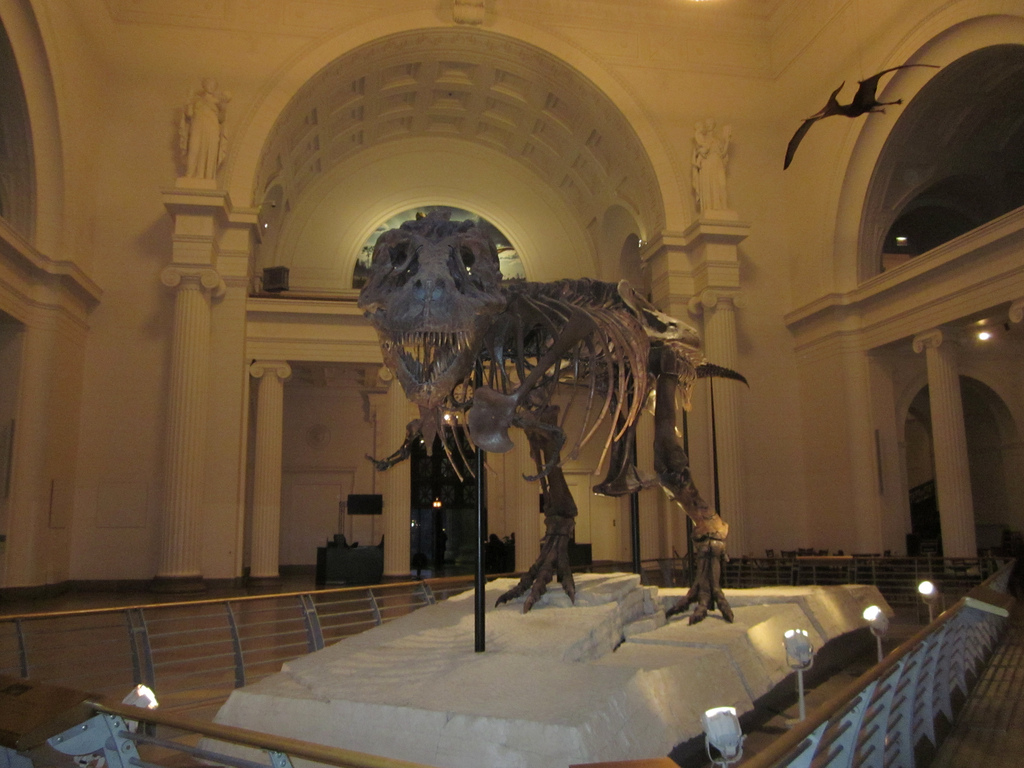
(Images: All images courtesy Martin Kalfatovic. Top: BHL Buttons presented at the Life and Literature Conference; Middle: George Dyson delivering the second plenary speech at Life and Literature; Bottom: SUE – the largest, most complete T-Rex skeleton ever discovered, on display at the Field Museum, the Life and Literature Conference venue)

November 22, 2011by Grace Costantino
Blog Reel, Featured Books

Book of the Week: Voyages to South America

Portrait version of the Biodiversity Heritage Library logo.

This week for our book of the week, we feature a title that Charles Darwin himself called “one of the great monuments of science in the 19th century.” The book? Voyage dans l’Amérique Méridionale(1835-47), by Alcide Dessalines d’Orbigny. The work chronicles d’Orbigny’s travels to South America for the Paris Museum from 1826-1833. As a result of this voyage, d’Orbigny returned to Paris with more than 10,000 natural history specimens.

Alcide d’Orbigny was a French naturalist born in 1802 that studied a variety of fields including zoology, paleontology, geology, archaeology, and anthropology. He was born to a ship’s physician and naturalist, which made his choice of occupation a natural one. When his family moved to La Rochelle in 1820, d’Orbigny’s interest in natural history was nourished as he began to study the marine fauna in that area. Shortly thereafter he moved to Paris, where he closely studied the work of Georges Cuvier.

d’Orbigny’s mission to South America included visits to Brazil, Argentina, Paraguay, Chile, Bolivia, and Peru. d’Orbigny described some of the 10,000 specimens he collected in our book of the week, Voyage dans l’Amérique Méridionale, which was published in 90 fascicles. As mentioned, Darwin highly praised the work, and d’Orbigny even named select species after him. For instance, the common name of Rhea pennata is Darwin’s Rhea.

After 1840, d’Orbigny focused his attention on fossils, publishing two important titles on the subject between 1840 and 1850. In 1853, he became a professor of paleontology at the Muséum National d’Histoire Naturelle in Paris. The position of Chair of Paleontology was created especially for him, and his geological timescales and strata are still used today as chronostratigraphic reference.

For our post, we’re featuring some of the species that d’Orbigny described as a result of his voyage to South America, particularly those contained in v.9 of the title. You can see all of the images from this volume on our Flickr site, and be sure to check out a few of the other volumes from the title that we have in BHL.

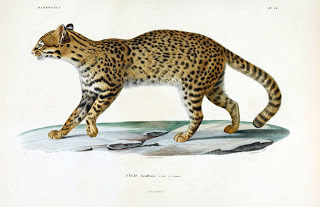
View Full Size ImageGeoffroy’s Cat Leopardus geoffroyi: A wild cat found in Southern and Central South America that is about the size of a domestic house cat. While fairly abundant, issues over land-use changes in its habitat, as well as intense international fur trade in the 1960s-80s, results in this species being listed as “Near Threatened” by the IUCN.

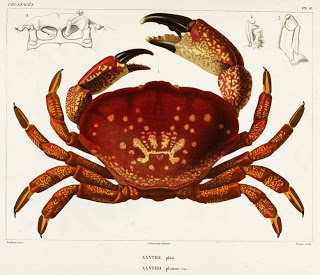
View Full Size ImageXantho planus: A crab species of the family Xanthidae, the largest crab family in terms of species richness, with 572 species and 133 genera. Species of Xanthidae are commonly called mud crabs, pebble crabs or rubble crabs. They are poisonous, containing a toxin, similar to that produced by puffer fish, for which there is no antidote and which is not destroyed by cooking.

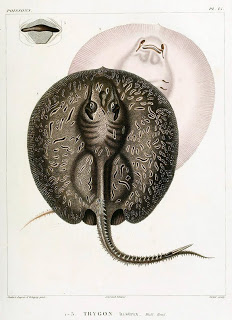
View Full Size ImagePorcupine River Stingray Potamotrygon hystrix: This species is found within marshy, freshwater zones of the Paraná-Paraguay River basin. When it remains perfectly immobile, partially covered by sand, and exercising homochromy (a process of protective coloration that allows the animal to blend into its environment), this species is practically undetectable to the eye. Its tail contains 1 or more spines, which are covered in a toxic mucus that inflicts painful wounds.


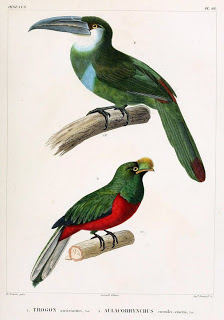
View Full Size ImageBlue-banded Toucanet Aulacorhynchus coeruleicinctis – Top Figure: This species of Toucanet lives in Bolivia and Peru. Members of the Toucan family, Toucanets are near-passerine or high land-birds, meaning that they are arboreal birds believed to be related to true passerines. Passerines, which are of the order Passeriformes, include more than half of all bird species, with over 5,000 identified species. This is approximately twice as many species as that contained in the largest mammal order, Rodentia, and, with over 110 families, it has the second most families of any order of vertebrates, after Perciformes (bony fish).

November 3, 2011by Grace Costantino
Blog Reel, Featured Books

Book of the Week: Halloween, Witches, and Cattle

View Full Size Image

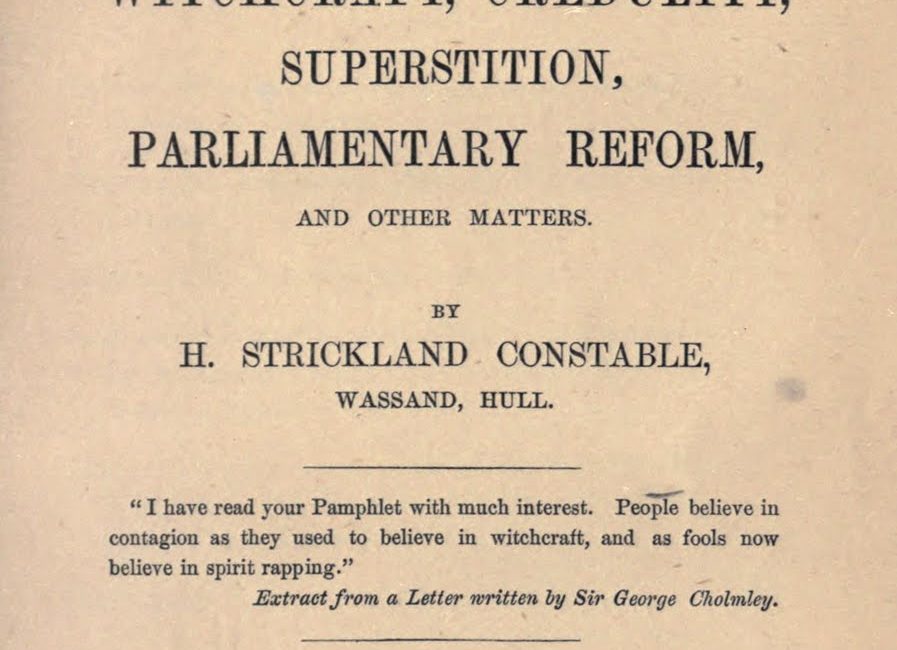
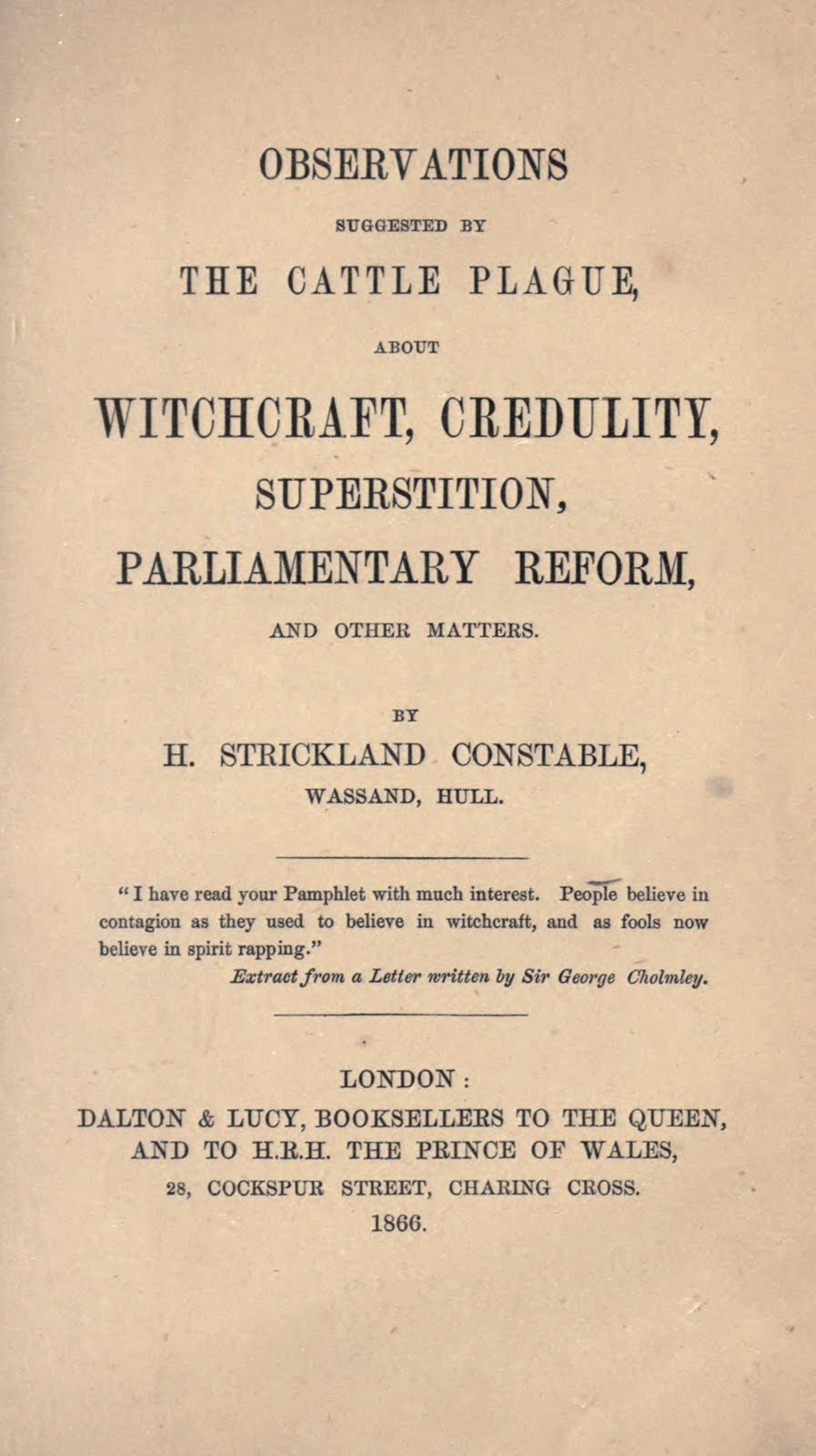
It’s almost Halloween, and to celebrate, we wanted to feature a book that properly connoted the Halloween spirit. What did we find? Observations Suggested by the Cattle Plague, About Witchcraft, Credulity, Superstition, Parliamentary Reform, and Other Matters (1866), by H. Strickland Constable. This book is a delightful, tongue-in-cheek discussion of the unconventional cures for ailments and diseases that were popularly accepted during the time period. You might be asking, why is this kind of a book in BHL? The answer: Cattle! The whole discussion around which the book is based relates to a outbreak of Cattle Plague that was sweeping the globe, and Mr. Constable had quite a few things to say about some of the methods employed by citizens attempting to protect their livestock from such a devastating catastrophe.

For our post, we want to concentrate on the first chapter, entitled “Charms-Witchcraft-International Veterinary Congress.” Mr. Constable starts by observing that, over the past year, there had been many “valuable precautionary measures” utilized by various cattle ranchers and farmers to protect their livestock from the deadly outbreak of the plague (called Rinderpest). These included “hanging camphor bags or strings of onions round the necks of all healthy animals, painting their noses with tar, etc.” Apparently, all such measures had met with “great success!” Mr. Constable points out, however, that he was surprised at the apparent lack of awareness that many people demonstrated regarding similar devices that were used in the past, and this is where things really start to get good.

Since people seemed to be largely unaware of the methods taken over previous centuries to protect against ailment and disease, Mr. Constable makes sure to enlighten us. He facetiously demands, if onions and camphor are already being used, that these alternative methods also “ought at least to have been tried.” For instance, there is the use of the word “Abracadabra,” which, according to Serenus Sammonicus, is “of the very utmost value in all cases of…fever.” And then one must consider the use of precious stones. Camillus Leonardus asserted that emeralds prevent epilepsy and “unmask the delusions of the devil,” serpentine cures dropsy (“because if people stand with it in a very hot sun for three hours, they break out into a profuse perspiration”), red coral “strengthens digestion,” red cornelian cures dysentery, green jasper prevents fever, and chrysolite “held in the hand cures fever.” Mr. Constable asserts that, since Rinderpest is a fever, chrysolite and green jasper should be tied around the cattle’s neck.

And, since we’re talking about unconventional methods, why not bring witchcraft into the mix? Constable states that the 1489 book of witchcraft, Hexenhammer, “teaches witches how to make magic ointment for the destruction of cattle,” which can be applied to cow-house door posts to spread the disease. And, while we’re talking about witches, although it has nothing to do with cattle, Constable thought it fitting to bring up the 1669 incident in Sweden in which 62 witches were executed for bewitching children. It seems that, riding on goats, these witches would abduct children and take them to a rock in the sea called Blokula, after which they, the children, and the devil would “feast on cabbage and oatmeal porridge.” However, only the older witches were allowed to feast. The younger witches “were set to take care of the toads and keep them in order with long, white sticks.” And if that wasn’t enough, for his amusement the devil would “make the witches ride on long poles, and then all at once he would pluck away the poles, when down would tumble the witches, to his very great glee.”

Constable ends the chapter by discussing, with extreme gusto, the Grand International Veterinary Congress, as recounted by Mr. Gamgee in “The Cattle Plague.” It appears that the purpose of this Congress was largely to debate the origin of Rinderpest in German cattle, with some additional mention of scab, pigs, malignant disease in Stallions, and the keeping of dogs. Constable writes, “It is exceedingly entertaining. Such as charming farrago of antiquated ideas about contagion, infection, Government interference, official inspections, police regulations, veterinary supervision, restrictions on traffic, quarantine, inoculation, etc. etc., I could not have believed possible to find extant in any civilized country in this the nineteenth century.” The conclusion of the Congress? Rinderpest comes only from Russian cattle, and that “the Russian cattle will impart the disease in any country, at any distance of time after leaving Russia, and without ever having any disease themselves.”

So, what does our good Mr. Constable conclude after all of this speculation and discussion? He purports that the ridiculous ideas that people come up with to account for the occurrence of diseases like Rinderpest, and the fact that some individuals contract it while others don’t, only occur as a result of people being unwilling to admit that they do not know where the diseases come from or how they work. Men instead prefer to concoct “idle theories” that blame witches and Russian cattle.

There are several more great chapters in this book, including topics such as the origin of Cholera, “erroneous popular notions about disease,” utilitarianism, and metaphysics. As you prepare for your Halloween celebrations, maybe you should consider wearing a nice necklace of onion or camphor to protect yourself against all that rampant Rinderpest! Happy Halloween! (And, for your ghoulish Halloween delight, we thought we’d share this lovely image of a spider ensnaring it’s prey. See more spider images in our Flickr account).

View Full Size Image

October 27, 2011by Grace Costantino
BHL News, Blog Reel

What’s in a Logo? Our Users Speak

Several months ago, we introduced a new BHL logo, and to publicize the event, we published a blog post that detailed the various images that BHL Staff Members saw within the abstract lines of our new logo. At the end of the post, we asked our users to share their interpretations of the logo with us as well. Many of you did, and, as promised, we’re sharing those today. We send a special thanks to all of you who shared your thoughts with us, and if our logo inspires other ideas, don’t hesitate to share them by commenting on this blog, sending us a tweet (@BioDivLibrary), or posting on our Facebook wall.

View Full Size Image1) Water: Two users, Aloysius Horn and an anonymous user, left comments on our previous blog post indicating the logo looked like water/waves to them.

View Full Size Image2) Mountains: Via a comment left on a our blog, John told us that our new logo reminded him of mountains.


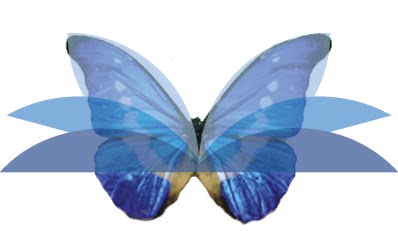
View Full Size Image3) Butterfly Wings: Sanlin replied, via Twitter, that our logo looked like the flapping wings of a butterfly.


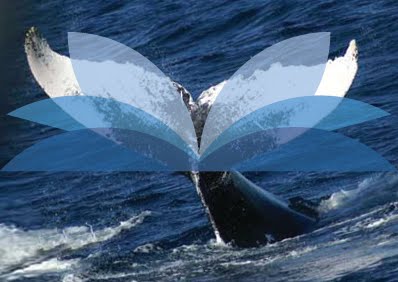
View Full Size Image4) Humpback Whale Tail: Peter Desmet commented via our previous blog post that our logo is “obviously the tail of a humpback whale disappearing behind the waves.”


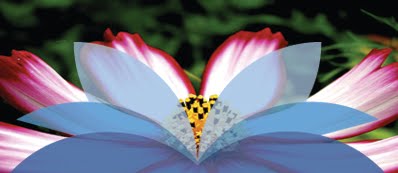
View Full Size Image5) Flower: An anonymous user on our blog suggested that the logo looks like the petals of a flower.


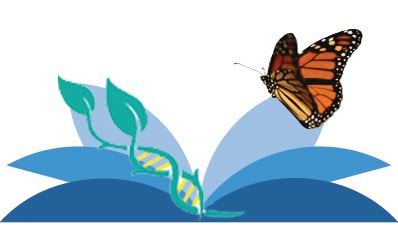
View Full Size Image6) Our final suggestion involved our former logo, which contained a double-helix and a butterfly. Matt Person (a BHL staff member at MBL-WHOI) told us via Twitter that, in the new logo, he envisioned “a great double helix about to emerge from the center of the logo with a butterfly darting about the top of it.”

October 25, 2011by Grace Costantino
Blog Reel, User Stories

BHL and Our Users: Dr. Francisco Welter-Schultes

Portrait version of the Biodiversity Heritage Library logo.

View Full Size ImageThis week, we feature one of our colleagues from “across the pond,” as we like to say. Meet Dr. Francisco Welter-Schultes, whose many accomplishments include studying mollusks at the University of Goettingen, initiating and running the AnimalBase project, and, last but certainly not least, participating in the BHL-Europe project!


What is your title, institutional affiliation, and area of interest?

I am a biologist interested in terrestrial molluscs of Europe, working in or affiliated to the University of Goettingen, Germany (I have a small office there and sometimes I am also paid…). Like many researchers in the field of taxonomy and species identification, I had to collect a lot of literature to get to know what many others did before I came in. In passing by I became skilled in writing bibliographies and finding literature. In 2003 I initiated the AnimalBase project to scan literature (from Goettingen Library resources) and create a database to link zoological names with their original descriptions.

How long have you been in your field of study?

First systematic fieldwork in 1985; scientifically since 1990.

When did you first discover BHL?

Must have been in 2005 or 2006. It was part of my job to check if literature was already online somewhere else so that we would not need to scan it in the AnimalBase project. I guess I must have been one of the first regular users of BHL.

What is your opinion of BHL and how has it impacted your research?

My mollusc research became much faster and more efficient since I have been able to check sources online. Not only BHL, also Google Books and other providers, and of course sources provided by BHL-Europe consortium members including our own content (Goettingen), which we hope will some day be accessible in one big portal. Before 2005 I had to go to the library and order book by book, implying delays of several days between research actions. Today this goes much faster. About 70% of the sources I currently need to verify in my mollusc research are BHL sources. I use Google Books only if BHL does not have the title (or if the title does not show up in my BHL search).

How often do you use BHL?

Practically every day of work.

How do you usually use BHL (read the titles online/download whole PDFs/Select Pages to Download for a custom PDF/etc.)?

I usually read the titles online. I usually know exactly what I am looking for. In most cases it’s only checking one or two pages in a title (I know exactly which ones) and then closing the site. The BHL website does not work well on my notebook, and the PDF download function does not work.

What are your favorite features/services on BHL?

A very good default search function – very efficient; I really like it. Page level scrollbox in the online viewer, very useful. Makes my work really quick. I provide links to BHL resources from the AnimalBase website and appreciate that BHL links to items have been stable from the beginning on. I also appreciate very much that BHL is very rarely offline!

If you could change one thing about BHL, what would it be, or what developmental aspect would you like the BHL team to focus on next?

  • Improving bibliography metadata (journal volume numbers and years) and most important: page-level metadata. Missing plate numbers and Roman pages in the page-level metadata are a big problem. The page-level scrollbox is very important for my work.
  • Online book viewer should be faster; black and white text pages should be shown instead of brown on tan.
  • “Scanning more pages” is too easily said, and such a suggestion would not be a good guide for you. “Filling the gaps in serial runs” would be a more useful approach. Actually this is the contrary of “scanning more pages” because identifying gaps in serial runs and scanning single journal volumes is much more expensive than simple and brainless mass digitisation.

If you had to choose one title/item in BHL that has most impacted your research, or one item that you prefer above any other in BHL, what would it be and why?

There are some titles that I consult repeatedly, which are simply the important monographs of European terrestrial Malacology of the late 1880s (Westerlund 1884-1890 and Pfeiffer’s Monographia Heliceorum 1848-1877). Boring for the non-insider. From my experience in researching rare titles I have occasionally found really rare titles in BHL, about which I was very surprised and happy! They were titles I had found to exist only in very few libraries in the world, and I had not suspected BHL had them. These were real BHL highlights.

Thank you, Dr. Welter-Schultes, for giving us a brief glimpse into your life, work, and relationship with BHL! Improving our page-level metadata is certainly a priority for us, and, slowly but surely, we are making our way through the millions of pages in our collection. If there are specific titles for which you’d like to see the pagination improved, please let us know via our Feedback Form! Similarly, as we work to fill gaps in our collection, if there are any specific volumes from specific titles that you’d like us to add, please don’t hesitate to let us know as well.

To learn more about Dr. Welter-Schultes, visit his website. Be sure to check out the BHL-Europe website as well! We look forward to future collaborations and the opportunity to share our resources with our friends on the continent and around the world!

October 13, 2011by Grace Costantino
Blog Reel, User Stories

BHL and Our Users: Megan Raby and the History of Biology

View Full Size ImageTaking a break from our miniseries of the past few months, featuring EOL Rubenstein fellows, this week we feature Megan Raby, who uses BHL to support her research involving the history of biology.

What is your title, institutional affiliation (or alternative place of employment), and area of interest?

I am a dissertator in the History of Science at the University of Wisconsin-Madison. My dissertation focuses on the history of American involvement in tropical biology in the Caribbean in the early twentieth century. I’m interested in the intersection of the history of biology and environmental history, and the role of science in the changing relationships between the US and the rest of the world.

How long have you been in your field of study?

I began to get interested in graduate work in the history of science while finishing my BS in Earth Sciences at Montana State University. That would make it about 7 years.

When did you first discover BHL?

I’m not quite sure when I first stumbled upon the site, but certainly over the past 4 years I have begun to use it more consciously.

What is your opinion of BHL and how has it impacted your research?

It has been incredibly helpful. While we have a wonderful library system here at UW, there are times when I just need a quick look at a relatively obscure volume. Checking it online rather than running over to a library or having to ILL saves me a lot of time. Actually though, I have found it most useful to be able to search within texts, in conjunction with the physical book. For example, I went through many decades of the Annual Reports of the Smithsonian Institution while holed up in the Wisconsin Historical Society stacks, but I searched with BHL alongside. It’s easier and faster to read the physical copy, and flip between text and contents when you are sure the information you are looking for is in there. But searching the text electronically can help you find references that are not expected from the contents or index. I’ll also mention that I found a couple scanning errors while going through the Smithsonian annual reports, and BHL fixed them immediately. It was amazing. One point I want to make is that BHL doesn’t replace the original books­­––but it does make them easier to find and use. I really see physical libraries and BHL as complementary tools.

How often do you use BHL?

Depending on what phase of research I am in, it could be from a few times a month to a few times a day.

How do you usually use BHL (read the titles online/download whole PDFs/Selecting Pages to Download/etc.)

I usually download whole PDFs, because it is easier to search within the whole text, and take notes, this way. If I am looking for a particular piece of information, or just skimming to see if a text might be useful, then I read online. I have sometimes made custom PDFs for articles within larger volumes.

What are your favorite features/services on BHL?

I am just glad that so many of the kinds of texts I need are accessible there, from expedition reports and regional floras, to the bulletins of various botanical gardens and museums. I am happy that they can be downloaded as PDFs which makes reading, searching, and note-taking very easy. I also like the links to BHL from http://plants.jstor.org.

If you could change one thing about BHL, what would it be, or what developmental aspect would you like the BHL team to focus on next?

First, it would be amazing to be able to search in-text across multiple volumes. As it is, I either come to BHL looking for a particular text or else happen upon one through a Google search. Subject terms and titles are useful, but sometimes I am looking for very brief references within the text that would not show up in a subject term. Being able to search across the texts in BHL would help me find surprising and unexpected references. Second, it is currently a bit difficult to find articles within larger volumes unless you already know where they are. You can go through each volume of the Bulletin of the New York Botanical Garden individually and search, but you can’t see or search the titles or authors of articles within volumes using advanced search. Finally, tools similar to Google Ngrams or JSTOR Data For Research would allow you to take advantage of the texts in aggregate. I would love to be able to graph references to tropical organisms, or to terms related to ideas about tropical “biodiversity,” over time using the BHL sources.

If you had to choose one title/item in BHL that has most impacted your research, or one item that you prefer above any other in BHL, what would it be and why?

That’s a tough one. Probably the Smithsonian annual reports have been the most useful, as they helped me get a solid chronology for one part of my dissertation when I was just starting. But I will mention another “neat” source I used in the chapter I just wrote: Living Plants and Their Properties: A Collection of Essays, edited by Joseph Charles Arthur and Daniel T. MacDougal, 1898. In it, I was able to find a reprint of a talk, “Mimosa: A Typical Sensitive Plant,” that MacDougal, an American botanist, gave to a Jamaican natural history society while in the colony looking for a potential site to establish an American tropical research station. I had not known at the time that a copy of that talk was available in print, and it gave me evidence about why MacDougal thought more research needed to be done on living tropical plants in their own environments, as well as how he interacted with scientists in Jamaica. Also, the book includes some articles in which J. C. Arthur muses about whether plants can feel pain­­––but that will have to wait for another research project!

Thanks, Megan, for giving us a glimpse into your work and the role BHL plays in your research! You may be interested in some of the work Roderic Page has been doing graphing the occurrence of names in literature over time using BHL or Ryan Schenk’s work visualizing taxonomic synonyms over time, as you mentioned that you would love to “graph references to tropical organisms, or to terms related to ideas about tropical “biodiversity,” over time using the BHL sources.” Additionally, the Code Challenge for the Life and Literature Conference that BHL is hosting (Nov. 14-15, Chicago, IL), which encourages individuals to submit applications that provide new or interesting ways to use or display BHL data, might yield further innovative, graphical interactions with our information. Until then, we hope that BHL continues to meet your research needs as we also continue to develop and improve our services!

September 27, 2011by Grace Costantino
Page 60 of 71« First...102030«59606162»70...Last »

Help Support BHL

BHL's existence depends on the financial support of its patrons. Help us keep this free resource alive!

search

About BHL

The Biodiversity Heritage Library (BHL) is the world’s largest open access digital library for biodiversity literature and archives. BHL operates as a worldwide consortium of natural history, botanical, research, and national libraries working together to digitize the natural history literature held in their collections and make it freely available for open access as part of a global “biodiversity community.”

Join Our Mailing List

Sign up to receive the latest news, content highlights, and promotions.

Subscribe Now

Subscribe to Blog via Email

Enter your email address to subscribe to this blog and receive notifications of new posts by email.

Join 319 other subscribers

Subscribe to Blog Via RSS

Subscribe to the blog RSS feed to stay up-to-date on all the latest BHL posts.

Access RSS Feed

Inspiring Discovery through Free Access to Biodiversity Knowledge.

The Biodiversity Heritage Library makes it easier than ever for you to access the information you need to study and explore life on Earth…for free, anytime, anywhere.


64+ Million Pages of
Biodiversity Literature Online.

EXPLORE

Tools and Services
to Transform Research.

EXPLORE

300,000+
Illustrations on Flickr.

EXPLORE

ABOUT | HARMFUL CONTENT | PRIVACY | SITE MAP | TERMS OF USE