Biodiversity Heritage Library - Program news and collection highlights from BHL
  • Home
  • News
  • Featured Books
    • All Featured Books
    • Book of the Month Series
    • BHL at 20
  • User Stories
  • Campaigns
    • Fossil Stories
    • Garden Stories
    • Monsters Are Real
    • Page Frights
    • Her Natural History
    • Earth Optimism 2020
  • Tech Blog
  • Visit BHL
Home
News
Featured Books
    All Featured Books
    Book of the Month Series
    BHL at 20
User Stories
Campaigns
    Fossil Stories
    Garden Stories
    Monsters Are Real
    Page Frights
    Her Natural History
    Earth Optimism 2020
Tech Blog
Visit BHL
  • Home
  • News
  • Featured Books
    • All Featured Books
    • Book of the Month Series
    • BHL at 20
  • User Stories
  • Campaigns
    • Fossil Stories
    • Garden Stories
    • Monsters Are Real
    • Page Frights
    • Her Natural History
    • Earth Optimism 2020
  • Tech Blog
  • Visit BHL
Biodiversity Heritage Library - Program news and collection highlights from BHL
Blog Reel, Featured Books

Book of the Week: Calling All Chocolate Lovers

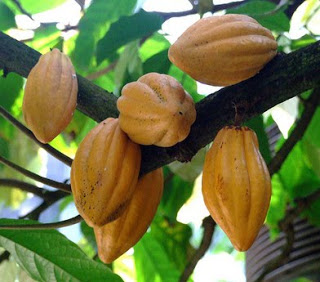
View Full Size ImageTo all you chocolate lovers out there: one of the featured species on EOL this week was Theobroma cacao, better known as Cacao, from whence chocolate is created. So, in the spirit of collaboration, and with a desire to feature something as deliciously addictive as chocolate, we thought we’d pull some inspiration from this featured botanical delight and showcase Theobroma cacao in this week’s book of the week. So, check out To the River Plate and back : the narrative of a scientific mission to South America, with observations upon things seen and suggested (1913), by W.J. Holland. This work features eight color plates and seventy-eight other drawings taken from the author’s trip to the “Silver River” in South America. As the author so clearly outlines in his preface, this narrative is “the record of a pleasant journey, during which I saw much and learned much which was of interest to me and may also be of interest to my readers.” And the pilgrimmage must indeed have been pleasant, because W.J. Holland encountered Theobroma cacao, a chief export of Trinidad, along the way!

Check out Theobroma cacao on EOL!

This week’s book of the week, To the River Plate and back : the narrative of a scientific mission to South America, with observations upon things seen and suggested (1913), by W.J. Holland, was contributed by The LuEsther T Mertz Library, the New York Botanical Garden.

March 23, 2010by Grace Costantino
Blog Reel, Featured Books

Book of the Week: The Sealers and Antarctica

Portrait version of the Biodiversity Heritage Library logo.

View Full Size Image
The lure of Antarctica has been captivating humans for hundreds of years, centuries even before the discovery of such a landmass occurred. Discussions about the existence of such a place were proposed as early as the first century AD, when Ptolemy suggested that there must be a giant landmass to the south serving to counterbalance the mass of the giant northern lands (Europe, Asia and North Africa) and preserve symmetry in the world. Following such proclamations, maps constructed as early as the 1500s began portraying a giant continent in the mysterious southern reaches of the globe. However, while belief in the existence of this southern continent permeated antiquity, it was not until the 1800s that confirmation of such a place actually occurred.

The famed Captain James Cook came within seventy-five miles of the illusive landmass in January 1773 before he was forced to abandon the effort in the face of the water’s icy threats to his vessels. Later, remarking upon his failure to sight the fabled continent, Cook wrote,
“The risque one runs in exploring a coast, in these unknown and icy seas, is so very great that no man will ever venture further than I have done.”

Fortunately, for history’s sake, Cook was proven wrong some fifty years later, when the first confirmed sightings of Antarctica occurred. History narrows the first sighting, in 1820, down to three possible candidates: Fabian Gottlieb von Bellingshausen of the Russian Imperial Navy, Edward Bransfield of the Royal Navy, and Nathaniel Palmer, an American sealer. Though somewhat disputed, the first documented landing on Antarctica occurred on February 7, 1821, when the American sealer John Davis set foot on West Antarctica.

Exploration of this great icy land, and conflicting territorial claims, have continued for the nearly two centuries since the confirmed discovery of Antarctica, but many are soon to forget that early extensive interaction with this frozen wasteland cannot be accredited to scientists and the great naval powers of the world, but to sealers who flocked to the “South Shetland Islands,” as they called them, to collect fur seal pelts. This week’s book of the week, The Voyage of the Huron and the Huntress: The American Sealers and the Discovery of the Continent of Antarctica, documents the extraordinary daring of these early seamen, and their contributions to the scientific knowledge since amassed. As the text so eloquently expresses:

“On this fringe of Antarctic seas, [the sealers] established camp and rendezvous, sailing through the ice-filled channels and along the rocky shores of the desolate islands…here they braved the unknown dangers of the icy, uncharted waters to the south, becoming the first among men to sight, recognize and land where rise the snowy mountains of the last great continent – Antarctica.”

This week’s Book of the Week, The Voyage of the Huron and the Huntress: The American Sealers and the Discovery of the Continent of Antarctica (1955), was contributed by the Marine Biological Laboratory, Woods Hole Oceanographic Institution.

January 25, 2010by Grace Costantino
Blog Reel, Featured Books

Book of the Week: Botanical Illustrations

View Full Size Image
Rousseau, Jean-Jacques. La botanique de J.J. Rousseau. 1805. Digitized by the Missouri Botanical Garden. http://biodiversitylibrary.org/page/6164734.

The history of botanical taxonomic literature began in a textual format as far back as the 400s B.C. Such prestigious names as Hippocrates, the “father of medicine,” and Theophrastus of Eresius, the “father of botany,” are among those to have first written about botany. These early writings, however, lacked the illustrations which are so important to botanical (and all other forms of biodiversity, for that matter) identification. Even when illustrations entered the scene, they were rare and costly, as they had to be reproduced by hand. It was the introduction of the printing press that changed this situation, as this allowed woodcuts producing line illustrations to be inserted into botanical books.

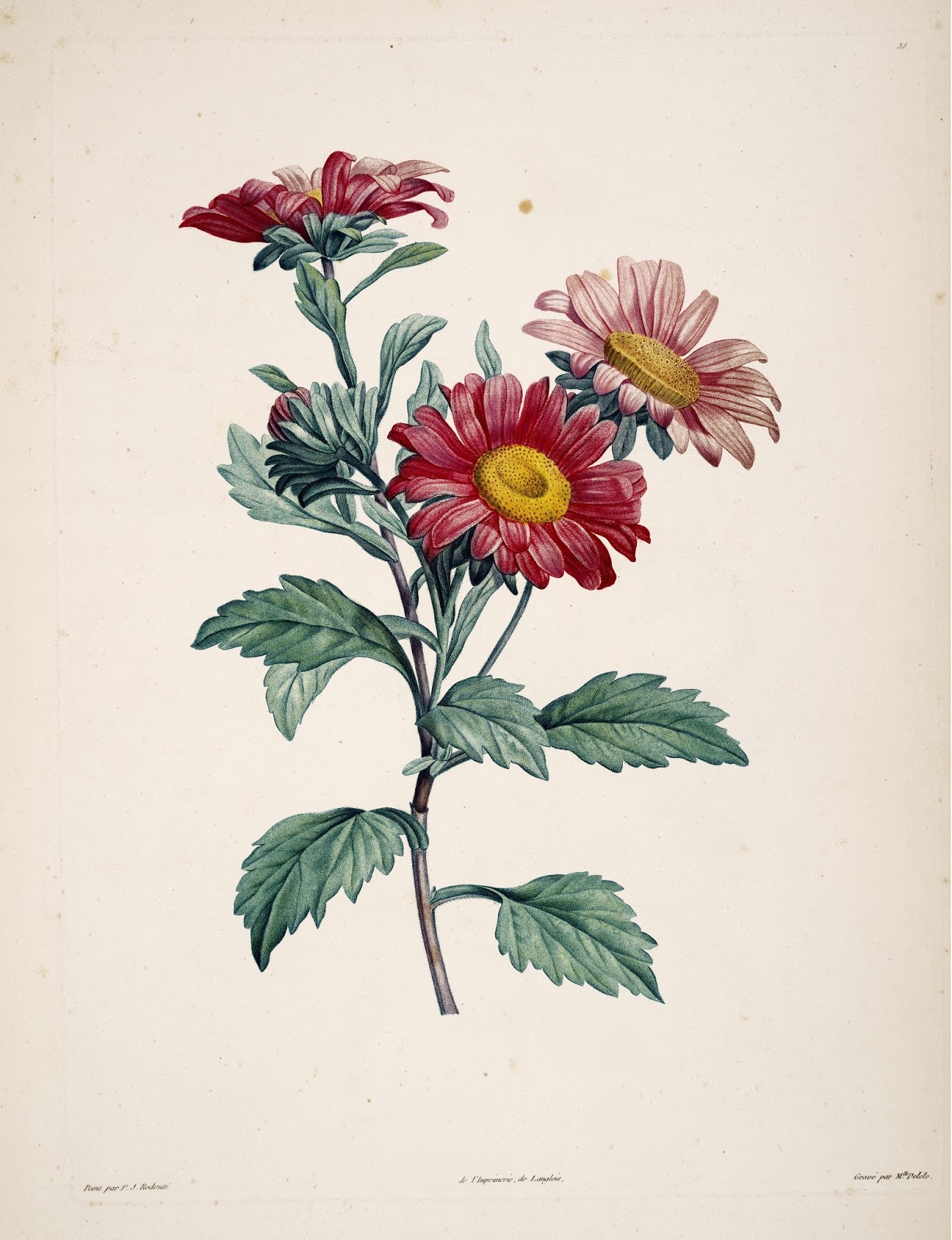
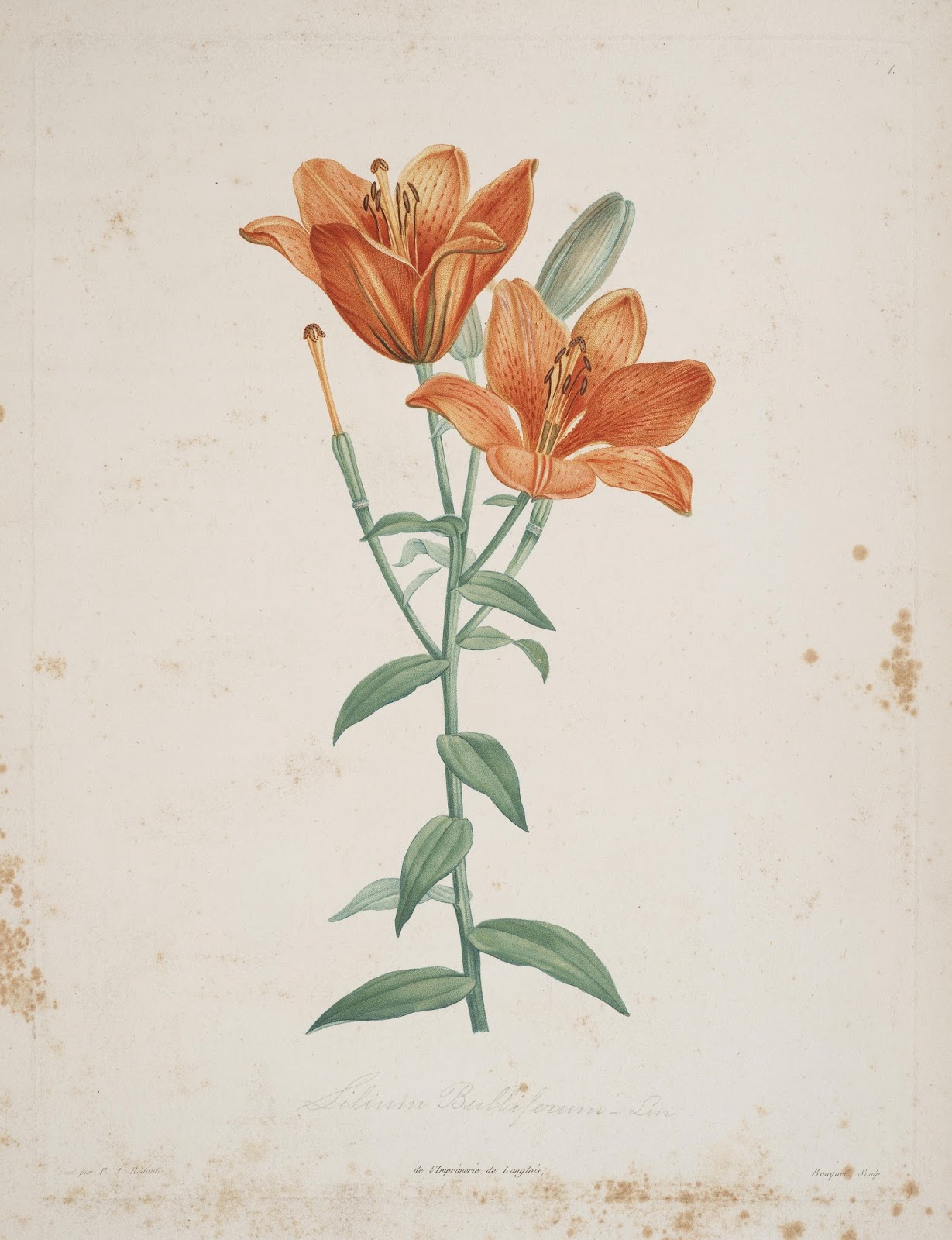
Since the introduction of large quantities of botanical illustrations in scientific literature, there have been a great many famous illustrators to contribute to the visual wealth of knowledge recorded in these works. One of the most celebrated is Pierre Joseph Redouté (1759-1840). This Belgian illustrator is credited with developing the technique of hand colored stipule engraving, which has since been widely used in botanical illustrations.

View Full Size Image
Rousseau, Jean-Jacques. La botanique de J.J. Rousseau. 1805. Digitized by the Missouri Botanical Garden. http://biodiversitylibrary.org/page/6164697

The hand-coloring stipule engraving technique involves applying ink to a copper plate on which an image has been etched, after which the plate is run through a press to imprint the image onto paper. Following this printing, the images are hand colored using watercolor.

Over his career, Redouté produced over 2100 published plates, documenting over 1800 species. The Biodiversity Heritage Library contains many publications to which Redouté contributed, one of which is La botanique de J.J. Rousseau (1805). This publication contains sixty-five plates created by Redouté, documenting a variety of species. These illustrations, along with the thousands of others contributed by Redouté over the years of his career, greatly enhanced the science of botanical investigation, and formed the building blocks upon which subsequent botanical study was built.

This week’s Book of the Week, La botanique de J.J. Rousseau :ornée de soixante-cinq planches, imprimées en couleurs d’après les peintures de P.J. Redouté (1805), by Jean-Jacques Rousseau, was contributed by the Missouri Botanical Garden.

January 19, 2010by Grace Costantino
Blog Reel, Featured Books

Book of the Week: Fun with Shells

View Full Size Image
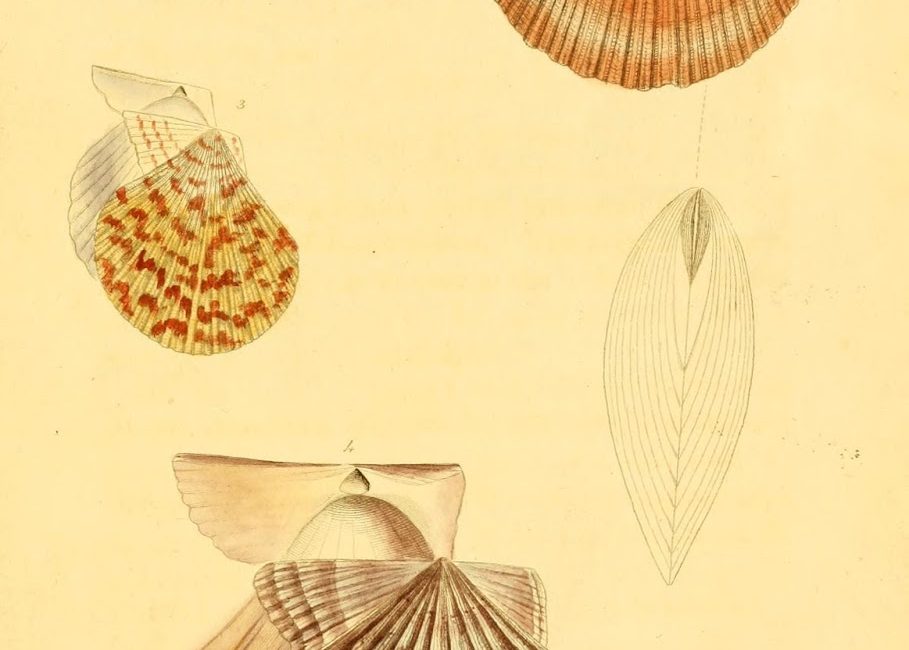
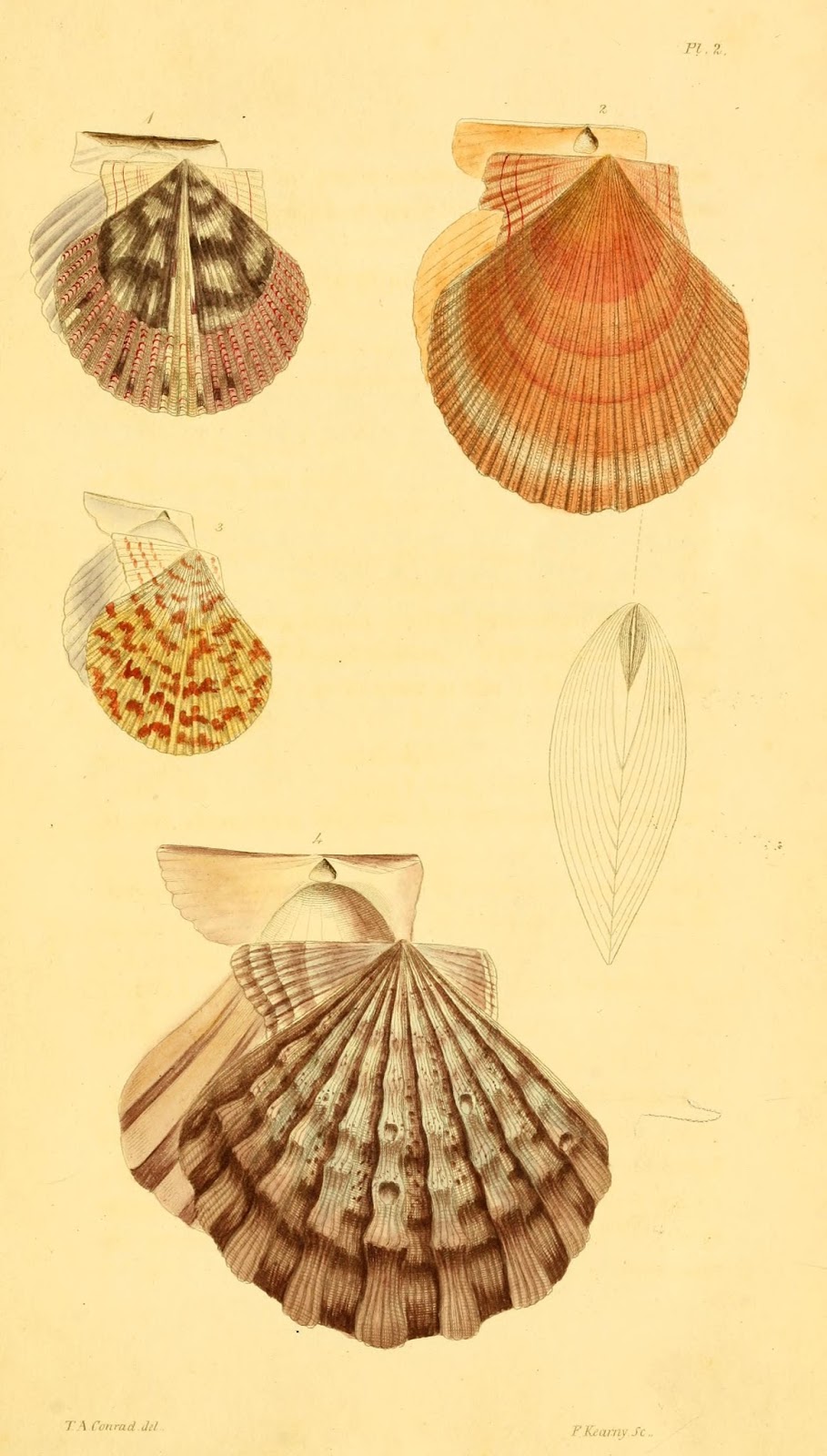
Conrad, T. A. (Timothy Abbott). American marine conchology; or Descriptions and coloured figures of the shells of the Atlantic coast of North America. 1831. Digitized by Smithsonian Libraries. http://biodiversitylibrary.org/page/11115892.

Timothy Abbott Conrad (1803-1877) enjoyed a remarkable career, and, although he is best known as an American geologist, malacologist, and carcinologist, he began his professional career as a clerk in his father’s printing and publishing house. It was not until 1831, also the year in which Conrad was elected a member of the Academy of Natural Sciences, that he published his first volume, American Marine Conchology, or Descriptions and Colored Figures of the Shells of the Atlantic Coast (several plates from which are pictured here). Intending with this volume to “supply a deficiency which [had] long been felt by the cultivators of American natural history,” this volume contains seventeen plates, all illustrated by Conrad and hand colored by his sister, that depict the abundance and variation of the shells found along America’s coastline.

Conrad died on August 9, 1877, in Trenton, New Jersey. His death, according to Popular Science Monthly (volume 47, 1895), marked the passing of “the last of the prominent group of early Philadelphia naturalists, who paved the way for the more philosophical biologists of the present day.”

To view this week’s book of the week, American Marine Conchology, or Descriptions and Colored Figures of the Shells of the Atlantic Coast (1831), by Thomas Abbott Conrad, contributed by the Smithsonian Institution, click here.

September 21, 2009by Grace Costantino
Blog Reel, Featured Books

Book of the Week: BHL, EOL, and Marine Life

Portrait version of the Biodiversity Heritage Library logo.

The dream of making biodiversity information freely available to people around the world is an ambitious goal embraced by many in the scientific community, and it represents the mission behind both the Biodiversity Heritage Library and the Encyclopedia of Life (www.eol.com), of which BHL is a cornerstone institution. While the Biodiversity Heritage Library strives to digitize the published literature of biodiversity held in the collections of the participating and contributing institutions, the Encyclopedia of Life (EOL) was established “to make comprehensive, authenticated information about the world’s biodiversity freely available over the Internet,” and comprises a website hosting more than 160,000 authenticated species pages and 1.4 million base pages.

Recently, EOL announced their intention to employ a thematic approach to the aggregation of content for species pages, with a current focus on marine biodiversity. By 2013, EOL hopes to have comprehensive species pages on at least 90% of named marine species.

The wealth of marine biodiversity information can also be seen in the collection of BHL, with the subject headings of marine animals, fishes, Crustacea, and Mollusks comprising over 1300 titles in BHL. This week’s book of the week, Bulletin of the United States National Museum, no. 246 (1966), highlights the diversity of living whales throughout the world’s oceans, ranging from the charismatic Bottlenose Dolphin to such well-known icons as Orca whales. With the wealth of marine information available on EOL species pages, it would be a shame not to relate a few of the whale species covered in this volume to their corresponding species pages in EOL, and thus below are a few select species listed with links to their EOL pages and species page within this week’s book of the week. And, while it is impossible to highlight all of the whale species covered in this volume in a short blog post with references to EOL and its plethora of further information and images related to these species, we hope you will take the time to explore these creatures both within this text and on EOL. Enjoy!

View Full Size Image
Orcinus orca. Photo from EOL species page. Photo Credit: © WoRMS Editorial Board. CC-BY-NC-SA. http://eol.org/data_objects/32700036.

Orcinus orca (Orca): view in EOL and this week’s Book of the Week
Stenella clymene (Clymene Dolphin): view in EOL and this week’s Book of the Week
Eubalaena australis (Southern Right Whale): view in EOL and this week’s Book of the Week
Lagenodelphis hosei (Fraser’s Dolphin): view in EOL and this week’s Book of the Week

View Full Size Image
Lagenodelphis hosei. Photo from EOL species page. Photo Credit: © WoRMS Editorial Board. CC-BY-NC-SA. http://eol.org/data_objects/32700039.

This week’s Book of the Week, Bulletin of the United States National Museum, no. 246 (1966), was contributed by the Smithsonian Institution Libraries.

(Please keep in mind that the EOL pages have not yet harvested all of the available BHL bibliographic references, and thus the BHL Summary found on the EOL species pages may not fully encompass all BHL titles that mention these species.)

August 25, 2009by Grace Costantino
Blog Reel, Featured Books

Book of the Week: Taxonomy Before Linnaeus

Portrait version of the Biodiversity Heritage Library logo.

Taxonomic literature can be divided into Pre-Linnaean and Post-Linnaean literature, with Post-Linnaean literature being those works published after Carl Linnaeus developed his famous naming and classification schema, binomial nomenclature. This week’s book of the week, Historia Vermium, is an interesting example of a Pre-Linnaean text. The Smithsonian’s copy, pictured here, is one of only two copies in the Western Hemisphere, according to OCLC, and one of only twelve in the world. The author, Joachim Jung, was known chiefly as a mathematician and astronomer, being considered on par with the likes of Galileo. He also focused many of his studies on natural history, particularly in the realm of botany. Historia Vermium, like many of Jung’s works, was published posthumously.

Jung is significant when exploring the development of the Linnaean taxonomic system because, first in his botany works and later in additional works, such as Historia Vermium, he introduced a classification system that was based upon a genera and species naming schema. In fact, Jung created a naming terminology that was later perfected by Linnaeus in his binomial nomenclature. To classify and group species, Jung attempted to understand the analogies between the organs and anatomical features of the species he studied, rather than focusing on some of the more surface-related features that other scientists of his time were focused on. (To learn more about Joachim Jung, click here).

Building on the important studies done by Jung and other scientists, Linnaeus would later introduce one of the most significant contributions to the study of like on earth at that time: binomial nomenclature. Although the Linnaeus system has been modified over time to reflect the theory of evolution, it is still remembered as the building block upon which taxonomy was founded.

To view this week’s book of the week, Historia Vermium, (1691) by Joachim Jung, contributed by the Smithsonian Institution Libraries, click here.

July 20, 2009by Grace Costantino
Blog Reel, Featured Books

Book of the Week: BHL Critters, Oh My!

Portrait version of the Biodiversity Heritage Library logo.
View Full Size Image
Report on the zoological collections made in the Indo-Pacific Ocean during the voyage of H.M.S. ‘Alert’ 1881-82. (1884). http://www.biodiversitylibrary.org/page/12067759. Digitized by Smithsonian Libraries.

For anyone who has seen the new BHL business cards, this week’s Book of the Week may look vaguely familiar. Several of the species images used on the cards (and indeed at the top of this webpage) were taken from plates found in the Report on the Zoological Collections Made During the Voyage of the H.M.S. ‘Alert.’

The H.M.S. Alert had a long history of expeditions, from arctic exploration (1874-1876) to surveys of the Pacific Ocean (1857-1868 and 1876-1884). It is perhaps best known for its Arctic expedition, although the contributions made during the Pacific explorations are also extremely noteworthy. For instance, during the Alert’s Pacific Expedition from 1876-1884, Dr. Richard Coppinger, an accomplished naturalist that also served during the ship’s Arctic expedition, collected 3,700 specimens, representing 1,300 species, that were later added to the National Collection. Coppinger made careful studies of these specimens, which were ultimately related in this week’s Book of the Week, along with exacting and beautifully detailed plates.

At the time of publication, the records contributed during this expedition were unparalleled, with the exception of the Challenger Expedition, in the contribution made to the scientific knowledge of the biodiversity of the Littoral Invertebrate Fauna of the Indo-Pacific Ocean.

To view this week’s Book of the Week, Report on the Zoological Collections Made in the Indo-Pacific Ocean During the Voyage of H.M.S. ‘Alert’ (1884), contributed by Smithsonian Institution Libraries, click here.

Click on the following links to view information related to the species featured from this book on the Encyclopedia of Life website:

Octopoda
Antedon
Xanthidae

June 15, 2009by Grace Costantino
Page 70 of 71« First...102030«68697071»

Help Support BHL

BHL's existence depends on the financial support of its patrons. Help us keep this free resource alive!

search

About BHL

The Biodiversity Heritage Library (BHL) is the world’s largest open access digital library for biodiversity literature and archives. BHL operates as a worldwide consortium of natural history, botanical, research, and national libraries working together to digitize the natural history literature held in their collections and make it freely available for open access as part of a global “biodiversity community.”

Join Our Mailing List

Sign up to receive the latest news, content highlights, and promotions.

Subscribe Now

Subscribe to Blog via Email

Enter your email address to subscribe to this blog and receive notifications of new posts by email.

Join 319 other subscribers

Subscribe to Blog Via RSS

Subscribe to the blog RSS feed to stay up-to-date on all the latest BHL posts.

Access RSS Feed

Inspiring Discovery through Free Access to Biodiversity Knowledge.

The Biodiversity Heritage Library makes it easier than ever for you to access the information you need to study and explore life on Earth…for free, anytime, anywhere.


64+ Million Pages of
Biodiversity Literature Online.

EXPLORE

Tools and Services
to Transform Research.

EXPLORE

300,000+
Illustrations on Flickr.

EXPLORE

ABOUT | HARMFUL CONTENT | PRIVACY | SITE MAP | TERMS OF USE