
Biodiversity Heritage Library - Program news and collection highlights from BHL
  • Home
  • News
  • Featured Books
    • All Featured Books
    • Book of the Month Series
    • BHL at 20
  • User Stories
  • Campaigns
    • Fossil Stories
    • Garden Stories
    • Monsters Are Real
    • Page Frights
    • Her Natural History
    • Earth Optimism 2020
  • Tech Blog
  • Visit BHL
Home
News
Featured Books
    All Featured Books
    Book of the Month Series
    BHL at 20
User Stories
Campaigns
    Fossil Stories
    Garden Stories
    Monsters Are Real
    Page Frights
    Her Natural History
    Earth Optimism 2020
Tech Blog
Visit BHL
  • Home
  • News
  • Featured Books
    • All Featured Books
    • Book of the Month Series
    • BHL at 20
  • User Stories
  • Campaigns
    • Fossil Stories
    • Garden Stories
    • Monsters Are Real
    • Page Frights
    • Her Natural History
    • Earth Optimism 2020
  • Tech Blog
  • Visit BHL
Biodiversity Heritage Library - Program news and collection highlights from BHL
Blog Reel, Featured Books

Book of the Week: Darwin for Children

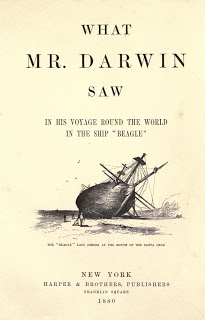
View Full Size ImageThe great scientific discoveries that have been made during the many incredible exploring expeditions throughout history have long interested both scientists and laymen alike, and perhaps none more so than the voyages undertaken by Charles Darwin himself on the H.M.S. Beagle. While the appeal of the narratives of these expeditions to adults may seem obvious, engaging children in such works is not always simple. The concern with “interest[ing] children in the study of natural history, and of physical and political geography”so that they might exhibit enthusiasm for nature throughout their lives is the chief concern of this week’s book of the week, What Mr. Darwin saw in his voyage round the world in the ship “Beagle” (1880), compiled from Darwin’s Journal of researches into the geology and natural history of the various countries visited by H. M. S. Beagle.

In a preface directed towards parents, the author writes,

“The compiler has thought it an advantage to connect stories about a great variety of animals with one person, and he an observer of such credibility and authority that little if anything that was learned of him would have to be unlearned. Mr. Darwin is, of course, pre-eminently such an observer. On the other hand, by carefully connecting these stories with the places on the earth’s surface where the animals were studied, a correct notion will be had of the distribution of the animal kingdom, with a corresponding insight into the geography of the globe in its broadest sense.”

What Mr. Darwin Saw is divided into four parts: Animals, Man (describing the people and cultures encountered on the voyage), Geography (describing the cities, rivers, mountains, valleys, plains, etc. seen on the expedition), and Nature (discussing the “grander terrestrial processes and phemonena” encountered). The original text comes from Darwin’s writings, though some small alterations have been made for the publication to take into account audience and overall organization. Since the changes are so minimal, the work is still attributed to Charles Darwin.

Before beginning the main narrative of What Mr. Darwin Saw, children are given a short biography of Charles Darwin and a description of the voyage of the H.M.S. Beagle. Children are then urged to test their own powers of observation by counting how many animals they can find in an accompanying woodcut by Thomas Bewick.

The description of the animals, people, geography and nature in the following sections of text are rich and inviting, as they are presented in a highly conversational tone produced from Darwin’s own observations. Children would be highly entertained to read Darwin’s description of the Guanaco, or Wild Llama’s, reactions around strange behavior in humans. They would likewise be thrilled to read of the dangerous encounter Darwin and his team experienced with an ice cliff, and their imaginations would be stimulated by Darwin’s description of the coral and coral architects around the visited lagoon islands. And while these writings may have been directed at children, they are nevertheless singularly engrossing for adults as well. So, whether child or adult, take a few minutes to look through Darwin’s narrative of the biodiversity, cultures and geography encountered on that monumental voyage of the H.M.S. Beagle.

This week’s book of the week, What Mr. Darwin saw in his voyage round the world in the ship “Beagle” (1880), by Charles Darwin, was contributed by the University of California Libraries.

September 22, 2010by Grace Costantino
Blog Reel, Featured Books

Book of the Week: The Bittern and Bird Identification for the Ornithological Novice

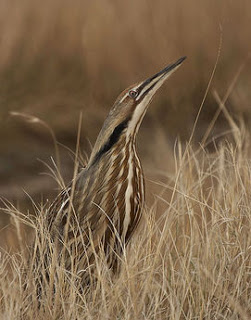
View Full Size ImageIf you find yourself in the mid-United States to northern Canada this time of year, you may be witness to the final days of occupation in this area for Botaurus lentiginosus, the American Bittern. From early May through the summer, the American Bittern spends its breeding months in the Mid-US to northern Canada, occupying nest sites chosen and constructed by the female Bittern of the mating pair. For the duration of the egg-laying period, the female Bittern will lay one egg each morning, with the incubation period lasting 24 to 28 days. Once the mating season ends, the American Bitterns find their way to the south Atlantic coast across the Gulf coast and west to southern California for the duration of the wintering months, although some populations living in regions with milder temperatures appear to actually be non-migratory.

So, if you happen to find yourself in the mid-US this time of year observing a bird that may or may not be the American Bittern, how to you determine, with little to no ornithological training, whether or not what you see is Botaurus lentiginosus? Such a question was of great concern for Reginald Heber Howe, a naturalist focusing on lichens, birds, and dragonflies. With this week’s book of the week, “Every bird;” a guide to the identification of the birds of woodland, beach and ocean (1896), Howe hoped to present a resource that would be both efficient and useful to beginners in the field of Ornithology. Howe makes this desire perfectly clear in his preface, writing,

“Having long felt that the identification of a bird would be much less difficult to beginners in the Study of Ornithology, if they could have a book in which every genus was illustrated by an accurate outline drawing of the head and foot, with a description of the general plumage void entirely of technical terms, I offer this volume to the bird lover.”

And, indeed, on page 116, Howe succinctly describes the key features of the American Bittern, accompanied by a line drawing of the head and foot of the bird. With such a companion, the casual naturalist might have no difficulties identifying this species, or any other bird species, that crosses his or her path. So, take a look at this week’s book of the week, “Every bird;” a guide to the identification of the birds of woodland, beach and ocean (1896), by Reginald Heber Howe, and if you happen to find yourself crossing paths with an unknown bird species, bring up the title on your mobile device and put your ornithological skills to the test!

Click here to see a list of other titles in the Biodiversity Heritage Library by Reginald Heber Howe.

This week’s book of the week, “Every bird;” a guide to the identification of the birds of woodland, beach and ocean (1896), by Reginald Heber Howe, was contributed by the Smithsonian Institution Libraries.

August 24, 2010by Grace Costantino
Blog Reel, Featured Books

Book of the Week: Deadly Fungi

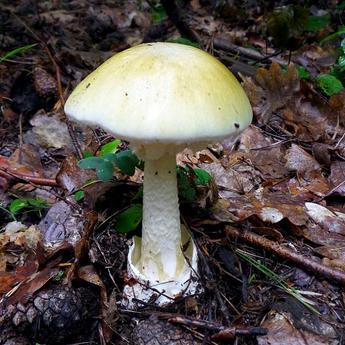
View Full Size ImageIt is one of the most poisonous of all known toadstools, and it is responsible for a majority of human deaths involving its type – mushrooms. It is the Amanita phalloides, more commonly known as the Death Cap. This innocent-looking fungi has been blamed for the deaths of Roman Emperor Claudius and Holy Roman Emperor Charles VI. It causes, often fatal, damage to the kidneys and liver, and there is no known antidote.

Amanita phalloides is widely distributed throughout Europe, particularly in the southern parts of the continent. However, with the cultivation of non-native species of oak, chestnut, and pine, the Death Cap has been accidentally introduced to other regions, including New Zealand, North America and South Africa.

The Death Cap is a topic of much discussion in this week’s book of the week, A Manual of Poisonous Plants: chiefly of eastern North America, with brief notes on economic and medicinal plants, and numerous illustrations (1910-11), by L. H. Pammel. The reader is warned in no uncertain terms about the danger this species poses to humans. Quoting a “Professor Peck,” the text reads:

“The Poison amanita is very variable in the color of the cap, and yet is so definite in its structural characters’ that only the most careless observer would be likely to confuse it with any other species. There is, however, a sort of deceptive character about it. It is very neat and attractive in its appearance and looks as if it might be good enough to eat. This appearance is fortified by the absence of any decidedly unpleasant odor or taste, but let him who would eat it beware, for probably there is not a more poisonous or dangerous species in our mycological flora. To eat it is to invite death.”

Take a closer look at this species within this week’s book of the week, and read more to find tips on how to identify this species and avoid misidentification that could prove, well, fatal. And, once you’re finished with Amanita phalloides, feel free to read on about more poisonous plants found throughout Eastern North America.

This week’s book of the week, A Manual of Poisonous Plants: chiefly of eastern North America, with brief notes on economic and medicinal plants, and numerous illustration (1910-11), by L. H. Pammel, was contributed by the New York Botanical Garden.

August 9, 2010by Grace Costantino
Blog Reel, Featured Books

Book of the Week: Another Peek at Conservation

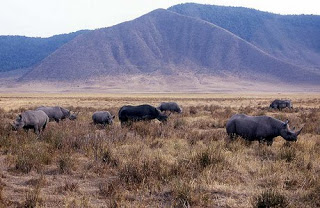
View Full Size ImageOne of the most endangered species on the planet is Diceros bicornis, commonly known as the Black Rhinoceros. Distributed throughout Africa, south of the Sahara, the “current range of black rhinoceroses is bounded by Cameroon, Kenya, and South Africa but their distribution within those limits is fragmented.” The threat to the Rhino population is largely due to a demand for the species’ horns, “both for use in Chinese traditional medicine and for traditional dagger handles in Yemen.” The demand for these horns increased significantly in the 1970s as the “oil-rich Gulf States” experienced increased income. “It is estimated that between 1970 and 1992, around 96 percent of the black rhinoceros population was lost.” Three subspecies of the Black Rhinoceros – the eastern, southwestern and southern central subspecies – are listed as Critically Endangered in the IUCN (World Conservation Union) Red List. The fourth subspecies of the Black Rhinoceros – the western subspecies – is listed as Probably Extinct. The total population of Black Rhinoceros today is approximately 3,725 individuals.

Fortunately, there are ongoing efforts to protect this species, and it now looks as though most black rhino populations are increasing. Nevertheless, populations still comprise only a fraction of what they were only fifty years ago. “Conservation efforts to preserve black rhinos include establishing a ban against the horn trade, creating fenced sanctuaries for black rhinos to better protect them from poachers, and dehorning black rhinos to decrease incentive for poaching.”

The Black Rhinoceros was first described by Carl von Linné in volume 1 of Systema naturae per regna tria naturae :secundum classes, ordines, genera, species, cum characteribus, differentiis, synonymis, locis (1758), this week’s book of the week. Volume 1 of this work describes the Animal Kingdom, while volume 2 describes the Plant Kingdom. Linné, also commonly known as Carl Linnaeus, the famous Swedish botanist, physician and zoologist, is best known for laying the schema for binomial nomenclature, the naming convention used to identify species. His numerous works include the first descriptions of many, many species, and serve as the foundation by which modern scientists describe life as they continue to increase our knowledge about it.

For more information about the conservation of the Black Rhinoceros, and what you can do to help, see the Black Rhinoceros page at the World Wildlife Fund website.

To find more information about the Black Rhinoceros species, take a look at the species page on EOL.

For a look at the listing of the Black Rhinoceros on the endangered species list in BHL, see page 25 of the 1994 IUCN Red List of Threatened Animals.

And finally, take a look at this week’s book of the week, Systema naturae per regna tria naturae :secundum classes, ordines, genera, species, cum characteribus, differentiis, synonymis, locis (1758), volume 1, by Carl von Linné, in which you can see the first description of both the Black Rhinoceros and many other species.

July 28, 2010by Grace Costantino
BHL News, Blog Reel, Tech Updates

New Feature: User-Submitted Requests for Scanning!

Portrait version of the Biodiversity Heritage Library logo.

So, many of you participated in our BHL User Survey 2010, and we greatly appreciate your contributions! One of the most prevalent themes throughout the range of responses that we received was that our users want to be able to submit requests for scanning. So, you spoke; we listened.

Introducing the new scanning request form on BHL!

View Full Size Image

You as a user can now submit requests for items to be scanned and added to the BHL collection, free of charge to you, no less! The process is easy, too. Simply access the “Feedback” form on the BHL website (located in the upper right hand corner of the header through the “Feedback” link, or at the title and item level in BHL by clicking on the “Report an Error” link on the right hand side of the title screen or above the scan images in the book viewer) and choose the option “Scanning Request.” You can then fill out and submit the form indicating your request for scanning.

We do ask that you keep a few things in mind. First, due to copyright restrictions, requests for scanning are limited to items published before 1923. Secondly, our ability to scan a request is limited both to the collections of our BHL member institutions and the condition of the volumes they might hold. If we don’t have it, we can’t scan it. If it’s falling apart, we probably won’t be able to scan it. Finally, we scan requests in the order they are received, and depending on certain circumstances, such as the rarity or fragility of the item in question, it may take longer to scan certain requests. Nevertheless, we are excited about this new feature and the opportunity it gives you, the user, to contribute to the building of our ever-increasing digital collection. So, pull out those lists of items you wished BHL had and start submitting your requests! We’re waiting…

June 22, 2010by Grace Costantino
Blog Reel, Featured Books

Book of the Week: Species Highlight – The Eastern Painted Turtle

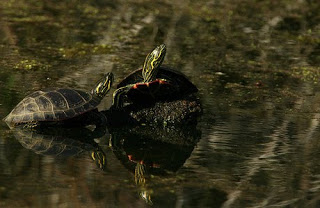
View Full Size ImageImagine that you are strolling through the forest on a fine summer morning. The birds are chirping merrily above your head, and an occasional squirrel scurries across the path in front of you. Suddenly, you reach a clearing, in the midst of which is a large pond. As you take a moment to look around, you suddenly notice a log floating carelessly through the water. Except, this is no ordinary log! Indeed, it appears to be moving! On closer inspection, you realize that this is not just a log, but a log covered with as many as 50 painted turtles, all basking in the warm summer sun. While you may never have experienced this yourself, this is indeed a sight which you might see should you find yourself around freshwater anywhere in North America from Southern Canada to northern Mexico. It is the sight of Chrysemys picta, also known as the Eastern Painted Turtle – the most common turtle in North America and one of the featured species this week on EOL.

Chrysemys picta is brightly marked, with a “relatively flat upper shell with red and yellow markings on a black or greenish brown background.” Capable of living several decades, they “prefer living in freshwater that is quiet, shallow, and has a thick layer of mud.” While relatively common and abundant, some populations are “threatened by the destruction of their habitat,” and “in Canada, painted turtles have been placed on the federal blue list, which identifies animals considered vulnerable to human activities or natural events, but not immediately threatened.”

Chrysemys picta is very descriptively discussed in this week’s book of the week, Amphibia and reptiles (1901), by Hans Gadow. As of 1901, the Eastern Painted Turtle was “one of the few species of which, thanks to L. Agassiz, complete data of growth from the new born to the old age are known.” Here, Gadow refers to L. Agassiz’s work Contributions to the Natural History of the United States of America, volume 1 (1857), which articulates the growth of this species over time.

Take a moment to peruse Gadow’s description of this turtle, as well as many other amphibians and reptiles, in Amphibia and reptiles. And remember, if you’re ever out strolling through the forest and come across a pond with a “moving log,” be sure to take a closer look, for it might just prove to be a hoard of Eastern Painted Turtles basking in the sun.

June 3, 2010by Grace Costantino
Blog Reel, Featured Books

Book of the Week: A Call to Garden!

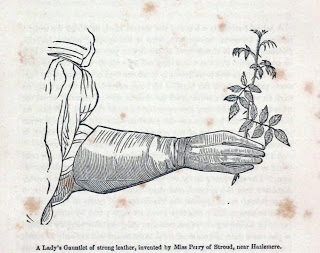
View Full Size ImageSpring is in the air, and that means blooms are just around the corner! And this, of course, means that all you gardeners out there can dig your potting tools out of the shed and get ready to get your hands dirty. We thought we’d help by highlighting one of the many valuable gardening guides in our collection. As we sifted through our collection, one book in particular caught our eye. It seems that gardening isn’t just a modern pastime (not that this was ever supposed), but in fact it was a popular activity for women of the nineteenth century. Many guides to “ladies’ gardening” were published during that time, highlighting the different ways to stir and measure soil, sow seeds, and prune overzealous growth. Case in point: Gardening for Ladies. This 1851 publication provides all of the instruction a lady of nineteenth century America could ask for in regards to gardening, starting with the basics. Indeed, the work took a decided view of “begin at the beginning,” supposing no “previous knowledge of the subject,” as their European counterparts, they claimed, were so apt to do. So, before you dig down into the soil, take a look at this week’s book of the week, Gardening for Ladies. Even if you aren’t a nineteenth century lady (and if you are and still intend to garden, more power to you!), you still might learn something!

This week’s book of the week, Gardening for Ladies (1851), by Mrs. Jane Loudon, was contributed by the New York Botanical Garden.

April 5, 2010by Grace Costantino
Page 69 of 71« First...102030«68697071»

Help Support BHL

BHL's existence depends on the financial support of its patrons. Help us keep this free resource alive!

search

About BHL

The Biodiversity Heritage Library (BHL) is the world’s largest open access digital library for biodiversity literature and archives. BHL operates as a worldwide consortium of natural history, botanical, research, and national libraries working together to digitize the natural history literature held in their collections and make it freely available for open access as part of a global “biodiversity community.”

Join Our Mailing List

Sign up to receive the latest news, content highlights, and promotions.

Subscribe Now

Subscribe to Blog via Email

Enter your email address to subscribe to this blog and receive notifications of new posts by email.

Join 319 other subscribers

Subscribe to Blog Via RSS

Subscribe to the blog RSS feed to stay up-to-date on all the latest BHL posts.

Access RSS Feed

Inspiring Discovery through Free Access to Biodiversity Knowledge.

The Biodiversity Heritage Library makes it easier than ever for you to access the information you need to study and explore life on Earth…for free, anytime, anywhere.


ABOUT | HARMFUL CONTENT | PRIVACY | SITE MAP | TERMS OF USE