Biodiversity Heritage Library - Program news and collection highlights from BHL
  • Home
  • News
  • Featured Books
    • All Featured Books
    • Book of the Month Series
    • BHL at 20
  • User Stories
  • Campaigns
    • Fossil Stories
    • Garden Stories
    • Monsters Are Real
    • Page Frights
    • Her Natural History
    • Earth Optimism 2020
  • Tech Blog
  • Visit BHL
Home
News
Featured Books
    All Featured Books
    Book of the Month Series
    BHL at 20
User Stories
Campaigns
    Fossil Stories
    Garden Stories
    Monsters Are Real
    Page Frights
    Her Natural History
    Earth Optimism 2020
Tech Blog
Visit BHL
  • Home
  • News
  • Featured Books
    • All Featured Books
    • Book of the Month Series
    • BHL at 20
  • User Stories
  • Campaigns
    • Fossil Stories
    • Garden Stories
    • Monsters Are Real
    • Page Frights
    • Her Natural History
    • Earth Optimism 2020
  • Tech Blog
  • Visit BHL
Biodiversity Heritage Library - Program news and collection highlights from BHL
Blog Reel, Featured Books

Book of the Week: Birds and Their Nests

View Full Size Image

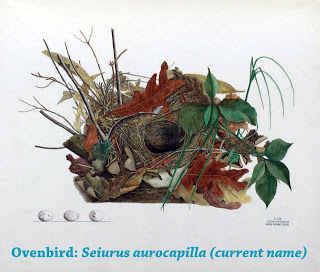
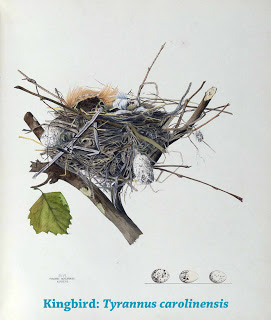
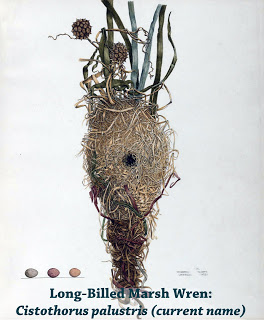
Have you ever been out and about, enjoying the beauty of nature, looked up in a tree, noticed a bird’s nest, and wondered what species of bird made the nest? If so, and if you happen to live in Ohio, or somewhere close to it, we’ve got the book for you: Illustrations of the Nests and Eggs of Birds of Ohio (1886), v.1–2, text by Howard Jones and illustrations by a variety of artists, including Miss Genevieve Estelle Jones, Miss Eliza J. Schulze, Mrs. N. E. Jones, Miss Nellie D. Jacob, Miss Josephine Klippart and Miss Kate Gephart. What really struck us about this book was the charming nature of the illustrations. And after reading the preface, it became quite clear that obtaining these illustrations for the work was no easy task.

View Full Size Image

In 1877, Genevieve Jones decided to create a series of plates for a publication depicting the nests and eggs of Ohio birds. She enlisted the help of close friend Eliza Schulze, and together the two women, amateur artists but having no formal training, embarked on the

venture. To make matters more complicated, the plates themselves needed to be completed as lithographs so that they could be printed for mass production – a method that neither lady was familiar with. However, after many months of practice, Miss Jones and Miss Schulze produced plates 1-3, and these, along with the accompanying text by Howard Jones, were sent to publication in 1879. Favorably received, the ladies continued their partnership.

Unfortunately, on August 17th, 1879, Genevieve Jones died of typhoid fever. Desiring to continue the work, Miss Schulze enlisted the help of Genevieve’s mother, Mrs. N. E. Jones. Eventually, Miss Schulze relinquished all of her interests in the title to Mrs. Jones. Determined to move forward, Mrs. Jones undertook the responsibility for all of the illustrations herself, eventually employing three additional artists, Miss Nellie D. Jacob, Miss Josephine Klippart, and Miss Kate Gephart. Despite all the hardships encountered over the life of this publication, the authors and artists were thankful and proud of the work, remarking,

View Full Size Image

“Aside from the entertainment and instruction accompanying the study of birds in their homes, and the delineation of their various styles of architecture, it has been a great pleasure to us to continue to completion an undertaking so unfortunately interrupted at almost its very beginning. It has also been a satisfaction to us to know that, however poor our efforts, we were breaking new ground in a field, which, with the cultivation of time, will yield a rich and beautiful harvest.”

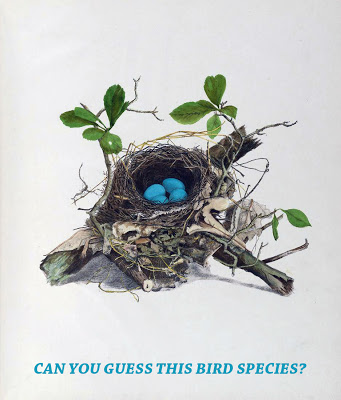
For our post, we’re featuring a few of the nest illustrations found in this title, identifying them for the bird species to which they correlate. However, we’ll leave the last picture unidentified. Can you tell which bird species made the nest below (of course, you could always just check in the book, but where’s the fun in that)? Let us know what species you think it is via Twitter (@BioDivLibrary), Facebook, or by leaving a comment on this blog. To see all of the images from this title, visit the set in Flickr: v. 1 and v. 2.

View Full Size Image

September 22, 2011by Grace Costantino
Blog Reel

Book of the Week: The Memory of a Museum Dissolved but Not Forgotten

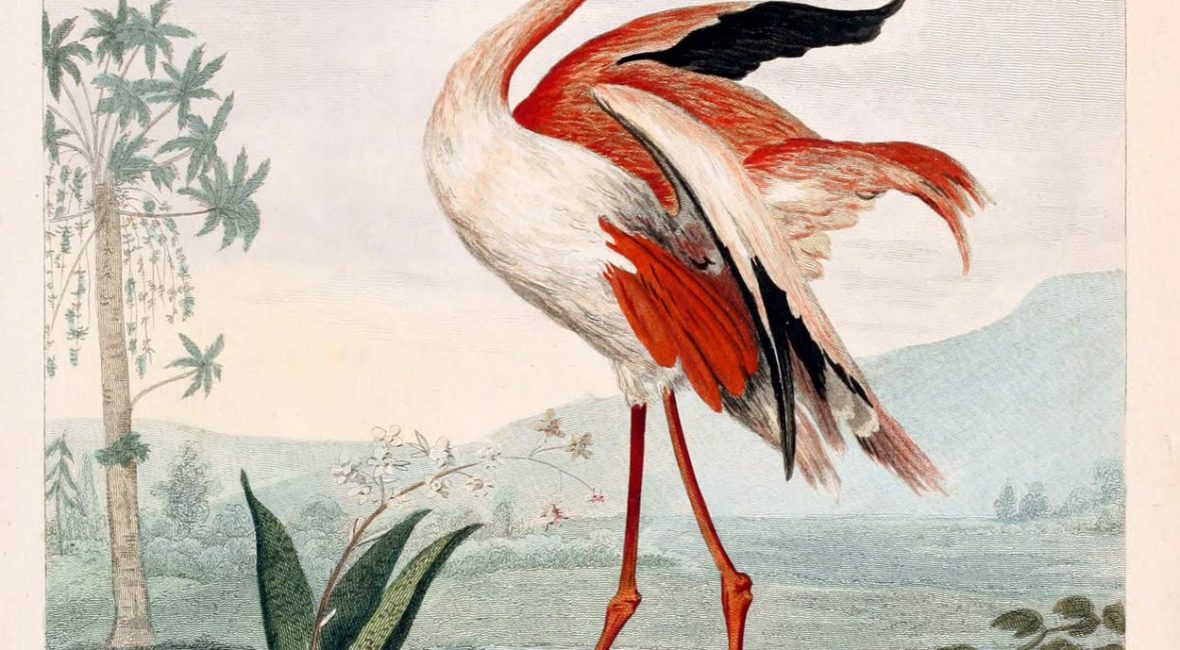
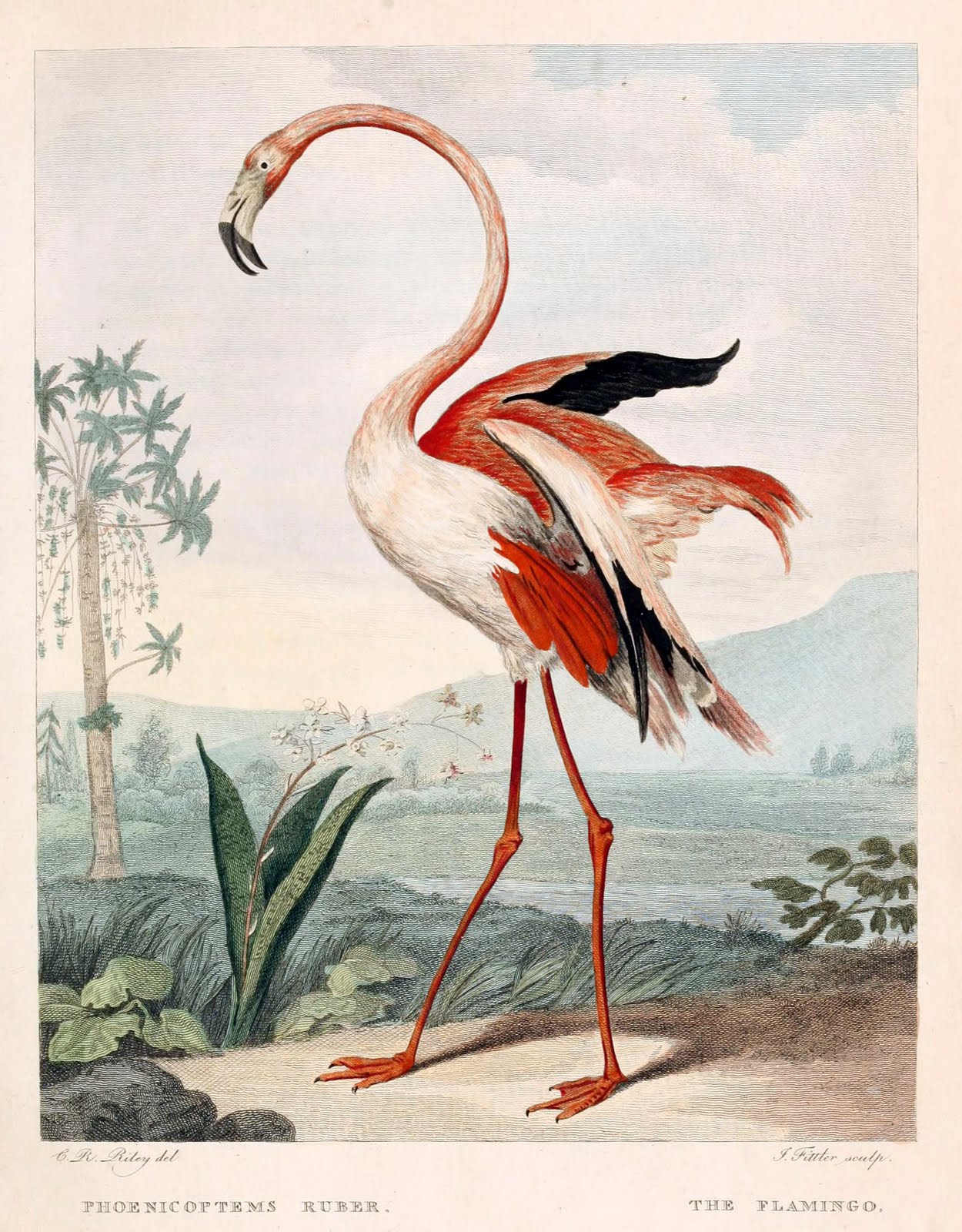
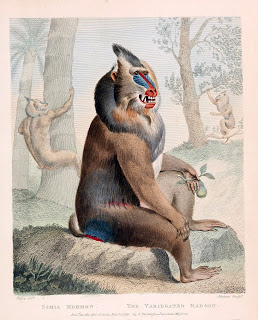
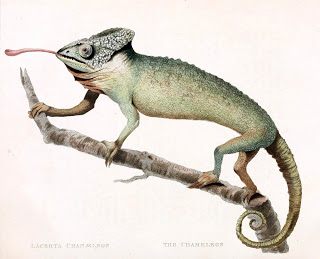
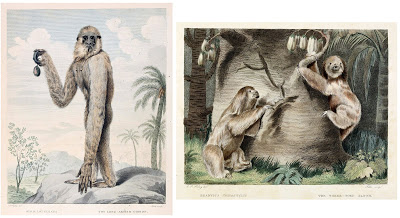
View Full Size Image of this FlamingoWhen Musei Leveriani Explicatio, Anblica et Latina (1792-96), by George Shaw, went up for auction at Christie’s Auction House in April of 2008 it was described as “one of the most comprehensive natural history collections of the eighteenth century.” It sold for $3,926 USD. The work documents the specimens found in Sir Ashton Lever’s museum (the Museum Leverianum), which was originally housed in his home at Alkrington Hall. The book contains 72 hand-colored engraved plates after, among others, Charles Reuben Ryley, Sarah Stone, and Philip Reinagle. With such a claim as “most comprehensive natural history collection,” we had to check it out, and the quality of the illustrations blew us away. So: Voila! Here you have our book of the week!

As stated, Sir Ashton’s museum, which comprised approximately 28,000 items, was originally housed in his home. However, hoping to make the museum self-financing, Lever moved the collection to Leicester House in London in 1774, opening it to the public in 1775 with an admission fee of half a guinea. The museum was popular but not as financially successful as Lever had hoped. In 1784, he was forced to sell the collection, which had been valued at £53,000. He did so by public lottery. 8,000 tickets, priced at 1 guinea each, were sold. James Parkinson won the collection with a ticket purchased by his late wife. Parkinson successfully ran the museum until May of 1806, when, despite the continued popularity of the museum, he was also forced to sell the collection by piece at an auction lasting 65 days.

View Full Size Image of this Baboon

While the two volumes of this work on BHL contain dozens of gorgeous illustrations (all of which you can browse at your leisure on Flickr!), we’ve selected just a few of our favorites to feature here. Sir Ashton and Mr. Parkinson would have been proud that, though the museum itself did not endure, a record of the enchanting and impressive specimens contained within it has lasted these 200+ years. And now, thanks to BHL and the modern digital era, you don’t have to spend $4,000 at auction to enjoy the marvels that one composed the Museum Leverianum! All you need is a computer and Internet connection!

View Full Size Image of these Birds

View Full Size Image of this ChameleonView Full Size Image of these Monkeys
Musei Leveriani Explicatio, Anblica et Latina (1792-96), by George Shaw, was contributed by the Smithsonian Institution Libraries. See the images from this book on Flickr!

September 15, 2011by Grace Costantino
Blog Reel, User Stories

BHL and Our Users: EOL Rubenstein Fellow, Dr. John Sullivan

Portrait version of the Biodiversity Heritage Library logo.

View Full Size Image

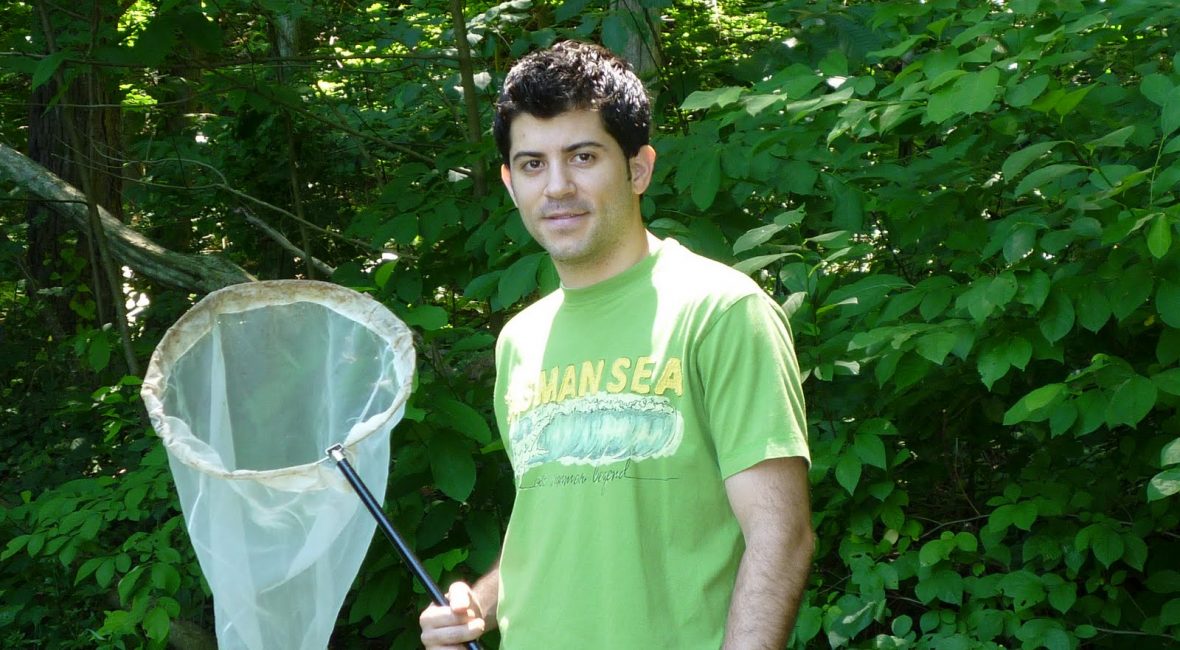
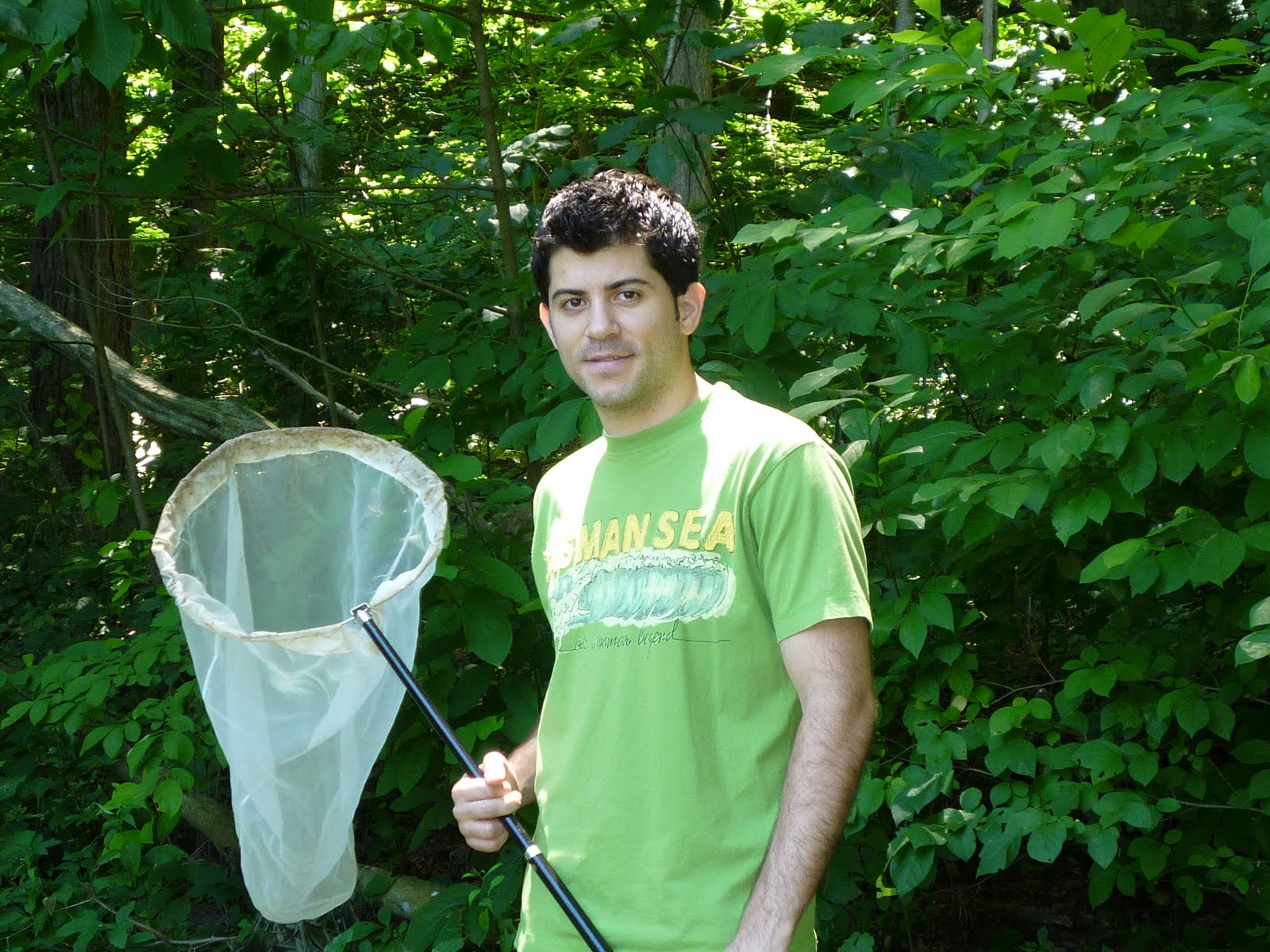
Today, we continue with our mini-series featuring EOL Rubenstein Fellows and their research activities. For this installment, meet Dr. John Sullivan, a passionate ichthyologist dedicated to discovering and describing fish species all over the world, but particularly in Africa.

What are your research interests, where you do the bulk of your work (country), and what is your institutional affiliation?

I am an evolutionary biologist who studies the phylogenetic interrelationships and evolution of freshwater fishes. I focus on two groups in particular: weakly electric fishes (Mormyridae and Gymnotiformes) which are found in Africa and South America, respectively, and catfishes (Siluriformes), which are distributed pretty much all over the world. In addition to using molecular techniques to work out phylogenies for these fishes, I describe species and work on the taxonomy of all three groups. My most recent collecting field trips have been to Ethiopia, the Democratic Republic of Congo, and Gabon. I am affiliated with two institutions, the Academy of Natural Sciences in Philadelphia, where I am a Research Associate, and the Cornell University Museum of Vertebrates in Ithaca, New York, where I am a Curatorial Affiliate. I live with my wife in Ithaca.

In the program, Fellowships are expected to serve as a complementary funding source to existing funding you have that supports your primary research activities. Please describe what you primary research activities are.

I used the Rubenstein Fellowship to supplement a nine-month Fulbright Research Fellowship in the Democratic Republic of the Congo. My Fulbright work was to make an inventory of fish species found in the vicinity of Kisangani, a city on the Congo River at the base of the Upper Congo rapids and to help build capacity at the University of Kisangani in ichthyology. As a Rubenstein Fellow, I made creation of EOL species pages for Congo River freshwater fishes a key activity of my time there. And since my return from Congo, I’ve been continuing to add many of the hundreds of photographs of fish specimens I took as we identify the specimens. We’ve already found several undescribed species from our collections, and I and my colleagues are beginning work on their descriptions.

Please describe how you use EOL to disseminate or support your primary research activities, or what your primary duties related to EOL are.

Eventually, I’d like to see great photos, descriptions and keys available online through EOL for all African freshwater fishes. We still have a lot of work to do to get there, but one can now see that this is the future. It still takes a lot of time to do careful taxonomic work, but now as soon as it’s published, we can get the name into a classification and a picture and description up online. For instance, we got the new mormyrid species Petrocephalus similis into EOL the week it was published in July. Taxonomy is a dynamic discipline: names and classifications frequently change to reflect our improving knowledge of the organisms (a sometime annoyance to end-users of taxonomies, but unavoidable). So static books are in some ways poor repositories of this information. Taxonomy and the Web are really made for each other and in hindsight something like EOL was inevitable.

How has the EOL Fellows program made a difference in your career/research?

The Rubenstein EOL Fellows program gave me an easy way to help make knowledge about African fishes available to everyone, including Africans who often have internet access but nothing in the way of libraries. The more informed my African colleagues are about their own fish fauna, the more effective our collaborations can be. While it doesn’t take the place of getting published in the primary literature, contributing to EOL tells your colleagues that you’re committed to the “broader impacts” of what we taxonomists do and that you’re at the forefront of where the field of taxonomy is headed. I am looking forward to the day when publishing a new species description and publishing content on EOL are one and the same thing. In fact, that future is already here with the journal ZooKeys that automatically exports to EOL. We plan to use that journal for our next mormyrid description.

Who is your Mentor, what is their area of interest (research activities), and how have they supported you throughout your Fellowship?

My mentor is Dr. Melanie Stiassny, curator of fishes at the American Museum of Natural History in New York. Melanie has really reinvigorated the study of fish diversity of the Congo River over the past few years and has made a number of stunning discoveries in the rapids area of the Lower Congo. She was great at providing me the logistical and moral support I needed for my project in Kisangani.

How does BHL support your Fellows activities, as well as those research activities that fall outside of your duties as an EOL Fellow?

I tend to think of BHL as my personal ichthyology library (although I know there’s a bit more archived in it than that). I have retrieved dozens and dozens of species descriptions from it that are now on my personal computer for instant reference and also appended to species pages in one of my two EOL Lifedesks: http://mormyrids.lifedesks.org/ and http://congofishes.lifedesks.org/.

I’ll give you a concrete example of how BHL supports my work. In systematics, the old literature is often just as important as the new. For instance, the systematics of a genus of mormyrid fish we work on was really blocked by our inability to establish the identity of Mormyrus sphekodes (now Paramormyrops sphekodes), described in 1879 by French ichthyologist H.E. Sauvage. The type specimen still exists, but is in bad condition in the Paris Museum collection. If we were to describe new species without knowing what P. sphekodes really was, we risked redescribing it under a different name and creating a synonym.

So this past May I arranged to go back to the type locality mentioned by Sauvage, the “Chutes de Doumé” on the Ogooué River in Gabon to make a new collection of it. I’m happy to report I succeeded! Before going there, I had downloaded Sauvage’s description of this fish from BHL, published in the Bulletin de la Société Philomatique de Paris. It had taken me just a few minutes to locate this paper and customize the pdf. I had it on my Kindle as I stood at the site, a place I don’t think ichthyologists had revisited since the 1870s.

When did you first discover BHL?

Some time before I started my Fellowship, probably in 2008.

What are your favorite features/services on BHL?

I love how it takes me no time at all to find a species description in some old serial like the Annals and Magazine of Natural History and, using the web interface, generate a pdf of just those pages that I want. Even if I lived in a library that had these volumes on the shelf, it would take me longer to locate what I was looking for. I can then take those pdfs BHL generates for me and attach them to the species pages I create on my Lifedesks. Now anybody in the world has instant access to the original species description in a couple of clicks!

If you could change one thing about BHL, or suggest one thing to be the next developmental priority for BHL, what would it be?

It seems like you are doing the right thing: continue to expand and add content. It is great to see a number of biodiversity journals allowing BHL to digitize their back catalog, including material still under copyright, and very encouraging to see BHL go international with BHL-Europe and other initiatives. Now that much of the really old stuff is available, it’s the material from the 1930’s – 1970’s that is notably hard to obtain if you don’t have a world-class library, so I hope more of it finds its way onto BHL in the near future.

Please describe why you think services like EOL and BHL are important for today’s scientific community.

Science is all about disseminating knowledge and building upon what has come before, yet so much of our knowledge of plants and animals has remained inaccessible to those who could make use of it. This has been a big part of the “taxonomic impediment.” BHL is radically changing the status quo and democratizing access to knowledge about biodiversity. Now that access to the works of so many great 18th and 19th Century biologists is an easy affair, I expect we’ll see them cited a lot more in the modern literature. In this way, BHL is contributing to the continuity of biodiversity science.

Do you have a favorite book in BHL, or a book that has most supported your research activities or EOL responsibilities?

My favorite book in BHL would have to be the four volumes of George Albert Boulenger’s Catalogue of the Fresh-Water Fishes of Africa, published from 1909 to 1916. This work remains the single-most important publication on African ichthyology. While many more species have been described in the subsequent century and generic names have undergone changes, it is still a remarkably useful resource for identifying African fishes. Until BHL made pdfs of all four volumes freely available, you had to pay dearly even for a reprinted version. Now all my African colleagues who never had these advantages have the pdfs on their laptops.

Thank you, Dr. Sullivan, for taking the time to give us a glimpse into your world and research, and for articulating how important BHL has been to your endeavors. As we continue to grow our collection, we hope to be able to establish more and more relationships with publishers and provide access to a plethora of in-copyright materials, freeing, as you so eloquently describe, this information from the static written page to the future of dynamic electronic access for the world.

Information on the photo from Dr. Sullivan: “The photo is of me on the Ogooué River in Gabon, Africa in May of this year. The site is a famous one for African ichthyology: it is the “Chutes de Doumé” from which H.-E. Sauvage described the catfish Doumea typica and the mormyrid electric fish Mormyrus sphekodes – now Paramormyrops sphekodes – (among others) in an 1879 publication published in the Bulletin de la Société philomathique de Paris, a pdf of which I downloaded from BHL!”

September 13, 2011by Grace Costantino
Blog Reel, Featured Books

Book of the Week: Mollusks, Naples, and Anton Dohrn

View Full Size Image

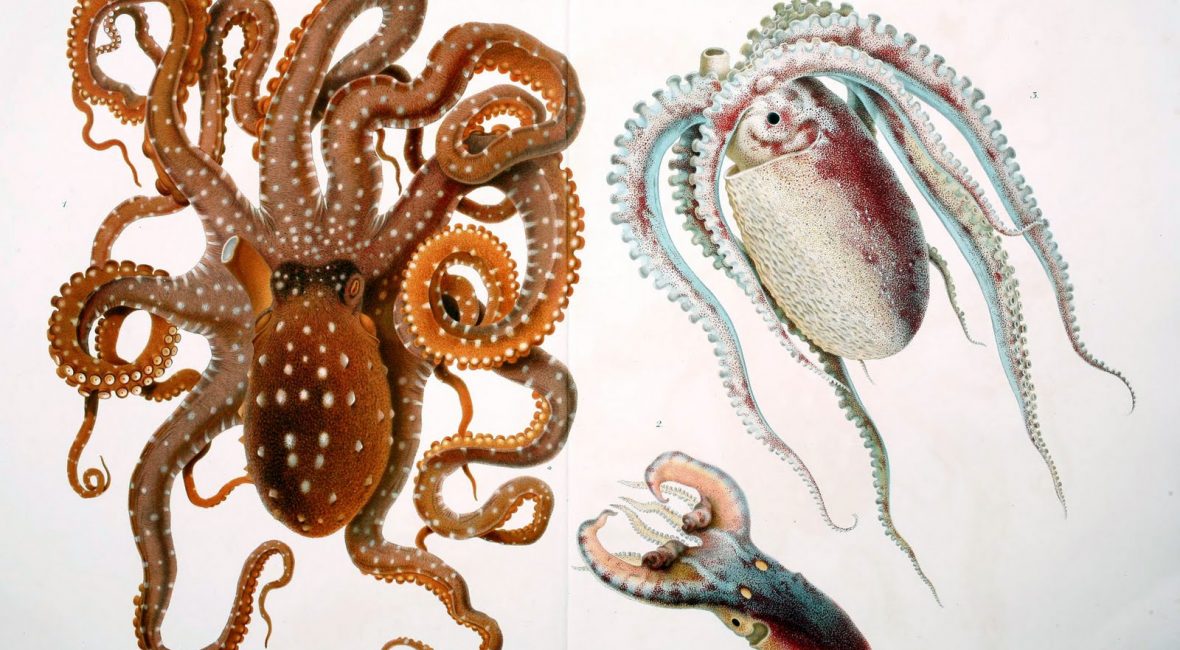
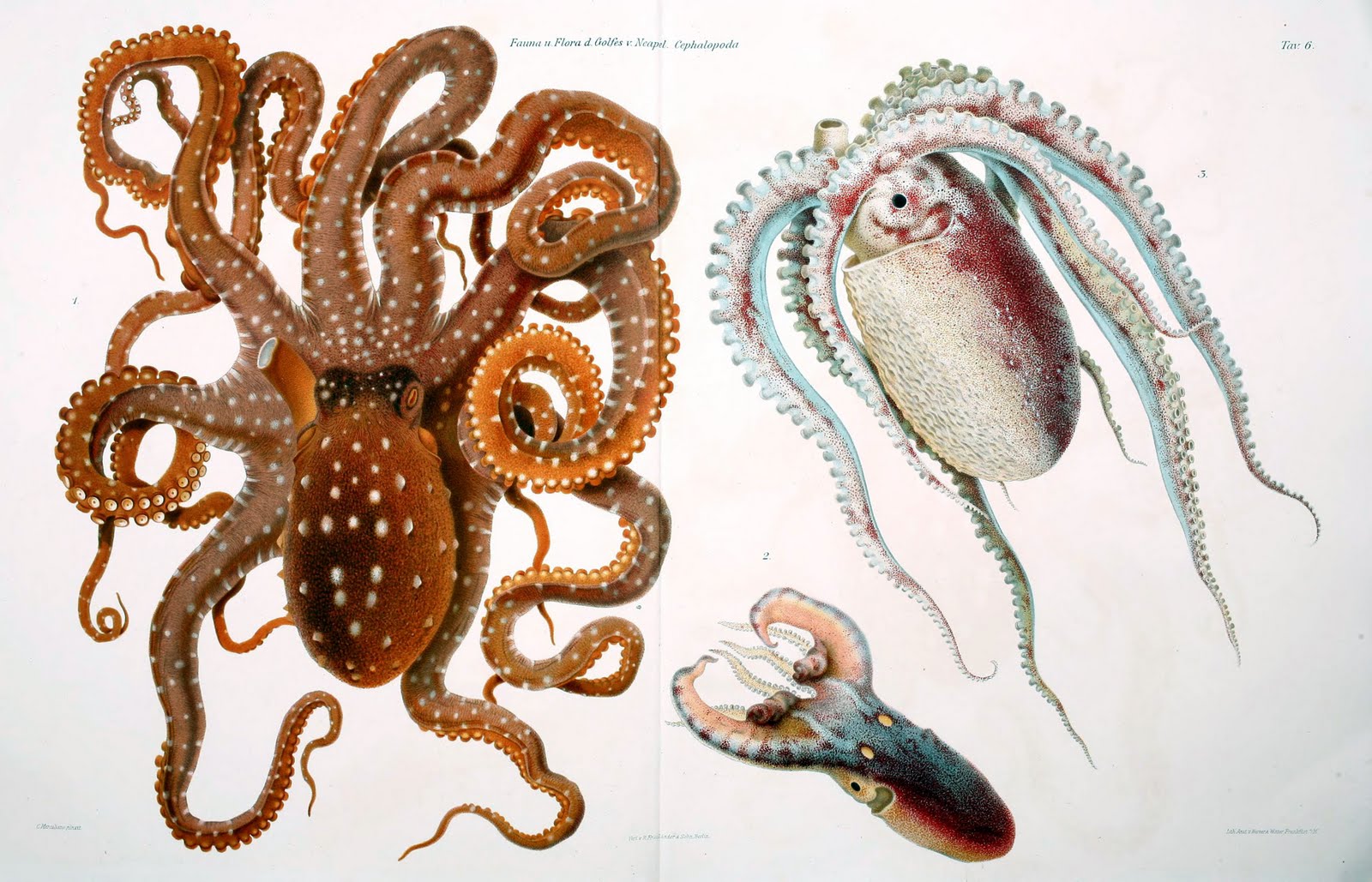
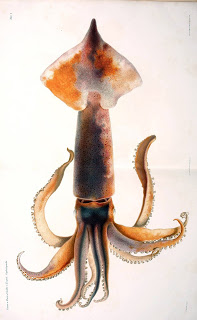
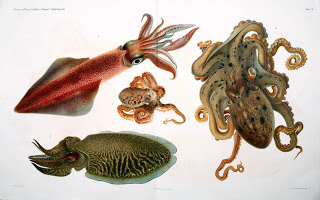
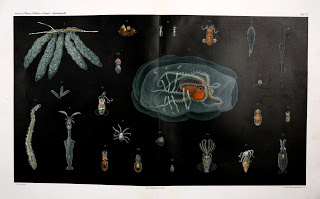
We’re all about mollusks in our book of the week this week, with our featured title being one brimming with some really spectacular watercolors by Comingio Merculiano. What, you might ask, is the title of this exceptional work? I Cefalopodi Viventi nel Golfo di Napoli (Sistematica) (1896). While the copy on BHL consists of only the plates from this title, the entire volume (with text) constitutes the 23rd monograph in the series Fauna and Flora of the Gulf of Naples, published by the Stazione Zoologica. This particular monograph, written by Giuseppe Jatta, presents, as the name suggests, detailed information on the Cephalopods of the Mediterranean.

View Full Size Image

The Fauna and Flora series was the brain child of Anton Dohrn, prominent German Darwinist and founder of the Stazione Zoologica in Naples. In the winter of 1868, Dorhn and his colleague Nicholai Miklukho-Maklai conceived of the idea of a global network of zoological stations, in which scientists could visit various stations around the world, collect material, and conduct research in ready laboratories. The first of these stations, “Stazione Zoologica di Messina,” consisted of two rented rooms in Messina, but impediments such as the absence of a library (oh, how they would have loved BHL!) and permanent trained personnel made it quickly apparent that the idea was wrought with difficulties.

In the 1870s, Dohrn moved the location of the station to Naples, as the breadth of biological richness in the Gulf of Naples, and the proximity to a large university, made it an extremely attractive location. This time, the station was a much greater success! Encouraged, Dohrn decided it was time to move on to another pet project, and one for which the Station was well-equipped to support. Burdened by the lack of systematic studies on marine fauna in the Mediterranean, Dohrn developed the Fauna and Flora of the Gulf of Naples project, assigning groups of marine organisms to subject experts with instructions to write a monograph on each of the assigned groups. Each monograph was to deal with the morphology, development, systematics or ecology of the topic assigned. Disappointed by the quality of scientific illustrations accompanying many of the monographs, Dohrn also hired professional artists to create illustrations for the works. As Dohrn explained in v. 48 of Nature,

View Full Size Image

“I wished to lay great stress upon illustrations. In looking over the existing iconography of the lower marine animals, and comparing them with those of the terrestrial animals, the inferiority of existing illustrations of the former was apparent, and especially as regards the reproduction of the colouring of the living marine organisms. Colour in animals may have relatively little scientific interest compared with structure, nevertheless it has a meaning, and its good reproduction facilitates greatly the recognition of the species. Besides, practical reasons spoke very much in favor of good coloured illustrations as a means to facilitate the sale of the monographs, which were to be published on subscription, and as the safest way for covering the great expenses which were to be incurred.”

View Full Size Image

The first artist selected was Merculiano, who began his collaboration in 1885, and it is thanks to the incredible talent of this artist that we have such a glorious collection of illustrations to present this week! Indeed, Dohrn himself attributed the success of the series in large part to the quality of the illustrations contained within the volumes, which were reproduced for the publications via lithographs by Werner and Winter. We’re certainly glad Dohrn decided to incur the costs of quality scientific artwork, and we hope you enjoy the few images we’ve selected for this post. Be sure to check out the entire collection of illustrations from this work in Flickr!

September 9, 2011by Grace Costantino
Blog Reel, Featured Books

Book of the Week: Mantell and the Dinosaurs

View Full Size Image

We often take it for granted that humans have always known about the existence of the dinosaurs, and that there was never a dispute that they could be anything but the prehistoric giants that we now know them to be. However, this is not the case. As far back as the early 1800s, people had no idea that an entire era of awe-inspiring creatures had lived and died on their planet. Dinosaur fossils that were discovered were attributed to other things, such as the 1676 discovery of most probably a Megalosaurus thigh bone by English museum curator Robert Plot, who believed that thigh bone belonged to a giant man. The first true breakthrough for the dinosaurs, however, occurred in 1822 when Gideon Mantell and his wife discovered and identified the first fossil teeth, which belonged to the dinosaur Mantell named Iguanodon.

Gideon Mantell, thanks to this discovery and his tireless work in geology and paleontology, is now recognized as the man who started the scientific study of dinosaurs. Beginning life as a doctor, Mantell spent his free time collecting and studying fossils that he found in the marl pits of Hamsey. His hobby became more than a pastime when, in 1813, he began corresponding and sharing his fossil shell discoveries with acclaimed naturalist and illustrator, James Sowerby. In December of 1813, Mantell was elected as a fellow of the Linnean Society of London, and in 1815, he published his first paper on the characteristics of fossils discovered in the Lewes area.

View Full Size Image

It was 1822, however, when the important discovery of the Iguanodon teeth occurred. Encouraged by the stunning success of his publications to date (including a book on the geology of Sussex, for which King George IV of England requested four copies), Mantell began showing other scientists and naturalists the fossil teeth he had found. Most believed they were simply fairly recent fish or mammal teeth, and Mantell was mocked for his assertions to the contrary. Even Georges Cuvier mis-identified the fossils, claiming that they were the teeth of a rhinoceros. Eventually, however, Mantell was vindicated, and the great human love affair with the dinosaurs began.

View Full Size Image

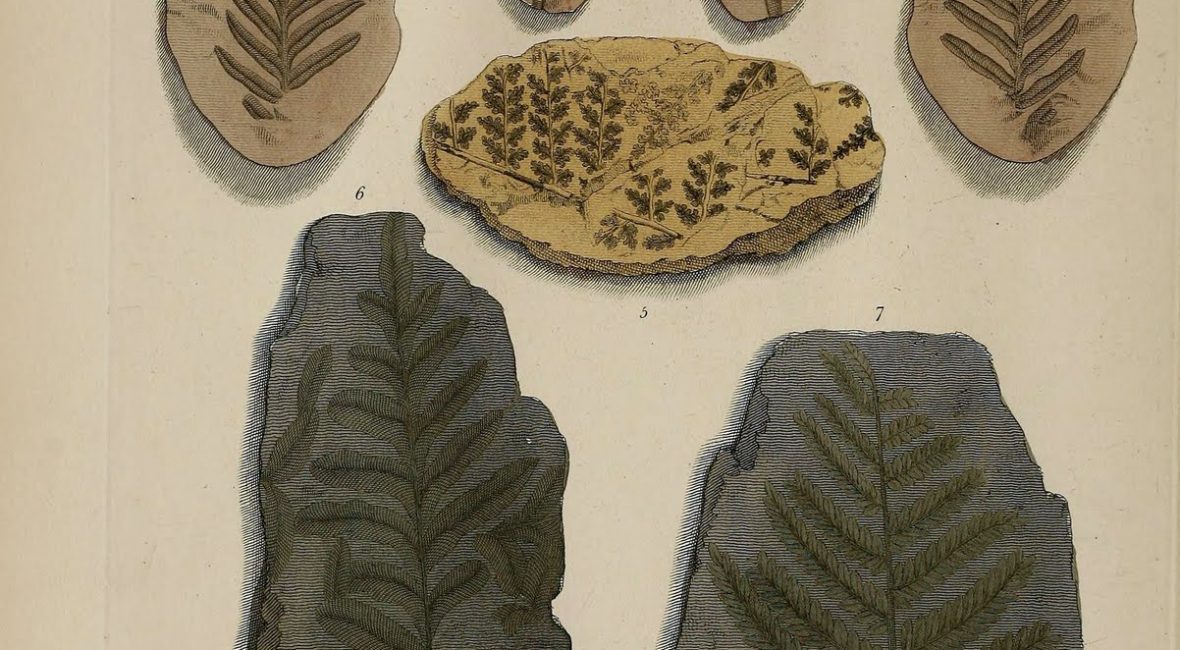
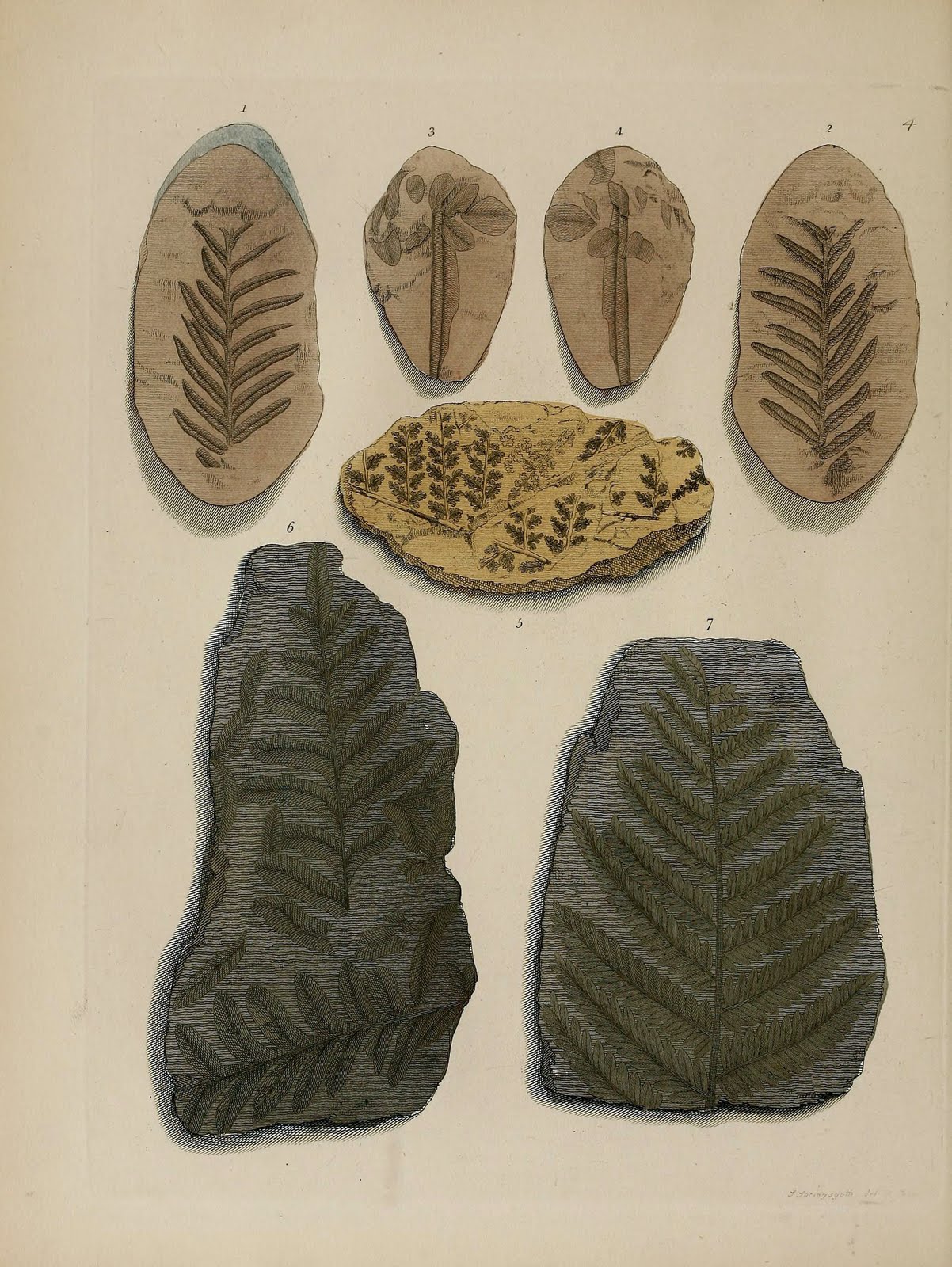
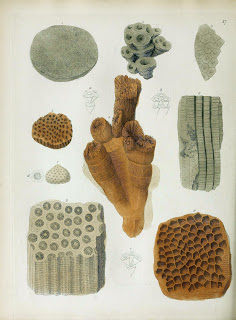
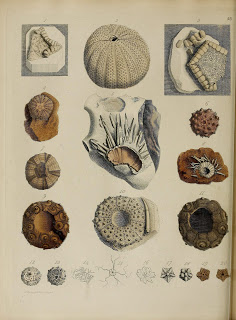
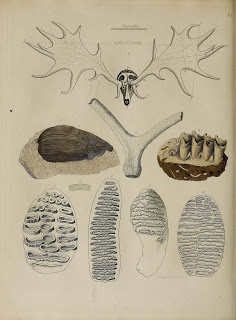
One of Mantell’s many important works was A Pictorial Atlas of Fossil Remains (1850), which consists of 74 hand-colored engraved plates selected from James Parkinson’s Organic Remains of a Former World and Edmund Artis’ Antediluvian Phytology. Mantell wrote the descriptions for the plates, which include illustrations of fossilized wood, plants and fruits, corals, shells, insects, turtles, sharks, elk, and many more. While you can see just four of the many lovely illustrations from our book of the week in this post, be sure to check out our Flickr site to see all of the illustrations!

View Full Size Image

Sadly, the later years of Mantell’s life were not entirely happy. In 1833, when Mantell relocated to Brighton, his medical practice suffered, rendering him almost destitute. His house was turned into a museum in hopes of securing additional financial support, but Mantell’s habit of waiving the entrance fee doomed the museum to failure. In 1841, Mantell suffered serious injuries as a result of a carriage accident which left him crippled and in constant pain. As might be expected from a true scientist, he continued his studies diligently despite the accident, publishing many more books and papers until his death in 1852 due to an overdose of Opium. His legacy, however, remains, and thanks to his tireless perseverance and refusal to accept the dismissive opinions of others, we can now stand in awe of the magnificent era of the dinosaurs.

This week’s book of the week, A Pictorial Atlas of Fossil Remains (1850), with descriptions by Gideon Mantell, was contributed by Harvard University, MCZ, Ernst Mayr Library.

September 2, 2011by Grace Costantino
Blog Reel, User Stories

BHL and Our Users: EOL Rubenstein Fellow, Dr. Joaquin (Ximo) Mengual

View Full Size Image

Welcome to the second installment of our mini-series featuring EOL Rubenstein Fellows and their use of BHL. This week, we feature Dr. Joaquin (Ximo) Mengual, a postdoctoral fellow at the Smithsonian Institution dedicated to studying Syrphidae!

What are your research interests, where do you do the bulk of your work (country), and what is your institution of affiliation?

My research interests focus on systematics and phylogenetics of the family Syrphidae (Insecta, Diptera), also known as flower flies or hoverflies. I am currently in the USA. I’m a Postdoctoral fellow at the Entomology Department of the National Museum of Natural History, Smithsonian Institution.

In the program, Fellowships are expected to serve as a complimentary funding source to existing funding you have that supports your primary research activities. Please describe what your primary research activities are.

My primary research focuses on the taxonomy of Neotropical and Oriental syrphid genera, with a special interest in cybertaxonomy and the phylogenetic relationships among genera of the subfamily Syrphinae (http://entomology.si.edu/StaffPages/MengualJ.html).

Please describe how you use EOL to disseminate or support your primary research activities, or what your primary duties related to EOL are.

When describing new species in my publications, I always have to mention the differences between new and already described ones. I traditionally use illustrations for the new species but I also like to e-link images and texts already in EOL for those species that were previously described. As an EOL fellow (Rubenstein fellow), my primary duties are to create authoritative pages for all the distinct species groups of flower flies, using images, texts, descriptions, synonyms and references. To achieve this, I have a LifeDesk for flower flies. Everything in this LifeDesk also goes to EOL as a contribution.

How has the EOL Fellows program made a difference in your career/research?

The EOL Fellows program has given me the opportunity to study in detail all the different genera, subgenera and species groups of the family Syrphidae; it has helped me to have a more global vision of this group and to become familiar with a lot of literature that was previously unknown to me. Lastly, the EOL Fellows program has improved my skills to disseminate information and to work on cybertaxonomy.

Who is your Mentor, what is their area of interest (research activities), and how have they supported you throughout your Fellowship?

My Mentor is Dr. F. Christian Thompson. His interests include flower flies and others, their diversity, and cybertaxonomy. Dr. Thompson helped me conceive the design of the project, when it became necessary to find a way to manage a large amount of data by creating a database of the specimens photographed for EOL pages; he also gave me very wise advice about the systematics of Syrphidae. Last, but not least, he contributed with some texts to the LifeDesk and has kindly reviewed my contributions.

How does BHL support your Fellows activities, as well as those research activities that fall outside of your duties as an EOL Fellow?

For all the bibliographic references I have in the LifeDesk, I look for the original publication in BHL to link the species page with the publication. BHL has become an essential part of my daily life and has helped me in finding references, basic not only to my EOL duties, but also to my articles and publications. Very often I have to read old descriptions and texts from rare books, and BHL provides them in electronic format, making my life much easier because I don’t need to carry tons of books with me in order to conduct my research.

When did you first discover BHL?

It was in 2009, when I moved from Spain to Washington, DC, to start my postdoctoral fellowship. Dr. Thompson was the first to introduce me to this project when I needed to consult a publication from 1822 called Systematische Beschreibung der bekannten europaischen zweiflugeligen Insekten, by J. W. Meigen.

What are your favorite features/services on BHL?

As I said, the most important service on BHL is the capability of downloading books and other texts in electronic format. When I’m travelling or visiting museums abroad and I need to check some literature to finish a manuscript, or to check some characters from a described species to identify a specimen, BHL and its electronic texts have an incalculable value for me because I don’t have to carry heavy books and I don’t have to worry if there is not a copy of that rare book in the institution I’m visiting. The fact that you can search by author, by journal or by scientific name is also of great help because sometimes you don’t have the full name of the journal or there is some misspelling in the book’s name.

If you could change one thing about BHL, or suggest one thing to be the next developmental priority for BHL, what would it be?

I would like to be able to search for each article inside a journal. Right now you can only search for the journal and the issue inside the journal. Sometimes, if somebody has tagged an article, you can find it but those are very rare occasions. Normally you have to download the whole issue and then search for your particular article. If the users were able to query BHL with using the article’s title and the article’s author, it would save a lot of time.

Please describe why you think services like EOL and BHL are important for today’s scientific community.

In a digital era, it is essential to have a digital database of our knowledge on natural history. In my opinion BHL changed the way scientists do science, as heavy books are not necessary anymore if they are scanned and their texts and images are available in electronic format. BHL gave us the opportunity to read old literature and do science anywhere, not only in libraries or in your office.

On the other hand, EOL changed the way scientists communicate with the general public and vice versa. Before EOL, citizen-scientists needed to read original publications in journals that most probably were not available to them, and access to museum’s collections were restricted. EOL gave the opportunity to taxonomists, citizen-scientists and public in general, to see images of type material, photographs of animals, fungi and plants in their habitats properly identified, so they can use them to identify and name the nature that surrounds them. It is not only the texts and images, but also the links to important bibliographic references (here it is where BHL comes into play), the security of authoritative species pages and identifications and the possibility to search a particular species within the vast number of described taxa.

Do you have a favorite book in BHL, or a book that has most supported your research activities or EOL responsibilities?

I do not because I find all of them important. If I had to choose one, I would choose one book by the “starters” such as Linnaeus, Fabricius, Scopoli, Fallen, Wiedemann; the feeling of reading a 250 year old book in your computer is beyond words.

Thank you, Dr. Mengual, for taking the time to share your work with us and discuss the importance of both BHL and EOL to your research! We are quite aware of our users’ desire to access items at the article-level in BHL, and with that in mind, we are in the process of developing Citebank, which will serve as an article repository for BHL, allowing users to access not only journal-level items from BHL, but also articles. While it is still in beta, we invite our users to explore this service and provide us feedback about it! And don’t forget to visit Dr. Mengual’s LifeDesk to learn everything you want to know about Syrphidae!

August 30, 2011by Grace Costantino
Blog Reel, Featured Books

Book of the Week: Illustrations in Zoology

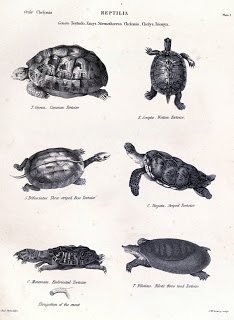
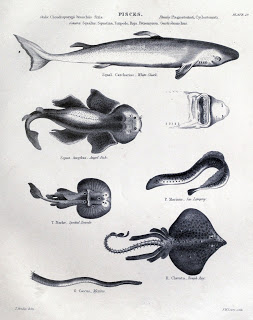
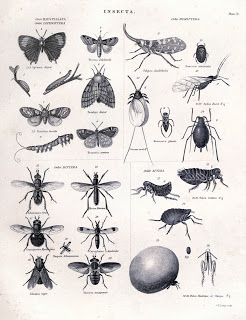
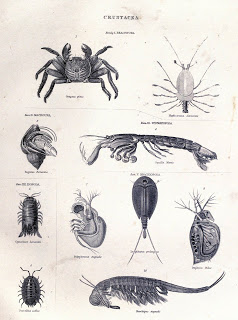
Ever wanted to get a systematic view of the animal kingdom in picture-book style? Well, this week you’re in luck, because we’re featuring Illustrations of Zoology (1851), with engravings by F.W. Lowry and Thomas Landseer, after the original drawings by Sowerby, Varley, Holmes, Bone, Pyne, Lowry and Charles Landseer. It contains no less than 87 illustrations of animals from all walks of life!

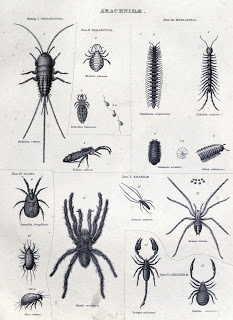
The book is arranged first according to vertebrates and invertebrates, and within each of those divisions, it is further divided into the various classes, i.e. Mammals, Birds, Reptiles, and Fish for vertebrates and Mollusks, Insects, Crustaceans, Arachnids, Myriapods, Echinoderms, Entozoa, Acalepha, Infusoria, and Polyps for invertebrates. The further you delve into the classes, the more the categories are broken down into orders and families. While 156 pages of our book of the week give some fairly detailed text descriptions of the classes, orders and families contained within, the really juicy stuff comes after that, when the dozens of breath-taking engravings begin. For our post, we’ve chosen a few of our favorite engravings, and, for each featured, we’ve chosen our favorite animal on the page and included an interesting fact about it. Enjoy!

View Full Size Image

Mammals: Featured animal, the Giraffe. Interesting fact: Giraffes can grow up to 18 feet tall, but they have the same number of vertebrae in their necks as humans do: 7!

View Full Size Image

Birds: Featured Animal, the Snowy Owl. Interesting fact: The Snowy Owl’s diet consists mostly of lemmings, and they can eat up to 1,600 a year each!

View Full Size Image

Reptiles: Featured Animal, the Matamata. Interesting fact: The Matamata has been renamed 14 different times in 2 centuries.

View Full Size Image

Fish: Featured Animal, the Whale Shark. Interesting fact: The Whale Shark is the largest fish in the sea, reaching lengths of 40 feet!

View Full Size Image

Insects: Featured Animal, Lanternfly (shown as Fulgora candellaria). Interesting fact: Though named Lanternflies due to the assertion that the large “snout” of this insect becomes illuminated at night (an assertion that even Linnaeus accepted without question), centuries of observations have failed to support this claim.

View Full Size Image

Crustaceans: Featured Animal, the Mantis Shrimp (shown as Squilla mantis). Interesting fact: This shrimp is of the “spearer” type, having long spiny appendages topped with barbed tips that are used to stab and snag prey.

View Full Size Image

Arachnids: Featured Animal, Argiope lobata (shown as Aranea lobata). Interesting fact: Argiope lobata decorate their webs with intricate crisscross patterns, of which the purpose is still in hot debate. Some believe the patterns serve as camouflage, others that they make the spider appear larger and more threatening, and still others that they make the web more visible and thus less likely to incur accidental damage from large bodies like humans. Still others believe that the patterns more distinctly reflect ultraviolet light, which many insects are attracted to, thus increasing the number of prey that the spider traps.

We hope you’ve enjoyed our brief excursion into the world of zoology, but remember, we’ve only highlighted a few of the many gorgeous plates in this book. Be sure to check out all of the images from Illustrations of Zoology (1851) in our Flickr account!

August 18, 2011by Grace Costantino
Page 61 of 71« First...102030«60616263»70...Last »

Help Support BHL

BHL's existence depends on the financial support of its patrons. Help us keep this free resource alive!

search

About BHL

The Biodiversity Heritage Library (BHL) is the world’s largest open access digital library for biodiversity literature and archives. BHL operates as a worldwide consortium of natural history, botanical, research, and national libraries working together to digitize the natural history literature held in their collections and make it freely available for open access as part of a global “biodiversity community.”

Join Our Mailing List

Sign up to receive the latest news, content highlights, and promotions.

Subscribe Now

Subscribe to Blog via Email

Enter your email address to subscribe to this blog and receive notifications of new posts by email.

Join 319 other subscribers

Subscribe to Blog Via RSS

Subscribe to the blog RSS feed to stay up-to-date on all the latest BHL posts.

Access RSS Feed

Inspiring Discovery through Free Access to Biodiversity Knowledge.

The Biodiversity Heritage Library makes it easier than ever for you to access the information you need to study and explore life on Earth…for free, anytime, anywhere.


ABOUT | HARMFUL CONTENT | PRIVACY | SITE MAP | TERMS OF USE