Biodiversity Heritage Library - Program news and collection highlights from BHL
  • Home
  • News
  • Featured Books
    • All Featured Books
    • Book of the Month Series
    • BHL at 20
  • User Stories
  • Campaigns
    • Fossil Stories
    • Garden Stories
    • Monsters Are Real
    • Page Frights
    • Her Natural History
    • Earth Optimism 2020
  • Tech Blog
  • Visit BHL
Home
News
Featured Books
    All Featured Books
    Book of the Month Series
    BHL at 20
User Stories
Campaigns
    Fossil Stories
    Garden Stories
    Monsters Are Real
    Page Frights
    Her Natural History
    Earth Optimism 2020
Tech Blog
Visit BHL
  • Home
  • News
  • Featured Books
    • All Featured Books
    • Book of the Month Series
    • BHL at 20
  • User Stories
  • Campaigns
    • Fossil Stories
    • Garden Stories
    • Monsters Are Real
    • Page Frights
    • Her Natural History
    • Earth Optimism 2020
  • Tech Blog
  • Visit BHL
Biodiversity Heritage Library - Program news and collection highlights from BHL
Blog Reel, Featured Books

Book of the Week: The Definitive Work on the Biodiversity of Cuba

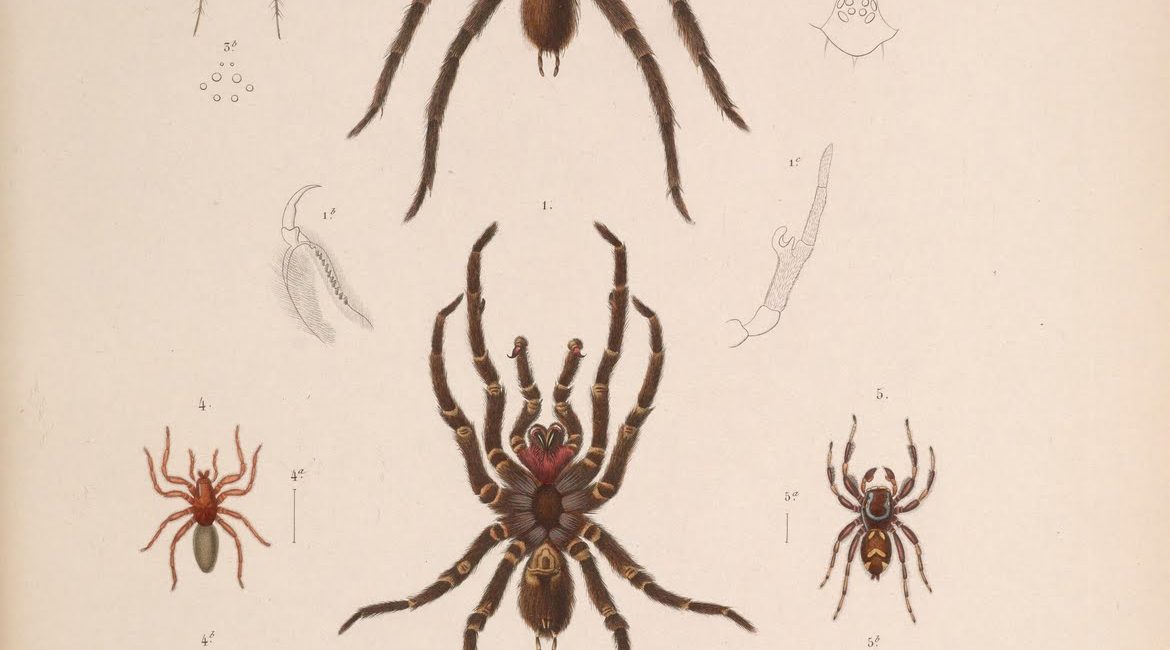
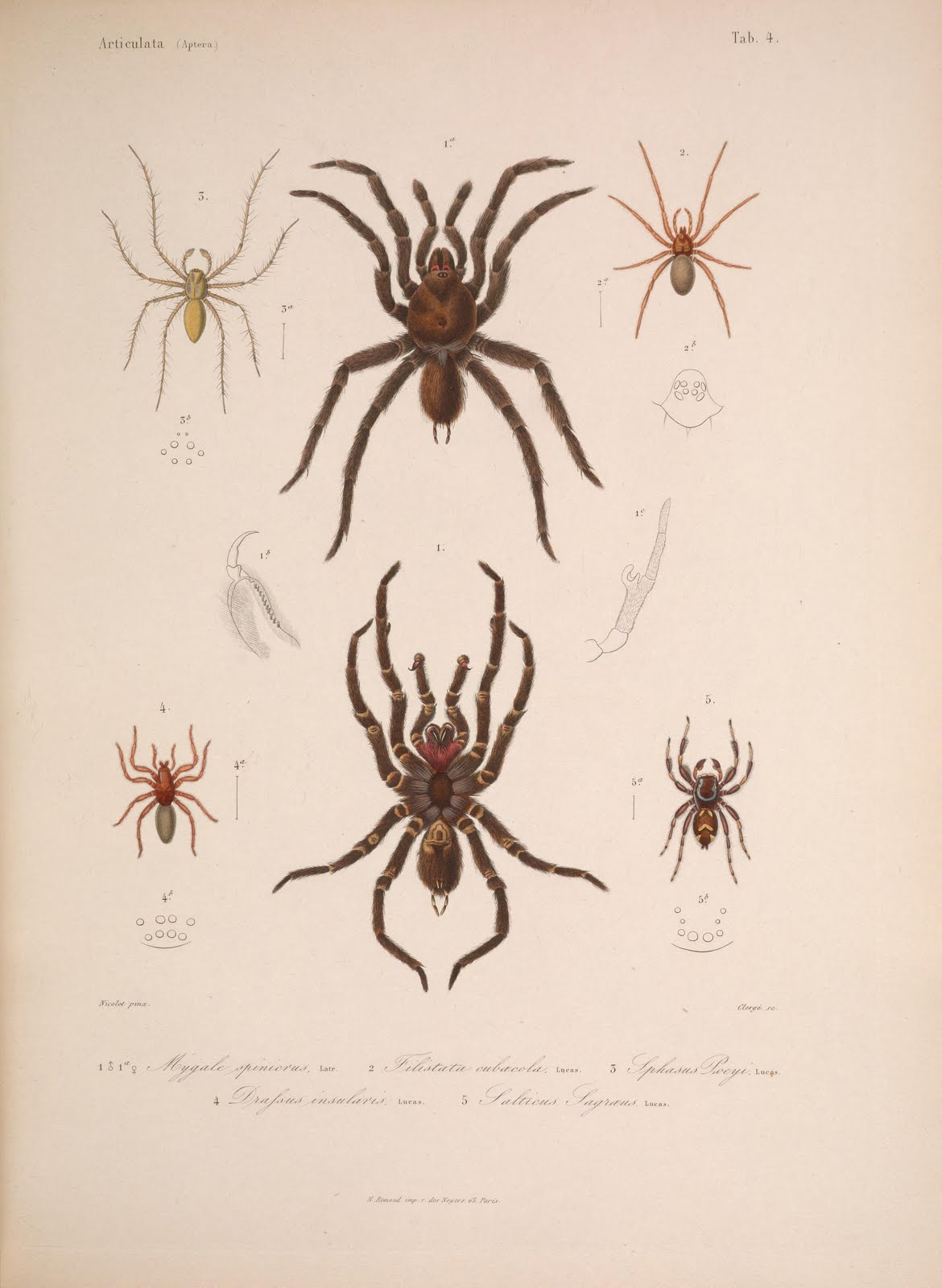
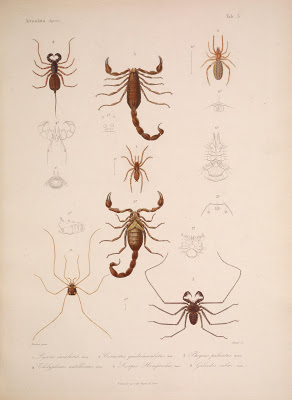
View Full Size ImageEarlier this week, one of our followers on Twitter, @BibliOdyssey, posted a blog post entitled “Cuban Critters” about the BHL book Histoire Physique, Politique et Naturelle de l’ile de Cuba (1838-57), by Ramón de la Sagra. The post highlights some of the incredible illustrations found within this work. We particularly like the plates on scorpions and spiders, as we had been searching for some colorful images of these creatures in our collection. This being the case, we thought it highly appropriate to highlight this book as our book of the week.

 
Ramón de la Sagra had a very interesting, somewhat tumultuous, and highly politically-driven life. Born in 1798 in A Coruña, a province of Spain, he was labeled as an anarchist, politician, writer and botanist. His early life, which involved studying physics, anatomy, medicine, mathematics, and pharmaceuticals, was marked by repeated threats from the Inquisition for his liberal views, which ultimately resulted in his migration to Cuba in 1821 as an assistant to Agustìn Rodriguez, where he was eventually appointed to the position of Professor of Natural History of Cuba. In 1835, Sagra returned to Europe, settling in Paris.
 
Although Sagra represented the liberal party as an elected member of the Spanish parliament four times (1838, 1840, 1845 and 1854), he was expelled from both France and Spain (in 1849 and 1856, respectively) for voicing socialist and radical ideas. Despite these difficulties, his accomplishments included helping to create the Peoples’ Bank of France and founding the world’s first anarchist paper, El Porvenir, which was later closed by Ramón María Narváez, Duke of Galicia. He ultimately died in 1871 in Switzerland at the age of seventy-three.
 
View Full Size Image
While doing research for this post, we found that there is an original, Spanish version of this work, in addition to the French version mentioned earlier. Interestingly, the first edition, Spanish version came up for auction at Christie’s in 1999 at an estimated £30,000 – £40,000. The copy at auction is considered “the only complete copy of the original Spanish edition to have appeared at auction in recent years,” and the Spanish edition itself, according to Jorge Aguayo, who wrote a definitive study on the work in 1946, represents “the most complete and important work of its kind, and…the Spanish edition is now one of the most difficult works to find in perfect condition.” Indeed, Aguayo went on to say that “La Sagra’s Historia may be considered the most valuable possession for any collection specialising in Cuba and the Caribbean.”
 
Apparently, the work itself, at least the Spanish version of it, was almost equally as rare when it was first published! In the words of Sagra himself, who “complained of the difficulties he encountered in supplying complete copies from the 190 parts issued over a period of twenty
years,”
 
“The copies that the [Cuban] government generously procured in order to protect them were, for the most part, incompletely distributed. Those who had taken subscriptions in the Island grew weary of waiting for the end of such a protracted, slow, and irregular process of publication. And of the copies I had reserved for myself, only very few could be completed, since a lot were lost in the warehouses of the editors during the long years that were required to finish the publication.”
 
After further investigation, we found that we do indeed have a Spanish version of this work in BHL! We find this pretty impressive considering how rare the work is!
 
So, in conclusion, for our book of the week, we’re featuring not just one version, but two versions of the same title by Ramón de la Sagra, Histoire Physique, Politique et Naturelle de l’ile de Cuba or Historia fisica, politica y natural de la isla de Cuba. You can take a look at v. 7 (text) of the French version, plates 1-20 of the insects, and all 13 volumes of the Spanish version. Considering the importance of this work when it comes to the biodiversity of Cuba, we think it’s quite worthy of a few minutes (or hours!) of leisurely investigation!
July 21, 2011by Grace Costantino
Blog Reel, User Stories

BHL and Our Users: John Pittman, the Mad Natural Historian!

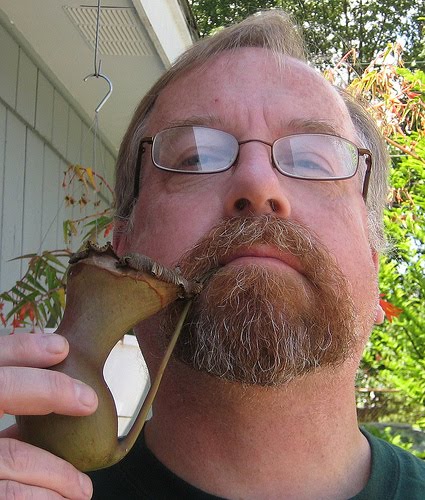
View Full Size ImageSeveral weeks ago, we featured as our book of the week the Album of Abyssinian Birds and Mammals (1930), by Louis Agassiz Fuertes. In that post, we referenced one of our faithful BHL users, John Pittman (known to the Twitter universe as @drhypercube), who writes a blog entitled Diary of a Mad Natural Historian. This week, we have the pleasure of highlighting John as our BHL featured user. So enjoy the ruminations of a “Mad Natural Historian!” Oh, and if you’re wondering about the picture, it’s John as Sherlock’s Natural Historian brother, Nepenthiphilous Holmes 🙂

Q: What is your title, institutional affiliation (or alternative place of employment), and area of interest?

A: Like April 26th’s user, Mathew Louis, I’m a recreational (but passionate!) natural historian. Hands-on interests include carnivorous plants, species orchids, poison dart frogs and birds of prey. I have a small dart frog collection, a growing plant collection and am a falconer. More bookishly, I’m fascinated by Asian flora, fauna, and landforms. Oh, and hummingbirds. My primary blog is Diary of a Mad Natural Historian.

Q: How long have you been in your field of study?

A: I’ve been peeking and poking since at least the early 60’s, when an adult told me that I should always kick rocks before picking them up in case there was a scorpion underneath (this was in the Arizona desert). Unsurprisingly, many rocks were kicked that day – sadly, no scorpions were discovered – and metaphoric rock-kicking behavior persists to this day.

Q: When did you first discover BHL?

A: I’m guessing, but I think about six months ago via Twitter – maybe a retweet of @BioDivLibrary? My apologies for the imprecision – I really need a Memex with automatic associative trails.

Q: What is your opinion of BHL and how has it impacted your research?

A: I have a very high opinion of BHL – it is an incredible resource. I typically do a search on a species name to see what I can turn up. By way of example, my last search was for Eurycantha calcarata (a large stick insect) – i have a long simmering fly-tying project involving these critters.

Q: How often do you use BHL?

A: Approximately twice a week for searches and whenever a new blog post comes out.

Q: How do you usually use BHL (read the titles online/download whole PDFs/Selecting Pages to Download/etc.)?

A: I almost always read the titles online.

Q: What are your favorite features/services on BHL?

A: Book of the Week, hands down. For a dilettante/bibliomane like me, it’s like open stack serendipity with curation.

Q: If you could change one thing about BHL, what would it be, or what developmental aspect would you like the BHL team to focus on next?

A: Natural history art and scientific illustrations are such a wonderful merger of precision and filtering (what aspects of the specimen are most important, etc.) – I’d love to see an image search. I sure hope one doesn’t exist already and I just haven’t figured it out!

Q: If you had to choose one title/item in BHL that has most impacted your research, or one item that you prefer above any other in BHL, what would it be and why?

A: I’ll twist the question slightly and answer with my favorite author – William Beebe.

Thank you, John (or should we say @drhypercube) for sharing your passion with us! And while we do not yet have image search functionality in BHL (though we are working on grant proposals that may allow us to add something along these lines), we’ve recently been busy building our BHL Flickr account with images from our books. Check them out, and consider tagging the images with any keywords that may help others locate and enjoy the images as well!

And be sure to check out John’s blog! You may find yourself transforming into a “Mad Natural Historian” yourself 😉

July 19, 2011by Grace Costantino
Blog Reel, User Stories

BHL and Our Users: Dr. Jose Nunez-Mino

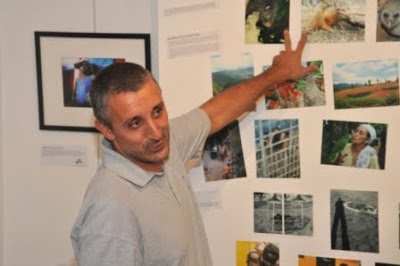
For the past couple weeks you’ve seen a lot from us on the blog, Twitter and Facebook about Charles Darwin with our recent release of the Charles Darwin Library on BHL. This week, we feature a user dedicated to saving the remaining two endemic non-flying mammal species of Hispaniola, and his project, “The Last Survivors,” is funded by the Darwin Initiative Fund. The beauty of this story from a socially-networked perspective? This user actually discovered BHL via Twitter! Social Media is a beautiful thing! So, without further ado, meet Dr. Jose Nunez-Mino!

View Full Size Image

Q: What is your title, institutional affiliation, and area of interest?

A: Dr. Jose Nunez-Mino. I work for the Durrell Wildlife Conservation Trust (DWCT). I am the field project manager for “The Last Survivors” which is financed by the United Kingdom government Darwin Initiative Fund. The project is a collaboration between organizations in the United Kingdom (DWCT and the Zoological Society of London) and the Dominican Republic (Hispaniolan Ornithological Society and the Dominican Republic National Zoo).

I am a forest ecologist and conservation biologist. My work involves carrying out research and trying to conserve the last two endemic non-flying mammal species of Hispaniola (Haiti and the Dominican Republic) which are the Hispaniolan solenodon (Solenodon paradoxus) and Hispaniolan Hutia (Plagiodontia aedium). Both species are currently listed as endangered by the International Union of Conservation of Nature (IUCN). We take a very holistic approach which includes investigations on current and past distributions of both species, behavioral studies, genetic studies, capacity building (training) of in-country biologists and raising awareness of both species. You can find out about our project from our website: www.thelastsurvivors.org.

Q: How long have you been in your field of study?

A: I have been involved in conservation in one way or another for the whole of my life but have been involved professionally for eight years. I started my current job in October 2009.

Q: When did you first discover BHL?

A: About six months ago – via Twitter! It was quite a discovery for me. Having spent many hours in old, dusty libraries (oddly I grew quite fond of old, dusty libraries) during my academic years, it was great to discover a resources like this which offers you so much from the comfort of your desk.

Q: What is your opinion of BHL and how has it impacted your research?

A: BHL is an amazing resource. Not only is it useful but I love the way it has been put together so that it is also very user friendly. For me it means that we can look up information relating to the two species we are studying. Both were described in the 1830s but very little is known about them though some information is available in the historical literature. For example, Gonzalo Fernández de Oviedo was one of the original Spanish colonizers to come to Hispaniola (modern day Haiti and Dominican Republic) and was the first to write about hutias in 1535 when he mentions that they were widely eaten and very tasty! Confirming that this species was killed and eaten in that period. We have also been able to access some great drawings of the species which we can use to both raise awareness and educate – my favorite is one from 1910 of a solenodon.

Q: How often do you use BHL?

A: Not as much as I’d like. My job takes me from my desk quite regularly (which is a good thing!) to areas where there is no phone receptions or internet (yes, there are still some places like this left). On average, probably once a month.

Q: How do you usually use BHL (read the titles online/download whole PDFs/Select Pages to Download/etc.)?

A: I start by having a look and reading online, but usually end up downloading the material to read it offline.

Q: What are your favorite features/services on BHL?

A: The way you can download a list of all your search results which allows you to come back and have a look at the material later on.

Q: If you could change one thing about BHL, what would it be, or what developmental aspect would you like the BHL team to focus on next?

A: I’d like to save my favorite articles on the website and then make them available to look at by other people. That would enable visitors to our website and Facebook page to easily access the fantastic historical material available on BHL. Maybe you can do that already and I just haven’t discovered it yet!

It would also be great if BHL could link directly into something like Amazon so that you can download books and articles to reading devices with one click.

Q: If you had to choose one title/item in BHL that has most impacted your research, or one item that you prefer above any other in BHL, what would it be and why?

A: Undoubtedly if would have to be Solenodon Paradoxus which was written in 1910. Although this book is over 100 years old, our level of knowledge about this species (actually both species) has not moved on much since then. This book provides a baseline of knowledge for anyone wanting to know more about these amazing endangered and venomous mammals.

Thank you, Dr. Nunez-Mino, for taking the time to share your experiences with BHL and tell us about the critical work that you do to save two such adorable creatures.

As to your suggestions for BHL, while a partnership with Amazon might be (at least currently) out of our reach, a project that has long been in development for BHL may provide some of the functionality related to saving and sharing articles that you desire. The project is called Citebank, and it will eventually serve as an article repository for BHL, indexing and allowing users to find items at the article level. Currently, any PDFs that you create using the “Select Pages to Download” feature on BHL for which you enter at least title-level information during the generation process are stored and indexed on Citebank. You can search the repository for these articles, and others can access them (including the full PDF that you originally generated) as well. While Citebank is still in development, we have hopes that this service will eventually meet the critical article needs of our users.

July 5, 2011by Grace Costantino
Blog Reel, Featured Books

Book of the Week: Serendipity, Twitter, and Louis Agassiz Fuertes

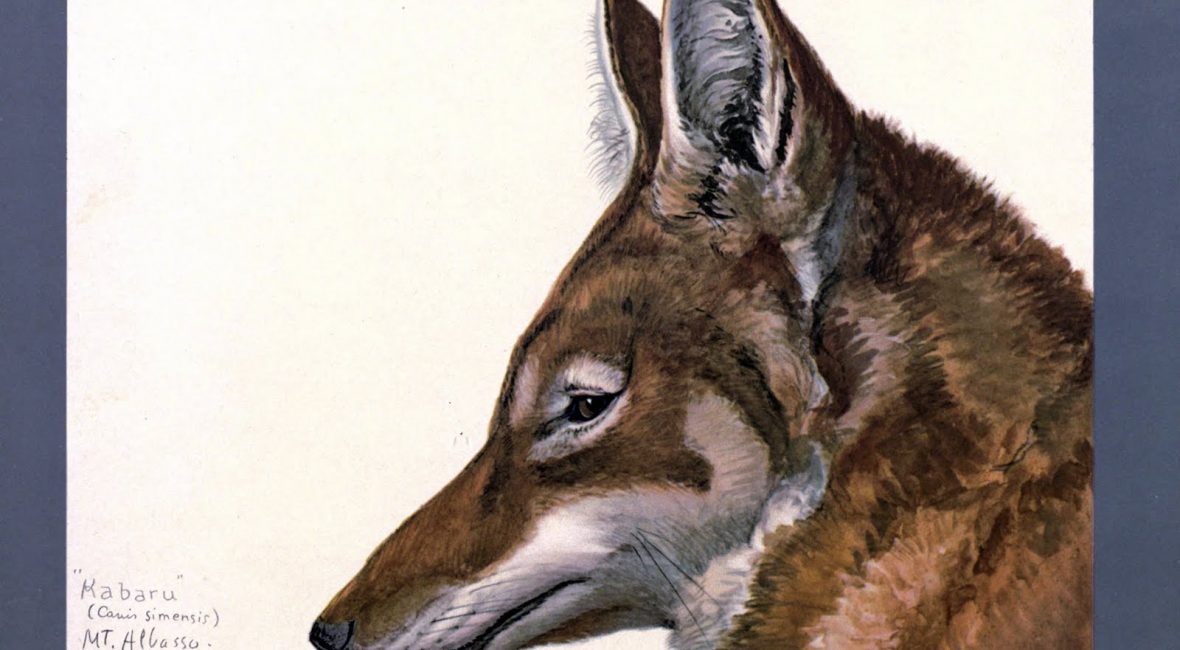
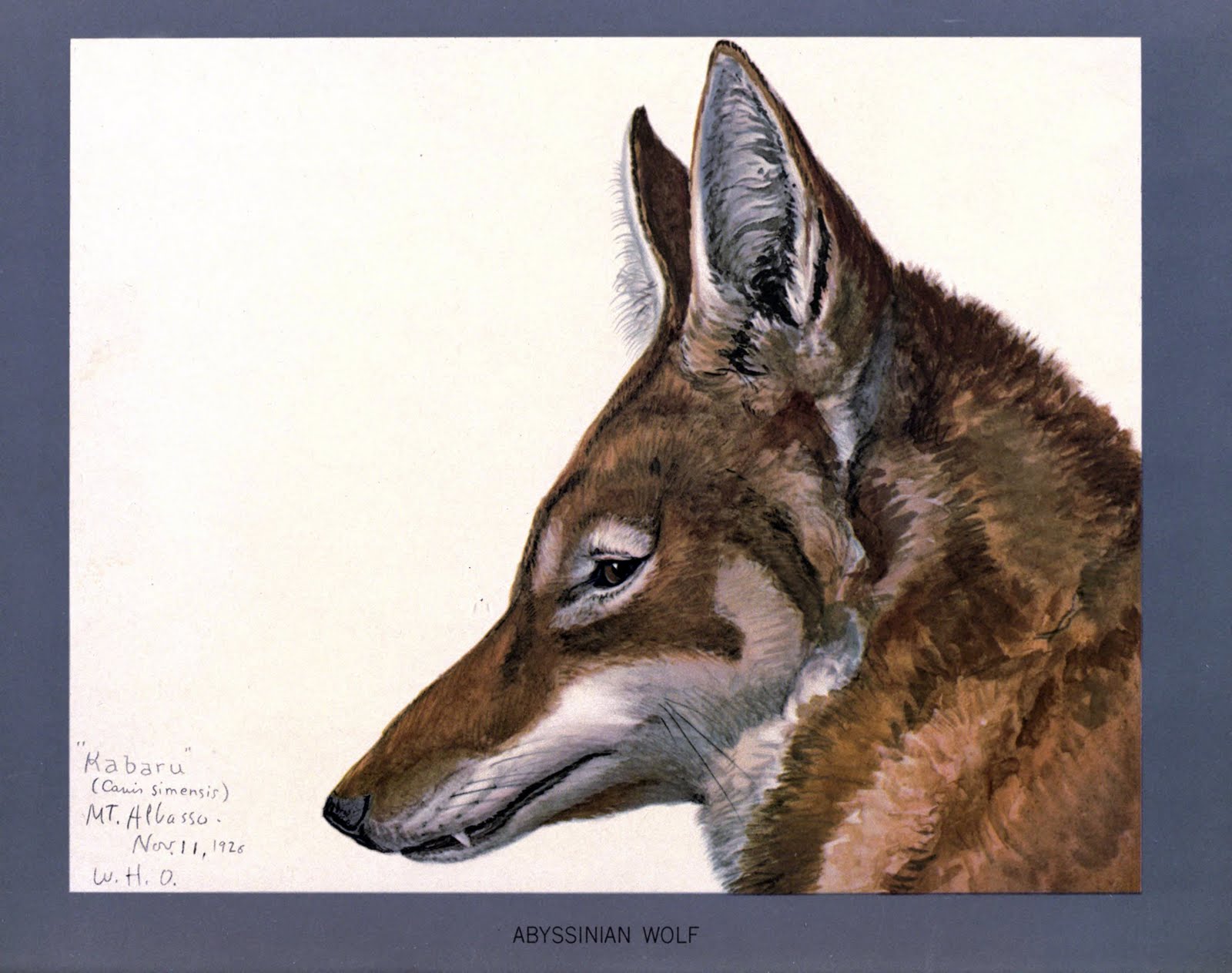
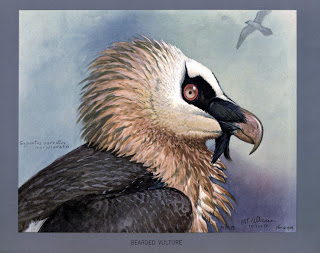
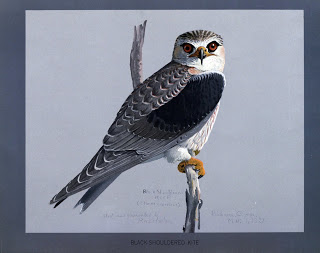
View Full Size ImageEarlier this week we did a Species of the Day tweet on Twitter (@BioDivLibrary) about the Abyssinian or Ethiopian Wolf – the most endangered canine in the world. For the tweet, we linked to a lovely portrait of the animal in Album of Abyssinian Birds and Mammals (1930), illustrated by Louis Agassiz Fuertes. Little did we know what a fascinating work this actually is. One of our followers on Twitter, John Pittman, known to the Twitter universe as@drhypercube, responded to our tweet with a link to his blog. Made aware of this book on BHL by our tweet & subsequent posting of the illustration to our Flickr account, John’s post highlights the genius of this ornithologist and painter – a genius that we had only partially appreciated when we did the original tweet. As John writes,

“This is the peanut butter cup of Biodiversity Heritage Library serendipity – two wonderful things that are even better in combination. Via the BioDivLibrary Flickrstream, the Album of Abyssinian Birds and Mammals from Paintings by Louis Aggasiz Fuertes.

Fuertes, for those who don’t know him or his work, was an ornithologist and painter. I’ve loved his art since I first encountered it (I was maybe 10 years old?) in a coffee table book that was, at that point, way out of my price range. His National Geographic article, Falconry, the Sport of Kings is still a favorite…”

View Full Size Image

Intrigued by John’s post, we decided to feature this work as our book of the week. We started by contacting John to get a little more information about Louis Agassiz Fuertes. He obliged by telling us that, not only was Fuertes an accomplished ornithologist and painter, but he was actually one of the members on the 1899 Harriman Alaskan trip, an expedition that spent two months voyaging from Seattle, along the Alaskan coast to Siberia, and back to Seattle. The accomplishment included discovering approximately 600 new species, 38 of which were new fossil species, charting the geographic distribution of Arctic species, discovering an unmapped fiord, and naming several glaciers. There were also important studies and documentation done of the indigenous people of the region, including a recording of a Tlingit song on a graphophonic recording machine brought along by Harriman.

This expedition was not the only one that Fuertes took part in. Indeed, our book of the week was the result of Fuertes’ involvement in a Field Museum expedition to Ethiopia, for which he not only painted, but personally collected, prepared, labeled and packed “no less than one thousand bird skins” for the Museum. Known as the Field Museum – Chicago Daily News Abyssinian Expedition (1926-27), the participants “traversed a large part of Abyssinia (Ethiopia), making collections which cover a wide range of conditions.” Wilfred H. Osgood, a curator of zoology at the Field Museum who wrote the introduction of our book of the week, said of Fuertes,

View Full Size Image

“The opportunity [the expedition] gave Fuertes for life studies of African birds was varied and unusual. Theretofore engaged solely in painting American birds, he found tremendous enthusiasm in a new field and plunged into it with joyous abandon and tireless energy…The painting was in almost all cases done in the tent, the artist sitting on his sleeping cot and his materials and specimens scattered about him.”

Fuertes produced 108 painting and sketches for the expedition. After his death, Mr. C. Suydam Cutting purchased these works and gave them to the Field Museum. As Osgood wrote,

“The great popularity and the prominence of Mr. Fuertes as the leading American painter of birds, together with the opinion freely expressed that these final studies represented the height of his power, brought a demand for their reproduction in some form that would make them available to a wide circle.”

View Full Size Image

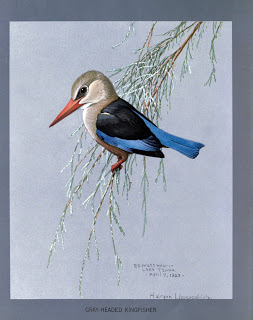
Thus came our book of the week, which presents 32 of these paintings “reproduced by offset lithography.” We’ve featured only a few of these in our post today. We invite you to take some time to look at the rest, and visit John Pittman’s blog for more illustrations and information. We send out a special thanks to Mr. Pittman for inspiring this book of the week and providing us with such valuable additional information. There’s no limit to the things you can learn via social media conversations!

June 30, 2011by Grace Costantino
Blog Reel, Featured Books

Book of the Week: Celebrating Darwin’s Library!

View Full Size Image

“If this were true, adios theory.”

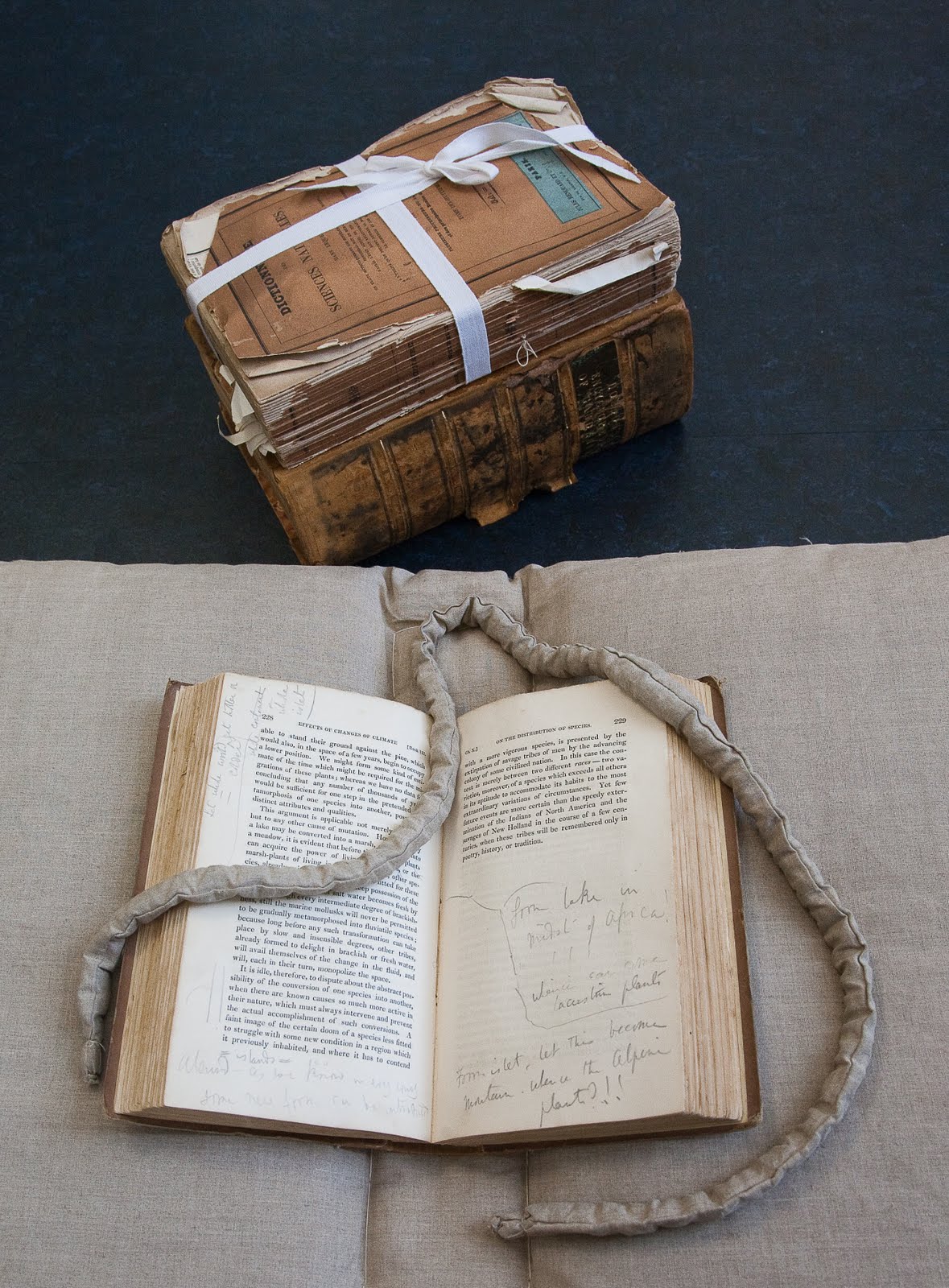
Such important words for Darwin, and so revealing to us. They offer us insight into the inner workings of this brilliant mind as he nursed to full fruition an idea that started on the now-legendary Galapagos Islands. Studying the works of the leading scientists of his time was critical to Darwin’s development of this idea. By applying, and sometimes countering, the theories of others, he constructed one of our most important scientific foundations – Evolution. He documented this intellectual progression in the margins of the books in his library. And this marginalia, and indeed digital scans of his personal library, are now available for you to peruse at your leisure on BHL in Charles Darwin’s Library!

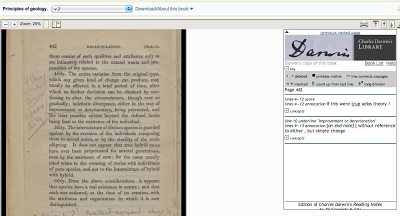
Darwin’s personal library, which amounts to 1,480 books, is in the process of being digitized and made available online through BHL. Currently the collection includes 330 of Darwin’s most heavily annotated works. But what makes this collection so valuable, and indeed distinguishes it from the other 92,000+ volumes now on BHL, are the transcriptions of Darwin’s notes and comments, which are displayed to the right of each annotated page in BHL. These transcriptions, which are the result of work done by Mario A. DiGregorio and Nick Gill, are also fully indexed, meaning that you can search the library for any comments Darwin made in his books regarding a specific subject.

View Full Size Image

In celebration of the official release of this monumental project, we’re featuring the book in which Darwin so aptly summarizes the meat of his theory – Principles of Geology, v. 2 (1837), by Charles Lyell. Within the volume, Lyell postulates that there are definite limits to the variation of species, writing,

“The entire variation from the original type, which any given kind of change can produce, may usually be effected in a brief period of time, after which no farther deviation can be obtained by continuing to alter the circumstances, though ever so gradually; indefinite divergence, either in the way of improvement of deterioration, being prevented, and the least possible excess beyond the defined limits being fatal to the existence of the individual.”

In reaction, Darwin wrote in the margin, “If this were true, adios theory,” realizing that his proposal of evolution required that, given the right stimuli, organisms can adapt and evolve in infinite degrees as required for the continuation and prosperity of their species. Time and history favor Darwin, as we see that his studies on the variations within species, most famously the bird species he encountered in the Galapagos, ultimately supported the idea that all life originates from a common ancestor, implying unfathomable variations over time from the original.

As we celebrate Darwin, and the fact that he challenged the writings of others rather than saying goodbye to the delicate and sometimes elusive thoughts on adaptation that formed the seeds for his world-changing theory, we encourage you to take some time to look through the books in his library and the notes that he jotted down as he read through them. These notes comprise a history of his work, and provide us a window into those “eureka” moments that forever changed history.

Charles Darwin, we salute you.

June 23, 2011by Grace Costantino
Blog Reel, User Stories

BHL and Our Users: Dr. Joshua Drew

View Full Size ImageThis week we feature Dr. Joshua Drew, a former a researcher at the Biodiversity Synthesis Center at the Field Museum of Natural History in Chicago. The Biodiversity Synthesis Group is a component of EOL “dedicated to advancing biodiversity science and the core EOL mission through…diverse meetings, workshops, research programs, and outreach.” Our featured user’s research focuses on coral reefs and the challenges of both protecting these reefs and discovering new species of coral reef fish. With this brief introduction, meet Dr. Joshua Drew.

Q: What is your title, institutional affiliation, and area of interest?

A: Postdoctoral Researcher, Biodiversity Synthesis Center, Field Museum of Natural History.

Q: How long have you been in your field of study?

A: I’ve worked as a marine conservation biologist since 2000.

Q: When did you first discover BHL?

A: During my Ph.D. at Boston University in 2008.

Q: What is your opinion of BHL and how has it impacted your research?

A: BHL is a very important part of my research for two reasons. First, as a researcher who is interested in discovering new species of coral reef fish, BHL provides me with easy access to taxonomic literature. This allows me to see the whole history of a species laid out before me. Secondly, much of my work is trying to understand how ecosystems used to look, and using those baselines to evaluate how current conservation measures are succeeding. Having access to historical literature is essential to characterizing what ecosystems used to look like, what species were present and what peoples’ opinions of the health of the ecosystem were like throughout time. Since we don’t often have old photographic evidence of reef ecosystems, I rely on the historical literature to get a glimpse of how these wonderfully diverse ecosystems used to look.

Q: How often do you use BHL?

A: It depends. When I’m working on a project, I’ll use it intensively (two or three times a day); when I’m not actively working on a project, I still find myself accessing it once or twice a week.

Q: How do you usually use BHL (read the titles online/download whole PDFs/Select pages to download/etc.)?

A: For my taxonomic research, I will typically search for a specific name and see how our construction of that species has changed over time. For the historical ecology research I will often search for information about a specific place or places within a region. If I’m lucky, there will be multiple reports on that area throughout time and I can see how species assemblages have changed.

Q: What are your favorite features/services on BHL?

A: I like the ease of having access to the literature anywhere I have access to the Internet. For example, I was teaching a class last semester and it was great to be able to introduce my students to the primary literature with a few clicks on my iPad right in the middle of class.

Q: If you could change one thing about BHL, what would it be, or what developmental aspect would you like the BHL team to focus on next?

A: I think what you are doing is great; I simply would hope that you can further your collaborations with publishers to get more modern content into the BHL.

Q: If you had to choose one title/item in BHL that has most impacted your research, or one item that you prefer above any other in BHL, what would it be and why?

A: The Fishes of Samoa. Description of the Species found in the Archipelago, with a Provisional Check-List of the Fishes of Oceania (1906), by David Starr Jordan and Alvin Seale.

This book was one of the first comprehensive records in the Southwest Pacific, the area where I do most of my work. In it, Jordan and Seale give a great look into what these reefs were like before widespread development. Reading their words is like going through a time machine, and allows us a glimpse into a world that will probably never be again. Additionally, these authors describe for perhaps the first time, a biogeographic pattern of species distributions that still perplexes people to this day – that the islands of the Coral Triangle (PNG, Indonesia, and the Philippines) are much more diverse than those in the Southwest Pacific. People have tried to explain why this pattern exists for over a century, and addressing this question is one of the major challenges I am addressing using molecular systematics.

Thank you, Dr. Drew, for giving us a glimpse into your world and the important oceanic conservation work that you do. These “rainforests of the sea” support twenty-five percent of all marine species, and it is imperative that we work to protect these ecosystems and ensure that they are around for generations, and indeed, millennia, to come.

Learn more about Dr. Drew on his website: www.halichoeres.org.

If you would like to be featured on our blog, let us know by sending us feedback, posting on our Facebook page, or sending us a Tweet to @BioDivLibrary. 🙂

June 21, 2011by Grace Costantino
Blog Reel, Featured Books

Book of the Week: An Experiment in Illustrations

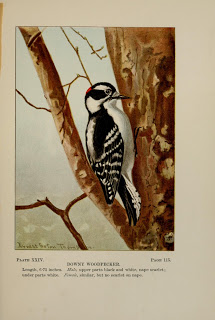
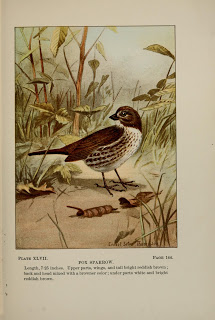
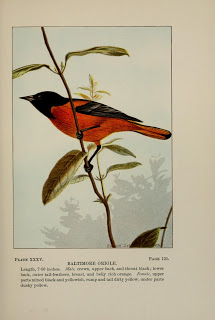
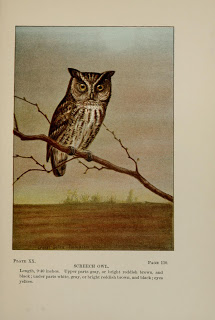
This week we’re going to do our book of the week a little differently. We came across this awesome tool on the National Geographic website called Backyard Bird Identifier. By answering some simple questions about a bird that you have seen in either the U.S. or Canada, the application tells you the possible species. We thought that was pretty cool, so we decided to see if this tool could identify birds based on answers that we give solely by looking at the illustrations and associated descriptions in one of the books in our collection. For our experiment, we chose the book Bird-Life: A Guide to the Study of Our Common Birds (1900), by Frank M. Chapman; illustrated by Ernest Seton Thompson. From this book, we chose six illustrations and, answering the questions in the Backyard Bird Identifier using these illustrations and accompanying descriptions, we found out whether the tool could accurately identify the bird. The six illustrations, as well as the answers we gave to the questions, are given below.

View Full Size Image

1) Downy Woodpecker (Dryobates pubescens medianus)
Question One: Where did you see the bird?
Answer: Country: United States
Region: Northeast, Virginia
Question Two: When did you see the bird?
Answer: October
Question Three: What color is the bird?
Answer: Black, White, Red
Question Four: How large is the bird?
Answer: 7-11 inches
Application returned 39 results (each possible match has an accompanying picture so that you can determine which of the results was your bird).
Results: Downy Woodpecker was among the possible identities.

View Full Size Image

2) Fox Sparrow (Passerella iliaca)

Question One: Where did you see the bird?
Answer: Country: Canada
Region: East, Quebec
Question Two: When did you see the bird?
Answer: May
Question Three: What color is the bird?
Answer: Brown, White, Red
Question Four: How large is the bird?
Answer: 7-11 inches
Application returned 42 results.
Results: Fox Sparrow was among the possible identities.

View Full Size Image

3) Baltimore Oriole (Icterus galbula)

Question One: Where did you see the bird?
Answer: Country: United States
Region: Northeast, Maryland
Question Two: When did you see the bird?
Answer: May
Question Three: What color is the bird?
Answer: Black, Yellow, Orange
Question Four: How large is the bird?
Answer: 7-11 inches
Application returned 38 results.
Results: Baltimore Oriole was among the possible identities.

View Full Size Image

4) Eastern Screech Owl (Megascops asio)

Question One: Where did you see the bird?
Answer: Country: United States
Region: Northeast, Virginia
Question Two: When did you see the bird?
Answer: August
Question Three: What color is the bird?
Answer: Black, Gray, Red, Brown, White, Yellow
Question Four: How large is the bird?
Answer: 7-11 inches
Application returned 44 results.
Results: Eastern Screech Owl was among the possible identities.

View Full Size Image

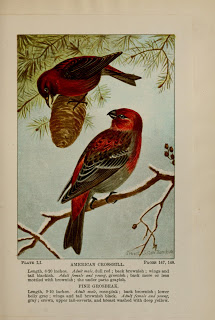
5) American Crossbill (Loxia curvirostra minor)
Question One: Where did you see the bird?
Answer: Country: United States
Region: Northeast, New York
Question Two: When did you see the bird?
Answer: January
Question Three: What color is the bird?
Answer: Black, Gray, Red, Brown
Question Four: How large is the bird?
Answer: 7-11 inches
Application returned 22 results.
Results: American Crossbill was not one of the possible identities.


6) Black and White Warbler (Mniotilta varia)

Question One: Where did you see the bird?
Answer: Country: United States
Region: South, North Carolina
Question Two: When did you see the bird?
Answer: April
Question Three: What color is the bird?
Answer: Black, White
Question Four: How large is the bird?
Answer: 6 inches or less
Application returned 32 results.
Results: Black and White Warbler was not among the possible identities.

So, at the end of the experiment, we were successfully able to bring up the identity of the bird in 4 out of 6 cases. Not too bad, considering we were working from a book and illustrations of the species. Try out the tool on your own, preferably from live bird studies :-), and let us know how successful your endeavors are. And be sure to take the time to look at the lovely illustrations in our book of the week. Maybe even try identifying other birds in the book using this tool. If you do, be sure to let us know how it goes! Happy bird identifying!

This week’s book of the week, Bird-Life: A Guide to the Study of Our Common Birds(1900), by Frank M. Chapman; illustrated by Ernest Seton Thompson, was contributed by the American Museum of Natural History.

June 16, 2011by Grace Costantino
Page 63 of 71« First...102030«62636465»70...Last »

Help Support BHL

BHL's existence depends on the financial support of its patrons. Help us keep this free resource alive!

search

About BHL

The Biodiversity Heritage Library (BHL) is the world’s largest open access digital library for biodiversity literature and archives. BHL operates as a worldwide consortium of natural history, botanical, research, and national libraries working together to digitize the natural history literature held in their collections and make it freely available for open access as part of a global “biodiversity community.”

Join Our Mailing List

Sign up to receive the latest news, content highlights, and promotions.

Subscribe Now

Subscribe to Blog via Email

Enter your email address to subscribe to this blog and receive notifications of new posts by email.

Join 319 other subscribers

Subscribe to Blog Via RSS

Subscribe to the blog RSS feed to stay up-to-date on all the latest BHL posts.

Access RSS Feed

Inspiring Discovery through Free Access to Biodiversity Knowledge.

The Biodiversity Heritage Library makes it easier than ever for you to access the information you need to study and explore life on Earth…for free, anytime, anywhere.


ABOUT | HARMFUL CONTENT | PRIVACY | SITE MAP | TERMS OF USE