Biodiversity Heritage Library - Program news and collection highlights from BHL
  • Home
  • News
  • Featured Books
    • All Featured Books
    • Book of the Month Series
    • BHL at 20
  • User Stories
  • Campaigns
    • Fossil Stories
    • Garden Stories
    • Monsters Are Real
    • Page Frights
    • Her Natural History
    • Earth Optimism 2020
  • Tech Blog
  • Visit BHL
Home
News
Featured Books
    All Featured Books
    Book of the Month Series
    BHL at 20
User Stories
Campaigns
    Fossil Stories
    Garden Stories
    Monsters Are Real
    Page Frights
    Her Natural History
    Earth Optimism 2020
Tech Blog
Visit BHL
  • Home
  • News
  • Featured Books
    • All Featured Books
    • Book of the Month Series
    • BHL at 20
  • User Stories
  • Campaigns
    • Fossil Stories
    • Garden Stories
    • Monsters Are Real
    • Page Frights
    • Her Natural History
    • Earth Optimism 2020
  • Tech Blog
  • Visit BHL
Biodiversity Heritage Library - Program news and collection highlights from BHL
Blog Reel

A Visual Delight: Natural History Illustrations from BHL on Instagram

BHL is now on Instagram!

Embracing the visually-driven nature of Instagram, our feed focuses on sharing the stunning historic illustrations in BHL’s collection. From birds of paradise to boxing kangaroos, charming bookplates, and artworks by some of history’s most renowned illustrators, there’s a wealth of visual delight waiting for you on our Instagram.
View Full Size Image
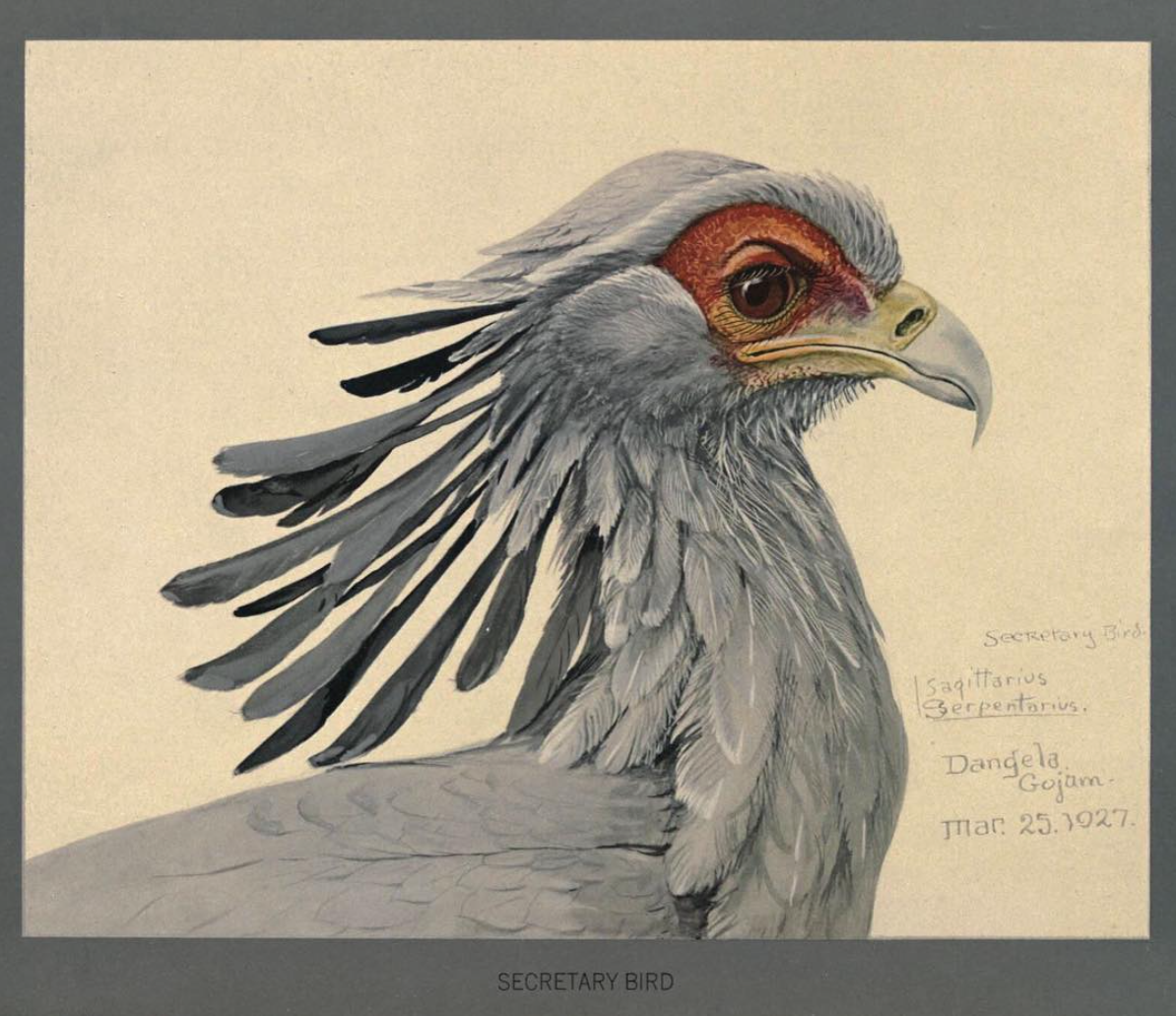
Secretarybird (Sagittarius serpentarius) is a nomadic bird of prey found in the grasslands of sub-Saharan Africa. #SciArt by Louis Agassiz Fuertes in the Album of Abyssinian Birds and Mammals (1930). Contributed by University Library, University of Illinois Urbana-Champaign. http://ow.ly/V5SQ3035ED9. Posted to Instagram by Michelle Marshall.

Plus, thanks to citizen science taxon tagging activities for BHL’s Flickr, the species in each illustration have been conveniently identified in the post description. Translation: you’ll always be able to identify what species you’re looking at, even if you’ve never seen it before.

And Flickr taxon tagging isn’t the only way that citizen science has benefited our Instagram. The feed itself is curated by BHL citizen scientist Michelle Marshall.
View Full Size Image
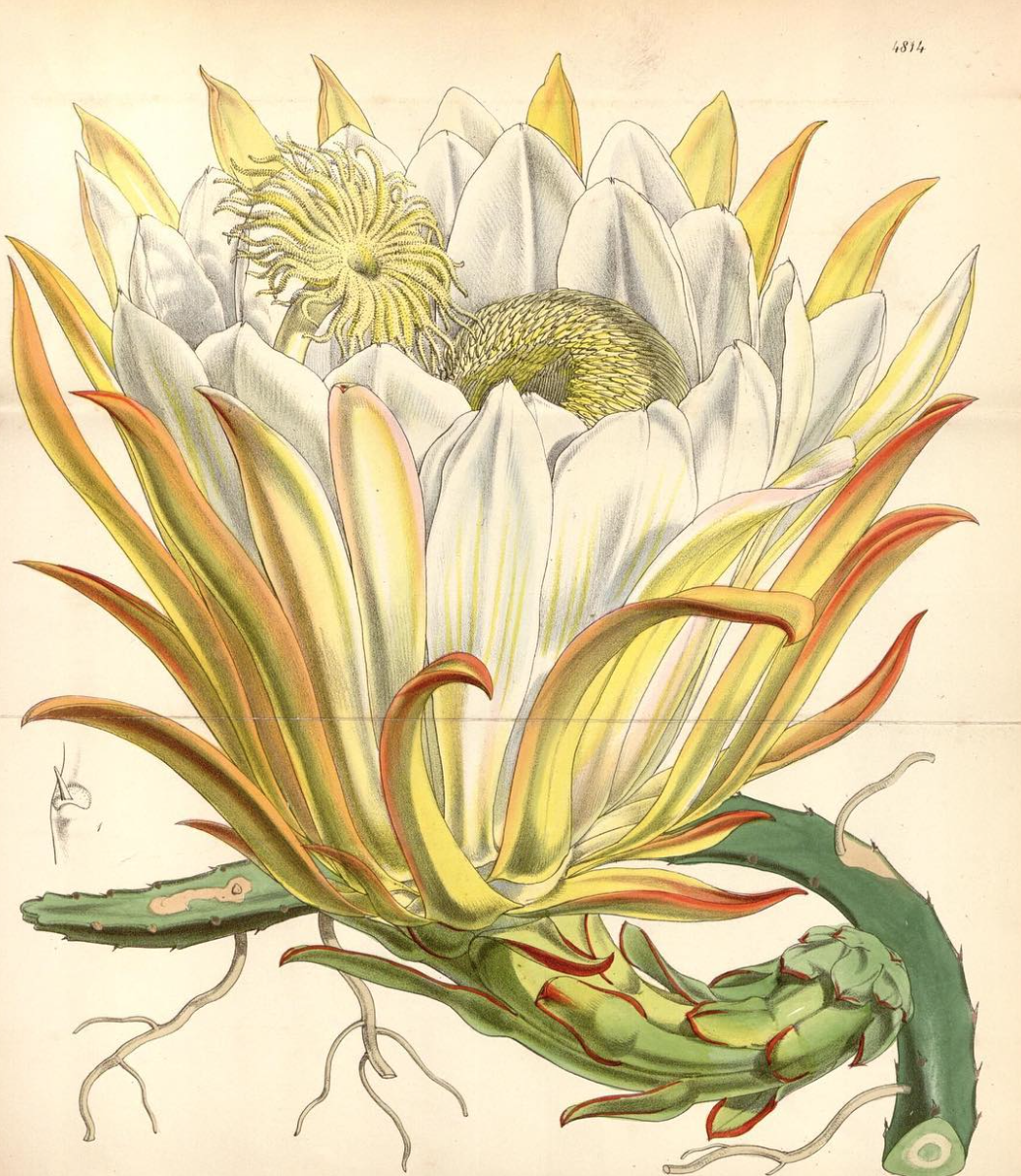
Night-blooming cactus (Hylocereus lemairei). By Walter Hood Fitch. Curtis’s Botanical Magazine, Vol. 54 (1827). Contributed by Missouri Botanical Garden. http://biodiversitylibrary.org/page/488560. Posted to Instagram by Michelle Marshall.

Michelle first became involved in citizen science through the Smithsonian Transcription Center, which she discovered while looking for ways to volunteer in her free time during her STEM studies. Through those activities, Michelle discovered BHL and our Flickr tagging opportunities. She now focuses on researching taxonomy to add to our images – an activity that she finds deeply rewarding.

“My favorite thing about volunteering for BHL is that I am always learning through research,” says Michelle. “I am able to connect with scientists and libraries to learn more, and I know more about biodiversity, geography, and even scientific art than I have ever learned in formal study. Just browsing the images on Flickr leads to new discoveries that I am excited to learn about and share with others on social media.”

Michelle first began sharing her finds through her own Twitter account. The posts were so well-received that she decided to create @HistSciArt, devoted specifically to sharing BHL illustrations and her related taxonomic research.

“I knew that BHL has been working on making the images more accessible for everyone, in particular the scientific community, so I thought that creating an account devoted specifically to sharing these images on Twitter would help with that effort,” explains Michelle. “Most of the images that I tweet I have researched the taxonomy for, and I try to share more information than just the illustration.”

We were so impressed by Michelle’s account and the quality of her research and posts that, when she expressed interest in expanding her efforts to Instagram, we invited her to do so by curating an account for BHL.
View Full Size Image
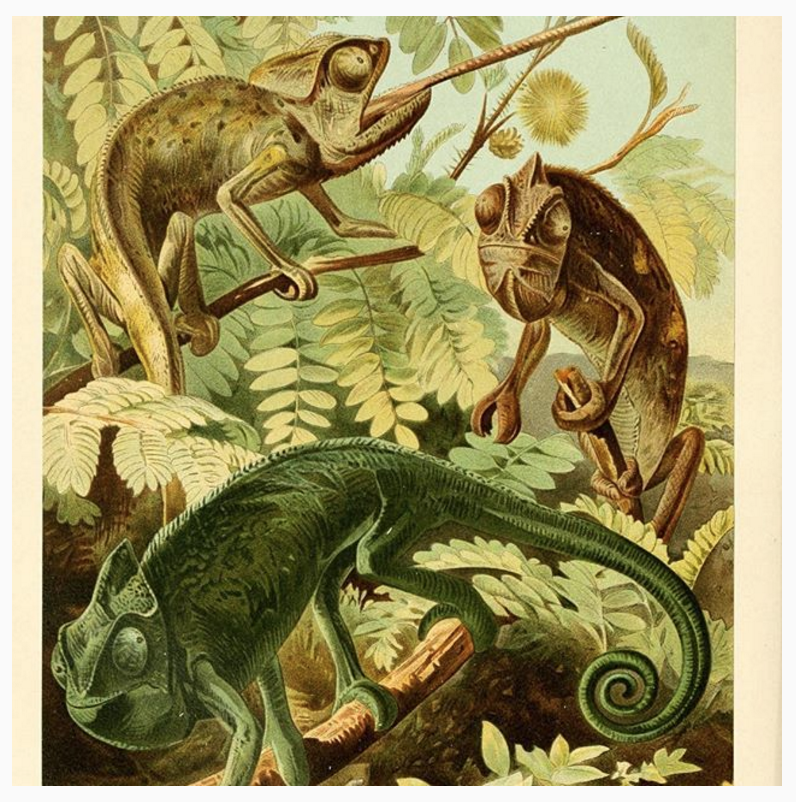
African Chameleon (Chamaeleo africanus) for #WorldLizardDay. Alfred Edmund Brehm, Brehm’s Tierleben, Bd. 2 (1913). Contributed by Ernst Mayr Library, Museum of Comparative Zoology at Harvard University. http://ow.ly/eX9W303e4bF. Posted to Instagram by Michelle Marshall.

“Instagram is an enormously popular social media platform, so I was truly honored when I was asked to curate BHL’s Instagram account,” says Michelle. “Because I believe in the great work that BHL is doing to support science and research, I felt that this would be another way that I could help share the wealth of knowledge in BHL’s collection. The great thing about sharing BHL’s collections on Instagram is that I am able to provide more information about the book and image as well as to connect with more people and institutions. Because I share different content on Instagram, any followers of HistSciArt and BHL on Twitter will have more great works to view and explore.”

And it seems people do indeed love exploring BHL illustrations on Instagram (we’re not surprised!). BHL’s Instagram has grown to over 400 followers in just over two weeks. This success is due not only to the quality of BHL’s collections, but also to the caliber of Michelle’s research and posts, which not only provide taxonomic and bibliographic information, but also identify the contributing libraries and include timely and engaging hashtags. We’ve also started posting one of each day’s Instagram posts to BHL’s Facebook as #BHLDailySciArt.
View Full Size Image
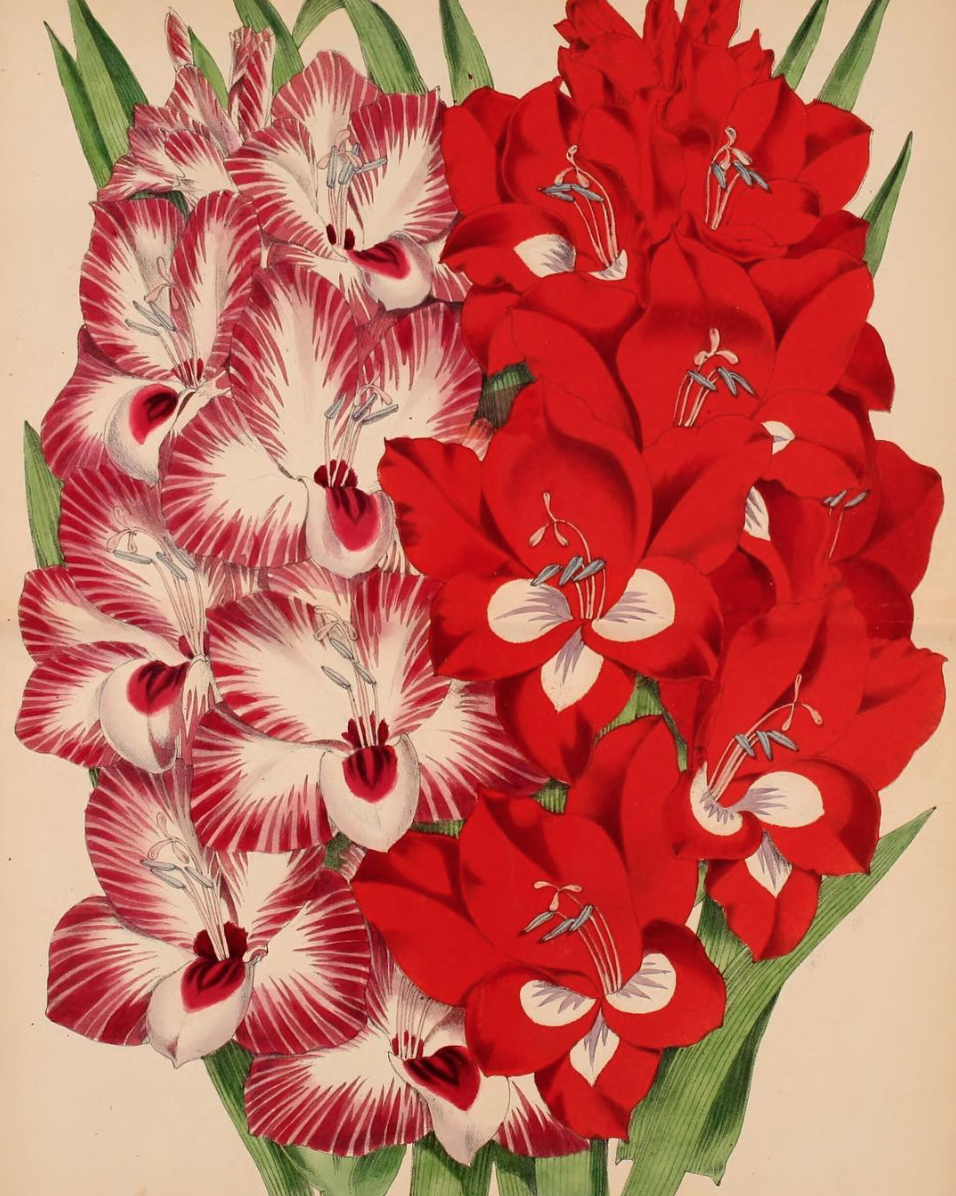
Gladiolus orphée and Gladiolus horace. Botanical #SciArt by Worthington George Smith. The Floral Magazine, Vol. 9 (1870). Contributed by the LuEsther T. Mertz Library of The New York Botanical Garden. biodiversitylibrary.org/page/50241074. Posted to Instagram by Michelle Marshall.

We’re so grateful to Michelle for all of her contributions to help increase awareness of and access to BHL’s collections. We believe this partnership is a testament to the power and benefits of citizen science, and with that we also extend a huge thanks to each and every volunteer that dedicates their time and resources to improving BHL collections. You can learn more about all of our citizen science opportunities here.

So, you might be wondering (as we were!), for someone who’s explored as many books and researched as many illustrations as Michelle has, which title would she pick as her favorite? It turned out to be an easy question for her to answer.

“When I discovered Catesby’s The natural history of Carolina, Florida and the Bahama Islands, I think I literally leapt out of my chair!” exclaims Michelle. “I grew up in Florida and South Carolina, and here was a spectacular natural history work all about the native flora and fauna of my area. Catesby spent lots of time in the Southern Colonies during the 1720s, which is the same time that part of my family came to what was then called Carolina. I like to think that what he saw and experienced was the same as what my ancestors knew. I am so pleased to have access to all three editions of his work through BHL and to have taxon tagged all of them!”
View Full Size Image
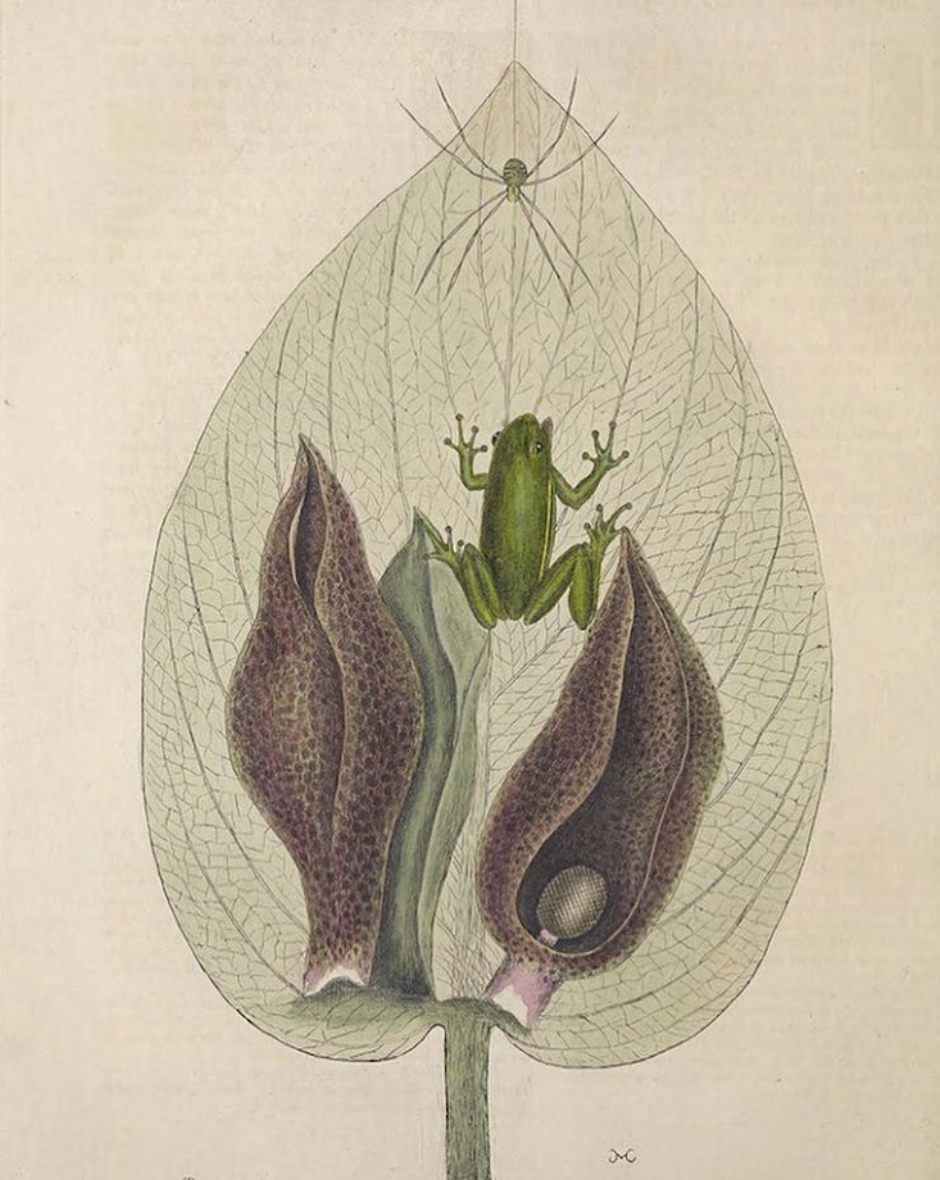
Green tree frog (Hyla cinerea) about to snack on a Green lynx spider (Peucetia viridans) while hanging onto Skunk cabbage (Symplocarpus foetidus). Mark Catesby, The Natural History of Carolina, Florida and the Bahama Islands, Vol.2, 1st Ed. (1743). Contributed by Smithsonian Libraries. http://biodiversitylibrary.org/page/40680311. Posted to Instagram by Michelle Marshall.

You can explore the illustrations from all three editions of Catesby’s monumental work (it’s the first major illustrated publication on the flora and fauna of North America and was chosen by Smithsonian Libraries as their BHL@10 Notable Book Contribution) in Flickr, all of which have been taxon tagged by Michelle.

Be sure to check out more of the beautiful illustrations in our collection by following us on Instagram. A world of art and science (made possible thanks to citizen science) awaits you!
View Full Size Image
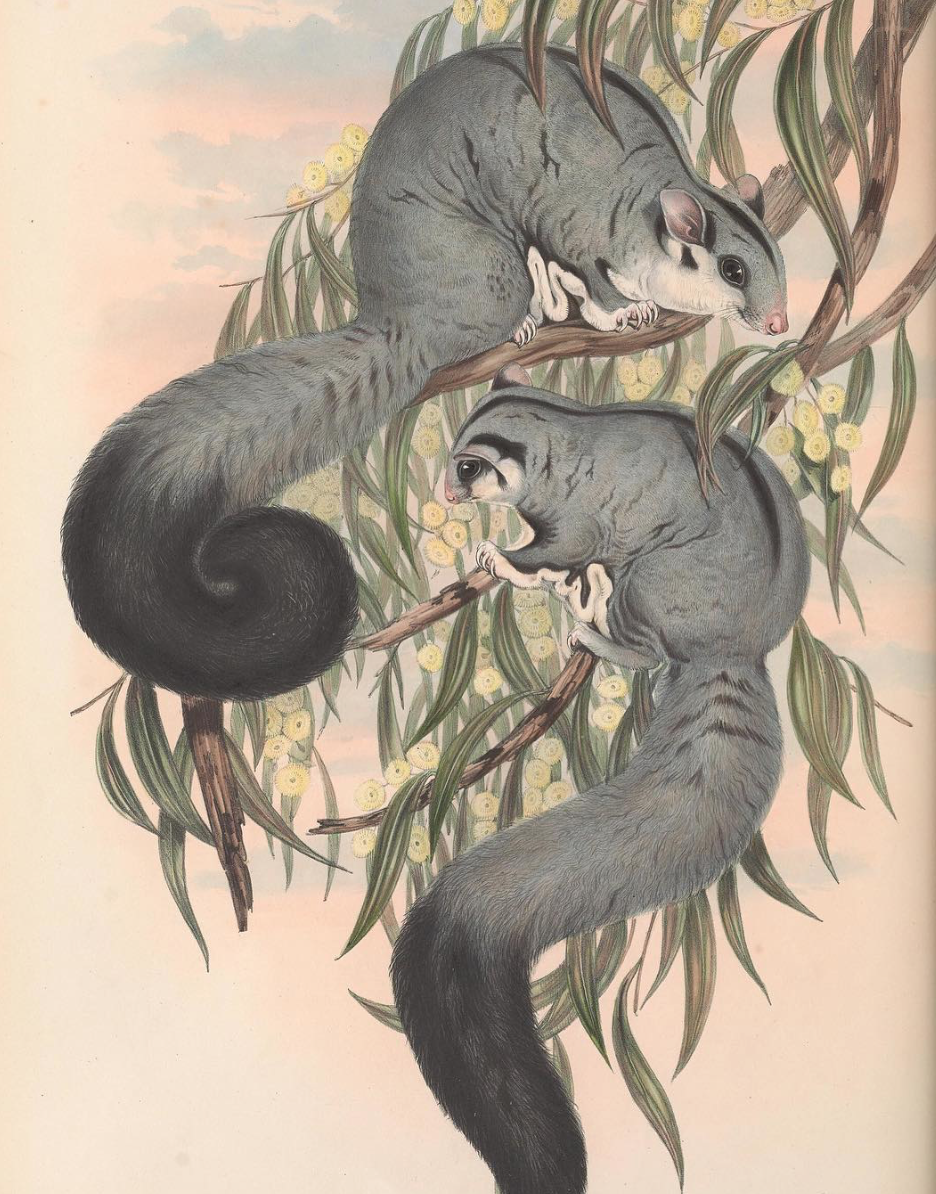
Squirrel Glider (Petaurus norfolcensis). Although it resembles a squirrel, this mammal is a marsupial native to Australia. #SciArt by Henry Constantine Richter and John Gould for Gould’s Mammals of Australia, Vol. 1 (1863). Contributed by Smithsonian Libraries. http://ow.ly/e5zj303j4nr. Posted to Instagram by Michelle Marshall.
August 22, 2016by Grace Costantino
Blog Reel, User Stories

Supporting Historical Paleontological Research

View Full Size Image
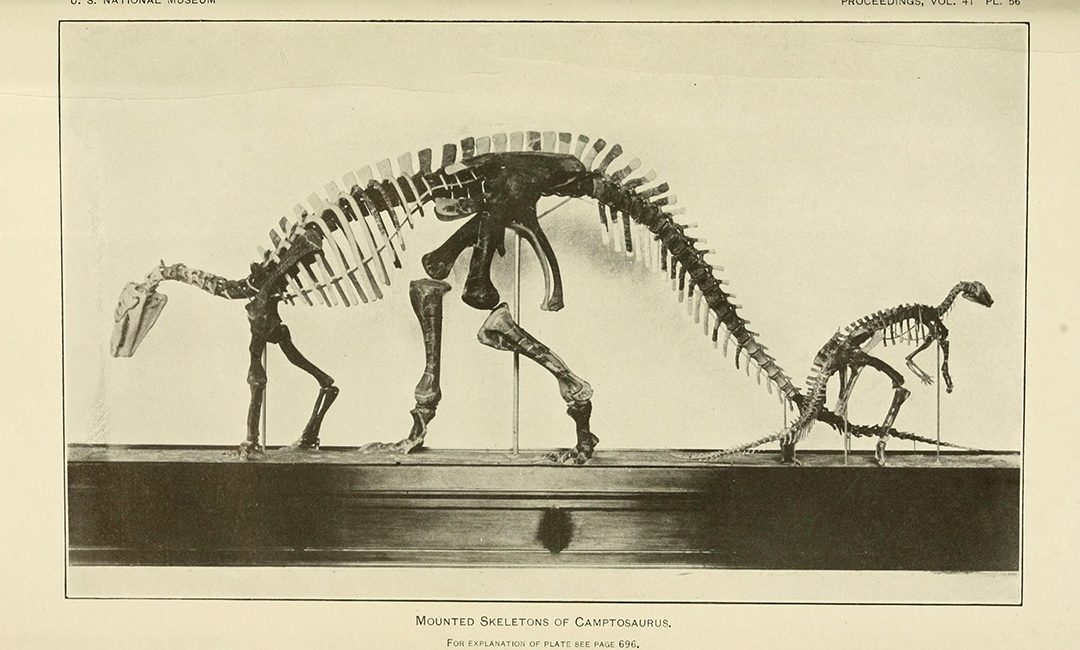
World’s first large mounted Camptosaurus skeleton at the National Museum of Natural History. Proceedings of the United States National Museum. v. 41 (1912). Digitized by Smithsonian Libraries. http://biodiversitylibrary.org/page/29866417.

In 1911, the Smithsonian Institution debuted the world’s first large mounted Camptosaurus skeleton at its newly-opened Natural History building. The display featured two specimens erected side-by-side, one identified as Camptosaurus nanus and the other as Camptosaurus browni.

Camptosaurus, whose name means “flexible lizard,” was a plant-eating, beaked dinosaur that lived during the Late Jurassic period. Both Smithsonian specimens were uncovered at a quarry near Como Bluff, Wyoming. The smaller of the specimens, dubbed C. nanus, was collected in 1882 by William Reed as part of a collecting expedition funded by the United States Geological Survey and under the technical direction of famous paleontologist Othniel Charles Marsh.

Marsh is well-renowned for his many contributions to the field of paleontology, which include discovering a plethora of fossil animals and naming a multitude of dinosaur genera including Camptosaurus. He is also notoriously remembered for his longstanding conflict with fellow paleontologist Edward Drinker Cope – a conflict that came to be known as the Bone Wars. The intense rivalry between the two men spanned decades as each undermined, ridiculed, and even sabotaged the work of the other in a struggle for scientific dominance.

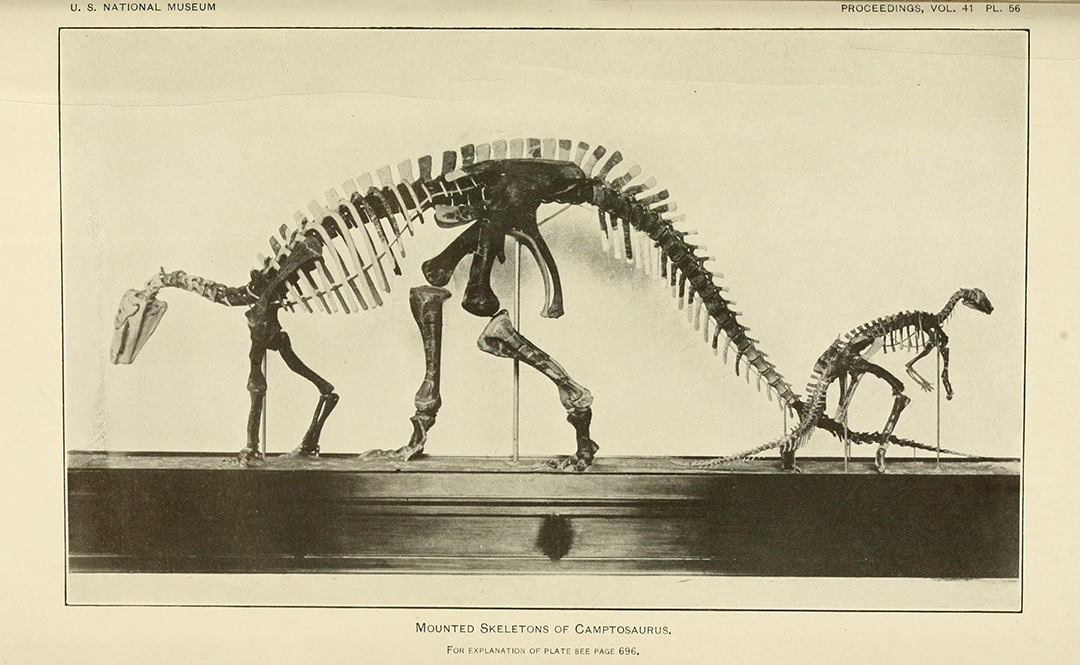
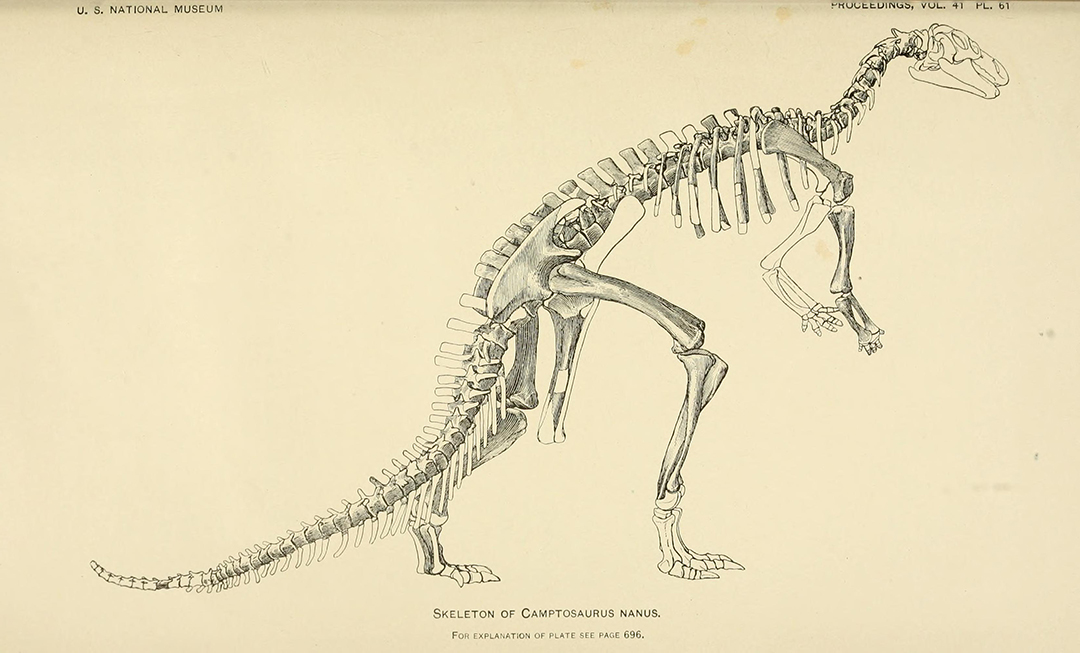
The C. nanus fossil was originally accessioned into the collection of the Yale Peabody Natural History Museum, where Marsh was the Curator of Paleontology, until, after Marsh’s death in 1899, it was transferred to the Smithsonian in compliance with legislation regarding objects collected for, or whose collection was funded by, the US government. The fossil, which was cataloged as USNM 2210, was then prepared and mounted by Norman H. Boss in 1911 alongside the larger C. browni specimen. The mounts are detailed in a 1912 publication by Charles W. Gilmore. Interestingly, the specimens are now known to represent the juvenile (previously C. nanus) and mature (previously C. browni) stages of a single species, C. disbar.

View Full Size Image
C. nanus, as mounted at the National Museum of Natural History. Proceedings of the United States National Museum. v. 41 (1912). Digitized by Smithsonian Libraries. http://biodiversitylibrary.org/page/29866427.

Between 2004 and 2008, the Camptosaurus fossils were taken off display to allow for repairs and the creation of casts that may be re-exhibited with the reopening of the Smithsonian’s Deep Time Hall in 2019. The authentic fossils will be placed in the museum’s collections for research and conservation reasons.

The fascinating history of USNM 2210’s journey from rock to museum is detailed by National Museum of Natural History (NMNH) volunteer Mark Lay in the article A Brief History of Camptosaurus, U.S. National Museum Specimen 2210.

View Full Size Image
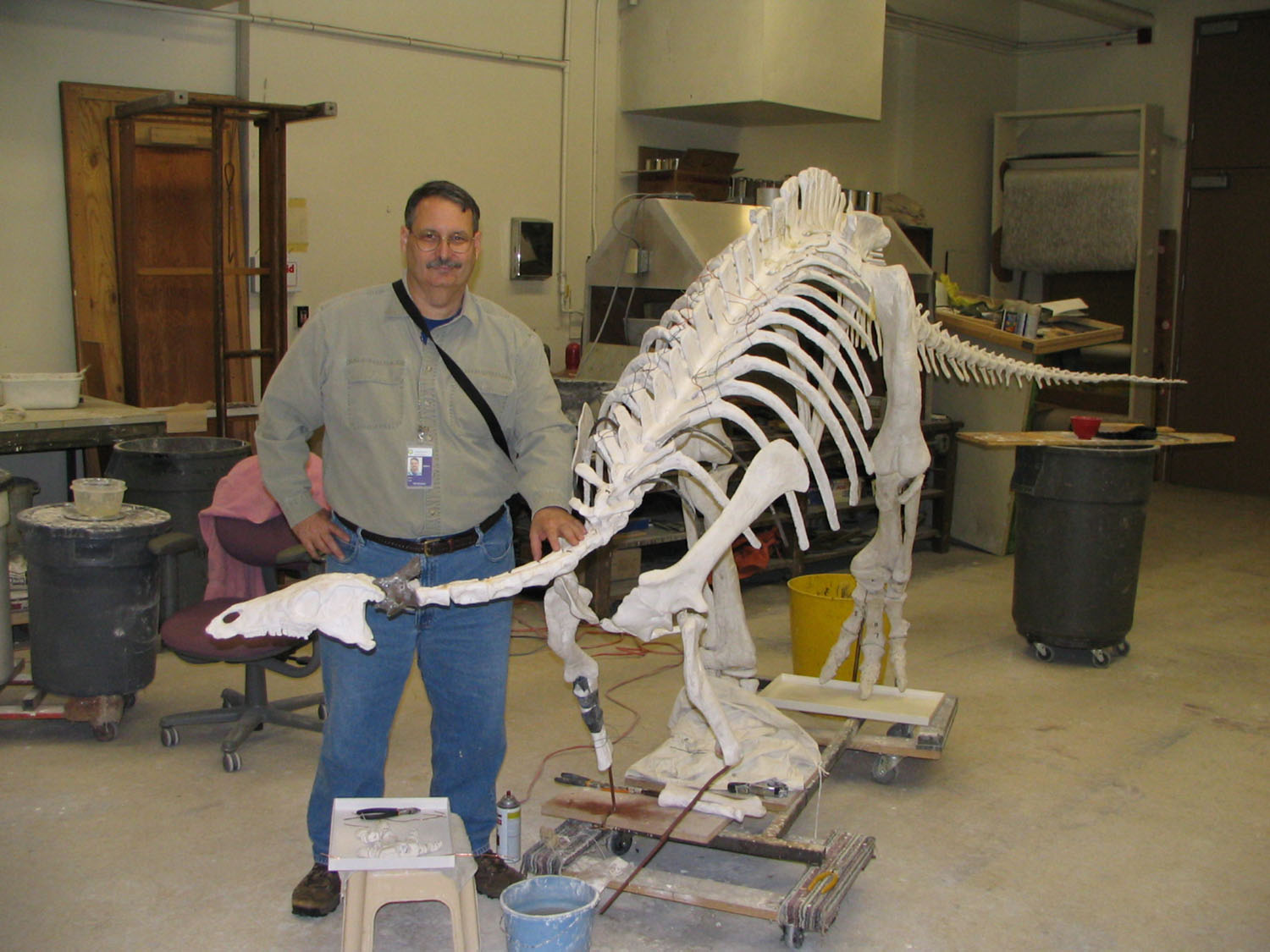
Mark Lay with Camptosaurus cast at the National Museum of Natural History.

Trained as a physicist and nuclear engineer, Mark began volunteering in the Vertebrate Paleontology Preparation Lab at NMNH in 2007 after retirement provided him more time to pursue personal interests like paleontology.

Mark’s early volunteer activities in the Preparation Lab involved making molds and casts, primarily of USNM 2210. Since then, after moving to work with Department of Paleobiology Information Officer Tom Jorstad, he has transitioned to providing research support for requests from the public and outside researchers, as well as organizing and developing “who, what, when, where” metadata for paleontology-related photographic images in both Department and Smithsonian Institution Archives files. He also writes articles on various aspects of the Department’s history and currently is researching the first 100 years of vertebrate fossil preparation in the Smithsonian.

The Biodiversity Heritage Library has proven to be an important resource for Mark’s research, providing information both about items in the collection and historical documents regarding the history of the NMNH and other natural history museums around the US.

“I am a big fan of BHL,” lauds Mark, who uses BHL up to 4-5 times a week. “I am able to spend only roughly one day per week in the NMNH. This means I can spend only a limited amount of time examining actual hard copy documents in the museum libraries. The fact that I can access many of the same documents via BHL means that I can also work from home – greatly increasing the amount of time that I can devote to my volunteer research. In addition, BHL’s inclusion of documents from other museums and universities enables me to access documents that otherwise would be extremely difficult for me to obtain. BHL doesn’t have everything I want, but I would be hard-pressed to do my research without it.”

View Full Size Image
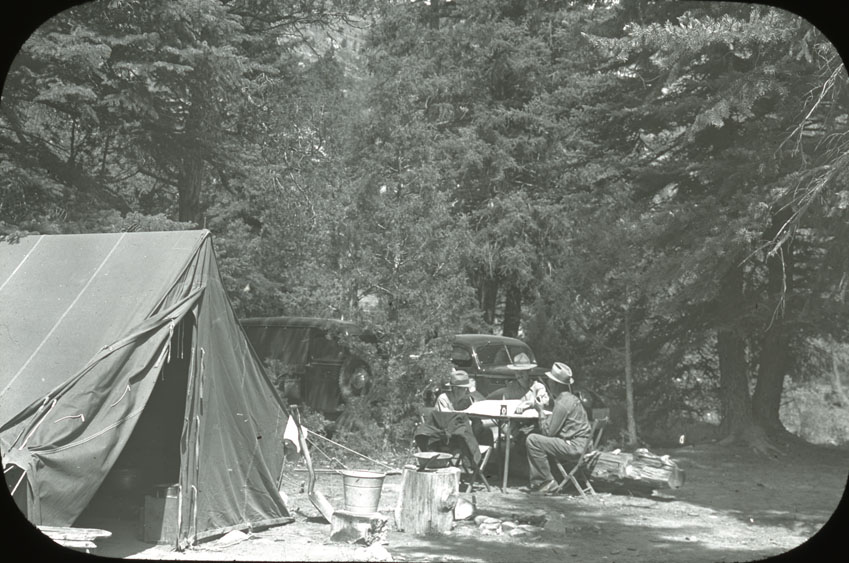
This image, SIA 2011-1418, shows USNM Curator of Vertebrate Paleontology Charles Gilmore’s camp site near North Horn Mountain, Utah during his 1937 expedition. It appears as Figure 1 in Gilmore’s 1938 publication, “Fossil Hunting in Utah and Arizona”, Explorations and Field-work of the Smithsonian Institution in 1937, pp 1-4, available in BHL here: http://biodiversitylibrary.org/page/40734134 (Digitized by Smithsonian Libraries).

Currently, Mark is working on a series of glass lantern slides dating from the mid-1890s through the late 1930s, now being digitized by the Archives and possessing limited metadata. BHL has been a valuable resource for obtaining more information about the slides.

“Some of these slide images were originally used in various Smithsonian publications from that era, making positive identification of the people, fossil localities, and dates much easier,” explains Mark. “More challenging have been the slides sent to the Smithsonian from a variety of museums around the U.S. So, our identification process has first concentrated on determining an initial ‘guesstimate’ of the curator, specimen, or collecting locality involved, then backtracking through relevant Smithsonian publications to see if the image appears. If not, we backtrack our guesstimate to publications from other ‘most likely’ museums. If all that fails, we dig deeper into the view or geology portrayed to see if we can find something similar and broaden the search to include relevant publications from other sources. Having so many of the Smithsonian and other museum publications from that time period in BHL has greatly sped up this process.”

Before using BHL, Mark scoured the physical copies of these publications to find this information – a time consuming and sometimes frustrating process. This all changed when Martha Rosen, a librarian in the NMNH Smithsonian Libraries, introduced him to BHL.

“I discovered BHL 5 or 6 years ago when I was sitting in the museum reference collection reading through some old United States National Museum annual reports, and complaining that my eyes were getting ready to drop out from going through so much text all at once,” recalls Mark. “Martha mentioned that I could get the documents on-line and gave me the BHL link. I downloaded a searchable PDF of the documents and went through them that evening, actually finding relevant information faster than I could with the hard copy.”

View Full Size Image
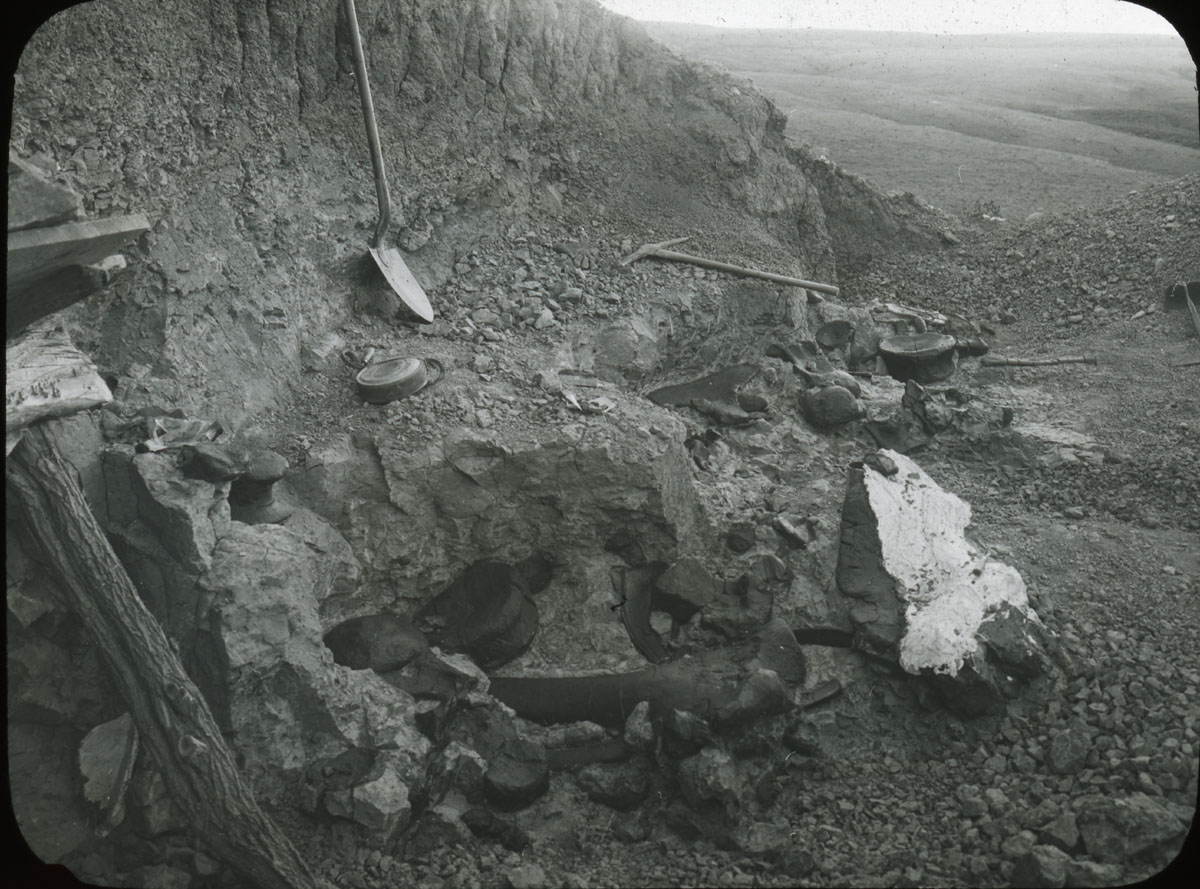
This image, SIA 2011-1429, shows Quarry 6 in the Freezeout Mountains of Wyoming, as worked by the Field Columbian Museum expedition of 1899. It was used as Plate XXX in the Field Columbian Reports, Volume 1, October 1899, included in the Annual Report of the Director to the Board of Trustees for the Years 1894-1900, available in BHL here: http://biodiversitylibrary.org/page/45723188 (Digitized by Smithsonian Libraries).

Mark’s volunteer work with the Smithsonian has allowed him to pursue his passions, enhance collection information, and share wonderful insights into the history of the museum and fossil preparation.

“Paleontology has been a long-standing interest,” Mark asserts. “To me, there is a fascination with bringing a fossil out of the rock encasing it and learning more about it. My interest in paleontological history is more recent, but the research has turned out to be no less rewarding.”

Mark’s articles, published through the Department of Paleobiology’s website, provide him a means to share the wonderful knowledge and history he is uncovering. For instance, Mark’s Camptosaurus article highlights the sometimes tangled path of a fossil from field to museum and provides insight into the changing philosophy of fossil preparation.

As Mark explains in his article, in the early 1900s, “preparators mounted a specimen and expected it to stay mounted forever – no provision was made for repair or reconstruction.” So when preparing USNM 2210 back in 1911, “heavy copper wire and iron strapping were used as a support armature, with thinner copper wire used to secure the manus and pes elements. In general, these supports have held up well, with only slight corrosion damage, but some of the bolts and rivets securing the skeleton were drilled through real bone and secured with glue. As we have dismantled the specimen, this mounting technique has occasionally necessitated our cracking bones in order to remove them from the armature, and then making appropriate repairs.”

Modern techniques accommodate the possible future need to dismantle specimens and allow for a more-realistic presentation of specimens. “The hard plaster we have used for the casts allows for support connections to be made through the simulated bone, reducing the amount of armature seen by the public and providing a more natural looking display. The philosophy is to make all changes reversible, while also ensuring repairs are both state of the art and long lasting,” explains Mark in his article.

We’re excited to see the ways that BHL has helped support Mark’s valuable work at the Smithsonian. It’s a great example of one of the many ways that BHL inspires discovery through free access to biodiversity knowledge.

__________________________

This post may contain the personal opinions of BHL users or affiliated staff and does not necessarily represent the official Biodiversity Heritage Library (BHL) position on these matters.

August 11, 2016by Grace Costantino
Blog Reel, Featured Books

Renard’s Book of Fantastical Fish

View Full Size Image
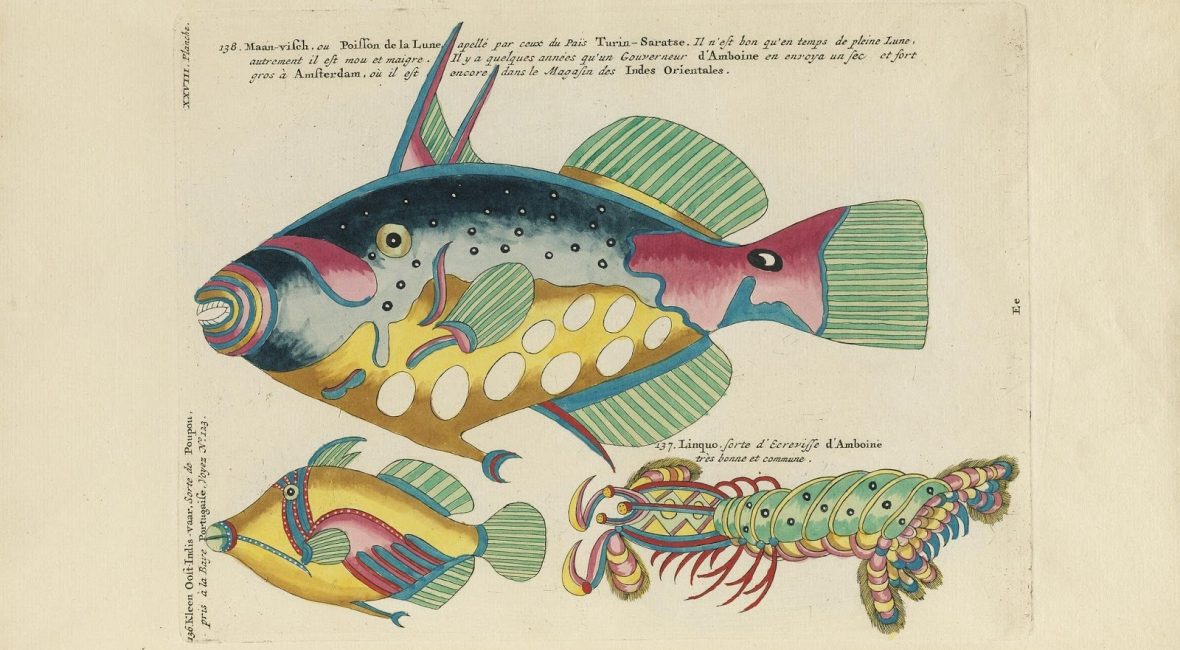
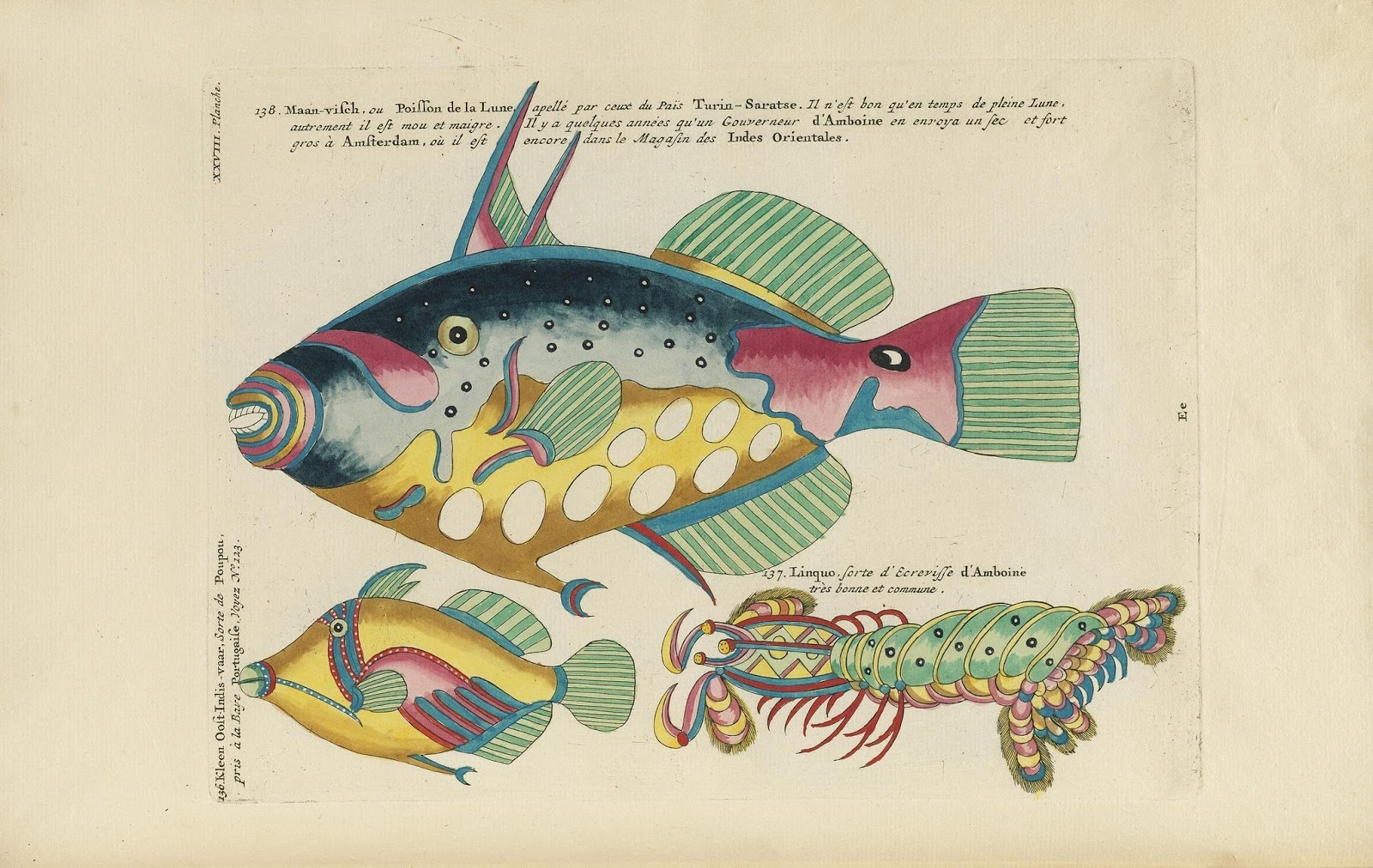
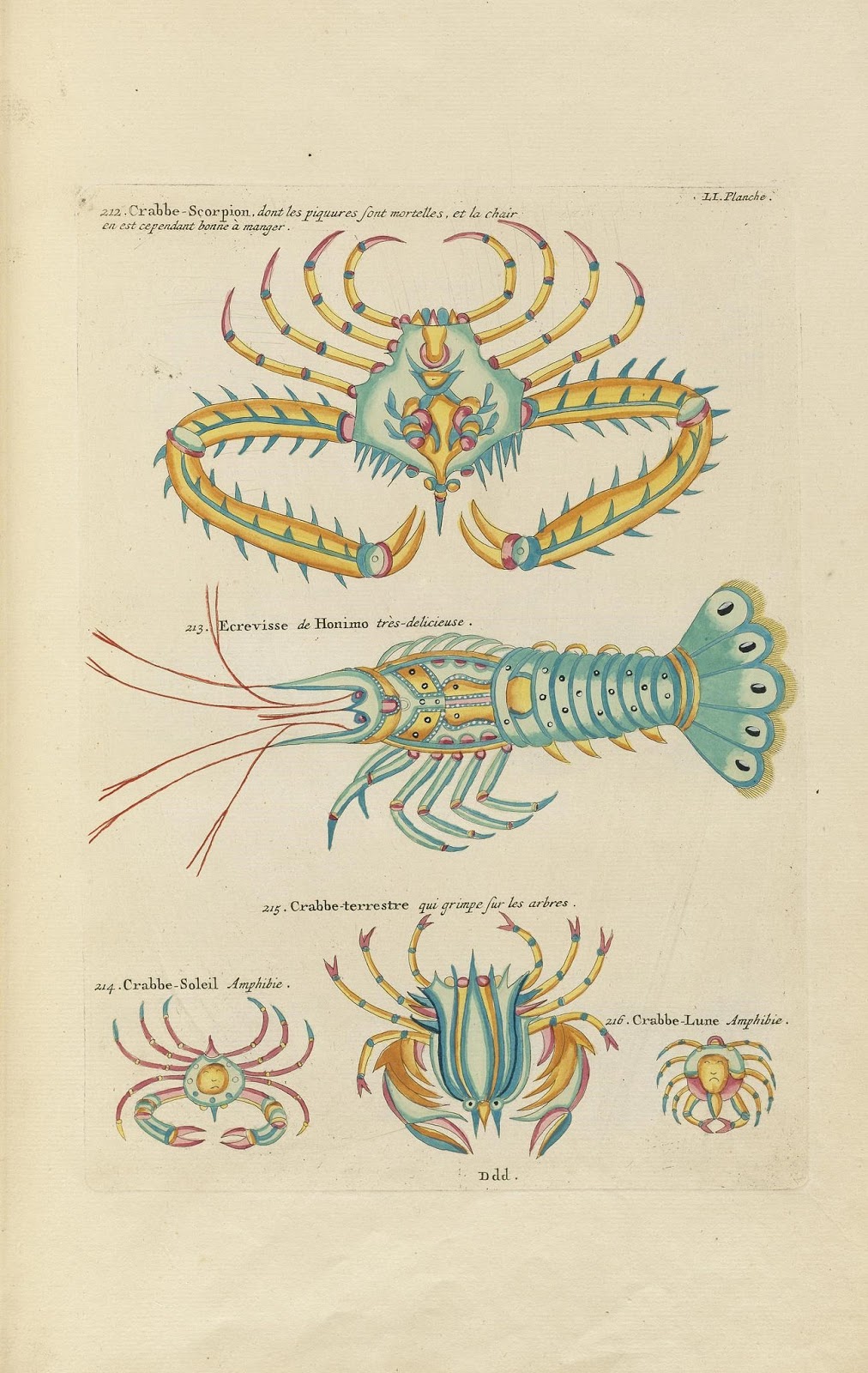
Renard, Louis. Poissons, ecrevisses et crabes. 1754. Digitized by the Ernst Mayr Library, Museum of Comparative Zoology, Harvard University. http://biodiversitylibrary.org/page/50095135.

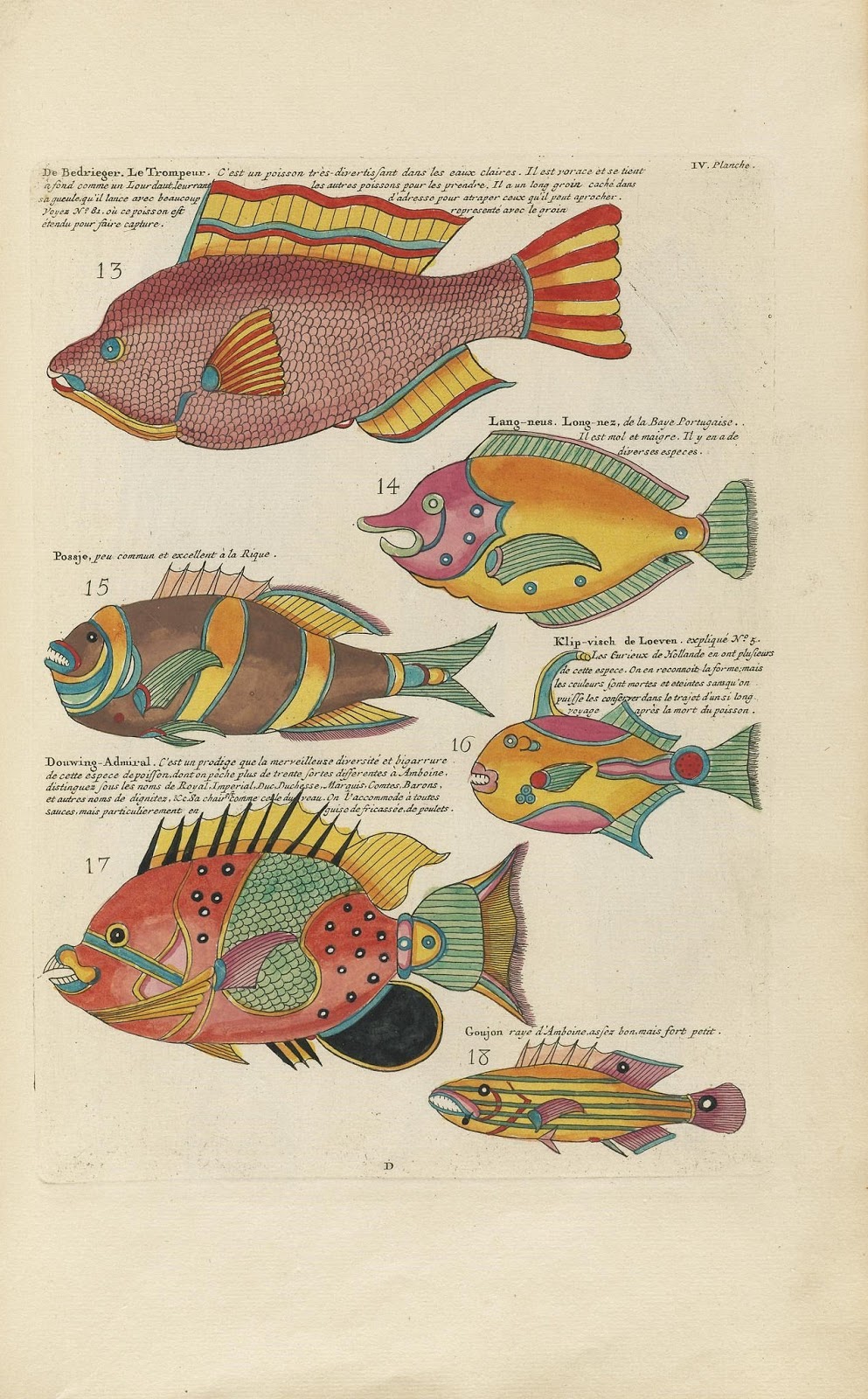
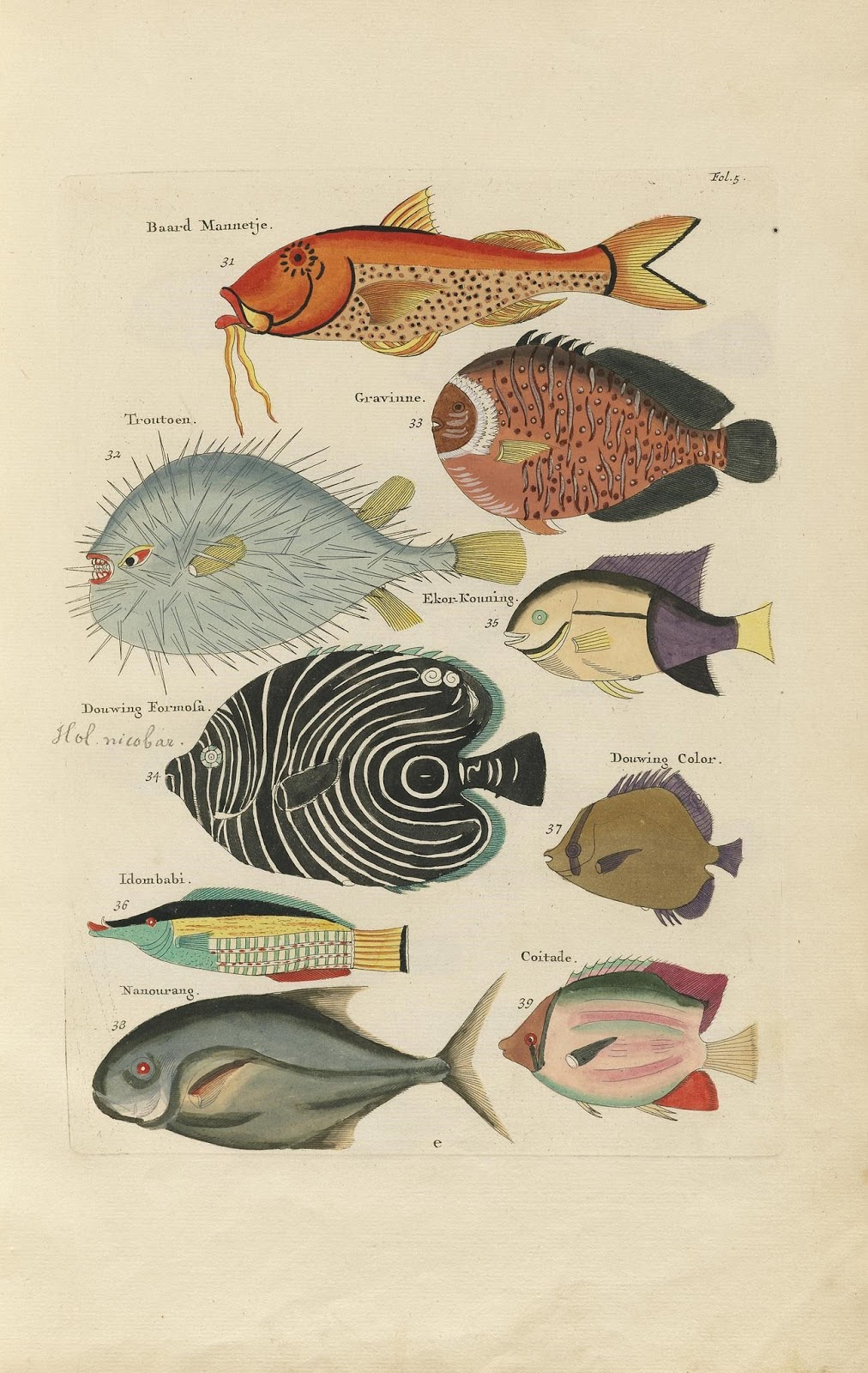
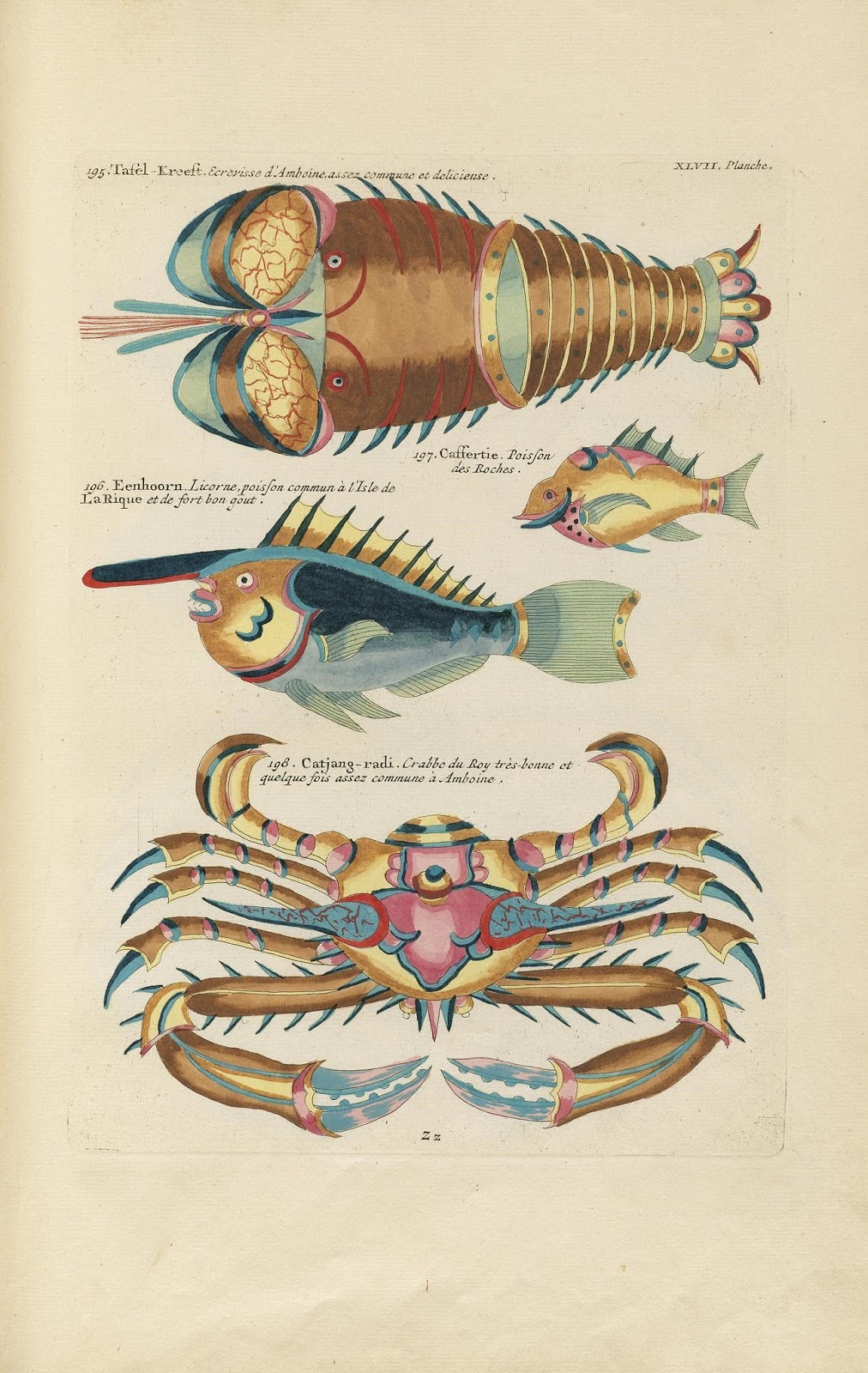
You may not recognize all (or even many) of the East Indian marine species portrayed in the first known book on fish to be published in color. Don’t worry. It’s not a lack of ichthyological proficiency on your part. Rather, it’s because all of the species depicted in Louis Renard’s Poissons, ecrevisses et crabes received some level of artistic embellishment – and approximately 9% are completely fantastical.

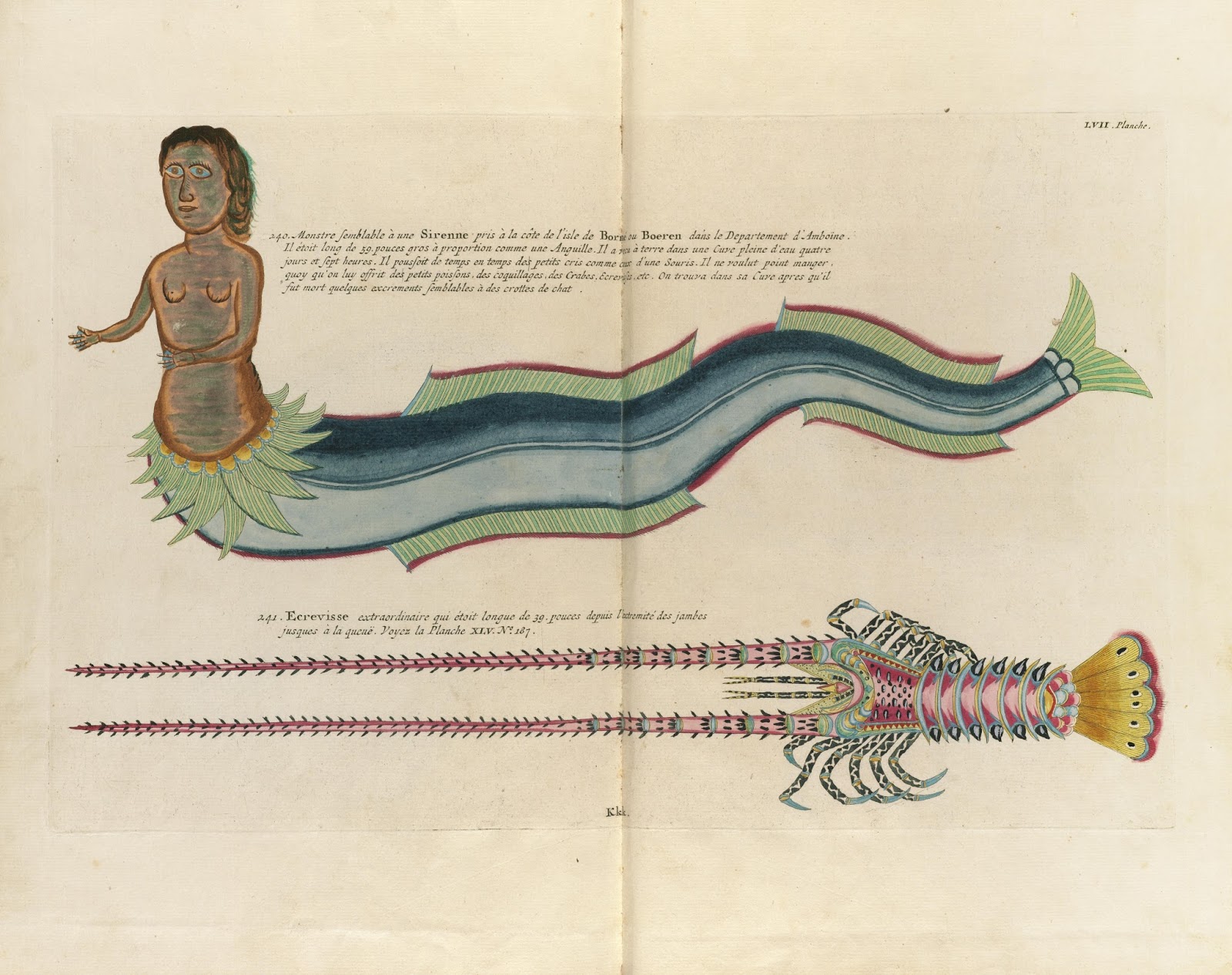
If that’s not strange enough, the work is produced by a man who identified himself as a “secret agent on behalf of the British Crown” and contains a portrait of a mermaid.

View Full Size Image
Renard, Louis. Poissons, ecrevisses et crabes. 1754. Digitized by the Ernst Mayr Library, Museum of Comparative Zoology, Harvard University. http://biodiversitylibrary.org/page/50095087.

These facts might lead you to conclude that Poissons, ecrevisses et crabes, de diverses couleurs et figures extraordinaires, que l’on trouve autour des isles Moluques et sur les côtes des terres Australes has little scientific value. But in that assumption, you’d be wrong.

Besides being the first published book in color about fish, in a 2012 article published in Natural Histories, Mai Reitmeyer, Research Services Librarian at the American Museum of Natural History, writes that this work is “an important part of the scientific literature of the eighteenth century, the new Age of Enlightenment” (Reitmeyer, 33).

According to Theodore W. Pietsch, an ichthyologist who conducted an examination of the title in the late twentieth century and whom Reitmeyer quotes in her article, Renard’s publication “gives us an intriguing glimpse of what science was like in the late seventeenth and early eighteenth centuries” and thus “to cast the work off as being without scientific merit is to greatly underestimate its value” (Reitmeyer, 34). What’s more, since the waters surrounding Ambon Island in Indonesia, where many of the depicted species were found, is now a heavily polluted ecosystem, it’s likely that the biodiversity in the area has changed since Renard’s publication. Thus, the fauna depicted in Poissons, ecrevisses et crabes, around 90% of which, according to Pietsch, can be identified down to the species, genus, or family level, can offer an important historical perspective on marine diversity in the region (Barley, 2010).

View Full Size Image
Renard, Louis. Poissons, ecrevisses et crabes. 1754. Digitized by the Ernst Mayr Library, Museum of Comparative Zoology, Harvard University. http://biodiversitylibrary.org/page/50095031.

As Reitmeyer recounts in her article, Renard was born in France sometime around 1678 but, to escape religious persecution, immigrated to the Netherlands with his family around the turn of the century and eventually became a citizen of Amsterdam. Encouraged by his father-in-law, Renard became a book dealer and publisher and, in 1718 or 1719, produced the first volume of the first edition of his most famous work, Poissons, ecrevisses et crabes, the full title of which translates to “Fishes, crayfishes and crabs, of diverse colors and extraordinary forms, which are found around the islands of the Moluccan and on the coasts of southern lands.”

While the work may depict over 450 fish and crustacean species from the East Indies, Renard published the work without ever leaving the Netherlands. Instead, he copied drawings by other artists to create the 100 plates, representing 460 hand-colored copper engravings, for his publication.

View Full Size Image
Renard, Louis. Poissons, ecrevisses et crabes. 1754. Digitized by the Ernst Mayr Library, Museum of Comparative Zoology, Harvard University. http://biodiversitylibrary.org/page/50095173.

Dutch artist Samuel Fallours, a soldier stationed in Ambon with the Dutch East India Company, painted a great many of the drawings that Renard copied for this work. During his time in Ambon, Fallours created many drawings of East Indian marine life that later appeared in several eighteenth century publications, including Renard’s.

According to Pietsch, Fallours likely included elements of the fantastical in his drawings in order to attract the European collectors who purchased his works (Barley, 2010). These embellishments ranged from artificially bright and randomly applied colors to total fabrications, including a portrait of a mermaid, which also appeared amongst an arrangement of exotic East Indian biodiversity published in Francois Valentijn’s Oud en Nieuw Oost-Indien (1724−1726).

View Full Size Image
Portrait of a mermaid by Samuel Fallours. Renard, Louis. Poissons, ecrevisses et crabes. 1754. Digitized by the Ernst Mayr Library, Museum of Comparative Zoology, Harvard University. http://biodiversitylibrary.org/page/50095192.

Poissons, ecrevisses et crabes was published in three different editions. Only sixteen copies of the first, published in 1718 or 1719, are known to exist. Thirty-four copies are known of the second edition, published in 1754. The rarest edition, with only six known copies, is the third, published in 1782 but never completed (Reitmeyer, 33).

Thanks to Ernst Mayr Library of the Museum of Comparative Zoology at Harvard University, you can view the second edition of Renard’s work for free in BHL. And if this article hasn’t piqued your curiosity quite enough to click on the link, let’s not forget the “secret agent” aspect mentioned earlier!

In what was likely a marketing ploy to boost sales, the dedication statement within Poissons, ecrevisses et crabes identifies Renard as a “secret agent on behalf of the British Crown.” What’s the story behind this claim? According to Reitmeyer, Renard was employed by George I and George II to search “ships leaving Amsterdam to prevent arms from reaching James Stuart, the Roman Catholic ‘Old Pretender’ to the British throne” (Reitmeyer, 33).

Fantasy, intrigue, and science. What’s not to love about Poissons, ecrevisses et crabes?

View Full Size Image
Renard, Louis. Poissons, ecrevisses et crabes. 1754. Digitized by the Ernst Mayr Library, Museum of Comparative Zoology, Harvard University. http://biodiversitylibrary.org/page/50095181.

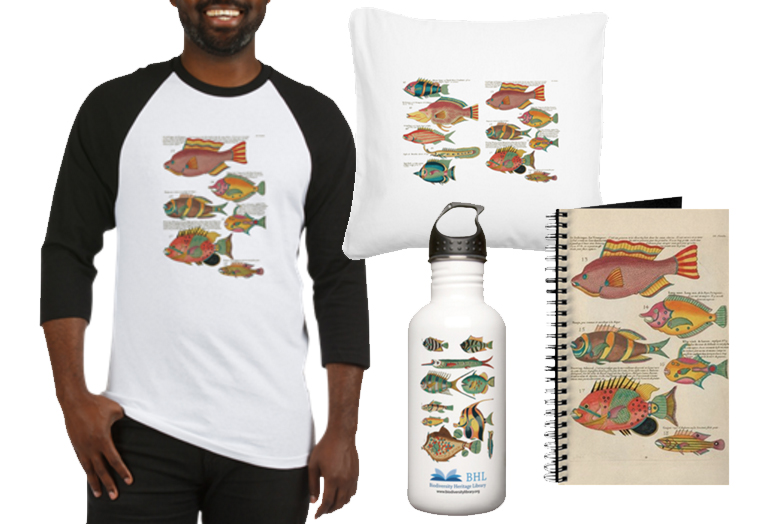
You can view the images from this work in Flickr. You can also find products featuring images from this title in our CafePress store. 100% of the proceeds will be used to digitize more books for BHL. Start shopping today!

View Full Size Image
Selection of products in the BHL CafePress featuring images from Renard’s Poissons, ecrevisses et crabes.  100% of proceeds will be used to digitize more books for BHL.

REFERENCES

  • Reitmeyer, Mai Qaraman (2012). Louis Renard and His Book of Extraordinary Creatures. Natural Histories: Extraordinary Rare Book Selections from the American Museum of Natural History Library (pp. 33-34). New York: Sterling Publishing.
  • Barley, Shanta (2010). Samuel Fallours and His Fantasy Fish. New Scientist: Culture Lab. https://www.newscientist.com/blogs/culturelab/2010/06/samuel-fallours-and-his-fantasy-fish.html. Accessed 29 July 2016.
August 4, 2016by Grace Costantino
BHL News, Blog Reel

National Digital Stewardship Residency (NDSR) Job Postings

Portrait version of the Biodiversity Heritage Library logo.

We’re hiring!

The vacancies for the five National Digital Stewardship Residency (NDSR) cohort positions have been posted through Harvard University. These five residents will work on projects related to the Biodiversity Heritage Library at BHL partner institutions in Cambridge, MA, Washington, DC, Chicago, IL, St. Louis , MO or Los Angeles, CA from January 2017 to December 2017. Learn more about the NDSR program, funded by the Institute of Museum and Library Services (IMLS) as part of the Laura Bush 21st Century Librarian Program.

For more information, visit the vacancies posting page here. To apply, click here.

Qualification requirements and information about each of the five projects (as provided on the Harvard University posting page above) are listed below. Residents will each be assigned one of the five available projects and corresponding host institution(s). Applicants should specify their top three choices of institutions and projects from the list below in the cover letter included in their application. Application review will begin immediately and will continue until the positions are filled.

Applications received by October 5, 2016 will be given first consideration.

WHO MAY APPLY: 

Applicants must be U. S. citizens who have graduated from an accredited degree-granting Master’s or Doctoral program between Summer 2014 and January 2017. Applicants must be US citizens or permanent residents.

QUALIFICATIONS REQUIRED: 

  • Possess a master or doctoral degree with graduation between spring 2014 and January 2017 in one of the following fields (or other discipline engaged in the stewardship of digital materials):
    • Library Science
    • Information Science
    • Archival Science
    • Records Management
    • Computer Sciences
    • Museum Studies
    • Art History
    • Engineering
    • Digital Media
    • Master of Fine Arts in New Media
  • Must be available to work on-site for the entire one-year period (relocation expenses are not offered).
  • Must be a US citizen or permanent resident.


AVAILABLE PROJECTS:

Content Analysis. 
This project will be an analysis of the quantity of literature underpinning the field of biodiversity, the amount of that literature in the public domain, the representation of each discipline (delineated by taxon group) within BHL, an exploration of methodologies to scope the collections, and areas where BHL may target development to better serve the research population. Host: BHL Chicago partners (The Field Museum of Natural History and the Chicago Botanic Garden) with mentors Library Directors Christine Giannoni and Leora Siegel.

Import of Crowdsourced Data Corrections and Enhancements. 
Building on the IMLS grant received by the Missouri Botanical Garden, Purposeful Gaming and BHL, in which BHL worked with Mary Flannagan and Tiltfactor , the mentors for this project will work with the resident to develop methodologies and propose tools for integration of crowdsourced data corrections and enhancements back into the BHL portal. Best practices will be documented for verification, trust, and multi-tier review. Host: Harvard University: MCZ, mentors Library Managers Constance Rinaldo and Joseph deVeer.

Enabling image discovery within the Biodiversity Heritage Library. 
Building on the successful NEH Art of Life grant, crowdsourced metadata around BHL images hosted on Flickr and Zooniverse would be integrated back into the BHL through user interface modifications to the BHL portal to enable image searching, browsing and display. The resident will work with the BHL technical team to propose best practices for integration of this data into BHL as well as sustainable methodologies for augmenting image tagging for BHL content. Host: Missouri Botanical Garden (MOBOT), mentors Library Director Douglas Holland and Data Projects Coordinator, Trish Rose-Sandler.

Digital Library Best Practices Analysis. 
The mentor will work with the resident to consult with BHL partners such as DPLA and Europeana to determine how BHL data works in these large scale national and pan-national digital libraries. The resident will propose analyses of other large-scale digital libraries (HathiTrust, the Internet Archive, National Digital Library of New Zealand, Trove, for example) to categorize high value tools and services that can be built into the next version of BHL or developed with existing APIs from partners. Host: Los Angeles County Natural History Museum, mentor Chief Librarian and Curator Richard Hulser. NHM Research Library.

User Needs and Usability Analysis. 
The mentor will work with the resident to identify members of the larger taxonomic and biodiversity informatics community to determine user needs and services for providing increased value to BHL content. Building on a ten year relationship with this community, BHL staff will introduce the resident to relevant initiatives hosted at the Smithsonian, such as Consortium for the Barcode of Life (CBoL) and Encyclopedia of Life (EOL) and to partners such as Global Biodiversity Information Facility (GBIF). The resident will analyze input gathered to define recommendations and requirements for expanding the BHL digital library functionality. Host: BHL Secretariat/Smithsonian Libraries, mentor Carolyn Sheffield, BHL Program Manager.

August 3, 2016by Grace Costantino
BHL News, Blog Reel

BHL Receives Digital Library Federation (DLF) 2016 Community/Capacity Award

View Full Size Image

We are excited to announce that BHL has been named a joint-winner of the inaugural Digital Library Federation (DLF) 2016 Community/Capacity Award, along with the American Archive of Public Broadcasting (AAPB)!

During the month of June, DLF member organizations voted on an impressive list of 16 nominees to determine the award winner. In a tie-vote, the DLF community selected BHL and AAPB as the first-ever winners of the Community/Capacity Award.

According to the DLF website, the DLF Community/Capacity Award honors “constructive, community-minded capacity-building in digital libraries, archives, and museums: efforts that contribute to our ability to collaborate across institutional lines and work toward larger goals and a better future, together.” The award recognizes community spirit, generosity, openness, and care for fellow digital library, archives, and museum practitioners and the publics and missions those practitioners serve.

This year’s 16 nominees, which were solicited via an open call, included organizations, projects, and individuals from a vast array of disciplines. You can see the list of nominees here: https://www.diglib.org/archives/11856/.

BHL and AAPB will be recognized during an award ceremony at the 2016 DLF Forum, which will be held this November in Milwaukee, Wisconsin. A BHL representative will be present at the ceremony to accept the award on BHL’s behalf.

We are honored to be selected alongside the American Archive of Public Broadcasting from amongst this outstanding group of nominees as a DLF Community/Capacity Award winner! Thank you to everyone who submitted nominations and voted on the award winners. We extend our congratulations to AAPB, salute each of our fellow nominees, and thank DLF for creating this opportunity to showcase the power of collaboration for community and capacity building and the advancement of libraries and librarianship.

Lastly, we want to congratulate each member of our BHL family. We believe this award recognizes not only the outstanding work and dedication of each BHL consortium participant and staff contributor, without whom BHL would not be possible, but, more importantly, the BHL family’s collaborative spirit and collective efforts to make a positive and powerful impact on the library and science communities. By working collaboratively, we can accomplish what cannot be accomplished individually, and together, we will continue to enhance library communities and practices and ensure that everyone, everywhere has free and open access to the world’s biodiversity knowledge.

Learn more about AAPB, BHL, and DLF

The American Archive of Public Broadcasting 
The American Archive of Public Broadcasting, led by WGBH and the Library of Congress, has coordinated a national effort to preserve and make accessible significant historical content created by public media and are preserving at-risk public broadcasting before its content is lost to posterity. To date, more than 40,000 hours of content contributed by more than 100 organizations across the country have been digitized. The entire collection is accessible on location at WGBH and the Library of Congress. Together, WGBH, the Library, and participating organizations have made more than 12,000 programs available online for research, educational and informational purposes, becoming a focal point for discoverability of historical public media content. Learn more.

The Biodiversity Heritage Library 
An international consortium of over two dozen organizations, the Biodiversity Heritage Library (BHL) stands out not only in service to its partners, but also in its collaborative approach to making open access, often rare and unique biodiversity content available to 120,000+ monthly users worldwide. A signatory of the Bouchout Declaration, BHL’s commitment to open access extends beyond placing scanned pages on its website. Content is available via Internet Archive, Digital Public Library of America, and Europeana; over 100,000 scientific illustrations via Flickr; and BHL’s suite of APIs brings data directly to users. To build capacity among partners, BHL also provides intensive digitization workshops, reaching participants from across Sub-Saharan Africa, Mexico, the U.S., and beyond, and supporting participation by institutions large and small. Learn more.

Digital Library Federation
The Digital Library Federation is a robust and diverse community of practitioners who advance research, learning, and the public good through the creative design and wise application of digital library technologies. DLF serves as a resource and catalyst for collaboration among its institutional members, and all who are invested in the success of libraries, museums, and archives in the digital age. DLF serves its parent organization, the Council on Library and Information Resources, as the place where CLIR’s broader information-community strategies are informed and enriched by digital library practice. DLF connects CLIR’s vision and research agenda with our active practitioner network, and brings the insights of the DLF community to bear. In addition, we partner closely on key CLIR initiatives related to DLF’s mission, in order to provide advice and expertise to CLIR from the digital library community, as well as connections and opportunities for our members. DLF currently includes 151 institutional members. Learn more.

July 11, 2016by Grace Costantino
BHL News, Blog Reel

BHL Adds Three New Affiliates

Over the past three months, BHL has welcomed three new Affiliates: Smithsonian Institution Archives, the Canadian Museum of Nature, and Národní Muzeum (National Museum, Prague). The BHL consortium now consists of sixteen Members and thirteen Affiliates.

Smithsonian Institution Archives

View Full Size Image

The Smithsonian Institution Archives captures, preserves and makes available to the public the history of the Smithsonian since its inception in 1846. The Archives holds approximately 39,000 cubic feet of records and nearly 3 million photographic images. The collections include official records of the Smithsonian; personal papers of individuals associated with the Smithsonian; oral and video histories; and other special materials that document the staff, research, events, exhibitions and facilities of the Smithsonian. Detailed descriptions of the collections can be found online through the Archives’ website and through the Collections Search Center.

Smithsonian Institution Archives is a long-standing collaborator with BHL through The Field Book Project – an initiative to increase accessibility to field book content that documents natural history. To date, nearly 800 field books from Smithsonian collections have been contributed to BHL by The Field Book Project.  This material complements the published literature in BHL and provides opportunities to connect publications, primary source material, and specimens held in Smithsonian collections and others around the world. Many of these field notes are being transcribed by the public through the Smithsonian’s Transcription Center.

Canadian Museum of Nature

View Full Size Image

The Canadian Museum of Nature holds one of the oldest natural history collections in Canada, tracing its beginnings to 1842 with the formation of the Geological Survey of Canada. Consisting of over 36,000 monographic titles and 2,000 periodicals, the Museum’s library collection focuses on biology, biodiversity, botany, conservation and care of collections, ecology, mineral sciences, natural history, paleobiology, wildlife and zoology, with particular subject strengths in the Canadian Arctic, ornithology, systematics and taxonomy. The library also includes a Rare Book Collection that consists of approximately 4,000 pre-20th century monographs, manuscripts and periodicals dating back to the 1500s and covering expeditions, natural history, and biological and earth sciences.

The Canadian Museum of Nature represents BHL’s first Partner in Canada. This affiliation expands BHL’s global presence, extending our ability to provide free and open access to natural history collections from around the world. CMN will serve as a national leader positioned to foster new relationships with other institutions across the country in order to expand Canadian participation in BHL.

Národní Muzeum (National Museum, Prague)

View Full Size Image

Founded in 1818, the National Museum in Prague is the largest museum in the Czech Republic. The Museum consists of five specialised institutes – the Natural History Museum, the Historical Museum, the Library of the National Museum, the Náprstek Museum of Asian, African and American Cultures (part of the National Museum since 1932), and the Czech Museum of Music (part of the National Museum since 1984) – and several technical and administrative sections. The collections consist of almost 20 million objects from the disciplines of natural history, history, archaeology, arts, music, librarianship and a large archive. The National Museum Library is the second largest historic library in the Czech Republic, with a collection consisting of over 2.5 million items.

The National Museum in Prague (NMP) has actively participated in BHL Europe since 2009. NMP’s Scientific Secretary, Dr. Jiří Frank, serves as the BHL Europe representative to the Global BHL Committee, and under his leadership, NMP is helping to facilitate the ongoing participation of European institutions within BHL’s global framework. NMP also represents BHL in the Consortium of European Taxonomic Facilities (CETAF) and, as a major partner within the ESFRI (European Strategy Forum on Research Infrastructures) proposal for pan-European natural history collections infrastructure, is positioned to help connect BHL resources with other natural history collections and taxonomic services.

July 7, 2016by Grace Costantino
BHL News, Blog Reel, Tech Updates

Information about Upcoming Changes to BHL Commenting Feature

Portrait version of the Biodiversity Heritage Library logo.

Summary

A new and enhanced commenting system is being planned for BHL. The current commenting system will be disabled on July 5.

More Information

In December 2015, we launched the ability to add comments to pages in BHL books. Our audience has since used this feature to provide details about taxonomic changes, link field notes to crowdsourced transcriptions, and provide species and common name information for scientific illustrations.

Our community has both demonstrated the value of having a commenting feature in BHL and helped identify the need for additional functionality that is not supported by the current system. In order to respond to this feedback and address residual technical issues, we have decided to implement a new and enhanced commenting system as part of BHL Version 2, the next iteration of the world’s largest open access digital library for biodiversity literature.

We will be disabling the current system from the BHL website on July 5. This strategic decision allows us to focus development time on implementing an enhanced system without the need to provide continued support for the existing platform. Requirements gathering for the new system will begin in early 2017 as part of the work of the BHL NDSR resident program. We will provide updates via this blog and social media.

While the current system will no longer be available in BHL as of July 5, all comments added to BHL pages to date will remain available through the BHL Disqus profile. Those comments on Disqus will also remain linked to the corresponding BHL pages, meaning that you can still access the information that our communities have added via these comments and explore the related pages in BHL. We will also be archiving these existing comments with the plan to re-ingest them into BHL once the new commenting system is implemented.

We want to extend a huge thanks to everyone who has contributed comments to BHL, demonstrating the value that such a system has for our community. We’re excited about the way commenting allows our audience to share their expertise and enhance our collections, and we look forward to incorporating the feedback we’ve received from our users into the design of the next generation of our commenting system.

Questions? Feel free to submit feedback.

June 30, 2016by Grace Costantino
Page 22 of 71« First...1020«21222324»304050...Last »

Help Support BHL

BHL's existence depends on the financial support of its patrons. Help us keep this free resource alive!

search

About BHL

The Biodiversity Heritage Library (BHL) is the world’s largest open access digital library for biodiversity literature and archives. BHL operates as a worldwide consortium of natural history, botanical, research, and national libraries working together to digitize the natural history literature held in their collections and make it freely available for open access as part of a global “biodiversity community.”

Join Our Mailing List

Sign up to receive the latest news, content highlights, and promotions.

Subscribe Now

Subscribe to Blog via Email

Enter your email address to subscribe to this blog and receive notifications of new posts by email.

Join 319 other subscribers

Subscribe to Blog Via RSS

Subscribe to the blog RSS feed to stay up-to-date on all the latest BHL posts.

Access RSS Feed

Inspiring Discovery through Free Access to Biodiversity Knowledge.

The Biodiversity Heritage Library makes it easier than ever for you to access the information you need to study and explore life on Earth…for free, anytime, anywhere.


64+ Million Pages of
Biodiversity Literature Online.

EXPLORE

Tools and Services
to Transform Research.

EXPLORE

300,000+
Illustrations on Flickr.

EXPLORE

ABOUT | HARMFUL CONTENT | PRIVACY | SITE MAP | TERMS OF USE