Biodiversity Heritage Library - Program news and collection highlights from BHL
  • Home
  • News
  • Featured Books
    • All Featured Books
    • Book of the Month Series
    • BHL at 20
  • User Stories
  • Campaigns
    • Fossil Stories
    • Garden Stories
    • Monsters Are Real
    • Page Frights
    • Her Natural History
    • Earth Optimism 2020
  • Tech Blog
  • Visit BHL
Home
News
Featured Books
    All Featured Books
    Book of the Month Series
    BHL at 20
User Stories
Campaigns
    Fossil Stories
    Garden Stories
    Monsters Are Real
    Page Frights
    Her Natural History
    Earth Optimism 2020
Tech Blog
Visit BHL
  • Home
  • News
  • Featured Books
    • All Featured Books
    • Book of the Month Series
    • BHL at 20
  • User Stories
  • Campaigns
    • Fossil Stories
    • Garden Stories
    • Monsters Are Real
    • Page Frights
    • Her Natural History
    • Earth Optimism 2020
  • Tech Blog
  • Visit BHL
Biodiversity Heritage Library - Program news and collection highlights from BHL
Blog Reel, Featured Books

12 Species of Christmas

You’re probably familiar with the famous holiday song The 12 Days of Christmas, first published in England in 1780 as a rhyme. The song most people know today is based on a 1909 arrangement of a traditional folk melody by Frederic Austin.

We decided to do our own take on the song, presenting instead “12 Species of Christmas” as portrayed within BHL books. This list of species is by no means comprehensive, but it presents some of the more well-known plants and animals associated with the holiday, as well as a few surprises!

Merry Christmas from BHL!

1. Christmas Trees!

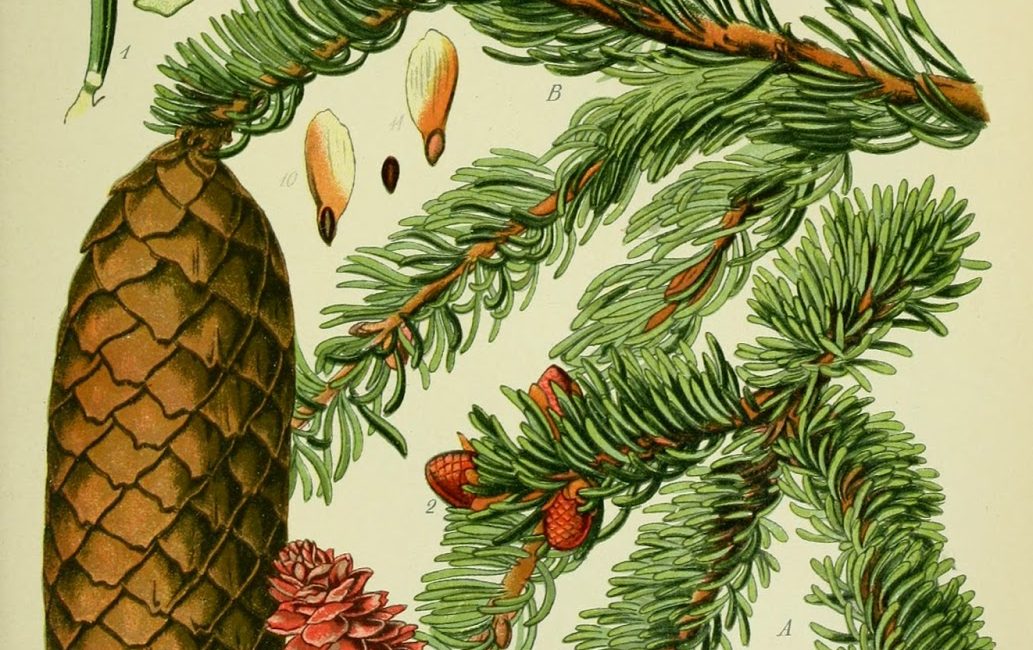
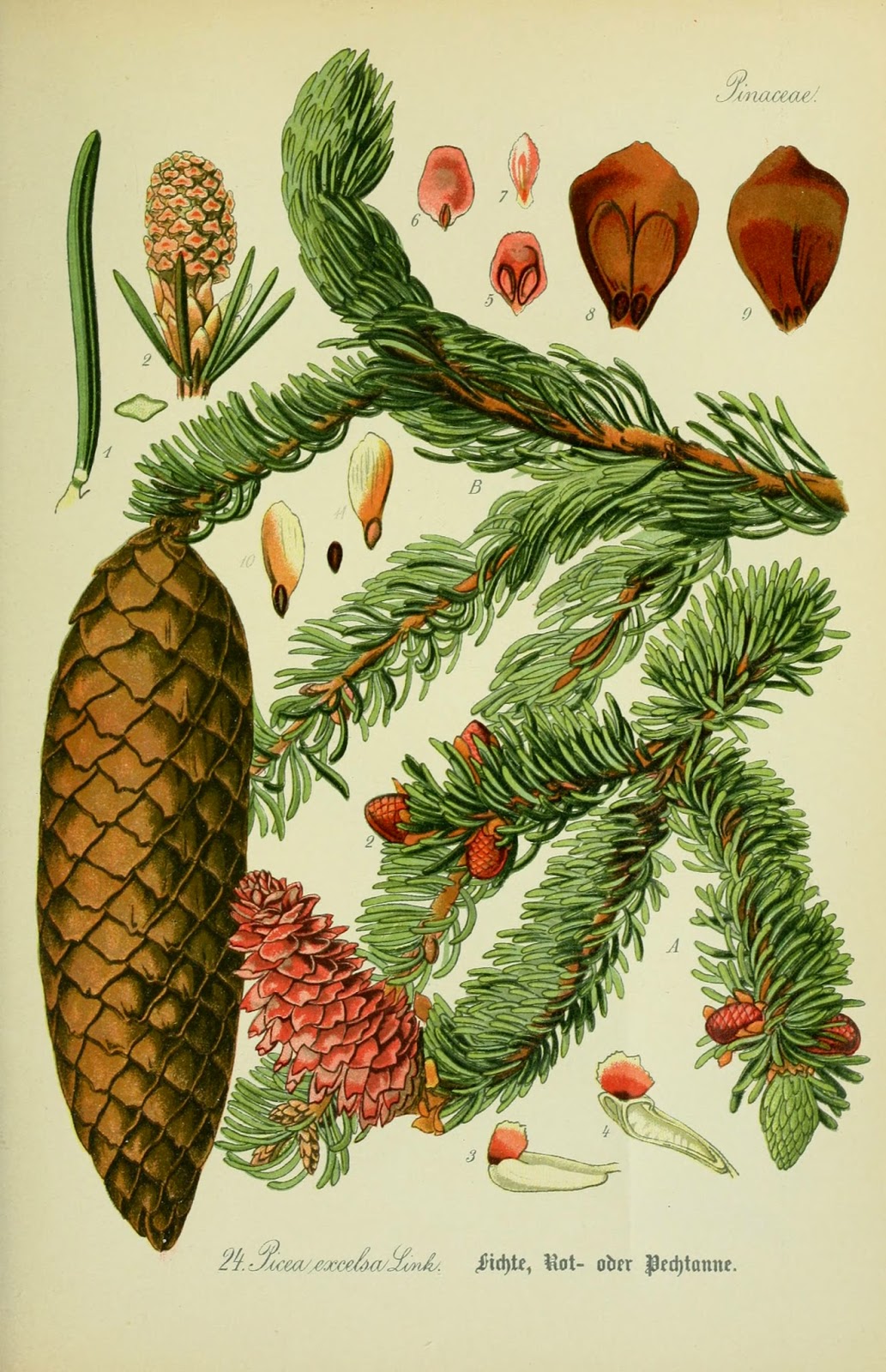
We tend to think of Christmas trees as a single species, but there are in fact many different species used as Christmas trees around the world, including Fir Trees, Pine Trees, Spruce Trees, Cypress Trees, and Cedar Trees. Explore the species and enjoy this image of one of the varieties, the Norway Spruce, in BHL.
View Full Size Image
Norway Spruce (Picea abies). Thomé, Otto W. Flora von Deutschland, Österreich und der Schweiz. Bd. 1 (1903). http://biodiversitylibrary.org/page/12306482.


2. Reindeer

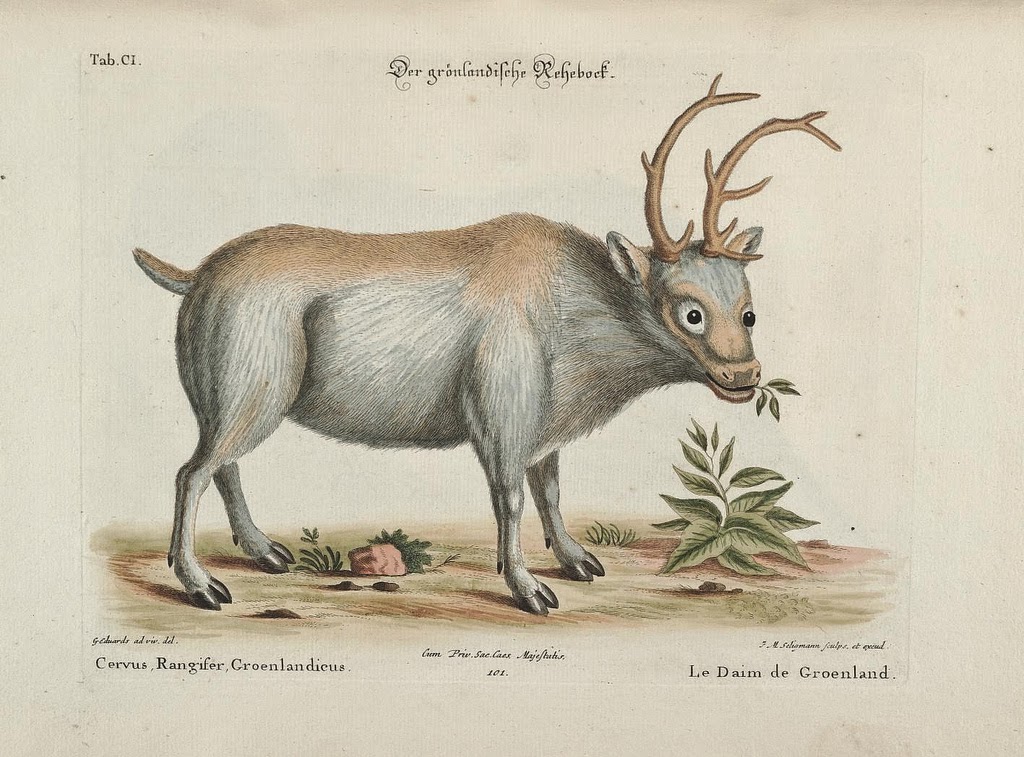
Santa can’t bring the presents to the children without his reindeer! Quick, take this quiz and see if you can name all 8 of Santa’s reindeer in under a minute.

Interestingly, Santa likely has female reindeer! Females retain their antlers through winter, while males lose theirs in the autumn.
View Full Size Image
Reindeer (Rangifer tarandus). Edwards, George. Verzameling van uitlandsche en zeldzaame vogelen. v. 1 (1772). http://biodiversitylibrary.org/page/11267501.

3. Angelfish

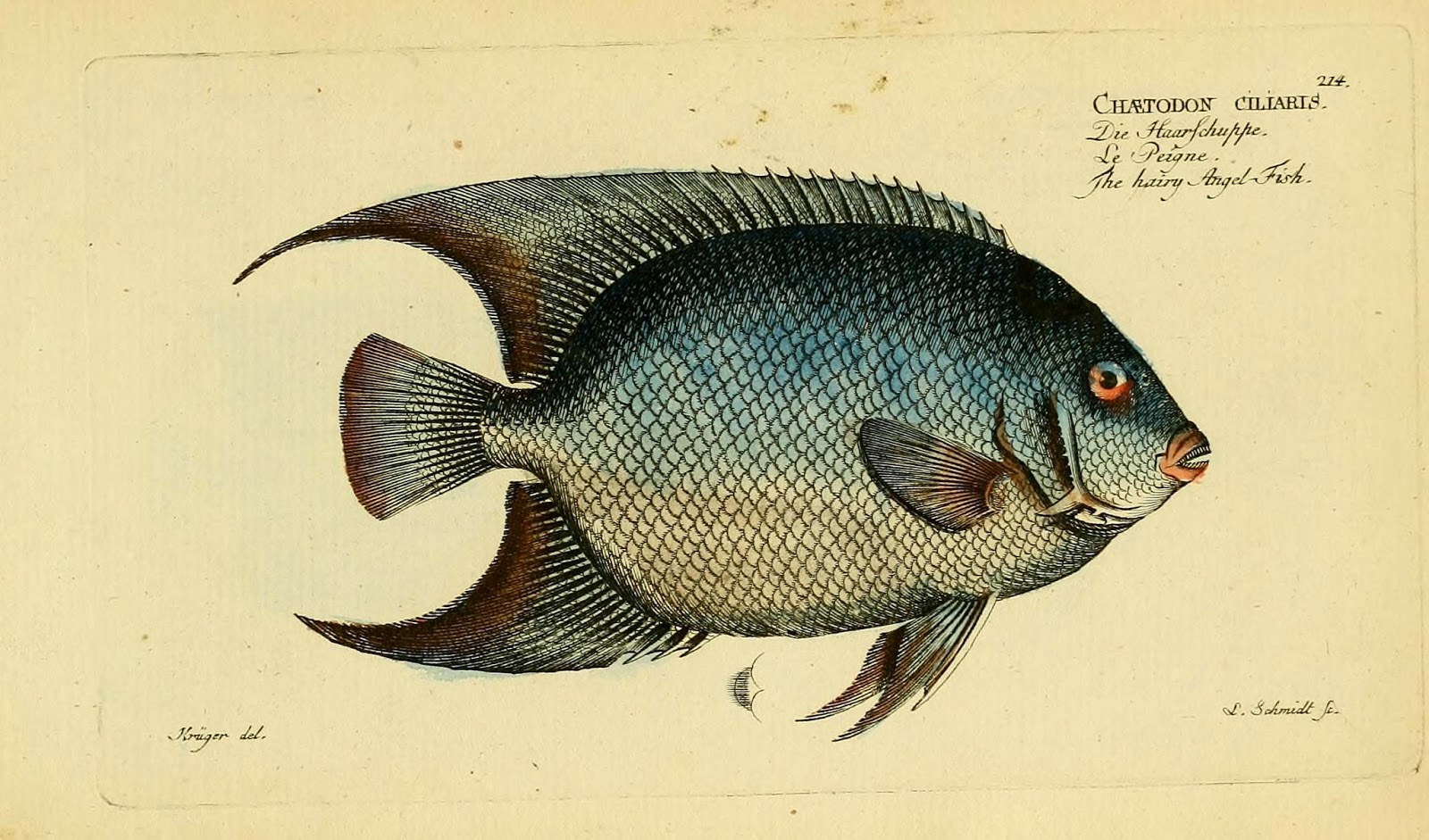
We have our own kind of “angel” for Christmas: The Angelfish! Angelfish can refer to many difference species, including freshwater angelfish of the genus Pterophyllum and Marine angelfish of the family Pomacanthidae.

Pictured here is the Queen Angelfish (Holacanthus ciliaris), found near reefs in the warm waters of the western Atlantic Ocean. The illustration comes from Bloch’s Ichthyologie; ou, Histoire naturelle des poissons, an illustrated, scholarly compendium of all known fishes at the time of its original German (1785-95) and later French (1796) publication.
View Full Size Image
Queen Angelfish (Holacanthus ciliaris). Bloch, Marcus Elieser. Ichthyologie; ou, Histoire naturelle des poissons. v. 1 (1796). http://biodiversitylibrary.org/page/4786998.


4. Mistletoe

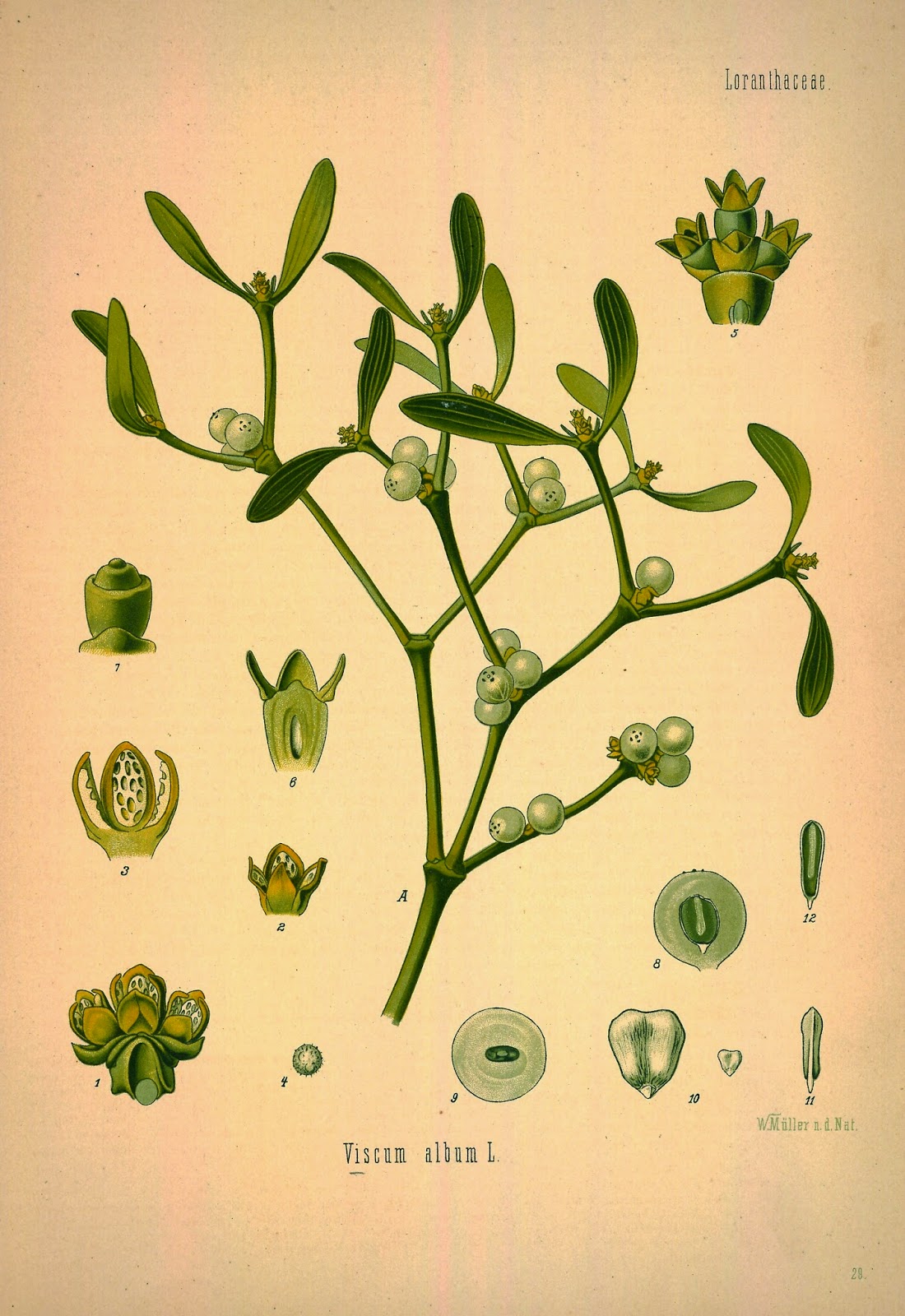
Mistletoe in the Christmas tradition most commonly refers to the species Viscum album. Based possibly on Scandinavian origins, tradition holds that if a couple meets under the mistletoe at Christmas, they must kiss. Ironically, mistletoe is a hemiparasitic shrub…what does that say about its association with kissing and romance at Christmas?
View Full Size Image
Mistletoe (Viscum album). Köhler, F.E.  Medizinal-Pflanzen. v. 1 (1883-1914). http://biodiversitylibrary.org/page/303620.


5. Ginger

Love making gingerbread houses at Christmas? Well, powdered, dry ginger root is used as the flavoring for gingerbread, hence the name. The associated taxonomy? Ginger or ginger root is the rhizome of the plant Zingiber officinale.
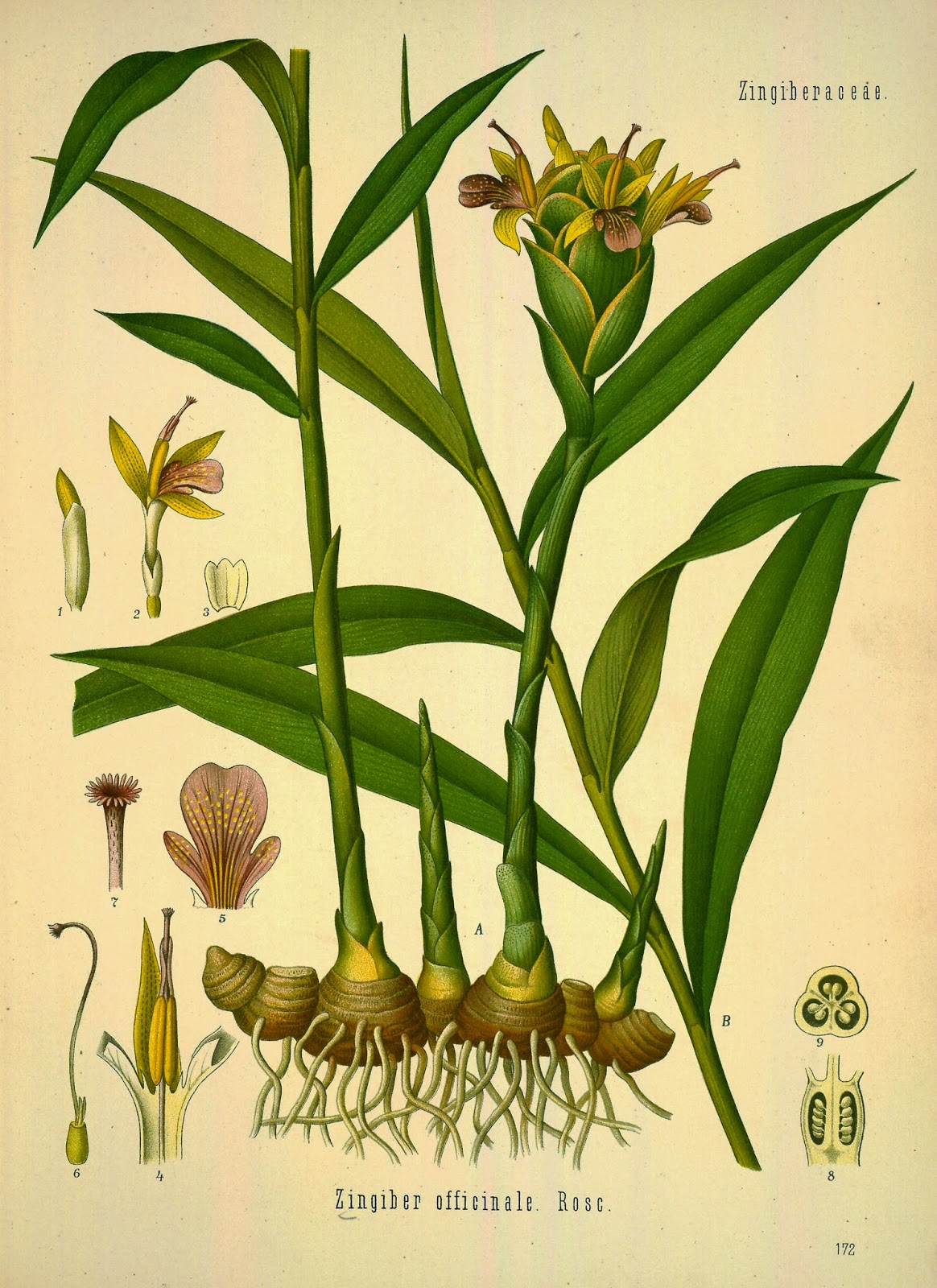
View Full Size Image
Ginger (Zingiber officinale). Köhler, F.E.  Medizinal-Pflanzen. v. 2 (1883-1914). http://biodiversitylibrary.org/page/303284.


6. Partridge

Since our blog is based on The 12 Days of Christmas, we can’t neglect the species actually mentioned in the song. While we won’t present all of them here, we had to at least include the species from the first day of Christmas: A Partridge in a Pear Tree. Partridges are members of the pheasant family, and, interestingly, a ground nesters. So much for “in a pear tree”…
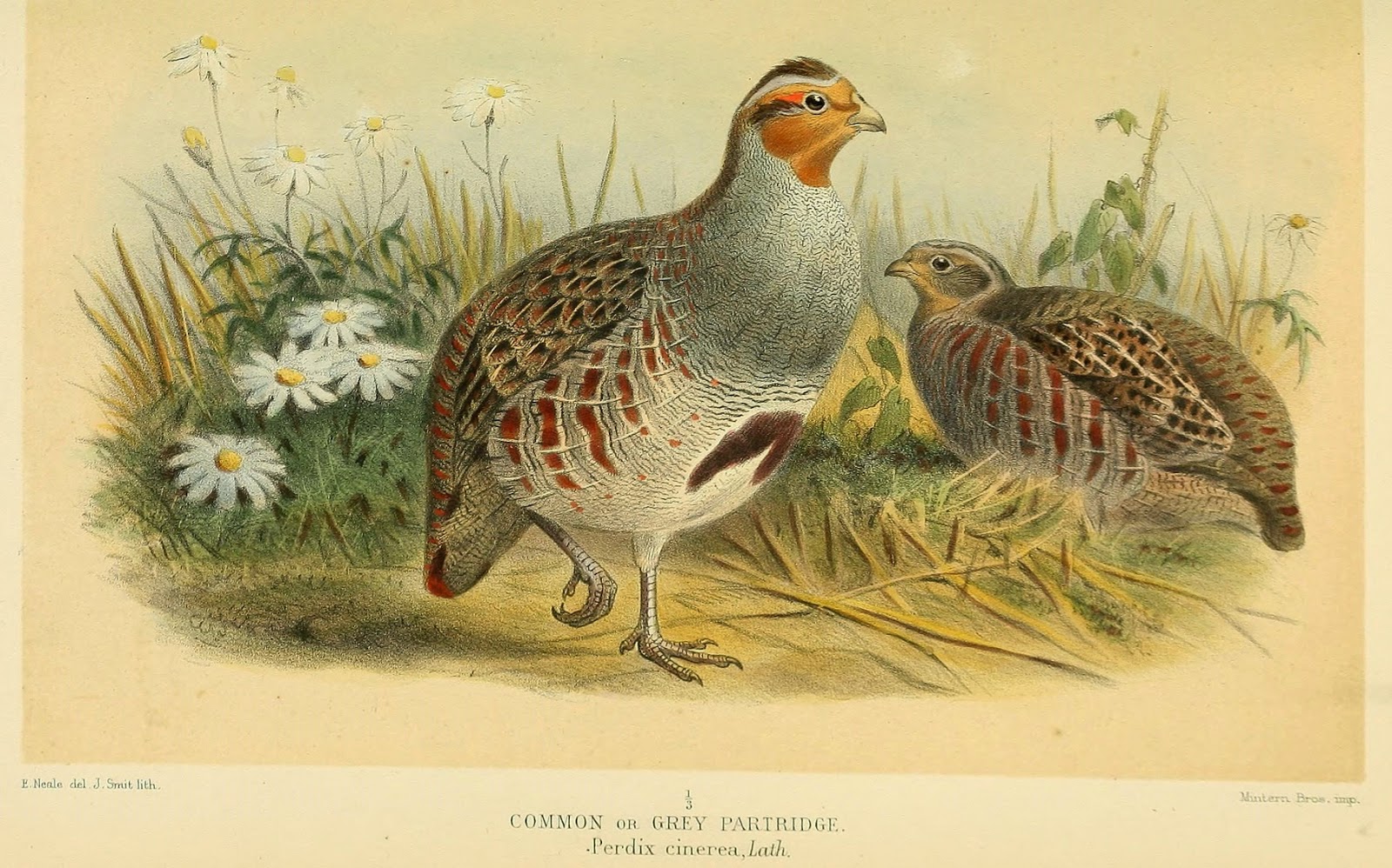
View Full Size Image
Grey Partridge (Perdix perdix). Lilford, Thomas Littleton Powys. Coloured figures of the birds of the British Islands. v. 4 (1885-97). http://biodiversitylibrary.org/page/34517606.


7. Poinsettias

Indigenous to Mexico and Central America, poinsettias (Euphorbia pulcherrima) are commonly used for Christmas floral displays. The common name is derived from Joel Roberts Poinsett, the first United States Minister to Mexico (where the plant had been used as part of Christmas decorations by Franciscan friars since the seventeenth century), who introduced the plant into the United States in 1825.

Did you know you can make a pH indicator from poinsettia leaves? Find out how!
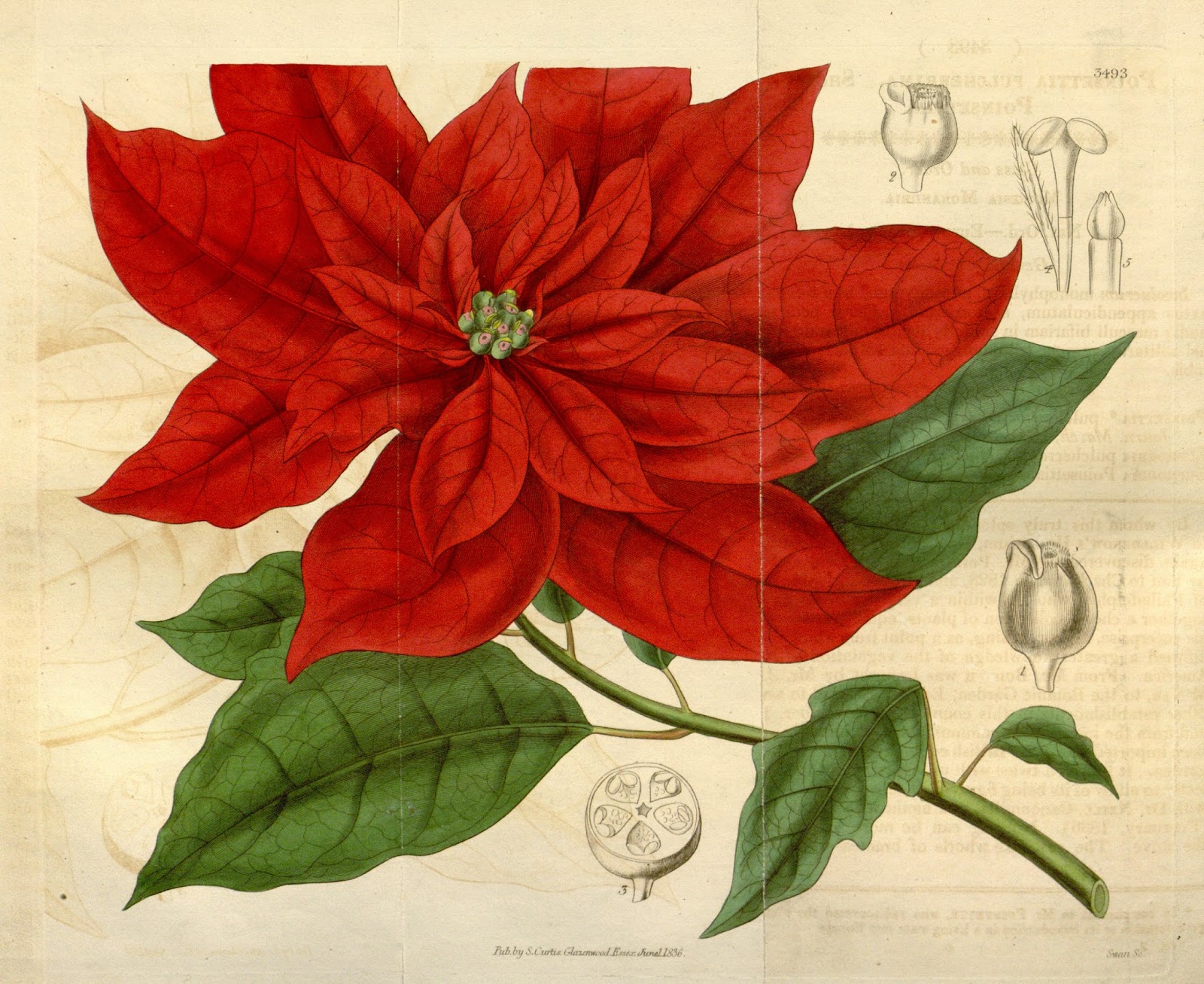
View Full Size Image
Poinsettia (Euphorbia pulcherrima). Curtis, William. Curtis’s botanical magazine. v. 63 (1836). http://biodiversitylibrary.org/page/466234.


8. Holly

The Holly species (Ilex aquifolium) is commonly used at Christmas time for decorations, often being incorporated into wreaths and adorning Christmas cards. But beware the bright red berries! Ingestion of more than 20 berries may be fatal to children.
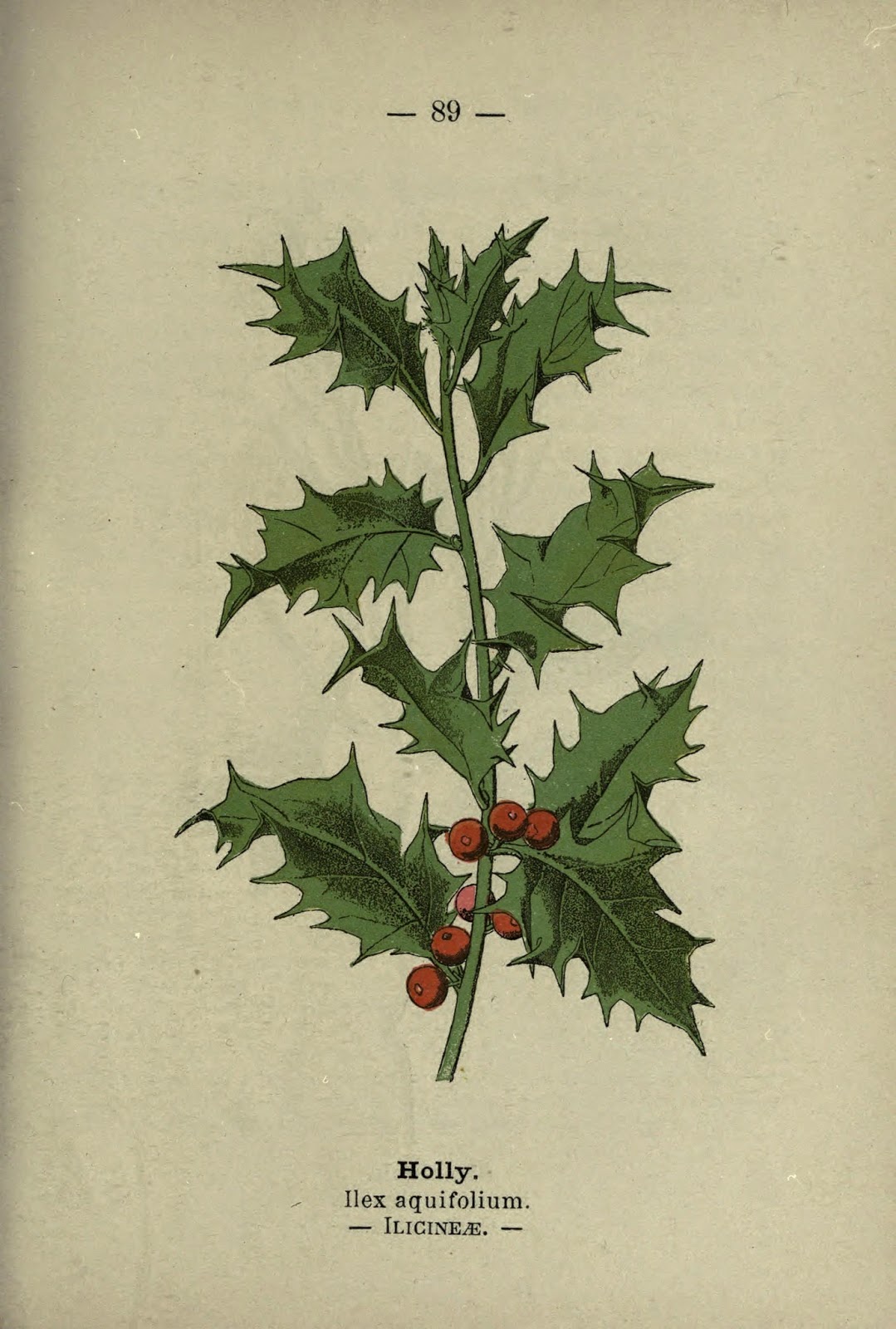
View Full Size Image
European Holly (Ilex aquifolium). Step, Edward. Wayside and woodland blossoms : a pocket guide to British wild-flowers for the country rambler. (1895). http://biodiversitylibrary.org/page/21000230.


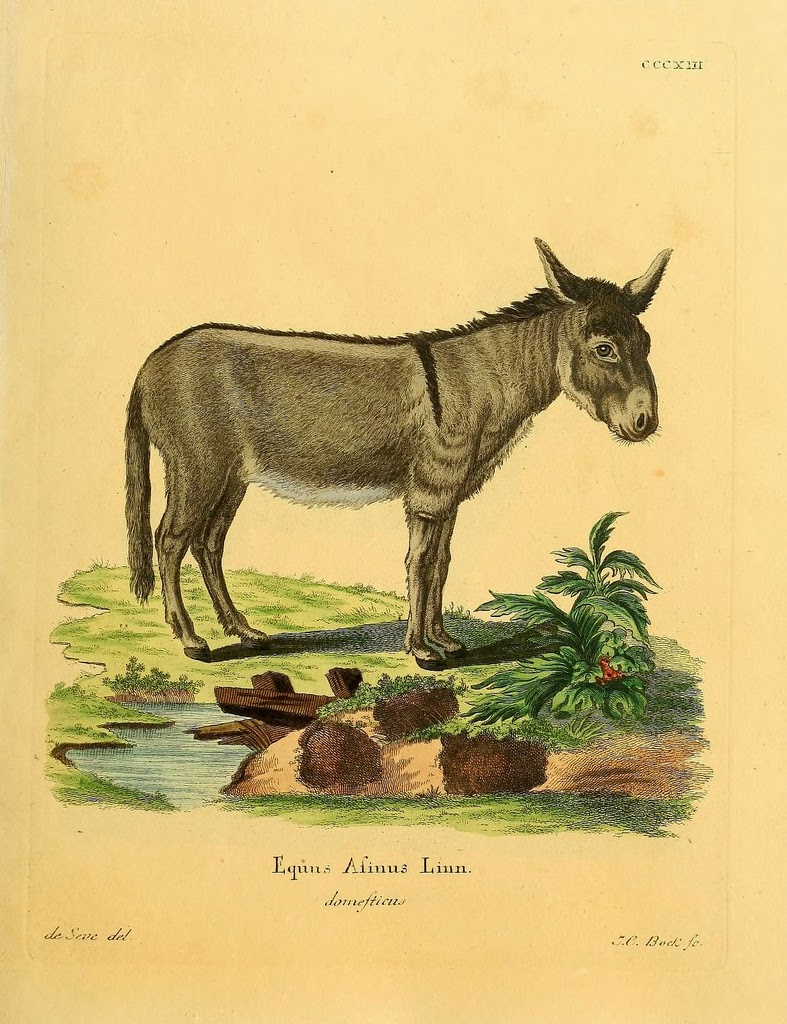
9. Donkey

The song Dominic the Donkey was recorded by Lou Monte in 1960. It tells the story of a donkey who helps Santa bring presents to children in Italy, since the reindeer cannot climb Italy’s steep hills.
View Full Size Image
Donkey (Equus africanus asinus). Schreber, Johann Christian Daniel. Die Säugthiere in Abbildungen nach der Natur. (1774-1846). http://biodiversitylibrary.org/page/31078278.


10. Turtle Doves

On the second day of Christmas, in the aforementioned song, a gift of “2 Turtle Doves” is given. Members of the Columbidae family, Turtle Doves form strong pair bonds, and as such have become symbols of devoted love.

View Full Size Image
Turtle Doves (Streptopelia turtur). Lilford, Thomas Littleton Powys. Coloured figures of the birds of the British Islands. v. 4 (1885-97). http://biodiversitylibrary.org/page/34517561.


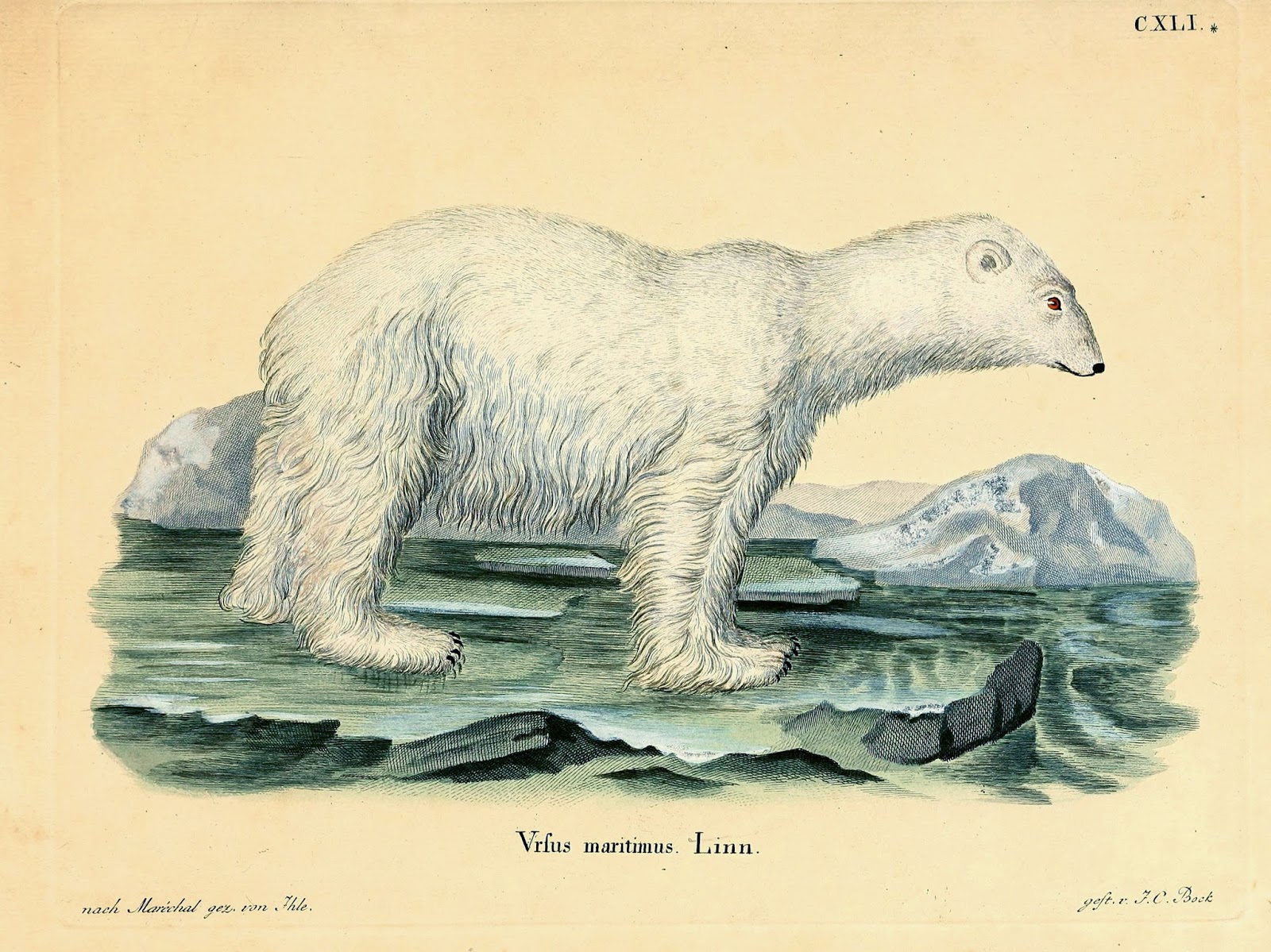
11. Polar Bears

Perhaps simply because they’re an arctic species, and Santa Clause resides at the North Pole, contemporary Christmas advertisements, toys, and decorations often include festive polar bears. Penguins are another oft-associated Christmas species, commonly seen alongside polar bears in holiday advertisements. However, penguins are found in the Antarctic, nowhere near the North Pole.
View Full Size Image
First published illustration of a Polar Bear (Ursus maritimus). Schreber, Johann Christian Daniel. Die Säugthiere in Abbildungen nach der Natur. (1774-1846). http://biodiversitylibrary.org/page/31064766.


12. Fireflies

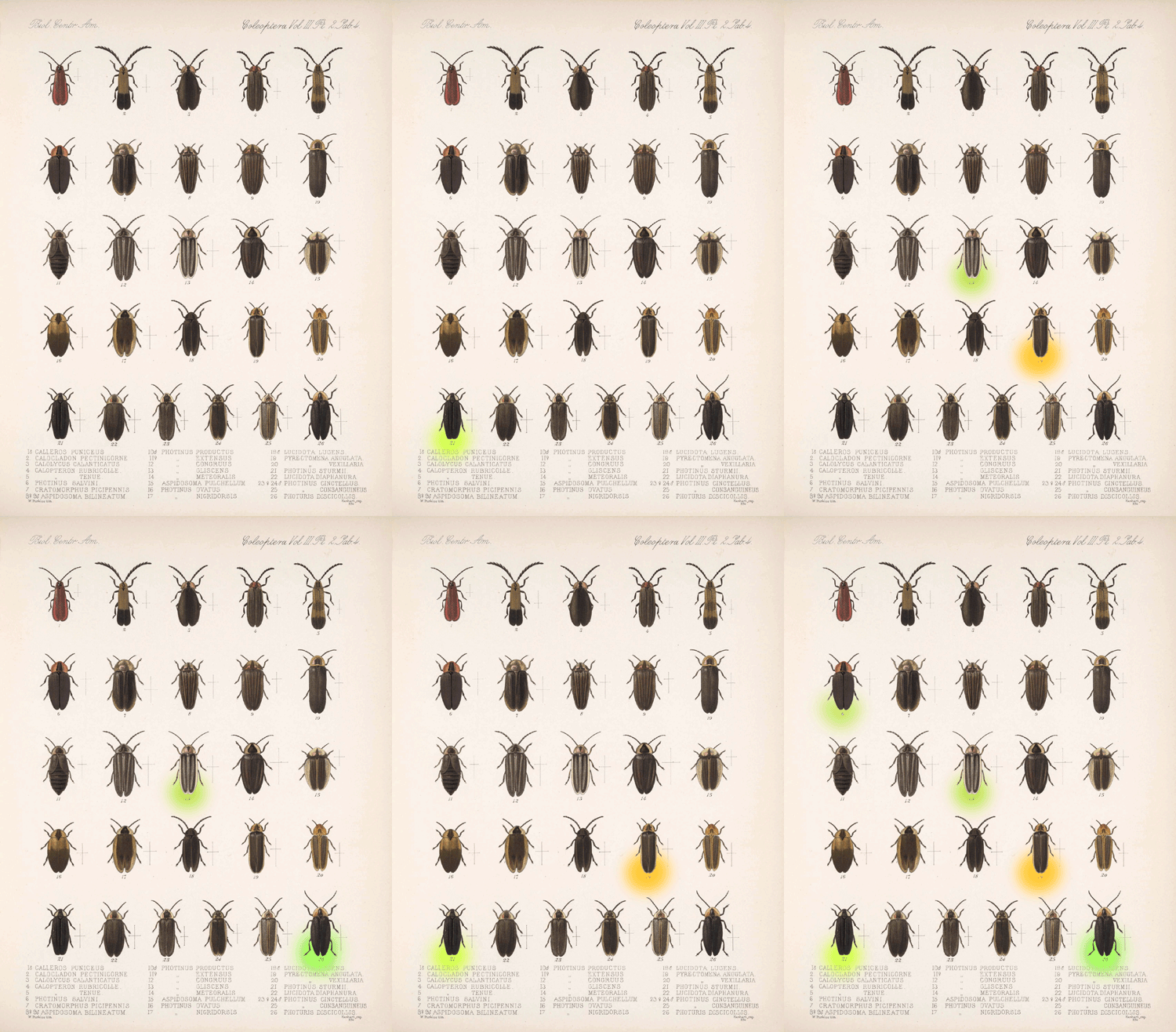
Nature has its own Christmas tree lights: Fireflies!

Beetles in the family Lampyridae are commonly called fireflies for their bioluminescence. The larvae also emit light and, in Eurasia, are known as glow worms. Thanks to some GIF magic from Smithsonian Libraries, these fireflies from Biologia Centrali-Americana in BHL comes to life!
View Full Size Image
Fireflies. Biologia Centrali-Americana. Insecta, v. 3, pt. 2 (1880-86). http://biodiversitylibrary.org/page/580274.


Have yourself a Happy Holiday, from the staff of the Biodiversity Heritage Library!
December 25, 2014by Grace Costantino
BHL News, Blog Reel

We Need Books To…Learn from Past Extinctions

This month, we’re publishing a series of blog posts outlining the importance of biodiversity literature, made available for free and open access through the Biodiversity Heritage Library, to today’s scientific research and conservation initiatives. With your help, we can help save biodiversity. 

Remembering Extinct Species

View Full Size Image
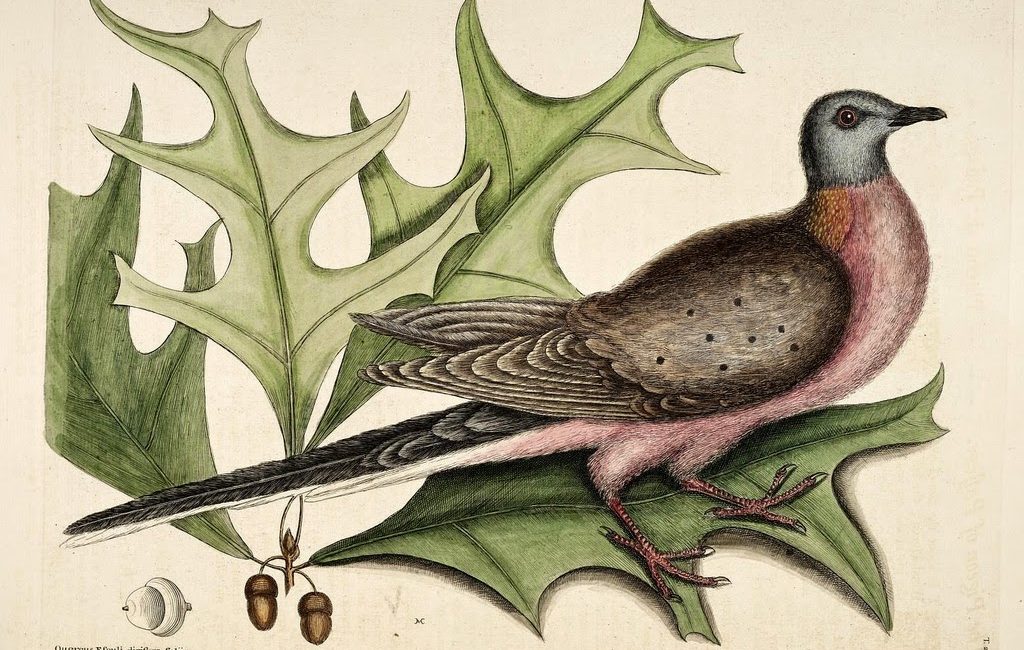
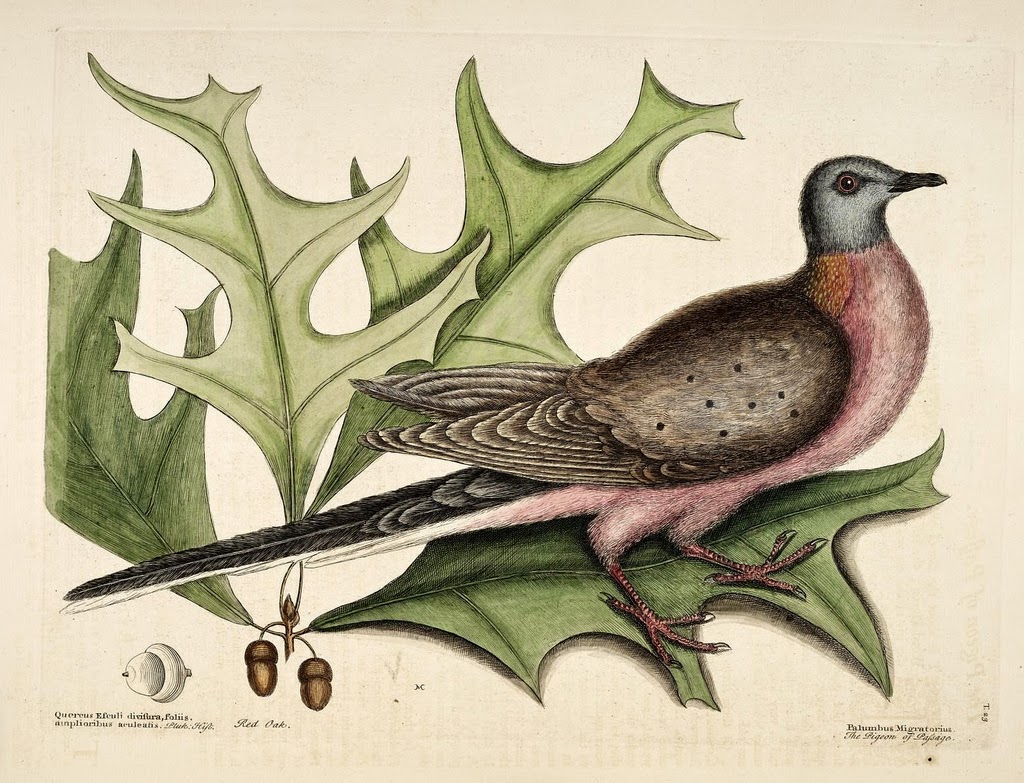
First published illustration of a Passenger Pigeon, Extinct. Catesby, Mark. The natural history of Carolina, Florida, and the Bahama Islands (1754). http://biodiversitylibrary.org/page/10900155.

On September 1, 1914, at approximately 1pm in the afternoon, a passenger pigeon named Martha died. Her death marked the extinction of her entire species. It is “one of the fastest and most dramatic extinctions in human history,” according to the Zoological Society of London.  A population of several billion birds was decimated in less than a century thanks to over-hunting and habitat destruction. From the first published image of a passenger pigeon by Mark Catesby in 1754, to a poignant record of population declines by Vernon Bailey in an 1892 fieldbook, and the final autopsy report of “the last living representative of its race,” the passenger pigeon’s tragic demise is well-documented in BHL.

View Full Size Image
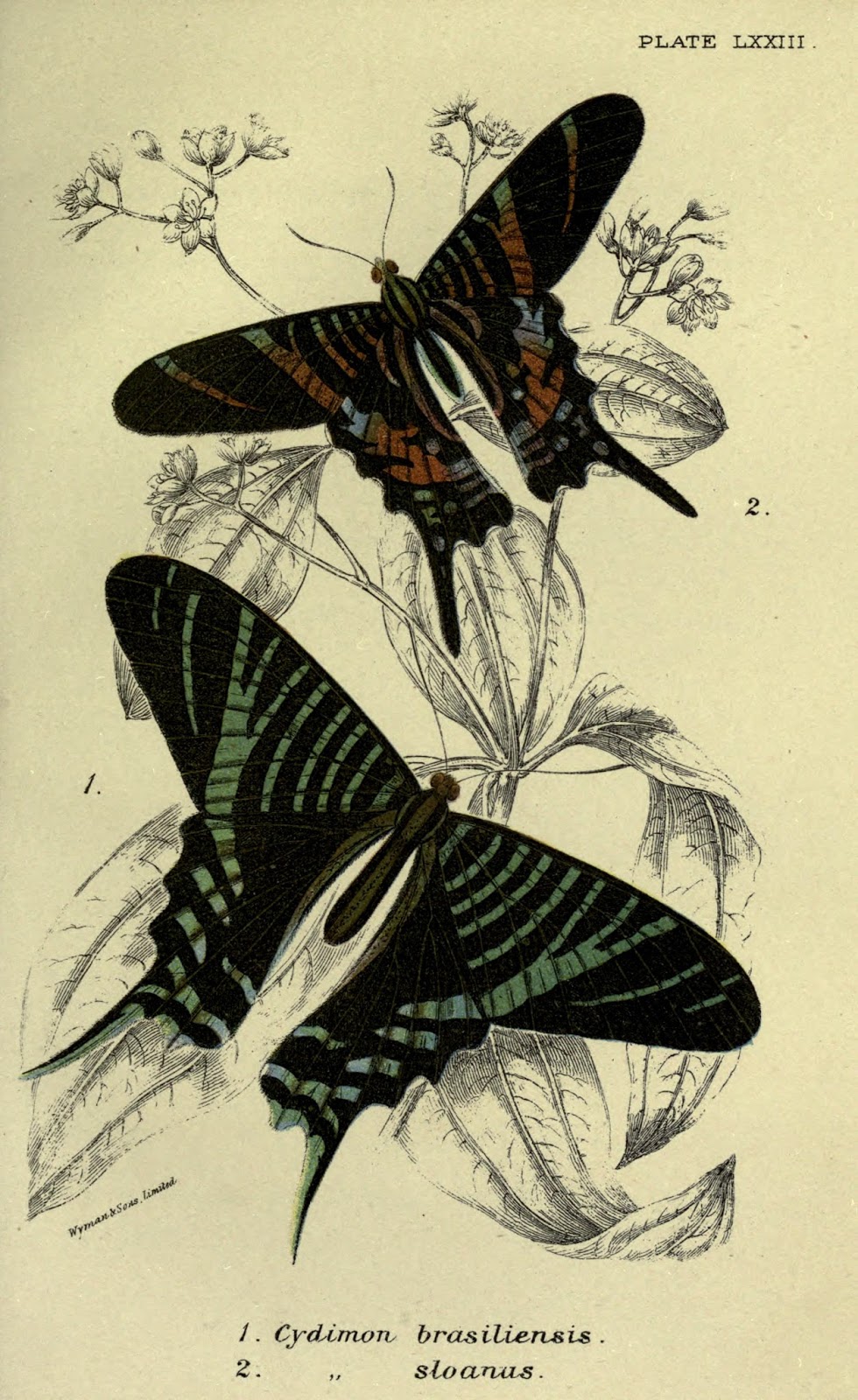
Sloane’s Urania Moth (top), Extinct. Kirby, W.F. A handbook to the order Lepidoptera. v. 3 (1897). http://biodiversitylibrary.org/page/19869923.

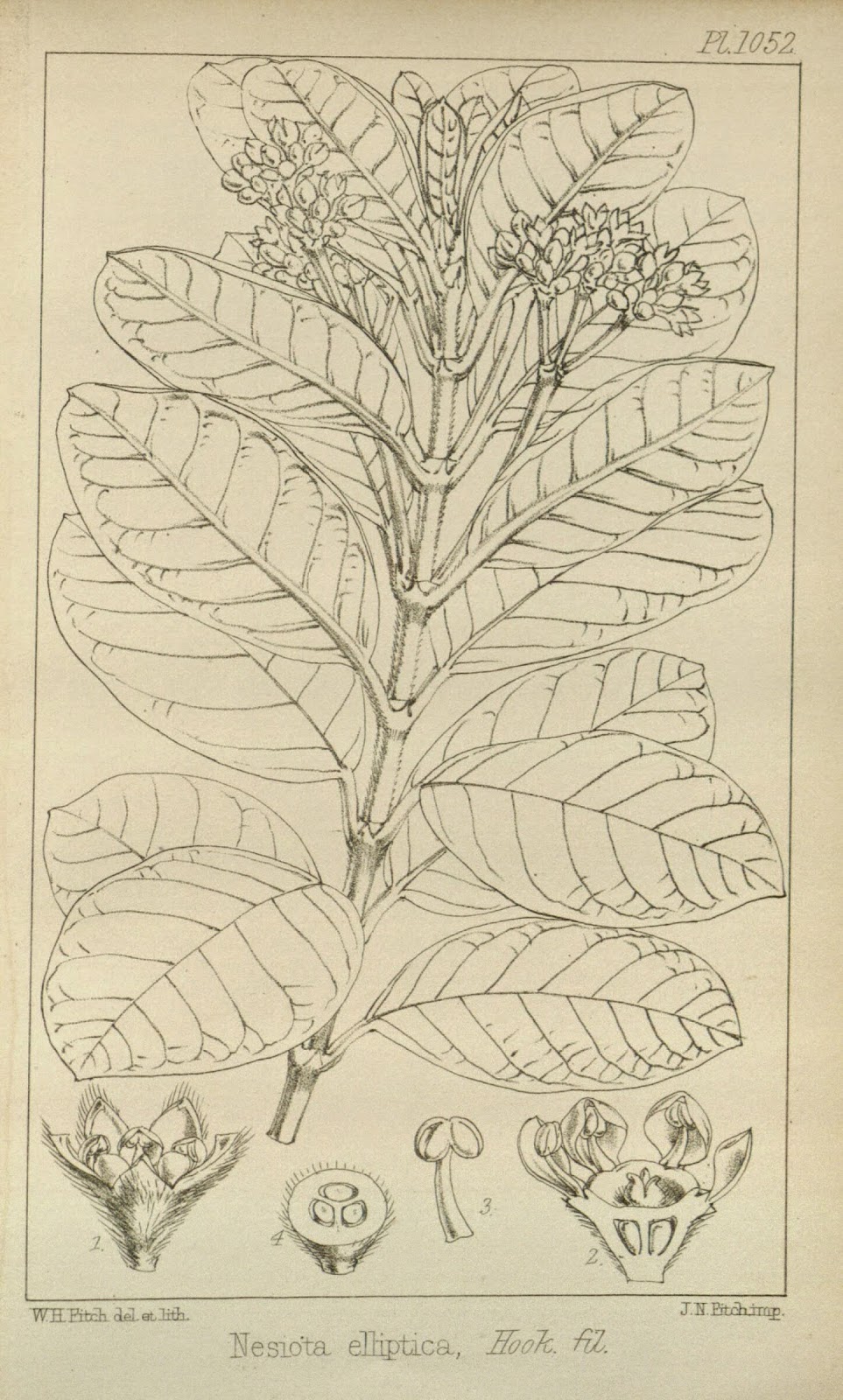
As many as 30%-50% of all species may be facing extinction by the mid-21st century, according to the Center for Biological Diversity. Some extinctions, such as that of the passenger pigeon, are internationally notorious, while others, such as the Rodrigues Day Gecko, Sloane’s Urania moth, or the Saint Helena Olive, are less infamous but no less dispiriting. Each represents another step towards earth’s sixth great extinction event.

View Full Size Image
Saint Helena Olive, Extinct. Hooker, William Jackson. Icones plantarum or figures, with brief descriptive characters and remarks, of new or rare plants, selected from the author’s herbarium. v. 11 (1867-71). http://biodiversitylibrary.org/page/16044972.

Historical literature, accounts in archival sources like fieldbooks, and museum specimens are the only remaining record of these species. “Historic literature provides written accounts and illustrations of [extinct species] from first-hand observations before they became extinct,” including phenotypic descriptions like habitat, diet, behavior, and phenology, explains Dr. Helen James, curator of Birds at the National Museum of Natural History, in a Smithsonian Libraries article. This depth of data does not always accompany museum specimens, not to mention the fact that the physical appearance of some species undergoes a radical transformation in death. Thus, for scientists to obtain a complete picture of the life, morphology, and phylogeny of extinct species, taxidermied specimens must be used in conjunction with written and illustrated primary sources.

View Full Size Image
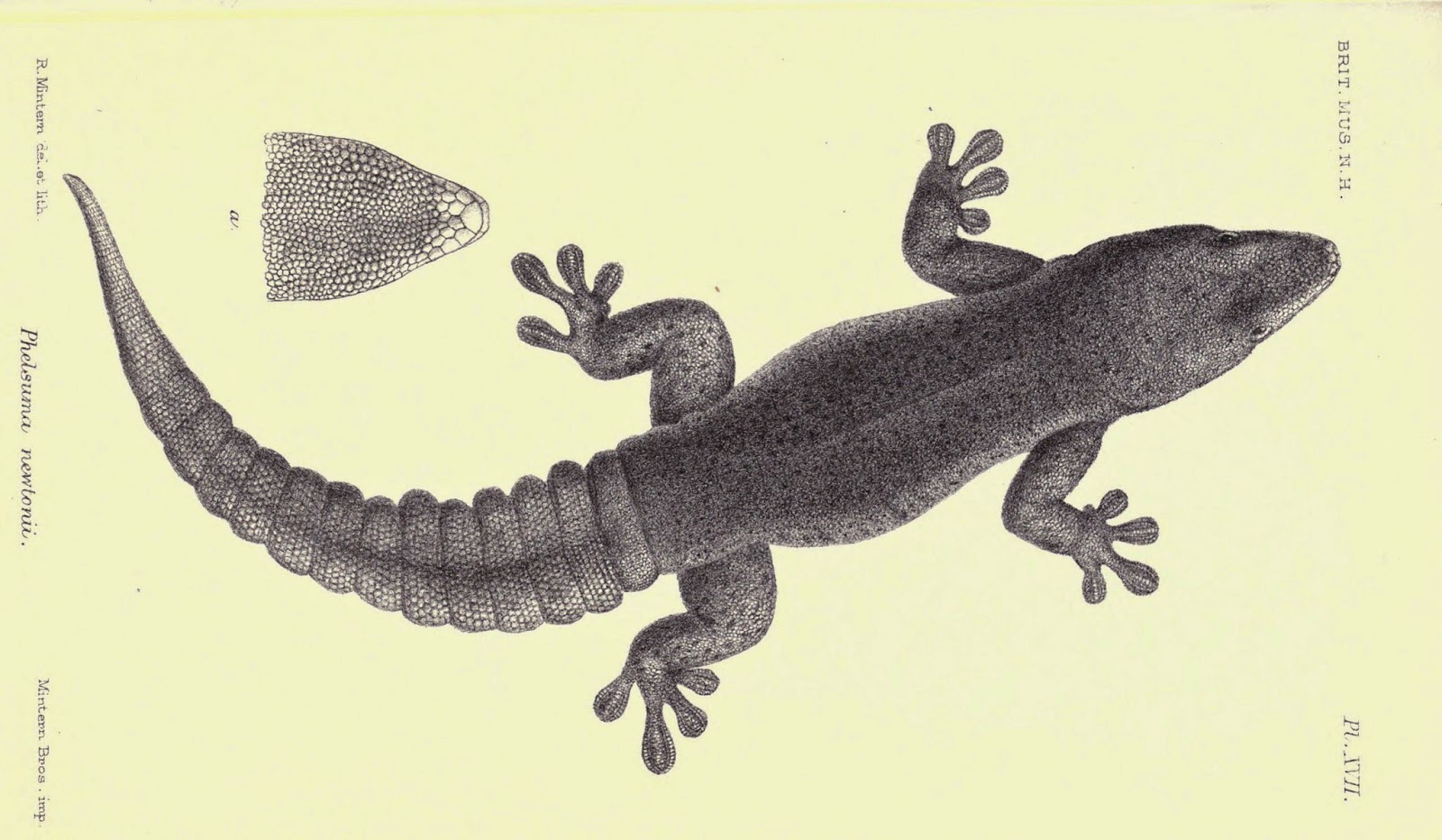
Rodrigues Day Gecko, Extinct. Catalogue of the lizards in the British Museum (Natural History) 2d. ed., v. 1 (1885). http://biodiversitylibrary.org/page/18438199.

Learning from Extinctions

Preserving knowledge about extinct species is about more than just maintaining a record of the life we have lost. These historic accounts can also be used to help conserve endangered species. Examination of the behaviors and anatomy of extinct organisms can help tell us what made them vulnerable in the first place and can be directly applicable to threatened species.

The historic record also provides insight into how an extinction will affect an ecosystem. Species do not live in a vacuum. “The demise of one…species can indirectly cause another to become extinct,” according to a 2012 study from the University of Exeter. “Any extinction can create a ripple effect across a food web, with far-reaching consequences for many other animals.” Examining the relationships within an ecosystem, richly documented in literature and fieldbooks, can help us identify which species will be affected by biodiversity loss, and what form those effects might take. Extrapolating knowledge about ecosystems affected by extinctions to similar environments can help us predict the ramifications of biodiversity loss in expanded locales.

View Full Size Image
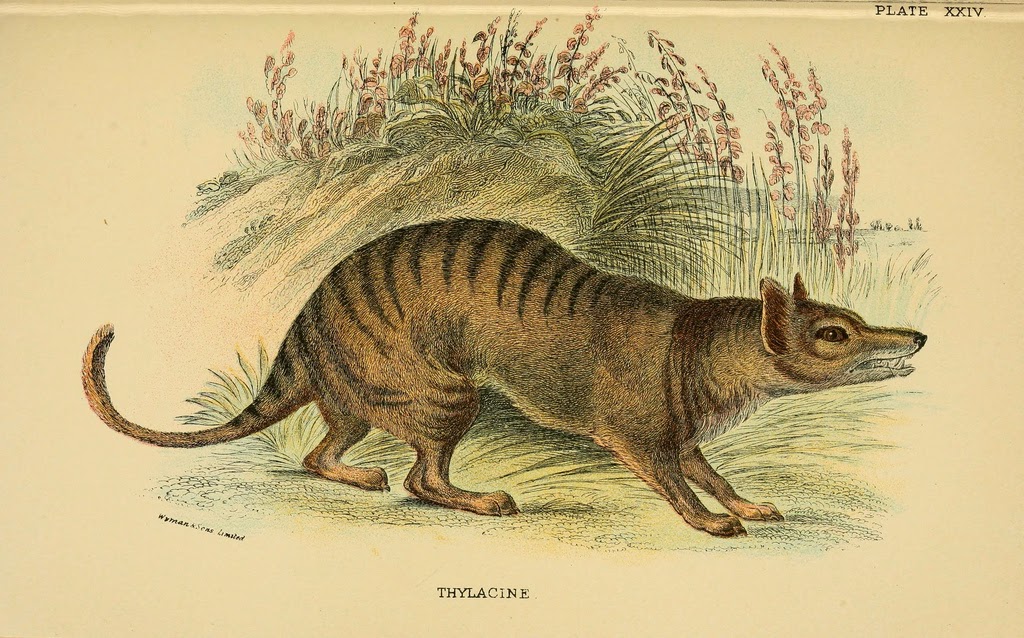
The Thylacine, an apex predator in Australia, Tasmania and New Guinea before it became extinct in the early 20th century. Lydekker, Richard. A hand-book to the marsupialia and monotremata. (1896). http://biodiversitylibrary.org/page/15043966.

New Hope for Rediscovered Species

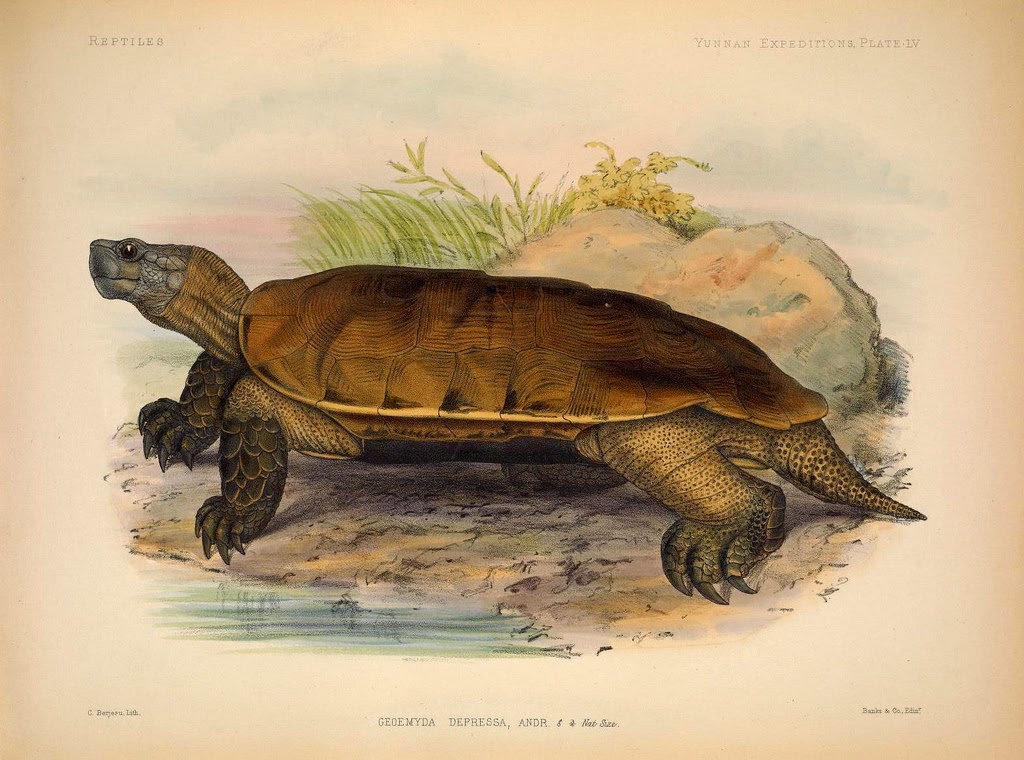
Occasionally, species that were believed extinct are miraculously rediscovered. For example, the Arakan Forest Turtle was thought to be extinct for nearly 100 years until a team of conservationists stumbled upon specimens at a Chinese food market in 1994. The information in historic literature about these species is critical to crafting policies to protect remaining populations.

View Full Size Image
Akaran Forest Turtle. Thought extinct until rediscovered in a Chinese food market in 1994. Anderson, John. Anatomical and zoological researches. v. 2 (1878). http://biodiversitylibrary.org/page/34177985.

To Clone or Not To Clone…

Recent advances in genetics have ignited the possibility of resurrecting extinct species. While debates over the wisdom of such actions continue, should the passenger pigeon ever take flight again, historic records will be vital for success. What kind of habitat do these species require? What do they eat? What wants to eat them? These answers can be found in the pages of books and journals from days gone by.

View Full Size Image
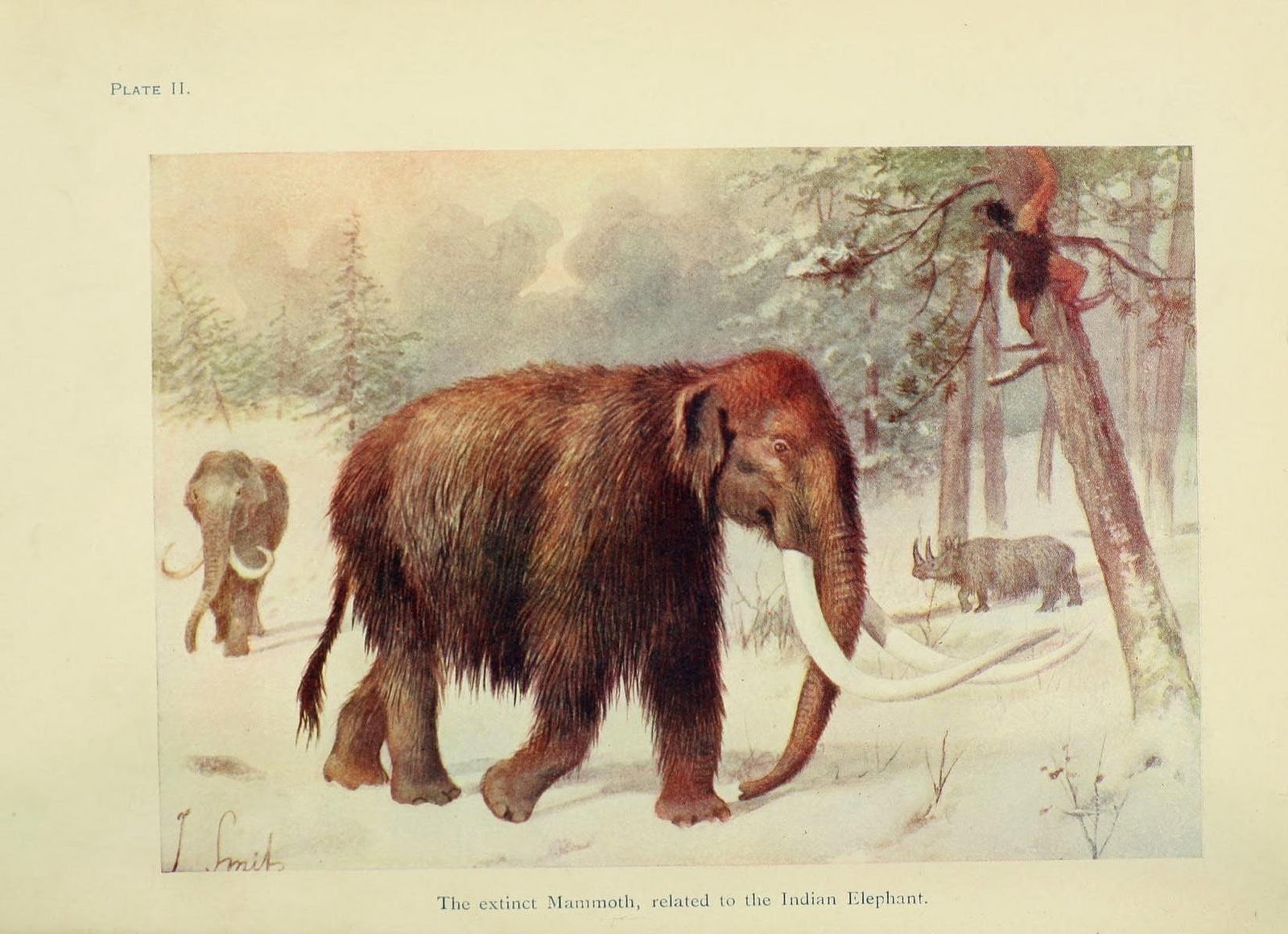
Will scientists clone a Woolly Mammoth? Westell, W.P. The Book of the Animal Kingdom (1910). http://biodiversitylibrary.org/page/10102652.

Fighting Human-induced Extinctions

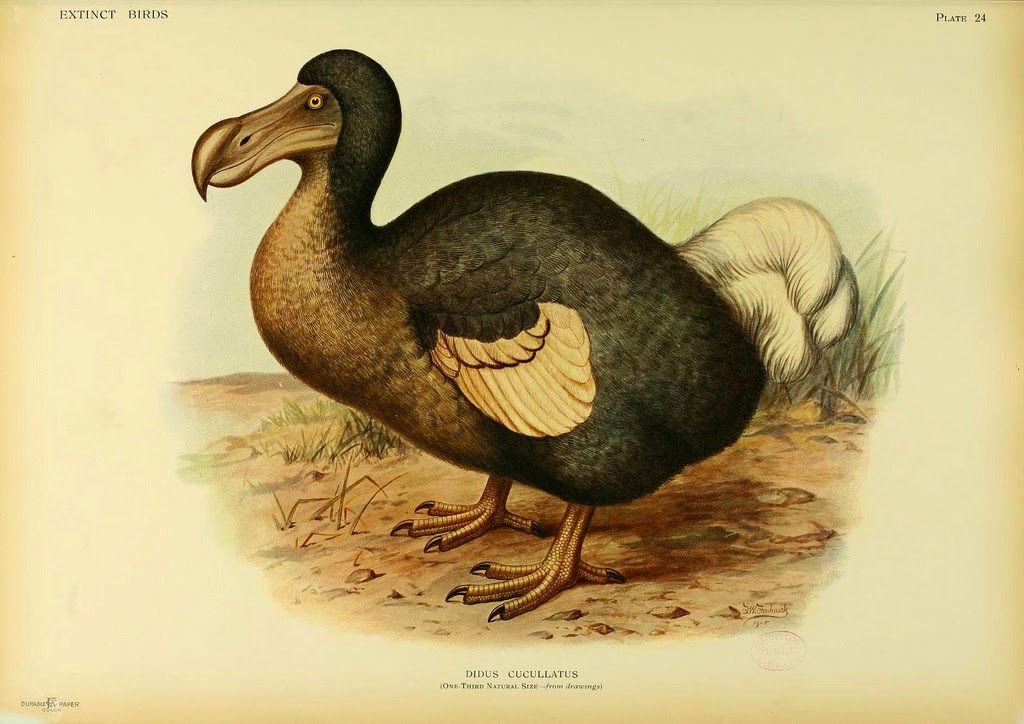
Over the past 450 million years, Earth has lost up to 90% of its species on five different occasions, reports a 2014 Time article by Jeffrey Kluger. Asteroids, volcanoes, and gamma rays were to blame in the past. Humans are largely to blame today. But while, barring a genetic miracle, we will never again see a dodo waddle through the woods or the Jamaican Giant Galliwasp scurry across the ground, the historic record ensures that these lost species are not forgotten. Knowledge is power, and thanks to BHL and other like-minded open access initiatives, the knowledge necessary to prevent future human-induced extinctions is available to everyone on any corner of the globe.

View Full Size Image
Dodo, Extinct. Rothschild, Lionel Walter Rothschild. Extinct Birds (1907). http://biodiversitylibrary.org/page/38665759.

We rely on donations from users like you to help grow our library and keep it free and open. As you think about your holiday giving, we hope you’ll consider making a tax-deductible donation to help save biodiversity.

Learn more about the critical roles BHL and historic literature play in discovering new species, supporting conservation, and saving Earth’s biodiversity

December 23, 2014by Grace Costantino
BHL News, Blog Reel

We Need Books to…Identify New Species

This month, we’re publishing a series of blog posts outlining the importance of biodiversity literature, made available for free and open access through the Biodiversity Heritage Library, to today’s scientific research and conservation initiatives. With your help, we can help save biodiversity. 

The Science of Identifying Life on Earth

There are an estimated 8.75 million species on earth, of which almost 2 million have been described. Scientists classify about 18,000 new species per year, meaning that it may take hundreds of years to create a complete species catalog.

View Full Size Image
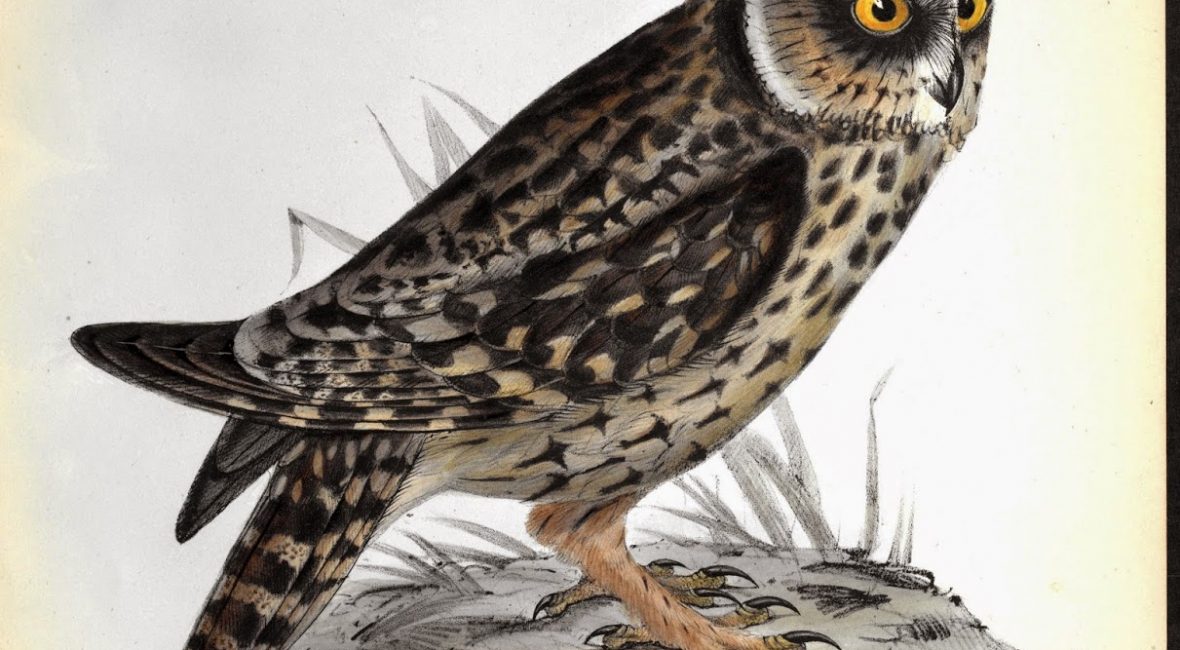
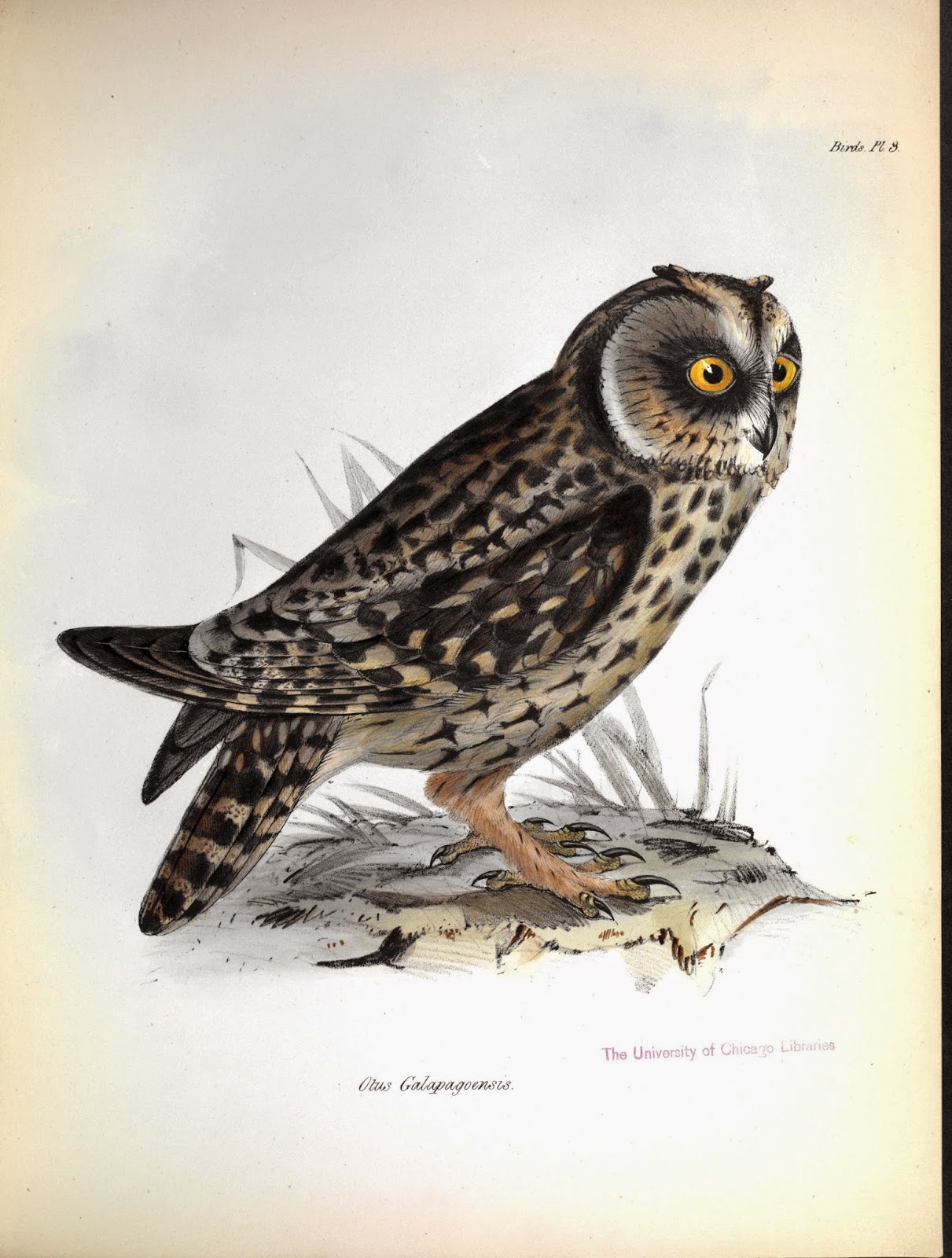
Short-eared Owl. Illustrated as part of Darwin’s Zoology of the Voyage of the H.M.S. Beagle (1839-43), which presented identification and descriptions for the zoology observed and collected during one of natural history’s most famous expeditions. http://biodiversitylibrary.org/page/40300038.

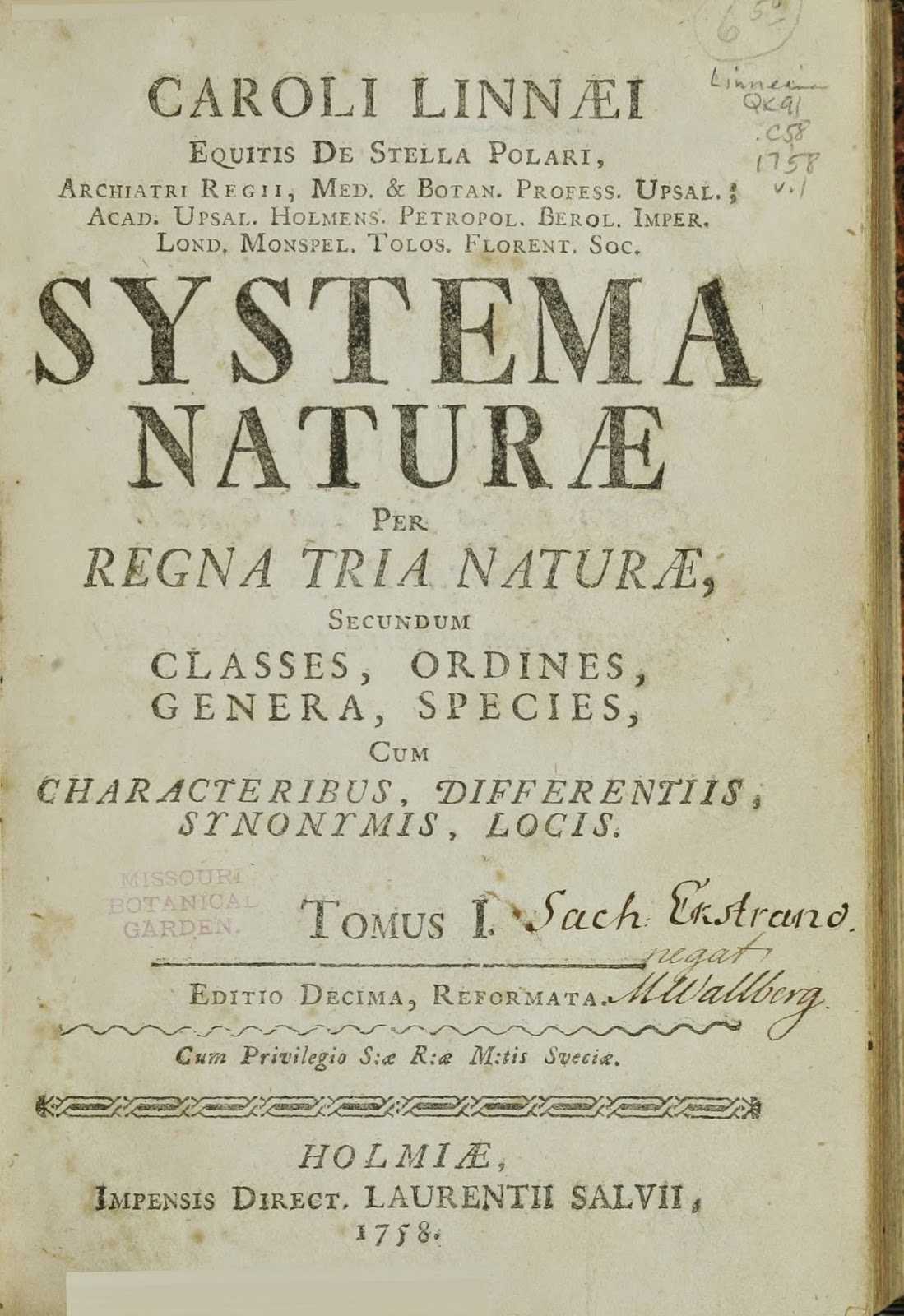
Early explorers documented their observations and data about the world’s biodiversity in historic fields notes and published literature. These discoveries provide a foundation for modern scientific research and fueled the drive to systematically catalog life. The science of taxonomy classifies biological organisms using binomial nomenclature (which identifies organisms by genus and species) and hierarchies based on inferred evolutionary relatedness.

Taxonomists are charged with naming and classifying species, with a goal of one day identifying all life on earth. In order to name a new species, a taxonomist must first verify that the specimen has not yet been described by consulting museum collections, performing DNA sequencing, and reviewing the historic literature record. They may also need to ensure that related species or subspecies have not erroneously been classified as a single species by examining published treatments (species descriptions) and related type specimens.

View Full Size Image
Linnaeus, Carl. Systema Naturae, 10th Ed. (1758-59). Considered the beginning of zoological nomenclature, in which Linnaeus introduced binomial nomenclature for animals. http://biodiversitylibrary.org/page/726886.

“Taxonomy is a science that keeps pace with the present but also draws upon the wealth of knowledge accumulated throughout its history,” stresses Dr. Sandra Knapp, botanist at the Natural History Museum, London, within a History of Taxonomy exhibition at NHM. “The old literature is often just as important as the new,” elaborates Dr. John Sullivan, an evolutionary biologist with the Academy of Natural Sciences, Philadelphia and Cornell University. “If we were to describe new species without knowing what [previously-documented species really are], we risk re-describing [them] under a different name and creating a synonym.”

Morphology and behavior is also very important in determining taxonomic relationships for new and existing species. Historic natural history literature is saturated with such data, which, alongside original species descriptions, provides a critical foundation for ongoing classification work.

Thanks to the Biodiversity Heritage Library, this crucial historic literature is now online, allowing taxonomists to access it wherever and whenever they need to. “I tend to think of BHL as my personal ichthyology library,” confided Dr. Sullivan. Before embarking on a trip to Africa to confirm the identity of a possible new fish, he downloaded the relevant taxonomic description from BHL. “I had it on my Kindle as I stood at the site,” he recalls. “Even if I lived in a library that had these volumes on the shelf, it would take me longer to locate what I was looking for!”

View Full Size Image
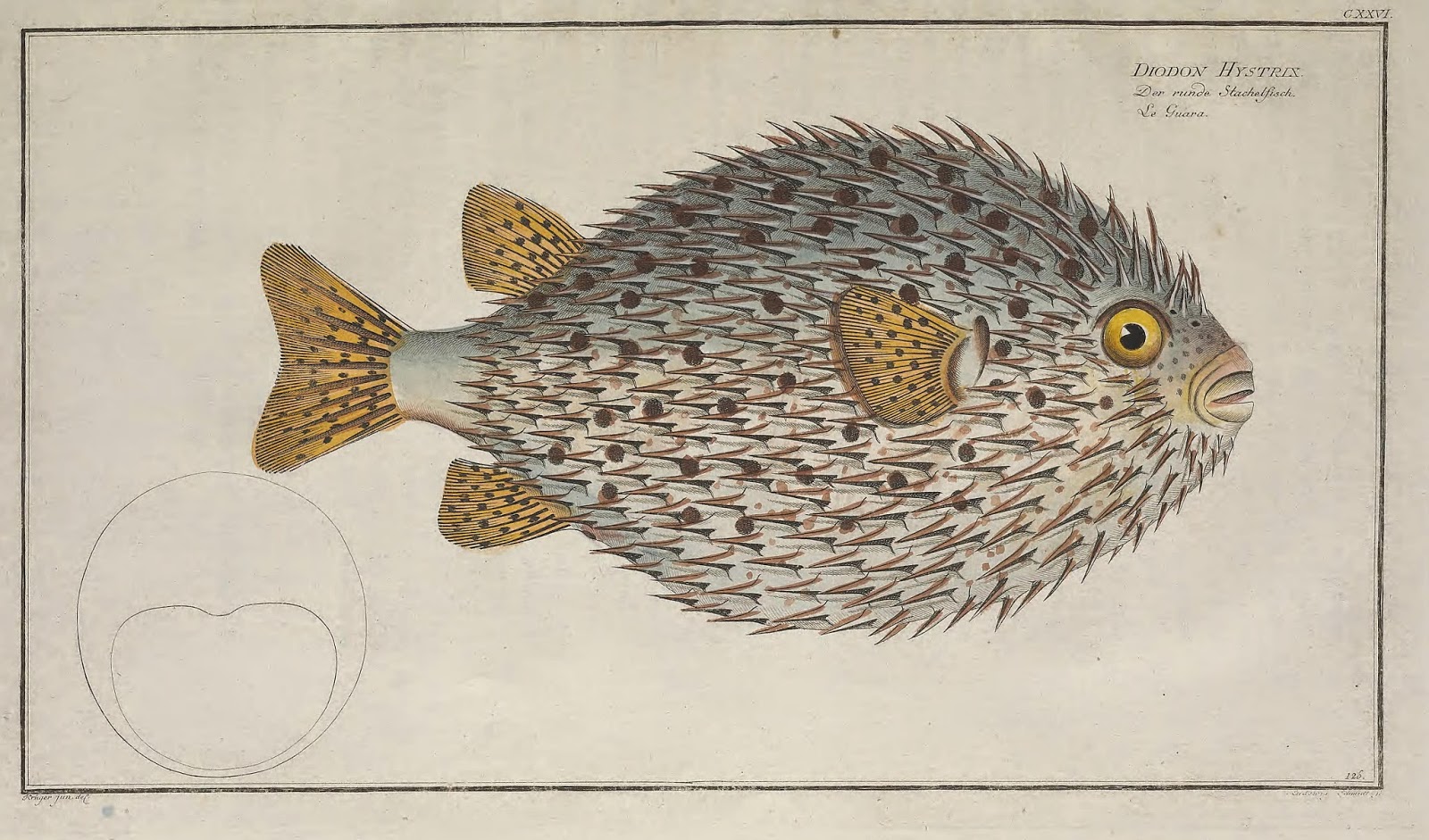
Spot-fin Porcupine Fish, from Ichtyologie, ou, Histoire naturelle, générale et particulière des poissons (1785-97), the French version of Marcus Bloch’s Allgemeine Naturgeschichte des Fische, a compendium of all fish known at the time. This work alone described 267 species new to science. http://biodiversitylibrary.org/page/46076975.

Who Cares if we Identify all the Species?

But why is it important to document all life on earth? “Biodiversity is about the totality of things,” explains Dr. Knapp in the NHM History of Taxonomy exhibition. By identifying species and the relationships between them, taxonomy aims to understand “how nature’s wild, wonderful diversity is generated.”

View Full Size Image
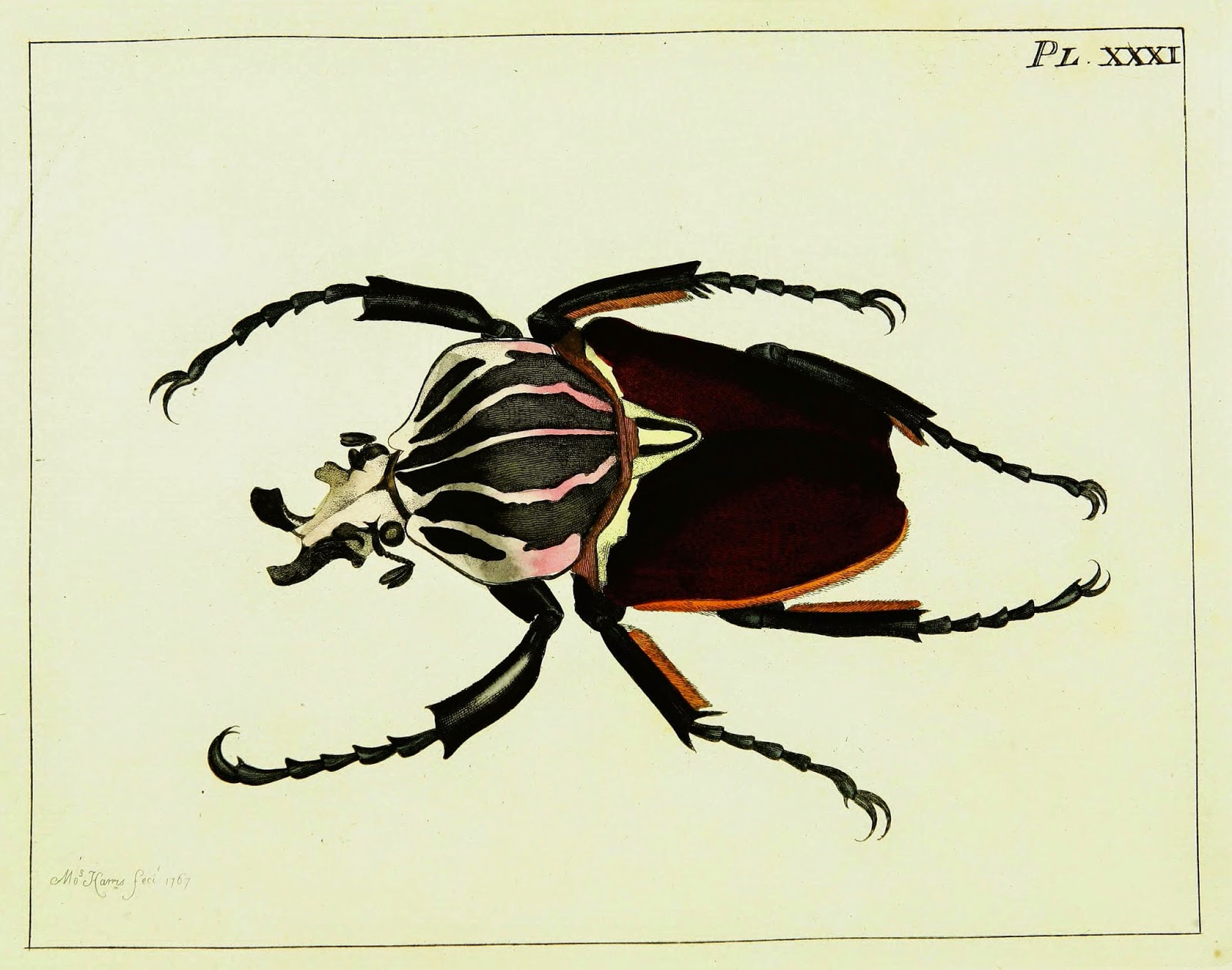
First published illustration of an African Goliath Beetle. From Illustrations of Natural History (1770-82), by Dru Drury. http://biodiversitylibrary.org/page/42122956.

Today, that diversity is sorely threatened. More than 40% of the evaluated amphibian species, 30% of the evaluated invertebrate species, 21% of evaluated fish and reptile species, 26% of known mammal species, and 68% of the evaluated plant species are threatened with extinction. “It is key to identify species at risk so we can take action accordingly,” emphasized Dr. Rafe Brown, curator in charge of Herpetology at the University of Kansas, in a 2014 National Geographic article.

The inherent problem, however, is that we can’t know what species to protect until we know what species there are. We cannot predict how biodiversity loss will affect an ecosystem until we identify all the players in that ecosystem, their roles, and relationships. We must start by illuminating the unknown.

View Full Size Image
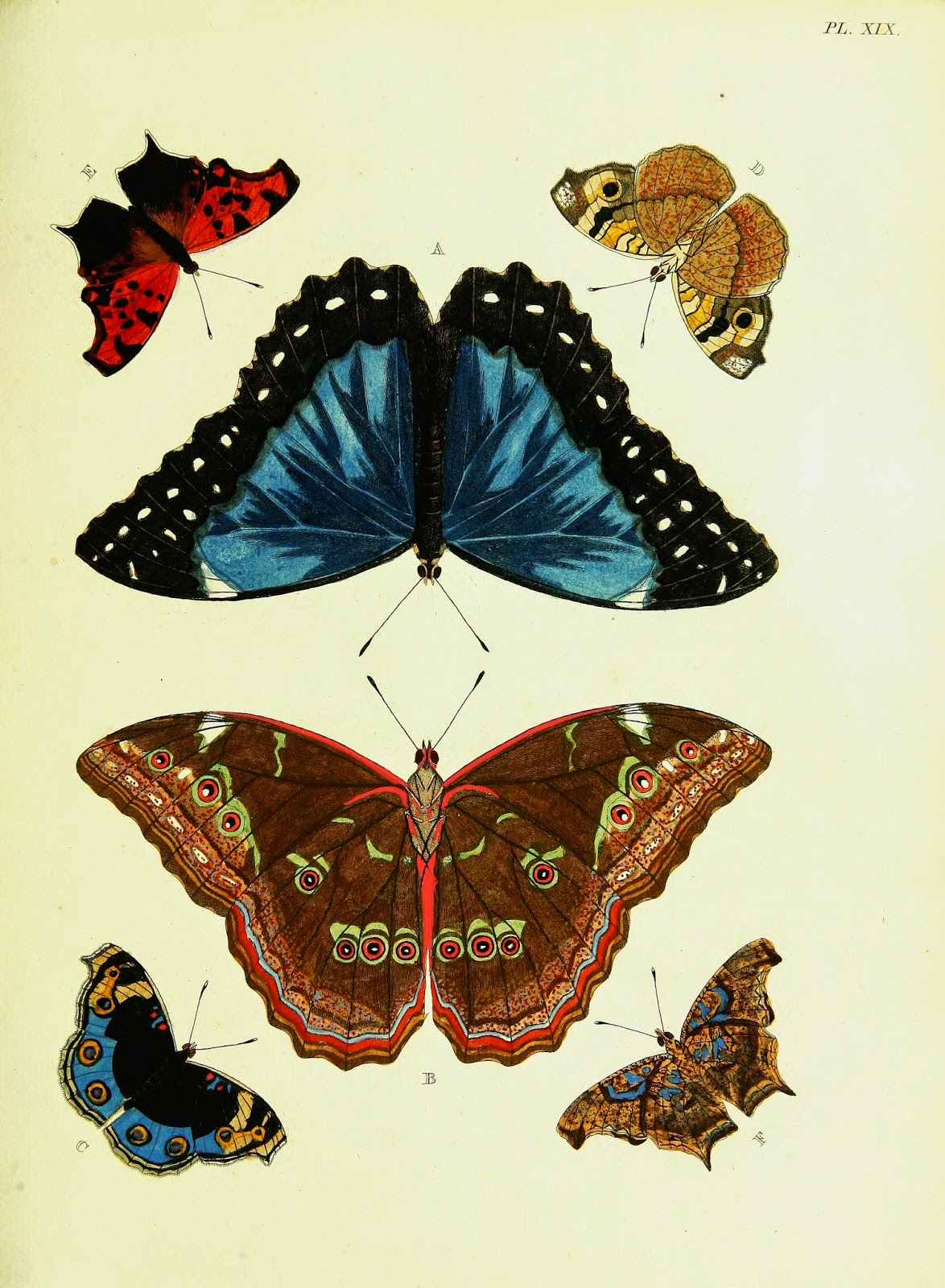
Butterflies from De uitlandsche kapellen voorkomende in de drie waereld-deelen, Asia, Africa en America (1779-82), by Cramer, Pieter. This is the first treatise on Lepidoptera to use the then-newly developed binomial classification system by Linnaeus. This work contains hundreds of “original descriptions” and many new-to-science Lepidoptera species. http://biodiversitylibrary.org/page/42111323.

A complete catalog of species can help scientists determine if conservation initiatives are focusing on and prioritizing the right environments and species or if efforts should be directed elsewhere. “We know we’re losing biodiversity at a rate that is 1,000 times faster than we should be, and if we’re going to stop that hemorrhaging of species, we have to know what the species are and most important, where they are. This is a vital first step in making decisions about where to act,” explains Dr. Stuart Pimm, a conservation biologist at Duke University, in a 2012 Seeker article.

You can help!

Effective conservation and appropriate responses to environmental changes relies on a complete biodiversity picture. Obtaining a comprehensive species catalog hinges on the work of taxonomists, who in turn are dependent on the knowledge held within the pages of historic taxonomic literature.

We rely on donations from users like you to help grow our library and keep it free and open. As you think about your holiday giving, we hope you’ll consider making a tax-deductible donation to help save biodiversity.

Learn more about the critical roles BHL and historic literature play in understanding past extinctions, supporting conservation, and saving Earth’s biodiversity

December 17, 2014by Grace Costantino
BHL News, Blog Reel

We Need Books to Save Biodiversity

This month, we’re publishing a series of blog posts outlining the importance of biodiversity literature, made available for free and open access through the Biodiversity Heritage Library, to today’s scientific research and conservation initiatives. With your help, we can help save biodiversity. 

The Biodiversity Heritage Library (BHL) is revolutionizing the way scientific research is conducted by providing free and open access to biodiversity literature and archives representing over 500 years of scientific exploration, research, and discovery.

What’s so special about Historic Literature and Archives?

Historic literature and archival fieldbooks provide information that is critical to studying biodiversity. These documents are replete with data detailing the morphology, phylogeny and ethology of earth’s species. In many cases, this literature constitutes the only available knowledge for rare, endangered, and extinct species.

View Full Size Image
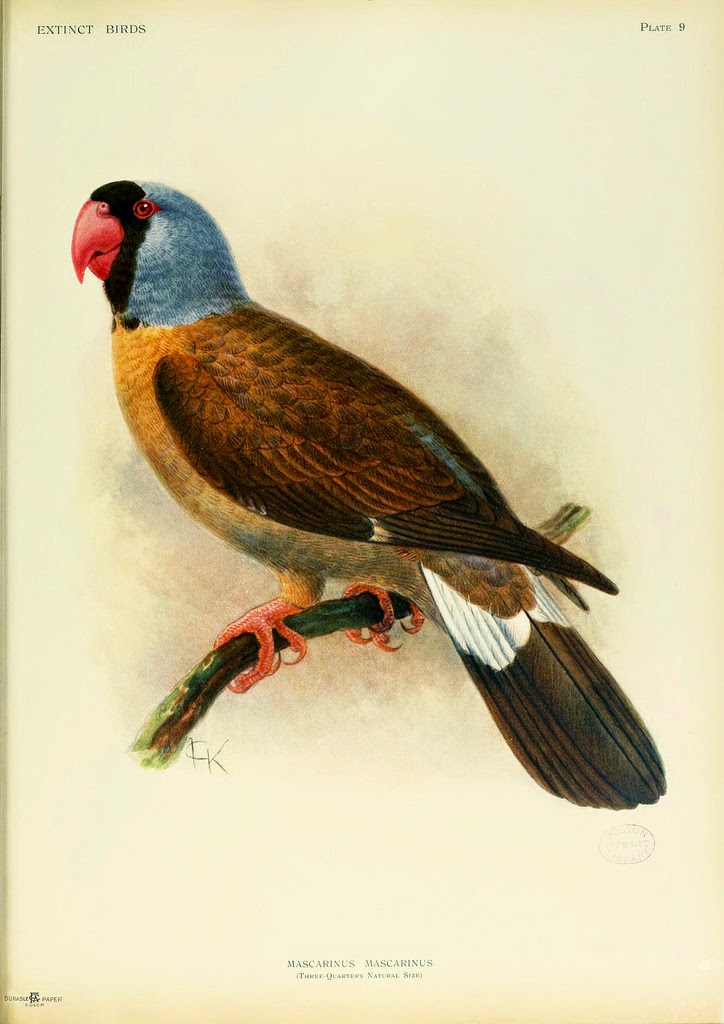
The Mascarene Parrot. Now Extinct. Rothschild, Lionel Walter Rothschild. Extinct Birds (1907). http://biodiversitylibrary.org/page/38665729.

In addition to species data, published books and fieldbooks capture ecosystem profiles, distribution maps, inter-dependency observations, and geological and climatic records. They also provide an historical perspective on species abundance, habitat alteration, and human exploration, culture and discovery.

This information has a multitude of applications in modern-day science. It is used to populate species databases and datasets that inform present-day research. It not only allows scientists to study biodiversity, but also to save it by enabling new species identification and facilitating the development of holistic conservation methods that integrate all of the factors necessary for a species’ wellbeing into its overall protection strategy. Furthermore, the discoveries captured in historic literature provide the foundations upon which contemporary models, theories and disciplines are based.

View Full Size Image
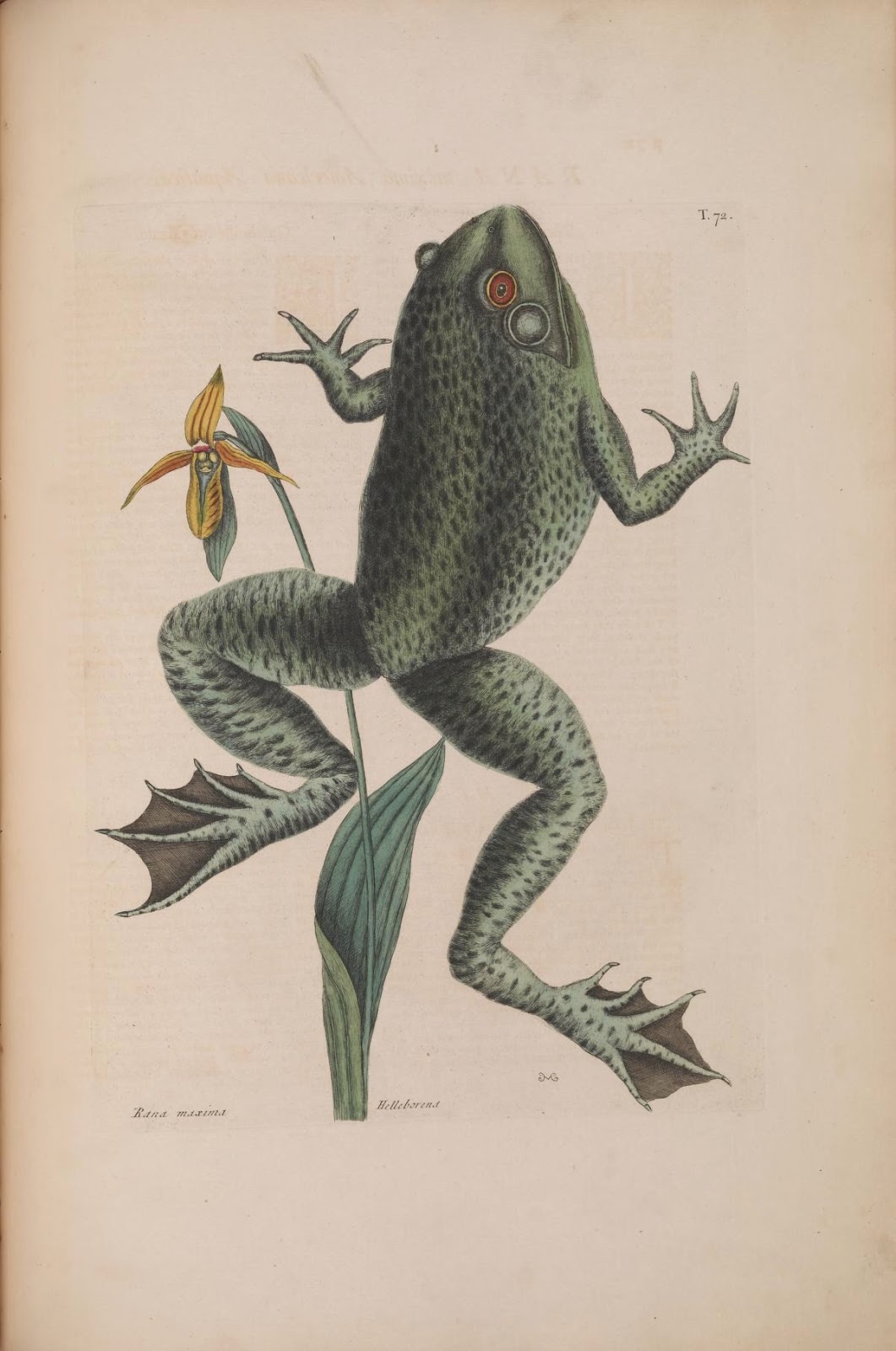
Cane Toad. From the first published account of the flora and fauna of North America: Catesby, Mark. Natural History of Carolina, Florida and the Bahama Islands (1729-47). http://biodiversitylibrary.org/page/38993574.

Sadly, much of these publications and archival content are available in only a few select libraries in the developed world.

“Science is all about disseminating knowledge and building upon what has come before, yet so much of our knowledge of plants and animals has remained inaccessible to those who could make use of it,” laments Dr. John Sullivan, an evolutionary biologist with the Academy of Natural Sciences, Philadelphia and Cornell University. “This has been a big part of the ‘taxonomic impediment.’”

The Biodiversity Heritage Library is Alleviating the Taxonomic Impediment

The Biodiversity Heritage Library boasts a collection of over 45 million pages from over 150,000 volumes and has served more than 3.5 million people in nearly every country since its launch in 2007. Additionally, BHL has made over 93,000 of the illustrations within its collection available in Flickr, which in turn have been viewed over 80 million times. Services such as taxonomic name finding tools, custom PDF downloads, and open APIs allow users to easily locate and reuse these resources.

“BHL is radically changing the status quo and democratizing access to knowledge about biodiversity,” lauds Dr. Sullivan. “Now anybody in the world has instant access to the original species description in a couple of clicks!”

View Full Size Image
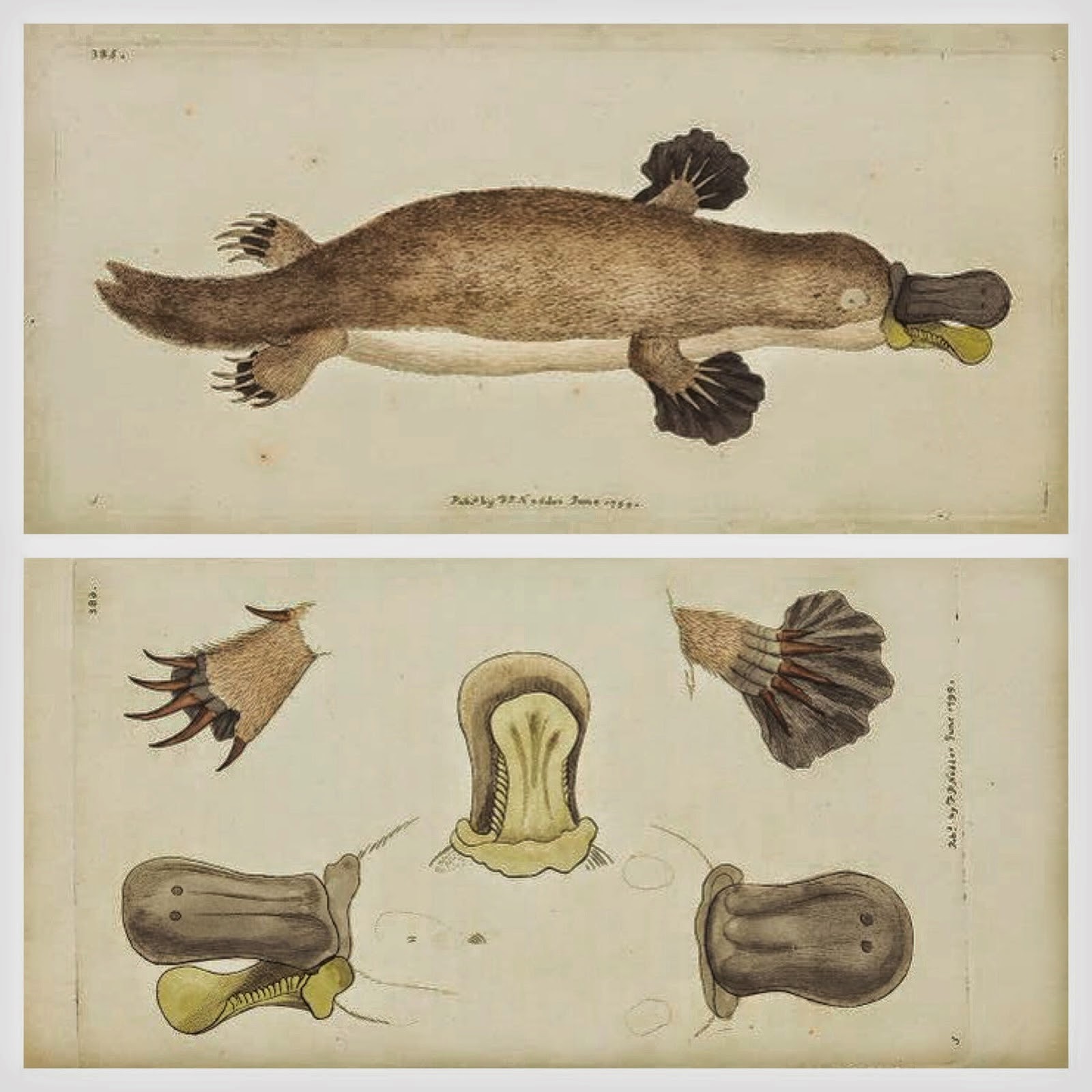
The first published illustration of the Duck-billed Platypus. Shaw, George. The Naturalist’s Miscellany, or Coloured figures of natural objects, Vol. 10 (1799). http://biodiversitylibrary.org/page/40321089.

Of Global Importance

Open access to biodiversity data is beneficial on a global scale, advancing scientific fields more quickly and connecting scientists and their research more efficiently than ever before, especially in developing countries with traditionally limited access to vital resources. “[The Biodiversity Heritage Library] has done an enormous amount to enhance the capacity of developing countries to undertake taxonomic research on their biota,” asserts Dr. Dai Herbert, a malacologist at the KwaZulu-Natal Museum in South Africa.

The repatriation of knowledge can also help countries better assess, monitor, and protect their native biodiversity. Recognizing that “identifying the factors that shape biodiversity locally helps to preserve them better in the future,” the United Nations, through the Convention on Biological Diversity, requires every signatory country to “identify and monitor the biodiversity of the organisms within its borders.” Thanks to BHL, countries now have access to information about and catalogs of the species within their boundaries, which can be used to form the basis of national biodiversity indexes and direct local conservation efforts.

View Full Size Image
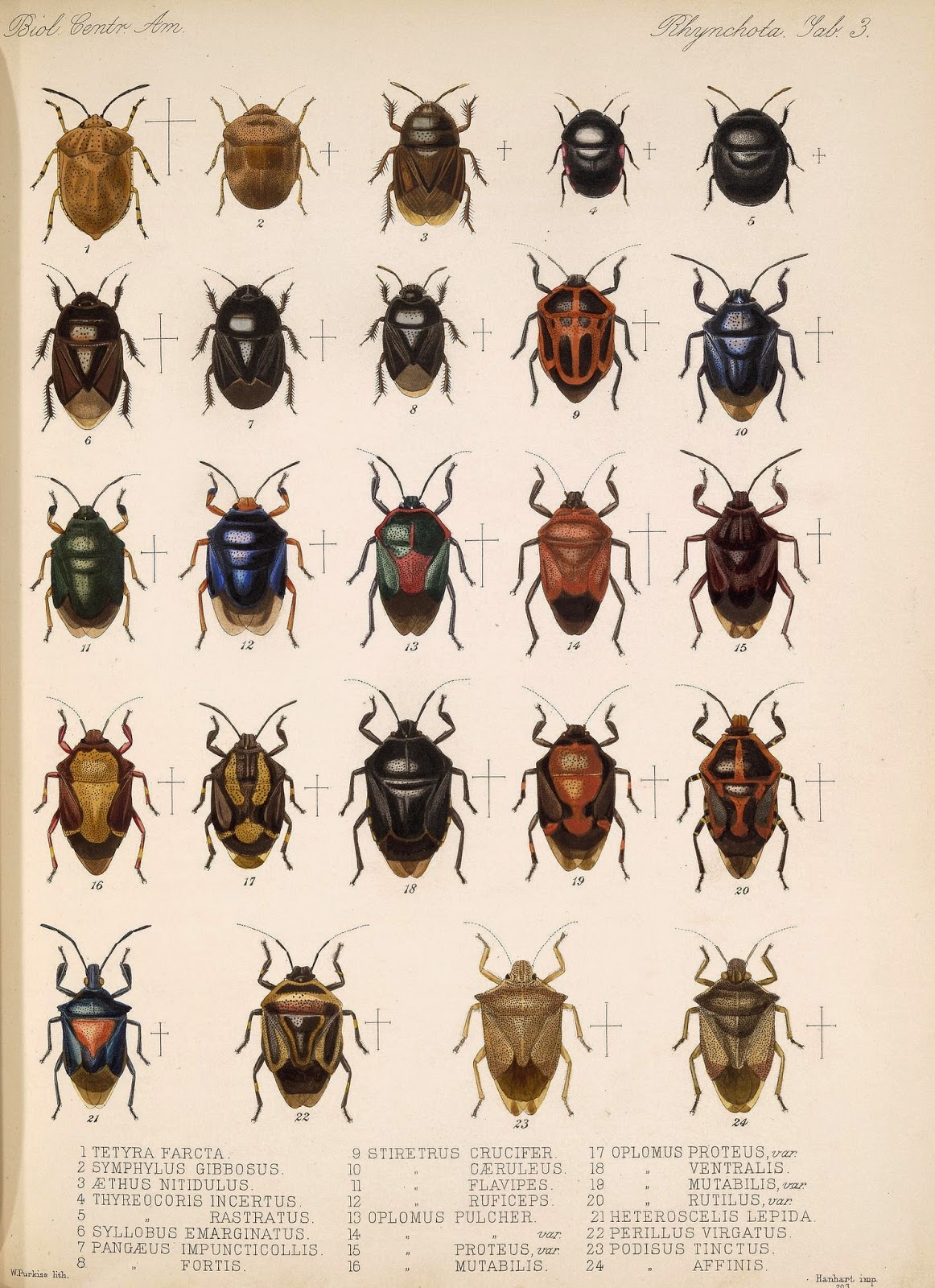
Insects. From Biologia Centrali-Americana. As this work contains all of the known information about the biodiversity of Mexico and Central America at the time of its publication, this title is still fundamental to the study of the biota of this region. http://biodiversitylibrary.org/page/594659.

Help Save Biodiversity

The Biodiversity Heritage Library is helping scientists save biodiversity, which in turn sustains our well-being as humans. “We need biodiversity to satisfy basic needs like food, drinking water, fuel, shelter, and medicine…Ecosystems provide services such as pollination, seed dispersal, climate regulation, water purification, nutrient cycling, control of agricultural pests” (Source: American Museum of Natural History website) and the “regulation and control of infectious diseases” (Convention on Biological Diversity).

View Full Size Image
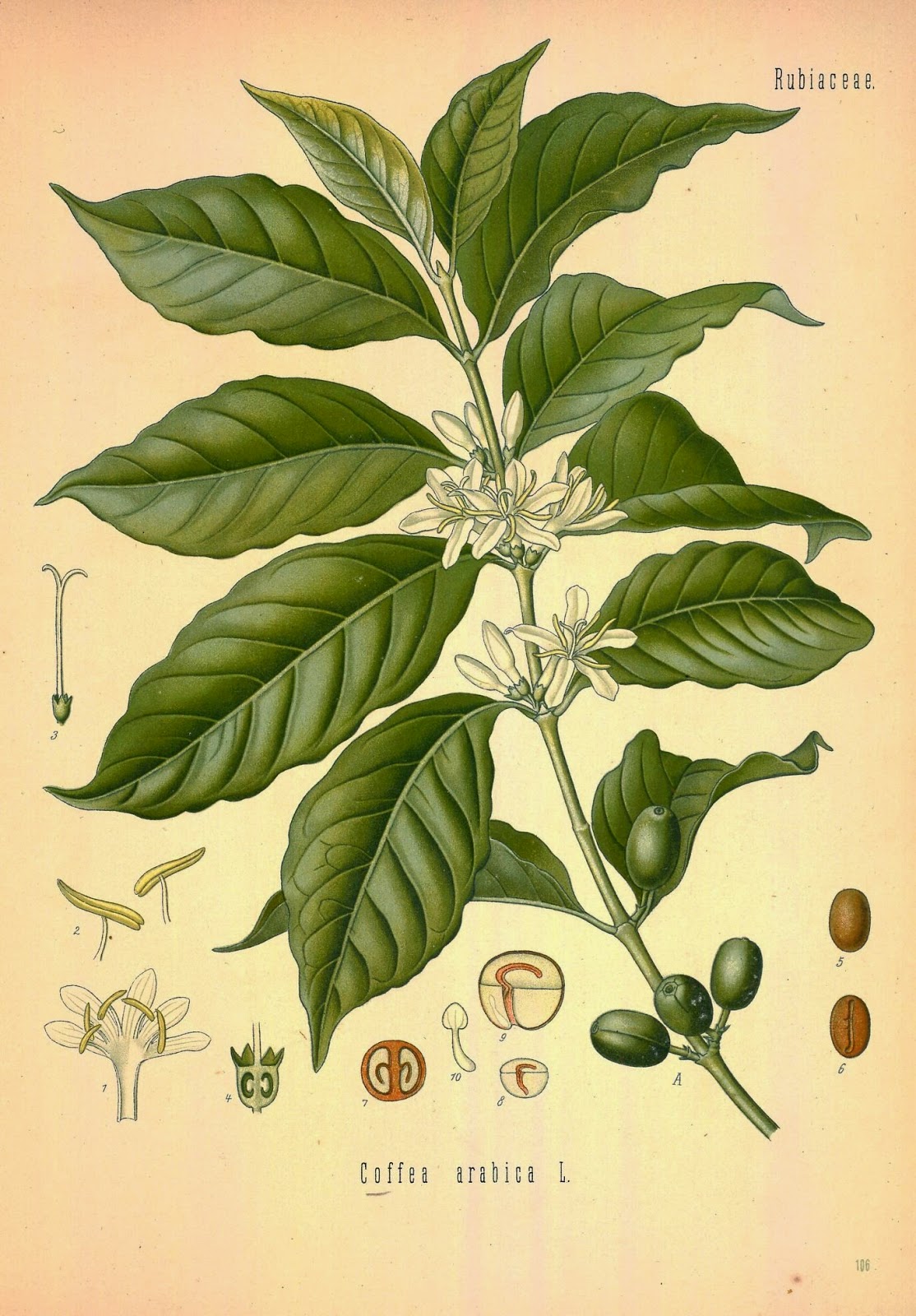
Coffea arabica, which accounts for 75–80 percent of the world’s coffee production. It is also believed to be the first species of coffee to be cultivated. Köhler’s Medizinal-Pflanzen (1883-1914). http://biodiversitylibrary.org/page/303146.

As we face a global biodiversity crisis that threatens the future of many species and habitats, unfettered access to biodiversity information has never been more important.

We rely on donations from users like you to help grow our library and keep it free and open. As you think about your holiday giving, we hope you’ll consider making a tax-deductible donation to help save biodiversity.

Learn more about the critical roles BHL and historic literature play in discovering new species, understanding past extinctions, and saving Earth’s biodiversity.

December 12, 2014by Grace Costantino
Blog Reel, Tech Updates

Image Loading Restored

Services at Internet Archive have been restored after an outage due to a storm. BHL images are now loading properly. Thanks for your patience!
December 11, 2014by Grace Costantino
Blog Reel, User Stories

Using the Salamander Brain to Understand Human Behavior

What can a salamander brain tell us about human behavior?

A lot more than you might think, discovered Lou Morgan, an independent researcher who has been studying the physiological underpinnings of human behavior for 30 years.

View Full Size Image
Lou Morgan

While Morgan’s undergraduate education focused on mathematics, a history of familial psychological problems fueled an interest in understanding the underlying mechanisms of human psychology.

In the 1950s, Morgan began taking the first of many college psychology courses. These courses, however, focused largely on human thought and behavior subsequent to their manifestation. Morgan wanted to know about the physiological structures that led to this behavior.

Drawing from his background in mathematics, Morgan decided to approach his investigation by breaking a complex system down into more simplistic elements. “The kind of math I liked best was the deduction of complex structures from a few simple axioms,” explains Morgan. “Think Euclid’s geometry. So I approached psychology looking for the basic principles which underlie our behavior.”

Morgan’s search led him to the study of neuroanatomy, which in turn led him to C. Judson Herrick’s book, The Brain of the Tiger Salamander (1948).

View Full Size Image
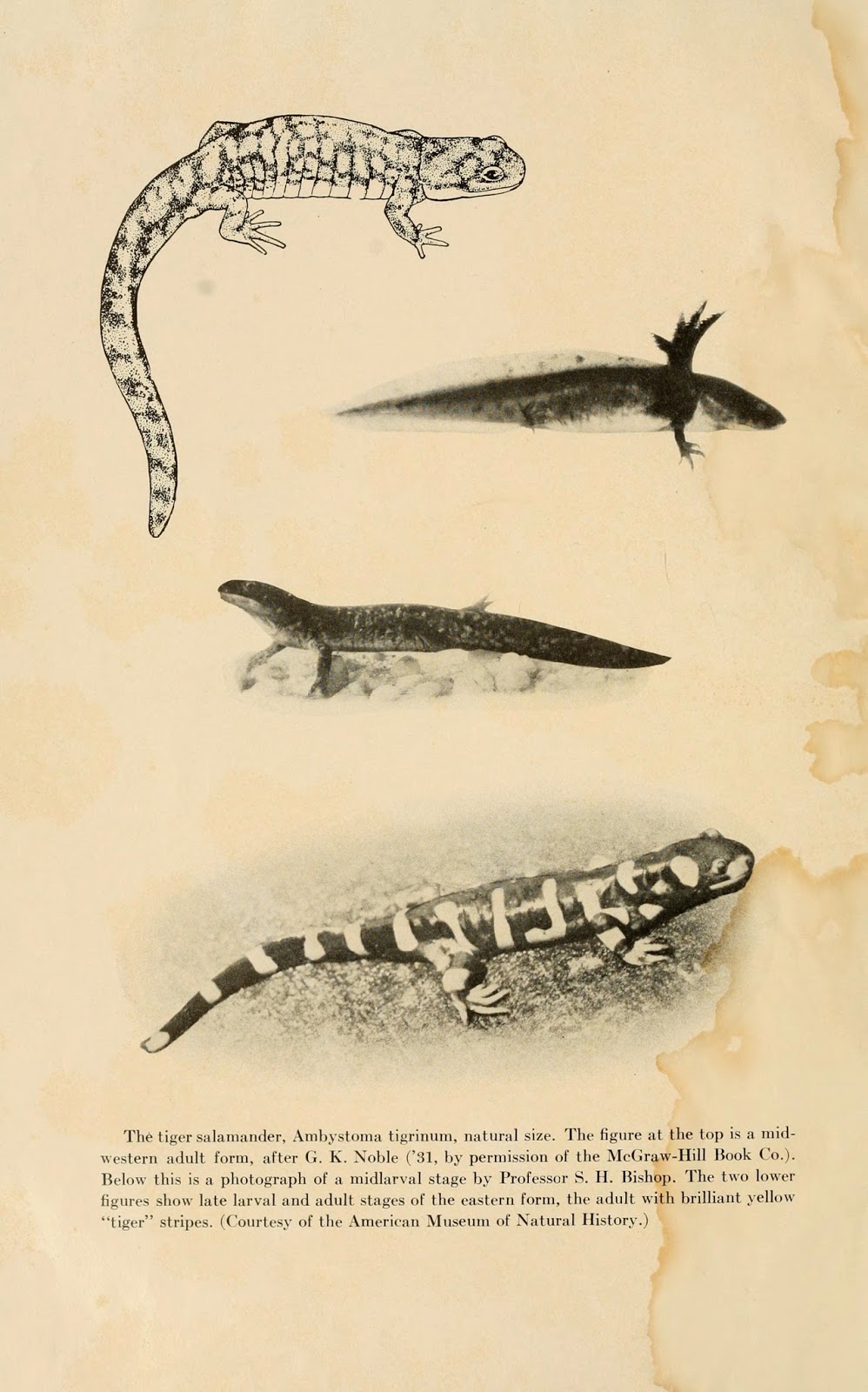
The Tiger Salamander. Herrick, C. Judson. The Brain of the Tiger Salamander (1948). http://biodiversitylibrary.org/page/5816541.

The Brain of the Tiger Salamander summarizes 50 years of Herrick’s published research on the vertebrate nervous system, “as revealed in generalized form in the amphibians.”

“Herrick’s book has become central to my attempt to understand human behavior because it contains an immense amount of data which has parallels in the subcortical portion of the human brain,” articulates Morgan. “Humans can be seen as salamanders with a cortex.”

In the 1960s, American physician and neuroscientist Paul D. MacLean proposed an evolutionary model for the vertebrate forebrain suggesting that humans have a “reptilian brain” at our core. Modern comparative evolution, however, has found this theory to be outdated, given the presence of a structure known as the dorsal ventricular ridge (DVR) in reptiles and birds.

The DVR receives ascending auditory and visual projections and is present in bird and reptile brains. Though absent in mammals, the DVR has been postulated to be homologous to parts of the mammalian isocortex. In humans, the isocortex (also called neocortex) is the largest part of the cerebral cortex, and directs such functions as sensory perception, generation of motor commands, spatial reasoning, conscious thought and language. Amphibians, like humans, do not have a DVR, making their brains, and not reptile brains, a more apt comparison for human neuroanatomy.

View Full Size Image
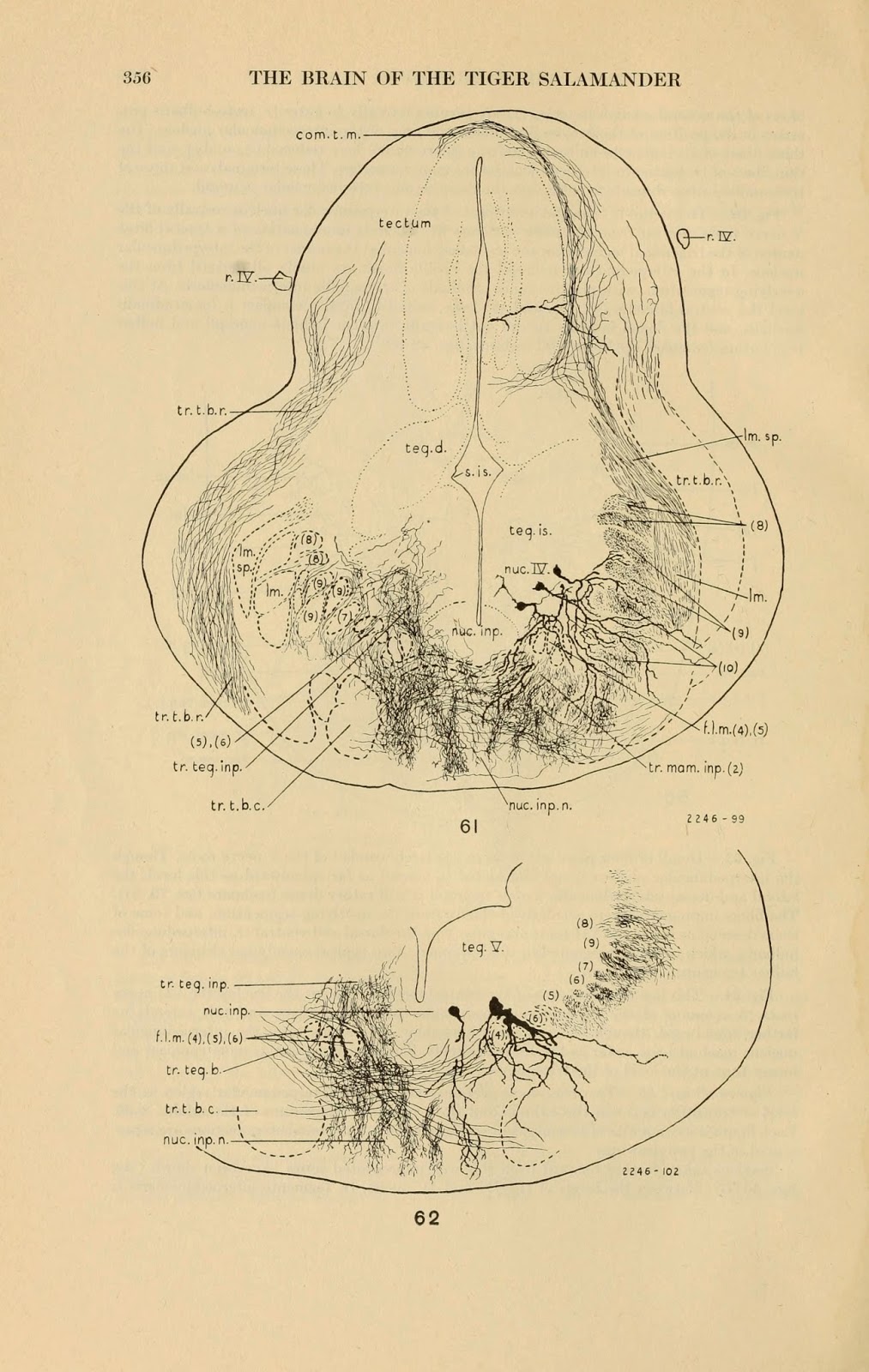
The Tiger Salamander Brain. Details about the structures depicted on Morgan’s website. Herrick, C. Judson. The Brain of the Tiger Salamander (1948). http://biodiversitylibrary.org/page/5816405.

In order to help others explore early research on neuroanatomy, and provide a platform through which to discuss modern theories from the field, Morgan created a website to host a downloaded (from BHL) and partially edited version of Herrick’s book. The website, also entitled Brain of the Tiger Salamander, links to several of Morgan’s other websites detailing subcortical function, human behavior, and the endocrine system.

“I think we humans understand ourselves very poorly, and part of the problem is that we concentrate our attention on the cortical, cognitive, aspects of our behavior,” muses Morgan. “Herrick’s book offers a window into the subcortical aspects of our lives.”

However, like all scientific pursuits, the field of neuroanatomy is still evolving, and while Herrick’s research provides a good foundation for understanding the basics of the vertebrate nervous system, it also has severe limitations.

“Herrick’s Brain of the Tiger Salamander is a marvelous piece of work, but it’s outdated. Most importantly, it does not give any consideration to neurotransmitters or the endocrine system,” Morgan points out. “Our knowledge of neurotransmitters is still evolving. The possibility of their very existence was discovered by Otto Loewi only in 1921. They were still a new concept during Herrick’s time. Similarly, modern endocrinology began with Arnold Berthold in 1849 and is still a very active field of research. I suppose Herrick was aware of the current research while he was working, but there is no mention of either neurotransmitters or hormones in The Brain of the Tiger Salamander. He probably had his hands full with his neuroanatomical research.”

View Full Size Image
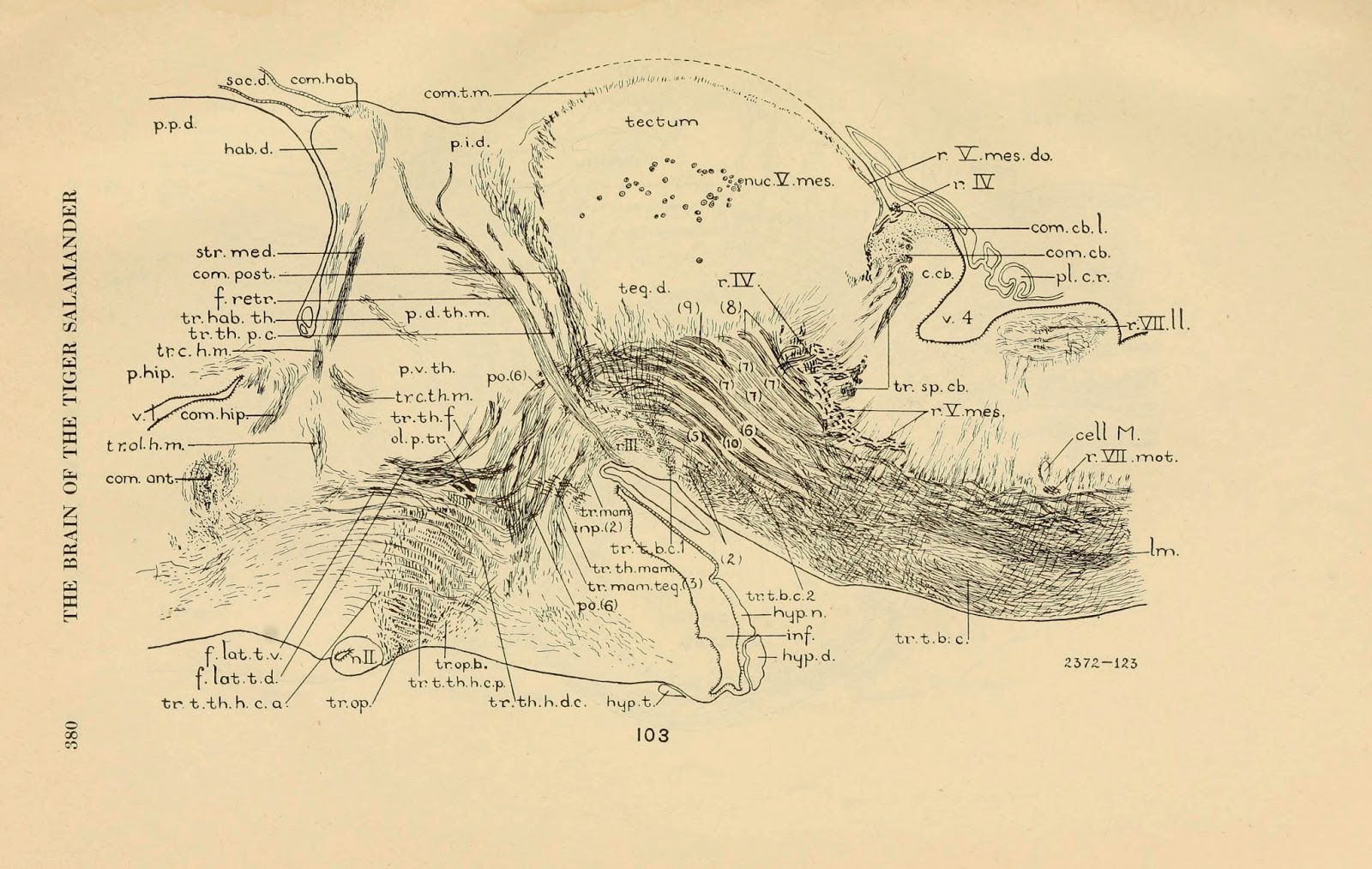
The Tiger Salamander Brain. Details about the structures depicted on Morgan’s website. Herrick, C. Judson. The Brain of the Tiger Salamander (1948). http://biodiversitylibrary.org/page/5816438.

Morgan’s newest website, Herrick Update, attempts to “supplement Herrick’s presentation of salamander neuroanatomy with information which may be relevant to salamanders’ neurotransmitters and hormones,” which may in turn provide insight into human behavior.

In the future, Morgan plans to concentrate his study of human behavior around addiction, and the part of our nervous system most involved in that behavior: the Nucleus Accumbens Septi (NAcc). Interestingly, this research may relate quite strongly to Morgan’s salamander research. The NAcc may in fact be the most prominent and clearly defined part of the Lamprey Basal Ganglia. The Lamprey brain is very similar to that of the amphibian, and thus Morgan began his attempt to develop a model of subcortical function with an investigation of the lamprey nervous system.

As humans continue to progress in our understanding of neuroanatomy, and the underlying physical processes that drive our actions and behaviors, Morgan’s research into Herrick’s work demonstrates once again how intrinsically tied modern science is to past discoveries. Thanks to the Biodiversity Heritage Library, this historic knowledge is available to everyone, everywhere, fueling continued understanding of life on earth and what it means to be human.

See Herrick’s original work in BHL, digitized by the MBLWHOI Library. Explore a partially edited version of the work on Morgan’s website. Learn more about how neurotransmitters and hormones affect neuroanatomy and view a model of subcortical function in Morgan’s two recent websites.

December 11, 2014by Grace Costantino
BHL News, Blog Reel

New Online Exhibitions! Notable Women and Latinos in Natural History

We are pleased to announce the release of two new BHL online exhibitions: Early Women in Science and Latino Natural History.

Earlier this year, the Smithsonian Women’s Committee awarded a one-year grant to Smithsonian Libraries (SIL) to build online exhibitions to showcase the scientific and historical contributions of Women and Latino naturalists and illustrators. The project, entitled Notable Women and Latinos in Natural History, draws from content in BHL and uses the Biodiversity Library Exhibition (BLE) platform developed by BHL Europe.

The exhibitions include factoids, highlights, stories, illustrations and publications from some of natural history’s most remarkable women and Latino naturalists. Some of the featured individuals, such as Maria Sibylla Merian and Louis A. Fuertes, are internationally celebrated. Others, though perhaps less famous, are equally important contributors to the world of science.

View Full Size Image
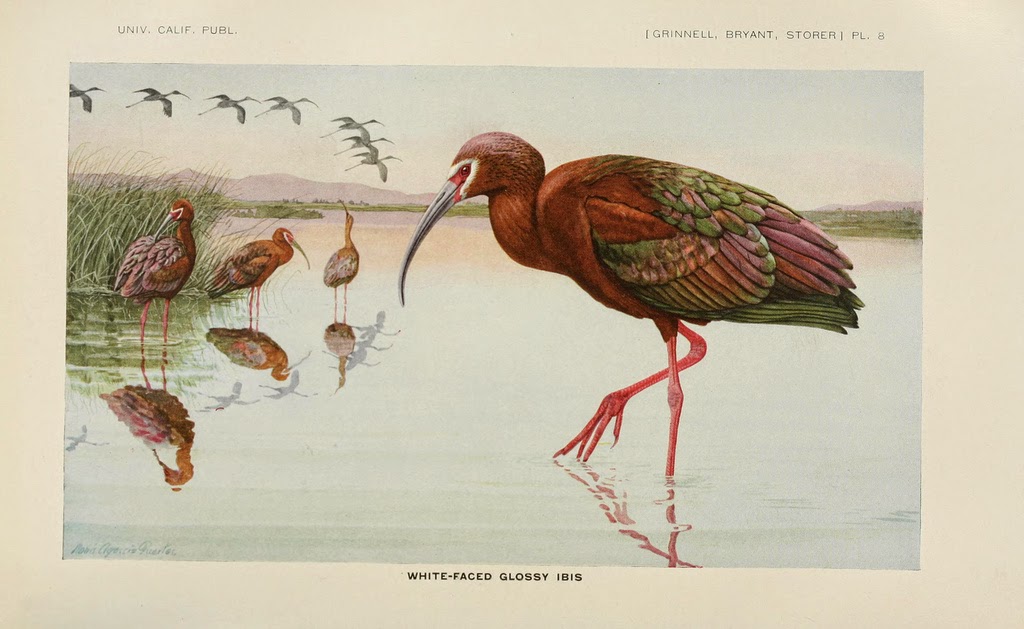
Illustration by Louis A. Fuertes from The Game Birds of California (1819). http://biodiversitylibrary.org/page/8991919.

Below we present a few highlights about the men and women featured in the exhibits, extracted from the fascinating content written and curated by exhibition creators Adriana Marroquin (Latino Natural History) and Laurel Byrnes (Early Women in Science). Stay tuned for future posts from Adriana and Laurel showcasing some of their favorite stories and content (akin to Adriana’s earlier post on the extraordinary naturalist and illustrator Louis A. Fuertes). Follow us on Twitter and Facebook for more exciting tidbits, and be sure to check out the exhibitions today!

Selected highlights from Early Women in Science


  • Mary Agnes Chase (1869-1963), a self-taught botanist awarded an honorary Doctor of Science degree from the University of Illinois at age eighty-nine, served as botanical illustrator for the USDA Bureau of Plant Industry in Washington, D.C. and increased the world’s knowledge of Brazilian grasses by at least 10 percent.
  • Edith Patch (1876-1954), the first female head of the Maine Agricultural Experiment Station, predicted in 1936 that, should heavy use of pesticides continue, bird species and insect pollinators would be dying out by the year 2000.
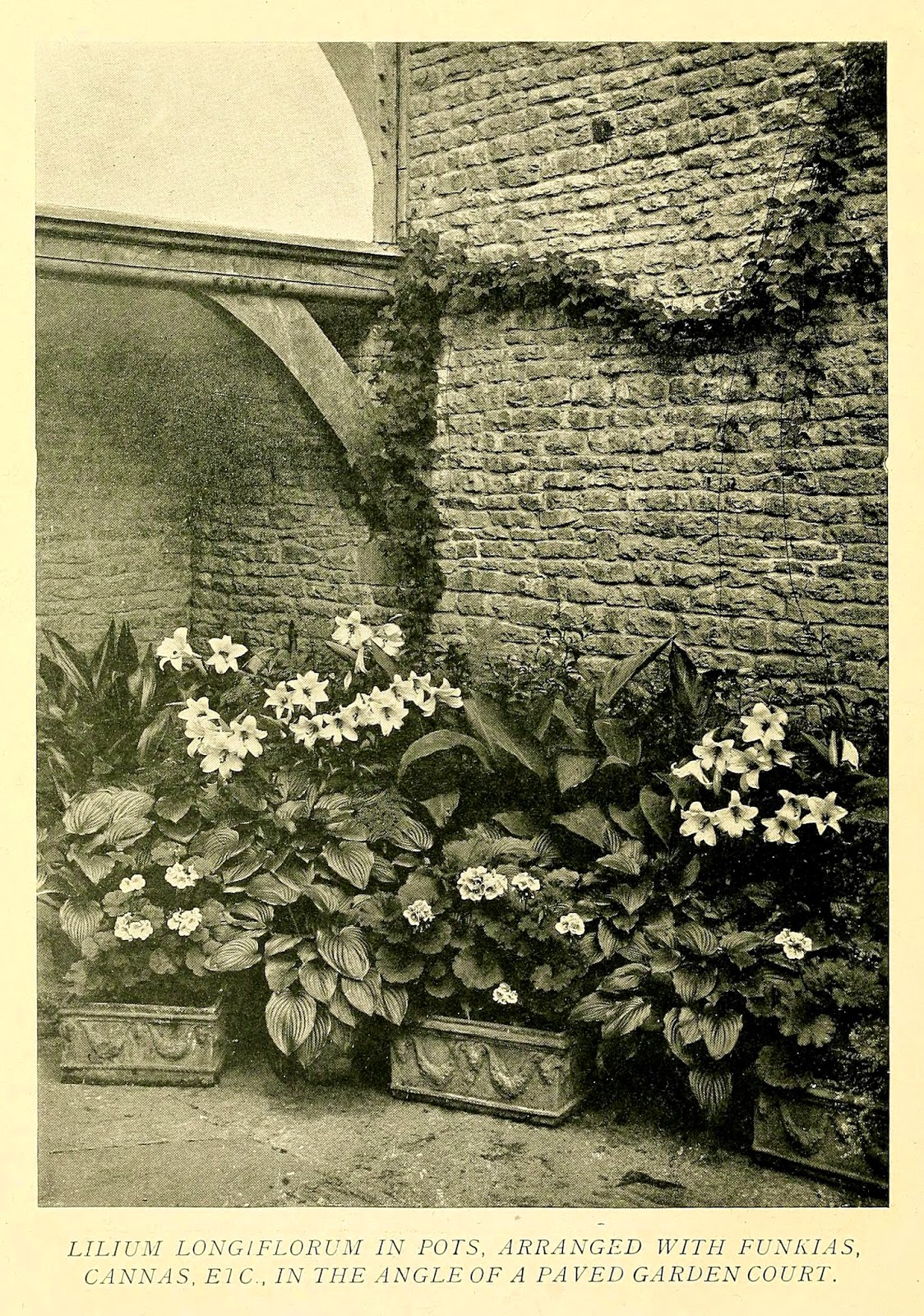
  • Gertrude Jekyll (1843-1932) was a pioneer in the field of landscaping, designing over 400 gardens in her lifetime and serving as one of the most influential people in the Arts and Crafts movement. Her younger brother inspired the name of Stevenson’s protagonist in Dr. Jekyll and Mr. Hyde.
  • Mary Treat (1830-1923) notably corrected Charles Darwin, with whom she shared an interest in carnivorous plants, about the mechanism by which bladderworts capture insects. Darwin acknowledged that she was correct, stating, “Mrs. Treat of New Jersy [sic] has been more successful than any other observer” in comprehending the way in which bladderworts (Utricularia clandestina) capture insects.
View Full Size Image
Photograph from Gertrude Jekyll’s Lilies for English Gardens (1901). http://biodiversitylibrary.org/page/33478387.


Selected Highlights from Latino Natural History

  • Cleofe Calderon (1929-2007), native to Argentina, spent years studying bamboo and helped lay the foundation for our modern understanding of grass evolution. One of her key contributions was the rediscovery of Anomochloa, a genus of grass that scientists had not seen living since the 19th century.
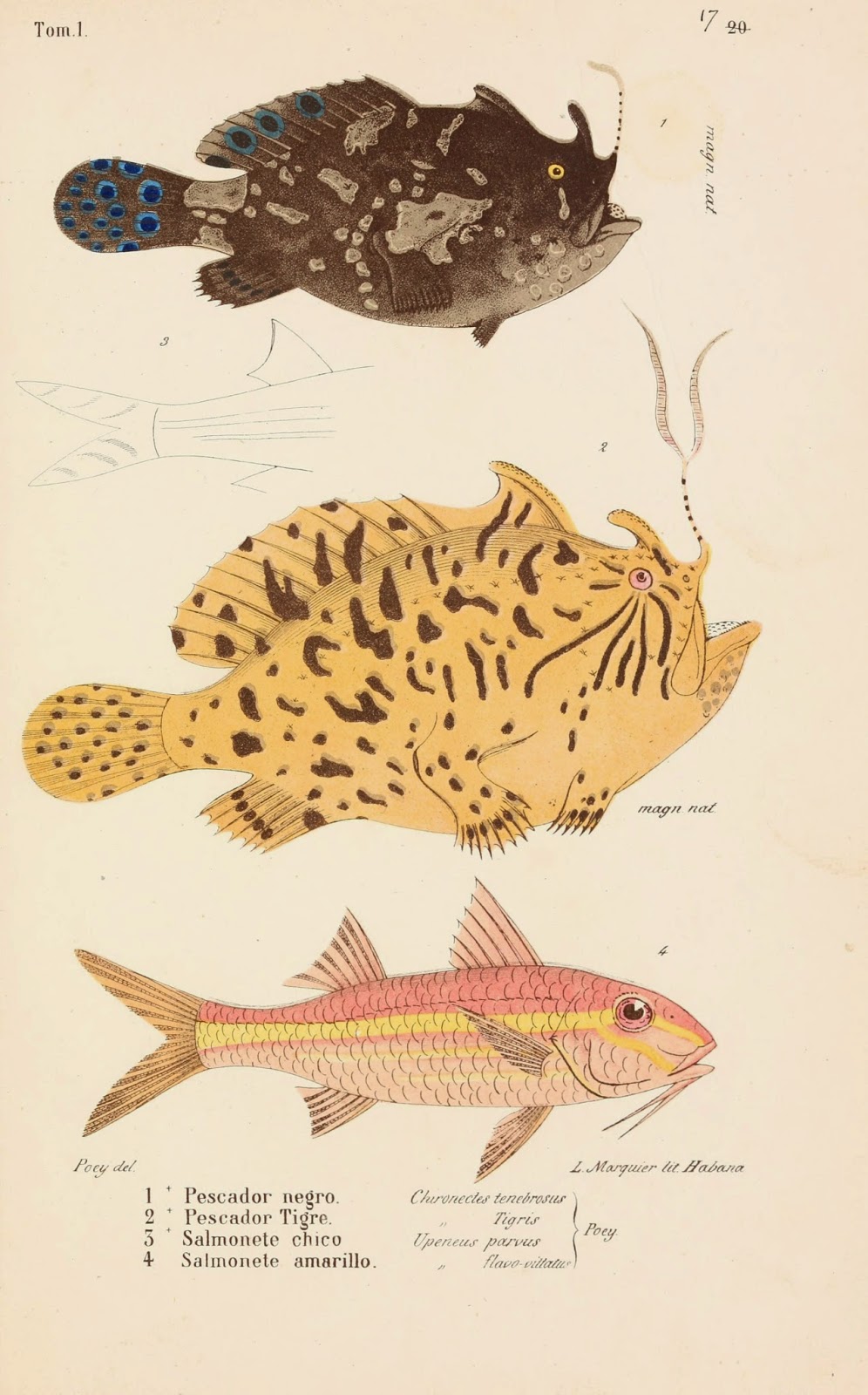
  • Cuban-born Felipe Poey y Aloy (1799-1891) became part of the European natural history community while practicing as a lawyer in Europe. Well-known naturalists Georges Cuvier and Achille Valenciennes based many new species in their Natural History of the Fishes on Poey’s drawings and specimens. Poey dedicated much of his life to writing Ictilogía Cubana, which described and illustrated over 700 species of fish found in Cuba.
  • Eduardo Caballero y Caballero (1904-1974) of Mexico was noted for his work in helminthology, or the study of parasitic worms. In 1943 he was appointed the Helminthologist of the Panamerican Office of Sanitation to investigate an outbreak of Onchocerciasis, an infection caused by parasitic worms spread by black fly bites, which can lead to blindness. His work led to the establishment of Escuela Mexicana de Helmintologia, a school dedicated to helminthology.
  • Mexican-born José Mociño (1757-1820), originally geared to become a priest, became a botanist and explorer instead, joining the third excursion of the Royal Botanical Expedition to New Spain. However, political turmoil, in part due to the Napoleonic wars in Spain, thwarted the expedition, serving as an example of how outside forces can affect scientific pursuits.
View Full Size Image
Illustration from Felipe Poey’s Memorias sobre la historia natural de la isla de Cuba, acompañadas de sumarios latinos y extractos en frances (1851-58). http://biodiversitylibrary.org/page/2525313.
Explore more fascinating facts about women and Latino naturalists in our exhibitions!
View Full Size Image
These exhibitions sponsored by the Smithsonian’s Women Committee.
December 4, 2014by Grace Costantino
Page 40 of 71« First...102030«39404142»506070...Last »

Help Support BHL

BHL's existence depends on the financial support of its patrons. Help us keep this free resource alive!

search

About BHL

The Biodiversity Heritage Library (BHL) is the world’s largest open access digital library for biodiversity literature and archives. BHL operates as a worldwide consortium of natural history, botanical, research, and national libraries working together to digitize the natural history literature held in their collections and make it freely available for open access as part of a global “biodiversity community.”

Join Our Mailing List

Sign up to receive the latest news, content highlights, and promotions.

Subscribe Now

Subscribe to Blog via Email

Enter your email address to subscribe to this blog and receive notifications of new posts by email.

Join 319 other subscribers

Subscribe to Blog Via RSS

Subscribe to the blog RSS feed to stay up-to-date on all the latest BHL posts.

Access RSS Feed

Inspiring Discovery through Free Access to Biodiversity Knowledge.

The Biodiversity Heritage Library makes it easier than ever for you to access the information you need to study and explore life on Earth…for free, anytime, anywhere.


64+ Million Pages of
Biodiversity Literature Online.

EXPLORE

Tools and Services
to Transform Research.

EXPLORE

300,000+
Illustrations on Flickr.

EXPLORE

ABOUT | HARMFUL CONTENT | PRIVACY | SITE MAP | TERMS OF USE