Biodiversity Heritage Library - Program news and collection highlights from BHL
  • Home
  • News
  • Featured Books
    • All Featured Books
    • Book of the Month Series
    • BHL at 20
  • User Stories
  • Campaigns
    • Fossil Stories
    • Garden Stories
    • Monsters Are Real
    • Page Frights
    • Her Natural History
    • Earth Optimism 2020
  • Tech Blog
  • Visit BHL
Home
News
Featured Books
    All Featured Books
    Book of the Month Series
    BHL at 20
User Stories
Campaigns
    Fossil Stories
    Garden Stories
    Monsters Are Real
    Page Frights
    Her Natural History
    Earth Optimism 2020
Tech Blog
Visit BHL
  • Home
  • News
  • Featured Books
    • All Featured Books
    • Book of the Month Series
    • BHL at 20
  • User Stories
  • Campaigns
    • Fossil Stories
    • Garden Stories
    • Monsters Are Real
    • Page Frights
    • Her Natural History
    • Earth Optimism 2020
  • Tech Blog
  • Visit BHL
Biodiversity Heritage Library - Program news and collection highlights from BHL
Blog Reel, Featured Books

Dolphins and True Love: An Ode to Frederick W. True

The Smithsonian Field Book Project is showcasing Frederick William True in February! This post is the first in a series of blogs and social media content from the Biodiversity Heritage Library, Pyenson Lab, Smithsonian Transcription Center, Smithsonian Archives, and Smithsonian Libraries celebrating #FWTrueLove. Learn more.

The Delphinidae: Cetacean Taxonomy’s “Trash Basket”

When you think of oceanic dolphins, chances are you don’t think of trash. But if you’re a taxonomist, you might.

“The family Delphinidae has been called a ‘taxonomic trash basket’, because many small to medium-sized odontocetes of various forms have been lumped together in this group for centuries” (Dr. Edward Vanden Berghe, Flanders Marine Institute. WoRMS. Delphinidae).

View Full Size Image
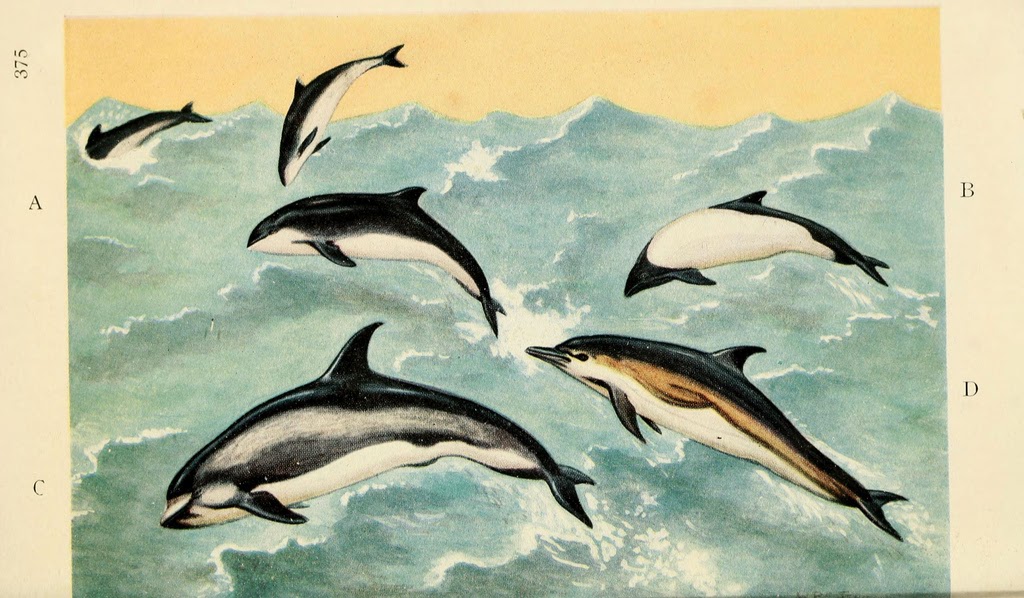
Fig B: Commerson’s dolphin (Cephalorhynchus commersonii); Fig. C: white-beaked dolphin (Lagenorhynchus albirostris); Fig. D: short-beaked common dolphin (Delphinus delphis); with the harbour porpoise (Phocoena phocoena) – Fig. A. (Listed by True as Phocaena communis within Delphinidae. Today named Phocoena phocoena in Phocoenidae family) in BHL. Norman, J.R. Field Book of Giant Fishes (1949). http://biodiversitylibrary.org/page/6279181.

Even today, multiple classifications exist, and depending on the schema used, anywhere from 30-50 species may be attributed to Delphinidae, ranging in size from 1-9.1 meters (see various taxonomies in EOL, WoRMS, Marine Mammal Science, and Animal Diversity Web). The distribution of Delphinidae species across such wide and diverse habitats and the lack of data for many members of the family impede conclusive taxonomic assertions regarding species distinctions and relationships.

Regardless of the questions still remaining, members of the Delphinidae family share many characteristics, including numerous conical teeth, compression and fusion of the neck vertebrae, and sophisticated echolocation ability.
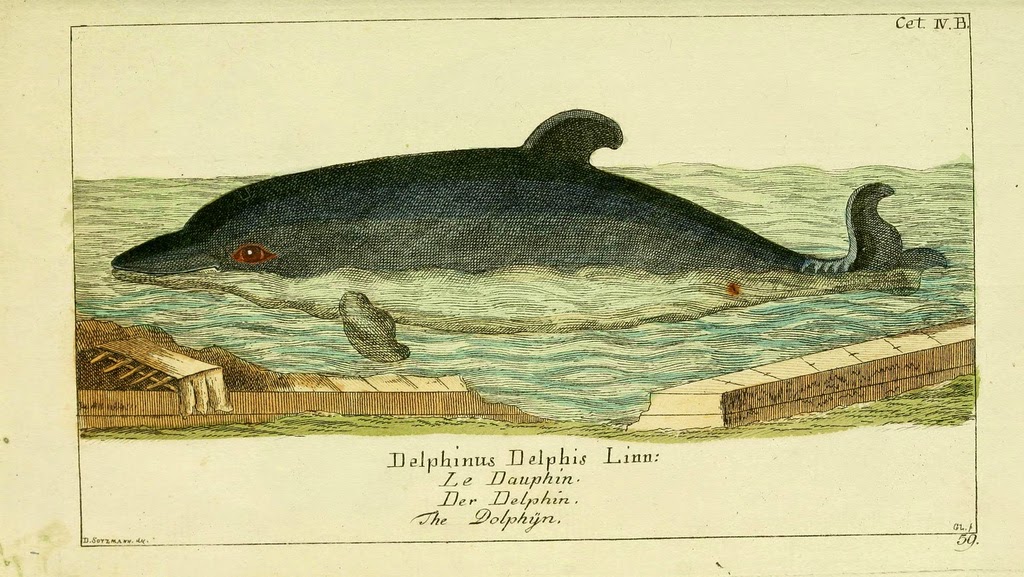
View Full Size Image
Short-beaked common dolphin (Delphinus delphis). Gemeinnüzzige Naturgeschichte des Thierreichs. Bd. 2 Plates (1780). http://biodiversitylibrary.org/page/28342227.

The quest to understand and organize oceanic dolphins is one that requires patience and the continual acquisition of knowledge and data. This has been the reality since scientists first attempted to classify these marine mammals, and one poignantly felt by one of the world’s foremost cetacean authorities at the turn of the century: Frederick William True.

F.W. True: Pioneering Cetologist

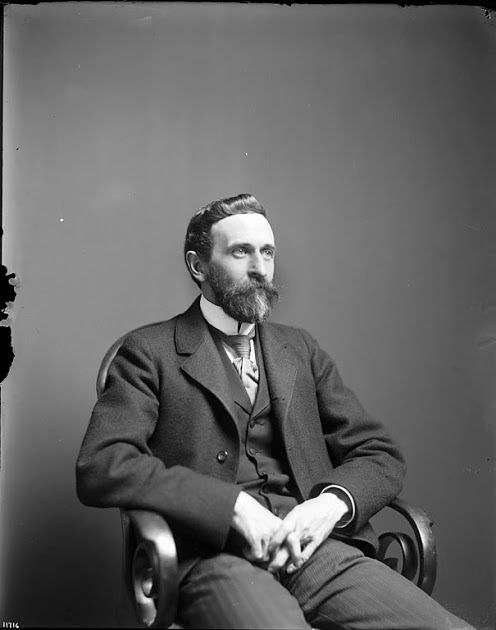
Frederick W. True (1858-1914) began his career as a clerk at the U.S. Fish Commission in 1878. In 1881, he was hired by S.F. Baird as Librarian and Acting Curator of Mammals at the Smithsonian’s National Museum of Natural History, after which he was promoted to Head Curator of Biology in 1897 – a position he held until 1911 when he became the Assistant Secretary of the Smithsonian Institution. With a focus on living and marine fossil mammals, True was the first marine mammals curator at the Smithsonian. Though he is most famous for his work on the mysticetes and beaked whales, True also provided invaluable contributions to the study of the Delphinidae family.
View Full Size Image
Frederick W. True. Image Courtesy the Smithsonian Institution Archives | Image # MAH-11716
http://siarchives.si.edu/collections/siris_sic_10333

At the turn of the century, the status of the Delphinidae family was even more confusing than it is today. The widespread distribution of the family meant that the same species might actually be found off the coasts of every continent (the common bottlenose dolphin (Tursiops truncatus) for example, has a worldwide range). More crucially, the lack of access to the specimens and data of scientists in different parts of the world, led to the tendency of some naturalists (such as Edward Drinker Cope) to base new species descriptions on scant data (often relying on a single, perhaps incomplete, specimen to assert a new species). Consequently, our turn of the 20th century understanding of Delphinidae was saturated with questionable, often synonymous, scientific names.
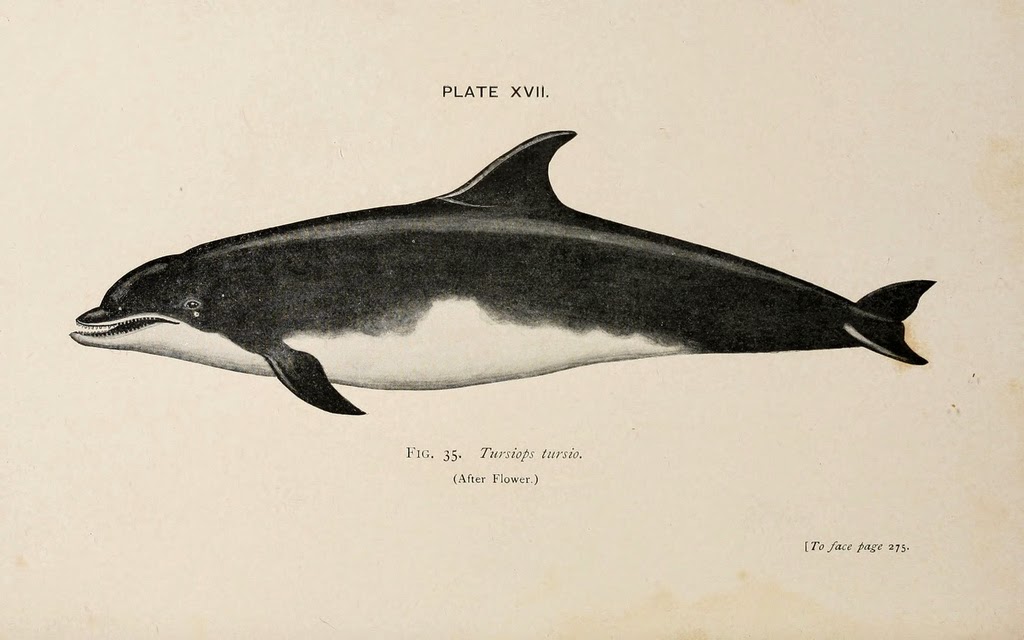
View Full Size Image
Common bottlenose dolphin (Tursiops truncatus). Beddard, Frank E. A Book of Whales (1900).
http://biodiversitylibrary.org/page/1398413.

True recognized that scientists at the time used non-uniform criteria to describe and classify species. Some based descriptions on external characteristics, while other relied on osteological examinations, resulting in, as True put it, two series of species. Varied criteria employment also resulted in drastically different classification schemes, resulting in a plethora of competing taxonomic trees for both Delphinidae and related families.

The preponderance of oceanic dolphin scientific names and uncertainty of species relationships was a major impediment to the advancement of Delphinidae research. Near the end of the nineteenth century, True set out to bring order to the chaos.

Revising the Delphinidae

True began his endeavor with a focus on the species found off the North American coasts, but the state of affairs compelled him to expand his scope to the entire Delphinidae family. Though his work was largely based on that of Gray, Flower, Stejneger and Baird, True was the first person to attempt to analyze all available data, harmonize the many synonyms, and produce a classified list of truly distinct Delphinidae species.

True quickly realized that “a proper comparison of the species described respectively by European and American naturalists could not be made without an examination of the types.” Thus, in the winter of 1883-84, True spent four months in the museums of England and Europe studying the type specimens of the described Delphinidae species. The result of his labor was the publication Contributions to the natural history of the cetaceans. A review of the family Delphinidae, which presented a revised Delphinidae classification.

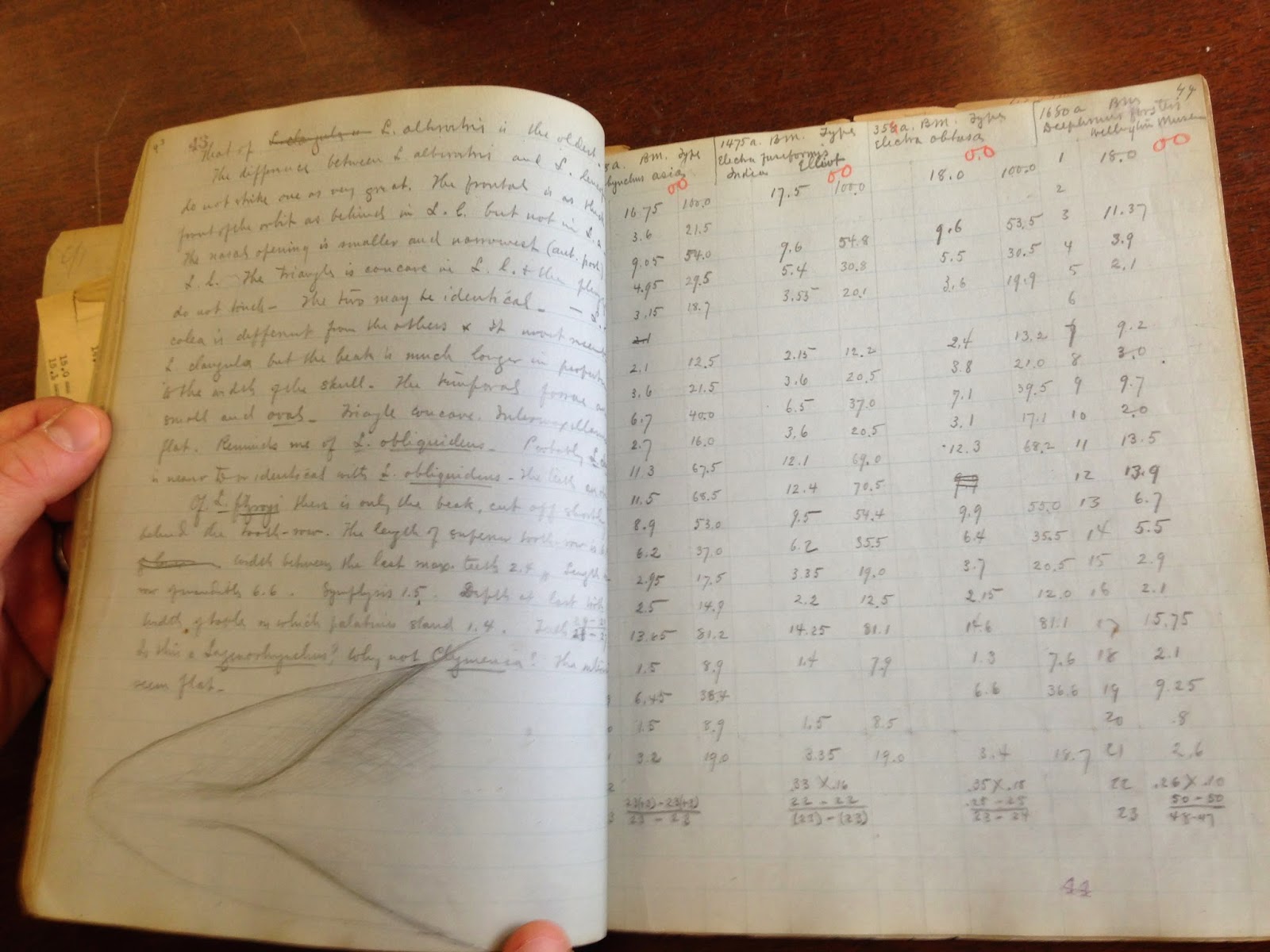
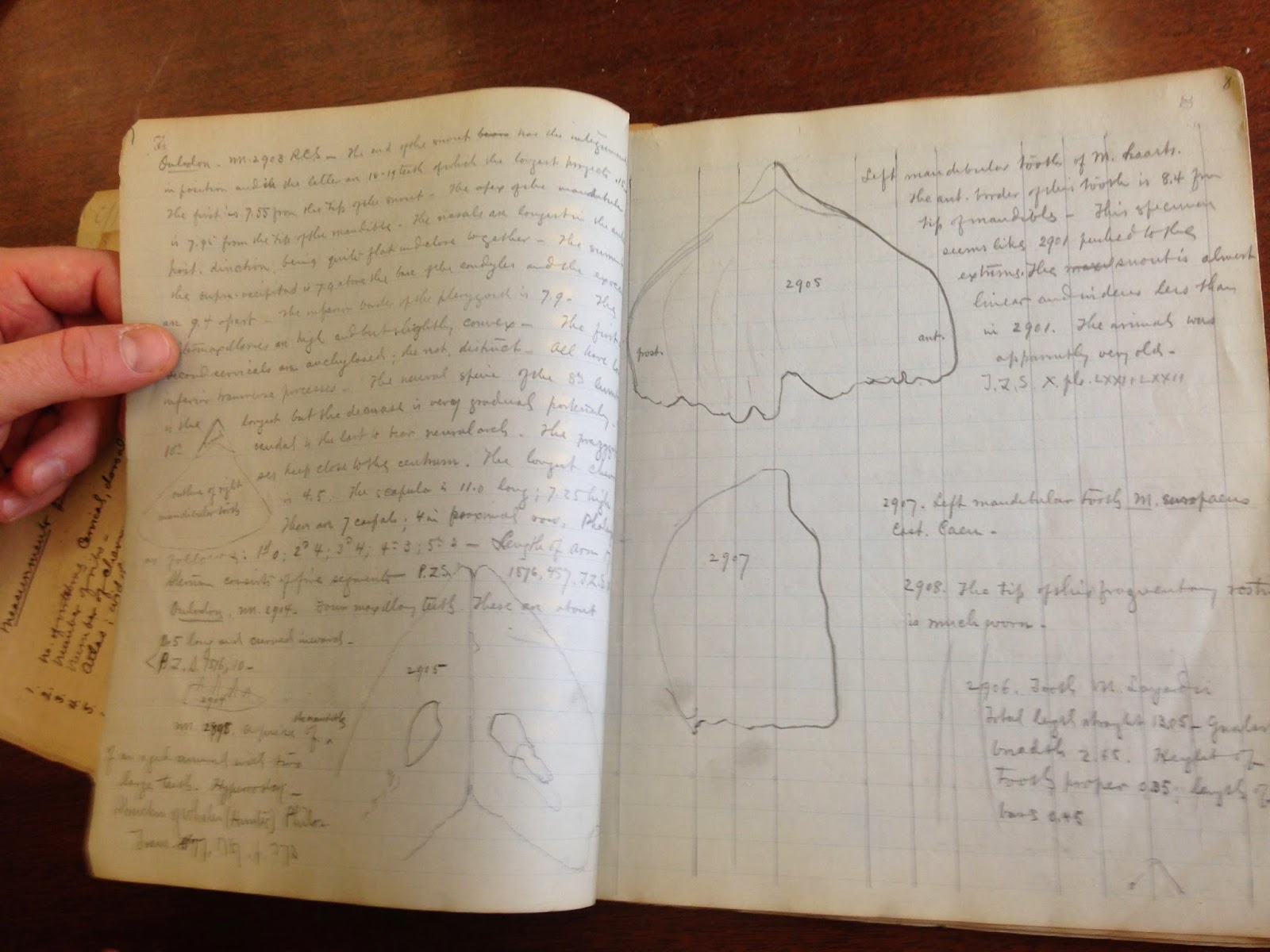
During his time abroad, True kept a journal recording the observations, measurements and data he gathered. These records were used to inform the aforementioned publication. Dr. Nick Pyenson, current Curator of Fossil Marine Mammals at the Smithsonian’s National Museum of Natural History, recently discovered this journal amongst a box of True’s manuscripts and research materials in the Smithsonian’s Remington Kellogg Library of Marine Mammalogy.
View Full Size Image
F.W. True’s Journal (1883-84). Data recorded from specimens at European and English museums. Used to inform True’s Delphinidae publication.

As the journal (1883-84) shows, True carefully examined and measured all of the type specimens he could find, including specimen catalog numbers, locality, sex and age if known, various lengths including total, length of beak, and girth, and other data such as the number of teeth. These kinds of data remain relevant today, where the consistent collection and curation of this irreplaceable data provides the basis for answering many different ecological, evolutionary and conservation research questions.
View Full Size Image
F.W. True’s Journal (1883-84). Data recorded from specimens at European and English museums. Used to inform True’s Delphinidae publication.

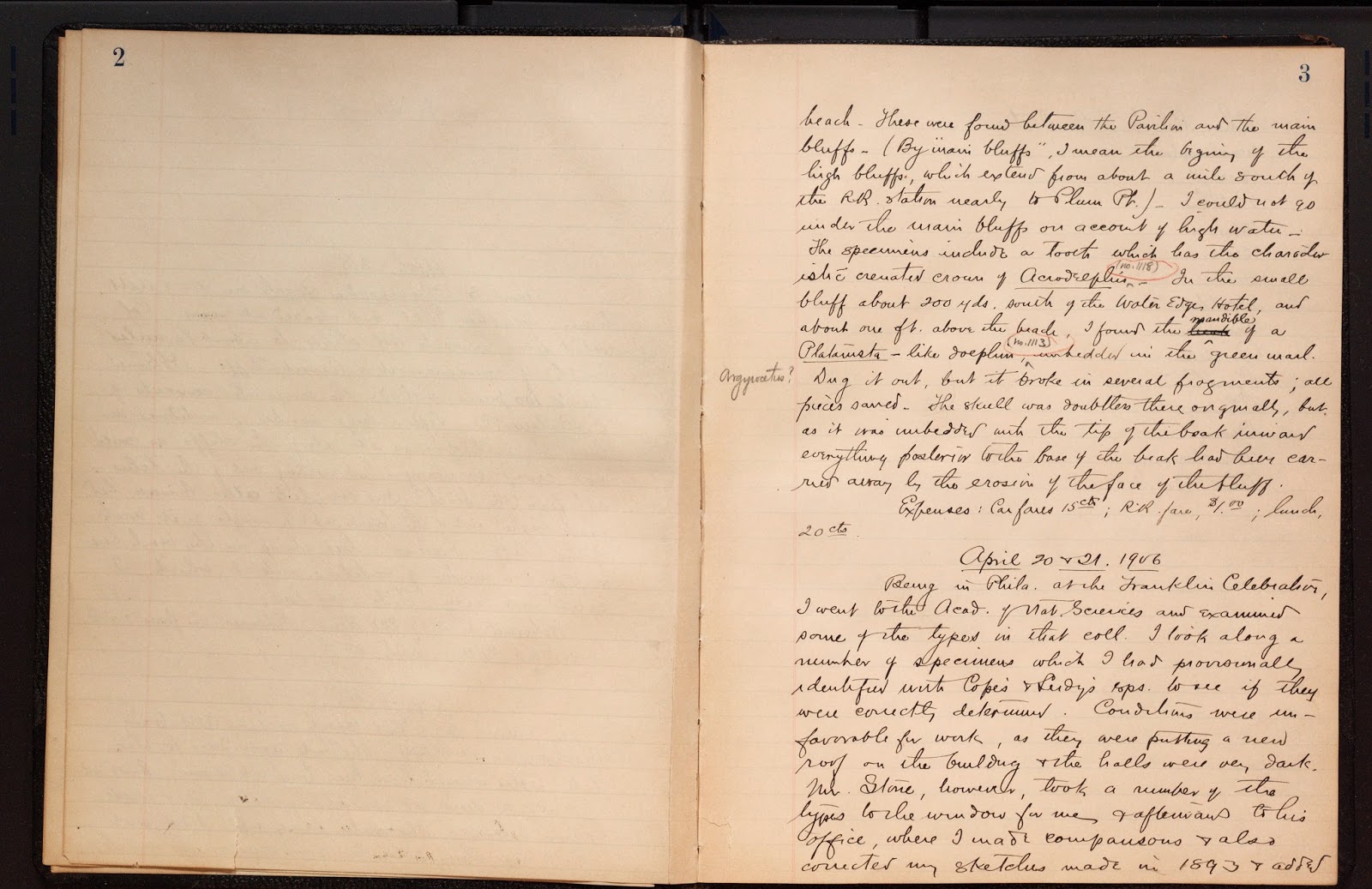
Even more interesting, the logbook is annotated by Remington Kellogg, the aforementioned library’s namesake and himself an authority on cetaceans. Though his time at the Smithsonian’s National Museum of Natural History postdated True’s lifetime, Kellogg took a keen interest in True’s work and annotated many of his manuscripts, including not only this journal but also True’s fieldbook of collecting trips in 1906-08.
View Full Size Image
True. F.W. U. S. National Museum log book of collecting trips for fossil cetaceans (1906-08). Digitized by the Smithsonian Institution Archives for The Field Book Project. http://biodiversitylibrary.org/page/46701241.

The measurements and osteological examinations recorded in True’s 1883-84 journal were used to create limits of specific variation among species and inform a comparative analysis of species relationships to produce a revised taxonomic tree. The result was the harmonization of existing scientific names down to a total of 62, classified within 19 genera and 2 subfamilies within Delphinidae.

Of course, the science of taxonomy is not a static endeavor. Classifications are constantly improving and evolving as we have access to new information and specimens, discover new species, and employ new techniques (such as DNA sequencing) in our quest to better understand the world and the species in it. Indeed, even True himself acknowledged that the accuracy of classifications was dependent on the availability of data and the construction of a full biological picture. In his publication, True asserted,

“The writer is fully aware that the time is not yet ripe for a final review of the family Delphinidae. The work now accomplished must be regarded as provisional and subject to change in the future…Cetologists must be content to wait patiently until the acquisition of new specimens make a complete description possible.”

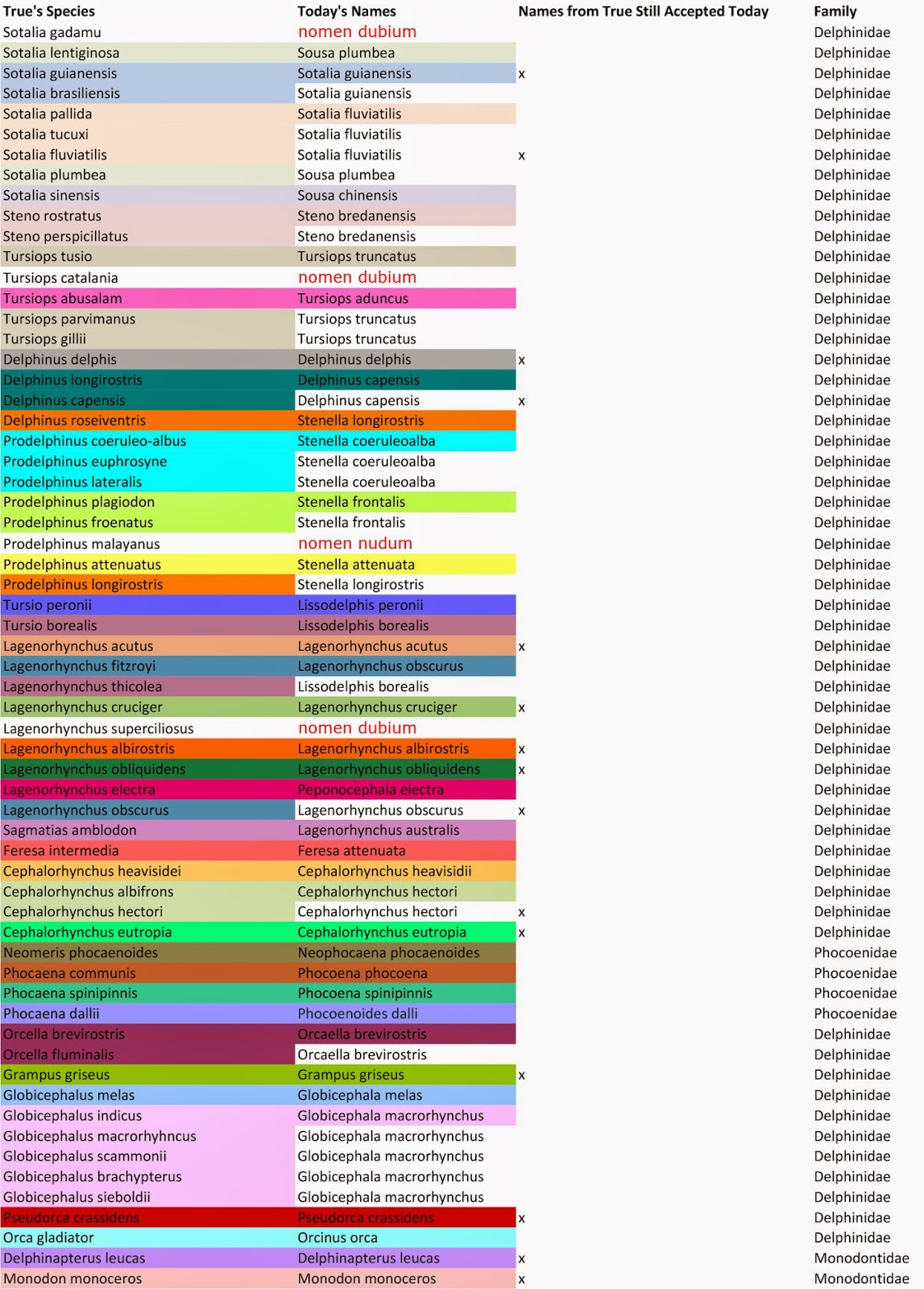
And indeed, new information has come to light since True revised the Delphinidae family over 100 years ago. While the total number of species, genera, and subfamilies differ depending on the classification schema used, of the 62 distinct species that True recognized, 38 are recognized as distinct today (though some under different names), and 32 are still included in the Delphinidae family. Twenty-four of the species True classified as distinct are now considered representatives of other species cataloged in his publication or are not recognized as distinct species today (i.e. nomen dubium). While many of the binomials employed by True are today considered invalid synonyms (though some have changed only slightly in spelling), 15 of the names included by True are still considered valid. (Comparisons made on whole species binomial. Data based on taxon information in WoRMS collected 1/30/2015. Note: some researchers have proposed using Sagmatias for species of Lagenorhynchus today — so Sag. amblodon may get resurrected.)
View Full Size Image
Table Comparing the species names presented by True (“True’s Species”) with the corresponding valid species names recognized today (“Today’s Species). Each unique species listed under “Today’s Species” is highlighted with a distinct color, and all names employed by True in the “True’s Species” column are color coded with the valid name they are recognized to represent today. The “Family” column indicates the taxonomic family to which the species identified by True are today understood to belong to. Comparisons based on taxon information in WoRMS collected on 1/30/2015.

Scientific Research in the Digital Age

The efficiency of scientific research depends on access to raw data, specimens, and previously published information. During True’s lifetime, access to this information was especially difficult, resulting in the proliferation of competing taxonomies. Satisfying information needs often required expensive trips across oceans and countries to consult dispersed institutional collections.

Today, open access digitization initiatives are working to provide global, online access to the information required to study, describe, and classify life. The digitization of museum specimens, scientist’s raw data contained in unpublished fieldbooks, and centuries’ worth of published natural history literature allows researchers to draw connections among all of this information, see the work upon which current systems are based, compare notes across disciplines and time, and more easily harmonize synonyms and create classifications. The Biodiversity Heritage Library and The Field Book Project, through the digitization of natural history fieldbooks and publications, are two programs amidst a growing cadre of initiatives dedicated to facilitating discovery of the natural world. Through continued collaboration and a commitment to open access, we can improve the efficiency of scientific research across the globe.

For more fun, browse historic Delphinidae illustrations from BHL: http://ow.ly/IuYCX

With contributions by: Dr. Nick Pyenson | Curator of Fossil Marine Mammals, NMNH
February 5, 2015by Grace Costantino
BHL News, Blog Reel

Notes and News from BHL

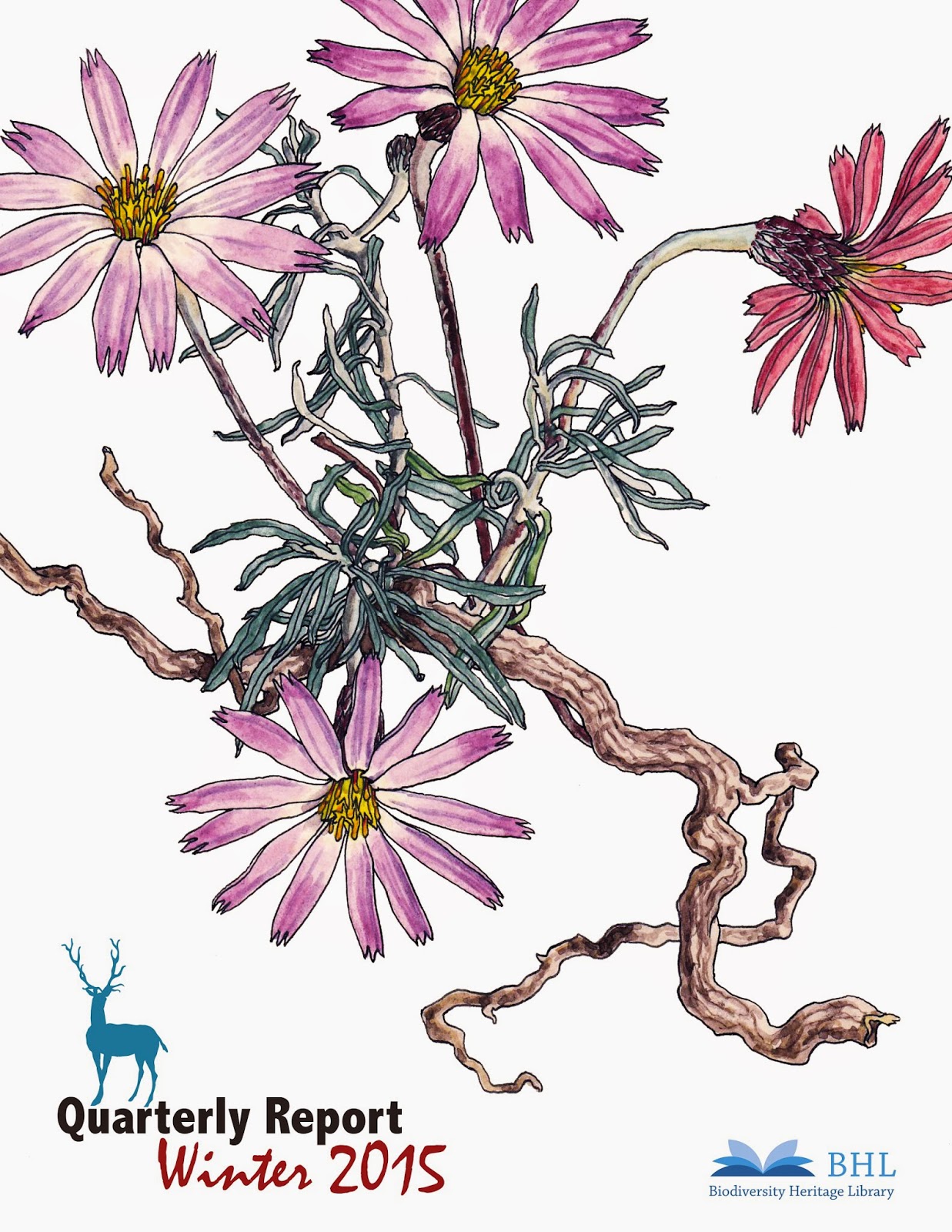
We are pleased to announce that the latest BHL Quarterly Report and Newsletter for Winter, 2015, are now available.

You’ll notice a new format for our Quarterly Reports and a new design for our newsletters.

We’re restructuring our Quarterly Reports as narratives detailing our quarterly activities and presenting content based on three themes: BHL Users, Member and Affiliate Activities, and Science. Our fourth Quarterly Report will constitute our BHL Annual Report, providing not only a report of the year’s activities, but the statistics and program evaluations you’ve been accustomed to seeing in each Quarterly Report. See past reports on our website.

This quarter’s report is themed “BHL Users,” and in it we’re pleased to feature many of the ways users across the world are using BHL and its resources to support their work. Next quarter, we’ll feature the contributions our Members and Affiliates have made to BHL, including a summary of our Annual Member’s Meeting in March. For our Summer Quarterly Report, we’ll feature the many impacts BHL is having on global scientific research.

And don’t forget our newsletter, which is a great way to get quarterly updates about BHL news and events directly to your inbox. See archived versions of past newsletters on our website, and if you’re not on our mailing list, sign up today!

View Full Size Image


January 28, 2015by Grace Costantino
Blog Reel, User Stories

Finding Agriculture among Biodiversity: Metadata in Practice

The Biodiversity Heritage Library is committed to providing free and open access to over 500 years of natural history literature from across the globe. Towards that goal, the Library currently contains over 45 million pages of biodiversity content, representing over 155,000 volumes and 90,000 titles.

However, hosting the content online is just part of our vision to “inspire discovery through free access to biodiversity knowledge.” Users must be able to identify content relevant to their work and interest from amongst this vast corpus. For this, metadata is all-important.

Metadata is “data that describes other data.” BHL’s metadata describes the digital resources in our collection, providing not only author, title, volume, publication year and place, and article information, but also keywords describing the topics discussed within each book. Eventually, full-text searching will also allow users to search across the actual text within a book to discover items relevant to their search parameters.

View Full Size Image
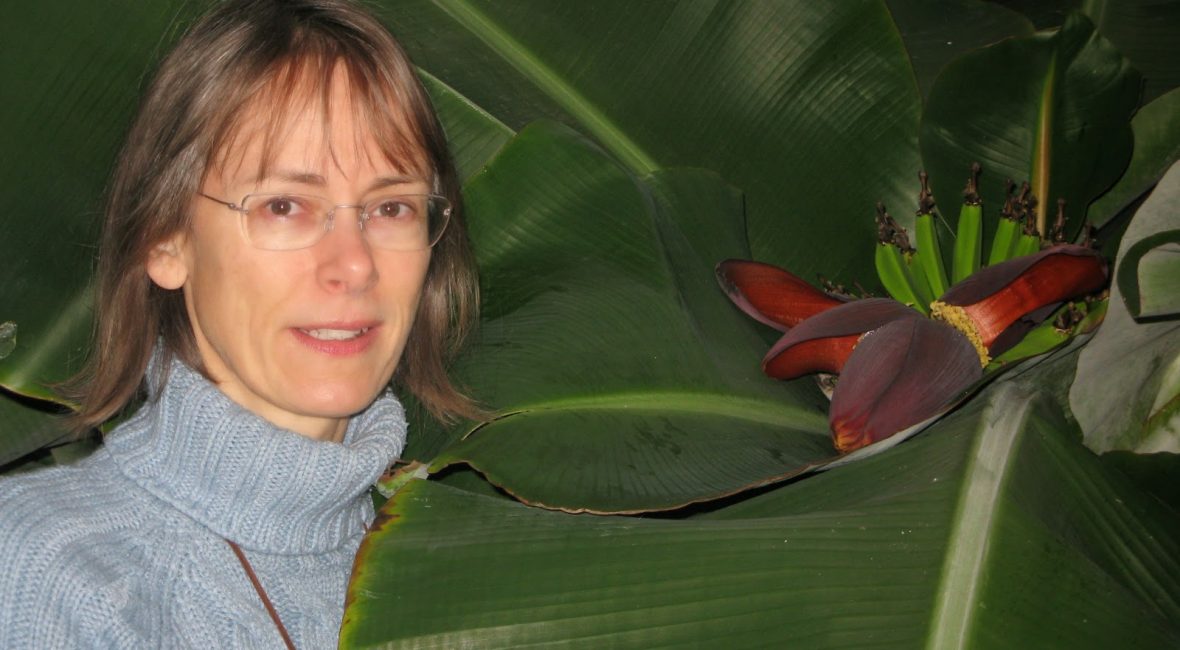
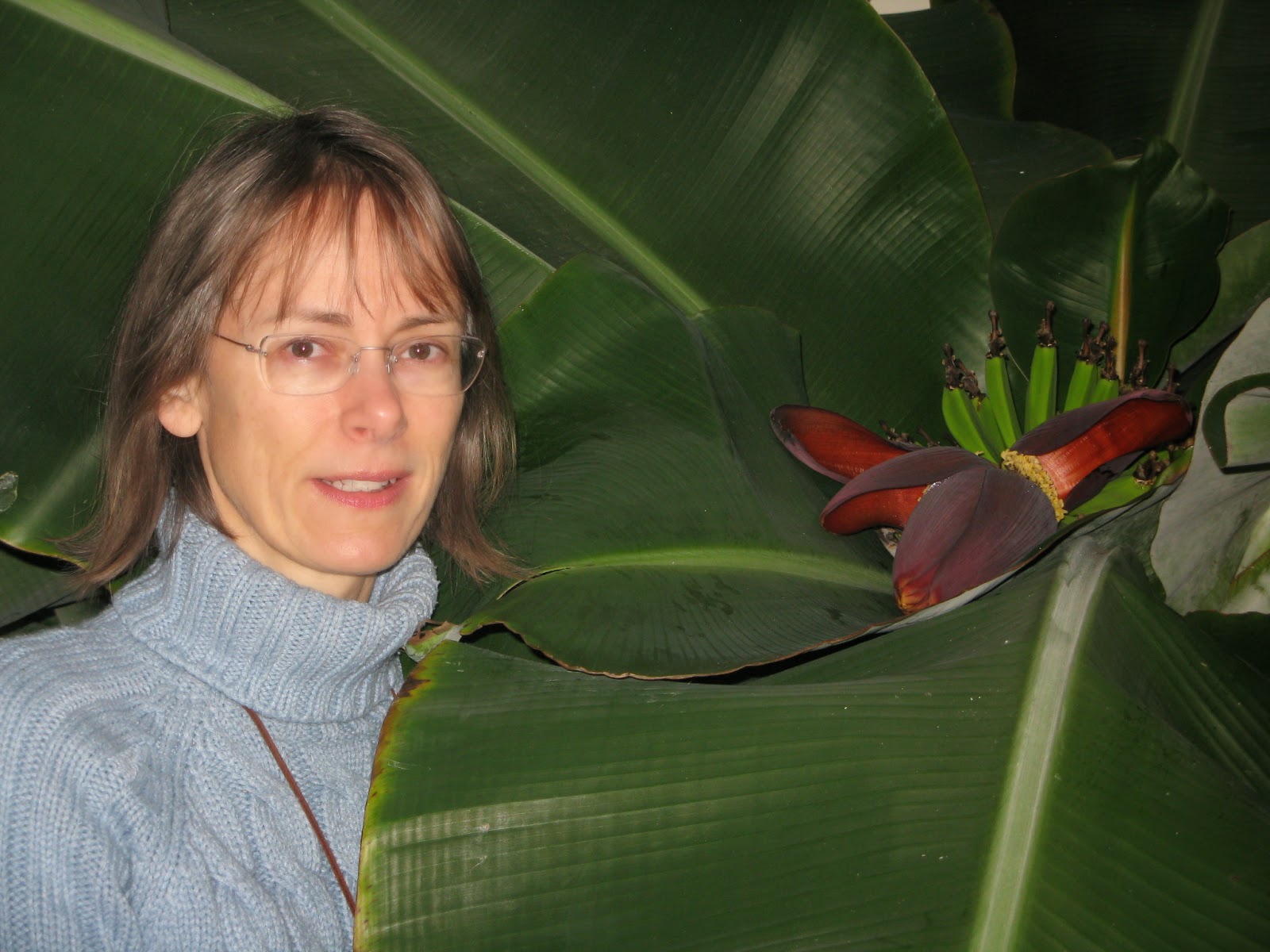
Dr. Jane Bromley, with her home-grown banana plant.

Dr. Jane Bromley knows the importance of metadata all too well. It is a critical component of her daily work.

Bromley is a research fellow at The Open University, where she has worked since 2012 as part of a subgroup of the Natural Language Processing group. Under the EU FP7 funded agINFRA project, which aims to promote data sharing in agricultural sciences, Bromley’s subgroup studies information extraction from legacy biodiversity literature. Specifically, they are seeking to enhance an existing specialist agricultural resource, AGRIS.

AGRIS is a collaborative network of more than 150 institutions providing free access to agricultural information in the form of more than 7 million bibliographic references on agricultural research and technology. This multilingual bibliographic database also contains links to related data resources on the Web.

BHL contains a vast amount of agricultural information. Searching the subject “agriculture” alone produces over 2,100 books and journals in BHL. Recognizing the potential of these resources, Bromley and her colleagues, including Dr. David King and Dr. David Morse, developed a process to enhance AGRIS with BHL content. They relied on BHL’s metadata to do this.

“BHL is a unique resource for agricultural researchers,” explains Bromley. “Its long-term view can prove invaluable in locating wild relatives of crops and understanding their relationship to local habitats and ecosystems. It is the only way to access this breadth of biodiversity literature electronically.”

To filter BHL for relevant agricultural content, Bromley and her team downloaded the “Title Table” file from BHL, which is a list of all titles available in BHL with the associated URL and Call Number. After also downloading the bibliographic information for each item in MODS format, Bromley used the Call Number field to discriminate agricultural material using the Library of Congress Classification LCC scheme. While Call Numbers are alphanumeric codes that identify the shelf location of an item in a library, the specific combination of letters and numbers used allows the library to arrange items according to subject, and thus also serves as an indication of the subject of the book itself.

“I selected items with code starting “S, SB, SD, SF, SH, SK” meaning class Agriculture or one of its subclasses,” articulates Bromley. “I then selected only those items whose bibliographic data said they were of genre: book, thesis, article or bibliography, as AGRIS only accepts: books, book chapters, thesis, journal articles, conference papers, and bibliography. BHL contains complete journals rather than journal articles, so these were not included. That meant that items such as Canadian Journal of Agricultural Science or Journal of Agricultural Research were omitted. For items that passed both of these matches I also scraped the item’s URL to recover the location of the PDF image of the item and the OCR text.”

Finally, Bromley wrote a new MODS file for each item matching her filtering criteria, resulting in 12,645 MODS files with the URLs to the associated PDF and OCR files appended. Each item’s MODS data was converted and included in AGRIS by the AGRIS team, and are available here.

View Full Size Image

Bromley’s experiments with filtering BHL are written up as a conference paper that she presented at the 8th Metadata and Semantics Research Conference in Karlsruhe as part of a special track Metadata and Semantics for Open Repositories, Research Information Systems and Data Infrastructures, jointly chaired by Imma Subirats (FAO) and by Nikos Houssos (Greek National Documentation Centre). You can download a copy of the paper here: http://oro.open.ac.uk/41117/

Bromley’s filtering strategy resulted in high precision but lower recall. Nearly all of the selected material was about agriculture, but many items that also contain agricultural information but are classified under different call numbers were omitted. To address this omission, Bromley would eventually like to download the OCR text for every item and mine it for agriculturally related terms.

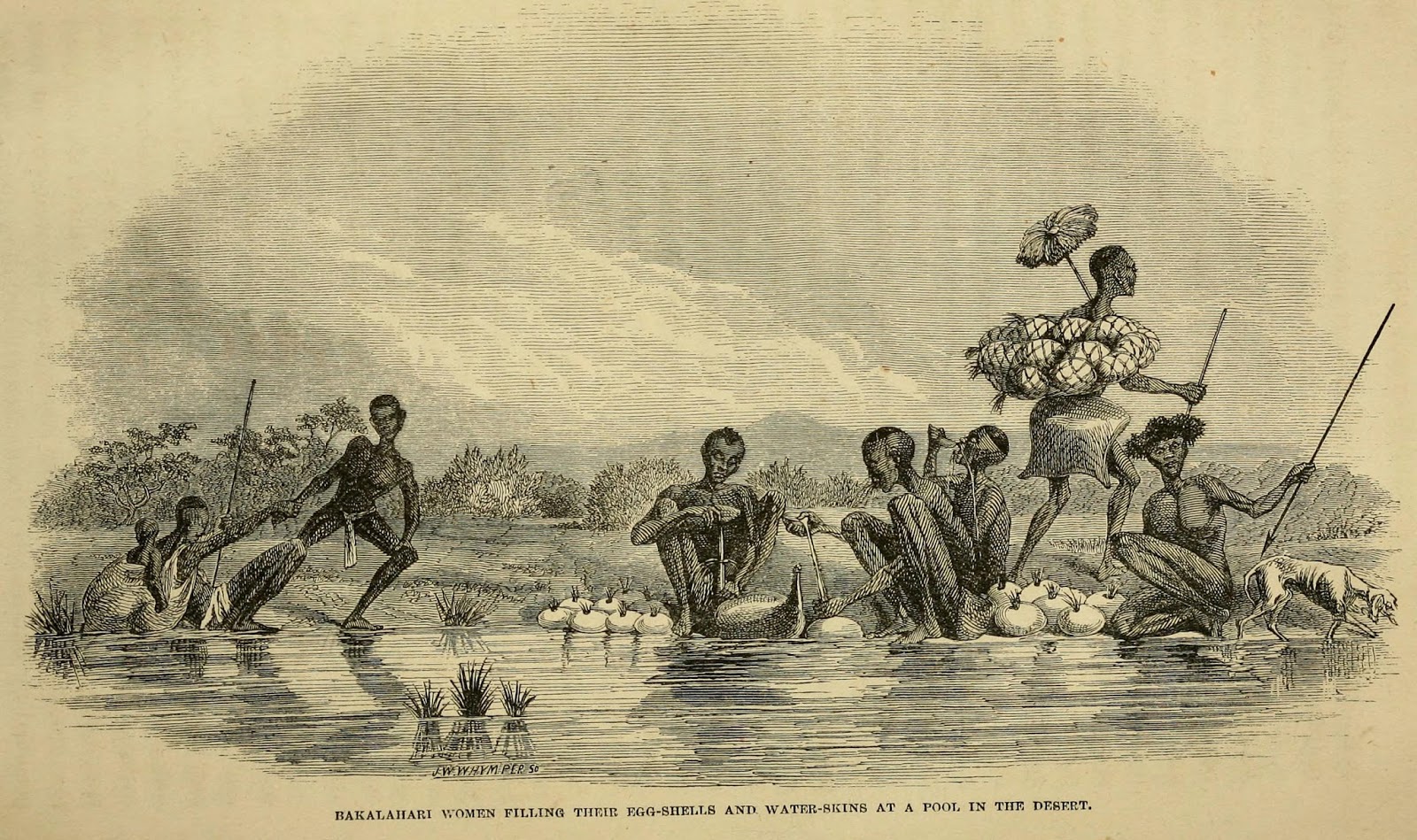
David Livingstone’s Missionary Travels and Researches in South Africa is a fantastic example of materials that are missed when strictly Call Number strategies are employed.

“This was the document that proved to me that in order to find all the relevant agricultural material in BHL we need to mine the whole texts,” emphasizes Bromley. “It’s a seminal book in the British consciousness, which I never thought I’d get to read as part of my research. And, interestingly, it turns out to be a key document in my research. Despite containing information about: domestic animals, The Boers as Farmers, Discovery of grape-bearing vines, The sugar-cane, Coffee Estate, and Coffee Plantations amongst others (all listed in the table of contents), which are all relevant to agricultural research, there is no way to tell from the title or the Subjects that it contains these nuggets.”

View Full Size Image
“Bakalahari women filling their egg-shells and water-skins at a pool in the desert.” Livingstone, David. Missionary Travels and Researches in South Africa (1858). http://biodiversitylibrary.org/page/39590153.

BHL staff are constantly working to improve our Library’s metadata. Ongoing work to enhance pagination information, merge duplicate title and author entries, associate related titles through bibliographic hyperlinks, and generally correct any errors that exist is tackled by a team of librarians throughout our consortium. Furthermore, current projects such as Mining Biodiversity and Purposeful Gaming are supporting OCR correction that will eventually enable full-text searching. The NEH Art of Life project has not only allowed us to systematically identify and manually classify illustrations throughout the BHL corpus, but in the next few weeks we will be calling for volunteers to help us tag a set of images in Flickr with keywords that describe the illustrations’ content. These tags will eventually be ingested into BHL to further enhance our metadata.

You can help us improve our metadata! If you notice a problem or area for improvement, send us feedback! Real BHL librarians will not only answer your feedback but use it to help direct our metadata improvement efforts.

We are honored to present Dr. Bromley’s work using BHL and its metadata to enhance biodiversity databases, expanding the reach of our content to new audiences and supporting a wide range of research initiatives. Do you have an example of how you’ve used BHL to support your research? Tell us about it by sending an email to [email protected].

January 20, 2015by Grace Costantino
Blog Reel, User Stories

Original Publications at our Fingertips

Systematics is the branch of biology concerned with classification and nomenclature. It is sometimes used synonymously with taxonomy.

In their 1970 publication Systematics in Support of Biological Research, Michener et al. defined systematic biology and taxonomy as:

Systematic biology (hereafter called simply systematics) is the field that (a) provides scientific names for organisms, (b) describes them, (c) preserves collections of them, (d) provides classifications for the organisms, keys for their identification, and data on their distributions, (e) investigates their evolutionary histories, and (f) considers their environmental adaptations…Taxonomy is that part of Systematics concerned with topics (a) to (d) above.

Identifying species, their relationships and evolutionary hierarchies, is critical to saving biodiversity. Recognizing this, the White House Subcommittee on Biodiversity and Ecosystem Dynamics declared systematics a research priority essential to ecosystem management and biodiversity conservation and identified improvements in the organization of, and access to, standardized nomenclature as a priority within the field.

ITIS (Integrated Taxonomic Information System) was established to address this priority.

View Full Size Image

A partnership of federal agencies (including BHL members the Smithsonian, United States Geological Survey, and CONABIO), ITIS is a database containing reliable information on species names and their hierarchical classification, including the authority (author and, in the case of zoological names, date), taxonomic rank, associated synonyms and vernacular names where available, a unique taxonomic serial number, data source information (publications, experts, etc.) and data quality indicators for each indexed scientific name. Among other applications, ITIS classifications are used as a taxonomic backbone for the Encyclopedia of Life, to which BHL also provides primary source materials such as publications and illustrations.

Dedicated ITIS working groups ensure that the system is designed and continually developed to meet user needs and that the information contained within is valid, thorough, and regularly updated with classification revisions and new species information. Ensuring such a high level of data quality requires extensive research and access to a wealth of primary natural history information.

View Full Size Image
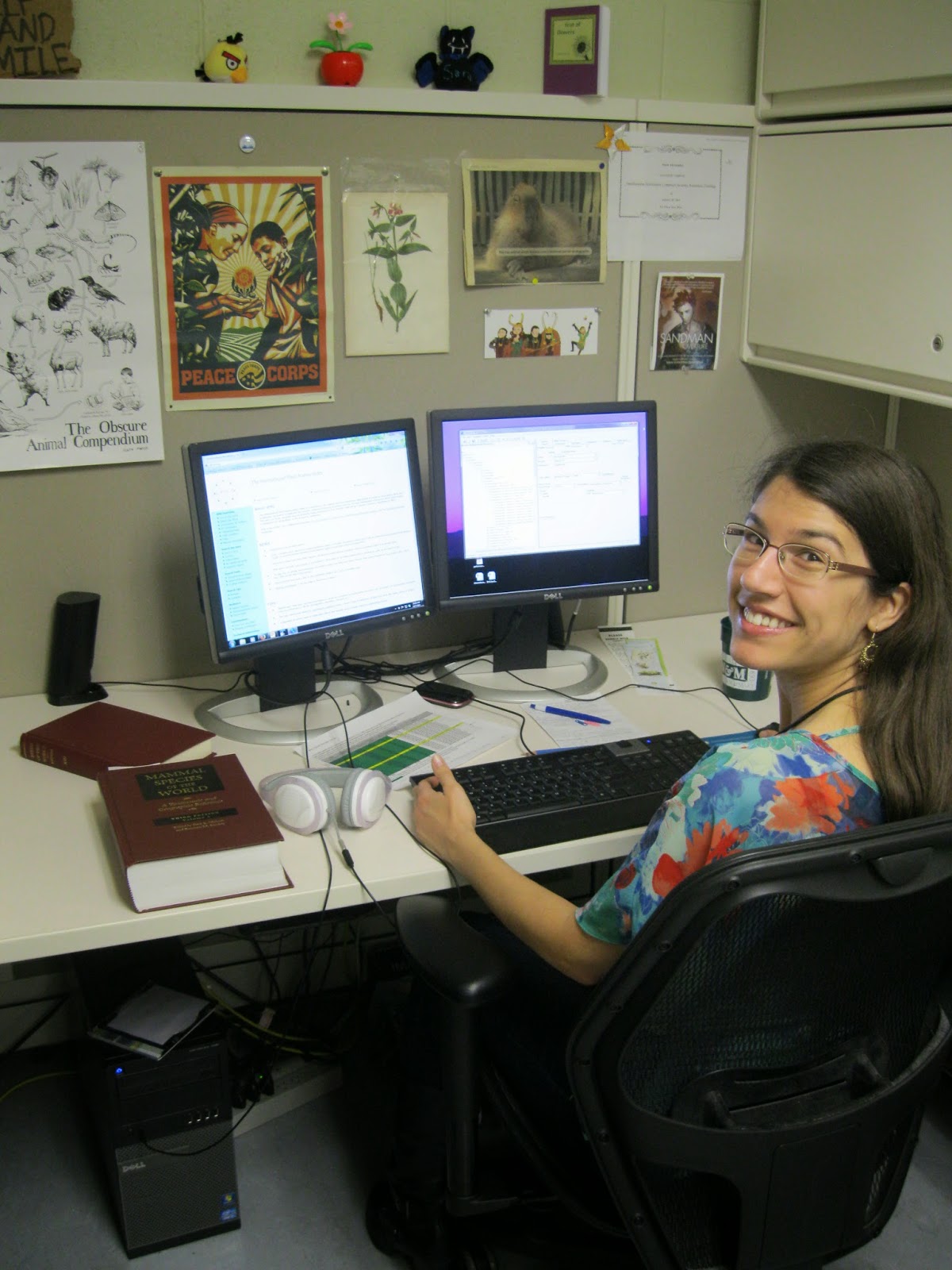
Sara N. Alexander, Data Development Specialist for ITIS.

Sara N. Alexander is a Data Development Specialist for ITIS, stationed at the Smithsonian National Museum of Natural History. With a background in taxonomic botany and the benefit of six years working for the National Herbarium, Alexander joined ITIS five years ago to work with botanical data and has since branched out to proofread zoological taxonomic files.

For her work, Alexander requires access to historic taxonomic information, which is contained within the pages of natural history literature…literature which is made freely available on the Biodiversity Heritage Library.

“I rely on BHL for my daily work; it streamlines taxonomic research immensely,” applauds Alexander. “I am fortunate to have access to multiple libraries in the Smithsonian’s National Museum of Natural History, but even so without BHL I would spend lots of time traveling back and forth to the libraries, scanning pages and making photocopies, waiting on interlibrary loans, and sending emails to taxonomic specialists. With BHL, not only do I have access to original and old literature, but I can easily include a stable and precise link in an email or on a website to allow coworkers to check the accuracy of my work, specialists to answer tricky questions without the burden of hunting down the physical literature themselves, and ITIS users to see the basis of our taxonomic information.”

While she primarily uses BHL to locate the original publication of a name or to find accurate bibliographic information, Alexander has found many additional applications for and points of interest within BHL resources.

“I’ve even occasionally been able to use BHL to discover errors on other online resources on which I rely heavily,” confides Alexander. “For example, I sometimes find a subspecific name published before 1975 that is not yet included in IPNI (The International Plant Names Index). I also enjoy getting ‘sidetracked’ on BHL to read early descriptions of ‘exotic’ animals and look at full-color plates and engravings.”

When asked to give an example of her use of BHL, Alexander related a project that resulted in extensive augmentation of ITIS records with BHL data.

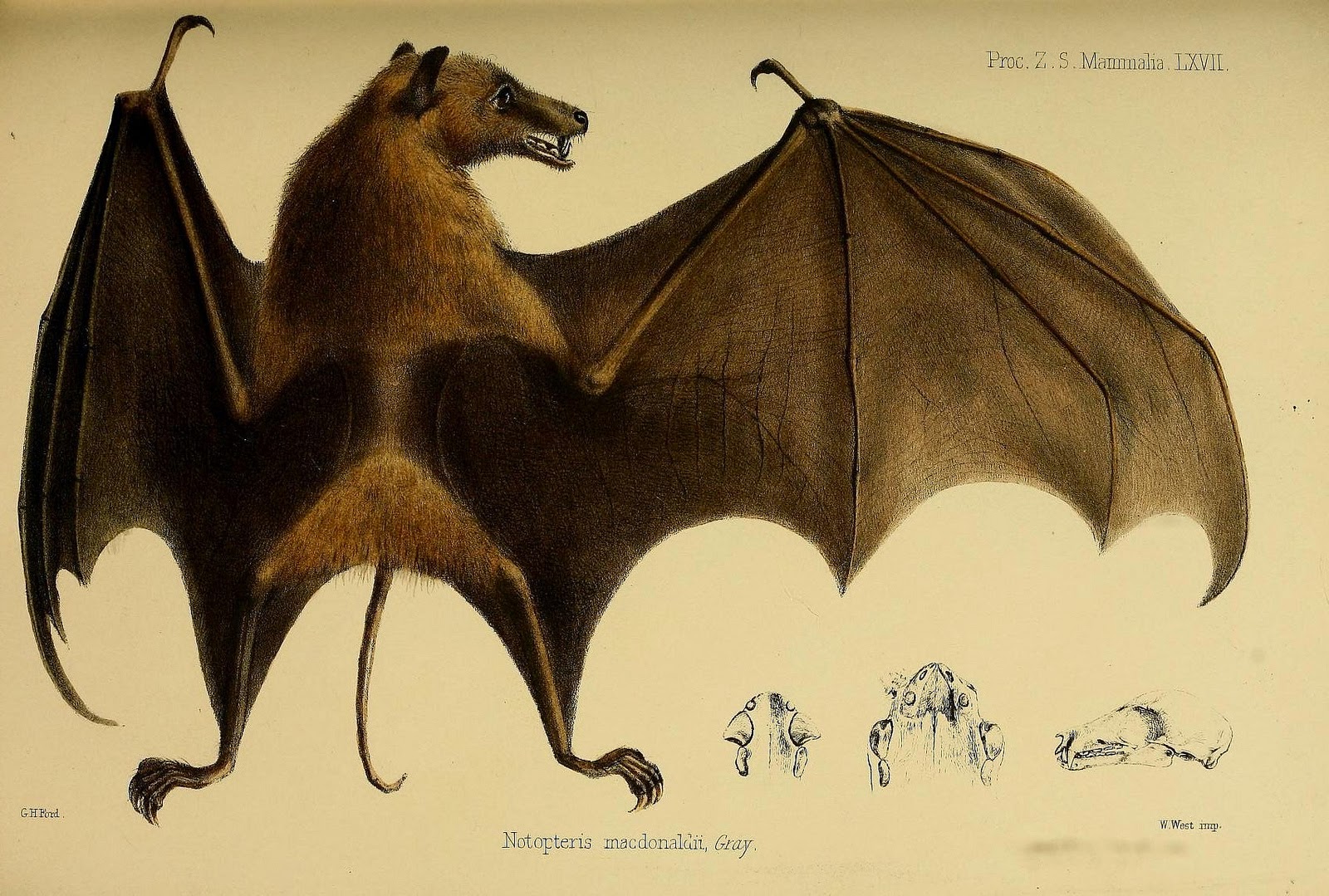
“For worldwide Chiroptera (bats) I was tasked with double-checking the use of parenthetical authorship (whether a name was originally published in the same genus or a different genus than the genus in which it is treated today), which necessitated finding the originally published name for over 2,000 species and subspecific names,” recalls Alexander. “Many of these names were available through major checklists like Hall’s 1981 The Mammals of North America, but others had to be tracked down individually. The now-loaded ITIS treatment of Chiroptera includes links to 72 literature sources accessed through BHL.”

View Full Size Image
A member (Notopteris macdonaldi) of the Chiroptera, or bat, order, the ITIS treatment for which now includes 72 literature sources accessed through BHL, thanks to Sara Alexander. Proceedings of the Zoological Society of London. v. 1 Plates (1848-60). http://biodiversitylibrary.org/page/37028041.

As her work relies heavily on locating taxonomic names, BHL’s recent initiatives to improve the quality of our OCR, as through the Purposeful Gaming and Mining Biodiversity projects, are of particular interest for Alexander.

“Correcting OCR, and allowing more scientific names to be accurately indexed, will make my work a lot easier. My ideal would be to be able to type in a scientific name and always find its original publication among the returned documents.”

Through the work of dedicated contributors like Sara Alexander and collaboration among multiple agencies, ITIS is significantly advancing scientific research by providing a common framework for and widespread access to taxonomic data that is “fundamental to the description, conservation, and management of the nation’s biodiversity.” The application of BHL data within ITIS demonstrates once again the critical importance of historic, foundational biodiversity literature to modern scientific endeavors. BHL, ITIS, and other open, like-minded biodiversity initiatives are committed to ensuring that everyone, everywhere has the information they need to study, understand, and save the incredible biodiversity on our planet.

We hope you enjoyed this post. Interested in being interviewed for BHL? We’d love that! Email us at [email protected].

January 13, 2015by Grace Costantino
BHL News, Blog Reel

Apply to be a Paid BHL Intern!

Portrait version of the Biodiversity Heritage Library logo.

We are pleased to announce that the Smithsonian Libraries will be hosting a BHL intern this summer as part of its 2015 Professional Development Internship Program.

These paid summer internships are six week-long opportunities for students in MLS or related graduate programs to gain valuable knowledge while working in the worlds’ largest museum library system! Solid research, analytical, computer and writing skills are desired.

We are currently seeking applications for a BHL Outreach Impact Strategy Internship. 

All applications must be submitted through the Smithsonian’s Online Academic Appointment system. Applications are due March 1st, 2015.

A second internship, not specific to BHL but focused on copyright research for digitization and open access projects, is also open for applications. View more information on this page.

See details about the BHL internship below. Please note the geographic location requirement. Please see this webpage for additional information.

BHL Outreach Impact Strategy Internship 

Dates preferred: Any six weeks, June-July 2015

Location of internship: 50% on-site at National Museum of Natural History (Washington, DC) with opportunities for 50% virtual work (contingent upon access to videoconferencing software such as Skype™).

This project is ideal for a candidate with the following characteristics: Students pursuing a Masters in Library & Information Science with strong research and writing skills. Preference will be granted to candidates with marketing experience and/or experience using social media platforms such as blogs, Facebook, and Twitter. Students with a demonstrated interest in the natural sciences and/or library marketing are strongly encouraged to apply.

Brief description of project: The Biodiversity Heritage Library is the world’s largest open access digital library of natural history literature (http://biodiversitylibrary.org/). Its mission is to work collaboratively to make biodiversity literature openly available to the world as part of a global biodiversity community.

As a free digital library, the BHL relies on its ability to measure impact and demonstrate its value through a variety of quantitative and qualitative methods. BHL has a robust and proactive outreach and communication program that interacts with the public on a regular basis and consistently seeks new ways to engage with existing communities and reach new audiences. An Outreach Impact Strategy Intern is needed to analyze the BHL’s existing outreach strategies using social media platforms in order to increase traffic to the BHL website.

Interns will have the opportunity to learn about BHL’s Strategies for interacting with its user communities and understand in practice how marketing plays a critical role in demonstrating the impact and vision of a virtual library where there are no physical collections or infrastructure that users can visit or see for themselves.

January 9, 2015by Grace Costantino
BHL News, Blog Reel

Happy New Year! It’s Been a Great Year

Welcome to 2015! We’re excited for another year to see BHL continue to grow and improve. We have lots of great things planned, particularly in the global sphere. Stay Tuned on our blog, Twitter and Facebook to learn more!

Today, we thought we’d take the opportunity to look back over 2014 and highlight some of the great things we’ve accomplished. It’s been a good year, and we have lots to be proud of!

View Full Size Image
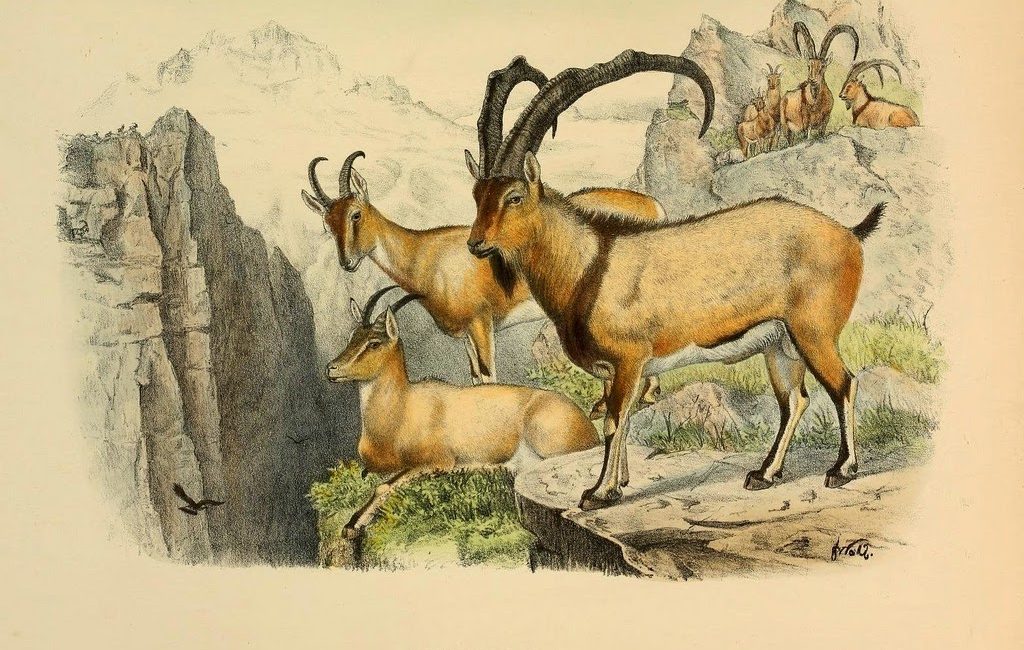
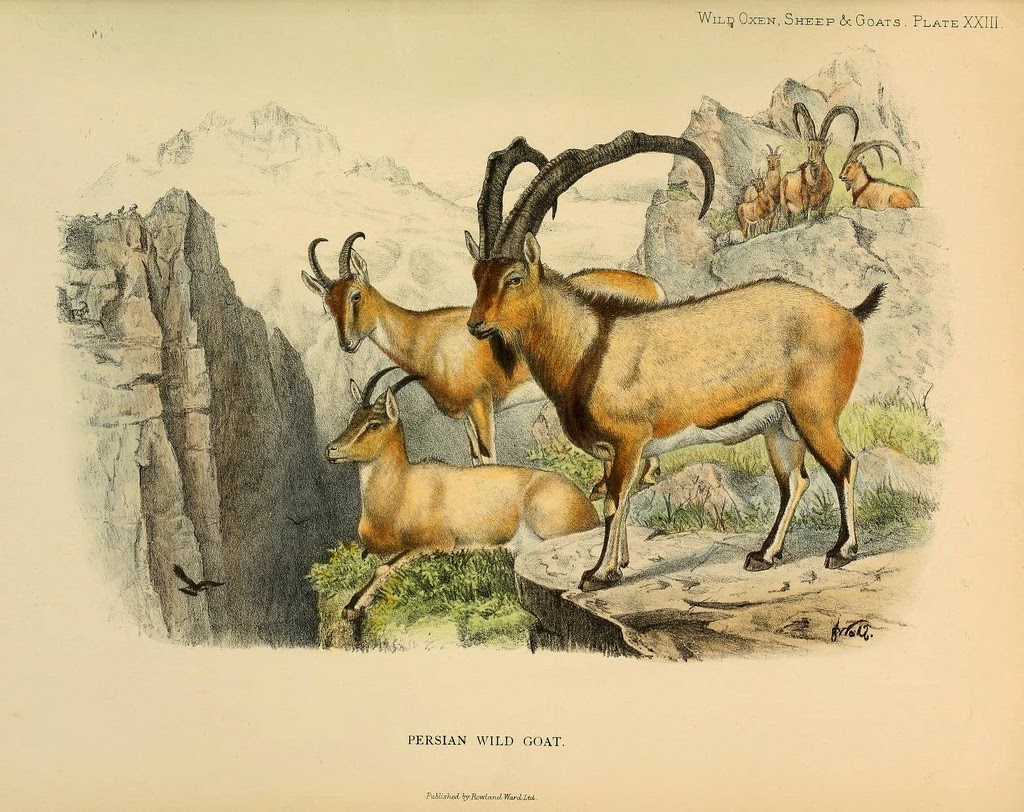
February 19, 2015 marks the Chinese New Year, with this the Year of the Goat. “Persian Wild Goat.” Lydekker, Richard. Wild oxen, sheep and goats of all lands, living and extinct (1898). http://biodiversitylibrary.org/page/9370249.

Collection Growth

  • This year, BHL collections grew to over 45 million pages of open access, biodiversity literature spanning over 500 years of scientific exploration and discovery. We added over 2.7 million new pages to our corpus in 2014, which included 119 new in-copyright titles, shared via Creative Commons licenses. Check out some of the post-1923 titles in BHL.
  • Also in 2014, our Flickr collection grew to include almost 94,000 free, open access natural history illustrations provided under Creative Commons licenses. Over 5,500 images were added this year alone. Let’s see if we can reach 100,000 by 2016!
View Full Size Image
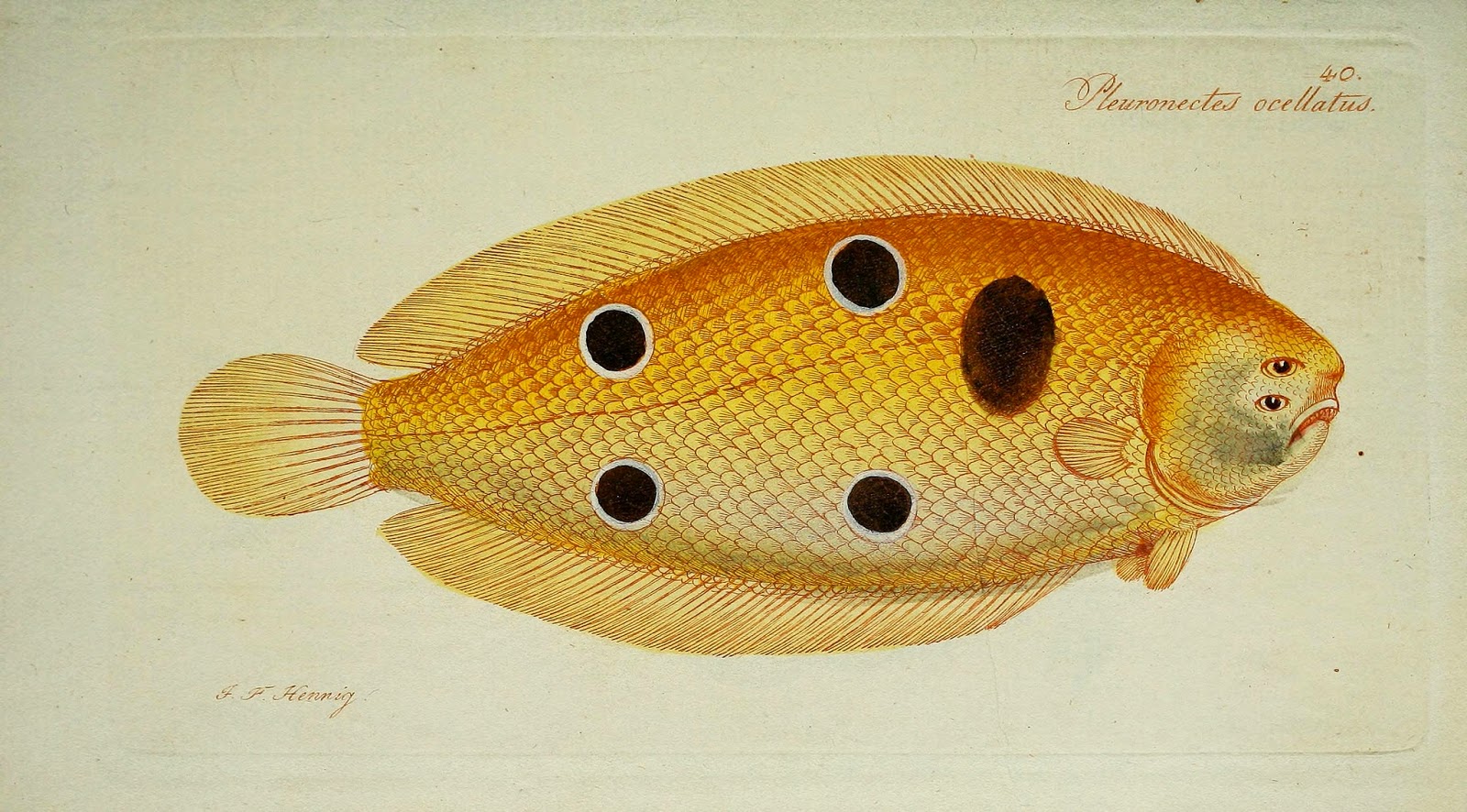
Foureyed Sole (Microchirus ocellatus). Blch, Marcus. Systema ichthyologiae iconibus CX illustratum (1801). http://biodiversitylibrary.org/page/38785736.

Consortium Growth

  • BHL welcomed many new members and affiliates this year, including Washington University, University of Illinois at Urbana-Champaign,  the Natural History Museum of Los Angeles County, the Chicago Botanic Garden, the USDA National Agricultural Library, and BHL Singapore through the National Library Board, Singapore.
    • We’re featuring some of our Member and Affiliates’ favorite contributions to BHL in our Book of the Month series. Take a look!
  • Global Developments: Not only did BHL welcome a new global node this year (BHL Singapore), but BHL Australia, led by the Museum Victoria, ramped up their participation, and BHL Africa began scanning via IA machines for BHL. Stay tuned for more news about global growth soon!
  • BHL also strengthened its partnership with The Field Book Project, which aims to improve access to scientists fieldbooks. This year, BHL ingested over 270 fieldbooks from The Field Book Project into our library, which are accessible alongside the fieldbooks and manuscripts contributed by our BHL members and affiliates.
View Full Size Image
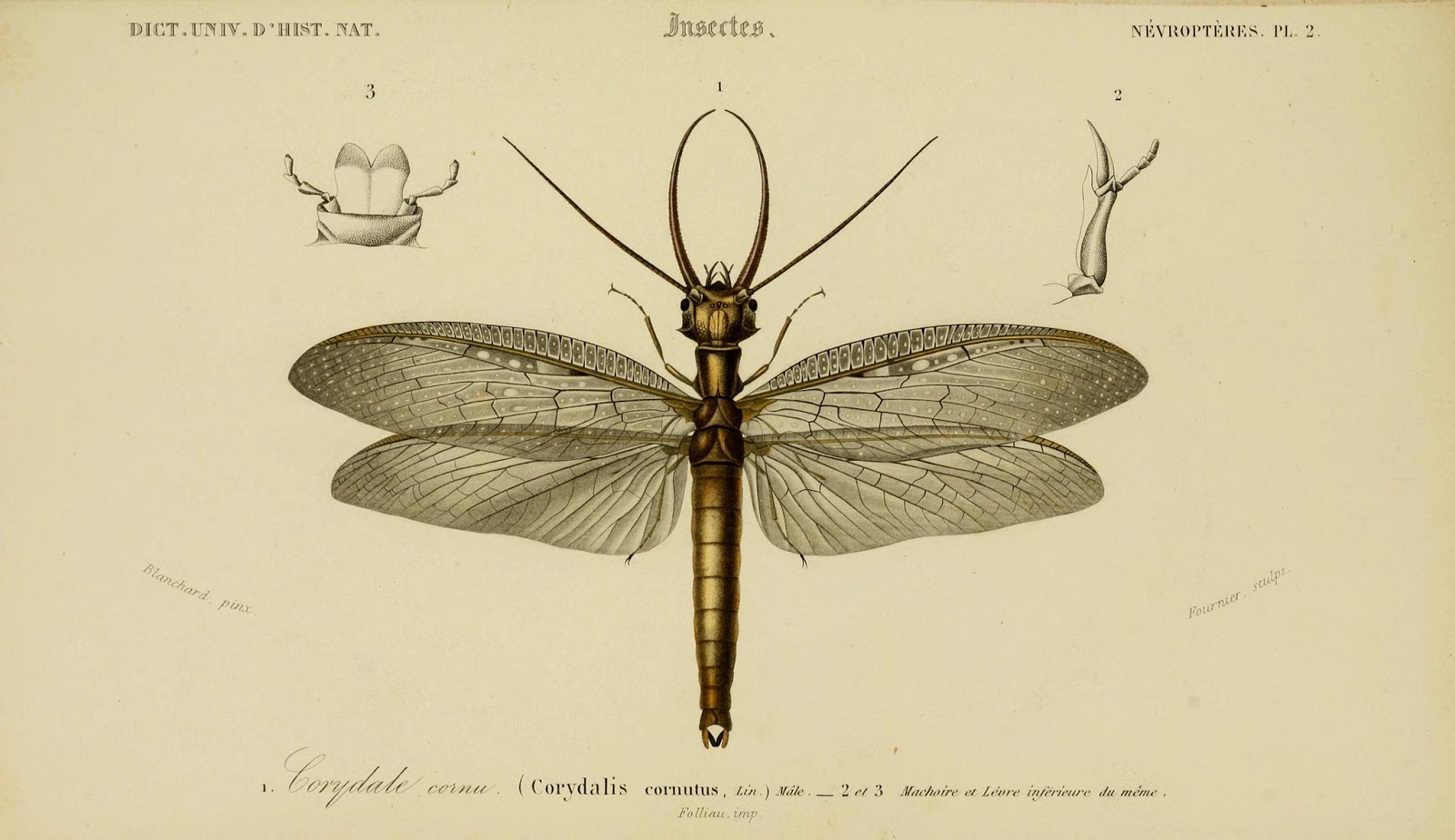
Eastern Dobsonfly (Corydalus cornutus). Orbigny, Charles Dessalines d’. Dictionnaire universel d’histoire naturelle. v. 2, Atlas (1849). http://biodiversitylibrary.org/page/19537843.

Expanding Partnerships

  • This year, BHL joined the Global Biodiversity Information Facility (GBIF) as an Associate Participant.
  • BHL was also pleased to be a charter signatory of the Bouchout Declaration for Open Biodiversity Knowledge Management.

New Staff

  • BHL welcomed a new Secretariat staff member this year: Grace Costantino, BHL Outreach and Communication Manager. Though new to this role, she’s no stranger to BHL…
View Full Size Image
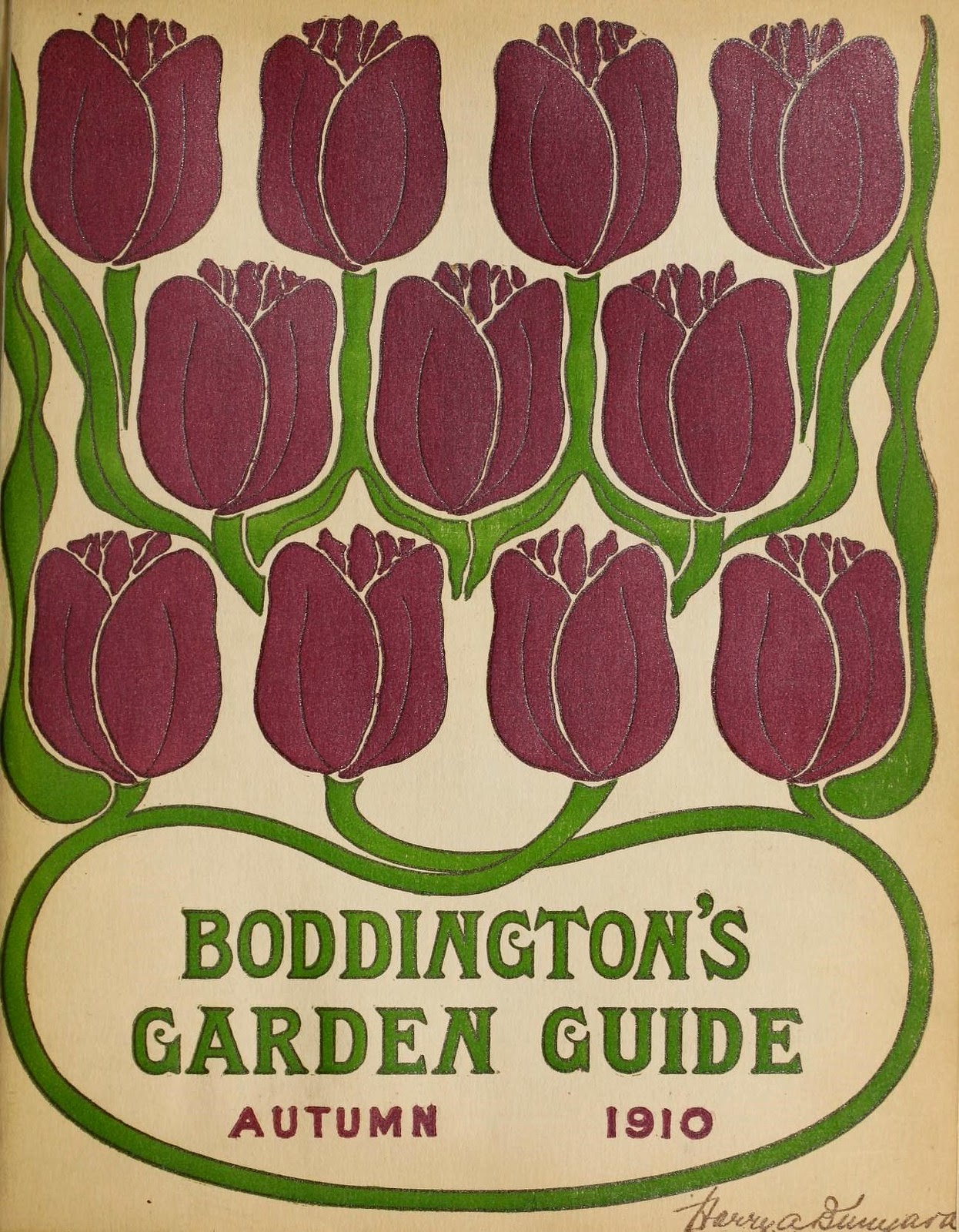
Cover from Boddington’s Garden Guide (1910). Part of BHL’s Seed and Nursery Catalog collection. http://biodiversitylibrary.org/page/45208158.

Technical and Website Developments

  • This year, the Missouri Botanical Garden, on behalf of BHL, was a recipient of the third IMLS Digging Into Data Challenge, which funds the Mining Biodiversity project. The project aims to create a next generation digital library by enriching BHL with semantic metadata and enhanced search visualization through deployment of advanced text-mining techniques. Furthermore, the project is exploring ways to make BHL more “social,” allowing for collaborative curation where users can easily share and discuss our collections.
    • Progress in 2014: Project staff surveyed users to identify the best way to present semantic search results in BHL; Developed a first version of the tool to automatically correct OCR using Google n-grams algorithms; Refined the algorithms that will mine BHL for term, concept and event extraction; Performed extensive analysis of BHL social networks; Integrated tools to facilitate easy sharing of content via the BHL website; and began tracking BHL usage across the web via Altmetric. Learn more about the project on our website.
  • Art of Life: Funded by a 2012 grant from the National Endowment for the Humanities, the Art of Life project aims to improve access to the natural history illustrations within BHL. This year, the image-finding algorithms developed by the Indianapolis Museum of Art Lab were run across 18 million BHL pages, resulting in over 135,000 pages tagged as having illustrations within the BHL portal. Pages with illustrations are currently being manually classified by volunteers as belonging to one or more image types: drawing, table, photograph, map, and/or bookplate. Over 89,000 pages have been classified to date. Next steps for the project are to crowdsource descriptions for the images’ content (e.g. subjects, dates, illustrator) through platforms such as Flickr and Wikimedia Commons.
    • BHL will also be crowdsourcing image descriptions through another platform, Zooniverse, the premier host for citizen science projects. This opportunity came about through a partnership with Constructing Scientific Communities (aka ConSciCom).
  • Purposeful Gaming: With an objective to improve access to BHL texts through gamifying the text correction process, BHL continues to gather OCR data through automated and manual means (as through the transcription of William Brewster’s journals). This year, BHL selected the project’s game designer, Tiltfactor, which will build two games whereby users can help verify the accuracy of the generated OCR. Those corrections will then be incorporated back into the BHL portal for viewing by users and to enable full text searching. To date, Tiltfactor has completed the beta testing for prototypes for the two games, which are expected to release in May, 2015.
    • Digitization of seed and nursery catalogs also continues as part of the grant. As the fonts and formatting of seed catalogs are traditionally prone to OCR error, these digitized works will be used to further inform the project’s OCR correction and game activities.
  • Browse by Contributor: This year, BHL also added the ability for users to view all books contributed to BHL by a single institution.
View Full Size Image
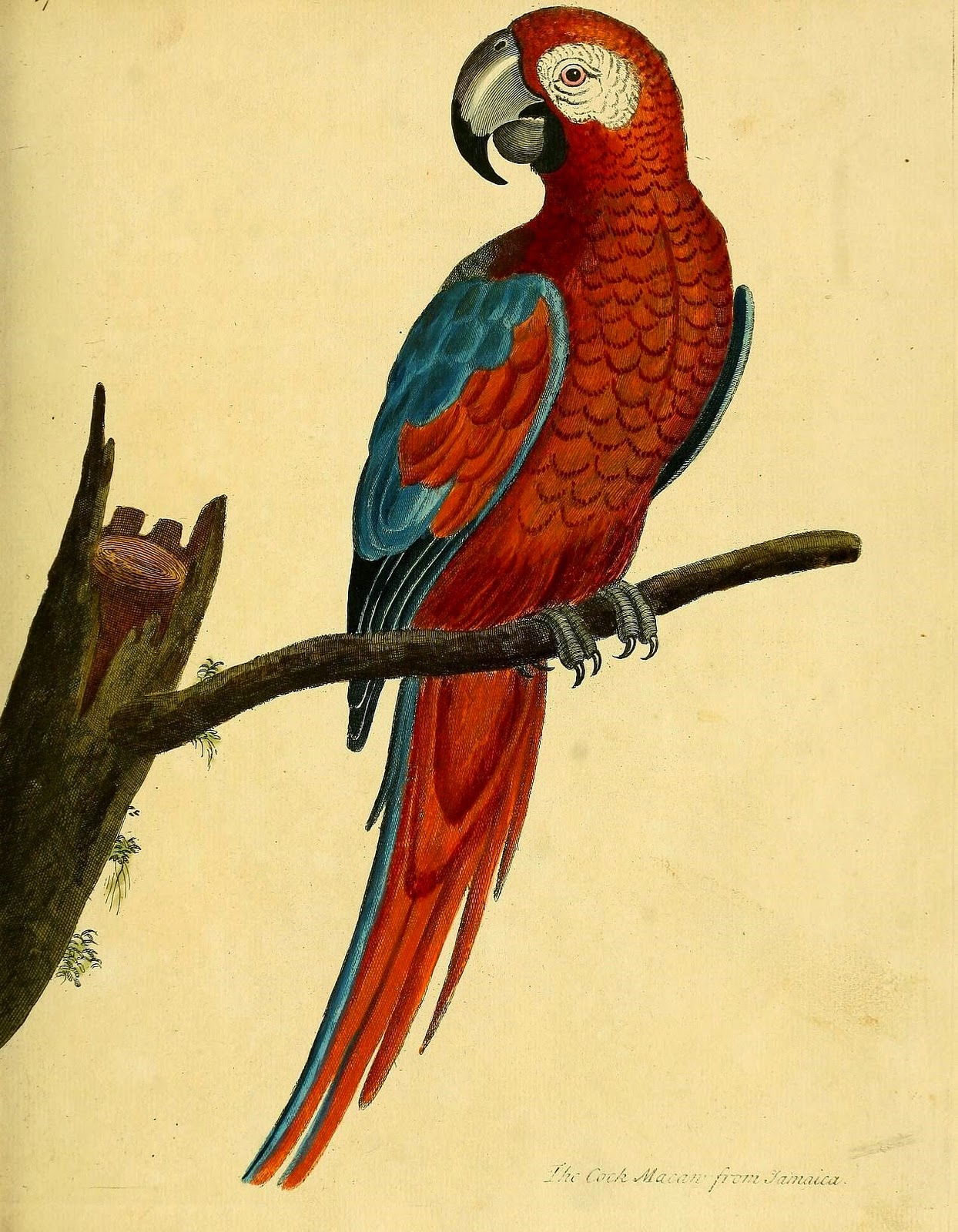
Jamaican Red Macaw (Ara gossei). Albin, Eleazar. A natural history of birds. v. 2 (1734). http://biodiversitylibrary.org/page/41130585.

Social Media and Outreach

  • The joint Smithsonian Libraries/BHL exhibit at the National Museum of Natural History, entitled “Once There Were Billions,” launched in June, 2014. The exhibit, which runs through October, 2015, highlights extinct North American bird species and features Martha, the last Passenger Pigeon. BHL published a series of blog posts and co-produced a TwitterChat in support of the exhibit.
  • Shark Week! Curious about the history of the discovery of the shark? Then you’ll love our blog post!
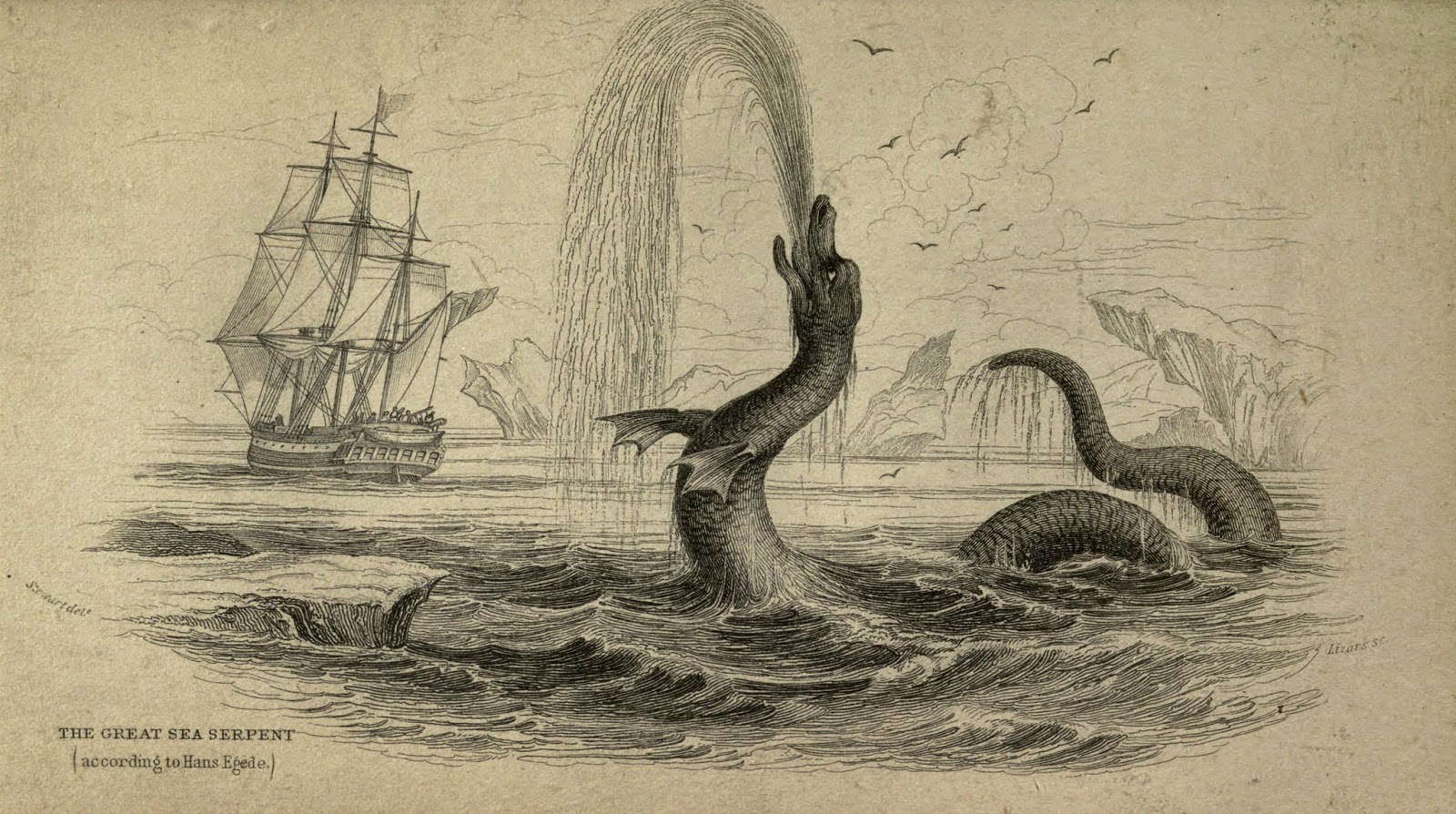
  • Monsters Are Real! In celebration of Halloween, BHL produced a multi-platform social media campaign featuring monsters in historic books and describing the stories, people, books, and animals that inspired these creatures.
  • Thanks to a grant from the Smithsonian Women’s Committee, awarded to the Smithsonian Libraries, BHL produced two online exhibitions this year: Early Women in Natural History and Latino Natural History. The exhibitions showcase the scientific and historical contributions of Women and Latino naturalists and illustrators.
View Full Size Image
The Great Sea Serpent, from BHL’s Monsters Are Real campaign. Jardine, William. The naturalist’s library. v. 25, Mammalia (1833-). http://biodiversitylibrary.org/page/18065345.
We’re quite proud of our accomplishments this year. Explore more project news and developments in our Quarterly Reports and Newsletters.
We’re excited about all we will accomplish in 2015, and look forward to sharing new developments with you on this blog, Twitter, Facebook, and our Newsletters. You can help support ongoing collections growth and program activities through a tax-deductible donation. Curious why historic literature and BHL are important to modern scientific work and conservation activities? See our blog series.
Happy New Year from the Staff at BHL!
January 1, 2015by Grace Costantino
BHL News, Blog Reel

We Need Books To…Support Conservation

This month, we’re publishing a series of blog posts outlining the importance of biodiversity literature, made available for free and open access through the Biodiversity Heritage Library, to today’s scientific research and conservation initiatives. With your help, we can help save biodiversity. 

Each week, 10-690 species go extinct, according to reports published via Nature. The responsibility for these extinctions rests predominantly on the shoulders of that enigmatic species, the Homo sapiens. Research published in Conservation Biology by senior authors Jurriaan de Vos and Stuart Pimm and their team reports that “extinctions are about 1,000 times more frequent now than in the 60 million years before people came along.” Conservation efforts around the world are striving to undermine this status quo. Species once near extinction (such as the Gray Wolf, California Blue Whales, and the Whooping Crane) are now thriving, and recent studies published in PLoS ONE by authors Bernard W. T. Coetzee, Kevin J. Gaston, and Steven L. Chown demonstrate that protected areas really do save biodiversity.

View Full Size Image
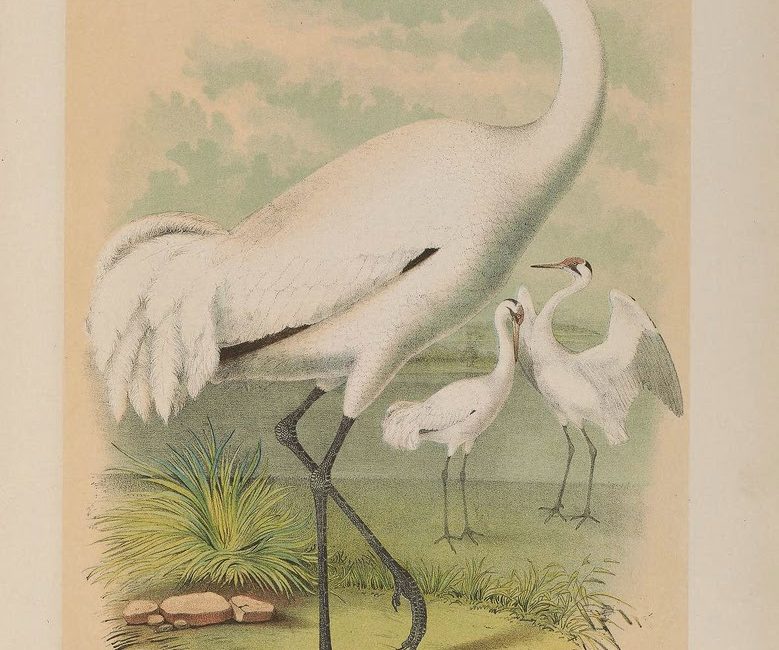
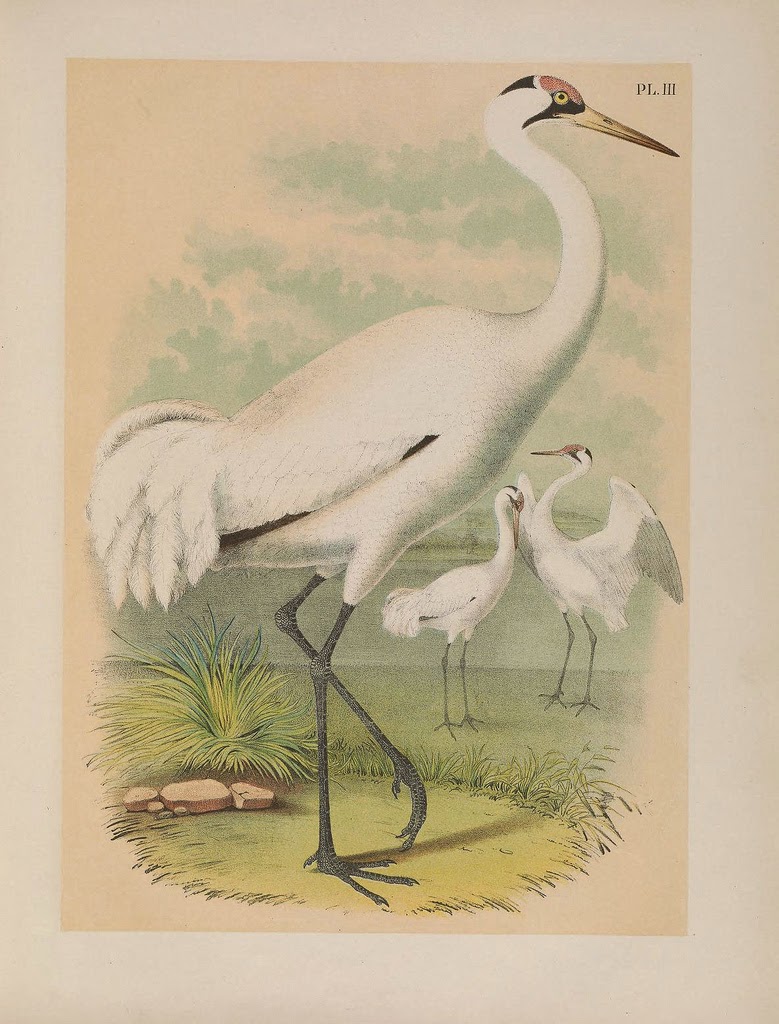
Whooping Crane, once near extinction is now recovering thanks to conservation efforts. Studer, Jacob Henry. The Birds of North America (1903). http://biodiversitylibrary.org/page/35159491.

Not surprisingly, historic literature and archives play a crucial role in conservation initiatives.

Identifying Species to Protect

The first step in any conservation process is identifying what species and habitats to protect. This involves determining which are threatened, as evidenced by biodiversity changes over time like population and distribution declines. To truly understand the extent of these changes, scientists must examine the historical record.

View Full Size Image
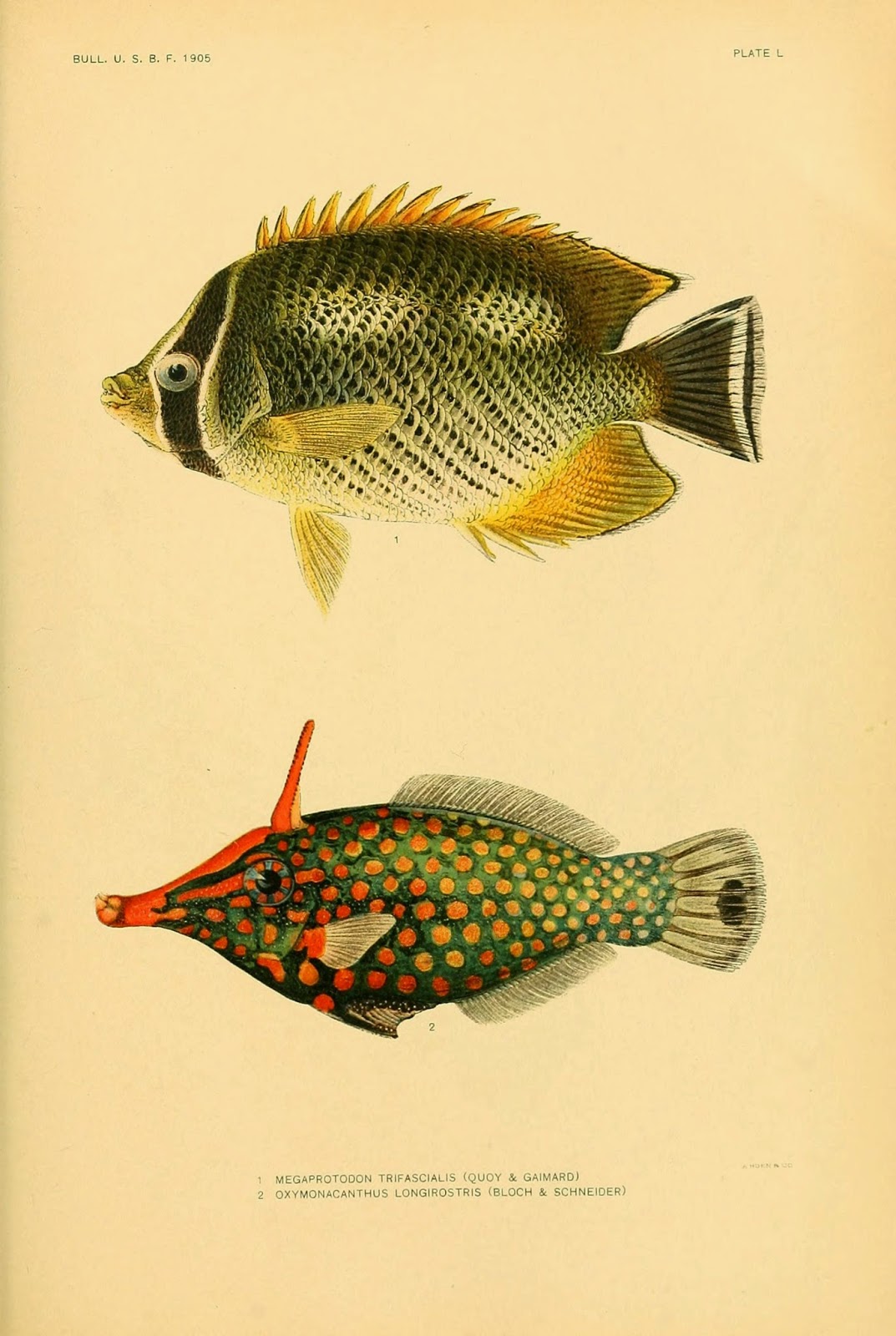
Chaetodon trifascialis and Oxymonacanthus longirostris in The Fishes of Samoa (1906). As Dr. Joshua Drew explains, “This book was one of the first comprehensive records in the Southwest Pacific…In it, Jordan and Seale give a great look into what these reefs were like before widespread development. Reading their words is like going through a time machine, and allows us a glimpse into a world that will probably never be again.” http://biodiversitylibrary.org/page/32055024.

“Having access to historical literature is essential to characterizing what ecosystems used to look like, what species were present and what peoples’ opinions of the health of the ecosystem were like throughout time,” explains Dr. Joshua Drew, a marine conservation biologist at The Field Museum. “Taxonomic literature allows me to see the whole history of a species laid out before me. I rely on [it] to get a glimpse of how these wonderfully diverse ecosystems used to look… before widespread development…[and use] those baselines to evaluate how current conservation measures are succeeding.”

Refining Conservation Initiatives

Historic literature and archives can also help scientists prioritize conservation efforts. Information about the relationships among organisms and the impacts of past extinctions reveals “keystone” species critical to the health of an ecosystem.

Climate change and biogeographic research can also further refine conservation strategies. NPR reports that climatology records in literature and fieldbooks help scientists predict future climate change patterns, which provide insight into what habitats (and thus resident species) may be at risk. By revealing how well species have adapted to external cues in the past (BioScience, Johnson et al), the historic record can also illuminate those unlikely to successfully cope with climate change (ScienceNews, Sarah Zielinski). With this knowledge, policy makers can prioritize conservation efforts, especially for the keystone species within these groups.

View Full Size Image
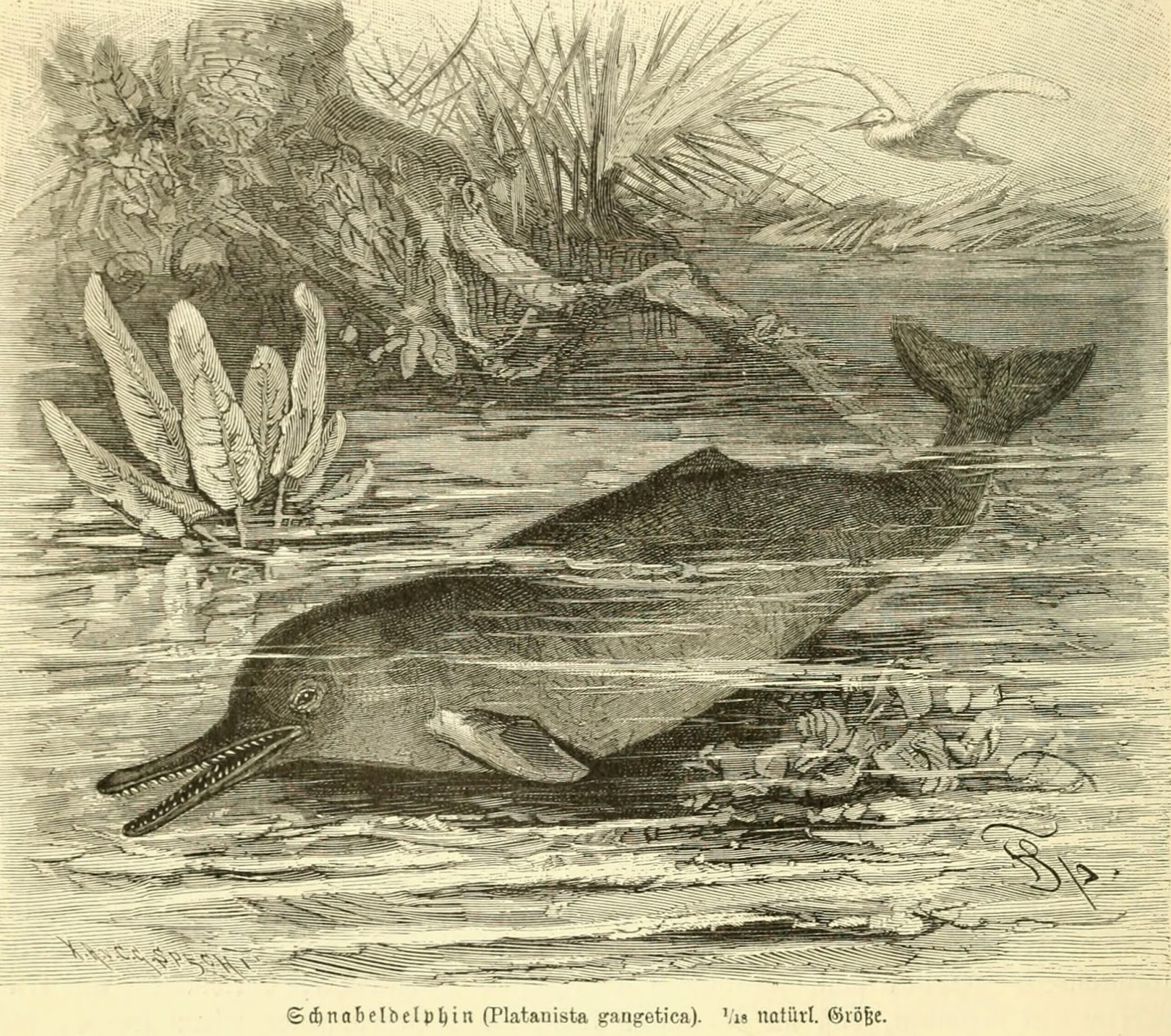
Indus River Dolphin, whose declines are linked to the proliferation of irrigation dams. Brehm, Alfred Edmund. Brehms Tierleben. 3rd rev. ed. v. 3 (1910). http://biodiversitylibrary.org/page/32929419.

The historic record can also elucidate activities that threaten species and ecosystems. For example, according to a study published in PLoS ONE by Braulik et al, distribution reports from the nineteenth century helped researchers correlate declines in the Indus River Dolphin’s population with the proliferation of irrigation dams. This knowledge has led to appeals for water management reform as part of a conservation strategy for the dolphins. Similar correlations can be made between species decline and forest degradation (as evidenced via a 2014 World Resources Institute release), a heated topic within land management reform.

BHL and Big Data

Recently, big data has changed how scientists conduct research, allowing them to more easily access and link biodiversity information. “There’s no question that information about biodiversity now falls firmly in the realm of big data… and the greatest challenge facing biodiversity informatics now is the transition to 21st-century data-management tools,” reports the Natural Environment Research Council of the UK. “The first [phase] is the major task of digitizing over 200 years’ worth of information from libraries and collections around the world.”

One major application of big data within conservation activities involves assembling georeference data. “Knowing where to act is vital,” emphasizes Dr. Stuart Pimm, a biologist at Duke University, in a 2015 Vox article. Thanks to big data, “We can map out where species are. That puts us in a position to be very much smarter about how and where to do conservation.”

View Full Size Image
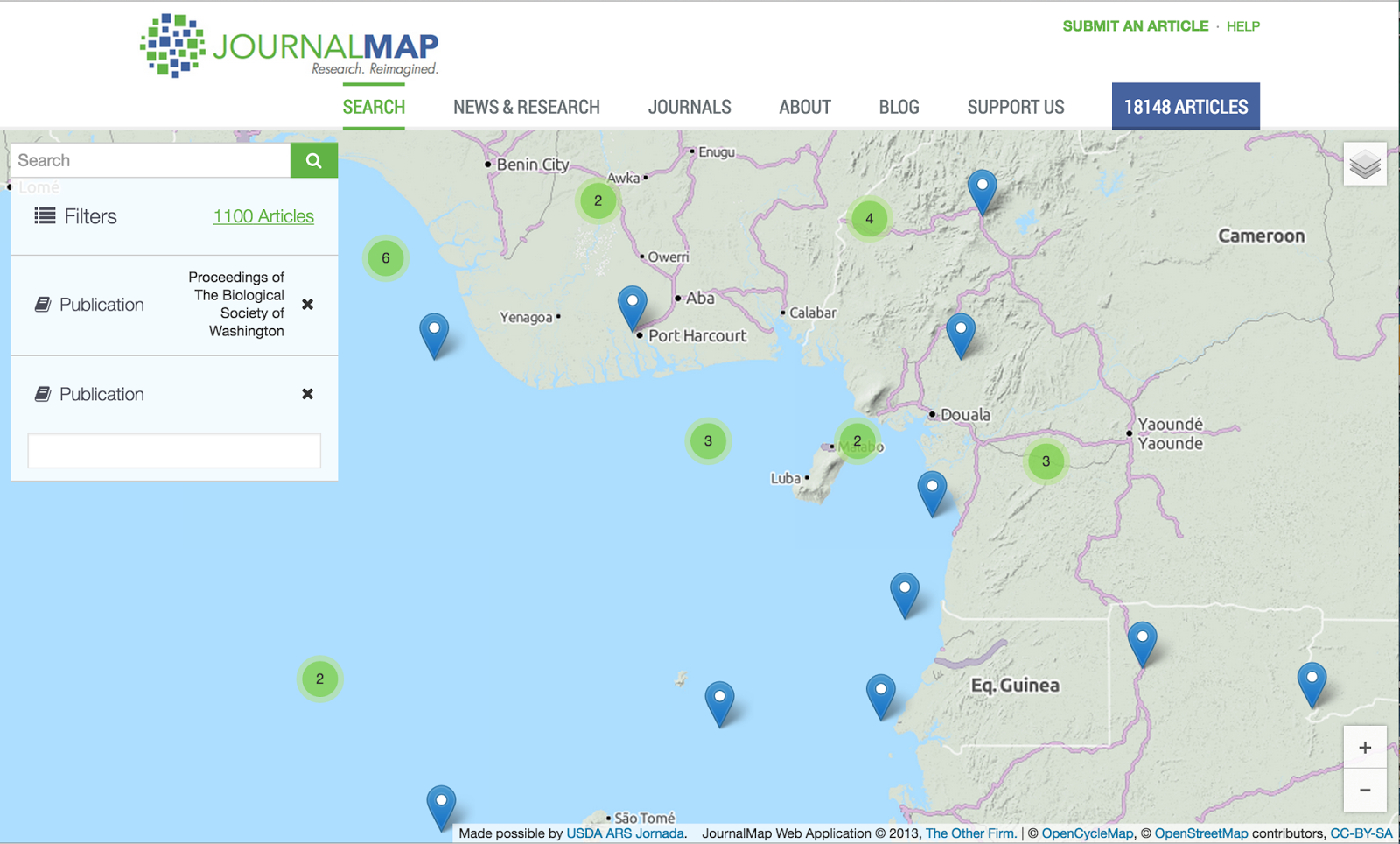
Species occurrence illustrated in JournalMap from geotagged content in Proceedings of The Biological Society of Washington on BHL, made available through BioStor.

Historic literature provides detailed information about the location of the species scientists have collected and observed throughout the centuries. By digitizing natural history literature under open access principles, the Biodiversity Heritage Library allows the embedded information (such as historic distribution records) to be integrated into big data initiatives.

BHL Helps Scientists Save Biodiversity. You Can Help!

Since the dawn of man, humans have been dramatically altering the biodiversity landscape, and not always for the better. Conservation is an ambitious endeavor “to preserve biodiversity, to restore diminished ecosystems, to advance the science of preventing extinctions, and to undo harm that humans have caused in the past” (Stewart Brand, National Geographic News). By providing evidence of population declines and habitat degradation, capturing distribution data, elucidating harmful activities, and revealing ecosystem interdependencies, historic literature and archives are integral to the formation of effective conservation strategies.

We rely on donations from users like you to help grow our library and keep it free and open. As you think about your holiday giving, we hope you’ll consider making a tax-deductible donation to help save biodiversity.

Learn more about the critical roles BHL and historic literature play in discovering new species, understanding past extinctions, and saving Earth’s biodiversity.

December 29, 2014by Grace Costantino
Page 39 of 71« First...102030«38394041»506070...Last »

Help Support BHL

BHL's existence depends on the financial support of its patrons. Help us keep this free resource alive!

search

About BHL

The Biodiversity Heritage Library (BHL) is the world’s largest open access digital library for biodiversity literature and archives. BHL operates as a worldwide consortium of natural history, botanical, research, and national libraries working together to digitize the natural history literature held in their collections and make it freely available for open access as part of a global “biodiversity community.”

Join Our Mailing List

Sign up to receive the latest news, content highlights, and promotions.

Subscribe Now

Subscribe to Blog via Email

Enter your email address to subscribe to this blog and receive notifications of new posts by email.

Join 319 other subscribers

Subscribe to Blog Via RSS

Subscribe to the blog RSS feed to stay up-to-date on all the latest BHL posts.

Access RSS Feed

Inspiring Discovery through Free Access to Biodiversity Knowledge.

The Biodiversity Heritage Library makes it easier than ever for you to access the information you need to study and explore life on Earth…for free, anytime, anywhere.


64+ Million Pages of
Biodiversity Literature Online.

EXPLORE

Tools and Services
to Transform Research.

EXPLORE

300,000+
Illustrations on Flickr.

EXPLORE

ABOUT | HARMFUL CONTENT | PRIVACY | SITE MAP | TERMS OF USE