Biodiversity Heritage Library - Program news and collection highlights from BHL
  • Home
  • News
  • Featured Books
    • All Featured Books
    • Book of the Month Series
    • BHL at 20
  • User Stories
  • Campaigns
    • Fossil Stories
    • Garden Stories
    • Monsters Are Real
    • Page Frights
    • Her Natural History
    • Earth Optimism 2020
  • Tech Blog
  • Visit BHL
Home
News
Featured Books
    All Featured Books
    Book of the Month Series
    BHL at 20
User Stories
Campaigns
    Fossil Stories
    Garden Stories
    Monsters Are Real
    Page Frights
    Her Natural History
    Earth Optimism 2020
Tech Blog
Visit BHL
  • Home
  • News
  • Featured Books
    • All Featured Books
    • Book of the Month Series
    • BHL at 20
  • User Stories
  • Campaigns
    • Fossil Stories
    • Garden Stories
    • Monsters Are Real
    • Page Frights
    • Her Natural History
    • Earth Optimism 2020
  • Tech Blog
  • Visit BHL
Biodiversity Heritage Library - Program news and collection highlights from BHL
Blog Reel, Campaigns, Featured Books, Monsters Are Real

The Quest for the Sea Serpent: An Oarfish or Something More?

View Full Size Image
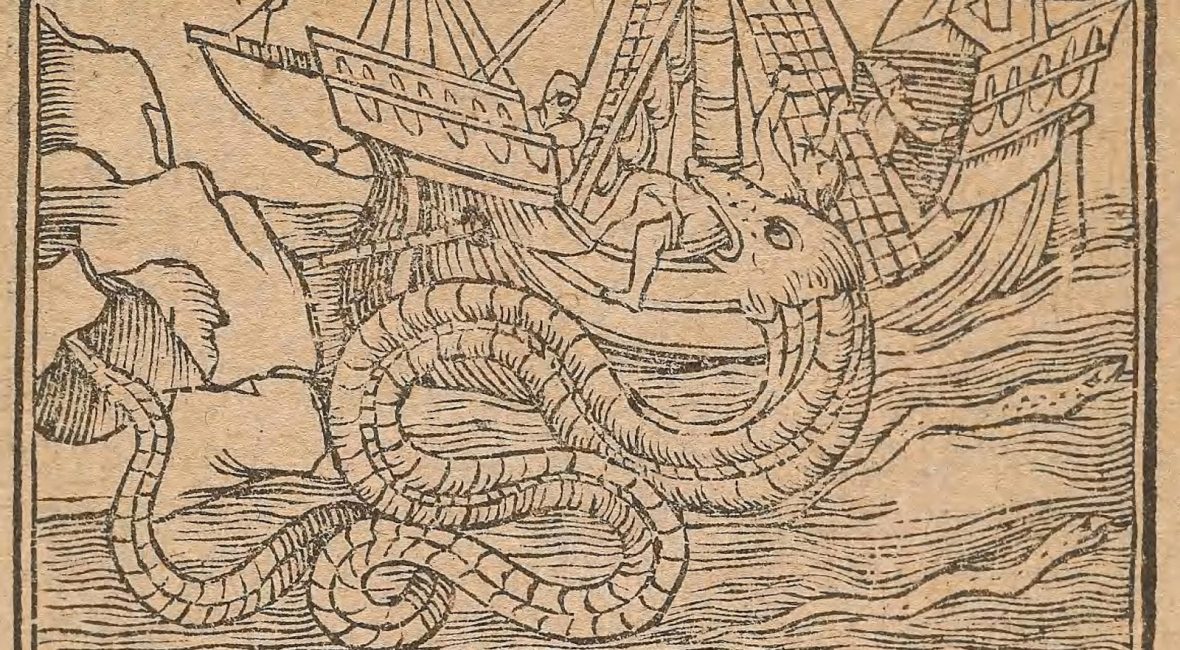
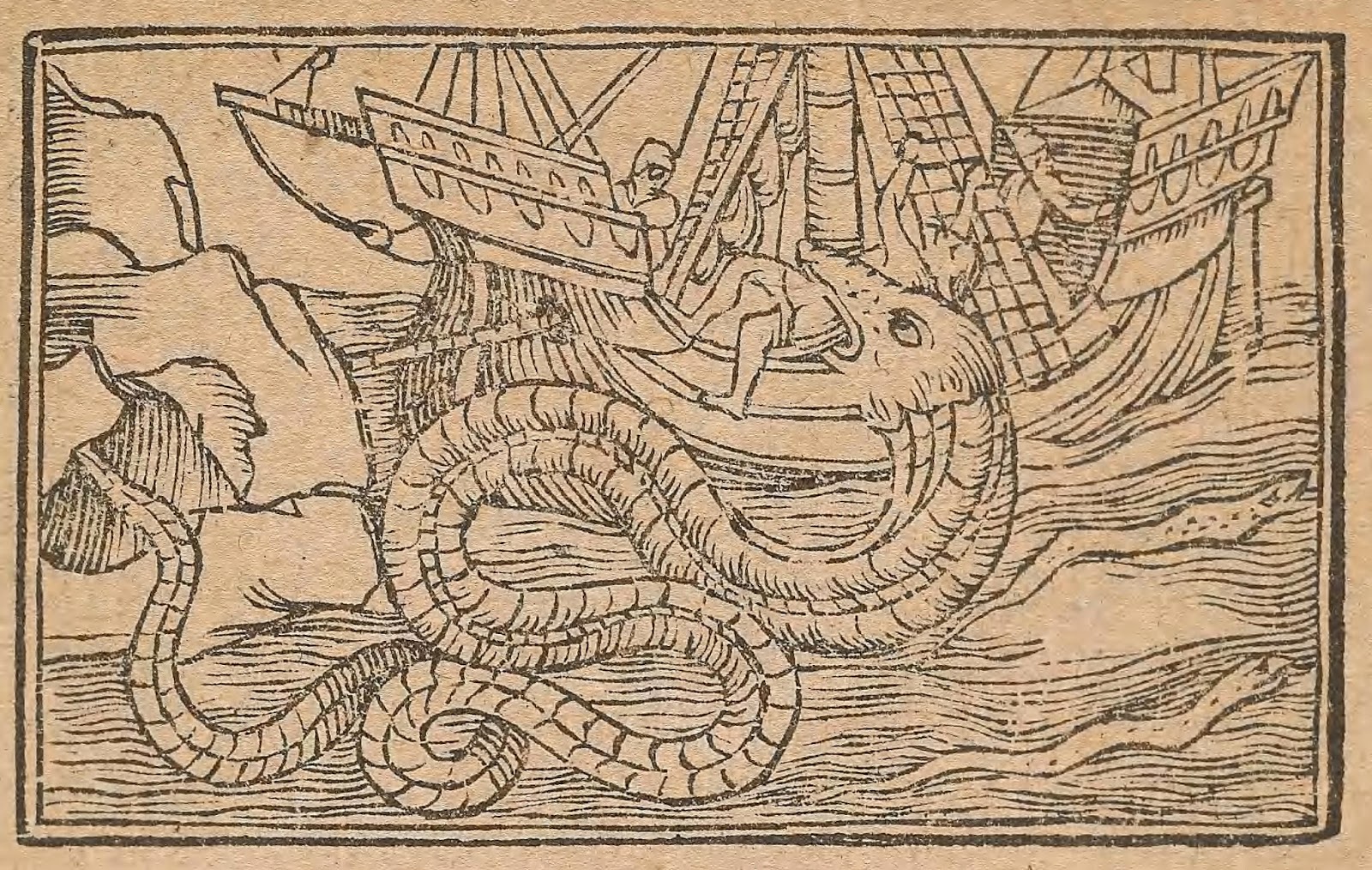
“Soe Orm.” Magnus, Olaus. Historia de Gentibus Septentionalibus. [ca. 1557 edition]. http://biodiversitylibrary.org/page/41862944.

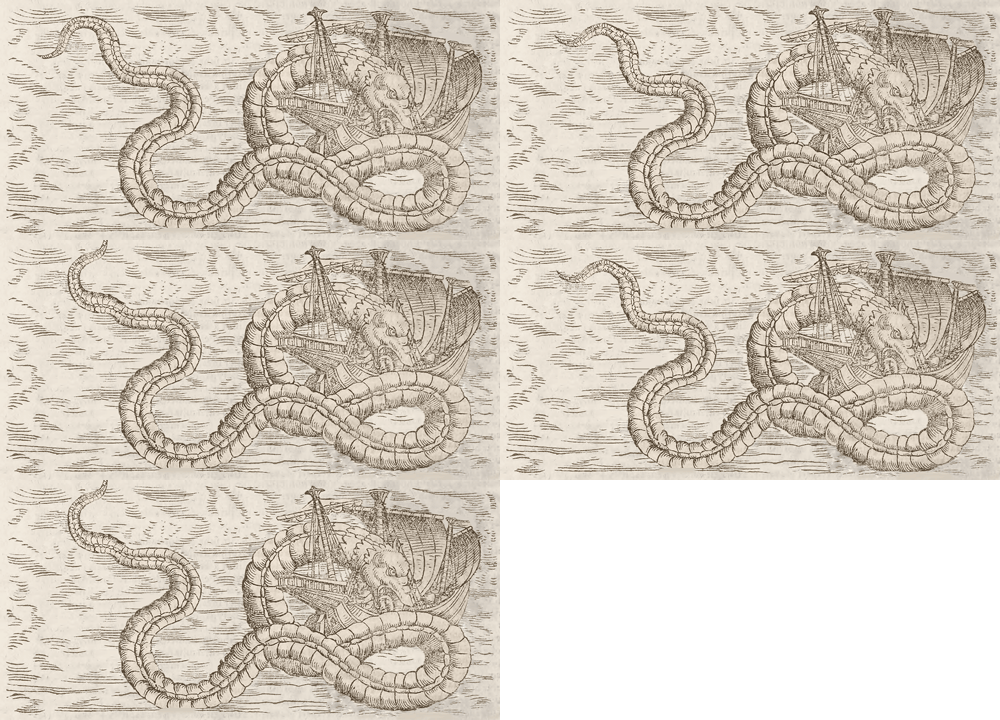
In the 16th century, the ocean was a terrifying place. Creatures of unimaginable size and ferocity stalked the waters. One such beast was Soe Orm.

“A very large sea serpent of a length upwards of 200 feet and 20 feet in diameter which lives in rocks and in holes near the shore of Bergen; it comes out of its cavern only on summer nights and in fine weather to destroy calves, lambs, or hogs, or goes into the sea to eat cuttles, lobster, and all kinds of sea crabs. It has a growth of hairs of two feet in length hanging from the neck, sharp scales of a dark brown color, and brilliant flaming eyes.”

Olaus Magnus gave this gripping description of his sea serpent, accompanied by an equally formidable woodcut, in the 1555 masterpiece Historia de Gentibus Septentrionalibus (ca. 1557 edition available in BHL). Magnus was hardly the first to assert that giant sea serpents existed, but his prestigious reputation (he was, after all, the archbishop of Sweden), and the subsequent recirculation of his descriptions and imagery by other notable historians, solidified a belief in the existence of such monsters.
View Full Size Image
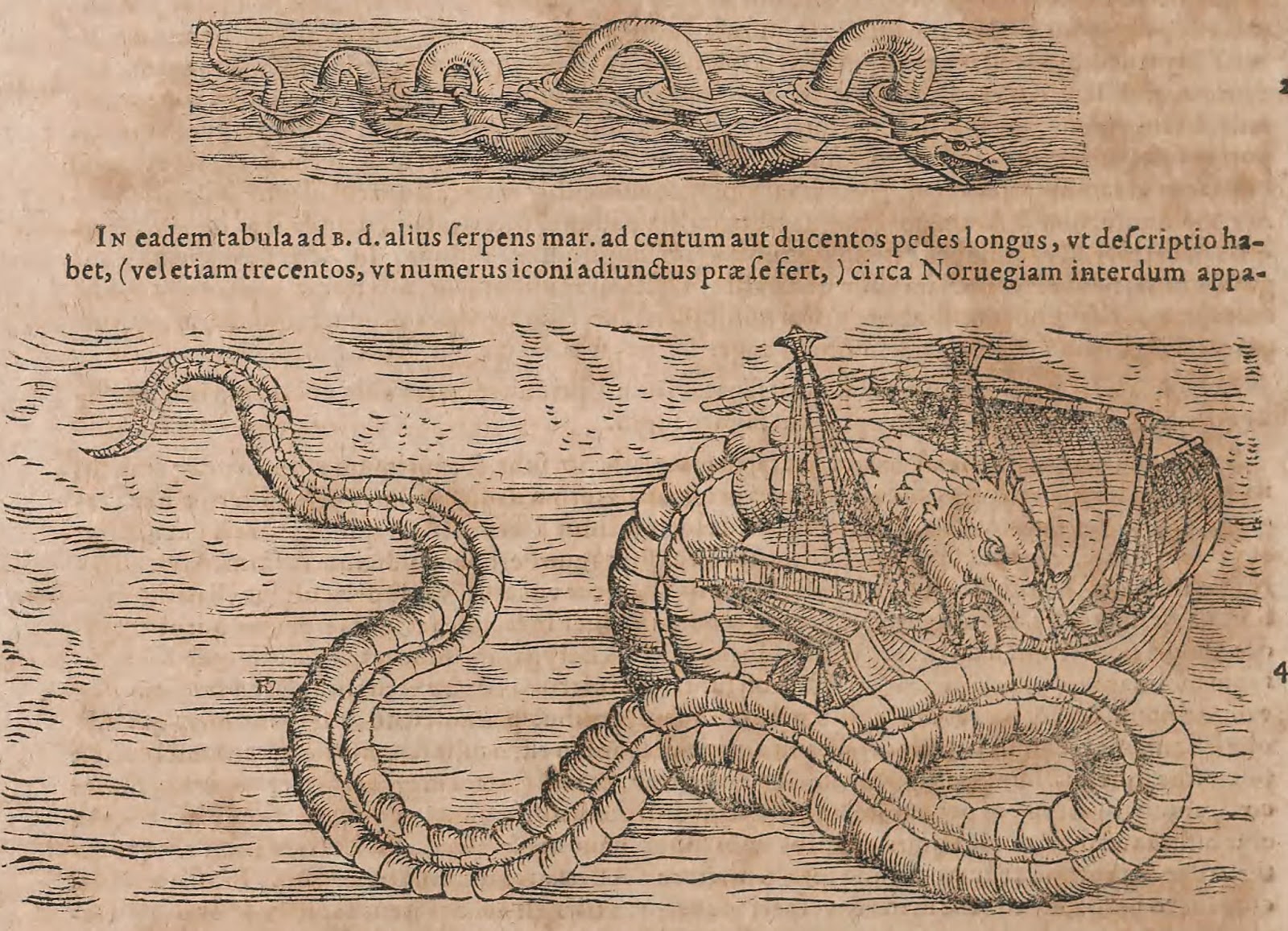
“Sea Serpent, after Magnus.” Gessner, Conrad. Historia Animalium. 2nd ed. 1604. http://biodiversitylibrary.org/page/42166517.

Magnus, of course, did not come up with the tale of Soe Orm on his own. The creatures he describes are based on accounts from sailors and Scandinavian locales, which in turn were based on encounters with strange aquatic creatures that became immortalized as sea serpents.

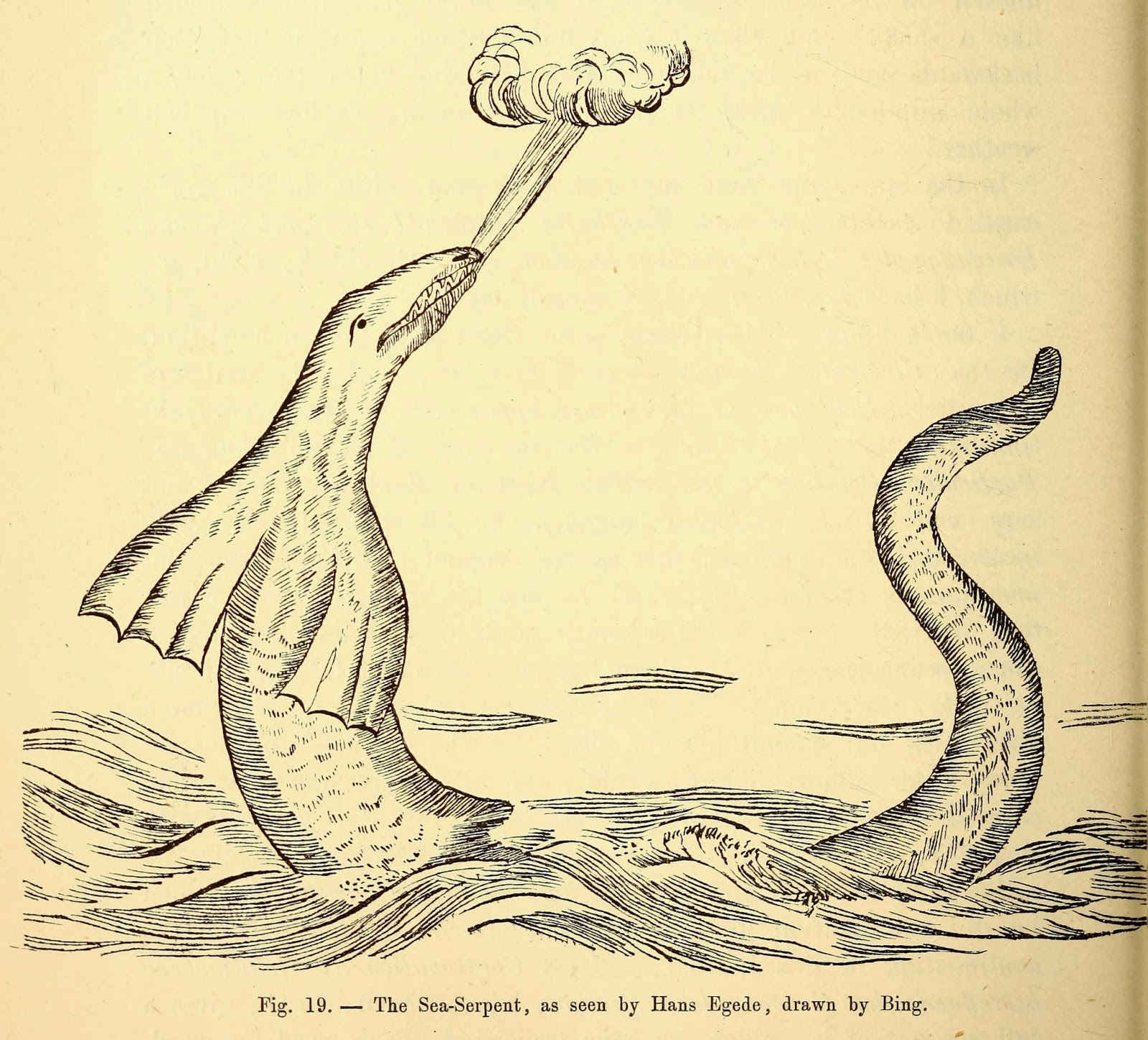
One of the earliest illustrations of a sea serpent drawn from an eye-witness account comes from Danish missionary Hans Egede, who claimed to have seen one off the coast of Greenland in 1734.

“The monster was of so huge a size, that coming out of the water its head reached as high as the mast-head; its body was as bulky as the ship, and three or four times as long. It had a long pointed snout, and spouted like a Whale-Fish; great broad paws, and the body seemed covered with shell-work.”
View Full Size Image
“Sea Serpent drawn after Hans Egede’s description.” Reproduced in: Oudemans, A.C. The Great Sea Serpent. 1892. http://biodiversitylibrary.org/page/41617356.

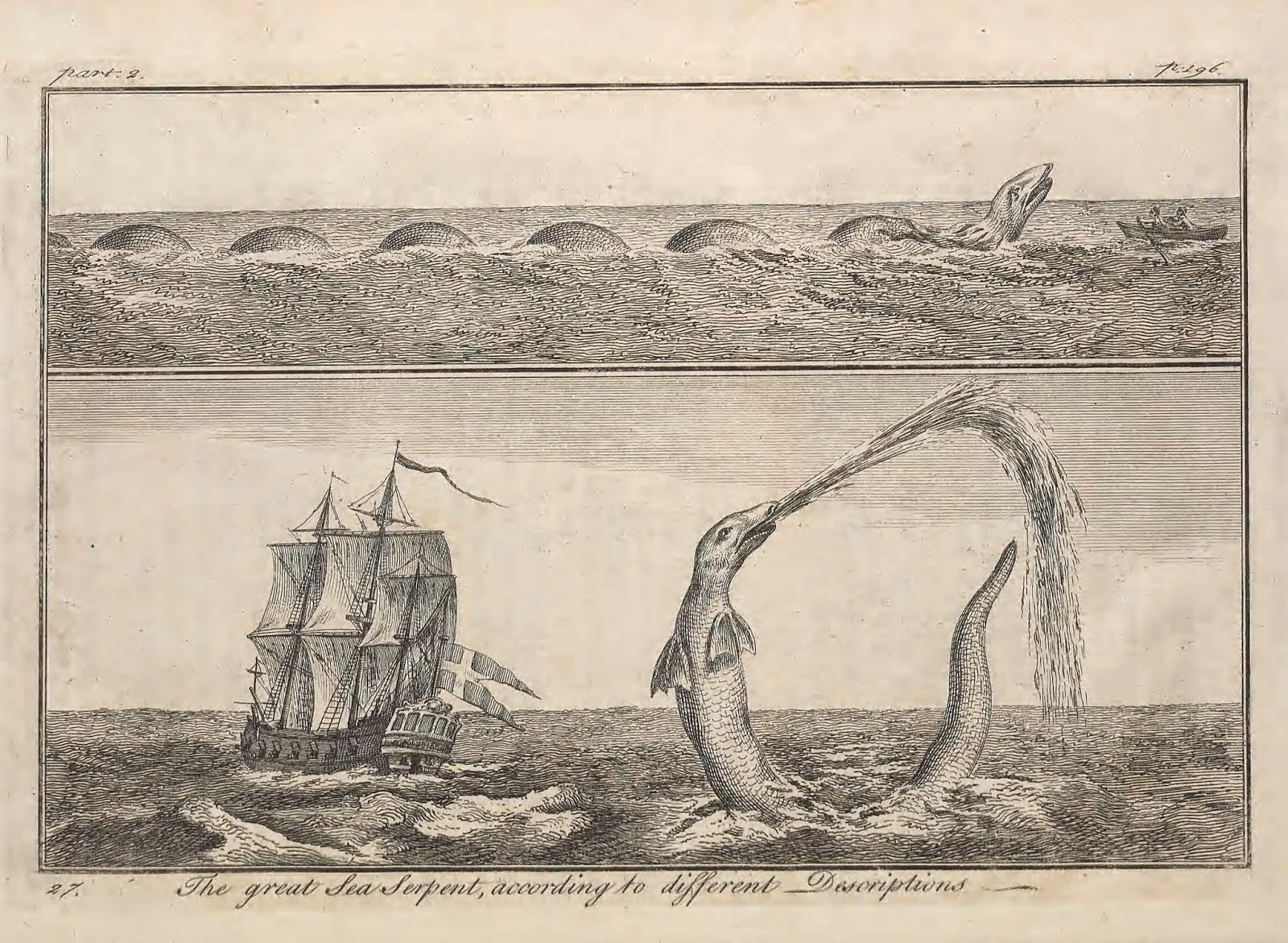
A drawing of Egede’s beast, and this description, was published in Det Gronlands nye Perlustration in 1741. Fourteen years later, Bishop Erik Ludvigsen Pontoppidan of Bergen published The Natural History of Norway, which relates two separate eye witness accounts of a sea serpent, one with a head that resembled a horse, and another with a snake-like body. Pontoppidan asserts that these eye-witness accounts provide “proper authorities for the real existence of this creature.”
View Full Size Image
“Sea Serpent representations based on accounts given to Erik Pontoppidan.” The Natural History of Norway. 1755. http://biodiversitylibrary.org/page/41885141.

Descriptions of sea serpents with manes or growths of hair about their necks (like those of Magnus and Pontoppidan) are common amongst monster lore. This feature provides a clue to one of the animals commonly mistaken for a sea serpent: the Oarfish.
View Full Size Image
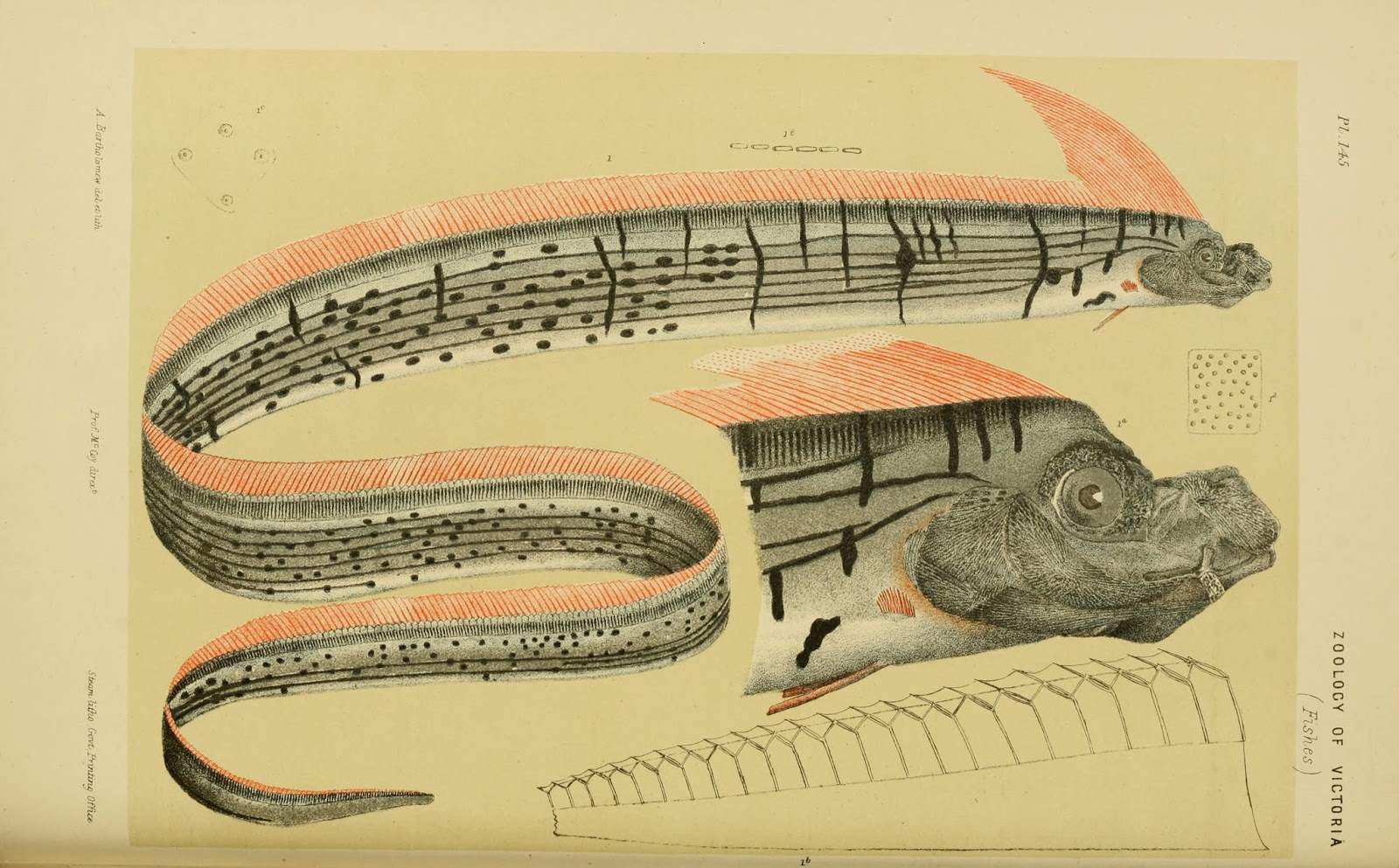
“Oarfish.” Natural History of Victoria. Decades 11-15. 1890. http://biodiversitylibrary.org/page/3828708. See an oarfish on display at Natural History Museum, Los Angeles County. See a video of a real oarfish.

An enigmatic creature, the oarfish is the longest bony fish alive, possibly measuring as long as 45-50 feet. Human encounters with these fish are rare, but they do have a red cockscomb of spines on their head and a red dorsal fin running the length of their bodies. Fleeting glimpses of oarfish could easily be exaggerated into an encounter with a monstrous sea serpent, and, to an untrained eye, the remains of such a fish washed up on a beach could understandably resemble the sea serpent of legend.

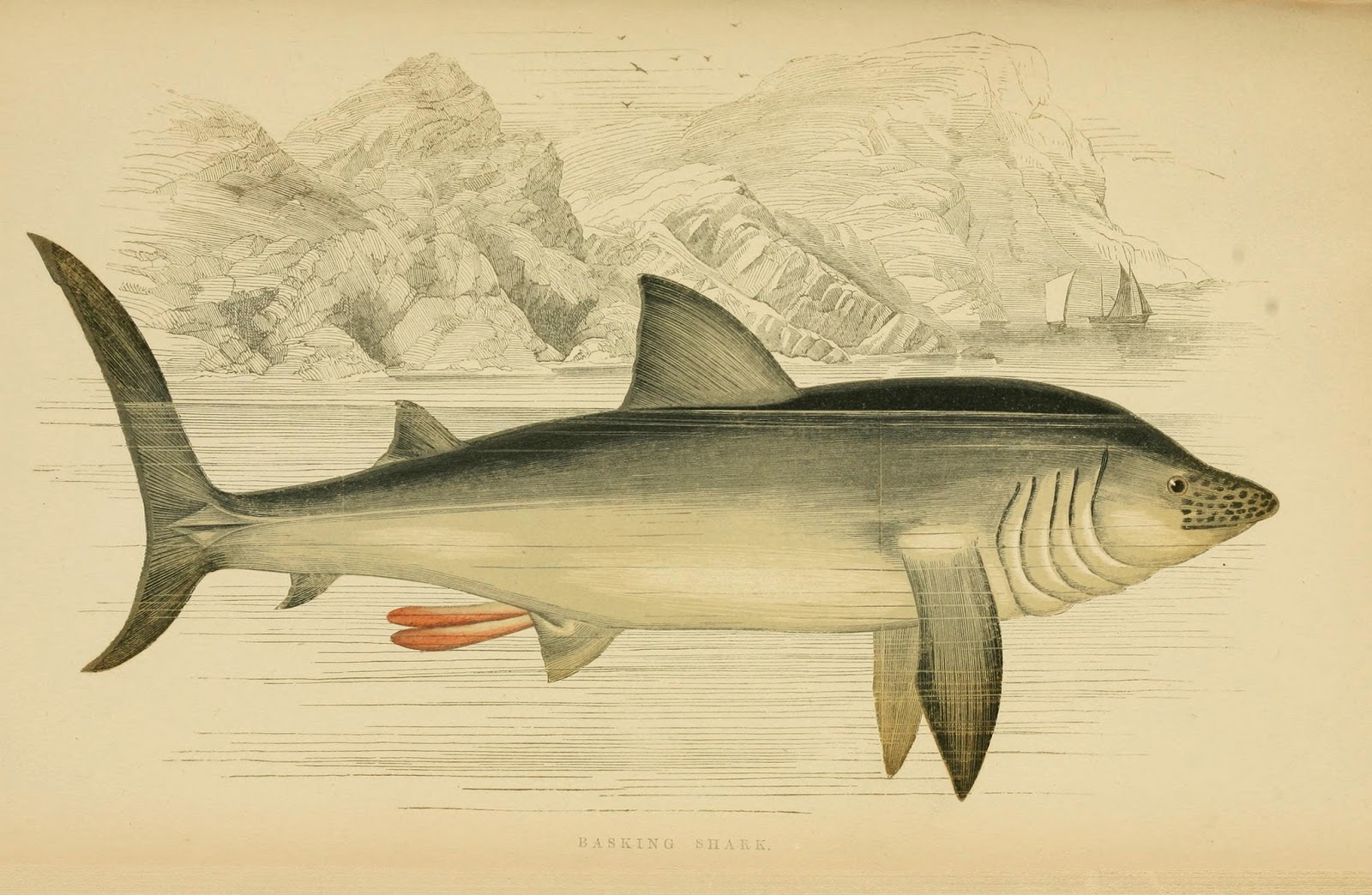
Basking Sharks, the second largest living fish (behind whale sharks) measuring up to 40 feet in length, have also been mistaken for sea serpents. In 1808, a badly decomposed carcass washed up on Stronsay. At a meeting of the Wernerian Natural History Society in Edinburgh, it was asserted that this carcass was the same creature described by Egede and Pontoppidan, and it was given the name Halsydrus (“sea water snake”). Later analysis of the skin and cartilage revealed that the “monster” was in fact a basking shark, and hardly a monster. These gentle giants are passive feeders with a diet of zooplankton and small fish and invertebrates.
View Full Size Image
“Basking Shark.” Couch, Jonathan. A History of the Fishes of the British Isles. v. 1. 1868. http://biodiversitylibrary.org/page/13419312.

One of the most infamous sea serpent episodes spanned decades. From 1817-19, a mass of people, including fishermen, military personnel, and pedestrians, reported seeing a sea monster at least eighty, but perhaps one hundred feet, long, with a head resembling a horse, in the harbor off Gloucester, MA. There were so many eye-witness reports that the Linnaean Society of New England formed a special investigating committee to examine the possibility of such a creature.

View Full Size Image
“The Sea Serpent ‘baby’ found in Massachusetts: Scoliopus atlanticus.” Oudemans, A.C. The Great Sea Serpent. 1892. http://biodiversitylibrary.org/page/41617628. Learn more about the Gloucester mystery, and see a digitized letter from Francis Boott describing the events, in a post from Kew Royal Botanic Gardens, by Jon Nicholls.

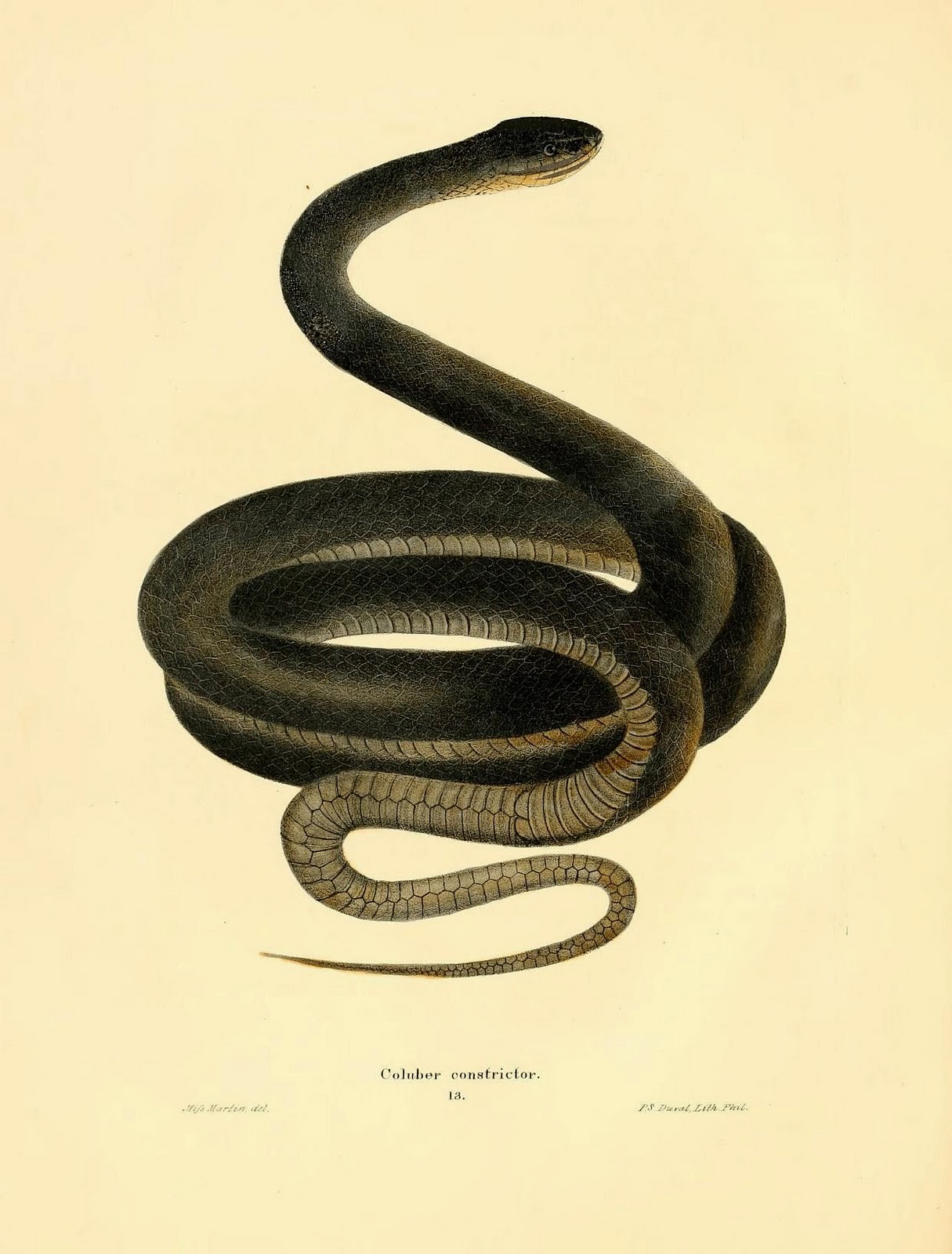
Then, in October 1817, two young boys found a three-foot-long, serpent body with humps on a beach not far from where the sightings had occurred. The Linnaean Society declared that the Gloucester sea serpent had visited the harbor in order to lay eggs, and that the specimen the boys had found represented one of its young. They invented an entirely new genus and named the sea serpent Scoliophis atlanticus (“Atlantic Humped Snake”). Shortly thereafter, naturalist Alexandre Lesueur examined the specimen and reported that it was, in fact, a deformed common blacksnake (Coluber constrictor).
View Full Size Image
“Common Blacksnake.” North American Herpetology. v. 4. 1840. http://biodiversitylibrary.org/page/3682780.

In 1819, undaunted by Lesueur’s findings, and still believing the Gloucester serpent to be valid, French-American naturalist Constantin Samuel Rafinesque-Schmaltz gave the creature a scientific name, Pelamis megophias, but admitted that it might constitute its own genus, in which case it should be named Megophias monstrosus.

Enthusiasm and belief in the Gloucester sea serpent continued, with repeated sightings throughout the nineteenth and twentieth centuries (the last documented sighting was in 1962). While the identity of the creature has never been established, several candidates have been proposed, including a row of leaping porpoises, giant eels, sea snakes, whales, seals, and, of course, our good friend the oarfish. The spontaneously-created scientific name Scoliophis atlanticus is now considered a synonym of the basking shark, revealing yet another likely identity for the monster. No evidence confirming the existence of a new-to-science species off the coast of Massachusetts has been found.

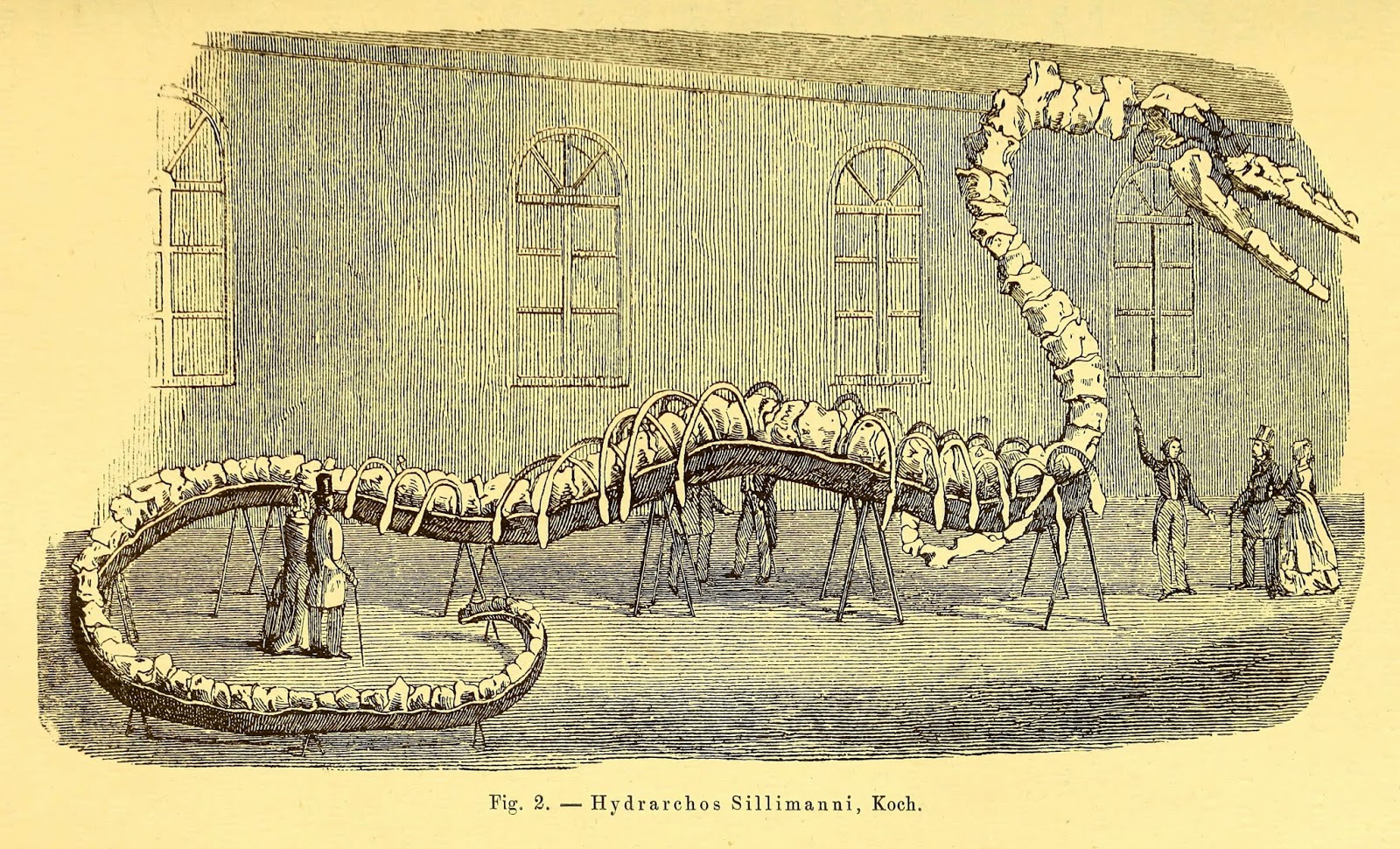
Sea Serpent proponents enjoyed a brief moment of triumph in 1845 when Albert C. Koch, a German collector, exhibited a full skeleton of what he called Hydrarchos sillimani at the Apollo Saloon on Broadway. Claiming to have found the entire skeleton in Clarksville, Alabama, his sea serpent was 114 feet in length. The glory was short-lived. Harvard anatomist Jeffries Wyman debunked the skeleton as an “artfully assembled collection of bones from at least five fossil specimens of Basilosaurus, a 45-foot long ancestral whale.” (Ellis, pg. 56).
View Full Size Image
“Albert Koch’s Sea Serpent.” Oudemans, A.C. The Great Sea Serpent. 1892. http://biodiversitylibrary.org/page/41617235.

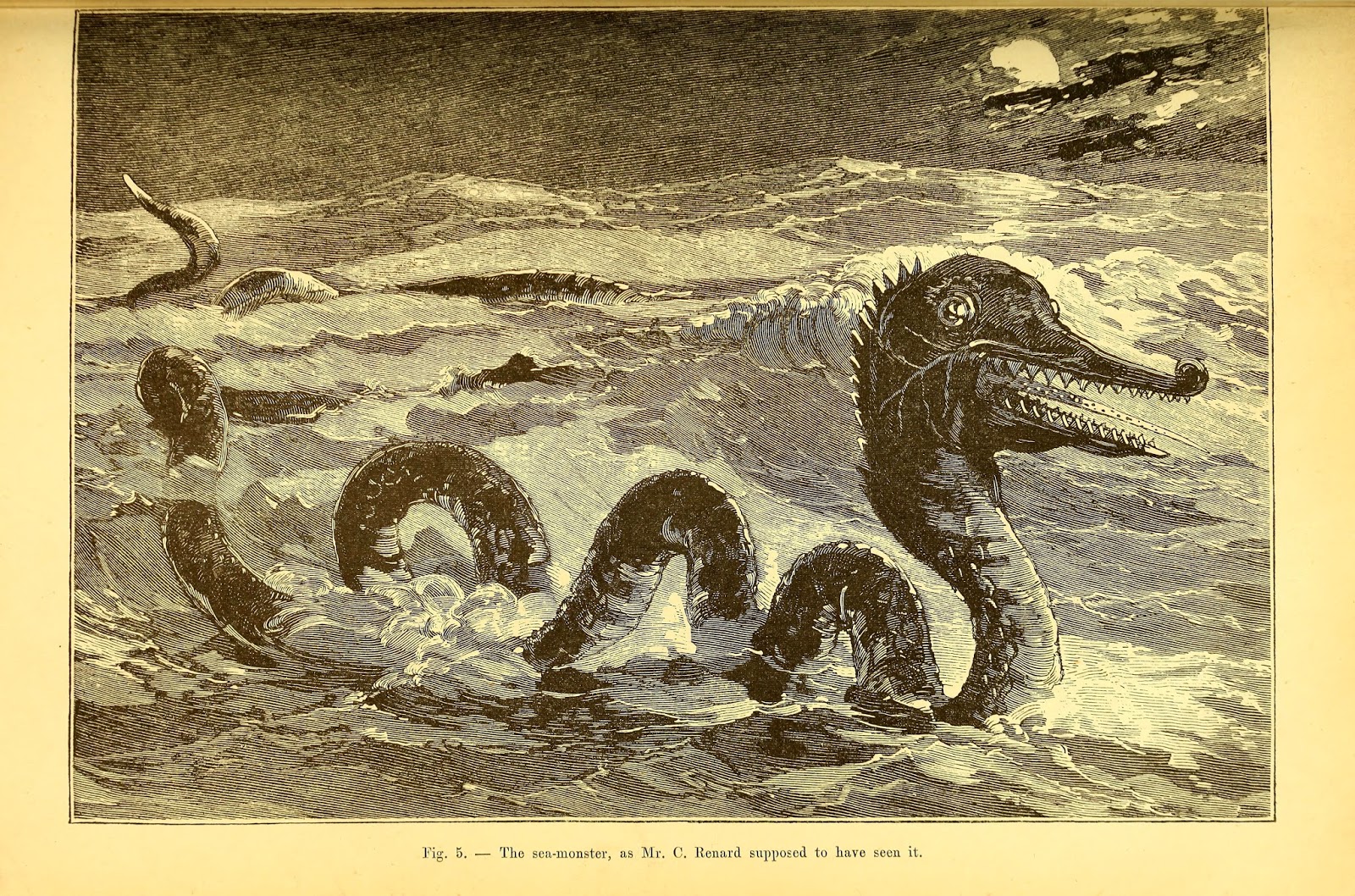
In the late nineteenth century, Olaus Magnus’ accounts were again repurposed, this time in Antoon Cornelis Oudemans’ The Great Sea-Serpent. An entomologist by training, Oudemans spent a majority of his free-time amassing a wealth of information on sea serpents, in which he fully believed. His book represents a systematic collection and analysis of the sightings supporting the sea-serpents’ existence. He claimed that all verified sightings of the beast belonged to the creature classified by Rafinesque, but that the monster was not a reptile at all but a mammal that belonged within the order Pinnipedia. Demonstrating some transformation in public opinion by the end of the nineteenth century, Oudemans’ book was highly criticized at its release. Times (London) went so far as to call it “a joke.” Nevertheless, it is an invaluable resource as record of sea serpent lore and sightings.
View Full Size Image
“The Sea Monster.” Oudemans, A.C. The Great Sea Serpent. 1892. http://biodiversitylibrary.org/page/41617299.

Does the Sea Serpent Exist?

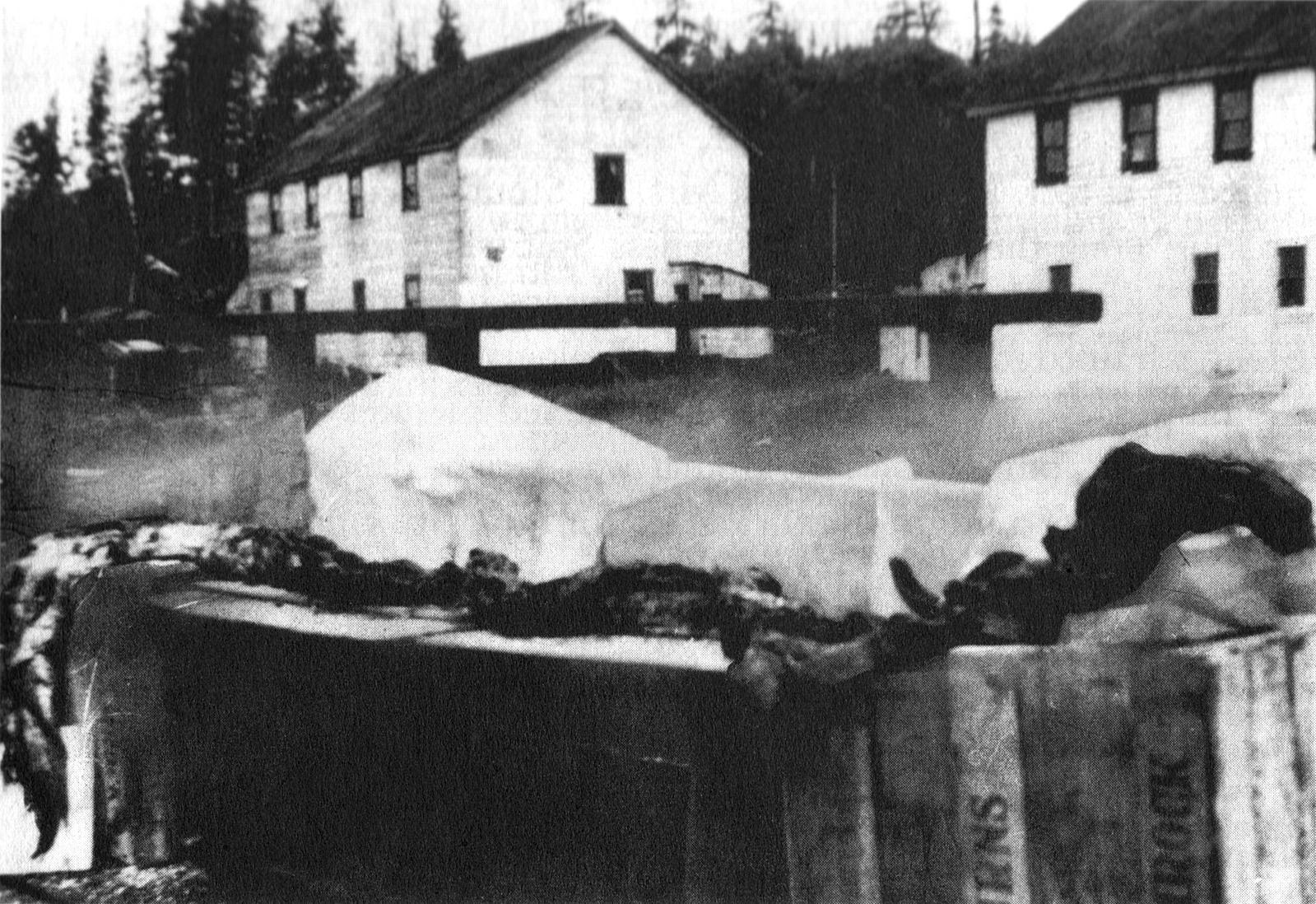
Accounts of sea serpents continue to this day, including the still unresolved debate regarding the Cadborosaurus. Many have been unquestionably linked to known species, while others are associated with likely candidates.
View Full Size Image
Reported specimen of Cadborosaurus willsi, an alleged sea serpent from the Pacific Ocean. Over 200 sightings have been attributed to this species. This image captures a carcass taken from a Sperm Whale’s stomach and photographed in October, 1937. Researchers believe this specimen is actually a fetal baleen whale. http://commons.wikimedia.org/wiki/File:Cadborosaurus_October_1937.jpg.

So, does a sea creature roaming the seas, seen by countless witnesses over the centuries, really exist? Yes. It just goes by the more common name of Oarfish…or Basking Shark…or Humpback Whale…or Eel…It’s just another classic case of mistaken identity flavored with some good-old-fashioned embellishment…

Then again…

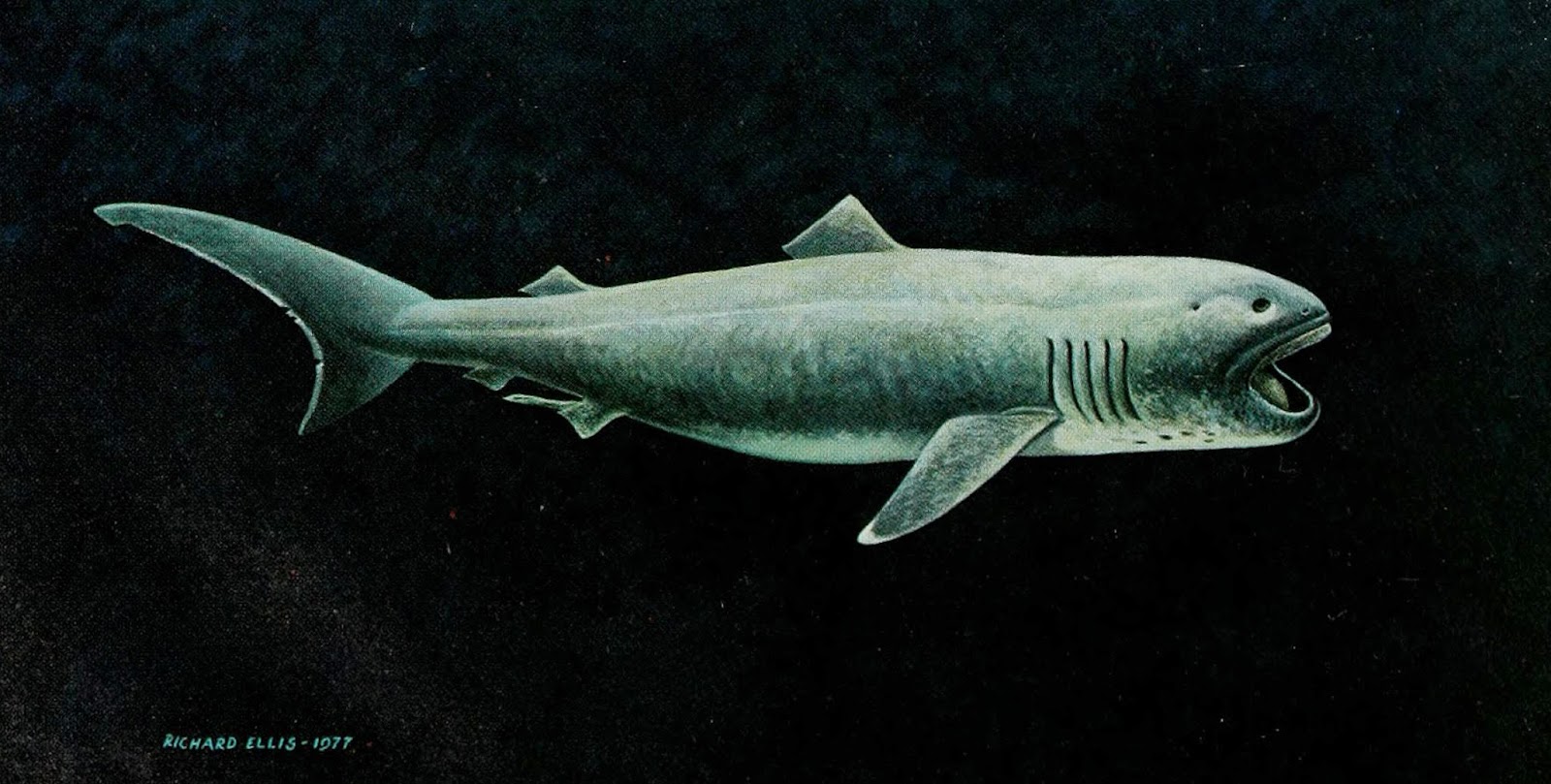
…Unlike the hydra and mermaids, questions as to the existence of the legendary sea serpent still remains. It’s a favorite topic within cryptozoology. The rediscovery of the coelacanth in 1938, believed extinct for 70 million years, and the discovery of the megamouth shark in 1976, leads many proponents to insist that an undiscovered marine titan, or a surviving dinosaur, is yet to be found.
View Full Size Image
In 1976, an extremely rare deep water shark, the Megamouth, was discovered off the coast of Hawaii. See the description of the new species in Proceedings of the California Academy of Sciences. 4th series, v. 43. 1983. http://biodiversitylibrary.org/page/15775401. See a Megamouth and Coelacanth on display at the Natural History Museum, Los Angeles County.

Does an unidentified species of untold length, serpentine in appearance, lurk in the ocean depths, waiting to be discovered? Only time will tell…though we’d venture to guess it does not come ashore at night to feast on livestock….
View Full Size Image
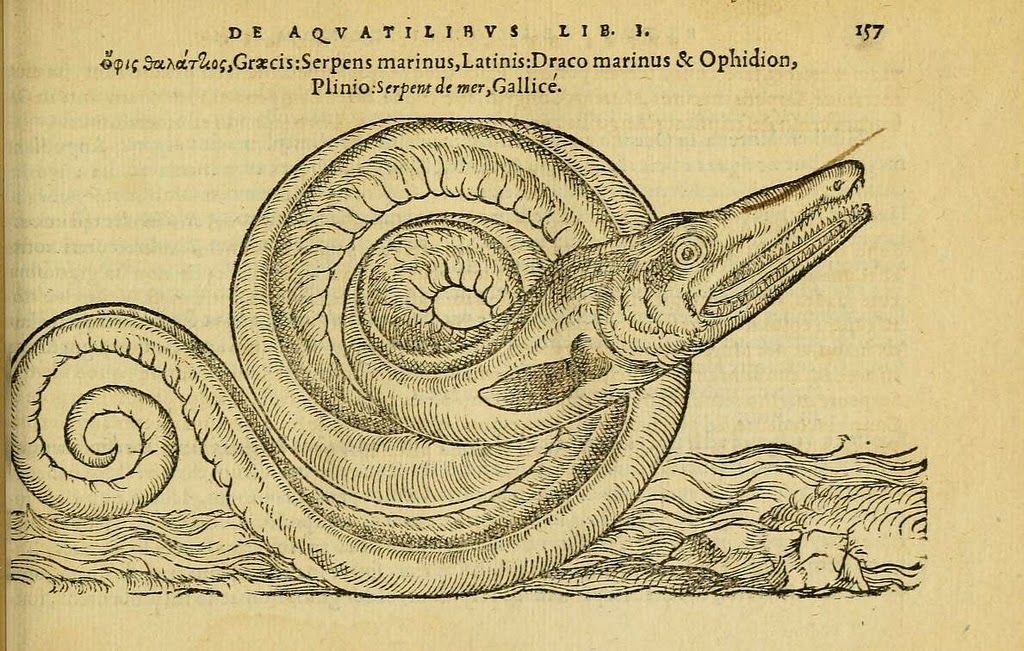
“The Sea Serpent.” Belon, Pierre. Petri Bellonii Cenomani De aquatilibus, libri duo cum [epsilon, iota] conibus ad viuam ipsorum effigiem, quoad eius fieri potuit, expressis. 1553. http://biodiversitylibrary.org/page/4770301. Explore more Sea Serpent lore in the Mythic Creatures online exhibit from the American Museum of Natural History.

More Monsters Are Real fun!

  • Follow our blog and #bhlMonstersRreal on Twitter and Facebook all week to learn more about monsters and the animals that inspired them.
  • Browse historic illustrations of sea serpents and animals mistaken for sea serpents on Flickr.
  • Browse the books that portray these historic monsters in BHL.
  • Carve a Sea Serpent in your Halloween Pumpkin this year! Share your carvings with us on Facebook and Twitter!
  • See some of our favorite monsters come to life on the Smithsonian Libraries’ Tumblr!
View Full Size Image
“Attack of the Sea Monster!” In 1555, Olaus Magnus published an image and description of the Soe Orm, which he claimed was a giant sea serpent 200 feet in length that lived near the shore or Bergen and came out at night to eat the farmers’ livestock. His image and description was republished for centuries. See more fantastic historic monsters come to life on the Smithsonian Libraries’ Tumblr. GIF created by Richard Naples (Smithsonian Libraries), based on Gessner, Conrad. Historia Animalium. 2nd ed. 1604. http://biodiversitylibrary.org/page/42166517.

Reference:

  • Ellis, Richard. Monsters of the Sea. New York: Alfred A. Knopp, Inc., 1994. Print.
October 29, 2014by Grace Costantino
Blog Reel, Campaigns, Featured Books, Monsters Are Real

A Whale of a Tale…The Leviathan

The Devil Whale

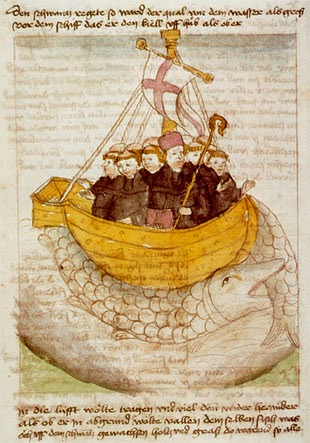
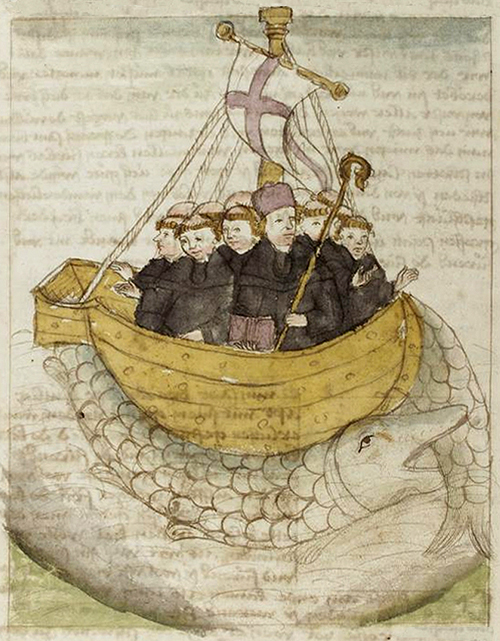
In the 6th century AD, St. Brendan, an Irish cleric, and eighteen other monks, sailed out from Ireland to cross the ocean. Amidst their journey, they came upon a black, treeless island and decided to make camp for the night. Several monks set up a cooking station and lit a fire. And then the island began to move. Terrified, the monks fled back to their boat, leaving the food and fire behind. St. Brandon urged them not to be afraid; it was simply the great fish Jasconius, “which laboreth night and day to put his tail in his mouth, but for greatness he may not” (Navigatio sancti Brendan abbatis, 9th century, translated from Latin).

View Full Size Image
St. Brendan atop Jasconius. Manuscriptum translationis germanicae (ca. 1460, Cod. Pal. Germ. 60, fol. 179v, Universitätsbibliothek Heidelberg). http://www.hs-augsburg.de/~harsch/Chronologia/Lspost10/Brendanus/bre_navi.jpg.

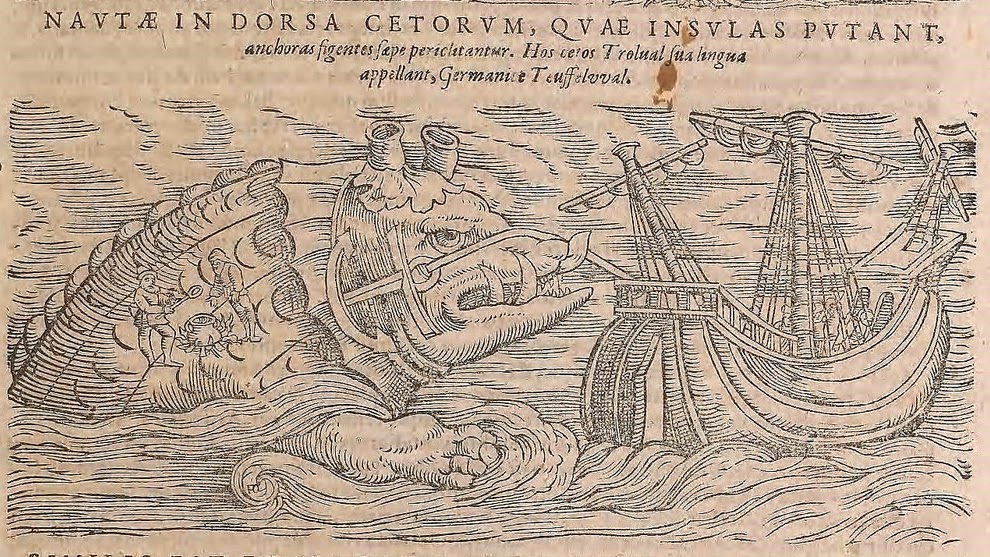
Gessner describes Jasconius by another name: the Trol whale or Devil Whale, which lies asleep in the water and is often mistaken for an island by hapless sailors. Gessner was likely inspired by Magnus, who claims that the whale’s skin is like sand, lending to its confusion with a beach. When the whale is disturbed by the sailors’ dinner fires, it sinks, causing such a whirpool that the ships themselves are often sunk.

View Full Size Image
The Devil Whale, complete with sailors trying to cook a meal on its back. Gessner, Conrad. Historia Animalium. 2nd Ed. 1604. http://biodiversitylibrary.org/page/42165750.

For centuries, men have imagined all manner of aquatic monsters. The ocean was a strange and foreign place, and even several hundred years ago, was very little explored. “If the very body of the ocean presented a fearsome aspect, with its dark, roiling waters, its threatening visage, and its intimidating vistas, its occupants were the quintessence of terror,” wrote marine biologist Richard Ellis in his book Monsters of the Sea. “The landlubbers’ only contact with the large creatures of the sea was at best sporadic and often completely incomprehensible” (Ellis, pgs. 193-194).

This sporadic contact spawned tales of horrible beasts. Quite often, these horrible beasts were, in truth, cetaceans.

The Sperm Whale: Chief Among the Leviathans

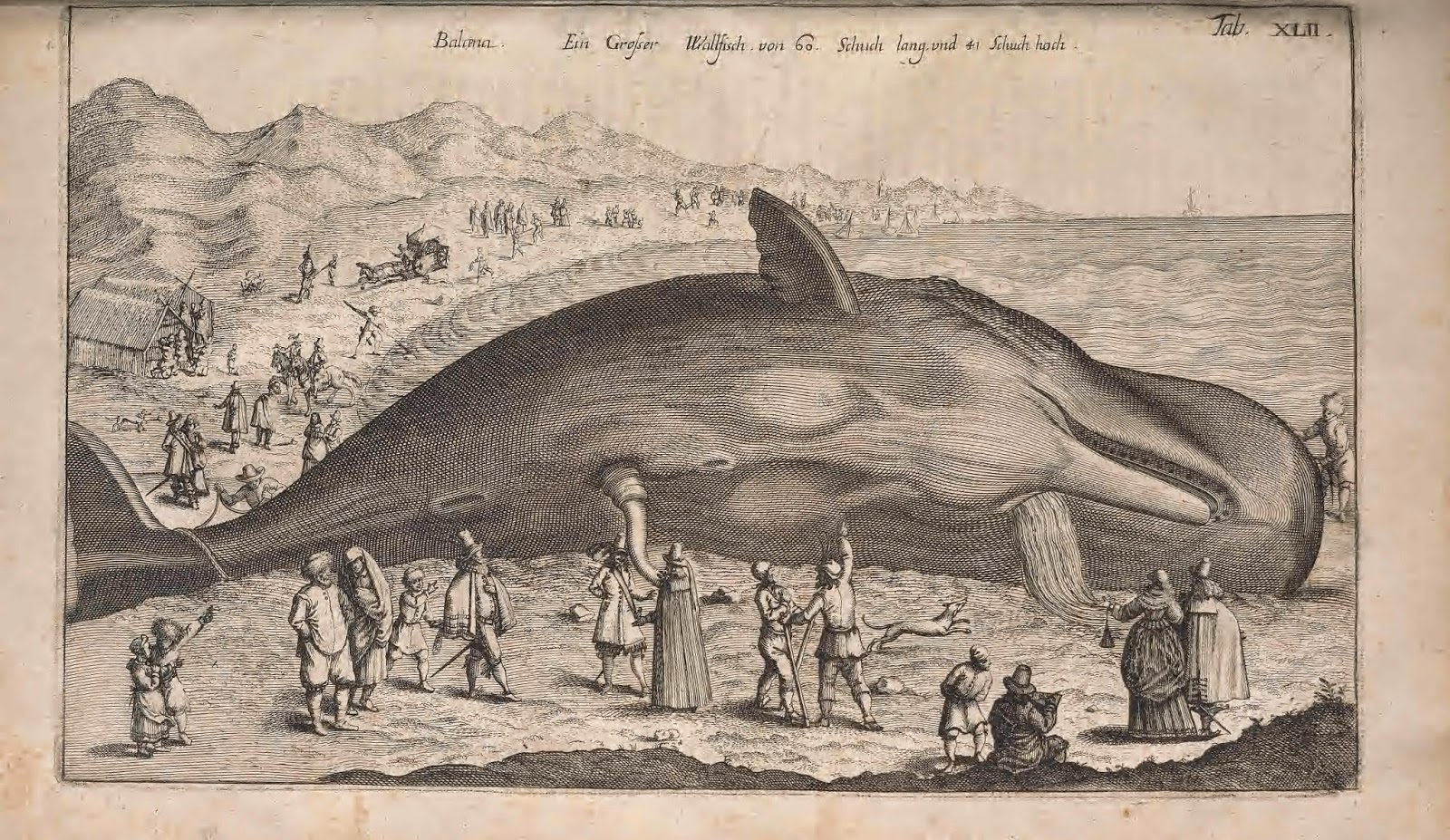
Even before sailors encountered whales in the ocean, washed up carcasses, sometimes badly mutilated, ignited a fear of the creatures of the deep. According to Ellis, “the sperm whale, with its mysterious habit of stranding on shallow beaches, was probably responsible for many of the legends and myths of sea monsters.” (pg. 194).

The record of sperm whale strandings is quite dramatic. Quite often, they are stranded en masse. For instance, in 1723, seventeen whales were stranded ashore the Elbe River in Germany. In 1784, thirty-one made landfall in Brittany. In 1888, sixteen washed up in Cape Canaveral, and in 1974, 72 were found on the coasts of New Zealand.

A variety of circumstances can result in a stranding, including rough weather, illness or age, difficulty giving birth, hunting mishaps, or even attempts to rescue another whale in distress.

View Full Size Image
Sperm Whale stranding. Jonstonus, Joannes. Historiae naturalis de quadrupetibus libri. pt. 2-6. 1650. http://biodiversitylibrary.org/page/44040300.

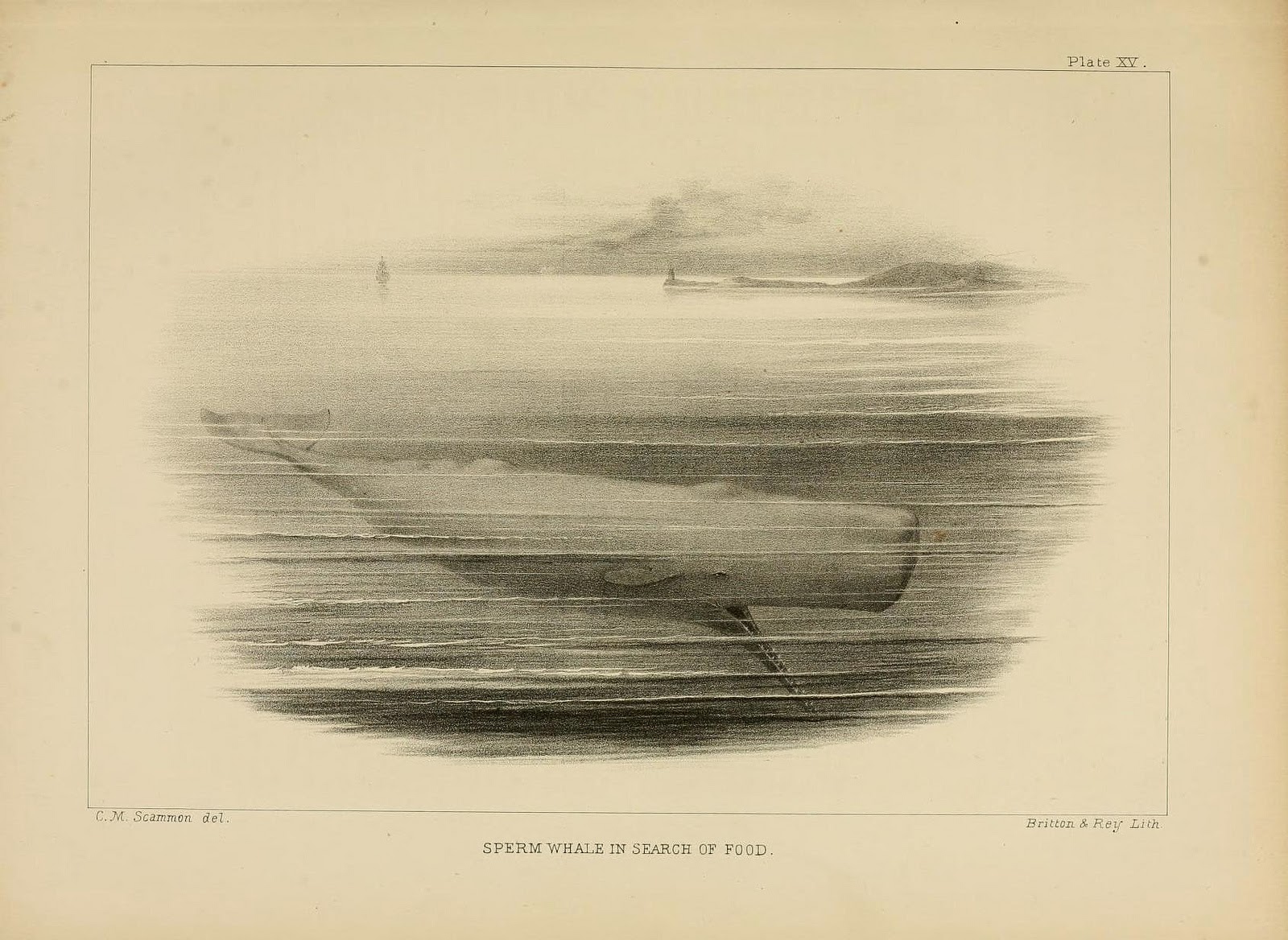
The sperm whale (Physeter macrocephalus) is a strange animal, even among whales. The largest toothed whale, and toothed predator, in the world, the sperm whale holds many records. It has the longest intestinal tract and largest brain in the animal kingdom. It also has the largest nose of any animal and cavities within its head hold reservoirs of liquid wax called Spermaceti. This behemoth can reach up to 67 feet long and weigh as much as 125,000 pounds!

View Full Size Image
A Sperm Whale in search of food. Scammon, C.M. The marine mammals of the north-western coast of North America. 1874. http://biodiversitylibrary.org/page/16226208.

A Whole Order of Leviathan Inspiration

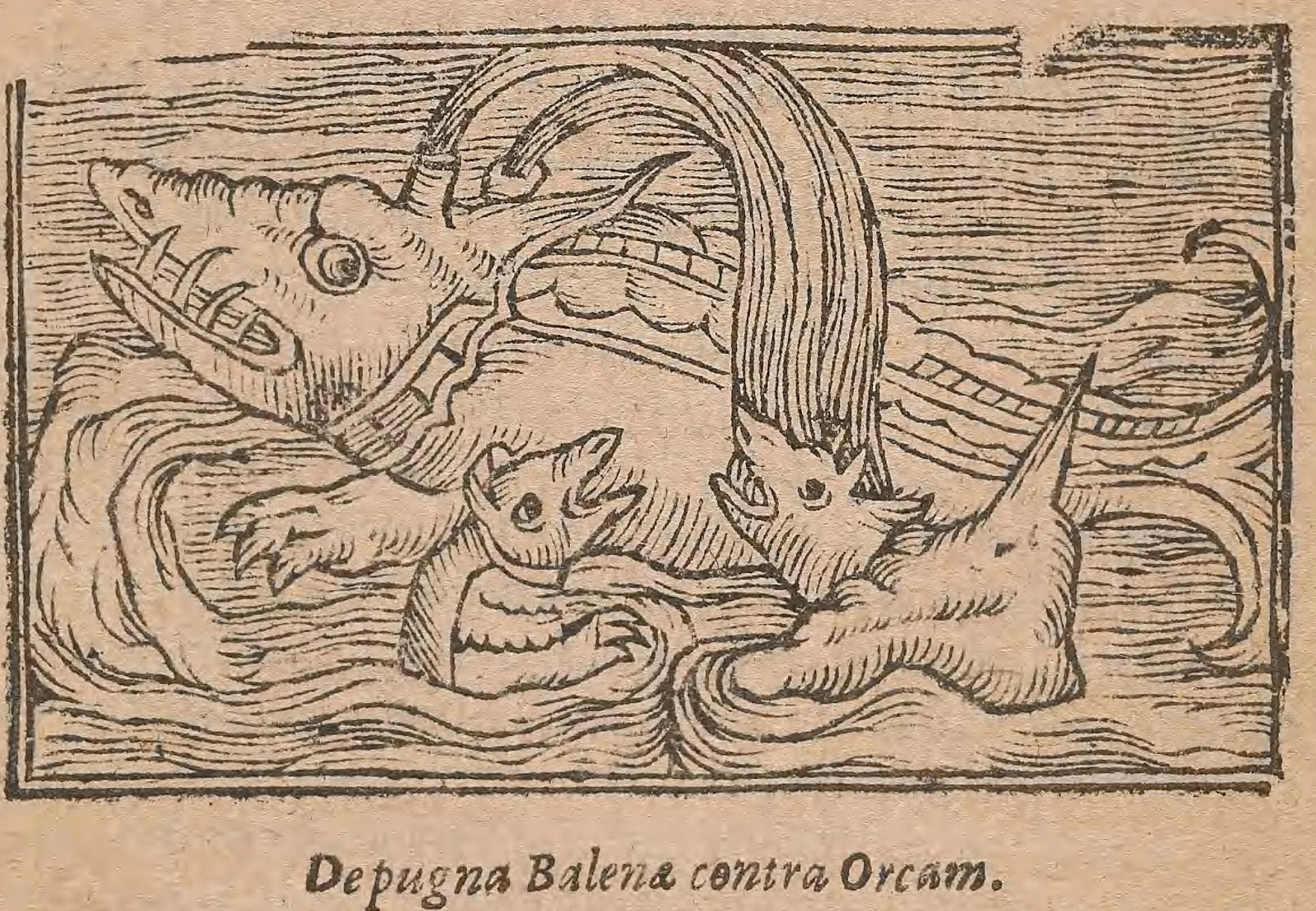
While their strange appearance and prolific beachings likely inspired many monster stories, sperm whales are not the only cetaceans that natural history writers had contact with. For instance, a blue whale – the largest animal to have ever lived – is documented as having come ashore as early as 1692, in Scotland. A 95-foot specimen was placed on exhibit in Europe in 1827, “further enhancing the image of the whale as a gigantic monster” (Ellis, pg. 197). Interactions with right whales, bowheads, baleens, and orcas also inspired Leviathan legends.

Whales From Hell

The range of monsters inspired by cetaceans is charmingly diverse, including many varieties in addition to the Devil Whale. Most are likely the result of an amalgamation of many species, and some (like the Devil Whale) may also have been shaped by religious undercurrents.

Pristers

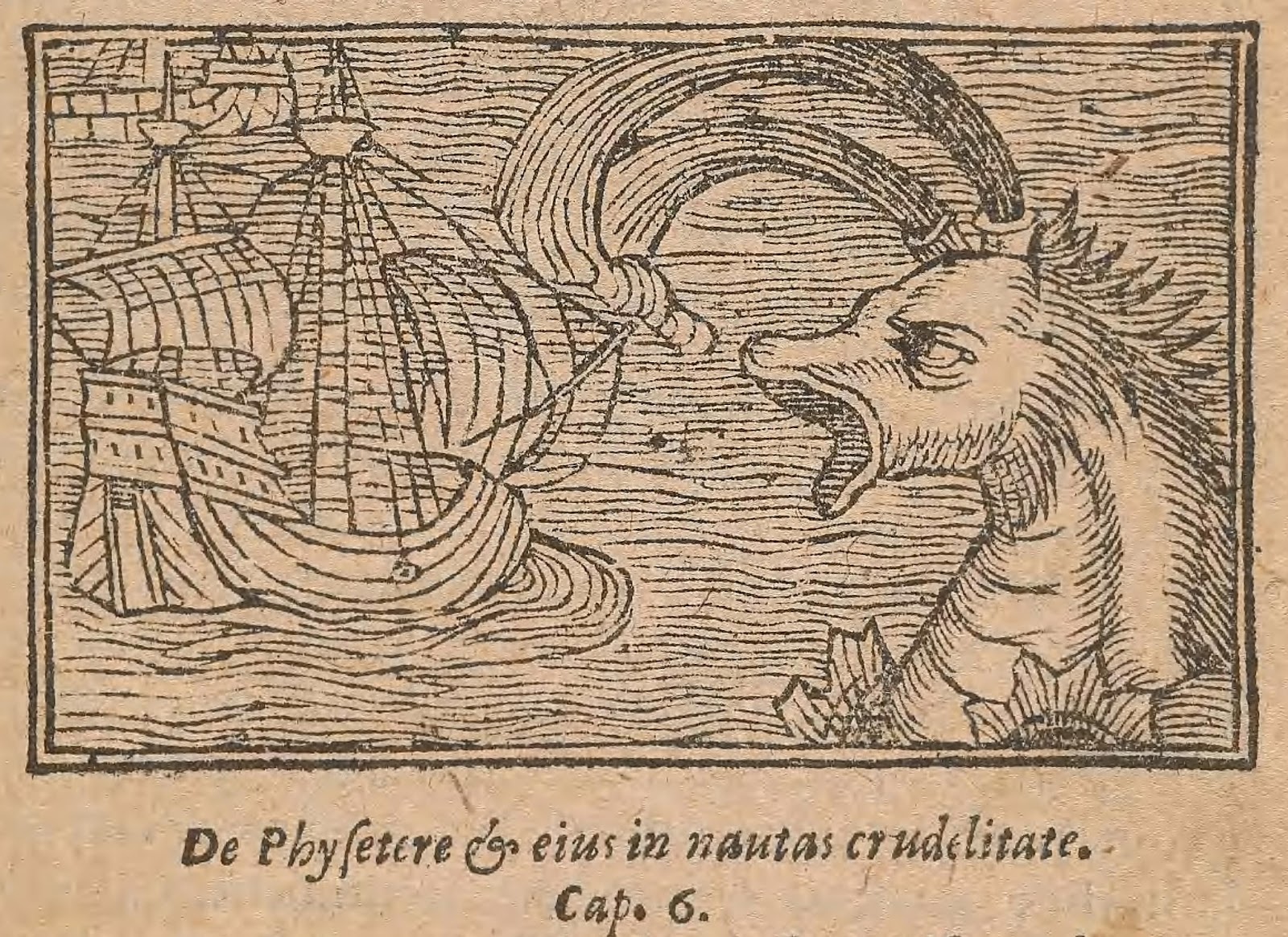
Pristers are found in multiple forms throughout Carta Marina and in many subsequent publications. Magnus actually identified these beasts as whales, describing them as “two hundred cubits long, and very cruel.”

View Full Size Image
Physeter, or Prister. Magnus, Olaus. Historiae de gentibus septentrionalibus. 1555. http://biodiversitylibrary.org/page/41862918.

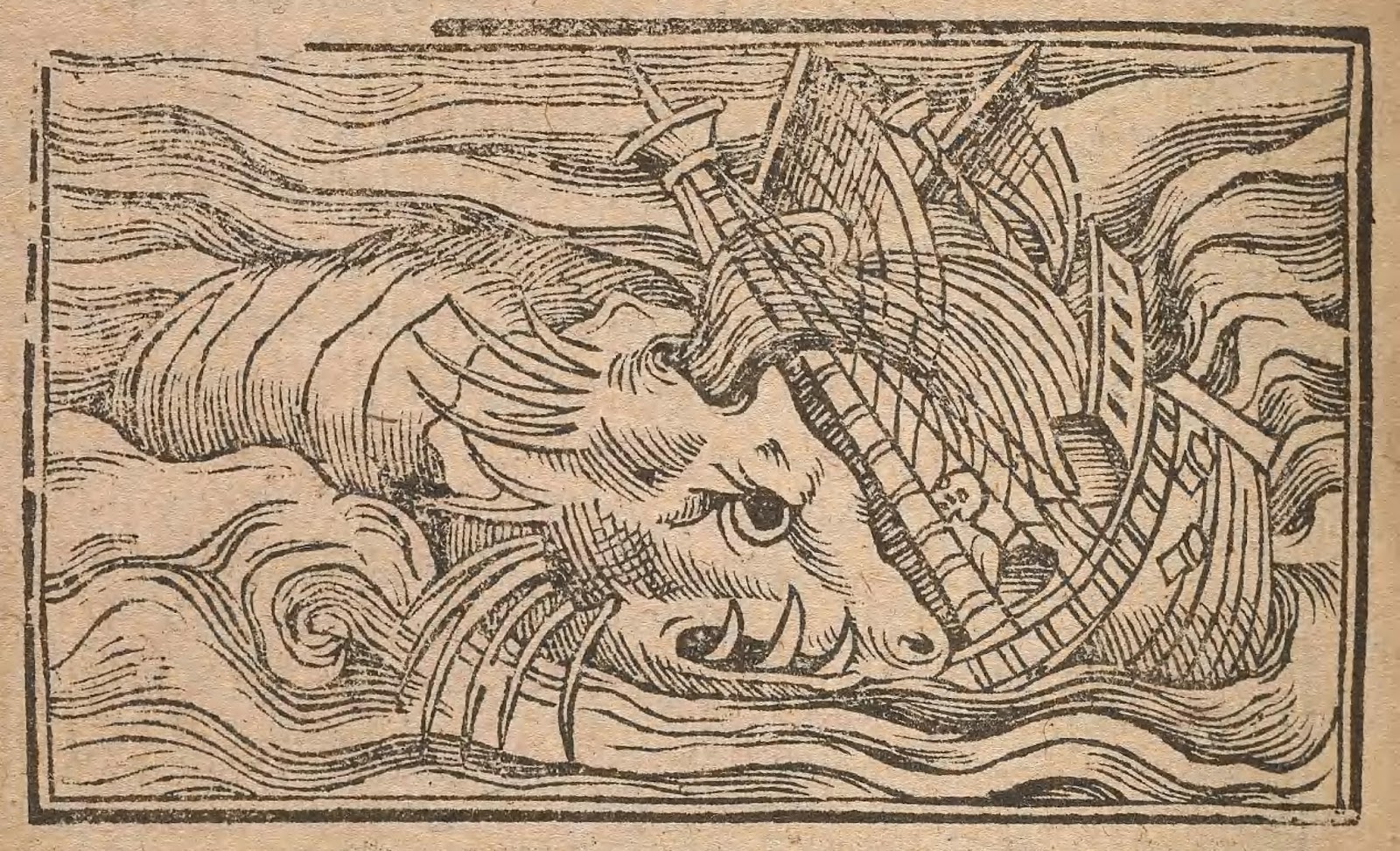
The common feature among them is the presence of two blowholes, most often acting as water cannons drowning unlucky vessels. Magnus warns, “to the danger of Sea men, he will sometimes raise himself beyond the sail yards, and cast such floods of waters above his head, which he had sucked in, that with a cloud of them, he will often sink the strongest ships…Sometimes, not content to do hurt by water only…he will cruelly over throw the ship like any small vessel, striking it with his back, or tail.” If that isn’t bad enough, Magnus also claims that it has a mouth like a Lamprey, “whereby he sucks in his meat or water.”

View Full Size Image
Prister attacking a ship. Magnus, Olaus. Historiae de gentibus septentrionalibus. 1555. http://biodiversitylibrary.org/page/41862919.

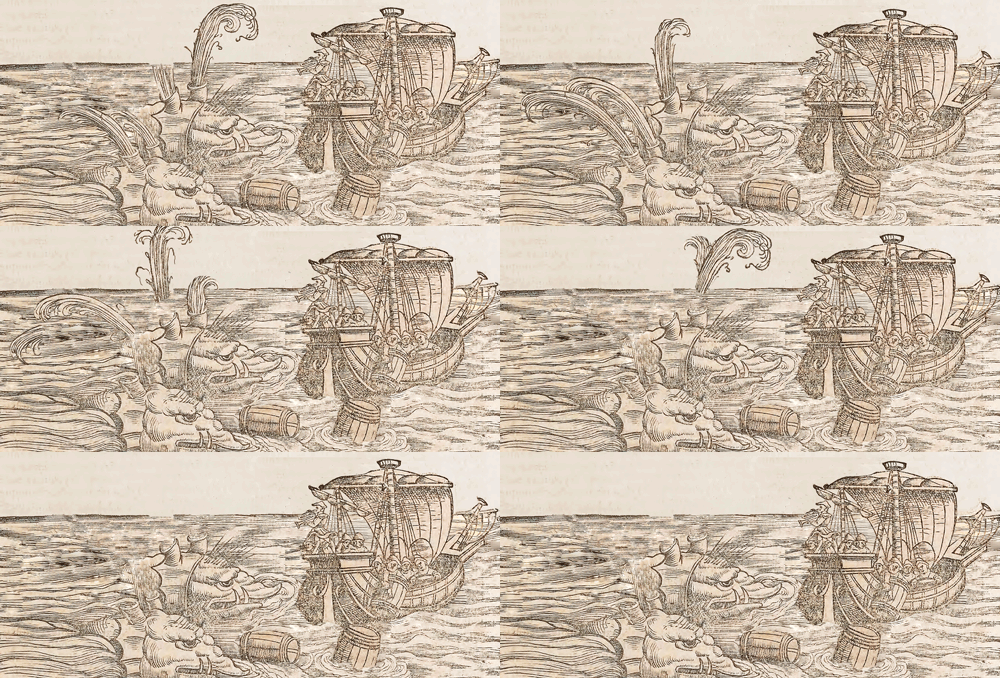
How can such a beast be defeated? Not by cannon-fire. Magnus warns that the beast’s layer of fat is too thick for such absurdities. Instead, try sounding a trumpet, which will startle the monster, or dump some empty barrels in the ocean, with which the creature will become distracted and stop to play.

View Full Size Image
The Prister, monsters actually identified as whales in historic publications, are reported to be mighty enough to sink the strongest ships. Cannon-fire was, according to Olaus Magnus, who published three versions of them in 1555, useless against these beasts. Instead, sailors should sound trumpets and throw barrels into the water to distract these monsters. See more fantastic historic monsters come to life on the Smithsonian Libraries’ Tumblr. GIF created by Richard Naples (Smithsonian Libraries), based on Gessner, Conrad. Historia Animalium. 2nd ed. 1604. http://biodiversitylibrary.org/page/42165750.

What species is this monster likely based on? Well, Baleen Whales do actually have two blowholes, and Magnus refers to the beasts as Physeter. The modern-day suberfamily including sperm whales is Physeteroidea.

The Ziphius

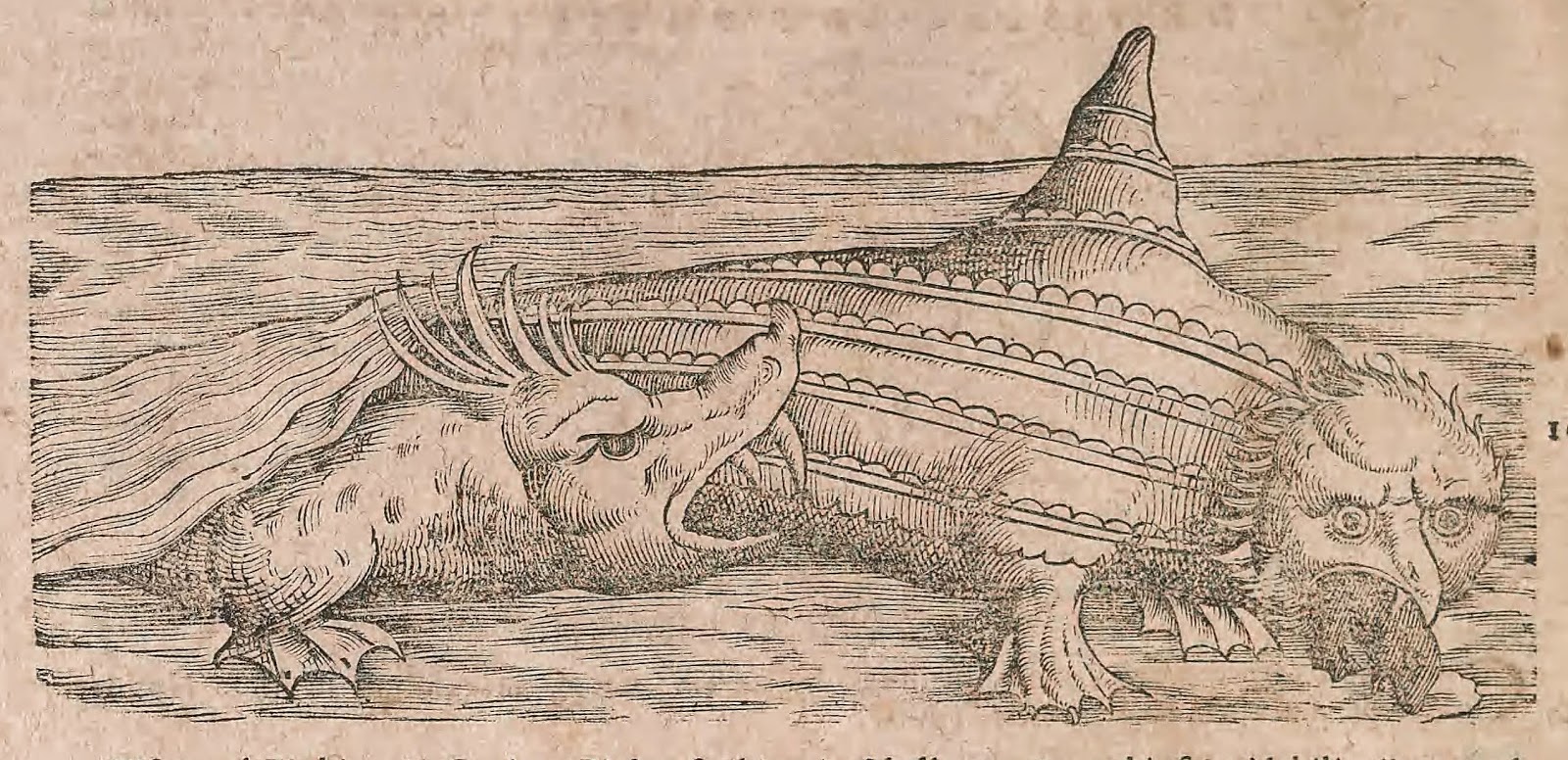
“The sword-fish is like no other, but in something it is like a whale. He hath as ugly a head as an Owl; his mouth is wondrous deep, as a vast pit, whereby he terrifies and drives away those that look into it. His eyes are horrible, his back Wedge-fashion, or elevated like a sword. His snout is pointed. These often enter upon the Northern Coasts as Thieves and hurtful Guests, that are always doing mischief to ships they meet, by boring holes in them, and sinking them.”

View Full Size Image
The Ziphius, after Magnus. Gessner, Conrad. Historia Animalium. 2nd Ed. 1604. http://biodiversitylibrary.org/page/42165841.

Thus Magnus describes the Ziphius (translation via John Ashton’s Curious Creatures in Zoology (1890)), whose name comes from the Greek xiphias, meaning sword (recall Magnus’ comparison of its fin to a sword). This bizarre, owl-headed creature is depicted with a seal in its jaws. This, and the shape of the fin, suggest that the monster may be based on an Orca. A Great White Shark has also been suggested.

And the porcupine-fish attacking the Ziphius? Jury’s still out on that one…

The Case for the Leviathan

We all know whales are real, and we know that they can grow to extraordinary sizes (the largest size on earth, in fact). They have even been documented to attack and sink ships (for instance, in 1820, the vessel Essex was sunk by a sperm whale), so those crews wishing to harpoon a whale has reason to be cautious.

View Full Size Image
Physeter, or Prister. Magnus, Olaus. Historiae de gentibus septentrionalibus. 1555. http://biodiversitylibrary.org/page/41862920.

Does the Leviathan exist? Yes. Even within the sixteenth century writings of Magnus and Gessner, Leviathan monsters such as Devil Whales and Pristers are identified as whales. However, are you likely to mistake a whale for an island and try to cook your dinner on it? Is a whale prone to kill a human simply for the fun of it? Probably not.

As is the case with all monsters inspired by real animals, limited – and sometimes dramatic (think witnessing a breaching near your boat for the first time, or stumbling upon the decomposing corpse of a sperm whale) – contact with these mammals fueled fear and sensationalism, resulting in harrowing tales of great beasts roaming the oceans.

But, in the end, a Leviathan, by any other name, is simply a whale (or perhaps an Orca) and most definitely not a monster.

  • Follow our blog and #bhlMonstersRreal on Twitter and Facebook all week to learn more about monsters and the animals that inspired them.
  • Browse historic illustrations of leviathans and their whale counterparts on Flickr.
  • Browse the books that portray these historic monsters in BHL.
  • Carve a Leviathan in your Halloween Pumpkin this year! Share your carvings with us on Facebook and Twitter!
  • See some of our favorite monsters come to life on the Smithsonian Libraries’ Tumblr!


References:

  • Ellis, Richard. Monsters of the Sea. New York: Alfred A. Knopp, Inc., 1994. Print.

  • Simon, Matt. “Kraken and Owl Whales: Take a Dip with History’s Most Terrifying Sea Monsters.” Wired. 13.09.13. Web. 20.10.14. http://www.wired.com/2013/09/carta-marina/#slideid-591797.
October 28, 2014by Grace Costantino
Blog Reel, Campaigns, Featured Books, Monsters Are Real

Monsters Are Real…

They just look a little different in the light of day. 

“HIC SUNT DRACONES.”

This phrase translates from the Latin as “here are dragons.” It is etched on the eastern coast of Asia on one of the oldest terrestrial globe maps, the Lenox Globe, dating to 1510.

Though the phrase itself is found on only one other historical artifact, a 1504 globe crafted on an ostrich egg, the depiction of monsters and mythological beasts are common on early maps. They crop up most commonly in the unexplored reaches of the oceans, warning would-be explorers of the perils of these unknown territories.

View Full Size Image
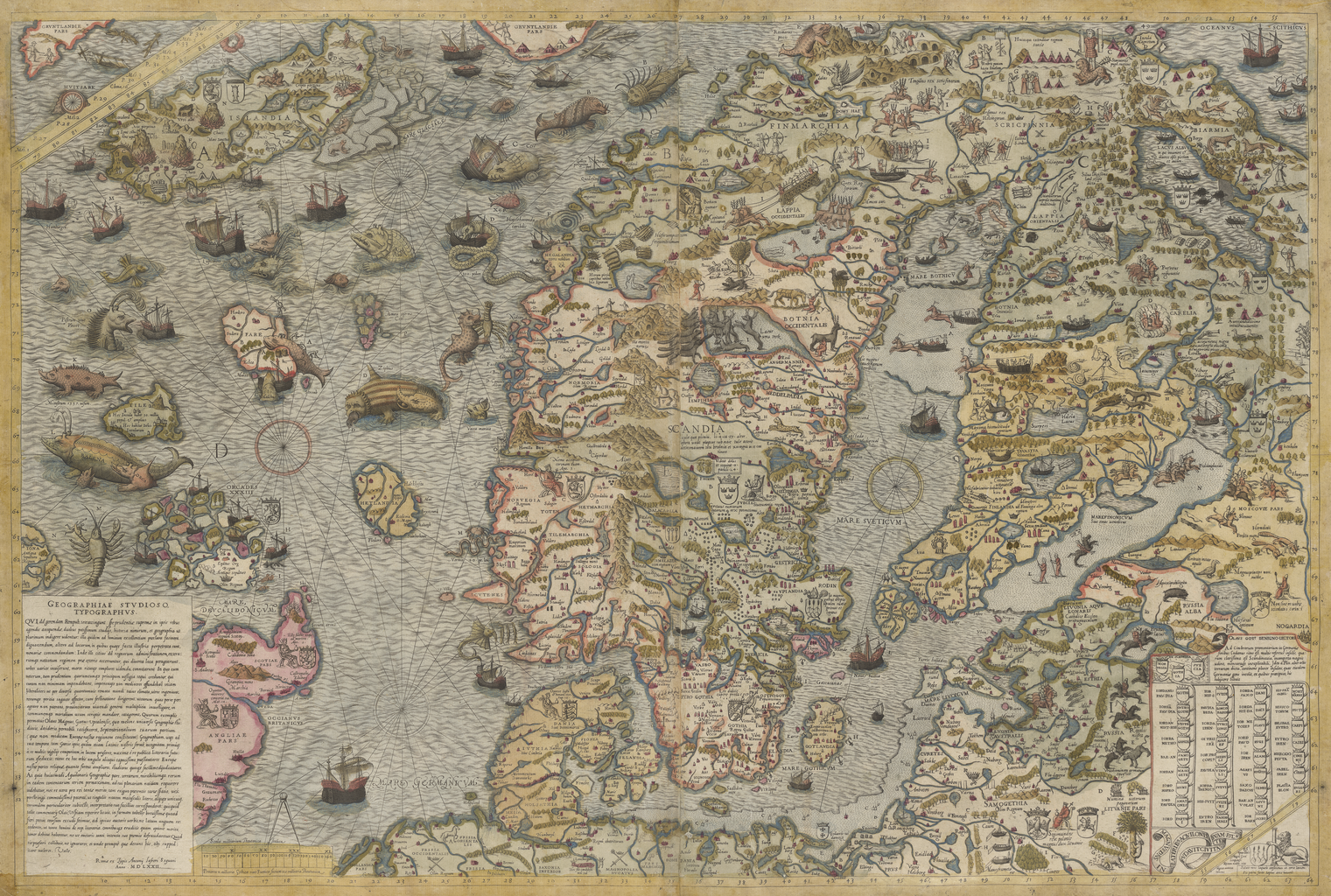
Olaus Magnus’ Cart Marina. Drafted 1527-39. 2nd Edition via World Digital Library. http://dl.wdl.org/3037.png

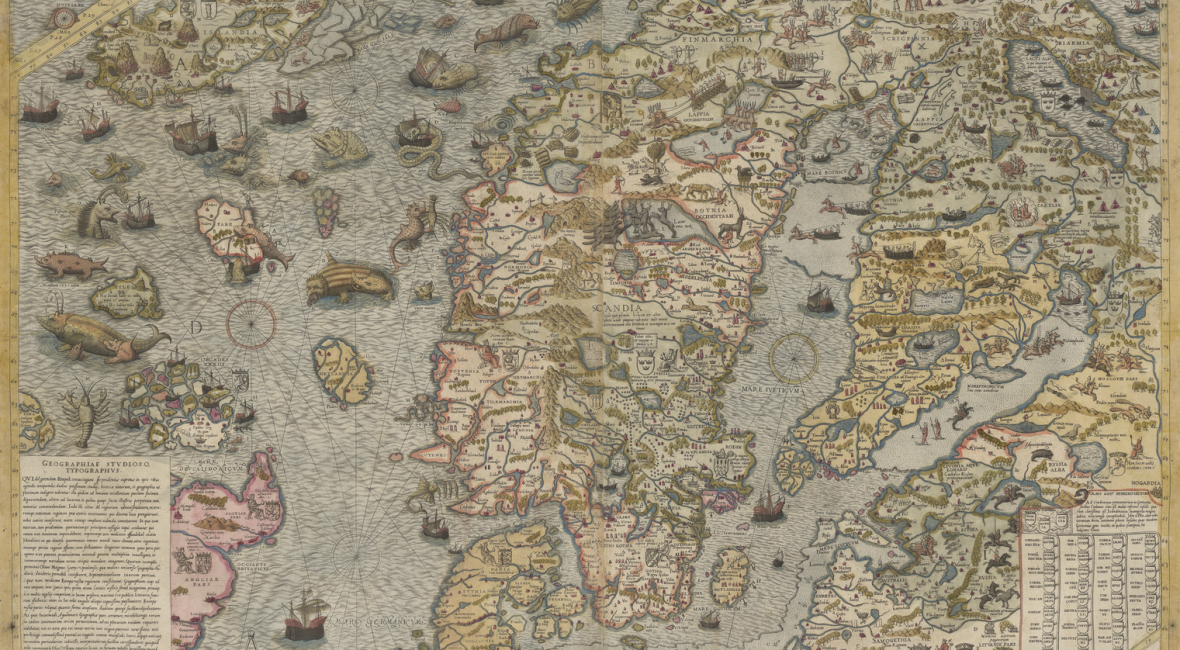
One of the most famous of these maps is Olaus Magnus’ Carta Marina, drawn in 1527-39. A detailed map of Scandinavia-one of the oldest ever created-it depicts the Norwegian Sea as so teaming with monsters that it would seem impossible to escape these waters uneaten.

Magnus (1490-1557) was the Catholic archbishop of Sweden and a prominent historian. His travels brought him farther north than any of his contemporary European intellectuals, lending a great deal of perceived credibility to his accounts and publications. In 1555, Magnus published Historia de Gentibus Septentrionalibus (“A Description of the Northern Peoples”), which not only related the history, customs, and beliefs of the Scandinavian people, but also reprinted and described the creatures found on Carta Marina. His standing and reputation secured the widespread acceptance of his stories.

View Full Size Image
Physeter, or Leviathan, from Magnus, Olaus. Historia de Gentibus Septentionalibus (1555). http://biodiversitylibrary.org/page/41862918

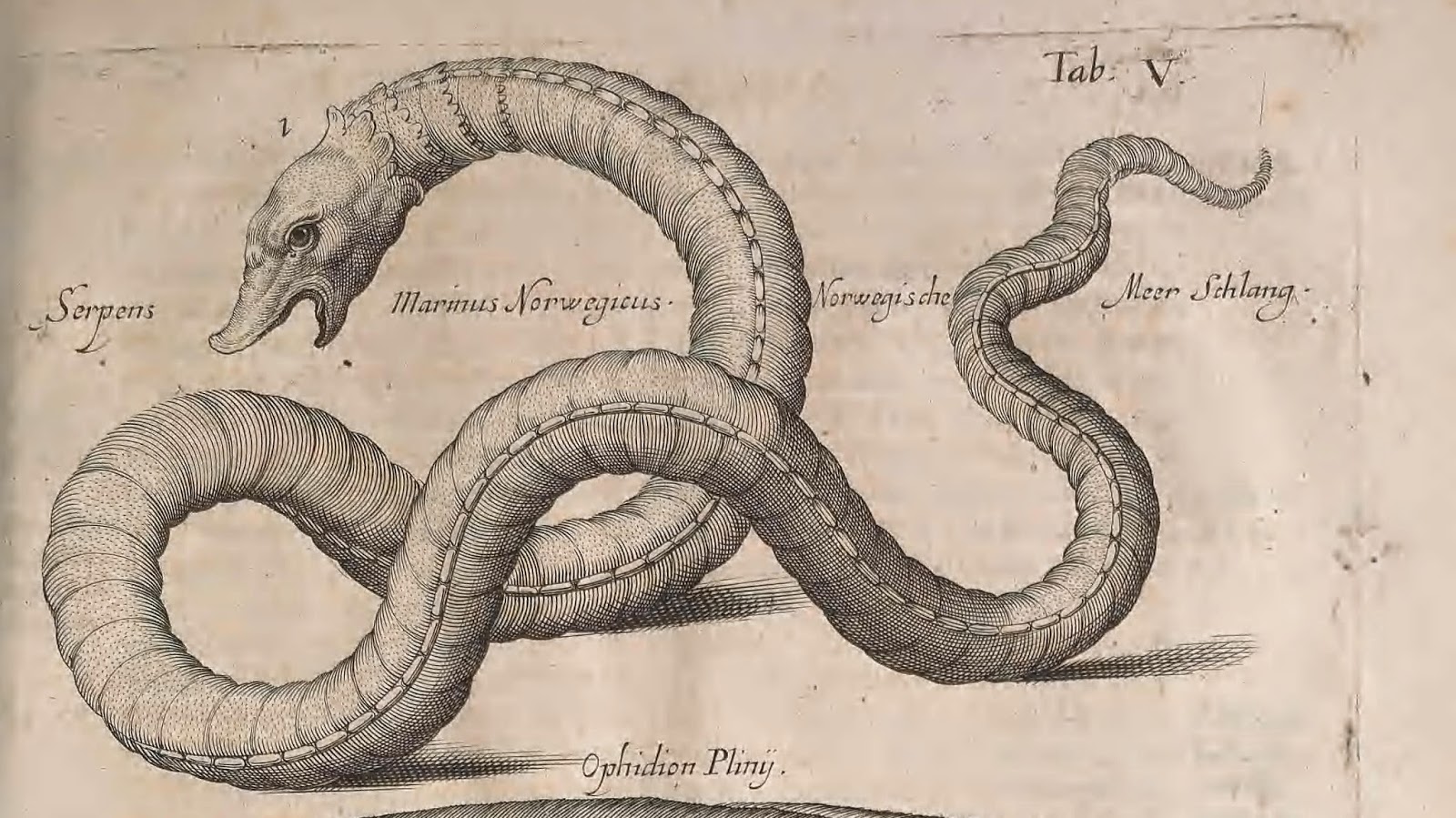
Olaus’ descriptions and drawings were copied repeatedly, with little to no modification, for centuries by such historical titans as Conrad Gessner (whose Historia Animalium, replete with Magnus’ drawings, is the first modern zoological work attempting to describe all known animals), Edward Topsell, Ulisse Aldrovandi, and John Jonstonus. Such repurposing ensured that these creatures were ingrained in the public mind as truth. And over the centuries, many new monsters were added to the mix as well.

View Full Size Image
Sea Serpent, after Magnus. Jonstonus, Joannes. Historiae naturalis de quadrupetibus libri. 1650. http://biodiversitylibrary.org/page/44040030.

Creating Myth from Reality

Where did the accounts of monsters come from in the first place? Were they simply fairytales invented to scare curious minds and small children?

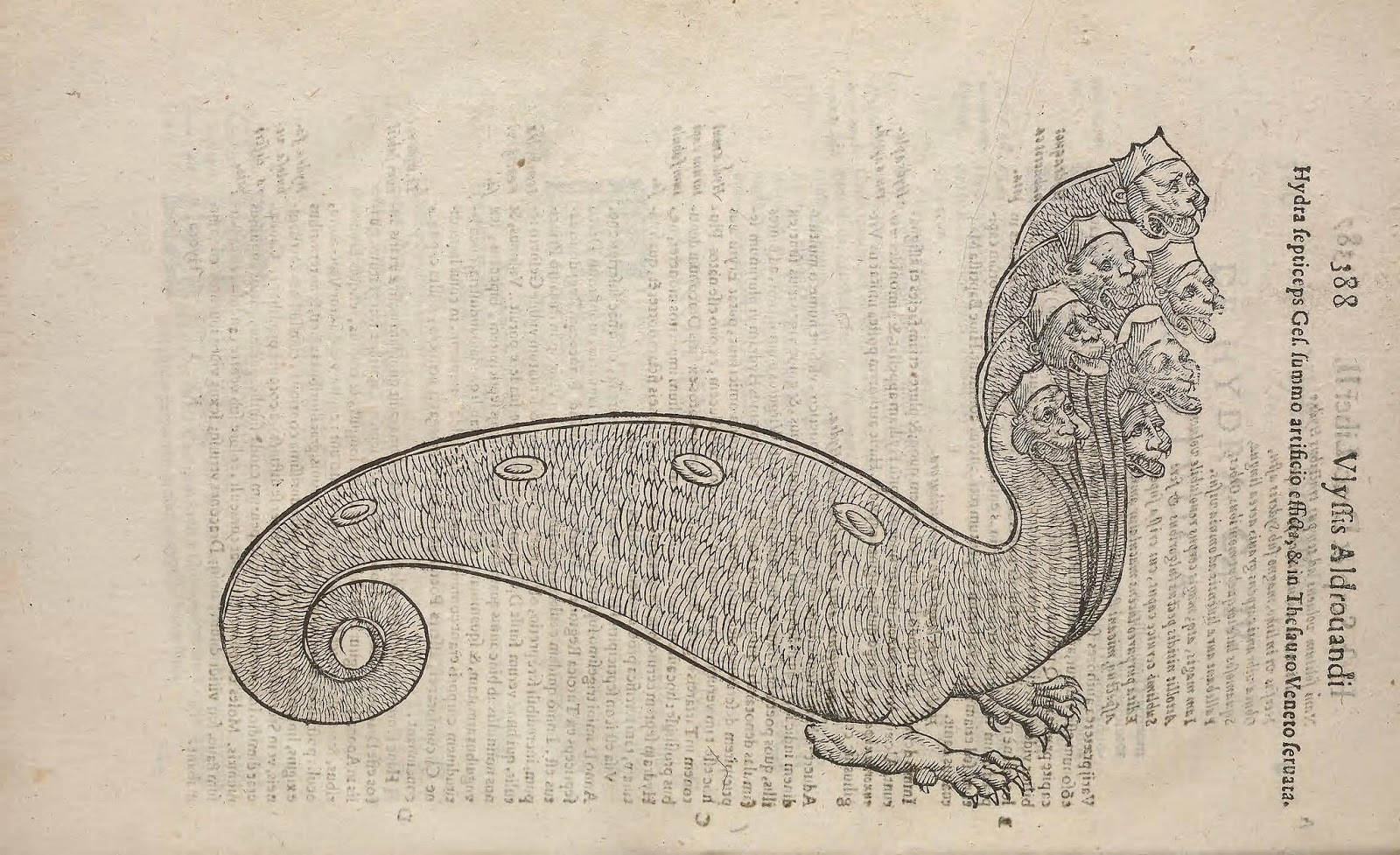
Henry Lee, who wrote extensively on sea creatures and monsters, emphasized that many classical monsters are not simply pure myth. In his publication Sea Fables Explained (1883), he wrote, “…the descriptions by ancient writers of so-called ‘fabulous creatures’ are rather distorted portraits than invented falsehoods, and there is hardly any of the monsters of old which has not its prototype in Nature at the present day.”

View Full Size Image
Hydra, after Gessner. Aldrovandi, Ulisse. Serpentum, et draconum historiæ libri duo. 1640. http://biodiversitylibrary.org/page/41765441.

How did these “distorted portraits” come about? By the 1500s, extensive European oceanic exploration was still limited, and the fauna that called these places home remained virtually unknown. Publications by Magnus and those who copied him represented some of the first attempts to systematically aggregate and describe these animals. More often than not, their information came not from first-hand observations, but from sailors’ accounts of mysterious encounters while at sea. Less often, the decomposing remains of a washed-up carcass also fueled confidence in the existence of these terrible beasts.

Sailors, or those unlucky beachgoers who had the misfortune to stumble upon a rotting basking shark, had no experience with such creatures. So, they explained them with what they did have experience with – myths and legends. If they enlivened their accounts with some embellishments, that simply made for a better story. And so, an oarfish became a 200 foot long sea serpent. A giant squid became a blood-thirsty kraken. A manatee became a mermaid. Olaus and others like him gobbled up the stories and published them alongside authentic species. The more the stories were circulated and published, the more likely people were to mistake what they did see for a monster. And the cycle continued.

View Full Size Image
“Sea Devil.” Gessner, Conrad. Historia Animalium. 2nd ed. (1604). http://biodiversitylibrary.org/page/42166652.

The atmosphere of the day also fed people’s willingness to believe such tales. The 1500s were rampant with superstition. The Scientific Revolution would not start to make headway until later in the seventeenth century. There was no division between magic and reality – the two simply coincided. Thus, there was no reason that mythical beasts could not be real. And even when scientists began to embrace the scientific method, they still struggled to reconcile previous beliefs in the supernatural with science. It would take hundreds of years of dedicated scientific study and exploration to overturn classical and common opinion. In the case of some creatures (i.e. sea serpents), sightings and questions of authenticity still remain.

View Full Size Image
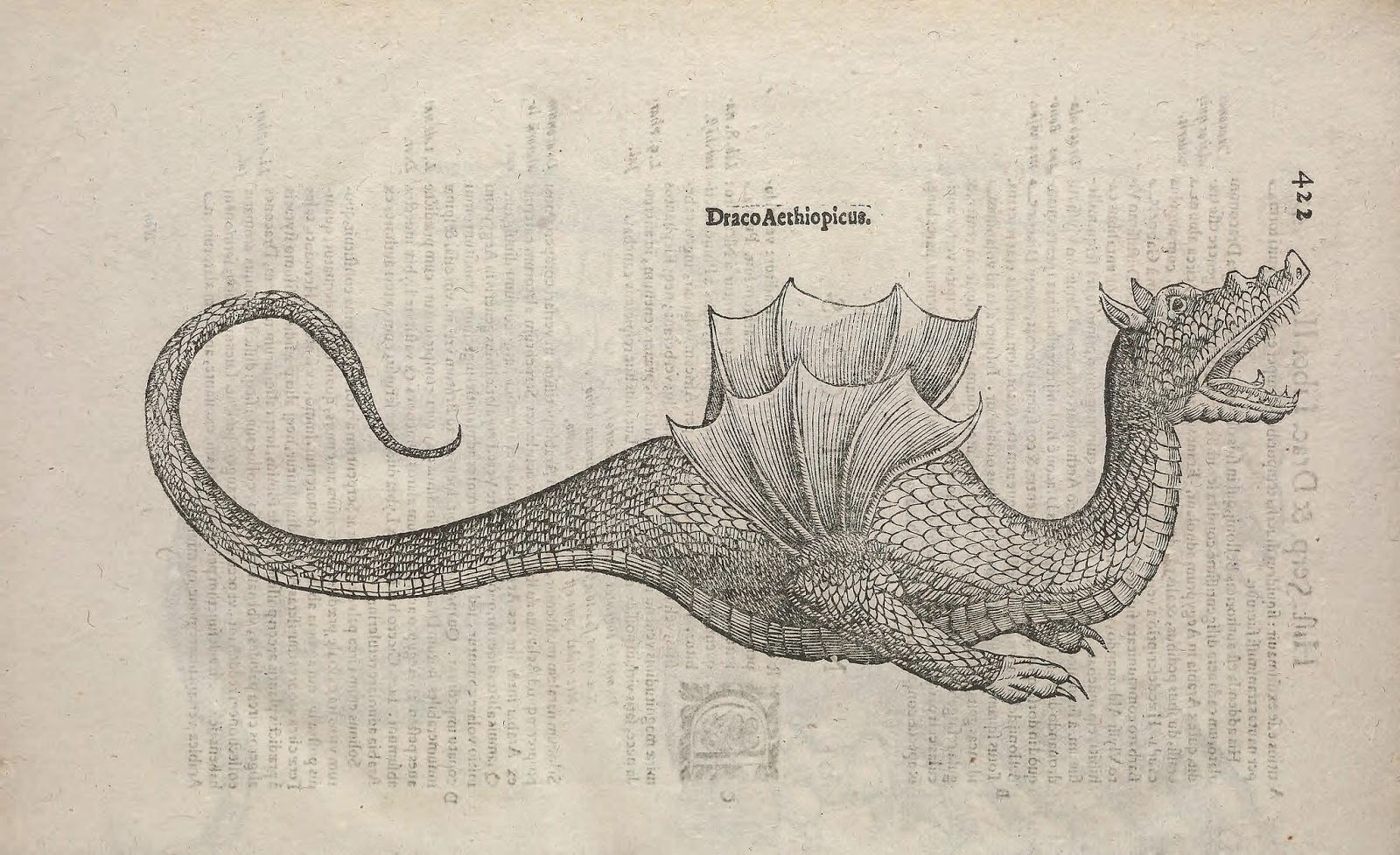
Dragon. Aldrovandi, Ulisse. Serpentum, et draconum historiæ libri duo. 1640. http://biodiversitylibrary.org/page/41765475.

Are Monsters Real?

So what’s the moral of the story? The animals that inspired such hair-raising tales as the sea serpent, leviathans, and hydra, and authenticated stories of mermaids and the kraken, are real. They just received some creative embellishments (and sometimes blatant artistic fraudulence) along the way. And in a world just beginning to turn away from superstition, but still inclined to embrace elements of mysticism, it’s not surprising that the tales were accepted. Besides, who doesn’t love a good monster story?

View Full Size Image
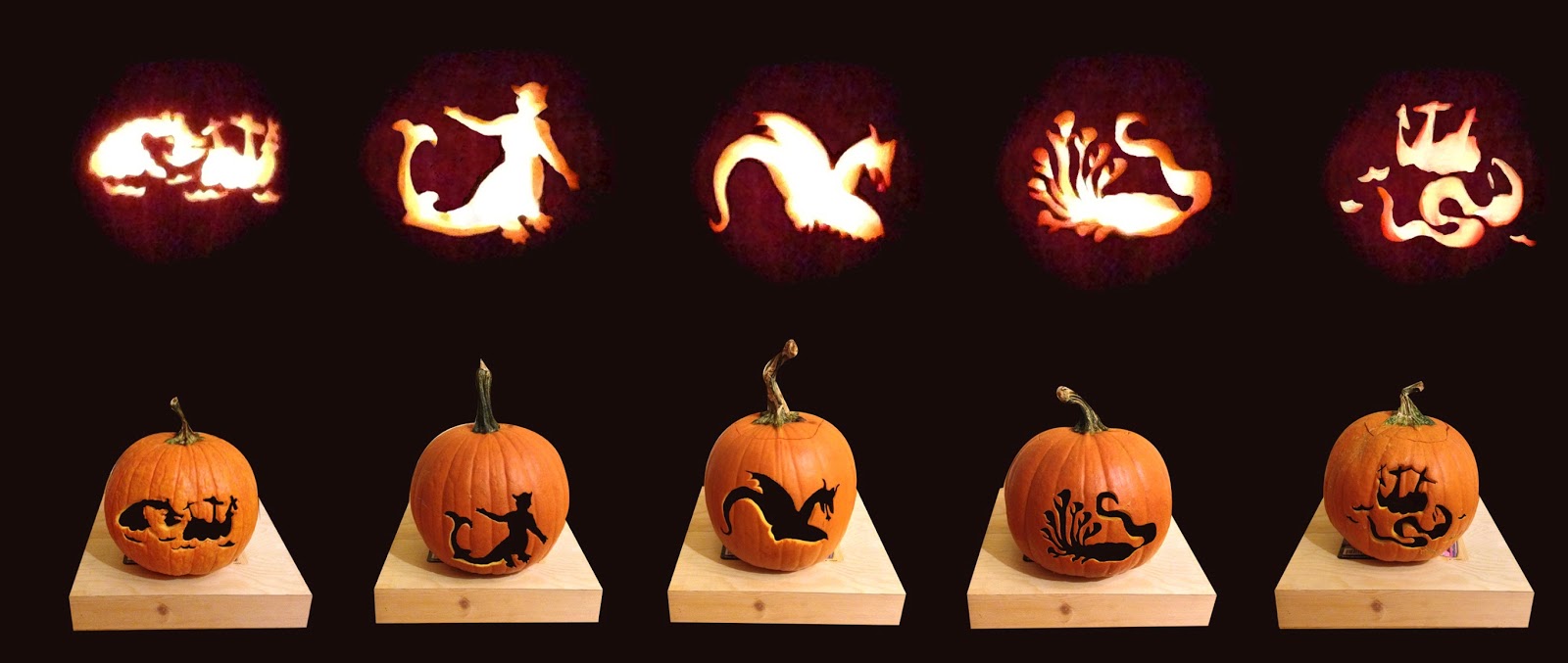
Pumpkins you can carve from the BHL patterns, based on historic monster images! Get yours today!

Monsters Are Real…Learn More!

  • Follow our blog and #bhlMonstersRreal on Twitter and Facebook (or go directly to BHL’s Twitter and Facebook) this week as we explore the stories, people, books, and animals that inspired some of history’s most legendary monsters.
  • Browse the books that fueled such beliefs in the BHL Monsters Are Real collection.
  • Enjoy centuries’ worth of monster images in our Flickr collection.
  • See some of our favorite monsters come to life on the Smithsonian Libraries’ Tumblr.
  • Finally, get free pumpkin carving patterns inspired by some of our favorite historical drawings. See them dance on YouTube! Share your BHL carved pumpkins with us on Twitter and Facebook and we’ll reshare! They’ll make for a ghoulishly good time!
October 27, 2014by Grace Costantino
BHL News, Blog Reel

BHL Adds the National Library Board, Singapore as a New Member

View Full Size Image
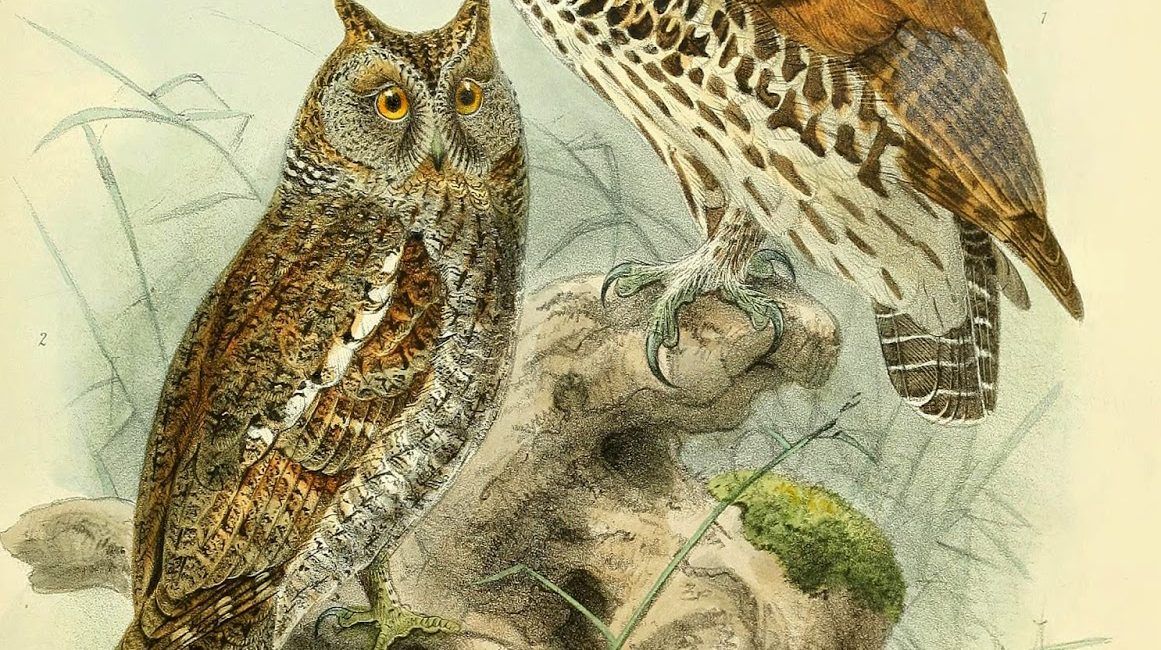
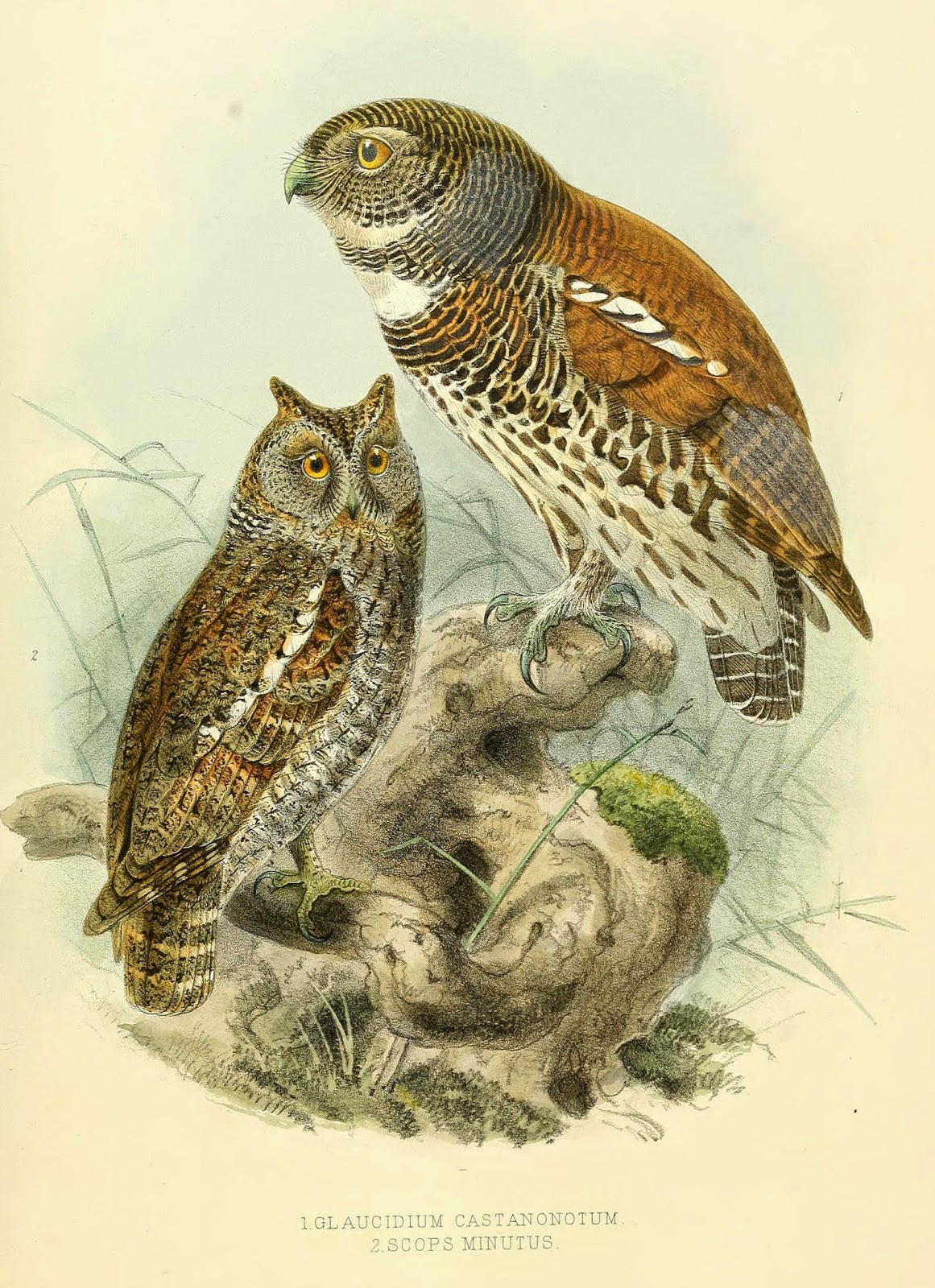
Oriental Scops Owl, a species found in South Asia, including Singapore. A History of the Birds of Ceylon. v. 1. http://biodiversitylibrary.org/page/37019175

BHL is pleased to welcome the National Library Board, Singapore as a new member in BHL Central and simultaneously as BHL-Singapore, the newest node in Global BHL. The 16th member of the BHL Central consortium, BHL Singapore will help identify and digitize historical science literature from its collections and add these to the BHL’s online holdings, where all materials may be accessed free by the public.

“The Biodiversity Heritage Library is the preeminent global repository for historic science literature,” said Martin Kalfatovic, BHL Program Director and Associate Director for Digital Services at the Smithsonian Libraries. “We are pleased to welcome our first BHL member outside of our original United States and United Kingdom circle. Singapore’s importance as a regional coordinator for biodiversity research will directly expand the reach of BHL in this area of the world.”

BHL is a consortium of major natural history, botanical and research libraries. BHL’s goal is to contribute to the global “biodiversity commons” by digitizing and aggregating the resources housed within each of the participating institutions, providing free and open access to the legacy literature that underpins the work of the natural science community.

The Biodiversity Heritage Library also serves as the literature digitization component of the Encyclopedia of Life, a global effort to document all 1.8 million named species of animals, plants and other forms of life on earth.

To explore the Biodiversity Heritage Library, visit biodiversitylibrary.org.

BHL now comprises 16 member and 5 affiliate institutions. View the list of our current members and affiliates here.

October 23, 2014by Grace Costantino
BHL News, Blog Reel

National Agricultural Library (NAL) Joins BHL!

We are pleased to announce that the USDA National Agricultural Library (NAL) has joined the Biodiversity Heritage Library as a BHL Affiliate. BHL has already ingested over 845,000 pages of NAL-digitized content made openly available within the Internet Archive. This formal partnership will allow us to strengthen our collection of agricultural-related content through direct collaboration with NAL.

View Full Size Image

The National Agricultural Library (NAL) comprises one of the largest collections of materials devoted to agriculture in the world. Collection concentrations include the fields of agriculture, forestry, horticulture, entomology, poultry science, animal science, nutrition, botany, natural history and agricultural history. By statute, NAL is the primary depository of publications and information concerning the research and other activities of the U.S. Department of Agriculture (USDA).

As of October 2014, the total number of individual items in the NAL collection is 8.1 million. This includes a wide variety of formats such as books, journals, audiovisuals, motion pictures, photographs, posters, maps, manuscripts (papers of individuals and organizations), and objects. A large portion of this significant collection is held nowhere else in the world and constitutes a true national treasure.

View Full Size Image
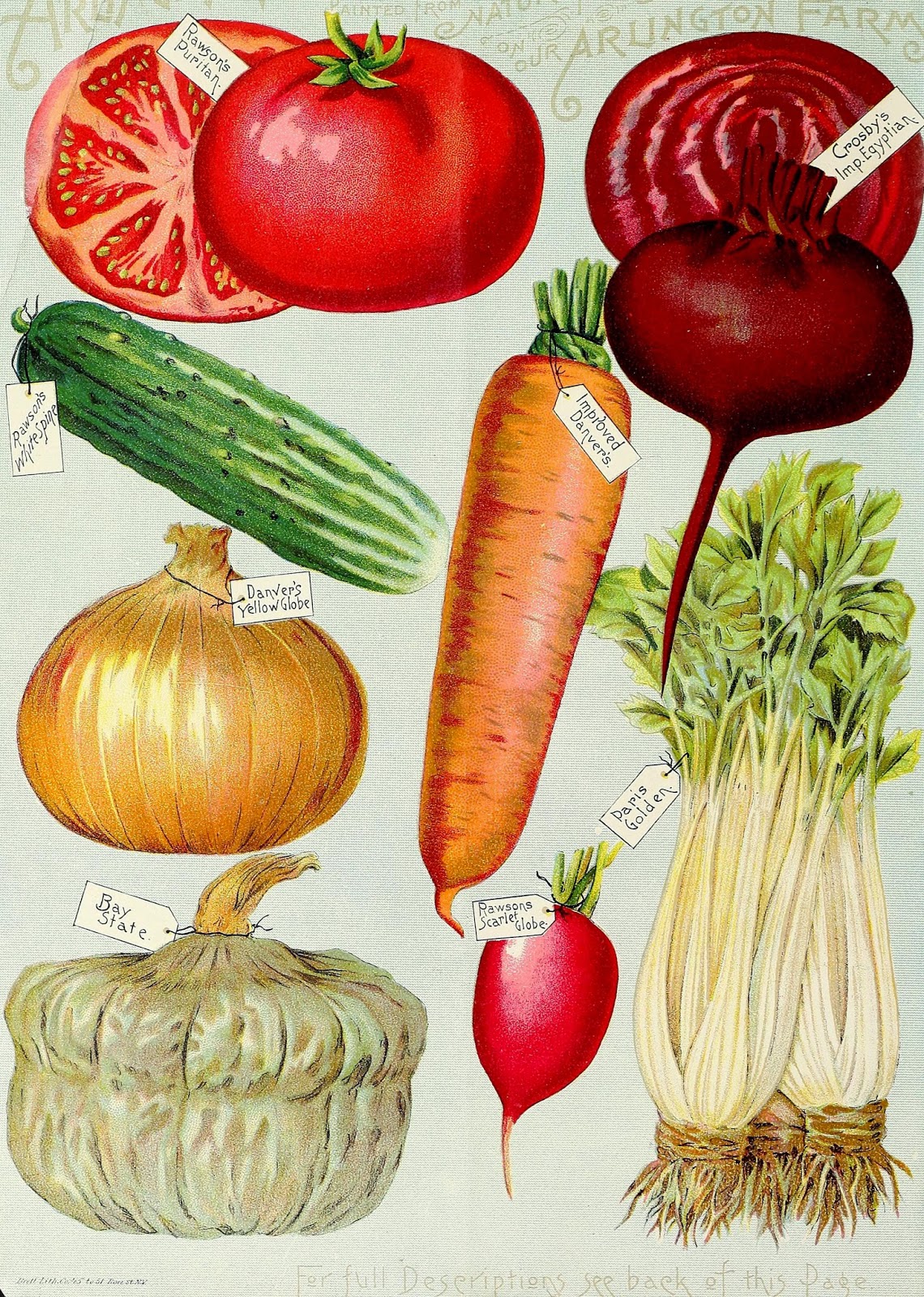
Illustrated Hand-Book: Rawson’s Vegetable and Flower Seeds. 1894. An image from just one of the 1000s of seed catalogs that NAL and other BHL partner libraries have digitized for BHL.

The National Agricultural Library is committed to digitization both as a method to increase access and to prolong the life of the increasingly fragile print originals. NAL is actively digitizing historic USDA and other high demand, public domain items from its collection. Many of these items, both serial and monograph, fit within the scope of BHL, and, when the subject area is appropriate, the digital copies will be added to our collection. For example, NAL is currently digitizing non-USDA seed catalogs in cooperation with other BHL members for inclusion in BHL.

“Our approach is not to think of these activities as small discrete projects but rather as a long journey of digitization that will take many years,” explained Christopher Cole, Business Development Manager at the National Agricultural Library and NAL representative to BHL. “The BHL provides a venue for NAL to work with other institutions to pool our digital collections and enables us to cast a wider net and reach more users.”

NAL represents BHL’s fifth affiliate institution. BHL Affiliates are institutions or organizations that wish to participate in BHL outside of the membership dues-paying structure. Affiliates can contribute content, provide technical services, and participate in BHL committees, task forces, and working groups.

In addition to its affiliates, BHL currently consists of 16 member libraries. BHL Members may contribute content to BHL, participate in appropriate groups and committees, provide technical services, contribute financial support, vote on strategic directives, and generally help govern the BHL program. Visit BHL to learn more about BHL Members and Affiliates.

We are excited to welcome the National Agricultural Library to the BHL family and look forward to the valuable contributions they will make to our library. Follow us on Twitter and Facebook to receive updates about BHL Member and Affiliate contributions and events.

October 22, 2014by Grace Costantino
Blog Reel, User Stories

Exploring the Rich History of Plant Science

View Full Size Image
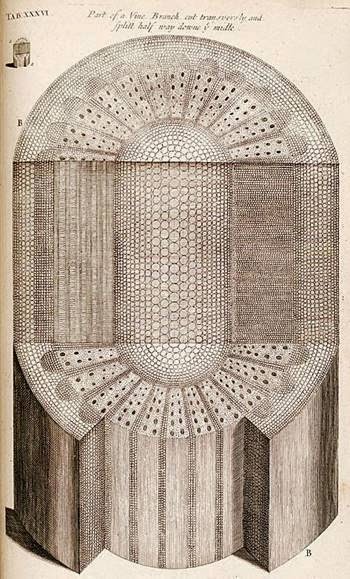
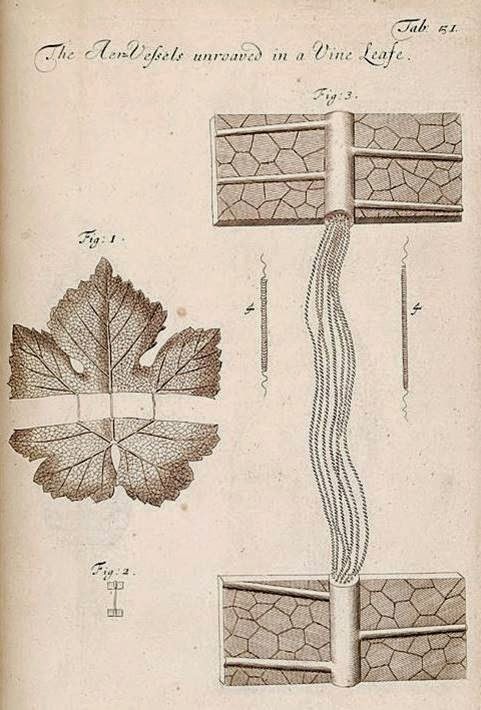
Drawings of a grapevine stem showing the transport vessels, from Nehemiah Grew’s The Anatomy of Plants (1682).

In 1682, the first known microscopic depiction of pollen appeared in Nehemiah Grew’s Anatomy of Plants. Grew, now known as the “Father of Plant Anatomy,” revolutionized botanical science with his studies of plant structure. Exploiting the power of the microscope, he outlined key morphological differences in plant stems and roots and proposed the hypothesis that stamens are a plant’s male reproductive organs.

Science has progressed significantly since the 17th century. Microscopes are no longer novel but commonplace, and scientists occupy their minds with theories about dark matter and quarks. Yet despite the centuries that have elapsed, today’s advances are founded squarely on the discoveries of these bygone eras. Likewise, modern theories often cause us to re-examine assumptions from the past.
Dr. Mary Williams is particularly drawn to this interplay between historic and modern scientific study, specifically in the field of botany. Dr. Williams has been studying and educating people about plants since she began her PhD in Plant Molecular Biology 30 years ago. Serving as a professor at Harvey Mudd College from 1995-2009, Dr. Williams is now a Features Editor for the American Society of Plant Biologists, writing a series of educational articles about plant biology called “Teaching Tools in Plant Biology.” The series connects advanced undergraduate students to current research in plant sciences through textbook-style review articles, diagrams and images.

View Full Size Image
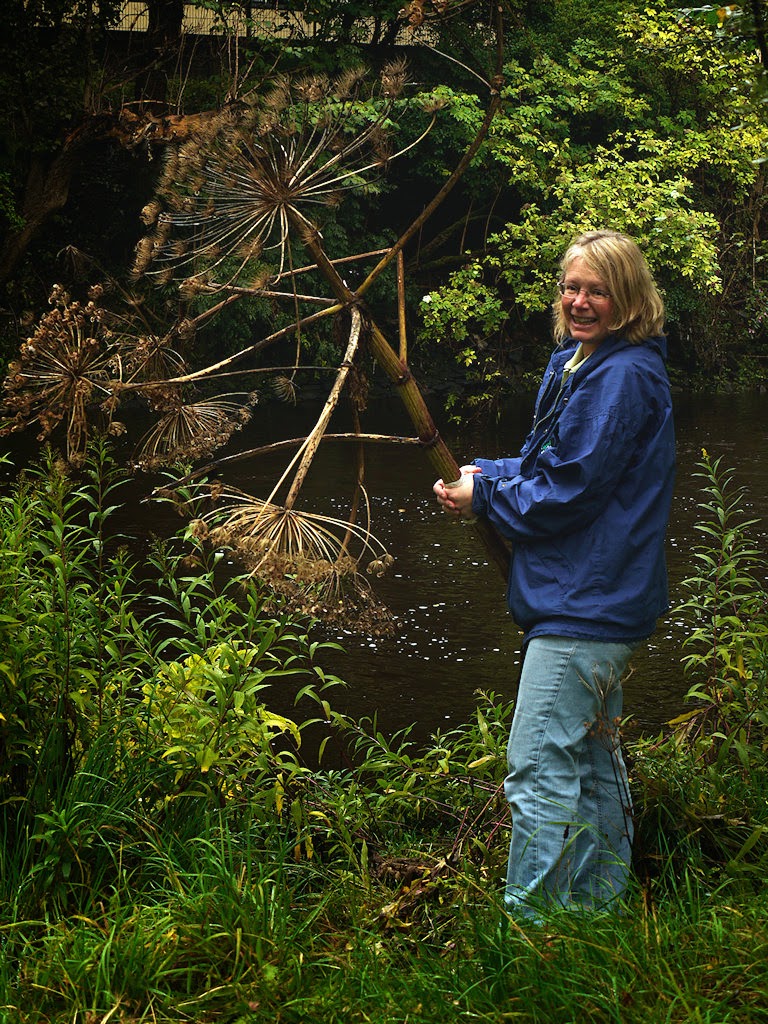
Mary Williams demonstrating the size of giant hogweed (Heracleum mantegazzianum).

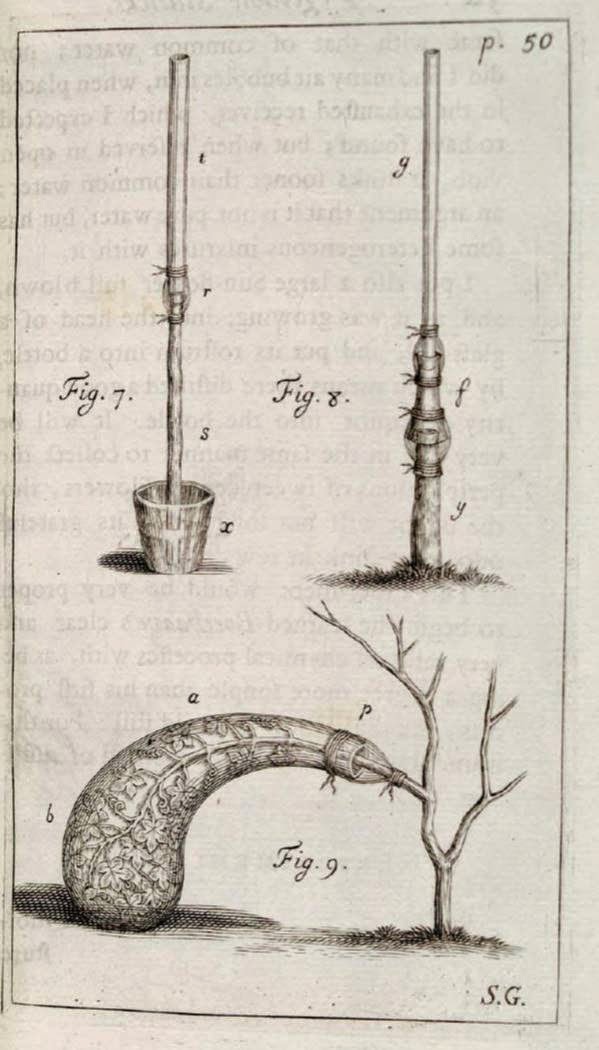
A comprehensive biological education is not just about current research, however. “Educating students about science involves more than teaching them our current models,” explains Dr. Williams. “We also have to help them learn to synthesize information and develop their own models. One way to do this is by asking them to examine how our ideas and understanding have changed with time. As an example, students can read Vegetable Staticks published in 1727 by Stephen Hales, who is considered one of the pioneers of plant physiology. This book is an account of his studies of water transport in plants. In spite of having only simple tools he made key discoveries and developed models that are still useful.”

View Full Size Image
Investigations into the forces and nature of xylem sap, from “Vegetable Staticks,” published in 1727 by Stephen Hales.

BHL has become an important resource for satisfying Dr. Williams’ need for historic botanical literature. Some serendipitous Google searching in 2012 brought her to several digitized classics in the BHL collection, which has since transformed into monthly searches for materials. BHL’s Twitter account, @BioDivLibrary, has also proven helpful for uncovering hidden gems in the collection. Dr. Williams includes links to relevant material and images in her teaching articles.

“BHL makes great scientific works available for students to explore,” lauds Williams. “It can be both fascinating and challenging to see how early scientists conducted experiments and described their results. I particularly like to direct students to “The Power of Movement in Plants”, written by Charles Darwin and his son Francis. Reading it reveals how these exceptional scientists first observe a phenomenon and then set out to understand it. Their investigations of phototropic movement of Phalaris canariensis are brilliant studies that set the stage for the discovery of the plant hormone auxin.”

Providing access to historic literature isn’t the only thing that makes BHL an important resource for Dr. Williams. The diversity and openness of the collection are equally important. “I wrote an article about medicinal plants and was able to draw on BHL for access to dozens of books from across the world and across the ages. Also, the fact that many of the resources are in the public domain makes them easier to share.”

The ability to see the primary sources as they were originally published is another of Williams’ favorite BHL qualities. “Although it would be possible to learn from a transcribed document, somehow seeing the original publications with the old type and especially the old drawings has so much more impact and makes me feel connected to the writers across the centuries.”

View Full Size Image
Drawings of a grapevine stem and leaf showing the transport vessels, from Nehemiah Grew’s The Anatomy of Plants (1682).

Her one complaint? “It would be nice if it were easier to search within a book (although I do enjoy scrolling and browsing).” Improved search is a component of the Mining Biodiversity, Digging Into Data project that BHL is currently engaged in. Deliverables will include enhanced search functionality incorporating text mining, semantic metadata, and result visualizations.

So, which books would a botanical educator choose as her favorite within a collection of more than 150,000 volumes? “It would have to be the two important plant anatomy books from the 17th century, Marcello Malpighi’s Anatome Plantarum (1675) and Nehemiah Grew’s The Anatomy of Plants (1682),” asserts Williams. “The detail and observational quality of the drawings is fantastic. Because of their simplicity in some ways these centuries-old line drawings are clearer and easier to comprehend than an image taken today using a powerful microscope. When I look at these books I am struck by the power of the giants whose shoulders we stand on.”

We couldn’t have said it better ourselves.

Thank you, Dr. Williams, for taking the time to tell us how BHL has impacted your work. Do you use BHL regularly? Tell us about it by writing to [email protected]. 

October 10, 2014by Grace Costantino
BHL News, Blog Reel

Using Data to Improve BHL Social Media

How can data analysis help us improve our social media activities?

This was the fundamental question BHL’s Outreach and Communication Manager, Grace Costantino, sought to address during her two-day meeting with Ryerson University’s Social Media Lab, Sept. 29-30, 2014. As co-participants in the Mining Biodiversity Digging Into Data project, BHL has been collaborating virtually with Dr. Anatoliy Gruzd, the Lab’s Director, since early 2014. The Social Media and Society 2014 conference, organized by the Lab, offered an ideal opportunity for Ms. Costantino and Dr. Gruzd to meet in person and explore BHL’s social network using tools developed by the Lab.

Analyzing BHL’s Twitter Network via Netlytic

The Social Media Lab studies how social media and web 2.0 technologies affect society, communication, and information dissemination. The research team has developed several tools to analyze and visualize social networks. One such tool, Netlytic, is a free cloud-based app that uses public APIs to analyze social media conversations to help community managers discover trending topics, growth, conversation reach, and influential participants. Current supported datasources include Twitter, Facebook, groups and pages, Instagram posts and YouTube comments.

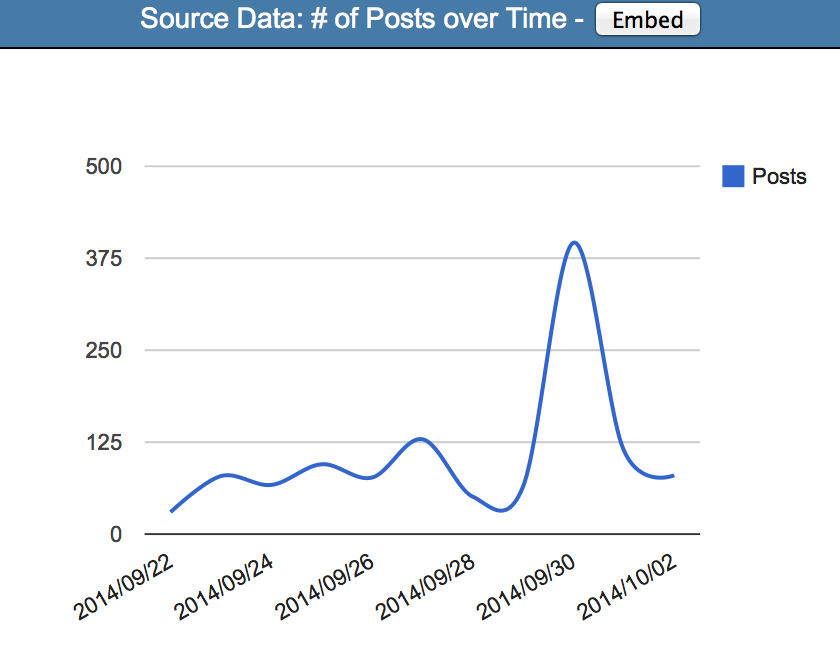
During the meeting, Ms. Costantino and Dr. Gruzd used Netlytic to analyze BHL’s Twitter network, capturing conversations originated by or occurring about BHL. Since analysis was just initiated, Twitter API limitations restricted data capture to conversation occurring on or after 9/22/2014.

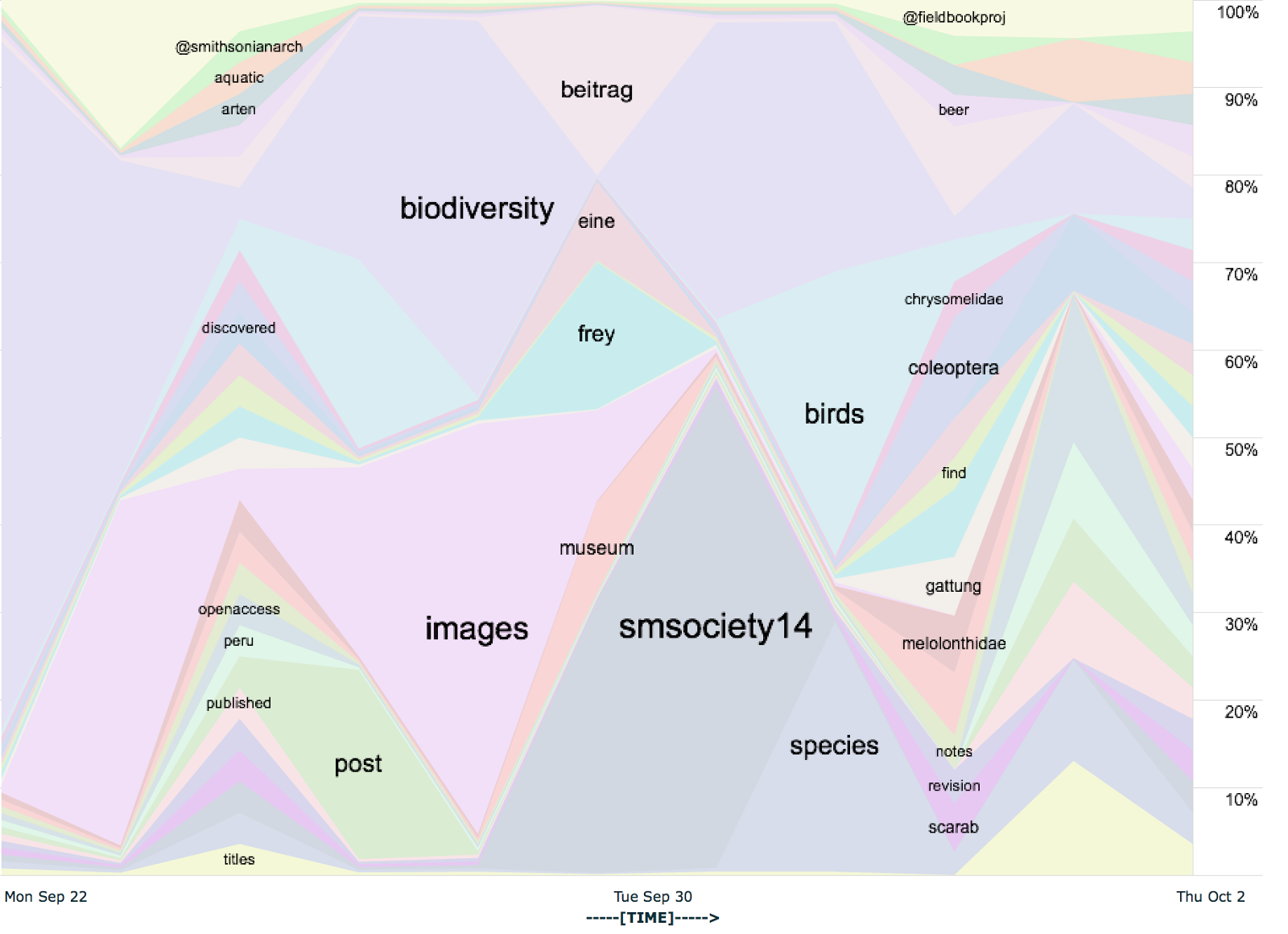
Netlytic reports uncover popular words within conversations, which can be grouped to display popular topics. They also present the entire network as a visualized cluster that displays the connections and conversations among participants.

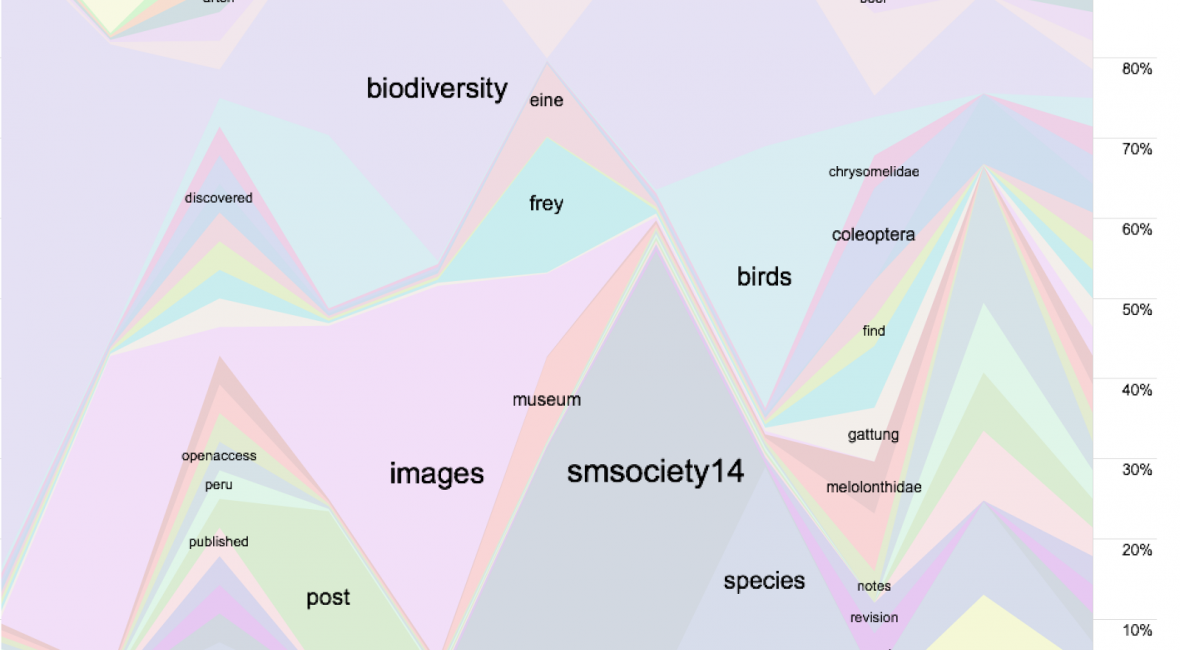
Keyword analysis revealed that, not surprisingly, “biodiversity” and “species” were two of the most popular words occurring in recent BHL-related conversations. Also not surprising were the terms “open access” and “smsociety14” (the hashtag for the Social Media and Society conference). Other popular words, however, include “beer,” “birds,” and “images.” Netlytic allows you to delve deeper into each word occurrence, listing the related tweets. An investigation of “beer” revealed that Oktoberfest is a popular topic among people following or discussing BHL content. “Images” confirmed what our observational analysis already told us – people love our illustrations (evidenced by the overwhelming success of Flickr).

View Full Size Image
Popular words in tweets from the BHL Twitter network.

The appearance of “birds” might suggest that we have more bird-lovers among our followers. However, review of the related tweets showed that we published a good deal of material about birds over the past week and a half, including our Birds of Paradise blog post, some tweets about Florence Bailey’s bird books, and a retweet of PenAndFeather’s post on BHL’s Album de Aves Amazonicas.

View Full Size Image
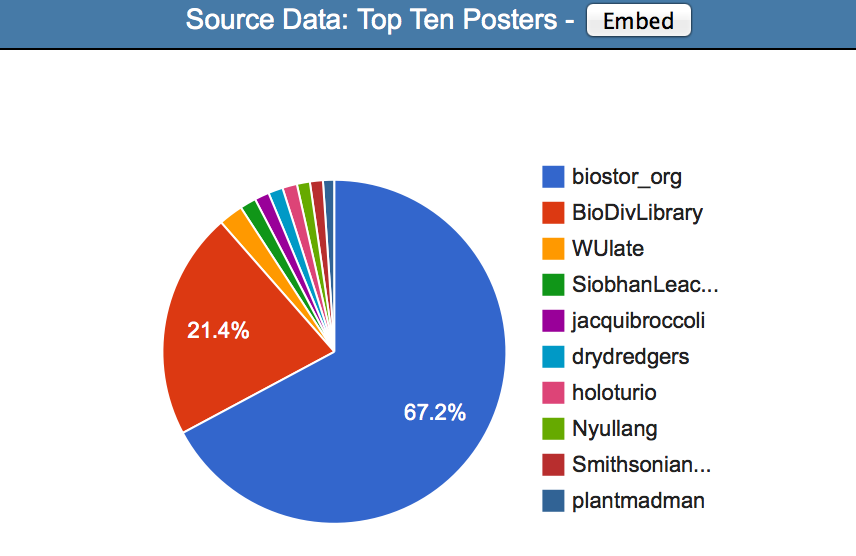
Twitter networks posting the most tweets within our BHL network of tweets from or about BHL.

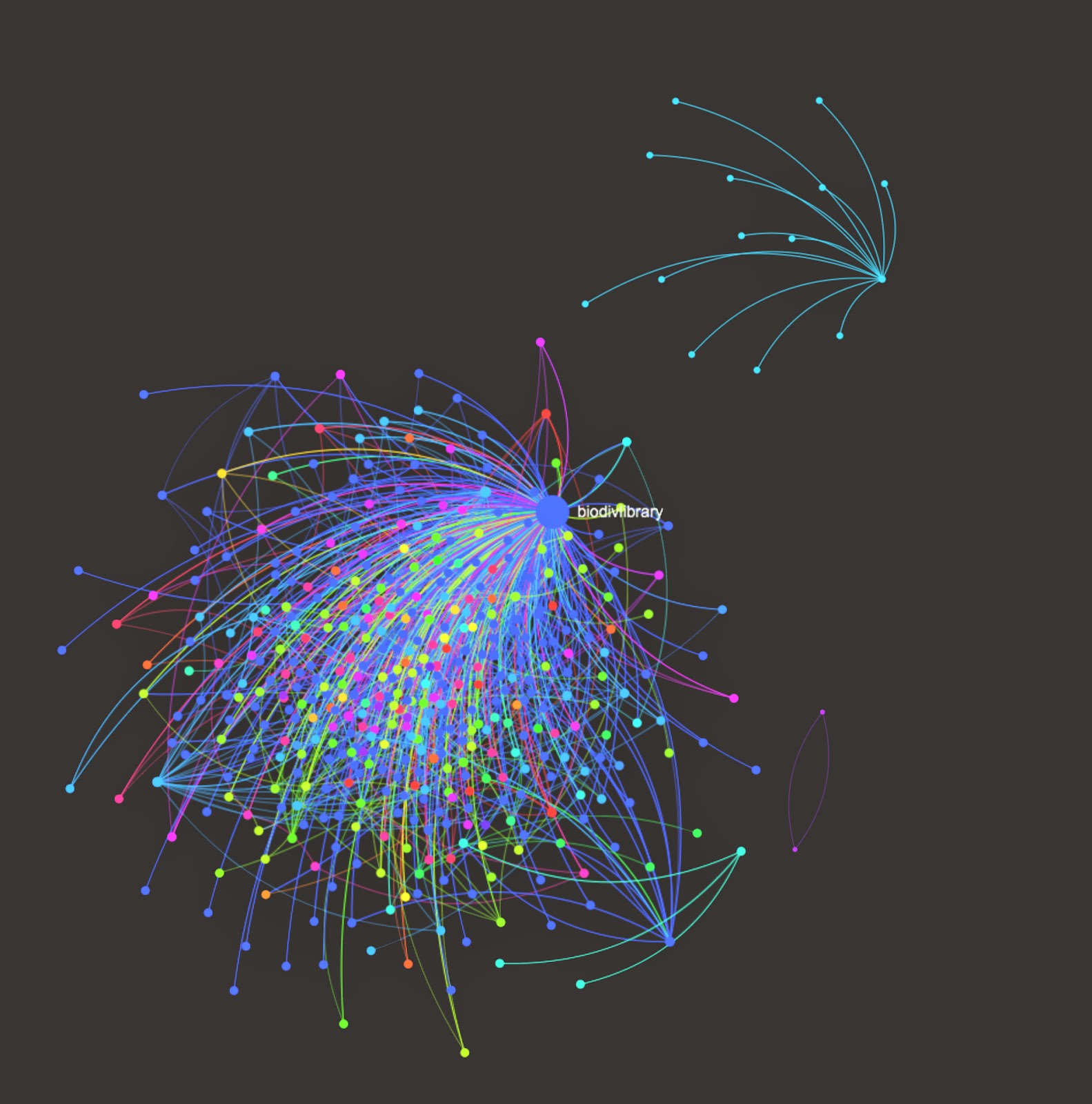
An analysis of the participants in our network revealed that 373 Twitter accounts (represented as nodes in the visualization) have posted content about us since 9/22/2014, with 858 “ties” (or links between participants, meaning that they engaged in some sort of interaction with each other about BHL, through either @mentions, @replies, or retweets).

View Full Size Image
Visualization of the BHL twitter network.

A deeper analysis of the network uncovers who is talking to whom and what they’re talking about. The network visualization is based on clusters, and nodes within the cluster are linked to other nodes via lines that indicate interactions. A single line from one node to another represents a one-sided conversation, i.e. one account tweeted a message that includes a mention of the connected account. When nodes are looped together (a line connects one node, and in turn that node is connected back to the first with another line), this indicates dialogue between the nodes. One account mentions another, and that account in turn mentions the first. These lines can either have an indegree or outdegree centrality value. If an outdegree value, it means that the selected node (i.e. Twitter account) mentioned the connected node. Indegree indicates that the selected node was mentioned by the connected account.

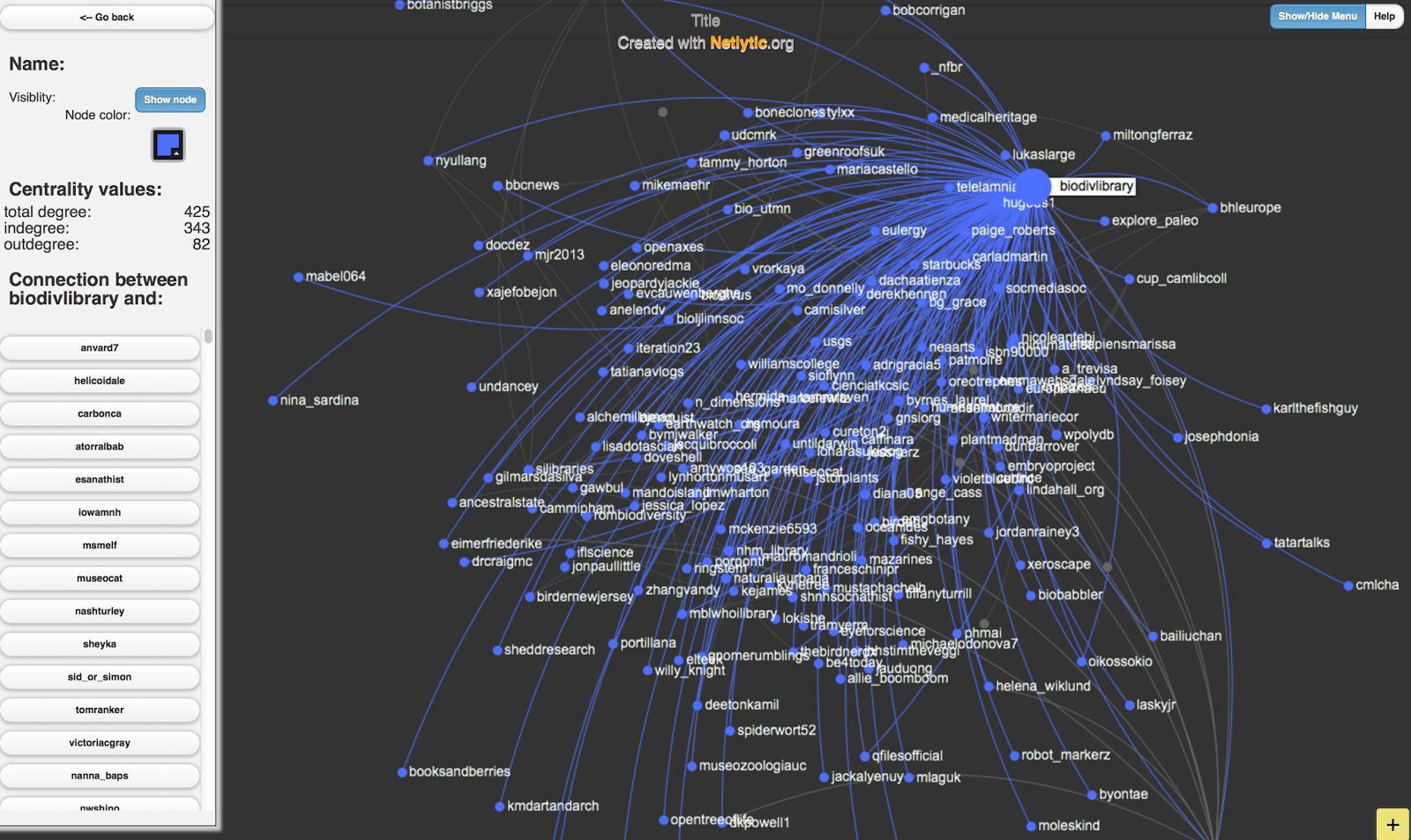
For instance, BHL’s node has a strong indegree centrality, meaning that we are mentioned in other people’s tweets more often than we mention other people in a tweet. During this period, we were mentioned by 343 Twitter users. This is largely accounted for by retweets. Our node operates largely on a broadcasting model, where we publish information that is disseminated by others via retweets. This is obvious visually as the “BioDivLibrary” dot is larger than the surrounding dots in the image below, and in general all nodes tie back to ours. However, we mentioned 82 different Twitter accounts as well during this time period, indicating that we are engaging in dialogue with our users regularly.

View Full Size Image
Network of Tweets published by us or including our handle.

The closer a node is to the more concentrated part of the cluster, the more connections it has within the network, or the more people within the network that the user is interacting with. Nodes stretching far outside the hub of the network often only have a single tie within the cluster, meaning they are not highly engaged in our community.

View Full Size Image
Spike accounted for by popular “International Coffee Day” and “Fashionista” tweets.

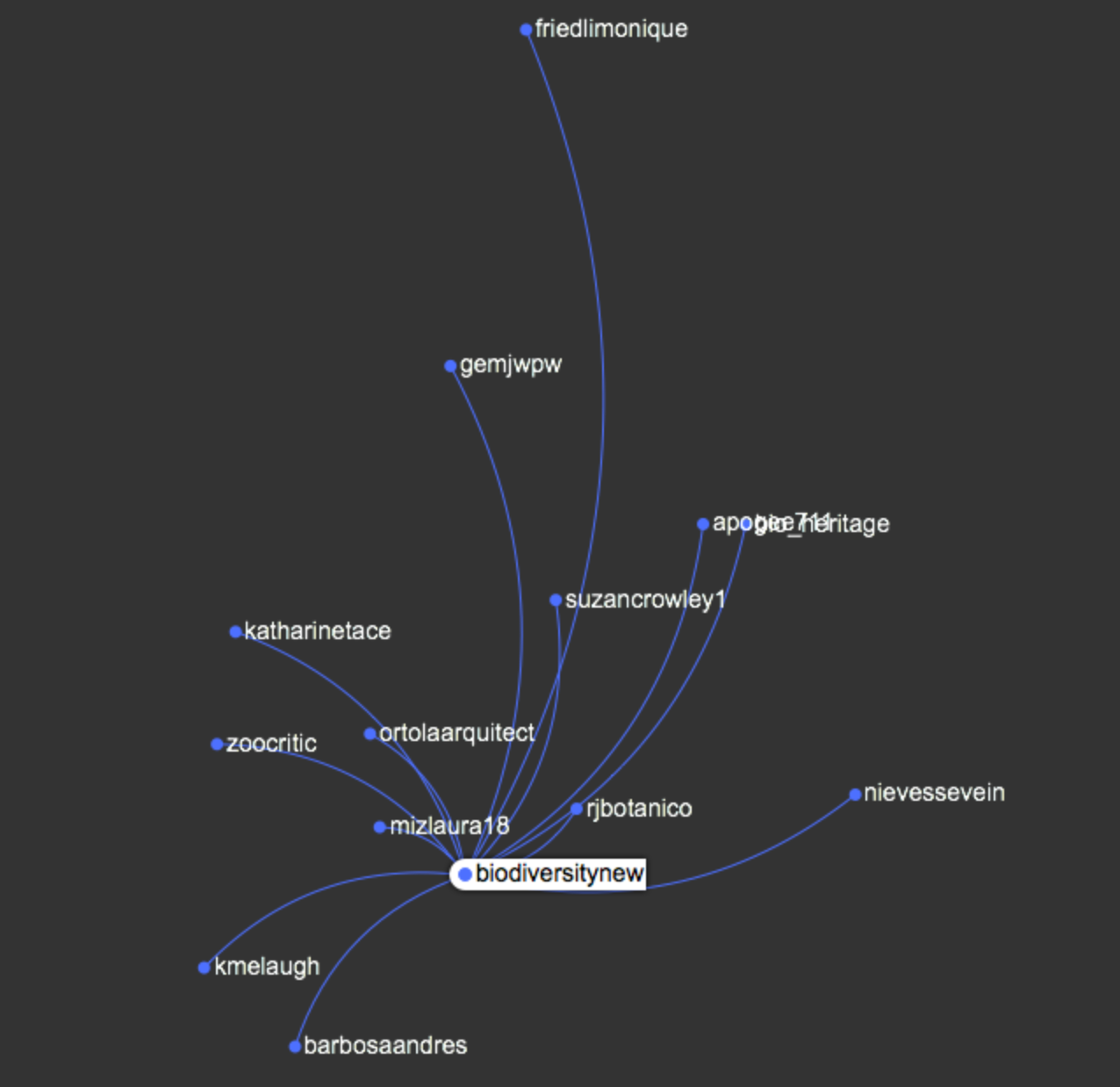
Netlytic is also useful for discovering conversations occurring about BHL that we might be unaware of. All of the nodes within the main group of clusters include either @BioDivLibrary, “Biodiversity Heritage Library,” or #BHLib in the tweet. These are conservations that we can easily track and follow via Twitter. However, the @BiodiversityNew network includes interactions among users that don’t include #BHLib, @BioDivLibrary, or “Biodiversity Heritage Library” in their tweets. Instead, they include links that resolve back to our blog posts. There is no easy way to discover this conversation in Twitter, but thanks to Netlytic, we can not only find it but engage with the participants in that node and encourage them to follow us.

View Full Size Image
@BiodiversityNew network involving posts resolving back to the BHL blog


So What?

A community manager can spend hours (days!) analyzing a network, discovering users and related conversations. But how can this help us improve our social media efforts?


  1. Trending vs. Long-Term Analysis: Since we’ve only recently started tracking BHL’s Twitter via Netlytic, we have a limited range of data available for analysis. However, the longer we track our network, the more data we will have to work with. This will allow us to get a more accurate picture of our network and answer questions that require longitudinal study and long-range data.
    1. Who are all the players interacting with us? Some users who might regularly engage with us may not have been active during the period analyzed, and thus are not captured as part of our network.
    2. What topics are consistently popular among our users? Terms like “beer” were popular now because of Oktoberfest, but likely will not remain so.
    3. What is the true size of our network, and is it showing growth? Furthermore, when we see rapid growth, we can investigate the content we published and the most active users in our network during that period to discover what and who is influential in regards to our growth.
    4. However, it is still useful to capture trends so that we can publish event-specific, time-relevant content. Netlytic allows you to limit your analysis to a particular time period, allowing us to see what topics we should be publishing about now (based on trends) vs. regularly (based on longitudinal study).
  2. Audience-Informed Content: In general, an analysis of popular keywords allows us to see what resonates most with our users. This will allow us to better craft our posts to satisfy the appetite of our network.
  3. Is our Community Stable and Loyal? Analyzing the users that engage with us over time can help us see not only whether we see new users participating (showing network growth), but whether existing users continue to interact with us. We want to grow a stable, dedicated community that consistently helps to promote our content. If we do not see strong follower loyalty, we will need to compare our content and tone to those popular among our users and tweak our strategies accordingly.
  4. Discover New Conversations and Communities: As explained earlier, Netlytic can help us discover conversations occurring about us that we are otherwise unaware of. We can also identify new communities with an interest in our material but as yet unengaged with our brand. Engaging in these conversations and networks will help us grow our audience.
  5. Discover Influencers and Collaborators: Network analysis can also help us see which users are most connected with other users, particularly with a strong inbound centrality. These users are reaching many other users and successfully inspiring engagement. These are important relationships for us to cultivate as these individuals may represent our most influential advocates. BHL also actively collaborates with other nodes. Network analysis will help us see whether these collaborations are reaching new and expanding audiences. We should increase collaborations with those demonstrating the greatest growth and connections. For those lacking such indicators, it may be appropriate to shift effort elsewhere.
  6. Convert Outliers to Champions: As mentioned, nodes furthest removed from a network’s concentrated center are least-engaged in the community but have demonstrated interest in our content. These users may also represent people with access to communities we do not yet engage with. We should strategically engage with select users in these categories to encourage further investment in our community, which may lead to advocates in new communities.
  7. Less Broadcasting, more Conversation: The Social Media and Society Conference revealed that science-related Twitter accounts often operate on a broadcasting model. They are disseminators of information, but not strong facilitators of dialogue. Within the BHL network, we see a bias towards broadcasting, but many looped ties were present, indicating that we are actively engaging with our users. One of our outreach goals is to foster and promote a dialogue among ourselves, researchers, librarians, citizen scientists, and bioinfomaticians. This requires us to engage with more users, using the strategies outlined above. Continual analysis of our network will reveal if we are being successful and indicate when new strategies are necessary.

It’s a brave new world of social media analysis. Emerging tools allow us to discover our networks, engage with our users, and refine our strategies like never before. As BHL continues to collaborate with The Social Media Lab and analyze our social networks (Twitter is just the beginning), we will improve our ability to tell people why biodiversity is unbelievably awesome!

View Full Size Image

The BHL Outreach and Communication Manager position, and this meeting attendance, are made possible in part through funding from the Institute of Museum and Library Services (Grant number LG-00-14-0032-14).

October 4, 2014by Grace Costantino
Page 42 of 71« First...102030«41424344»506070...Last »

Help Support BHL

BHL's existence depends on the financial support of its patrons. Help us keep this free resource alive!

search

About BHL

The Biodiversity Heritage Library (BHL) is the world’s largest open access digital library for biodiversity literature and archives. BHL operates as a worldwide consortium of natural history, botanical, research, and national libraries working together to digitize the natural history literature held in their collections and make it freely available for open access as part of a global “biodiversity community.”

Join Our Mailing List

Sign up to receive the latest news, content highlights, and promotions.

Subscribe Now

Subscribe to Blog via Email

Enter your email address to subscribe to this blog and receive notifications of new posts by email.

Join 319 other subscribers

Subscribe to Blog Via RSS

Subscribe to the blog RSS feed to stay up-to-date on all the latest BHL posts.

Access RSS Feed

Inspiring Discovery through Free Access to Biodiversity Knowledge.

The Biodiversity Heritage Library makes it easier than ever for you to access the information you need to study and explore life on Earth…for free, anytime, anywhere.


ABOUT | HARMFUL CONTENT | PRIVACY | SITE MAP | TERMS OF USE