Biodiversity Heritage Library - Program news and collection highlights from BHL
  • Home
  • News
  • Featured Books
    • All Featured Books
    • Book of the Month Series
    • BHL at 20
  • User Stories
  • Campaigns
    • Fossil Stories
    • Garden Stories
    • Monsters Are Real
    • Page Frights
    • Her Natural History
    • Earth Optimism 2020
  • Tech Blog
  • Visit BHL
Home
News
Featured Books
    All Featured Books
    Book of the Month Series
    BHL at 20
User Stories
Campaigns
    Fossil Stories
    Garden Stories
    Monsters Are Real
    Page Frights
    Her Natural History
    Earth Optimism 2020
Tech Blog
Visit BHL
  • Home
  • News
  • Featured Books
    • All Featured Books
    • Book of the Month Series
    • BHL at 20
  • User Stories
  • Campaigns
    • Fossil Stories
    • Garden Stories
    • Monsters Are Real
    • Page Frights
    • Her Natural History
    • Earth Optimism 2020
  • Tech Blog
  • Visit BHL
Biodiversity Heritage Library - Program news and collection highlights from BHL
Blog Reel, User Stories

Historic Art Meets Modern Art: Artist’s Recent Works Highlight BHL Images

red, purple, blue and green artwork with scorpion in the background
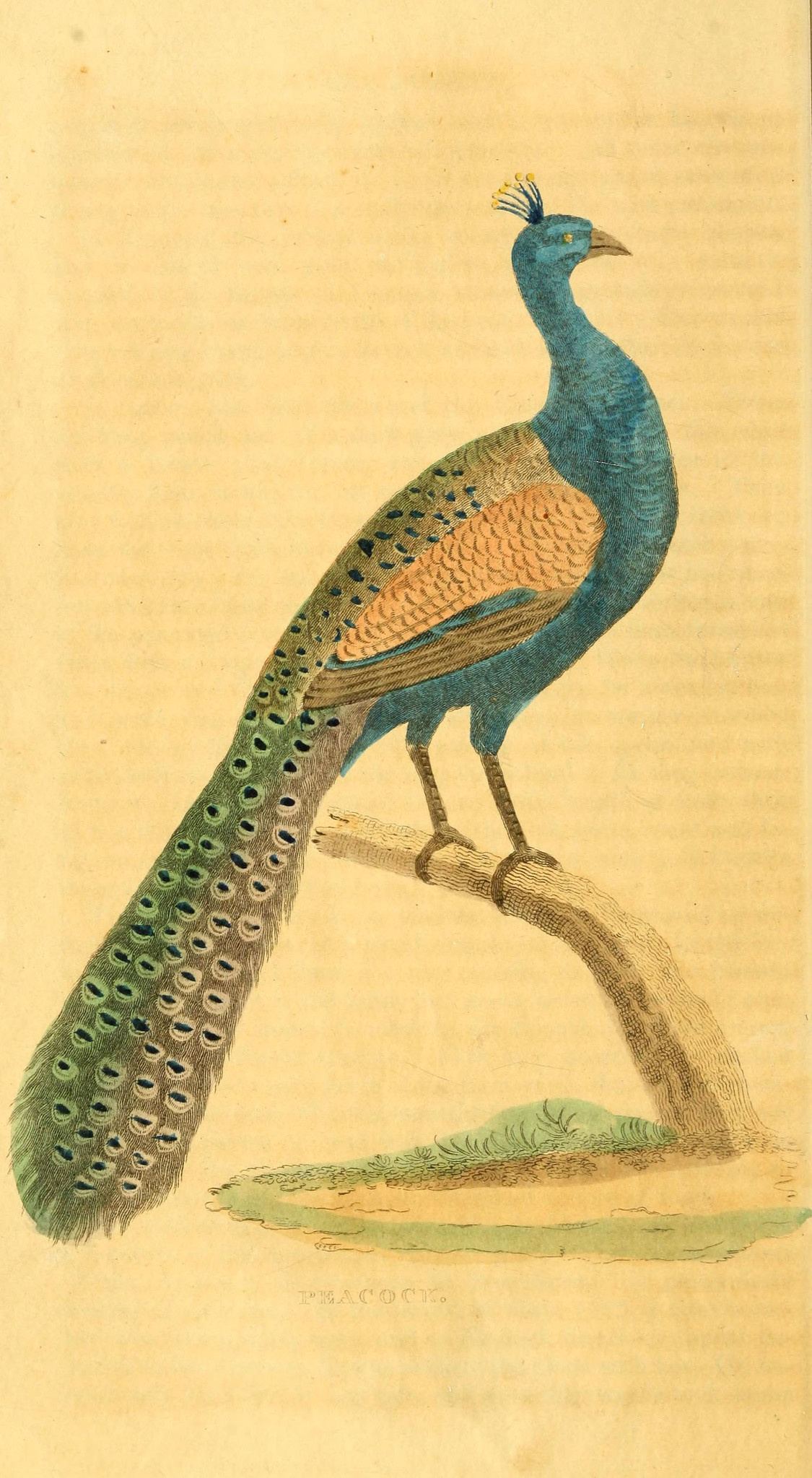
drawing of a blue bird with teal colored tail feathers standing on a branch

Peacock. A Natural History of Birds, Fishes, Reptiles, and Insects (1845). Contributed in BHL from Smithsonian Libraries. Downloaded from the BHL Flickr.

Art is an integral part of scientific investigation and documentation. Before the advent of photography, illustrations were used to capture the natural world and share it with broader audiences through reproduction via woodcuts, engravings and etchings, and lithography in natural history publications. Even today, scientific illustration is important, articulating morphological, physiological and anatomical features with more detail and clarity than can often be captured through photographs.

With more than five centuries of natural history literature, the Biodiversity Heritage Library’s open access collections include millions of scientific illustrations amongst the Library’s nearly 60 million pages. Since 2011, BHL partners have worked to upload many of these illustrations to Flickr. Recent publicity from a myraid of outlets including Colossal, My Modern Met, Open Culture, Atlas Obscura, Lifehacker, and Vice has generated wide public interest in BHL’s Flickr collections, which in 2020 included over 180,000 images freely available to browse, download, and reuse. The images are curated by volume and searchable by subject and, in many cases, scientific names thanks to tags added as part of our Flickr tagging citizen science project.

These illustrations are useful for communities in a wide range of disciplines. Our audiences have shared how they use these illustrations to support studies in the sciences, such as identifying the earliest observations on heterostyly in plants, researching the history of herbaria, and revisiting the legacy of women in science. Citizen scientists make use of these resources on platforms like Wikipedia and to research the identities of natural history artists.

Given that these illustrations are works of art, it’s not surprising that these collections are also providing a wealth of inspiration for artists like Dee Etzwiler, who recently used BHL images within nine pieces she created for a group show — Conversations: Reflections of 14 Women Artists — exhibited at the Maude Kerns Art Center (Eugene, OR) from 10 January – 7 February 2020.
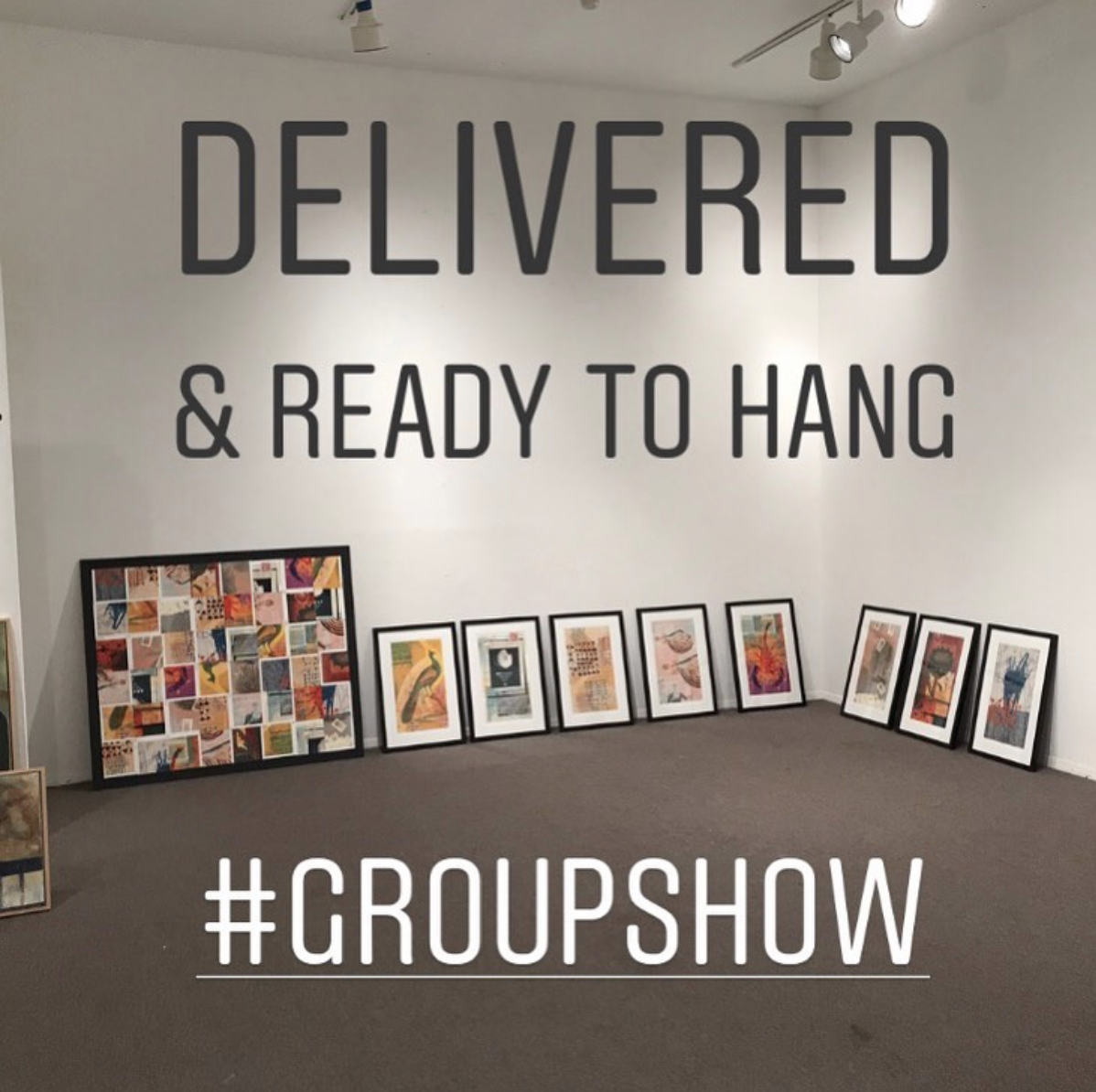
framed artworks on the ground with text "delivered and ready to hang".

Dee Etzwiler’s artworks incorporating BHL imagery, delivered for the group show — Conversations: Reflections of 14 Women Artists — exhibited at the Maude Kerns Art Center (Eugene, OR) from 10 January – 7 February 2020. Photo credit: D. Etzwiler on Instagram.

Photo of a person with curly brown hair smiling at the camera

Photo by: Eric Merrow | @MerrowVisuals (www.merrowvisuals.com)

“As an artist, BHL offers a wealth of imagery for me to explore and discover,” affirms Etzwiler. “The images are abundant in number and are superb in beauty, diversity and quality.”

With a background in art and a master’s degree in architecture, Etzwiler combined her skills to found her own commercial art firm in 2012, where she works collaboratively with clients to create custom artworks. While most of her work is client driven, Conversations gave Etzwiler an opportunity to create a body of work driven by her own interests and influences.

It was while conducting image research in 2019 for these artworks that Etzwiler first discovered BHL.

“I had decided to create a number of pieces to represent different adjectives that describe conversations,” explains Etzwiler. “While conducting research, I discovered a scorpion image on the BHL Flickr that became central to one of my pieces. This was the first BHL image I started to seriously digitally manipulate, and the piece quickly developed into an exciting work. I decided that my entire body of work for the Conversations group show would revolve around BHL inspiring images.”
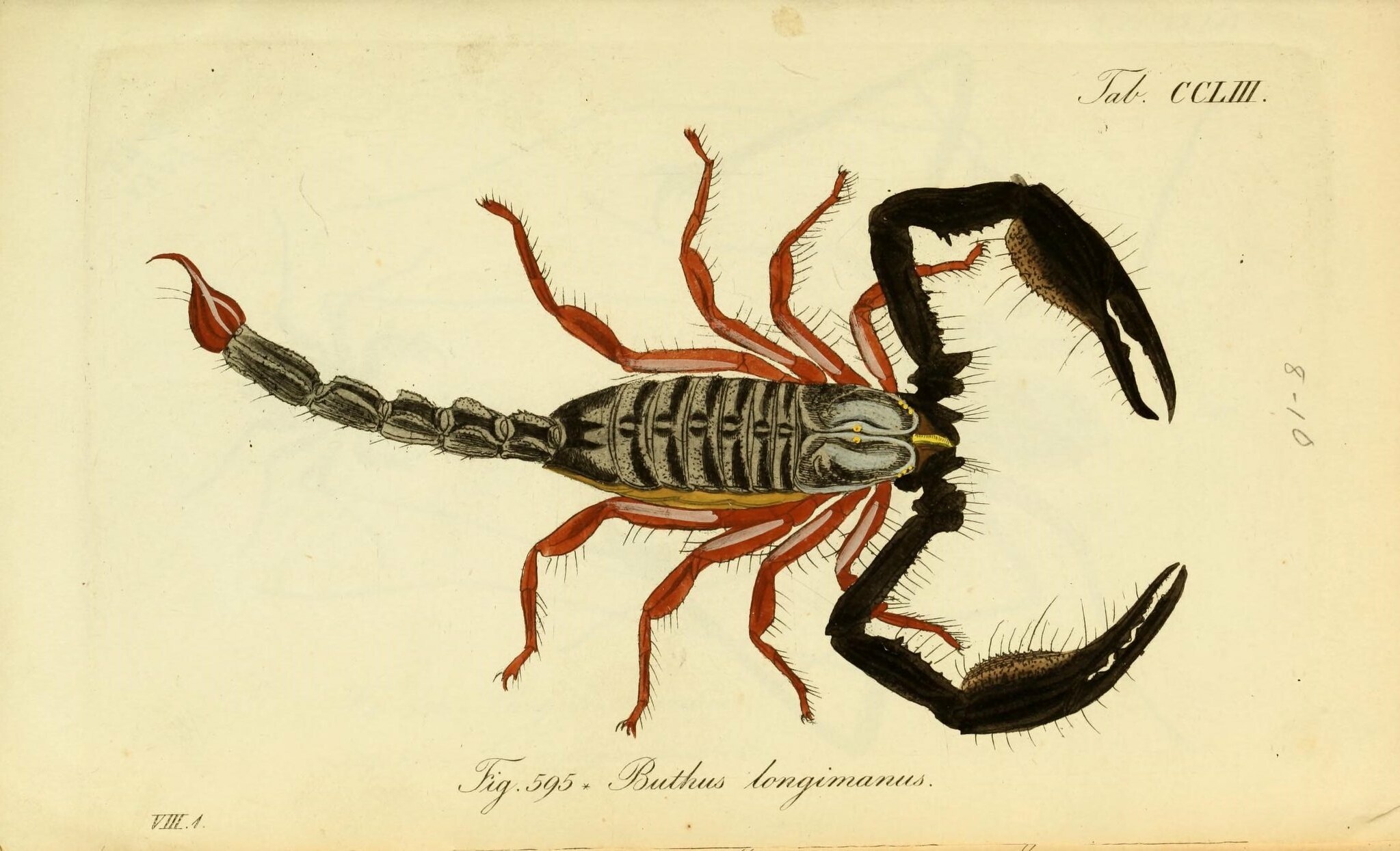
black and red scorpion

Scorpion image from the Biodiversity Heritage Library which Etzwiler incorporated into her artwork, ‘Stinging’ (2019). Plate CCLIII. Die Arachniden, Bd. 8-10 (1841-43). Contributed in BHL from the Ernst Mayr Library, Museum of Comparative Zoology, Harvard University. Downloaded from the BHL Flickr.
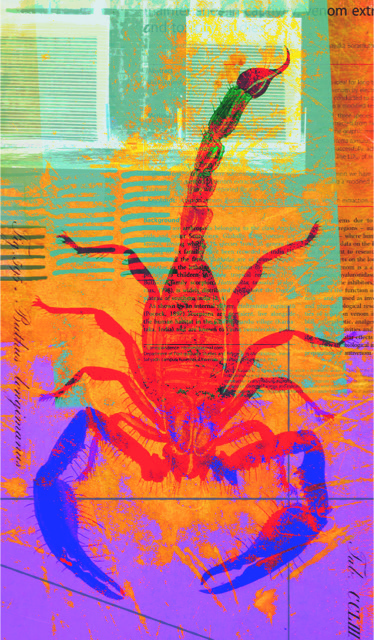
red, purple, blue and green artwork with scorpion in the background

‘Stinging’. Artwork by Dee Etzwiler for the group show — Conversations: Reflections of 14 Women Artists — exhibited at the Maude Kerns Art Center (Eugene, OR) from 10 January – 7 February 2020. © Etzwiler 2019. Reproduced with permission from D. Etzwiler.

When looking for BHL imagery to incorporate into her art, Etzwiler starts by conducting searches in the BHL Flickr by common name, scientific name, and other related words so that she can uncover a wide range of potential images with which to work. Once she selects an image, she downloads a full size file and imports it into a Photoshop file where she layers it with textures, images and colors to develop her artwork. Once completed, the art is commercially printed, making use of a variety of printing substrates — fine art paper, metal, acrylic, wood, canvas, fabric, and more.
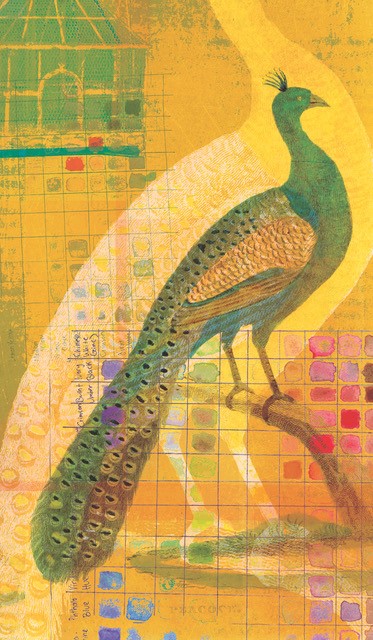
orange and yellow painting with peacock in the background

‘Colorful’. Artwork by Dee Etzwiler for the group show — Conversations: Reflections of 14 Women Artists — exhibited at the Maude Kerns Art Center (Eugene, OR) from 10 January – 7 February 2020. © Etzwiler 2019. Reproduced with permission from D. Etzwiler.
  Incorporating artwork from BHL: Peacock. A Natural History of Birds, Fishes, Reptiles, and Insects (1845). Contributed in BHL from Smithsonian Libraries. Downloaded from the BHL Flickr.

BHL has made incorporating these historic illustrations into her own artworks extremely easy.

“I love how easily I can search the images in Flickr and how well the images are organized and displayed,” asserts Etzwiler. “I love that I can view images in greater detail and download them in a variety of sizes and resolutions. Having access to copyright information is very important, too. It was so much fun to create this body of work, and I am grateful that I committed to this idea.”
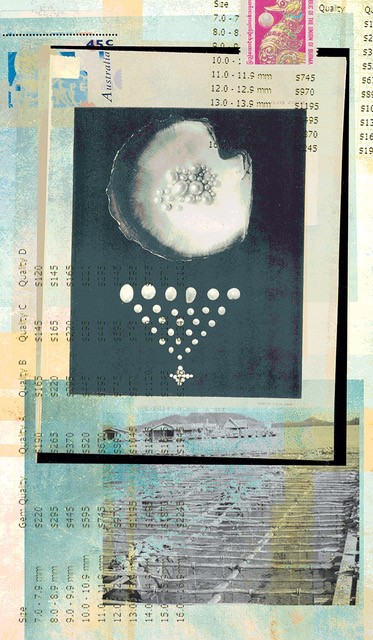
teal and cream artwork with shell and pearls in background

‘Valuable’. Artwork by Dee Etzwiler for the group show — Conversations: Reflections of 14 Women Artists — exhibited at the Maude Kerns Art Center (Eugene, OR) from 10 January – 7 February 2020. © Etzwiler 2019. Reproduced with permission from D. Etzwiler.
Incorporating artwork from BHL: Plate XXXVII. The Great Barrier Reef of Australia (1893). Contributed in BHL from Smithsonian Libraries. Downloaded from the BHL Flickr.

Etzwiler enjoyed her experience working with BHL images so much, she intends to continue to use these collections in her pieces. In fact, this experience has had a deep impact on her artistic interests and the future direction of her work.

“My work with BHL’s images has greatly increased my interest in creating science-related art, which has now become a focus of my work as I move forward,” shares Etzwiler. “With the current coronavirus pandemic, I will be focused on this science-related work in my studio. I know that BHL assists those in the science community, but it has also made a big impact on my life as an artist and I am grateful.”
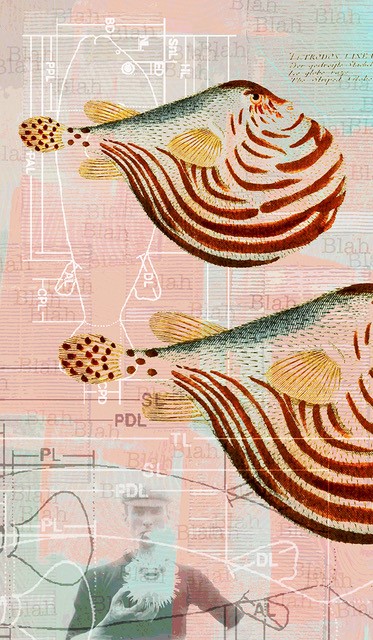
red and blue painting with blowfish in the background

‘Long-Winded’. Artwork by Dee Etzwiler for the group show — Conversations: Reflections of 14 Women Artists — exhibited at the Maude Kerns Art Center (Eugene, OR) from 10 January – 7 February 2020. © Etzwiler 2019. Reproduced with permission from D. Etzwiler.
Incorporating artwork from BHL: Pl. 141. Ichthyologie, v. 1 Plate (1796). Contributed in BHL from the Ernst Mayr Library, Museum of Comparative Zoology, Harvard University. Downloaded from the BHL Flickr.

BHL’s open access digital library portal allows anyone to freely access valuable literature and beautiful images from anywhere — even at home and when access to physical collections is not possible. We’re grateful to our global partners for making their collections freely available — empowering research, learning, and creativity, no matter where you are.

Thank you to Dee Etzwiler and others in our global community for letting us know how valuable and inspirational BHL’s collections are in so many ways and for so many people.
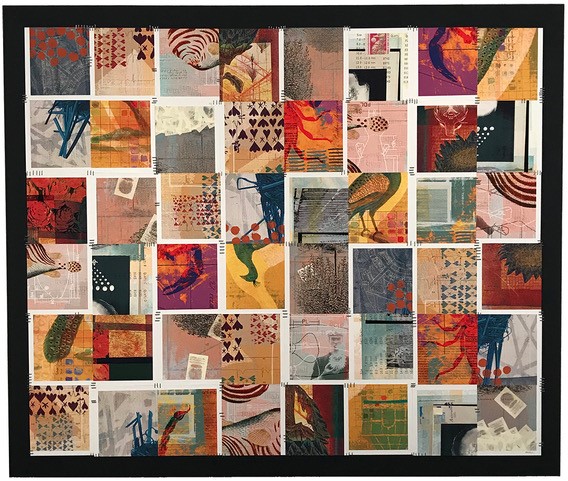
collage with mostly red and orange colors

‘The Gathering’. A patchwork of pieces from the original 8 images created by Dee Etzwiler for the group show — Conversations: Reflections of 14 Women Artists — exhibited at the Maude Kerns Art Center (Eugene, OR) from 10 January – 7 February 2020. The original 8 pieces represent conversation types, so this large piece represents a hypothetical social gathering.
© Etzwiler 2019. Reproduced with permission from D. Etzwiler.


May 14, 2020by Grace Costantino
BHL News, Blog Reel

Welcome to Colleen Funkhouser, BHL Program Manager

photograph of a human with glasses and brown hair standing in front of a fence outside.

Colleen Funkhouser, BHL Program Manager. Photo Credit: Colleen Funkhouser.

We are pleased to welcome Colleen Funkhouser as the new BHL Program Manager. As Program Manager, Ms. Funkhouser will work to build strategic partnerships and to maintain and grow the infrastructure and services of BHL.

A digital librarian with a background in biology, Ms. Funkhouser has previously supported academic and federal libraries with a focus on scientific research. She comes to BHL from the National Science Foundation, where she served as a Digital Librarian for the past three years. She was first introduced to BHL as a Cataloging Intern for the Smithsonian Field Book Project in 2015.

Ms. Funkhouser holds an MSLIS from The Catholic University of America and a BS in Wildlife and Fisheries Biology from Clemson University.

Ms. Funkhouser follows Carolyn Sheffield, who served as BHL Program Manager from 2013 – March 2019, when she took a new position as Associate Director, Library Technology and Digital Strategies at the University of Maryland, Baltimore County, Albin O. Kuhn Library & Gallery. We are grateful to Ms. Sheffield for her many years of invaluable service to BHL.

We look forward to continuing to build and strengthen our program and consortium with Ms. Funkhouser as she joins the BHL Secretariat at the Smithsonian Libraries. Please join us in welcoming her to the BHL family!

April 7, 2020by Grace Costantino
BHL News, Blog Reel

BHL Resources to Support Distance Learning

yellow and red flower

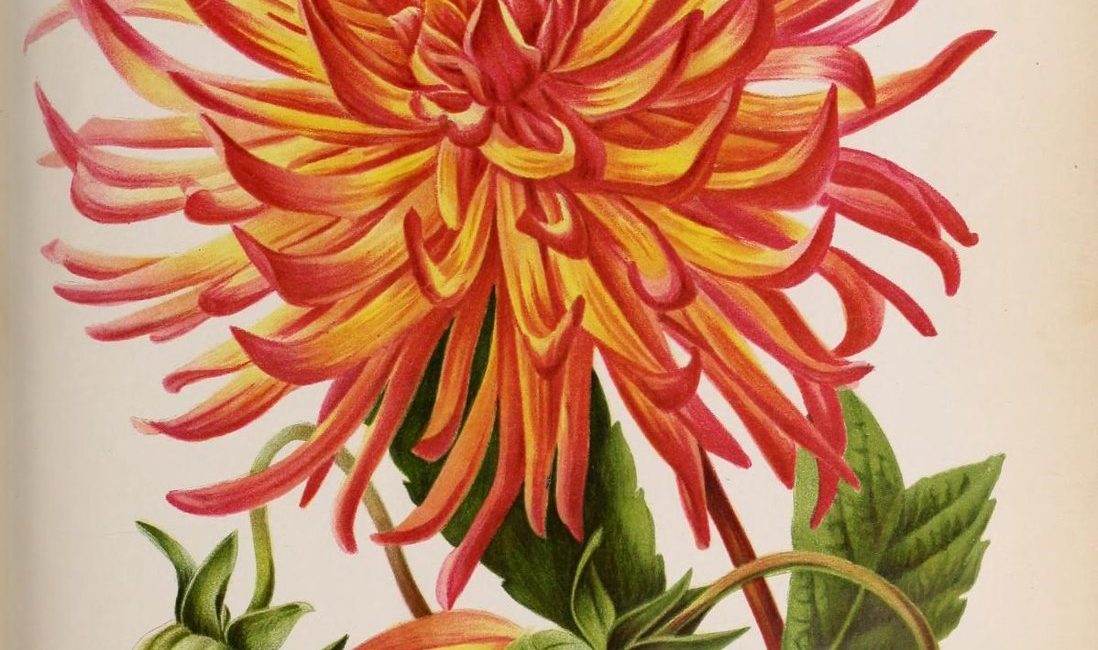
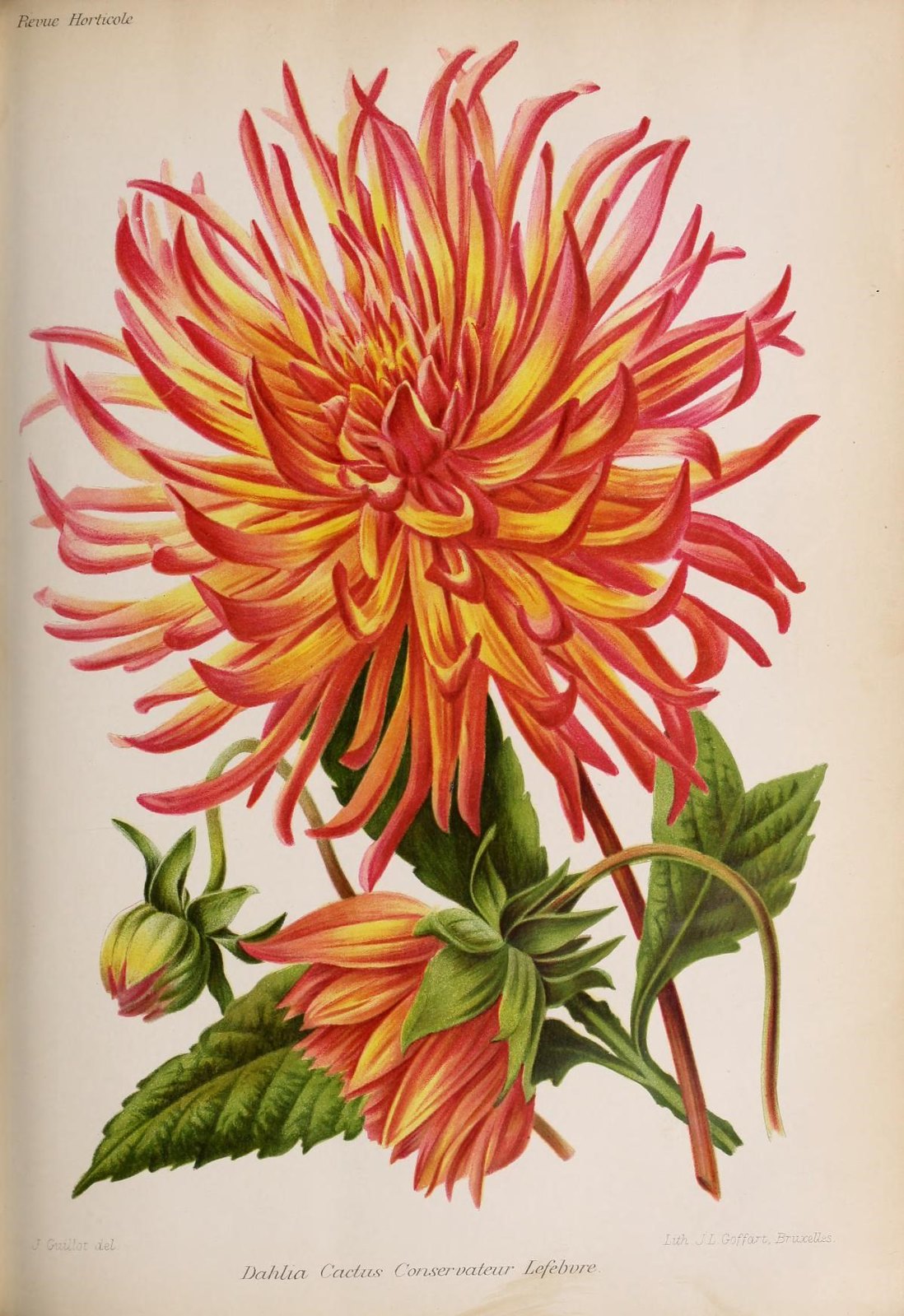
Illustration of a Cactus Dahlia from Revue horticole (1908). Contributed in BHL from the New York Botanical Garden, LuEsther T. Mertz Library. This image is one of over 160,000 that are freely available for download and reuse through the BHL Flickr.

BHL’s digital library provides free and open online access to over 250,000 volumes from the 15th-21st centuries on a wide range of biodiversity subjects. These collections offer great resources to support distance learning.

All of our content can be accessed online for free and in full through our digital library portal at biodiversitylibrary.org. No login, account, or membership is required. You can also freely download anything in our library in a variety of formats. Our FAQ provides information on how to search the library and download content.

In addition to our general collections, we’ve identified a selection of materials that may be of particular interest to educators and students. Explore these resources below.

Thematic Collections

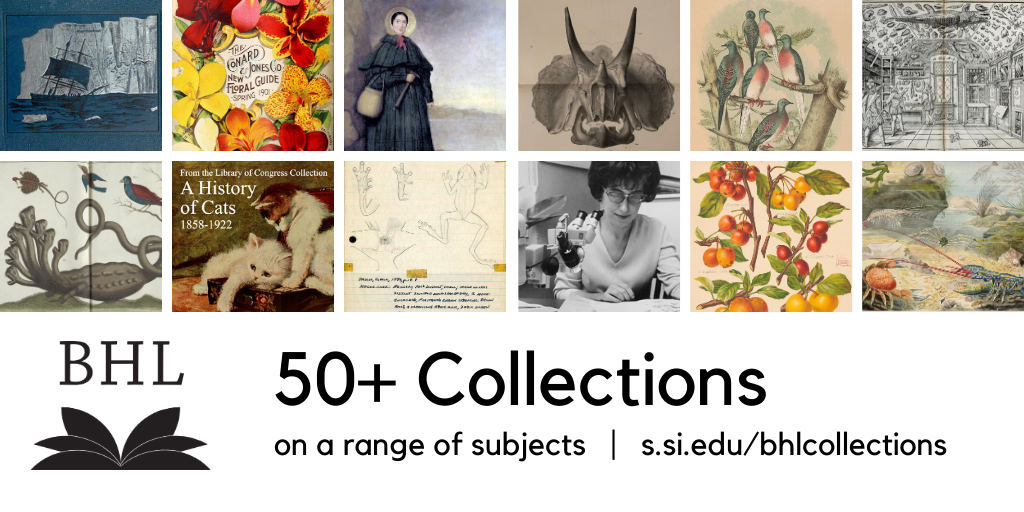
Looking for curated content? Our Collections offer a pre-selected set of materials on a variety of subjects, from Antarctic Exploration & Discovery to Seed & Nursery Catalogs and Latino Natural History.

graphic with BHL collections highlighted

Explore over 50 thematic collections on a range of subjects.

Image Resources

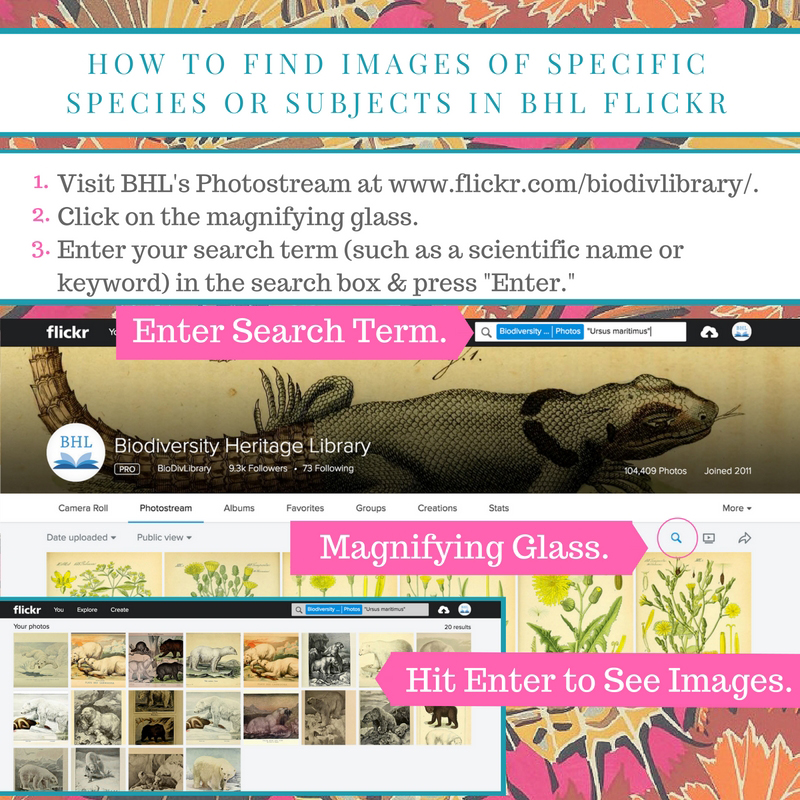
If you need image resources for your distance learning activities, we have a rich collection of over 160,000 free nature images in our Flickr. Here’s how to search and download those collections.

Instructions on how to find images in the BHL Flickr

Instructions on how to search for specific subjects and species in the BHL Flickr.

Looking for an educational activity to do online around nature art? Tagging images in the BHL Flickr with species and artist names is a great option. It’s not only a fun way to learn about taxonomy, investigate individual species, and explore artists and artistic practices, but it also makes these images more accessible and discoverable for others to support their research and educational activities.

Learn more about tagging and get started with our instructional guide.

Coloring Books

Looking for more hands-on educational resources? Explore and download our free coloring books created from images in our collection.

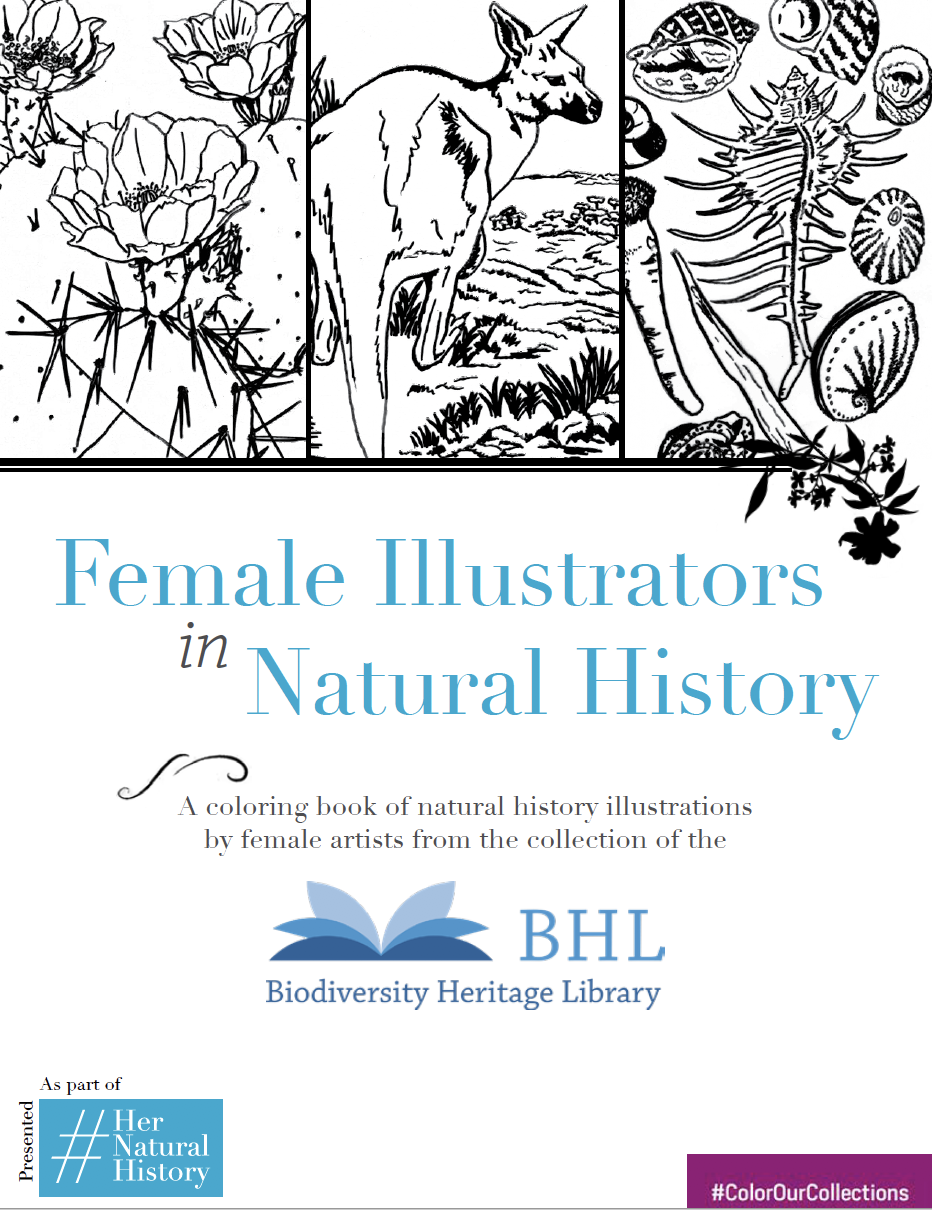
cover of the female illustrators in natural history coloring book

Our “Female Illustrators in Natural History” coloring book is one of several freely available from BHL. Explore and download our coloring books.

Women’s History Month Educational Resources

Looking for resources to support educational activities around Women’s History Month? Our #HerNaturalHistory collections offer a range of content related to women’s contributions to natural history. Explore our book and image collections, coloring book, Facebook videos, and blog series.

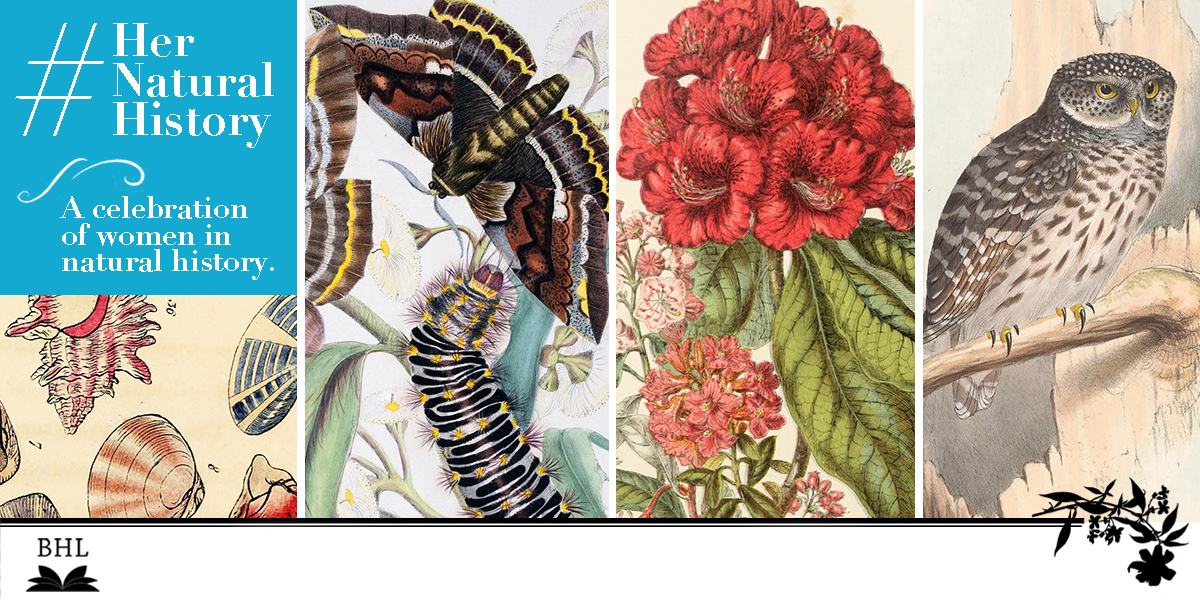
Her Natural History graphic

Our Her Natural History collections on women in science include book and image collections, a coloring book, Facebook videos, and informative articles.

March 17, 2020by Grace Costantino
Blog Reel, User Stories

“Writing Women Back Into the History of STEM”: BHL Supports Research on Women in Science

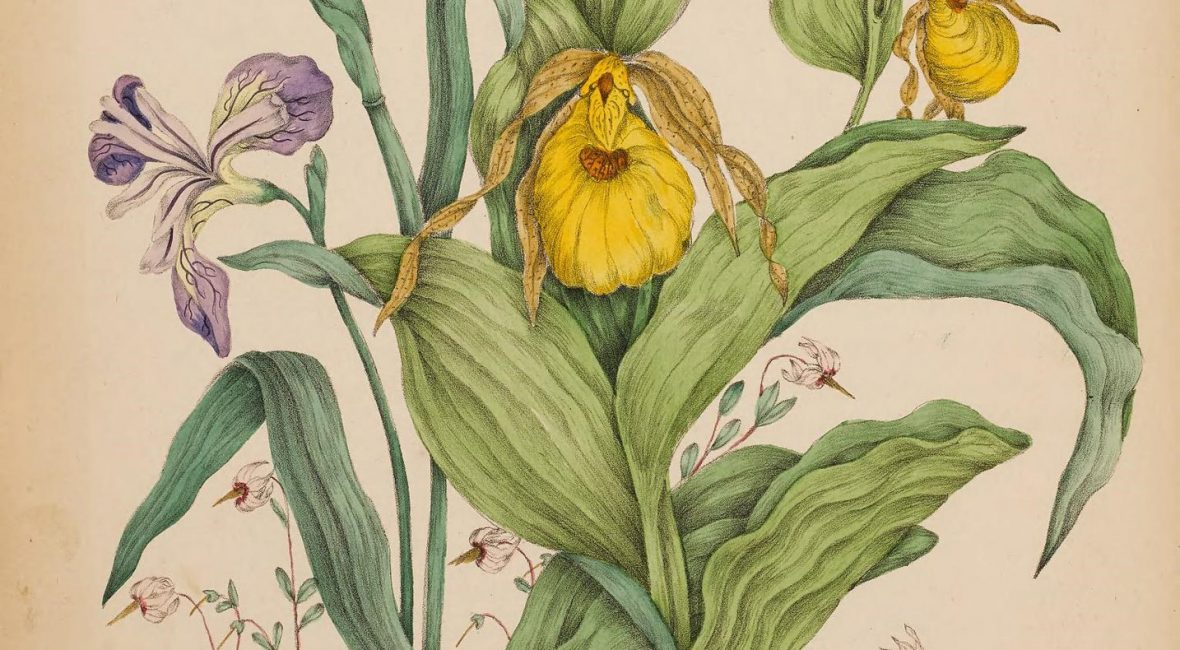
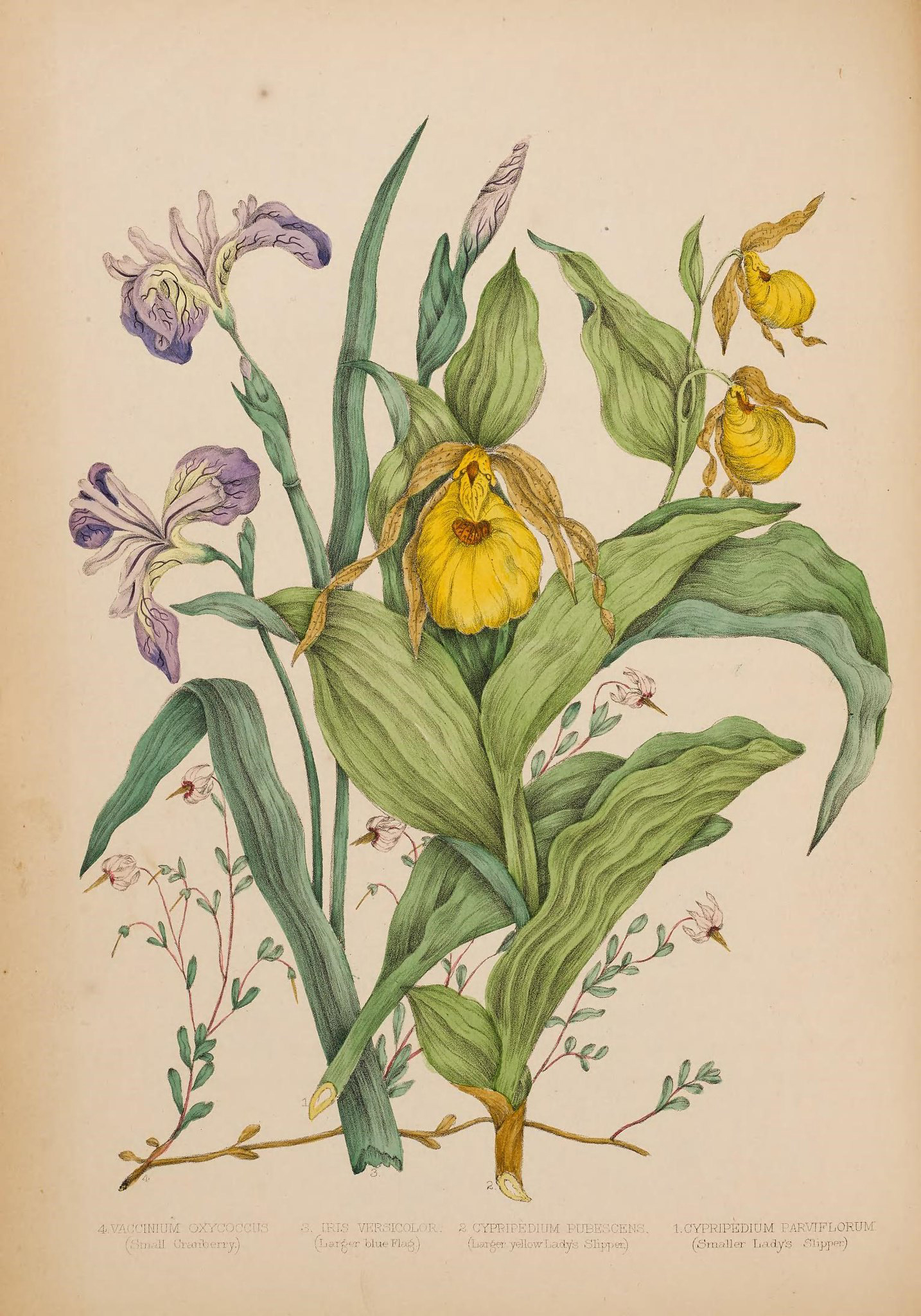
illustration of yellow and purple flowers

Illustration by Agnes Dunbar Moodie Fitzgibbon Chamberlin from Catharine Parr Traill’s Canadian Wild Flowers (1868). Contributed in BHL from the Canadian Museum of Nature Library.

In 1868, one of the first serious botanical works in Canada was published. Entitled Canadian Wild Flowers, the work treated nearly three dozen of “the most remarkable” wildflowers found in Canada. The publication is notable for more than its position as an early work on Canadian botany. During a time when women were largely unwelcome in the male-dominated scientific world, this pioneering book was written and illustrated by women.

Canadian Wild Flowers was authored by naturalist Catharine Parr Traill (1802-99), a trailblazer in research on Canada’s natural history. The plates were drawn and lithographed by her niece, Agnes Dunbar Moodie Fitzgibbon Chamberlin (1833–1913). An expensive undertaking and sold by subscription, the work went on to be published in several editions.

“Catharine Parr Traill is arguably Canada’s most famous 19th century botanist, though she never thought of herself as a professional botanist because women weren’t employed as such in those days,” explains Dr. Dawn Bazely, University Professor in the Department of Biology at York University in Toronto.

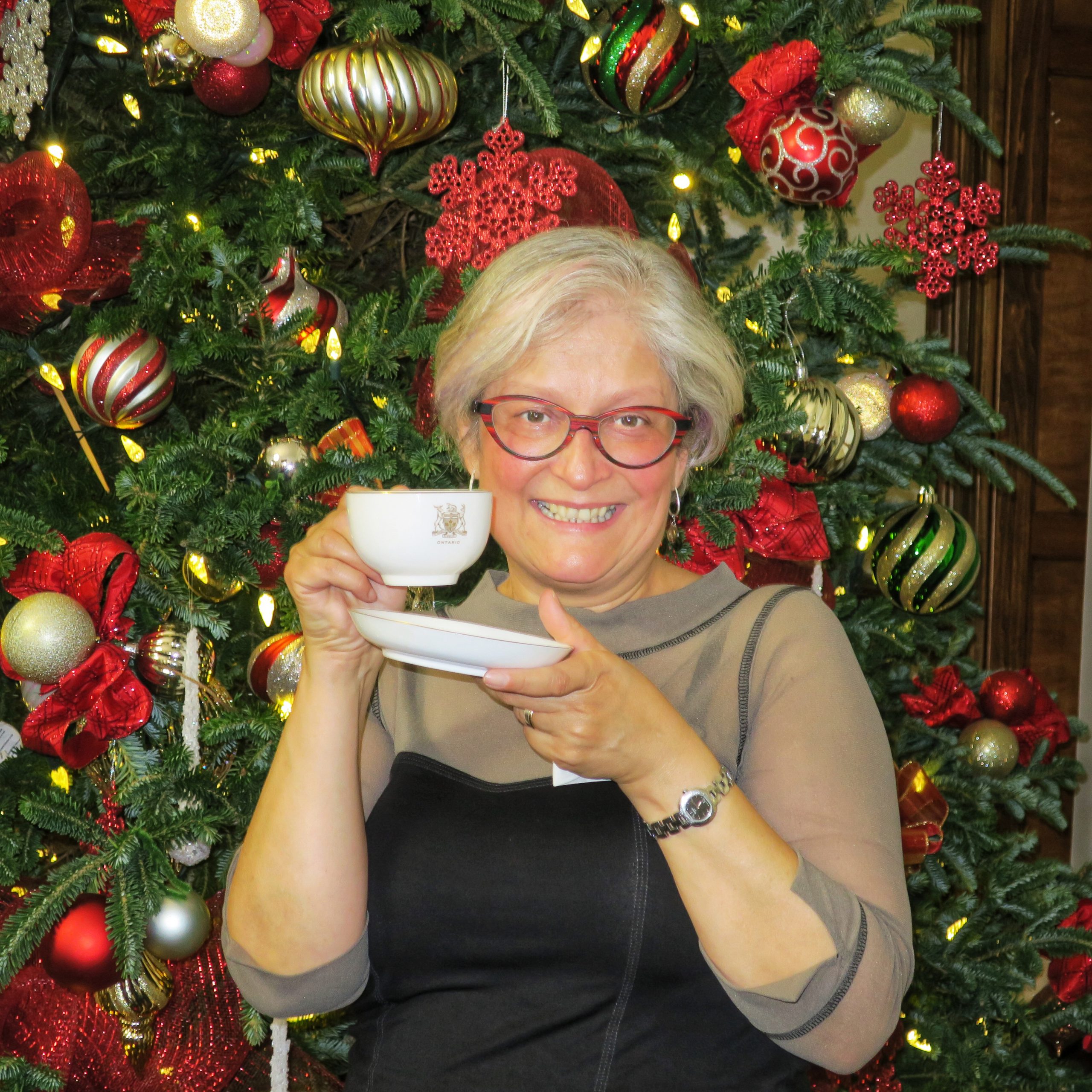
woman standing in front of a christmas tree

Dr. Dawn Bazely, University Professor in the Department of Biology at York University in Toronto, attending the Lieutenant Governor’s Christmas Tree reception at the Ontario Legislature.

Bazely, an ecologist and botanist, began her biology career as a field assistant in 1980. For the past forty years, she has conducted research around plant-animal interactions (herbivory), plant defences, and introduced and invasive plants. Collaborations with colleagues in diverse fields have resulted in contributions to science policy work and research on climate change impacts. In addition to her work at the University, Bazely also works as an onboard botanist for ecotourism expeditions in the arctic and Europe.

Much of Bazely’s more recent work has been dedicated to the study and promotion of women in STEM.

In early February 2019, to mark the International Day of Women & Girls in Science, Bazely gave a presentation at the Gerstein Science Library at the University of Toronto entitled “Writing Women Back Into the History of STEM.” The presentation discussed the history of women in STEM, early policies to promote women’s participation in the sciences and the reasons that those efforts were not as successful as anticipated, current activities to champion women in STEM, and suggestions for future strategies in these areas. Bazely highlighted important female figures in the history of botanical science, including Traill; Carrie Matilda Derick (1862-1941), Canada’s first female science professor (appointed Professor in Botany at McGill in 1912); and women responsible for early flower field guides, such as Julia Wilmotte Henshaw (1869-1937), Alice Lounsberry (1873-1949) and Maude Gridley Peterson (1871-).

Notably, Bazely highlighted social media and Wikipedia as powerful ways to champion women in STEM today and discussed her efforts to organize annual Ada Lovelace Day events in Canada. Ada Lovelace Day, recognized annually on the second Tuesday of October, was founded by Suw Charmin-Anderson in 2009 to celebrate and raise the profile of women in STEM. A major component of the annual Ada Lovelace Day events organized by Bazely and her colleagues are Wikipedia Editathons designed to increase the representation of women in STEM by having participants create and enhance Wikipedia articles.

As an open access library with robust collections dedicated to women in science—e.g. the Women in Natural History Book Collection and the Female Illustrators in Natural History Flickr Collection—the Biodiversity Heritage Library (BHL) is a valued resource for Bazely’s women in STEM research and Wikipedia activities, including for example those related to Traill.

“I’m currently chipping away at linking Catharine Parr Traill’s books in BHL to her Wikipedia page during Women in STEM Editathons,” shares Bazely.

For Bazely, an appreciation of open access archives is deeply rooted and personal. In 2011, she co-founded the open access digital archive The Churchill Community of Knowledge, which provides a wealth of data and media about the history, people, and biodiversity of Churchill, Manitoba. The archive includes research theses and journal papers as well as videos and even digitized copies of old Kodachrome slides.

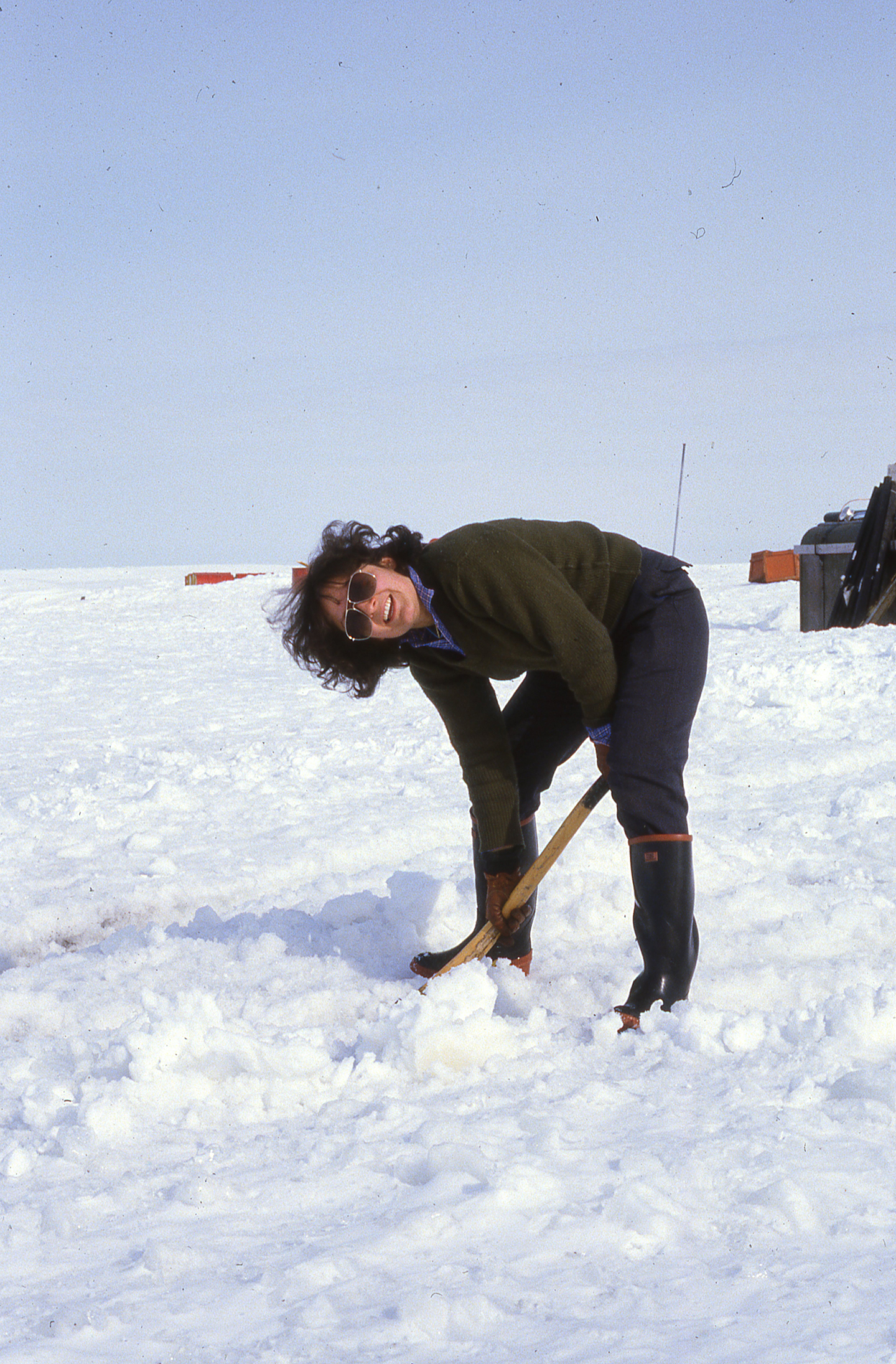
Woman in a black jacket standing in snow

Bazely digging drainage ditches at Camp Finney. Photo from Bazely’s fifth field season (1984) at La Perouse Bay, on the shores of Hudson Bay, in what became Wapusk National Park of Canada in 1996. Digital image from original Kodachrome slide available via the The Churchill Community of Knowledge archive. Source: http://hdl.handle.net/10315/15250.

The archive is hosted by the Yorkspace Institutional Repository, which was launched in 2009 by then-YorkU Digital Initiatives Librarian, Andrea Kosavic. The Repository first hosted reports from York University’s Institute for Research and Innovation in Sustainability (IRIS), which Bazely directed for seven years.

“I have been a long time open access advocate, ever since Yorkspace was launched in 2009,” affirms Bazely. “So, ever since I first learned about BHL, I have been aware of its broad significance as a large-scale open access collaboration.”

Bazely first discovered BHL in 2014 via Twitter. A few years later, an invitation from Ann Shteir—author of the 1996 publication Cultivating Women, Cultivating Science : Flora’s Daughters and Botany in England, 1760-1860, dedicated to women in botany—sparked her use of the Library for research around women in science. Shteir, who had consulted Bazely during her writing of Flora’s Daughters, invited Bazely to participate in a conference and contribute to an edited book about the history of botany in Canada in the 19th century.

In particular, Shteir asked Bazely to contribute a chapter about how social media and new technologies were creating space for women in STEM to find each other and how other 19th century technologies had, in their turn, made science more accessible to various publics.

BHL was a valuable research tool and source of inspiration for this project. Bazely not only consulted books in the Library for her research, but she also made use of BHL’s efforts to highlight women in science on social media. Through campaigns such as Her Natural History and the hashtag #WomenInBHLib on Instagram, BHL has been diligently working to increase awareness about the role of women in natural history—something Bazely particularly appreciates.

“Within our chapter on women in Ontario’s botany and horticulture scene from 1870 to 1920, I mentioned BHL and the #WomenInBHLib hashtag on Instagram,” affirms Bazely.

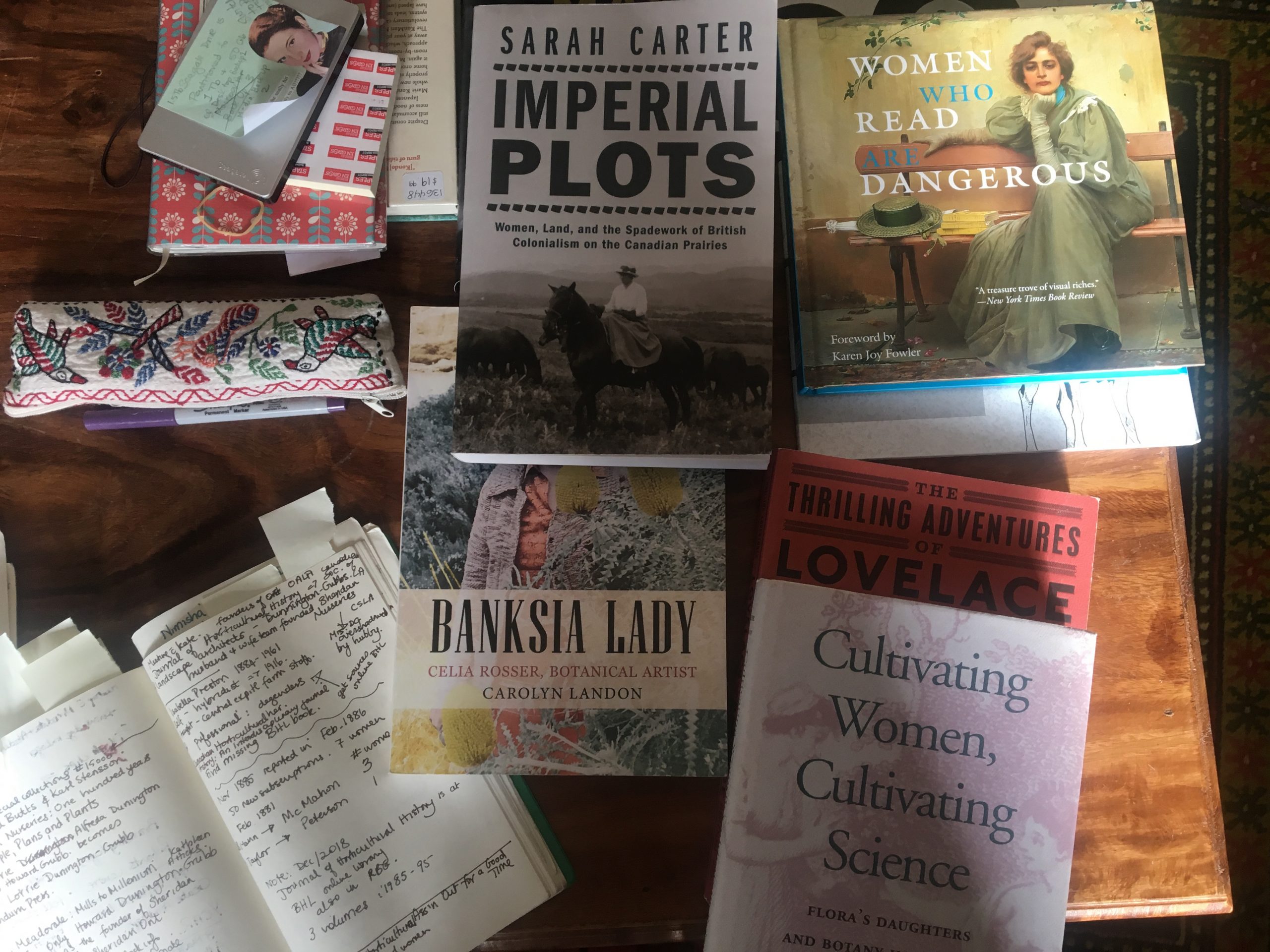
pile of books on a table

Research notes along with some of the books about women in botany and science that Bazely and McPherson used for their research into women in 19th century Ontario Botany and Horticulture.

The chapter, written in collaboration with Bazely’s friend and colleague, Kathryn McPherson, Professor in the Department of History at York University, is entitled “Women, Citizen Science and Botanical Knowledge in Ontario, 1870-1920.” Given the importance of Catharine Parr Traill to Canada’s botanical legacy, it’s not surprising that she features prominently in the chapter. Bazely and McPherson relied on BHL to access copies of Traill’s work for their research.

Additionally, the chapter discusses women’s evolving participation in botany and horticulture, particularly as evidenced through the Canadian Horticulturist magazine.

“The Canadian Horticulturist reveals the fascinating history of the struggles among different factions in Ontario agriculture to access and block access to government funding,” explains Bazely. “For example, the male-dominated fruit grower’s association tried to hijack the magazine subscriptions of the horticulture community—which had more women in it—by controlling the Canadian Horticulturist magazine, but it had very little horticultural content and mainly articles on fruit growing.”

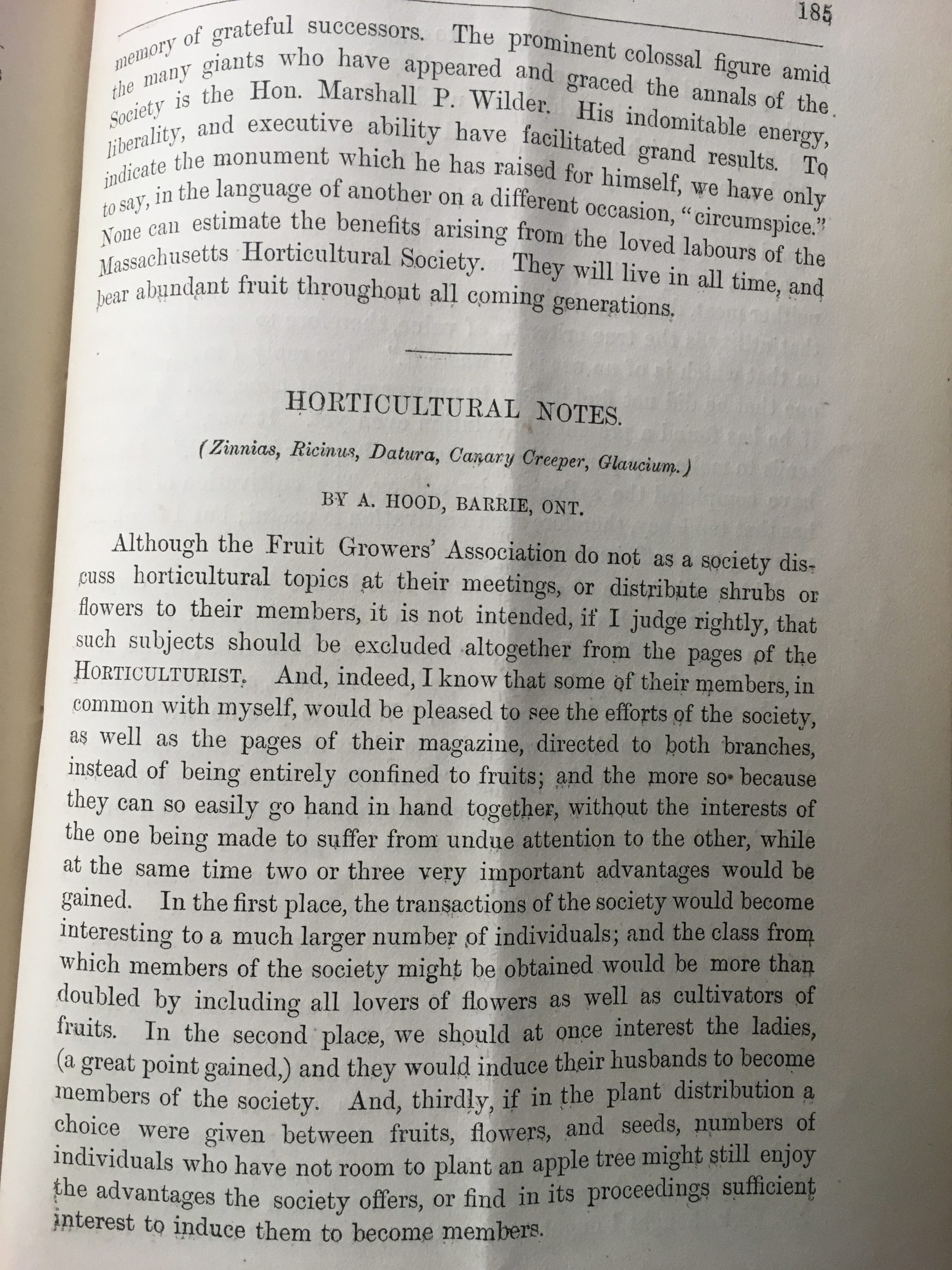
printed text page of a book

In 1879, the Canadian Horticulturist was fighting off complaints that they didn’t cover horticulture—this article discusses just that. See a copy of this volume (v. 2, 1879) in BHL, contributed by the University of Toronto – Thomas Fisher Rare Book Library.

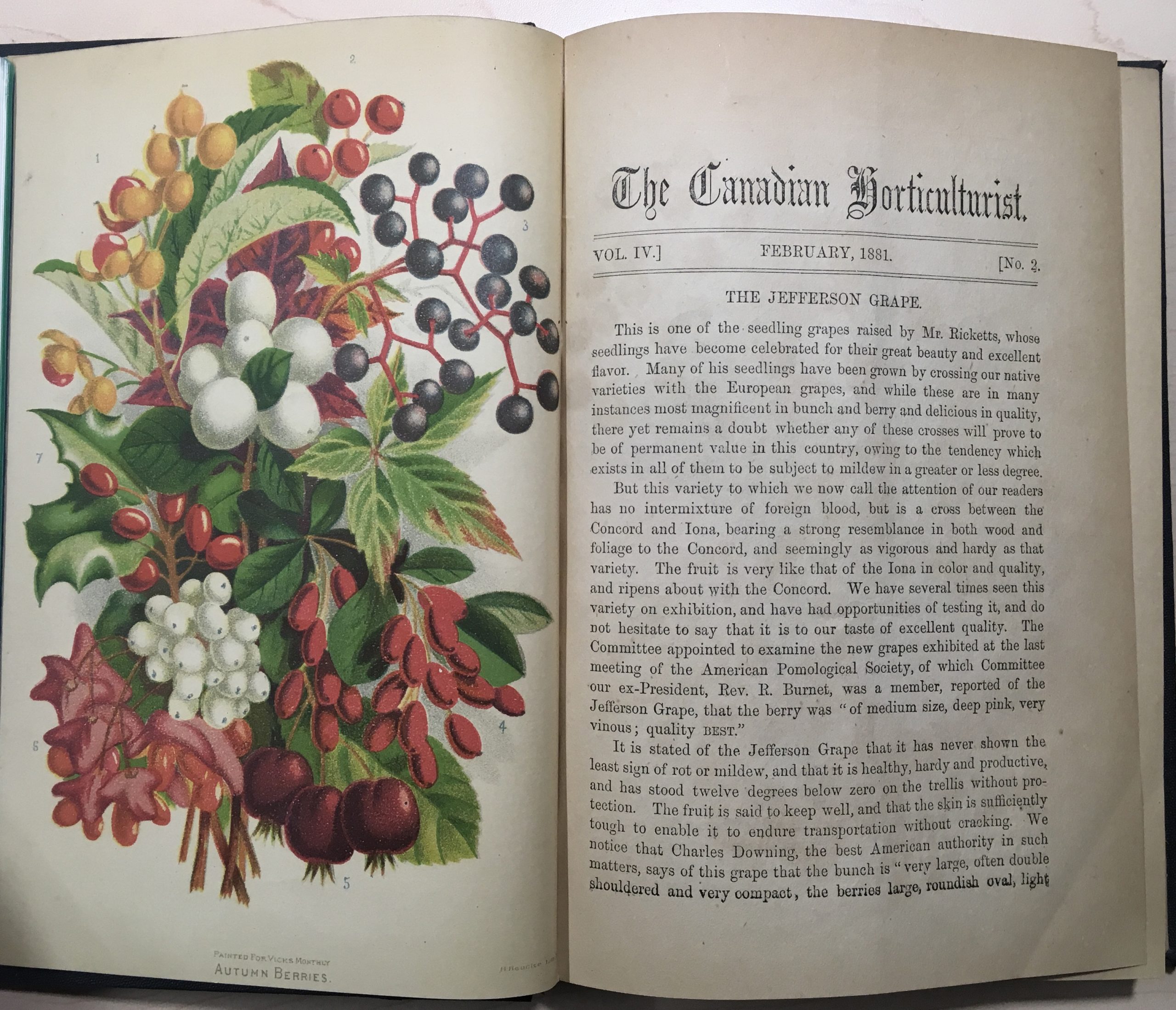
The 1879 volume of Canadian Horticulturist provides a glimpse into these debates through an article drawing attention to the magazine’s pomology focus alongside an appeal to include more horticulture as a means to expand the readership base, particularly among women. The article asserts such an approach would “at once interest the ladies (a great point gained,) and they would induce their husbands to become members of the society.” A few years later, the 1881 volume shows some effects from this proposal, as color plates were incorporated in an effort to lure female readers.

open book with flower illustration on left and text on right

This copy of the 1881 volume of the Canadian Horticulturist illustrates how the magazine continued to focus on fruit growing, but brought in colour plates to lure women readers, hoping that their husbands would become subscribers to the magazine.

Bazely and McPherson’s chapter also discusses the role of women as botanical artists, their prominence in emerging gardening and landscape businesses, and the vital role women played in the development of field guides.

“Women basically invented the genre of the modern field guide for flower ID in Canada,” asserts Bazely. “This was before they could be professional botanists.”

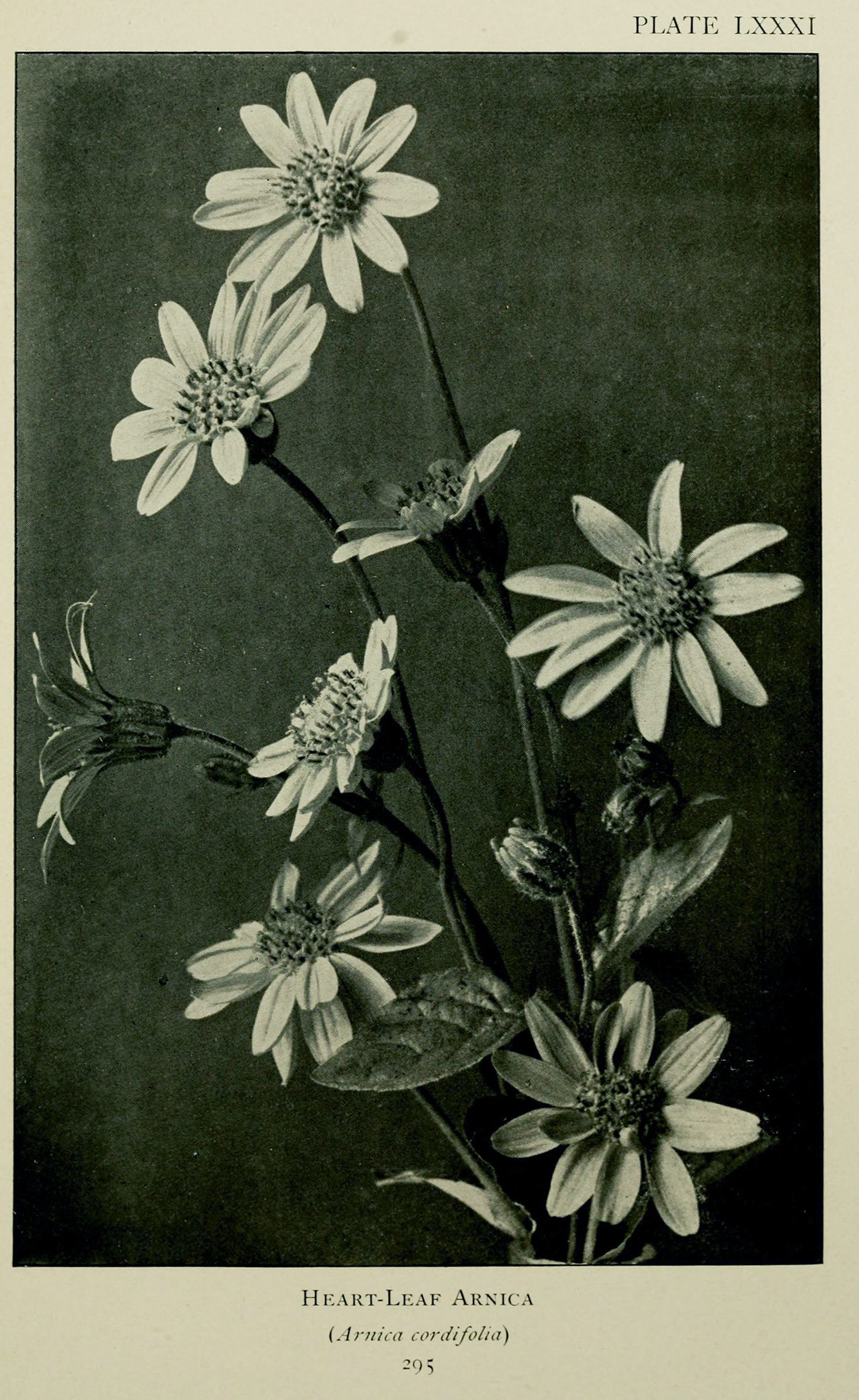
black and white photo of flowers

Photo from Julia Wilmotte Henshaw’s Mountain Wild Flowers of Canada (1906). Contributed in BHL from the New York Botanical Garden, LuEsther T. Mertz Library.

One such example highlighted by Bazely and McPherson is Julia Wilmotte Henshaw, author of the popular guide Mountain Wild Flowers of Canada, published in Toronto in 1906. Thanks to BHL, these important field guides and other works authored by pioneering women in science are freely available to the world.

By creating collections highlighting the publications, archival materials and illustrations of women in natural history; working to improve metadata in the Library about these women’s contributions; and through initiatives like Her Natural History, which included several citizen science events aimed at improving online information about these women, BHL is deeply invested in raising awareness about the contributions of women to science. The Library’s efforts in these areas have clearly been beneficial to Bazely and others researching the role of women in STEM. We are proud to know that BHL’s open access collections are contributing to progress towards breaking down gender barriers in the sciences and “Writing Women Back Into the History of STEM.”

March 12, 2020by Grace Costantino
BHL News, Blog Reel

GBIF to Host a Virtual Workshop on “Advancing the Catalogue of the World’s Natural History Collections” as Part of the SYNTHESYS+ Project

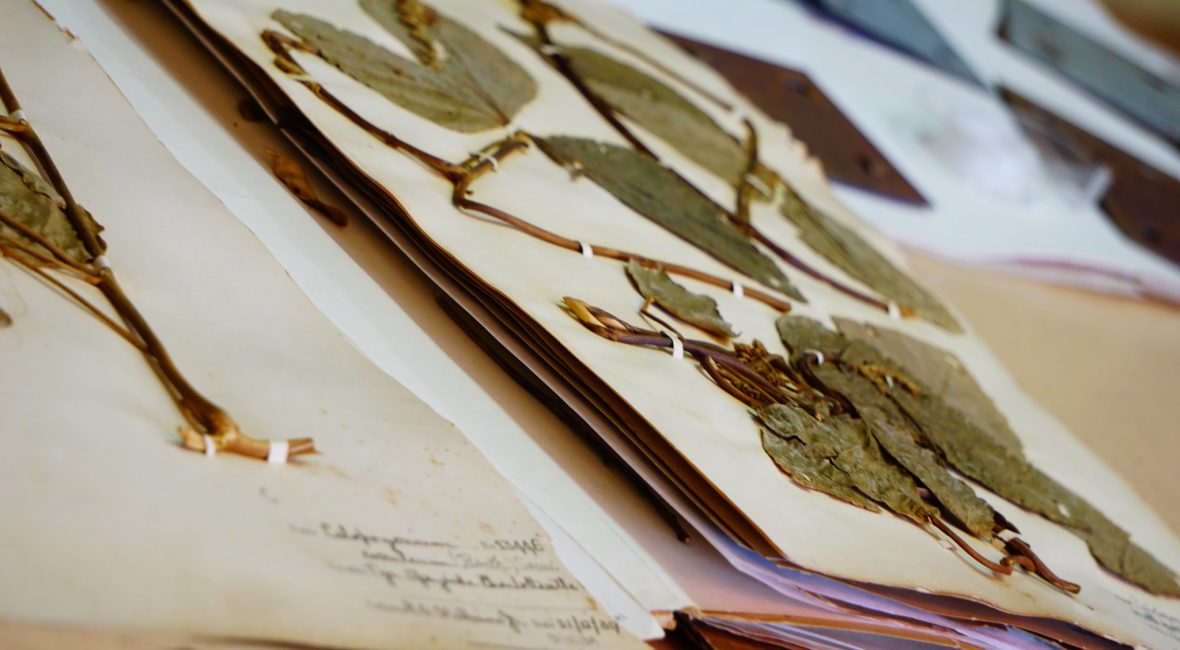
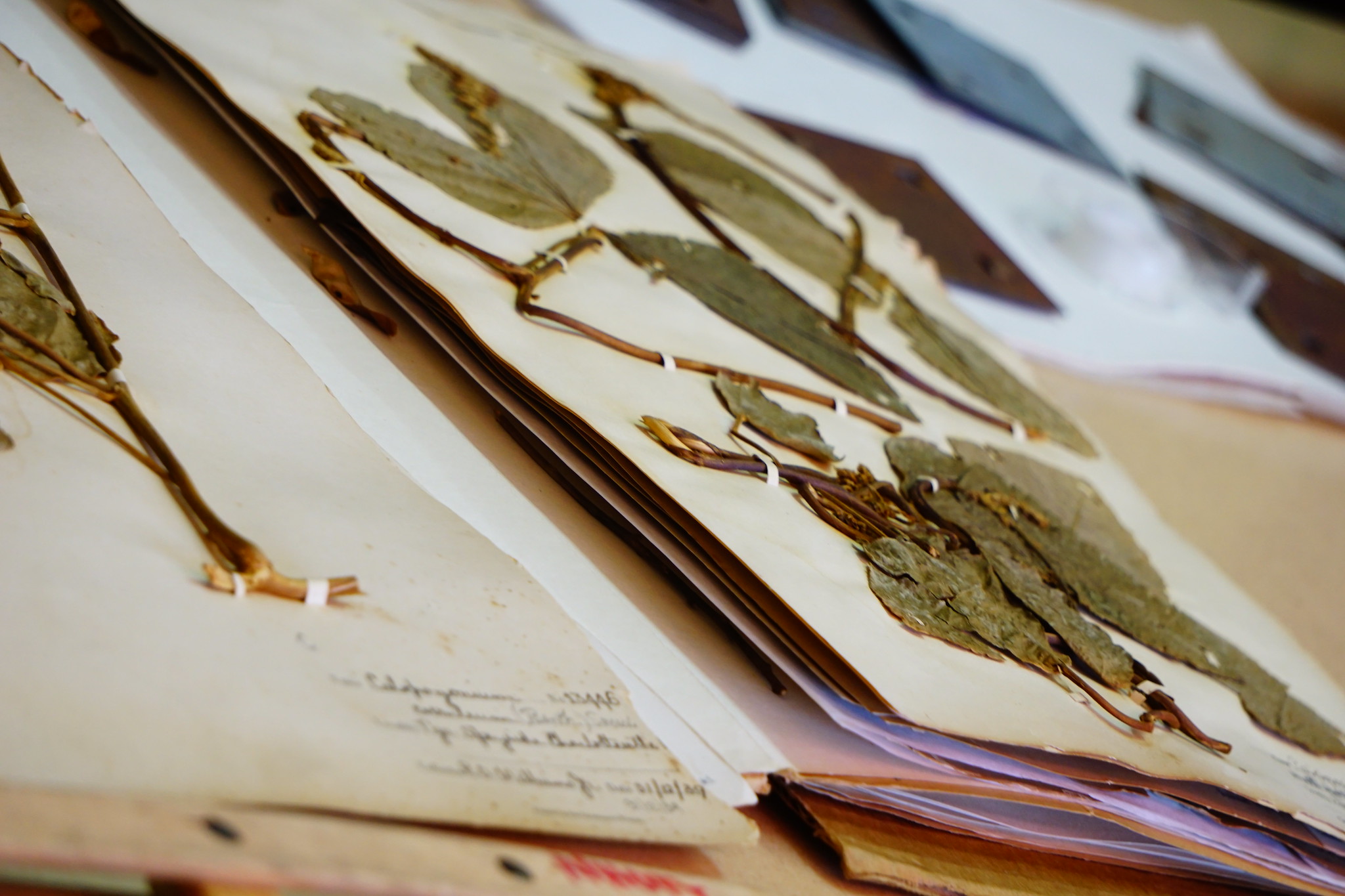
photo of pressed plant specimens

Specimen detail, Trinidad National Herbarium. Photo 2019 by Maheva Bagard Laursen | GBIF, licensed under CC BY 2.0.

On behalf of numerous partners and stakeholders, the Global Biodiversity Information Facility (GBIF) will convene a virtual workshop and international consultation in March and April 2020 with the aim of fleshing out a shared vision, road map and set of priorities for developing the scope, content and services included in a catalogue of the world’s natural history collections.

This workshop, Advancing the Catalogue of the World’s Natural History Collections, consists of two parts:

  • A pair of two-hour preparatory webinars on 12-13 March 2020, in which participants will discuss this draft ideas paper;
  • An open, facilitated online consultation that will run between 17-29 April 2020.

Participants in these events will outline the scope, content and services included in a catalogue of the world’s natural history collections and develop a shared road map for implementation across the biodiversity informatics community. The workshop is the first of three that GBIF will lead as part of the European Commission-funded SYNTHESYS+ project. It will also provide inputs into several intersecting initiatives, including the alliance for biodiversity knowledge.

Visit the GBIF website to find more details, including times, dates and links to registration for both the March webinars and the April consultation.

BHL has been an Associate Participant in GBIF since 2014.

March 3, 2020by Grace Costantino
Blog Reel, User Stories

Plants and the People Who Name Them: The International Plant Names Index and BHL

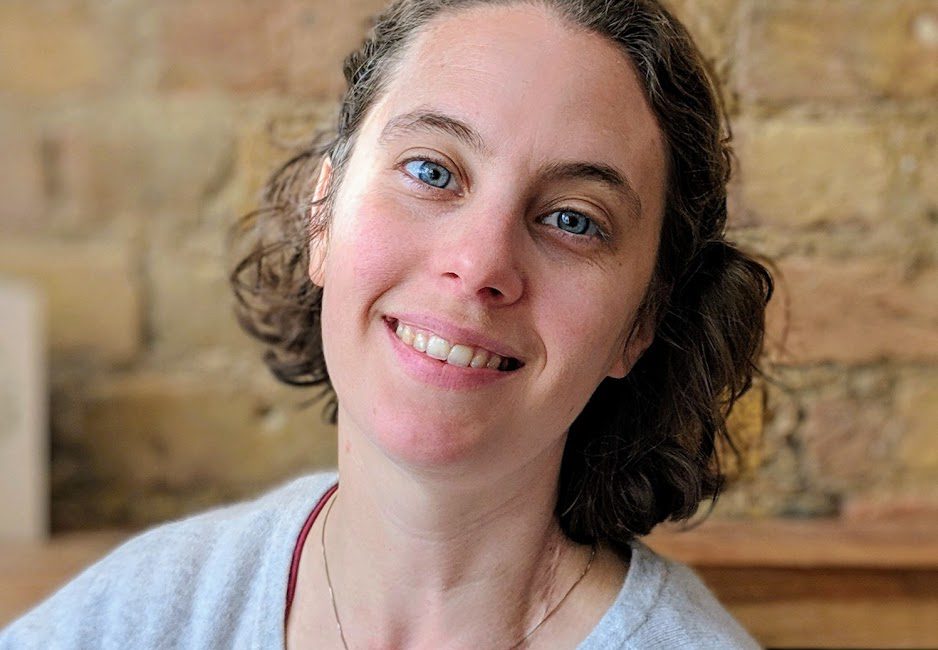
photo of a woman with brown hair

At the end of the twentieth century, the The Royal Botanic Gardens, Kew, The Harvard University Herbaria, and The Australian National Herbarium began collaboration on an ambitious project—to create an online index of names for all of the world’s vascular plants [1].

By combining the data in the nomenclatural indices of these three institutions—namely Index Kewensis, the Gray Card Index, and the Australian Plant Names Index—the collaboration created the International Plant Names Index (IPNI). Hosted by the Royal Botanic Gardens, Kew, today the database includes over 1.6 million records. As part of the provided nomenclatural information, IPNI includes bibliographic details linked to scanned literature in the Biodiversity Heritage Library (BHL) and links to taxonomic data through the Plants of the World Online.

Not surprisingly, given its role as a source of scanned literature for the Index, BHL is a vital resource for those working to build and maintain the IPNI database.

“I started working for the International Plant Names Index in 2013,” says Heather Lindon, Plant and Fungal Names Editor at the Royal Botanic Gardens, Kew . “I need to be able to look up protologues—the original place of publication of plant names and their descriptions. If the earliest place of publication isn’t known, we can use the name search in BHL to try to find it. Since our modern naming system dates to 1753, BHL has a lot of relevant literature for my work. Also, the rules of the International Code of Nomenclature that govern plant names apply to names published in the past, so consulting older works is still relevant for names being published today.”

photo of a woman with brown hair

Heather Lindon, editor of the International Plant Names Index (ipni.org). Photo credit: Christodoulos Foufoulides.

Lindon has worked in the botanical sciences since 2003. Her resume is extensive and varied, and includes: serving as a paleobotanist at the Smithsonian; working on a native seed collection project at Chicago Botanic Gardens; digitizing plant specimens at the Natural History Museum, London and Kew; teaching university level botany; working in entomology on invasive plant control; running a molecular research lab; and conducting field surveys for the US Army.

For the past seven years, Lindon has worked at the Royal Botanic Gardens, Kew as an editor on the Plant and Fungal Names Curation team, which curates the name, author, and publication data in IPNI. While BHL is often praised for providing access to literature that researchers may not otherwise be able to obtain, it also helps improve the research efficiency of those who do have access to robust research libraries.

“Although the library at Kew Gardens is extensive, since I often only need to look at a single page quickly to confirm a name, it’s much faster to use BHL,” explains Lindon. “With over 1.6 million plant name records to curate, and 6,000 more added every year, anything that can speed up the process is welcome. BHL also gives me access to editions or volumes that might be missing from Kew’s Library.”

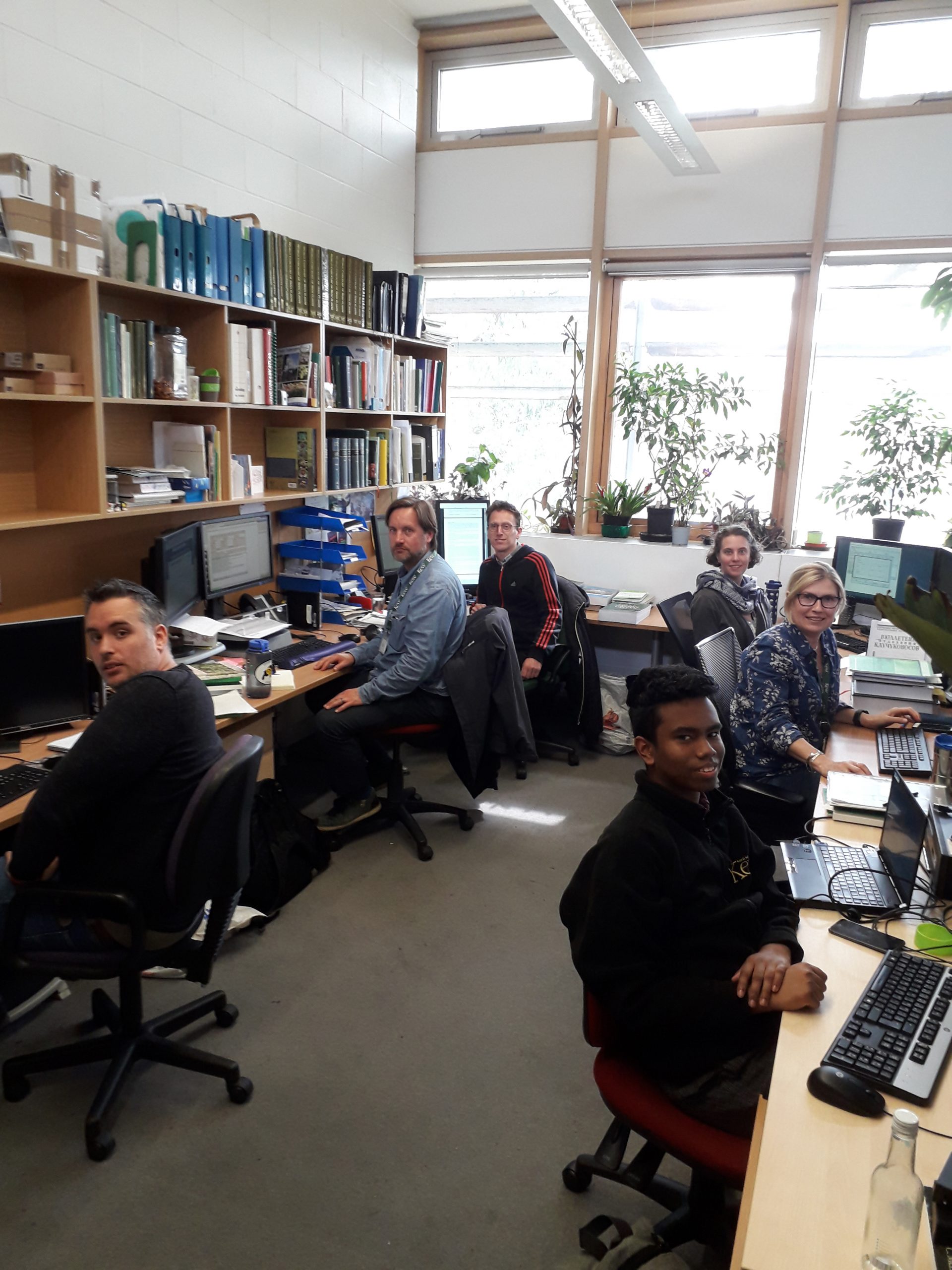
The Plant and Fungal Names team hard at work in their office at Royal Botanic Gardens, Kew. Clockwise from Front Left: Ben Moon (Checklist volunteer), Jonathan Krieger (IPNI), Rafaël Govaerts (World Checklist of Vascular Plants), Heather Lindon, Helen Hartley (both IPNI) Rahim Dina (Student Intern on IPNI to scan literature and link IPNI to BHL).

From verifying the accuracy of the place, date and publication data in IPNI to confirming original spellings, establishing the correct author of a name, or reviewing the language of the original plant description, Lindon and her colleagues use BHL almost daily. For the small team managing the IPNI database, including Lindon and two other content editors at Kew and a collaborator at Harvard University Herbarium, the access and efficiencies that BHL provides are essential.

“BHL is a fantastic tool,” lauds Lindon. “For me personally, it also allows me to work from home more often, which is a huge bonus. That would not have been possible just five or 10 years ago in this kind of work. Even when I am in the office, I can find the information I need quickly.”

The Library is also useful both for answering reference questions received from users and as a way for users to provide feedback to the IPNI team members.

“We receive emails daily from users of our database to address matters of nomenclature. Answering these questions often involves searching through BHL’s literature,” shares Lindon. “Our users who send in questions and corrections can also send us a link directly to the relevant BHL page, which means we can sort out and answer their questions quickly.”

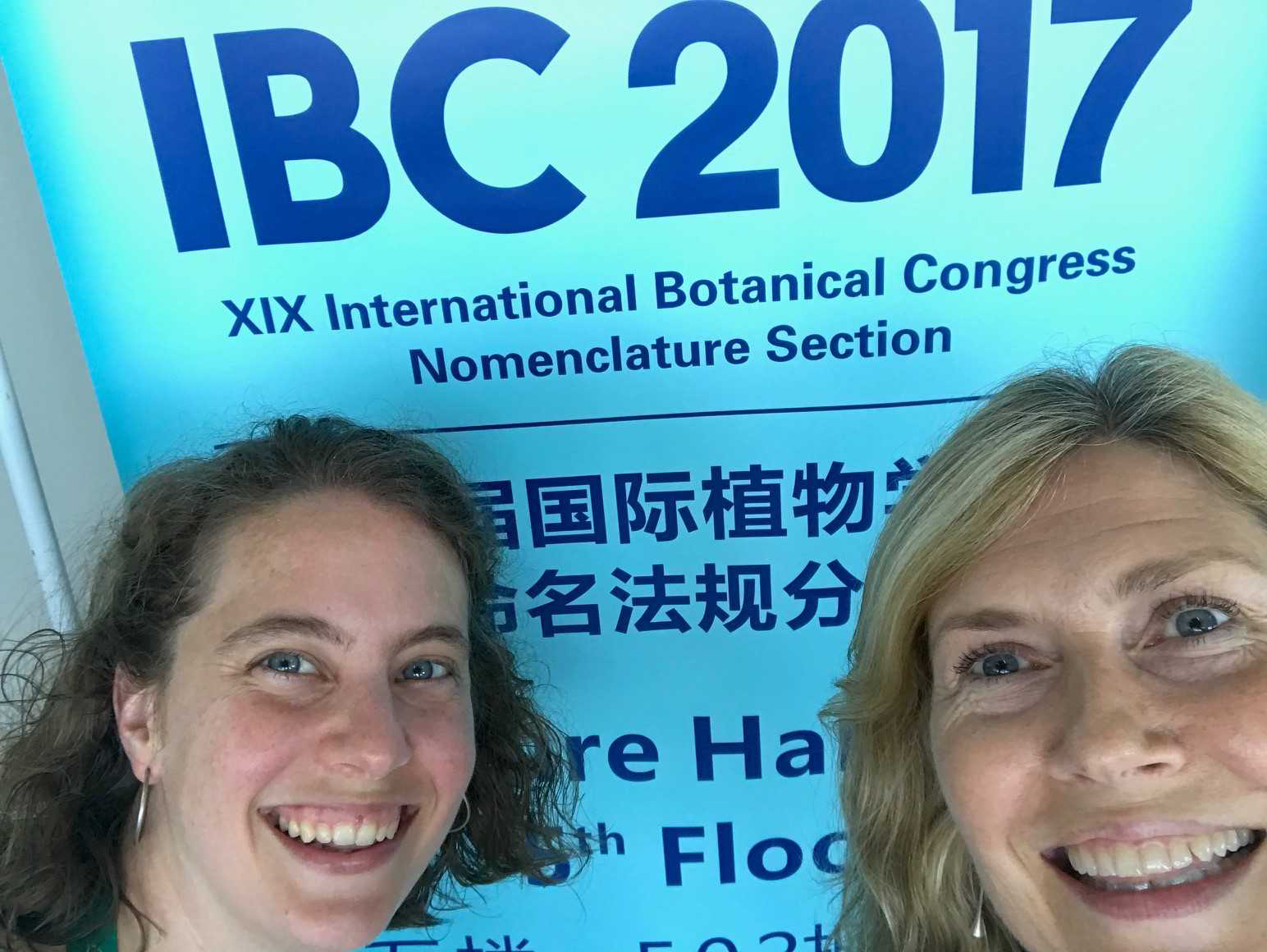
The chance to get together every 6 years to discuss nomenclature for a week is very exciting – for a nomenclaturist! IPNI team members Heather Lindon and Helen Hartley went to the conference in Shenzhen, China in 2017. Photo credit: Helen Hartley.

While BHL is an important repository of scanned literature for the database, inserting links to relevant pages on BHL was once a manual process for Lindon and her colleagues. However, a redesign of the IPNI website dramatically improved this workflow by making use of BHL’s OpenURL Resolver to create dynamic links to BHL pages.

“When IPNI designed its new website, we made sure that it could parse the information about the publication title, volume page and year,” says Lindon. “That means we don’t have to make individual links from names in our system to BHL. We can just tidy up the publication details in one go, and it will automatically link to the correct page in BHL.”

Lindon hopes that IPNI and BHL can build upon this progress to collaborate even further in the future.

“We would like for there to be stronger ties between the IPNI name list and the scientific name finder in BHL,” asserts Lindon. “That will make it easier for us to find names for keeping the database updated, but also for users to find literature on plant names in the search.”

While there are many publications in the Library are are useful for her research, such as the digitized volumes of the original printed copies of Index Kewensis, Lindon’s favorite publication in BHL is Taxonomic Literature 2 (TL-2). TL-2 is a 15 volume guide to the literature of systematic botany published between 1753 and 1940. It serves as the standard by which authors’ names and titles should be abbreviated in works on systematic botany [2].

“Having Taxonomic Literature 2 scanned means that we can easily link to it in our system,” shares Lindon. “If there is a question of publication date or authorship, we can click right through from the author’s record in IPNI and find the answer in TL-2 via BHL.”

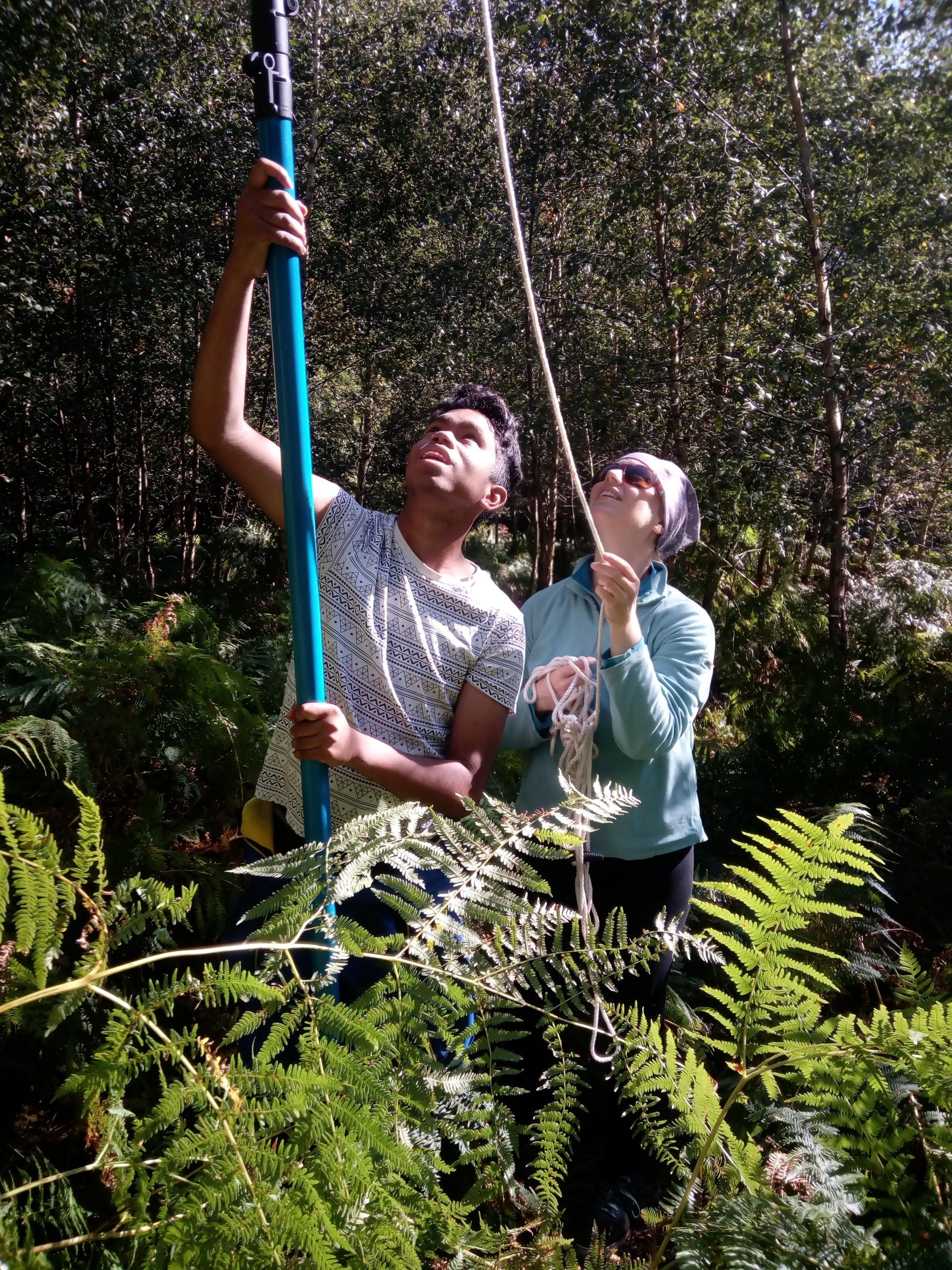
Occasionally, the IPNI team does get out of the office for other projects. Heather Lindon and IPNI Intern Rahim Dina did some seed collecting for Kew’s UK Native Tree Seed Collecting project. Photo credit: Fran Culverhouse.

As an enthusiastic BHL user, Lindon is not only grateful for the support that BHL provides to herself, her colleagues, and the IPNI user community, but she is also proud that her institution is part of BHL’s global consortium—a passionate community working to ensure that everyone, everywhere has access to essential literature.

“It’s been good for Kew’s scientific library to be able to share what they have with users around the world,” affirms Lindon. “BHL makes the information that is often hidden away in institutions accessible, especially for those who might not always have access to a botanical library.”

We are proud to know that BHL is such a vital resource for the International Plant Names Index and its community of editors and users, allowing the Library to support the progression of the plant sciences and the work of systematic botanists around the world.

References

[1] Croft, J., Cross, N., Hinchcliffe, S., Lughadha, E.N., Stevens, P.F., West, J.G. and Whitbread, G. (1999), Plant names for the 21st century: the International Plant Names Index, a distributed data source of general accessibility. TAXON, 48: 317-324. doi:10.2307/1224436

[2] Smithsonian Libraries. “Taxonomic Literature II (TL-2).” Collections. Accessed on December 4, 2019. https://www.sil.si.edu/DigitalCollections/tl-2/.

February 20, 2020by Grace Costantino
BHL News, Blog Reel

Earth Optimism Wikipedia Editing Workshop on Endangered Species at Smithsonian Libraries (22 April 2020)

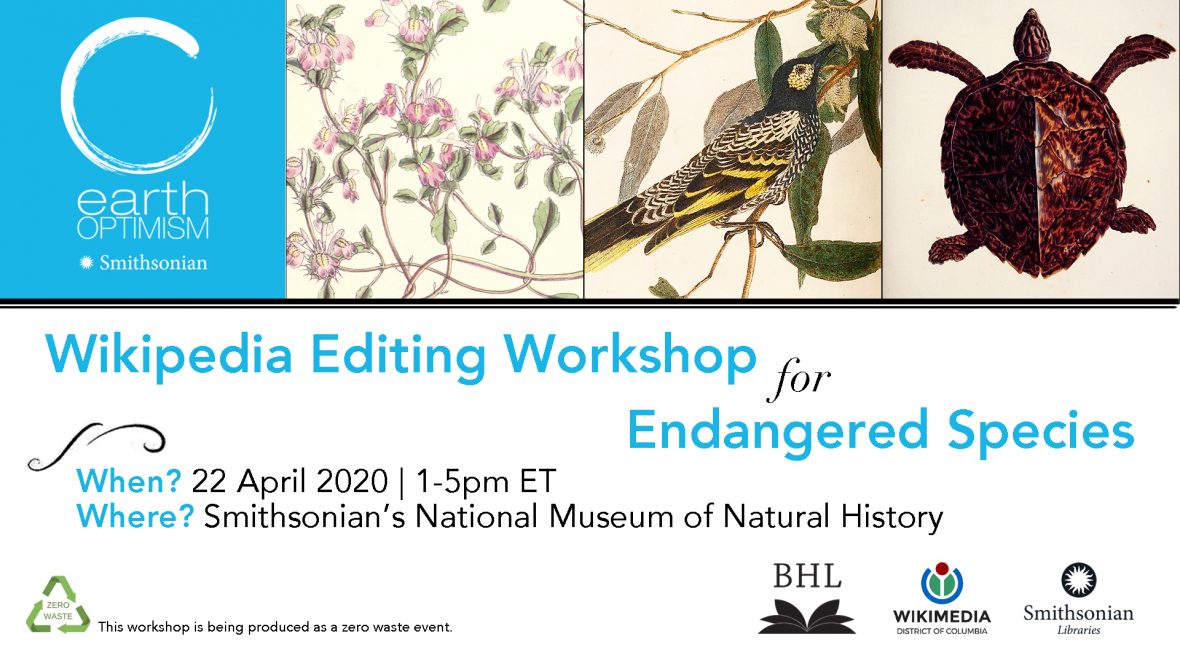
graphic for wikipedia workshop with illustrations of endangered species

This Wikipedia Editing Workshop has been postponed for a later date. Please stay tuned – we will update when a new date is determined.

All Smithsonian museums and Smithsonian Libraries locations continue to be closed to support the effort to contain the spread of COVID-19. A re-opening date has not been announced at this time. Smithsonian will provide updates on a regular and as-needed basis. See http://si.edu/events for details.

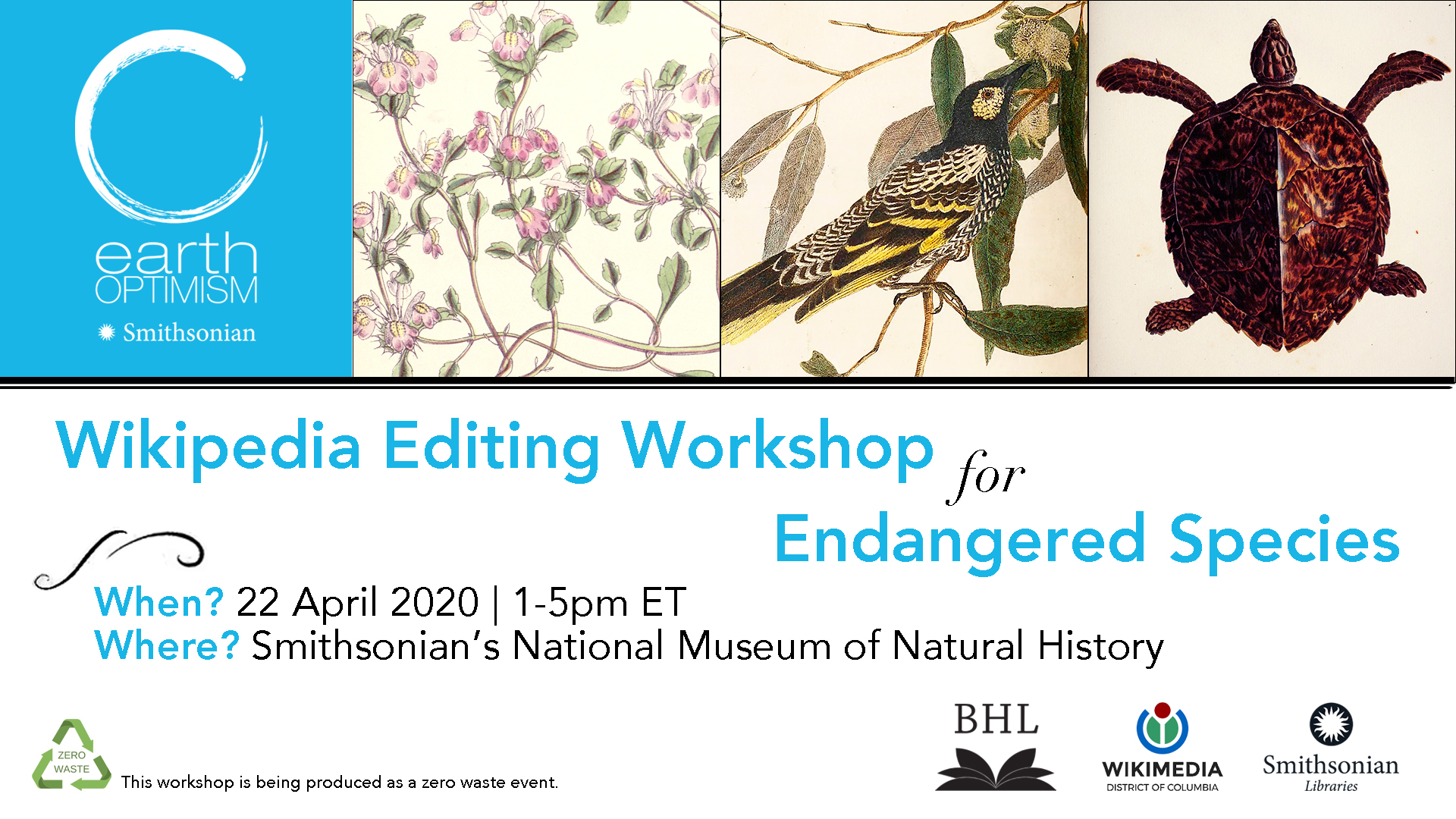
graphic for wikipedia workshop with illustrations of endangered species

The illustrations of endangered species featured in this graphic are part of the suggested worklist for this workshop. Left to Right: San Diego thornmint (Acanthomintha ilicifolia), endangered under the California Endangered Species Act. Art by Matilda Smith for Curtis’s Botanical Magazine, v. 110 (1884). Contributed in BHL from the Peter H. Raven Library of the Missouri Botanical Garden. | Regent honeyeater (Anthochaera phrygia), critically endangered on the IUCN Red List. Art by John William Lewin from his A Natural History of the Birds of New South Wales: collected, engraved and painted faithfully after nature, 3rd ed. (1822). Contributed in BHL from Museums Victoria. | Hawksbill sea turtle (Eretmochelys imbricata), critically endangered on the IUCN Red List. Art from Naturgeschichte der Schildköten by Johann David Schöpf (1792-1801). Contributed in BHL from Smithsonian Libraries.

This year marks the 50th anniversary of Earth Day. In celebration, the Biodiversity Heritage Library (BHL) and our partners are joining the global Earth Optimism movement.

Spearheaded by the Smithsonian, Earth Optimism is a global event and movement to shift the conservation conversation from one of doom and gloom to hope and optimism. Occurring throughout 2020, Earth Optimism invites participants to celebrate conservation success stories and inspire continued success through social media, events, and other outreach opportunities.

BHL and our partners will be participating in the Earth Optimism movement with a social media campaign this April (3-30 April 2020). Follow our blog for more information coming next month about the campaign.

As part of our participation in Earth Optimism, several BHL partners, including Smithsonian Libraries, will host events on Earth Day, 22 April 2020. Find information about the Smithsonian event below and stay tuned for more information about Earth Optimism events from other BHL partners to be announced soon.

Smithsonian Earth Optimism Wikipedia Editing Workshop on Endangered Species (Washington, DC)

Help improve information in Wikipedia about endangered species as part of the Earth Optimism Wikipedia Workshop on Endangered Species hosted by the Smithsonian Libraries (Washington, D.C.) with support from Wikimedia DC.

Drawing on BHL’s free and extensive online collections as source materials, attendees will help to improve information about endangered species in Wikipedia — the third most-visited website in the world in 2019. By including citations to materials in BHL, attendees will provide easy access points for researchers and the public alike to primary data about these species while also helping to raise public awareness about many endangered species, which can be the first step in gaining momentum for conservation activities.

When? Wednesday, 22 April 2020, 1-5pm ET
Where? Smithsonian’s National Museum of Natural History, Washington, D.C.

Laptops are required. Please bring your own. Wikimedia has two laptops to loan. Reserve one by emailing [email protected]. This event is free and open to the public, but space is limited, so register today.

Registration is required:

  • Register for the Smithsonian Workshop

More Information:

  • Smithsonian Wikipedia Event Page
February 11, 2020by Grace Costantino
Page 5 of 71« First...«4567»102030...Last »

Help Support BHL

BHL's existence depends on the financial support of its patrons. Help us keep this free resource alive!

search

About BHL

The Biodiversity Heritage Library (BHL) is the world’s largest open access digital library for biodiversity literature and archives. BHL operates as a worldwide consortium of natural history, botanical, research, and national libraries working together to digitize the natural history literature held in their collections and make it freely available for open access as part of a global “biodiversity community.”

Join Our Mailing List

Sign up to receive the latest news, content highlights, and promotions.

Subscribe Now

Subscribe to Blog via Email

Enter your email address to subscribe to this blog and receive notifications of new posts by email.

Join 319 other subscribers

Subscribe to Blog Via RSS

Subscribe to the blog RSS feed to stay up-to-date on all the latest BHL posts.

Access RSS Feed

Inspiring Discovery through Free Access to Biodiversity Knowledge.

The Biodiversity Heritage Library makes it easier than ever for you to access the information you need to study and explore life on Earth…for free, anytime, anywhere.


64+ Million Pages of
Biodiversity Literature Online.

EXPLORE

Tools and Services
to Transform Research.

EXPLORE

300,000+
Illustrations on Flickr.

EXPLORE

ABOUT | HARMFUL CONTENT | PRIVACY | SITE MAP | TERMS OF USE