Biodiversity Heritage Library - Program news and collection highlights from BHL
  • Home
  • News
  • Featured Books
    • All Featured Books
    • Book of the Month Series
    • BHL at 20
  • User Stories
  • Campaigns
    • Fossil Stories
    • Garden Stories
    • Monsters Are Real
    • Page Frights
    • Her Natural History
    • Earth Optimism 2020
  • Tech Blog
  • Visit BHL
Home
News
Featured Books
    All Featured Books
    Book of the Month Series
    BHL at 20
User Stories
Campaigns
    Fossil Stories
    Garden Stories
    Monsters Are Real
    Page Frights
    Her Natural History
    Earth Optimism 2020
Tech Blog
Visit BHL
  • Home
  • News
  • Featured Books
    • All Featured Books
    • Book of the Month Series
    • BHL at 20
  • User Stories
  • Campaigns
    • Fossil Stories
    • Garden Stories
    • Monsters Are Real
    • Page Frights
    • Her Natural History
    • Earth Optimism 2020
  • Tech Blog
  • Visit BHL
Biodiversity Heritage Library - Program news and collection highlights from BHL
Blog Reel, Featured Books

Skeletons in the Stacks: Cheselden’s Spine-Tingling Osteological Atlas

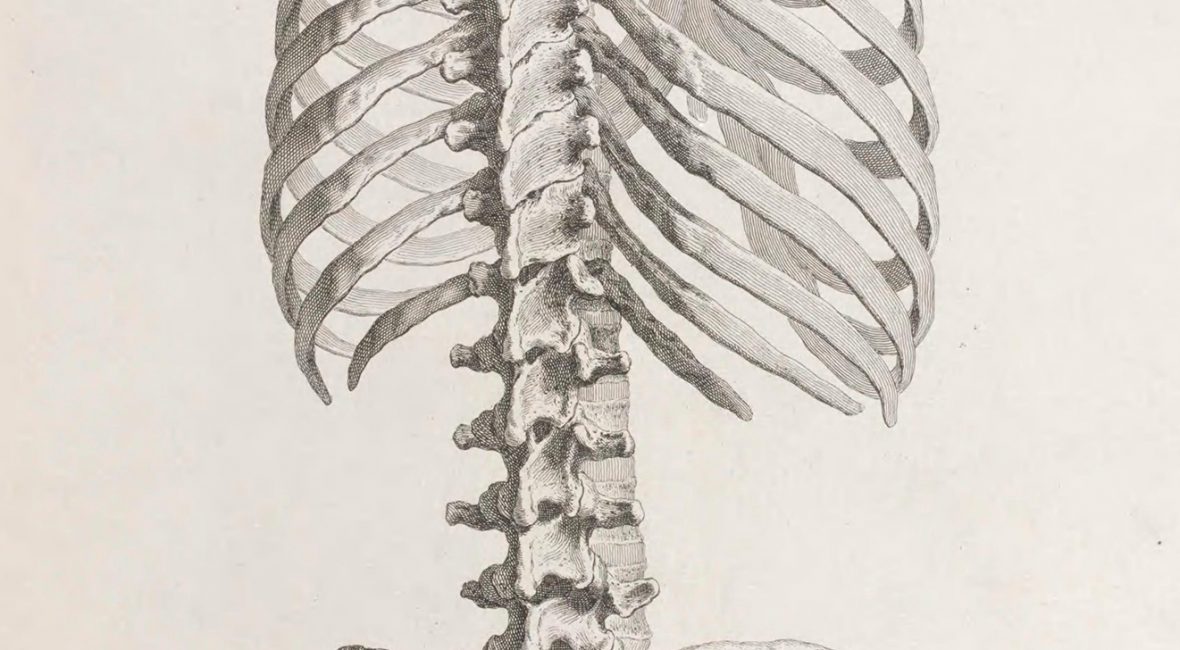
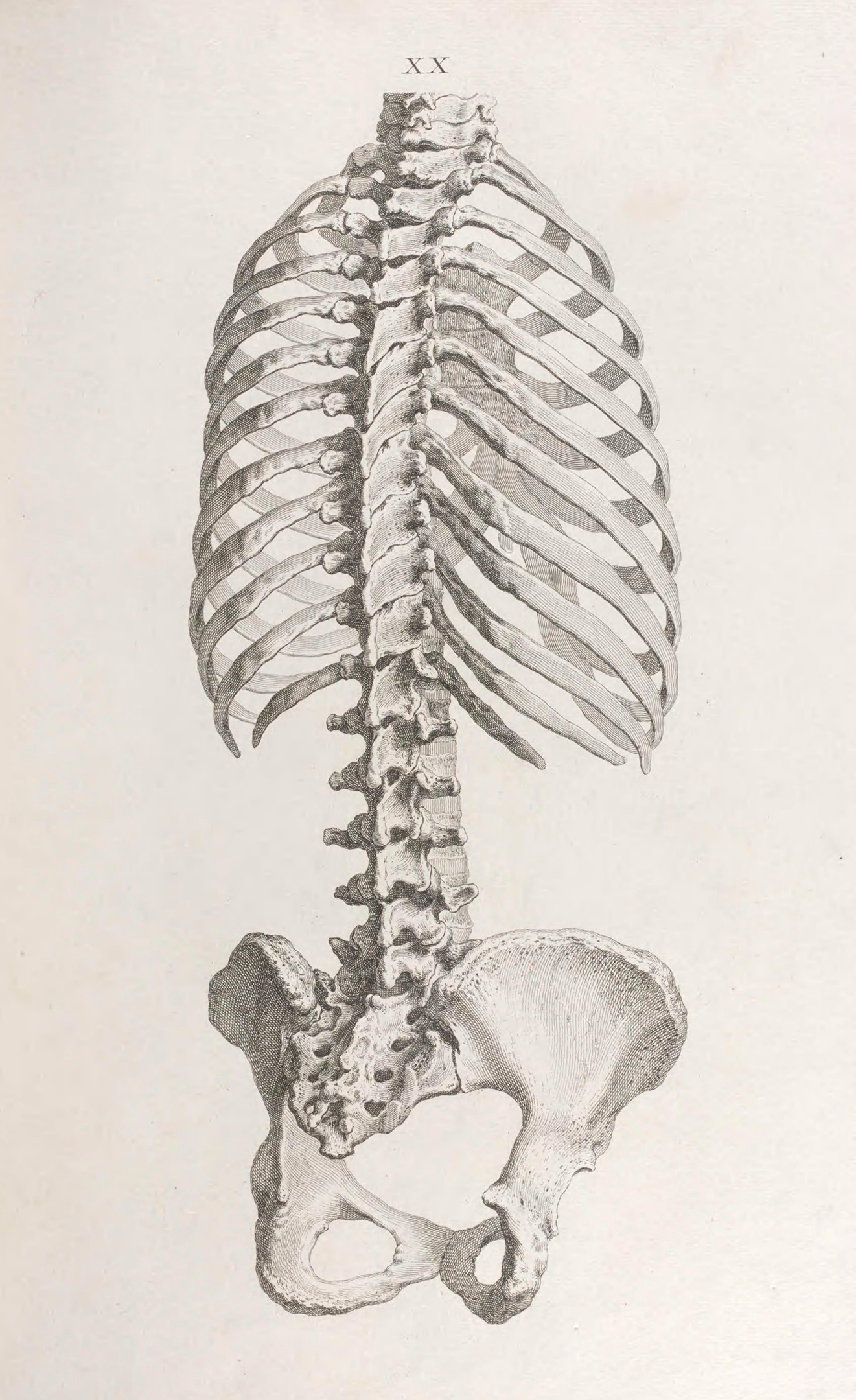
skeleton of the human torso

Plate XX. Cheselden, William. Osteographia. 1733. Contributed in BHL from the Library and Archives of the Natural History Museum, London.

Halloween is just around the corner, and the skeletons have come out of the closet. From front yards reimagined as graveyards to bone-chilling retail displays and party backdrops rattling with more than a few spare ribs, bones are on display to awaken the Halloween spirit and set a ghoulish mood to the delight of trick-or-treaters everywhere.

The modern-day Halloween is derived from the ancient Celtic festival of Samhain. With the Celtic new year celebrated on November 1, October 31 marked the end of summer and the harvest and the beginning of the cold, dark winter. Samhain, celebrated the evening of October 31, was believed to be a time when the boundary between the worlds of life and death were blurred, allowing the ghosts of the dead to return (History.com 2019).

Over time, Halloween has evolved into the costume-wearing, trick-or-treating holiday that it is today, but the season’s association with death has remained, evidenced by the proliferation of ghosts and skeletons intertwined with modern-day celebrations.

Embracing the Halloween season’s bony obsession, this month’s book of the month is one devoted to the skeleton — Osteographia (1733), which has been described as “one of the most important and beautiful books in the British anatomical tradition” (Neher 2010, 517). This work is freely available in BHL thanks to the Library and Archives of the Natural History Museum in London.
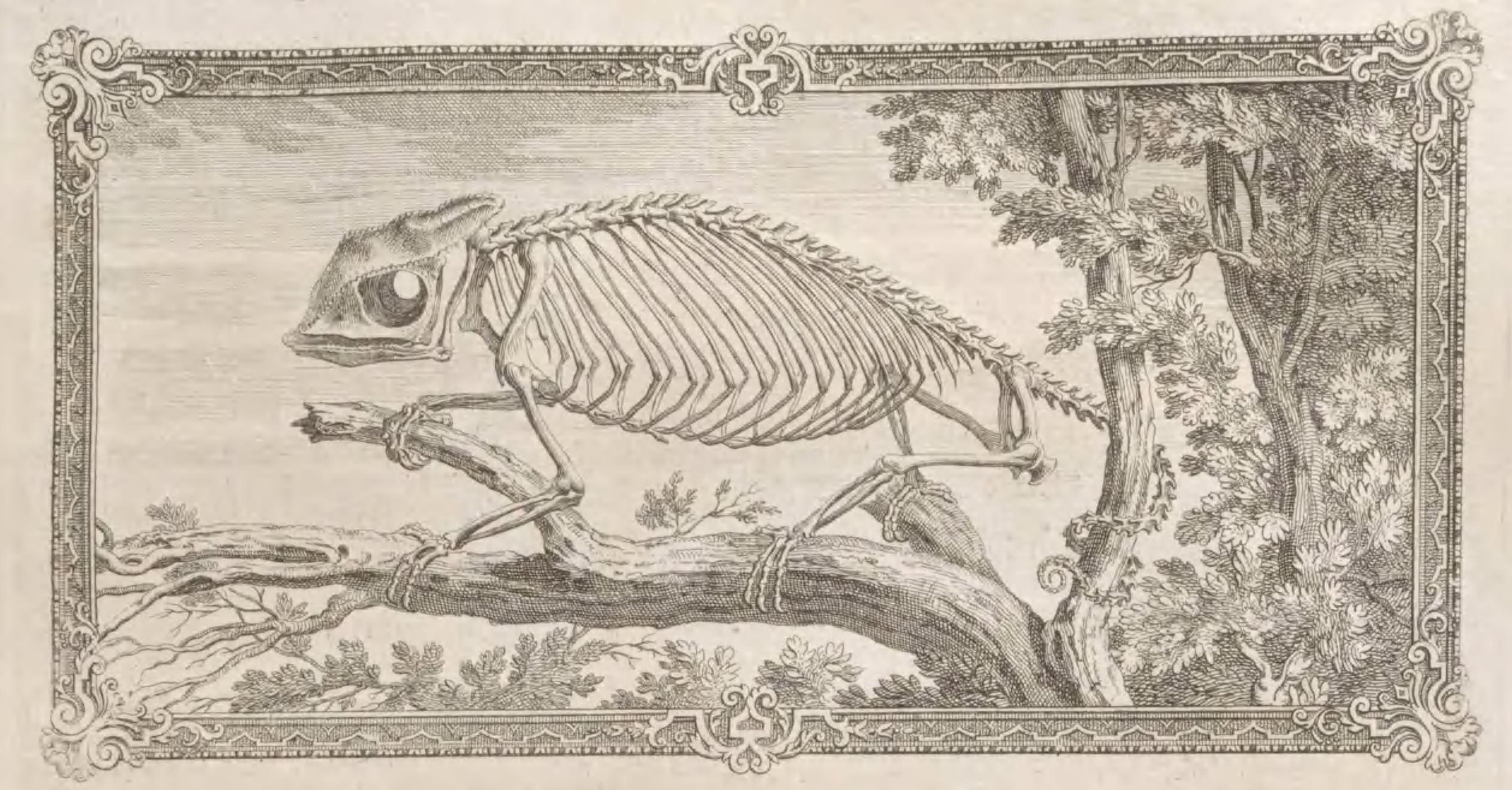
skeleton of a chameleon

Head-piece engraving for Chapter VI. Cheselden, William. Osteographia. 1733. Contributed in BHL from the Library and Archives of the Natural History Museum, London.

William Cheselden created his Osteographia with two goals in mind: to offer both the best osteological atlas and the most accurate study of the human skeleton yet produced. The book’s 56 massive plates, measuring 21 inches long and 15 inches wide, offer natural-size depictions of the separate human bones. Complete copies include two sets of plates — one set lettered with text on the verso providing descriptions of the figures, and one unlettered and blank on the verso “to shew them in their full Perfection”. Each chapter is also adorned with head and tail-piece engravings depicting various animal skeletons (Russell 1954, 38).
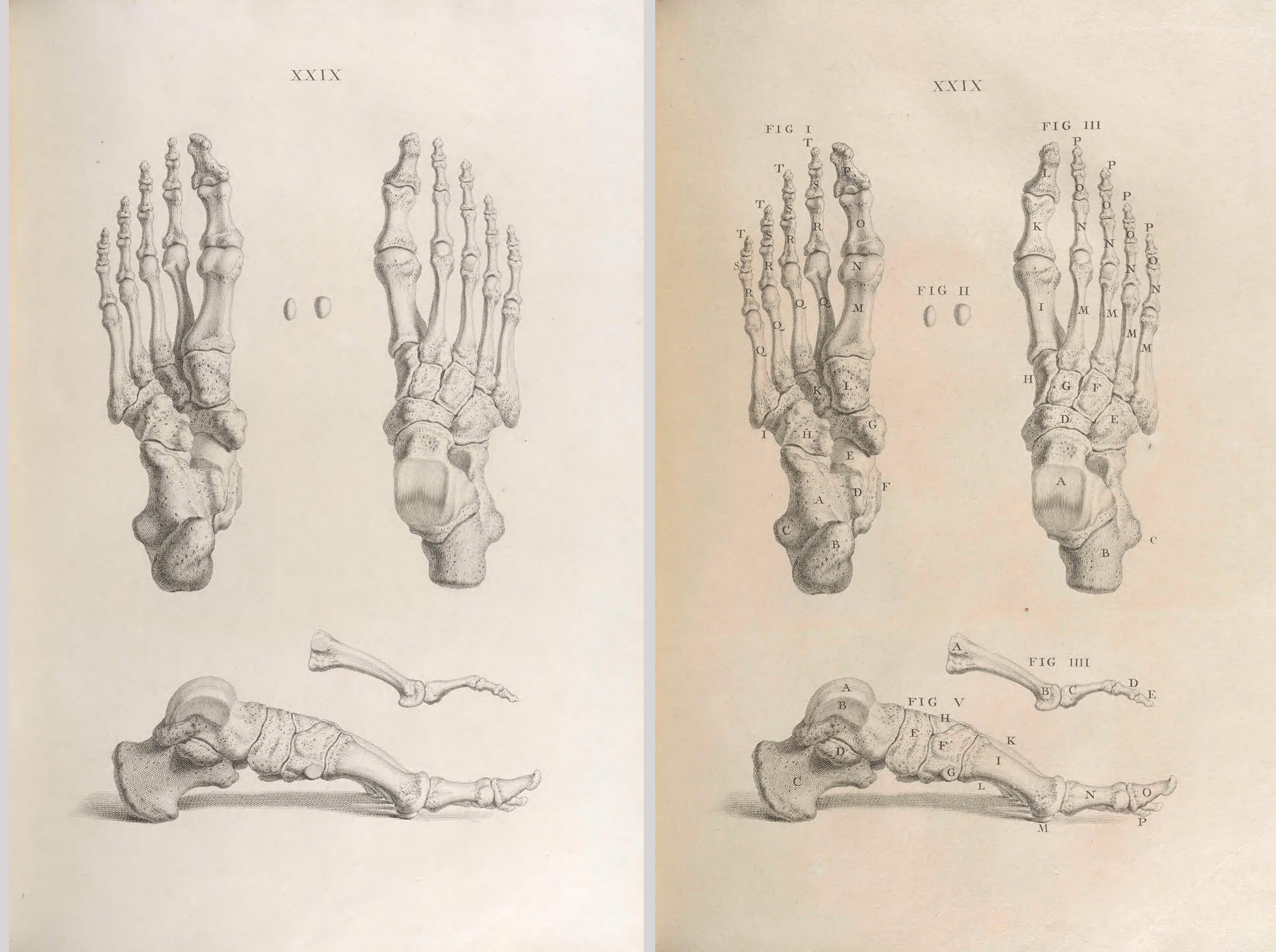
skeletons of human feet

Plate XXIX, comparison of unlettered (left) and lettered (right) plates. Complete copies include full sets of both lettered and unlettered plates. Cheselden, William. Osteographia. 1733. Contributed in BHL from the Library and Archives of the Natural History Museum, London.

Cheselden spent years engaged in the production of Osteographia. A British surgeon and teacher of anatomy and surgery, Cheselden (1688-1752) is well-known for his Anatomy of the Human Body (1713), which was used as an anatomy textbook for nearly a century. Well-respected during his time, Cheselden was one of the principal surgeons at St. Thomas’ Hospital and was appointed the surgeon to Queen Caroline in 1727 (Tikkanen 2019).
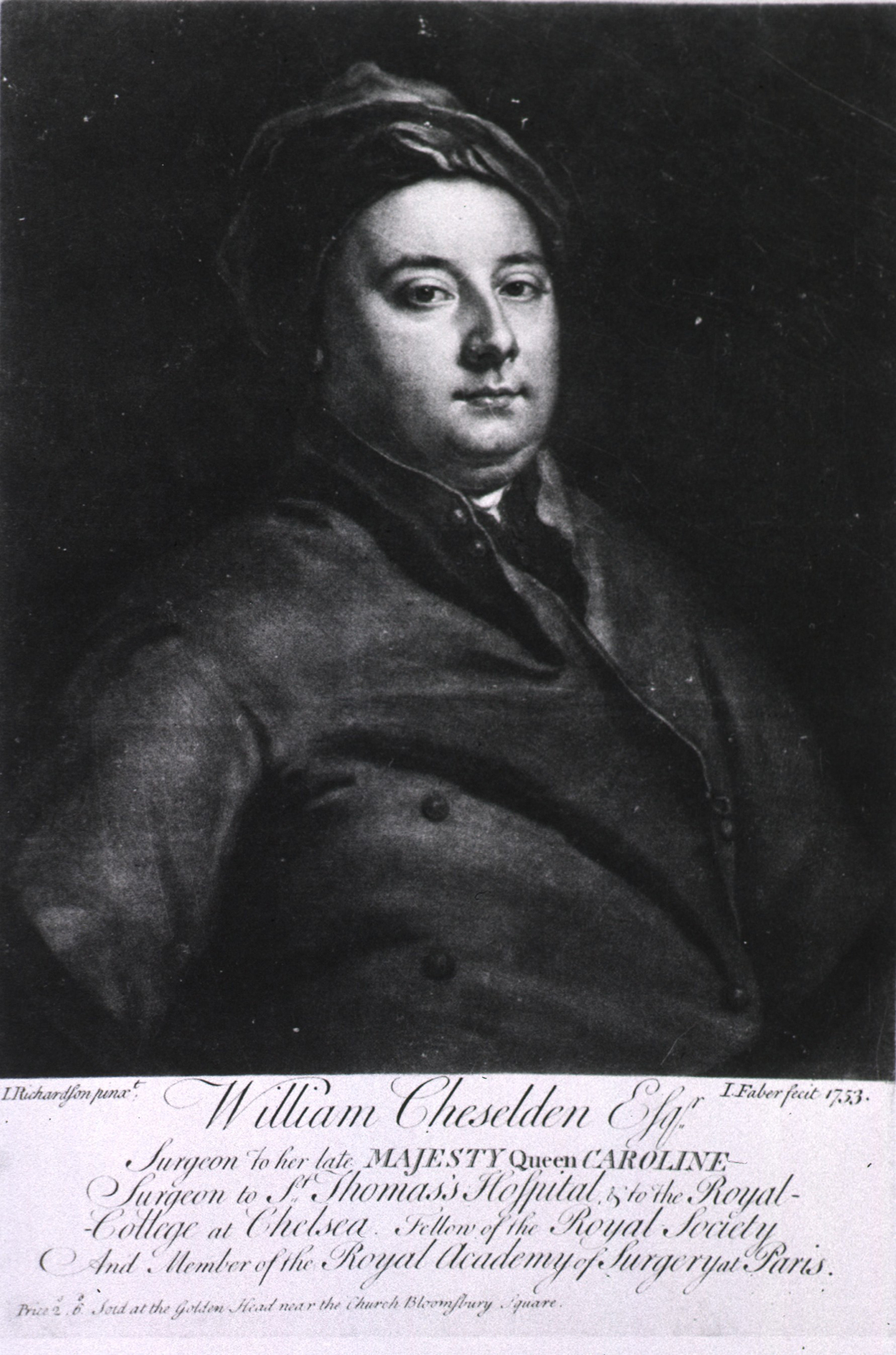
black and white portrait of a human in a coat and hat

Portrait of William Cheselden. Engraving by J. Faber after J. Richardson. 1753. Source: U.S. National Library of Medicine.

Cheselden was also a clever marketer who used the popularity of his anatomical textbook to advertise his forthcoming osteological atlas. Within the Preface to the 1726 edition of his Anatomy, Cheselden wrote that he was “much engaged” in the production of an Osteology that would provide life-size plates of the human bones. He went so far as to include an example of some of the engravings from his atlas (specifically, the maxilla and mandible figured on Plate IX of Osteographia).

Published in 1733, Cheselden limited the English edition of Osteographia to 300 copies, plus an additional 100 prints of the plates intended for a foreign edition in either Latin or French (which was never produced) (Russell 1954, 44). Following these printings, the plates were destroyed so that “the price of the book may never sink in the possession of the subscribers” (Cheselden 1733, [3]).
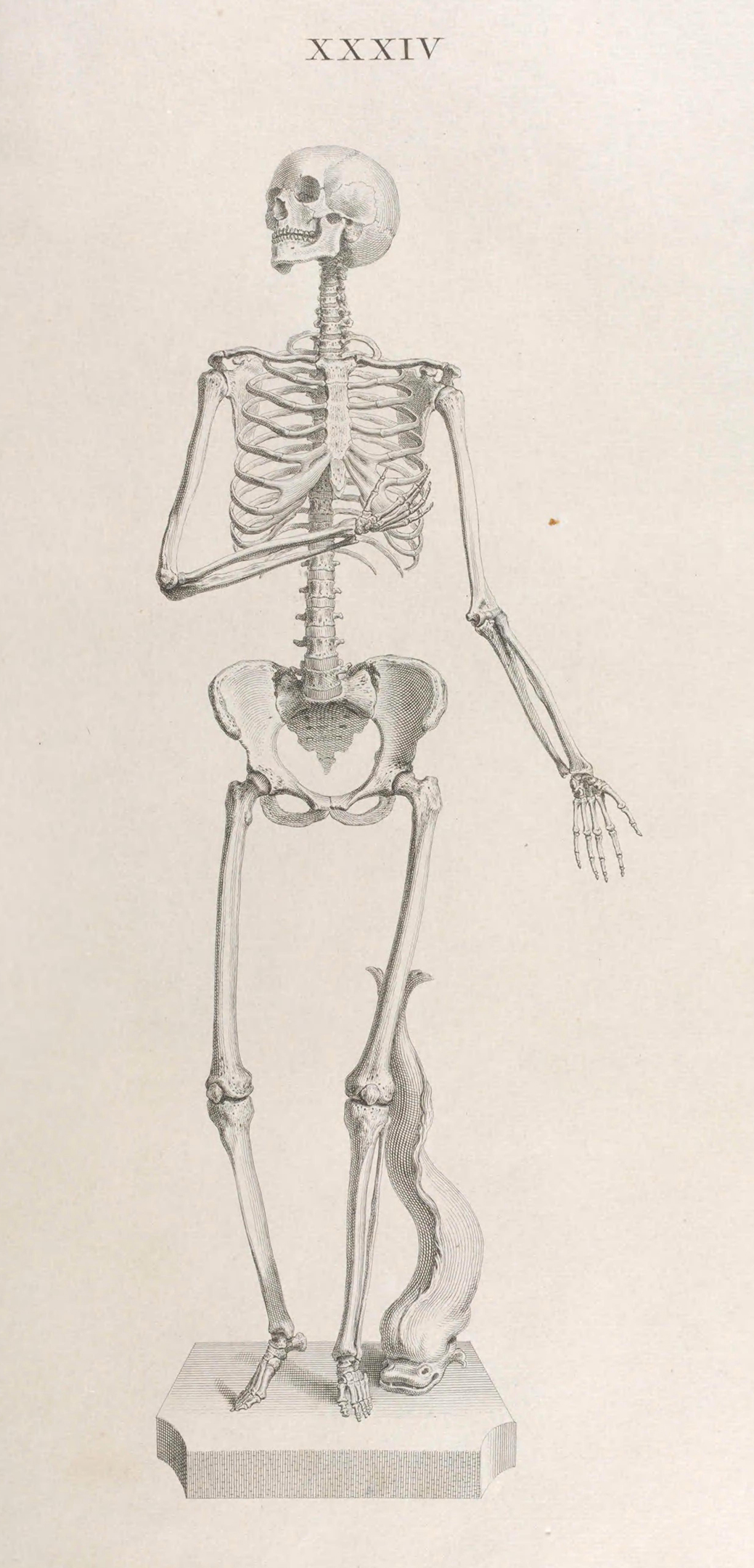
human skeleton

Plate XXXIV. Cheselden, William. Osteographia. 1733. Contributed in BHL from the Library and Archives of the Natural History Museum, London.

Cheselden’s commitment to providing the best available osteological atlas went well beyond a desire to produce an aesthetically-pleasing publication. He wanted the plates in Osteographia to serve as “working objects” for osteological studies — illustrated specimens that could be taken by the scientific community as representative. To accomplish this, accuracy of illustration was paramount (Neher 2010, 519).

To realize this ambition, Cheselden and his artists employed a camera obscura to create the initial drawings. A camera obscura is an instrument consisting of a darkened box with a convex lens or aperture that is used to project the image of an external object onto an internal screen. Cheselden is believed to be the first to use such a device for medical imagery, and the particular camera obscura used was of Cheselden’s own invention (Neher 2010, 522).
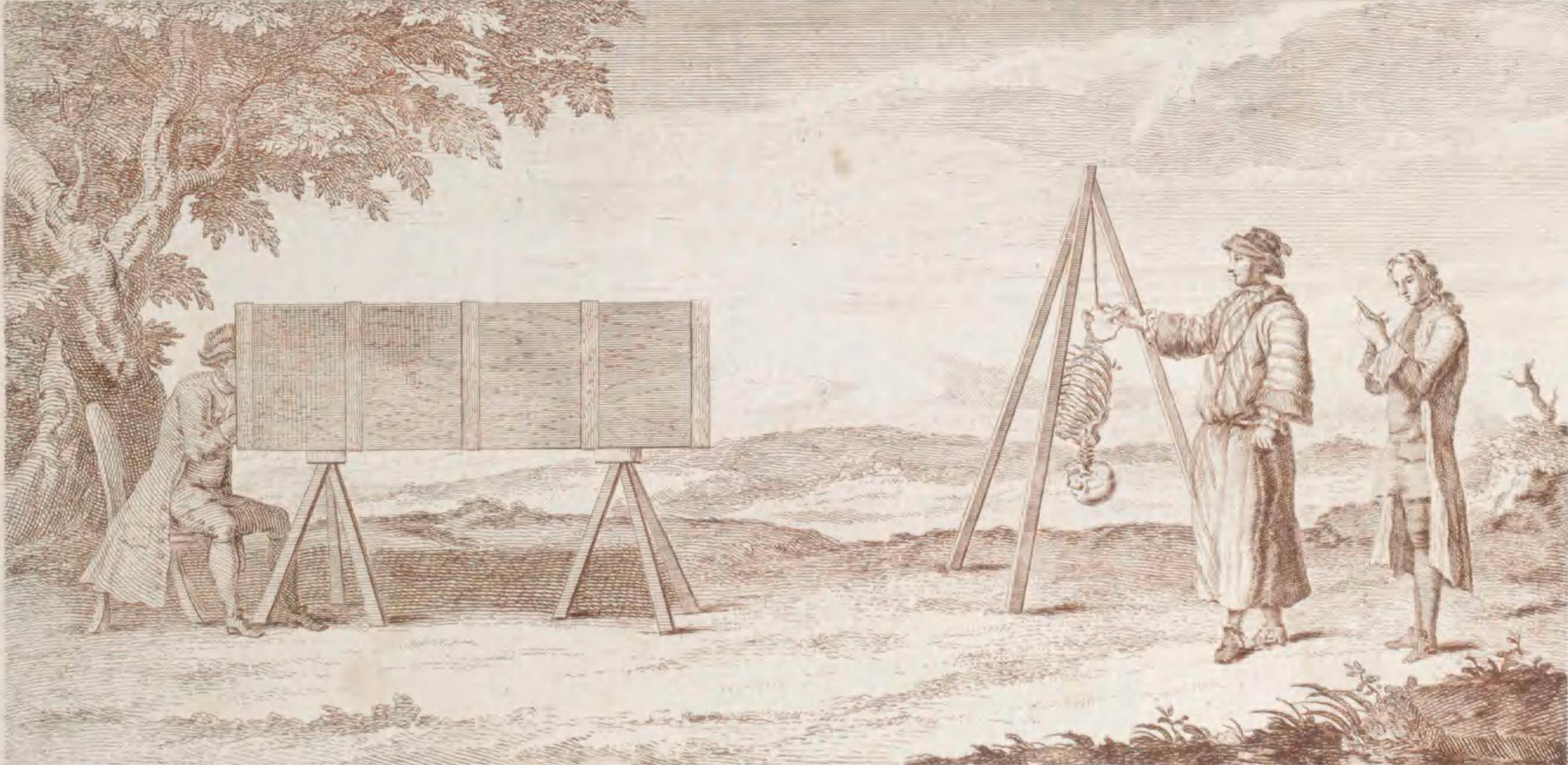
three humans using a camera obscura to illustrate a skeleton

Camera obscura figured in the vignette on the title page. Cheselden, William. Osteographia. 1733. Contributed in BHL from the Library and Archives of the Natural History Museum, London.

The camera obscura is prominently featured in the vignette on the title page of Osteographia. The two standing figures in the vignette are Cheselden’s students, John Belchier and Samuel Sharpe. The identity of the seated figure inside the camera obscura is unknown but may represent one of the artists (Neher 2010, 522).

By displaying the camera obscura so conspicuously on the title page, Cheselden was emphasizing the legitimacy and accuracy of the illustrations within Osteographia. The reader was to understand that the plates were created from actual projections of the skeletons depicted. Cheselden further listed his qualifications on the title page, including his association with the Queen and membership in several prestigious institutions, as further evidence of the credibility of the work (Neher 2010, 519).
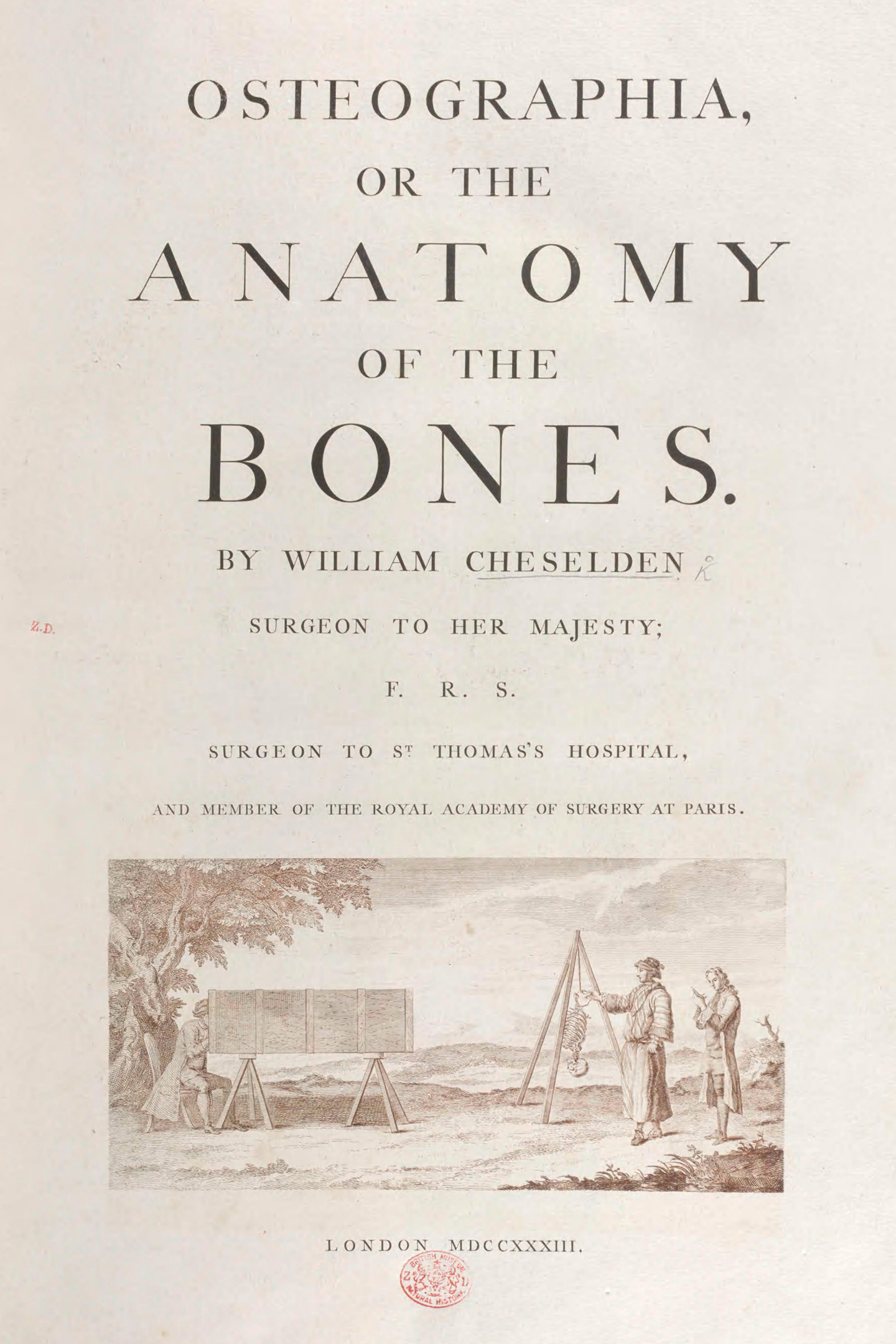
title page of Osteographia

Title page. Cheselden, William. Osteographia. 1733. Contributed in BHL from the Library and Archives of the Natural History Museum, London.

While Cheselden provided direction for the production of each image, intervening when necessary to provide corrections and alterations, the actual artists for Osteographia were Gerard van der Gucht (1695/6-1776) and Jacob Schijnvoet (1685-1733). Based on the drawings created by means of the camera obscura, the final plates were produced through a combination of etching and line engraving. Engraving, in which lines are cut into a metal plate with a burin, was used to produce smooth, dark exterior lines for each bone. Etching, in which an acid wash is used to etch an image drawn into a wax coating on a metal plate, was used for the other parts of the image (Neher 2010, 518).

Many varied issues of Osteographia exist today, as detailed by K.F. Russell in an article within Bulletin of the History of Medicine (vol. 28, no. 1, 1954). While the work was first officially published in 1733, there is a unique, 1728 trial issue in the Hunterian Library at the University of Glasgow which features 56 unlettered plates but no text or letterpress.

In addition to the “typical” 1733 issue, there is also a variant of the 1733 issue in which the title vignette and illustration of a broken column on the final page are printed in red. Additionally, this version presents the engraving of the Royal Arms on the verso of the title page, rather than on a separate page as in the “typical” 1733 issue. Russell postulates that this variant may represent a trial issue printed earlier than the “typical” 1733 issue. The copy of this work available in BHL from the Natural History Museum in London is this 1733 variant issue.
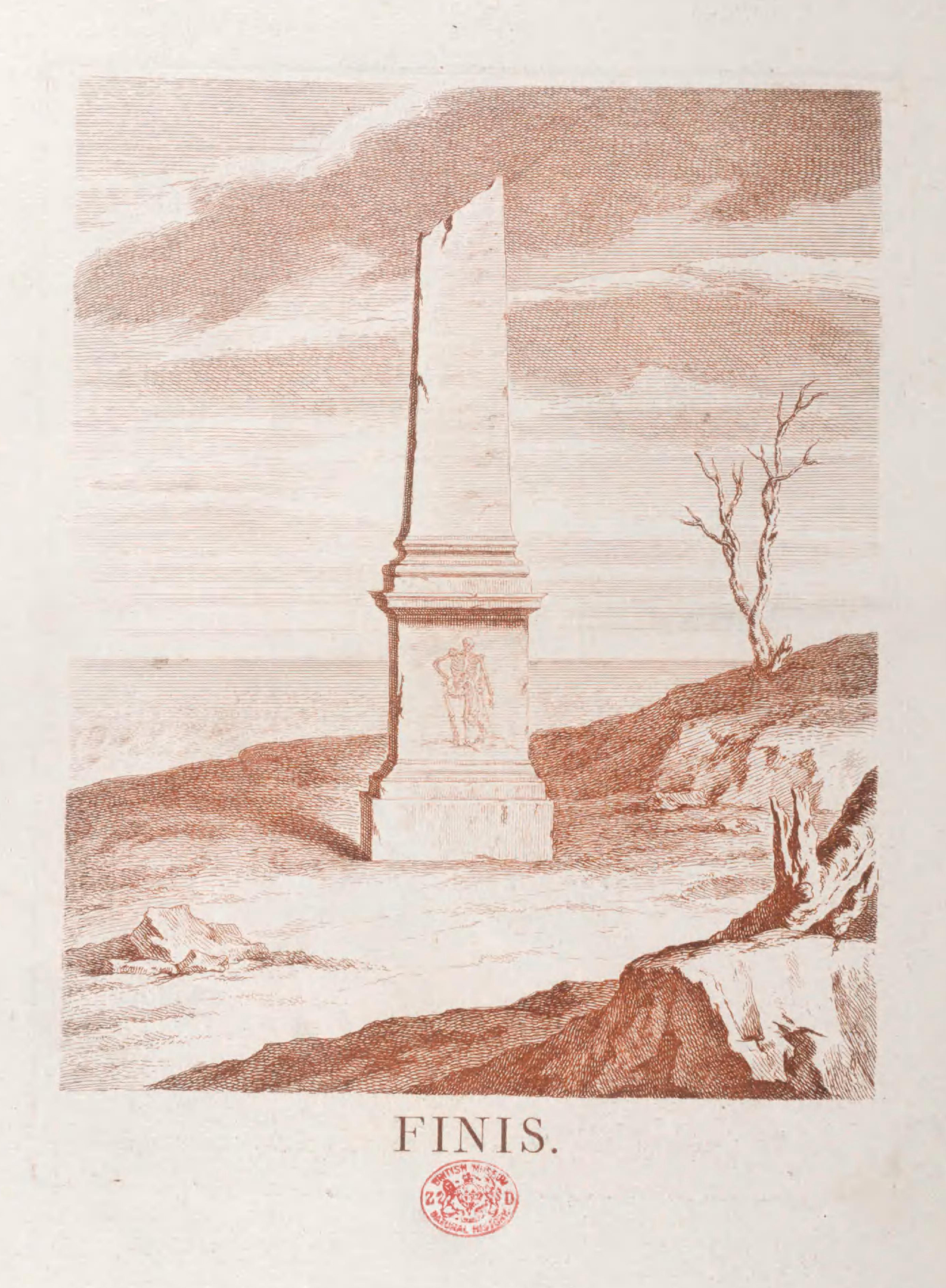
broken column with finis written below it

The broken column at the end of this copy is printed in red. This indicates that this copy is a 1733 variant issue. Cheselden, William. Osteographia. 1733. Contributed in BHL from the Library and Archives of the Natural History Museum, London.

Finally, there are several undated versions of the work which likely represent later editions made from sets of the unlettered plates broken up from the original whole and sold as separate, undated volumes in an effort to recoup some of the costs of publication.

Unfortunately, Cheselden did have need to recoup costs from the production of Osteographia. While widely praised, the work was not a commercial success. Of the 300 English copies printed, only 97 were sold by subscription. Of the remaining 203 copies, Cheselden disbound 83 of them, offering sets of the frontispieces and head pieces at 10 shillings each and sets of the 56 plates — which he advertised as “proper ornaments for a surgery” — for 30 shillings each (Russell 1954, 38-44).

Though it may not have been a commercial success, Osteographia was and is still celebrated for its beautiful and accurate illustrations, representing an important contribution to the history of medicine.

So make no bones about it — for those seeking a good skeleton or two this Halloween, Osteographia delivers in spine-tingling spades.
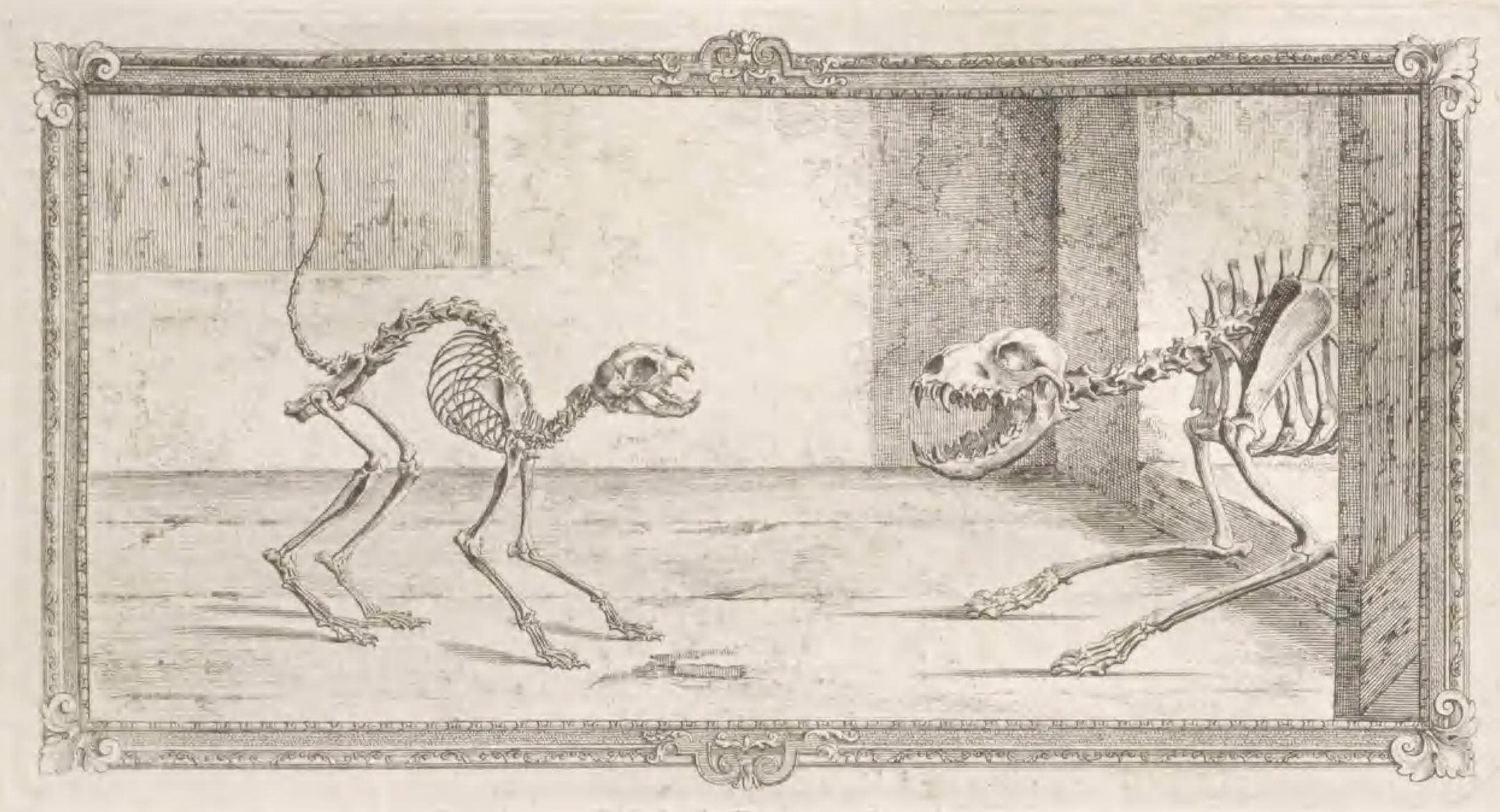
skeletons of a cat and a dog confronting each other

Head-piece engraving for Chapter II. Cheselden, William. Osteographia. 1733. Contributed in BHL from the Library and Archives of the Natural History Museum, London.

References

Cheselden, William. 1733. Osteographia. London: W Boyer.

History.com Editors. 2019. “Halloween 2019.” History.com. September 13. Accessed on October 1, 2019. https://www.history.com/topics/halloween/history-of-halloween.

Neher, Allister. 2010. “The Truth about Our Bones: William Cheselden’s Osteographia.” Medical History 54: 517-528.

Russell, K.F. 1954. “The Osteographia of William Cheselden.” Bulletin of the History of Medicine 28(1): 32-49.

Tikkanen, Amy. 2019. “William Cheselden.” Encyclopedia Britannica. April 6. Accessed on September 30, 2019. https://www.britannica.com/biography/William-Cheselden.
October 24, 2019by Grace Costantino
Blog Reel, User Stories

Flower Flies and BHL: Empowering Taxonomic Research on Important Pollinators

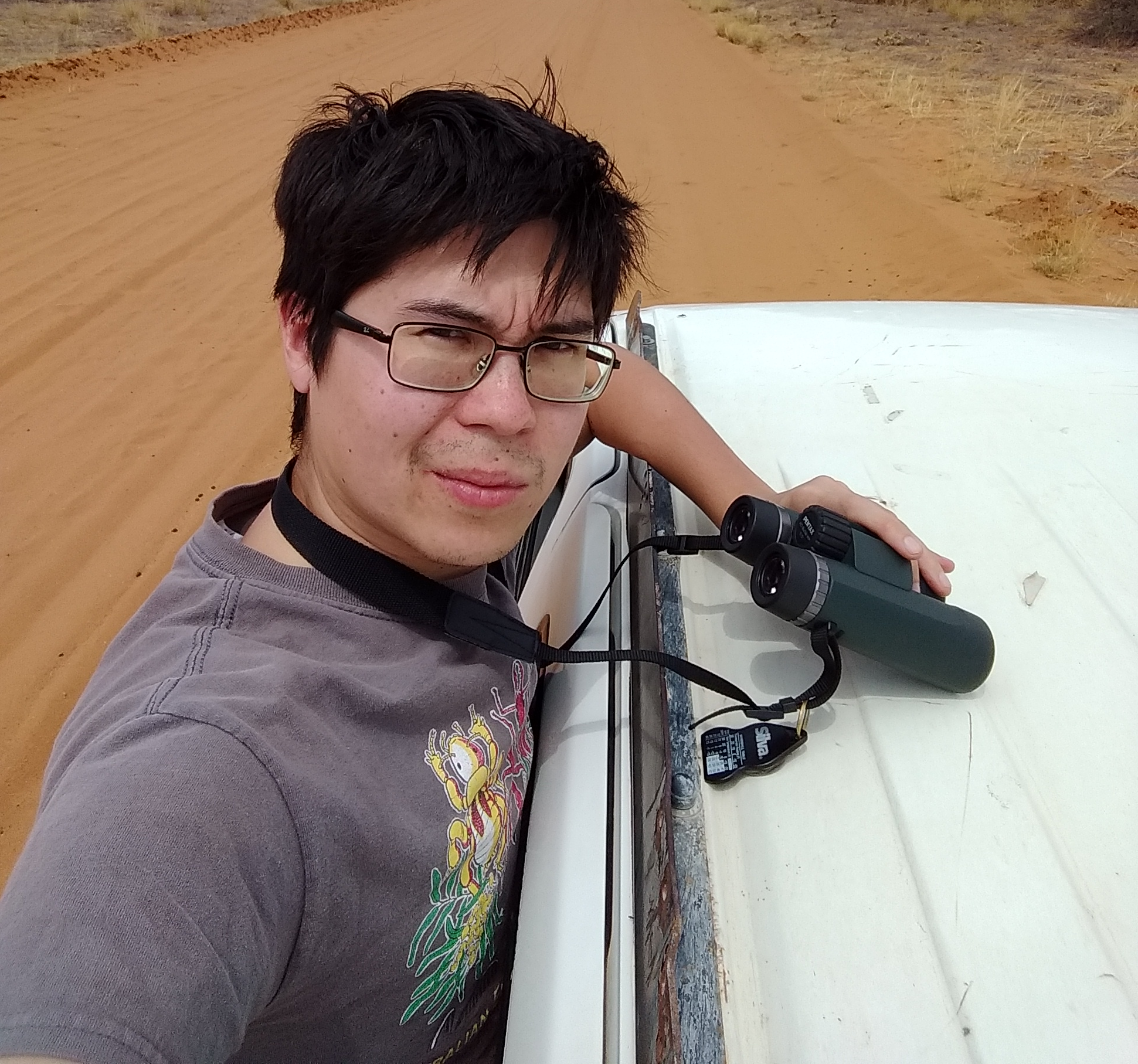
photo of a person standing on a car with binoculars
photo of a flower fly

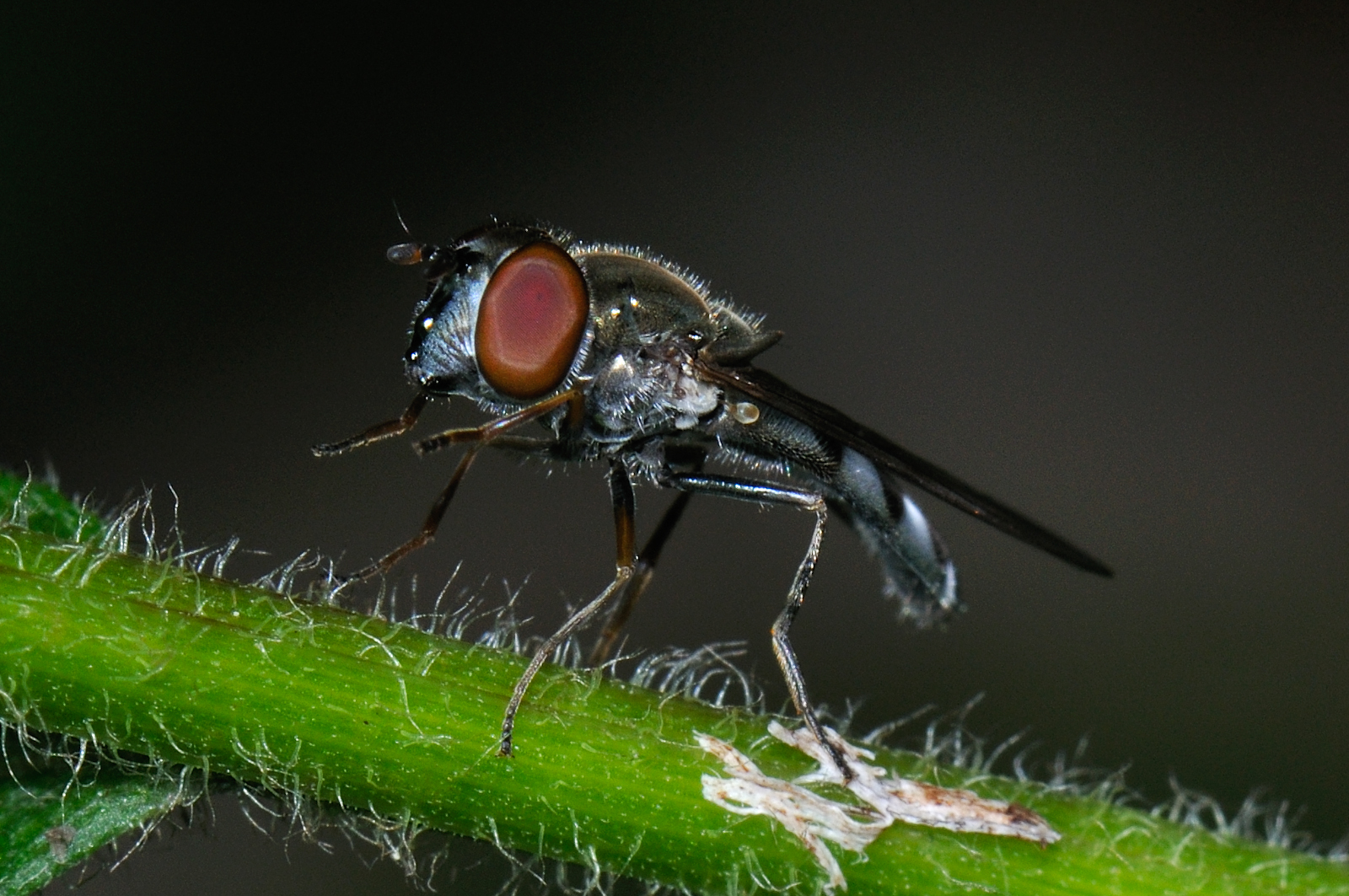
A flower fly in the family Syrphidae: Platycheirus obscurus (female). It was this genus that attracted Dr. Andrew D. Young to the study of Dipterology. He revised this genus for his M.Sc. Photo by Andrew D. Young, taken in Algonquin Park, Ontario Canada.

The family Syrphidae, commonly called hover flies or flower flies, include some 6,000 living species.[1] As “one of the most abundant groups of flower visiting insects”, with adults of most species feeding almost exclusively on pollen and nectar or honeydew, these flies are among the most important pollinators, both for wild plants and numerous crops.[2]

The multi-volume Diptères exotiques nouveaux ou peu connus (1838-[43]) by Justin Macquart contains the first descriptions of numerous Diptera species, including many members of the Syrphidae. Systema Dipterorum, the biosystematic database of world Diptera, attributes 430 Syrphidae names to Macquart.[3]

“Macquart wrote so many early Syrphidae genus and species descriptions that it’s almost impossible to write a syrphid taxonomic paper without referencing this title at some point,” explains Dr. Andrew D. Young.

photo of a person standing on a car with binoculars

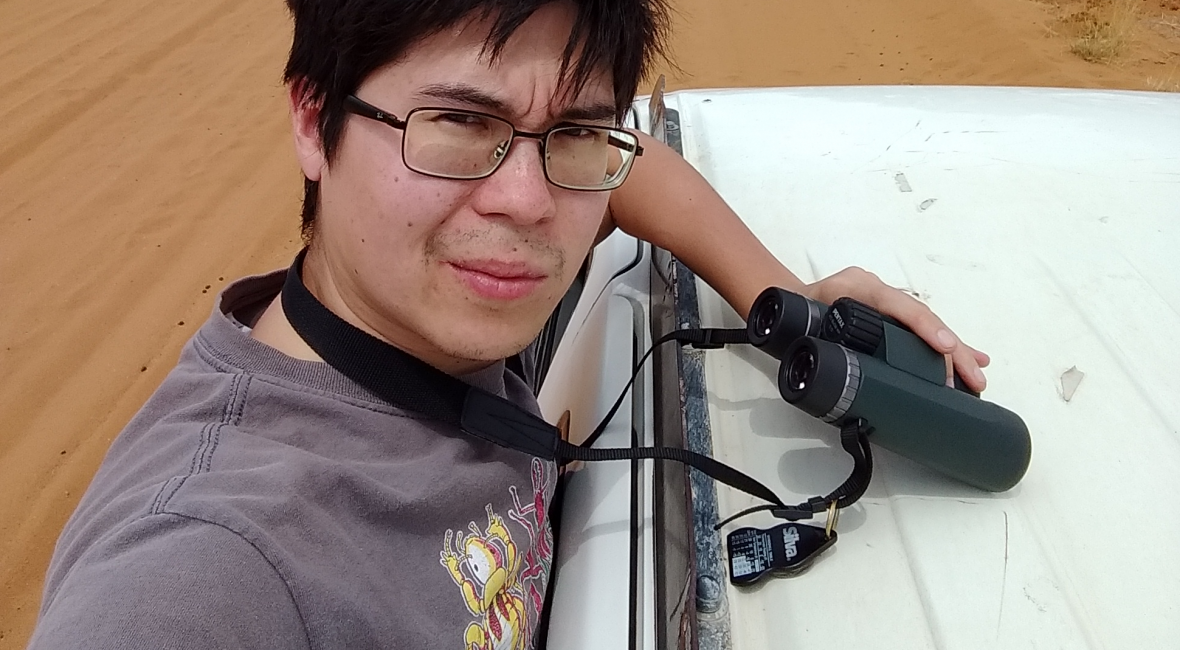
Dr. Andrew D. Young, UC Davis postdoc at the California Department of Food and Agriculture Plant Pest Diagnostics Center. Photo by: Andrew D. Young.

Young is a University of California, Davis postdoc, working out of the California Department of Food and Agriculture Plant Pest Diagnostics Center, where he specializes in Diptera taxonomy and phylogenetics. Although he studies Tephritidae (fruit flies) in his current position, most of Young’s entomological training has been focused on Syrphidae. While Macquart’s monographic series is an essential resource for this group, it’s not easy to come by.

“Each volume is several hundred pages, and was published in the mid 1800s, so hardcopies are not particularly easy to get ahold of,” explains Young. “Most of the time when you do find a hardcopy, it’s one that’s been photocopied so many times it’s barely legible.”

Fortunately, Diptères exotiques nouveaux ou peu connus is freely available on the Biodiversity Heritage Library (BHL).

“There are certainly a lot of titles on BHL that have impacted my research, but Macquart’s work is the one I end up referring to the most often,” shares Young. “It would be a difficult work to obtain on my own if BHL did not exist.”

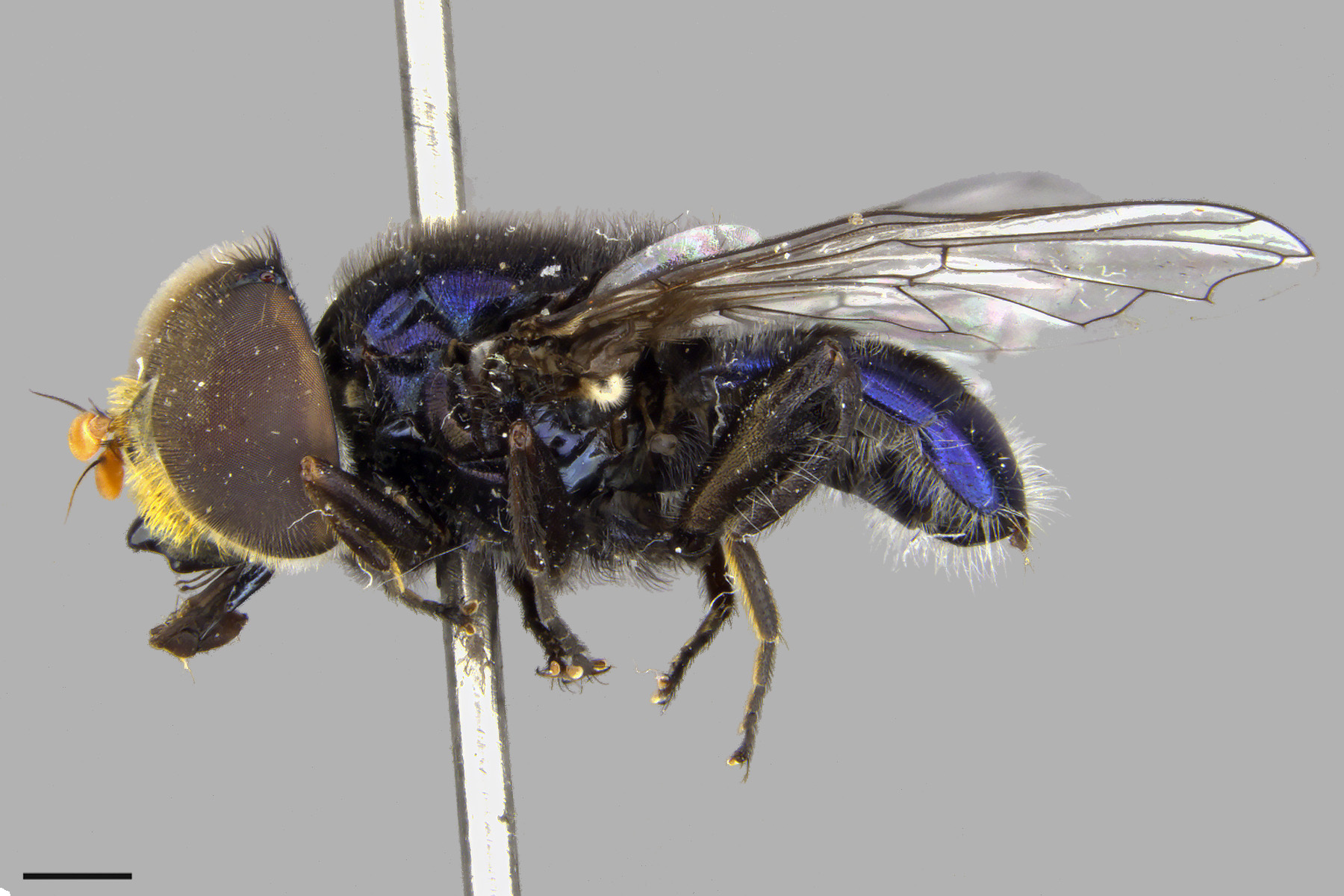
photo of a flower fly

Psilota coerulescens, a species of Australian Psilota (Family: Syrphidae). This species was part of Young’s PhD project, which involved phylogenomic analysis of Syrphidae and related families, as well as a taxonomic revision of the Australian Psilota. This species was previously described by Macquart in 1847, but there are several morphologically similar undescribed species. Easy access to Macquart’s works via BHL helped Young confirm the identity of this species, although photographs of the type material from the Paris museum were also necessary. Photo Courtesy of Andrew D. Young.


Young was drawn to the study of insects during his studies at the University of Guelph. While originally intending to study herpetology, a third year entomology course with Dr. Steve Marshall changed his mind. In 2009, he started his M.Sc. in Marshall’s insect systematics lab at the University, studying Syrphidae.

It was during the first year of his M.Sc. that a fellow graduate student introduced Young to BHL. It was a game-changer.

“BHL gave me faster and easier access to papers I would have otherwise had to wait weeks for and access to many other papers I might not have been able to obtain at all,” lauds Young.

photo of two people sitting on the road with insect collecting gear

Andrew D. Young and Jeff Skevington in the field, collecting Syrphidae in Japan. Photo by: Sander Bot.

When actively working on a taxonomic revision, Young accesses the Library multiple times a week. Typically, he uses the custom PDF feature to select and download specific pages containing individual taxonomic descriptions. The feature significantly improves his research efficiency.

“I often need a single page from a 400+page book, so this saves me a lot of time,” explains Young. “Without the custom download feature, I would be stuck downloading massive PDFs and then extracting pages from them myself.”

By providing open access to so much essential entomological literature, BHL has had a profound impact on Young’s research, as the examination of both original species descriptions and original type material is essential for taxonomic research.

“BHL is often my only recourse for obtaining older taxonomic works. Because of BHL, I have been able to quickly locate original descriptions from early taxonomic authors, allowing me to compare the descriptions to the material I have access to,” explains Young. “BHL is invaluable to my taxonomic research.”

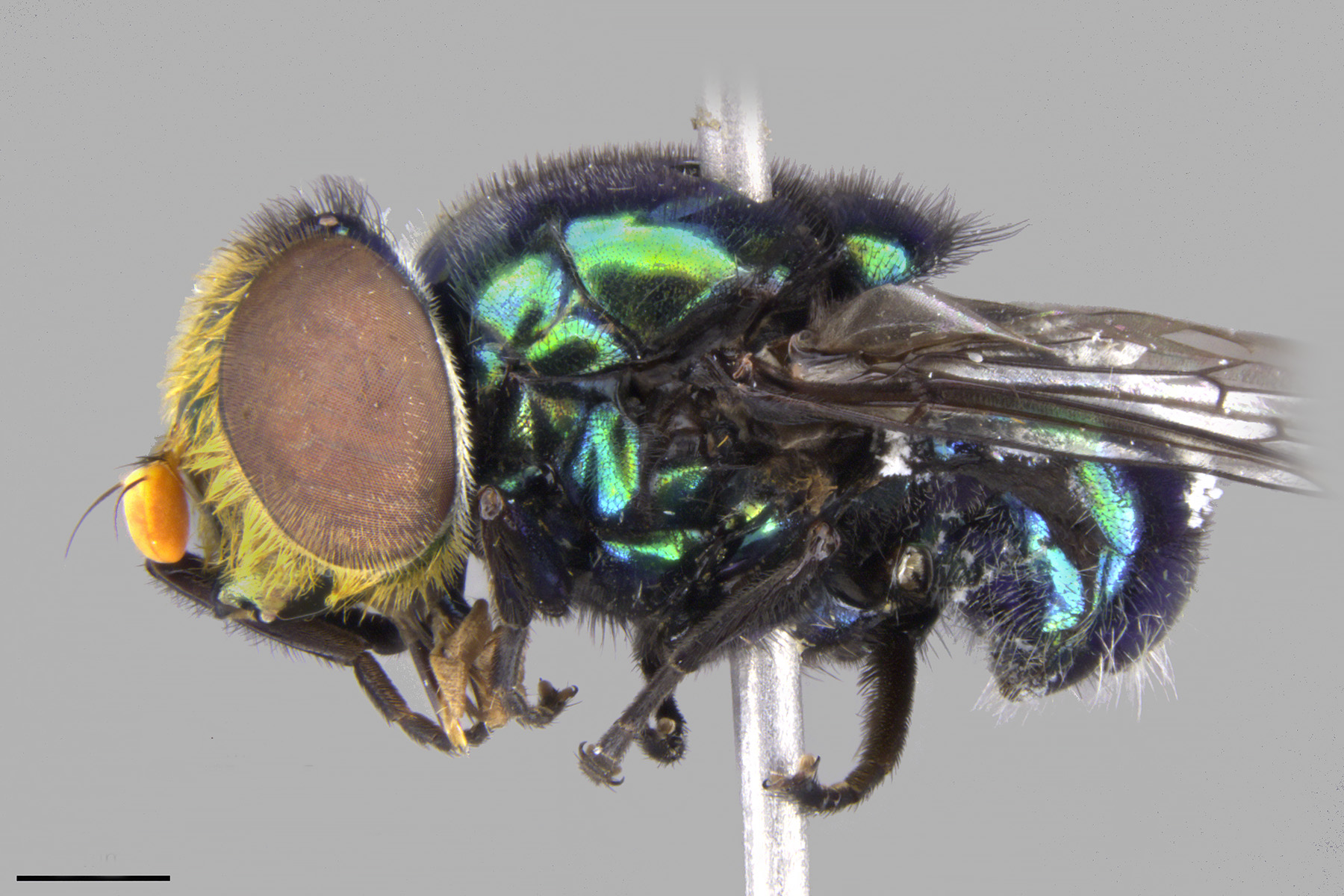
photo of a flower fly

An undescribed species of Psilota (Family: Syrphidae) from Australia, also included as part of Young’s PhD project. He will be naming this species after his partner Aislinn, for all the support they provided him during his academic journey. Photo Courtesy of Andrew D. Young.

Pollinators like flower flies perform invaluable services for ecosystem health, food security, natural resource production, and more. We’re thrilled to know that BHL, in turn, is an invaluable resource for researchers studying these important species.

References

[1] Catalogue of Life. 2019. “Syrphidae.” 2019 Annual Checklist. April 2019. Accessed on June 11, 2019. http://www.catalogueoflife.org/col/browse/tree/id/8613c97b8136a49c6a4b458020142f50.

[2] Klecka J, Hadrava J, Biella P, Akter A. 2018. “Flower visitation by hoverflies (Diptera: Syrphidae) in a temperate plant-pollinator network.” PeerJ 6:e6025 https://doi.org/10.7717/peerj.6025.

[3] Systema Dipterorum. 2019. “Nomenclator Search Results: Macquart and Syrphidae.” Accessed on June 11, 2019. http://sd.zoobank.org/Nomenclator?op_name=&Name=&-op_author=&Author=Macquart&op_year=&Year=&op_family=&Family=Syrphidae&op_validname=&ValidName=&kind=&Sortfield=unsorted&sortorder=ascending&max=10&-find=Start+Search.

September 12, 2019by Grace Costantino
Blog Reel, User Stories

Getting Fishy with BHL: Empowering Discoveries and Connections Around Museum Collections

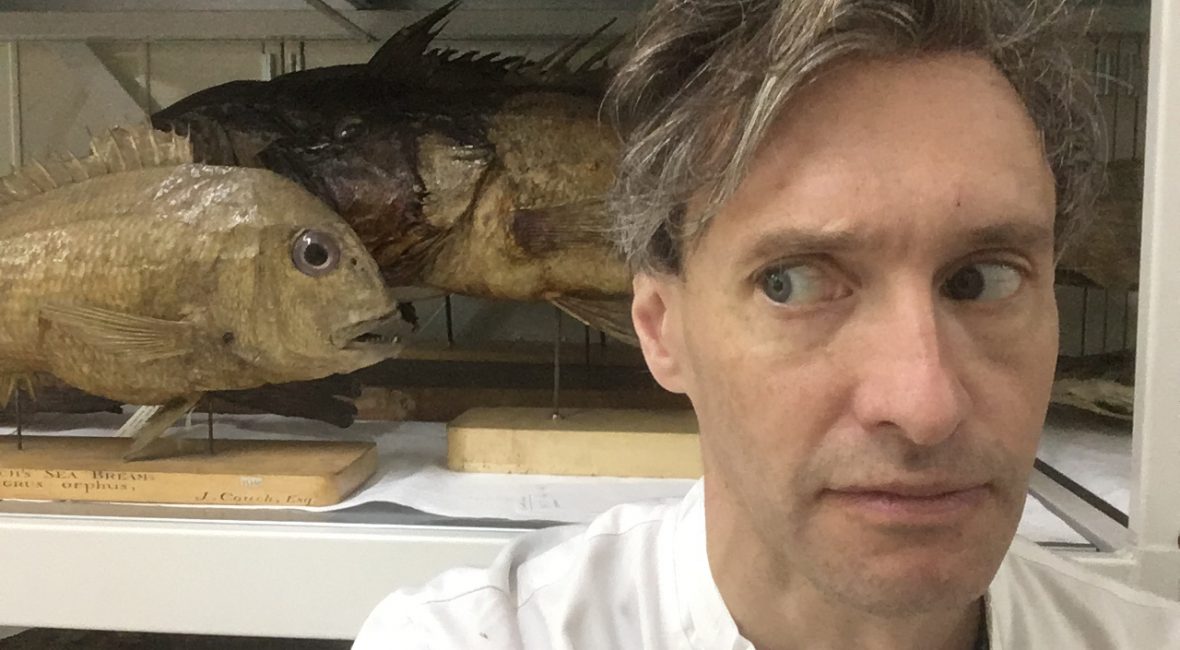
Man in a white shirt standing in front of a dried fish specimen.
Photograph of a fish specimen.

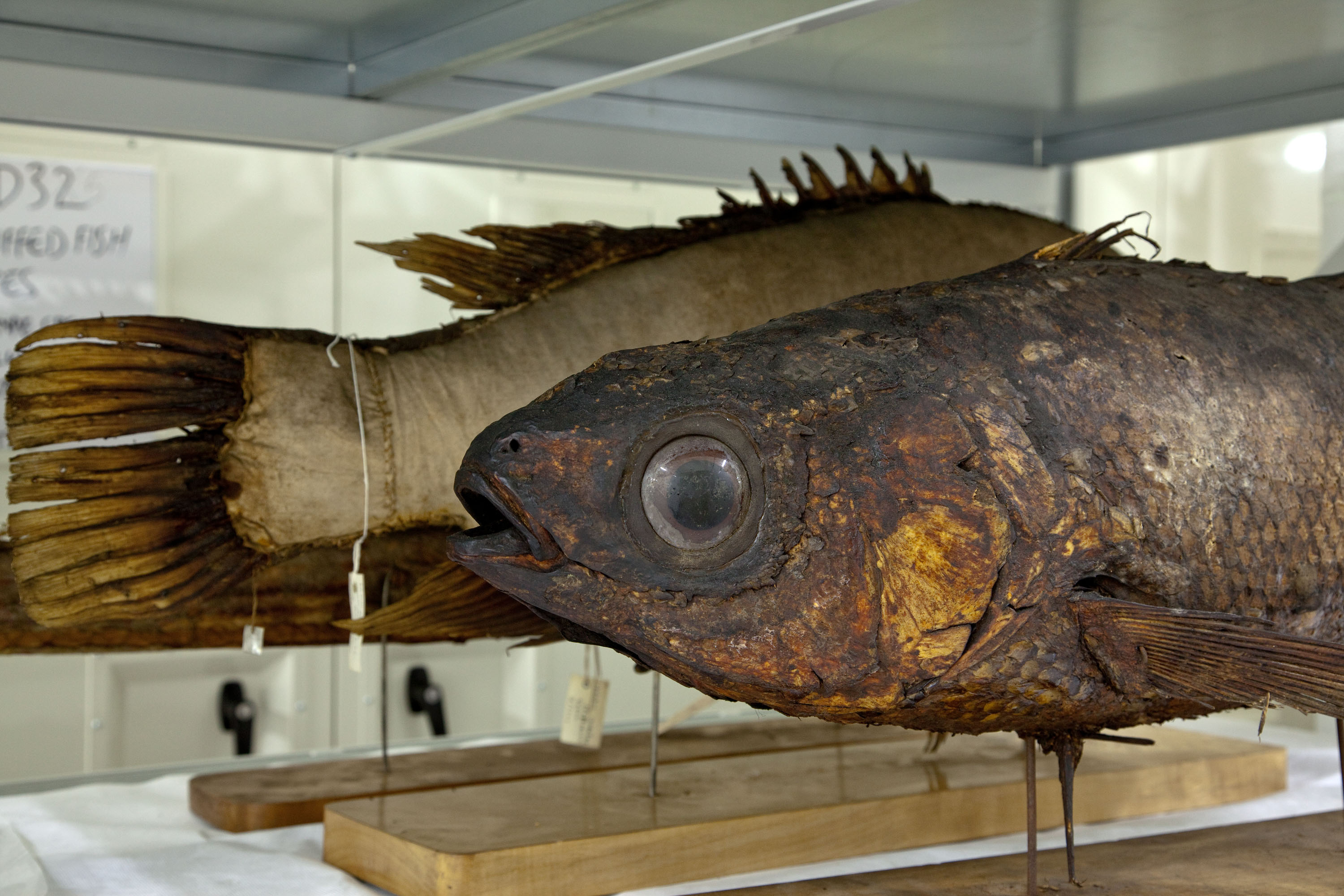
Type specimen of Cubiceps capensis in the Natural History Museum of London’s dry specimen store, which houses most of the Museum’s skeletons, skins and stuffed fishes. Many specimens in the collection are well over 100 years old. James Maclaine, senior curator of fishes at the Museum, often uses BHL when conducting research on specimens in the collection. Photo by: Kevin Webb, NHM Photo Unit.

Twitter is a popular communication channel amongst the scientific community. Scientists use the platform to communicate with colleagues and share their research findings with both other scientists and the public.[1]

Twitter may also be a valuable source of data for researchers. For example, ecologists from the University of Gloucestershire found that “Twitter-mined” data is useful for phenological studies, such as winged-ant emergence or the appearance of house spiders in the fall.[2]

Twitter conversations can also spark unexpected discoveries. For example, a recent @BioDivLibrary Twitter conversation helped uncover a connection between the scientific literature and a museum’s collections.

It began with Boops boops, a fish — commonly called a bogue — native to the eastern Atlantic. @BioDivLibrary posted an illustration of the species in response to a tweet from Deborah Paul (@idbdeb), who shared the species as an example of a name uncovered while experimenting with parsing taxon names as part of the recent BHL data mining workshop at the University of Illinois.

?

Boops boops #SciArt from “A history of the fishes of the British Islands”, v. 1 (1868), in #BHLib via @SILibraries ➡️ https://t.co/A37BOVJ4Ru pic.twitter.com/HZVxA1ntoT

— BHL (@BioDivLibrary) June 18, 2019

The illustration, published in A History of the Fishes of the British Isles (1862-65), was based on a specimen collected in October 1842 and deposited in the Museum of the Royal Cornwall Institute at Truro. The text also mentions a second specimen, which was presented to the British Museum by a “W.P. Cocks, Esq.”. Paul tweeted an inquiry to see if anyone could help track down the current location of the specimen.

… and did you see this?! https://t.co/WzTtJjf6iN ~ specimen collected October 1842 ~ deposited Museum of the Royal Cornwall Institute at Truro ~ Wonder where it is now? Any help @NHM_Digitise? Who has Boops boops specimen from 1842? @ASIHCopeia @SPNHC @GBIF @DiSSCoEU @iDigBio? pic.twitter.com/TuJ09ueKGK

— Deborah Paul (@idbdeb) June 19, 2019

@NHM_Digitise called on James Maclaine (@beardiddley), senior curator of fishes at the Natural History Museum in London, for help tracking down the specimens. Pulling from a reference in Albert Gunther’s Catalogue of the Fishes in the British Museum, Maclaine responded that the Museum likely held the “W.P. Cocks, Esq.” specimen (with the label reading “Cork” instead of “Cocks”) and proceeded to tweet a picture of the specimen itself.

We do have one of the other ones in the reference I think (assuming W.P.Cocks and W.P.Cork are the same person!). From Albert Gunther’s Catalogue of Fishes, 1859, vol.1, p.419. pic.twitter.com/uZ5gibJmOm

— James Maclaine (@beardiddley) June 20, 2019

Here’s what the Cocks/Cork specimen looks like! The missing one will probably be dried too. pic.twitter.com/sFdaUMn5jW

— James Maclaine (@beardiddley) June 20, 2019

Beyond providing an example of the kinds of discoveries possible on the Twitterverse, this conversation also highlights the value of scientific literature for providing information on museum collections.

“Sadly, despite their many other qualities, the Victorians weren’t great at recording some details which we now would consider essential, so it is often difficult to determine the history of a 19th century fish specimen,” shares Maclaine.

When information is missing on specimen labels, the literature may be able to help fill in the gaps. For Maclaine and others managing collections, having access to this literature through BHL is incredibly valuable.

Can I just say as well, I LOVE BHL, I use it nearly every day!

— James Maclaine (@beardiddley) June 20, 2019

Maclaine finds BHL’s collections particularly useful when researching type specimens, the specific specimen used to describe a new species and the “typical” example of that species.

“Types are the most important part of our collection and are essential to any research on the species that they represent,” explains Maclaine. “However, many currently lurk unrecognized on our shelves, and it’s part of my job to find them, correctly identify them as types, and then update our records accordingly. This is where BHL comes in.”

Man in a white shirt standing in front of a dried fish specimen.

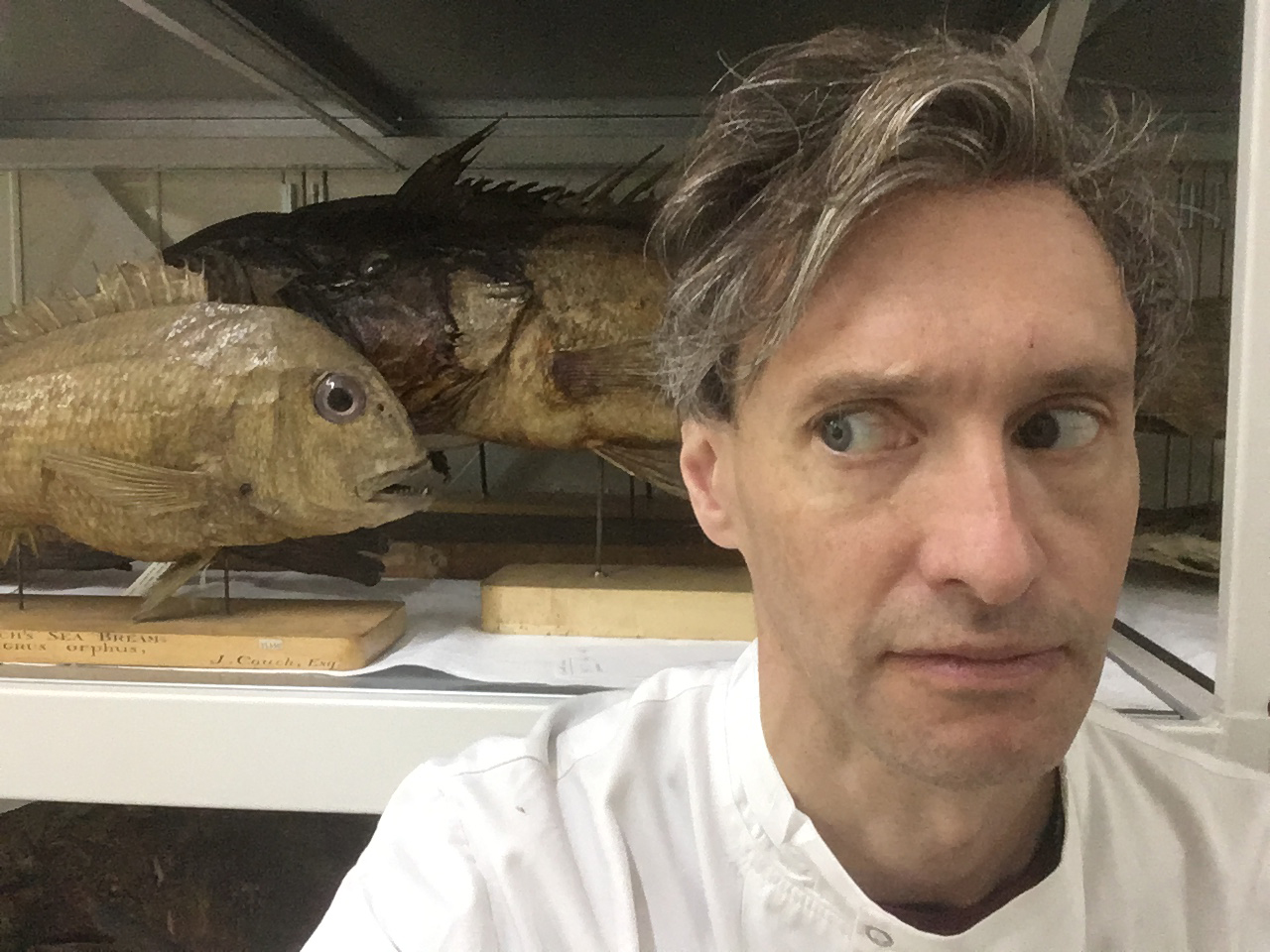
James Maclaine, senior curator of fishes at the Natural History Museum in London, with a seabream collected from Cornwall by naturalist Jonathan Couch in 1843. The specimen is housed in the Museum’s dry specimen store. Photo by: James Maclaine.

Maclaine uses BHL sometimes several times each day, using the taxonomic name finding feature to locate literature on specific species, downloading relevant documents as PDFs, and linking to useful references using page permalinks.

“BHL has been fundamentally useful in two ways,” asserts Maclaine. “Firstly, it’s very easy to quickly get old references. Secondly, being able to download them is very helpful too. When investigating potential type specimens, I often have to go back to those first original species descriptions in the 19th century journals, which is now so quick and easy to do online. If I’m lucky, the species author will give a collecting locality, a collector and a measurement. If all three of those and the species name tie up with the specimen, I can be fairly certain that it was used when the species was described and is a type.”

Maclaine first discovered BHL via Eschmeyer’s Catalog of Fishes, a fish taxonomy database of all known fish names, the history of those names and where they were first published.

“One day I noticed a blue hyperlink next to a reference with the message ‘See ref. at BHL’, and that was that,” recalls Maclaine.

Man inspecting fish specimens in a museum drawer.

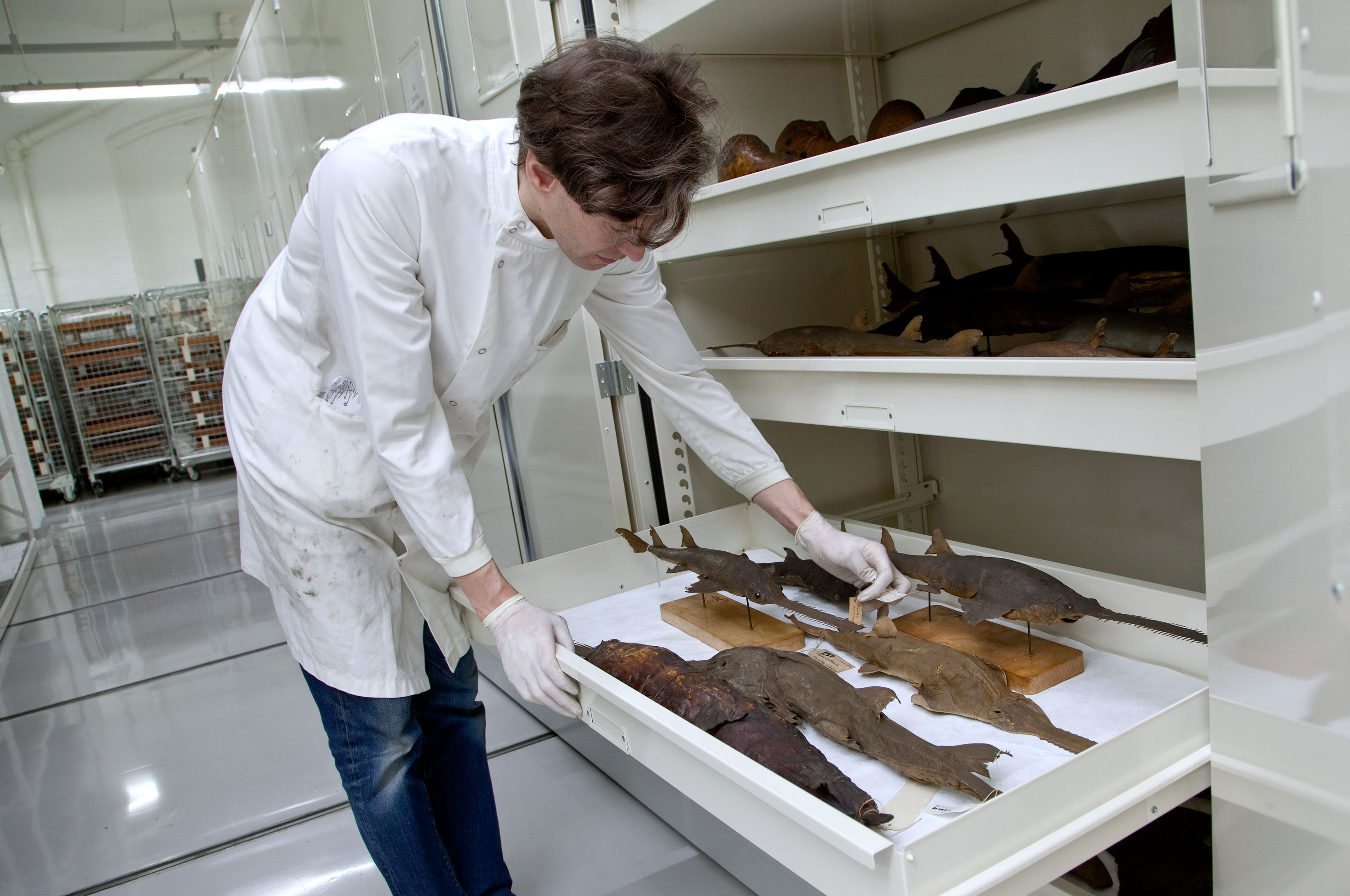
James Maclaine, senior curator of fishes at the Natural History Museum in London, inspecting specimens in the Museum’s dry specimen store, which houses most of the Museum’s skeletons, skins and stuffed fishes. Photo by: Kevin Webb, NHM Photo Unit.

As the manager of the fish collection at the Natural History Museum, Catalogue of the Fishes in the British Museum (1859-1868) is one of the most useful books in BHL’s collection for Maclaine’s work. In fact, it was this title that led him to the “W.P. Cocks, Esq.” specimen that he shared on Twitter.

Managing a 250+ year old collection means that Maclaine is responsible for ensuring that the information available for the specimens in his care is correct and up-to-date. BHL not only helps him provide reliable data for current researchers, but is also a valuable contributor to the legacy he will leave for future researchers.

“I have to think of all the generations of curators and researchers who will come after me and think, will what I’m doing be clear and comprehensible hundreds of years after I’m dead?” says Maclaine. “So, it’s great that I can now download the relevant references and then attach them to the specimen record so that everyone can see what I’ve done and why. I think the only bad thing about BHL is that it means I now spend less time in our Museum Library, another fantastic and irreplaceable resource!”

Man standing in a storage room for fish specimens.

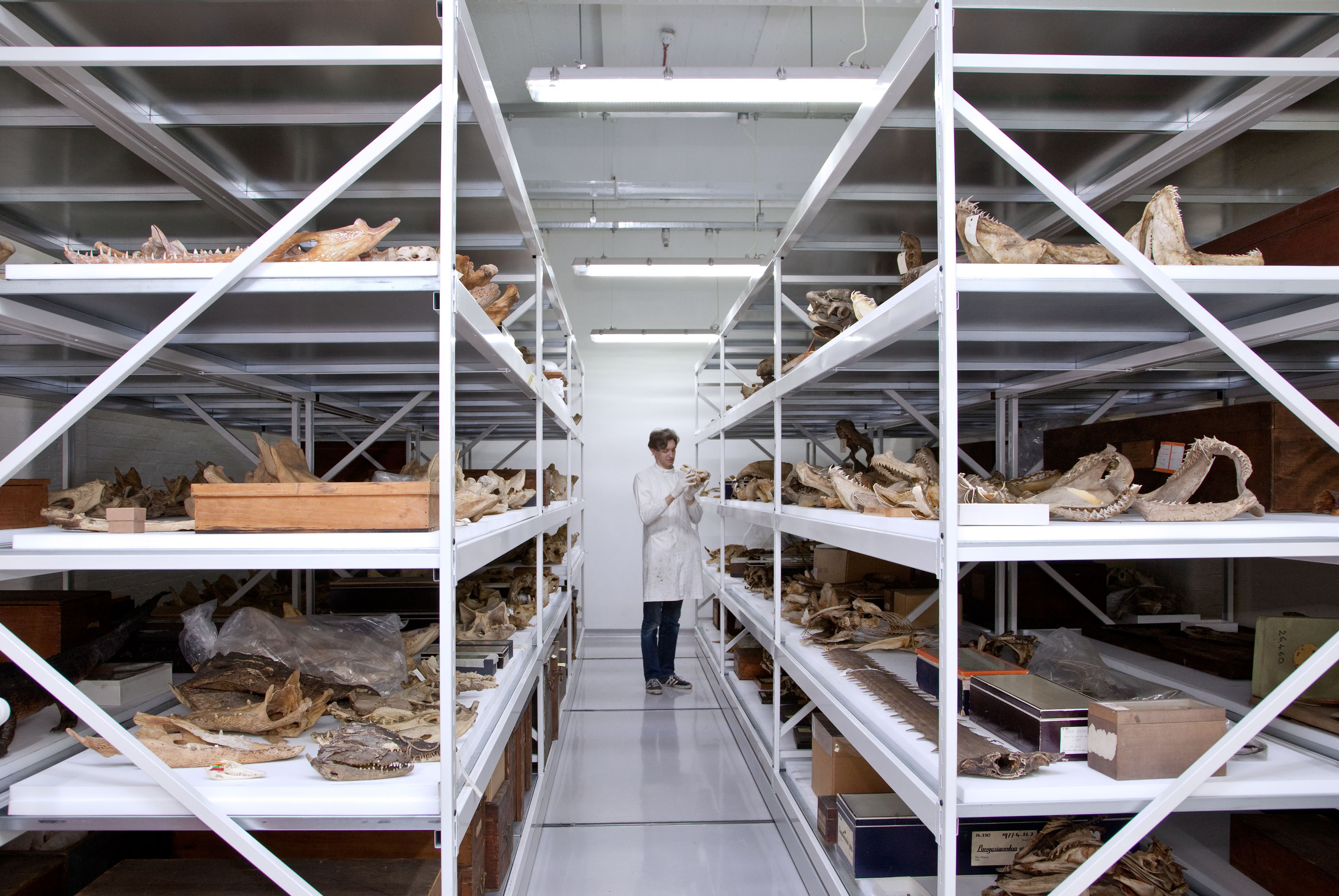
James Maclaine, senior curator of fishes at the Natural History Museum in London, inspecting specimens in the Museum’s dry specimen store, which houses most of the Museum’s skeletons, skins and stuffed fishes. Photo by: Kevin Webb, NHM Photo Unit.

By making their literature digitally available, our Partners have ensured that anyone, anywhere can access important collections data. We’re proud to be a part of empowering new discoveries and connections, whether that be through a Twitter conversation or the diligent work of a museum collections manager.

References

[1] Phys.org. 2016. “New Study Reveals How Scientists Use Social Media.” Social Sciences, October 12. Accessed on July 9, 2019. https://phys.org/news/2016-10-reveals-scientists-social-media.html.

[2] Adam G. Hart, William S. Carpenter, Estelle Hlustik-Smith, Matt Reed, Anne E. Goodenough. “Testing the potential of Twitter mining methods for data acquisition: Evaluating novel opportunities for ecological research in multiple taxa.” Methods in Ecology and Evolution, 2018; DOI: 10.1111/2041-210X.13063.

September 5, 2019by Grace Costantino
BHL News, Blog Reel

Smithsonian Scientists Name New Fossil Fly Species For the Biodiversity Heritage Library and Smithsonian Libraries

Photographs of fossil fly species

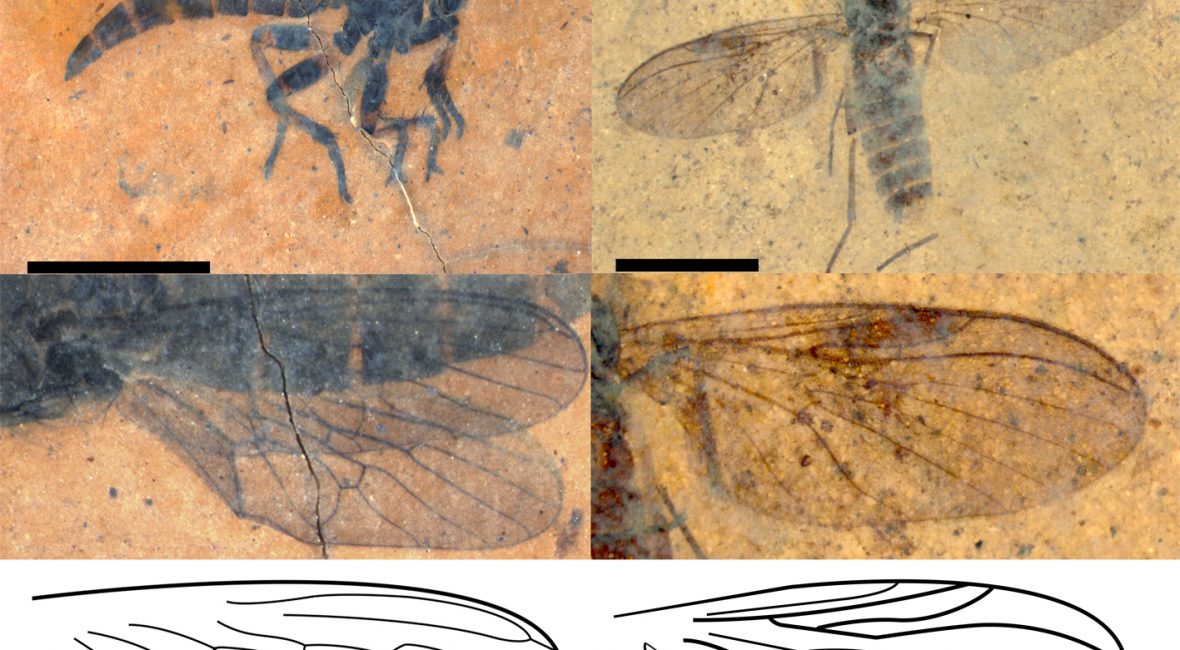
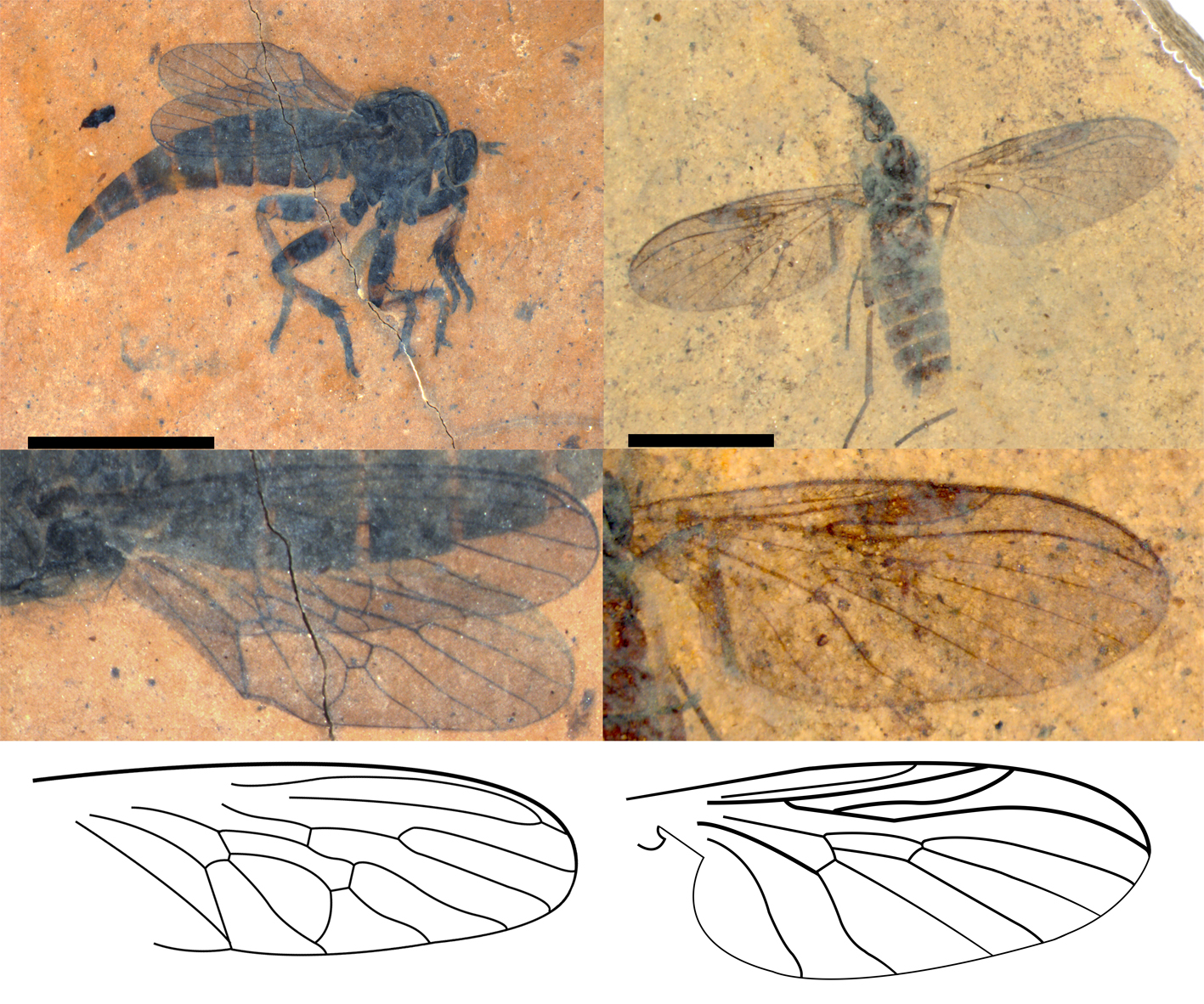
(LEFT) Kishenehnoasilus bhl gen. sp. nov. Dikow 2019 (Diptera: Asilidae) & (RIGHT) Sylvicola silibrarius sp. nov. Greenwalt 2019 (Diptera: Anisopodidae). These two extinct species of flies were collected from the Kishenehn Formation in Northwestern Montana as part of the National Museum of Natural History’s research in paleobiology and the evolution of insect diversity. The fossils were exposed by erosion of oil shale, derived from sediments of a 46-million-year-old lake, by the Middle Fork of the Flathead River along the southwestern boundary of Glacier National Park. The robber fly (Kishenehnoasilus bhl; USNM 624491) was collected at the Dakin site in 2014; the wood gnat (Sylvicola silibrarius; USNM 626077) was collected from the Deep Ford site in 2015. The scale bars = 5 mm. The specimens are named in honor of the staff of the Biodiversity Heritage Library and the library staff of the National Museum of Natural History, respectively. Photo by: Dale Greenwalt.

Two new fossil fly species have been named in honor of the Smithsonian Libraries and the Biodiversity Heritage Library. Sylvicola silibrarius Greenwalt, 2019 and Kishenehnoasilus bhl Dikow, 2019 have been described from specimens collected from the 46-million-year-old Kishenehn Formation of northwestern Montana. The species were published last week in the open access journal Palaeontologia Electronica.

The species are two of 15 new species identified in a new study led by scientists at the Smithsonian’s National Museum of Natural History and colleagues on the diversity of fossil flies (order Diptera) in the Coal Creek Member of the Kishenehn Formation, a 34-56 million year old fossil site. The study also records 15 new families, dramatically expanding scientists’ knowledge of fly diversity during the Eocene in North America. With this publication, a total of 21 different families of flies have now been described from the region. The study provides researchers with a snapshot of flies during their evolution and helps establish the Kishenehn Formation as one of the most important fossil sites in North America for understanding the evolution of one of the most successful groups of life on Earth.

Sylvicola silibrarius Greenwalt, 2019 is a wood gnat in the widely-distributed Anisopodidae family containing nearly 200 species and boasting a rich fossil record. The specific epithet is a combination of the abbreviation SI (for the Smithsonian Institution) and the Latin term librarius (pertaining to books). Dale Greenwalt, lead study author and a resident research associate at the National Museum of Natural History, named the species in appreciation for the essential services that the Smithsonian Libraries perform.

“My research here at the National Museum of Natural History would be impossible without the Libraries,” said Greenwalt. “In my ten years here at the museum, I have never had an interaction with our world class library staff that was not positive, friendly and helpful.”

Kishenehnoasilus bhl Dikow, 2019, a robber fly in the family Asilidae, represents the type species for this new genus. The specific epithet is an abbreviation referring to the Biodiversity Heritage Library (BHL). Torsten Dikow, study co-author and curator of Diptera at the National Museum of Natural History, drew a comparison between the fly and the Library when naming the species.

“Taxonomic research involves not only the study of specimens, but also the review of often old literature,” said Dikow. “Having digital access to publications enhanced with tools such as scientific name recognition makes my research so much more efficient. The Biodiversity Heritage Library provides a lens into the literature published a long time ago. The same is true for this new species of robber fly, as it helps us to understand and document the past of biodiversity.”

The type specimens for both Sylvicola silibrarius and Kishenehnoasilus bhl have been deposited within the paleobiology collections of the Smithsonian’s National Museum of Natural History, where they will be available to researchers to help inform future studies on dipteran evolution and diversification.

“For centuries, libraries have been essential centers of knowledge with collections serving as windows into the universe of human scholarship, history and creativity,” said Martin R. Kalfatovic, associate director of the Smithsonian Libraries and program director for the Biodiversity Heritage Library. “As libraries have evolved to embrace the digital world — from online access for collections to data mining those same collections for new discoveries — they have empowered new research efficiencies and connections and facilitated the democratization of knowledge through open access principles like those embraced by the Smithsonian and Biodiversity Heritage Library. That these researchers have honored our libraries through these species is a testament to the essential services that libraries provide today. We are privileged to be recognized in such a meaningful way for our impact on the global research community.”

Citation: Greenwalt, D.E., and Bickel, D.J., Kerr, P.H., Curler, G.R., Brown, B.V., de Jong, H., Scott J. Fitzgerald, S.J., Dikow, T., Tkoč, M. and Kehlmaier, C. 2019. Diptera of the Kishenehn Formation. I. Documentation of diversity at the family level. Palaeontologia Electronica. 22(2):1-57. https://doi.org/10.26879/891.

August 26, 2019by Grace Costantino
BHL News, Blog Reel

2019 Summer BHL Newsletter Now Available!

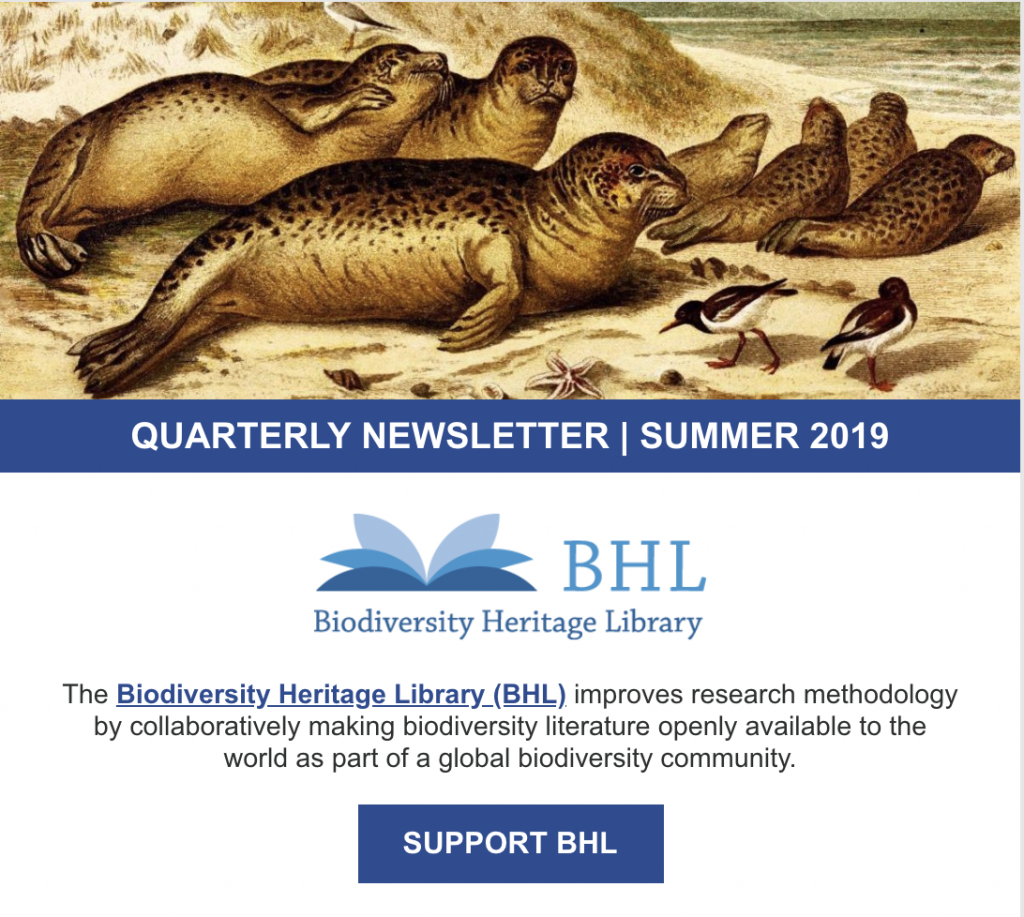
screenshot of the summer 2019 newsletter

screenshot of the summer 2019 newsletter

Enjoying your summer? We are, because we’ve been busy these past few months and have a lot to share! From crowdsourced transcriptions in BHL to new article download functionality and a new paleobiology collection curated by Smithsonian Libraries, check out all of the latest program news in the 2019 Summer Newsletter.

Be sure to subscribe to our mailing list to keep up to date with all the latest BHL news.

August 20, 2019by Grace Costantino
Blog Reel, User Stories

Between Nature and Society: Empowering Research on the History of Science

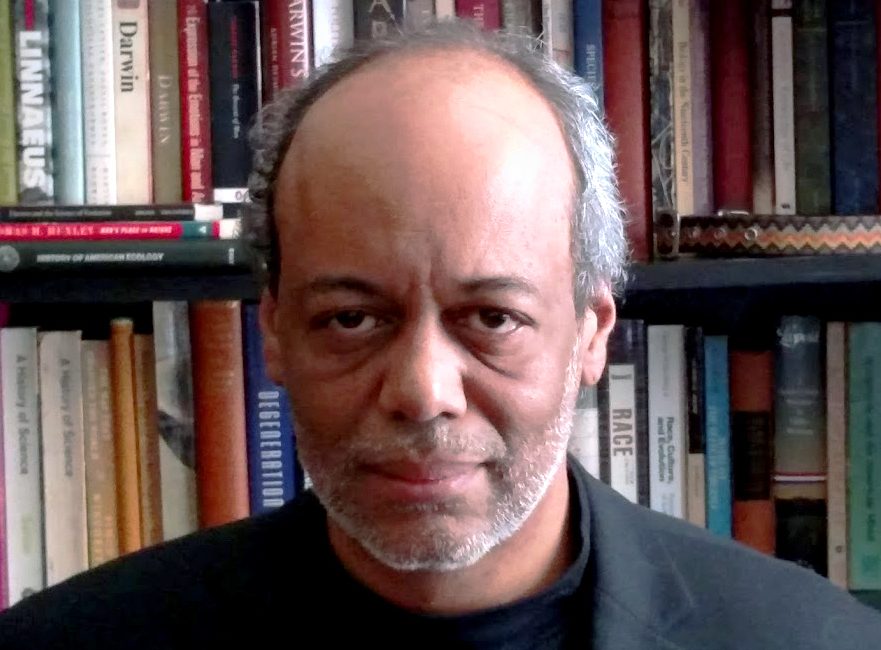
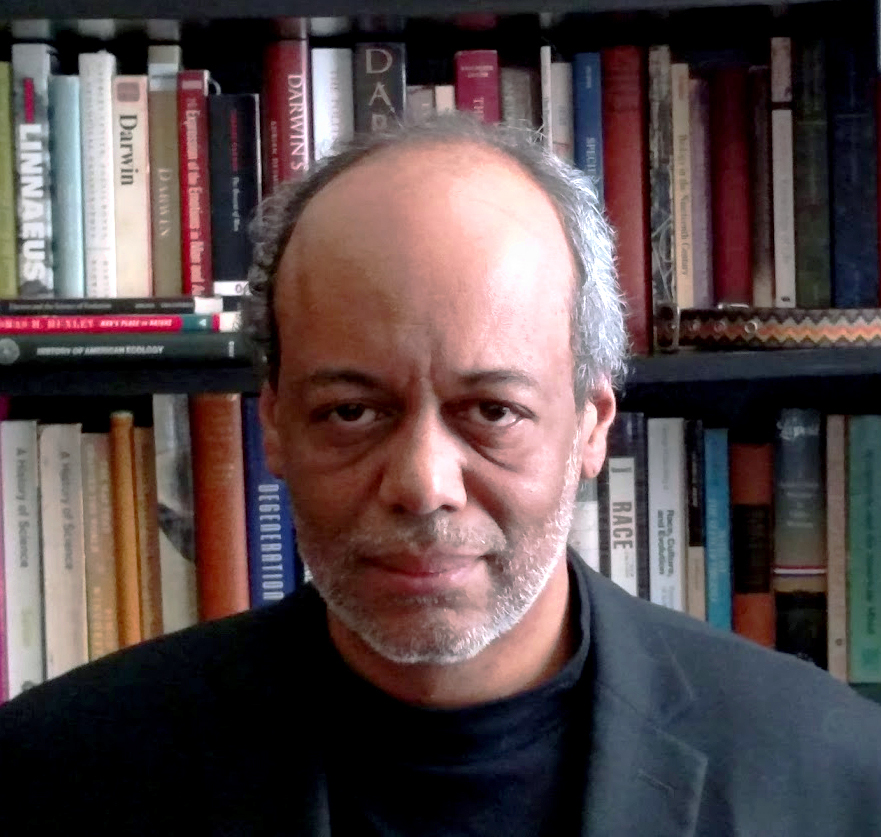
Photo of a man standing in front of a book case.
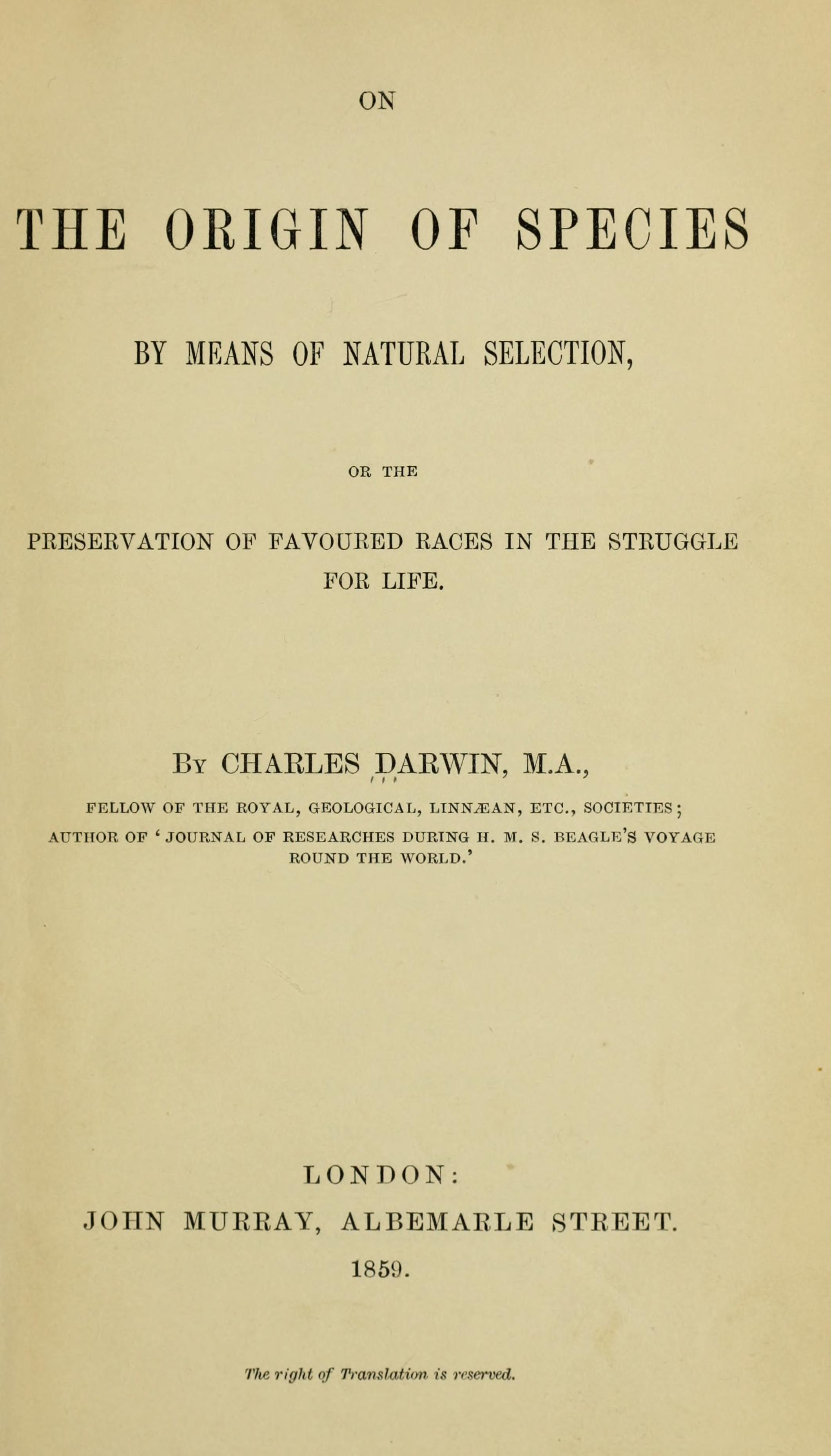
Title page of On the Origin of Species

Title page. On the Origin of Species by Charles Darwin. Contributed in BHL from Harvard University Botany Libraries.

Charles Darwin is a household name. One of the most famous naturalists to ever live, he is known around the world for his publication On the Origin of Species and contributions to evolutionary theory.

The work of contemporary scientists informed the development of Darwin’s evolutionary concepts. By applying, and sometimes countering, the theories of others, he constructed one of our most important scientific foundations. He documented this intellectual progression in the margins of the books in his library. This historically significant collection is available online in the Biodiversity Heritage Library.

Charles Darwin’s Library is a digital edition and virtual reconstruction of the surviving books owned by Charles Darwin. Produced as a collaboration between BHL, Cambridge University Library, the Library & Archives of the Natural History Museum in London, and the Darwin Manuscripts Project, the collection draws on original copies and surrogates from other libraries and includes over 500 of the 1,480 books in Darwin’s library. Notably, these books are complemented with fully-indexed transcriptions of Darwin’s annotations.

Charles Darwin’s Library is particularly meaningful to Dr. B. Ricardo Brown, Professor of Social Science and Cultural Studies at the Pratt Institute. Brown has devoted years of research to Darwin and the impact of his evolutionary theories on debates around monogenetic vs. polygenetic human origins. Brown’s 2010 book, Until Darwin: Science, Human Variety and the Origin of Race, explores the complex web of factors that influenced these debates from the 17th-19th centuries and the impact of the publication of On the Origin of Species on this scientific discourse.

Brown spent nearly 10 years researching this book. Today, BHL’s open access collections offer researchers considerable time-savings.

“I am sure that if I had the kind of access to texts that BHL now provides researchers, I could have reduced the research time for Until Darwin in half,” muses Brown.

Photo of a man standing in front of a book case.

Dr. B. Ricardo Brown, Professor of Social Science and Cultural Studies at the Pratt Institute. Photo Courtesy of B. Ricardo Brown.

With academic backgrounds in environmental studies, sociology, and critical theory, Brown’s research explores the history of science, investigating the relationship between society and nature and the “genealogies of systems of knowledge” through which we make sense of these relationships. His current project looks at sociology and ecology as “sciences of life” whose formation was made possible by the dissolution — marked by Darwin’s Origin — of political economy and natural history.

“Without BHL, such a project would be much more limited, if not impossible,” affirms Brown. “The Library’s impact has been immense.”

Brown refers to BHL at least several times a week. A great benefit of the Library is that it has facilitated unexpected discoveries that expand the scope of relevant literature for his research projects.

“BHL makes it possible to browse through the library and (virtually) pick-up an unfamiliar work or author and discover something that is relevant or just interesting — which you might not have come across without BHL,” explains Brown. “There is much to be said for the pleasures of simply exploring the archive.”

Beyond serving as a vast archive of texts, artifacts, and scientific ideologies, BHL also facilitates Brown’s interest in ecology and environmental studies by allowing him to compare his own field observations to those of past naturalists.

“I found that it is quite useful to do some field observations and hikes when immersed in the study of Darwin and the Natural History of his time,” says Brown. “One gets a better insight into Darwin’s methodology, which depended on his own observations and those of trusted naturalists and correspondents.”

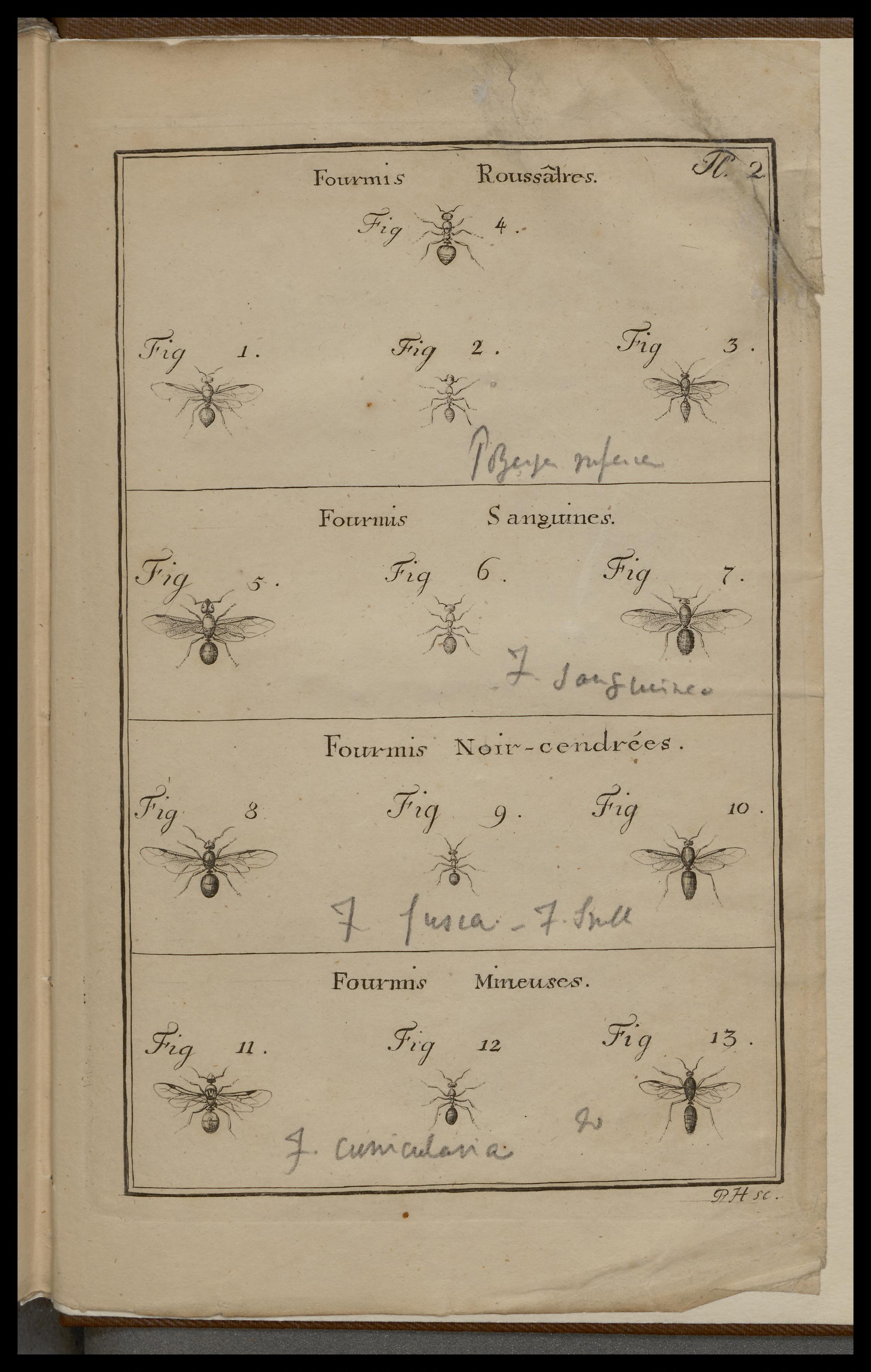
Take, for example, Darwin’s observations on slave-making ants.

“Darwin constantly tacks back and forth between his own observations and those of the recognized authority on the slave-making ‘instinct’ in ants, Pierre Huber,” explains Brown. “This series of observations led Darwin to conclude that the ‘instinct for slavery’, in ants as well as human societies, was in no way ‘miraculous’ or evidence of a fixed or natural hierarchy.”

Illustration of ants

Plate 2. Recherches sur les moeurs des fourmis indigènes by Pierre Huber. Part of the Charles Darwin’s Library collection. Contributed in BHL from Cambridge University Library.

Brown also finds BHL to be a useful educational resource for his courses.

“BHL provides a means for students in my courses to access and download PDFs of texts that only a few years ago would have been known to them only through secondhand descriptions, summaries….or long lectures,” affirms Brown. “ As Pratt is primarily a school of art, design, and architecture, students appreciate the aesthetic skills of early naturalists that they experience through BHL’s high resolution images. Works such as Cuvier’s Tableau élémentaire de l’histoire naturelle des animaux or Haeckel’s Kunstformen der Natur provide a wonderful avenue for understanding the social relations of art, aesthetics, and science.“

With much of his research focused on the investigation of science and society’s influence on each other, he’d love to see BHL incorporate functionality allowing readers to explore the social and cultural contexts of the texts in the Library.

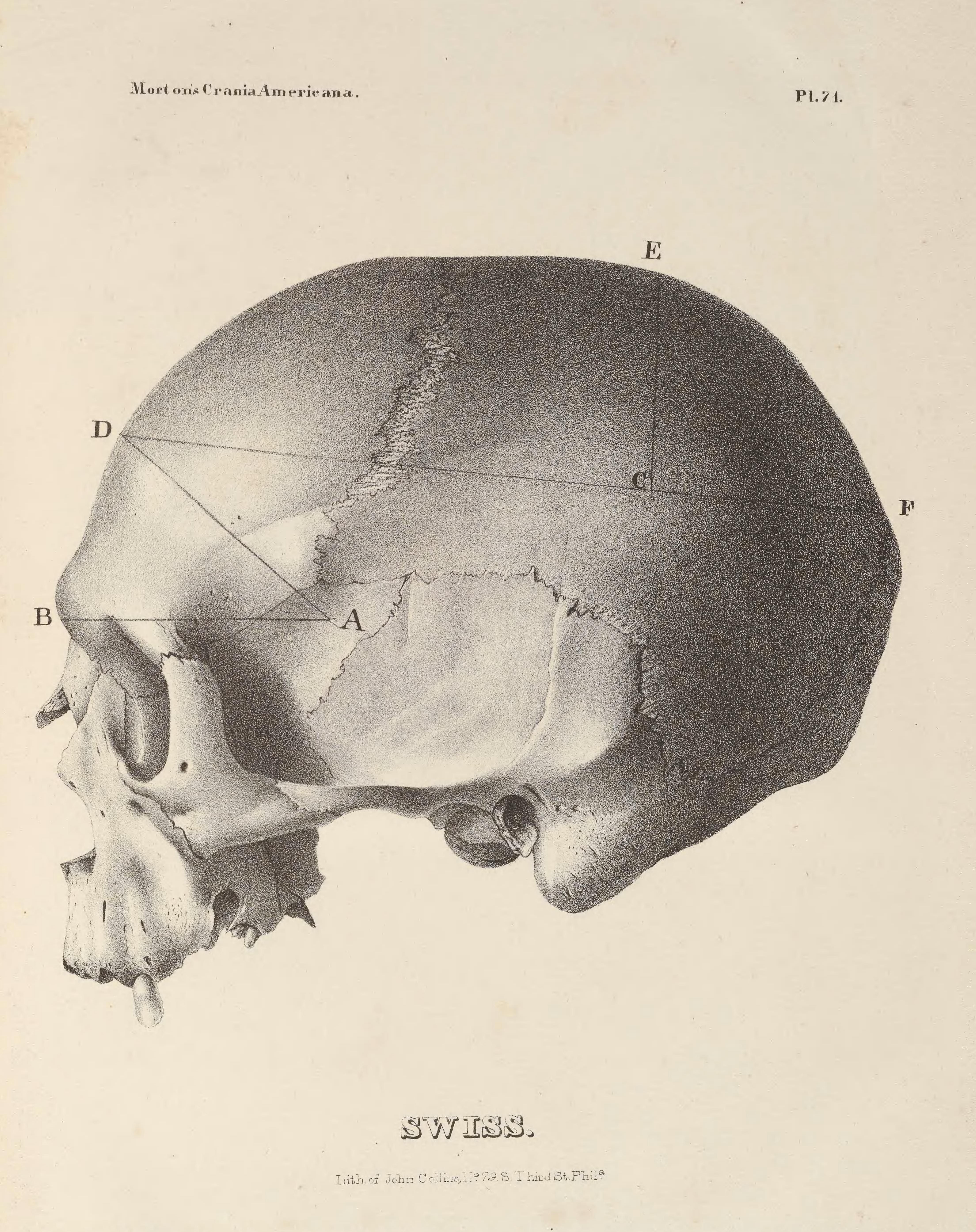
“By its inclusion in the collection, each text potentially takes on a certain legitimacy,” considers Brown. “This means that texts such as Morton’s Crania Americana or Pouchet’s The Plurality of the Human Race might, despite or perhaps even because of their age, be misread as somehow giving voice to views that remain contested. And because much of the history of science is the history of errors, this issue takes on a particular importance when authoritarian movements are constantly seeking to co-opt a wide variety of knowledges — for example, Classical and Medieval Studies, Darwinism, Ecology and Environmental Studies — to the service of supremacy.”

Illustration of a skull

Pl. 71. Crania americana by Samuel George Morton. Contributed in BHL from Smithsonian Libraries.

As we explore opportunities to link our content with other resources, collections, and databases in future iterations of BHL, including through linked data applications, strategies to provide this context will hopefully become increasingly feasible.

While many aspects of BHL’s collections and services have been important to Brown’s research, his favorite feature of the Library is that it is free and open to the public.

“BHL makes the history of science available to everyone,” praises Brown. “It would seem to have significant potential to enrich citizen science projects, as well as public discourse on climate change, extinction, the authority of science, the domination of Nature, and much more.”

We’re proud to know that, by making our collections globally accessible to anyone with an Internet connection, BHL is helping to advance a wide range of research and inspire discovery of the natural world.

August 15, 2019by Grace Costantino
BHL News, Blog Reel, Tech Updates

BHL Adds Functionality Allowing Partners to Upload Crowdsourced Transcriptions of Digitized Archival Materials

Screenshot of a digital library book viewer with readable OCR.

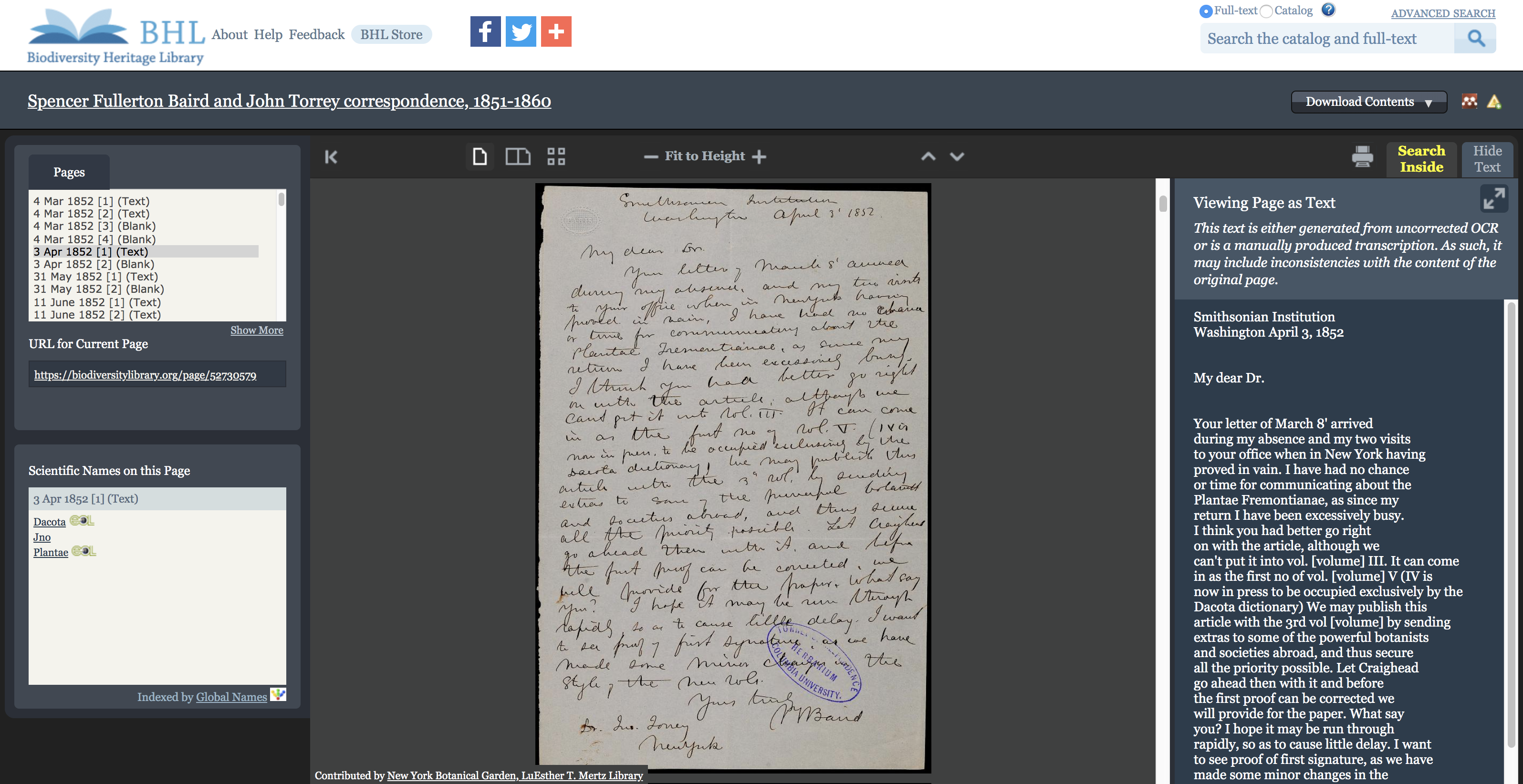
The Biodiversity Heritage Library (BHL) has added functionality to allow BHL Partners to upload transcriptions in place of the automatically-generated OCR (Optical Character Recognition) for archival materials digitized in BHL. This functionality supports transcriptions generated as part of Partner crowdsourcing projects on Smithsonian Transcription Center, DigiVol, and From the Page.

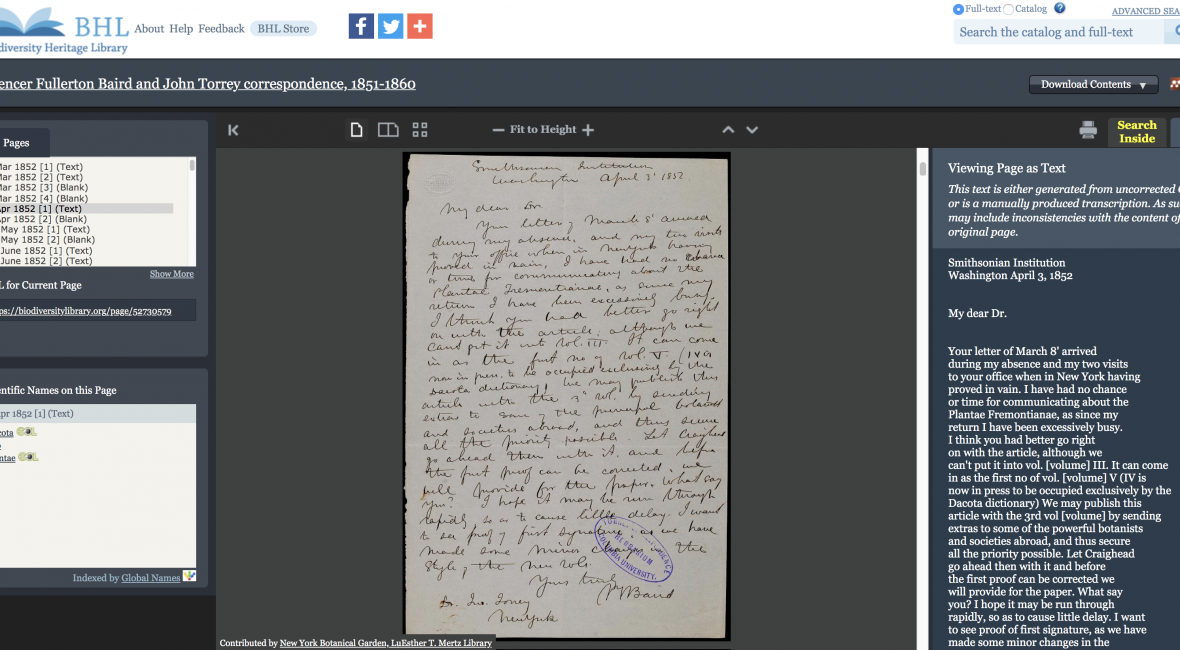
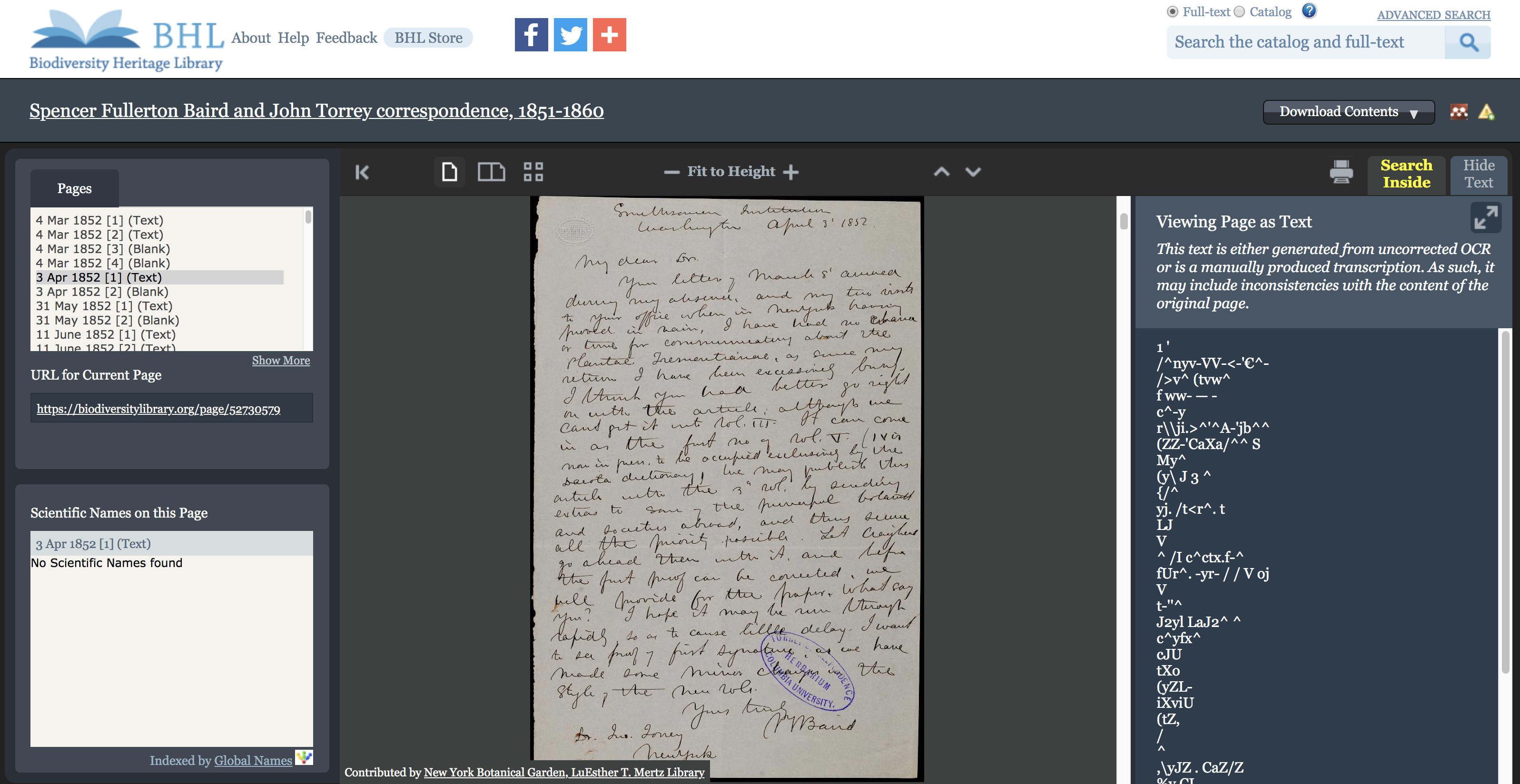
Optical Character Recognition (OCR), also called text recognition, translates text characters in scanned documents into code that can be used for data processing and enables searching of document text. Handwritten archival materials like correspondence and field notes are notoriously problematic for OCR software. Full-text searching of these materials is significantly hampered by poor OCR output.

Screenshot of a digital library book viewer with gibberish for OCR.

Example of the poor automatically-generated OCR output for handwritten correspondence. Spencer Fullerton Baird and John Torrey correspondence, 1851-1860. Contributed in BHL from the LuEsther T. Mertz Library of The New York Botanical Garden.

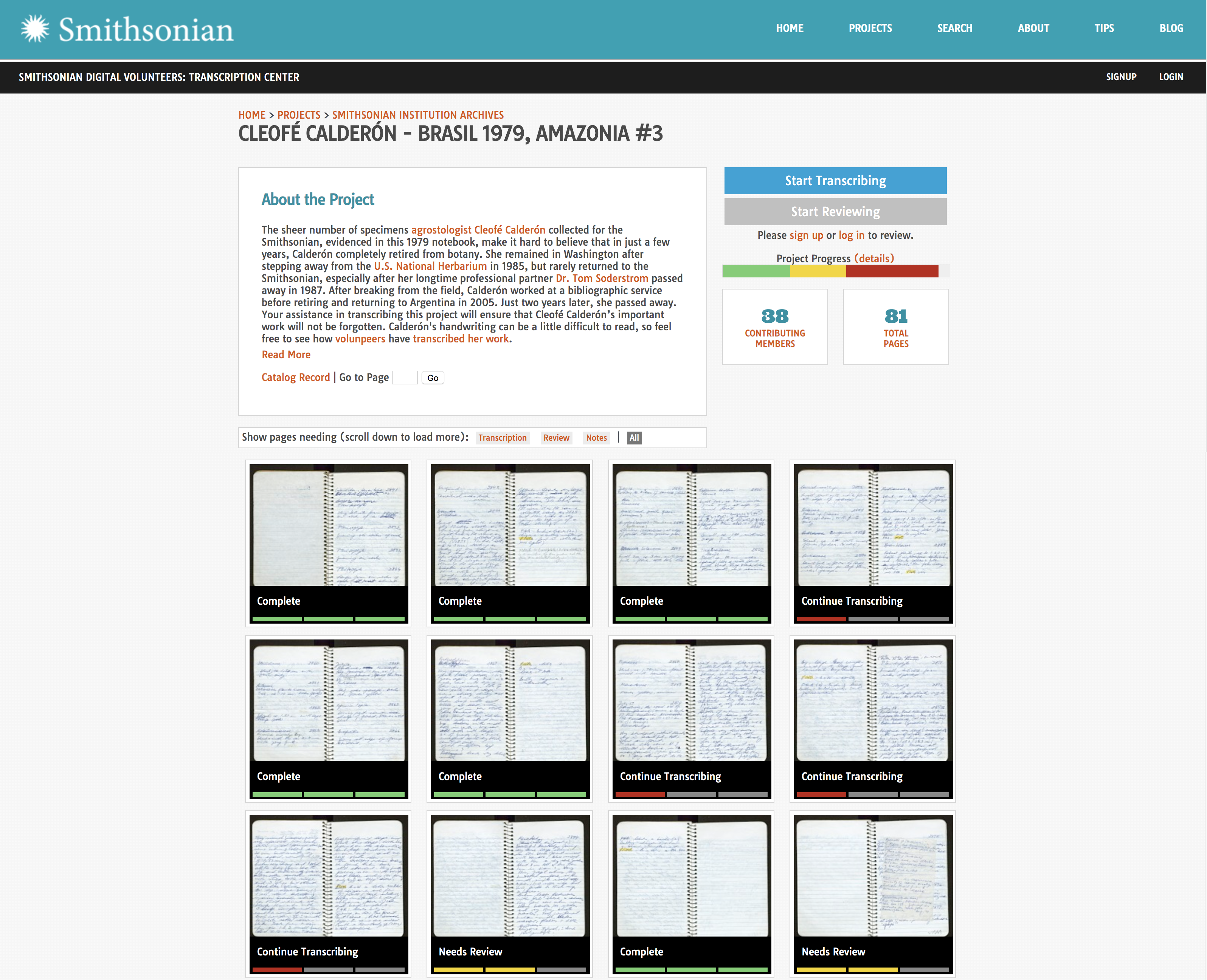
Crowdsourcing the transcription of archival materials has become a popular way to generate machine-readable text that enables searching and discoverability. Several BHL Partners are using crowdsourcing platforms (e.g. Smithsonian Transcription Center, DigiVol, and From the Page) to transcribe field notes, correspondence, and other archival materials that they have digitized in BHL.

Screenshot of a project in the Smithsonian Transcription Center.

Example of a field notebook being transcribed in the Smithsonian Transcription Center. This notebook, Brasil 1979, Amazonia #3, from Cleofé Calderón is also available in BHL from the Smithsonian Institution Archives.

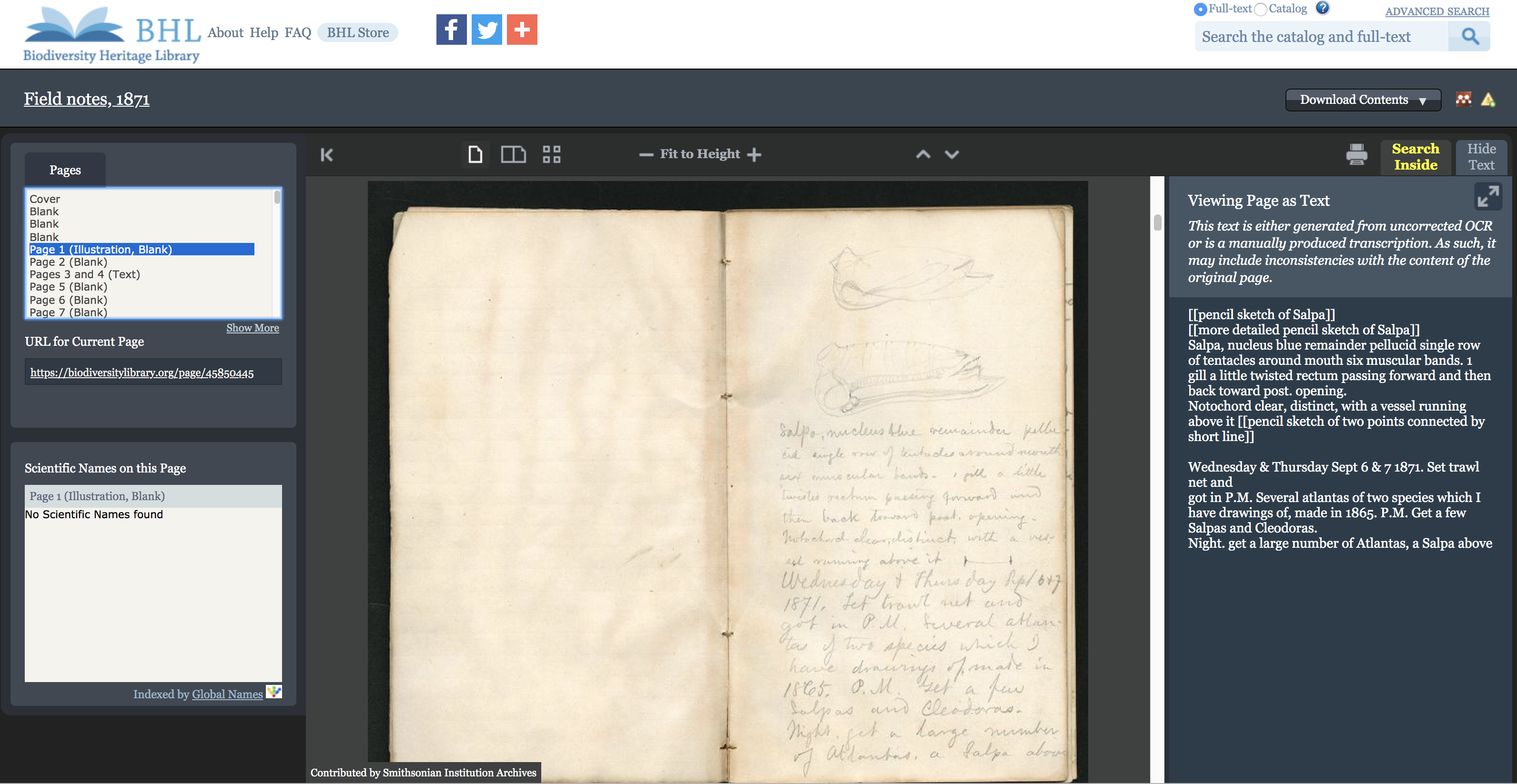
With this new functionality, these transcriptions can now be uploaded in place of the automatically-generated OCR for these items, allowing them to be full-text searchable and enabling our taxonomic name recognition software to index scientific names within their pages. Since the transcribed text can be viewed alongside the digitized page image, users can also more easily read materials with difficult-to-decipher handwriting. Thus, this new functionality makes it easier for researchers and the public to explore these valuable primary source materials and access specific information from their pages.

Screenshot of a digital library book viewer with readable OCR.

Above example with the OCR replaced with a crowdsourced transcription generated as part of The John Torrey Papers project from The New York Botanical Garden on From the Page. Spencer Fullerton Baird and John Torrey correspondence, 1851-1860. Contributed in BHL from the LuEsther T. Mertz Library of The New York Botanical Garden.

Screenshot of the BHL book viewer with a digitized field book and the transcribed text shown alongside the page in place of the OCR.

Since the transcribed text can be viewed alongside the digitized page image in the BHL book viewer, users can also more easily read archival materials. William Healey Dall’s Field Notes, 1871. Transcription generated on the Smithsonian Transcription Center. Contributed in BHL from the Smithsonian Institution Archives.

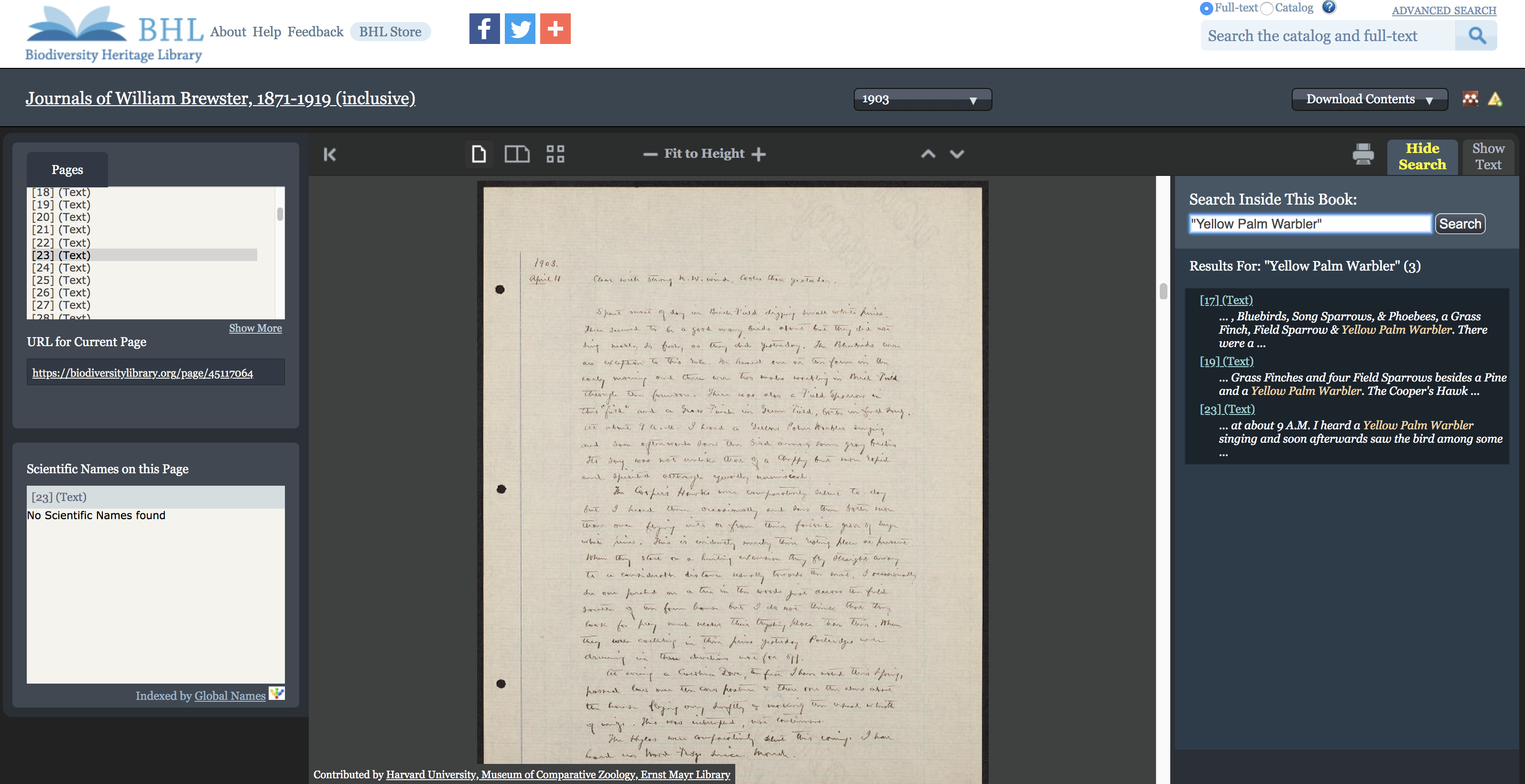
Screenshot of a book viewer with digitized archival materials and full-text search for "Yellow Palm Warbler".

Crowdsourced transcriptions allow digitized archival materials in BHL to be full-text searchable, as shown in this example searching for “Yellow Palm Warbler” within William Brewster’s 1903 journal. Transcription generated as part of the Ernst Mayr Library of Harvard University project on DigiVol. Contributed in BHL from the Ernst Mayr Library of the Museum of Comparative Zoology at Harvard University.

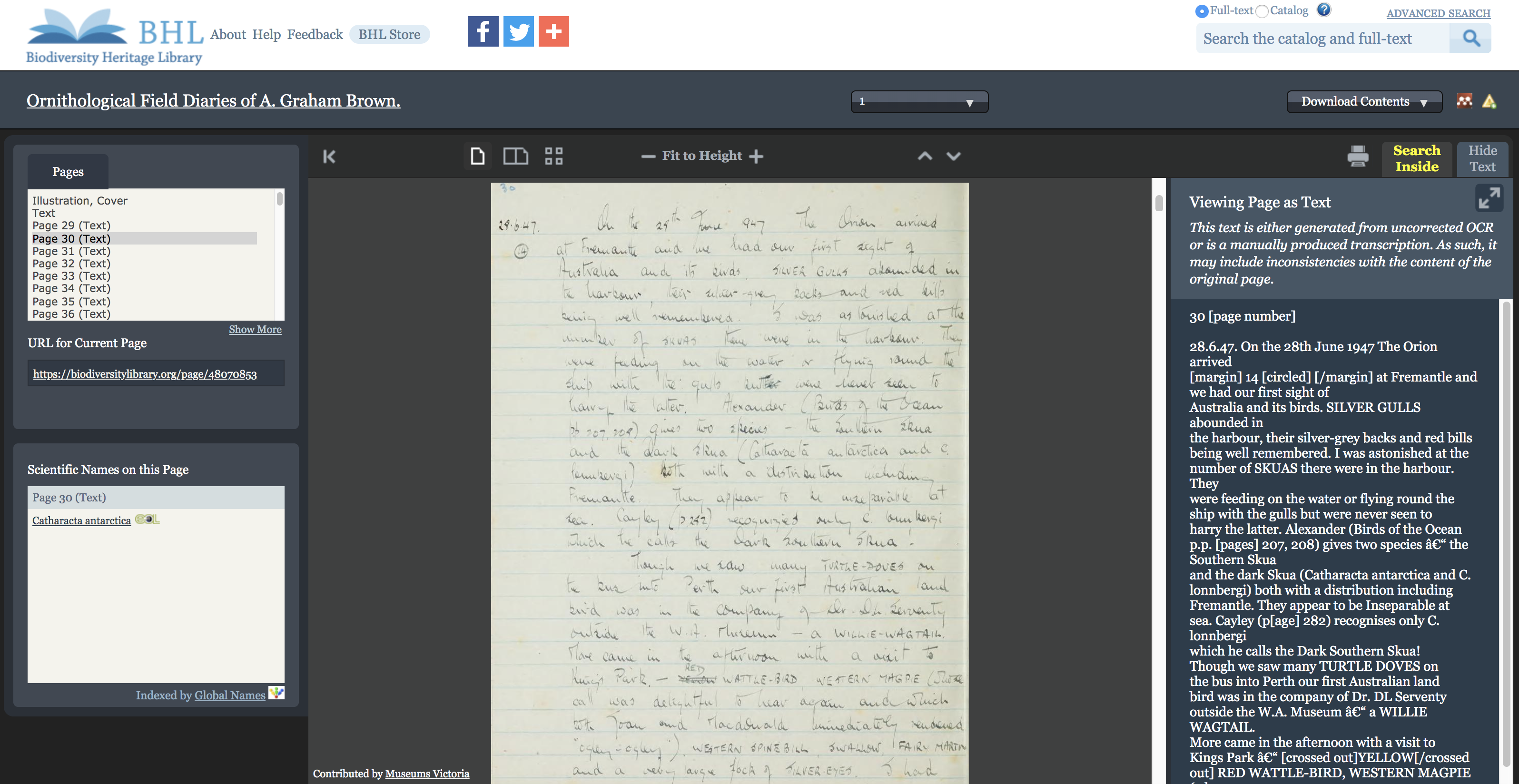
Screenshot of a book viewer with scientific name indexed on the page of an archival notebook.

Crowdsourced transcriptions allow BHL’s taxonomic name recognition software to index scientific names within the pages of digitized archival materials, as seen in this example in which Catharacta antarctica is indexed on a page within the first volume of the Ornithological Field Diaries of A. Graham Brown. Transcription generated as part of a project from BHL Australia and Museums Victoria on DigiVol. Contributed in BHL from Museums Victoria.

Participating Partners have begun uploading transcriptions to BHL. To date, transcriptions have been uploaded from Partner crowdsourcing projects with BHL Australia, Ernst Mayr Library of Harvard University, The New York Botanical Garden, and Smithsonian Institution Archives. This is an ongoing process, and more transcriptions will be uploaded to the Library over time.

Interested in transcribing archival materials? Several BHL Partners have active transcription projects on various crowdsourcing platforms. Follow the links below to explore the opportunities and get involved:

  • Ernst Mayr Library of Harvard University on DigiVol
  • The John Torrey Papers from The New York Botanical Garden on From the Page
  • Smithsonian Institution Archives on the Smithsonian Transcription Center
July 17, 2019by Grace Costantino
Page 7 of 71« First...«6789»102030...Last »

Help Support BHL

BHL's existence depends on the financial support of its patrons. Help us keep this free resource alive!

search

About BHL

The Biodiversity Heritage Library (BHL) is the world’s largest open access digital library for biodiversity literature and archives. BHL operates as a worldwide consortium of natural history, botanical, research, and national libraries working together to digitize the natural history literature held in their collections and make it freely available for open access as part of a global “biodiversity community.”

Join Our Mailing List

Sign up to receive the latest news, content highlights, and promotions.

Subscribe Now

Subscribe to Blog via Email

Enter your email address to subscribe to this blog and receive notifications of new posts by email.

Join 319 other subscribers

Subscribe to Blog Via RSS

Subscribe to the blog RSS feed to stay up-to-date on all the latest BHL posts.

Access RSS Feed

Inspiring Discovery through Free Access to Biodiversity Knowledge.

The Biodiversity Heritage Library makes it easier than ever for you to access the information you need to study and explore life on Earth…for free, anytime, anywhere.


64+ Million Pages of
Biodiversity Literature Online.

EXPLORE

Tools and Services
to Transform Research.

EXPLORE

300,000+
Illustrations on Flickr.

EXPLORE

ABOUT | HARMFUL CONTENT | PRIVACY | SITE MAP | TERMS OF USE