Biodiversity Heritage Library - Program news and collection highlights from BHL
  • Home
  • News
  • Featured Books
    • All Featured Books
    • Book of the Month Series
    • BHL at 20
  • User Stories
  • Campaigns
    • Fossil Stories
    • Garden Stories
    • Monsters Are Real
    • Page Frights
    • Her Natural History
    • Earth Optimism 2020
  • Tech Blog
  • Visit BHL
Home
News
Featured Books
    All Featured Books
    Book of the Month Series
    BHL at 20
User Stories
Campaigns
    Fossil Stories
    Garden Stories
    Monsters Are Real
    Page Frights
    Her Natural History
    Earth Optimism 2020
Tech Blog
Visit BHL
  • Home
  • News
  • Featured Books
    • All Featured Books
    • Book of the Month Series
    • BHL at 20
  • User Stories
  • Campaigns
    • Fossil Stories
    • Garden Stories
    • Monsters Are Real
    • Page Frights
    • Her Natural History
    • Earth Optimism 2020
  • Tech Blog
  • Visit BHL
Biodiversity Heritage Library - Program news and collection highlights from BHL
Blog Reel, Featured Books

Celebrating 50 Years of a Field Naturalists Club Through its Newsletters

The front page of a full-color glossy newsletter. There is a photograph of a butterfly, and another of a butterfly brochure.

This post is part of BHL at 20: Treasures from the Biodiversity Heritage Library, a series contributed by members of the BHL community, highlighting remarkable works from across the collection in celebration of its 20th anniversary.

The Castlemaine Field Naturalists Club in Central Victoria, Australia, is celebrating its 50th year in 2026. Since its inception in March 1976, the Club has produced a monthly newsletter for members, except in January, when no issue is produced. All issues are available on the Club’s website and through the Biodiversity Heritage Library (BHL). Through BHL, they are fully searchable, meaning that species names, locations, and historical observations can be discovered by researchers anywhere in the world. Taxonomic names are identified and indexed, articles are structured as individual records, and persistent identifiers ensure the Club’s observations are part of the global biodiversity knowledge network. This ensures that local knowledge contributes to a global, interconnected biodiversity resource.

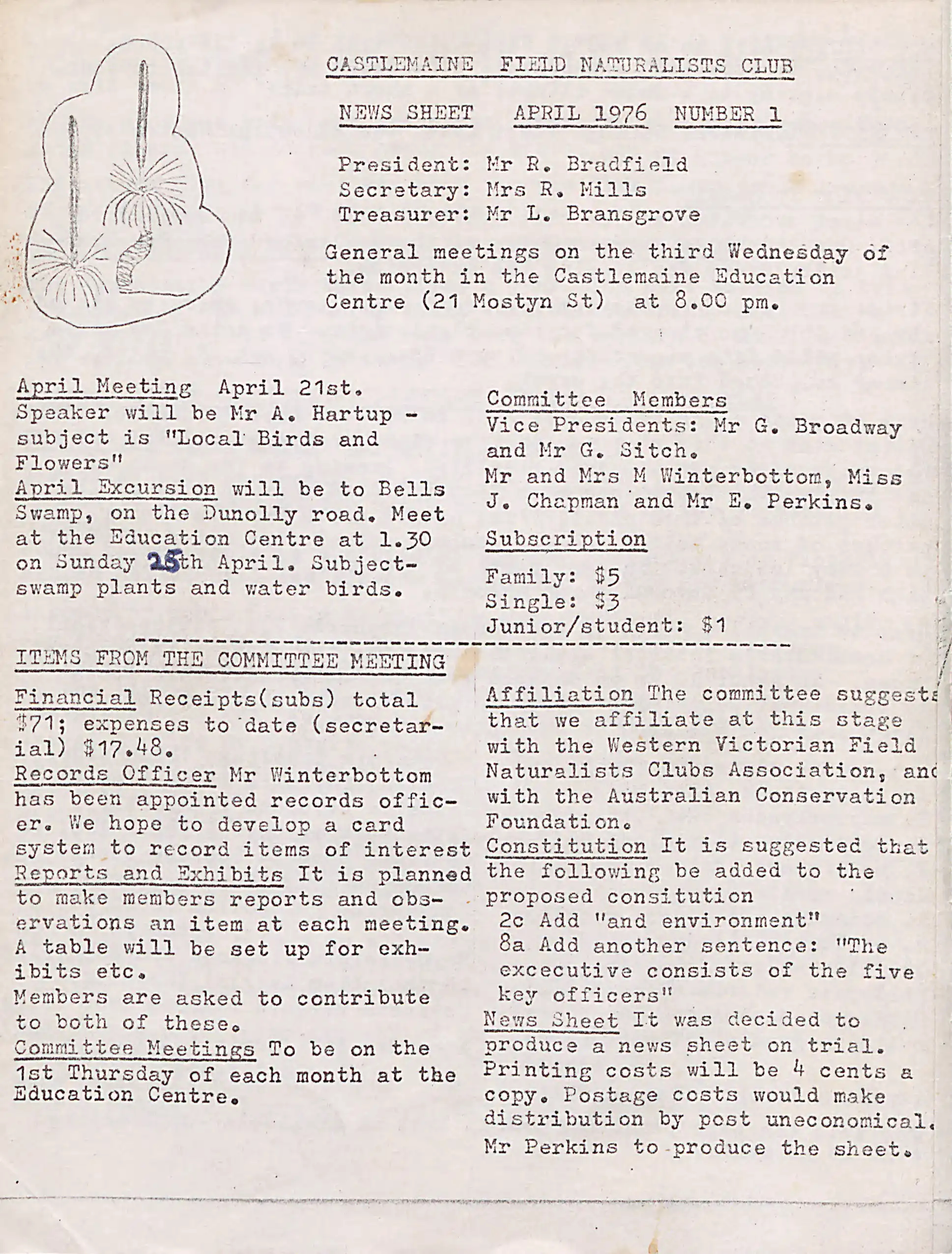
Issue number 1, published in April 1976, was a modest, typed, black-and-white, four-page circular called, simply, News Sheet, featuring two line drawings to break up the text. Family memberships were $5, single memberships were $3, and student memberships were $1. Expenses were recorded as $17.48. By the second issue the title Castlemaine Naturalist had been adopted, the name by which the newsletter is still known.

A page of a newsletter. There is an image of a grass tree in the top left corner.

Page 1 of issue number 1 of the Castlemaine Field Naturalists Club’s newsletter, April 1976.

Fifty years later, the February 2026 issue, number 549, is a twelve-page, professionally designed, full-color newsletter, featuring thirty-six photographs. Most members now receive the Castlemaine Naturalist electronically, which has the advantage of allowing them to zoom in on the detail in the photographs.

The front page of a full-color glossy newsletter. There is a photograph of a butterfly, and another of a butterfly brochure.

Page 1 of issue number 549 of the Castlemaine Naturalist, February 2026.

The February 2026 issue illustrates the breadth and depth of the members’ engagement with nature and the Club’s vitality. The lead article profiles the launch of a new glossy brochure produced by Club members, Butterflies of the Mount Alexander Region. The brochure includes all known butterflies in the region, as well as information about endangered species, the differences between moths and butterflies, and tips on how to photograph butterflies.

Also included is an article about the Club’s participation in BirdLife Australia’s Annual Challenge Bird Count, Australia’s largest citizen science event, which resulted in sightings of 1,422 birds across 110 species. Over time, the newsletters also document other citizen science initiatives the Club has been involved in, including the Great Southern Bioblitz. In 2025, the Castlemaine Field Naturalists Club hosted the BioBlitz for the Castlemaine region for the fifth time, inviting participants to record as many species of flora, fauna and fungi as possible and contribute to science alongside communities across the Southern Hemisphere.

A regular feature of every issue of the Castlemaine Naturalist is the inclusion of members’ observations. This segment was introduced in the first newsletter and provides all members with an opportunity to contribute to meetings and the newsletters. Historically, these observations were published as sighting lists with dates and locations, creating a valuable scientific record. Today, many members also contribute their wildlife observations through iNaturalist, ensuring that local records feed into national and international biodiversity databases, including the Atlas of Living Australia (ALA) and the Global Biodiversity Information Facility (GBIF).

The fifty years of the Castlemaine Naturalist provide a record of observations and activities that have benefited both the local natural environment and the Club’s members, demonstrating the important citizen science contribution the Club has made since its establishment in 1976. Together, the newsletters document five decades of change in the Mount Alexander region’s biodiversity, recording shifts in species distributions, seasonal patterns, and conservation priorities. The Club is looking forward to updating this report when it celebrates its 100th anniversary in 2076!

The digitisation of the Castlemaine Naturalist newsletters and their inclusion in BHL was undertaken by BHL Australia as part of a wider project funded by a Public Record Office Victoria Local History Grant. To learn more, see Capturing the history of Victoria’s Field Naturalists Clubs.

From the Biodiversity Heritage Library

As we look ahead to the next chapter of BHL, we invite you to be part of it. If you value open access to biodiversity literature and the global collaboration behind it, your support will help ensure this work continues and grows.

Orange button with a heart icon

May 19, 2026by nkearney
Blog Reel, Featured Books

Two Hand-Painted Volumes of Coleoptera Illustrated by Francis du Boulay

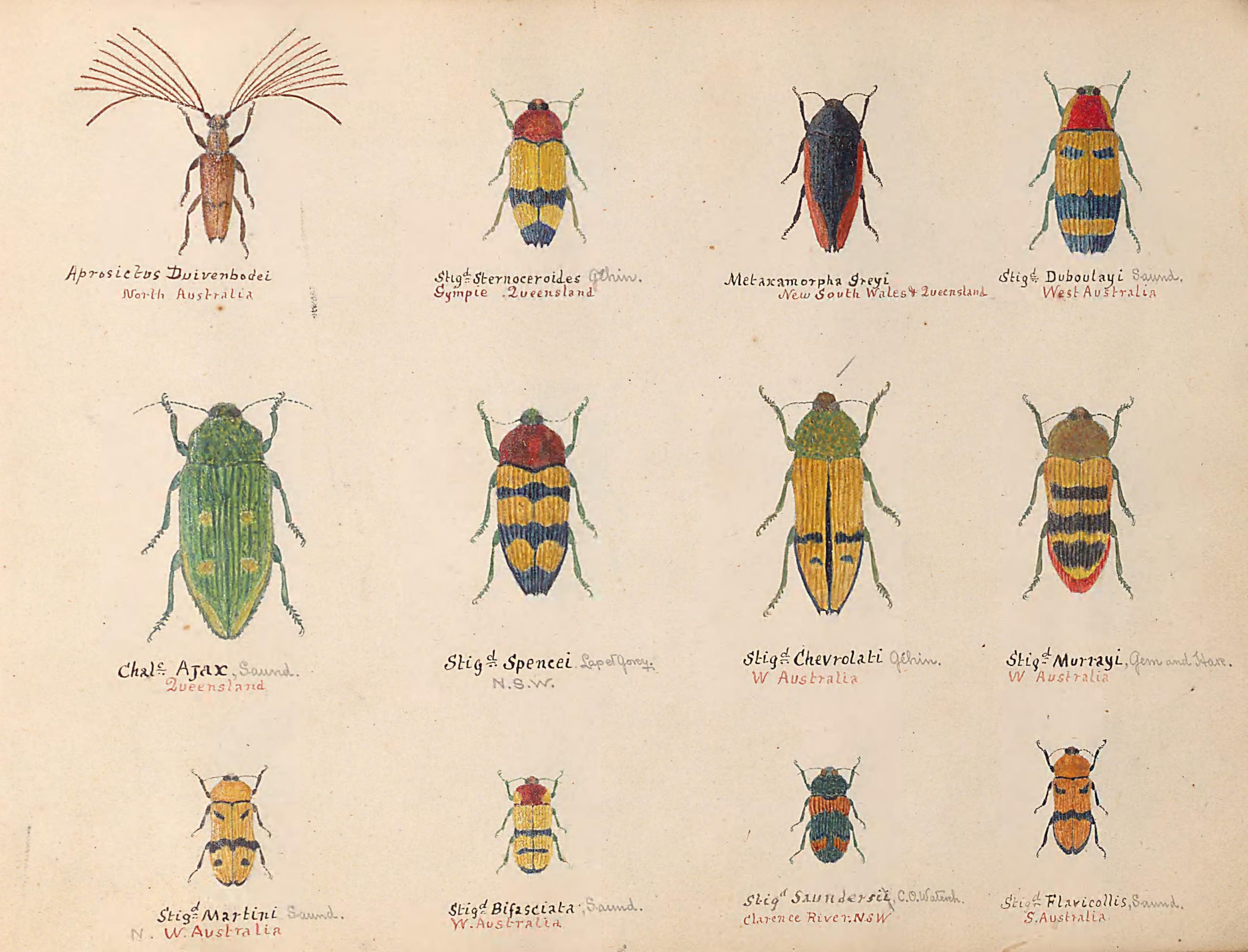
twelve colorful hand-drawn beetles

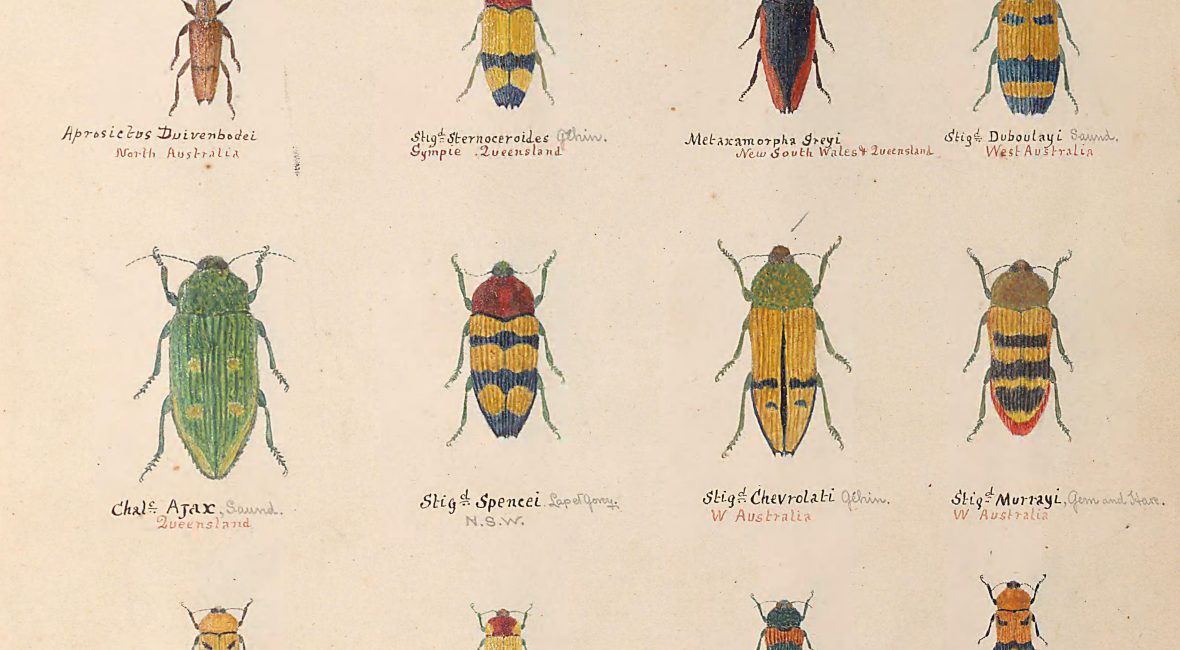
Seventh page of illustrations in volume one of a hand-painted volume of Coleoptera illustrated by Francis du Boulay, c.1880 – 1890 / Collection: OLDERSYSTEM~03048, Museums Victoria Archives / Source: Biodiversity Heritage Library.

Earlier this year Dr. Simon Leslie, Francis Houssemayne du Boulay’s great-grandson, contacted Melbourne Museum about accessing du Boulay’s hand-painted Coleoptera volumes, held in the Museums Victoria Archives. Dr. Leslie and family accessed the physical volumes in February 2020. While I carefully supervised flipping through the pages of these volumes, I was intrigued by their aesthetic, and scientific and historic, value. Since then, the volumes have been digitised by Biodiversity Heritage Library (BHL) Australia.

black and white portrait of a person with a short beard.

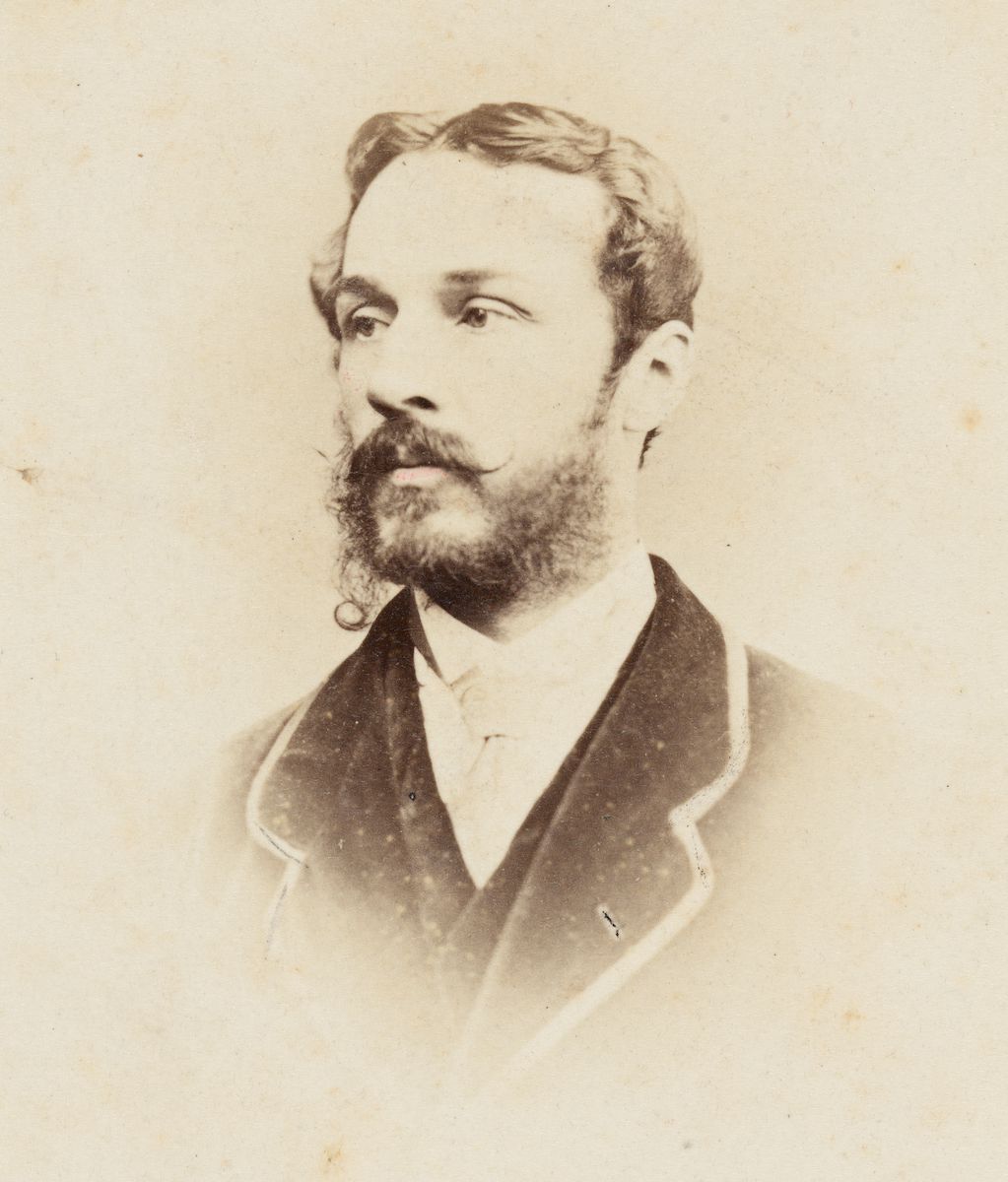
Portrait of Francis Houssemayne du Boulay, n.d. / Photographer: J. Fisher / Source: Accession number 2009.75, National Portrait Gallery, Australia.

Francis Houssemayne du Boulay was born in Sandgate, Kent, on 24 January 1837. As a young man in his early 20s, he migrated to Perth (c.1858). A scientist, entomologist, natural history artist, and Coleoptera (beetle) collector, du Boulay began to collect specimens in locations around Western Australia, Queensland, New South Wales, Victoria, and other parts of Australia. He settled in Beechworth, Victoria, where he lived out the rest of his life; du Boulay passed away on 12 January 1914.

In volume one of du Boulay’s hand-painted Coleoptera volumes, inside the front cover, is a handwritten inscription in ink, “F. H. Du Boulay 1880”. Du Boulay commenced work on the volume in 1880; however, it is likely that the work continued for several years. The cover also features a note handwritten in pencil, “Names in lead pencil inserted by H. M. Giles W. Australia (Du Boulay)”. Annotations inscribed in pencil are corrections by Henry Murray Giles, who assisted du Boulay in identifying scientific names of specimens. Giles worked as a Resident Keeper (1898) and later Head Keeper (1909 – 1910) at the Zoological Gardens, South Perth, Western Australia. Giles wrote an article in the Western Australian Year-Book for 1900-01 entitled “A Glimpse of Western Australian Entomology” (see pp. 285-297).

A total of 179 Coleoptera specimens are illustrated in volume one. Locations are noted where the specimens occur; however, the locations often only indicate the state where they were collected, for example New South Wales, Victoria, Queensland, Western Australia, South Australia; or a town or city, for example Cape York, Cardwell, Rockhampton, Brisbane. Some specimens identify the sex. It would be interesting to note if the colours used are scientifically accurate. Are the specimens drawn to scale? This would require the physical volume and specimens for comparison.

On the back of the volume is a sketch, in pencil, of a childlike illustration of a man, which is accompanied by an inscription, “W. Du Boulay”. This is an illustration of Francis du Boulay’s brother William, who was a fellow naturalist and collector. The yellow cover of the volume inscribed “DRAWING BOOK E. R. COLE BOOKSELLER AND STATIONER, SYDNEY” is well used, worn and has many inkblots. It has evidence of accompanying du Boulay in the field on his collecting trips around Australia.

Volume two is also well worn with inkblots on the cover. It has a leather-bound spine and leather corners protect the cover; otherwise the volume has no distinguishing features or title page. As in volume one, the specimen illustrations are printed, then hand coloured. Not all of the specimens are identified with their scientific names. The illustrations appear to be to scale. Specimens are illustrated from a dorsal perspective. Locations of where the specimens were collected are sometimes documented. Again as in volume one, the location is only noted from which state, for example, Queensland, Western Australia, Northern Territory, South Australia, New South Wales; or towns, cities, waterways or mountain ranges, for example Blue Mountains, Richmond River, Ropes Creek, Thompson River, Cairns, Coopers Creek, Cape York, Cooktown, Princess Charlotte Bay, Cleveland Bay, Port Mackay. The sex of the specimen is also sometimes identified.

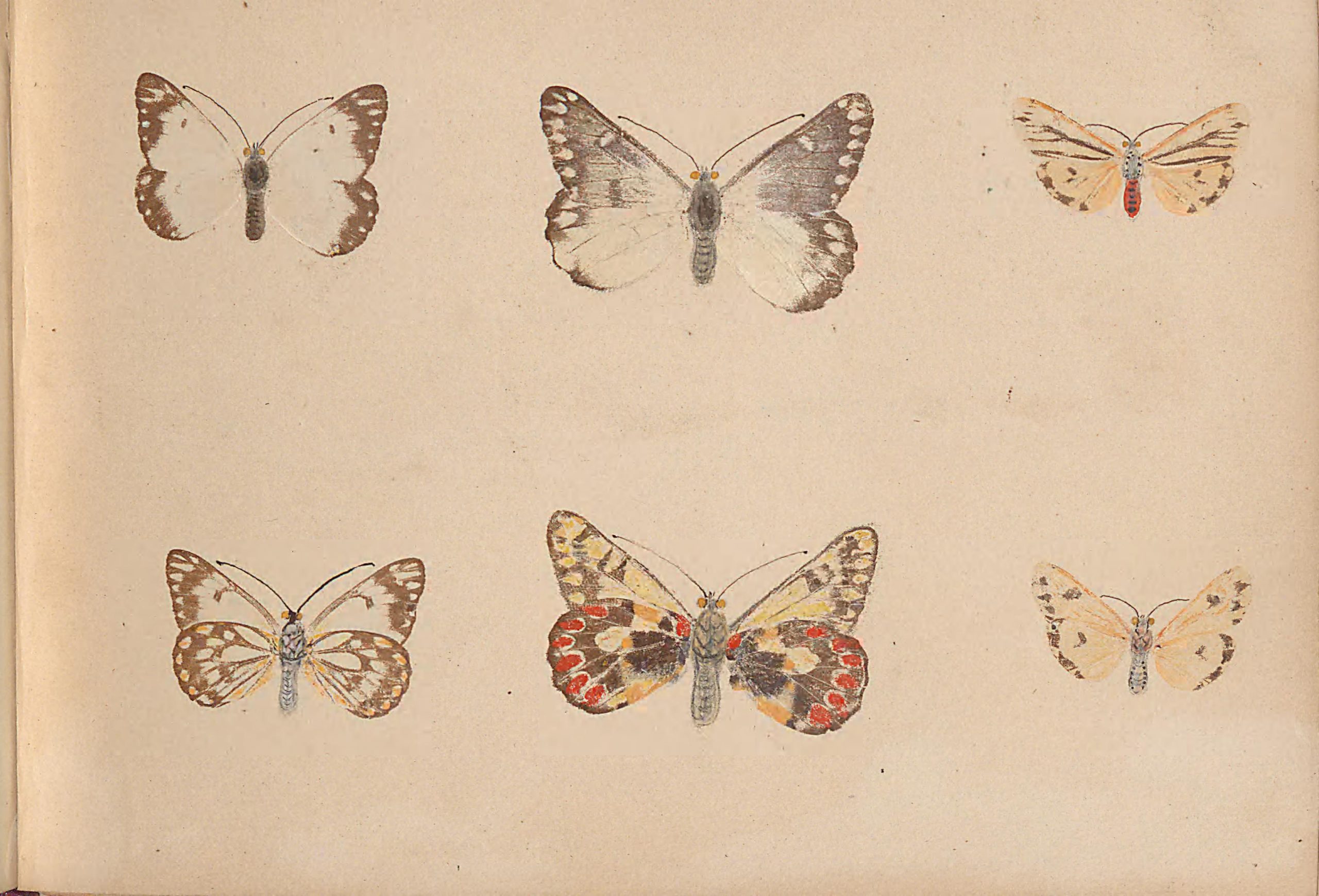
six hand-drawn butterfly illustrations

Twelfth page of illustrations in volume two of a hand-painted volume of Coleoptera illustrated by Francis du Boulay, c.1880 – 1890 / Collection: OLDERSYSTEM~03048, Museums Victoria Archives / Source: Biodiversity Heritage Library.

While carefully presenting these volumes to Dr. Leslie, we were both surprised to come across several pages in the second volume containing beautiful Lepidoptera illustrations. Twenty-one Lepidoptera specimens are beautifully illustrated, but unfortunately do not include their scientific names or the locations where they were collected. Simon Hinkley, Collection Manager in Entomology at Museums Victoria, noted that the “Lepidoptera illustrated are detailed enough for identification purposes, for instance, the bottom left corner [see above] is a Caper White and the bottom middle specimen is a Spotted Jezebel.”

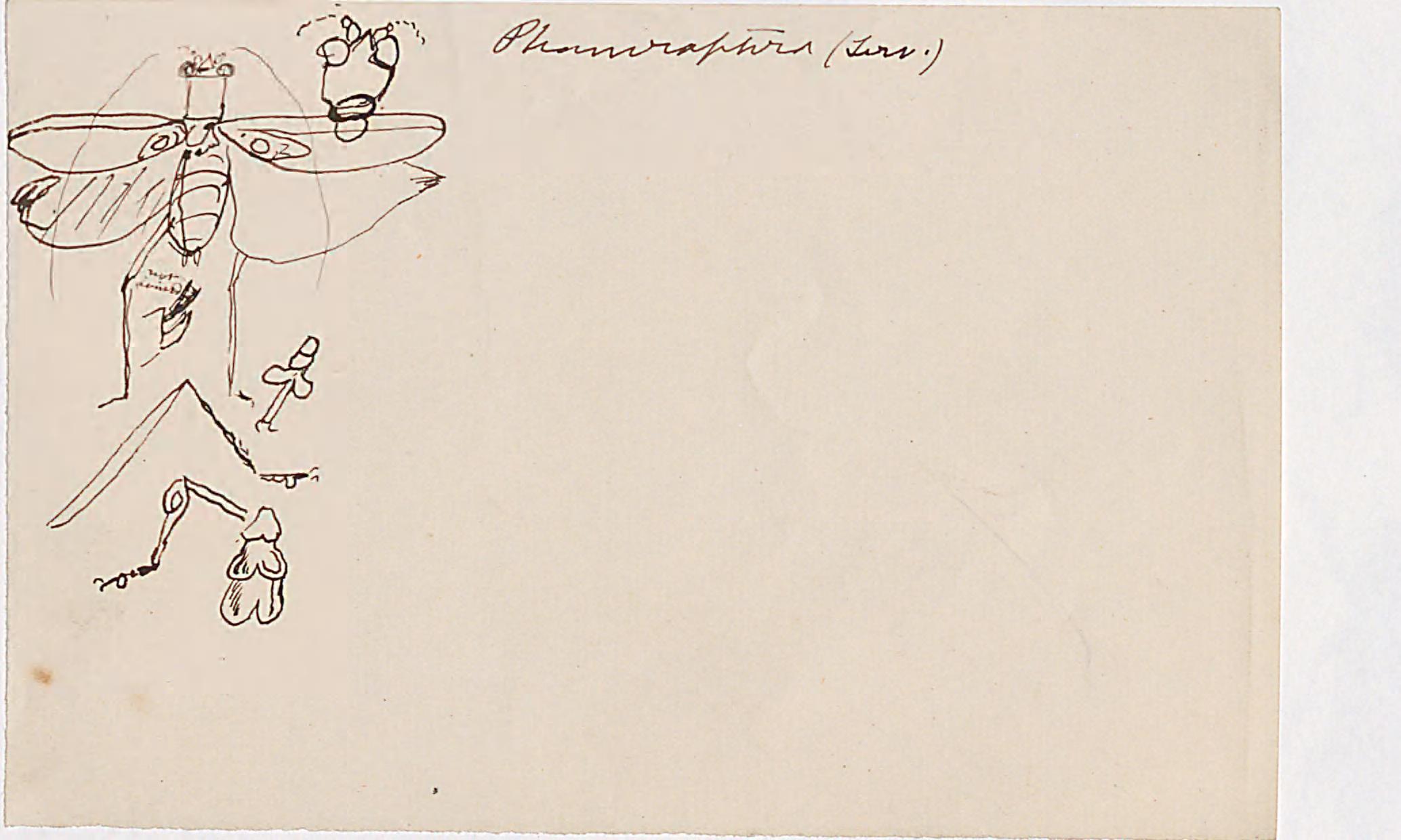
rough black ink line drawing of beetles

Fifteenth page, loose rough sketch and inscription by Professor Frederick McCoy, first director of the National Museum of Victoria, interleafed in volume two of a hand-painted volume of Coleoptera illustrated by Francis du Boulay, c.1880 – 1890 / Collection: OLDERSYSTEM~03048, Museums Victoria Archives / Source: Biodiversity Heritage Library.

Dr. Thomas Darragh, Curator Emeritus at Museums Victoria, identified the loose sheet of paper interleafed in volume two, see above, as Professor Frederick McCoy’s handwriting. McCoy was the first director of the National Museum of Victoria, predecessor of Museums Victoria (1854 – 1899). While not an entomologist, he was a paleontologist, geologist, zoologist, academic and keen collector for the National Museum of Victoria, and he was clearly interested in this volume, enough to incorporate a rough sketch of a “Phaneroptera (Serv)”. Simon Hinkley noted the Phaneroptera is an old genus name of katydids in the subfamily Phaneropterinae and was described by Jean Guillaume Audinet-Serville in 1831.

Volume two includes a loose letter with illustrations of beetles from “Mr. Span, Rooke’s Farm, West Drayton, Middlesex”. The letter includes illustrations of two specimens from North Queensland—one from New South Wales and one from the “Interior of Continent.” An inscription below the address on the letter, written in pencil, “Compared with British Mus. Specimens by Mr Span for Mr Du Boulay”, notes that specimens held by the British Museum have been compared with specimens collected by du Boulay. A few pages following the loose letter is a specimen that has been hand-drawn from the dorsal and cross section with inscription “Schizorhina Mnizechii Larry” (an unpublished name), and beside this is an inscription, “Drawings by Mr Span from originals in Brit. Museum”.

Some of the specimen illustrations in volume two include cross-sections of the heads and magnified studies of the legs. Volume two has a total of 220 Coleoptera and 21 Lepidoptera illustrations, compared to a total of 179 Coleoptera specimens illustrated in volume one.

The National Museum of Victoria purchased several Coleoptera specimens from Francis du Boulay and his brother William (1880-1912), such as the beautiful Castiarina erasma (Carter, 1935), Dilochrosis atripennis (Macleay, 1863), and Castiarina balteata (Saunders, 1869).

Du Boulay’s Coleoptera volumes are significant documents of historical collecting with important scientific information for contemporary scientists. Now that the volumes are available on the BHL website, scientists can benefit from the historical and scientific data on Coleoptera collected by Francis du Boulay from locations across Australia in the late nineteenth century.

September 24, 2020by Joel Richard
Blog Reel, Featured Books

An Annotated Copy of Butterflies of Australia by Waterhouse and Lyell (1914)

Published in 1914, Butterflies of Australia by Gustavus Athol Waterhouse and George Lyell was the first comprehensive work on Australian butterflies to appear in Western scientific literature. It is a thick and rather chunky volume, with descriptions of 332 butterfly species, and was the product of many years of research. The copy held in Museums Victoria’s Rare Book Collection is even thicker than a standard issue, as it is bound with lined pages interleaved throughout. It is an author’s copy, owned and annotated by George Lyell.

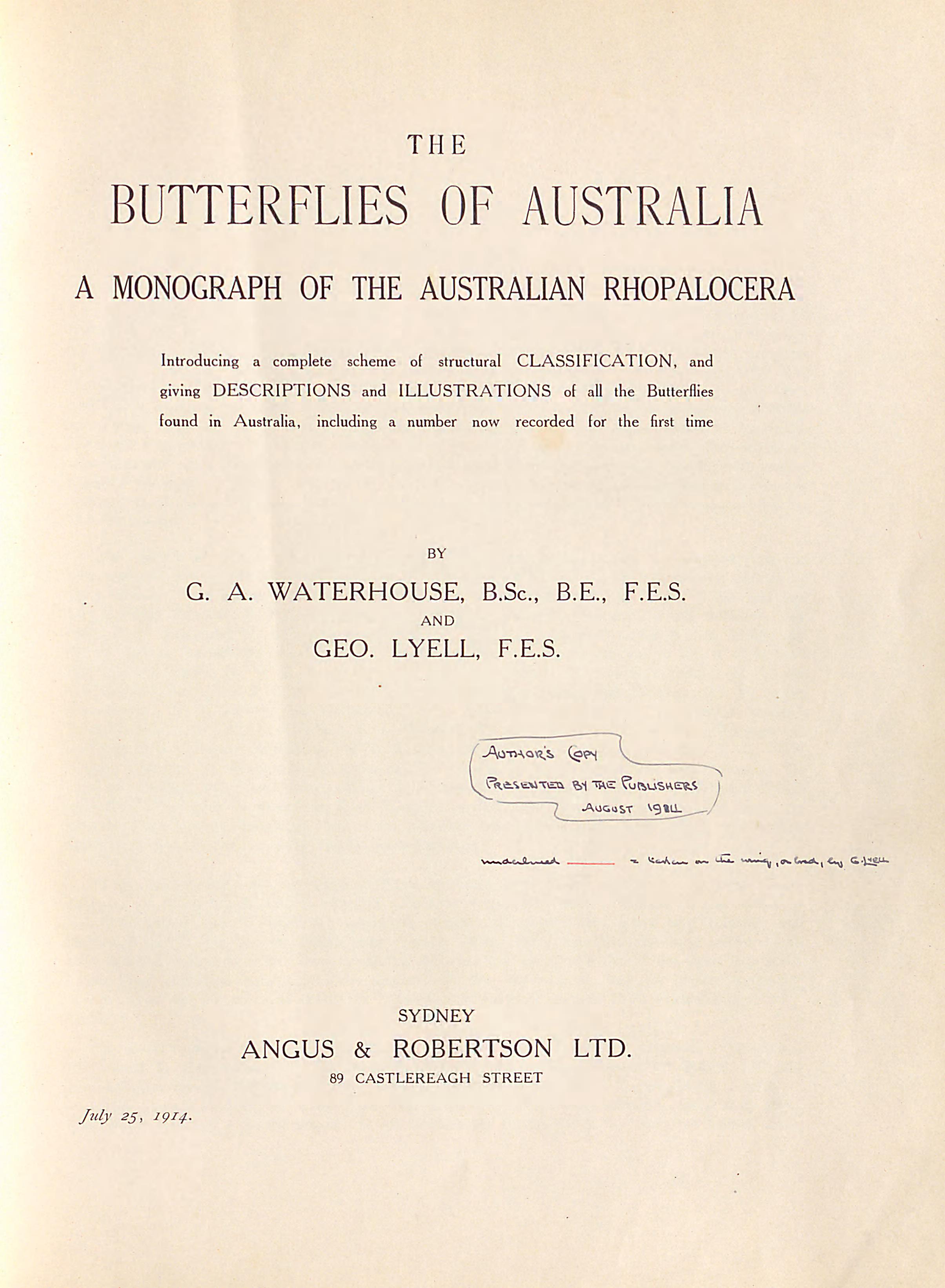
1. Inscription Lyell.jpg

Title page of annotated author’s copy of Butterflies of Australia (1914.) Contributed in BHL by Museums Victoria.

Lyell and Waterhouse worked on the book separated by some distance; Lyell’s location in Gisborne, Victoria was 862km (536 miles) away from Waterhouse’s residence in Sydney. They corresponded regularly via mail, and the Museums Victoria Archives now houses some 400 of Lyell’s letters from Waterhouse, which came to the museum with Lyell’s extensive donation of butterflies and moths in 1932. In 2019 a McCoy Seed Fund project enabled further exploration of the archival material to see what it could reveal about the scientists’ collaboration and Lyell’s collection. It also shed some light on the annotated copy in our collection.

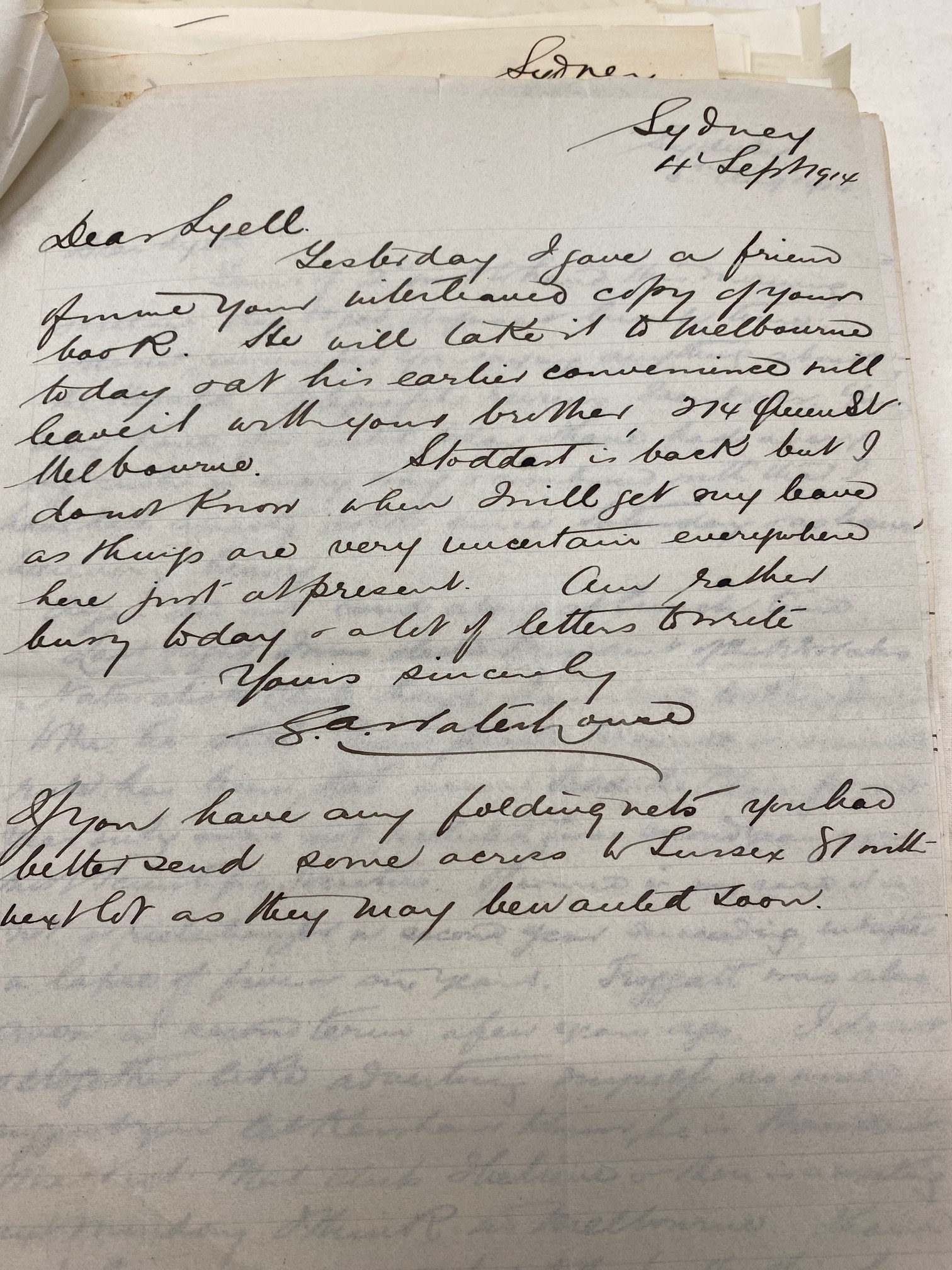
The archival material reveals that their publisher, Angus & Robertson, prepared the handsome interleaved copy for Lyell and gave it to Waterhouse to pass on. In a letter dated 28 August 1914 Waterhouse writes “I have the interleaved copy for you, but it is much too bulky & too nicely done to trust to the post” (OLDERSYSTEM~03030, Museums Victoria Archives). Instead Waterhouse entrusted the volume to friend E. H. Proctor to give to Lyell’s brother in Melbourne.

Letter to Lyell.jpg

Letter to George Lyell from his co-author and friend G. A. Waterhouse. Photo Credit: Hayley Webster / Source: Museums Victoria.

Their correspondence also demonstrates how carefully they considered every aspect of the publication. For instance, a letter to Lyell on 20 March 1914 states “I like very much the black headings as they seem to show the divisions at a glance & generally speaking I like the size of the type” (OLDERSYSTEM~03030, Museums Victoria Archives), showing that the typography was carefully considered for readability. Waterhouse was pleased with the plates, writing on 4 Feb 1914 “Dear Lyell, Coloured plate no. 1 is glorious, magnificent drawings, just showed it to [Allan Riverstone] McCulloch who was delighted with it” (OLDERSYSTEM~03030, Museums Victoria Archives).

The illustrations are a combination of original drawings and photographic reproductions: original coloured plates by H. W. Simmonds, drawings of larvae and pupae by Miss J. Kong Sing, and the remaining are from photographs by Henry King. Butterflies of Australia includes 43 plates, and a total of 888 illustrations; its considerable scope and detail was considered very helpful by scientists and collectors when the book was published.

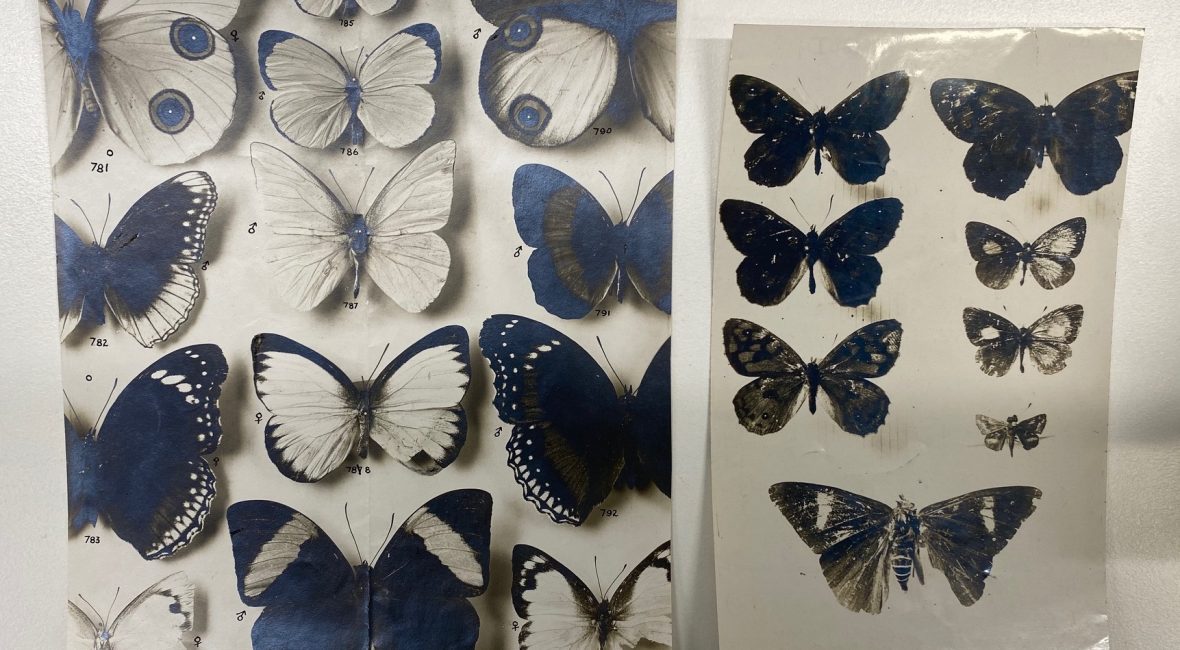
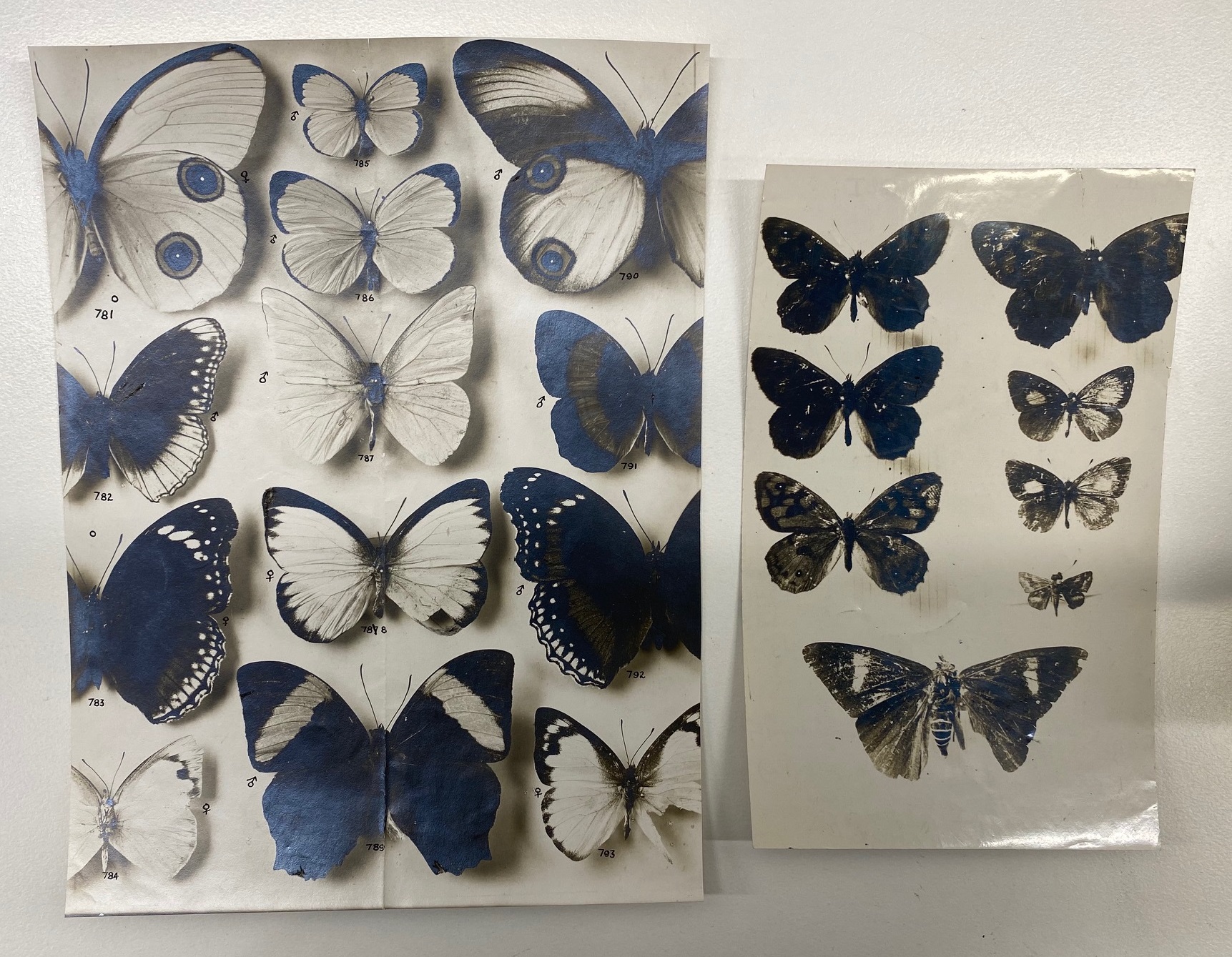
As Museums Victoria Archivist Nik McGrath recounts, Waterhouse destroyed his letters after entering the relevant scientific data onto index cards. While this might seem like a curiously destructive working method, it is not unheard of; researchers working with Charles Darwin’s correspondence have noted that he crossed out personal matters in his letters so he would not be distracted if he needed to return to them for scientific purposes [1]. In this case, in spite of the loss of Lyell’s letters, we retain a lot of the archival material relating to the book including a manuscript, index cards from Waterhouse, notebooks, proofs, black and white photographs of specimens used by illustrators for the book, specimen lists, and newspaper clippings of book reviews.

Butterfly photos.jpg

Along with many others, these photographs of butterflies were used to develop the illustrations for Butterflies of Australia. Photo Credit: Hayley Webster / Source: Museums Victoria.

In addition to looking at the archival material, an examination of the book itself is also revealing. Annotations are dated throughout the 1910s and 1920s and most appear to record sightings. In the introduction to the work, Waterhouse and Lyell note of the geographical focus of their study: “We are hoping this work will serve to indicate the need and point to that direction, and so induce collectors to aid us: we are carefully tabulating every verified record reaching us, and will much appreciate dated specimens for examination and return, especially those from points distant from localities given in our list.”

Lyell is systematic in his approach to annotations, including roughly the same information and formatting for each entry. The marginalia primarily consists of locations added to specimen descriptions, often dated, and sometimes includes a number, gender, and occasionally an elevation.

elevation crop.jpg

The initials GAW frequently appear throughout, and refer to Lyell’s co-author Gustavus Athol Waterhouse. Here Lyell notes that the species is “very plentiful at 5000ft diminishing to 4500 none lower, only few at 6000ft”. Annotated copy of Butterflies of Australia. Contributed in BHL by Museums Victoria.

There are also often initials entered next to the information, which relate to the person collecting the data, as you can see in the example above.

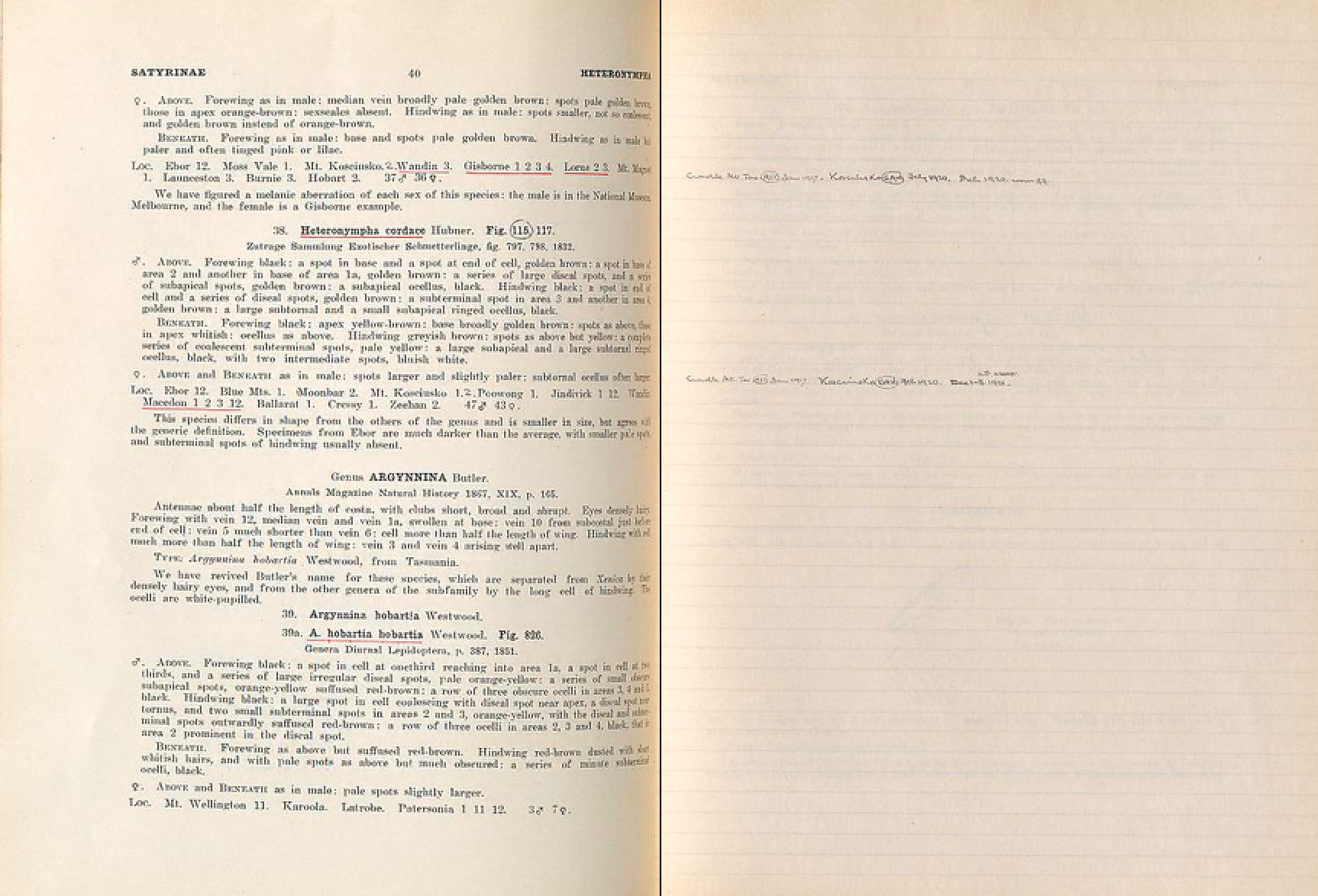
The annotations use a similar approach from the beginning to end of the text; Lyell underlines the printed text in pen, circling the relevant figure numbers, and then notes the date, locations and other data on the interleaved pages.

This is a typical example of how Lyell annotated his copy of Butterflies of Australia, underlining the relevant information and then adding details to the opposite interleaved page. Contributed in BHL by Museums Victoria.

Though the method of data entry is reasonably consistent, there are noticeable changes in ink, indicating that Lyell completed the annotations across a period of time. It would appear that Lyell was copying across data from other sources such as his own field notes and correspondence from other scientists as he received it.

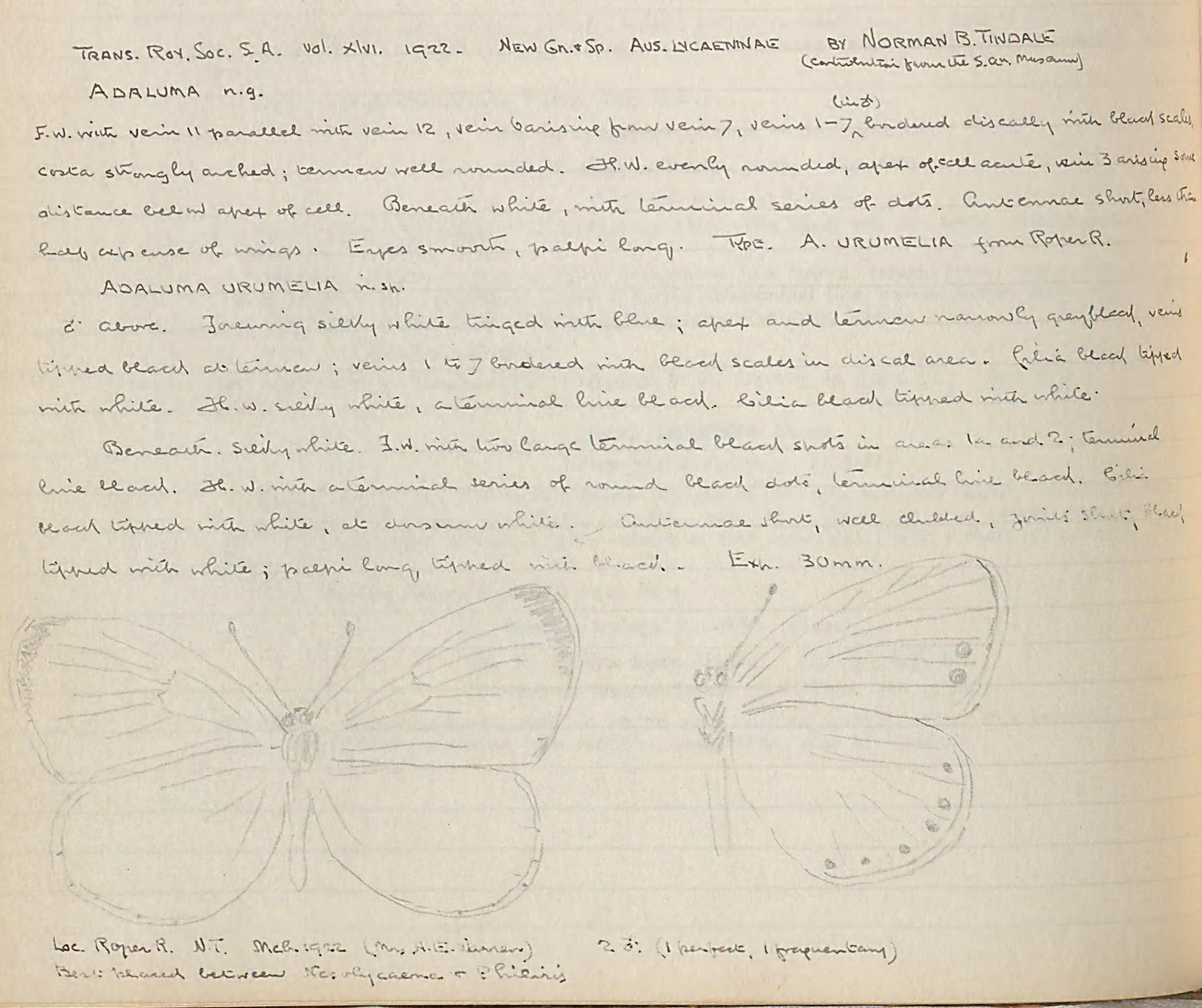
Lyell’s marginalia mainly seems to record observational data, but occasionally includes a reference to secondary reference material. One reference appears to have been copied in its entirety—this is Norman Tyndale’s description of Lycaeninae adaluma from the Transactions of the Royal Society of South Australia in 1922. Tyndale’s description references Waterhouse and Lyell’s work, and suggests a placement of the new species within their system. The placement suggested corresponds to where Lyell has copied in the description.

Revised description crop.jpg

The annotation replicates Tyndale’s description of Lycaeninae adaluma and includes a sketch of the species. Annotated copy of Butterflies of Australia. Contributed in BHL by Museums Victoria.

What exactly was Lyell doing with his annotations? It appears he was using the book to record ongoing research by himself and a group of naturalists across the east coast of Australia. H. J. Jackson notes in Romantic Readers that the practice of interleaving in books by scientists originated in earlier educational practices [2]. I have certainly come across other similar examples in the Museums Victoria Library. It is notable that Lyell’s annotations drop off after the early 1930s. He suffered an illness in 1931 that led to his decision to deposit his collection with the National Museum of Victoria. The rest of his life was dedicated to preparing his collection for transfer to the museum, and this seems to correlate to a decline in annotating.

References

  1. Gregorio, Mario A. & Gill, N. (1990) Charles Darwin’s Marginalia Vol. 1, New York, Garland, p. xiv.
  2. Jackson, H. J, (2005) Romantic Readers: the Evidence of Marginalia, New Haven & London, Yale University Press, p. 84.

Bibliography

Administration – George A. Lyell – Internal Correspondence 1891-1947- Waterhouse, G. A – Museums Victoria Archives, National Museum of Victoria OLDERSYSTEM~03030

Gregorio, Mario A. & Gill, N. (1990) Charles Darwin’s Marginalia Vol. 1, New York, Garland.

Jackson, H. J. (2005) Romantic Readers: the Evidence of Marginalia, New Haven & London, Yale University Press.

McGrath, Nik (2019) Kindred Spirits, Museums Victoria Blog, Retrieved from https://museumsvictoria.com.au/article/kindred-spirits/

McGrath, Nik (2019), Butterflies of the night, University of Melbourne Blog, Retrieved from https://blogs.unimelb.edu.au/insect-museum-collection/2019/01/30/butterflies-of-the-night/

February 27, 2020by Joel Richard
Blog Reel, Featured Books

From Canada’s National Capital to “the Rock” — The Tale of a Traveling Book by Philip Henry Gosse

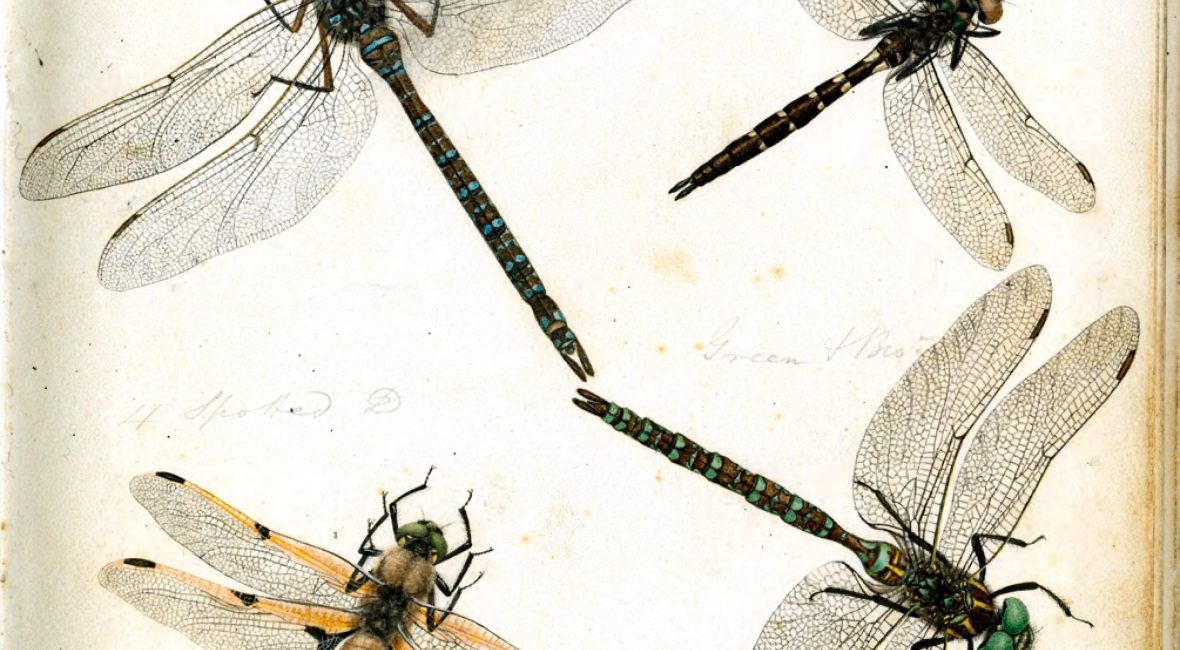
dragonflies

The Island of Newfoundland was nicknamed “The Rock” because of its rocky terrain and high cliffs.

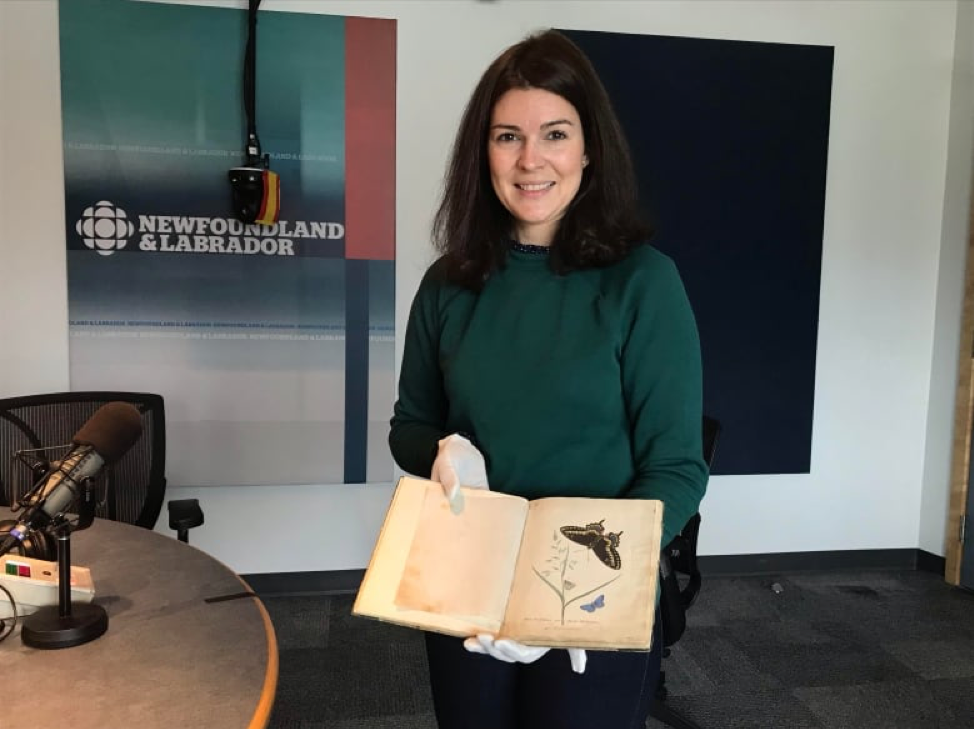
I’m Elizabeth Smith, and I work at the Canadian Museum of Nature’s Library & Archives as Acquisitions and Cataloguing Officer. In this capacity, I have the privilege of caring for a rare book collection consisting of approximately 4,000 pre-20th century monographs, manuscripts and periodicals, including a special unpublished manuscript, Entomologia Terrae Novae by Philip Henry Gosse — which I had the privilege of hand couriering to St John’s Newfoundland for a short exhibit and panel talk at Memorial University’s QEII Library this past September.

photo of a version with dark hair and green sweater holding a manuscript with illustrations of butterflies

Elizabeth Smith is an acquisitions and cataloguing officer with the Canadian Museum of Nature in Ottawa. Here she holds Philip Henry Gosse’s unpublished manuscript, Entomologia Terrae Novae. (Francesa Swan/CBC). Source.

This special manuscript has been digitized by the Museum’s Library & Archives on BHL.

On arrival in St John’s, I was greeted by the managing editor for Boulder Books and whisked over to the CBC Radio station to do an interview for On-The Go with Ted Blades. Months prior, Boulder reached out to our library to inquire about borrowing the manuscript to be shown in tandem with the launch of their newest field guide, Stouts, Millers & Forky-Tails: Insects of Newfoundland & Labrador, which drew inspiration from Gosse’s work. I was ultimately invited to speak alongside Dr. Tom Chapman, head of the Department of Biology at Memorial University and co-author of that field guide, at an engagement and advocacy event held by Memorial’s QEII Library in the Centre for Newfoundland Studies (CNS). The event was fittingly called A Bug’s Life: Tales of the N.L. Insect (1833-2019).

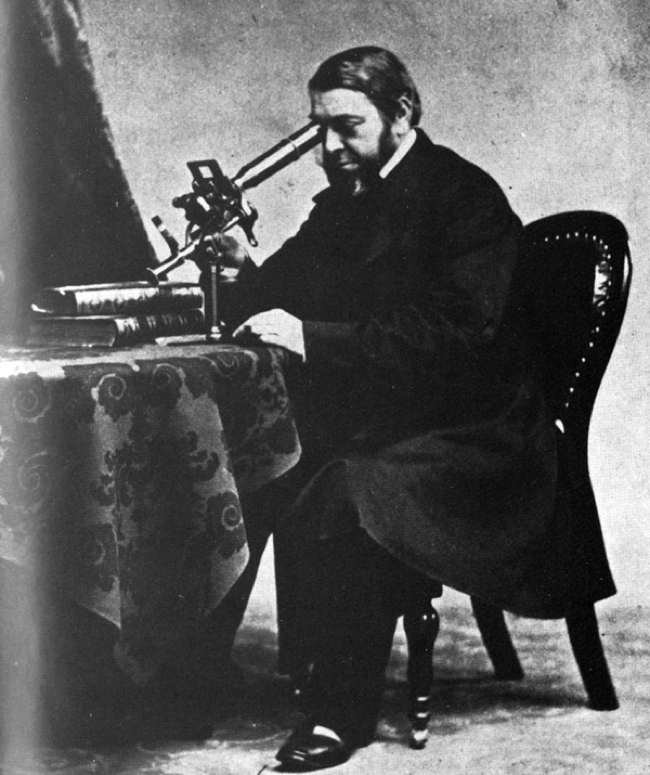
black and white photo of a man looking into a microscope

Philip Henry Gosse, 1863. Source: Canadian Museum of Nature Blog.

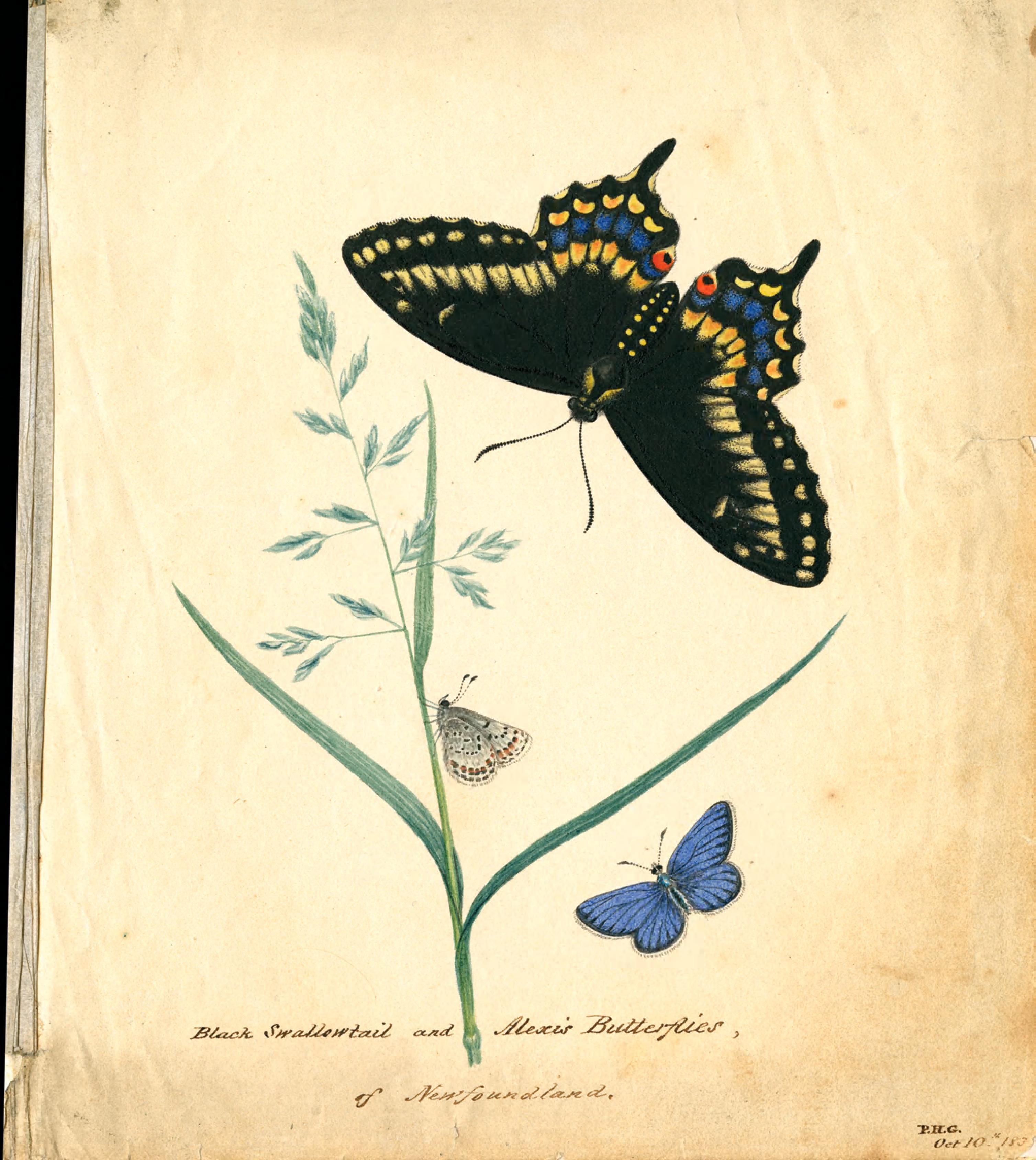
Entomologia Terrae Novae, authored by Philip Henry Gosse in 1833, was the first attempt to classify and illustrate the insect fauna of Newfoundland. About 250 magnificent illustrations adorn its pages — many of which are of the Lycaenidae family, which is the second-largest family of butterflies.

butterflies

(Below) The common blue butterfly (Polyommatus icarus) of the Lycaenidae family along with (above) the black swallowtail (Papilio polyxenes). Gosse, Philip Henry. Entomologia terrae novae. 1833. Contributed in BHL from the Canadian Museum of Nature Library / Bibliothèque du Musée canadien de la nature.

I pondered with my entomologist colleague, Dr. Bob Anderson, as to why that might be. Perhaps it was the metamorphosis process that fascinated Gosse? We reflected on the fact that much of the world’s life forms were only starting to be explored, and that exploration and illustration was a hobby in this (almost) Victorian Era. Dr. Anderson also taught me of the value in capturing the host plants in scientific illustrations, as it can inform research scientists of various things. There are several examples of this throughout the book.

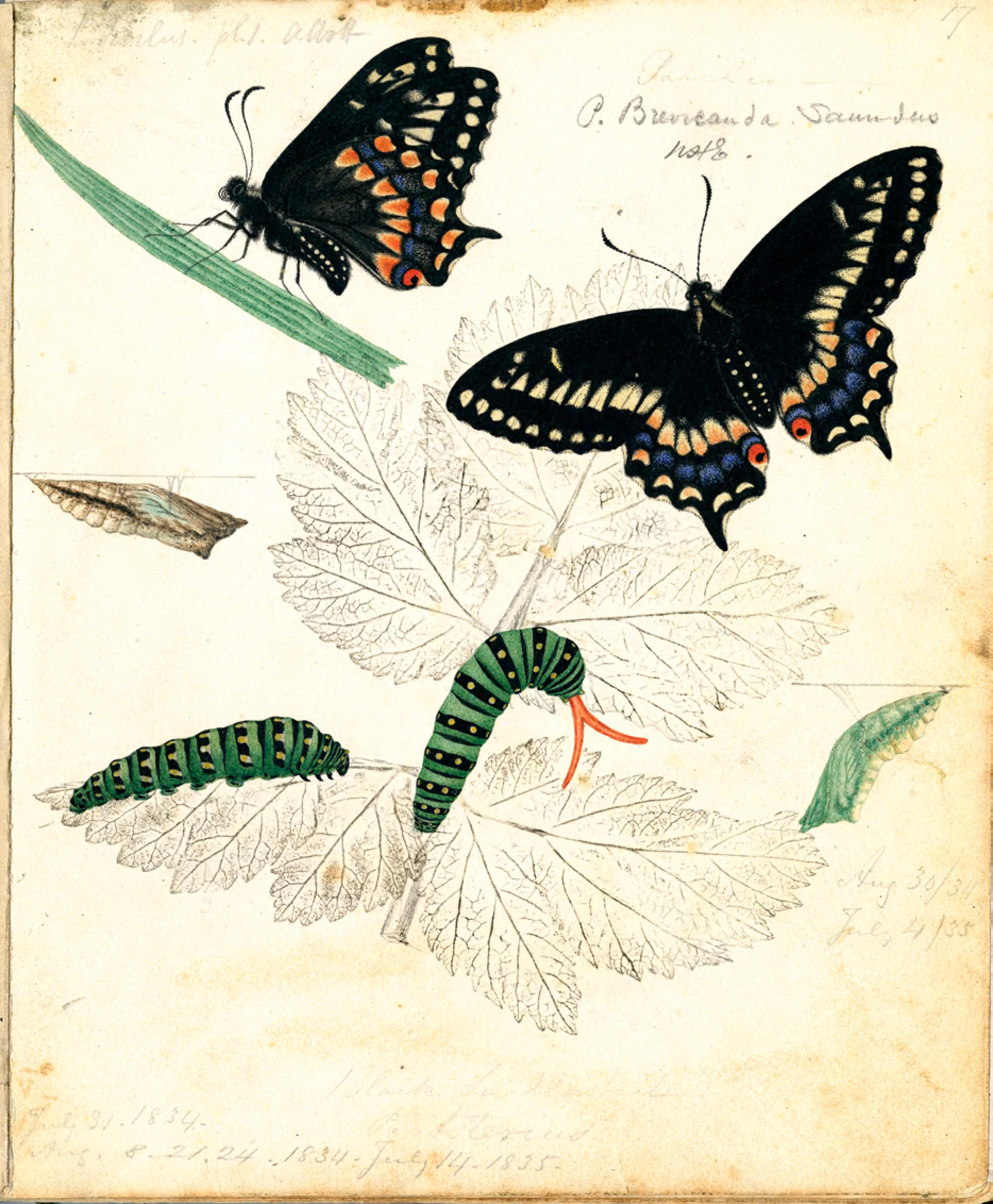
butterflies and caterpillars on plants

Gosse captured the metamorphosis process and host plants in his drawings. Gosse, Philip Henry. Entomologia terrae novae. 1833. Contributed in BHL from the Canadian Museum of Nature Library / Bibliothèque du Musée canadien de la nature.

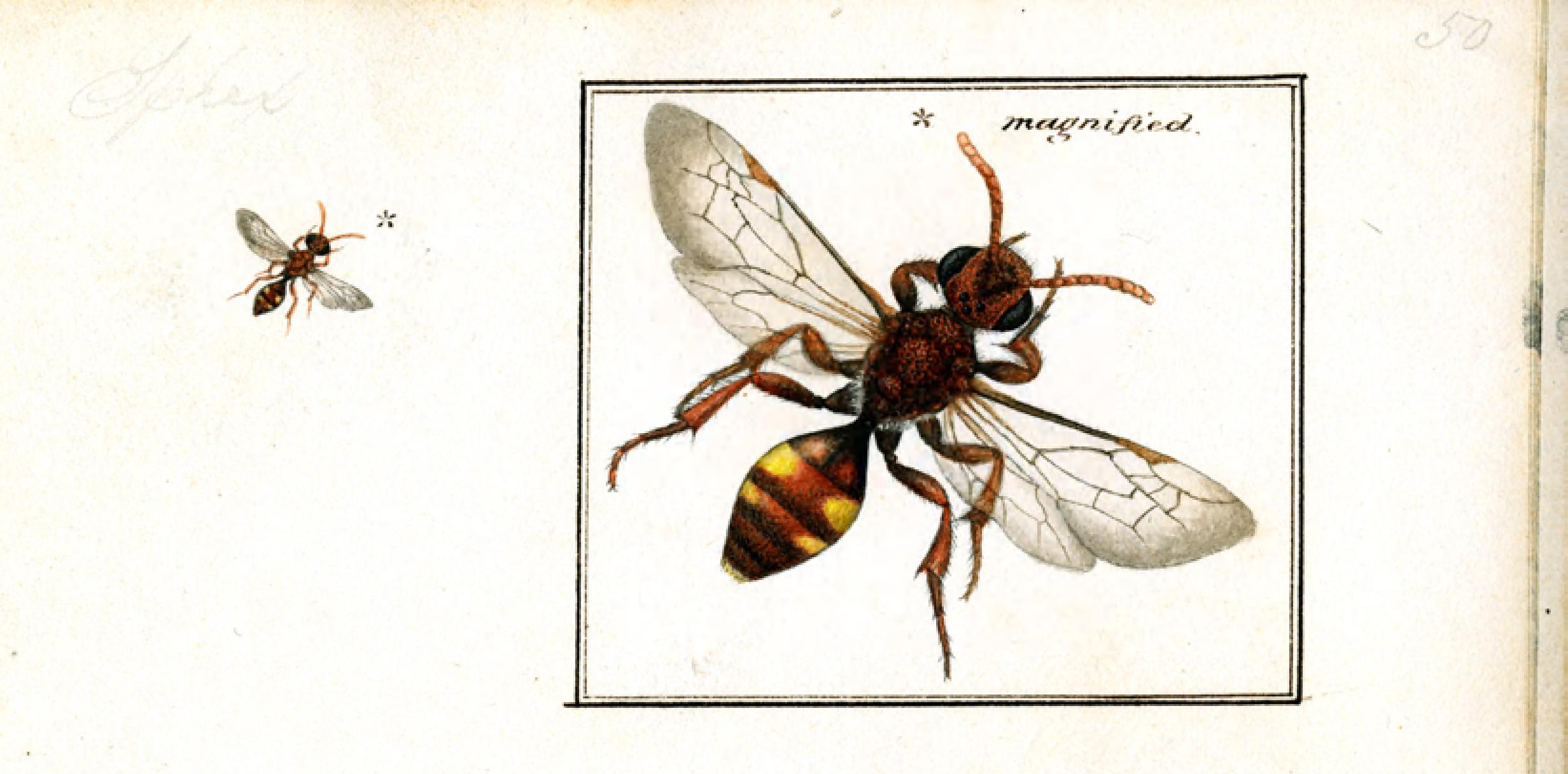
Philip Henry Gosse was the son of Thomas Gosse and Hannah (née Best). He was sent from England to Carbonear at age 17 to work as a clerk. Gosse’s father, Thomas, was a miniature portrait artist himself, but it was Gosse’s aunt (Susan Bell) who first taught him to draw. He did so exquisitely, sometimes with the help of a microscope. Throughout the manuscript, readers can see examples of insects which Gosse carefully represented in their actual size and enlarged to a magnified proportion to show more detail.

illustration of a bee at scale and magnified

Example from Gosse’s manuscript of an insect drawn to scale and magnified. Gosse, Philip Henry. Entomologia terrae novae. 1833. Contributed in BHL from the Canadian Museum of Nature Library / Bibliothèque du Musée canadien de la nature.

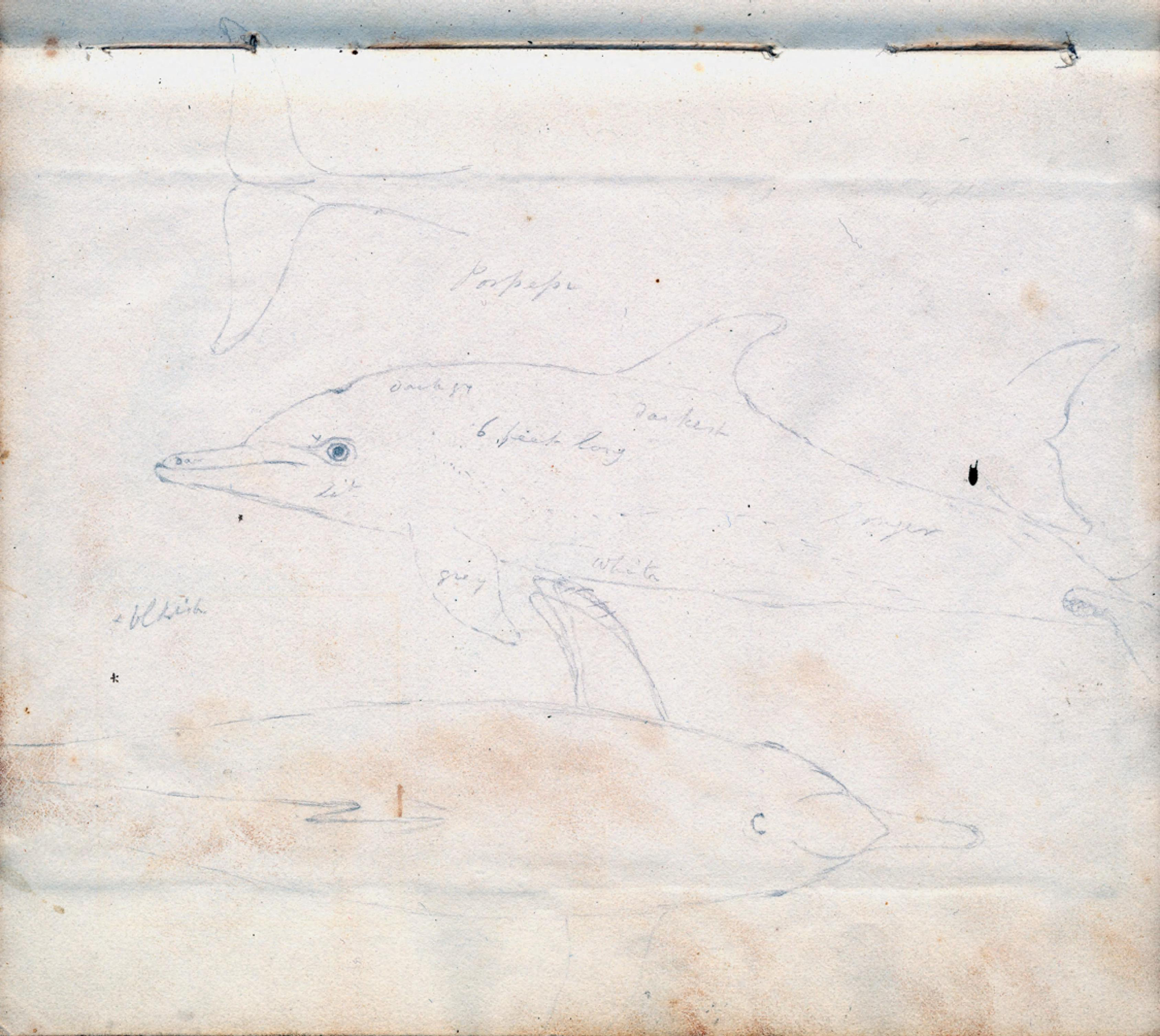
Meticulously hand drawn insects like these are nothing short of impressive. If you take a closer look, you will also notice annotations and even … a dolphin sketch! Gosse went on to illustrate other forms of life, some for which he was more famous (for example, he’s known for inaugurating the word “aquarium” and making these glass enclosures popular with the publication of his 1854 monograph dedicated to the subject).

dolphins

Dolphins, an unexpected inclusion in Gosse’s manuscript. Gosse, Philip Henry. Entomologia terrae novae. 1833. Contributed in BHL from the Canadian Museum of Nature Library / Bibliothèque du Musée canadien de la nature.

Gosse moved on from Newfoundland to Quebec and other locations, taking the manuscript with him and eventually passing it along to his son, Edmund Gosse. It was passed down through the Gosse family until it was donated to the Canadian Museum of Nature in the 1950s.

This singular manuscript holds many treasures and a few surprises. We were excited to bring this work back to Newfoundland for the first time since its creation in the 1830s to be showcased as part of this special event with the Memorial University’s QEII Library. While it is a phenomenal experience to view the manuscript in person and appreciate the almost 3D quality of the drawings, the digitized copy in the Biodiversity Heritage Library ensures that everyone can enjoy this unique item and the important milestone it represents for the history of entomological studies in Newfoundland.

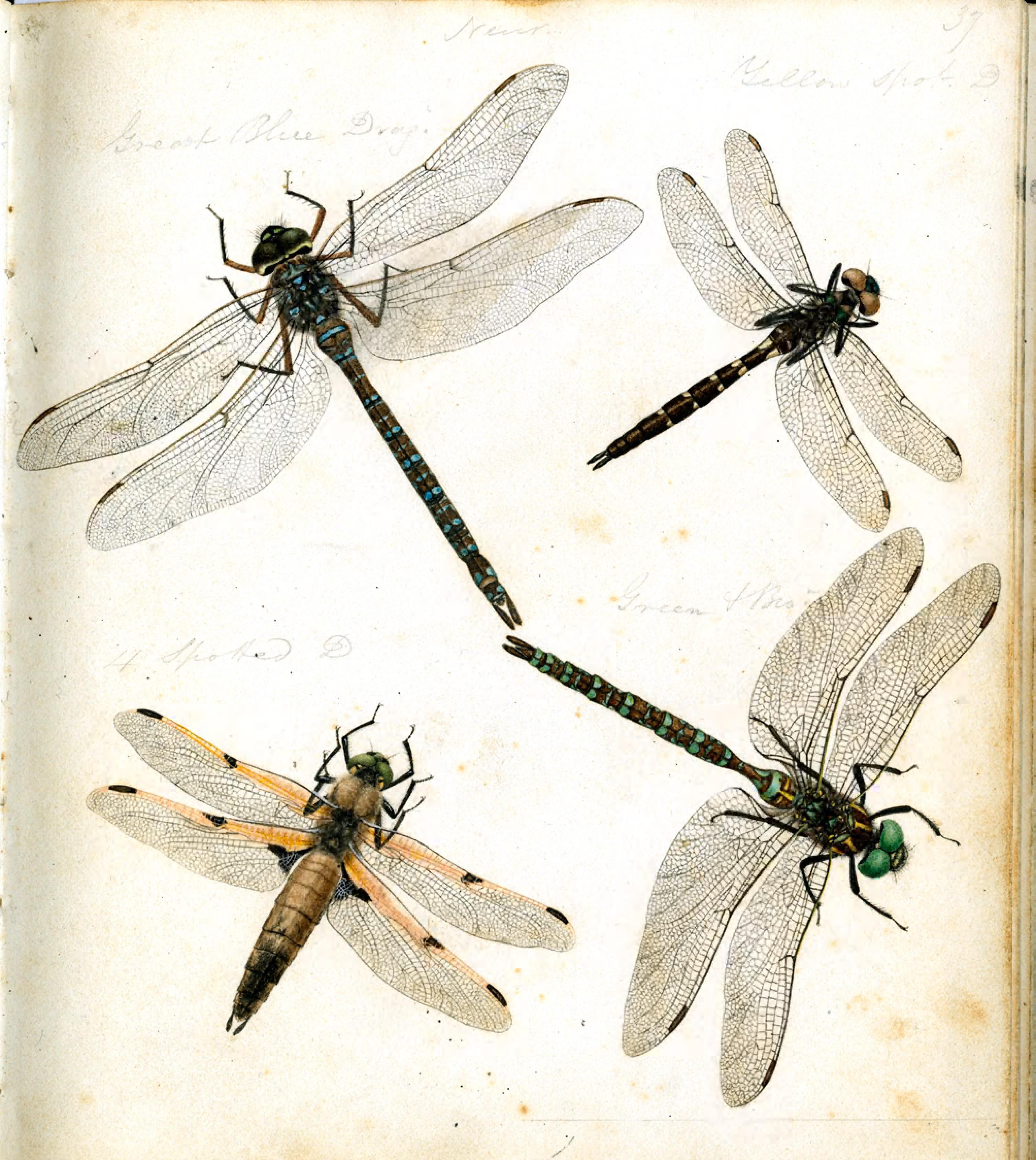
dragonflies

Dragonflies of Newfoundland. Gosse, Philip Henry. Entomologia terrae novae. 1833. Contributed in BHL from the Canadian Museum of Nature Library / Bibliothèque du Musée canadien de la nature.

November 22, 2019by michelle.underhill
Blog Reel, User Stories

Vanity and BHL: Examining Extinction and Rediscovery through Art

The “Anthropocene Defaunation” and the Lost Florida Zestos Skipper

We are experiencing a “biological annihilation.”

That’s how scientists are describing the biodiversity loss in what is being recognized as Earth’s sixth mass extinction event [1]. Not only are extinctions occurring at a rate 100 times higher than would occur naturally, but overall populations are also shrinking at alarming rates [1,2].

A 2014 Science report termed it the “Anthropocene defaunation”, reflecting humanity’s role in this biodiversity loss [3]. Among the casualties in this “Age of Humans” is one of “the few butterflies known to have become extinct in the United States” [4] — The Florida Zestos Skipper Butterfly Epargyreus zestos oberon (Worthington, 1881) [5]. This butterfly’s story draws forth science, taxonomy, history, and art from the Biodiversity Heritage Library (BHL) for a cutting edge representation of biodiversity in challenging times.
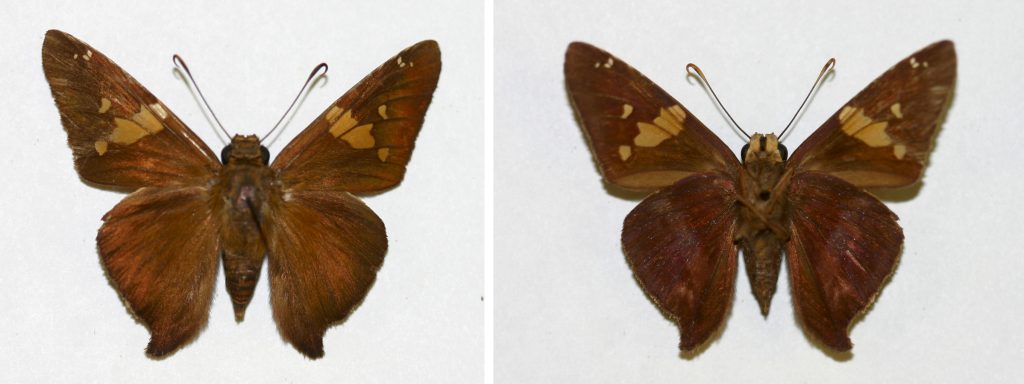
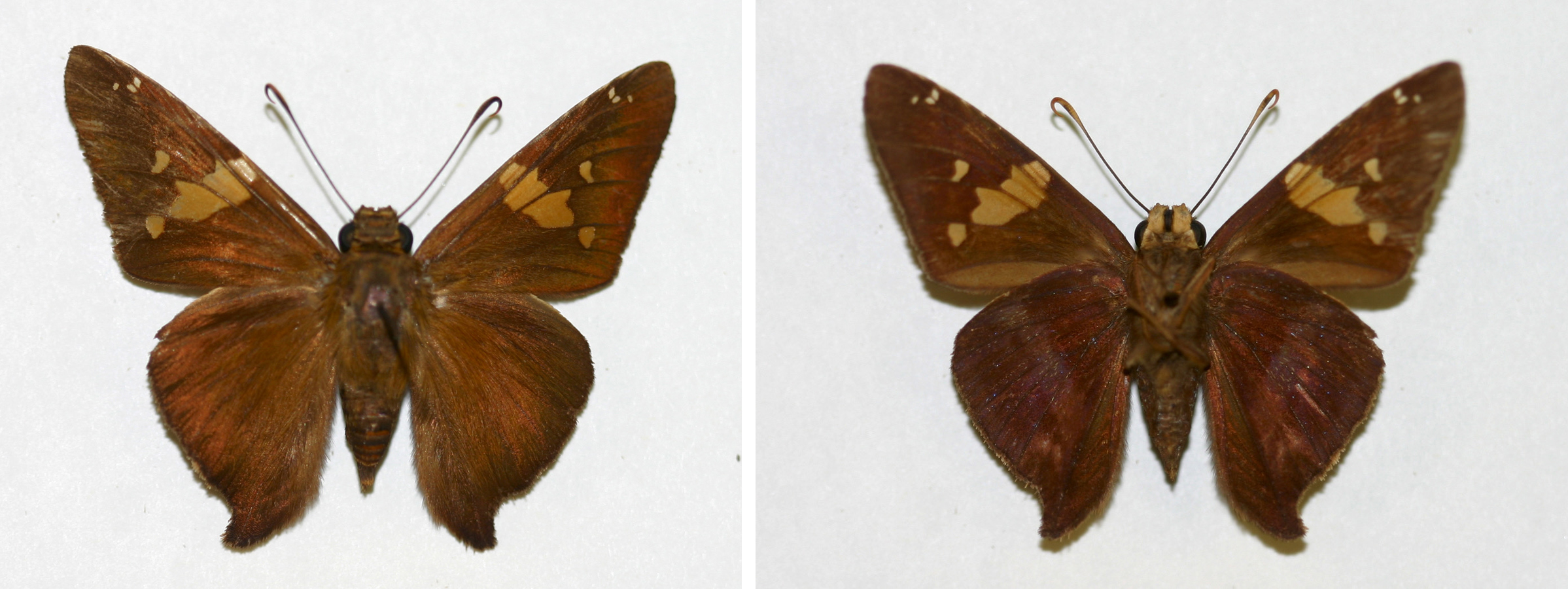
Florida Zestos Skipper Butterflies Epargyreus zestos oberon† (Worthington, 1881) – Male (Left: Upperside; Right: Underside). Collected in Monroe County; Everglades National Park, Bear Lake Trail, Florida in May 1973. The photos were taken in the Florida Department of Agriculture and Consumer Services, Florida State Collection of Arthropods. The specimens are now incorporated into the Florida Museum of Natural History/McGuire Center for Lepidoptera and Biodiversity. Photos copyright and courtesy of Marc C. Minno, PhD.

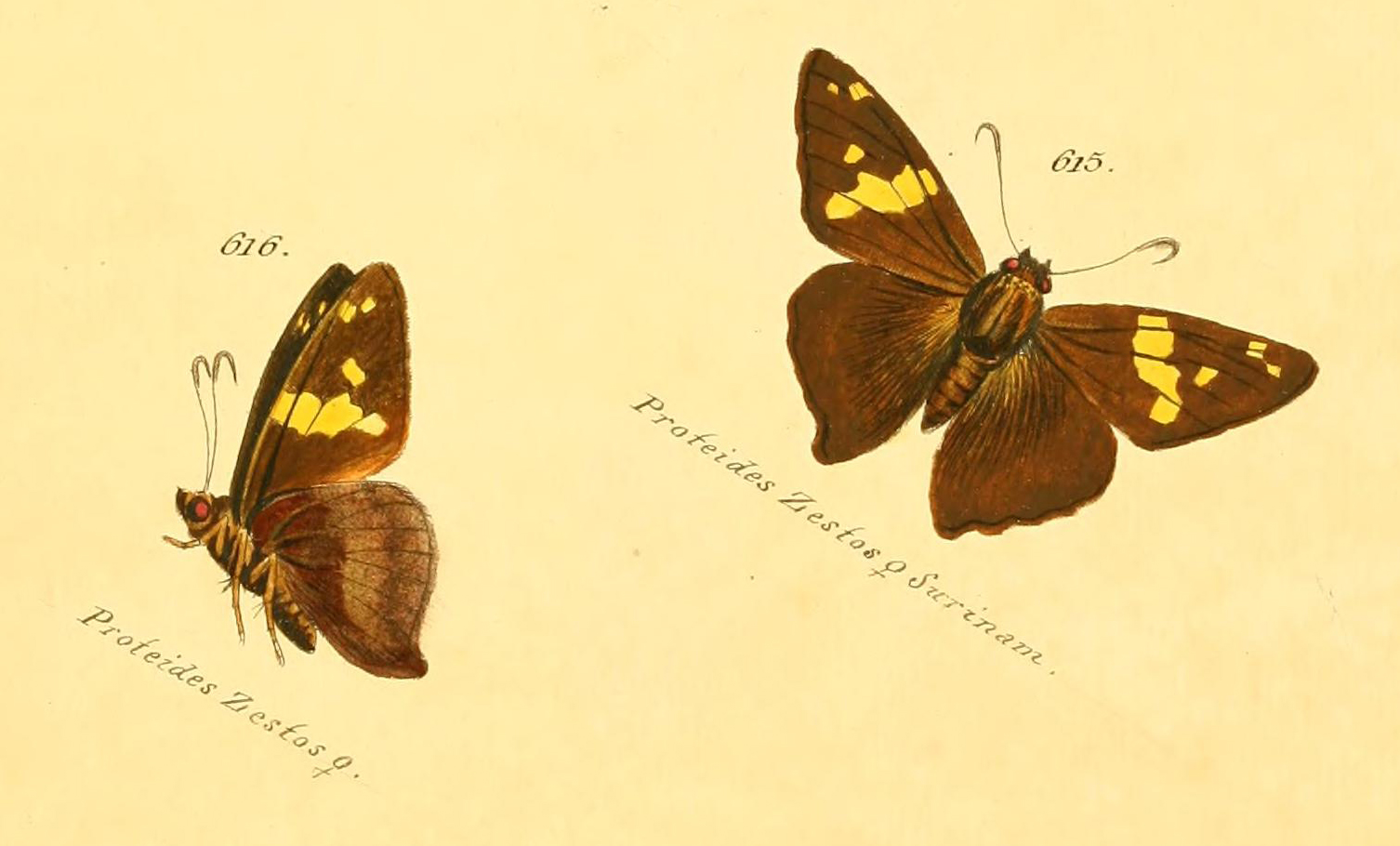
The recorded scientific history of the Zestos Skipper Butterfly extends back to the early nineteenth century. In the 1819 publication Verzeichniss bekannter Schmettlinge [sic], Jacob Hübner first listed the butterfly as Proteides zestos. Hübner later illustrated the P. zestos holotype (type locality “Surinam”, probably in error) via two figures of a female specimen in his Zuträge zur Sammlung exotischer Schmetterlinge (1826). However, as Hübner provided no description to accompany the name and illustration, it was not until 1832, after his death, that his assistant Carl Geyer officially described Proteides zestos as a new species.
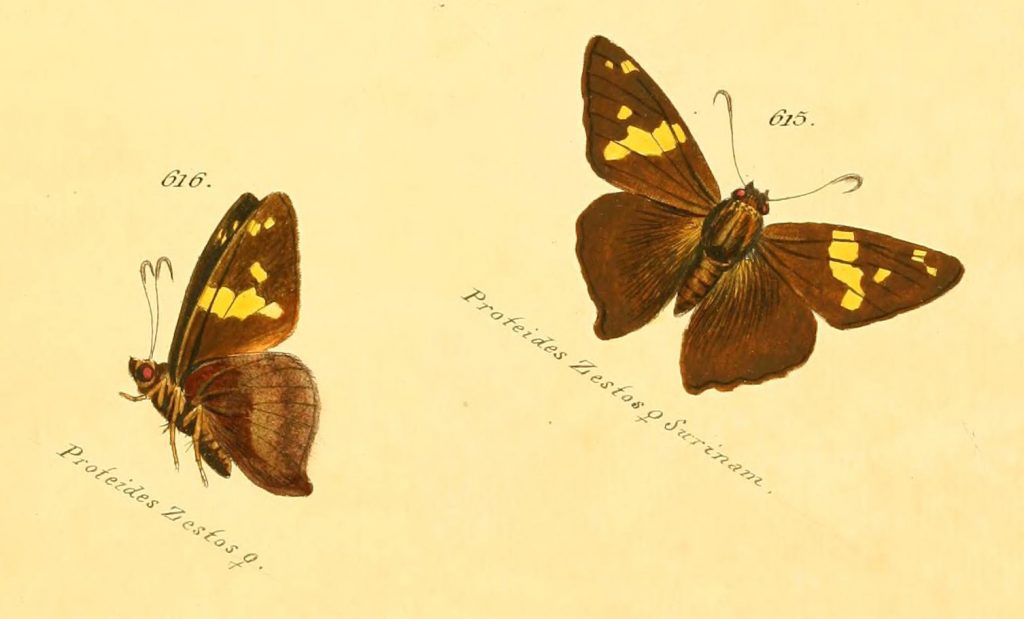
Proteides zestos illustrated by Jacob Hübner in Zuträge zur Sammlung exotischer Schmetterlinge (1826). Contributed in BHL by Smithsonian Libraries.

Over the next 50 years, this rather unassuming reddish-brown Skipper, with a range from the Florida Keys to the Caribbean, was reclassified and redescribed by various authors. In Dublin, William F. Kirby (1871) assigned it to a new genus (Telegonus zestos) and in Chicago, Charles E. Worthington (1881), examining 31 specimens from Marco Island, Florida, described it as a new species (Endamus [sic] oberon), based on its resemblance to Eudamus tityrus. In 1884, Eugene M. Aaron, after evaluating over 160 specimens of tityrus and zestos, concluded that Proteides zestos, Telegonus zestos, and Eudamus oberon were in fact the same species.

Dr. Marc C. Minno (Insect Ecologist with Eco-Cognizant in Gainesville, FL) began searching for the Florida Zestos Skipper Butterfly in 2006. At his request, Skipper butterfly expert Dr. George T. Austin evaluated Zestos Skipper butterfly specimens in the Florida Museum of Natural History collection with type localities from Florida and the Caribbean. Before his death, Austin concluded that the Florida Zestos Skipper Butterfly actually represents a unique subspecies or sibling species [6]. Based on his own observations and Austin’s comments, Minno believes “oberon” to be the valid name of the Florida Zestos Skipper Butterfly population and has, until he can complete Austin’s study, designated it as Epargyreus zestos oberon (Worthington, 1881) [5].

Over the past 50 years, the Florida Zestos Skipper Butterfly population has been in decline. According to Minno, this butterfly, “once locally common in coastal areas of southern Florida”, had “disappeared from the mainland” by the mid-1980s. The last known sightings of Florida Zestos Skippers occurred in January 2004, at the Key West Tropical Forest and Botanical Garden in Stock Island, Florida [6].

In 2012, Minno et al., concluded a six-year survey looking for declining butterfly species in southern Florida [4]. Because the study failed to produce a single sighting of the Florida Zestos Skipper, in any stage of life, it was recommended that it be presumed extinct. Together with the Rockland Meske’s Skipper, these represent the “first [known] butterfly extinctions in Florida” [4].

The Florida Zestos Skipper exists now only in museums and the pages of historic literature, its memory preserved in natural history collections, libraries, and repositories like the Biodiversity Heritage Library.

Vanity: An Artist’s Story of Extinction and Rediscovery in the “Age of Humans”

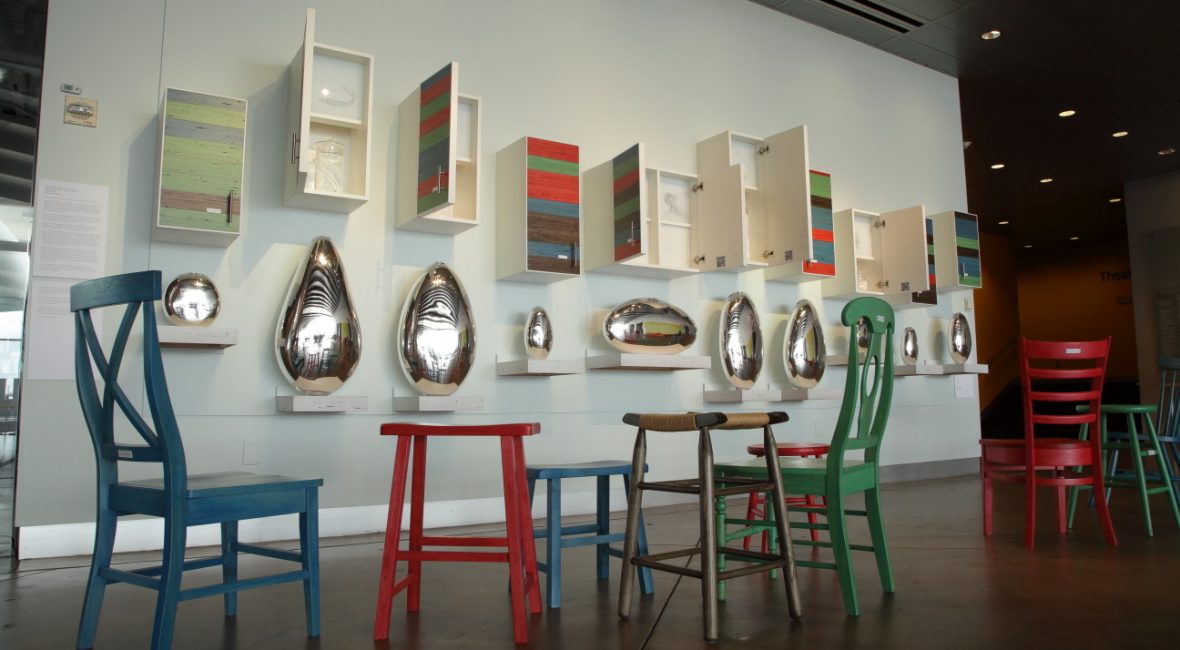
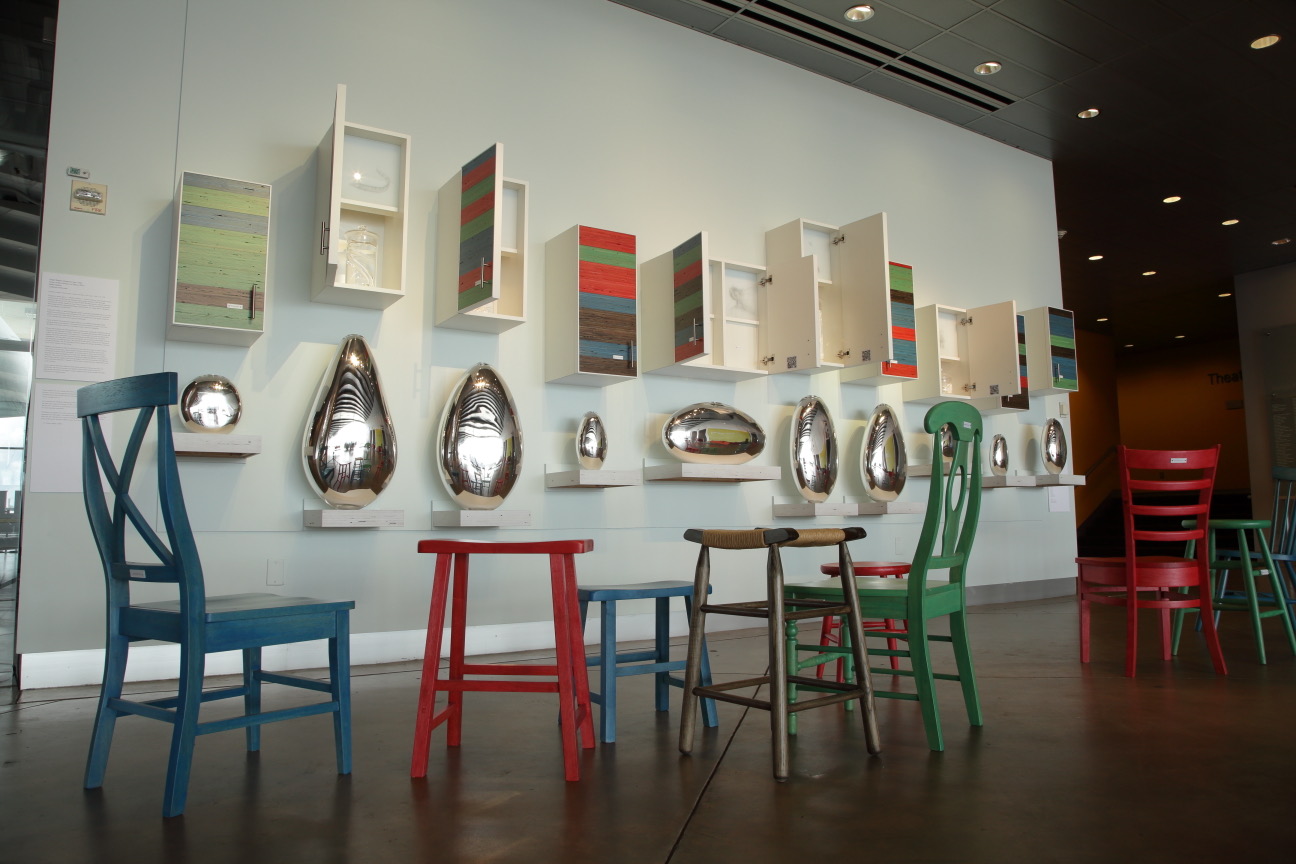
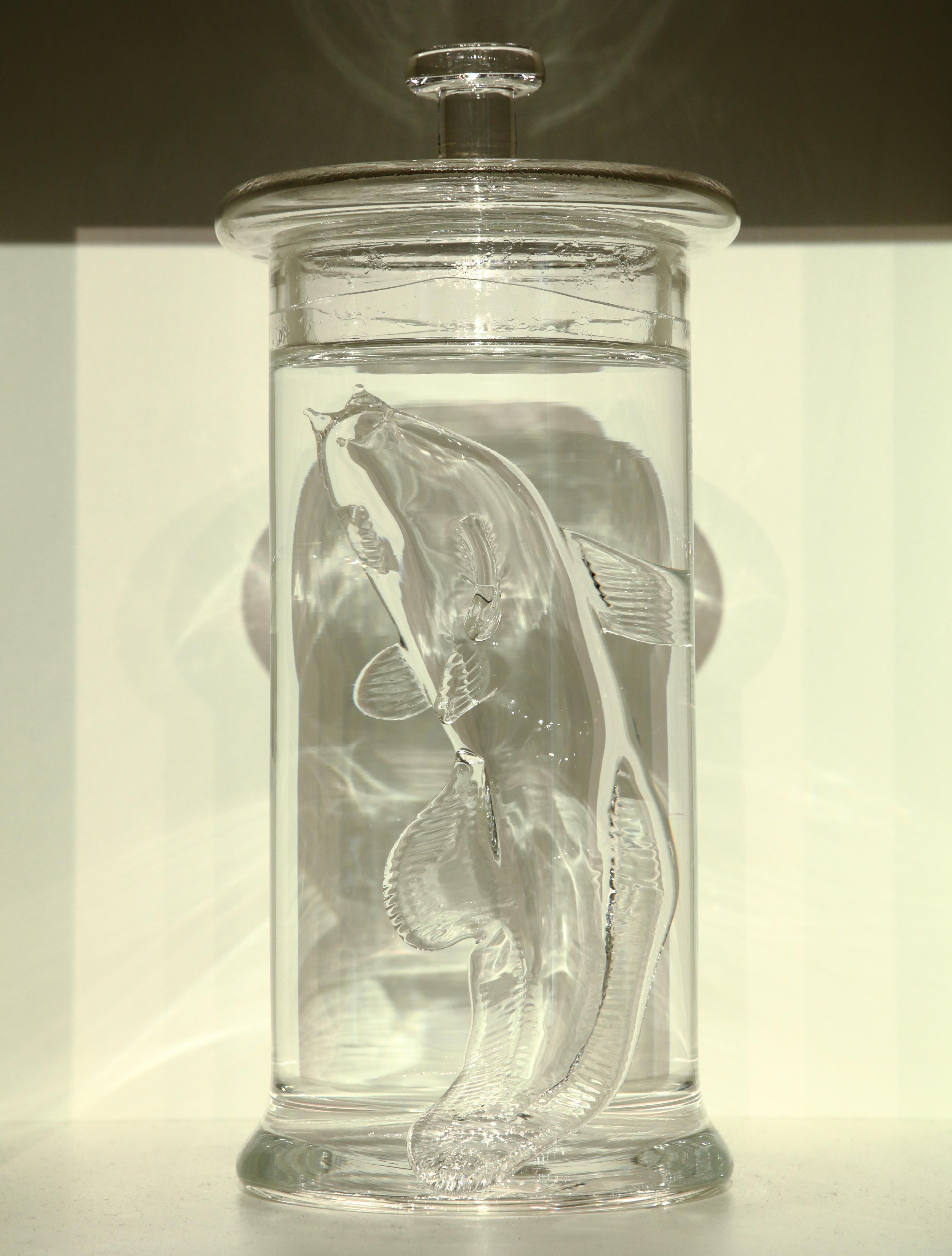
Joseph Gregory Rossano, Vanity (As installed at Museum of Glass, Tacoma, Washington, 2015); photo by C.B. Bell III, copyright and courtesy of Museum of Glass.

The Florida Zestos Skipper Butterfly is just one of the “biological specimens” featured in Vanity, an art installation by Joseph Gregory Rossano. Created for and with the support of the Museum of Glass (MOG) in Tacoma, Washington, Vanity was on display at MOG from March 3 – August 30, 2015. The exhibition tells the story of eleven species and subspecies, presumed extinct, presented through the lens of humanity’s role in their demise.

The installation includes eleven “vanity” cabinets. The cabinet doors, Rossano’s “portrait” of man, are composed of imperfect wood laminate adorned with visual representations of Homo sapiens’ DNA barcode. On the bottom corner of each door, a scientific label hints to the species’ or subspecies’ identity inside the cabinet, beneath these human “fingerprints”. Rossano depicts the species through “faded” pencil portraits and as transparent glass sculptures suspended in clear liquid, inside period specimen jars. The overall effect is of a species vanishing behind the portrait of humanity…just as it has in reality.

Beneath each cabinet are mirrored, almond-shaped glass sculptures and in front of each, a chair with a specimen label: Homo sapiens. These objects accentuate humanity’s role in the loss of each species, for, as Rossano articulates in the exhibition catalogue, “When viewing Vanity from a seated position, we see ourselves reflected in these forms that echo the divine. In our vanity we reflect generations of humans who saw themselves as divine, while the truly divine—our 11 innocent and bygone species, subspecies, and their stories—reflect the truth about us” [7].

Rossano’s use of glass as a medium is equally deliberate: “like our environment, glass is transparent, fragile, and reflective — transparent in that it hides nothing, fragile in that once damaged it may never be repaired, and reflective of how we have impacted it” [8].

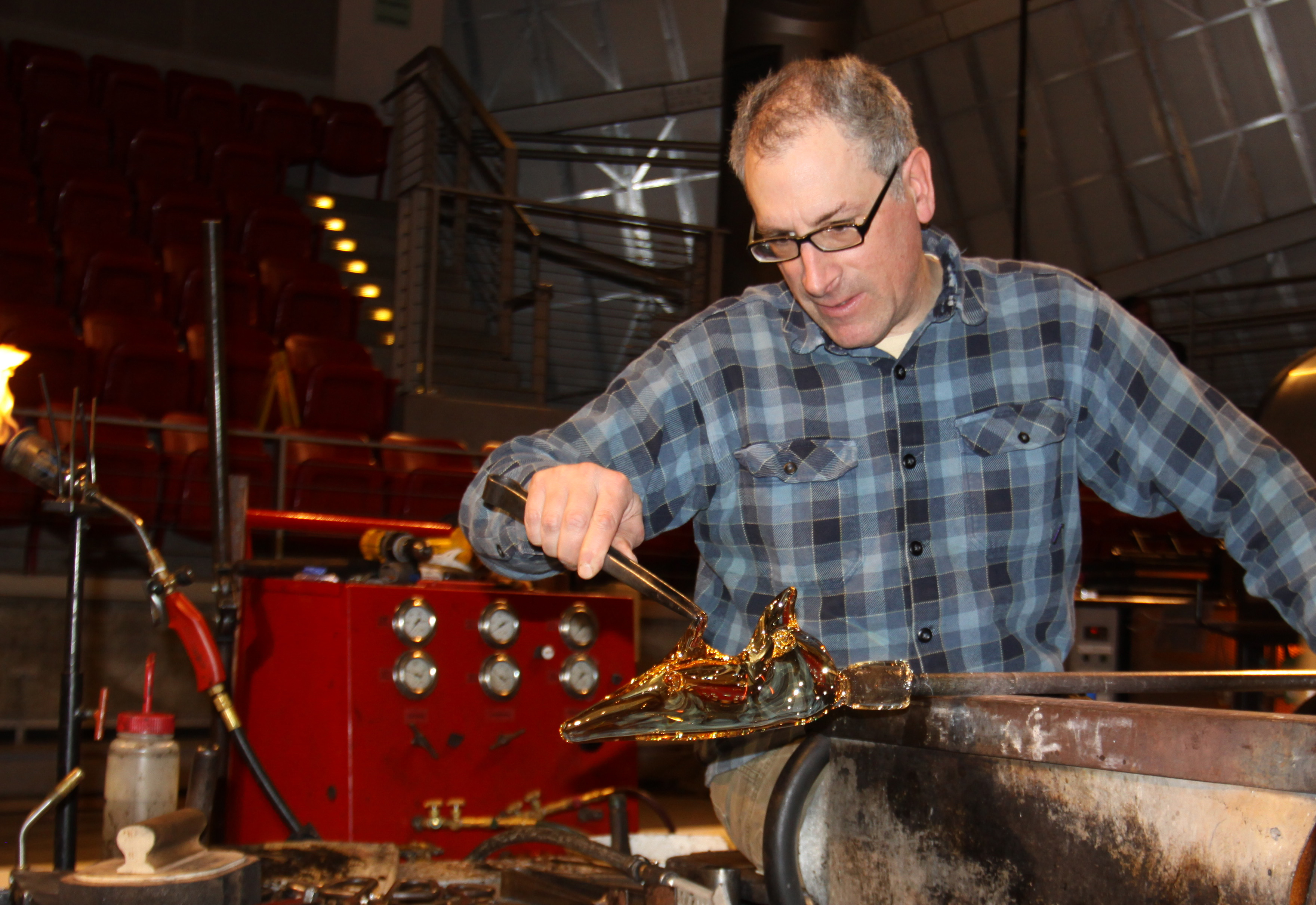
Joseph Gregory Rossano working on Vanity in the Museum of Glass Hot Shop, January 2014. Photo copyright and courtesy of Museum of Glass.

Each cabinet also offers a QR code leading to historical accounts of the enclosed species. These accounts summarize the species’ “discovery” (collection date, type locality, collector, scientific illustrations, etc.), humanity’s role in its extinction, and the year it was declared “Extinct”. To produce these species tales, Rossano collaborated with Sandra I. Berríos-Torres, MD. Berríos-Torres served as author of the 11 historical accounts and as Editorial Director of the exhibition catalogue, on behalf of Joseph Gregory Rossano.

The Biodiversity Heritage Library was a crucial resource for Berríos-Torres. Consulting dozens of publications in BHL while conducting research for Vanity, she ultimately cited 16 of them in the historical accounts that were incorporated into the exhibition and catalogue. The Florida Zestos Skipper Butterfly had the highest number of BHL citations in Vanity. Berríos-Torres used BHL to follow the butterfly’s taxonomic journey from its first listing by Hübner in 1819 to Aaron’s evaluation of the species in 1884.

“BHL resources were invaluable in my research for Vanity, in particular for accessing publications with the first collection, scientific description, and illustrations,” affirms Berríos-Torres. “The publications dated from 1819 to 2002, were published in English, German, Dutch, and French, and were contributed to BHL by 10 institutions, including university libraries, museums, government libraries, scientific research institutions, and botanical garden libraries across the USA, Canada, and England.”

From BOLD to Vanity

Berríos-Torres is an orthopaedic surgeon and a Centers for Disease Control and Prevention trained epidemiologist who has conducted laboratory and field research on infectious diseases and had a lead role in public health responses to national and international infectious disease outbreaks. Berríos-Torres was initially introduced to Rossano in the fall of 2009 at the opening of his BOLD exhibit, which examined species identity through art and incorporated Barcode of Life Data Systems‘ (BOLD) DNA barcodes into the installation’s sculptures.

BOLD was inspired by Rossano’s 2008 visit to the Área de Conservación Guanacaste (ACG) in northwestern Costa Rica at the invitation of Bradley Zlotnick, MD. At ACG, Rossano learned about DNA barcoding and met Zlotnick’s mentors, tropical ecologists Dr. Daniel H. Janzen and Dr. Winnie Hallwachs. Their 2004 landmark study on cryptic butterfly species, in collaboration with researchers at Smithsonian’s National Museum of Natural History (John M. Burns) and the University of Guelph, Canada (Paul D. N. Hebert, Erin H. Penton), “…illustrate(d) the value of DNA barcoding, especially when coupled with traditional taxonomic tools, in disclosing hidden diversity” [9]. Barcodes offered a “rediscovery” of biodiversity. Concurrently with BOLD, Rossano’s Whitewashed exhibition “…aimed at revealing our own species’ whitewashing of Man’s relationship with nature throughout time” [7].

In 2013, the art critic for the Seattle Stranger drew a parallel between Whitewashed and a blog post about eight animal species and three subspecies reported as “Extinct”, including the Eskimo Curlew, Numenius borealis (Forster, 1772), one of the species highlighted in Whitewashed and also featured in the blog. The post inspired Rossano to imagine a new installation on extinction, and Vanity was born.

Vanity and the Biodiversity Heritage Library

Berríos-Torres first discovered BHL in December 2014 while performing literature searches for the species’ historical accounts in Vanity. It quickly became a daily part of her research process.

“Between December 2014 and March 2015, in the three short months allotted to research and compose the historical accounts of the 11 animals depicted in the exhibition, I used BHL on a daily basis,” shares Berríos-Torres. “In the following months, as Editorial Director of the Vanity exhibition catalogue, I used BHL several times a week, in search of illustrations.”
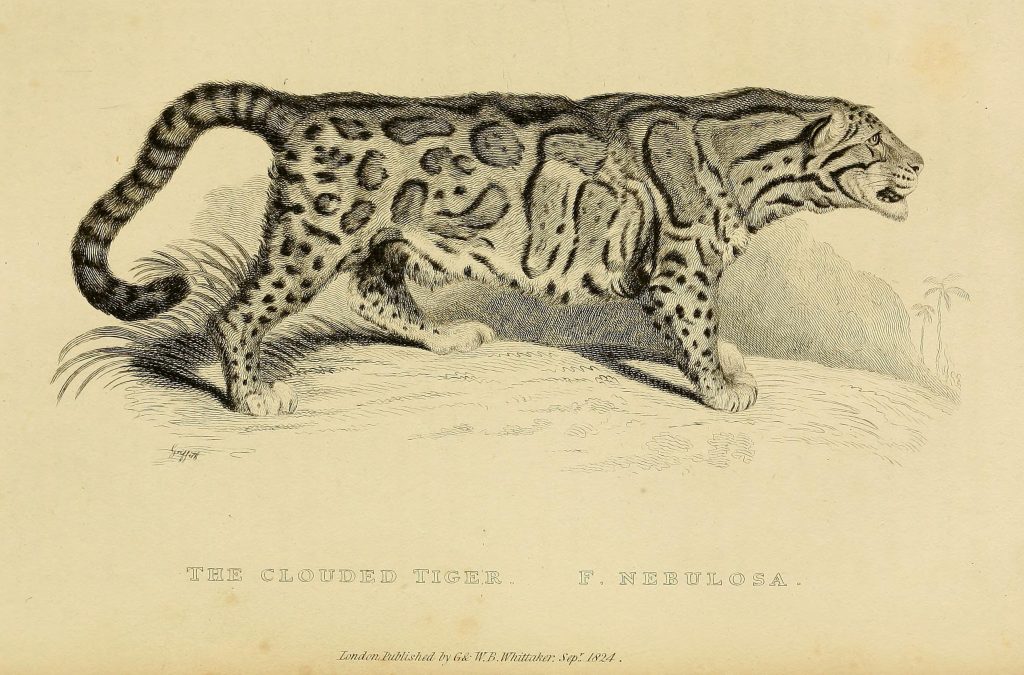
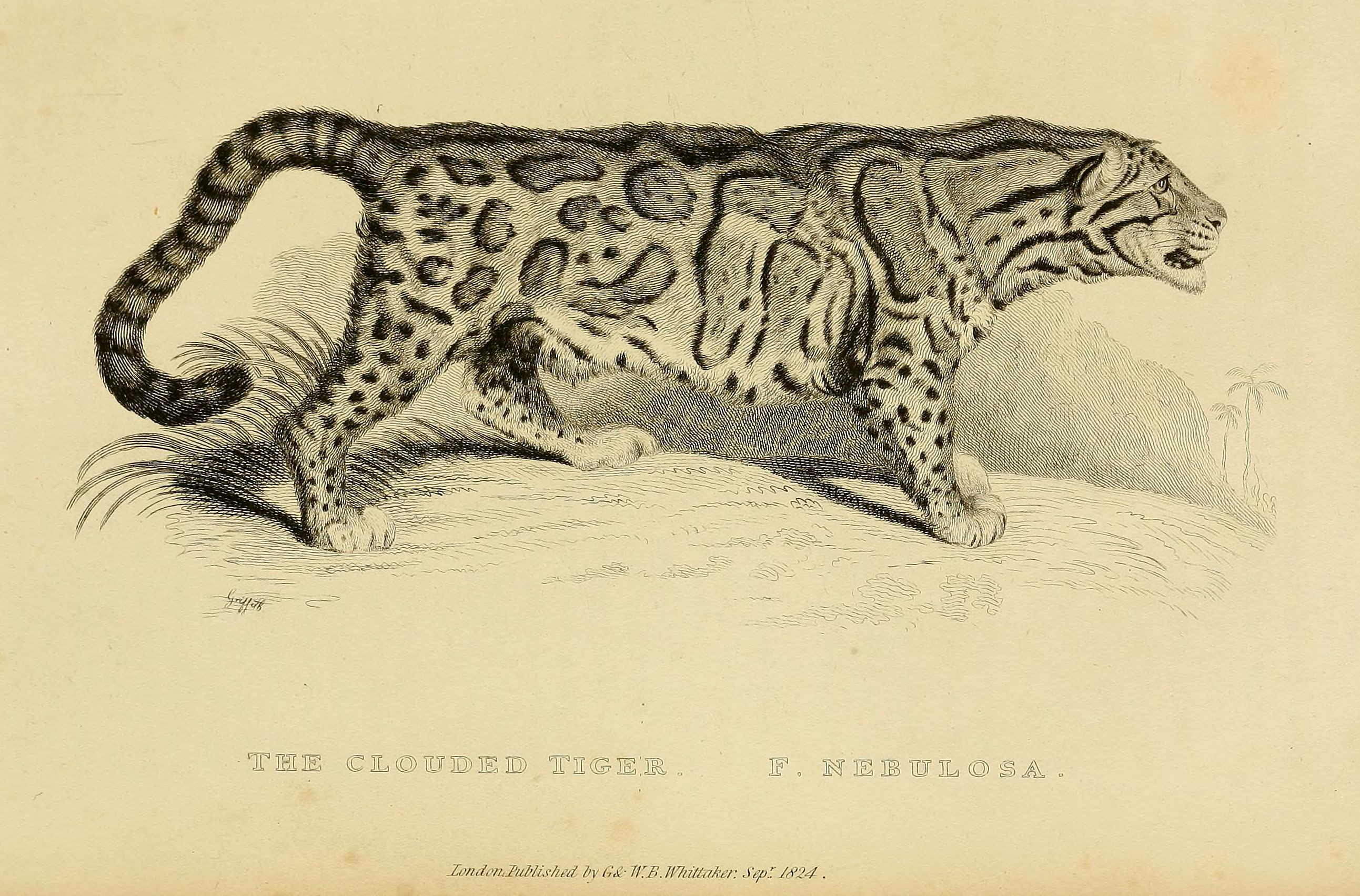
Illustration of the Clouded Leopard Neofelis nebulosa (Griffith, 1821) from Griffith’s The Animal Kingdom, v. 2 [Mammalia] (1827), contributed in BHL from Smithsonian Libraries. Retrieved from BHL and featured in the Vanity exhibition catalogue. In 2006, genetic testing revealed that the Clouded Leopard of Formosa (Taiwan) N. nebulosa brachyura, thought to be one of four subspecies of the mainland Clouded Leopard N. nebulosa (Griffith,1821), is actually genetically identical to the mainland N. nebulosa [10]. BHL houses Griffith’s first description from 1821, of what he called the Chinese or Tortoiseshell Tiger, Felis nebulosa, based solely on an illustration. In 2008, the International Union for Conservation (IUCN) listed N. nebulosa as “Regionally Extinct” in Taiwan [11].

Tracking down relevant publications required quite a bit of sleuthing. For this, BHL’s various advanced search options proved invaluable.

“In general, the most important aspect of the BHL resources lay in the ability to access first descriptions and early illustrations,” explains Berríos-Torres. “At the onset, the only information I had was the species’ or subspecies’ common and scientific names. A Google search on the scientific names yielded two additional pieces of information: the last name of the person who first described it in the scientific literature and the date of that description. Rarely could I readily find the full name of the person who described it or the original citation. The opportunity to employ varied advanced search strategies in BHL proved indispensable, particularly when starting with such limited information on the subject.”
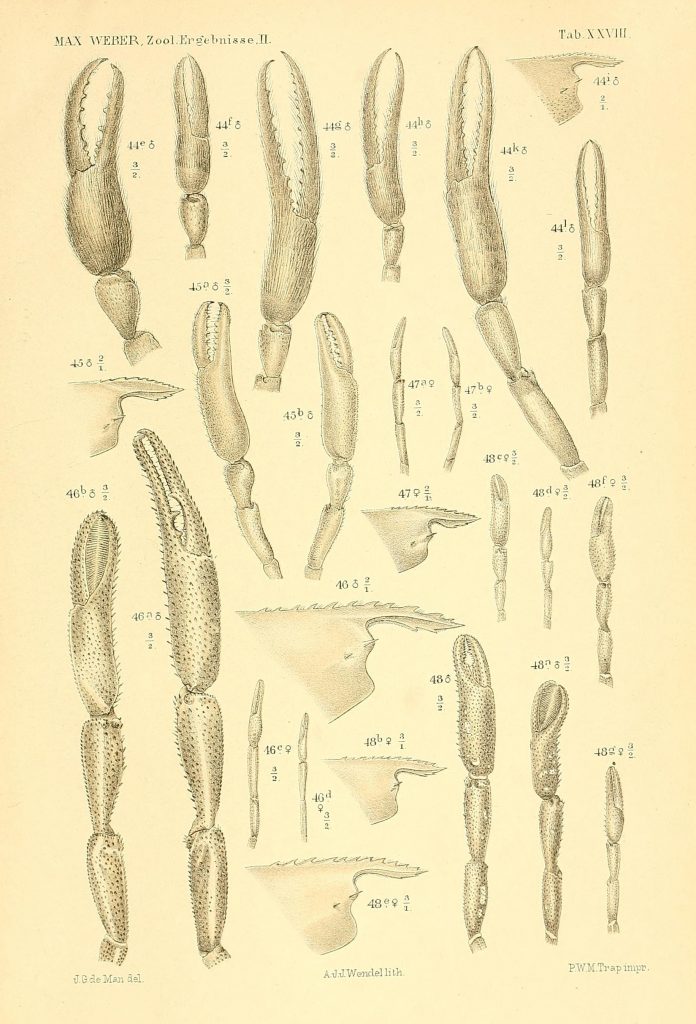
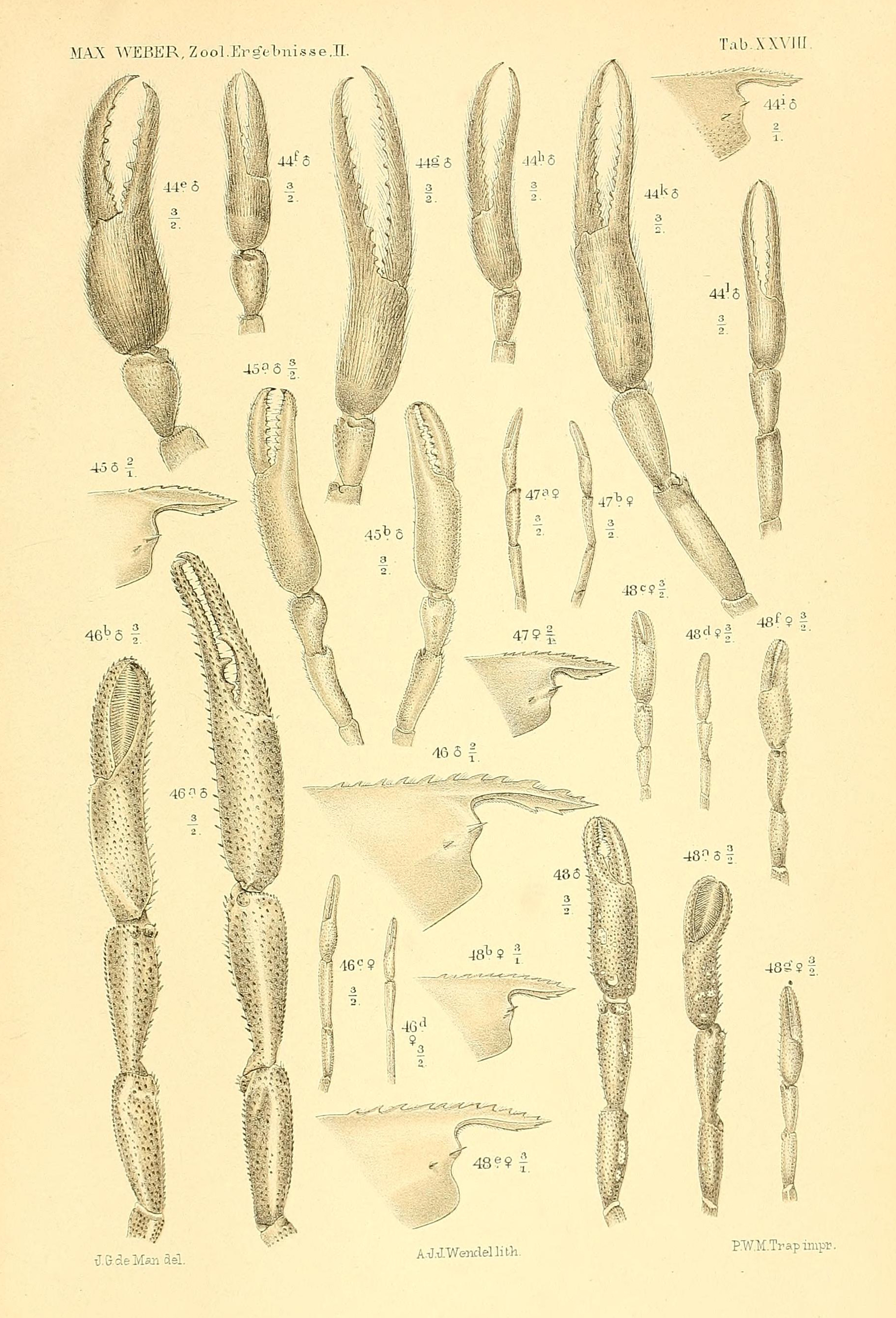
In 2015, de Grave et al., using IUCN Red List Criteria, concluded that the Freshwater Shrimp from Java Macrobrachium leptodactylus (de Man, 1879a) is one of two “Extinct” freshwater shrimp species [12]. This illustration depicts specimens collected in 1888 by Dutch-German zoologist Max Wilhelm Carl Weber — the only M. leptodactylus specimens ever collected [13]. It was published by Johannes Govertus de Man along with his description of Weber’s specimens as a new subspecies, Palaemon pilimanus, var: leptodactylus (1892). BHL also has de Man’s first description of the species as Palaemon pilimanus (1879). The illustration, retrieved from BHL, was contributed by Smithsonian Libraries and published in the Vanity catalogue.

In addition to the Zestos Skipper Butterfly, BHL provided valuable references for several other species featured in Vanity, including a freshwater shrimp from Java Macrobrachium leptodactylus (de Man, 1879a), the Clouded Leopard of Formosa (Taiwan) Neofelis nebulosa (Griffith, 1821), and the Scioto Madtom Catfish Noturus trautmani (Taylor, 1969).
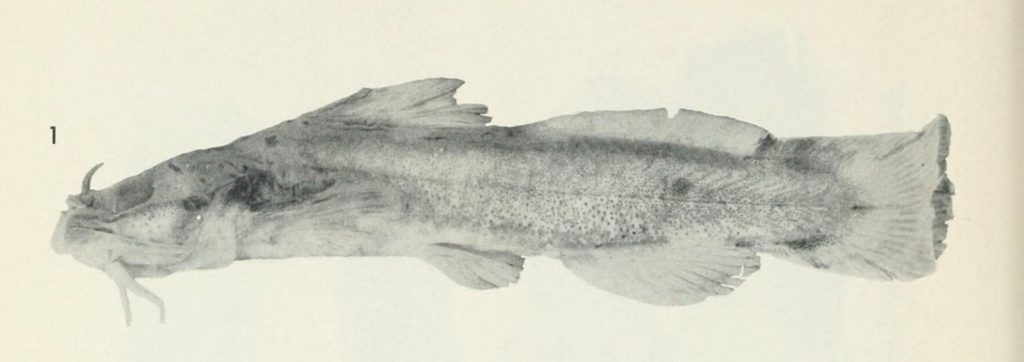
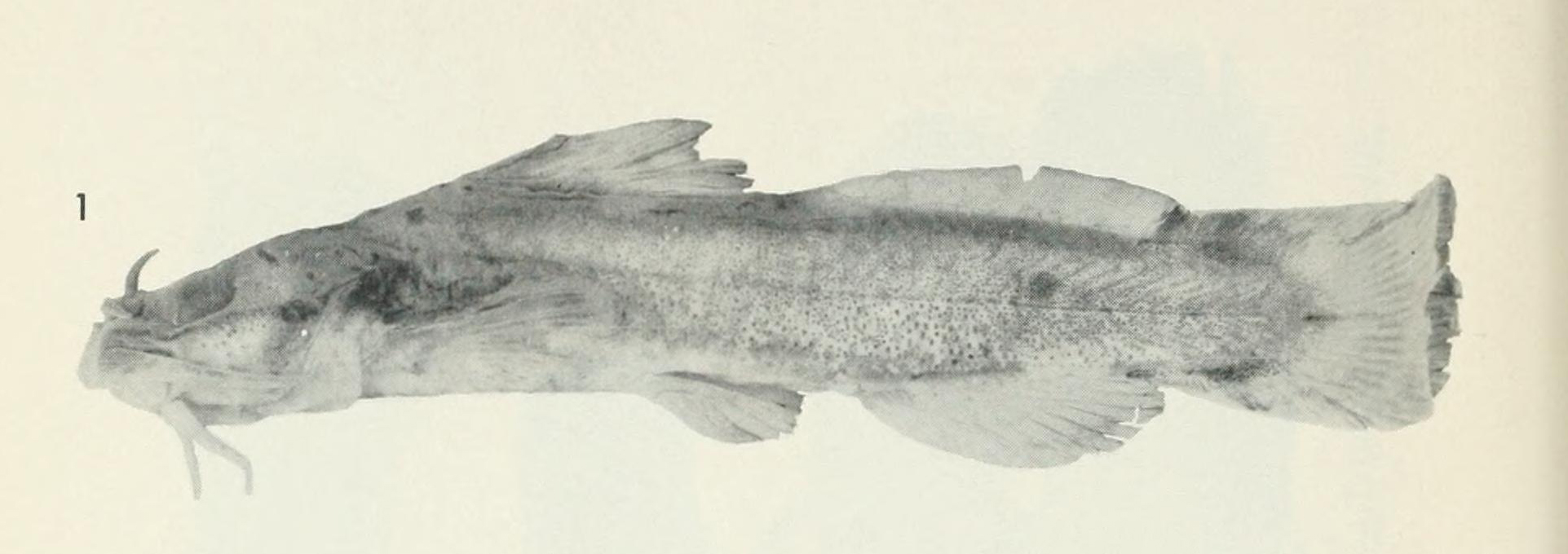
Photograph of the holotype (male) of the Scioto Madtom Catfish Noturus trautmani (Taylor, 1969), in the collections of the Smithsonian National Museum of Natural History. Bulletin – United States National Museum. No. 282 (1969). Contributed in BHL from Smithsonian Libraries.

The Scioto Madtom Catfish was first described by Smithsonian scientist Dr. William R. Taylor, former curator of fishes at the National Museum of Natural History, based on a “funny looking catfish” collected by Dr. Milton B. Trautman in 1943, from Big Darby Creek in Pickaway County, Ohio [14]. Using BHL, Berríos-Torres was able to retrieve Taylor’s original description and a photograph of the holotype, a male specimen housed in the Smithsonian collections. Scioto madtom has not been observed since Trautman’s last collected specimen in 1957 [15]. Habitat loss and competition from the Northern Madtom Noturus stigmosus (Taylor, 1969) may have contributed to Scioto Madtom’s extinction [15,16]. In 2013, the IUCN Red List declared Noturus trautmani “Extinct” [17].

Joseph Gregory Rossano, Vanity (Scioto Madtom Catfish, Noturus trautmani (Taylor, 1969) as installed at Museum of Glass, Tacoma, Washington, 2015); photo by C.B. Bell III, copyright and courtesy of Museum of Glass.

Beyond Vanity

The themes in BOLD and Vanity continue to evolve and converge. In 2017, Dr. Jacob J.D. Egge, scientific collaborator on the Vanity exhibition catalogue, championed bringing Vanity to The University Gallery at Pacific Lutheran University (PLU, Tacoma, Washington). There, Rossano expanded the installation to include select biological specimens from Washington state and housed in PLU’s Burton Ostenson Natural History Museum collection. The specimens were displayed atop multiple antique mirrored vanities across from the original installation and included a taxidermied woodpecker alongside Rossano’s clear glass sculpture of the same. Berríos-Torres compiled a supplement to the Vanity exhibition catalogue composed of natural history summaries of the PLU specimens, written by students in Egge’s Natural History of Vertebrates course. The students’ writings were incorporated into the expanded installation through QR codes on the wall, alongside the corresponding museum specimen. In 2018, Egge and Rossano presented on their Vanity collaboration at the University of Puget Sound’s Art|Sci: Art+Science salon.

The La Jolla Historical Society, inspired by Vanity, invited Rossano to create a work that reflected a part of San Diego’s biodiversity for the 2018 La Jolla Canyons: Place, Diversity, Connections exhibition (Wisteria Cottage, La Jolla, California). The Solitary Vireo cryptic species complex [18,19], revealed by DNA sequencing to be three distinct songbird species, includes Cassin’s vireo Vireo cassinii (Xántus, 1858), the only one of the three that migrates through San Diego County. Rossano displayed three morphologically indistinguishable clear glass vireo sculptures, blown in the likeness of museum collection specimens and identified solely through scientific tags or DNA barcodes (as in BOLD), atop an antique mirrored vanity (as in Vanity at PLU).

BHL: Discovery and Rediscovery for Bioliteracy

Vanity asks the viewer to face their own culpability in the loss of our biodiversity heritage. The question is, will we listen? Will we heed the warnings that the tales of species like the Zestos Skipper convey? Or will our own vanity get in the way? As this heritage continues to disappear, do we face a future where the historic literature and museum collections become the only places where we can explore and appreciate these “lost” species? As Dr. Minno wrote in his personal reflection on the Zestos Skipper Butterfly for the Vanity exhibition catalogue:

“[Vanity] gives us a chance to think about our role in this beautiful and vibrant world. The butterflies are telling us that something is wrong with the environment. We must learn to live modestly and to protect our planet if butterflies, as well as humans, are to survive” [20].

From historic literature and museum specimens, to traditional morphological taxonomy and modern DNA barcoding techniques, Vanity and BOLD convey and reflect more than just humanity’s role in this epoch’s loss of biodiversity. Rossano’s installations highlight the “renaissance of taxonomy” [21], the need for continued scientific exploration, and the opportunities that abound in gaining a better understanding Earth’s biodiversity. Mora et al., have predicted that, “In spite of 250 years of taxonomic classification and over 1.2 million species already catalogued in a central database…some 86% of existing species on Earth and 91% of species in the ocean still await description” [22].

As Berríos-Torres’ reflection on her research for Vanity demonstrates, access to historic literature, images, and other library materials are vital to cataloguing, understanding, and communicating Earth’s biological heritage.

“BHL is unparalleled and vital in providing worldwide access to a free, publicly available, digital biodiversity repository and reference library,” affirms Berríos-Torres. “For scientists and the public alike, BHL complements the DNA barcode taxonomy reference sequences to discover and rediscover biodiversity. Together they are rich wells of collaboration democratizing global bioliteracy.”
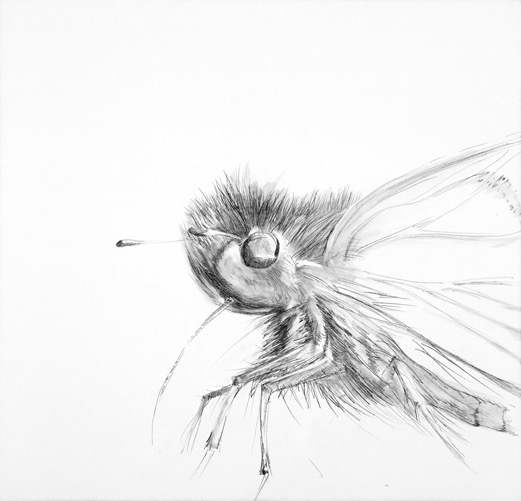
Joseph Gregory Rossano, Zestos Skipper Butterfly, 2014. Pencil on melamine, 18 X 18 inches (actual size before photographic reduction); photo by C.B. Bell III, copyright and courtesy of Joseph Gregory Rossano.


Acknowledgements

Berríos-Torres wishes to acknowledge Joseph Gregory Rossano, Museum of Glass, Bradley Zlotnick, MD, C.B. Bell III, and all Collaborating Scientists:

  • Franco Andreone, PhD, Museo Regionale di Scienze Naturali, Italy (Cape Verde Giant Skink)
  • Neil Burkhead, MS, (Retired) United States Geological Survey (USGS), Southeast Ecological Science Center, USA (Santa Cruz [Monkey Spring] Pupfish)
  • Po-Jen Chiang, PhD Formosan Wild Sound Conservation Science Center Co. Taiwan (Clouded Leopard of Formosa)
  • Neil Cumberlidge, PhD, Chair, IUCN Freshwater Crustacean Specialist Group, USA (Freshwater Shrimp from Java)
  • Jacob J. D. Egge, PhD, Pacific Lutheran University, USA (Scioto Madtom Catfish)
  • Robert E. Gill, Jr. MS, USGS, Alaska Science Center, USA (Eskimo Curlew)
  • Lonnie I. Grassman, PhD Texas A&M University, USA (Clouded Leopard of Formosa)
  • Marc C. Minno, PhD, Eco-Cognizant, Inc. USA (Rockland Meske’s Skipper & Florida Zestos Skipper Butterflies)
  • Rohan Pethiyagoda B.Sc., M.Phil, (Retired) Australian Museum, Australia (Sri Lanka Spiny Eel)
  • Edwin P. (Phil) Pister, MA – Desert Fishes Council, USA
  • Hubert Planton, DVM, Veterinarian and African Wildlife Consultant, France (Western Black Rhino)
  • Claudio Soto-Azat, MV, MSc, PhD, Universidad Andrés Bello, Chile (Northern Darwin Frog)
  • Raquel Vasconcelos, PhD, University of Porto, Portugal (Cape Verde Giant Skink)

References

[1] Ceballos G., Ehrlich P.R., Dirzo R. (2017). Biological Annihilation via the Ongoing Sixth Mass Extinction Signaled by Vertebrate Population Losses and Declines. Proceedings of the National Academy of Sciences Jul, 114 (30) E6089-E6096; DOI: 10.1073/pnas.1704949114.

[2] Ceballos G., Ehrlich P.R., Barnosky A.D., García A., Pringle R.M., and Palmer T.M. (2015). Accelerated Modern Human–Induced Species Losses: Entering the Sixth Mass Extinction. Science Advances 1(5). e1400253DOI: 10.1126/sciadv.1400253.

[3] Dirzo R., Young H.S., Galetti M., Ceballos G., Isaac N.J.B., Collen B. (2014). Defaunation in the Anthropocene. Science 345(6195): pp. 401-406. DOI: 10.1126/science.1251817.

[4] Minno M. C., Daniels J., Jue D. K. (2012). Statement on the Extinction, Decline, and Loss of Butterflies in South Florida. Available at http://www.bio.miami.edu/horvitz/Plant-animal%20interactions%202013/conservation/required%20readings/Statement%20on%20Species%20Loss%20June%202012%20MC%20Minno.pdf. Accessed on 6 December 2018.

[5] Schweitzer D. F., Minno M. C., and Wagner D. L. (2011). Rare, Declining, and P​oorly Known Butterflies and Moths (Lepidoptera) of Forests and Woodlands in the Eastern United States. U.S. Forest Service, Forest Health Technology Enterprise Team, FHTET-2011-01. USDA Forest Service, Morgantown, West Virginia. 517 pp.

[6] Minno M.C. (2010). Butterfly Extinctions in South Florida. American Butterflies 8(3):17. Available at: http://www.naba.org/pubs/ab183/ab183_extinctions.pdf. Accessed on 6 December 2018.

[7] Rossano, J.G. (2015). Preface. In S.I. Berríos-Torres (Ed.), Joseph Gregory Rossano: Vanity (pp.13-16). Tacoma, WA: Museum of Glass.

[8] Lawrimore S. (2015). Swan Song. In S.I. Berríos-Torres (Ed.), Joseph Gregory Rossano: Vanity (pp.21-26). Tacoma, WA: Museum of Glass.

[9] Hebert P.D.N., Penton E.H., Burns J.M., Janzen D.H., and Hallwachs W. (2004). Ten Species in One: DNA Barcoding Reveals Cryptic Species in the Neotropical Skipper Butterfly Astraptes Fulgerator. PNAS 101(41): 14812-14817. www.pnas.org/cgi/doi/10.1073/pnas.0406166101. Accessed on 6 December 2018.

[10] Buckley-Beason V.A. et al. (2006). Molecular Evidence for Species-Level Distinctions in Clouded Leopards. Current Biology 16(23):2371-2376. Available at: http://www.cloudedleopard.org/Documents/Val_CB_2006.pdf. Accessed on 6 December 2018.

[11] Grassman L., Lynam A., Mohamad S., Duckworth J.W., Bora J., Wilcox D., Ghimirey Y., Reza A. & Rahman H. (2016). Neofelis nebulosa. The IUCN Red List of Threatened Species 2016: e.T14519A97215090. http://dx.doi.org/10.2305/IUCN.UK.2016-1.RLTS.T14519A97215090.en. Accessed on 6 December 2018.

[12] De Grave S., Smith K.G., Adeler N.A., Allen D.J., Alvarez F., Anker A., et al. (2015). Dead Shrimp Blues: A Global Assessment of Extinction Risk in Freshwater Shrimps (Crustacea: Decapoda: Caridea). PLoS ONE 10(3): e0120198. doi:10.1371/ journal.pone.0120198. Accessed on 6 December 2018.

[13] Berríos-Torres S.I. (2015). Freshwater Shrimp from Java. Macrobrachium leptodactylus (de Man, 1879a). In S.I. Berríos-Torres (Ed.), Joseph Gregory Rossano: Vanity (pp.52-56). Tacoma, WA: Museum of Glass.

[14] U.S. Fish and Wildlife Service (USFWS). (1976). National Digital Library. Milton B. Trautman Oral History Transcript. Interview with Milton B. Trautman. Interviewer Michael Smith. “Audio Cassette Dub from Reel-to Reel”. July 1976. Available at: http://digitalmedia.fws.gov/cdm/ref/collection/document/id/1031. Accessed on 6 December 2018.

[15] Scioto madtom (Noturus trautmani) 5-Year Review: Summary and Evaluation. U.S. Fish and Wildlife Service, Midwest Region, Ohio Ecological Services Field Office, Columbus, Ohio. Available at: http://www.fws.gov/midwest/endangered/recovery/5yr_rev/pdf/scma5yr2009.pdf. Accessed on 6 December 2018.

[16] King C.C. (1981). Prairies of the Darbie Plains in West-Central Ohio. Stuckie & Reese. Ohio Biological Survey Biology Notes 15:108-127. Available at: http://images.library.wisc.edu/EcoNatRes/EFacs/NAPC/NAPC06/reference/econatres.napc06.cking.pdf. Accessed on 6 December 2018.

[17] NatureServe. Noturus trautmani. The IUCN Red List of Threatened Species 2013: e.T14908A19032932. http://dx.doi.org/10.2305/IUCN.UK.2013-1.RLTS.T14908A19032932.en. Accessed on 6 December 2018.

[18] Murray B. W., McGillivray W. B., Barlow J. C., Beech R. N., and Strobeck C. (1994). The Use of Cytochrome B Sequence Variation in Estimation of Phylogeny in the Vireonidae. The Condor 96:1037-1054. https://sora.unm.edu/sites/default/files/journals/condor/v096n04/p1037-p1054.pdf. Accessed on 17 December 2018.

[19] Johnson N.K. (1995). Speciation in Vireos. I. Macrogeographic Patterns of Allozymic Variation in the Vireo Solitarius Complex in the Contiguous United States. The Condor 97:903-919. https://sora.unm.edu/sites/default/files/journals/condor/v097n04/p0903-p0919.pdf. Accessed on 17 December 2018.

[20] Minno, M.C. (2015). Reflections on the Rockland Meske’s Skipper Butterfly and the Zestos Skipper Butterfly. In S.I. Berríos-Torres (Ed.), Joseph Gregory Rossano: Vanity (pp.52-56). Tacoma, WA: Museum of Glass.

[21] Miller S.E. (2007). DNA Barcoding and the Renaissance of Taxonomy. Proc Natl Acad Sci USA 104(12): pp. 4775-6. Epub 2007 Mar 15. https://www.pnas.org/content/104/12/4775. Accessed on 17 December 2018.

[22] Mora C, Tittensor DP, Adl S, Simpson AGB, Worm B. (2011). How Many Species Are There on Earth and in the Ocean? PLoS Biol 9(8): e1001127. doi:10.1371/journal.pbio.1001127. Accessed on 17 December 2018.

February 7, 2019by Grace Costantino
Blog Reel, User Stories

19th Century Butterflies: Reconstructing a Collection’s History with BHL

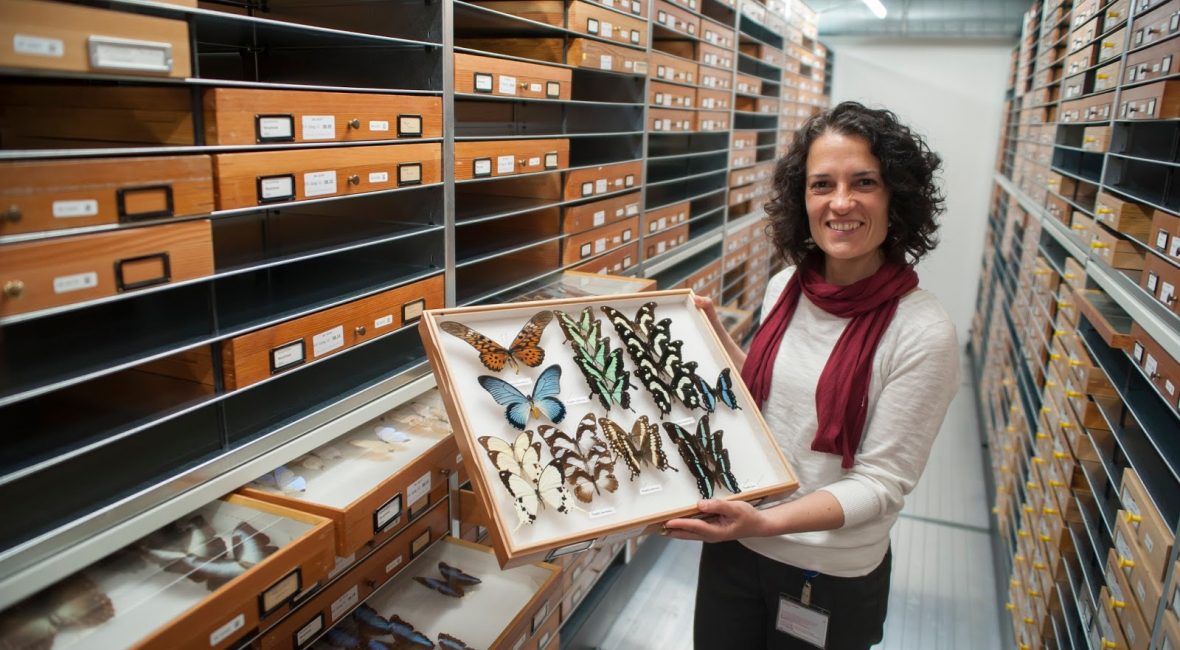
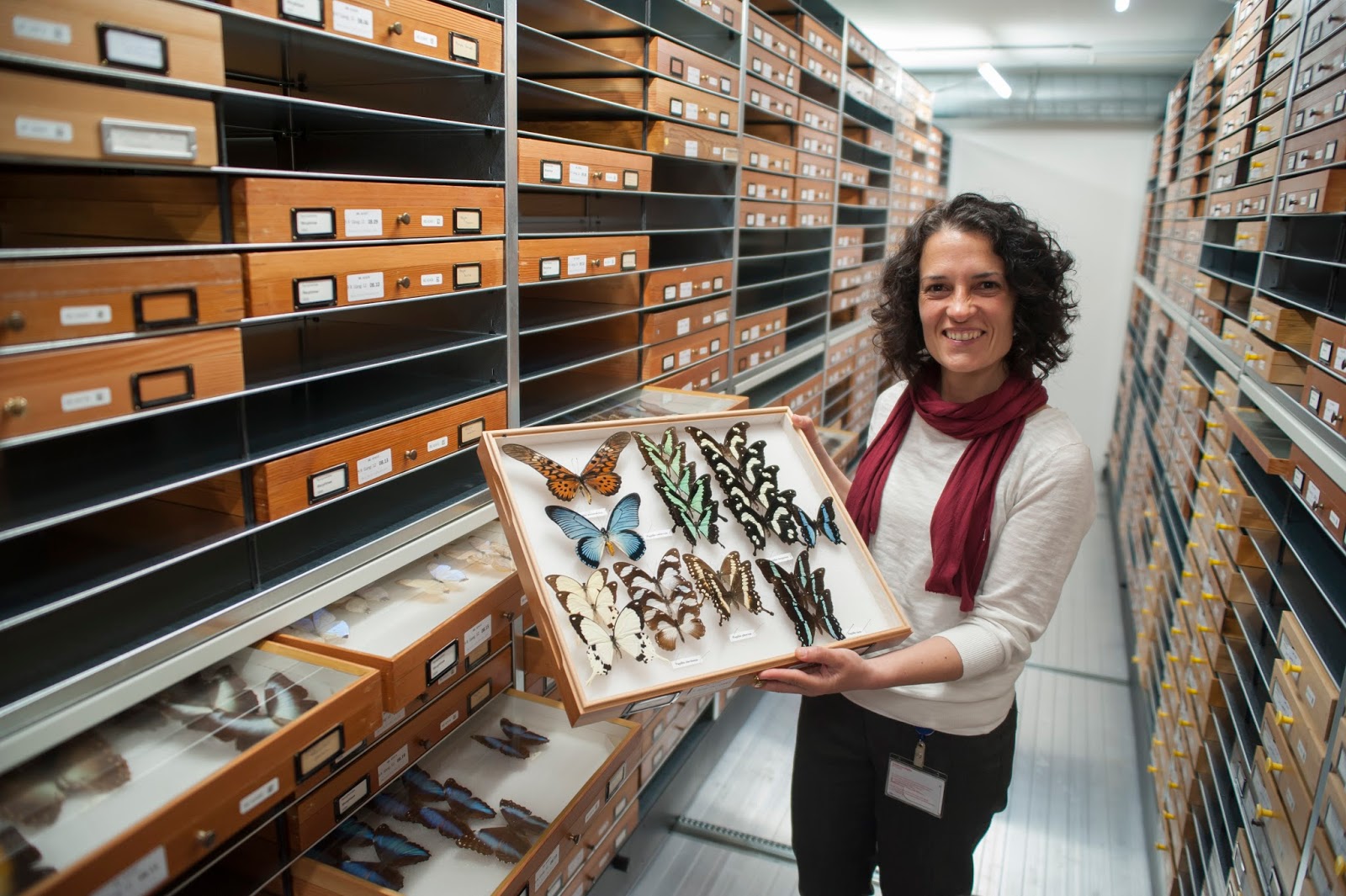
The Naturalis Biodiversity Center, a recent BHL Affiliate, is home to one of the largest natural history collections in the world, consisting of over 37 million specimens. Additionally, Naturalis has contributed nearly 200,000 pages to the BHL collection since 2016.
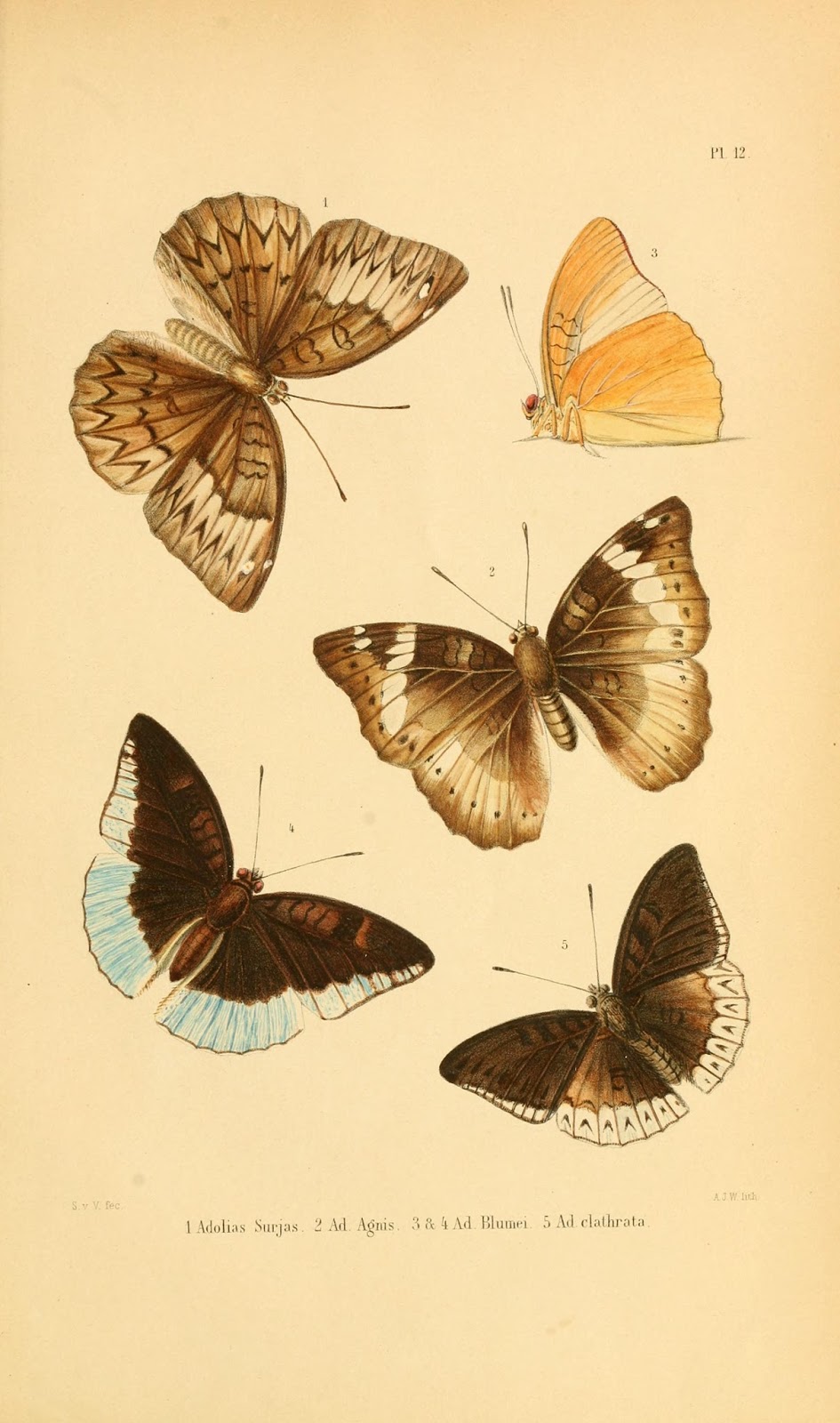
Over 900,000 of the museum’s 37+ million specimens are butterflies, some dating back to the 18th century. Approximately 18,000 drawers are required to store this vast Lepidoptera collection.

The Naturalis butterfly collection is not only vast, it is also rich in type specimens, which are indexed through type catalogs combining historical and taxonomical research. Recently, researchers set about compiling such a catalog for the museum’s South East Asian Adoliadini (Lepidoptera, Nymphalidae) type specimens.

In order to create this catalog, which was published last year (Gassó Miracle, M.E. & T. Yokochi, 2016, Lepidoptera Science 67(2)), the authors needed to access and compare all existing taxonomic descriptions for the specimens, identify synonyms, contrast plates and photographs, and verify geographic distribution.

“For all of this, specialized literature is essential,” asserts Eulàlia Gassó Miracle, Curator of Butterflies at the Naturalis Biodiversity Center and co-author of the Adoliadini type catalog.

In order to sort out confusion regarding the origin, labeling, and taxonomy for the specimens, Eulàlia and her co-authors consulted more than 80 journals and books. More than half of them were available through the Biodiversity Heritage Library.

“BHL helped us to revise the taxonomy and the history of the specimens,” explains Eulàlia.

View Full Size Image
Eulàlia Gassó at the Naturalis butterfly collection. Photo by Henk Caspers.

BHL has been one of Eulàlia’s “most valued research tools” for the past decade.

“Although I have the privilege of access to most of the literature I need, either at the library of the Naturalis Biodiversity Center or the Leiden University Library, the BHL collection allows me to work in a flow from…well, anywhere,” explains Eulàlia. “BHL has also made available rare and unique publications from the 18th and 19th century, much needed for my research, that I cannot find in The Netherlands.”

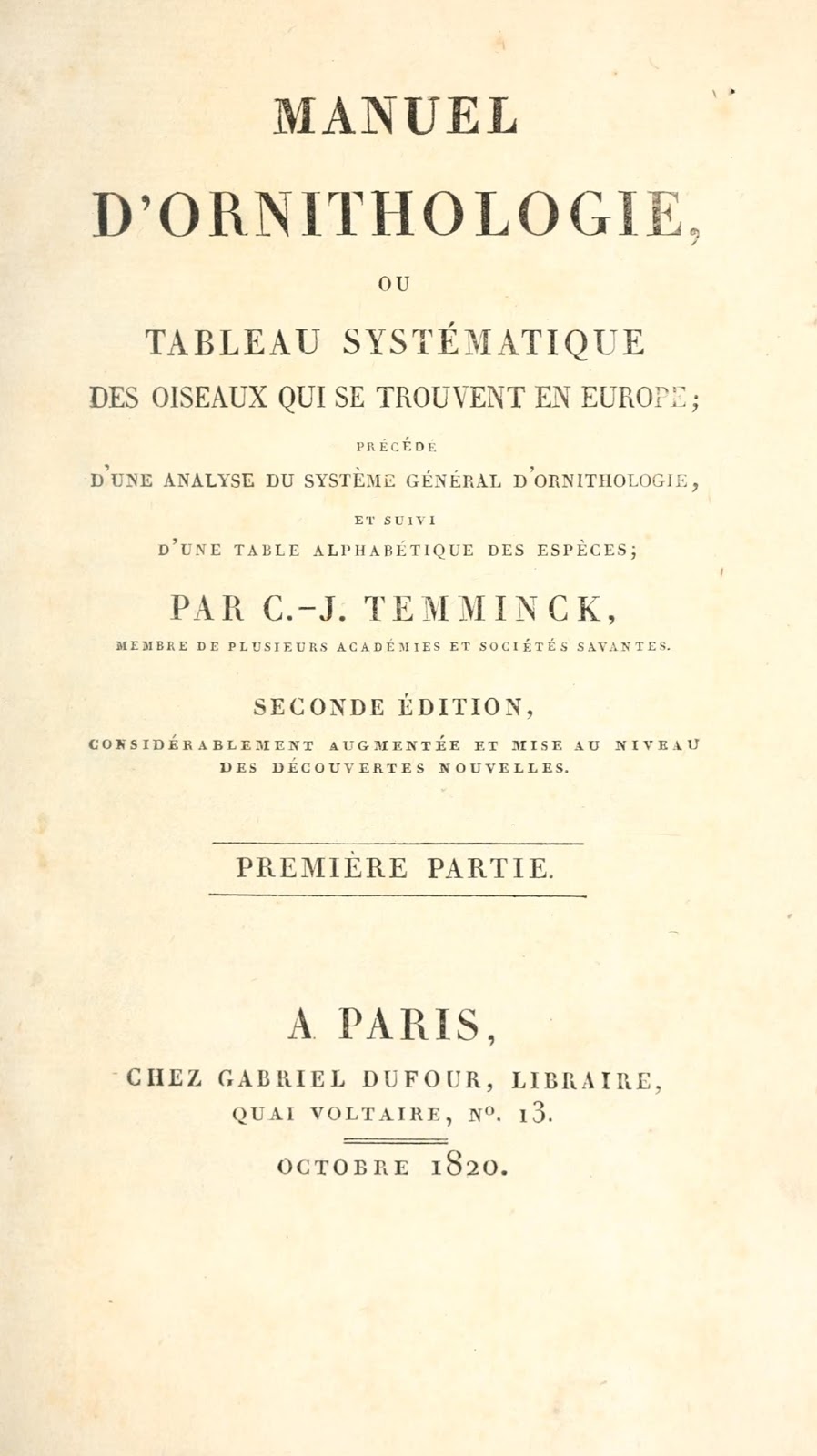
Eulàlia first discovered BHL while looking for works by C.J. Temminck, zoologist and first director of the Rijksmuseum van Natuurlijke Historie (RMNH, now Naturalis Biodiversity Center). Since then, she has used it to support her work as collections manager in various departments at the museum as well as her research on the history of 19th century natural history.

View Full Size Image
Title page of Manuel d’ornithologie, ou Tableau systématique des oiseaux qui se trouvent en Europe (Vol. 1, 2nd ed., 1820), by C.J. Temminck. Digitized by University Library, University of Illinois Urbana Champaign. http://biodiversitylibrary.org/page/33457859.

“As the curator of a natural history collection that is centuries old, I am also terribly curious about its former curators and curatorial practices,” says Eulàlia. “For this, again, BHL is a constant source of information and images. I share some of my findings and musings in my personal blog, the Museum Chronicles. For my historical research on the life and work of Temminck, accessing online his works and those of his peers has uncluttered my desk, helped organize my thoughts, given me access to new works – and with them, new insights – In a word, BHL helps me progress.”

Eulàlia uses BHL daily, either reading titles online or taking advantage of the custom PDF generation feature to download content. BHL’s high resolution image download feature, which Eulàlia discovered thanks to an @BioDivLibrary tweet, helps her compare illustrations with specimens. To further facilitate her research, Eulàlia is anxious to see full text search added to the BHL website. Happily, this is a feature that is currently in development.

BHL’s collections not only serve as a daily resource for Eulàlia’s research, but they also help her start each day with a little piece of natural history beauty.

View Full Size Image
Plate 12 of Snellen van Vollenhoven’s work on Adolias butterflies. The type specimens are deposited at Naturalis Biodiversity Center. Digitized by Smithsonian Libraries. http://biodiversitylibrary.org/page/10840001.

“Recently, one of my favorite items is the article of Snellen van Vollenhoven on Adolias butterflies, one that I have read and examined repeatedly while validating the status of his type specimens,” says Eulàlia. “Plate 12 is so beautiful, it is the first thing I see when starting my computer.”

Indeed, we’re firm believers that every day is better with a little bit of #SciArt. So, whether you need to brighten your day with a little natural history eye candy or reconstruct the history of a type collection, BHL has you covered.

______________________________________

This post may contain the personal opinions of BHL users or affiliated staff and does not necessarily represent the official Biodiversity Heritage Library (BHL) position on these matters.

March 9, 2017by ulib-libraryjobs
Blog Reel, Featured Books

Fashion in the Natural World: Fusing Science with Art

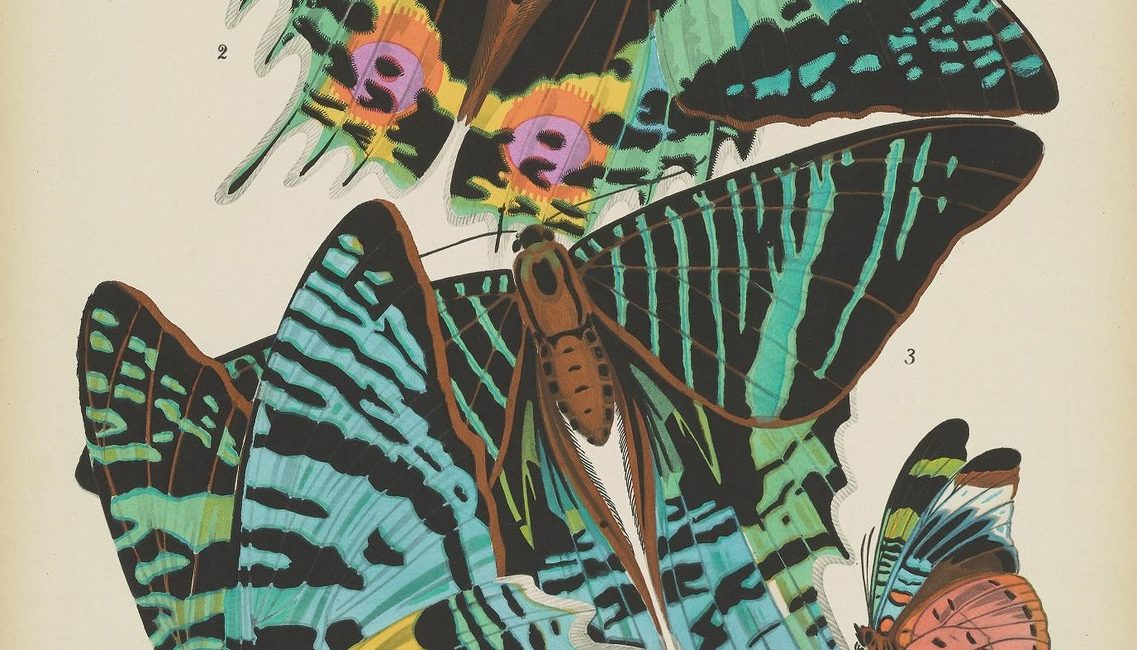
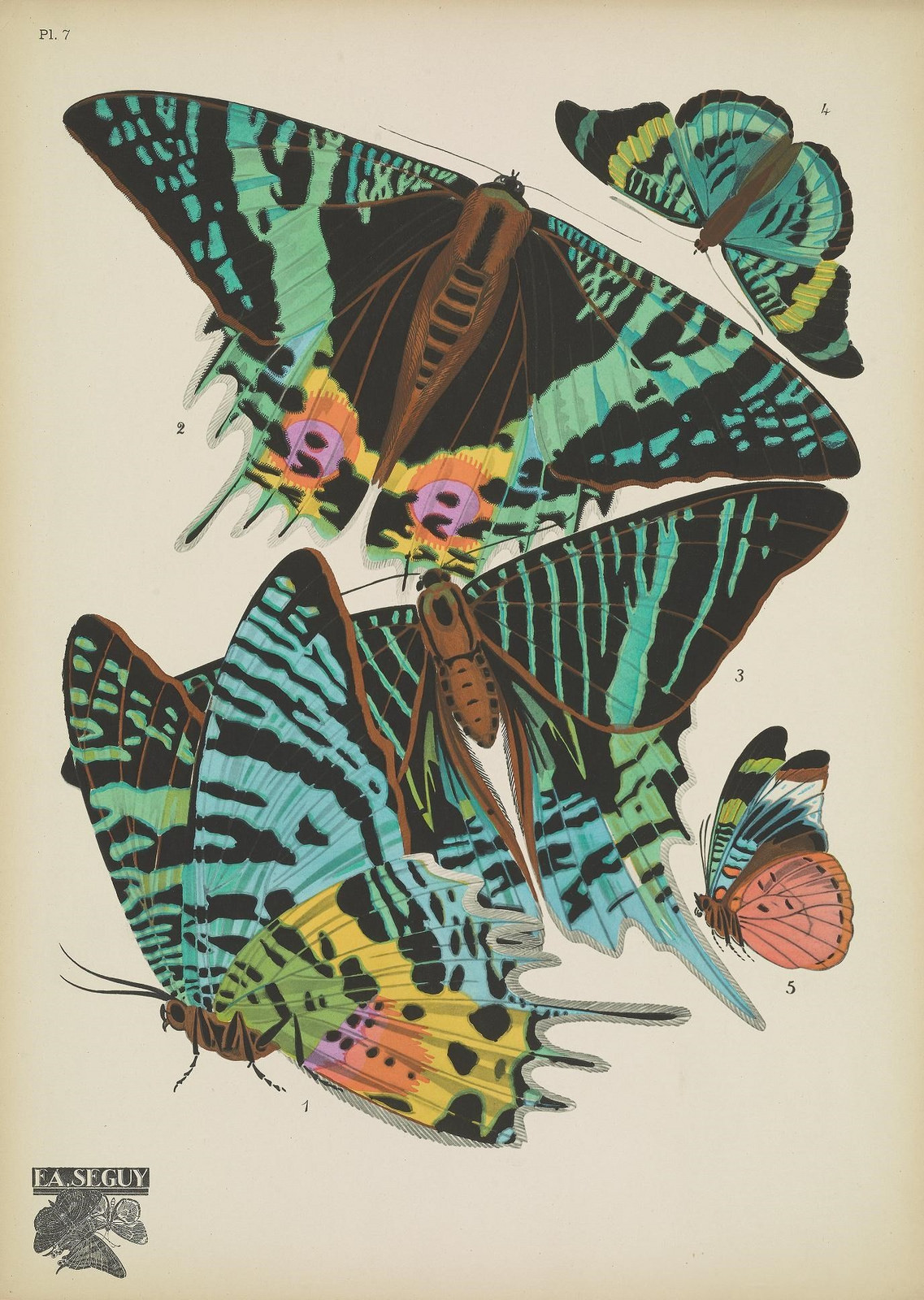
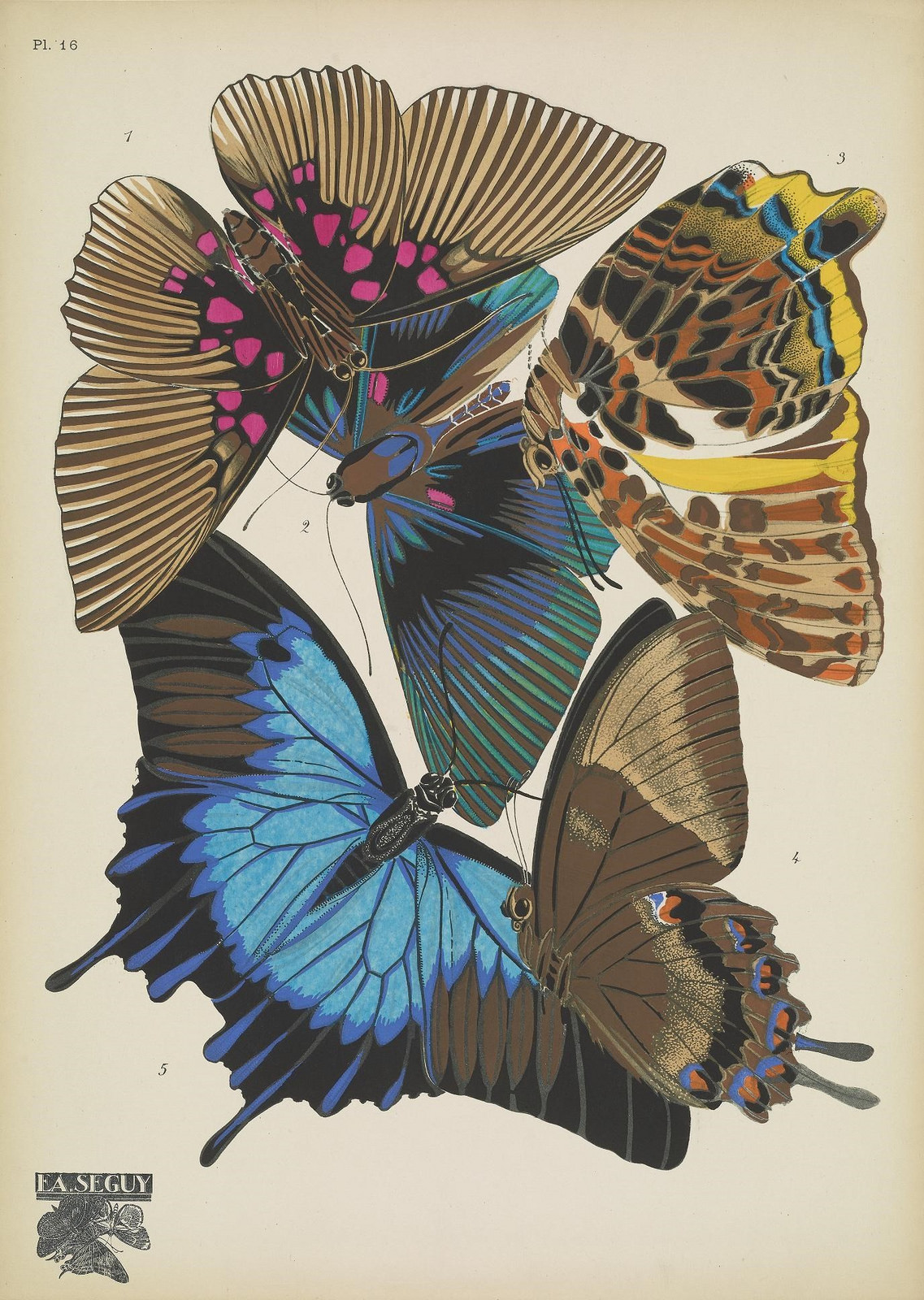
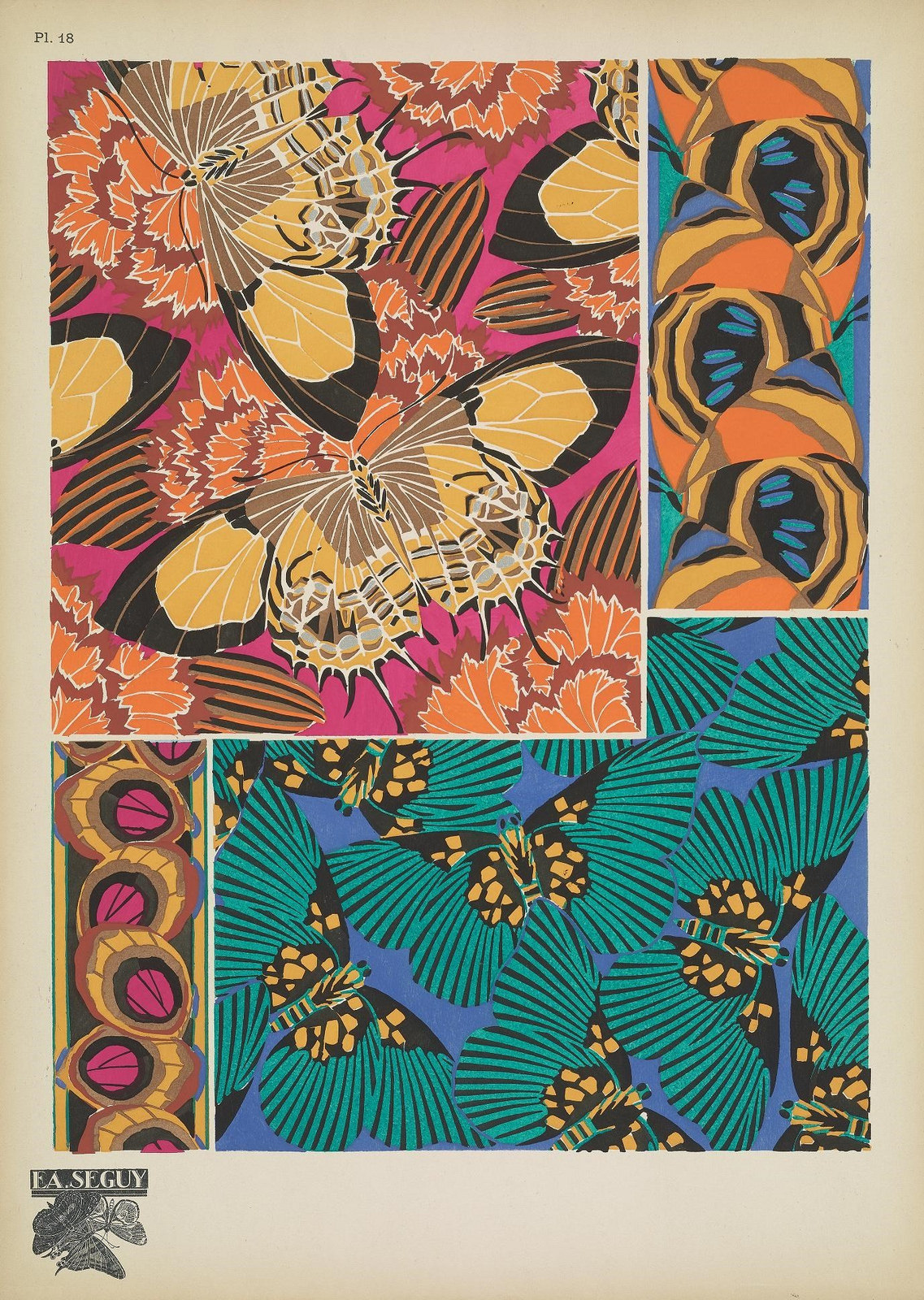
Emile-Allain Séguy was a popular French designer throughout the Art Deco and Art Nouveau movements of the 1920s. Often confused with the French entomologist Eugene Séguy who was active during the same time period, E.A. Séguy designed primarily patterns and textiles and was heavily influenced by the natural world. He was particularly fond of the intricate patterns and beauty of insects (Eugene would have approved), which he saw as “mechanic wonders” that provided abundant inspiration for interior design (Schiff, 157).

View Full Size Image
Séguy, Emile-Allain. Papillons. 1925. http://biodiversitylibrary.org/page/48852979. Digitized by Smithsonian Libraries.

In 1920, the American textile manufacturer F. Schumacher and Co. commissioned the work Papillons, which was to include stunning compositions of butterflies intended for use as wallpaper, textiles, and other interior and fashion design purposes. Referring to scientific illustrations for reference, Séguy reproduced 81 butterflies within 16 compositions, as well as four additional plates of decorative patterns inspired by butterfly wings, using the pochoir technique. The pochoir technique is based on an ancient method that uses stencils for color application. A costly and labor-intensive technique, pochoir was especially popular in Paris in the 1920s. Each color in a design has its own stencil and layers of gouache or other pigments are applied through each stencil by hand with a brush or sponge. The result is an intense and accurate representation of the colors intended for each composition (Schiff, 157).

View Full Size Image
Séguy, Emile-Allain. Papillons. 1925. http://biodiversitylibrary.org/page/48852961. Digitized by Smithsonian Libraries.

Though the butterflies and plates are ultimately meant for design applications, Séguy emphasized his use of scientific illustrations to inspire his art and included a table of scientific names within Papillons identifying the species depicted in each plate and its place of origin. The work includes species from across the globe (Schiff, 158).

View Full Size Image
Séguy, Emile-Allain. Papillons. 1925. http://biodiversitylibrary.org/page/48852957. Digitized by Smithsonian Libraries.

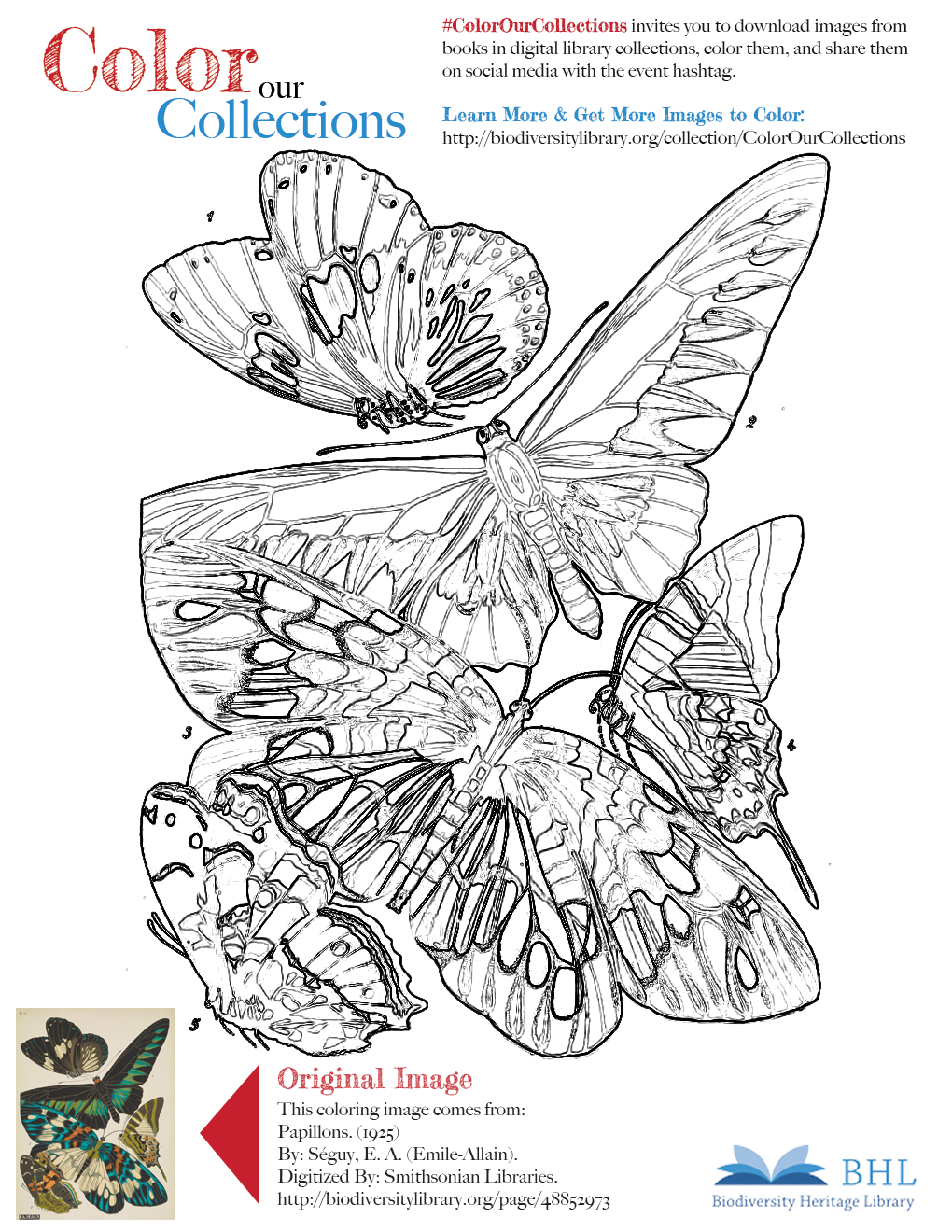
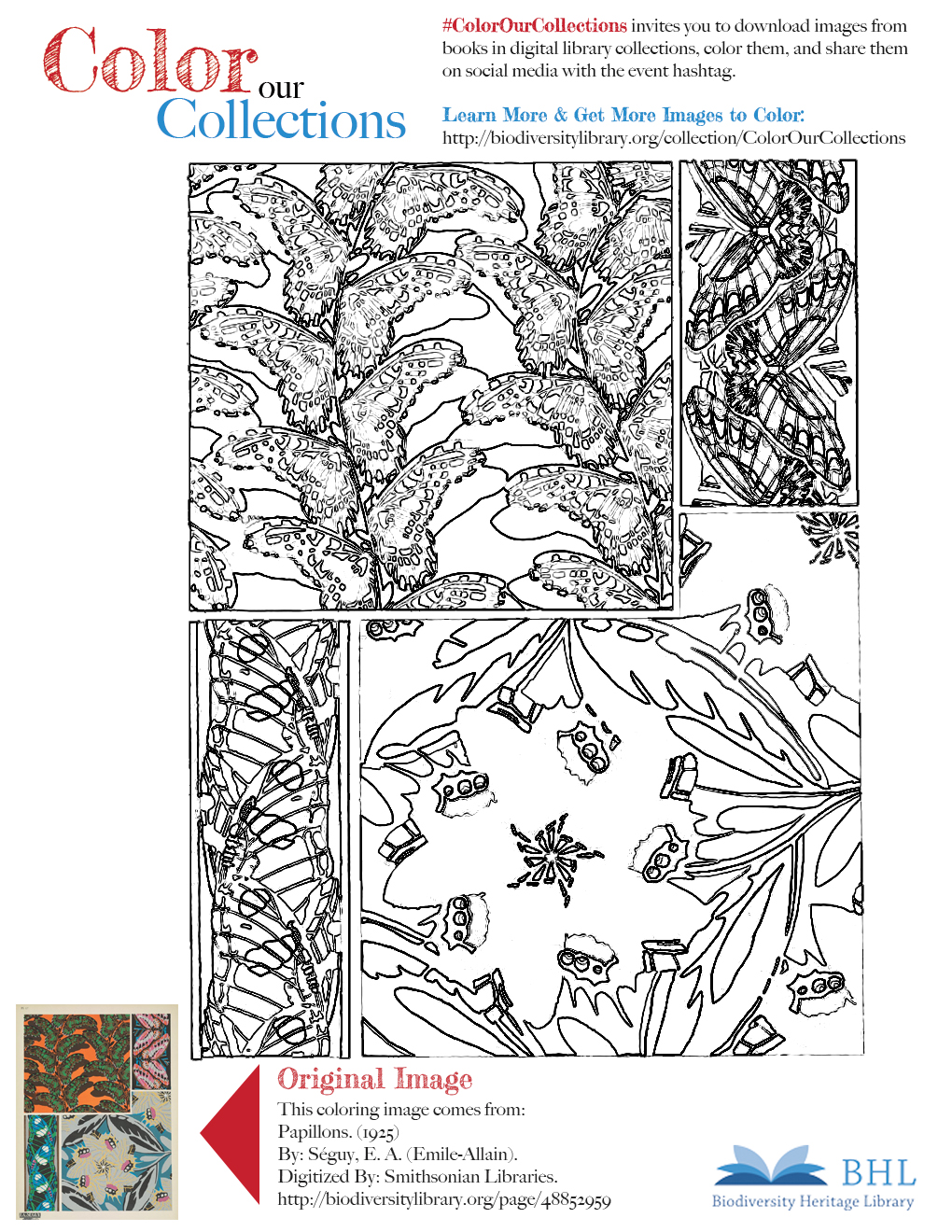
Séguy’s designs were reproduced extensively in textiles, wallpapers, and other decorative applications for nearly a century. You can view all of the plates from this work in Flickr. This week, we put the artwork to another use in the Color Our Collections event. The event invites you to download images from library and cultural institution collections, color them, and share them on social media using the event hashtag #ColorOurCollections. We created a plethora of content for the event, including a Flickr collection containing over 1,000 black and white illustrations from BHL’s collection. We also created a set of coloring pages from colored illustrations in our collection, which are available separately in Pinterest and also as a single PDF.

View Full Size Image
A coloring page made from Séguy’s Papillons. Digitized for BHL by Smithsonian Libraries.

A significant portion of the coloring pages we created are from Séguy’s Papillons, which was digitized for BHL by Smithsonian Libraries. While the colors chosen and so carefully applied by Séguy may reflect the true hues of the natural world, we invite you to design your own butterflies! Download the PDF, choose your own colors for Séguy’s outlines, and share the results on social media by tagging @BioDivLibrary and using the #ColorOurCollections hashtag.

View Full Size Image
A coloring page made from Séguy’s Papillons. Digitized for BHL by Smithsonian Libraries.

The natural world is alive with artistic inspiration. It’s your turn to color your world!

This post is derived from the article:
Schiff, Stacy J. (2012). Fashion in the Natural World. In T. Baione (Ed.), Natural Histories: Extraordinary Rare Book Selections from the American Museum of Natural History Library (pp. 157-159). New York: Sterling Publishing.

February 4, 2016by michelle.underhill
Page 1 of 212»

Help Support BHL

BHL's existence depends on the financial support of its patrons. Help us keep this free resource alive!

search

About BHL

The Biodiversity Heritage Library (BHL) is the world’s largest open access digital library for biodiversity literature and archives. BHL operates as a worldwide consortium of natural history, botanical, research, and national libraries working together to digitize the natural history literature held in their collections and make it freely available for open access as part of a global “biodiversity community.”

Join Our Mailing List

Sign up to receive the latest news, content highlights, and promotions.

Subscribe Now

Subscribe to Blog via Email

Enter your email address to subscribe to this blog and receive notifications of new posts by email.

Join 319 other subscribers

Subscribe to Blog Via RSS

Subscribe to the blog RSS feed to stay up-to-date on all the latest BHL posts.

Access RSS Feed

Inspiring Discovery through Free Access to Biodiversity Knowledge.

The Biodiversity Heritage Library makes it easier than ever for you to access the information you need to study and explore life on Earth…for free, anytime, anywhere.


64+ Million Pages of
Biodiversity Literature Online.

EXPLORE

Tools and Services
to Transform Research.

EXPLORE

300,000+
Illustrations on Flickr.

EXPLORE

ABOUT | HARMFUL CONTENT | PRIVACY | SITE MAP | TERMS OF USE