Biodiversity Heritage Library - Program news and collection highlights from BHL
  • Home
  • News
  • Featured Books
    • All Featured Books
    • Book of the Month Series
    • BHL at 20
  • User Stories
  • Campaigns
    • Fossil Stories
    • Garden Stories
    • Monsters Are Real
    • Page Frights
    • Her Natural History
    • Earth Optimism 2020
  • Tech Blog
  • Visit BHL
Home
News
Featured Books
    All Featured Books
    Book of the Month Series
    BHL at 20
User Stories
Campaigns
    Fossil Stories
    Garden Stories
    Monsters Are Real
    Page Frights
    Her Natural History
    Earth Optimism 2020
Tech Blog
Visit BHL
  • Home
  • News
  • Featured Books
    • All Featured Books
    • Book of the Month Series
    • BHL at 20
  • User Stories
  • Campaigns
    • Fossil Stories
    • Garden Stories
    • Monsters Are Real
    • Page Frights
    • Her Natural History
    • Earth Optimism 2020
  • Tech Blog
  • Visit BHL
Biodiversity Heritage Library - Program news and collection highlights from BHL
BHL News, Blog Reel

We Need Books To…Support Conservation

This month, we’re publishing a series of blog posts outlining the importance of biodiversity literature, made available for free and open access through the Biodiversity Heritage Library, to today’s scientific research and conservation initiatives. With your help, we can help save biodiversity. 

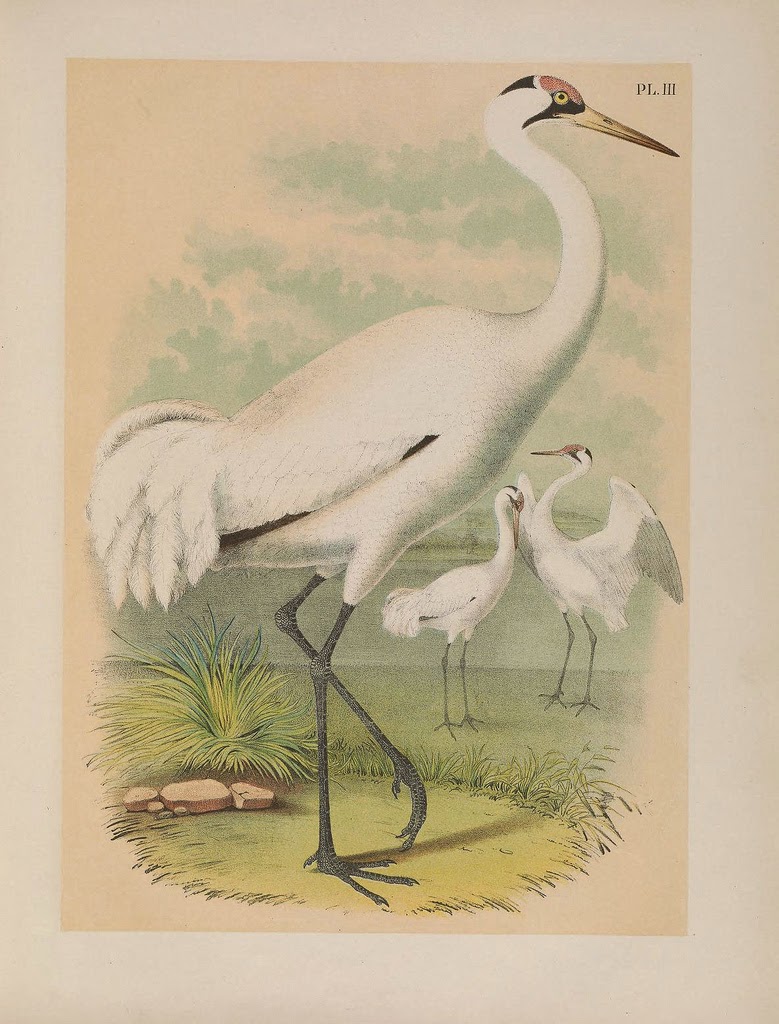
Each week, 10-690 species go extinct, according to reports published via Nature. The responsibility for these extinctions rests predominantly on the shoulders of that enigmatic species, the Homo sapiens. Research published in Conservation Biology by senior authors Jurriaan de Vos and Stuart Pimm and their team reports that “extinctions are about 1,000 times more frequent now than in the 60 million years before people came along.” Conservation efforts around the world are striving to undermine this status quo. Species once near extinction (such as the Gray Wolf, California Blue Whales, and the Whooping Crane) are now thriving, and recent studies published in PLoS ONE by authors Bernard W. T. Coetzee, Kevin J. Gaston, and Steven L. Chown demonstrate that protected areas really do save biodiversity.
View Full Size Image
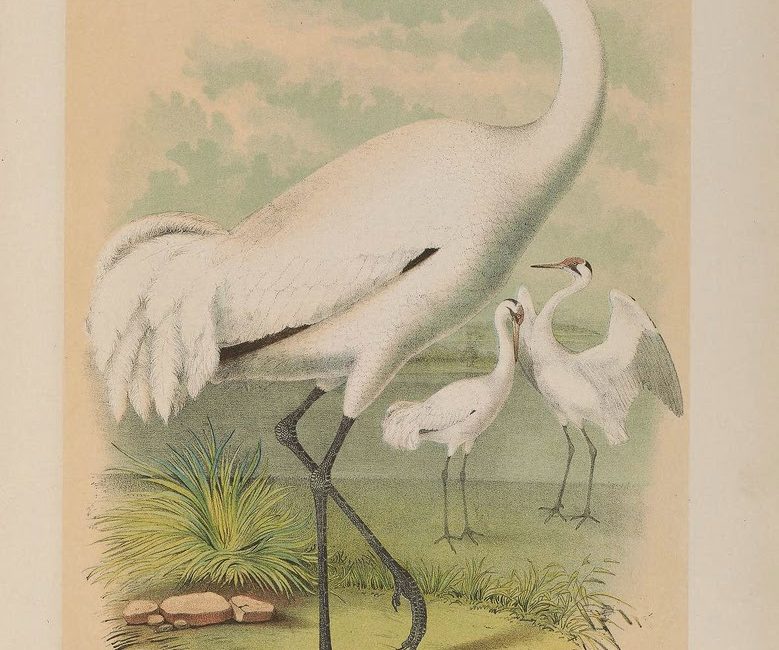
Whooping Crane, once near extinction is now recovering thanks to conservation efforts. Studer, Jacob Henry. The Birds of North America (1903). http://biodiversitylibrary.org/page/35159491.

Not surprisingly, historic literature and archives play a crucial role in conservation initiatives.

Identifying Species to Protect

The first step in any conservation process is identifying what species and habitats to protect. This involves determining which are threatened, as evidenced by biodiversity changes over time like population and distribution declines. To truly understand the extent of these changes, scientists must examine the historical record.
View Full Size Image
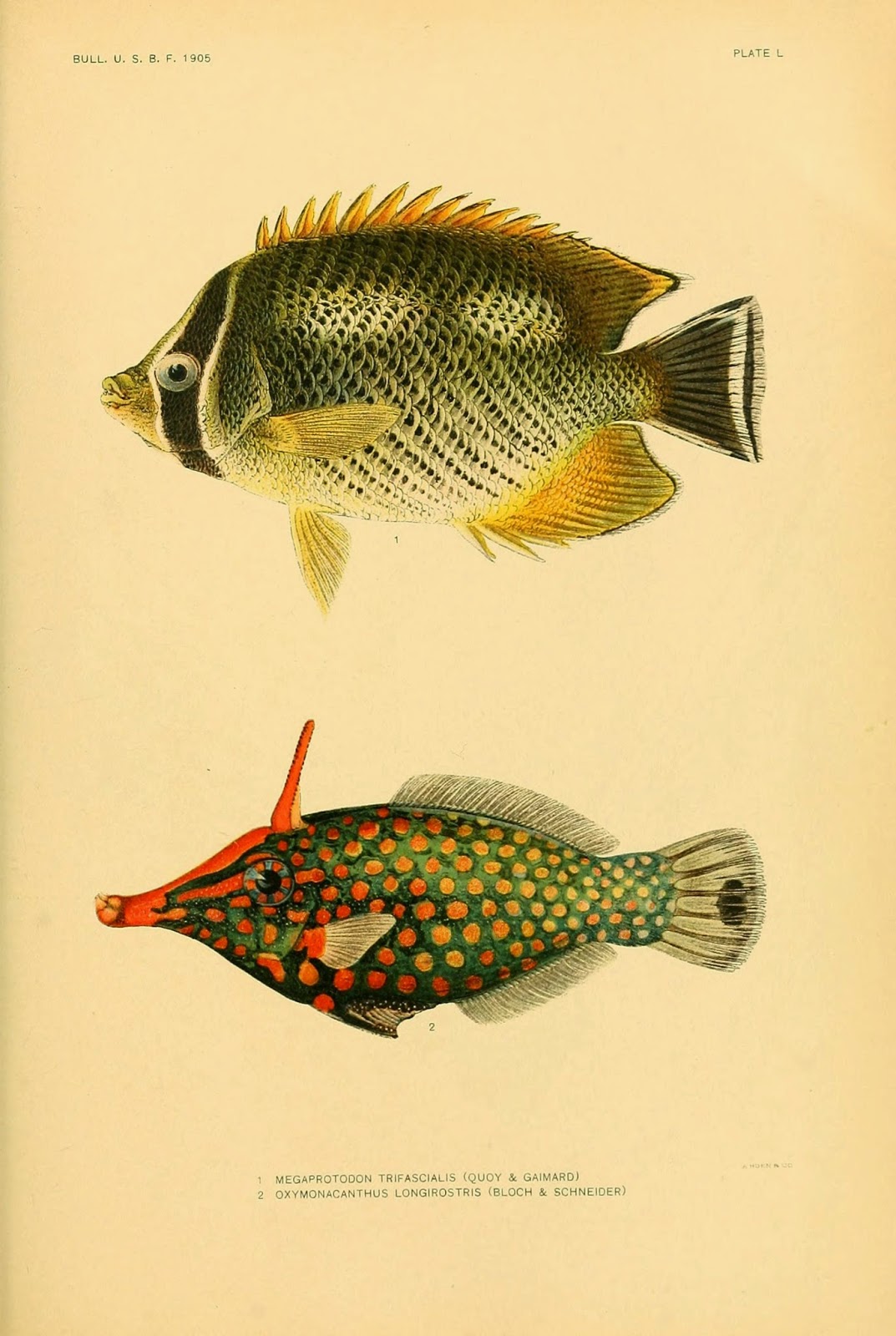
Chaetodon trifascialis and Oxymonacanthus longirostris in The Fishes of Samoa (1906). As Dr. Joshua Drew explains, “This book was one of the first comprehensive records in the Southwest Pacific…In it, Jordan and Seale give a great look into what these reefs were like before widespread development. Reading their words is like going through a time machine, and allows us a glimpse into a world that will probably never be again.” http://biodiversitylibrary.org/page/32055024.

“Having access to historical literature is essential to characterizing what ecosystems used to look like, what species were present and what peoples’ opinions of the health of the ecosystem were like throughout time,” explains Dr. Joshua Drew, a marine conservation biologist at The Field Museum. “Taxonomic literature allows me to see the whole history of a species laid out before me. I rely on [it] to get a glimpse of how these wonderfully diverse ecosystems used to look… before widespread development…[and use] those baselines to evaluate how current conservation measures are succeeding.”

Refining Conservation Initiatives

Historic literature and archives can also help scientists prioritize conservation efforts. Information about the relationships among organisms and the impacts of past extinctions reveals “keystone” species critical to the health of an ecosystem.

Climate change and biogeographic research can also further refine conservation strategies. NPR reports that climatology records in literature and fieldbooks help scientists predict future climate change patterns, which provide insight into what habitats (and thus resident species) may be at risk. By revealing how well species have adapted to external cues in the past (BioScience, Johnson et al), the historic record can also illuminate those unlikely to successfully cope with climate change (ScienceNews, Sarah Zielinski). With this knowledge, policy makers can prioritize conservation efforts, especially for the keystone species within these groups.
View Full Size Image
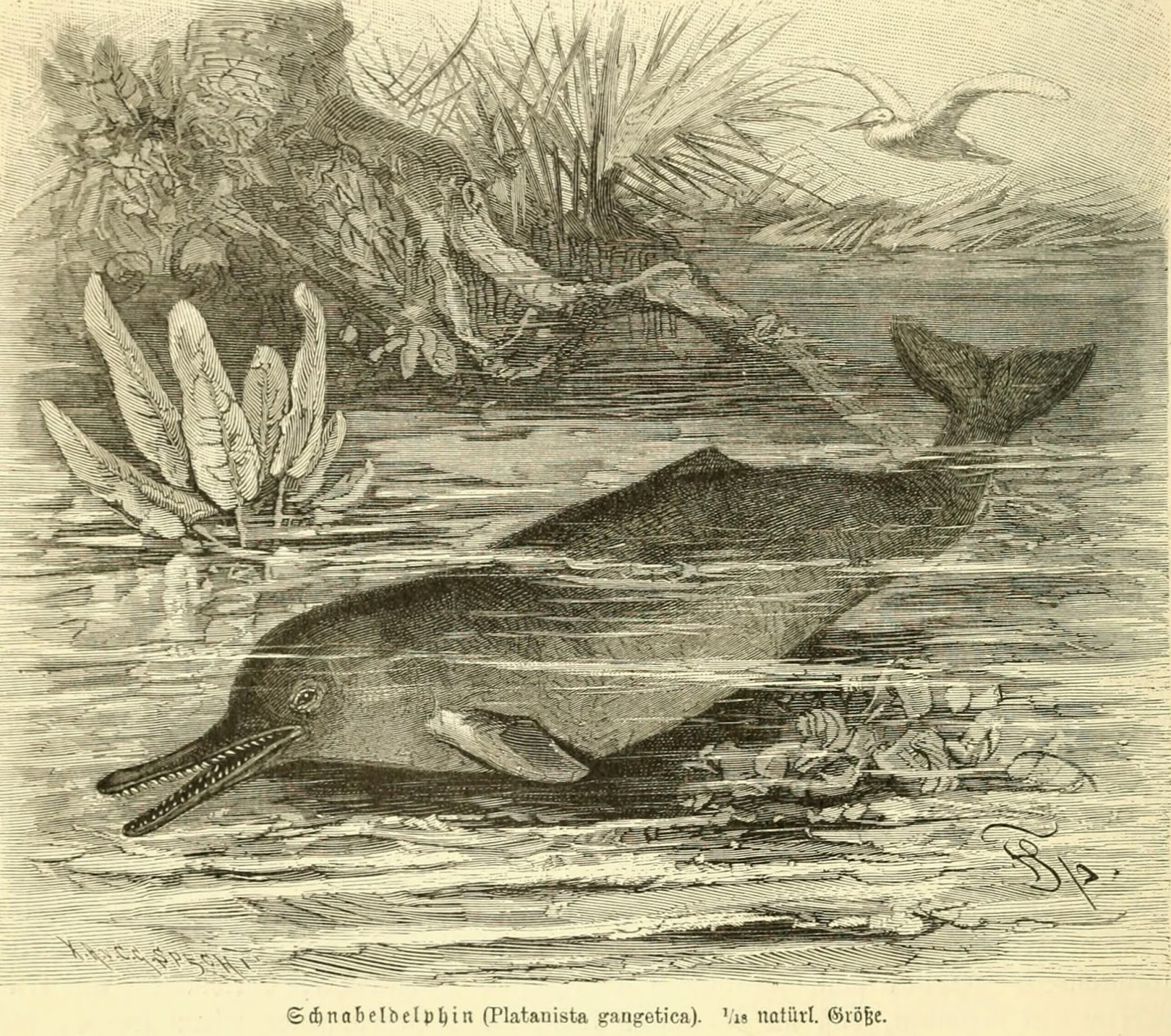
Indus River Dolphin, whose declines are linked to the proliferation of irrigation dams. Brehm, Alfred Edmund. Brehms Tierleben. 3rd rev. ed. v. 3 (1910). http://biodiversitylibrary.org/page/32929419.

The historic record can also elucidate activities that threaten species and ecosystems. For example, according to a study published in PLoS ONE by Braulik et al, distribution reports from the nineteenth century helped researchers correlate declines in the Indus River Dolphin’s population with the proliferation of irrigation dams. This knowledge has led to appeals for water management reform as part of a conservation strategy for the dolphins. Similar correlations can be made between species decline and forest degradation (as evidenced via a 2014 World Resources Institute release), a heated topic within land management reform.

BHL and Big Data

Recently, big data has changed how scientists conduct research, allowing them to more easily access and link biodiversity information. “There’s no question that information about biodiversity now falls firmly in the realm of big data… and the greatest challenge facing biodiversity informatics now is the transition to 21st-century data-management tools,” reports the Natural Environment Research Council of the UK. “The first [phase] is the major task of digitizing over 200 years’ worth of information from libraries and collections around the world.”

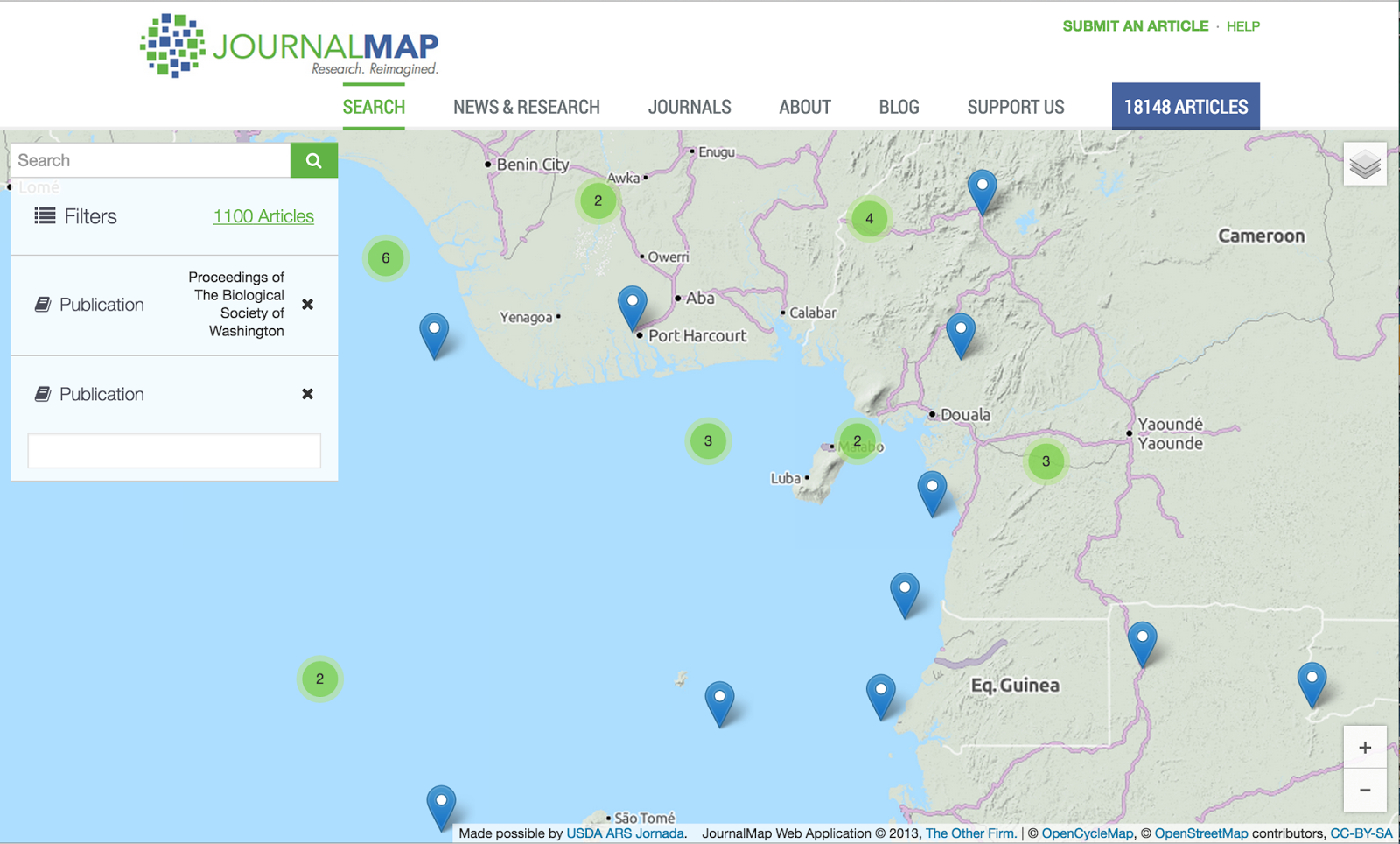
One major application of big data within conservation activities involves assembling georeference data. “Knowing where to act is vital,” emphasizes Dr. Stuart Pimm, a biologist at Duke University, in a 2015 Vox article. Thanks to big data, “We can map out where species are. That puts us in a position to be very much smarter about how and where to do conservation.”
View Full Size Image
Species occurrence illustrated in JournalMap from geotagged content in Proceedings of The Biological Society of Washington on BHL, made available through BioStor.

Historic literature provides detailed information about the location of the species scientists have collected and observed throughout the centuries. By digitizing natural history literature under open access principles, the Biodiversity Heritage Library allows the embedded information (such as historic distribution records) to be integrated into big data initiatives.

BHL Helps Scientists Save Biodiversity. You Can Help!

Since the dawn of man, humans have been dramatically altering the biodiversity landscape, and not always for the better. Conservation is an ambitious endeavor “to preserve biodiversity, to restore diminished ecosystems, to advance the science of preventing extinctions, and to undo harm that humans have caused in the past” (Stewart Brand, National Geographic News). By providing evidence of population declines and habitat degradation, capturing distribution data, elucidating harmful activities, and revealing ecosystem interdependencies, historic literature and archives are integral to the formation of effective conservation strategies.

We rely on donations from users like you to help grow our library and keep it free and open. As you think about your holiday giving, we hope you’ll consider making a tax-deductible donation to help save biodiversity.

Learn more about the critical roles BHL and historic literature play in discovering new species, understanding past extinctions, and saving Earth’s biodiversity.
December 29, 2014by michelle.underhill
Blog Reel

Happy Lunar New Year from BHL and Equus Caballus!

View Full Size Image
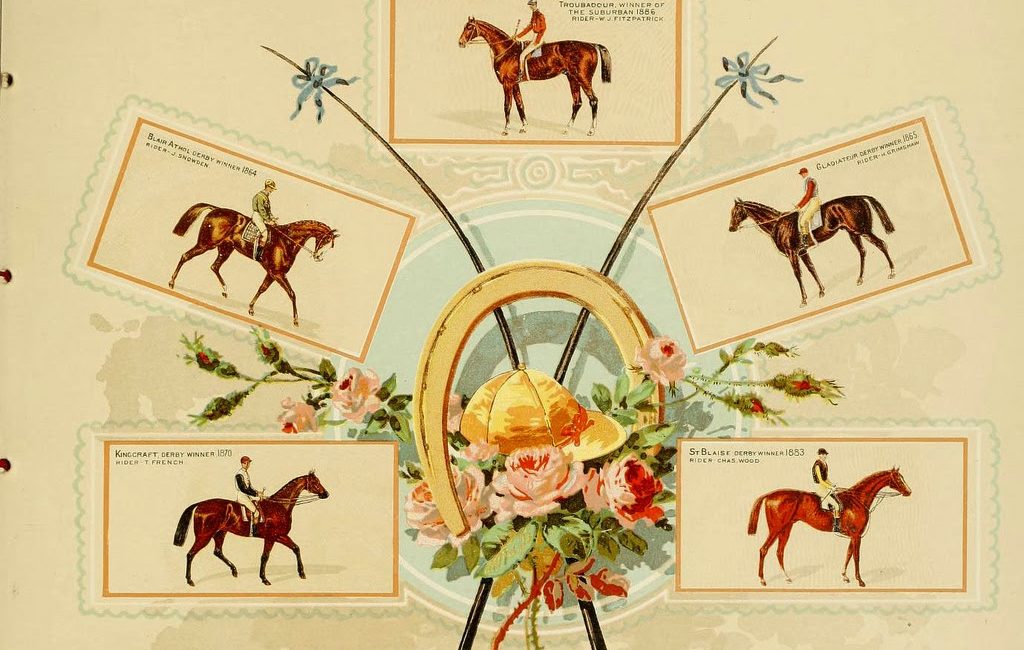
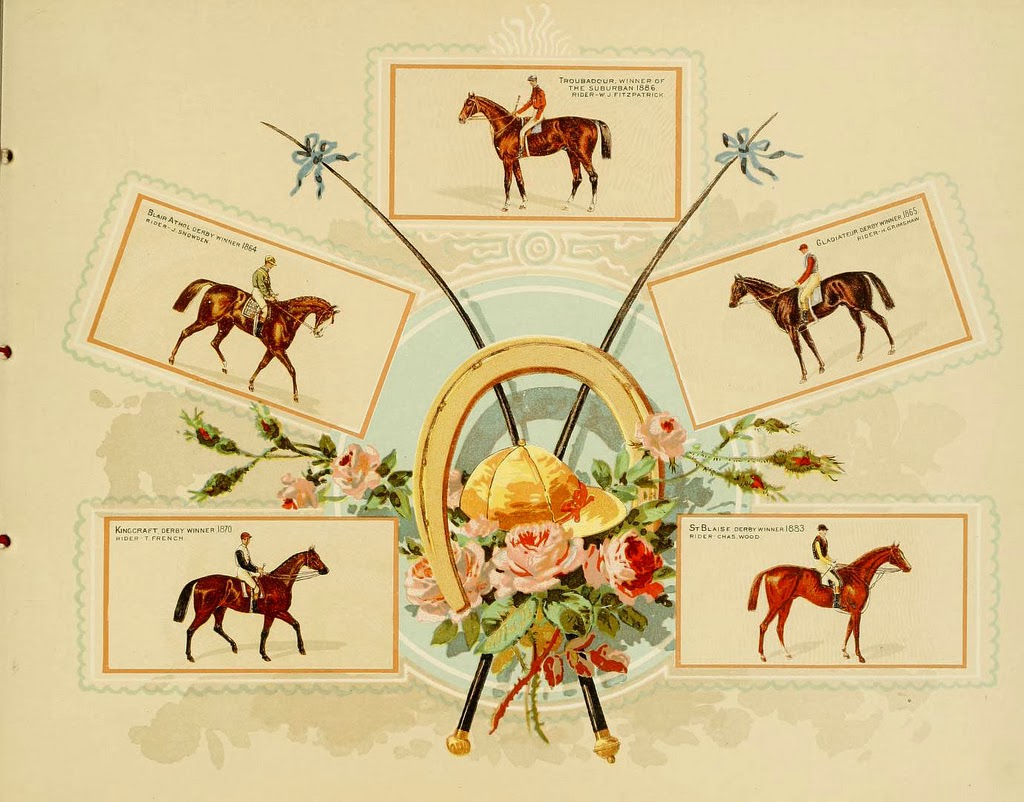
Album of celebrated American and English running horses.
New York: Kinney Bros. [1888?] biodiversitylibrary.org/page/24788565

From agriculture to transportation to war, Equus caballus has held a prominent and highly respected position in cultures across the world for thousands of years.  With the Lunar New Year celebrations underway for the next several days, we’re ushering in the year of the horse with some highlights on horse biodiversity from the literature in BHL!

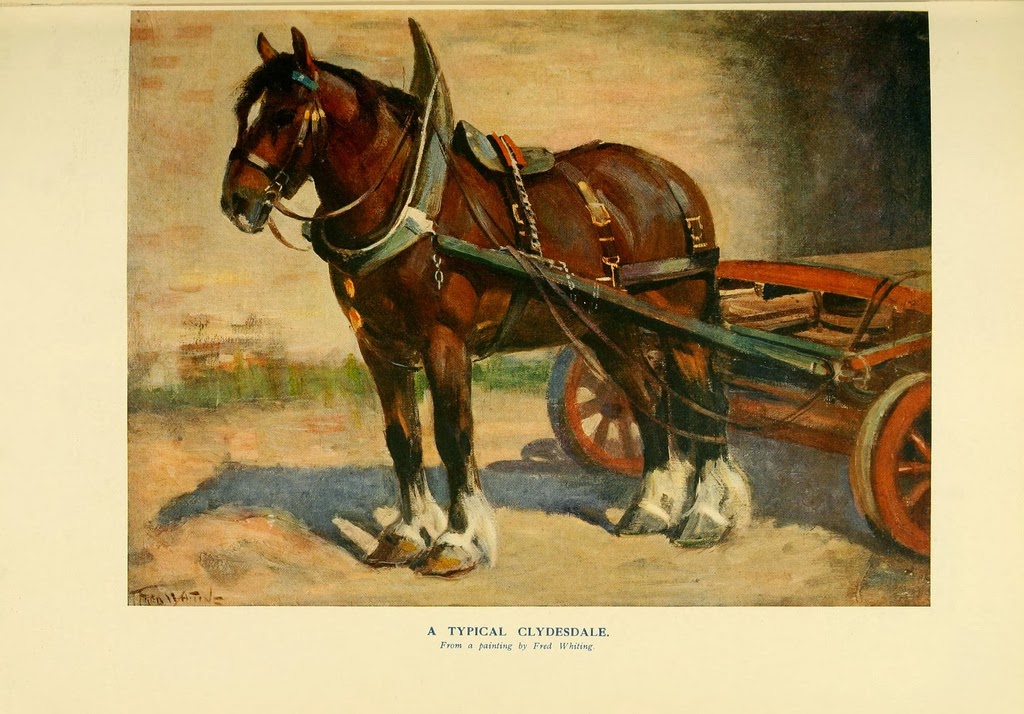
  • You’ve heard of Clydesdales and Thoroughbreds, but what is it that defines these breeds?  According to Agriculture: Animal Husbandry (1901) by William P. Brooks, Clydesdales are bred as draft horses, with broad, stocky frames that make them well-suited to pulling heavy loads. The Thoroughbred, on the other hand, is bred for speed and has a more slender form with powerful lungs.  Learn more about the many different breeds of domesticated horses: http://www.biodiversitylibrary.org/page/30230823#page/85/mode/1up.
View Full Size Image
The new book of the horse.  London: Cassell and Co., 1911.
biodiversitylibrary.org/page/254311803
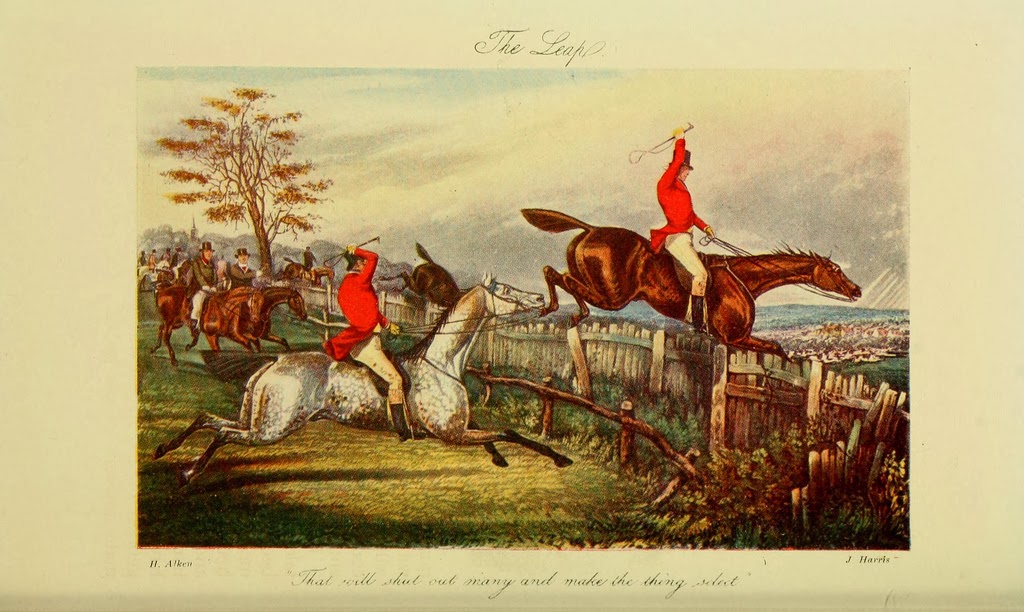
  • So you’ve always wanted to learn to ride a horse but weren’t sure where to start?  For some turn- of-the-century tips on trotting, walking, and galloping, look no further than the 1881 treatise How to Ride and School a Horse by Edward L. Anderson.  As a bonus, Anderson has also included some tips on horse gymnastics!
View Full Size Image
The analysis of the hunting field. London: Methuen, 1904.
biodiversitylibrary.org/page/20389207
  • Which modern horse can’t be ridden?  Considered the last truly wild horse, Equus przewalskii Poliakov, 1881, more commonly known as Przewalskii’s horse, is the only extant horse to never be tamed.  Nearly extinct by the late twentieth century, it has been reintroduced into the wild in places like China and Mongolia and its status has been updated to endangered.  Populations have seen some increases but threats such as disease, habitat destruction, and climate change remain.  BHL and our partners at EOL work hard to provide open access to information about species, including habitat and behavior, so that informed conservation decisions can be made, especially for those that been threatened or endangered.  Learn more about Przewalskii’s horse in BHL:  http://www.biodiversitylibrary.org/name/Equus_przewalskii.


View Full Size Image
The Evolution of the Horse Family,
as illustrated in the Yale Collections.
American Journal of Science, 1907.
biodiversitylibrary.org/page/40226990
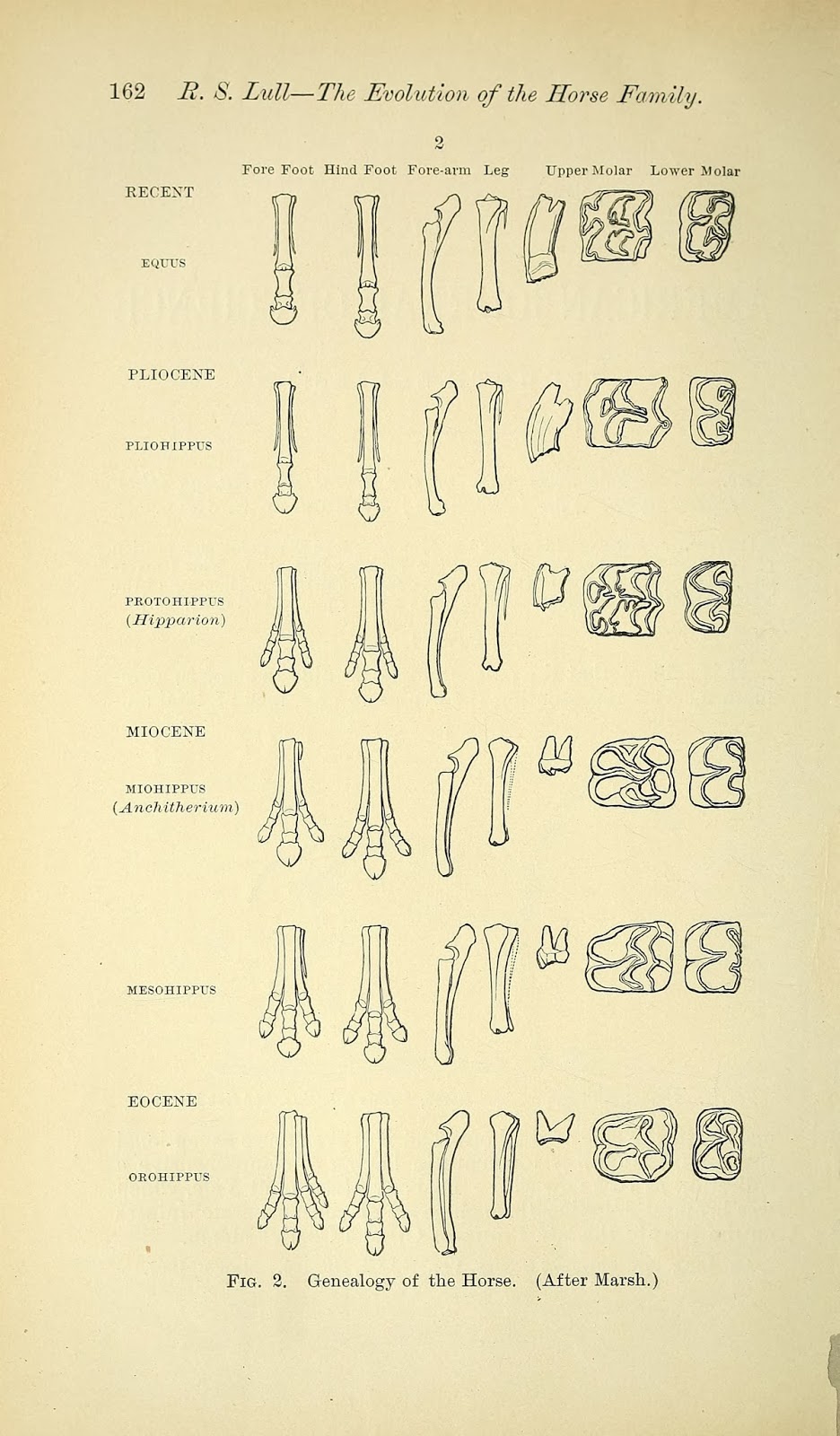
  • How do modern horses differ from their earlier counter-parts?  Many of you may already know that pre-historic horses were generally smaller than modern horses but you may be surprised to learn that one of the key differences was the number of toes.  That’s right, toes.  While the modern horse has one-toed hooves, many pre-historic horses had three or more toes as shown in the illustration to the right.  Find out about how these changes may have benefitted horses as they evolved and discover other changes as described in Richard S. Lull’s 1907 article The Evolution of the Horse Family, as illustrated in the Yale Collections in the American journal of science.
Horses are documented in over 400 pages of open access literature in BHL, with a significant portion focusing on the modern Equus caballus: http://www.biodiversitylibrary.org/name/Equus%20caballus.
BHL relies on donations from individuals to support scanning of the biodiversity literature held in some of the world’s most renowned natural history and botanical libraries.  The examples below highlight the ways your donation can make a meaningful and lasting impact:
$25 – Creates Flickr sets of our images which are popular with educators and artists
$50 – Promotes biodiversity education through social media, such as our blog
$100 – Scans 1,000 pages to be made available for free and open access
$250 – Helps us support marketing interns who circulate biodiversity content worldwide
$500 – Improves existing methodology and helps develop new tools for biodiversity research
Help make the year of the horse a lucky and prosperous year for BHL and our users by making a donation to support our continued growth!  https://donate.sil.si.edu/v/DonateBHL.asp
February 3, 2014by sayeedmd
BHL News, Blog Reel

Ringing in the New Year with thanks!

Portrait version of the Biodiversity Heritage Library logo.

In the US, we set aside time to reflect and give thanks in November as part of the Thanksgiving holiday.  It is now the start of a new year–and only the first month, not the eleventh–yet BHL already has a lot for which to give thanks!

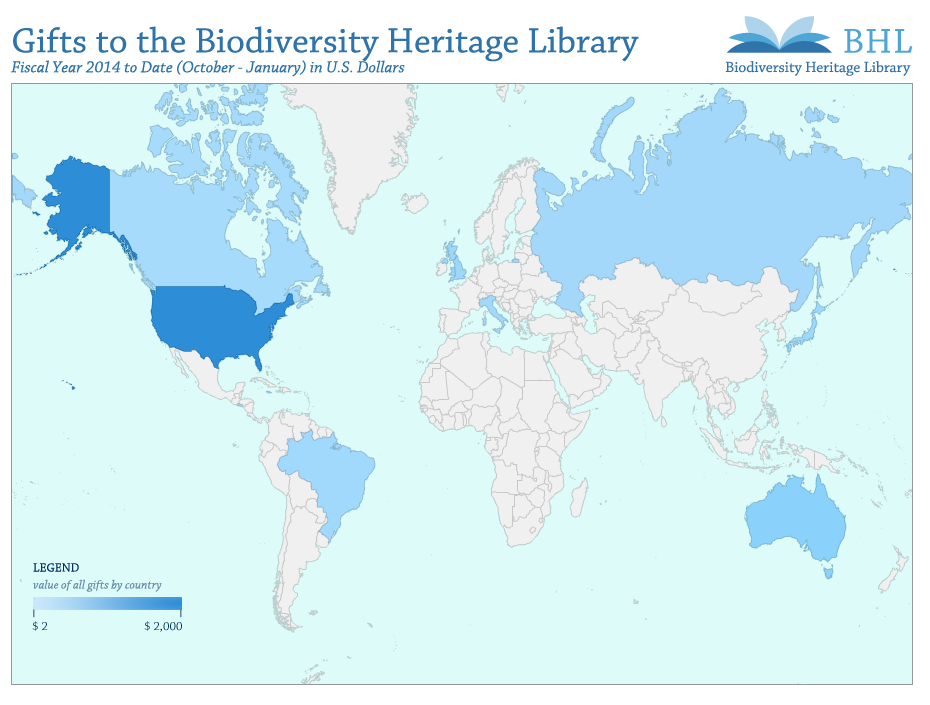
Since the start of the fiscal year 2014 (October 1), donors from across the world have contributed $2,434.12 to support BHL’s continuing mission.  As a digital library consortium comprised of 13 US and 2 UK institutions, it’s encouraging to see the generosity of donors with $1,794 coming in from those countries alone ($1,681.36 and $112.76 respectively).

View Full Size Image

The Biodiversity Heritage Library provides free global access to more than 42 million pages of digitized biodiversity literature and we are so pleased to see the global response of generous support for continuing these efforts.  Donors from Australia, Brazil, Canada, El Salvador, Italy, Jamaica, Japan, and Russia have each made generous contributions totaling $640.

Historical collections of biodiversity literature are exceptionally valuable for taxonomists and others studying the diversity of life on our planet, yet this wealth of knowledge is available only to those few who can gain direct access to significant library collections. Literature about the biota existing in developing countries is often not available within their own borders.  Free global access to digital literature repatriates information about the earth’s species to all parts of the world. Because of BHL’s success in digitizing a significant mass of biodiversity literature, the study of living organisms has become more efficient.  Scientists around the world are using BHL to identify and classify species, facilitate further scientific research, and support conservation efforts to prevent extinctions.

BHL is so thankful and encouraged by the generosity of all of our donors!  These donations help pay for the cost of digitizing additional literature, improving data curation, and continuing technical development for the BHL program. The examples below highlight the ways your donation can make a meaningful and lasting impact:

$25 – Creates Flickr sets of our images which are popular with educators and artists

$50 – Promotes biodiversity education through social media, such as our blog

$100 – Scans 1,000 pages to be made available for free and open access

$250 – Helps us host marketing interns who circulate biodiversity content worldwide

$500 – Improves existing methodology and helps develop new tools for biodiversity research

We hope you’ll consider making a contribution of your own to help BHL continue providing open access to biodiversity literature!   Donate: https://donate.sil.si.edu/v/DonateBHL.asp 

January 27, 2014by brooksm
Blog Reel, Featured Books

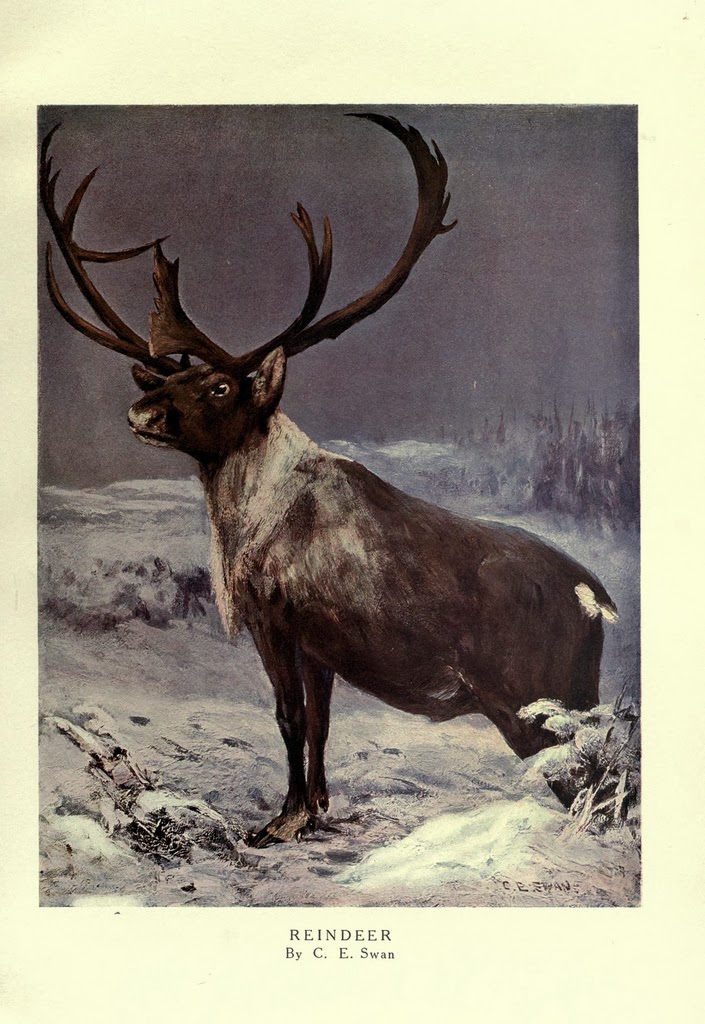
Happy Holidays from BHL and Rangifer tarandus!

As part of BHL’s Winter Appeal, we’re highlighting some of the amazing species that are especially well-adapted to cold, wintery climes as well as those that often come to mind as we celebrate the winter holidays.  Last week we featured Ursus maritimus, the magnificent apex predator of the Arctic commonly known as the polar bear.  This week, we turn our eyes again to the North Pole to shine the spotlight on a well-known celebrity of  the giving season!

View Full Size Image
Wild Life of the World: A Descriptive Survey
of the Geographical Distribution of Animals.
London, F Warne and Co, 1916.
http://biodiversitylibrary.org/page/21738521
#page/455/mode/1up


Rangifer tarandus
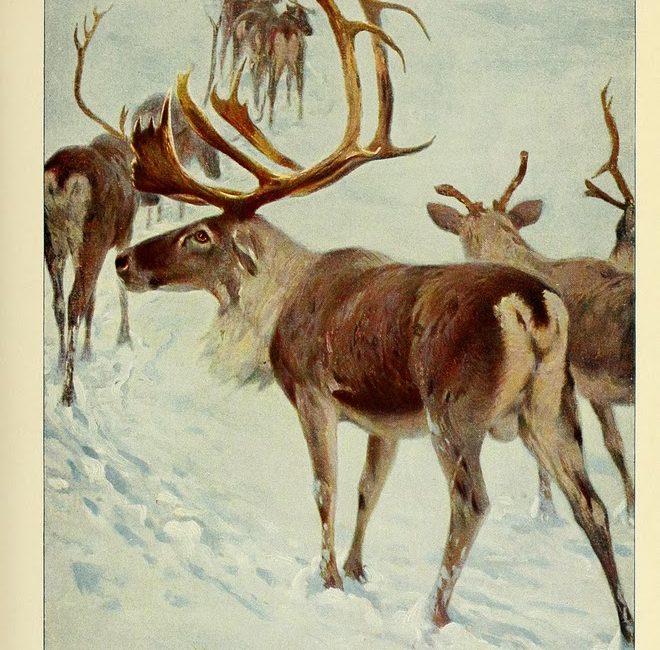
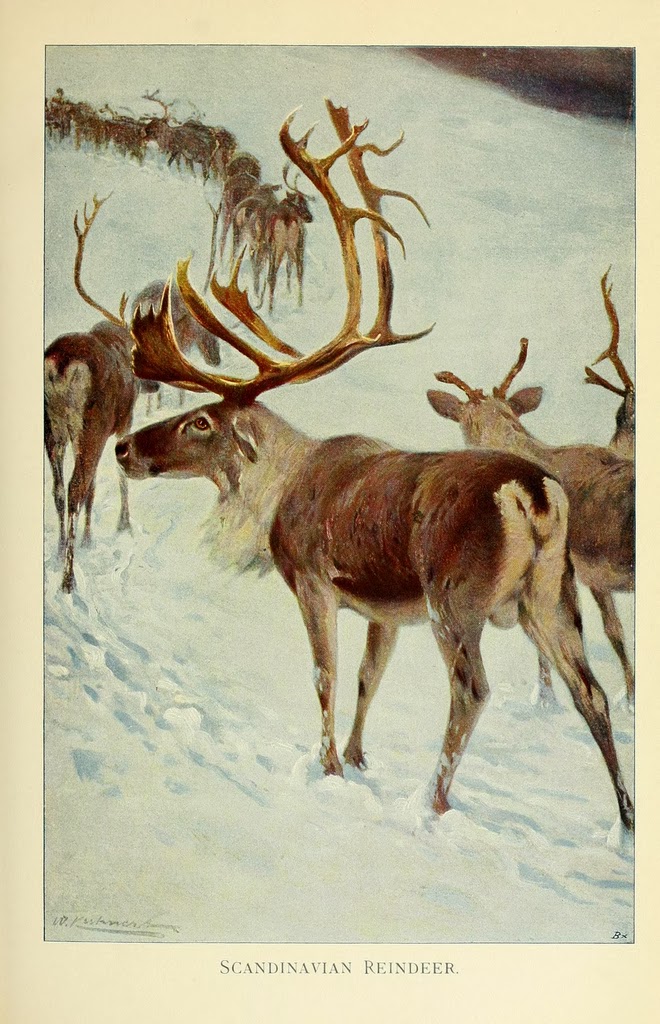
As the holiday season goes into full swing, the festive days of late December bring a dazzling array of familiar images–shiny packages with ribbons and bows, snowy rooftops and fir trees, and of course the ubiquitous Rangifer tarandus.  Whether pulling sleighs or playing games, these antlered animals  feature prominently in decorations throughout the holiday season.  If you’ve ever watched the holiday cartoons broadcast at this time of year, you could be forgiven for thinking that reindeer are an especially uniform species, intolerant of differences.  But what of reality?  As it turns out, in real life reindeer exhibit a remarkable range of diversity.

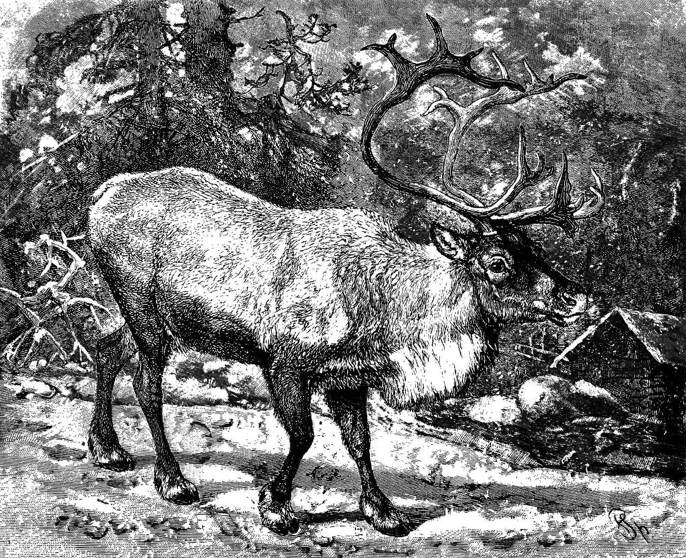
Distinguishing them from other deer, reindeer are the only species in which both the male and female grow antlers. Within the species, reindeer display notable variations in size, shape and color.  According to The Animals of World: Brehm’s Life of Animals (1895) a comparison of tame and wild reindeer would reveal such differences just in the size and shape of the hooves that one could easily see how they might be considered belonging to separate species.  Antler size and fur coloration are also known to vary in the different regions of the reindeer’s circumpolar habitat.  Even within individuals, coloration changes with the seasons, bringing on a more greyish-white hue for the snowy winter months.

View Full Size Image
Verzameling van uilandsche en zeldzaame vogelen.
Amsterdam, J.C. Sepp, 1772-1781.
http://biodiversitylibrary.org/page/11267501#page/199/mode/1up

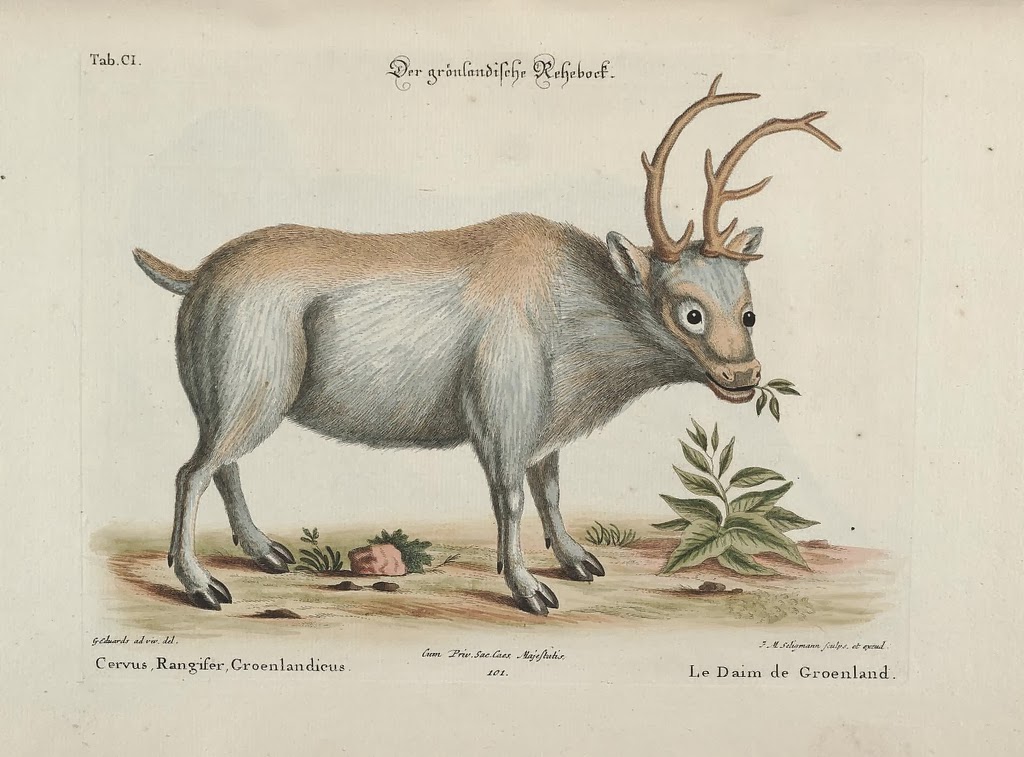
But sometimes the differences are significant enough to denote a classifiable distinction and today taxonomists recognize several subspecies of reindeer.  For example, Rangifer tarandus groenlandicus, shown above, occurs primarily in Greenland.  Even for those of us not well-versed in scientific names, this shouldn’t be surprising with the obvious phonetic similarity between groenlandicus and Greenland.  What many of us will find surprising, though, is that the common name of this subspecies is the “barren-ground caribou” meaning that, yes, caribou are subspecies of reindeer!  Who knew? (Well, undoubtedly some of you did but for those of us more familiar with the animated variety, let us not be ashamed to admit we are duly surprised!)

Other subspecies include the Dawson’s caribou (Rangifer tarandus dawsoni) which once roamed the Queen Charlotte Islands of British Columbia and is now presumed extinct.  While some information can still be derived from the DNA extracted from bones, fur and other remains of Dawson’s caribou and other extinct species, the vast majority of scientific knowledge on their appearance and behavior is locked in rare or hard to find literature.

View Full Size Image
The animals of the world. Brehm’s life of animals.
Chicago, A. N. Marquis, 1895.
http://www.biodiversitylibrary.org/page/37569440

#page/540/mode/1up

Habitat destruction, hunting and predators continue to present threats to wild caribou and reindeer.  In 1983, the US Fish and Wildlife Service listed the subspecies Rangifer tarandus caribou as endangered and advocated to protect its habitat.  Even at the turn of the century, reports of diminishing populations of one of the largest subspecies, Rangifer tarandus fennicus or Finland reindeer, were common.  In one of several such reports, cited in Extinct and vanishing mammals of the Old World (1945), the author laments, “The Finland reindeer is thus very nearly exterminated in the greatest part of its former habitat and it looks almost as a bitter irony of fate that it should not be recognized and discerned as a separate race before it was in so imminent danger of becoming entirely extinct…”

While we can’t bring the species and subspecies that have gone extinct, we can preserve our knowledge of them to help avoid future extinctions. By making this knowledge widely available, we can become better stewards to those species that are still here and especially to those recovering from diminished populations.

The BHL currently provides access to over 42 million pages and over 87,000 images and is changing the face of research methodology.  Scientists around the world are using BHL to identify and classify species, facilitate further scientific research, and support conservation efforts to help prevent future extinctions.  The ongoing growth of BHL is supported in part by our dedicated patrons whose gifts support the digitization of additional literature, technical development of the program, and improvement of data curation.  We hope you’ll take a moment to review how your donation can be put to work and will consider supporting BHL this holiday season!

View Full Size Image
The wild beasts of the world.
London, T.C & E.C. Jack, 1909
http://biodiversitylibrary.org/page/19080406#page/157/mode/1up

Thank you and Happy Holidays!


December 23, 2013by sayeedmd
Blog Reel, Featured Books

Ursus maritimus: A Shining Star in the North Pole

As part of BHL’s Winter Appeal, we’ll be highlighting some of the amazing species that are especially well-adapted to cold, wintery climes as well as those that often come to mind as we celebrate the winter holidays.  Each post will include images, facts and sometimes even stories drawn from the pages of the open access literature in BHL.  The ongoing growth of BHL is supported in part by our dedicated patrons whose gifts we depend on for the the digitization of additional literature, technical development of the program, and improvement of data curation.  We hope you’ll consider donating this holiday season!

Ursus maritimus

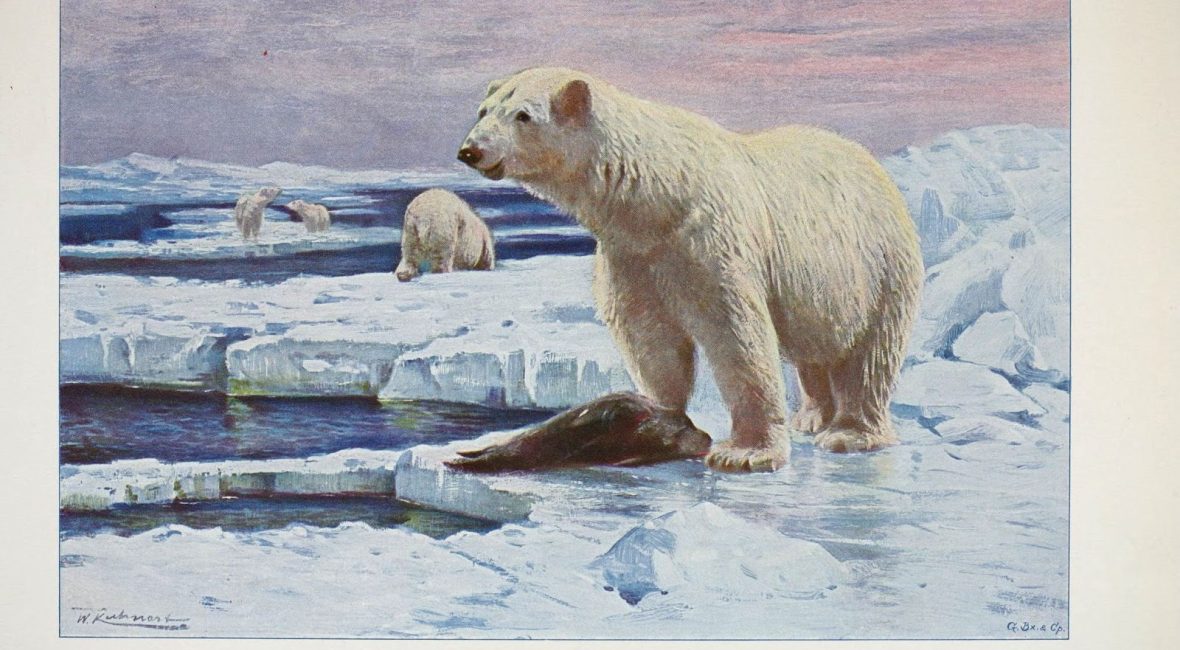
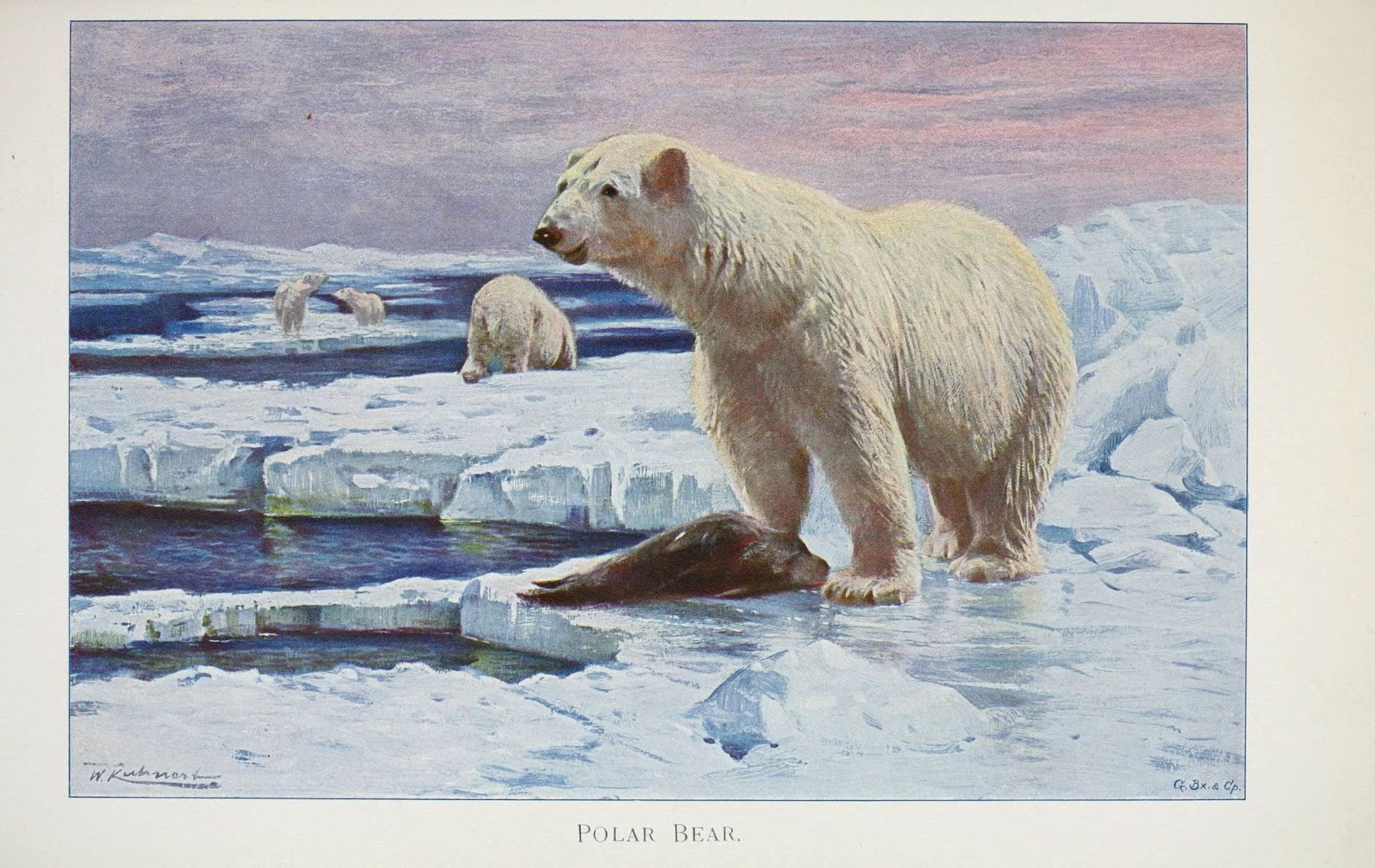
Imagine being out in a quiet, cold landscape with almost nothing around for miles except for the ice and sea.  In this vast expanse of calm and quiet, you might either wander across the ice in search of a meal or even dive down into the freezing cold waters.  Either way, you would remain quite comfortably warm.  Thus is one of the advantages possessed by Ursus maritimus for surviving in this challenging environment.  A thick coat of fur and insulating layer of fat provide warmth and the distinctive white coloring of the coat serves as excellent camouflage when stalking prey.  A long neck and relatively narrow skull for the species provides the aptly-named “sea bear” with a streamlined figure excellent for swimming.

View Full Size Image
Wild Life of the World, v.2.  London, F. Warne and Co., 1916.

http://biodiversitylibrary.org/page/21738961#page/329/mode/1up

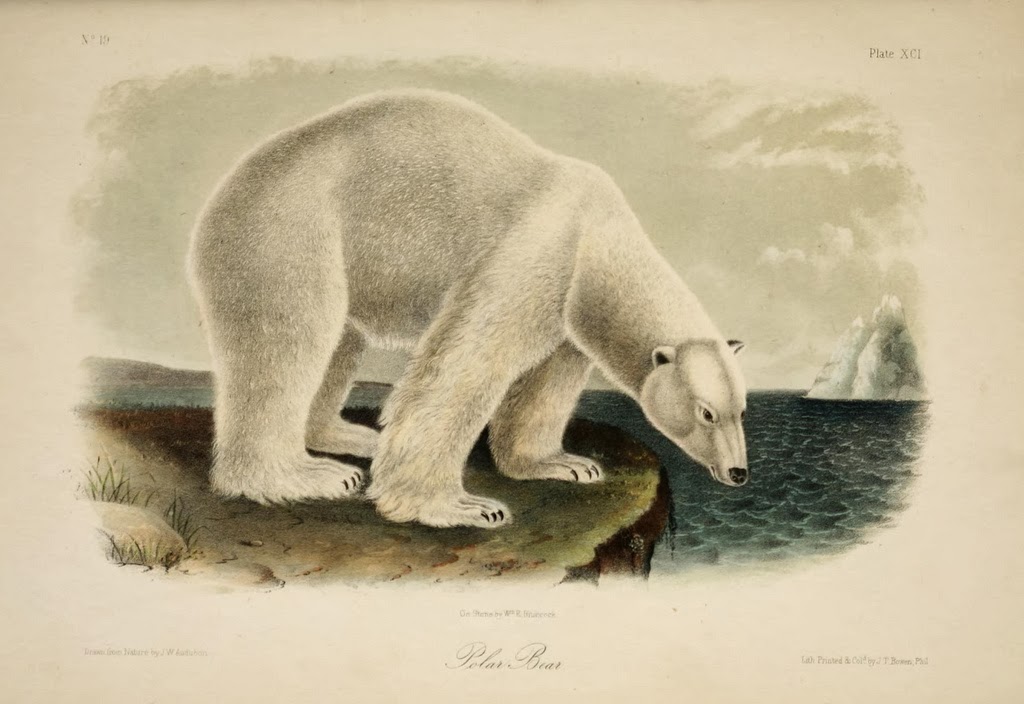
Commonly known as the polar bear, Ursus maritimus actually only occurs in one of the poles–the North Pole.  The vast, ice-covered ocean known as the Arctic actually has etymological roots in the ancient Greek word, ἄρκτος, meaning bear.  Antarctic, therefore implying “no bears.”

View Full Size Image
The Quadrupeds of North America.  New York, V.G. Audubon, 1851-54.

http://biodiversitylibrary.org/page/34896849#page/369/mode/1up

When we consider the growing concerns about the effects of climate change on places like the Arctic, polar bears are one of the iconic species that immediately come to mind for many of us.  How might they fare over the next decades?  Despite all of their physical advantages and their placement as an apex predator, polar bear populations have seen recent declines and are already considered a vulnerable species by the IUCN.  Some of the biggest threats facing polar bears are the melting ice cap, hunting, and human development in the area, including oil spills and other negative impacts on the environs.

Yet even before climate change was a prominent topic in science and the news, polar bears held a special place in the public’s imagination.  Tales of exaggerated ferocity were plenty.  One especially eyebrow-raising account tells of the polar bear’s invariable habit of charging at any man encountered.  While today we know that polar bears have been known to attack humans they are just, if not more likely, to avoid such encounters, yet this story goes on to insist that not only do they inevitably charge, they can just as inevitably be tricked into grabbing weapons and committing suicide with them.  Polar bears were undoubtedly less studied and therefore not as well understood in 1861, yet even so the author seems barely able to contain his bemusement at the extraordinary claims of this “eye witness.”  Today, hunting bans now help to protect this magnificent species.  Groups like BHL and our partners EOL work hard to make sure that scientists and others have access to important information about the species, its habitat and behavior so informed conservation decisions can be made.

The polar bear is documented in over 1,200 pages of open access literature made available through the Biodiversity Heritage Library.  BHL relies on donations from individuals to support scanning of the biodiversity literature held in some of the world’s most renowned natural history and botanical libraries.  To learn more about how your donation supports the continued growth of BHL, please visit http://archive.constantcontact.com/fs181/1103622715135/archive/1115465985290.html.  We hope you’ll consider making a contribution today!

December 16, 2013by brooksm
BHL News, Blog Reel

BHL Surpasses 40 Million Pages!

May we have a drum roll please…….

The Biodiversity Heritage Library is pleased to announce that we have just surpassed 40 million pages in our online collection!

That’s 40 million pages of open access biodiversity literature that was previously available only in the collections of a few select libraries around the world. Making this literature freely available removes these boundaries to access, thus increasing the efficiency of scientific research and discovery of the natural world for anyone with an Internet connection.

View Full Size Image
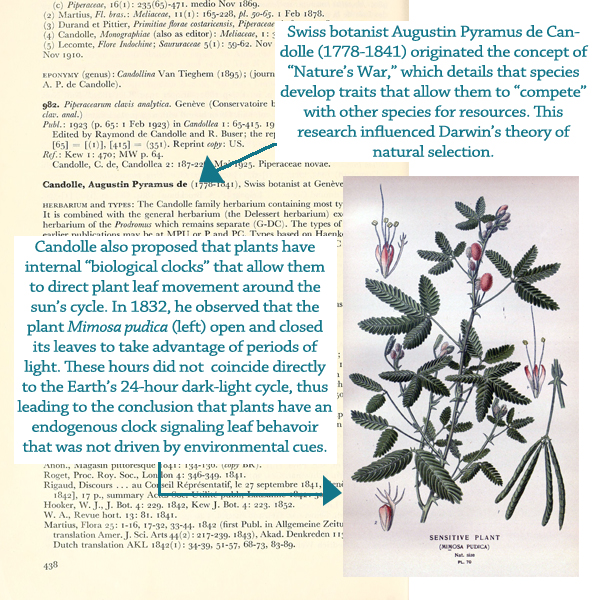
Most popular book out of those 40 million pages? Taxonomic Literature 2 (TL2). Learn more about Candolle in TL2 and explore Mimosa pudica, which played a critical part in his research, in Favourite Flowers of Garden and Greenhouse.

BHL officially launched in May, 2007, with just over 600,000 pages of primarily botanical literature previously digitized for the Botanicus program at the Missouri Botanical Garden. Today, over 5 years later, we’ve added over 39.4 million more pages, contributed from the collections of 14 BHL member institutions, 3 global partners (including China, Australia, and Europe), and 124 providers that make their content openly available in the Internet Archive. Subjects covered in the collection now include not only botany but also zoology, scientific expeditions, gardening, fungi, conservation, archaeology, fossils, and ecology, to name a few.

View Full Size Image
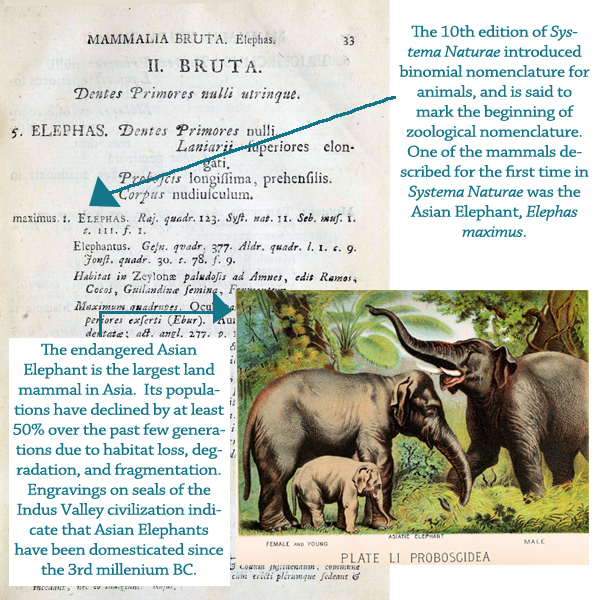
2nd most popular book in BHL: 10th Ed. Systema Naturae 

While making over 40 million pages of literature freely available, we’ve also been working to improve discoverability of and access to the thousands of incredible scientific illustrations found within these digitized texts by exposing them via Flickr. To date, we’ve added over 55,000 images to the BHL Flickr, free for browsing, downloading, and reuse via a Creative Commons license. With funds received from a recent National Endowment for the Humanities grant, we’re exploring ways to further automate the discovery of these images in BHL.

Beyond our work with images, we continue to embrace strategies that allow us to reach new audiences on new platforms and expand user opportunities to interact with our collections. This includes featuring content on Twitter, Facebook, and Pinterest, as well as making select items available for free download in iTunes U.

While the common thread throughout this post may be that all of our content is free, the cost to digitize this material and support further technical development is not. Our 40 million pages was achieved thanks to the support of grant agencies, generous in-kind contributions and subventions from our member libraries, and donations from users like you. Help us reach another 40 million pages with a tax-deductible donation to BHL. Together, we can ensure that the world’s biodiversity literature is available to everyone, everywhere.

View Full Size Image
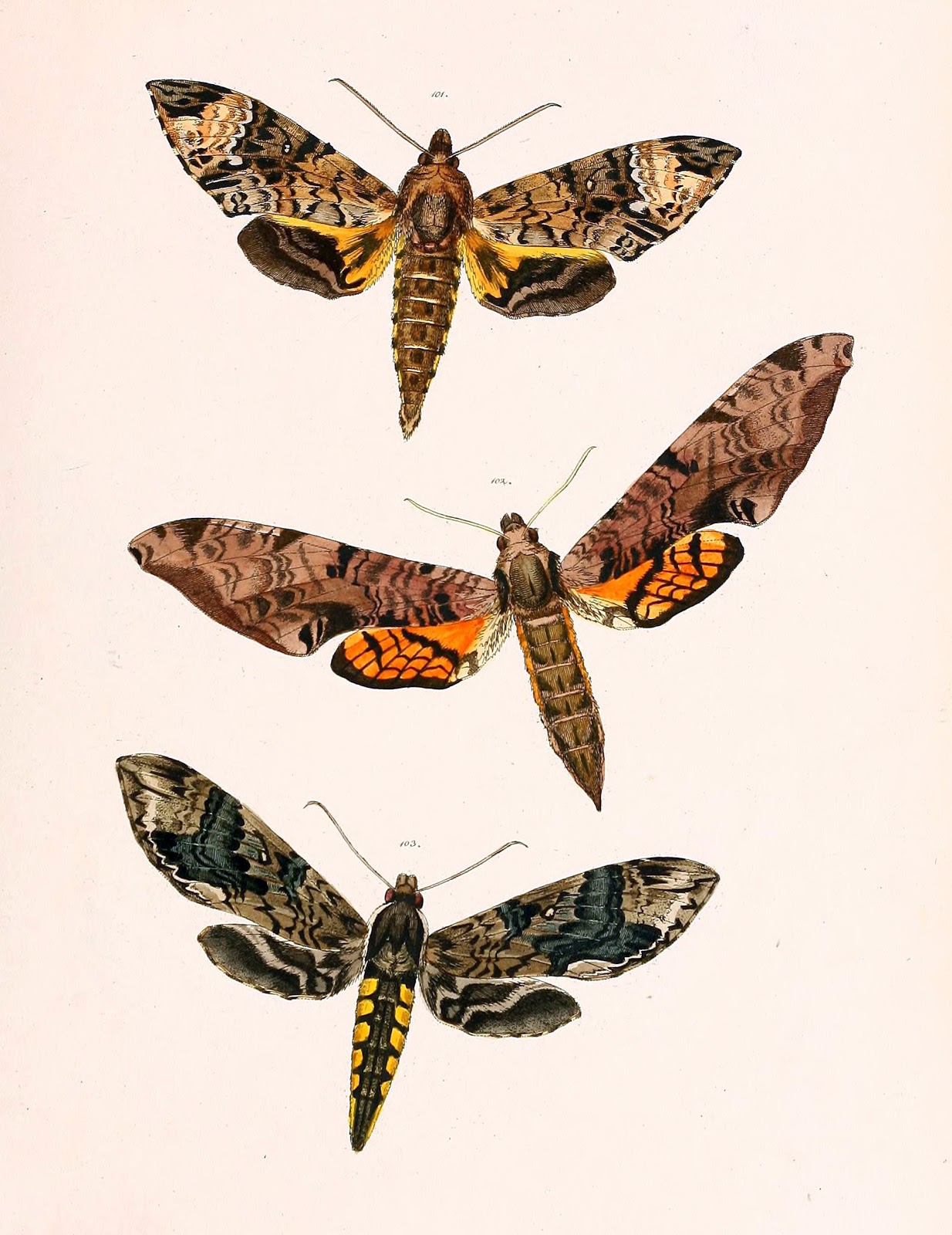
The most-viewed image in the BHL Flickr? Sammlung neuer oder wenig bekannter aussereuropäischer Schmetterlinge (1850-58), bd. 1, pl. [45], with 2,145 views.

View Full Size Image
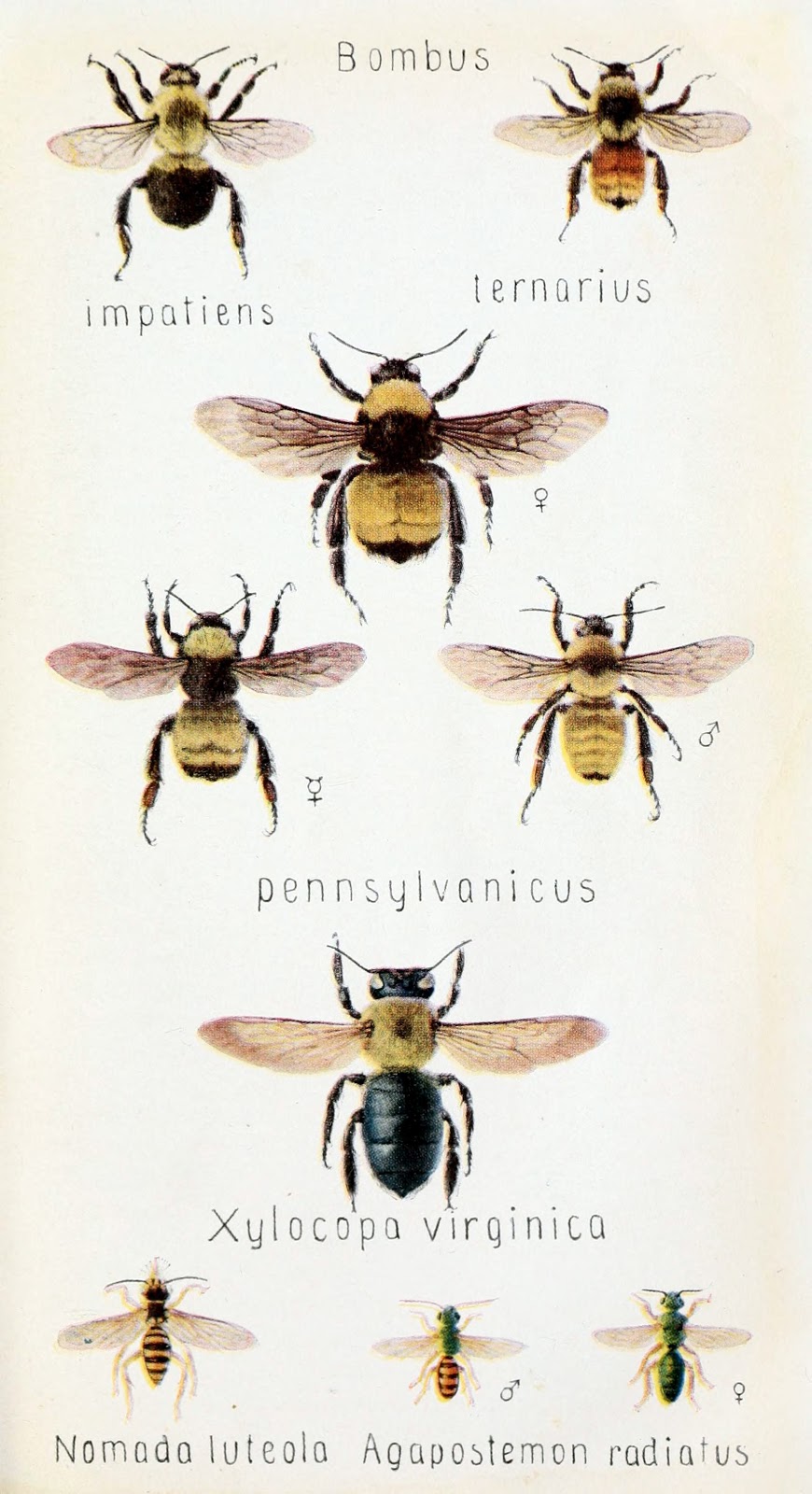
Following in the insect theme, the second-most-viewed image in Flickr: Field Book of Insects (1918), pl. 94, with 1,901 views.

View more images in the BHL Flickr!

* Find the image of the Asian Elephants, displayed in the Systema Naturae image above, in Johnson’s Household Book of Nature.

December 26, 2012by Grace Costantino
BHL News, Blog Reel

The Perfect Holiday Gift

Preserving Biodiversity Knowledge and Strengthening Conservation Efforts

View Full Size Image
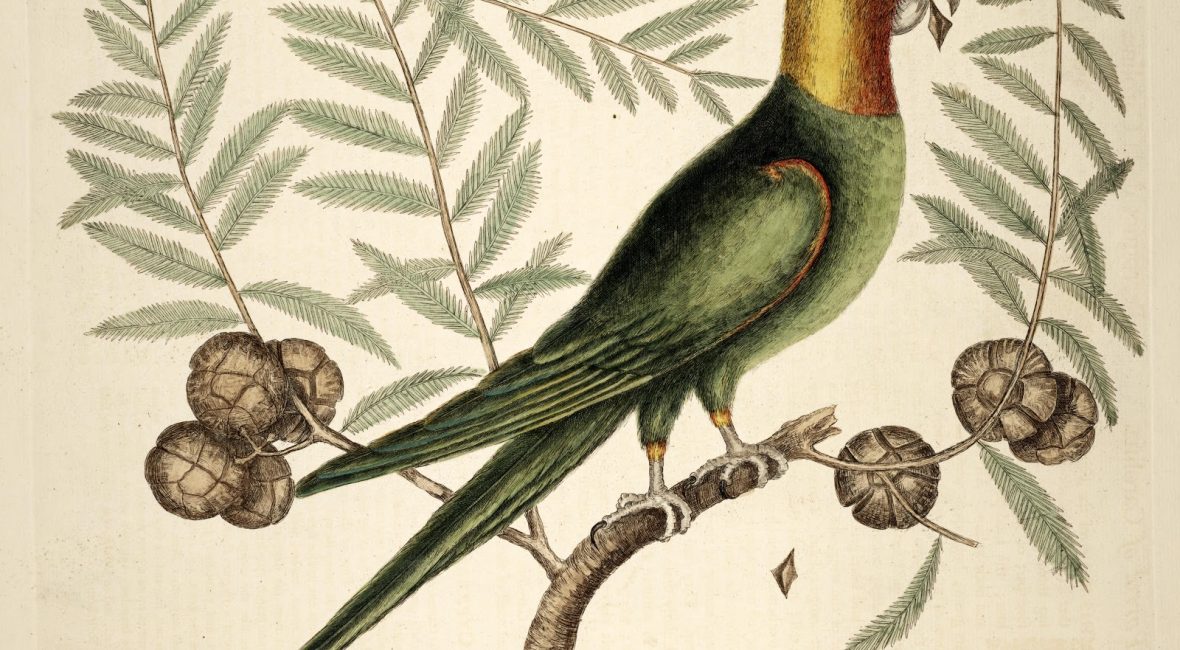
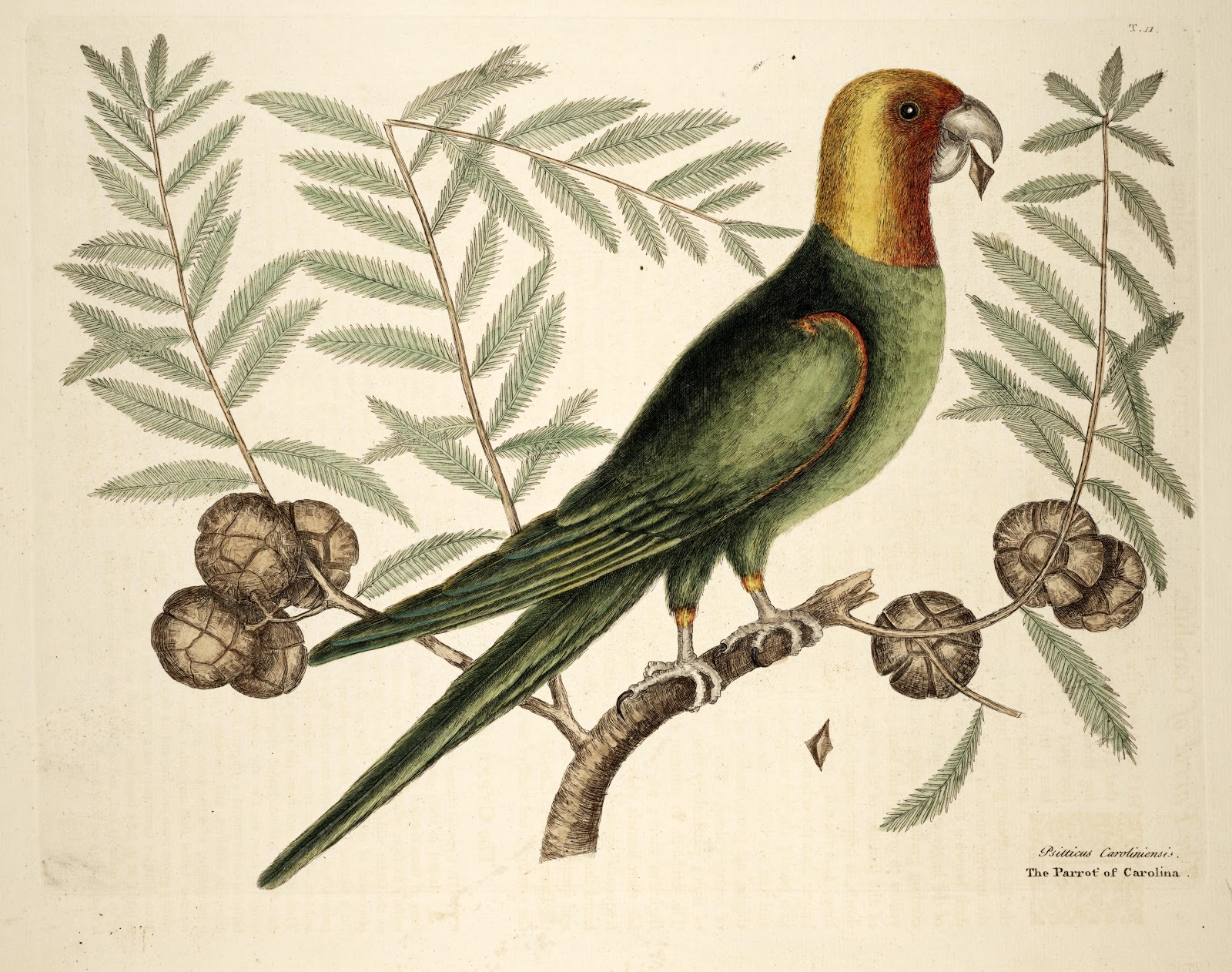
The Extinct Carolina Parakeet. Captured by Mark Catesby.

In 1918, the last known surviving Carolina Parakeet, the only parrot species native to the eastern United States, died. While museum specimens may help us retain some information about this species, for many others, everything we know is contained in a single description found within a hard to find book or article. While there is nothing we can do to bring these extinct species back, we can preserve our knowledge of them to help avoid future extinctions.

The Biodiversity Heritage Library (BHL), in its global efforts to digitize biodiversity literature and make it freely available to the world, ensures that the knowledge needed to identify species, facilitate further scientific research, and support conservation efforts is available to everyone, everywhere. Thanks in part to donations from users like you, BHL currently provides access to nearly 40 million pages and over 50,000 images.

View Full Size Image
Celebrating the BHL-Africa via Travel Posters!

In 2012, BHL significantly advanced the breadth and depth of its collections and the opportunities to engage with its digitized resources. BHL added over 12,000 items and over 3.7 million pages to its collections this year, supported in part by the addition of two new members to the BHL consortium: the United States Geological Survey and Cornell University. Furthermore, BHL continued to serve new and widespread audiences by establishing a greater presence across social media channels, resulting in over 30,000 new images in Flickr this year; biodiversity facts, history, and trivia communicated via Tweets, Blog and Facebook posts; and downloads through iTunes U, all free to the public. BHL continues to expand globally, as evidenced by the June, 2012, BHL meeting in Cape Town, South Africa, designed to support the development of a BHL-Africa.

The most rewarding measure of BHL’s successes comes from the frequent testimonials received from users:

“The BHL website is an extremely valuable resource and is crucial to my research.”

“Being in a small town in Africa made accessing literature especially difficult, but I no longer feel so disadvantaged with the advent of BHL.”

“BHL makes my research so much easier! I absolutely love it. A million times thank you!”

 
The BHL’s substantial growth and activity has been supported by our dedicated patrons whose gifts we depend on to fund the digitization of additional texts, technical development for the program, and improvement of data curation. This holiday season, as you continue to seek the perfect gift for your loved ones, consider giving a gift to the planet by supporting scientific research and conservation efforts across the globe through a tax-deductible donation to the Biodiversity Heritage Library.

As a gift from our BHL family to yours, enjoy these BHL Holiday Greeting Cards and Travel Posters! Download them for free from the BHL Pinterest. Happy Holidays!

December 11, 2012by Grace Costantino
Page 1 of 212»

Help Support BHL

BHL's existence depends on the financial support of its patrons. Help us keep this free resource alive!

search

About BHL

The Biodiversity Heritage Library (BHL) is the world’s largest open access digital library for biodiversity literature and archives. BHL operates as a worldwide consortium of natural history, botanical, research, and national libraries working together to digitize the natural history literature held in their collections and make it freely available for open access as part of a global “biodiversity community.”

Join Our Mailing List

Sign up to receive the latest news, content highlights, and promotions.

Subscribe Now

Subscribe to Blog via Email

Enter your email address to subscribe to this blog and receive notifications of new posts by email.

Join 319 other subscribers

Subscribe to Blog Via RSS

Subscribe to the blog RSS feed to stay up-to-date on all the latest BHL posts.

Access RSS Feed

Inspiring Discovery through Free Access to Biodiversity Knowledge.

The Biodiversity Heritage Library makes it easier than ever for you to access the information you need to study and explore life on Earth…for free, anytime, anywhere.


64+ Million Pages of
Biodiversity Literature Online.

EXPLORE

Tools and Services
to Transform Research.

EXPLORE

300,000+
Illustrations on Flickr.

EXPLORE

ABOUT | HARMFUL CONTENT | PRIVACY | SITE MAP | TERMS OF USE