Biodiversity Heritage Library - Program news and collection highlights from BHL
  • Home
  • News
  • Featured Books
    • All Featured Books
    • Book of the Month Series
    • BHL at 20
  • User Stories
  • Campaigns
    • Fossil Stories
    • Garden Stories
    • Monsters Are Real
    • Page Frights
    • Her Natural History
    • Earth Optimism 2020
  • Tech Blog
  • Visit BHL
Home
News
Featured Books
    All Featured Books
    Book of the Month Series
    BHL at 20
User Stories
Campaigns
    Fossil Stories
    Garden Stories
    Monsters Are Real
    Page Frights
    Her Natural History
    Earth Optimism 2020
Tech Blog
Visit BHL
  • Home
  • News
  • Featured Books
    • All Featured Books
    • Book of the Month Series
    • BHL at 20
  • User Stories
  • Campaigns
    • Fossil Stories
    • Garden Stories
    • Monsters Are Real
    • Page Frights
    • Her Natural History
    • Earth Optimism 2020
  • Tech Blog
  • Visit BHL
Biodiversity Heritage Library - Program news and collection highlights from BHL

Search results for "label"

Blog Reel, Featured Books

Industrial and Technological Museum Economic Botany Illustrations and the Wax Fruit Collection

Read the full blog post

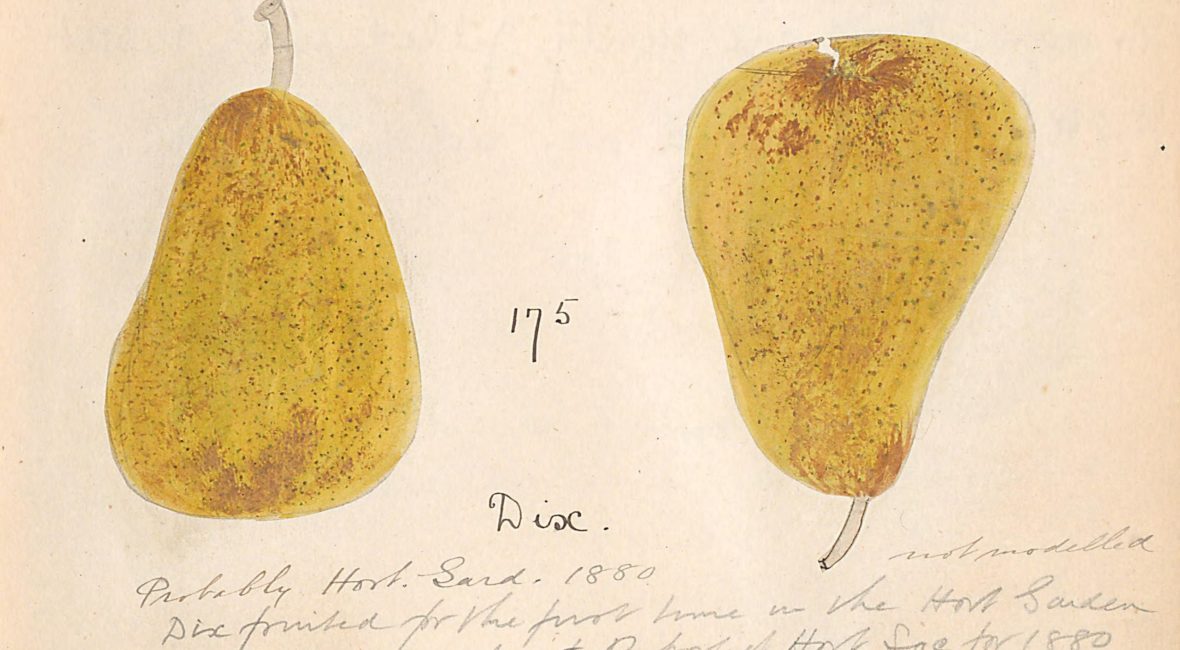
One of the most vibrant and colourful volumes available on BHL from the Museums Victoria Archives is the Economic Botany Fruit and Vegetable Specimen Register (ITM Register) created by Industrial and Technological Museum (ITM) model makers and used as a reference when producing the Wax Fruit Collection. This collection dates from when the ITM (now Museums Victoria) opened to the public in 1870.

Continue reading
May 6, 2026byNik McGrath
BHL News, Blog Reel, Tech Updates

BHL Technical Development: Year in Review

Read the full blog post

Building a More Resilient BHL: Improving Accessibility and Expanding Global Reach

What does it take to make millions of pages of biodiversity literature accessible to a global audience? For the Biodiversity Heritage Library (BHL) Technical Team, 2024 was a year of transformative milestones, new innovations, and overcoming challenges—all aimed at strengthening BHL’s mission of advancing biodiversity research.

Continue reading
February 4, 2025byJJ Dearborn
BHL News, Blog Reel

Farewell from BHL Program Director Martin R. Kalfatovic

Read the full blog post

It’s time to say farewell to my official time with the Biodiversity Heritage Library! As I outlined in my presentation at the 2024 BHL Annual Meeting, when I took over as BHL Program Director in April 2012, I had a firm and successful organization to lead. And all that success rests on the shoulders of the countless staff in BHL partner organizations around the world.

Continue reading
June 28, 2024byMartin R. Kalfatovic
BHL News, Blog Reel, Featured Books

Illuminating BHL’s Dark Data: Citizen Scientists and AI Unlock Key Biodiversity Data in GBIF

Read the full blog post

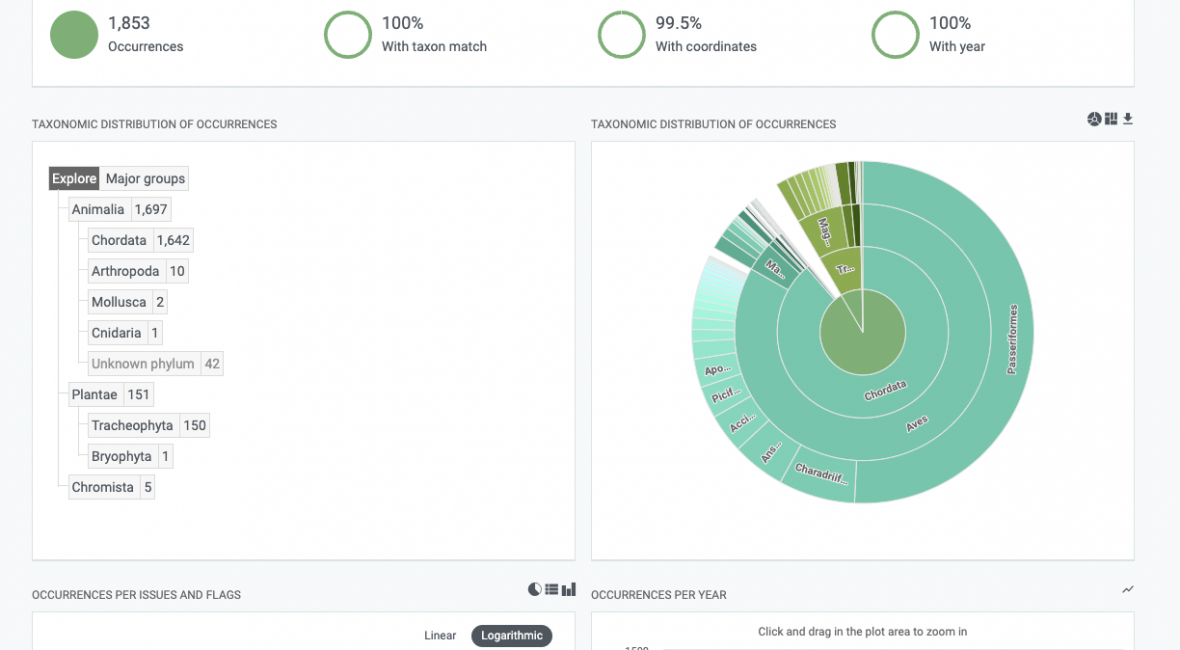
In the face of climate change and environmental challenges, understanding and documenting Earth’s biodiversity is essential. The Global Biodiversity Information Facility (GBIF) serves as a global repository for biodiversity data, playing a pivotal role in this critical mission of safeguarding our planet’s biodiversity. Species occurrence data sourced from the Biodiversity Heritage Library (BHL) provides insights into species distributions, behaviors, and interactions much deeper into time, offering key species baseline data required to effectively address the climate crisis. Without accurate and comprehensive data in GBIF, our collective ability to track environmental changes and make informed decisions is severely hampered.

As a GBIF participant node, BHL is committed to sharing biodiversity data openly, adhering to FAIR (Findable, Accessible, Interoperable, Reusable) and CARE (Collective Benefit, Authority to Control, Responsibility, Ethics) data principles, and collaborating with a global network of biodiversity organizations to bolster and build capacity to strengthen the biodiversity information infrastructure. To honor our commitments, technical staff from BHL are working to establish a scalable data pipeline of occurrence data currently trapped in archival field notes, journals, letters, correspondence, and other primary source materials. The journey has been an arduous one due to poor OCR (optical character recognition) data quality for BHL’s sub-corpus of handwritten materials.

Continue reading

November 9, 2023byJoseph deVeer, Paul Flemons and JJ Dearborn
BHL News, Blog Reel, Tech Updates

BHL is Round Tripping Persistent Identifiers with the Wikidata Query Service

Read the full blog post

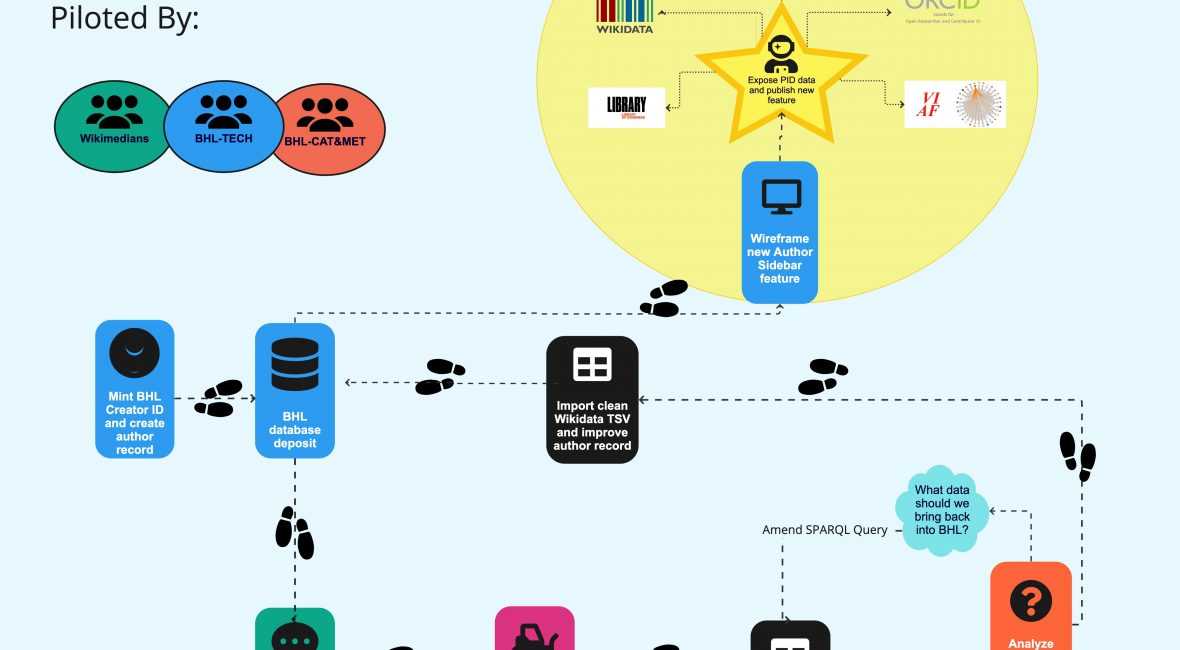
In the Spring of 2022, the BHL Cataloging and Metadata Committee investigated the possibility of harvesting persistent identifiers (PIDs) from Wikidata as part of the group’s longstanding project to disambiguate and deduplicate author records in the BHL database. The motivation behind this one-time experimental data harvest was to see if BHL could:

  1. Enhance BHL author records with additional PID data points;
  2. Improve the committee’s ability to disambiguate author names in the BHL database; and
  3. Respond to an outstanding user request from two of Wikimedia’s super star editors, Siobhan Leachman and Andy Mabbett, to expose BHL’s author data on BHL and include hyperlinks to other authoritative knowledge bases on the web.

In particular, Wikimedians wanted to see the Wikidata Q identifier exposed, providing a link to the corresponding creator item record in Wikidata.

There are multiple motivations for undertaking this work. By adding the BHL Creator ID to the corresponding Wikidata item, Wikidata editors help link BHL to the richer biographical data about that person held in Wikidata. The Wikidata item for a person may contain links to their Wikipedia page or to images of the person held in the image repository Wikimedia Commons. Wikidata items also act as identifier hubs and contain links to other databases and identifiers.

By adding the BHL Creator ID to this list of identifiers, the Wikidata editor is linking the content held in BHL to the content held in multiple other datasets and repositories.

These extra author data points provide Wikimedians and BHL catalogers with crucial clues that aid in name disambiguation. In particular, hyperlinks to other knowledge bases are incredibly valuable because they lead to new knowledge pathways that help confirm a person’s identity in a complex game of “Who’s Who?”

Continue reading
February 15, 2023bySiobhan Leachman and JJ Dearborn
Blog Reel, Featured Books

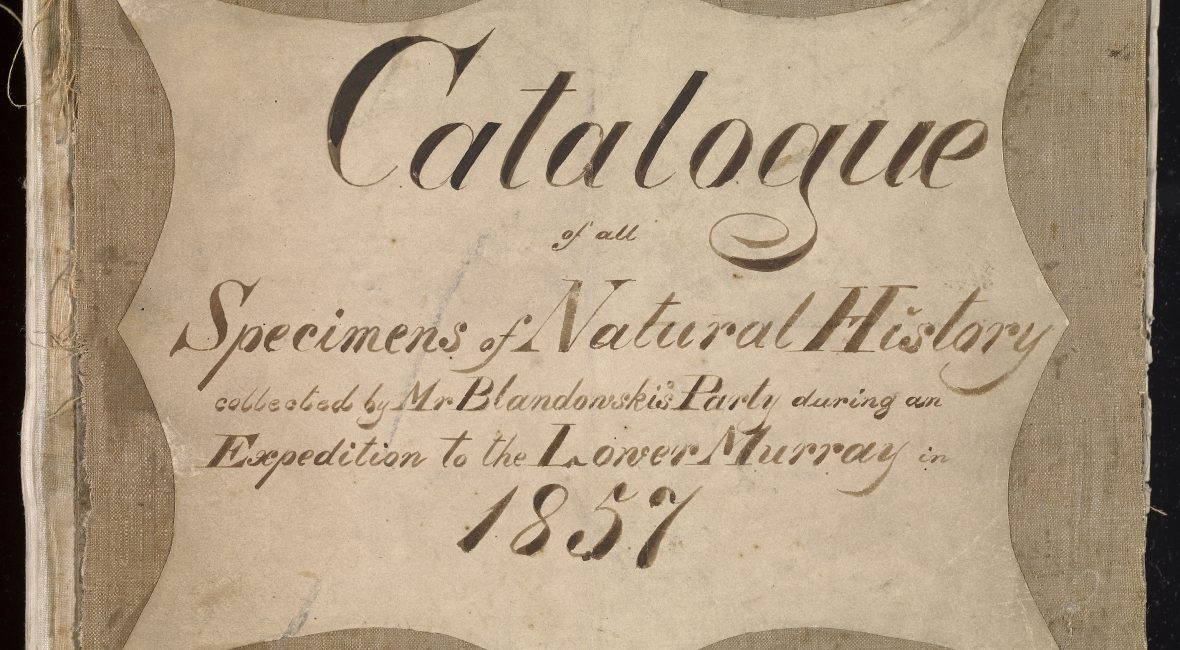
Catalogue of All Specimens of Natural History Collected by Mr Blandowski’s Party During an Expedition to the Lower Murray in 1857

Read the full blog post

Blandowski’s Catalogue is one of the most precious items held by the Museums Victoria Archives. It documents natural history specimens collected by William Blandowski (1822-1878) and Gerard Krefft (1830-1881) and colleagues working with First Peoples communities for the National Museum of Victoria (predecessor of Museums Victoria) during an expedition along the Lower Murray and Darling River from December 1856 to December 1857. Murray fishes listed in the Catalogue were later controversially used to describe prominent members of the Philosophical Institute in Blandowski’s 1858 paper Recent Discoveries in Natural History on the Lower Murray. Blandowski refused to hand-over to Professor Frederick McCoy, the National Museum of Victoria’s first Director, many of the specimens collected on the expedition, and associated research notes and illustrations, causing further controversy. Blandowski’s Catalogue has recently been digitised by BHL Australia and is now available to view online.

Continue reading
February 24, 2022byNik McGrath
Blog Reel, Featured Books

Plant Trade and Medicinal Plants in Asia

Read the full blog post

Plant species worldwide face an increasing barrage of threats to their survival. The deliberate collection of rare plants poses a far greater threat to wild plant species. In Wild Plants in Trade (1992), the reasons and effects of wild collection on plants for cultivation and international trade can be found. The trade of orchids, bulbs, cycads, palms and tree ferns, cacti and other succulent plants, carnivorous plants and air plants were introduced in detail in the second half of this book, as well as the attempts to control the collection of these plants by the Convention on International Trade in Endangered Species of Wild Fauna and Flora (CITES) and governments.

Continue reading
July 22, 2021byZheping Xu, Xuejuan Chen and Tian Jiang
Page 1 of 131234»10...Last »

Help Support BHL

BHL's existence depends on the financial support of its patrons. Help us keep this free resource alive!

search

About BHL

The Biodiversity Heritage Library (BHL) is the world’s largest open access digital library for biodiversity literature and archives. BHL operates as a worldwide consortium of natural history, botanical, research, and national libraries working together to digitize the natural history literature held in their collections and make it freely available for open access as part of a global “biodiversity community.”

Follow BHL

  • Bluesky logo
  • Instagram logo
  • Facebook logo
  • Flickr logo
  • Twitter logo

Join Our Mailing List

Sign up to receive the latest news, content highlights, and promotions.

Subscribe Now

Subscribe to Blog via Email

Enter your email address to subscribe to this blog and receive notifications of new posts by email.

Join 318 other subscribers

Subscribe to Blog Via RSS

Subscribe to the blog RSS feed to stay up-to-date on all the latest BHL posts.

Access RSS Feed

Inspiring Discovery through Free Access to Biodiversity Knowledge.

The Biodiversity Heritage Library makes it easier than ever for you to access the information you need to study and explore life on Earth…for free, anytime, anywhere.

64+ Million Pages of
Biodiversity Literature Online.

EXPLORE

Tools and Services
to Transform Research.

EXPLORE

300,000+
Illustrations on Flickr.

EXPLORE


ABOUT | BLOG AUTHORS | HARMFUL CONTENT | PRIVACY | SITE MAP | TERMS OF USE