

The Biodiversity Heritage Library continued our 20th anniversary celebration at our Annual Meeting in London from 27 April to 1 May. This year, founding members and 10th anniversary co-hosts, the Natural History Museum, London and the Royal Botanic Gardens, Kew, welcomed 46 representatives from 30 institutions across 8 countries to gather and plan for BHL’s future.
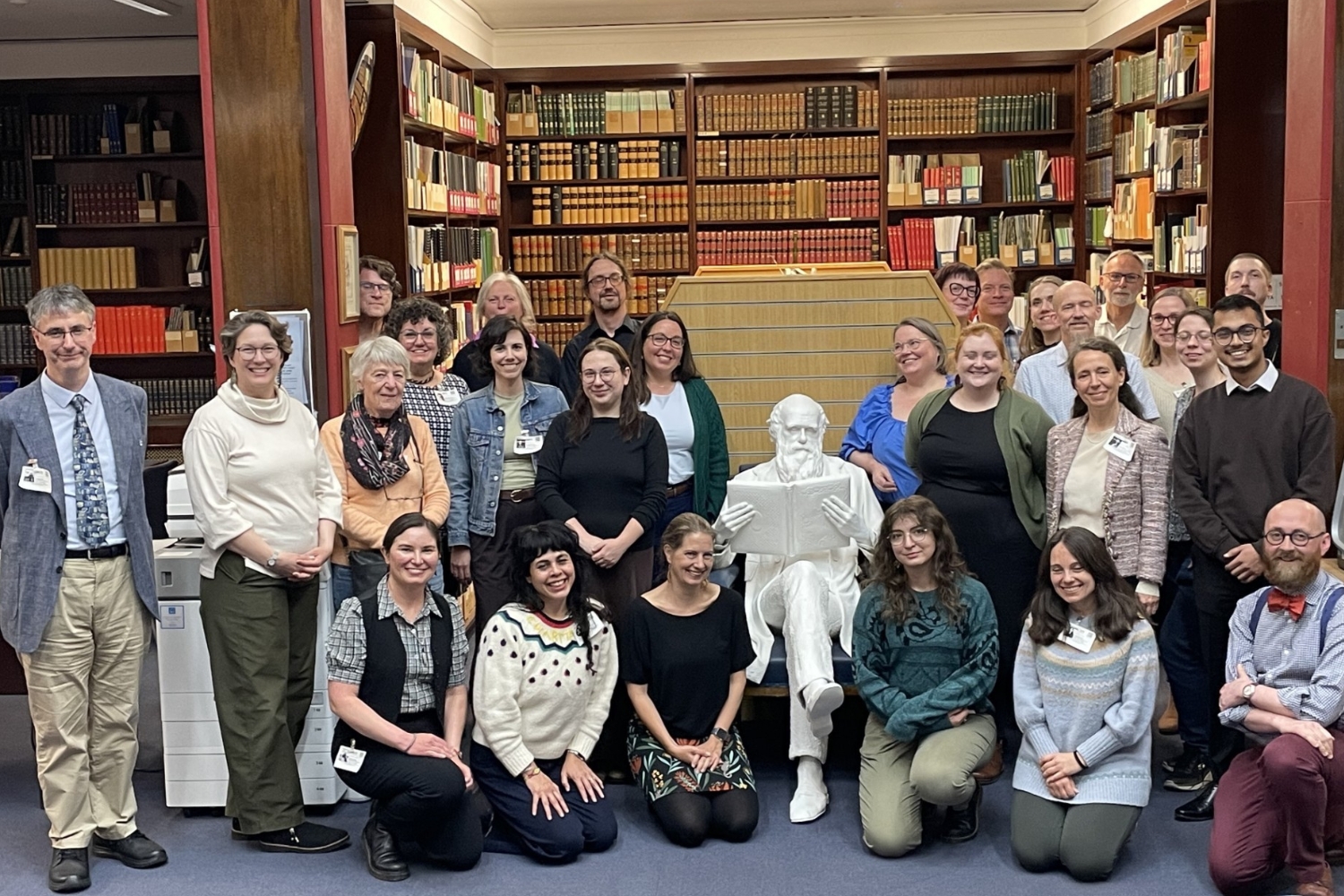
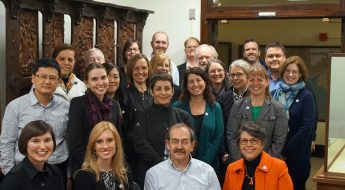
The attendees of the 2026 BHL Annual Meeting in the library of the Natural History Museum, London, with Charles Darwin. Photo credit: Victoria Devonport, NHM London
Though we took time to reflect on the successful collaborations of the past 20 years of BHL, this meeting was truly a time for looking forward. For me personally, this was my sixth BHL annual meeting and the most personally energizing. I started with BHL in March 2020 as BHL’s Program Manager. My first task was to help pivot the planned annual meeting in Paris to be fully virtual due to the COVID-19 pandemic. Every annual meeting since has presented its own unique opportunities and challenges; none more challenging than the 2025 annual meeting in which BHL was asked to develop an urgent transition plan to separate from the Smithsonian Institution in less than 9 months. In stark contrast, by April 2026, BHL is now operating under its new home at the Council on Library and Information Resources (CLIR) and moving its technical infrastructure to the Field Museum. We have retained our existing staff and expanded our consortium with new Members. For me, nothing is more revitalizing than gathering with the dedicated and enthusiastic contributors and supporters of BHL.
Strategic Planning
The major focus of the 2026 annual meeting was strategic planning. The BHL Executive Committee (EC) has been leading the global consortium through a strategic planning process in early 2026 to establish new goals for 2026 through 2030, as well as targeted 2 year operational plans to achieve those goals. With the transition to our new fiscal home under CLIR and the migration of our technical hosting to the Field Museum, 2026 is a year of great change for how BHL manages its daily operations.
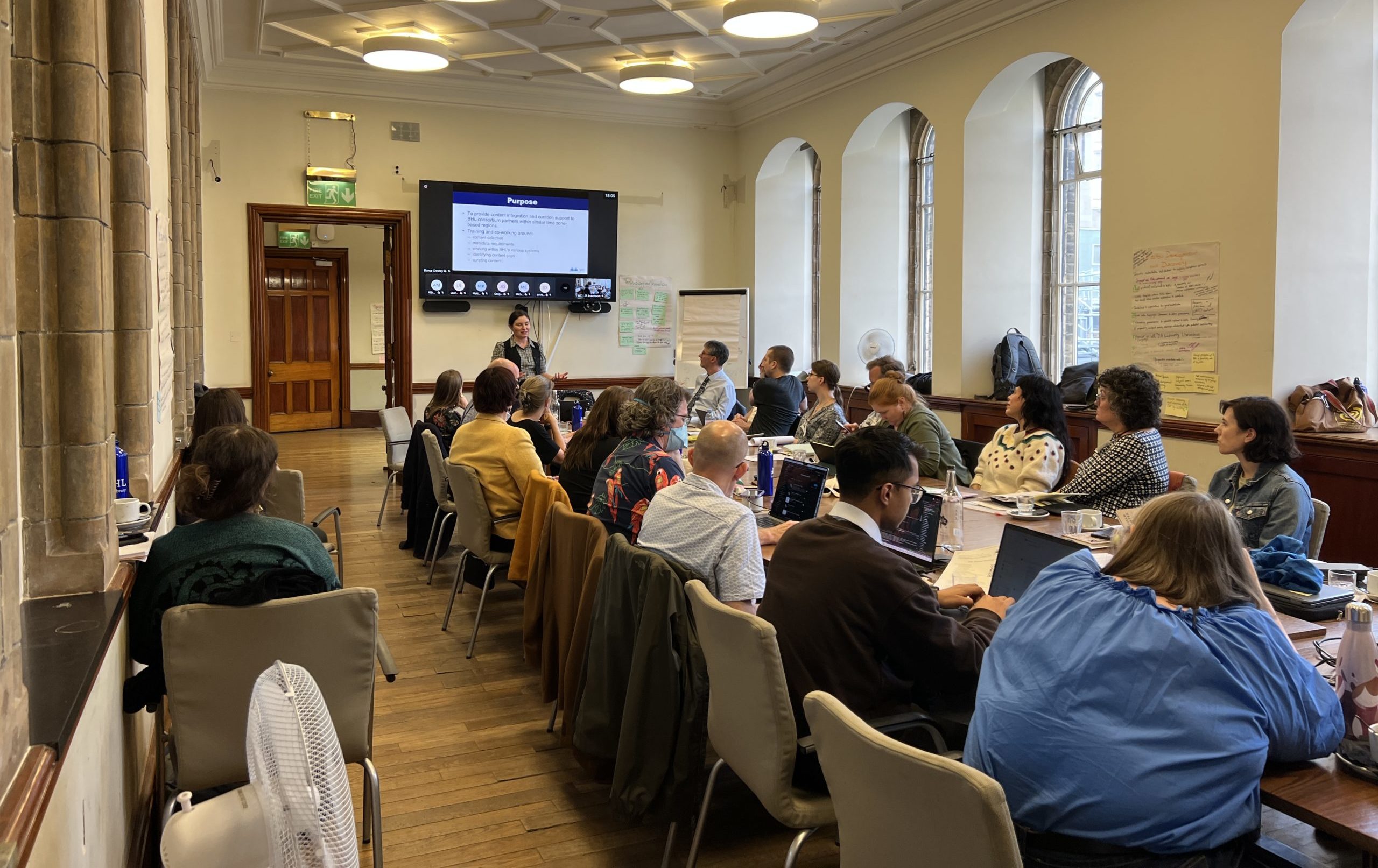
Bianca Crowley, Digital Collections Manager, presents a new concept for regional coordination hubs. Photo credit: Colleen Funkhouser
During the business meetings throughout the week, the consortium reviewed how our committees and working groups operate, explored options for better regional support and collaboration, and identified gaps to address in our governance and committee roles. We also welcomed representatives from our newest Members (University of South Florida Libraries, Vanderbilt University Heard Libraries, and Senckenberg Gesellschaft für Naturforschung), bringing fresh perspectives, regional expertise, and new ideas to our collaborative consortium.
We also focused on long-term funding strategies for supporting BHL beyond 2027. Though the Call for Support in 2025 garnered many opportunities for financial, technical, and administrative support, which stabilized BHL’s operations during a critical period of change, the long term funding model for BHL is still a work in progress and a major focus of the year ahead.
As the consortium works to finalize its revised vision, mission, and strategic goals, we’ll be reporting out to the community throughout the year.
Stakeholder Listening Session
On Wednesday 29 April, BHL held a strategic stakeholder session to gather key collaborators from across the biodiversity informatics landscape. BHL’s EC, Secretariat, and Technical Team were on hand to hear our stakeholders’ priorities for technical development, desires for content enhancement, and opportunities for greater collaboration or technical integration. Though BHL engages at various levels with these stakeholders, including GBIF, CETAF, BioStor, Global Names Architecture, Plazi, NHM, and Kew, this collective stakeholder meeting was a first for the BHL Annual Meeting.
BHL Day 2026: Towards a Biodiversity Data Ecosystem Built on BHL Data
Following the stakeholder session, we welcomed more than 120 attendees (online and in person) to the BHL Day 2026 public symposium hosted in the Flett Theatre at NHM. This year’s focus was on the importance of BHL data in building the biodiversity data ecosystem. We heard from colleagues and researchers across the globe on how they have utilized BHL data over the past 20 years to advance their research, and how future developments can improve and expand BHL’s data integration.
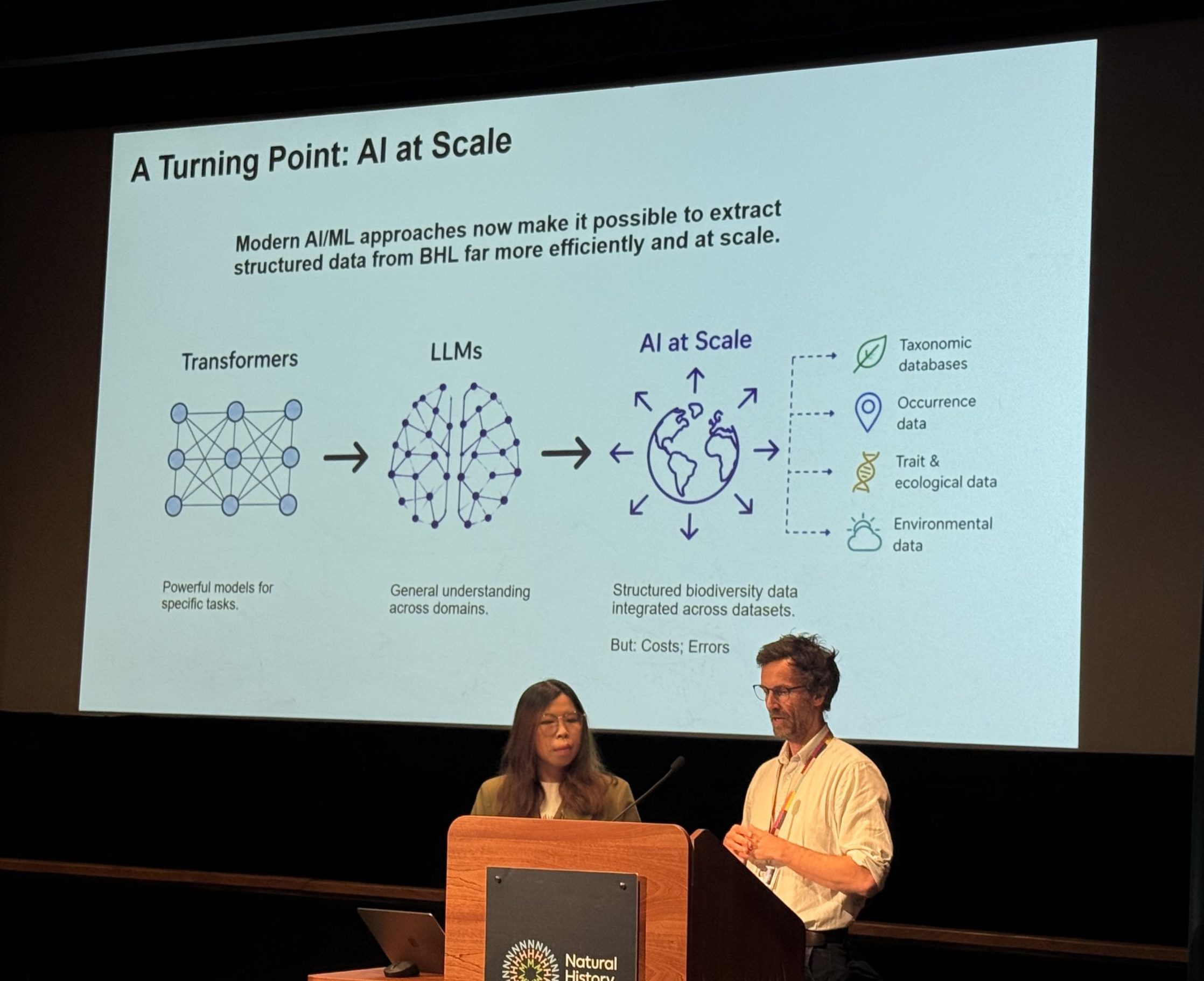
Qianqian Hiris Gu and Ben Hartley from NHM London share the possibilities of using modern AI and Large Language Models to extract data from BHL at scale. Photo credit: Nicole Kearney
Thanks to the collaborative nature of this BHL community, two speakers, Siobhan Leachman from Wikimedia Aotearoa New Zealand and Liz Smith from Cambridge University Library and Archives, brought their unique knowledge and skillsets together to solve an outstanding challenge in sharing data from the Darwin Correspondence Project. Siobhan shared more about this on-the-spot collaboration on the newly launched BHL Community Forum.
For a complete listing of BHL Day presentations and recordings, visit https://bit.ly/bhlday2026
Exploring the rich collections around London, Richmond, and Cambridge
It wouldn’t be a BHL annual meeting without visits to the rich library, archive, museum, and botanical collections around our host cities. Our Chair and Vice-Chair organized behind the scenes visits with some of the outstanding scientific collections in London, Richmond, and Cambridge. We started Monday afternoon at the Royal Society and the Linnean Society of London, exploring their deep histories and unique collections.
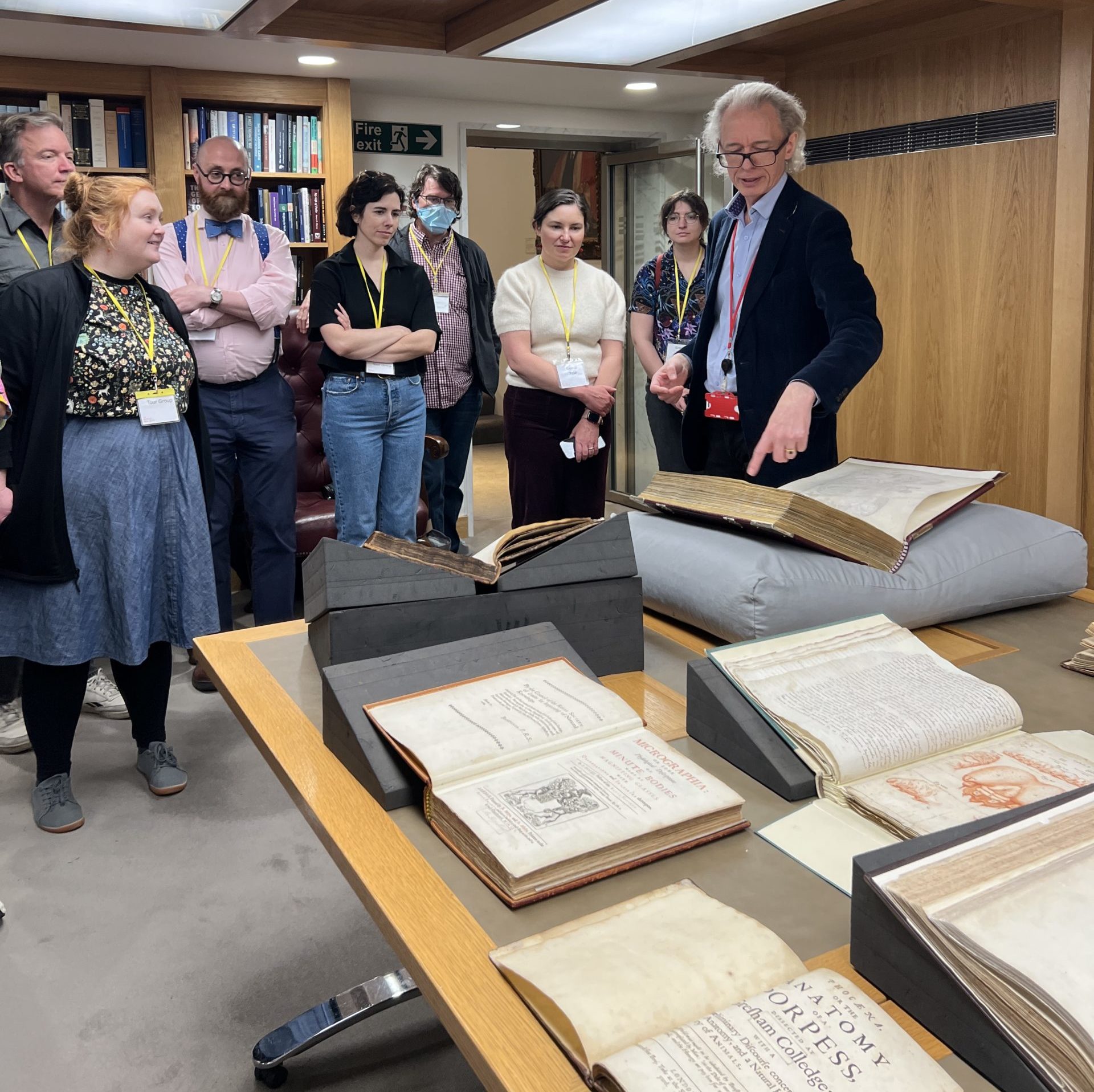
Keith Moore, Head of Library and Information Services for the Royal Society, reads from the Society’s Charter Book containing the signatures of Society fellows dating back to 9 January 1665. Photo credit: Colleen Funkhouser
At the Linnean Society, attendees visited several exhibitions in the Library’s reading room, including Homo sapiens: Classifying the Human Animal and the portrait exhibition Celebrating the Linnean Society’s First Women Fellows, as well as rare materials selected on the topic of biodiversity.
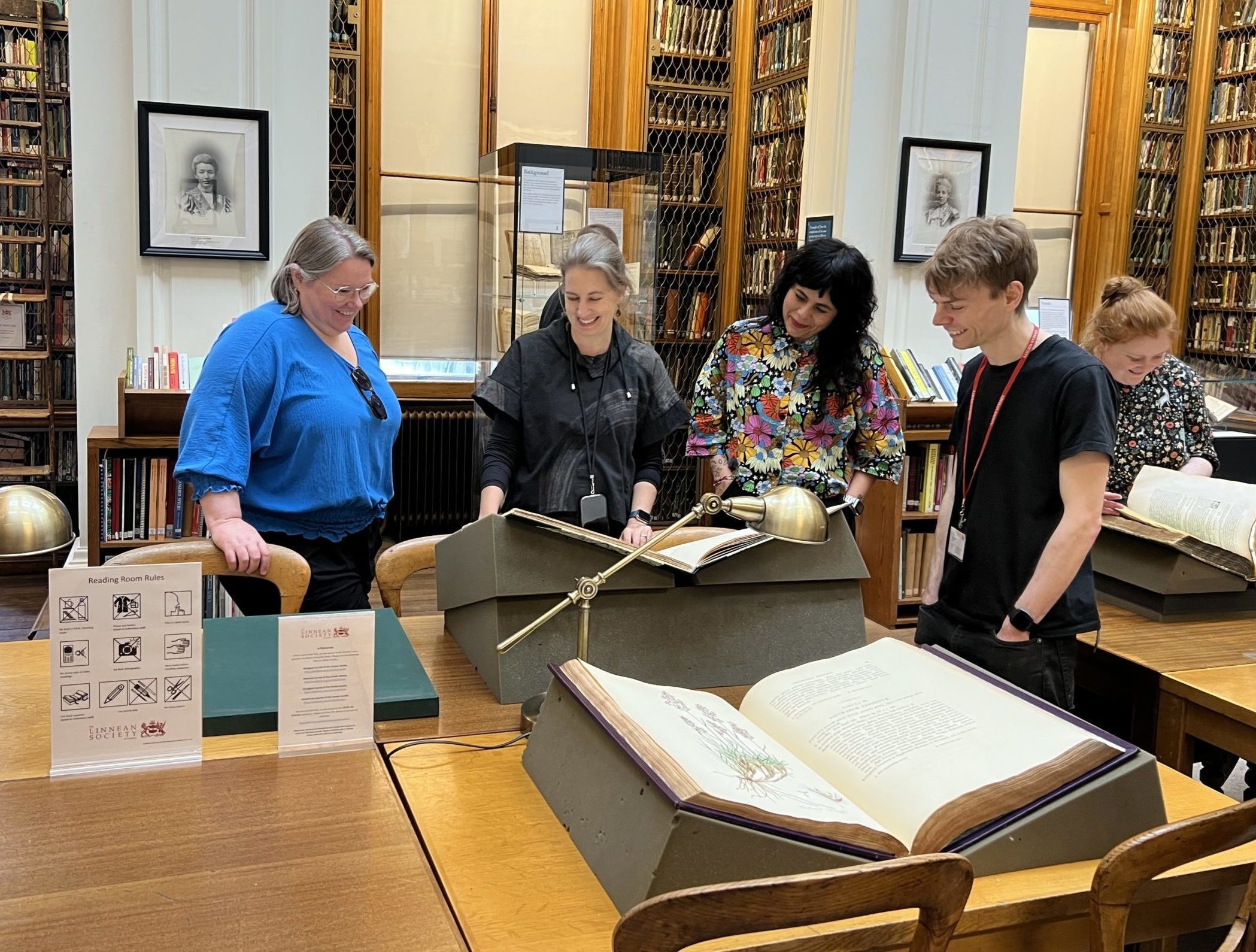
Will Beharrell, Librarian, Linnean Society Library, shares unique items selected for viewing by meeting attendees. Photo credit: Colleen Funkhouser
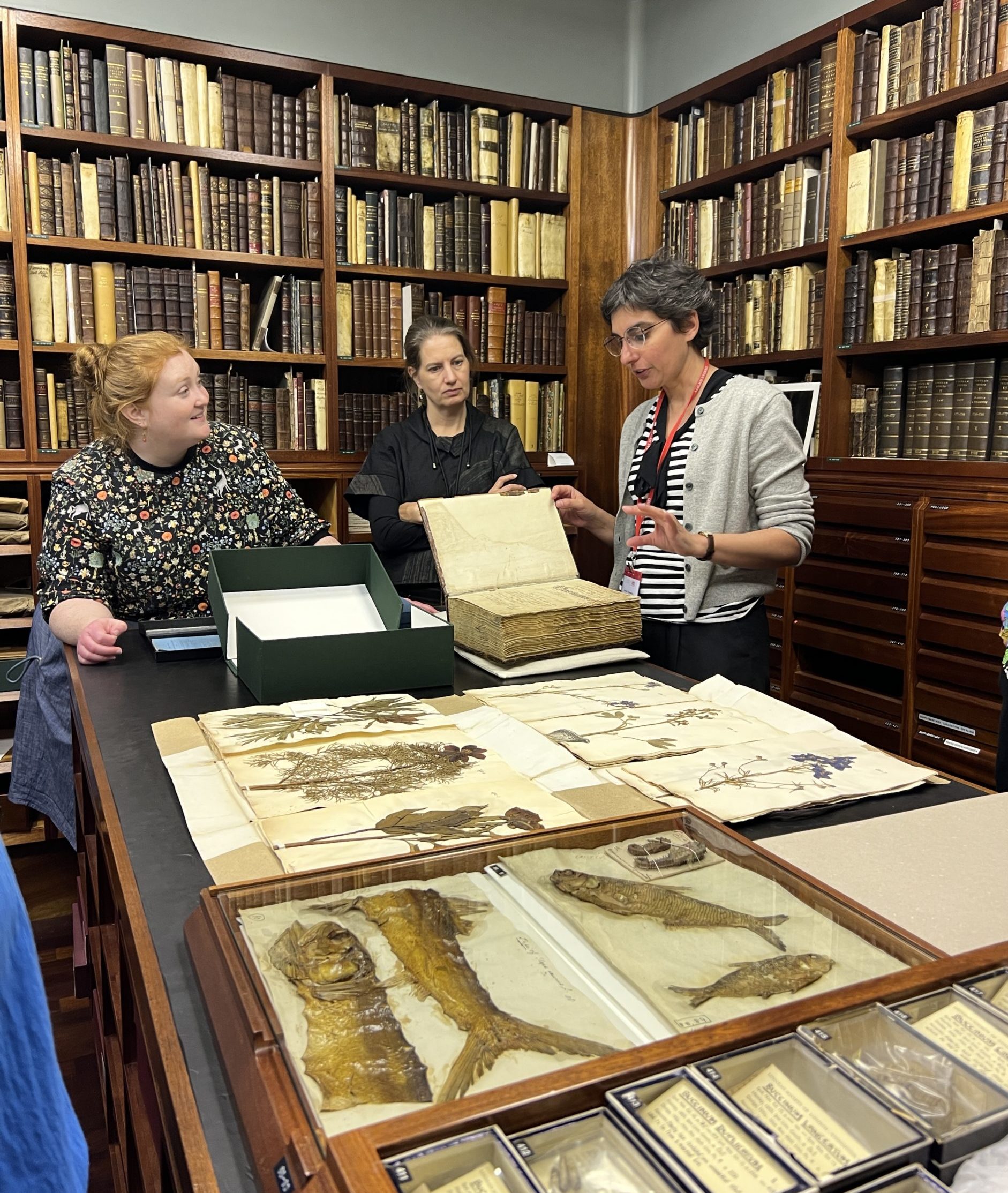
Dr. Isabelle Charmantier, Head of Collections, shares items from the Linnaeus Collections. Photo credit: Colleen Funkhouser
On Wednesday, meeting attendees received several behind-the-scenes tours of NHM, including the Historical Collections Room (pre-Linnean specimens), the Tank Room, and of course the Library and Archives.
On Thursday, Kew staff provided access to unique treasures from the Library and Archives collections. This included the oldest printed book held by the Library: the Ortus Sanitatis, a 15th century herbal printed in Germany in 1485.
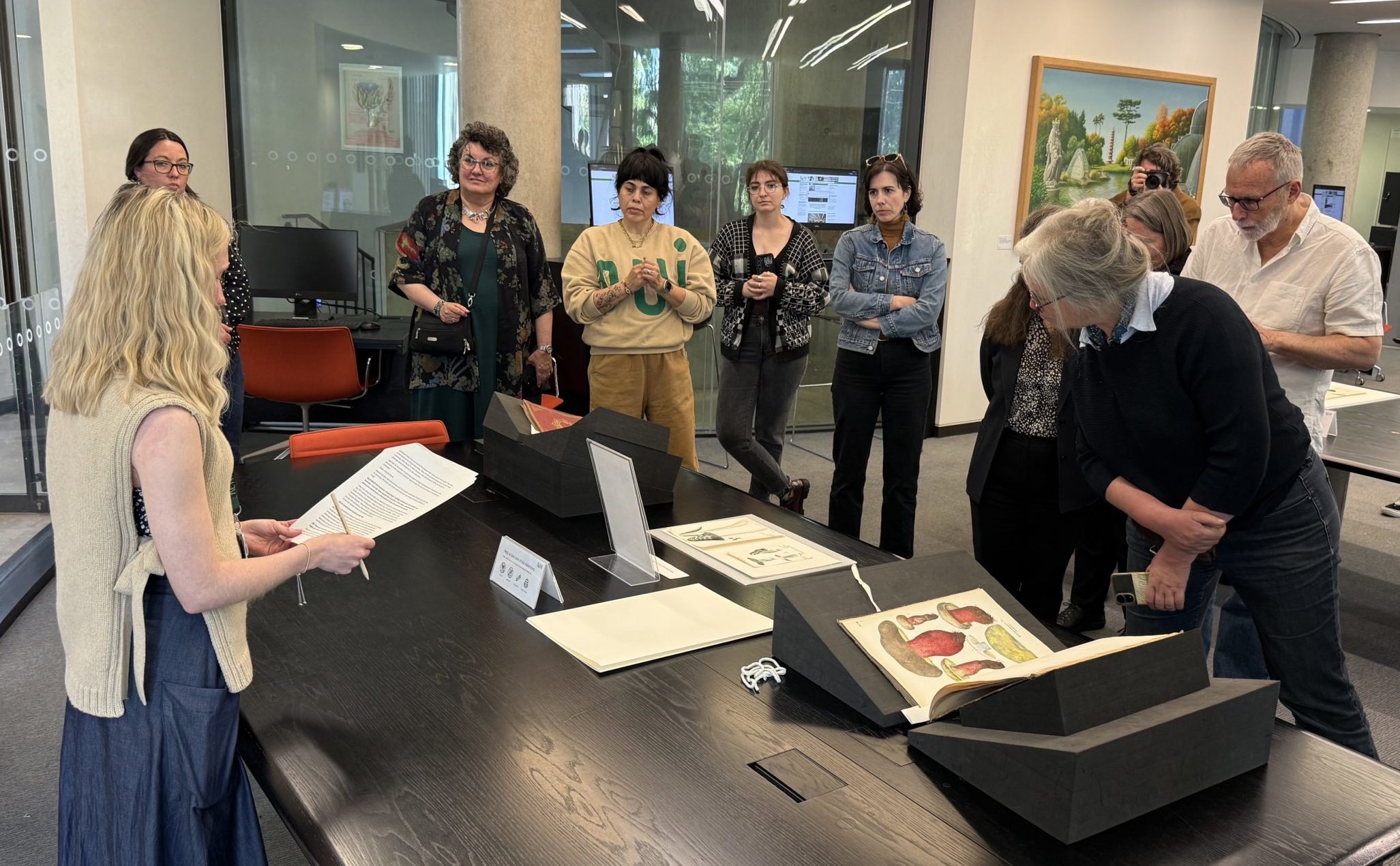
Meeting attendees view rare materials from Kew’s Library and Archives collections with Irene Szmelter, Library Graduate Trainee. Photo credit: Nicole Kearney
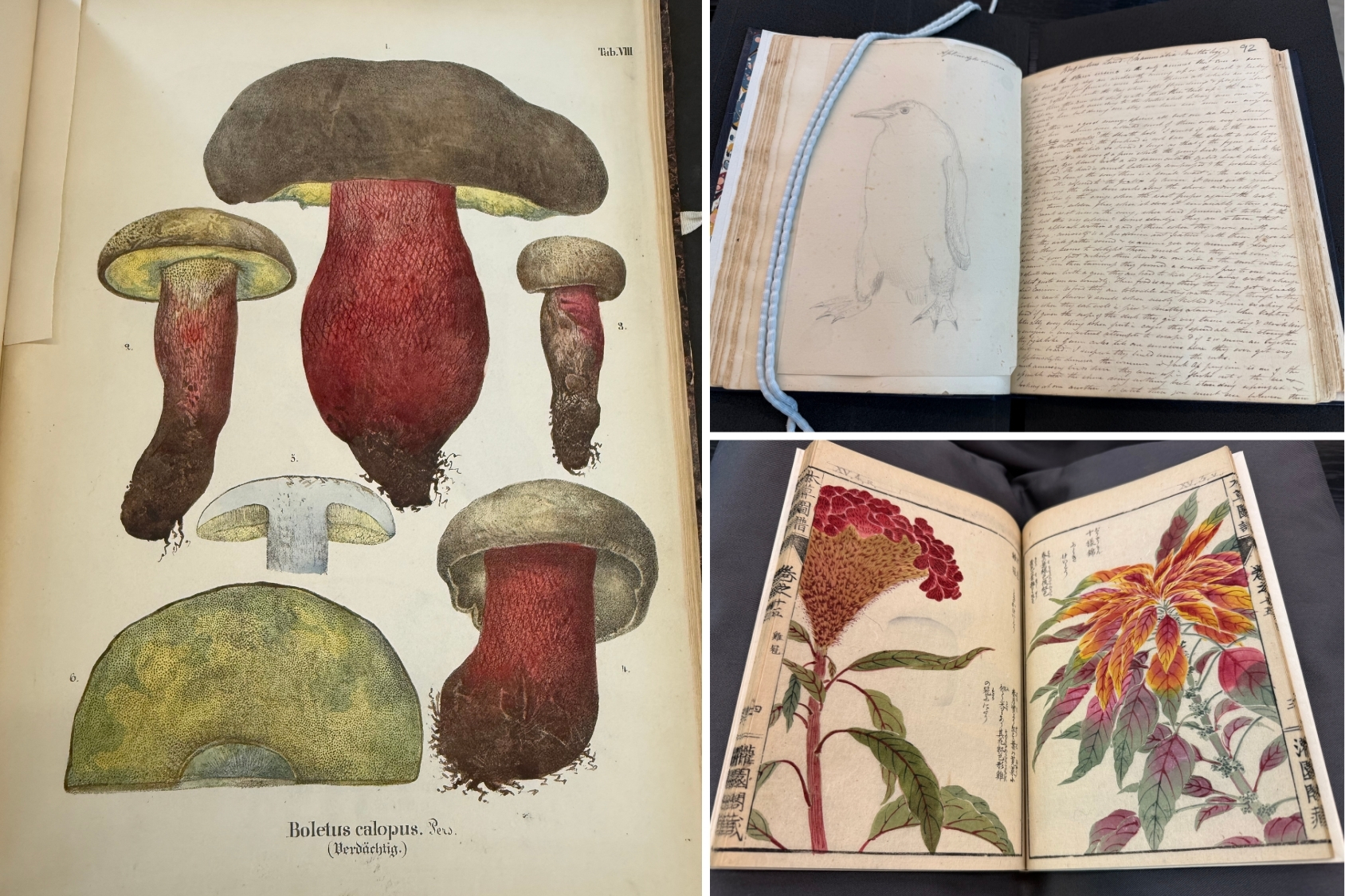
A selection of materials from the Kew Library and Archives collection. Photo credits: Nicole Kearney
On Friday, Vice-Chair Rich Wragg coordinated a day-long tour of institutions in Cambridge, including the Museum of Zoology, St. John’s College, the historic Wren Library at Trinity College, and the Cambridge University Library.
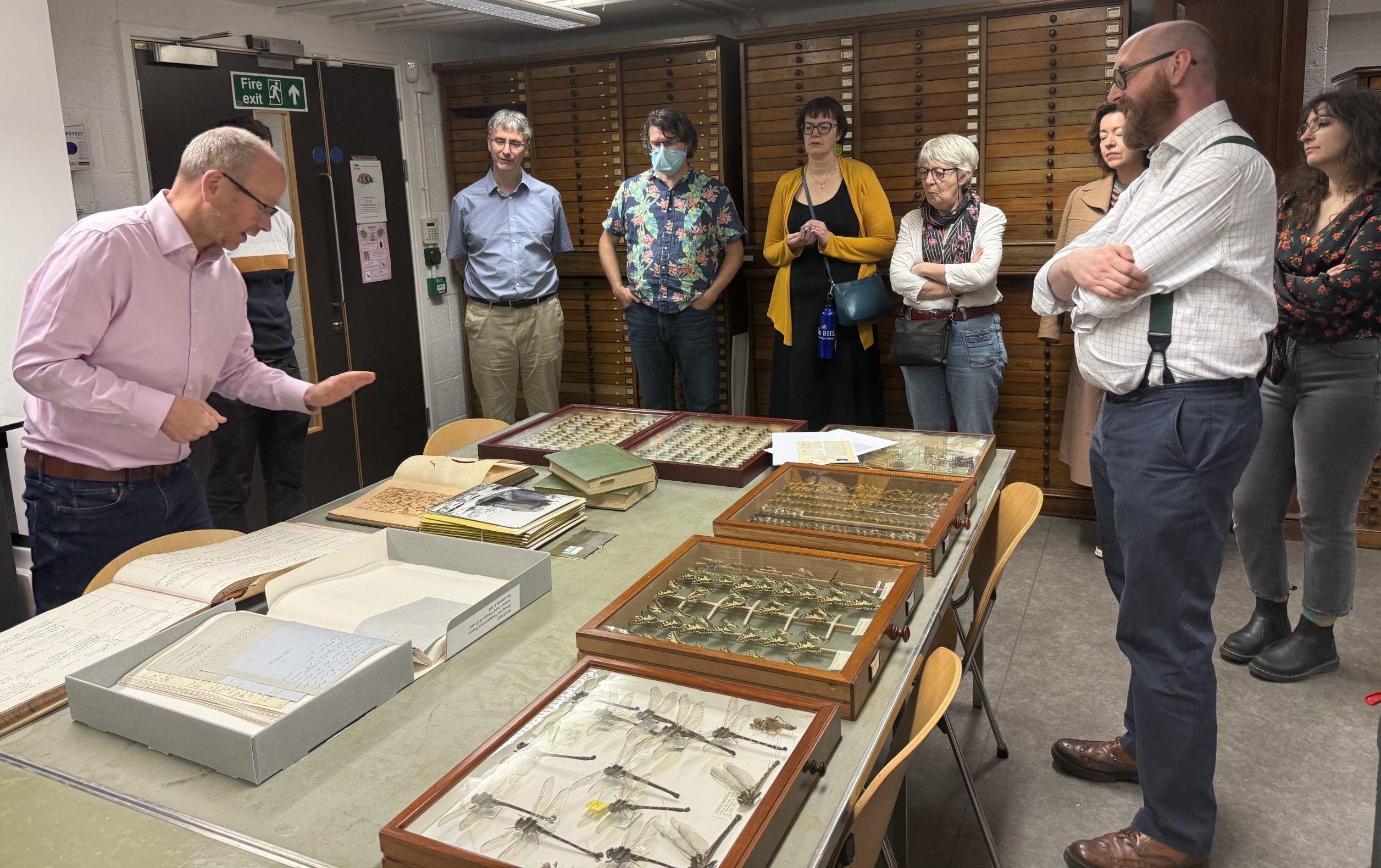
Russell Stebbings sharing the fascinating history of the invertebrate collections at Museum of Zoology Cambridge. Photo credit: Nicole Kearney
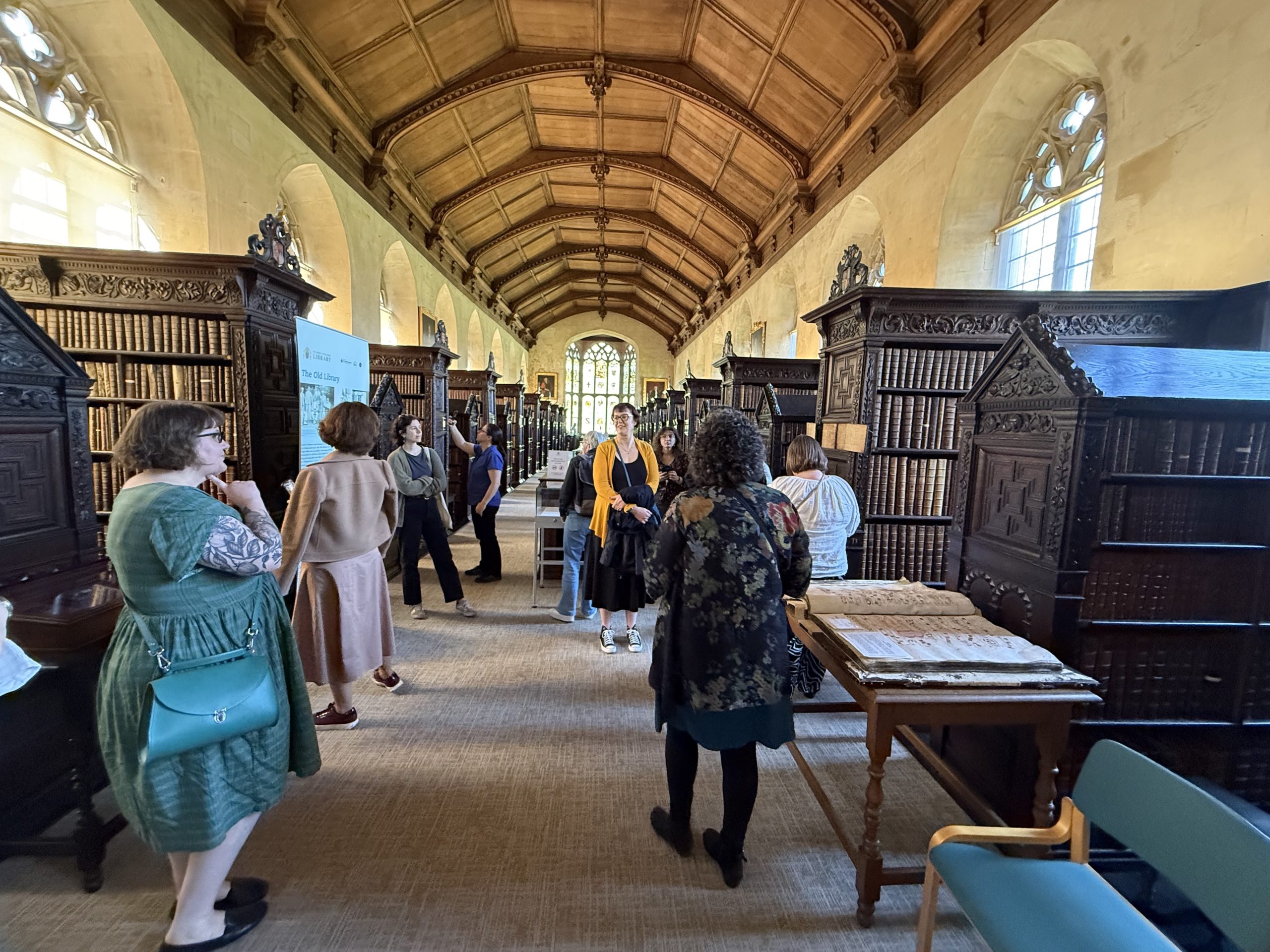
Librarian Tanya Kirk taking BHL Members through The Old Library of St John’s College at Cambridge University. Photo credit: Nicole Kearney
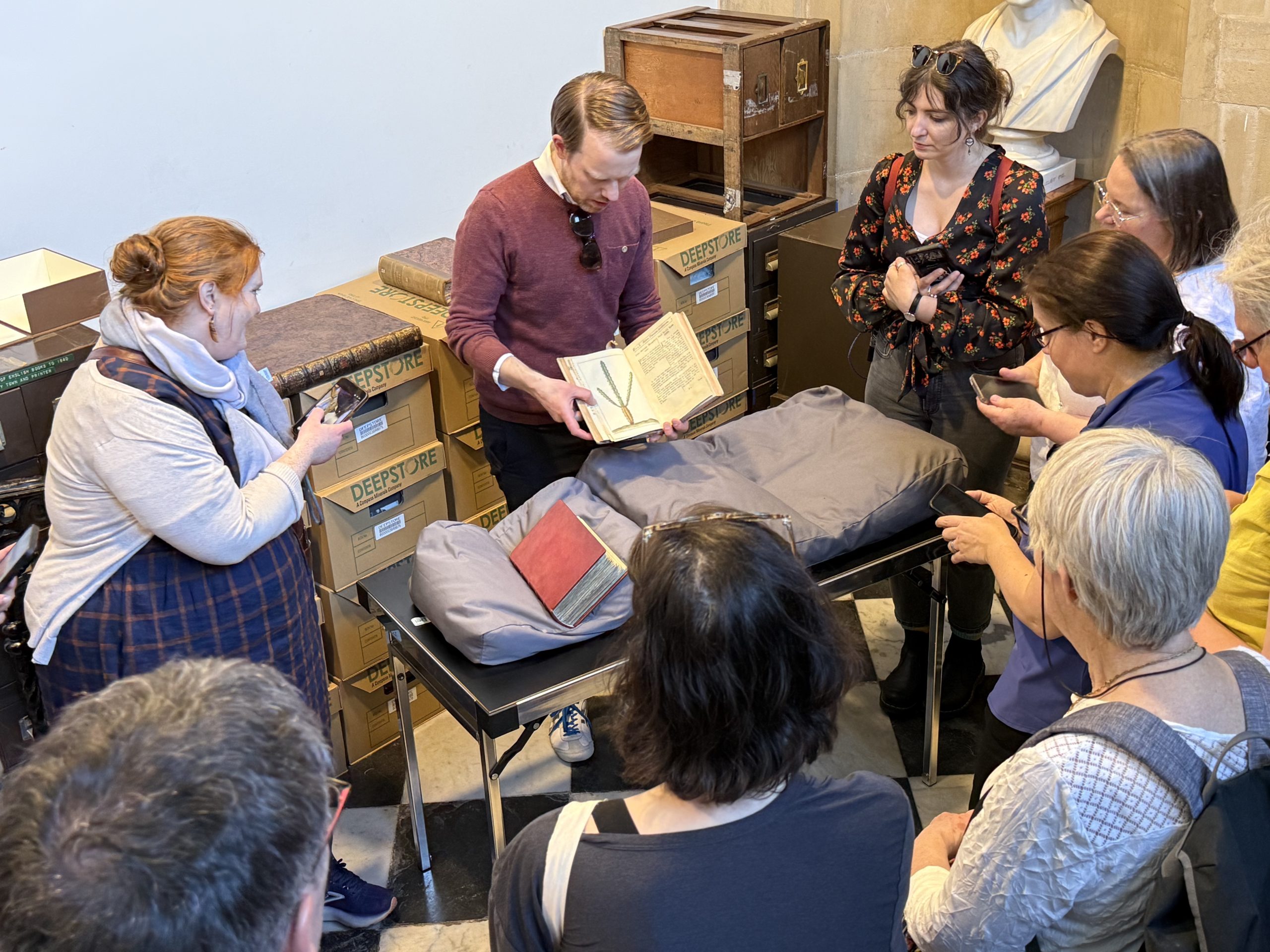
Steven Archer, Sub-Librarian of Trinity College Cambridge, showing BHL Members treasures from Trinity’s Wren Library. Photo credit: Nicole Kearney
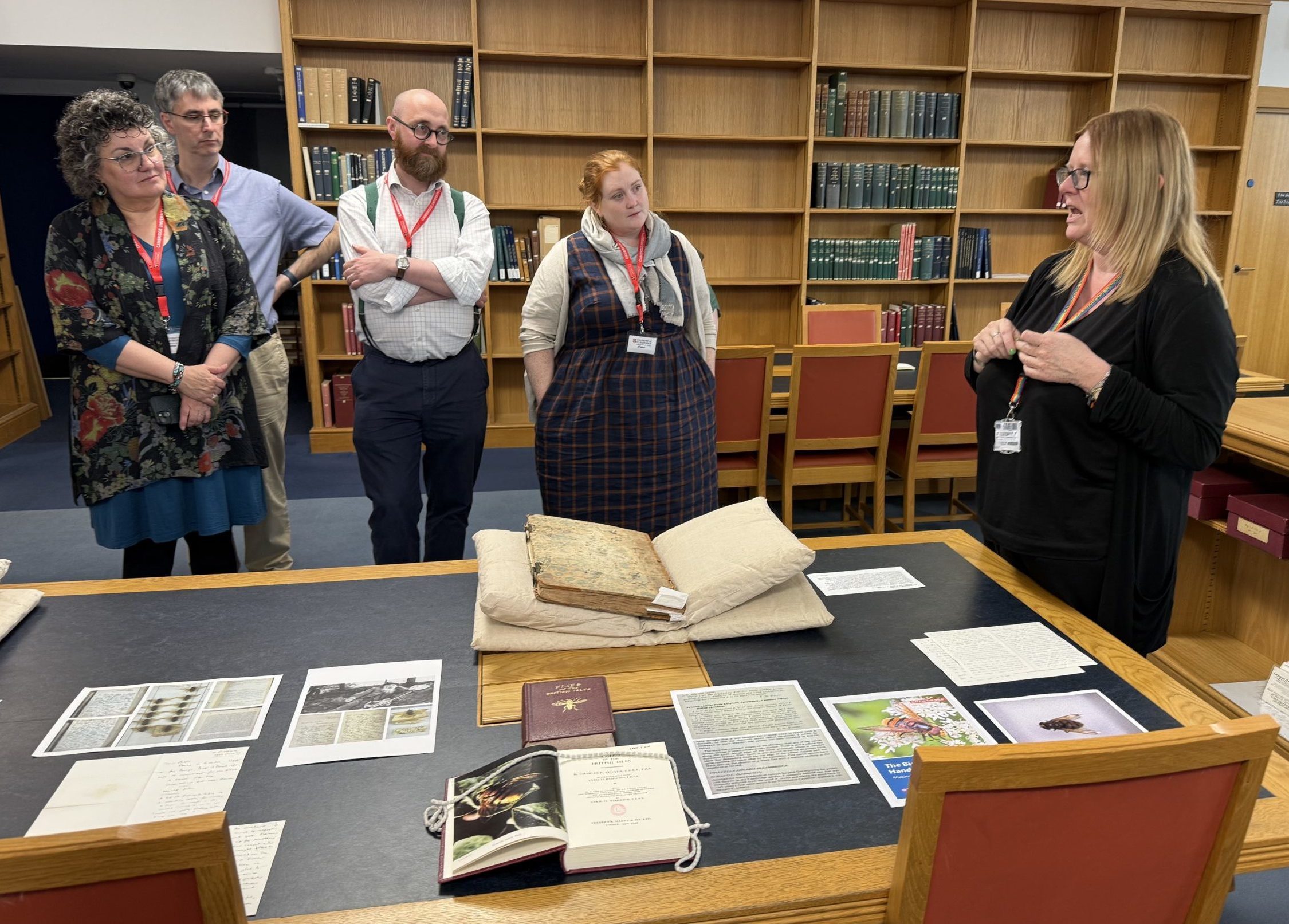
Jill Whitelock, Head of Special Collections, showcasing special items from the Cambridge University Library. Photo credit: Nicole Kearney
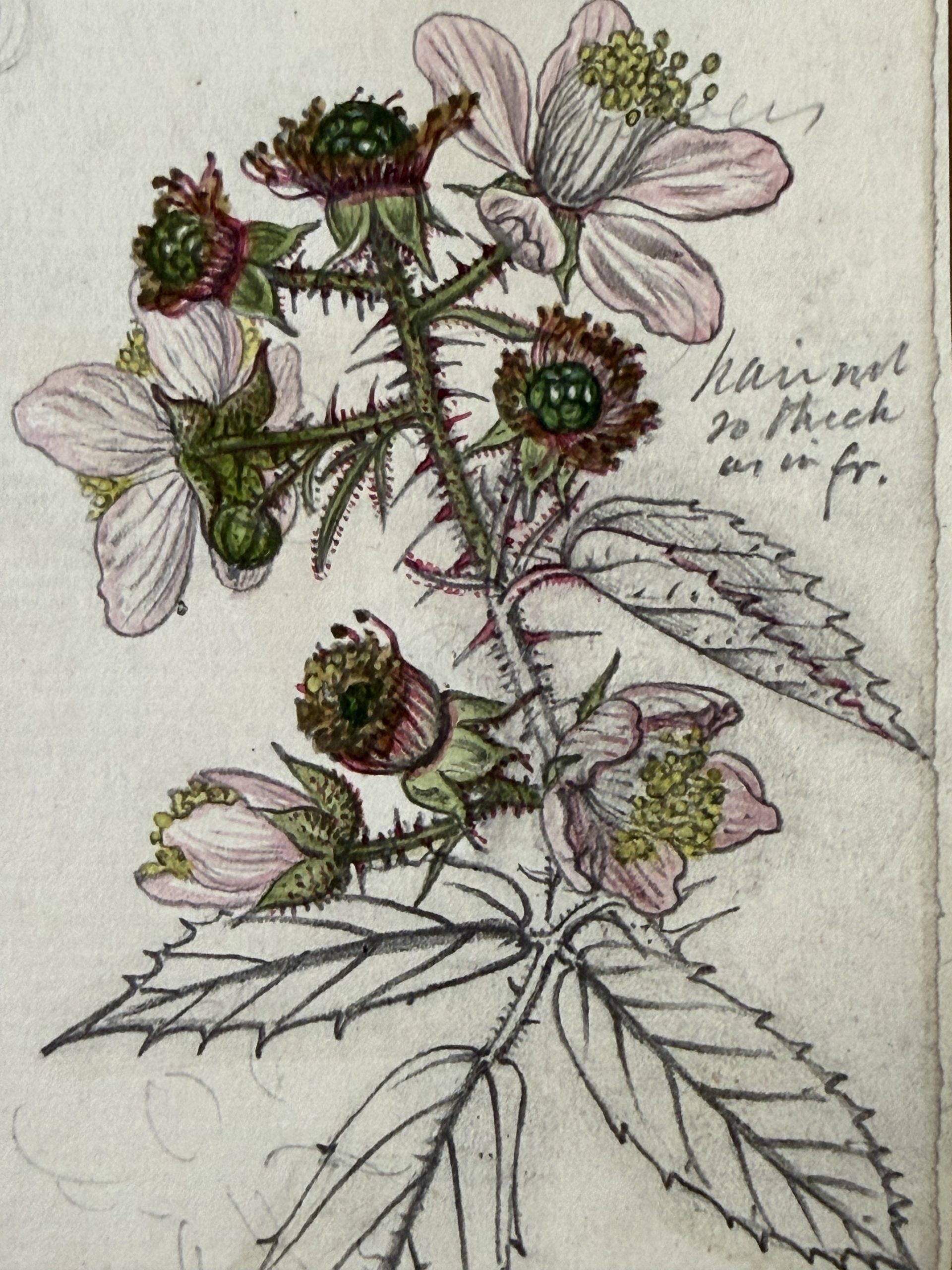
Draft plates from British botanist Charles Cardale Babington’s “The British Rubi: an attempt to discriminate the species of Rubus known to inhabit the British Isles, from the Cambridge University Library. Photo credit: Nicole Kearney
Happy Anniversary, BHL
Meeting attendees, strategic stakeholders, and BHL Day speakers gathered after the public symposium for a reception to celebrate 20 years of BHL. Since its founding in 2006, BHL has grown into a core biodata infrastructure serving the global biodiversity community. Cheers to the next chapter for BHL!
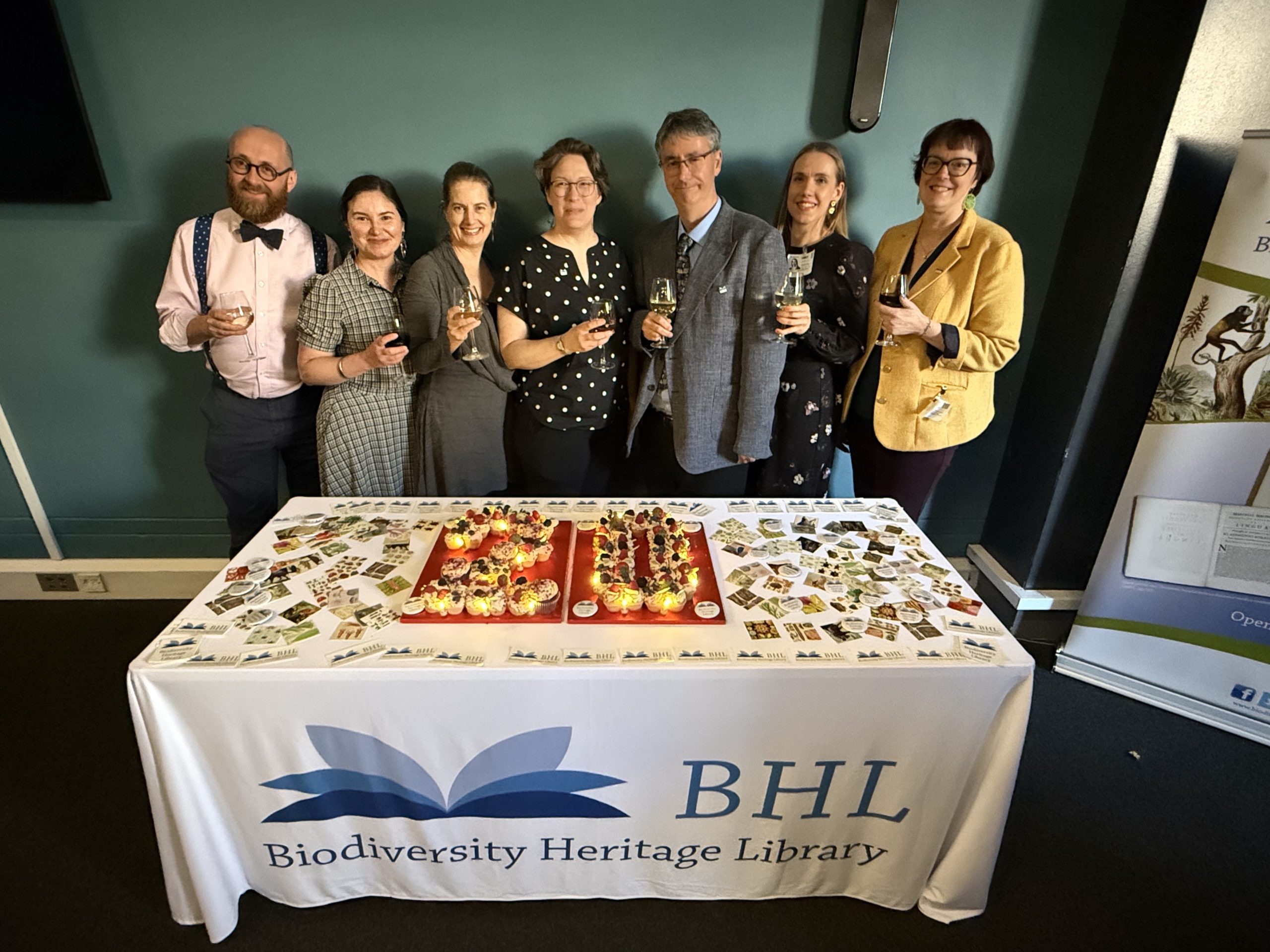
The BHL Executive Committee, Transition Team, and Secretariat members share a toast to 20 years of BHL. Left to right: Rich Wragg, Bianca Crowley, Nicole Kearney, Colleen Funkhouser, David Iggulden, Elisa Herrmann, and Kelli Trei.

And finally, I’d like to extend a personal thank you to our co-hosts, David Iggulden and Rich Wragg, for welcoming BHL partners for the 20th anniversary meeting. To my colleagues, Kelli Trei, Nicole Kearney, Bianca Crowley, Joel Richard, and Mike Lichtenberg – thank you for your tireless efforts this past year to think critically about BHL’s future beyond the challenging but necessary transition to a new operating structure. I look forward to the next phase of planning with our global consortium.
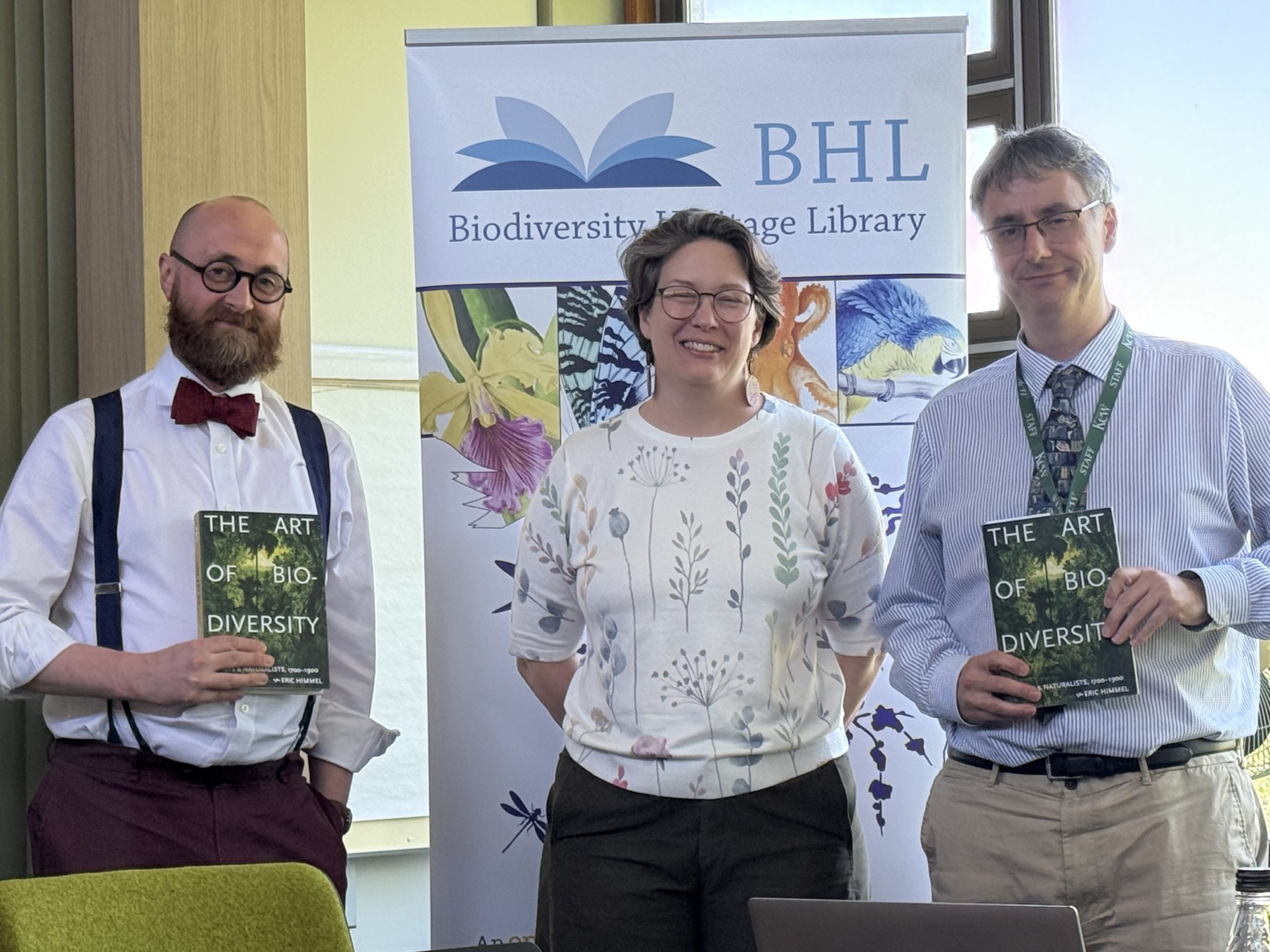
Colleen Funkhouser shares host appreciation gifts with annual meeting co-hosts Rich Wragg and David Iggulden. Photo credit: Nicole Kearney
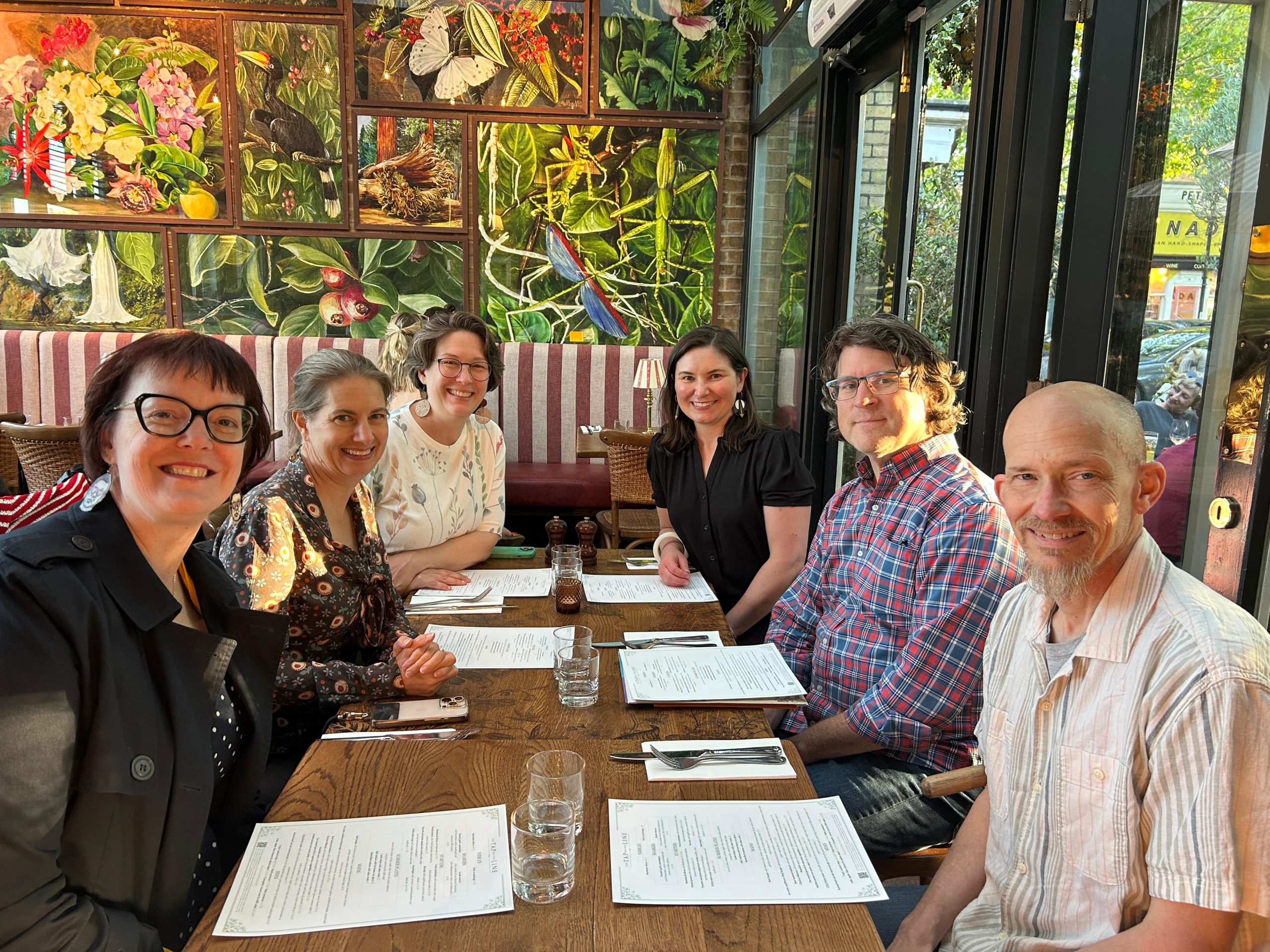
BHL team members celebrate the end of the meeting. Left to right: Kelli Trei, Nicole Kearney, Colleen Funkhouser, Bianca Crowley, Joel Richard, and Mike Lichtenberg. Photo credit: Emily Benton
Discover more from Biodiversity Heritage Library
Subscribe to get the latest posts sent to your email.

Colleen Funkhouser is BHL's Managing Director. Under the direction of the BHL Executive Committee, Colleen is responsible for the programmatic, administrative, and financial operations of the global consortium.

Leave a Comment