Biodiversity Heritage Library - Program news and collection highlights from BHL
  • Home
  • News
  • Featured Books
    • All Featured Books
    • Book of the Month Series
    • BHL at 20
  • User Stories
  • Campaigns
    • Fossil Stories
    • Garden Stories
    • Monsters Are Real
    • Page Frights
    • Her Natural History
    • Earth Optimism 2020
  • Tech Blog
  • Visit BHL
Home
News
Featured Books
    All Featured Books
    Book of the Month Series
    BHL at 20
User Stories
Campaigns
    Fossil Stories
    Garden Stories
    Monsters Are Real
    Page Frights
    Her Natural History
    Earth Optimism 2020
Tech Blog
Visit BHL
  • Home
  • News
  • Featured Books
    • All Featured Books
    • Book of the Month Series
    • BHL at 20
  • User Stories
  • Campaigns
    • Fossil Stories
    • Garden Stories
    • Monsters Are Real
    • Page Frights
    • Her Natural History
    • Earth Optimism 2020
  • Tech Blog
  • Visit BHL
Biodiversity Heritage Library - Program news and collection highlights from BHL
Blog Reel, User Stories

Teaching with Historic Biodiversity Publications

Can science increase agricultural productivity and support food security?

The founders of the Royal Agricultural Society of England believed so. In 1838, a group of individuals with varied agricultural interests united to establish the Society with the purpose to promote the scientific advancement of English agriculture. Just two years later, in 1840, Queen Victoria granted the Society its Royal Charter, and the Society has played a significant role in agricultural progress in England ever since.
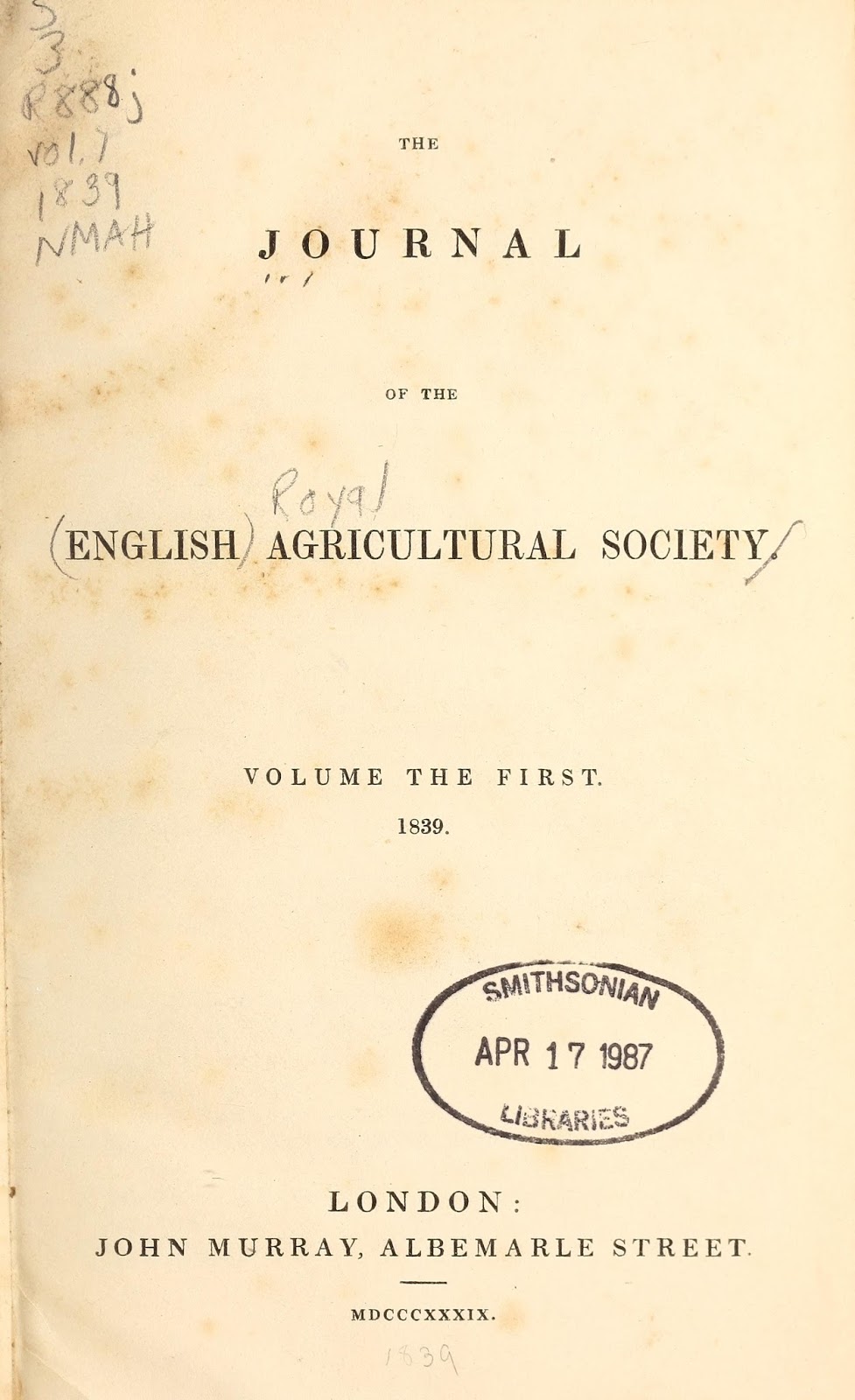
Title page for Volume One of the Journal of the Royal Agricultural Society of England. 1839. Digitized by Smithsonian Libraries. http://s.si.edu/2nqmWdu.

The Journal of the Royal Agricultural Society of England was used to communicate the Society’s activities and disseminate information useful to those in agricultural fields. Since the publication of the first volume in 1839, the Journal has shared practical advice on soil cultivation; advances in agricultural implements, structures, and pest control; discoveries of new crop varieties; land management guidance; improvements in veterinary care related to livestock; and the results of agricultural experiments.

The Journal is useful not only for research in agricultural science, but also other fields like environmental history. For Dr. Karen Sayer, Professor of Social and Cultural History at Leeds Trinity University, it is an invaluable resource.

“The Journal of the Royal Agricultural Society of England is a crucial source in my field, and I have easy access to it thanks to the Biodiversity Heritage Library.”
Dr. Karen Sayer (left) with a student. Image Rights: Leeds Trinity University.

Sayer’s research focuses on conceptualizations of rural communities, landscapes, and environments; human and animal relations in agriculture; and agricultural labor, landscapes, and structures in a social and cultural context. Thanks to BHL, which she discovered whilst searching for primary sources nearly ten years ago, Sayer has easy access to the references she needs to support her research.

“BHL is an incredible resource,” affirms Sayer. “It provides access to material that is otherwise hard to get and enables me to undertake detailed searches of these sources. I use it frequently, often weekly, especially when I’m teaching as it is also a great resource for my students.”

Sayer’s favorite feature within the library is the ability to generate custom PDFs of specific pages, which allows her to download just those articles relevant to her research. This feature is also useful within the classroom, allowing her to share articles with her students for reading and commenting.

Having digital access to publications such as the Journal of the Royal Agricultural Society of England also allows Sayer and her students to easily explore elements of agricultural and rural society and the dissemination of information at different cultural levels.
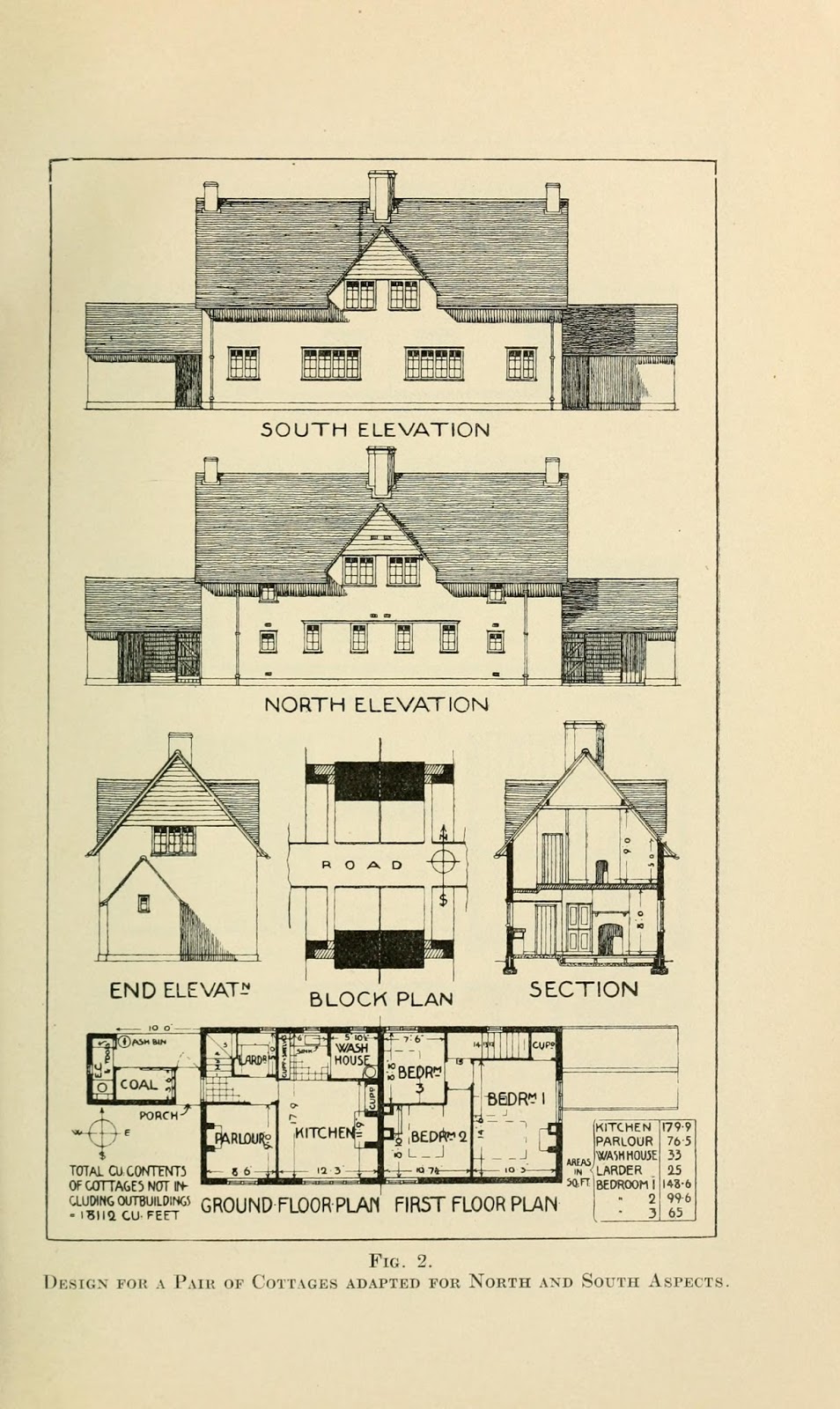
Plans for cottages within the article “The Housing of the Agricultural Labourer.” Journal of the Royal Agricultural Society of England. v. 75 (1914). Digitized by The New York Botanical Garden. http://s.si.edu/2BF3VsT.

“I like being able to pull up a whole text online for teaching, as I can project it on a Smart Board in the classroom and as a group we can scroll through it to explore ideas, juxtapositions, etc.” explains Sayer. “My students can see that articles about French or German agriculture were being published alongside detailed explorations of wheat yields at agricultural research stations and reports on machinery exhibits at a county level. They can see how knowledge circulated at the time and the ways in which issues and ideas were debated.”

To further facilitate her research, Sayer would love to be able to search the full text of the collection and specific holdings to more easily identify articles related to specific topics and get a sense of the development of an idea or debate over time.

We are thrilled to confirm that full text search is currently under development. Through increased research efficiency, full text search will enhance BHL’s ability to inspire discovery through free access to biodiversity knowledge. Stay tuned for more information on this new service.

As Dr. Sayer’s experience demonstrates, historic natural history publications provide a wealth of information beyond scientific data. These works also document important cultural information, providing insight into the emergence of ideas and the spread of knowledge through society and time. We are thrilled to know that BHL’s collections support research across a wide array of disciplines.

Source

Royal Agricultural Society of England. 2018. “History.” Accessed January 30, 2018. http://www.rase.org.uk/history/.
February 1, 2018by Grace Costantino
Blog Reel

BHL Website Unavailable 31 January 2018 <– Issue Now Resolved!

UPDATE: The BHL website is back online. Thank you for your patience!

————————————-
The BHL website is currently unavailable due to technical difficulties. We’re working to resolve the problem as soon as possible. We apologize for the inconvenience and thank you for your patience.

While the BHL website is down, you can access our collection via Internet Archive.

January 31, 2018by Grace Costantino
Blog Reel, User Stories

Examining the History of Paleoanthropology Using BHL

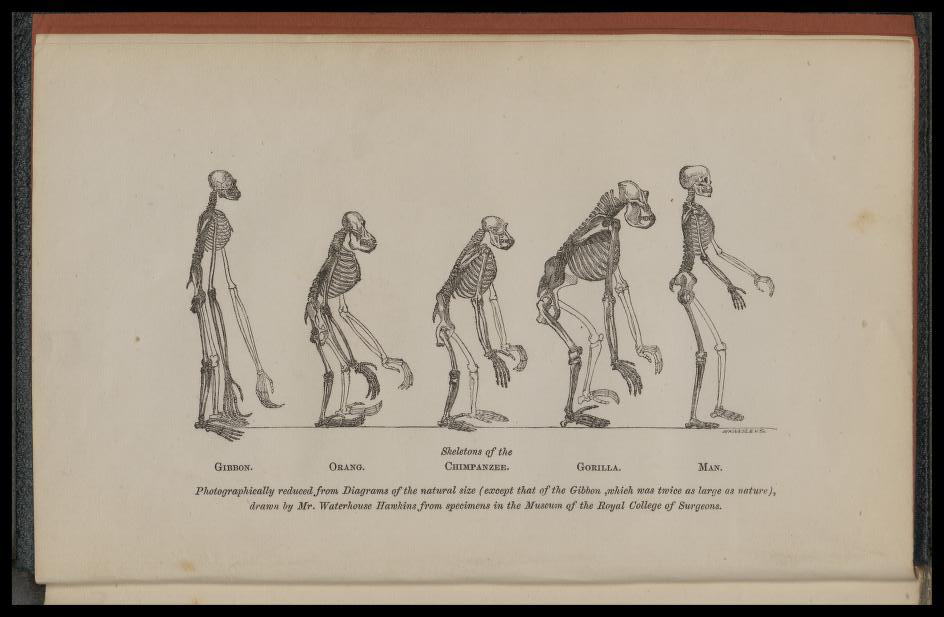
In the middle of the nineteenth century, the scientific community was engrossed in discussions about evolution and the origin of species. The publication of Darwin’s On the Origin of Species in 1859 fueled extensive scientific debate and prompted further questions regarding human evolution. A key figure in these debates was Thomas Henry Huxley, an English biologist and comparative anatomist.

Frontispiece. Huxley, Thomas Henry. Evidence as to Man’s Place in Nature. 1863. Digitized by Cambridge University Library as part of Charles Darwin’s Library. http://s.si.edu/2inaol1.

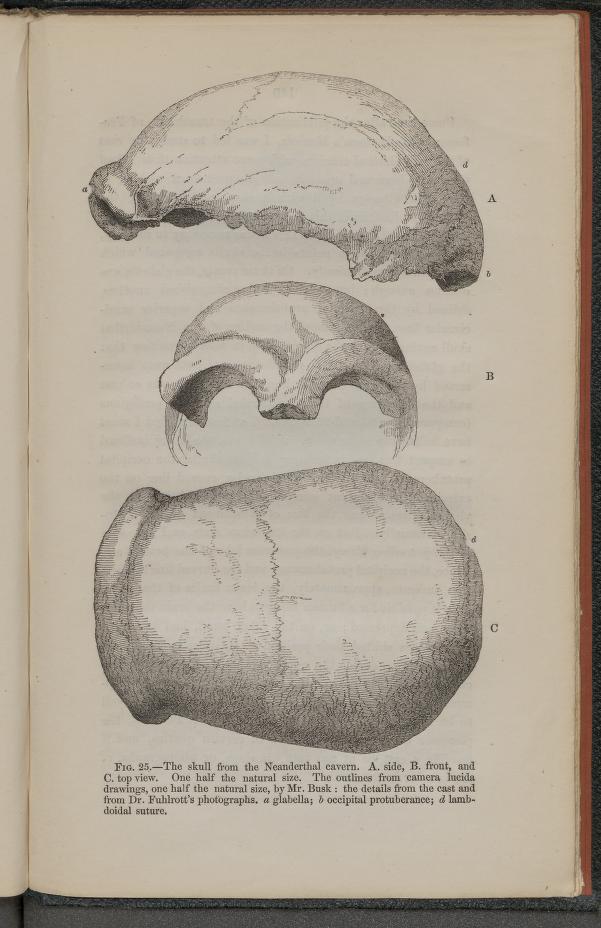
A close friend of Charles Darwin and a staunch public supporter of the theory of natural selection, Huxley used his expertise in embryology, paleontology and comparative anatomy to demonstrate an evolutionary relationship between humans and apes. In a series of public lectures between 1860-62, he presented research on anatomical similarities between humans and apes and discussed hominin fossil discoveries, including a skullcap from the first recognized Neanderthal Man which was unearthed in Germany in 1856.

These oral discourses were collected into a single volume and published in 1863 as Evidence as to Man’s Place in Nature.

Huxley, Thomas Henry. Evidence as to Man’s Place in Nature. 1863. Digitized by Cambridge University Library as part of Charles Darwin’s Library. Page 139. http://s.si.edu/2B12Tvx.


Paige Madison, a PhD candidate studying the history of paleoanthropology at Arizona State University, identifies this publication as a vital reference for her doctoral research.

Paige Madison, PhD candidate at Arizona State University. Photo Credit: Alex Reynes.

“This was one of the pioneering works in the history of paleoanthropology,” explains Madison. “Huxley’s argumentative strategy is wonderful. At a time when it was hard to get away from preconceived notions about human evolution, Huxley asks his readers to take a step back and imagine they were visitors from Saturn, ‘happily free from all personal interest.’ He lays out the facts concerning humans’ similarities to other apes and then asks the impartial scientific Saturnians, ‘Is Man so different from any of these Apes?'”

For her dissertation, Madison is examining a series of case studies on the history of paleoanthropology spanning well over a century. This research requires examination of numerous historic publications, such as Huxley’s Man’s Place in Nature. Thanks to the Biodiversity Heritage Library, she has easy access to the necessary references.

“BHL has been central to my research,” asserts Madison. “It allows me to quickly access a wealth of material online, so I can spend my time researching rather than running back and forth to the University library.”

After first being introduced to BHL by fellow graduate students five years ago, Madison now uses the library almost weekly to access the research of key scientists in her field. By downloading entire PDFs of relevant publications or selecting specific pages using BHL’s custom PDF generator, she is able to guarantee easy offline access to important references. She also uses the library to gather images, which she finds useful both for her research and when creating presentations.

“The images I can download from BHL are high quality,” says Madison. “I know exactly where they came from and how they were used to illuminate a particular aspect of a scientist’s overall argument.”

While she finds BHL’s collections invaluable, Madison notes that the consolidation of duplicate author names would greatly improve the user experience. As a request voiced by many users, name authority control is indeed high on BHL’s list of development priorities.

For Madison, exploring the history of hominin fossils and our understanding of their place in the evolution of Homo sapiens is a passion that is greatly facilitated by the Biodiversity Heritage Library. We are proud to know that BHL’s open access collection is helping to illuminate the history of science to accelerate research today and empower future discoveries.

You can follow Paige Madison’s research on Twitter at @FossilHistory.

Reference

Hauserman, Samantha. 2013. “Thomas Henry Huxley (1825-1895).” The Embryo Project Encyclopedia, November 26. Accessed December 5, 2017. https://embryo.asu.edu/pages/thomas-henry-huxley-1825-1895.

______________________________________

This post may contain the personal opinions of BHL users or affiliated staff and does not necessarily represent the official Biodiversity Heritage Library (BHL) position on these matters.

January 11, 2018by Grace Costantino
Blog Reel, Featured Books

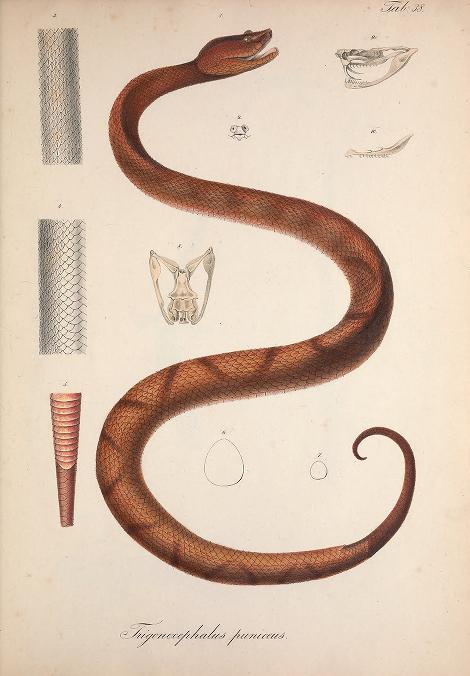
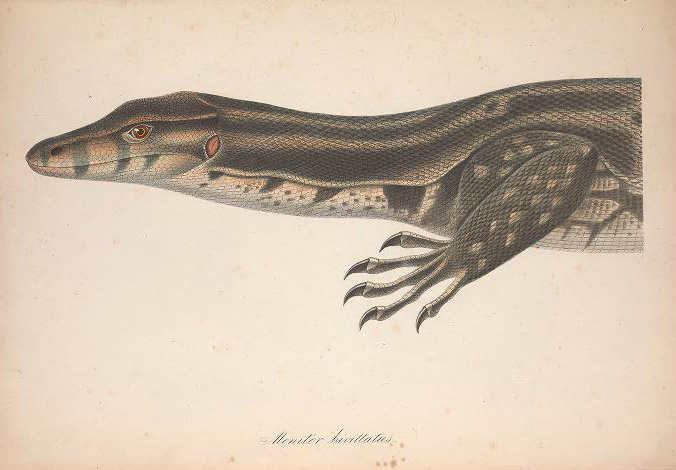
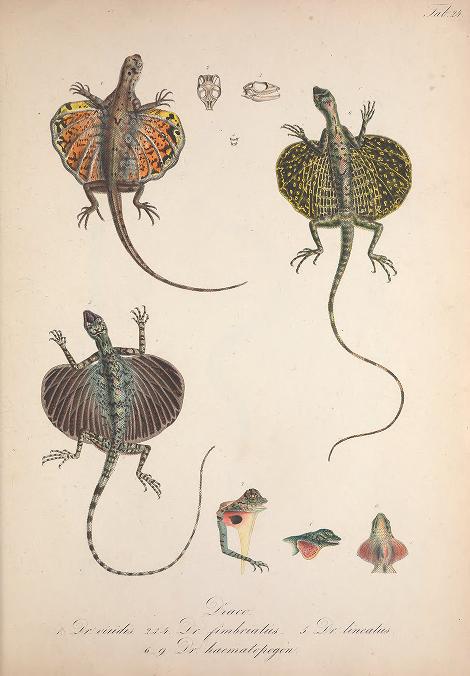
The Art of Herpetology: Schlegel’s Reptiles and Amphibians

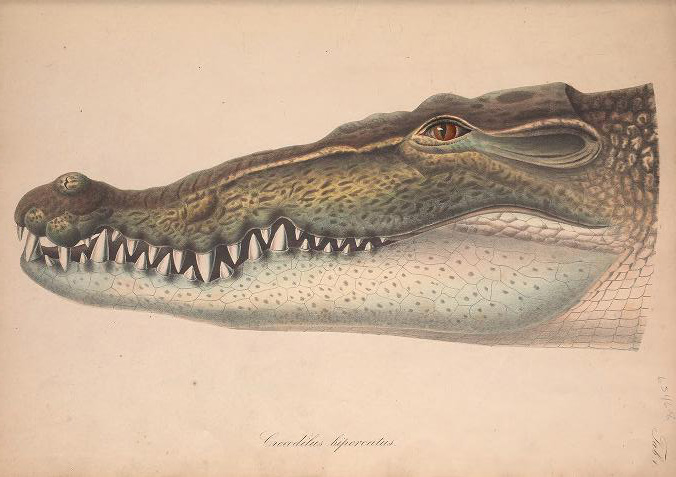
Schlegel, H. (Hermann). Abbildungen neuer oder unvollständig bekannter Amphibien. 1837-1844. Atlas digitized by Smithsonian Libraries. http://s.si.edu/2AYBgPF.

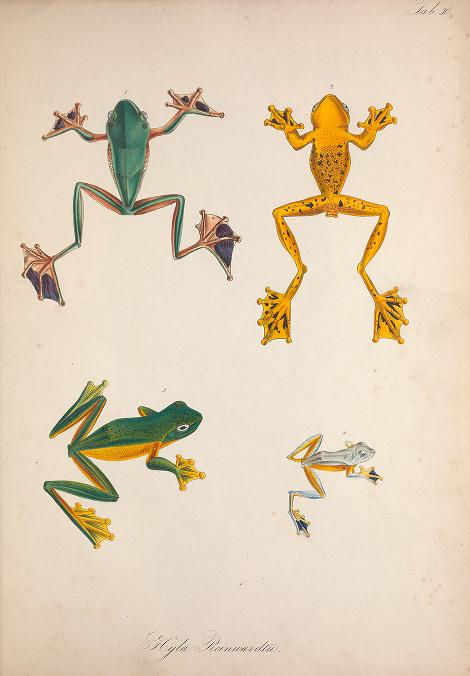
German ornithologist and herpetologist Hermann Schlegel hoped that the publication of good illustrations would stimulate public interest in reptiles and amphibians. Thus, he produced Abbildungen neuer oder unvollständig bekannter Amphibian (1837-44).

Schlegel, H. (Hermann). Abbildungen neuer oder unvollständig bekannter Amphibien. 1837-1844. Atlas digitized by Smithsonian Libraries. http://s.si.edu/2jLkYGC.

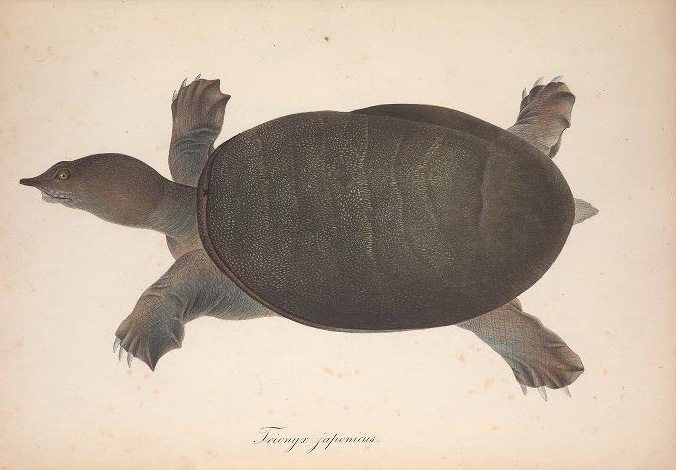
Schlegel, who eventually became director of the National Museum of Natural History in Leiden (Rijksmuseum van Natuurlijke Historie), is best-known for his research on birds, but his initial interest was in herpetology. Inspired by other beautifully-illustrated natural history books that had aroused public interest in their subjects, Schlegel compiled this work comprised of an atlas of 50 color plates and a short volume of text. Although the title mentions only amphibians, it describes and illustrates many reptile species as well.

It is unclear why the book’s title does not also mention reptiles. It has been suggested that the work’s original scope may have intended to cover only amphibians, and that the title was not adjusted after the scope broadened. This, however, is merely conjecture.

Schlegel, H. (Hermann). Abbildungen neuer oder unvollständig bekannter Amphibien. 1837-1844. Atlas digitized by Smithsonian Libraries. http://s.si.edu/2jcxafn.

Unfortunately, the names of the artists who produced the drawings upon which these plates are based are unknown. Schlegel mentioned only that he received the illustrations from painters working in India.

Schlegel, H. (Hermann). Abbildungen neuer oder unvollständig bekannter Amphibien. 1837-1844. Atlas digitized by Smithsonian Libraries. http://s.si.edu/2zaEmj2.

The text volume of this work was digitized by Ernst Mayr Library of the Museum of Comparative Zoology, Harvard University. The atlas was digitized by Smithsonian Libraries.

Schlegel, H. (Hermann). Abbildungen neuer oder unvollständig bekannter Amphibien. 1837-1844. Atlas digitized by Smithsonian Libraries. http://s.si.edu/2hQxOmb.


Schlegel, H. (Hermann). Abbildungen neuer oder unvollständig bekannter Amphibien. 1837-1844. Atlas digitized by Smithsonian Libraries. http://s.si.edu/2jcoLbU.


Reference:
Stiassny, Melanie L.J. (2014). Schlegel’s Guide to Amphibians. Natural Histories Opulent Oceans: Extraordinary Rare Book Selections from the American Museum of Natural History Library. New York: Sterling Publishing.

November 30, 2017by Grace Costantino
Blog Reel, Featured Books

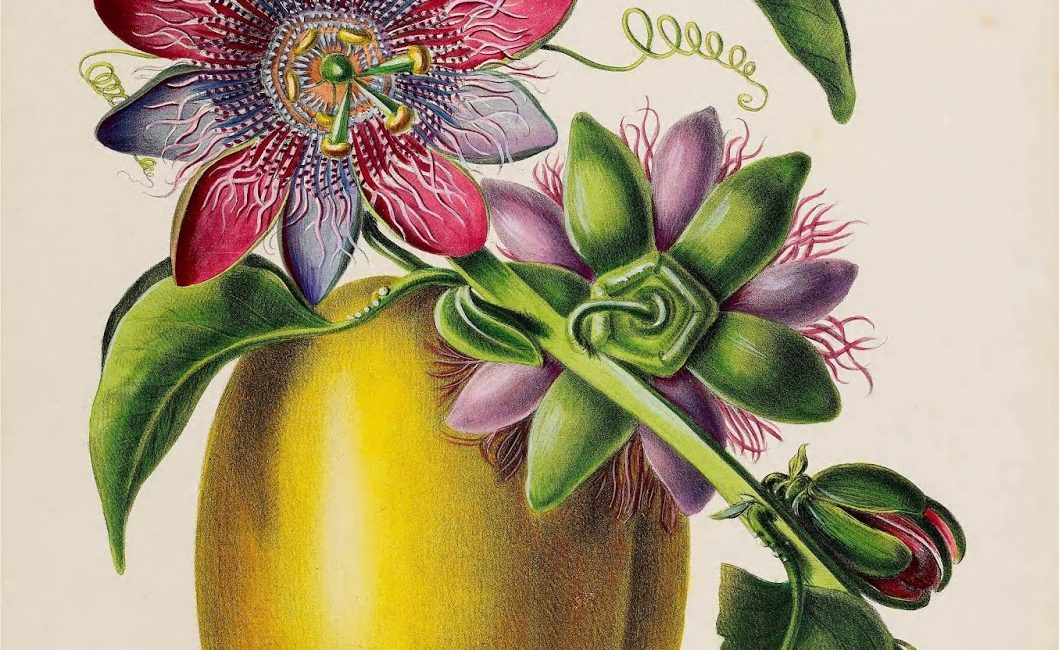
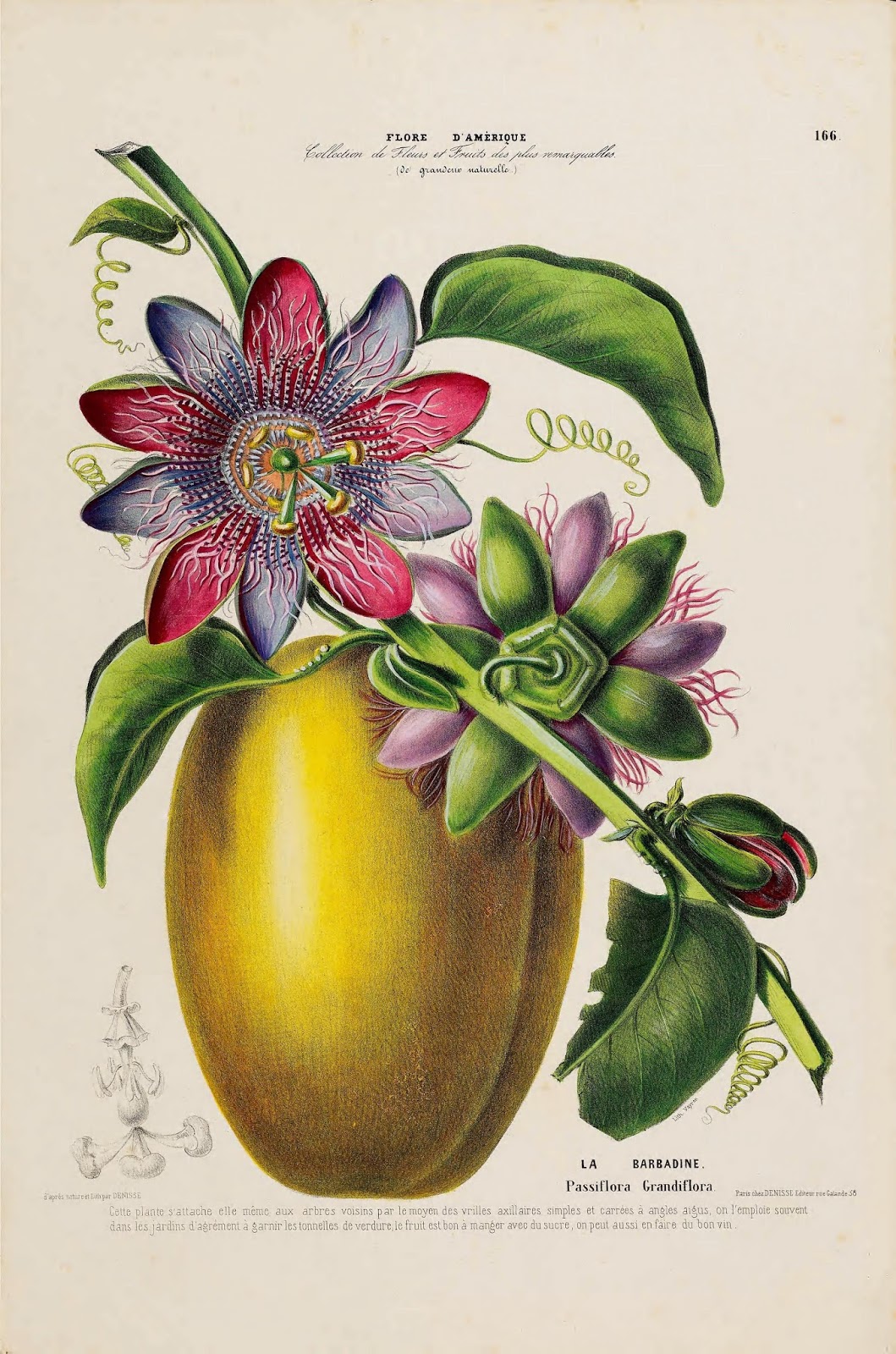
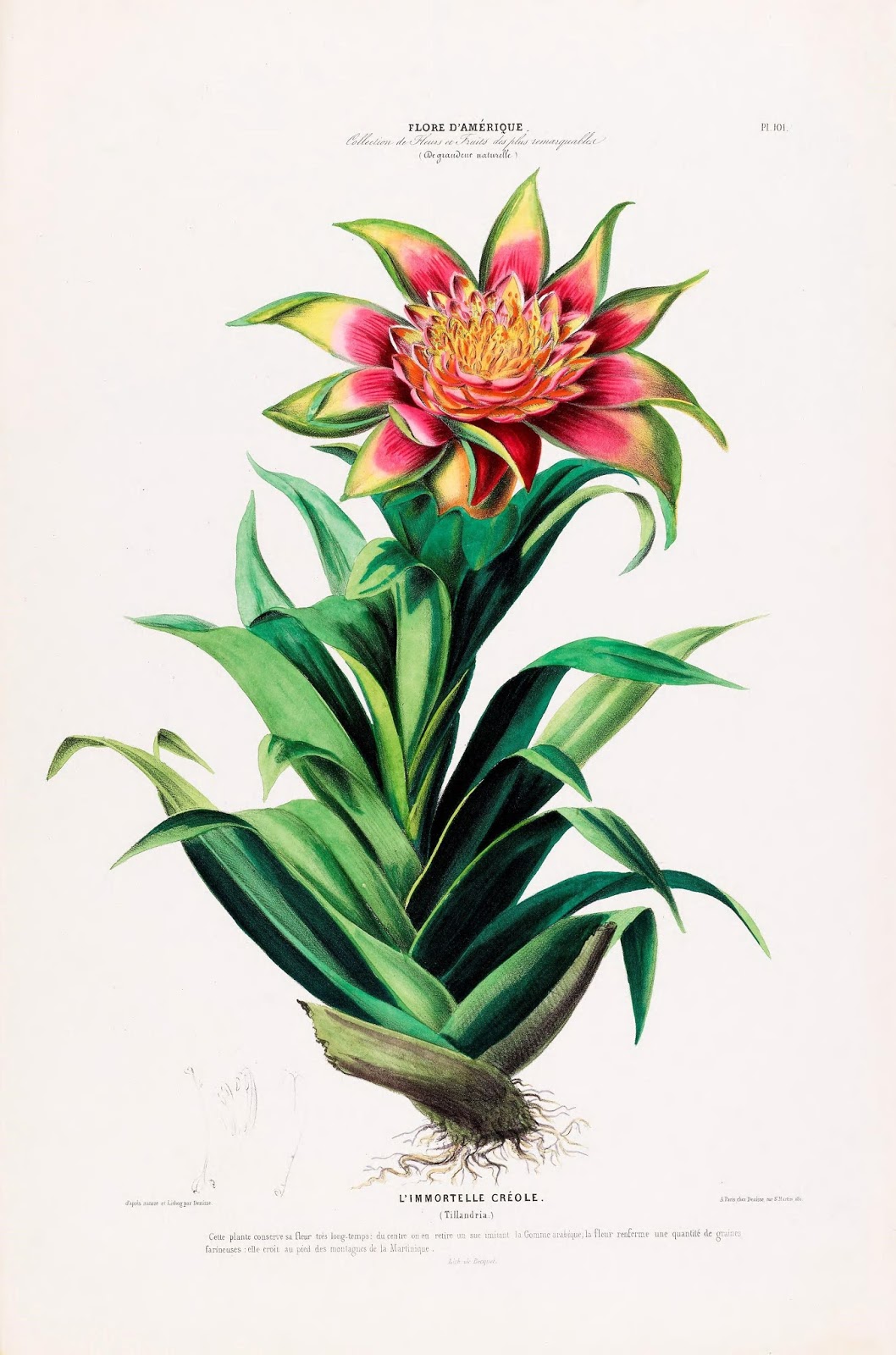
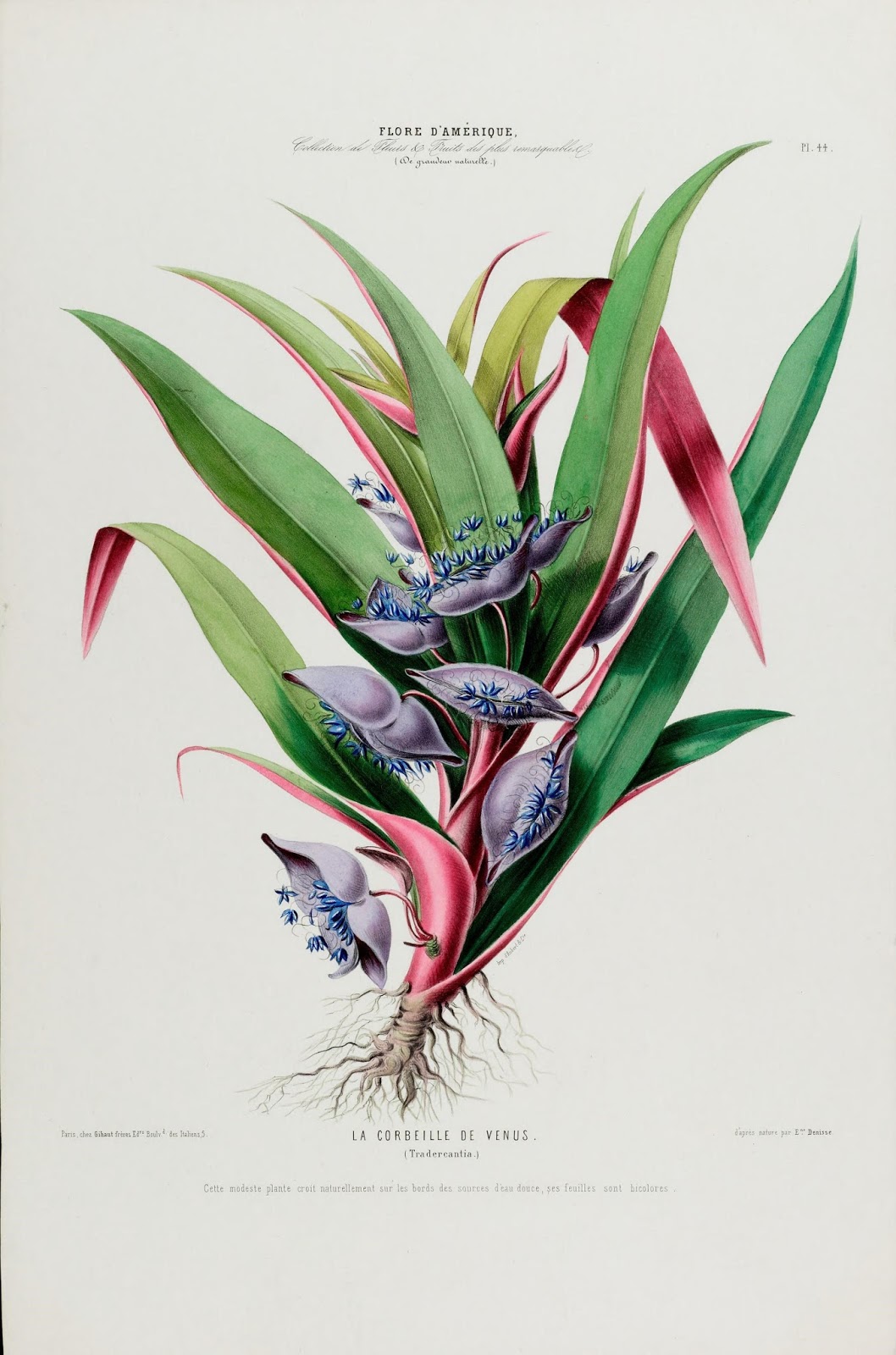
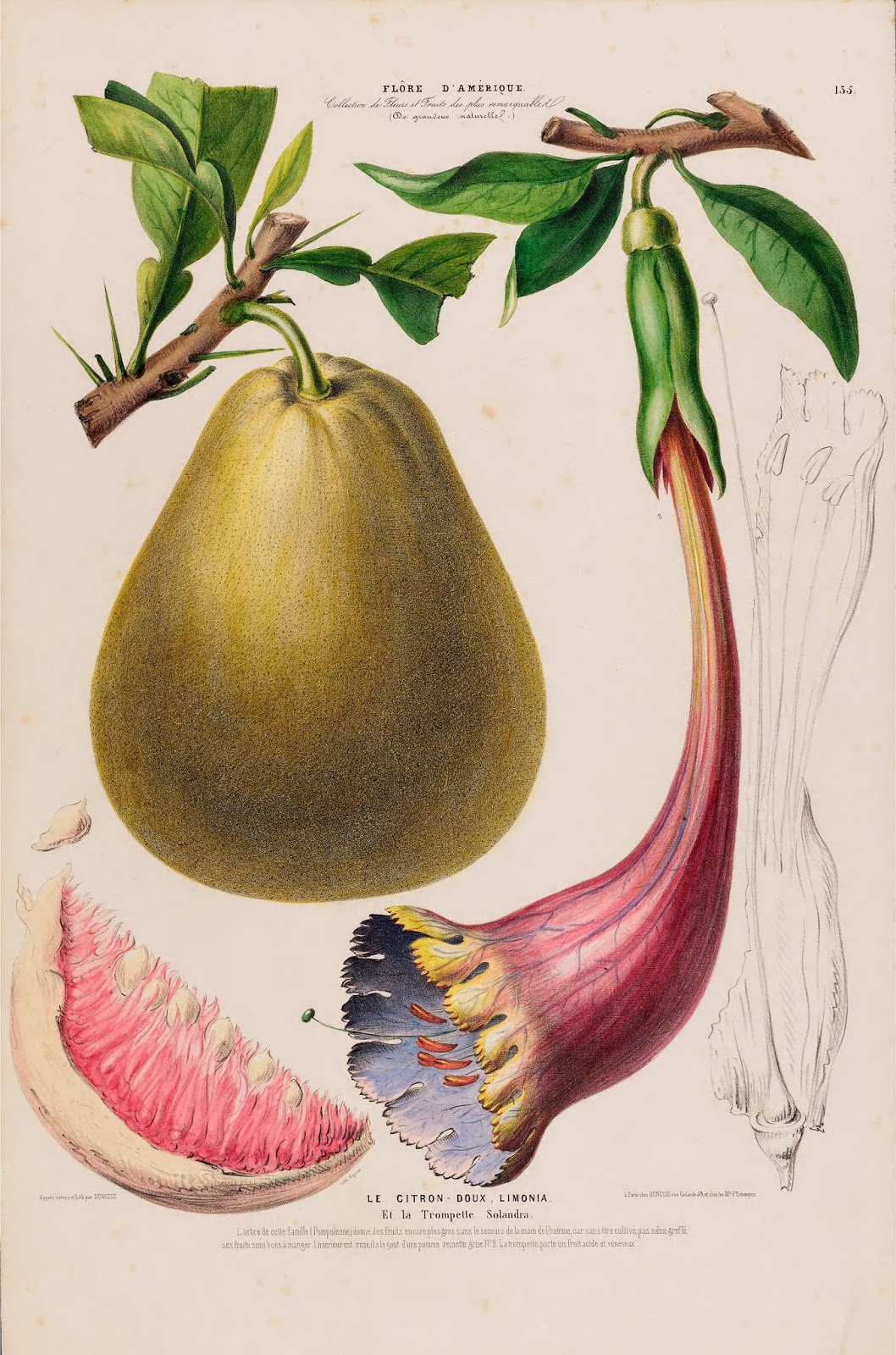
Flore d’Amérique: Illustrating America’s Tropical Flora

Denisse, Etienne. Flore d’Amérique. 1843-46. Digitized by the LuEsther T. Mertz Library at The New York Botanical Garden. http://s.si.edu/2Ac5T4m.

In the 1840s, Europe was enraptured by the beauty of America’s tropical flora. With the production of the lavishly-illustrated Flore d’Amérique (1843-46), Etienne Denisse brought the exotic flowers, fruits, trees, vines, and nuts growing in the Caribbean Islands to captivated readers across the Atlantic.

As a lithographer for the French royal court, Etienne Denisse spent his early career at the botanical garden of the Muséum National d’Histoire Naturelle in Paris, but employment by the government took Denisse’s work to the New World. He spent many years in the French West Indies, illustrating and collecting plants from the region and sending specimens back to France [4] [2].

Denisse, Etienne. Denisse, Etienne. Flore d’Amérique. 1843-46. Digitized by the LuEsther T. Mertz Library at The New York Botanical Garden. http://s.si.edu/2iXrY2J.

Denisse’s work in America culminated in the production of the magnificent Flore d’Amérique, comprised of a total of 201 plates. This title is very rare, and copies are often incomplete. However, thanks to the LuEsther T. Mertz Library at The New York Botanical Garden, anyone in the world can freely access Denisse’s masterpiece through the Biodiversity Heritage Library.

Flore d’Amérique’s stunning hand-colored lithographic plates were based on drawings “from nature” by Denisse. The work was issued in fascicles of six plates between 1843-1846 [2]. Imprints on the individual plates credit both the Parisian firm Gihaut Frères (plates 1-49,64-72) and Denisse (plates 50-63, 73-200) as publishers.

Denisse, Etienne. Denisse, Etienne. Flore d’Amérique. 1843-46. Digitized by the LuEsther T. Mertz Library at The New York Botanical Garden. http://s.si.edu/2hxKkUk.

Originally founded by Antoine François Gihaut as a firm of printsellers, Gihaut Frères expanded into publishing after Gihaut’s sons, Jean François and Michel Ange, took charge of the operation in 1822. In 1829, the firm received a brevet to serve as lithographic printers, but after 1839, this work was contracted out to other lithographic printing houses [1]. A variety of lithographic printers are credited via imprints throughout the plates within Flore d’Amérique, including d’Aubert & C.ie, Laujol, Kaeppelin & C.ie, Vayron, and Becquet.

In 2007, The New York Botanical Garden, LuEsther T. Mertz Library opened an exhibition celebrating the Caribbean’s history, culture, and biodiversity. Entitled Paradise in Print, the exhibition showcased the rich flora of the region through the display of printed folio editions, rare books, and original watercolors from the Library’s collection [3].

Denisse, Etienne. Denisse, Etienne. Flore d’Amérique. 1843-46. Digitized by the LuEsther T. Mertz Library at The New York Botanical Garden. http://s.si.edu/2ipbuMS.

Fittingly, Denisse’s Flore d’Amérique was among the treasures displayed as part of the exhibition. Through the printed page, Denisse and his fellow European explorers introduced the wonders of the New World to a broader audience across the Atlantic. Today, these illustrated publications are both works of art and valuable historical records that help provide insight into the ways in which European contact with America impacted the region’s biodiversity and culture.

View all of the illustrations from Flore d’Amérique in the BHL Flickr.

References

[1] British Museum. 2017. “Gihaut Frères (Biographical details).” Research. Accessed September 14, 2017. http://www.britishmuseum.org/research/search_the_collection_database/term_details.aspx?bioId=123627.
[2] Christie’s Auction House. 2014. “Denisse, Etienne.” Sale 3400, December 4. Accessed September 14, 2017. http://www.christies.com/lotfinder/Lot/denisse-etienne-fl-1814-1857-flore-damerique-dessinee-5855859-details.aspx/.
[3] Dorfman, Jane, Marie Long and Stephen Sinon. 2007. Paradise in Print: Exhibition Catalog. Bronx: The New York Botanical Garden.
[4] Mullarkey, Maureen. 2007. “Botanical Eden.” The New York Sun, August 2.

November 21, 2017by Grace Costantino
BHL News, Blog Reel

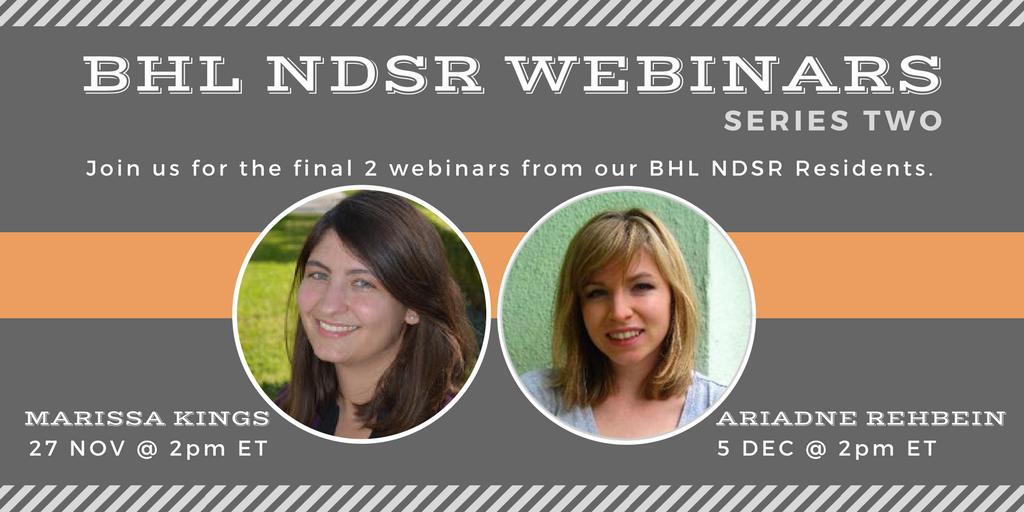
Series Two: BHL NDSR Webinars

In November, four of our BHL NDSR residents delivered webinars reporting on the results of their research and recommendations on how we might best improve the features and functionality of BHL to incorporate new technologies and evolving best practices for digital libraries and the larger biodiversity community.

You can view recordings of these past webinars:

  • Alicia Esquivel (Chicago Botanic Garden): BHL Collections Analysis
  • Katie Mika (Ernst Mayr Library, Museum of Comparative Zoology, Harvard University): Transcriptions, Crowdsourcing and Metadata for BHL
  • Pam McClanahan (Smithsonian Libraries): BHL User Studies
  • Marissa Kings (Natural History Museum of Los Angeles County): Best Practices for Digital Libraries


BHL NDSR Webinar Schedule: Series Two
Please mark your calendars and join us for the final two webinars in our BHL NDSR series:

November 27, 2017 at 2:00pm ET
Marissa Kings, Natural History Museum of Los Angeles County
Biodiversity Heritage Library: Best Practices for Digital Libraries
Seminar Room: iDigBio Conference Room ( 500 )
URL: http://idigbio.adobeconnect.com/room/

December 5, 2017 at 2:00pm ET
Ariadne Rehbein, Missouri Botanical Garden
Biodiversity Heritage Library: Enabling Image Discovery
Seminar Room: iDigBio Conference Room ( 500 )
URL: http://idigbio.adobeconnect.com/room/

New to Adobe Connect? We recommend following the link to the webinar about 15-20 minutes before the start time to install any add-ins as needed and to run the Audio Wizard. Please note that sometimes after running the Audio Wizard, you may still need to click on the picture of the microphone to connect the microphone. Should you have any questions, we’ll also be monitoring the chat throughout. Hope you can join us!

November 20, 2017by Grace Costantino
Blog Reel, User Stories

BHL Facilitates Research on Alfred Russel Wallace’s Legacy

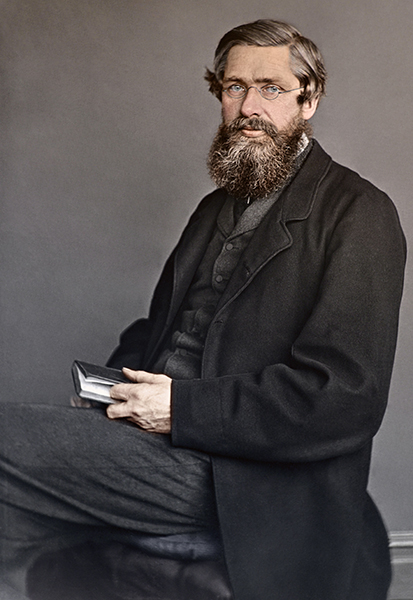
Alfred Russel Wallace in 1869. Copyright George Beccaloni.

In 1854, Alfred Russel Wallace began an eight year collecting trip to Southeast Asia, through the region he called the Malay Archipelago (now Malaysia, Singapore, Indonesia, and East Timor). It was during this expedition, in the midst of a fever in 1858, that Wallace conceived (independently of Darwin) of the theory of natural selection. Wallace expanded his idea into a detailed article which he sent to Charles Darwin for comment, unaware that Darwin himself had come to the same conclusion, though he had yet to publish the theory.

At the suggestion of Darwin’s friends Charles Lyell and Joseph Hooker, Wallace’s article, together with unpublished writings by Darwin on the subject of natural selection and evolution, were presented to the Linnean Society in 1858 and subsequently published in the Society’s journal as “On the Tendency of Species to Form Varieties; and On the Perpetuation of Varieties and Species by Natural Means of Selection,” with Darwin and Wallace as co-authors.

While important for its link to the theory of evolution by means of natural selection, Wallace’s Malay Archipelago expedition was also scientifically significant from a collecting standpoint.

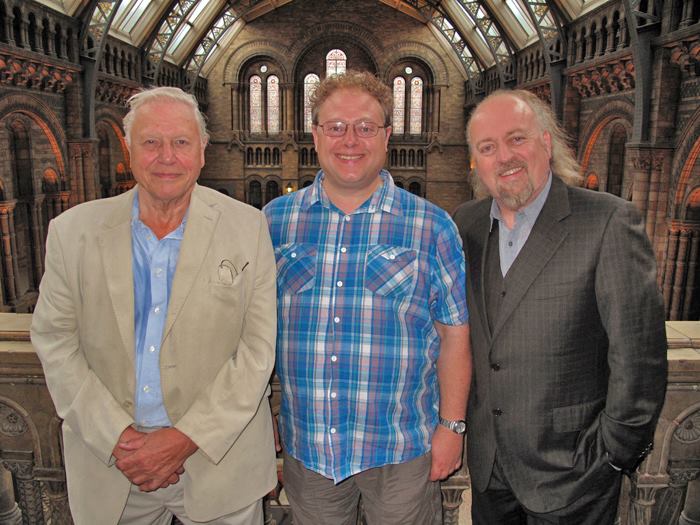
Beccaloni (center) with the Patrons of his Wallace projects. Sir David Attenborough (left), Patron of the Wallace Correspondence Project, and Bill Bailey (right), Patron of the Wallace Memorial Fund. Photographed at London’s Natural History Museum in 2012. Copyright Jan Beccaloni.

Dr. George Beccaloni, Director of the Alfred Russel Wallace Correspondence Project (an open access archive of Wallace’s manuscripts), is working to catalog the animal species collected by him during his expedition. Not surprisingly, given the sheer number of specimens and the passage of time, this is a challenging endeavor.

“We know Wallace collected nearly 126,000 specimens: about 110,000 insects, 7,500 shells, 8,050 bird skins, and 410 mammals and reptiles, which ranged from Orangutans to Birds of Paradise, from land snails to cockroaches, from Birdwing butterflies to tiny parasitic wasps,” shares Beccaloni. “I have estimated that about 5,000 of them were new to science, but apart from the 295 species he described himself, there is no list of all the others – or the many species he collected which already had scientific names.”

Scientific literature is a valuable source of information on Wallace’s specimens, but locating the relevant publications is itself a challenge.

“I am collaborating with colleagues in Southeast Asia and at London’s Natural History Museum to produce a detailed list of the species Wallace collected,” explains Beccaloni. “It is a difficult task because the information about them is scattered through the scientific literature of the last 163 years, in an estimated 400 or more publications. To find these requires considerable detective work.”

Fortunately, the Biodiversity Heritage Library is making it considerably easier for Beccaloni to access the publications he needs for this research.

“BHL is an absolutely fantastic resource which is very important to my work,” affirms Beccaloni. “Locating mentions of Wallace specimens is tricky, but at least most of the articles are now available in the BHL. If they weren’t, it would mean going to a specialist library and searching through the physical publications, which would take a lot more effort and be logistically difficult.”

Once a catalog of Wallace’s specimens is completed, it can be used to help track down the physical specimens in London’s Natural History Museum and other museum collections, leading to increased global access to Wallace’s specimens through digitization.

“The specimens can be digitized and the images and data made freely available on the Internet,” says Beccaloni. “Colleagues in Southeast Asia view this as ‘digital repatriation’ of the material Wallace collected in their countries.”

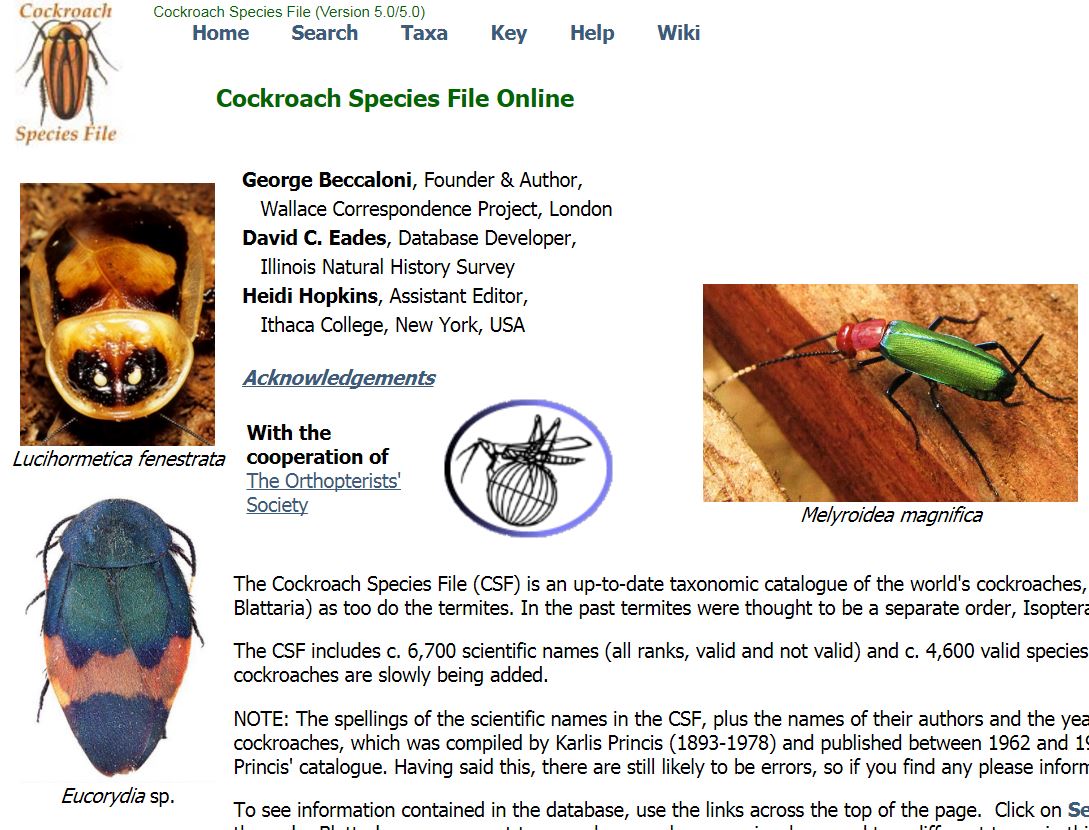
In addition to his work related to Alfred Russel Wallace (including the Alfred Russel Wallace Correspondence Project, Wallace Letters Online and The Wallace Website), Beccaloni is also a specialist in the taxonomy and ecology of butterflies and orthopteroid insects (especially cockroaches). He is the founder and author of the Cockroach Species File, a world catalog of cockroaches. Again, BHL provides access to key resources.

“For my work on the Cockroach Species File, I often need copies of old and often obscure taxonomic papers, which fortunately I am usually able to find in the BHL,” says Beccaloni.

Homepage of the Cockroach Species File.

Beccaloni’s favorite BHL feature is the ability to generate custom PDFs of relevant pages, eliminating the need to download an entire journal volume. To further improve the efficiency of his research, Beccaloni notes that the ability to search the full text of BHL’s collections for specific search terms (e.g. “Wallace”) would be of considerable value.

Full text search is a feature that BHL’s users have long-requested, and we are happy to confirm that its development is currently underway! Through increased research efficiency, full text search will enhance BHL’s ability to inspire discovery through free access to biodiversity knowledge. Stay tuned for more information on this new service.

Alfred Russel Wallace was truly a pioneer who left behind a considerable scientific legacy. Thanks to the work of Dr. Beccaloni and others on the Wallace projects, this legacy is being documented and made more accessible to a worldwide audience. We are proud to know that BHL’s collections are playing an important part in this valuable work.

Explore the Alfred Russel Wallace projects below:

  • Alfred Russel Wallace Correspondence Project
  • Wallace Letters Online
  • The Wallace Website

______________________________________

This post may contain the personal opinions of BHL users or affiliated staff and does not necessarily represent the official Biodiversity Heritage Library (BHL) position on these matters.

November 9, 2017by Grace Costantino
Page 14 of 71« First...10«13141516»203040...Last »

Help Support BHL

BHL's existence depends on the financial support of its patrons. Help us keep this free resource alive!

search

About BHL

The Biodiversity Heritage Library (BHL) is the world’s largest open access digital library for biodiversity literature and archives. BHL operates as a worldwide consortium of natural history, botanical, research, and national libraries working together to digitize the natural history literature held in their collections and make it freely available for open access as part of a global “biodiversity community.”

Join Our Mailing List

Sign up to receive the latest news, content highlights, and promotions.

Subscribe Now

Subscribe to Blog via Email

Enter your email address to subscribe to this blog and receive notifications of new posts by email.

Join 319 other subscribers

Subscribe to Blog Via RSS

Subscribe to the blog RSS feed to stay up-to-date on all the latest BHL posts.

Access RSS Feed

Inspiring Discovery through Free Access to Biodiversity Knowledge.

The Biodiversity Heritage Library makes it easier than ever for you to access the information you need to study and explore life on Earth…for free, anytime, anywhere.


64+ Million Pages of
Biodiversity Literature Online.

EXPLORE

Tools and Services
to Transform Research.

EXPLORE

300,000+
Illustrations on Flickr.

EXPLORE

ABOUT | HARMFUL CONTENT | PRIVACY | SITE MAP | TERMS OF USE