Biodiversity Heritage Library - Program news and collection highlights from BHL
  • Home
  • News
  • Featured Books
    • All Featured Books
    • Book of the Month Series
    • BHL at 20
  • User Stories
  • Campaigns
    • Fossil Stories
    • Garden Stories
    • Monsters Are Real
    • Page Frights
    • Her Natural History
    • Earth Optimism 2020
  • Tech Blog
  • Visit BHL
Home
News
Featured Books
    All Featured Books
    Book of the Month Series
    BHL at 20
User Stories
Campaigns
    Fossil Stories
    Garden Stories
    Monsters Are Real
    Page Frights
    Her Natural History
    Earth Optimism 2020
Tech Blog
Visit BHL
  • Home
  • News
  • Featured Books
    • All Featured Books
    • Book of the Month Series
    • BHL at 20
  • User Stories
  • Campaigns
    • Fossil Stories
    • Garden Stories
    • Monsters Are Real
    • Page Frights
    • Her Natural History
    • Earth Optimism 2020
  • Tech Blog
  • Visit BHL
Biodiversity Heritage Library - Program news and collection highlights from BHL
BHL News, Blog Reel

Biodiversity Heritage Library Adds the National Agricultural Library as a New Member

View Full Size Image

The Biodiversity Heritage Library is pleased to welcome the National Agricultural Library (NAL) as a new Member. Since joining the consortium as an Affiliate in 2014, NAL has contributed over 2 million pages to the BHL collection. NAL represents BHL’s 19th Member.

The National Agricultural Library (NAL) holds more than 8 million items, representing one of the largest collections of materials devoted to agriculture in the world. By statute, NAL is the primary depository of publications and information concerning the research and other activities of the U.S. Department of Agriculture (USDA).

“The National Agricultural Library collection is a true national treasure,” affirms BHL Program Director Martin R. Kalfatovic. “Through membership in BHL, NAL has demonstrated a strong commitment to providing free and open access to this significant collection. We look forward to continuing our collaborative efforts to build BHL’s online collection and share these valuable resources with the world.”

View Full Size Image
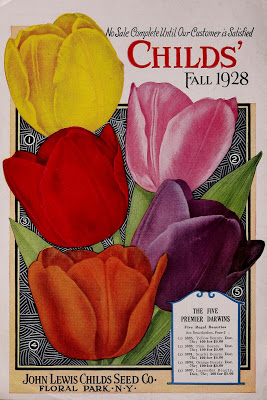
Childs’ Fall Catalog. 1928. Digitized by the U.S. Department of Agriculture, National Agricultural Library from the Henry G. Gilbert Nursery and Seed Trade Catalog Collection. http://s.si.edu/2xatpAG.

As a Member, the National Agricultural Library will strengthen BHL’s coverage of agricultural topics, providing increased access to historic USDA and other high demand, public domain items from its collection. In particular, the Library will continue to digitize material from its Henry G. Gilbert Nursery and Seed Trade Catalog Collection, which consists of over 200,000 American and foreign catalogs from the late 18th century to the present. To date, NAL has contributed over 33,000 catalogs from this collection to BHL. The catalogs can be viewed in BHL as part of the Seed & Nursery Catalogs collection.

“The National Agricultural Library is excited to become a Member of the Biodiversity Heritage Library and collaborate more closely with the other Member institutions,” says NAL Director Paul Wester. “NAL views BHL as a key avenue through which the library shares its wide-ranging collections of agricultural, natural and allied sciences with a national and international audience.”

The Biodiversity Heritage Library now consists of 19 Members and 18 Affiliates. Explore our consortium today.

September 12, 2017by Grace Costantino
Blog Reel, User Stories

Deconstructing Ecological Mirages with Help from Historic Literature

Within South America’s coastal ecosystems, vast expanses of subtropical and temperate salt marshes are dominated by an iconic species, the smooth salt marsh cordgrass Spartina alterniflora. This species is an important ecological engineer, providing habitats for a wide range of species and shaping the environmental evolution of many coastal ecosystems worldwide.

S. alterniflora is considered native to a wide latitude of the Atlantic coastline from Canada to Argentina, and the Patagonian salt marshes that it dominates are deemed pristine native ecosystems.

However, according to Dr. Alejandro Bortolus, a coastal ecologist, Head of the Grupo de Ecología en Ambientes Costeros at IPEEC-CONICET, and Co-Chair of the X International Conference on Marine Bioinvasions, this is an ecological mirage.

“Although wild and overwhelmingly beautiful, Patagonia is anything but pristine,” asserts Bortolus. “However, the general public and international scientific communities have largely embraced this mythic image of an untouched remote region in the uttermost ends of the Earth. They have come to believe in what I call ‘ecological mirage.’”

View Full Size Image
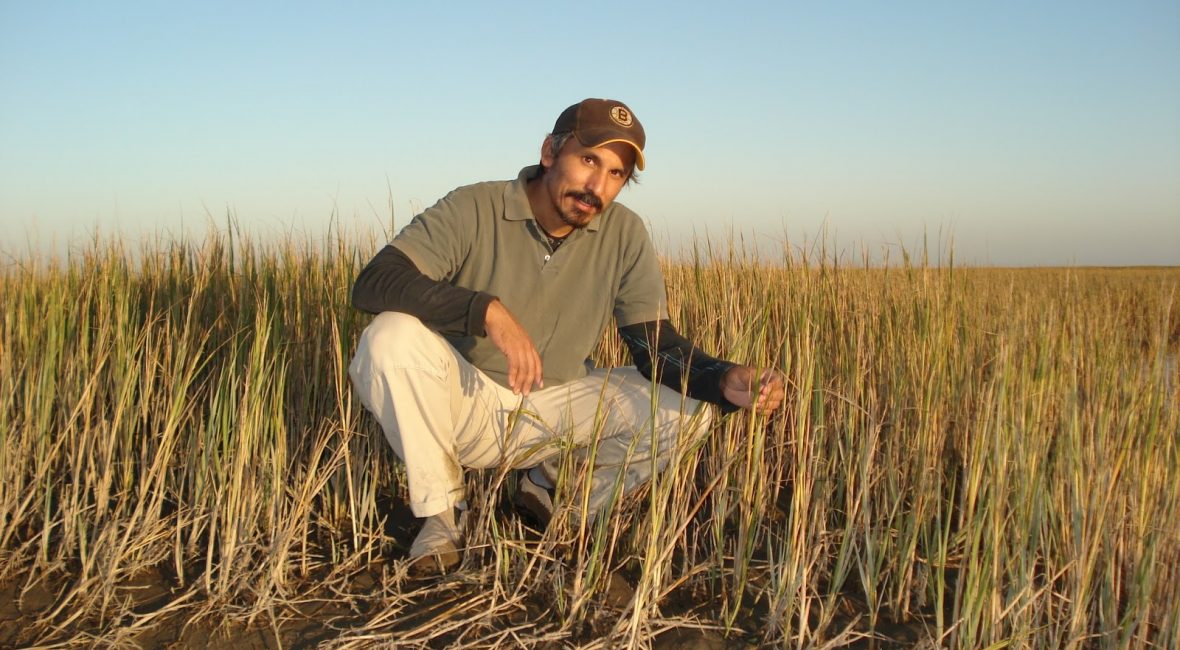
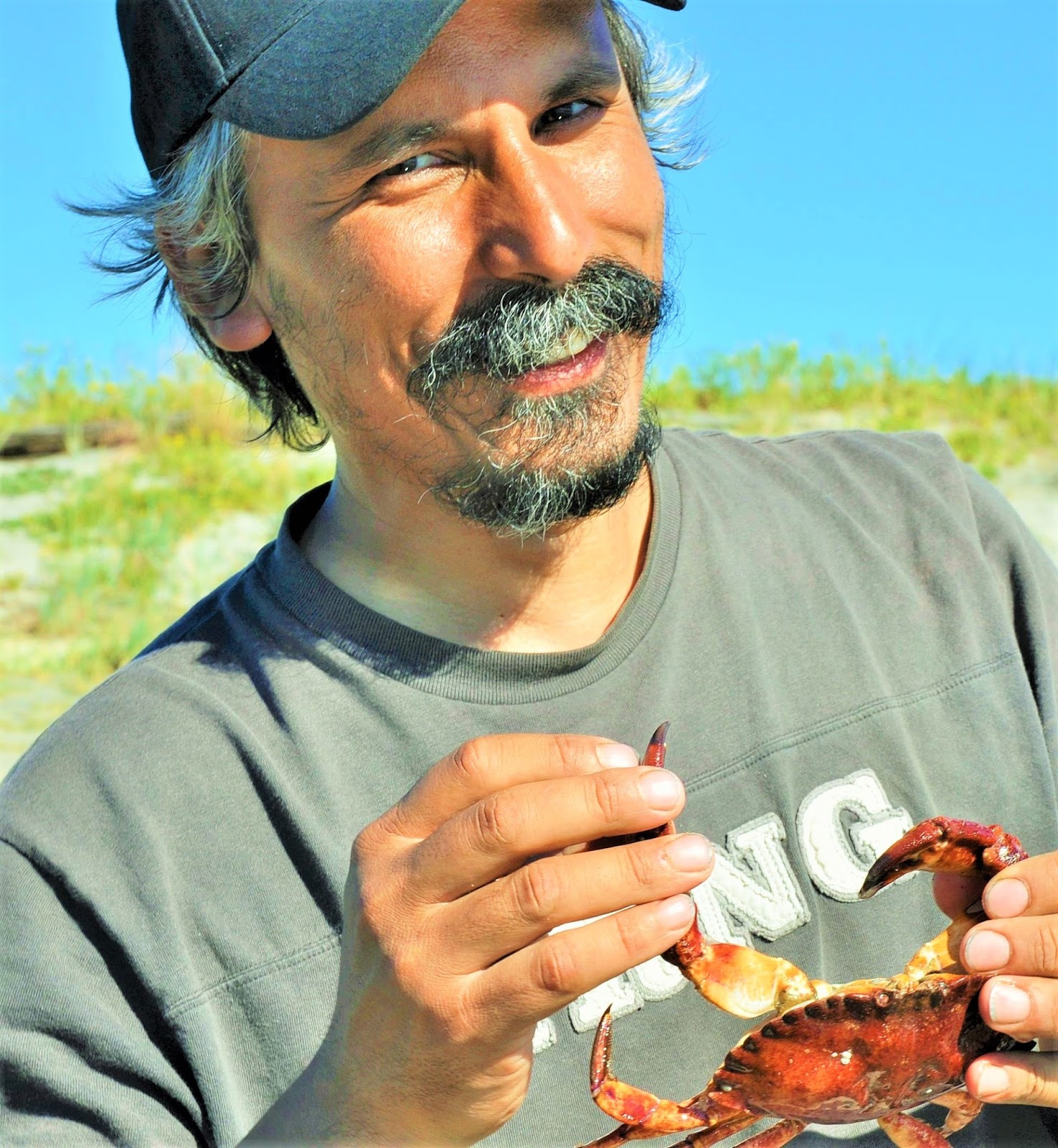
Dr. Alejandro Bortolus, during a field trip to the Patagonian salt marshes of San Antonio Bay, completely dominated by the invasive smooth cordgrass Spartina alterniflora. Photo by Dr. Yanina Idaszkin.

For more than a decade, Bortolus and his colleagues have been examining historic records and accounts from early settlers and naturalists, leading to the conclusion that S. alterniflora was actually introduced to South America in the 18th or early 19th century as a result of human activity, transforming what were once intertidal mudflats into the salt marshes seen today.

Bortolus describes this transformation within the Ecological Mirage Hypothesis.

“The Ecological Mirage Hypothesis proposes that a long overlooked historical event — where an exotic species is introduced to a given region but then mis-interpreted for centuries as native — may cause unexpected radical shifts in the evolution of the affected ecosystems,” explains Bortolus. “Under such circumstances, even those landscapes deeply associated with the culture and history of a region might not be as pristine as we were led to believe.”

Of course, proposing that these iconic, “pristine” salt marshes are in fact dominated by an introduced bioengineer species has widespread implications. Bortolus and his colleagues, James Carlton and Evangelina Schwindt, needed extensive evidence to support their theory.

The Biodiversity Heritage Library proved to be an invaluable resource for obtaining this evidence, providing easy access to essential rare literature and historic records.

“The review in which the Ecological Mirage Hypothesis was proposed (Bortolus et al. 2015) took nearly a decade to complete,” explains Bortolus. “BHL helped to speed up the work considerably by supplying us with high-quality material impossible to obtain from other sources, including rare first editions, old newspapers, reports, and church accounts, settlers’ diaries, interviews, and personal letters, etc. All of the material is available for anyone to check, double-check and check again from any personal computer in what I consider a portable magical library.”

View Full Size Image
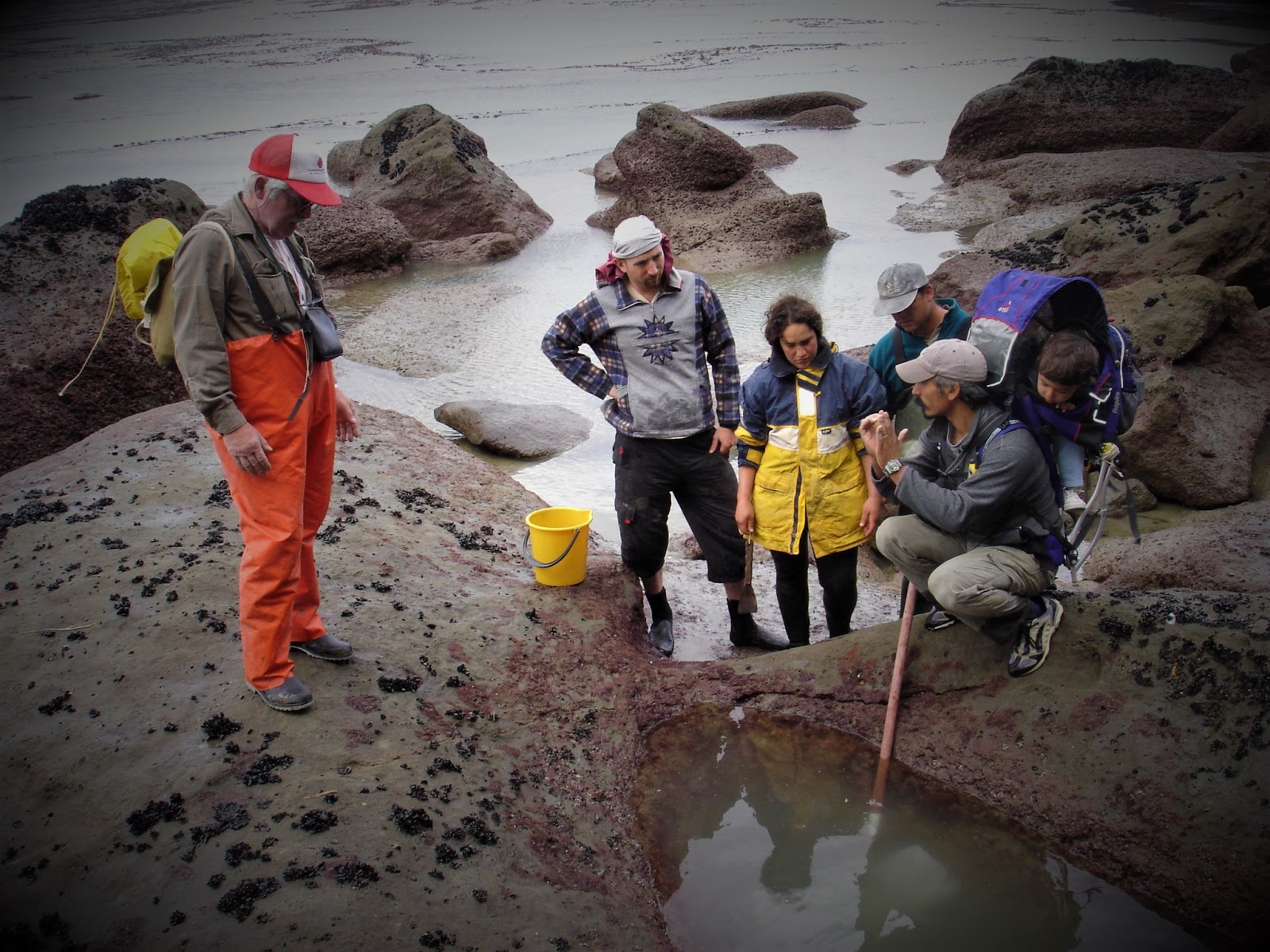
Bortolus (right foreground with his son Ivan in the backback) leading a research team during the first classification of intertidal environments at Monte Leon National Park, the first National Park with open sea coast in Argentina. Photo by Evan Schwindt.

Bortolus has been studying coastal ecology for over thirty years. His doctoral project involved the first manipulative experiments explicitly focused on the plant-animal interactions shaping the salt marshes of southern South America, including the first experimental evidence recording that herbivore crabs can significantly affect Spartina plants’ production and reproduction. Over his career, he also provided the first comparative description of the Patagonian salt marshes, including the “rocky salt marshes” – a unique intertidal hard-bottom ecosystem dominated and characterized by Spartina species. His projects also cover the problems caused by the deficient use of Taxonomy in ecological studies (the “Eco-Taxo Interface”).

View Full Size Image
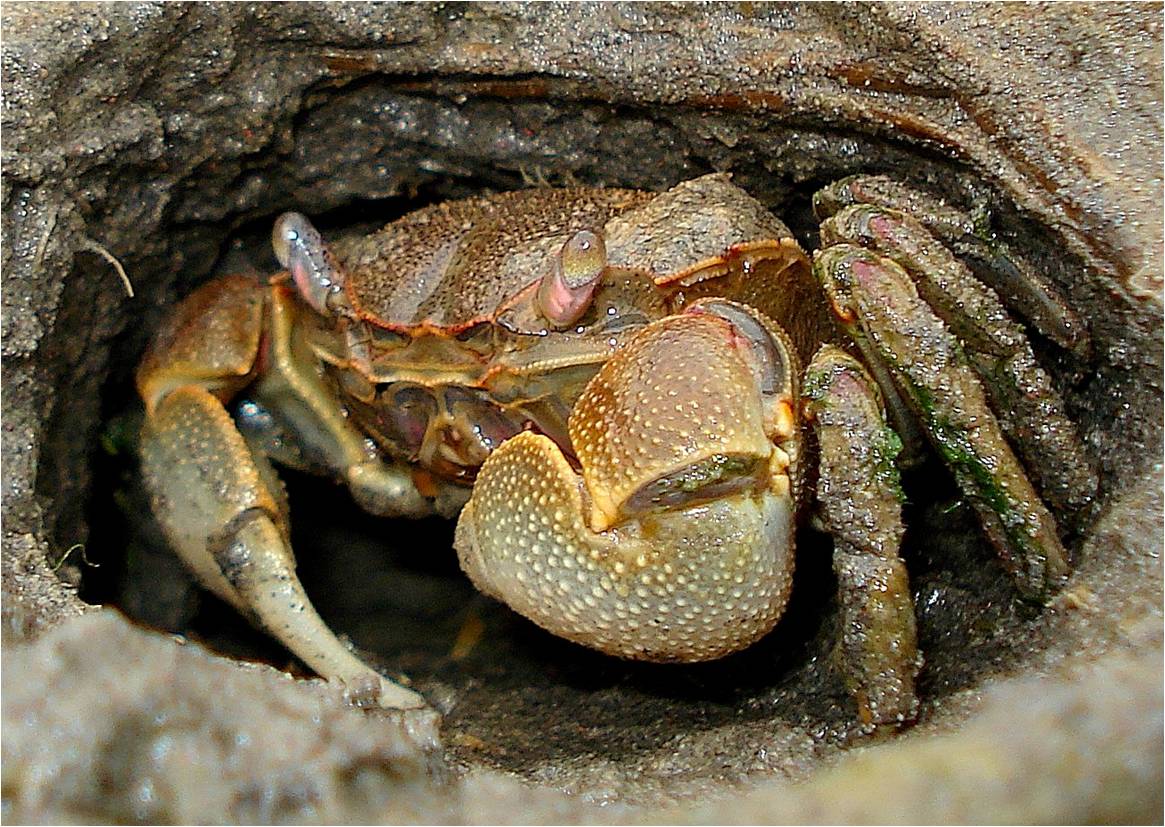
Neohelice granulata, a semi-terrestrial intertidal herbivore and burrowing crab species studied by Bortolus during his doctorate. Photo by A. Bortolus.

BHL has been supporting Bortolus’ work since he first discovered it around 2007 after a routine Internet keyword search led him to the Library.

“I was astonished by the fact that BHL could provide me not only with classic records two or three centuries old, but also with publications written by Argentina’s pioneers of Botany, some of which I was struggling to find in the libraries of my own country,” lauds Bortolus. “In a matter of seconds, meticulously scanned publications supplied by some of the largest scientific institutions worldwide were there for me to use…and for free!”

Today, Bortolus uses BHL regularly as part of his research process. The Library has significantly improved the efficiency of his work.

“Before I discovered BHL, I was sending paper cards through the regular international mail to request the literature I needed – a process that normally took between 6 and 9 months for me to get the material (if I succeeded at all),” recalls Bortolus. “BHL is an excellent, unique initiative that creates a virtuous circle in which scientific knowledge is available to those who need it the most, helping them to produce more knowledge and bridging geographic and cultural frontiers as if they don’t exist.”

The information Bortolus has gleaned from BHL not only provides a new understanding of the forces that shaped South America’s coastal ecosystems over the last centuries, but also underscores the importance of historical documents when designing conservation strategies to protect “native” species. “Natural” is not always what it seems.

“Historical records make one realize that even the most significant scientific findings can fade away, independently of how revealing they are,” explains Bortolus. “I feel that finding and bringing back those forgotten discoveries and ideas to analyze and re-discuss them is one of my highest responsibilities as a scientist. For anyone trying to achieve that goal, BHL is a dream come true.”

View Full Size Image
Bortolus in Canada during a visit searching for invasive austral cordgrass Spartina densiflora, invited by US Fish and Wildlife Service ecologist Andrea Pickart. Photo by A. Pickart.

Learn more about Bortolus’ work in these publications (www.geaccenpat.wixsite.com/geac):

  • Bortolus, A. and Schwindt E. 2007. What would have Darwin written now? Biodiversity and Conservation. 16:337–345
  • Bortolus, A., J.T. Carlton and E. Schwindt. 2016. Biological Invasions change the way we see Nature. Bare Essentials.1-5.
  •  Bortolus, A., J.T. Carlton and E. Schwindt. 2015. Reimagining South American coasts: unveiling the hidden invasion history of an iconic ecological engineer. Diversity and Distributions. 21:1267-1283.

Learn more about the X International Conference on Marine Bioinvasions, which will be held in Puerto Madryn from 16-18 October 2018, here: http://www.marinebioinvasions.info.

______________________________________

This post may contain the personal opinions of BHL users or affiliated staff and does not necessarily represent the official Biodiversity Heritage Library (BHL) position on these matters.

August 3, 2017by Grace Costantino
BHL News, Blog Reel

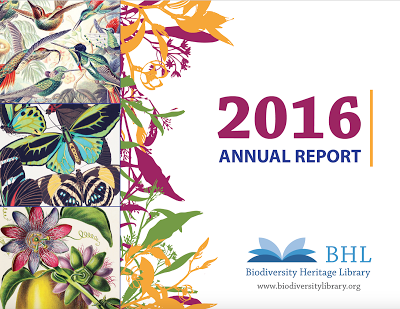
2016 BHL Annual Report

The 2016 BHL Annual Report is now available!

View Full Size Image


Find out how our collections grew and audiences engaged with our library in 2016, learn more about some exciting new projects, and explore impact stories from users across the globe. Read the report now!

You can also get the latest updates from BHL in our newsletters. Explore past newsletters here and subscribe to our mailing list here.

July 19, 2017by Grace Costantino
Blog Reel

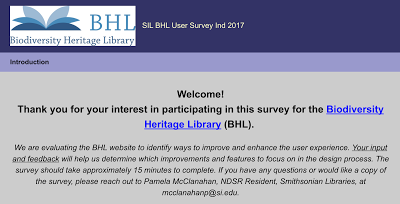
Take Our Survey and Share Your Feedback About BHL!

The Biodiversity Heritage Library (BHL) needs your feedback!

Take our survey and tell us what improvements and new features you’d like to see in BHL.

View Full Size Image

We will be updating the BHL website to improve and enhance the researcher experience. As members of the BHL community, your feedback is valuable. Your input will help us identify which improvements and features to focus on in the design process.


Click here to take the survey: s.si.edu/BHLUserSurvey

We appreciate any thoughts or suggestions you may be able to provide. If you have any questions or comments, please submit them via our feedback form.

This survey is being conducted as part of the BHL NDSR Foundations to Actions project, which is helping to plan the future of BHL. Learn more.

July 17, 2017by Grace Costantino
Blog Reel, User Stories

Unearthing Precambrian Protistan Taxonomy with BHL

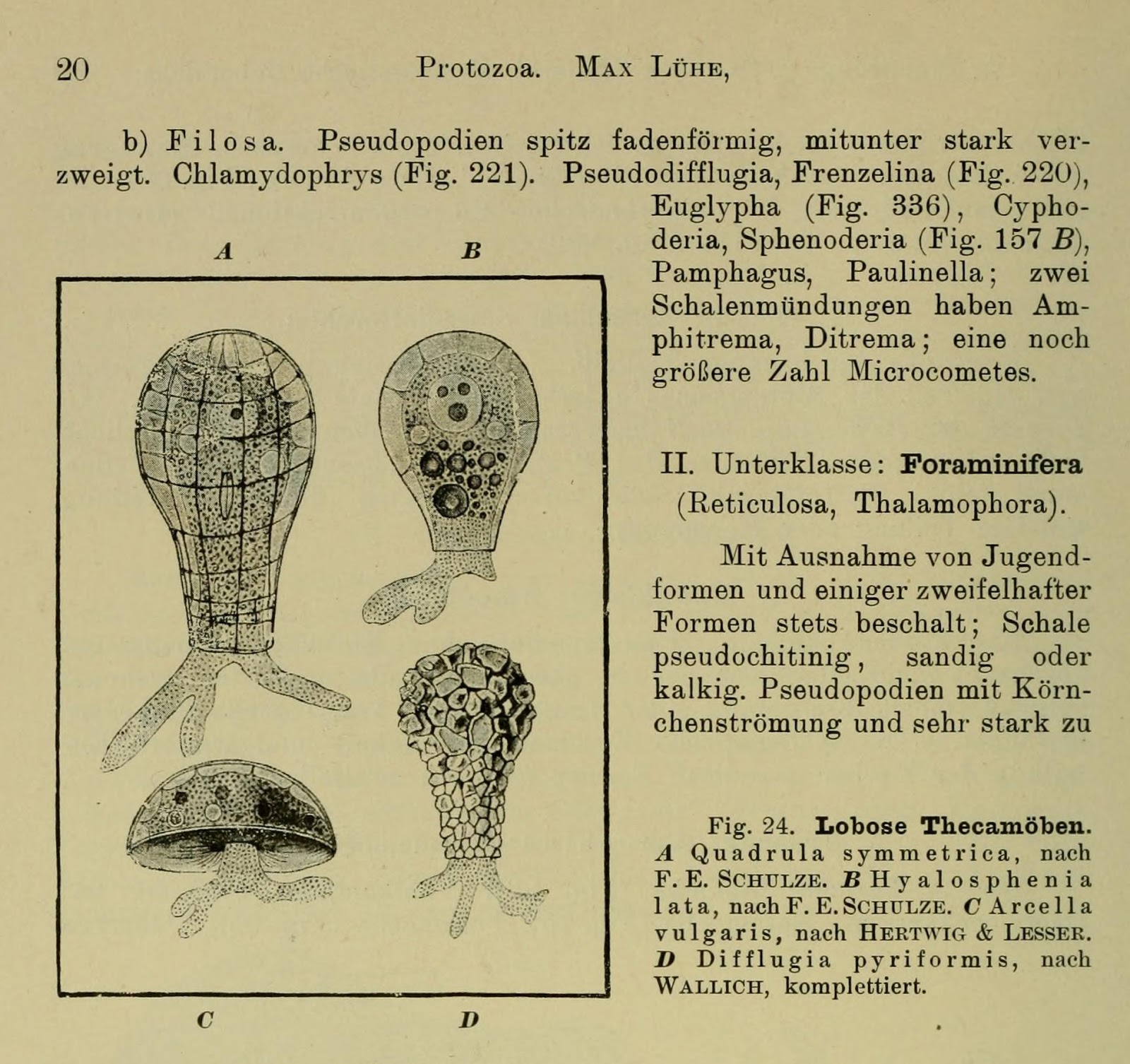
Amoebozoans are believed to have existed for hundreds of millions of years. These ancient protists are characterized by the presence of pseudopodia, cytoplasm-filled projections that are used for locomotion and feeding.

Today, over 2,000 species of Amoebozoa are recognized. The phylum itself was first scientifically described by Max Lühe, a professor at the University of Königsberg (Germany), in 1913.

Dr. Leigh Anne Riedman, a NASA Astrobiology Postdoctoral Fellow at Harvard University (Department of Earth and Planetary Sciences), specializes in Precambrian paleontology. Her research involves fossils similar to the testate amoebae described and illustrated by Lühe in 1913. However, Riedman quickly discovered that tracking down the reference for Lühe’s paper to support her studies was more challenging than anticipated.

“Many authors working on Amoebozoa would mention Lühe’s name, but I never found a single full reference for this paper,” recalls Riedman.

View Full Size Image
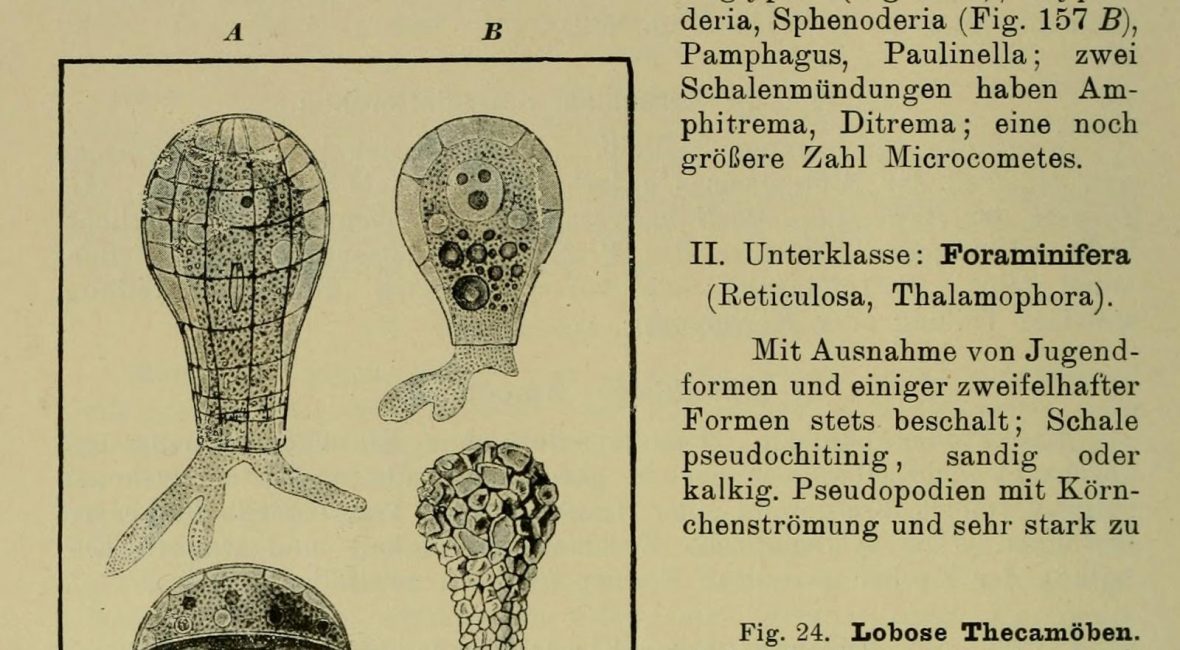
Testate amoebae described and illustrated by Max Lühe. Handbuch der Morphologie der wirbellosen Tiere. Bd. 1 (1913). Digitized by the American Museum of Natural History. http://s.si.edu/2tiM3BF.

Fortunately, with help of the Biodiversity Heritage Library, Riedman was able to unearth this crucial publication.

“Armed with only an author name and year, Lühe, 1913, and the keyword ‘amoeboa,’ I found it!” exclaims Riedman. “BHL was the only place I was able to track down this reference.”

Riedman cites this reference in her upcoming paper, “Vase-Shaped Microfossil Biostratigraphy with New Data from Tasmania, Svalbard, Greenland, Sweden and the Yukon”, which will be published in Precambrian Research later this year.

View Full Size Image
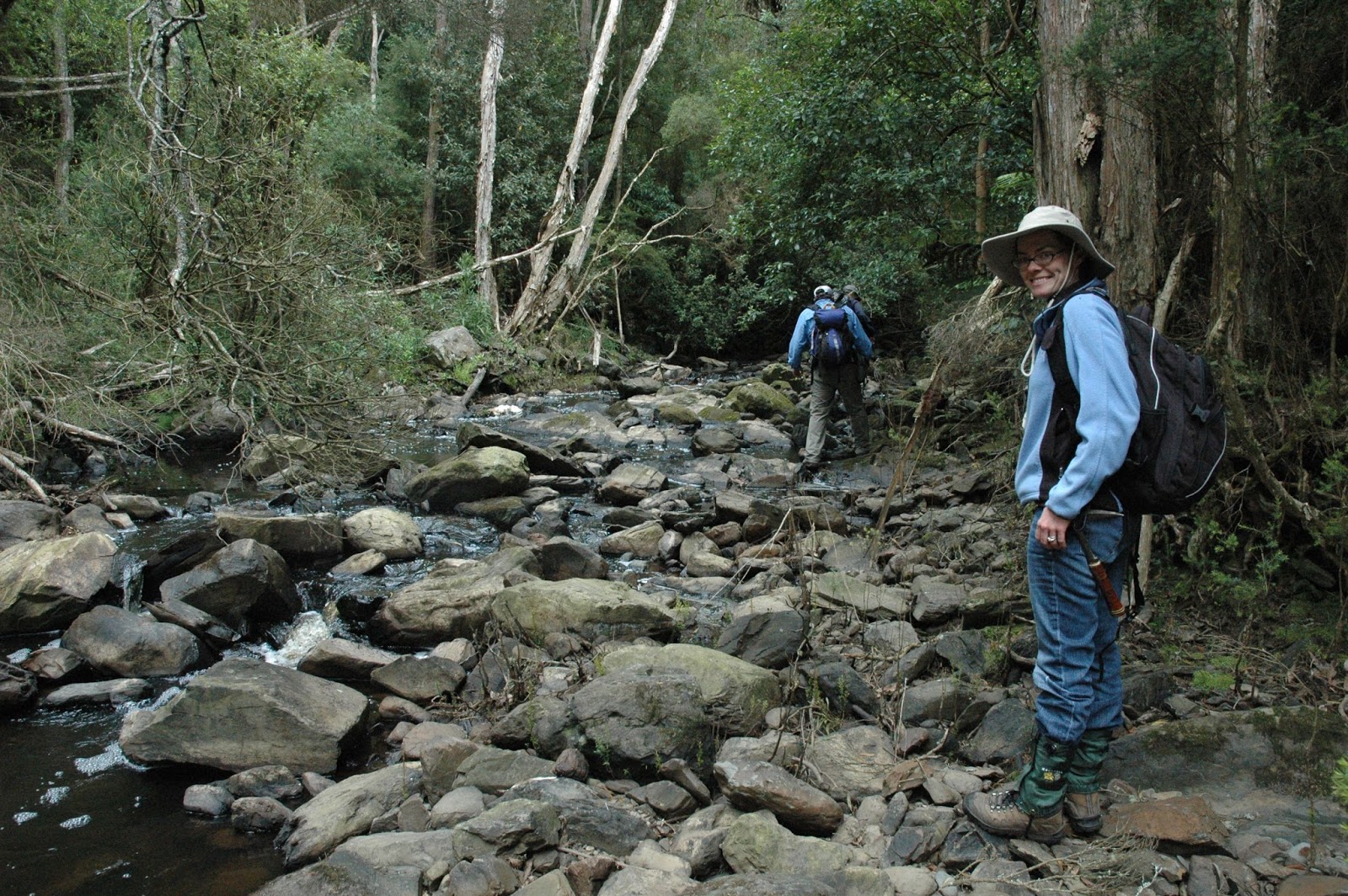
Dr. Riedman on a sampling trip to King Island, Tasmania in 2010. She and her colleagues collected materials for study of acritarchs from the Sturtian glaciation and the interglacial interval of the Neoproterozoic Snowball Earth as well as older fossils called vase-shaped microfossils that are thought to be fossil testate amoebae.

Riedman has been studying Precambrian paleontology for nearly two decades. Her work deals with a group of fossils called the acritarchs, organic microfossils that first appeared approximately 1,400 to 3,200 million years ago. Since first discovering BHL while searching for early taxonomic works on this group, the Library has become a vital part of Riedman’s research process.

“BHL is fantastic!” lauds Riedman. “It has made a huge difference in my work- sometimes providing access to texts I wouldn’t otherwise be able to get, sometimes by giving me the gift of my own time, as I don’t have to spend hours or days tracking down a resource, waiting on interlibrary loan, and then either scanning it for text recognition and translation or typing it into a translator piece-meal.”

View Full Size Image
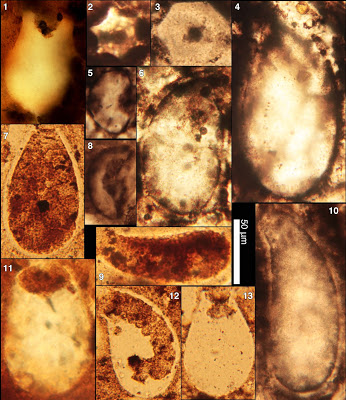
Vase-shaped microfossils from Tasmania. Likely about 760 million years old.

Using BHL several times per month, Riedman downloads PDFs of articles or books for use in fossil identification and synonymy lists. The ability to view the whole journal volume within BHL not only gives Riedman context for the article she is seeking, but also helps her find additional relevant articles in the process, thereby increasing the quality and efficiency of her research.

“There have been several times that I’ve used BHL to track down references listed in taxonomic synonymy sections that weren’t available anywhere else,” shares Riedman. “I am paranoid about citing a reference I’ve never read, so without getting access to those texts through BHL, I might have had to cut sections from research papers or sell my soul and cite a paper sight unseen gasp!”

View Full Size Image
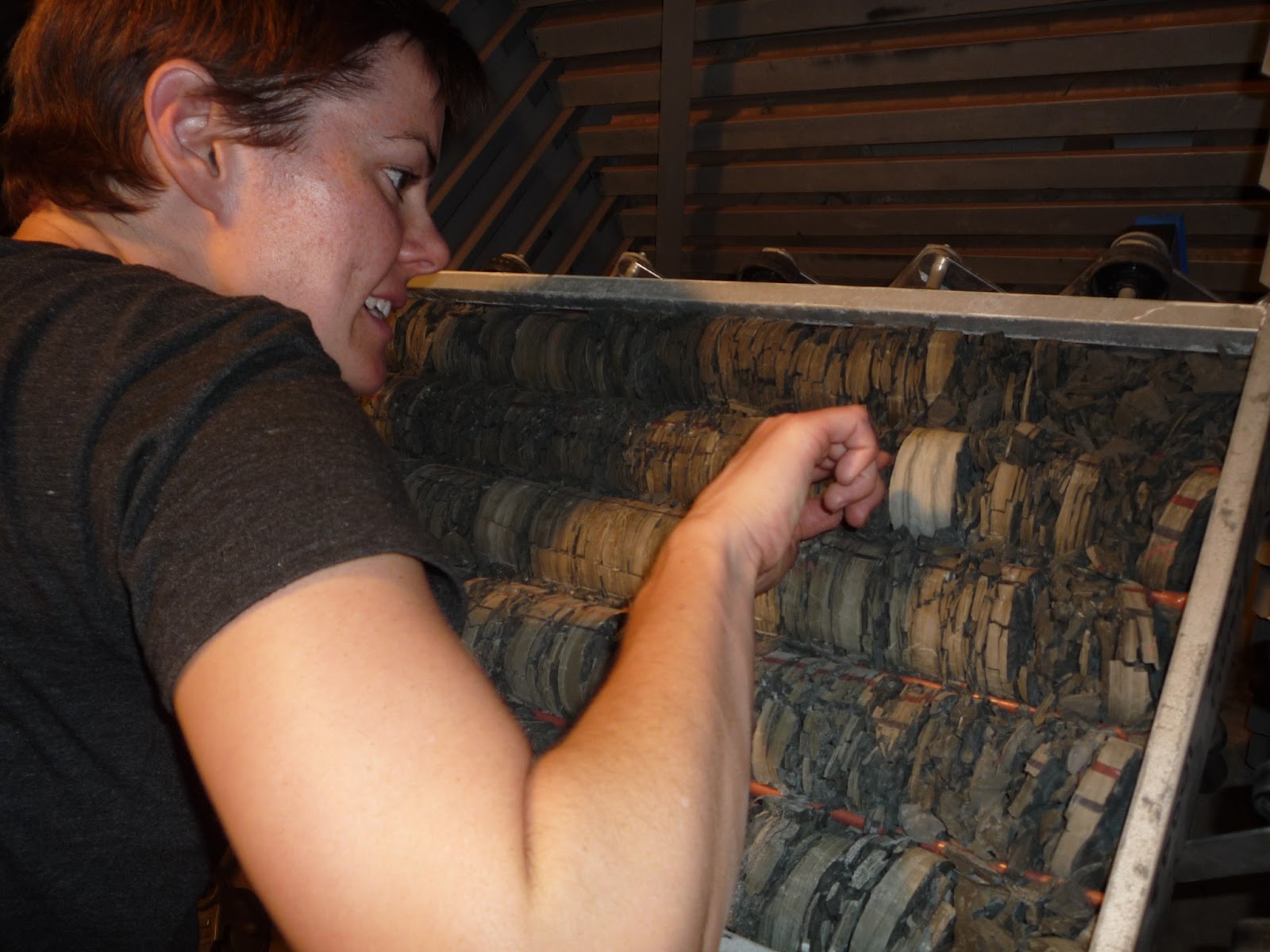
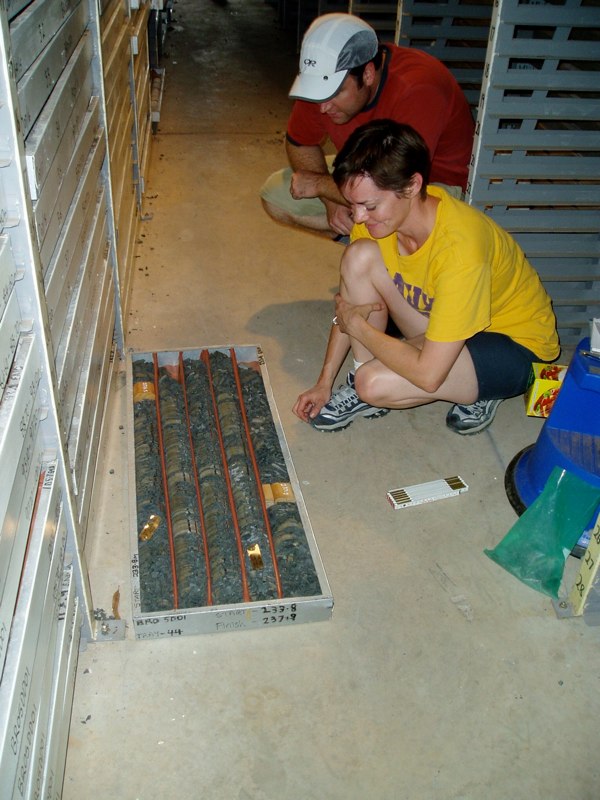
Dr. Riedman sampling drillcore in Alice Springs, Australia. These shale samples were placed into hydrofluoric acid to dissolve the rock- this process leaves the organic-walled fossils intact. Those are then studied by transmitted light microscope and scanning electron microscope.

In Riedman’s opinion, BHL is important not only for supporting modern scientific research, but also for ensuring that the work of past scientists is not forgotten.

“Many of the articles I’ve been able to access through BHL were written by pioneers in this field, like Tadas Jankauskas and Boris Timofeev, and their work deserves recognition (even if it is in a language other than English!),” emphasizes Riedman. “Our field is too young to be forgetting its past already. I am so glad to be able to gain access to more and more of these publications online.”

View Full Size Image
Dr. Riedman sampling drillcore in Darwin, Australia.

Through its worldwide consortium of natural history and botanical libraries, the Biodiversity Heritage Library is working to ensure that the published record of biodiversity knowledge is freely available to researchers across the globe. By making this content globally accessible to anyone with an Internet connection, BHL is helping to advance scientific research and inspire discovery of the natural world.

You can help support global research through a tax-deductible donation to BHL. With your help, we can continue to democratize access to information about biodiversity and empower scientific research on a global scale.

______________________________________

This post may contain the personal opinions of BHL users or affiliated staff and does not necessarily represent the official Biodiversity Heritage Library (BHL) position on these matters.

July 13, 2017by Grace Costantino
BHL News, Blog Reel

BHL Welcomes Three New Affiliates

BHL is pleased to welcome three long-time Partners as the consortium’s newest Affiliates: BHL Egypt, BHL China, and BHL SciELO.

The BHL consortium now consists of 18 Members and 18 Affiliates. Members and Affiliates contribute content, provide technical services, and participate in BHL committees, task forces, and working groups. Additionally, Members, who contribute 10,000 USD in annual dues, have governance privileges and vote on strategic directives.

BHL Egypt 

View Full Size Image


BHL Egypt, led by the Bibliotheca Alexandrina (BA), joined the Biodiversity Heritage Library in 2009. A major library and cultural center located in Alexandria, Egypt, Bibliotecha Alexandrina has long brought considerable technical expertise to the BHL consortium. The BA provides access to a subset of the BHL collection through its own Digital Assets Repository, which features an Arabic-aware (right to left) book reader. As an Affiliate, BHL Egypt will continue to provide technical support and services to facilitate BHL’s ongoing development.

BHL China 

View Full Size Image


BHL China, founded by the Institute of Botany at the Chinese Academy of Sciences, is the Biodiversity Heritage Library’s first Affiliate in China. Established in 1928, the Institute of Botany is one of the oldest comprehensive research institutions in China. Host to the largest herbarium in Asia, two botanical gardens, and several laboratories, the Institute is a national leader in the development of the country’s plant science research. Since first joining BHL as a partner in 2010, the Institute of Botany has contributed over 325,000 pages to BHL through the BHL China program.

BHL SciELO 

View Full Size Image


The BHL SciELO Network is the Biodiversity Heritage Library’s first Affiliate in South America. BHL SciELO is implemented by the Scientific Electronic Library (SciELO) Program, which encompass a network of national collections of open access journals in 15 countries. SciELO Brazil coordinates the BHL SciELO Network involving the main biodiversity libraries of Brazil with political and financial support from the São Paulo Research Foundation (FAPESP) and the Secretary of Biodiversity of the Ministry of Environment. SciELO joined BHL as a partner in 2010, and since then it has contributed over 107,000 pages to BHL’s collection.

July 3, 2017by Grace Costantino
Blog Reel, Featured Books

The Botanical Art of Redouté

View Full Size Image
Redouté, Pierre Joseph. Les liliacees. (1802-1815). v. 2. http://www.biodiversitylibrary.org/page/299211. Digitized by Missouri Botanical Garden.

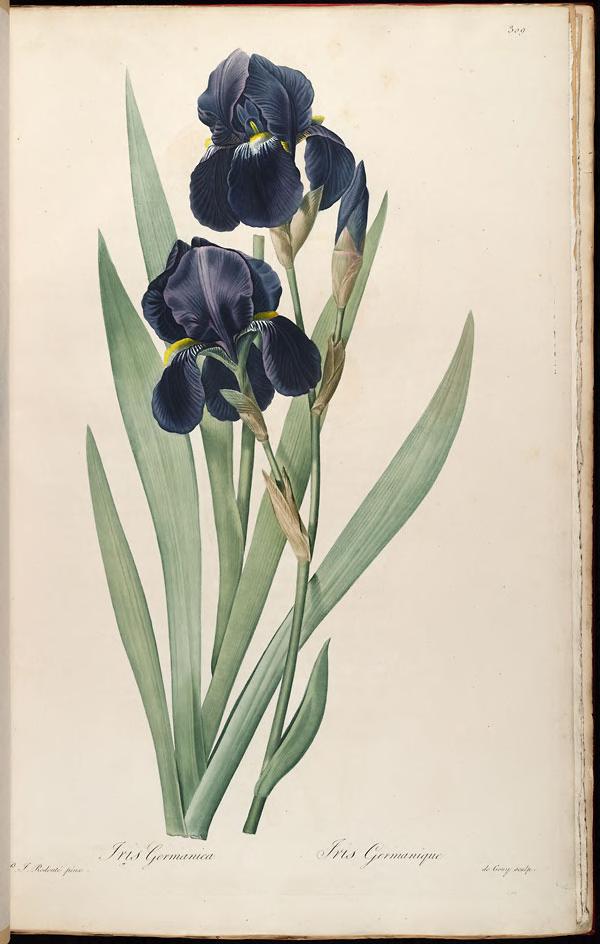
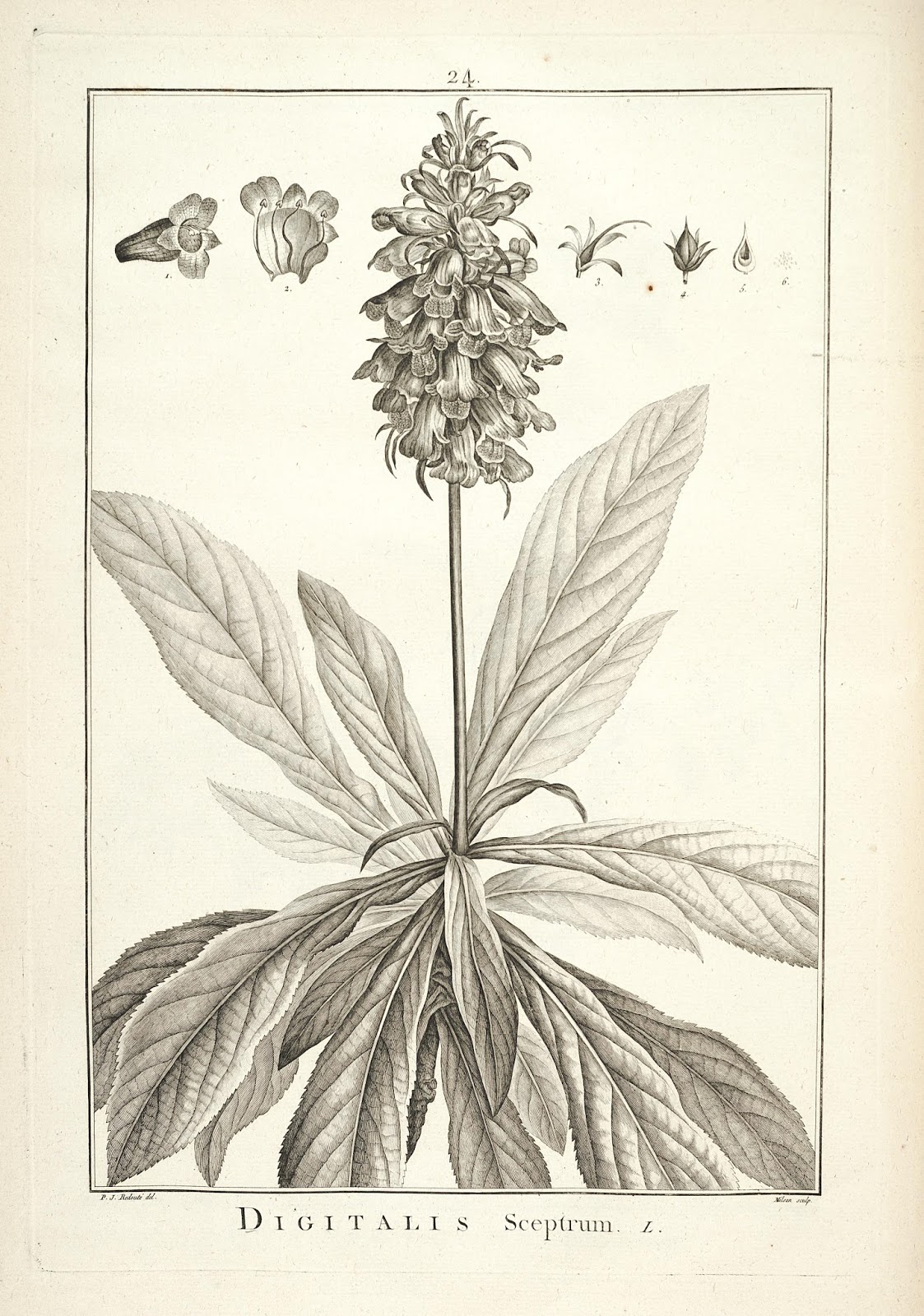
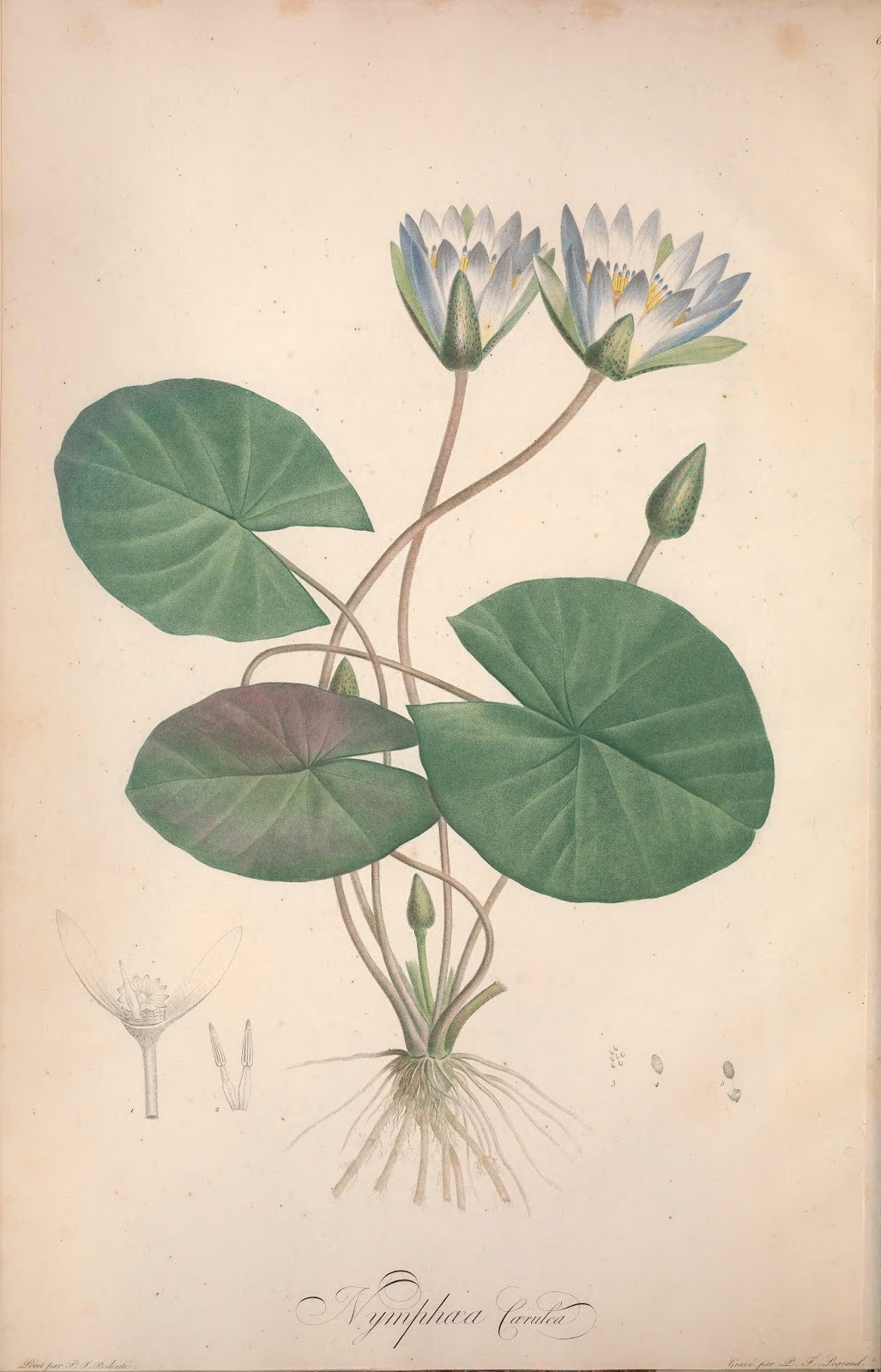
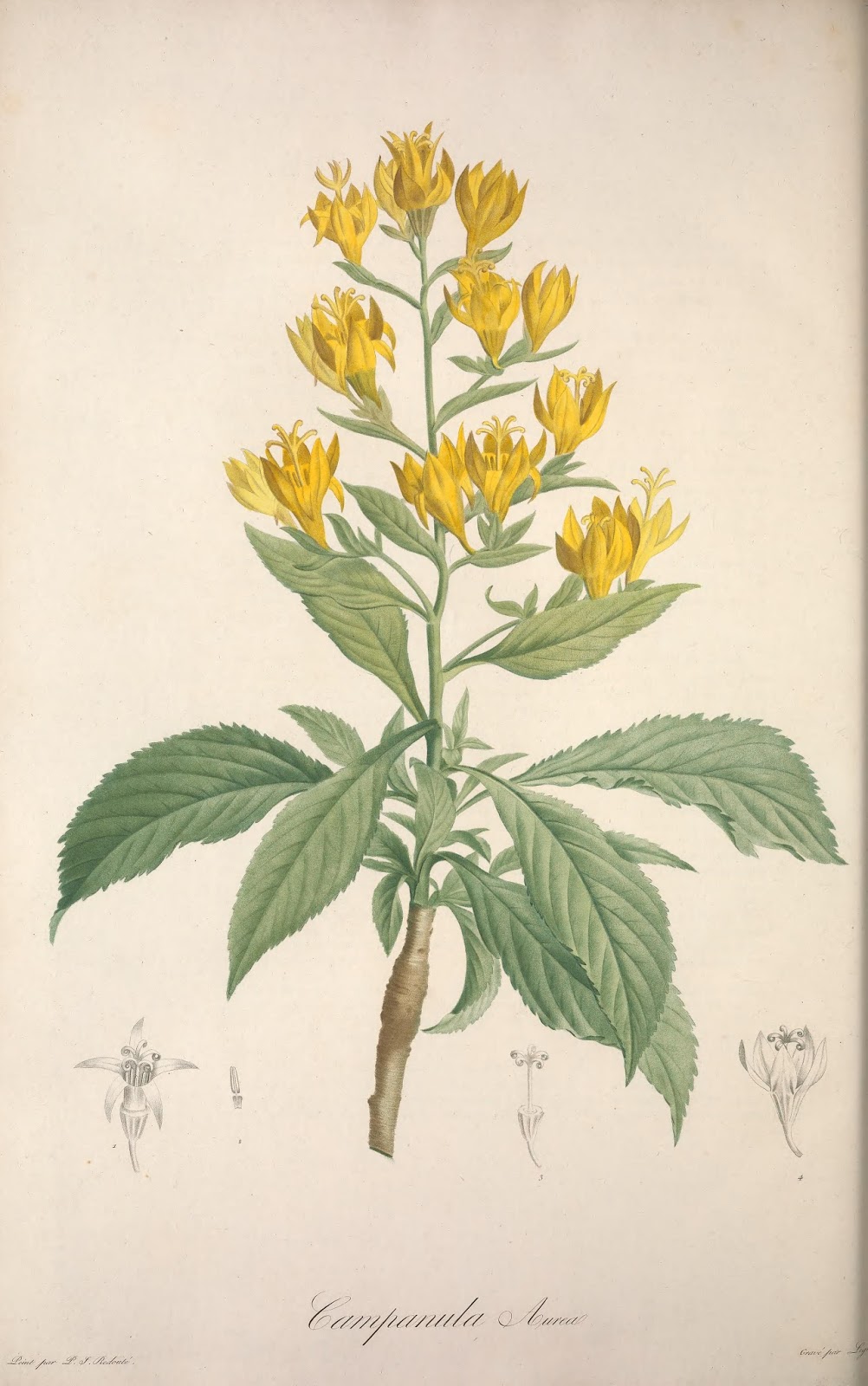
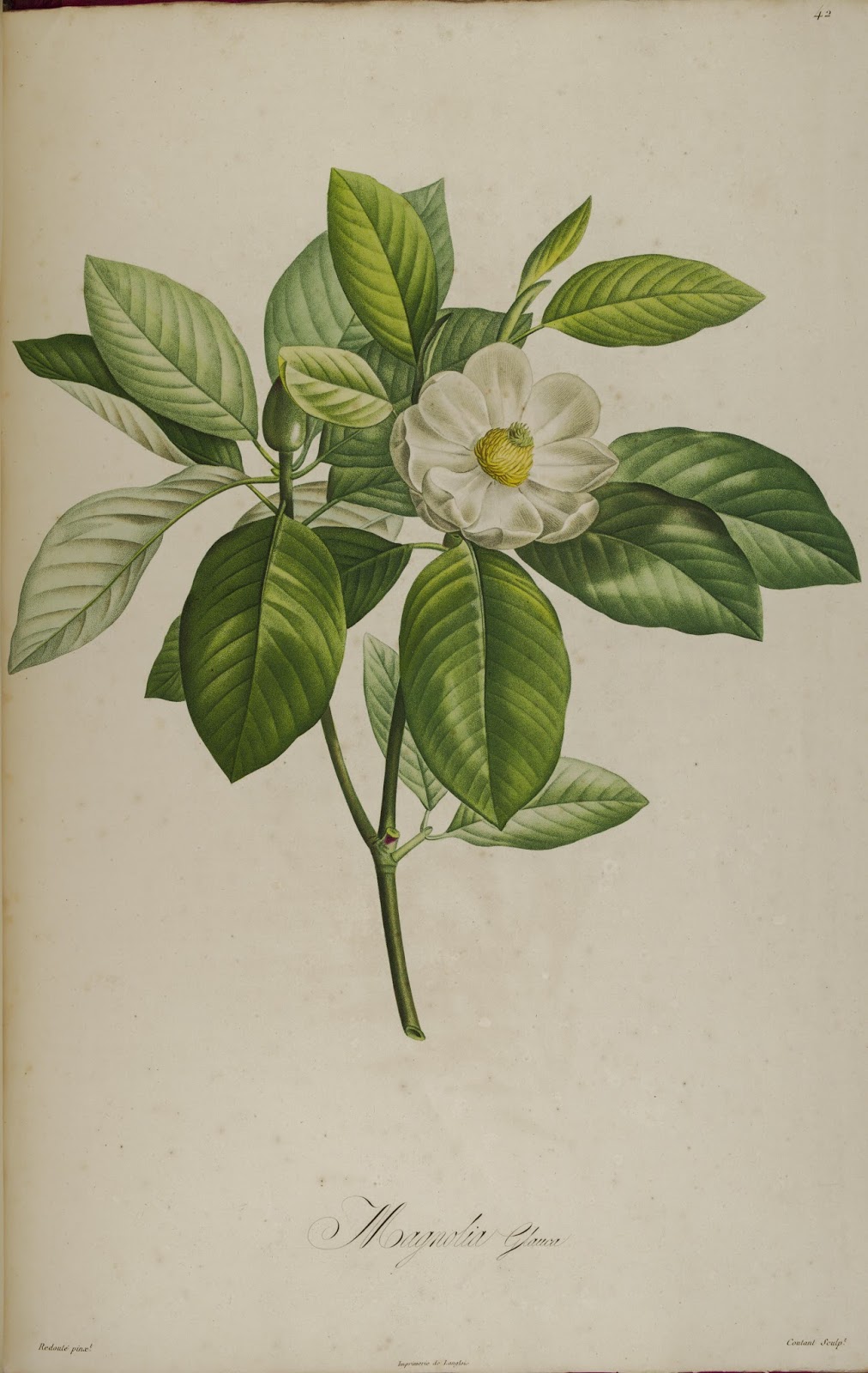
The most celebrated flower painter of quite possibly the entire history of botanical art is Pierre-Joseph Redouté. Nicknamed “the Raphael of flowers,” Redouté published over 2,100 plates depicting over 1,800 species – many of which had never before been illustrated for publication – throughout his career (University Libraries 2013). Many of Redouté’s publications are available in the Biodiversity Heritage Library, and a selection of these works is examined in this article.

Born in 1759 at St. Hubert in the present-day Belgian province of Luxembourg, Redouté and his two brothers – who also became artists – were descended from a family of Belgian painters. After receiving training in his father’s studio, Redouté set out at just thirteen years of age to earn a living as an artist. Eventually, in 1782 at the age of twenty-three, Pierre-Joseph joined his elder brother, Antoine-Ferdinand, designing stage scenery for the Théâtre-Italien in the rue de Louvois (Blunt 1967).

View Full Size Image
Redouté, Pierre Joseph. Les liliacees. (1802-1815). v.  6. http://www.biodiversitylibrary.org/page/300521. Digitized by Missouri Botanical Garden.

During this period, Pierre-Joseph’s leisure time was spent painting flowers, and it was this passion that eventually led him to the Jardin du Roi, which today is known as Jardin des Plantes and is part of the Muséum national d’histoire naturelle. It was here that Redouté met and befriended Dutch painter Gerard van Spaendonck, Professeur de peinture de fleurs at the Jardin. van Spaendonck had a profound influence on Redouté, instructing him on engraving and water coloring techniques. In fact, Wilfrid Blunt, author of The Art of Botanical Illustration, asserts that Redouté owes much of his success to the technical discoveries that he learned from van Spaendonck (Blunt 1967).

Redouté’s technique, modeled upon that of van Spaendonck, involved “pure water colour, gradated with infinite subtlety and very occasionally touched with body-colour to suggest sheen” (Blunt 1967, 179). Redouté eventually perfected the reproduction of his paintings for publication using stipple engraving, which used dots, rather than lines, to engrave plates, with varying dot density being used to convey tone and shading (Blunt 1967).
View Full Size Image
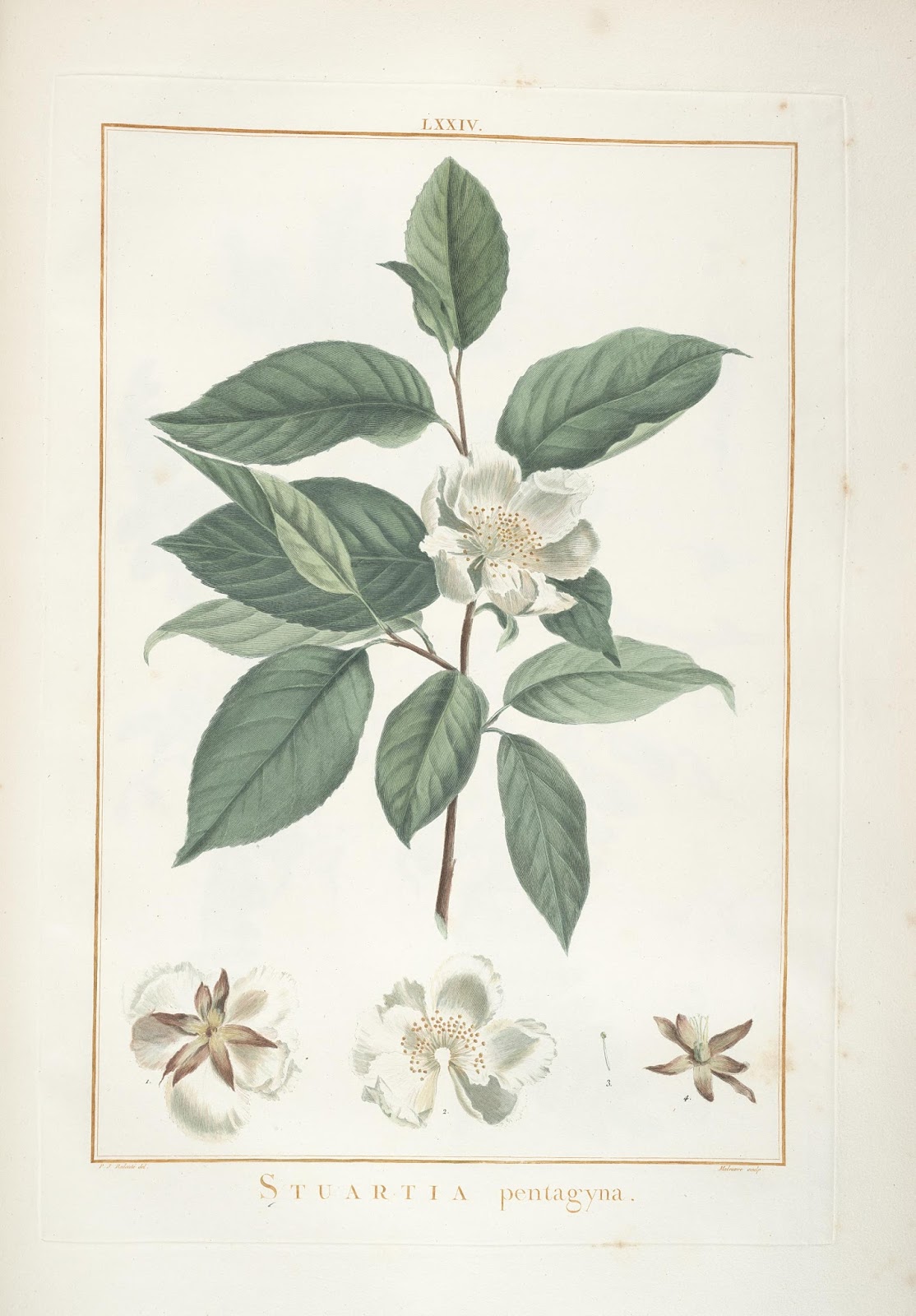
L’Héritier de Brutelle, Charles Louis. Stirpes novae :aut minus cognitae, quas descriptionibus et iconibus. (1784-85). Art by Pierre-Joseph Redouté. http://www.biodiversitylibrary.org/page/12516529. Digitized by Missouri Botanical Garden.

During his time creating botanical drawings for the Jardin du Roi, Redouté came to the attention of wealthy botanist Charles Louis L’Héritier de Brutelle, who instructed him on plant anatomy and the characteristics necessary for detailed botanical study. As a result of this relationship, L’Héritier enlisted Redouté to illustrate more than fifty plates for his Stirpes novae (1784–1785), which has been digitized in BHL by the Missouri Botanical Garden (Blunt 1967). With this work, L’Héritier intended to describe, illustrate, and classify according to the Linnaean system plants new or largely unknown to science at the time. This included specimens collected during the Dombey-Ruiz-Pavón expedition to Chile and Peru and plants found at Kew Gardens, Jardin du Roi, and other European gardens (Dumbarton Oaks 2016). Several years later, Redouté also produced plates for L’Héritier’s Sertum Anglicum (1788), also digitized by the Missouri Botanical Garden, which included studies of rare plants growing at Kew Gardens (Blunt 1967). James Sowerby, another renowned English illustrator, also produced illustrations for this work (Mathew 1981).

View Full Size Image
L’Héritier de Brutelle, Charles Louis. Sertum Anglicum, seu, Plantae rariores quae in hortis juxta Londinum. (1788). Art by Pierre-Joseph Redouté. http://www.biodiversitylibrary.org/page/11832434. Digitized by Missouri Botanical Garden.

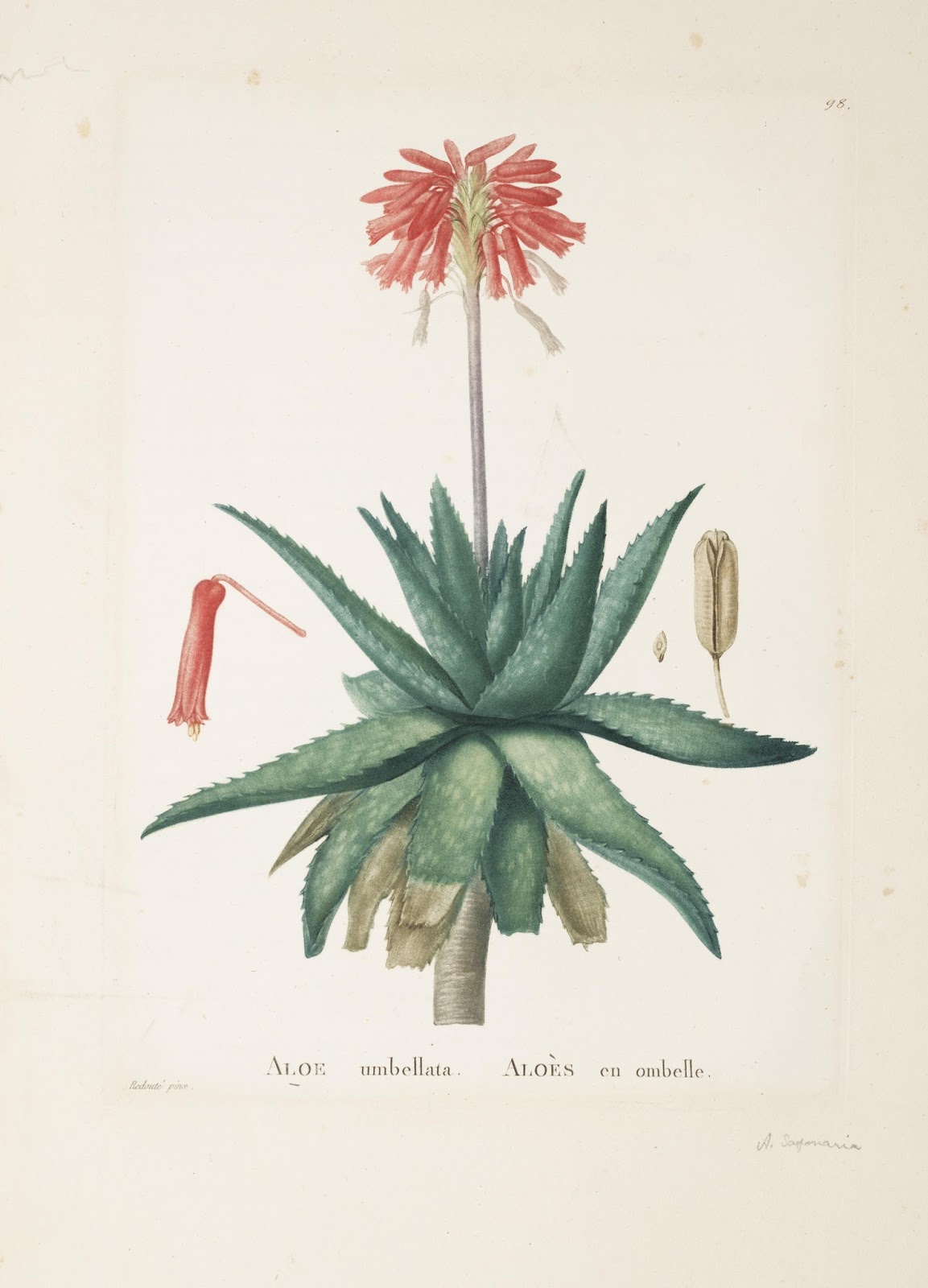
In the late 1780s, likely at the recommendation of L’Héritier, Redouté was appointed Draughtsman to the Cabinet of Marie-Antoinette. During this time, L’Héritier proposed the production of Plantarum historia succulentarum (Histoire des plantes grasses), a work on cacti and succulent plants that would be illustrated by Redouté. While the French Revolution undermined L’Héritier’s ability to sponsor the project, an enterprising publisher, Garnéry, was enlisted to undertake the publication (Mathew 1981) and Swiss botanist Augustin Pyramus de Candolle was selected as the contributor of the descriptive text. The first section of Plantarum historia succulentarum was published in 1799, and publication continued intermittently until 1837 (Missouri Botanical Garden 2003). This was the first botanical publication for which Redouté was the sole artist and the first to utilize his color-printing method of stipple-engraved plates (Mathew 1981). It has been digitized by Missouri Botanical Garden.
View Full Size Image
Candolle, Augustin Pyramus de. Plantarum historia succulentarum =Histoire des plantes grasses. (1799-1837). v. 2. Art by Pierre-Joseph Redouté. http://www.biodiversitylibrary.org/page/281073. Digitized by Missouri Botanical Garden.

Following the French Revolution, Redouté continued painting for the Jardin du Roi, and the rise of Napoleon Bonaparte resulted in increased fame for Redouté as Joséphine Bonaparte’s court artist (Dumbarton Oaks 2016). Bonaparte married Joséphine de Beauharnais in 1796, and a few years later, Joséphine purchased Chateau de Malmaison near the western bank of the Seine. Joséphine set out to create magnificent gardens filled with rare and exotic plants from the Old and New Worlds, and in this venture she committed massive sums towards the procurement and cultivation of “choice flowers” and the production of extravagant publications about her gardens, for which Redouté contributed some of the most celebrated art in the history of botanical illustration (Blunt 1967).

View Full Size Image
Ventenat, É. P. Jardin de la Malmaison. (1803-1804). Art by Pierre-Joseph Redouté. v. 1. http://www.biodiversitylibrary.org/page/43441869. Digitized by Smithsonian Libraries.

The first of these publications was Jardin de la Malmaison, for which Redouté produced several hundred plant portraits exemplifying scientific precision and artistic mastery. These portraits, painted on parchment, were reproduced for publication using copperplate stipple engraving. Joséphine hired botanist Étienne Pierre Ventenat to identify and describe the plants at Malmaison. The resulting work was published in twenty installments of about 150 copies between 1803-1804 (Lack 2001). It has been digitized in BHL by Smithsonian Libraries.

View Full Size Image
Ventenat, É. P. Jardin de la Malmaison. (1803-1804). Art by Pierre-Joseph Redouté. v. 2. http://www.biodiversitylibrary.org/page/43518674. Digitized by Smithsonian Libraries.

A description of the plants at Malmaison was continued in Description des plantes rares cultivees a Malmaison et a Navarre. Following his divorce from Joséphine, Napoleon presented her with the country estate of Navarre near Évreux in Normandy. Here, Joséphine again set out to create a magnificent garden of rare plants. With Étienne Pierre Ventenat deceased, she engaged botanist Aime Bonpland to continue the description of her plants. Redouté and Pancrace Bessa, also a student of van Spaendonck’s, produced watercolor paintings to illustrate Description des plantes rares cultivees a Malmaison et a Navarre, which was published in a print run of 325 copies between 1812-1817 (Lack 2001). It has been digitized by Missouri Botanical Garden.

View Full Size Image
Bonpland, Aimé. Description des plantes rares cultivees a Malmaison et a Navarre. (1812-1817). Art by Pierre-Joseph Redouté. http://www.biodiversitylibrary.org/page/275897. Digitized by Missouri Botanical Garden.

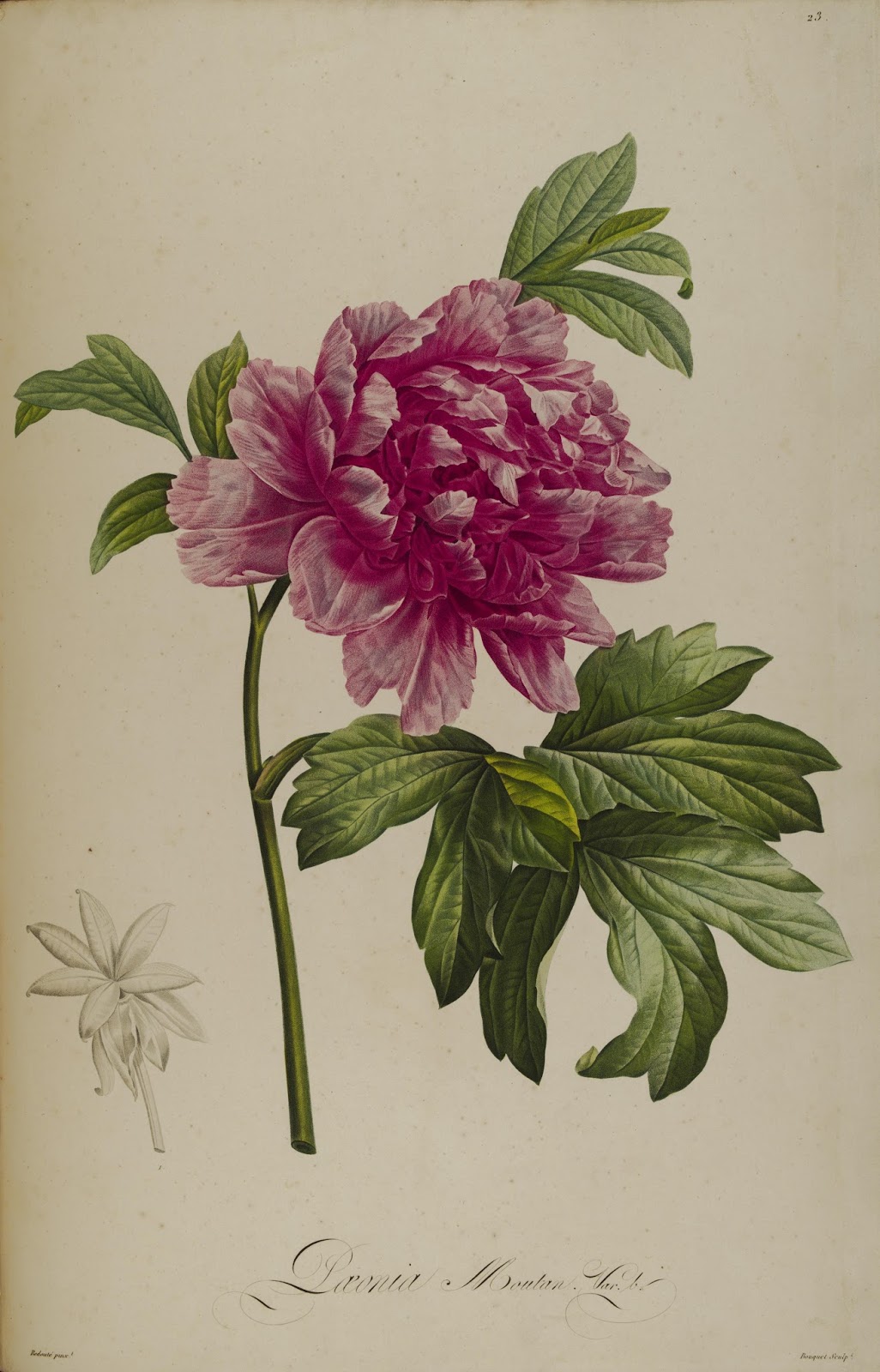
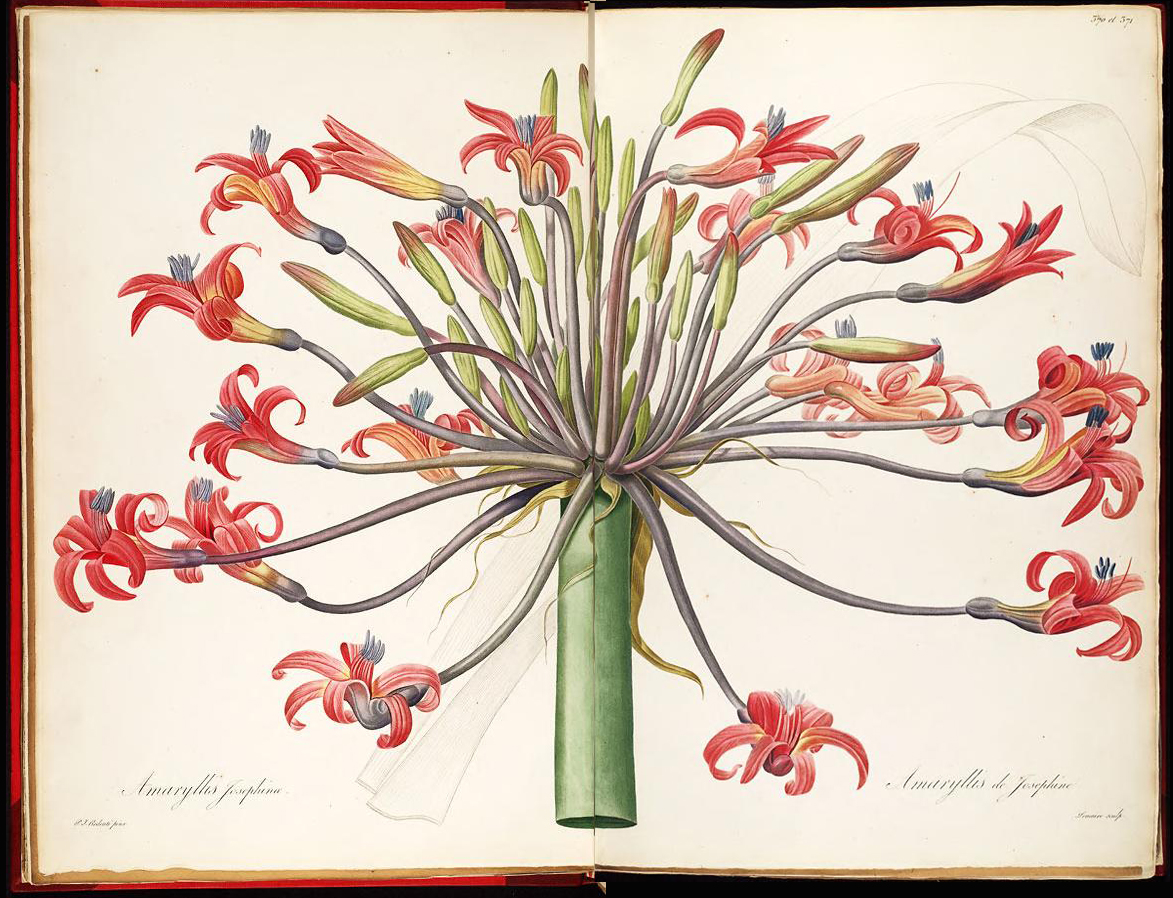
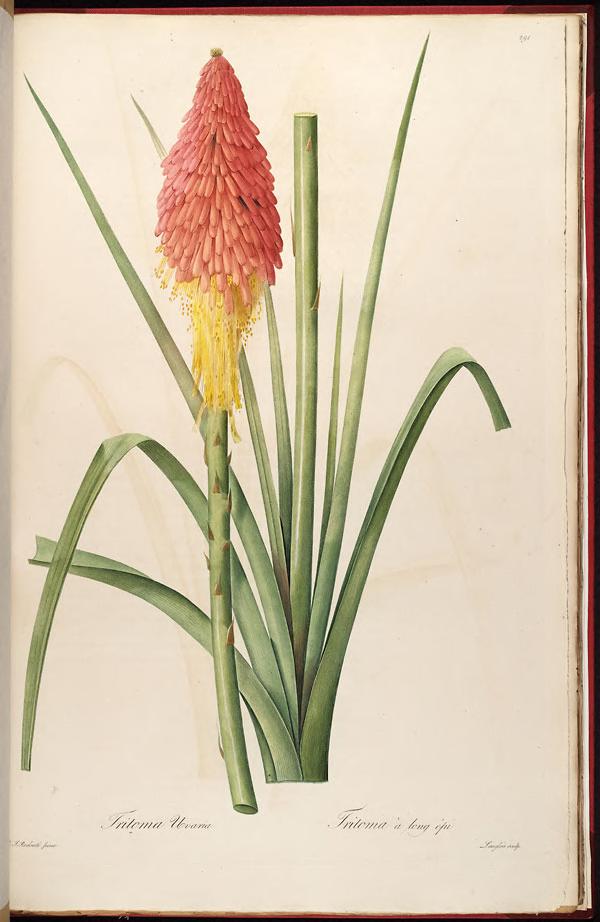
During this period, the renowned Les liliacees was also published. This eight-volume work (digitized by Missouri Botanical Garden), published between 1802-1815, presents a collection of over 450 watercolors by Redouté. Botanical descriptions for the work were provided by Augustin Pyramus de Candolle (volumes 1-4), François de Laroche (volumes 5-7), and Alire Raffeneau-Delile (volume 8). The watercolors were reproduced using stipple plate engraving finished by hand. While the title may be Les liliacees, the work actually covers many other petaloid monocotyledons found in French gardens at this time, including Iridaceae, Commelinaceae, and Amaryllidaceae (Mathew 1981). Redouté pays homage to Joséphine, a major patron of the work, by renaming an amaryllis Amaryllis Josephinae, which is depicted in the only folding plate in the publication (Christie’s 1997).

View Full Size Image
Amaryllis Josephinae. Redouté, Pierre Joseph. Les liliacees. (1802-1815). v. 7. http://www.biodiversitylibrary.org/page/300907. Digitized by Missouri Botanical Garden.

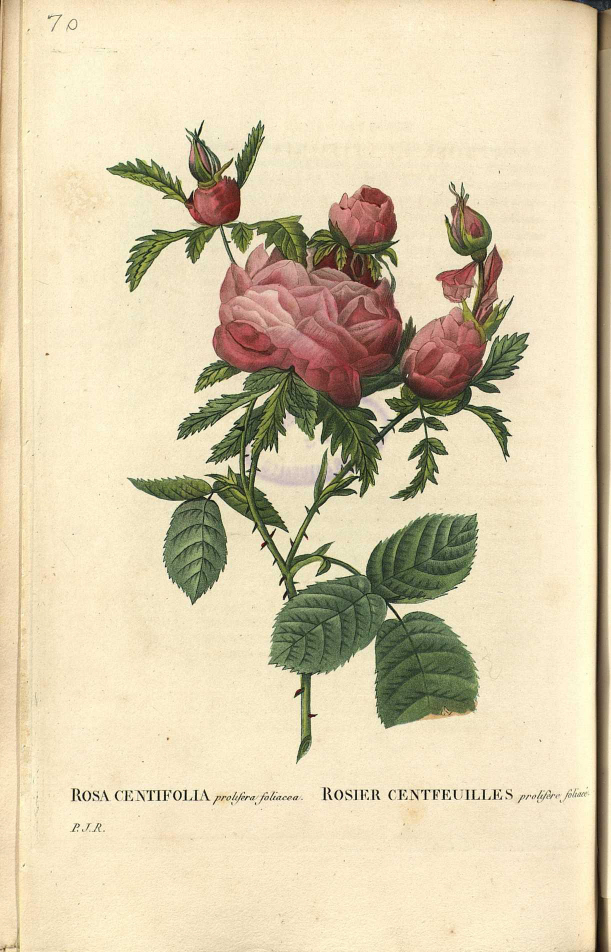
Publication of Redouté’s arguably most-popular work, Les roses, began in 1817. This work, published in three volumes between 1817-1824, describes and depicts roses found in the Malmaison gardens, the collections of botanist Claude Antoine Thory (who provided the text for this work), and other gardens around Paris. It not only describes many flowers that are the forerunners of today’s roses, but it also includes species and cultivars that are no longer in existence (Christie’s 2008). This work was reprinted twice over the course of a few short years, and the third edition, published between 1828-1835, has been digitized by Biblioteca Digital del Real Jardin Botanico de Madrid and can be accessed through BHL.

View Full Size Image
Redouté, Pierre Joseph. Les Roses. 3rd Ed. v. 2 (1835). http://www.biodiversitylibrary.org/bibliography/75996. Digitized by Biblioteca Digital del Real Jardin Botanico de Madrid.

While Redouté continued to enjoy fame throughout his career, producing not only sought-after paintings but also tutoring many distinguished pupils, his extravagant spending habits led him to financial embarrassment, requiring him to sell furniture, silver, and paintings in an attempt to satisfy his debts. At eighty years of age, he began planning the production of a magnificent flower picture that would command an astonishing sum. Sadly, he was never able to realize this ambition. On June 19, 1840, he suffered a stroke and died the following day (Blunt 1967).

View Full Size Image
Redouté, Pierre Joseph. Les liliacees. (1802-1815). v. 5. http://www.biodiversitylibrary.org/page/300394. Digitized by Missouri Botanical Garden.

Today, Redouté is remembered as one of the greatest botanical illustrators in history. His original watercolors and related publications can fetch incredible prices at auction. For example, 468 of his original watercolors for Les liliacees sold at auction in 1985 for 5.5 million USD (Reif 1985). Thanks to the contributions of our incredible partners, you can access many of Redouté’s works for free in BHL and even download and print your own copies of his masterpieces. What was once available only to the rich is now freely available to the world.

View Full Size Image
Bonpland, Aimé. Description des plantes rares cultivees a Malmaison et a Navarre. (1812-1817). Art by Pierre-Joseph Redouté. http://www.biodiversitylibrary.org/page/275935. Digitized by Missouri Botanical Garden.


References

  • Blunt, Wilfrid. 1967. The Art of Botanical Illustration. London: Collins.
  • Christie’s. 1997. “Les Liliacées.” Books, April 30. Accessed December 7, 2016. http://www.christies.com/lotfinder/lot/redoute-pierre-joseph-les-liliacees-text-by-186557-details.aspx.
  • Christie’s. 2008. “Les Roses.” Foljambe Collection, April 30. Accessed December 7, 2016. http://www.christies.com/lotfinder/Lot/redoute-pierre-joseph-1759-1840-and-claude-antoine-thory-5062664-details.aspx.
  • Dumbarton Oaks. 2016. “Les Roses.” The Botany of Empire in the Long Eighteenth Century. Accessed December 6, 2016. http://doaks.org/resources/online-exhibits/botany-of-empire/illustration-and-representation/les-roses.
  • Lack, H. Walter. 2001. Garden Eden: Masterpieces of Botanical Illustration. Koln: Taschen.
  • Mathew, Brian. 1981. P.J. Redoute: Lilies and Related Flowers. New York: The Overlook Press.
  • Missouri Botanical Garden. 2003. “Plantarum historia succulentarum = Histoire des plantes grasses.” Rare Books from the MBG Library. Accessed December 7, 2016. http://www.illustratedgarden.org/mobot/rarebooks/title.asp?relation=SB438C361799V1.
  • Reif, Rita. 1985. “Redoute Watercolors Auctioned to Syndicate.” The New York Times, November 21. Accessed December 7, 2016. http://www.nytimes.com/1985/11/21/arts/redoute-watercolors-auctioned-to-syndicate.html.
  • University Libraries, University of South Carolina. 2013. “The W. Graham Arader, III Collection at the University of South Carolina: Journal.” Accessed December 7, 2016. http://library.sc.edu/p/Collections/Arader.

June 29, 2017by Grace Costantino
Page 16 of 71« First...10«15161718»203040...Last »

Help Support BHL

BHL's existence depends on the financial support of its patrons. Help us keep this free resource alive!

search

About BHL

The Biodiversity Heritage Library (BHL) is the world’s largest open access digital library for biodiversity literature and archives. BHL operates as a worldwide consortium of natural history, botanical, research, and national libraries working together to digitize the natural history literature held in their collections and make it freely available for open access as part of a global “biodiversity community.”

Join Our Mailing List

Sign up to receive the latest news, content highlights, and promotions.

Subscribe Now

Subscribe to Blog via Email

Enter your email address to subscribe to this blog and receive notifications of new posts by email.

Join 319 other subscribers

Subscribe to Blog Via RSS

Subscribe to the blog RSS feed to stay up-to-date on all the latest BHL posts.

Access RSS Feed

Inspiring Discovery through Free Access to Biodiversity Knowledge.

The Biodiversity Heritage Library makes it easier than ever for you to access the information you need to study and explore life on Earth…for free, anytime, anywhere.


64+ Million Pages of
Biodiversity Literature Online.

EXPLORE

Tools and Services
to Transform Research.

EXPLORE

300,000+
Illustrations on Flickr.

EXPLORE

ABOUT | HARMFUL CONTENT | PRIVACY | SITE MAP | TERMS OF USE