Biodiversity Heritage Library - Program news and collection highlights from BHL
  • Home
  • News
  • Featured Books
    • All Featured Books
    • Book of the Month Series
    • BHL at 20
  • User Stories
  • Campaigns
    • Fossil Stories
    • Garden Stories
    • Monsters Are Real
    • Page Frights
    • Her Natural History
    • Earth Optimism 2020
  • Tech Blog
  • Visit BHL
Home
News
Featured Books
    All Featured Books
    Book of the Month Series
    BHL at 20
User Stories
Campaigns
    Fossil Stories
    Garden Stories
    Monsters Are Real
    Page Frights
    Her Natural History
    Earth Optimism 2020
Tech Blog
Visit BHL
  • Home
  • News
  • Featured Books
    • All Featured Books
    • Book of the Month Series
    • BHL at 20
  • User Stories
  • Campaigns
    • Fossil Stories
    • Garden Stories
    • Monsters Are Real
    • Page Frights
    • Her Natural History
    • Earth Optimism 2020
  • Tech Blog
  • Visit BHL
Biodiversity Heritage Library - Program news and collection highlights from BHL
BHL News, Blog Reel

Celebrating Sir Joseph Dalton Hooker with Royal Botanic Gardens, Kew

View Full Size Image

Sir Joseph Dalton Hooker was one of the most important botanists of the 19th century and Kew Gardens’ most illustrious Director (1865-1885). To celebrate the bicentenary of his birth this year, BHL is joining the Royal Botanic Gardens, Kew to highlight Hooker’s works and contributions as part of the #JDHooker2017 campaign.

To coincide with the opening of a new exhibit at Kew’s Shirley Sherwood Gallery, BHL is featuring Hooker’s publications and related artworks in our online book collection and Flickr albums. Learn more about the BHL collections here.

Learn more about Kew’s exhibit, which opened on 25 March, in the post below. Then, be sure to follow #JDHooker2017 on social media as we celebrate Hooker’s life and works.

We hope you’ll also join us again the week of 26-30 June 2017 as we continue our celebrations as part of a larger campaign in conjunction with The Making of Modern Botany conference at Kew Gardens, hosted on 30 June 2017.

Joseph Hooker the ‘King of Kew’


By Rebecca Carter 
Gallery Assistant, The Shirley Sherwood Gallery of Botanical Art 
Royal Botanic Gardens, Kew
View Full Size Image
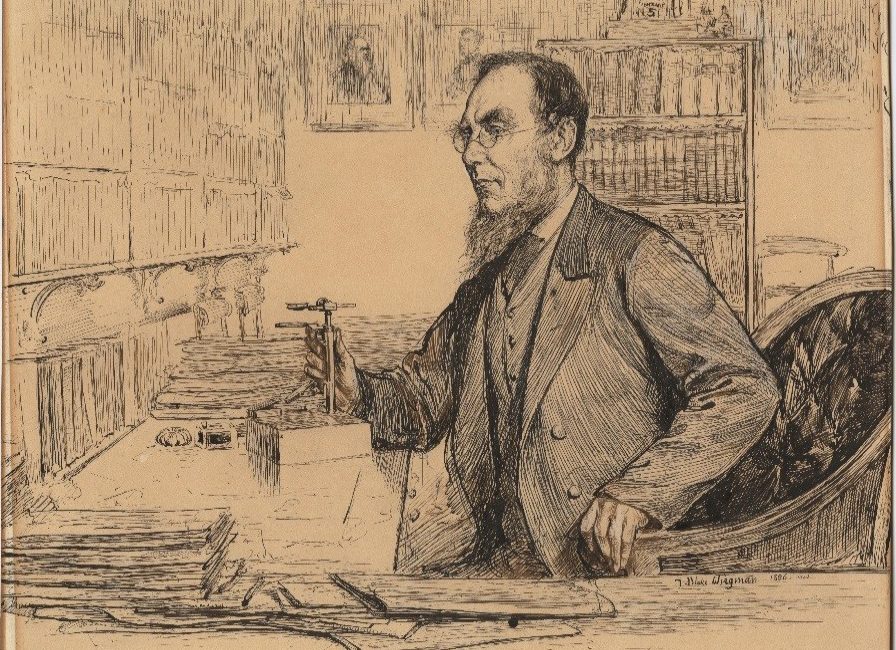
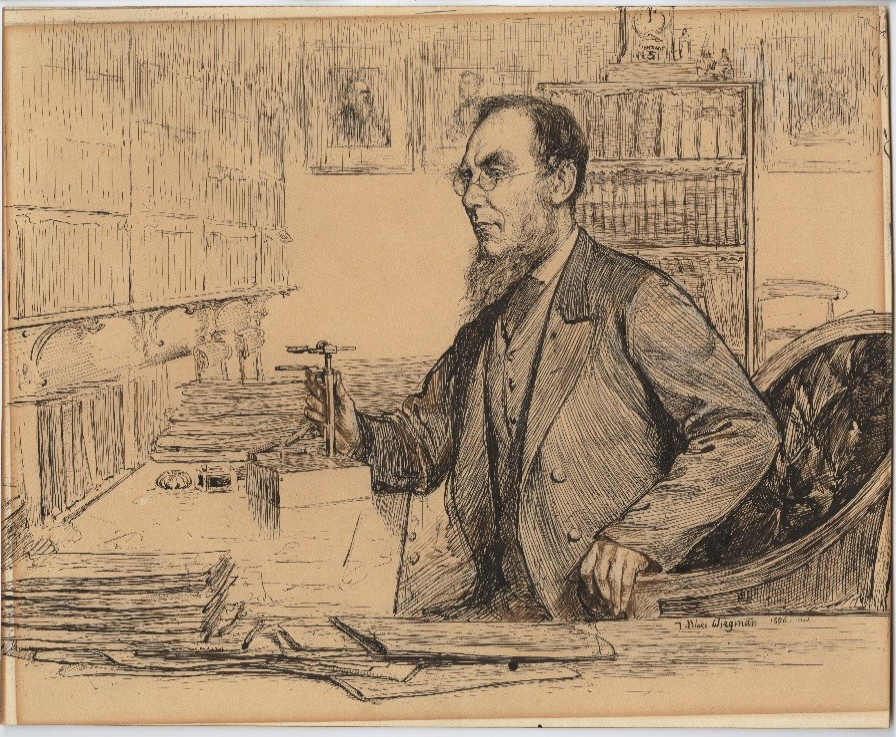
Sir Joseph Dalton Hooker, pen and ink on paper (1886) by Theodore Blake Wirgman.

Sir Joseph Dalton Hooker (1817-1911) was a highly respected botanist and relentless explorer, who is regarded as the founder of modern botanical classification. He held the position of Director at the Royal Botanic Gardens, Kew, for twenty years, adding thousands of specimens to its collection.

To mark the bicentenary of his birth, the Shirley Sherwood Gallery has curated an exhibition exploring his extensive travels and contribution to the field of botany. The collection at Kew contains numerous artifacts, sketches and paintings relating to Hooker’s incredible life and professional journey, of which a proportion is showcased in this exhibition. By showing a diverse selection of work, the exhibition looks to uncover the impact Hooker had on the botanical world, as well as discovering what made Joseph Hooker the ‘King of Kew’.

The title of the exhibition, Joseph Hooker: Putting plants in their place, refers to Hooker’s belief that specimens should be collected and then classified scientifically. He also proposed that plant’s habitats should be better understood and that there should be a place and opportunity to elevate the scientific status of botany to the same scholarly status as other sciences such as physics.

Kew was at the very heart of Hooker’s career and through his travels and publications he transformed Kew from a rather run-down royal pleasure garden into the world-class scientific establishment it is recognized as today.

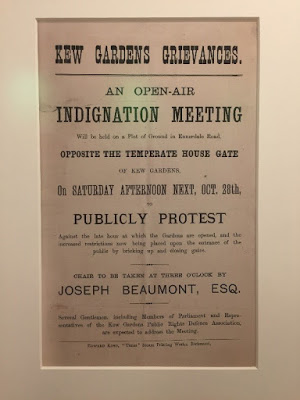
The public at the time met with Hooker’s desire to protect Kew’s role as a serious scientific institution with apparent antipathy; it was reported in newspapers that Londoners were outraged to find the gates to the Gardens locked in the mornings on bank holidays. This public outcry led to Hooker clashing with politicians and the public several times and ended with him conceding to early openings. On display in the exhibition are cartoons and notices from contemporary newspapers, exploring this fascinating history whilst Hooker was Director of Kew.
View Full Size Image
Kew Gardens Grievances notice from The Times, published October 1879, facsimile print.

Today, Kew is a leading centre for scientific botanical research and it is partly down to Hooker’s explorations that this foundation was set. On 30 September 1839 when he was 22 years old, Hooker set off on his first voyage. He was the youngest crew member on Her Majesty’s Discovery Ship Erebus, serving as the ship’s assistant surgeon and the expedition’s botanist.

On his many travels he drew and collected plants, naming many previously unknown-to-science plants and trees. Hooker named many plants after botanists and friends as a way of thanking and acknowledging fellow scientists. For example, Hooker named the Tasmanian gum tree Eucalyptus gunnii after his friend the collector Ronald Campbell Gunn. Hooker also had plants named after himself, such as the New Zealand ‘golden wand’ Bulbinella hookeri which was named by his friend and New Zealand missionary William Colenso.

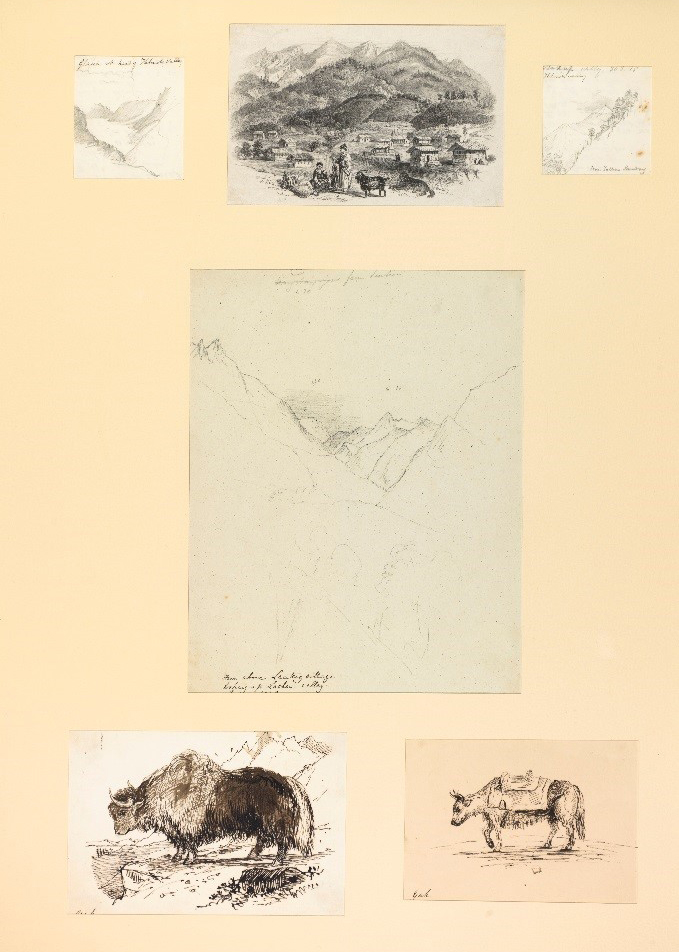
Hooker didn’t confine his drawings to plants. He also sketched houses, animals and landscapes. Our favourite pieces on display in this exhibition depict his time in the Himalayas. The selection of sketches below reveals detailed drawings of a variety of views of Lacham valley and Lamteng village.

Hooker’s good friend and talented artist Walter Hood Fitch drew the middle sketch at the top, which is a re-work of Hooker’s original drawing. Fitch often sketched Hooker’s drawings, preparing lithographs for botanical books such as his Rhododendrons of Sikkim Himalaya (1849-51).

The intricate sketch of the village and landscape shows that Hooker was also thinking about the habitat and the environment the native plants were exposed to. His drawing of a Yak also demonstrates an understanding of local culture and way of life. Yaks were the most important domesticated animal in the Himalaya and the detail in this sketch is exquisite.
View Full Size Image
From above Lamteng village looking up Lachem valley, (1848) Joseph Dalton Hooker, pencil, pen and watercolour on paper, with lithograph.

The galleries at Kew have more than one reason to be grateful for Hooker’s influence as Director of Kew. In 1879, Marianne North wrote to Hooker offering to build a gallery in which to display her botanical artwork. Hooker gave North permission, and the Marianne North Gallery was duly built in a mixture of classical and colonial style, finally opening in its finished form in 1886. Without Hooker’s permission, Kew would not have this significant collection of Victorian botanical art, which serves as an important catalogue of the world’s plants. Alongside the 833 paintings on display, North also collected samples of wood from the countries she visited. The unusual way in which the gallery was curated is unique to Kew, and it is always a breath-taking experience.

In summary, Joseph Hooker: Putting plants in their place looks at a range of fascinating artifacts and paintings to explore the professional journey of Joseph Hooker as second Director of Kew. It primarily looks at how Hooker revolutionized botany to a scientific status and examines his influence on Kew’s transformation from a simple pleasure garden to the scientific centre of research it is known for today.

March 27, 2017by Grace Costantino
BHL News, Blog Reel

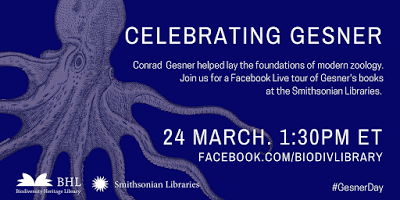
Facebook Live Event 24 March: Celebrating Gesner

Portrait version of the Biodiversity Heritage Library logo.

View a recording of Celebrating Gesner on Facebook.

———————-

View Full Size Image

Conrad Gesner (1516-1565) was a Swiss naturalist whose Historia Animalium is considered the starting point of modern zoology. 26 March is the anniversary of his birth, and institutions around the world will celebrate #GesnerDay by highlighting his publications and contributions on social media.

In anticipation of this event, join us for a Facebook Live broadcast as we go behind-the-scenes at the Smithsonian Libraries with Leslie Overstreet, Curator of Natural-History Rare Books, who will tell us more about Gesner and showcase some of his amazing publications from the collections of the Smithsonian’s Joseph F. Cullman 3rd Rare Book Library of Natural History.

Many of Gesner’s works have also been digitized for BHL. Browse them here.

Celebrating Gesner Facebook Live Event

When? 24 March, 2017 at 1:30pm ET
Where? www.facebook.com/biodivlibrary

March 15, 2017by Grace Costantino
Blog Reel, User Stories

19th Century Butterflies: Reconstructing a Collection’s History with BHL

The Naturalis Biodiversity Center, a recent BHL Affiliate, is home to one of the largest natural history collections in the world, consisting of over 37 million specimens. Additionally, Naturalis has contributed nearly 200,000 pages to the BHL collection since 2016.

Over 900,000 of the museum’s 37+ million specimens are butterflies, some dating back to the 18th century. Approximately 18,000 drawers are required to store this vast Lepidoptera collection.

The Naturalis butterfly collection is not only vast, it is also rich in type specimens, which are indexed through type catalogs combining historical and taxonomical research. Recently, researchers set about compiling such a catalog for the museum’s South East Asian Adoliadini (Lepidoptera, Nymphalidae) type specimens.

In order to create this catalog, which was published last year (Gassó Miracle, M.E. & T. Yokochi, 2016, Lepidoptera Science 67(2)), the authors needed to access and compare all existing taxonomic descriptions for the specimens, identify synonyms, contrast plates and photographs, and verify geographic distribution.

“For all of this, specialized literature is essential,” asserts Eulàlia Gassó Miracle, Curator of Butterflies at the Naturalis Biodiversity Center and co-author of the Adoliadini type catalog.

In order to sort out confusion regarding the origin, labeling, and taxonomy for the specimens, Eulàlia and her co-authors consulted more than 80 journals and books. More than half of them were available through the Biodiversity Heritage Library.

“BHL helped us to revise the taxonomy and the history of the specimens,” explains Eulàlia.

View Full Size Image
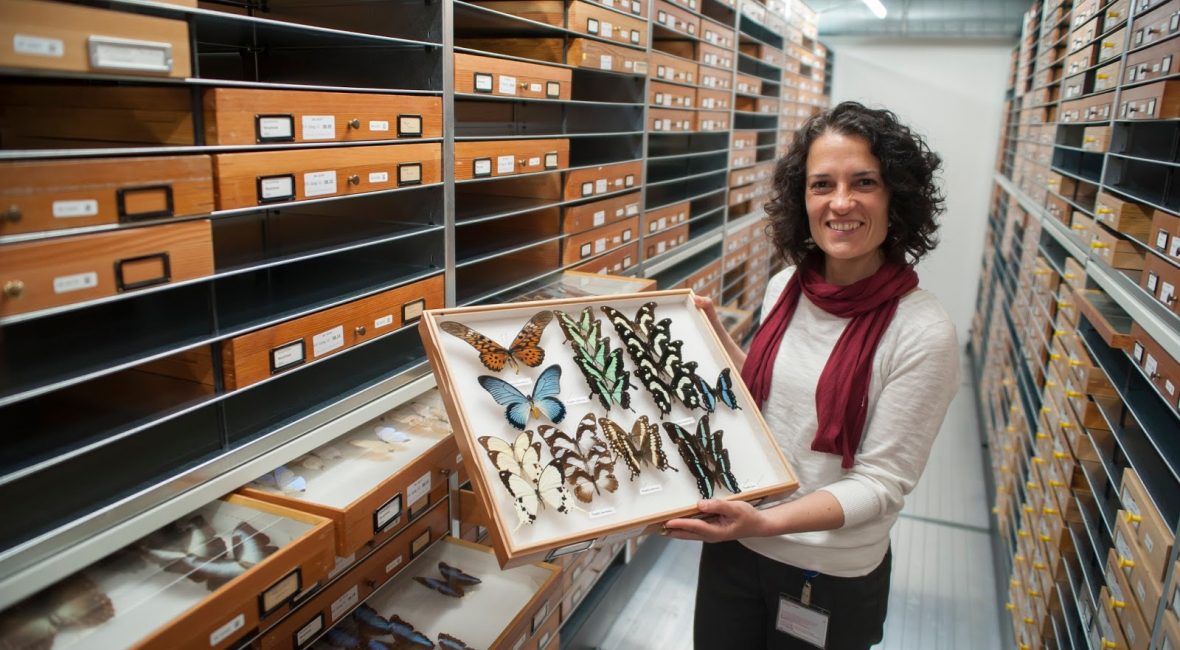
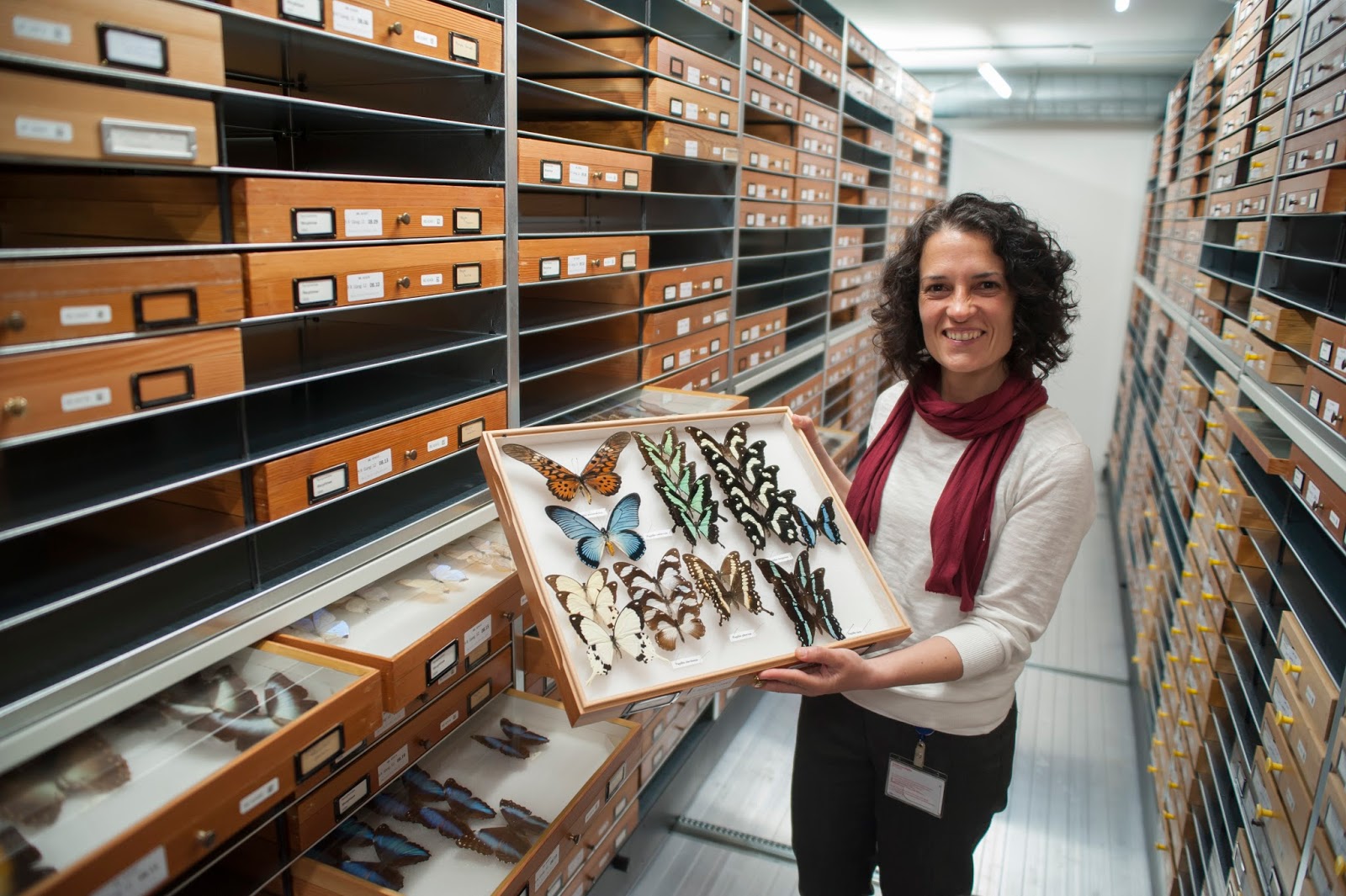
Eulàlia Gassó at the Naturalis butterfly collection. Photo by Henk Caspers.

BHL has been one of Eulàlia’s “most valued research tools” for the past decade.

“Although I have the privilege of access to most of the literature I need, either at the library of the Naturalis Biodiversity Center or the Leiden University Library, the BHL collection allows me to work in a flow from…well, anywhere,” explains Eulàlia. “BHL has also made available rare and unique publications from the 18th and 19th century, much needed for my research, that I cannot find in The Netherlands.”

Eulàlia first discovered BHL while looking for works by C.J. Temminck, zoologist and first director of the Rijksmuseum van Natuurlijke Historie (RMNH, now Naturalis Biodiversity Center). Since then, she has used it to support her work as collections manager in various departments at the museum as well as her research on the history of 19th century natural history.

View Full Size Image
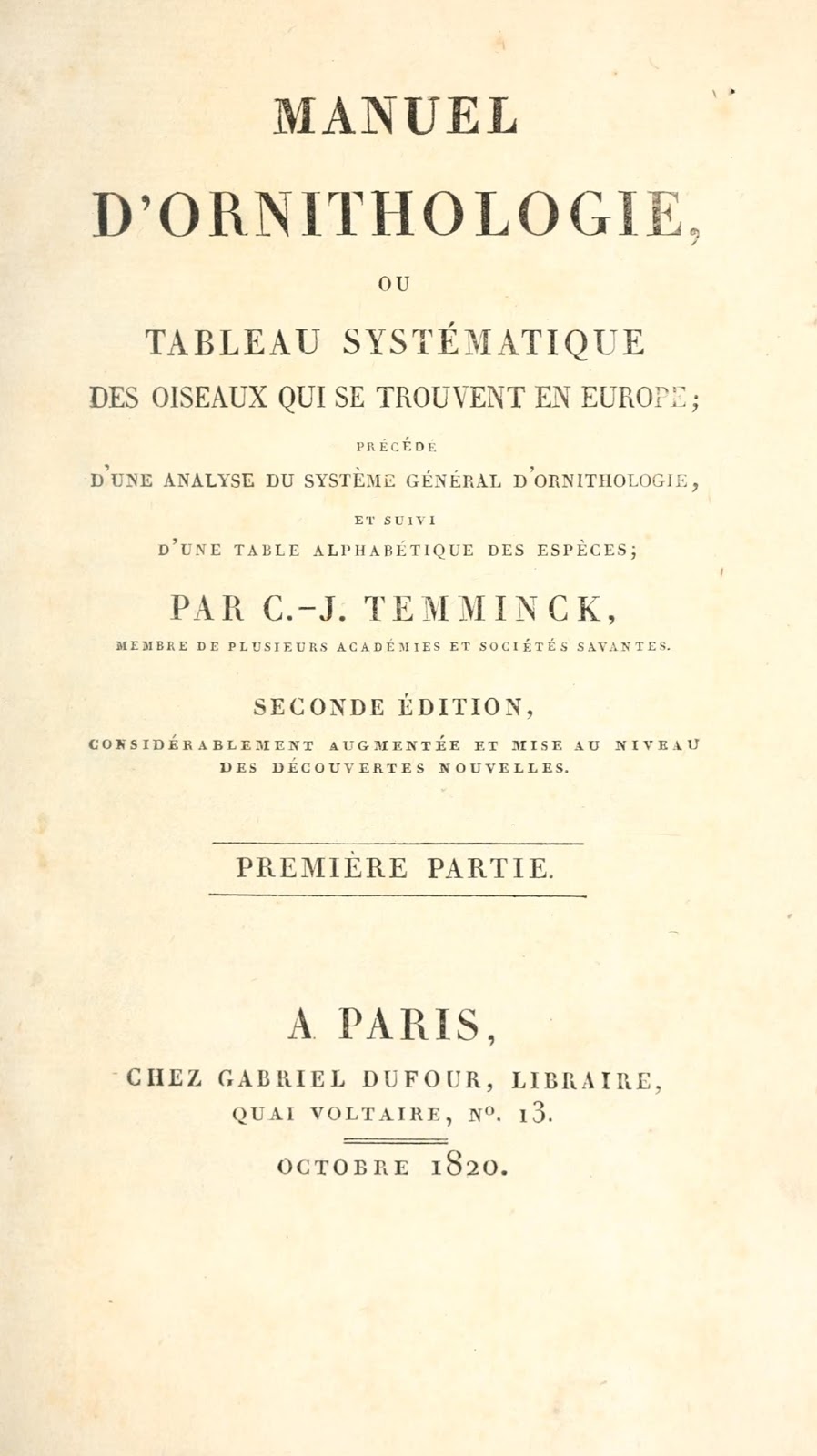
Title page of Manuel d’ornithologie, ou Tableau systématique des oiseaux qui se trouvent en Europe (Vol. 1, 2nd ed., 1820), by C.J. Temminck. Digitized by University Library, University of Illinois Urbana Champaign. http://biodiversitylibrary.org/page/33457859.

“As the curator of a natural history collection that is centuries old, I am also terribly curious about its former curators and curatorial practices,” says Eulàlia. “For this, again, BHL is a constant source of information and images. I share some of my findings and musings in my personal blog, the Museum Chronicles. For my historical research on the life and work of Temminck, accessing online his works and those of his peers has uncluttered my desk, helped organize my thoughts, given me access to new works – and with them, new insights – In a word, BHL helps me progress.”

Eulàlia uses BHL daily, either reading titles online or taking advantage of the custom PDF generation feature to download content. BHL’s high resolution image download feature, which Eulàlia discovered thanks to an @BioDivLibrary tweet, helps her compare illustrations with specimens. To further facilitate her research, Eulàlia is anxious to see full text search added to the BHL website. Happily, this is a feature that is currently in development.

BHL’s collections not only serve as a daily resource for Eulàlia’s research, but they also help her start each day with a little piece of natural history beauty.

View Full Size Image
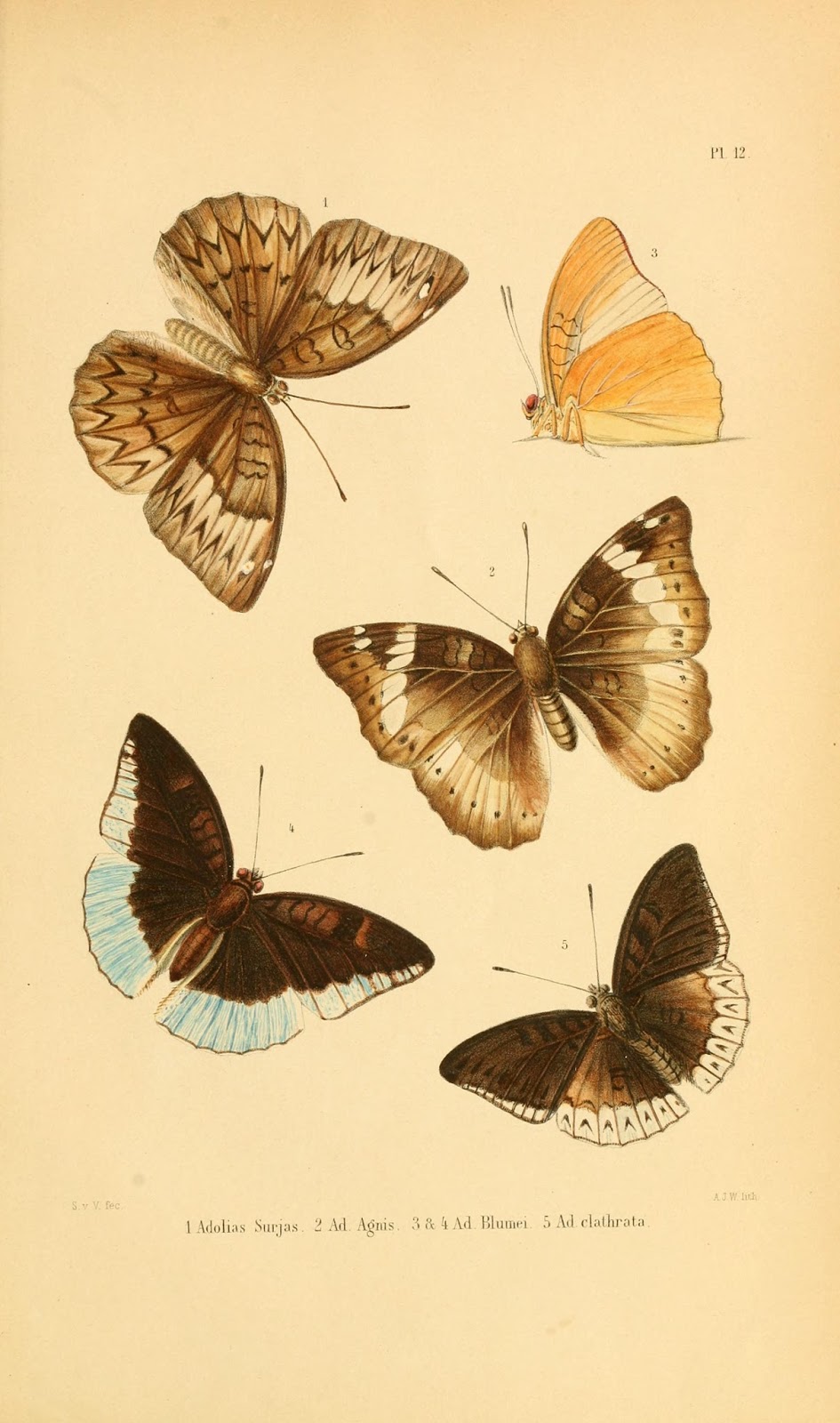
Plate 12 of Snellen van Vollenhoven’s work on Adolias butterflies. The type specimens are deposited at Naturalis Biodiversity Center. Digitized by Smithsonian Libraries. http://biodiversitylibrary.org/page/10840001.

“Recently, one of my favorite items is the article of Snellen van Vollenhoven on Adolias butterflies, one that I have read and examined repeatedly while validating the status of his type specimens,” says Eulàlia. “Plate 12 is so beautiful, it is the first thing I see when starting my computer.”

Indeed, we’re firm believers that every day is better with a little bit of #SciArt. So, whether you need to brighten your day with a little natural history eye candy or reconstruct the history of a type collection, BHL has you covered.

______________________________________

This post may contain the personal opinions of BHL users or affiliated staff and does not necessarily represent the official Biodiversity Heritage Library (BHL) position on these matters.

March 9, 2017by Grace Costantino
BHL News, Blog Reel, Tech Updates

Notice: Changes Coming to BHL API Methods on February 27, 2017

Effective February 27, 2017, the API methods GetPartEndNote and GetTitleEndNote will be removed. In addition, the BHL data exports that used the related format have already been removed.

The removed BHL API methods and data exports will soon be replaced by methods and exports that use the RIS format, which is supported by a wider range of bibliographic reference managers.

Thank you for your patience as we work to implement the RIS-based exports and API methods. If you have any questions, please submit them via our feedback form.

You can learn more about our developer tools and APIs here.

February 24, 2017by Grace Costantino
BHL News, Blog Reel

Introducing the NDSR at BHL Cohort and Blog!

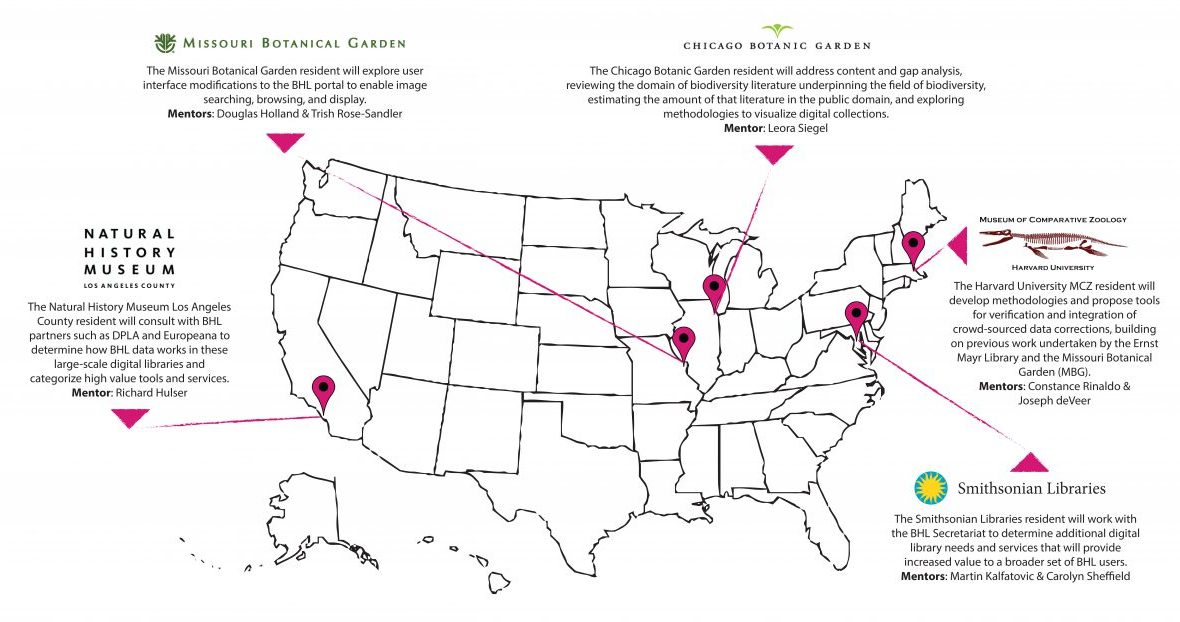
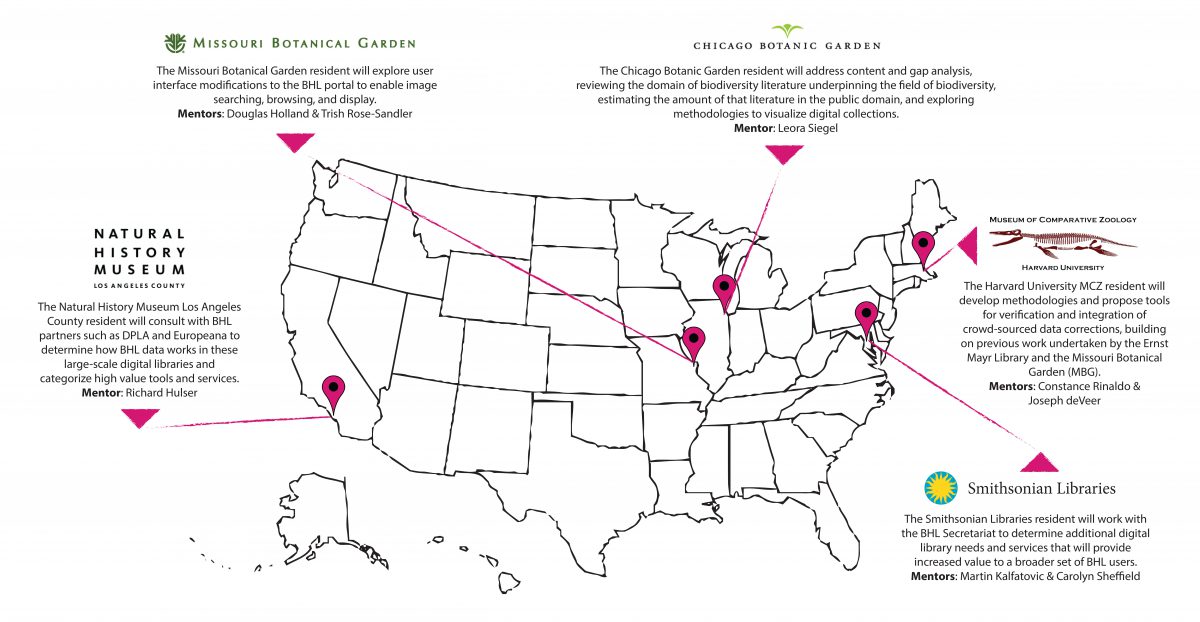
This year, five NDSR residents will help us plan the next generation of BHL. You can stay up-to-date with their progress and findings on the new NDSR at BHL blog!

As part of “Foundations to Actions: Extending Innovations in Digital Libraries in Partnership with NDSR Learners,” the BHL NDSR residents, stationed at geographically-dispersed BHL partner institutions, will work on interrelated projects to improve the discoverability and functionality of the Biodiversity Heritage Library. This project is a National Digital Stewardship Residency (NDSR) program led by the Ernst Mayr Library of the Museum of Comparative Zoology, Harvard University and funded by the Institute of Museum and Library Services (IMLS).

View Full Size Image
Map is from a poster presented at Digital Preservation 2016 by Joseph deVeer , Christine Giannoni , Douglas Holland , Richard Hulser , Martin Kalfatovic, Constance Rinaldo, Trish Rose-Sandler, Carolyn Sheffield, and Leora Siegel. Graphic by Grace Costantino.

The NDSR at BHL blog will features posts from the residents about project developments, successes, and challenges as well as discussions about biodiversity librarianship and content and data management in digital libraries. The residents also hope that the blog will help facilitate communication between librarians, archivists, and others interested in BHL and digital librarianship.

Click here to explore the NDSR at BHL blog. You can follow the blog to receive email notifications about new posts.

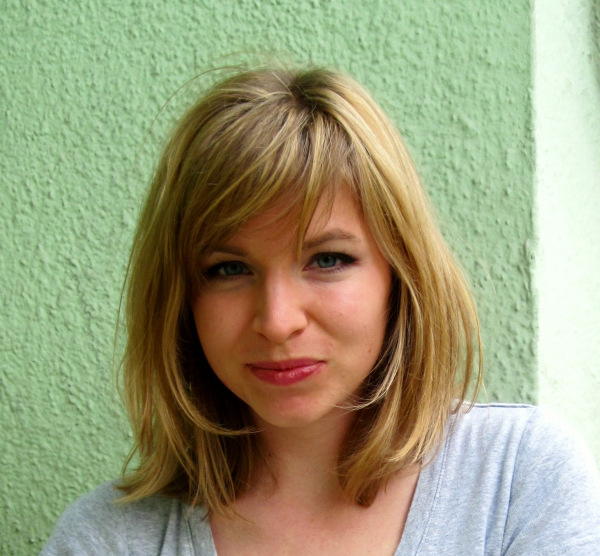
The residents and their respective host institutions and mentors are: Alicia Esquivel (Chicago Botanic Garden, mentor Leora Siegel); Marissa Kings (Los Angeles County Natural History Museum, mentor Richard Hulser); Pamela McClanahan (Smithsonian Libraries, mentors Carolyn Sheffield and Martin R. Kalfatovic); Katie Mika (Harvard University: MCZ, mentors Constance Rinaldo and Joseph deVeer); and Ariadne Rehbein (Missouri Botanical Garden, mentors Doug Holland and Trish Rose-Sandler). You can learn more about each of the residents in the bios below.

Meet the BHL NDSR Residents!

Alicia Esquivel

Alicia Esquivel is the NDSR resident at Chicago Botanic Garden working on a content analysis of BHL. She graduated from the University of Texas’ School of Information in 2016 with a MS in Information Science. While at UT she worked as a graduate research assistant at the Fine Arts Library and at the Harry Ransom Center as a digitization specialist working with audio materials. She discovered the world of bioinformatics while working on her capstone project with the UT entomology department. Alicia is enthusiastic about transforming data into useful information to facilitate research.

Marissa Kings 

View Full Size Image

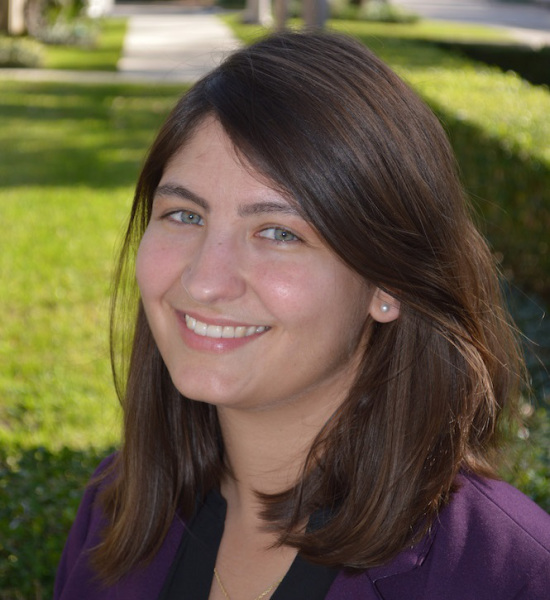
Marissa Kings is the NDSR Resident at the Natural History Museum of Los Angeles County. Her project, “Digital Library Best Practices Analysis”, focuses on identifying high value tools and services used by large-scale digital libraries which might be applied to the next generation of the Biodiversity Heritage Library.

Marissa graduated with her MLIS degree from the University of Wisconsin-Milwaukee in 2015, where she concentrated in Archival Studies. She has previously worked and interned with organizations including the Martin County Library System, Florida Institute of Technology, the Seminole Tribe of Florida’s Ah-Tah-Thi-Ki Museum, University of Oxford Institute of Archaeology, and the Bodleian Libraries. Marissa’s professional interests include digital preservation, community archives, and crowdsourcing. She also holds an MA in Maritime Archaeology from the University of Southampton, United Kingdom and a BA in Social Sciences (concentrating in Anthropology) from Flagler College, St. Augustine, Florida. In her spare time, she enjoys exploring Los Angeles, watching tennis, and thinking about going for a run.

Tweet @marissakings with cool digital humanities projects, crowdsourcing stuff, and things to do in L.A.!

Pamela McClanahan 

View Full Size Image

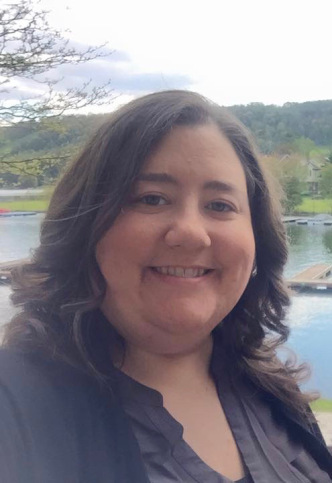
Pam McClanahan holds a MLS specializing in Archives, Records and Information Management from the University of Maryland ischool and has completed library and archival assessments and usability studies for local cultural heritage institutions. Her background is in the nonprofit fundraising field and environmental conservation, but is making a switch to the information profession.

For the National Digital Stewardship Residency program, Pam’s host site is Smithsonian Libraries where she will be working on a user needs and usability analysis to define recommendations and requirements for expanding the Biodiversity Heritage Library digital library functionality. Pam enjoys spending time with family and friends, being on the Chesapeake Bay, and working on craft projects. You can connect with Pam on Twitter here: @Pam_McClanahan!

Katie Mika 

View Full Size Image

Katie Mika graduated from Simmons College in 2015 with Masters’ degrees in History (MA) and Library and Information Science (MS). Katie previously held positions as a Digital Archivist and an Archives Processing Assistant. Her professional interests are focused on providing open and reliable access to information and issues related to intellectual freedom. Katie is carrying out her Residency at the Ernst Mayr Library at Harvard University’s Museum of Comparative Zoology where she will develop tools and methodologies for importing crowdsourced data and corrections to enhance discovery in the Biodiversity Heritage Library. Before moving to the Boston area for Graduate School, Katie worked as a Ski Instructor, and she enjoys cooking, skiing, and trail running.

Ariadne Rehbein 

View Full Size Image

Ariadne (Ari) Rehbein earned her Master of Library Science and Master of Information Science from Indiana University Bloomington and a B.A. with High Honors in English Literature from UC San Diego.

Ariadne brings her skills in digital collections interface design and development, outreach, and metadata to the “Treasures Unlocked” project, developed through her work for Indiana University’s Lilly Library and Library Technologies division, the University of Virginia Library, and the Society of American Archivists Students and New Archives Professionals Section. She is currently serving as a DPLA Community Rep.

As an NDSR Resident at the Missouri Botanical Garden, her work focuses on natural history illustrations sourced from digitized biodiversity literature. The direct results of her project will be user interface requirements and a report on image discovery best practices. She is excited to study the use of digital natural history illustrations across disciplines, by scholars and the public, to build upon the successful work of the “Art of Life” team members and citizen scientists, to gain from the expertise of digital library and botanical library professionals at the Garden, and to become more engaged in the realm of openly accessible biodiversity and cultural heritage collections.

Talk to Ariadne about #BHLib, #biodiversity, #digitalcollections, and #ndsr on Twitter @ari_rehbein!

February 22, 2017by Grace Costantino
Blog Reel, Campaigns, Featured Books

Coloring Our Collections: The Art of Lithography

View Full Size Image

This year for Color Our Collections, we’ve produced a coloring book with illustrations from books that represent the evolution of the art of printing. This week on our blog, we’ll explore the books featured in the coloring book and the printing techniques used for the illustrations.

You can download our 2017 Color Our Collections coloring book here.

Learn more about Color Our Collections here.

The Art of Lithography

The process of lithography was first discovered by a German actor and playwright, Alois Senefelder, in 1796. It was used to varying degrees in the early 19th century, but became increasingly popular from the mid-19th century onward. By the 1880s, it was used widely for printing magazines and advertising.

In the lithographic process, the image is drawn onto a stone with a grease-based ink or crayon. The stone is then processed using a gum Arabic and nitric acid solution. The solution chemically separates the image and non-image areas, making the non-image areas water-receptive and the image areas water repellent. Once the stone has been processed, it is kept damp and an oil-based ink is applied. The ink is repelled by the damp non-image areas and sticks to the fixed image areas. The ink can then be transferred to a sheet of paper using a printing press.

This video from the Minneapolis Institute of Art demonstrates the lithographic process:

Gould’s Australian Bird Lithographs

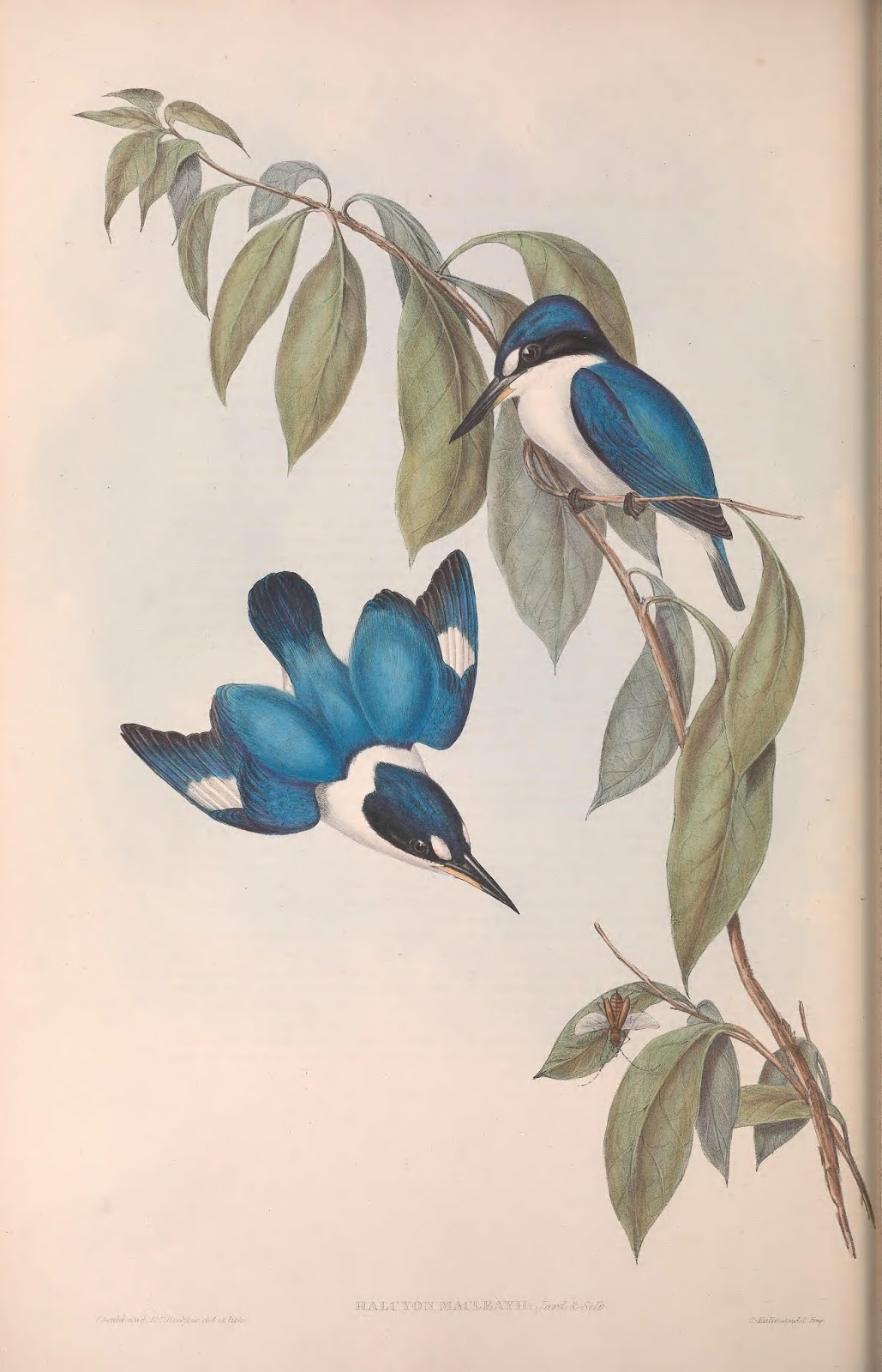
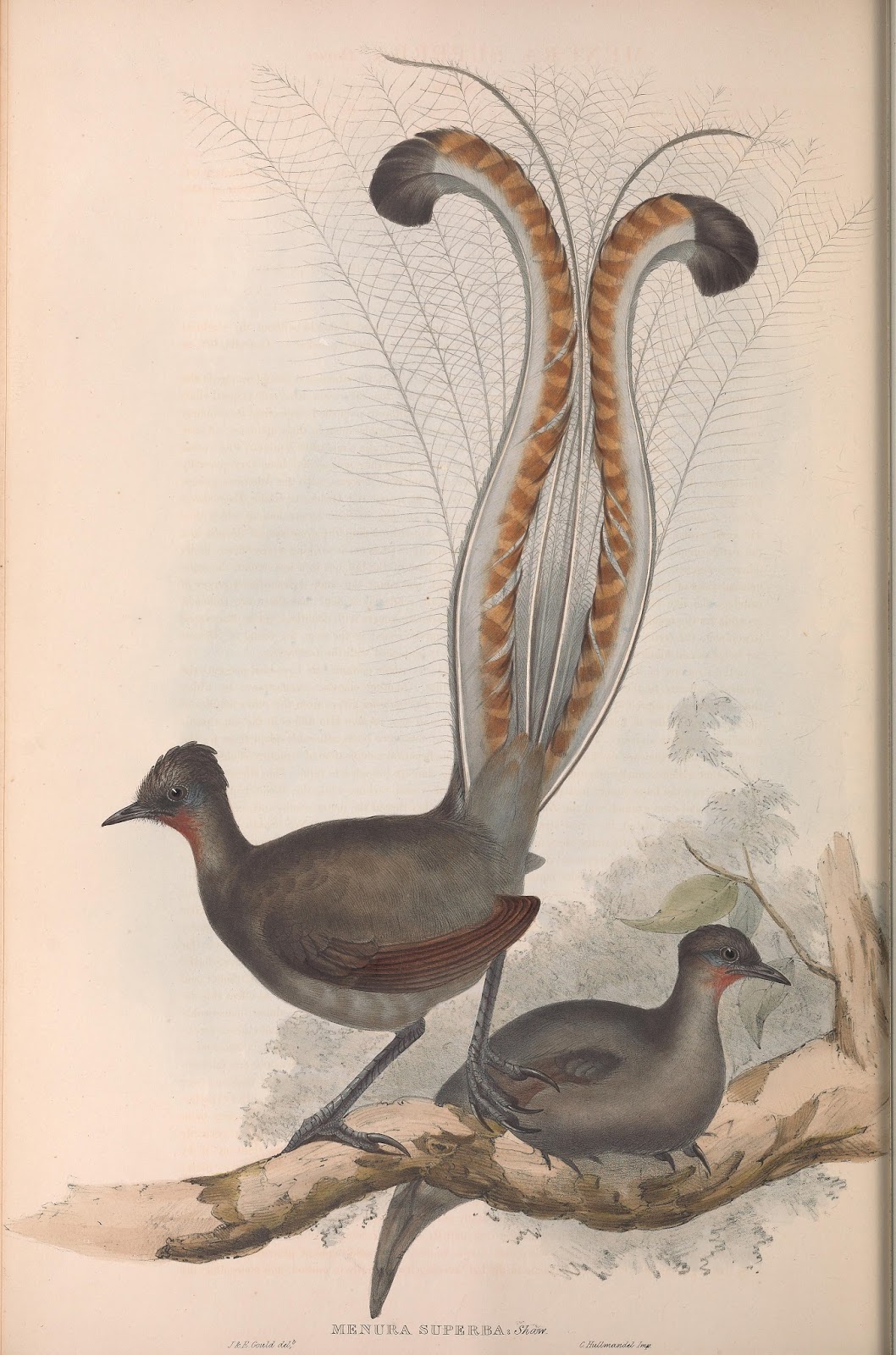
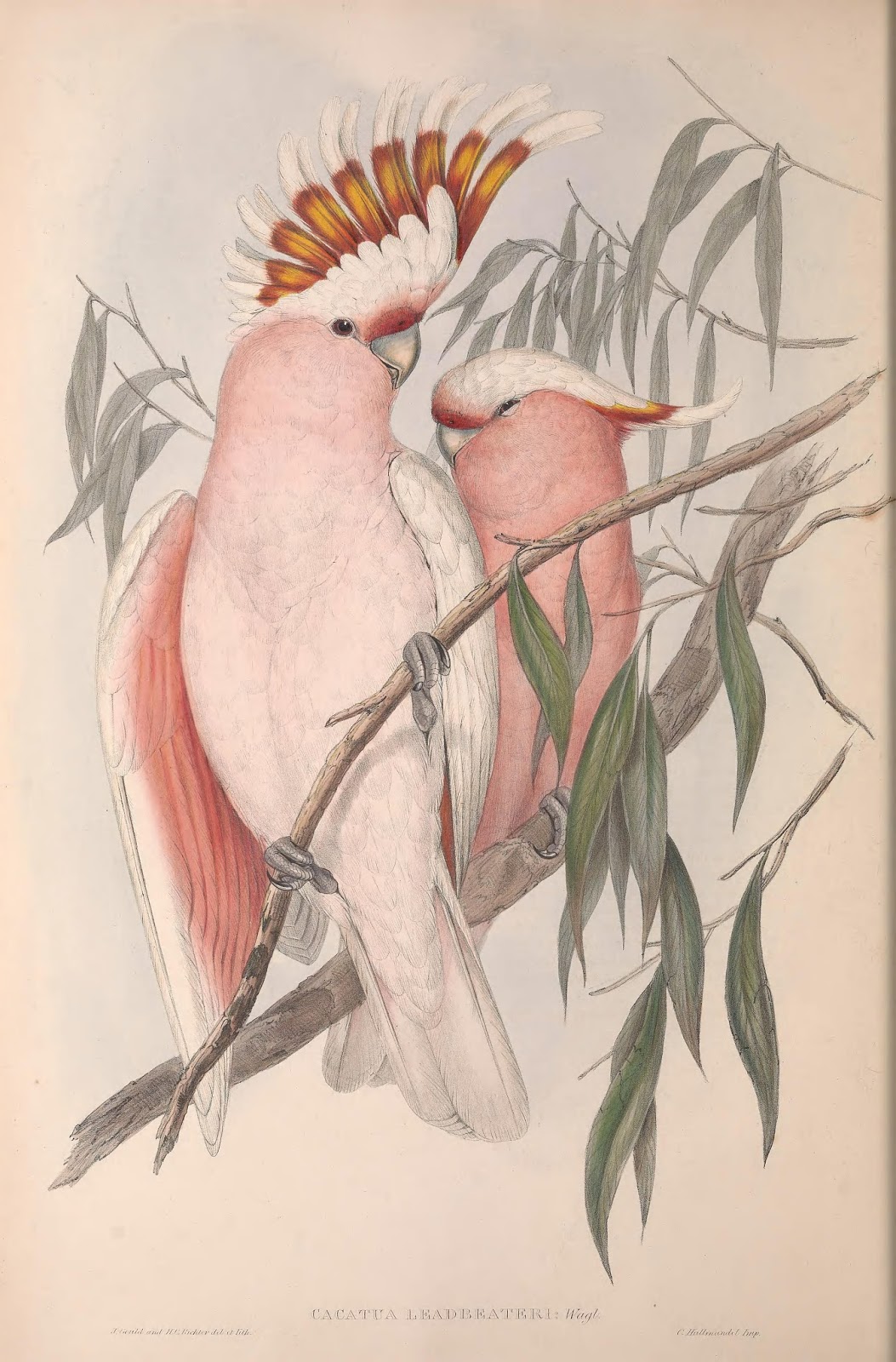
John Gould was an English ornithologist and bird artist who is famous for producing several magnificently-illustrated monographs on birds. One such work is The Birds of Australia, which was originally issued in 36 parts between 1840-48. Taken together, the title consists of 7 folio-sized volumes plus a supplement. It described all of the 681 Australian bird species then known, many of which were scientifically described for the first time. This title was digitized in BHL by Smithsonian Libraries.

View Full Size Image
Illustration by John Gould and H.C. Richter. Gould, John. The Birds of Australia. v. 2 (1848). http://www.biodiversitylibrary.org/page/48200584. Digitized by Smithsonian Libraries.

Gould’s original interest in Australian birds was sparked when his two brothers-in-law, Charles and Stephen Coxen, who had emigrated to Australia, sent him some specimens. Many of these he described in the 1837-38 work A synopsis of the birds of Australia, and the adjacent islands (Digitized in BHL by Museums Victoria).

In 1838, Gould, his wife Elizabeth, their eldest son, their nephew, Gould’s assistant John Gilbert, and two servants set sail for Australia so that Gould could undertake a more extensive work on Australian birds. During the 27 months that they were in Australia, Gould and his assistant collected some 800 bird and 70 quadruped specimens. Some 300 of these at the time were deemed new-to-science, although some of these are now recognized as subspecies.

View Full Size Image
Illustration by John Gould and Elizabeth Gould. Gould, John. The Birds of Australia. v. 3 (1848). http://www.biodiversitylibrary.org/page/48285735. Digitized by Smithsonian Libraries.

After returning to England, work began on the publication. The title’s crowning achievement is the beautiful lithographic illustrations. These were based on rough sketches by Gould that were worked up into paintings that were then reproduced through the process of lithography. The plates were printed in a single color by the firm of Hullmandel and Walton and then hand colored by a Mr. Bayfield.

View Full Size Image
Illustration by John Gould and H.C. Richter. Gould, John. The Birds of Australia. v. 5 (1848). http://www.biodiversitylibrary.org/page/48400938. Digitized by Smithsonian Libraries.

John’s wife Elizabeth, who produced most of the lithographs for John’s earlier works, executed 84 of the plates in this title. Sadly, she died of puerperal fever a year after returning to England. John enlisted Henry Constantine Richter to produce most of the remaining illustrations, although Edward Lear and Waterhouse Hawkins also contributed an illustration each. The first seven volumes were completed in 1848, but additional parts were later produced to form a supplementary volume to describe additional new species.

References

  • American Printing History Association. History of Printing Timeline. https://printinghistory.org/timeline/.
  • Leicester Print Workshop. A Step-by-Step Guide to Stone Lithography. http://www.leicesterprintworkshop.com/printmaking/step_by_step_guide_to_stone_lithography/.
  • The University of Glasgow. Library Special Collections Department. Book of the Month: The Birds of Australia. http://special.lib.gla.ac.uk/exhibns/month/july2005.html.
February 9, 2017by Grace Costantino
Blog Reel, Campaigns, Featured Books

Color Our Collections: The Art of Intaglio Printing

View Full Size Image

This year for Color Our Collections, we’ve produced a coloring book with illustrations from books that represent the evolution of the art of printing. This week on our blog, we’ll explore the books featured in the coloring book and the printing techniques used for the illustrations.

You can download our 2017 Color Our Collections coloring book here.

Learn more about Color Our Collections here.

The Art of Intaglio Printing

In the Intaglio family of printmaking, an image is incised into a surface, usually a metal plate. Intaglio includes such familiar processes as etching and engraving. In engraving, the image is physically carved into a plate using special tools like burins. In etching, an image is drawn onto the surface of a plate that is covered in wax. The stylus, used to draw the lines in the wax, exposes the metal of the image lines. The plate is then dipped in an acid bath. The acid etches the exposed image lines but does not affect the portions of the plate covered in wax.

Intaglio techniques were used for book illustration by the latter half of the 15th century and became the standard for illustrating books by the late 16th century. Intaglio was used predominantly until around the mid-19th century, when lithography started gaining ground.

This video from the Museum of Art, Rhode Island School of Design demonstrates the copper plate engraving process:

Catesby’s Copper Plate Etchings

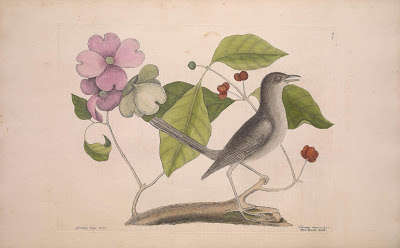
In the early eighteenth century, English naturalist Mark Catesby set foot in a New World. After spending the better part of ten years, spread across two separate trips, exploring and documenting North America’s rich biodiversity, he would eventually publish his research and original artworks as the first fully illustrated book on the flora and fauna of North America.

View Full Size Image
Eastern flowering dogwood (Cornus florida) and northern mockingbird (Mimus polyglottos). Catesby, Mark. The natural history of Carolina, Florida and the Bahama Islands. v. 1, ed. 1. pl. 27. Digitized by Smithsonian Libraries. http://biodiversitylibrary.org/page/40753198.

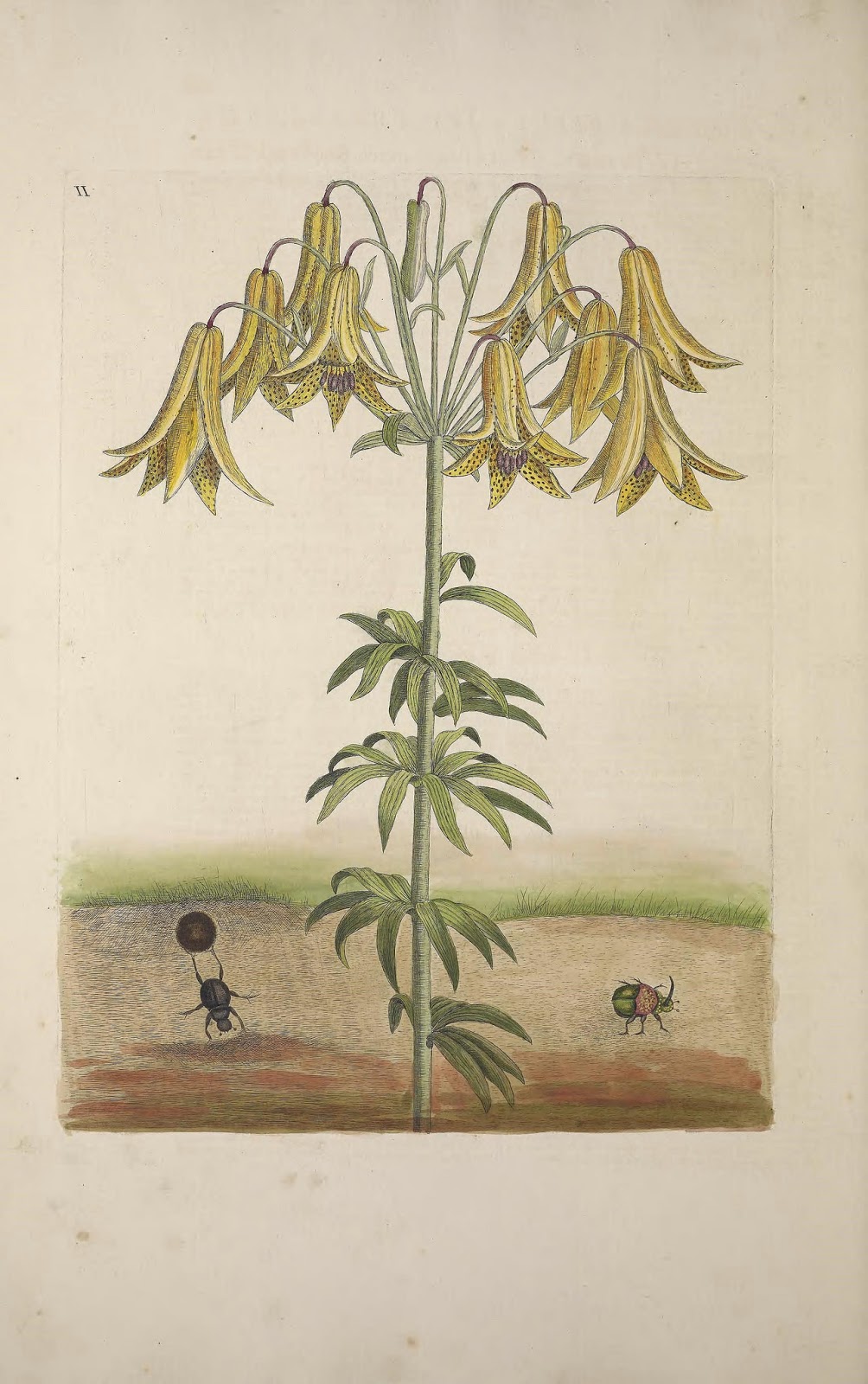
Published over eighteen years between 1729-1747, The Natural History of Carolina, Florida, and the Bahama Islands contains 220 plates based mostly upon Catesby’s own watercolors, which he worked up based on sketches he made in the field. The final publication was illustrated with copper plate etchings produced by Catesby himself. Catesby also hand-colored (maybe not all) the prints as well.

View Full Size Image
Canada lily (Lilium canadense), dung beetle (Canthon pilularis), and rainbow scarab beetle (Phanaeus vindex). Catesby, Mark.The Natural History of Carolina, Florida, and the Bahama Islands. v. 2, ed. 1. pl. 11. Digitized by Smithsonian Libraries. http://www.biodiversitylibrary.org/page/40680431.

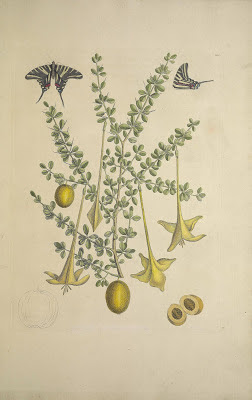
Catesby’s work was also extremely influential to the work of Carl Linnaeus, whose binomial system for naming plants and animals is still in use today. Linnaeus cited Catesby extensively in his Species Plantarum (1753) and Systema Naturae (1758). For many of Linnaeus’ species names, Catesby is his only reference, and thus Catesby’s illustrations in Natural History serve as the type for many of Linnaeus’ species.

View Full Size Image
Lily thorn (Catesbaea spinosa). Pictured with zebra swallowtail (Protographium marcellus). Catesby is the only source that Linnaeus cited when naming Catesbaea spinosa in Species Plantarum (1753). This engraving serves as the type for this name. Catesby, Mark. The Natural History of Carolina, Florida, and the Bahama Islands. v. 2, ed. 1. pl. 100. Digitized by Smithsonian Libraries. http://biodiversitylibrary.org/page/40680398.

The first edition of Catesby’s Natural History in BHL, which was used to produce the coloring pages in this year’s coloring book, was digitized from the collections of Smithsonian Libraries. This copy is one of only a few known perfect copies of this first edition and the only one known to contain all three pieces of ephemera relating to the production of the work.

Note: This post was edited on 8 February 2017.

References

  • American Printing History Association. History of Printing Timeline. https://printinghistory.org/timeline/.
  • National Gallery of Art. Colorful Impressions. https://www.nga.gov/exhibitions/clrflimpr-tech.shtm.
  • Nelson, E C, and David J. Elliott. The Curious Mister Catesby: A “truly Ingenious” Naturalist Explores New Worlds. 2015. Print.
February 8, 2017by Grace Costantino
Page 18 of 71« First...10«17181920»304050...Last »

Help Support BHL

BHL's existence depends on the financial support of its patrons. Help us keep this free resource alive!

search

About BHL

The Biodiversity Heritage Library (BHL) is the world’s largest open access digital library for biodiversity literature and archives. BHL operates as a worldwide consortium of natural history, botanical, research, and national libraries working together to digitize the natural history literature held in their collections and make it freely available for open access as part of a global “biodiversity community.”

Join Our Mailing List

Sign up to receive the latest news, content highlights, and promotions.

Subscribe Now

Subscribe to Blog via Email

Enter your email address to subscribe to this blog and receive notifications of new posts by email.

Join 319 other subscribers

Subscribe to Blog Via RSS

Subscribe to the blog RSS feed to stay up-to-date on all the latest BHL posts.

Access RSS Feed

Inspiring Discovery through Free Access to Biodiversity Knowledge.

The Biodiversity Heritage Library makes it easier than ever for you to access the information you need to study and explore life on Earth…for free, anytime, anywhere.


64+ Million Pages of
Biodiversity Literature Online.

EXPLORE

Tools and Services
to Transform Research.

EXPLORE

300,000+
Illustrations on Flickr.

EXPLORE

ABOUT | HARMFUL CONTENT | PRIVACY | SITE MAP | TERMS OF USE