Biodiversity Heritage Library - Program news and collection highlights from BHL
  • Home
  • News
  • Featured Books
    • All Featured Books
    • Book of the Month Series
    • BHL at 20
  • User Stories
  • Campaigns
    • Fossil Stories
    • Garden Stories
    • Monsters Are Real
    • Page Frights
    • Her Natural History
    • Earth Optimism 2020
  • Tech Blog
  • Visit BHL
Home
News
Featured Books
    All Featured Books
    Book of the Month Series
    BHL at 20
User Stories
Campaigns
    Fossil Stories
    Garden Stories
    Monsters Are Real
    Page Frights
    Her Natural History
    Earth Optimism 2020
Tech Blog
Visit BHL
  • Home
  • News
  • Featured Books
    • All Featured Books
    • Book of the Month Series
    • BHL at 20
  • User Stories
  • Campaigns
    • Fossil Stories
    • Garden Stories
    • Monsters Are Real
    • Page Frights
    • Her Natural History
    • Earth Optimism 2020
  • Tech Blog
  • Visit BHL
Biodiversity Heritage Library - Program news and collection highlights from BHL
Blog Reel, User Stories

Expanding Library Impact through Open Access Digitization

View Full Size Image
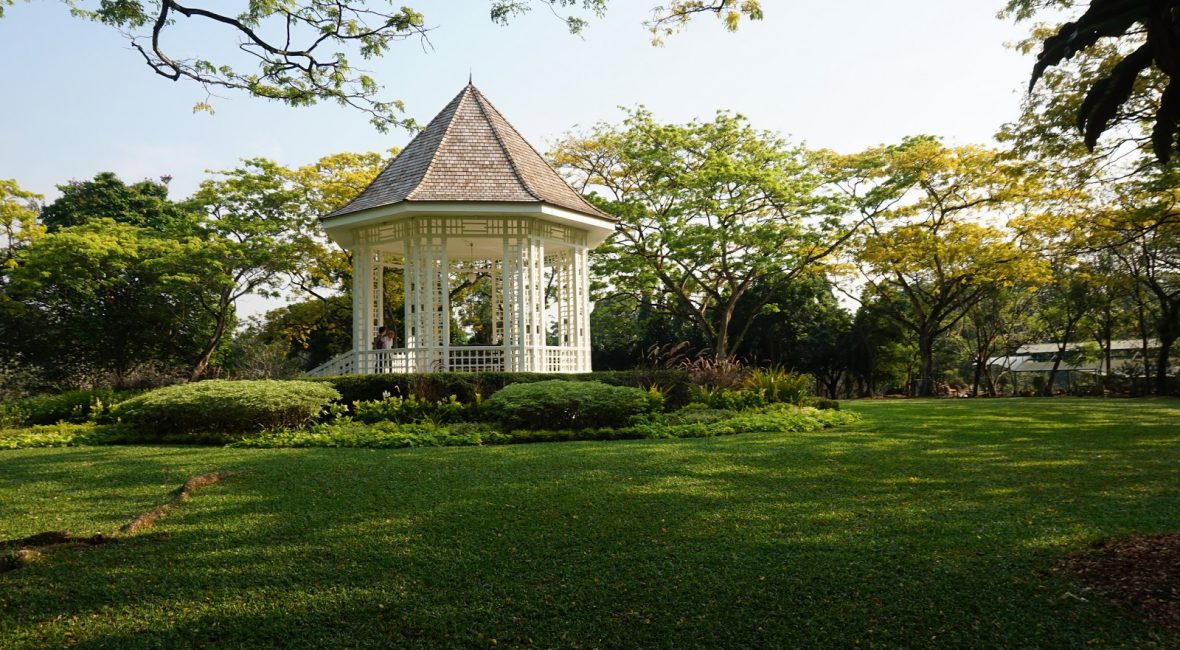
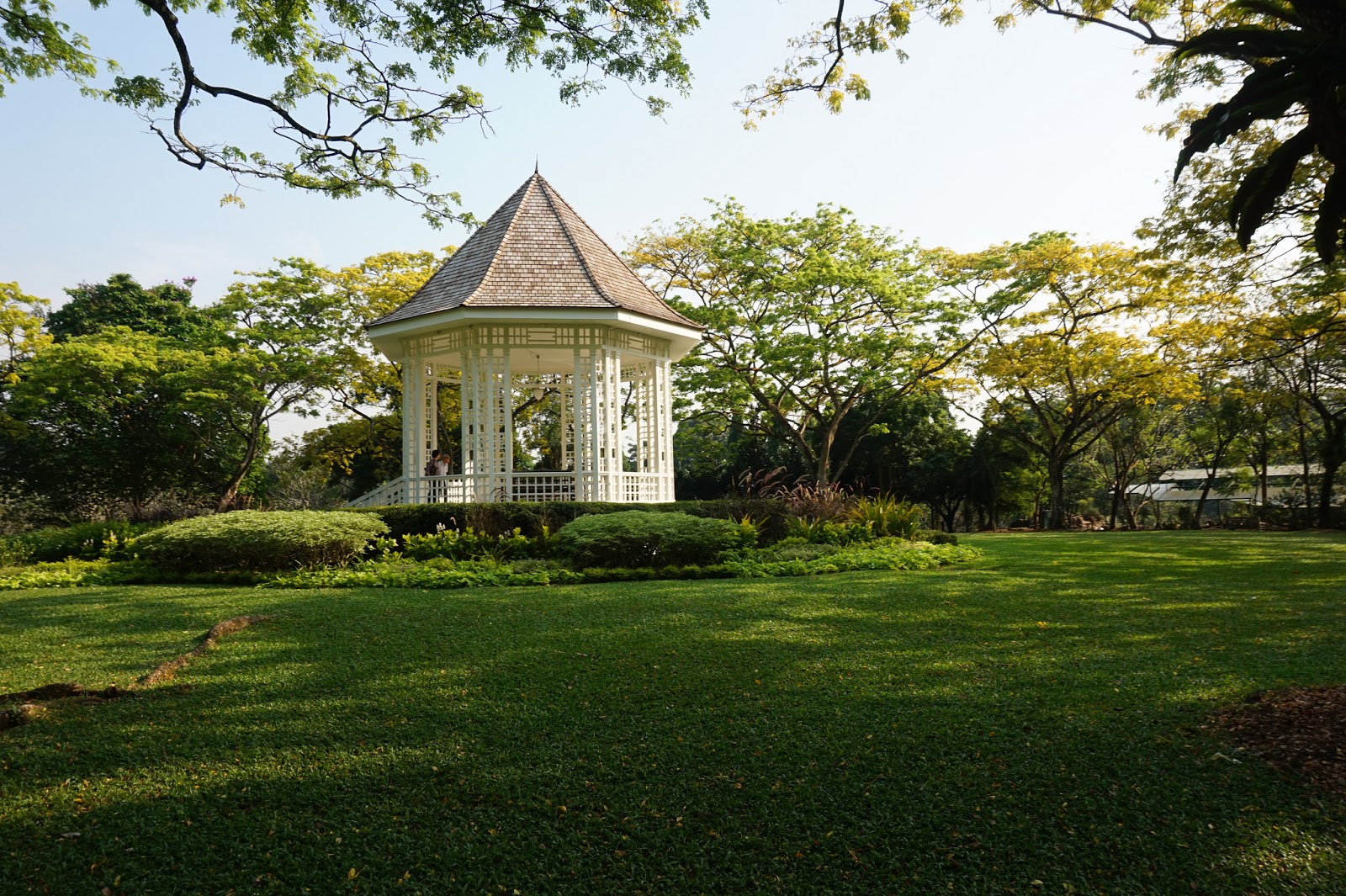
Bandstand at the Singapore Botanic Gardens. Photo by Martin Kalfavotic.

Located in central Singapore, just minutes away from the city’s main shopping district, sits the first and only tropical botanic garden listed as an UNESCO World Heritage Site. Established at its present site in 1859, the Singapore Botanic Gardens (SBG) covers 82 hectares and is home to thousands of plant species.

Since 1875, the SBG Library has supported research at the Gardens. Over the years, the Library has amassed a large collection of rare and scholarly literature and artworks that are housed in climate-controlled spaces. Access to these materials has traditionally been limited to privileged, on-site researchers. Recently, to increase the accessibility and impact of these collections, the SBG Library has embarked on an extensive preservation and digitization program.
View Full Size Image
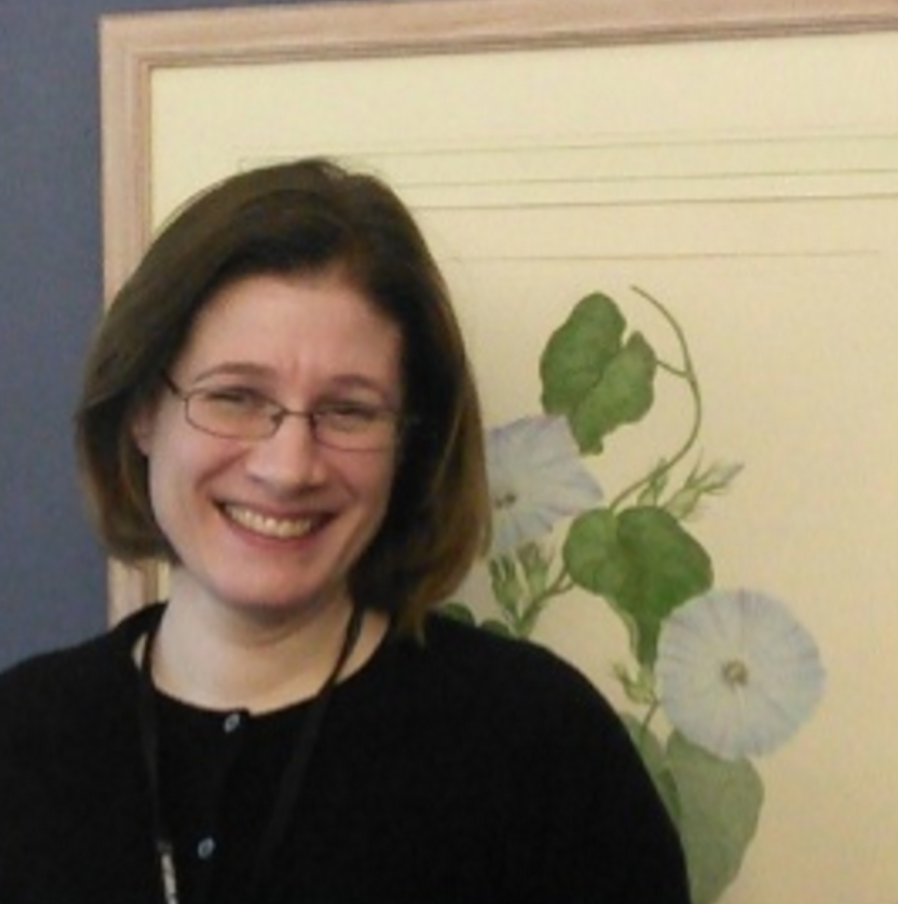
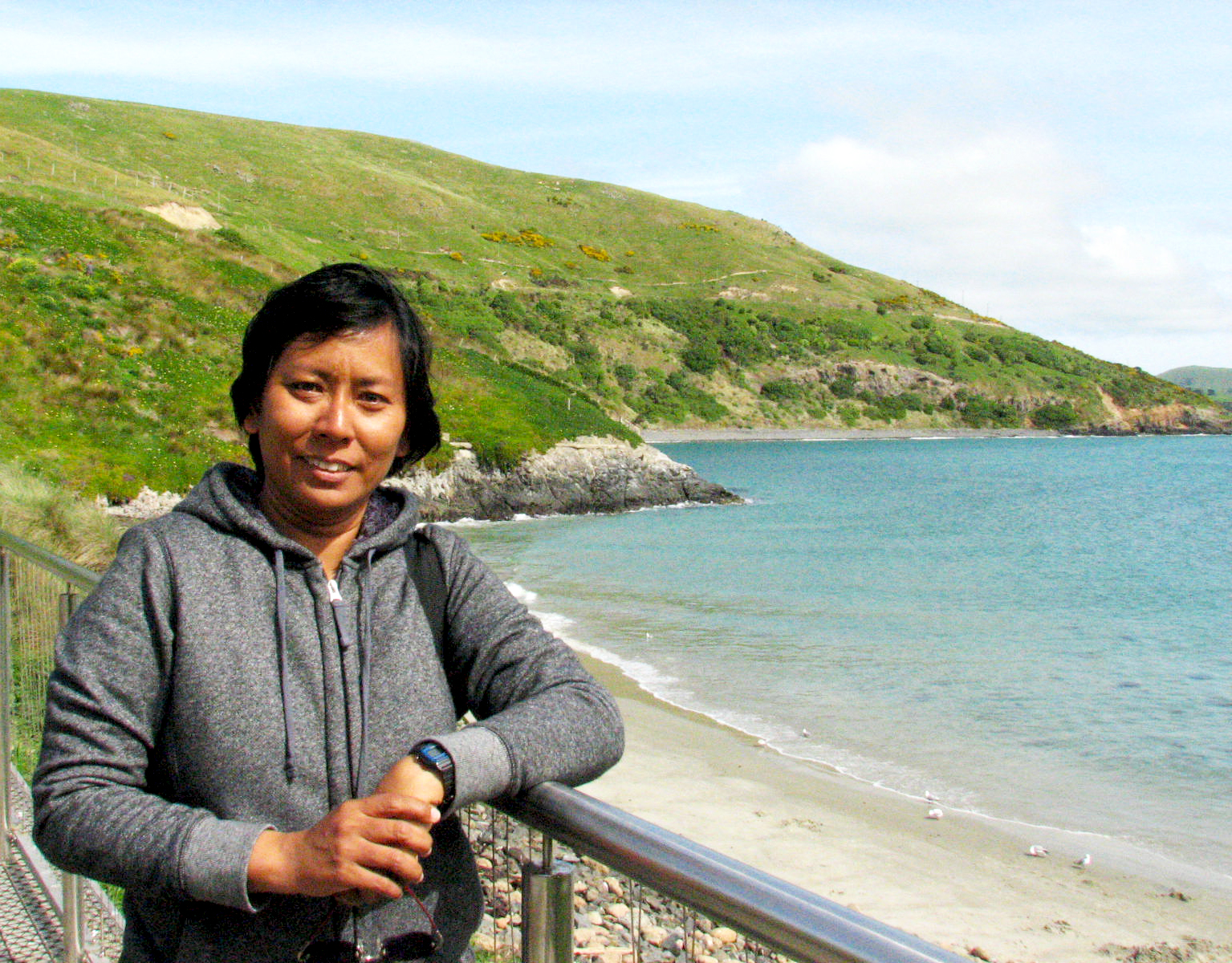
Dr. Nura Abdul Karim, Deputy Director of Library, Training, and External Relations at Singapore Botanic Gardens.

“A thorough understanding of biodiversity in Singapore and the Southeast Asia region relies both on the study of the plants and animals in the region and also on the accumulated knowledge of researchers who have gone before us,” asserts Dr. Nura Abdul Karim, Deputy Director of Library, Training, and External Relations at SBG. “SBG Library believes that digital access is an important avenue for sharing knowledge and information in this Computer Age.”

To that end, SBG is participating in BHL Singapore, which is led by the National Library Board, Singapore. To date, SBG Library has digitized over 8,000 pages for BHL.

“As custodian of this wealth of biodiversity literature, SBG Library believes that these important legacy works need not only be restored but also preserved and made available through the digital access platform of the Biodiversity Heritage Library,” says Abdul Karim. “BHL will allow far greater access to academics, researchers and students, and possibly even to the global public, than was ever possible before.”
View Full Size Image
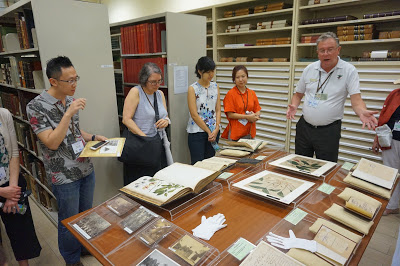
Tour of the Singapore Botanic Gardens Library by Dr. Nigel Taylor. Photo by Martin R. Kalfatovic.

As a participant in BHL Singapore, the SBG Library is not only digitizing its collections for BHL, but the Gardens also hosted the BHL Open Day this past March as part of the 2017 BHL Annual Meeting festivities. During the event, local researchers spoke about the impact that open access to biodiversity literature through BHL has on their research.

“We believe that by sharing important collections in BHL and allowing free digital access to such materials, we will greatly assist researchers in furthering their own research on biodiversity in the Southeast Asian region,” affirms Abdul Karim. “Information inequality between developing and developed world researchers can be narrowed with the availability of open access digital repositories.”

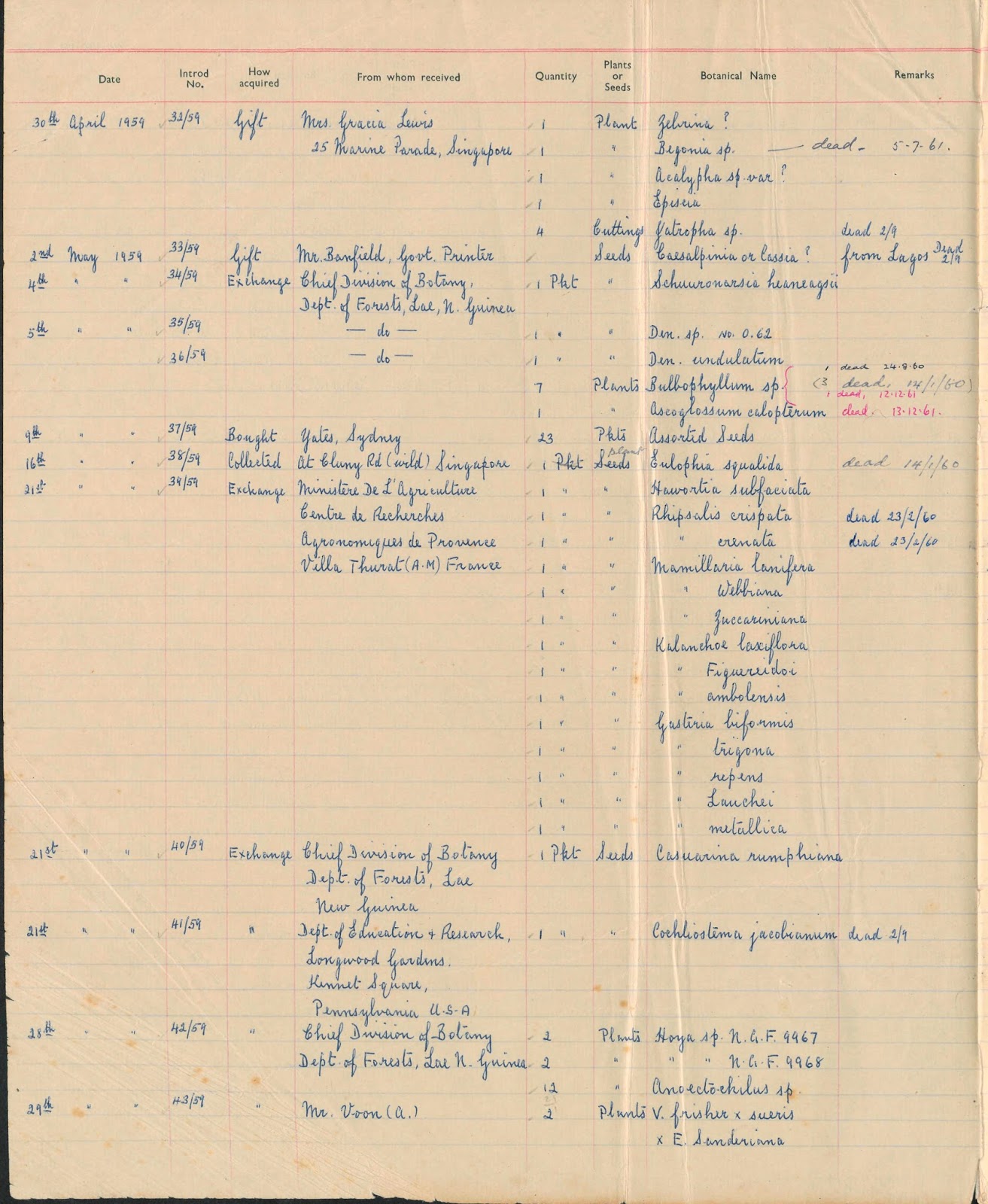
Content digitized by SBG Library to date includes the Gardens’ Bulletin as well as registers of the plants and seeds acquired by the Gardens. In the future, the Library plans to contribute unique field notes from the Gardens’ collections, including those by orchid botanist Cedric Errol Carr, which are currently being transcribed as part of The Citizen Archivist Project at the National Archives of Singapore.
View Full Size Image
Page from Plants and seeds inward register, 2 January 1959-1972. Digitized by Singapore Botanic Gardens, National Parks Board Singapore. http://www.biodiversitylibrary.org/page/50744514.

Dr. Abdul Karim is confident that this digitization will have a significant impact on local and global research.

“Very few libraries in the world have resources that would enable all of the researchers that they serve to be able to conduct their studies unencumbered by lack of vital literature,” says Abdul Karim. “Access to a wider array of literature through BHL can have a profound and positive impact on biodiversity, as research can be more wide ranging, accurate and speedy, and the data vital in many fields of science and conservation can be published in a much shorter timeframe.”

Indeed, user testimonials illustrate how BHL increases the efficiency and effectiveness of research around the world. With the help of partners such as SBG Library, BHL’s growing collections will continue to empower research on a global scale. Dr. Abdul Karim and her Singapore colleagues share this conviction.

“SBG Library believes that BHL, with its rich digital repository of biological information, will continue to play an important role in botanical research and has indirectly also become a platform for long-term preservation of historical and legacy biodiversity literatures.”

______________________________________

This post may contain the personal opinions of BHL users or affiliated staff and does not necessarily represent the official Biodiversity Heritage Library (BHL) position on these matters.


June 8, 2017by Grace Costantino
BHL News, Blog Reel

New Designs to Help Save Biodiversity: Shop the New BHL Store Collection Today

View Full Size Image

We’ve launched a whole new collection of product designs in the BHL Store! Check out the new designs and start shopping today!

Products in this collection are original designs inspired by the BHL brand and created by BHL Marketing Intern Carolina Murcia.

Shop the BHL New Designs collection today!

Your purchase will have a lasting, positive impact on our planet, because 100% of the proceeds will be used to help us digitize more books for BHL. Researchers around the world rely on the information contained in books and archival materials to study and conserve biodiversity. Learn more about how BHL helps save biodiversity.

View Full Size Image
You’ll find this badge in our store and on our marketing materials. It means that your purchase will help support research around the world. SHOP TODAY and help save biodiversity!

Visit the BHL New Designs collection today and do some shopping that’s good for the planet.

May 15, 2017by Grace Costantino
Blog Reel, User Stories

Old Literature, New Discoveries: BHL Supports Cutting Edge Whale Research

In the early 20th century, the British Colonial Office and the Discovery Committee of the British Government undertook a series of major investigations into the biology of whales in the Southern Hemisphere. Using ship- and shore-based equipment (including whaling stations on South Georgia Island operated by the UK and other nations), these Discovery Investigations, as they were called, significantly advanced human knowledge of whale morphology and ecology.

The results of the Investigations were presented within the 37 volume series entitled the Discovery Reports. Groundbreaking for their time, these Reports are still important for cetacean research today.

“The data collected and published in the Reports were unique because they represented, in every case, a one-time, time-stamped opportunity to record the precise dimensions, weights, gut contents and many other details gathered as part of whaling activities,” explains Dr. Nicholas Pyenson, Curator of Fossil Marine Mammals at the Smithsonian’s National Museum of Natural History (NMNH).

View Full Size Image
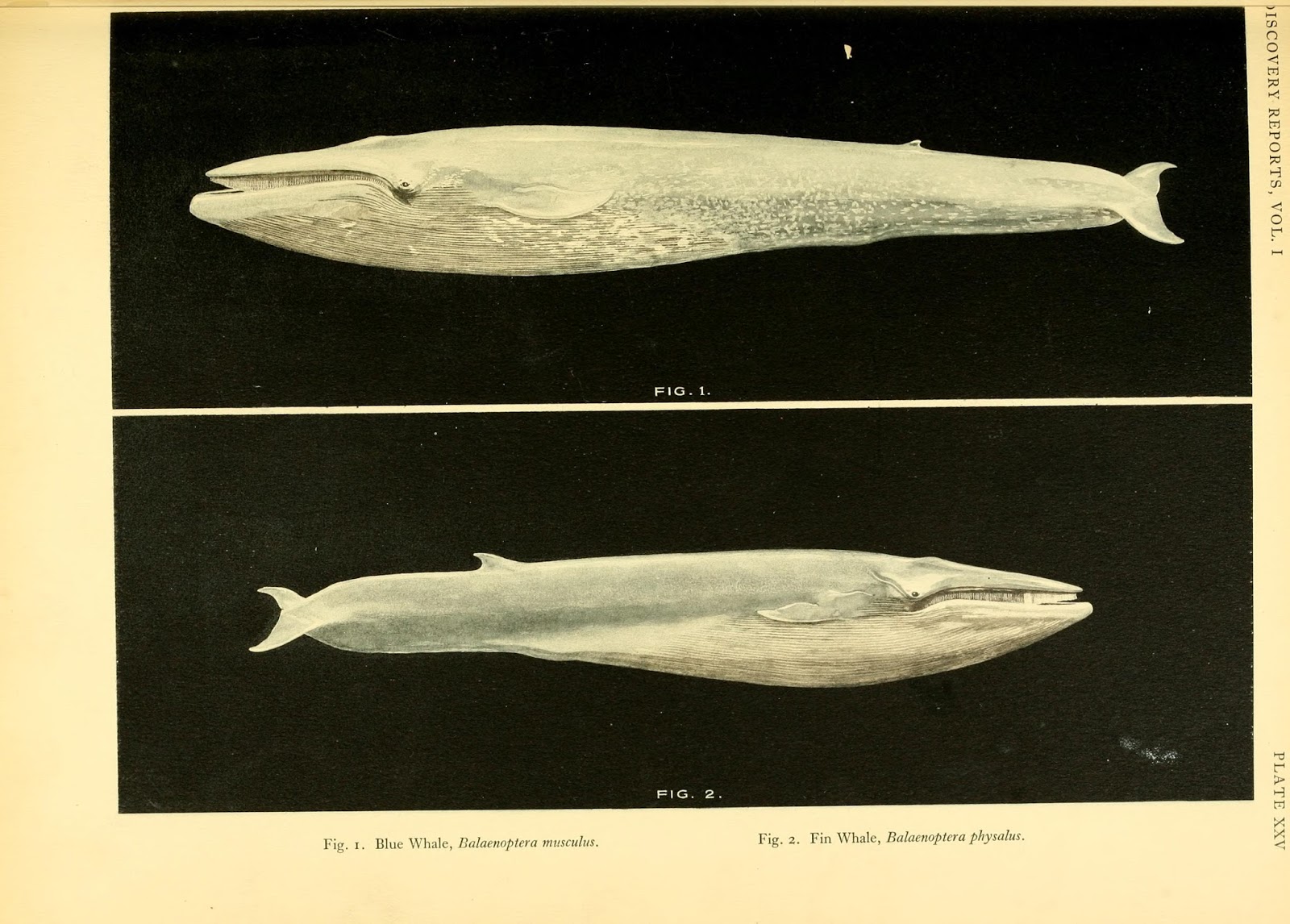
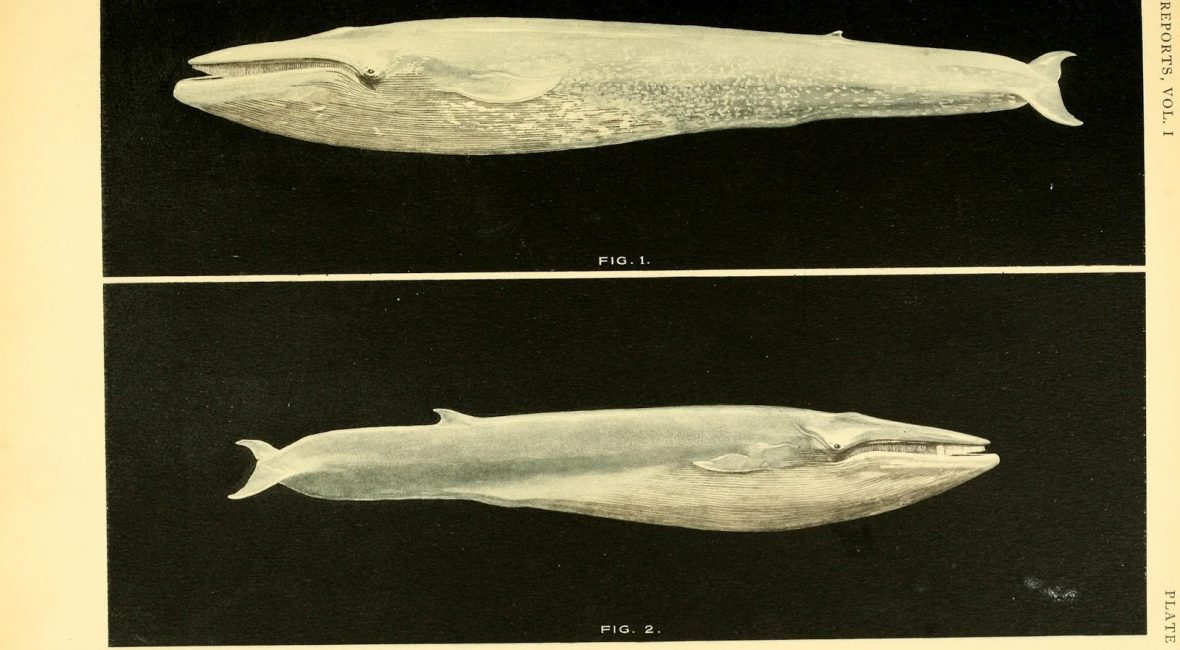
Mackintosh NA, Wheeler JFG (1929) Southern blue and fin whales. Discovery Reports 1:257—510. http://www.biodiversitylibrary.org/page/15917732. Digitized by Smithsonian Libraries.

Pyenson has used the data in the Reports to inform several recent studies. For example, he and colleague Simon Sponberg used data on total length and adult body mass for Southern blue and fin whales, published in 1929 as part of the Discovery Reports, to help develop and test regression methods for reconstructing the body size of extinct whales. Their findings, published in 2011 in the Journal of Mammalian Evolution, provided major insight into studying the evolution of cetacean body size.

View Full Size Image
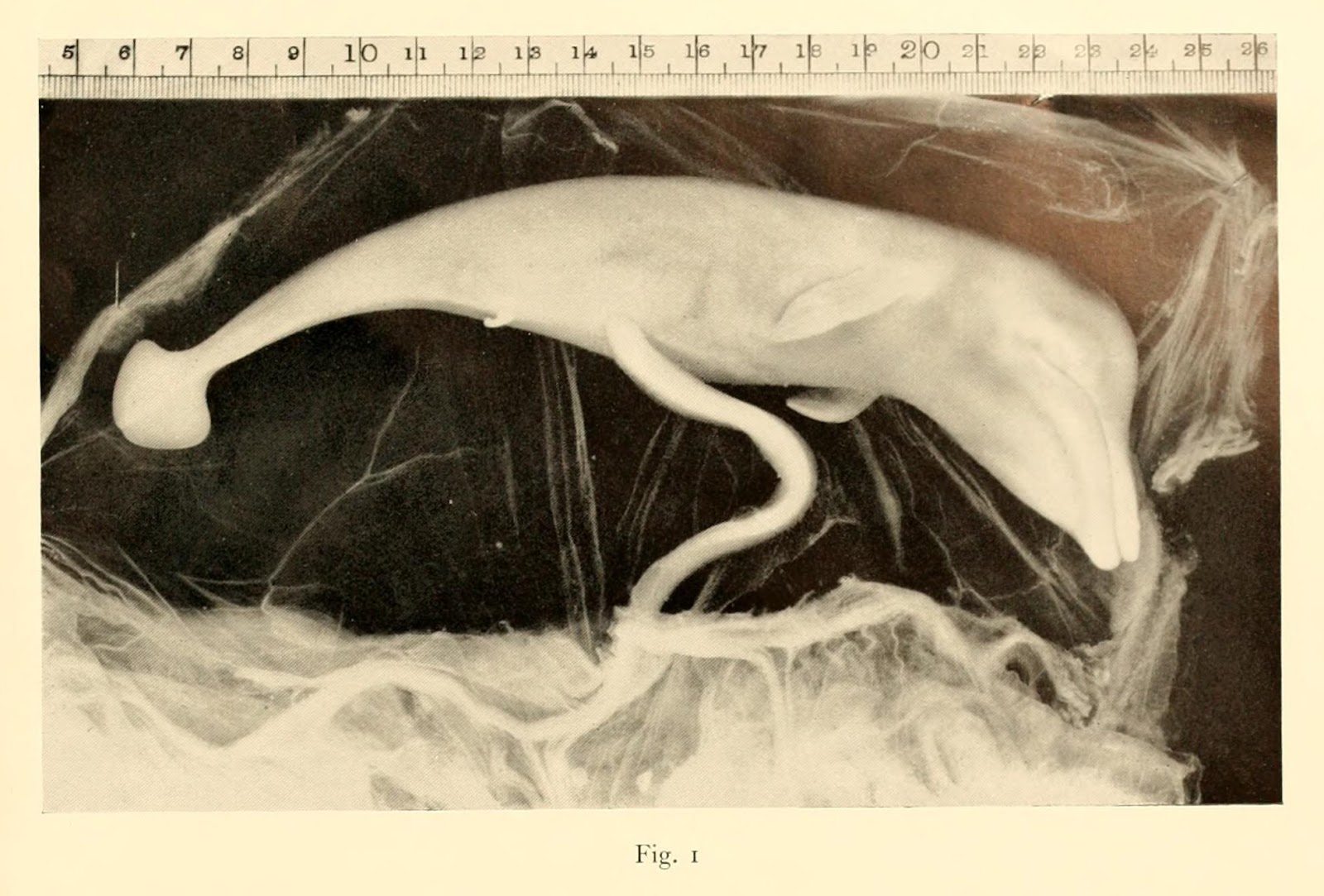
Fin whale fetus. Laws RM (1959) The foetal growth rates of whales with special reference to the fin whale Balaenoptera physalus Linn. Discovery Reports 29: 281–308. http://www.biodiversitylibrary.org/page/5569026. Digitized by MBLWHOI Library.

More recently, while researching the evolution of whale hearing, Maya Yamato and Pyenson used data on the fetal growth rates of whales, published in 1959 as part of the Discovery Reports, to gain insight into the maturation of the ear in baleen and toothed whales. Their research, published in 2015 in PLOS ONE, traces the development of an evolutionarily novel feature in cetaceans – the use of an acoustic funnel, rather than an ear canal, for hearing.

“The historic information in the Reports is so valuable for a variety of questions about the evolution, anatomy, and ecology of large whales,” asserts Pyenson.

View Full Size Image
Dr. Nicholas Pyenson. Selfie from a seakayak in Sitka Sound, Alaska.

Pyenson has been studying marine mammals and other marine vertebrates for over 15 years. He’s published pioneering research on the evolution and diversification of marine mammalian lineages and has used revolutionary techniques like 3D modeling to uncover new insights into the anatomy and transformation of this group. He’s even shared some of his research during past BHL-related events, including live webcasts for the #FWTrueLove and #FossilStories campaigns.

Pyenson’s scientific achievements, including the use of emerging digital tools to expand public access to fossils, earned him the coveted Presidential Early Career Award for Scientists and Engineers (PECASE). He is the first NMNH scientist to receive this award, which is the “highest honor bestowed by the United States Government on science and engineering professionals in the early stages of their independent research careers.”

While Pyenson has embraced many novel research techniques, the historic data found in publications like the Discovery Reports underpins much of his work. Thanks to the digital open access provided by the Biodiversity Heritage Library (BHL), it’s easier than ever to integrate these resources into modern research processes.

“As a free, mobile archive for natural history literature, BHL is ideal for 21st century research, which can happen on the field, in a museum, or at a coffee shop, as long as there’s internet connectivity,” lauds Pyenson.

Pyenson began using BHL nearly ten years ago, and over the past decade, it has had a major impact on his – and his colleagues’ – research.

“BHL supercharges the speed and efficiency of scholarly research, especially in the natural sciences where old literature sometimes contains the only information on a topic, taxon, geographic locality or collector,” says Pyenson. “And because BHL is open-access, I know firsthand that many of my international colleagues have dramatically better access to the literature covered in its database than more recent journals locked behind pay-walls.”

Pyenson uses BHL at least once a week, obtaining descriptions, measurements, and detailed views of morphology on fossil or modern specimens. The usability of the website, and the fidelity and quality of the scans, allow him to access and download information that is critical to his work.

“I think BHL’s interface is really wonderful. The links are crisp and easy to find and share. I especially enjoy the selectivity of being able to download just a few pages or only a specific article from an issue.”

View Full Size Image
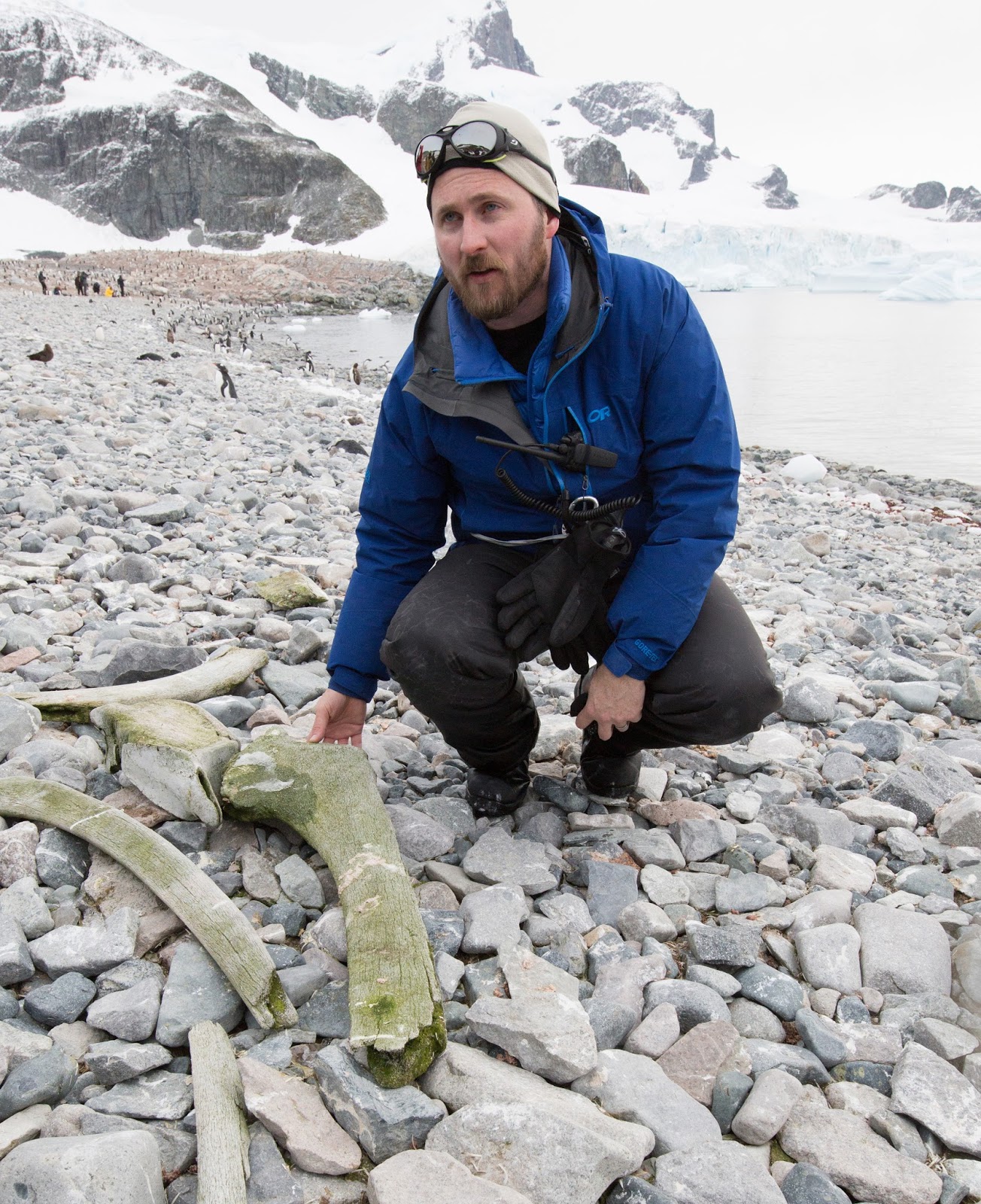
Dr. Nicholas Pyenson at Cuverville Island, Antarctica. Photo credit: Martha Stewart.

Given the significant impact that BHL has had on Pyenson’s work, he is anxious that more people be made aware of the vast abundance – and importance – of this free and open access collection.

“We need to get the word out. Old literature matters,” asserts Pyenson.

And matter it does. As Dr. Pyenson’s experience demonstrates, by providing a wealth of data on species morphology, phylogeny, and ecology, historic literature forms the foundation for the investigation of modern and ancient biodiversity. By making this content globally accessible to anyone with an Internet connection, BHL is helping to advance scientific research and inspire discovery of the natural world.

You can help support global research through a tax-deductible donation to BHL. With your help, we can continue to democratize access to information about biodiversity and empower scientific research on a global scale.

______________________________________

This post may contain the personal opinions of BHL users or affiliated staff and does not necessarily represent the official Biodiversity Heritage Library (BHL) position on these matters.

May 11, 2017by Grace Costantino
BHL News, Blog Reel

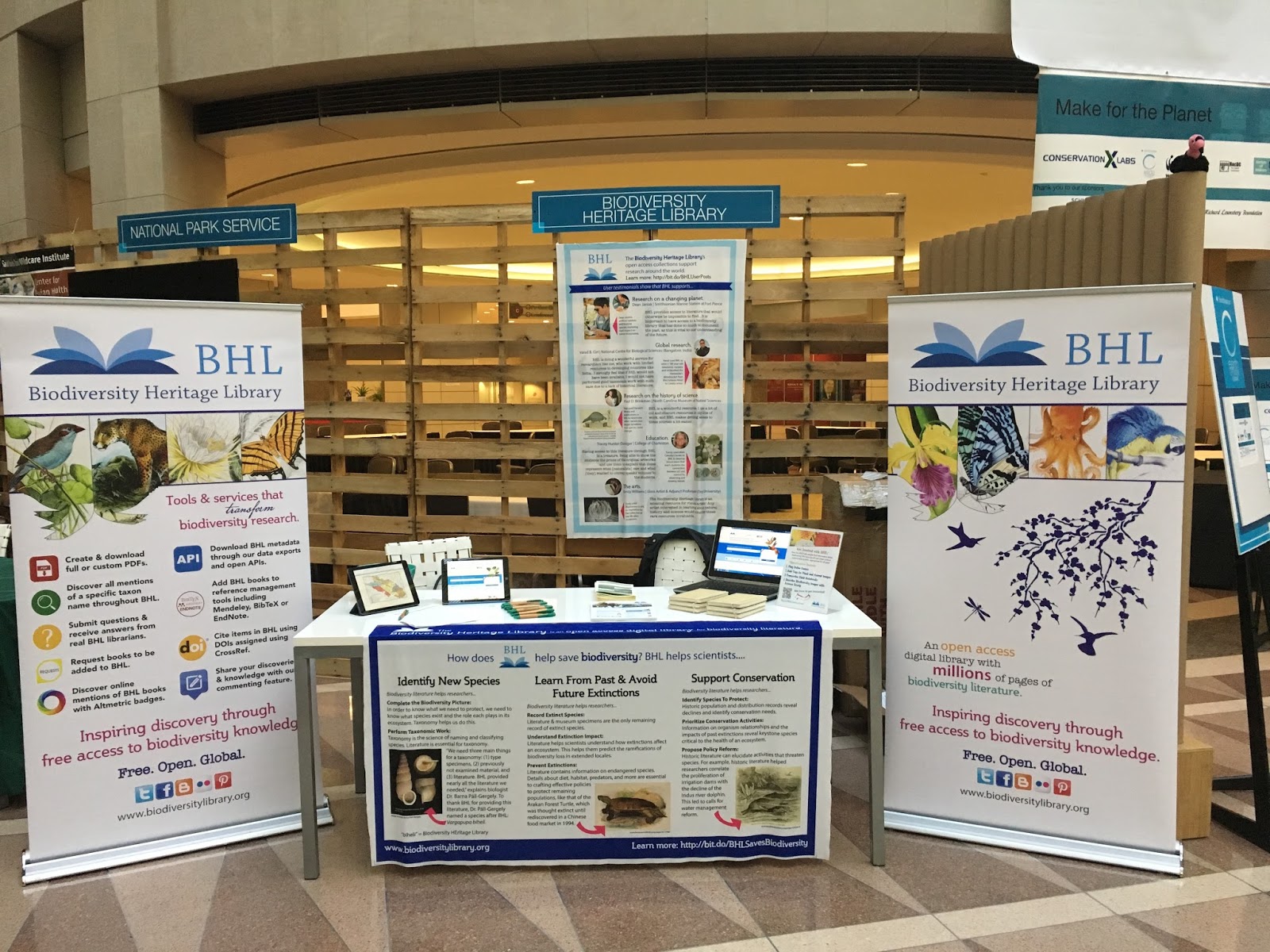
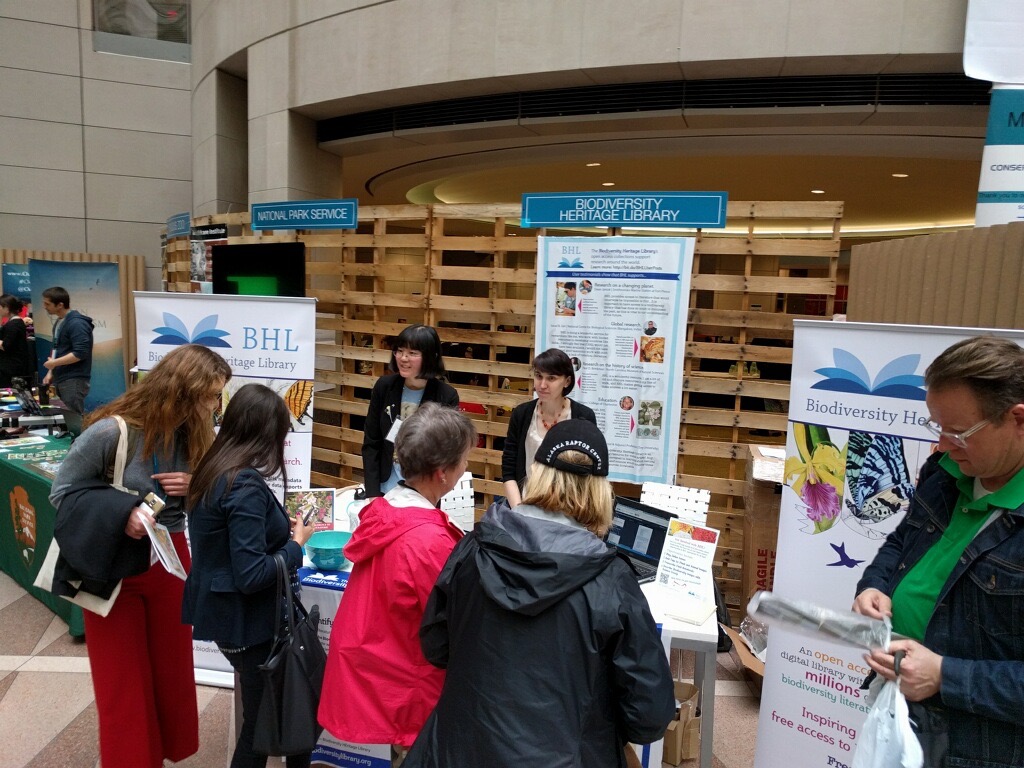
BHL Booth at the Earth Optimism Summit

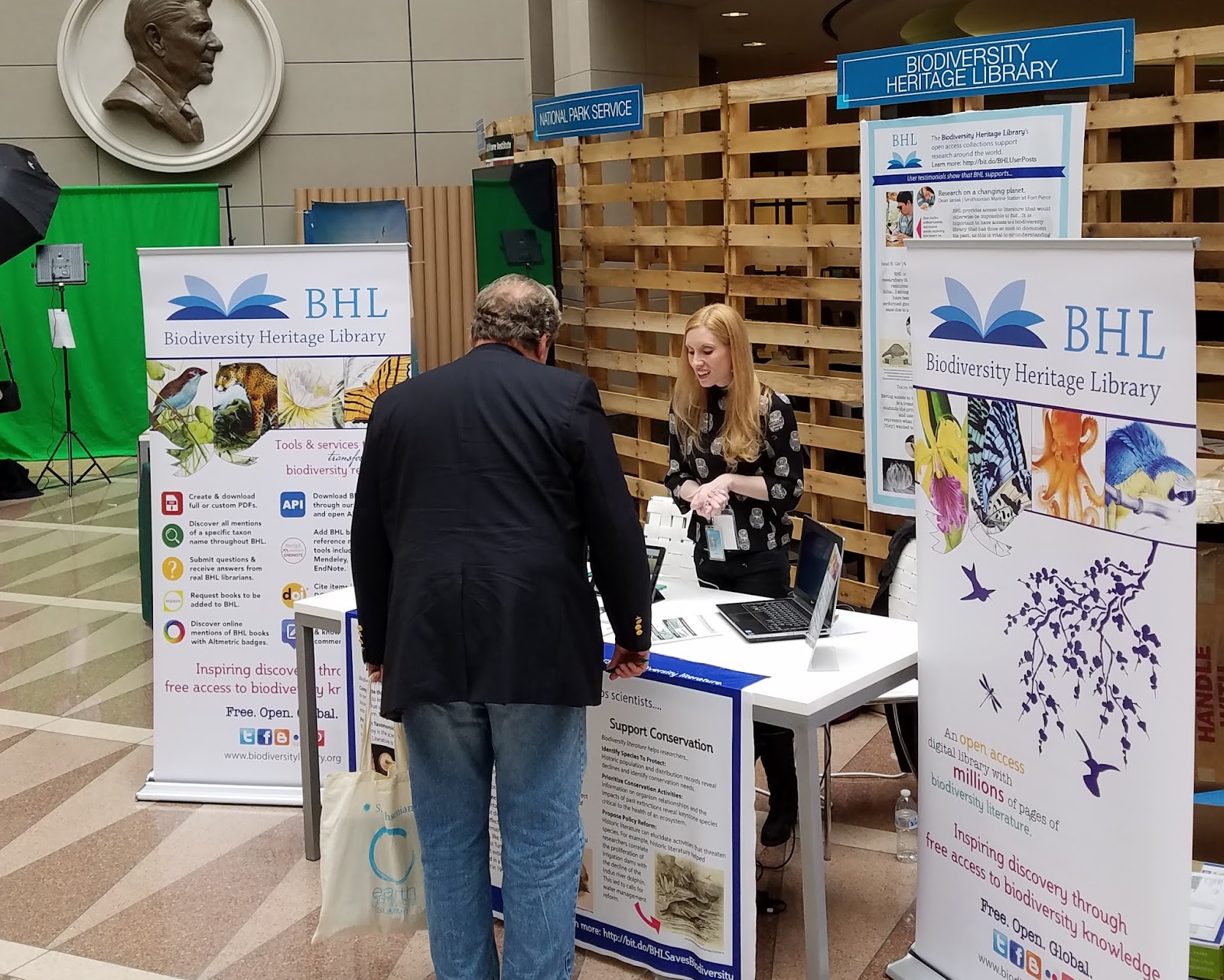
​This Earth Day weekend, the Earth Optimism Summit in Washington, D.C. celebrated conservation successes and fueled discussions about how to expand conservation impact. Organized by the Smithsonian, the three-day event (21-23 April) brought together representatives from a wide array of fields for a series of presentations relaying over 100 conservation success stories. The Summit also included a public Innovation Commons event featuring exhibits showcasing the ways that a variety of organizations and projects support conservation and help protect biodiversity.

View Full Size Image
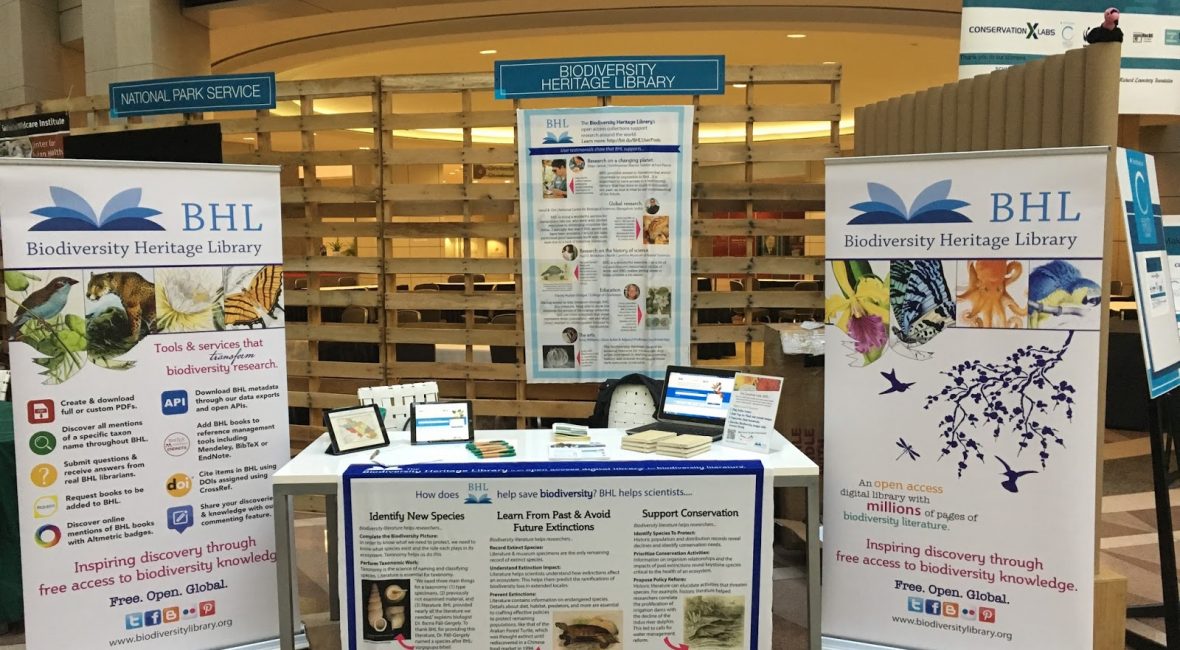
BHL booth at the Earth Optimism Summit in Washington, DC, 21-23 April 2017. Image credit: Grace Costantino.

The Biodiversity Heritage Library participated in the Innovation Commons with a booth highlighting the many ways that BHL helps save biodiversity by supporting research around the world. Over the three days of the Summit, staff from BHL, Smithsonian Libraries, and the Library of Congress (both BHL Member libraries) shared BHL resources and impact stories with over 250 visitors. As the Innovation Commons event was open to the public, booth staff interacted not only with Summit attendees, but also members of the public, including participants of the March for Science on 22 April.

View Full Size Image
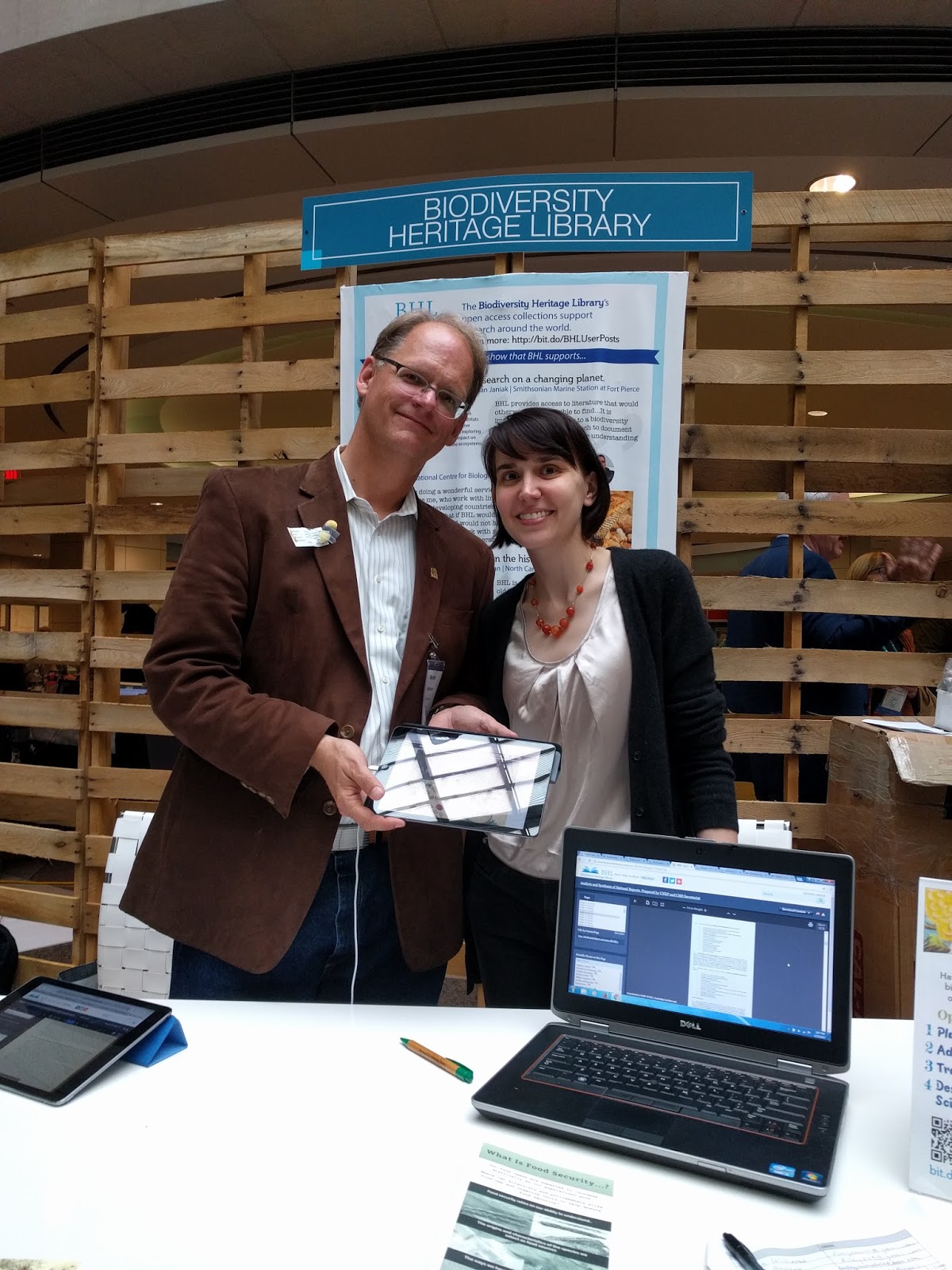
Amy Zhang (left; BHL intern at Library of Congress) and Carolyn Sheffield (right; BHL Program Manager) at the BHL booth on 22 April 2017. Image Credit: Martin Kalfatovic.

Using posters showcasing BHL’s impact on conservation and user stories from around the world, as well as through hands-on demos using the laptop and ipads at the booth, staff introduced many new people to BHL’s collections, tools and services. Many visitors expressed awe and appreciation for the wealth of biodiversity resources available to them through BHL, with more than one person expressing disbelief that they had previously been unaware of BHL’s existence.

View Full Size Image
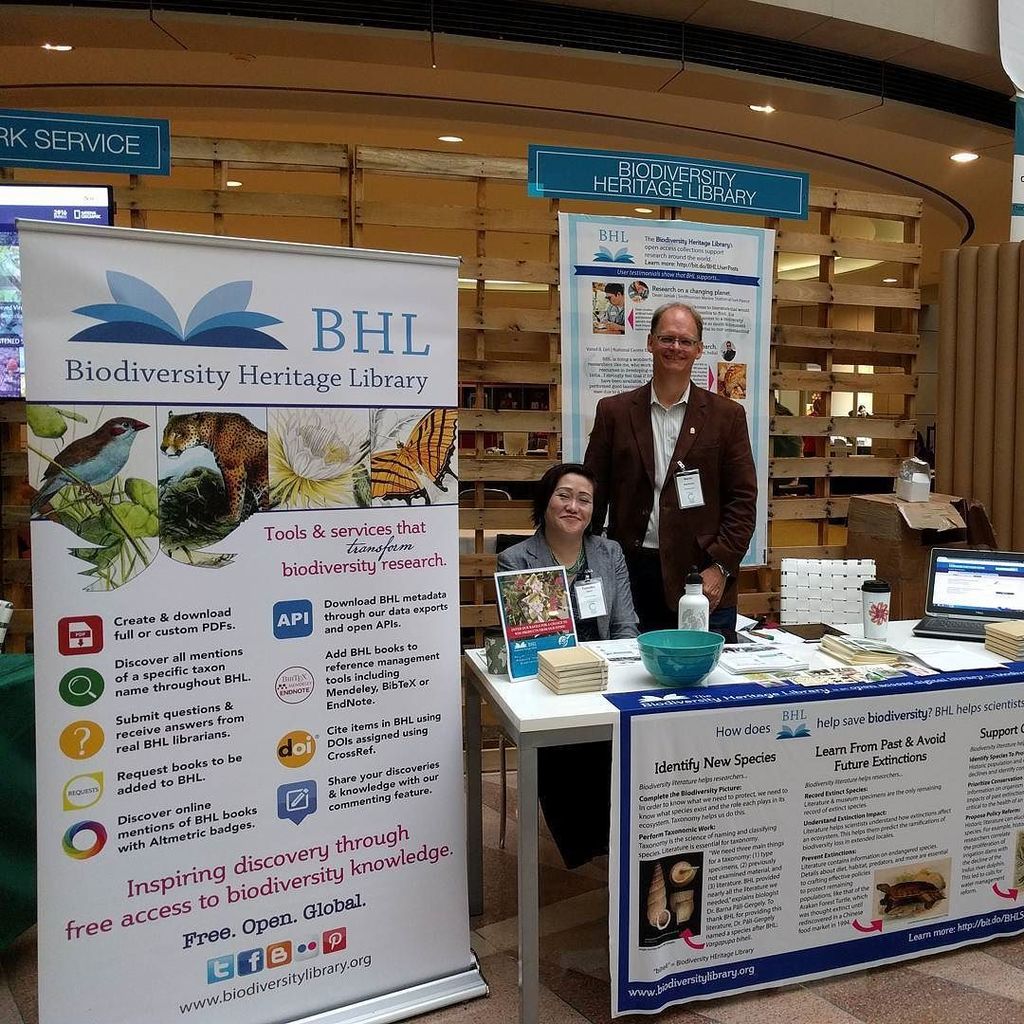
Tomoko Steen (left; Senior Research Specialist, Science, Technology, and Business Division, Library of Congress) and Martin Kalfatovic (right; BHL Program Director) at the BHL booth on 22 April. Image credit: Martin Kalfatovic.

BHL also partnered with Scientific Collections International for booth content. SciColl is a global consortium devoted to promoting the use and impact of object-based scientific collections across disciplines. Last September, BHL participated in SciColl’s Food Security Workshop at the National Agricultural Library, which brought together stakeholders to talk about the ways that scientific collections (including literature) can support food security. Booth staff distributed brochures summarizing the results of this workshop.

View Full Size Image
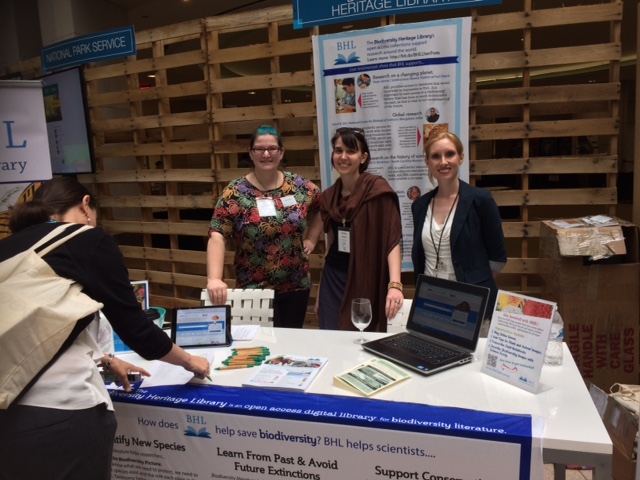
Bonnie White (left; Library Technician, Smithsonian Libraries), Carolyn Sheffield (center; BHL Program Manager) and Grace Costantino (right; BHL Outreach and Communication Manager) at the BHL booth on 21 April. Image credit: Barbara Ferry.

We would like to extend a special thanks to each volunteer who helped share BHL’s free and open collections with Earth Optimism visitors. Smithsonian Libraries staff at the booth included Kristen Bullard (Librarian), Barbara Ferry (Head, Natural and Physical Sciences Department, SIL), Gil Taylor (Supervisory Librarian), Bonnie White (Library Technician), and Sue Zwicker (Librarian). Library of Congress staff at the booth included Tomoko Steen (Senior Research Specialist, Science, Technology and Business Division) and Amy Zhang (BHL intern at LoC). BHL staff at the booth included Grace Costantino (BHL Outreach and Communication Manager), Martin Kalfatovic (BHL Program Director and Associate Director, Digital Programs and Initiatives, SIL), and Carolyn Sheffield (BHL Program Manager).

View Full Size Image
Grace Costantino at the BHL booth on 23 April. Image credit: Sue Zwicker.

We were thrilled to have the opportunity to participate in the Earth Optimism Summit and demonstrate the ways that BHL’s free resources can help support conservation efforts around the world!

View Full Size Image
Martin Kalfatovic (left) and Carolyn Sheffield (right) at the BHL booth on 22 April. Photo credit: Martin Kalfatovic.
April 25, 2017by Grace Costantino
Blog Reel, User Stories

Cataloging the World’s Aphids (and Their Relatives!)

Portrait version of the Biodiversity Heritage Library logo.
In the 1950s, an introduced population of hemlock woolly adelgids (Adelges tsugae), native to Japan, was discovered on the East Coast of the United States. Since its introduction to the US, it has become a major destructive pest that is causing widespread mortality to hemlock trees. A member of the Adelgidae family, Adelges tsugae is closely related to aphids.

Another close relative of the aphids, Daktulosphaira vitifoliae, has also caused extensive damage as a destructive pest. The grape phylloxeran (D. vitifoliae), originally native to eastern North America, feeds on the roots of Vitis vinifera grapes, stunting the growth of or killing its vines. In the late 19th century, after the species was accidentally introduced to Europe by botanists collecting American vine specimens, a phylloxera epidemic destroyed most of the wine grape vineyards on the continent. The species, a member of the Phylloxeridae family, remains a pest to worldwide commercial vineyards to this day.

But while both the Adelgidae and Phylloxeridae families include species of great economic importance, until recently, neither had been fully cataloged. Fortunately, thanks to help from the Biodiversity Heritage Library, comprehensive catalogs for both have now been published through Zookeys and can be accessed via BHL (Adelgidae and Phylloxeridae).

View Full Size Image
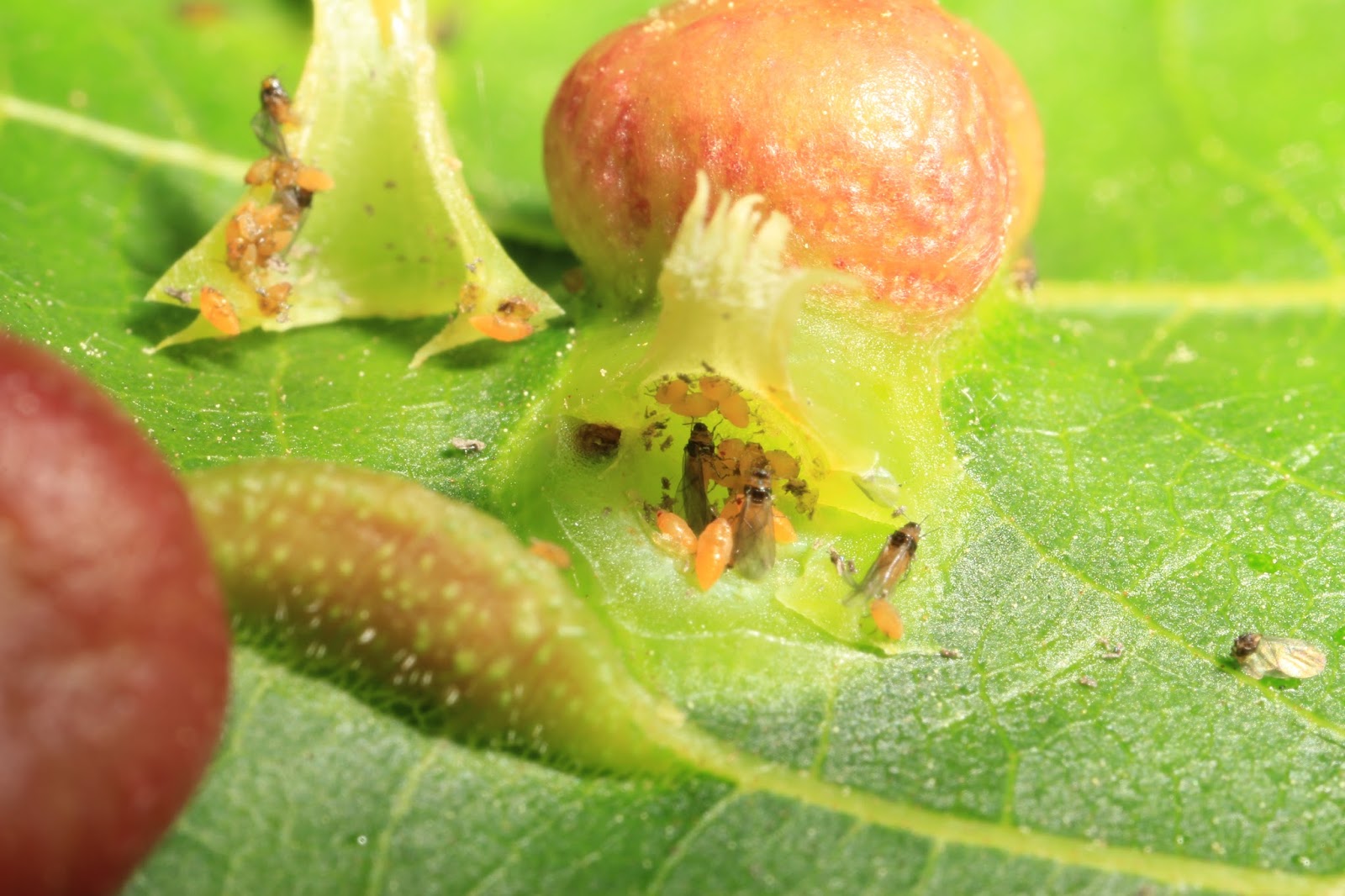
Three different galls, each representing a different species of Phylloxera, on a leaf of shagbark hickory in the Montreal Botanical Garden: P. caryaevenae (along the vein in front), P. caryaesepta (cut open in the middle), and P. caryaeglobuli (in back). Photo take in June 2016 by Khalil Abas, used with permission.

According to co-author Dr. Colin Favret, it’s no surprise that science went so long without these comprehensive catalogs.

“Until BHL, the original literature for these groups was particularly hard to access,” explains Favret.

View Full Size Image
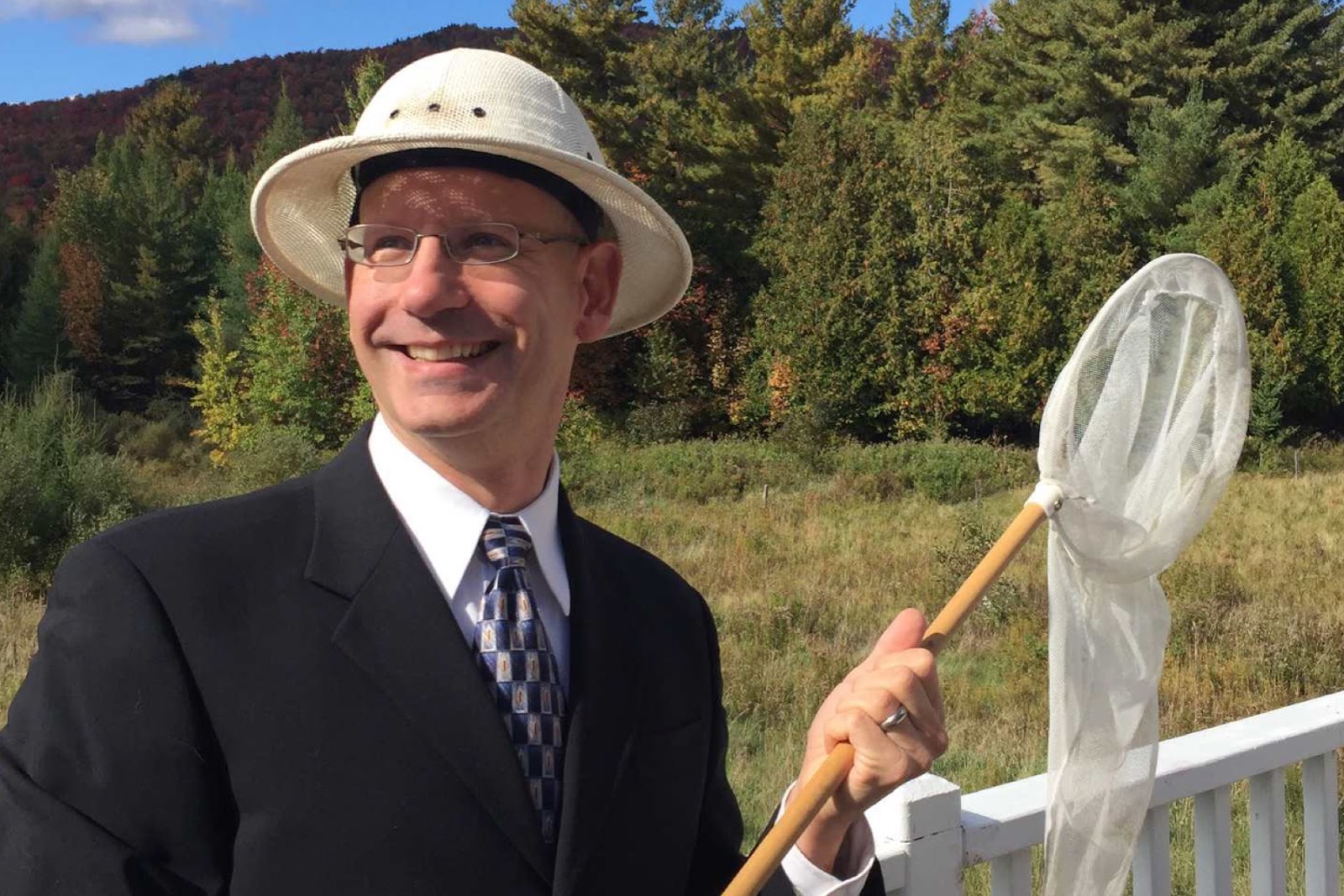
Colin Favret, October 2016. Photo by Karen Favret, used with permission.

Favret, an assistant professor of insect systematics and biodiversity at the University of Montreal, studies insect diversity patterns, with a particular research focus on the evolution and systematics of aphids. In 2008, he began comprehensively cataloguing aphid taxa. This work led him to BHL. Since then, it has become integral to his research.

“BHL has become indispensable and is one of the most important literature resources I use. It may even be as important as the sum of the subscriptions in my employer’s library,” lauds Favret. “It has significantly improved the caliber of my literature research, and I can point to a number of my publications that would not have been written if not for BHL content.”

View Full Size Image
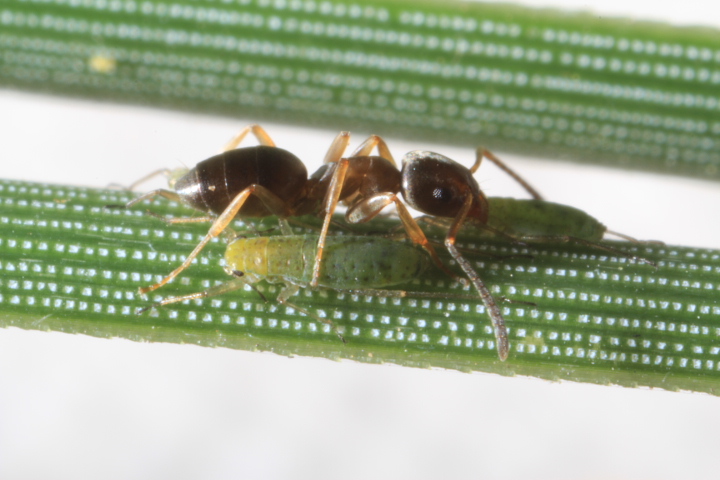
An aphid, Essigella sp., tended by an ant while feeding on the needle of a Californian Coulter pine, June 2013. Photo by Colin Favret, used with permission.

BHL has had a significant impact on one of Favret’s primary research projects – the Aphid Species File, a database containing taxonomic, nomenclatural, and bibliographic information for all the aphids of the world, including all extant and fossil taxa.

“What makes this project unique is that I’m going back to the historical literature to confirm every original description and the validity and correct spelling of every name,” explains Favret. “It is amazing how many errors in the secondary literature I’m able to correct.”

Favret’s use of BHL is usually prompted by research for a nomenclatural or taxonomic paper and directed by the need for a specific article, which he downloads using BHL’s custom PDF generation service. He also uses BHL for teaching, linking to Haeckel’s phylogeny in his first-year animal diversity course and to Hooke’s flea in his second-year entomology course.

Of all the services offered by BHL, not surprisingly, it is the literature itself that is most important to Favret. He hopes collection development will remain a priority.

“Simply having the literature available for examination and download is hands down the most important and my favorite feature of BHL,” expresses Favret. “Although there are any number of novel developments that might be interesting, I’d say adding new titles should always be BHL’s top priority.”

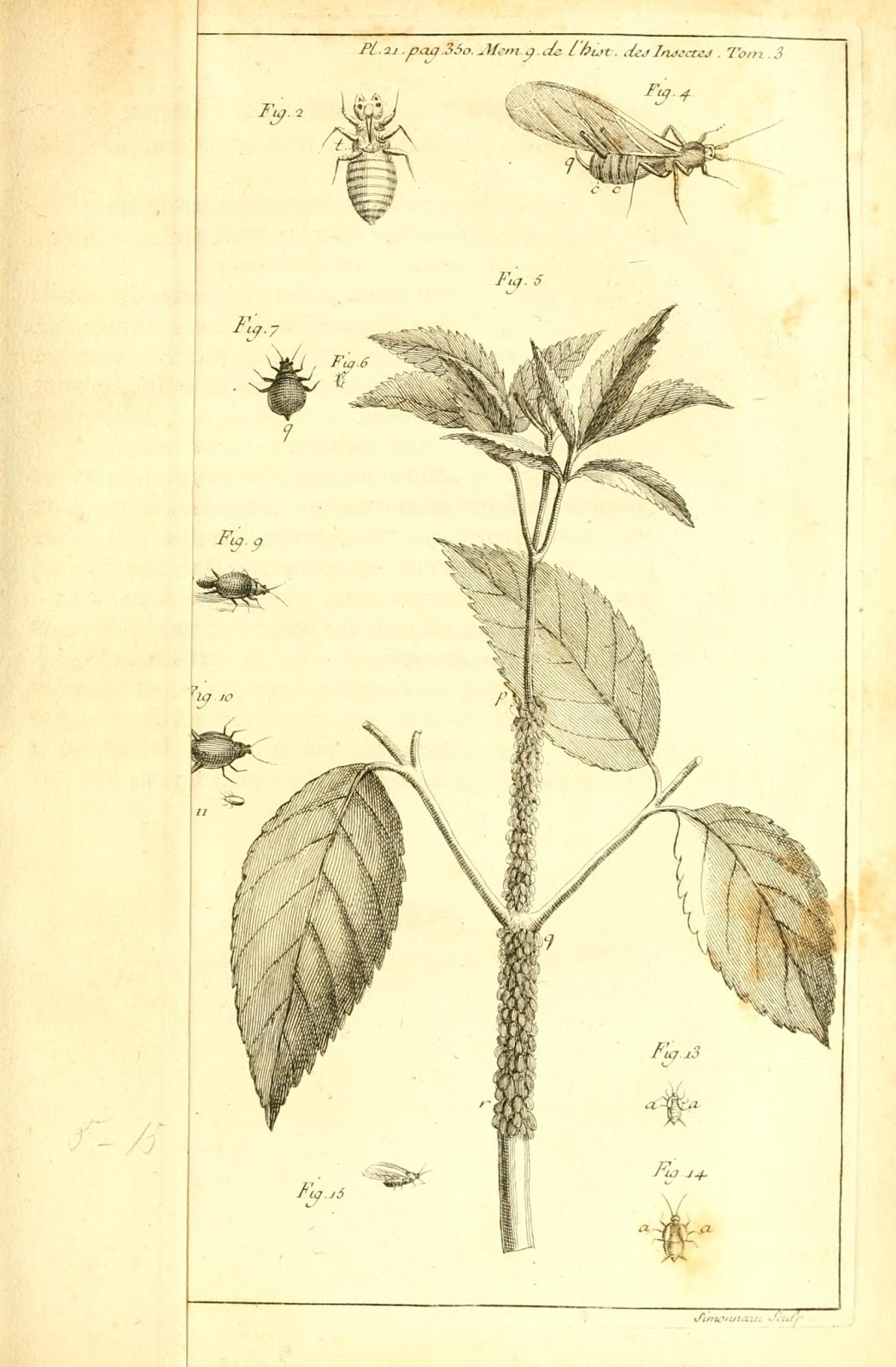
Some of Favret’s favorite finds in the BHL collection are species descriptions that predate Linnaeus, such as those by French scientist René Antoine Ferchault de Réaumur. de Réaumur’s Memoires pour servir a l’histoire des insectes not only includes many aphid descriptions that were later cited by others like Linnaeus, but it also features, as Favret points out, “some really old aphid illustrations.”

View Full Size Image
Réaumur, René-Antoine Ferchault de. Memoires pour servir a l’histoire des insectes. T. 3 (1737). http://www.biodiversitylibrary.org/page/14412711. Digitized by Smithsonian Libraries.

Be it delighting the world through free access to historic literature and “really old” #SciArt, or supporting the creation of comprehensive taxonomic catalogs and databases, we’re thrilled to see the many important ways that BHL is supporting global research.

And to all you invasive Adelgidae and Phylloxeridae species, watch out. Science is coming for you.

______________________________________

This post may contain the personal opinions of BHL users or affiliated staff and does not necessarily represent the official Biodiversity Heritage Library (BHL) position on these matters.
April 13, 2017by Grace Costantino
BHL News, Blog Reel

BHL Booth at Earth Optimism Summit, 21-23 April 2017

View Full Size Image

This Earth Day weekend, the Earth Optimism Summit in Washington, D.C. will shift the environmental conversation from one of doom and gloom to one of optimism and solutions. The Summit will celebrate conservation success stories and fuel discussions about how to expand conservation impact.

Organized by the Smithsonian Institution, the three-day event (21-23 April) will bring together representatives from a wide array of fields (including science, journalism, the arts, public policy, and more!) for a series of presentations relaying over 100 conservation success stories.

The Summit will also include a public Innovation Commons event featuring exhibits showcasing the ways that a variety of organizations and projects support conservation and help protect biodiversity.

The Biodiversity Heritage Library is participating in the Innovation Commons with a booth highlighting the many ways that BHL helps save biodiversity by supporting research around the world. 

Click here to learn more about how BHL supports science and conservation.

The Innovation Commons is open to the public. If you’re in the Washington, D.C. area, we invite you to stop by our booth to learn more about BHL and join us in celebrating conservation success stories!

WHERE?
Atrium of The Ronald Reagan Building and International Trade Center.
1300 Pennsylvania Ave NW, Washington, DC 20004.
WHEN?
Friday, April 21st: 7:30 AM – 5:00 PM
Saturday, April 22nd: 7:30 AM – 5:00 PM
Sunday, April 23rd: 7:30 AM – 2:00 PM

Learn more on the Earth Optimism website.

April 12, 2017by Grace Costantino
BHL News, Blog Reel

BHL Members’ Council Elects New Executive Committee

Portrait version of the Biodiversity Heritage Library logo.

The Biodiversity Heritage Library Members’ Council elected a new Executive Committee at the BHL Annual Meeting in Singapore. The Executive Committee appointments include: Constance Rinaldo (Ernst Mayr Library, Museum of Comparative Zoology, Harvard University), Chair; Jane Smith (Natural History Museum Library, London), Vice-Chair; Doug Holland (Missouri Botanical Garden, Peter H. Raven Library), Secretary; and Nancy E. Gwinn (Smithsonian Libraries), Immediate Past-Chair.

“It is an honor and a privilege to have this opportunity to lead the Biodiversity Heritage Library as we forge ahead into the next 10 years,” affirmed Rinaldo. “I thank my predecessor, Dr. Nancy Gwinn, for her work in strengthening the BHL and ensuring a strong foundation with the extraordinary Secretariat staff housed at the Smithsonian Libraries. I also thank Professor James Hanken, Director of the Museum of Comparative Zoology, Harvard University, for the museum’s support and encouragement of the BHL over these years. I look forward to working with current and future BHL partners to expand organizational and technological sustainability as we invest in the future of open data, open science and research connections across disciplines.”

The BHL Executive Committee provides strategic leadership and governance decisions for the Biodiversity Heritage Library. Officers are elected for two-year terms by the BHL Members’ Council, which is comprised of one representative from each BHL Member institution. This year’s elections took place on 17 March 2017 during the business portion of the Members’ Annual Meeting, hosted by the National Library Board, Singapore.

The current committee replaces the previous appointments elected in 2015: Nancy E. Gwinn, Chair; Constance Rinaldo, Vice-Chair; Jane Smith, Secretary.

“It has been my honor to serve as the Chair of the BHL Members’ Council for the past five years, and I am delighted to see Constance (Connie) Rinaldo assume this role, working with Jane Smith as Vice Chair and Doug Holland as Secretary,” expressed Gwinn. “Connie’s contributions as Vice-Chair, with its responsibility for the Global Partners, have already played a vital role in the success of BHL. I am confident that under Connie’s leadership, the BHL will continue to thrive and empower research on a global scale. In the newly defined role of Immediate Past-Chair, I look forward to continuing my work with her and the rest of the Members’ Council to ensure the growth and prosperity of the Biodiversity Heritage Library.”

BHL Executive Committee Bios

Constance Rinaldo (Ernst Mayr Library, Museum of Comparative Zoology, Harvard University), Chair. 

View Full Size Image

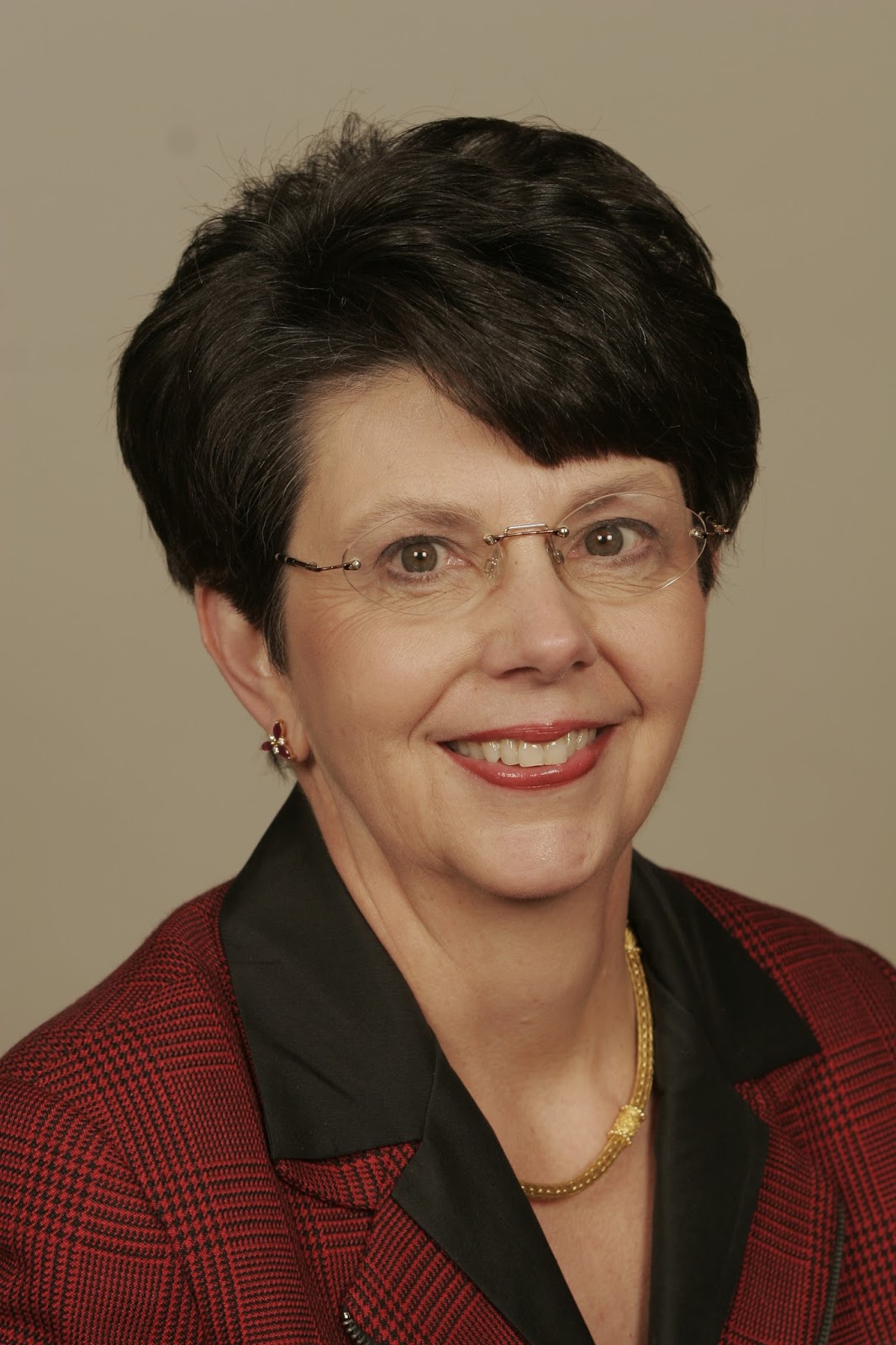
Constance Rinaldo has been the Librarian of the Ernst Mayr Library of the Museum of Comparative Zoology at Harvard University since 1999. She is a founding member (2005) and previous Vice-Chair of the BHL Members’ Council. Rinaldo has a BA in Biology and Anthropology from the University of Massachusetts, Boston, an MSc in Zoology from the University of Connecticut, and an MLS from the University of Maryland. Prior to coming to Harvard, Rinaldo spent 10 years as Head of Collections in the Biomedical Libraries at Dartmouth College and in the late 1980s was an assistant in the National Agricultural Library Text Digitization Project.

Jane Smith (Natural History Museum Library, London), Vice-Chair. 

View Full Size Image

Jane Smith has served as the Head of Library and Archives at the Natural History Museum, London since September 2012, before which she served as the Head of Library Collections and Services (2006 – 2012). Prior to joining the NHM, she was Deputy Librarian and then Librarian at the British Medical Association and Centre Manager at the Department of Health-funded National Centre for Clinical Audit, which has since evolved into the National Institute for Clinical Excellence (NICE). From 2015-2017, Smith served as the Secretary of the BHL Members’ Council.

Doug Holland (Missouri Botanical Garden, Peter H. Raven Library), Secretary. 

View Full Size Image

Doug Holland started at the Missouri Botanical Garden in 1994, serving first in the Horticulture Division, followed by several years as a botanical research assistant in the Herbarium and several more as archivist and historian. In 2004, he became Director of the Peter H. Raven Library. He now manages the Garden’s world-class research library, archives and digitization program. He is a founding member of the Biodiversity Heritage Library (BHL), a past-President of the Council on Botanical and Horticultural Libraries, and also manages the St. Louis Research Library Consortium.

Nancy E. Gwinn (Smithsonian Libraries), Immediate Past-Chair. 

View Full Size Image

Nancy E. Gwinn has been director of the Smithsonian Libraries since 1997. She oversees a network of 21 libraries and central services units and is a recognized leader in international librarianship, in developing digital libraries, in building cooperative programs and partnerships, and in promoting Smithsonian scholarship to external communities. Under Gwinn’s leadership, the Libraries initiated and became a lead partner in establishing the international Biodiversity Heritage Library (BHL) and the program’s Secretariat. She served as chair of the BHL Members Council from 2011–2017 and member of the executive committee of a companion project, the Encyclopedia of Life.

March 28, 2017by Grace Costantino
Page 17 of 71« First...10«16171819»203040...Last »

Help Support BHL

BHL's existence depends on the financial support of its patrons. Help us keep this free resource alive!

search

About BHL

The Biodiversity Heritage Library (BHL) is the world’s largest open access digital library for biodiversity literature and archives. BHL operates as a worldwide consortium of natural history, botanical, research, and national libraries working together to digitize the natural history literature held in their collections and make it freely available for open access as part of a global “biodiversity community.”

Join Our Mailing List

Sign up to receive the latest news, content highlights, and promotions.

Subscribe Now

Subscribe to Blog via Email

Enter your email address to subscribe to this blog and receive notifications of new posts by email.

Join 319 other subscribers

Subscribe to Blog Via RSS

Subscribe to the blog RSS feed to stay up-to-date on all the latest BHL posts.

Access RSS Feed

Inspiring Discovery through Free Access to Biodiversity Knowledge.

The Biodiversity Heritage Library makes it easier than ever for you to access the information you need to study and explore life on Earth…for free, anytime, anywhere.


64+ Million Pages of
Biodiversity Literature Online.

EXPLORE

Tools and Services
to Transform Research.

EXPLORE

300,000+
Illustrations on Flickr.

EXPLORE

ABOUT | HARMFUL CONTENT | PRIVACY | SITE MAP | TERMS OF USE