Biodiversity Heritage Library - Program news and collection highlights from BHL
  • Home
  • News
  • Featured Books
    • All Featured Books
    • Book of the Month Series
    • BHL at 20
  • User Stories
  • Campaigns
    • Fossil Stories
    • Garden Stories
    • Monsters Are Real
    • Page Frights
    • Her Natural History
    • Earth Optimism 2020
  • Tech Blog
  • Visit BHL
Home
News
Featured Books
    All Featured Books
    Book of the Month Series
    BHL at 20
User Stories
Campaigns
    Fossil Stories
    Garden Stories
    Monsters Are Real
    Page Frights
    Her Natural History
    Earth Optimism 2020
Tech Blog
Visit BHL
  • Home
  • News
  • Featured Books
    • All Featured Books
    • Book of the Month Series
    • BHL at 20
  • User Stories
  • Campaigns
    • Fossil Stories
    • Garden Stories
    • Monsters Are Real
    • Page Frights
    • Her Natural History
    • Earth Optimism 2020
  • Tech Blog
  • Visit BHL
Biodiversity Heritage Library - Program news and collection highlights from BHL
Blog Reel, Featured Books

POBSP, how they did it : when science meets military interest

In the middle of the Cold War, the Smithsonian Institution embarked on the Pacific Ocean Biological Survey Program (POBSP) to survey U.S. territory islands and atolls dotting the central Pacific Ocean. From 1963 to 1969, researchers sought to inventory the plants and animals present on the islands, observe seasonal variations in numbers and reproduction, and the distribution of pelagic birds. Over the course of the survey, researchers observed approximately 150,000 pelagic birds at sea, banded 1,800,000 birds, and surveyed the flora and fauna of the islands, the most comprehensive study at the time. An incredible amount of data was collected during the POBSP, drastically increasing information available about the ecology of the small islands. Although it resulted in an incredible amount of data, the survey only spanned three years in part due to questions about the funder’s intentions.
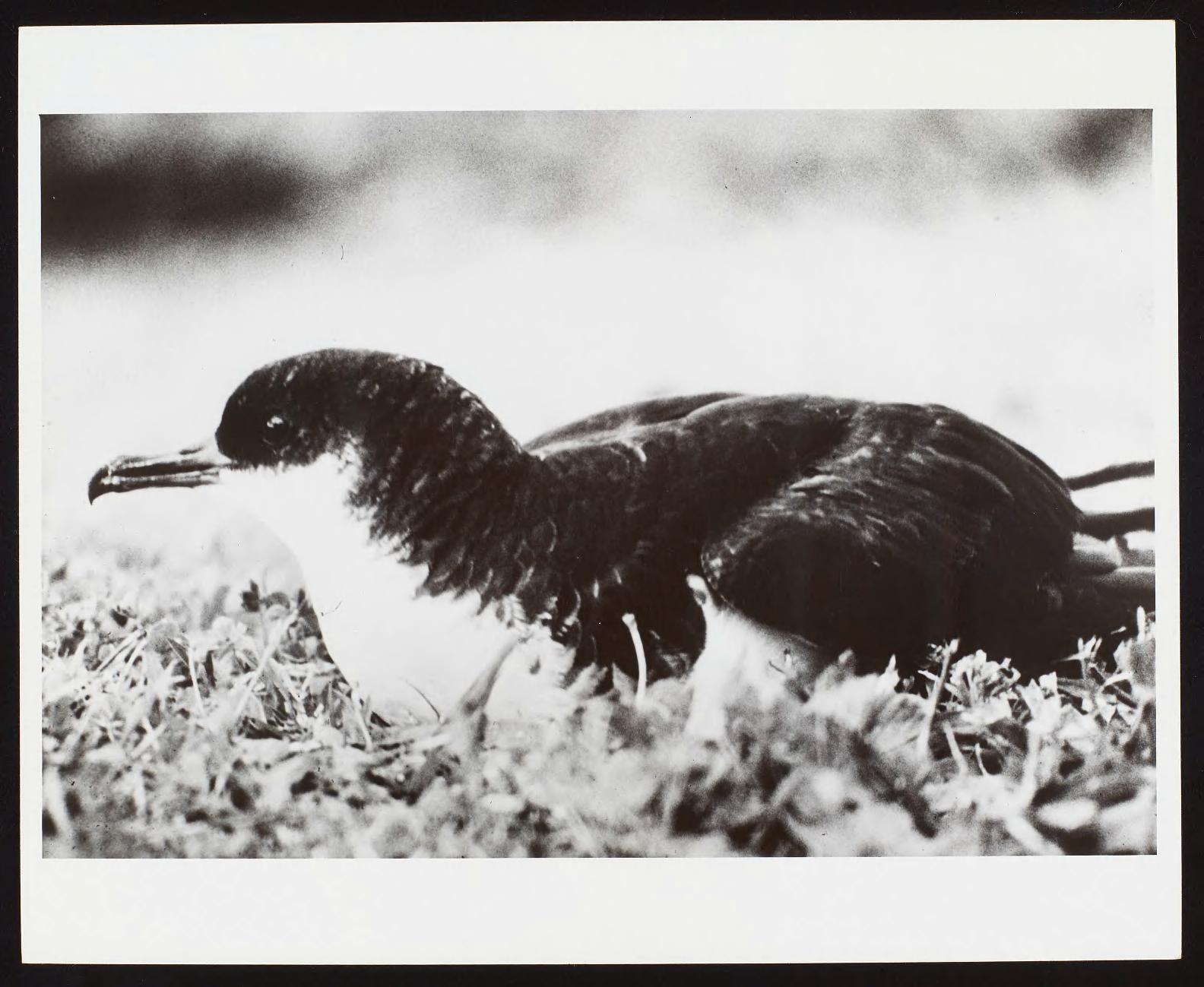
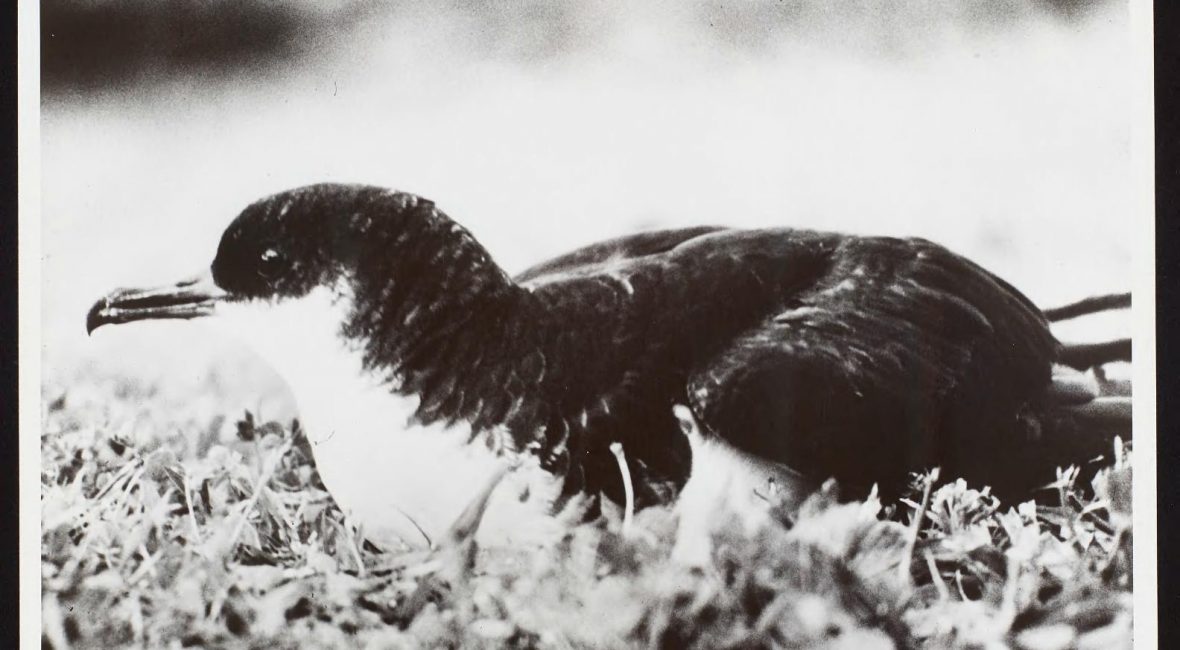
Puffinus newelli (Newell’s shearwater), 1965.
https://www.biodiversitylibrary.org/item/243657

The Smithsonian received grant funds from the Department of Defense for the POBSP. In exchange, the DOD requested basic information about the movements of birds and several thousand blood samples. While the request was unorthodox, it was seen as justified since migratory birds were damaging aircrafts and communications equipment in the Pacific. Smithsonian agreed to the request and embarked on the first stretch of the POBSP in 1963.

Once the survey began, it became clear Smithsonian wasn’t completely aware of what it had signed up for. The military would complete exercises without explanation and kept the Smithsonian staff on a “need to know” basis. There is evidence that some of the researchers tried to get more information on why the military was so interested in the data but didn’t succeed. In the end, the staff accepted requests for secrecy, seeing it as a fair trade for the work they had the opportunity to complete, a task inaccessible to other groups.
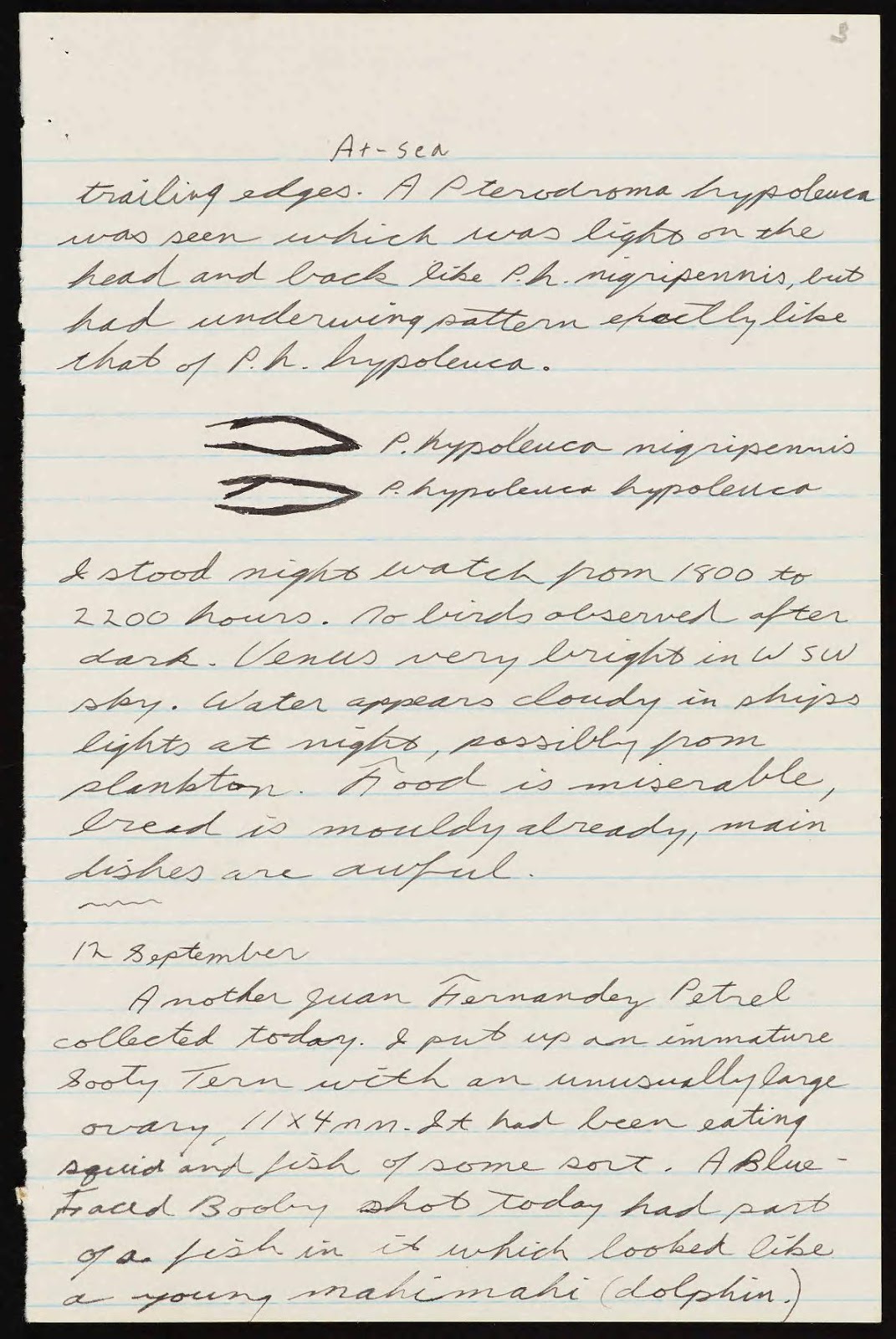
Venus was bright on this particular September night in 1965.
Tordoff, Jeffrey P. 1965. https://biodiversitylibrary.org/page/55214829

We now know that the military conducted germ warfare tests in the Pacific in the 1960s, including The Pacific Project which exposed military personnel and biologists to chemical cleansers and bacteria which have been linked to debilitating conditions. There’s no official connection between the POBSP samples and these tests, and researchers from the Survey have not reported similar health effects as military personnel who were part of the Pacific Project. But the Department of Defense’s interest in the blood samples and migration patterns sparked suspicion which ultimately ended funding for the Survey in 1969.

Considering the political climate at the time, the Smithsonian was perhaps naïve in not considering the implications of the exchange in funds and information with the Department of Defense. The Institution’s researchers were offered the opportunity to complete research in remote areas that were expensive to study and required military cooperation to even get to. The younger biologists were particularly thrilled at the chance to be out in the field for weeks at a time like the biologists before them. What they all saw was a godsend.
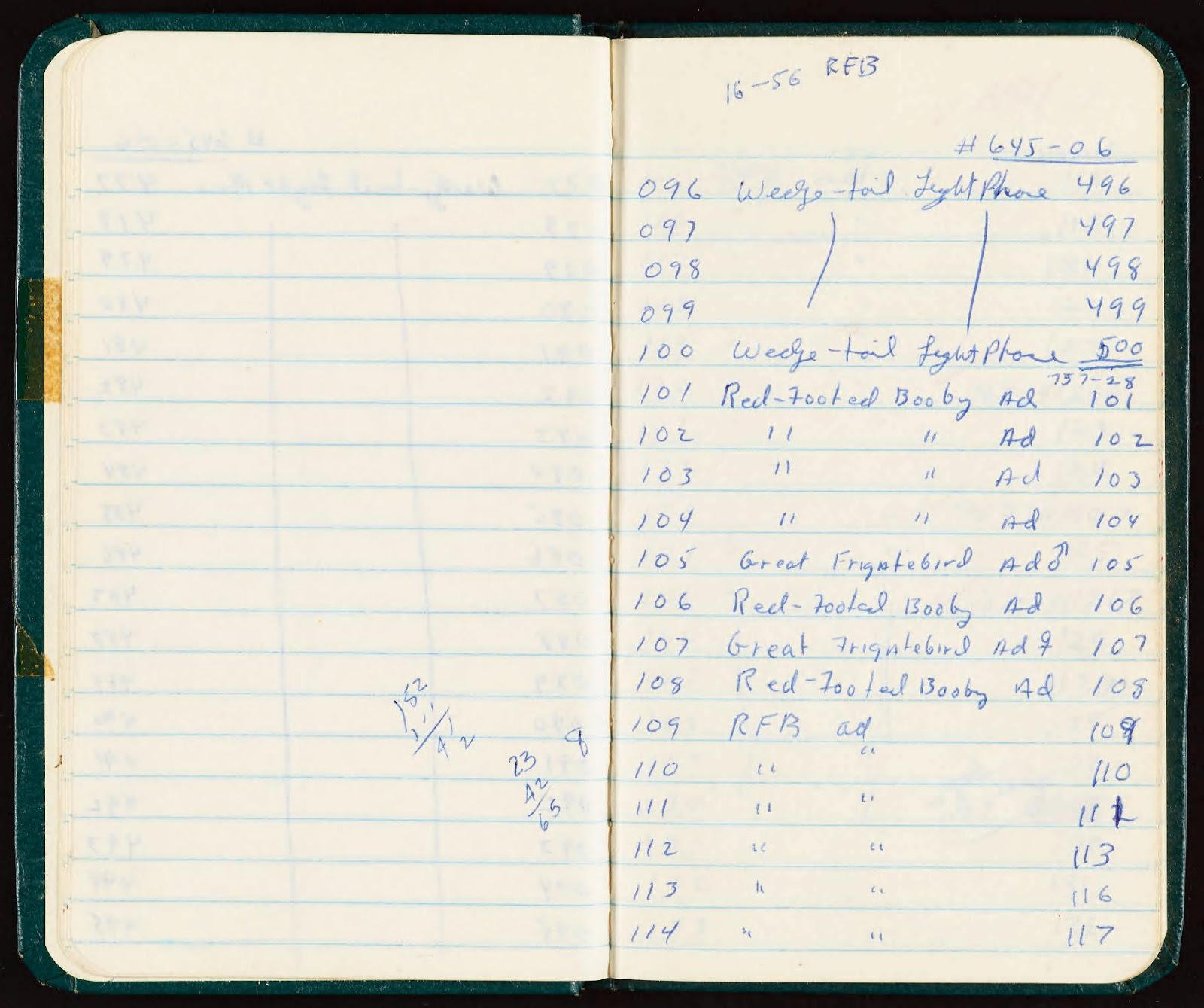
List of blood samples collected in 1966.
Laysan Island, October 1966, Blood. https://www.biodiversitylibrary.org/page/54928748

The history of the POBSP and its connection to American military interests of the 1960s is incomplete, and parts of it will likely remain unknown. Despite this dark side to the survey, it is undeniable that Smithsonian’s researchers were able to collect an impressive amount of information during their expeditions to the Pacific. As part of the BHL Field Notes Project, the Smithsonian Institution Archives has taken on the task of digitizing field notes from the POBSP. Considering the shear amount of data collected, it should be no surprise that there are over 1000 field notebooks in the collection, making this SIA’s largest undertaking for the Field Notes Project.
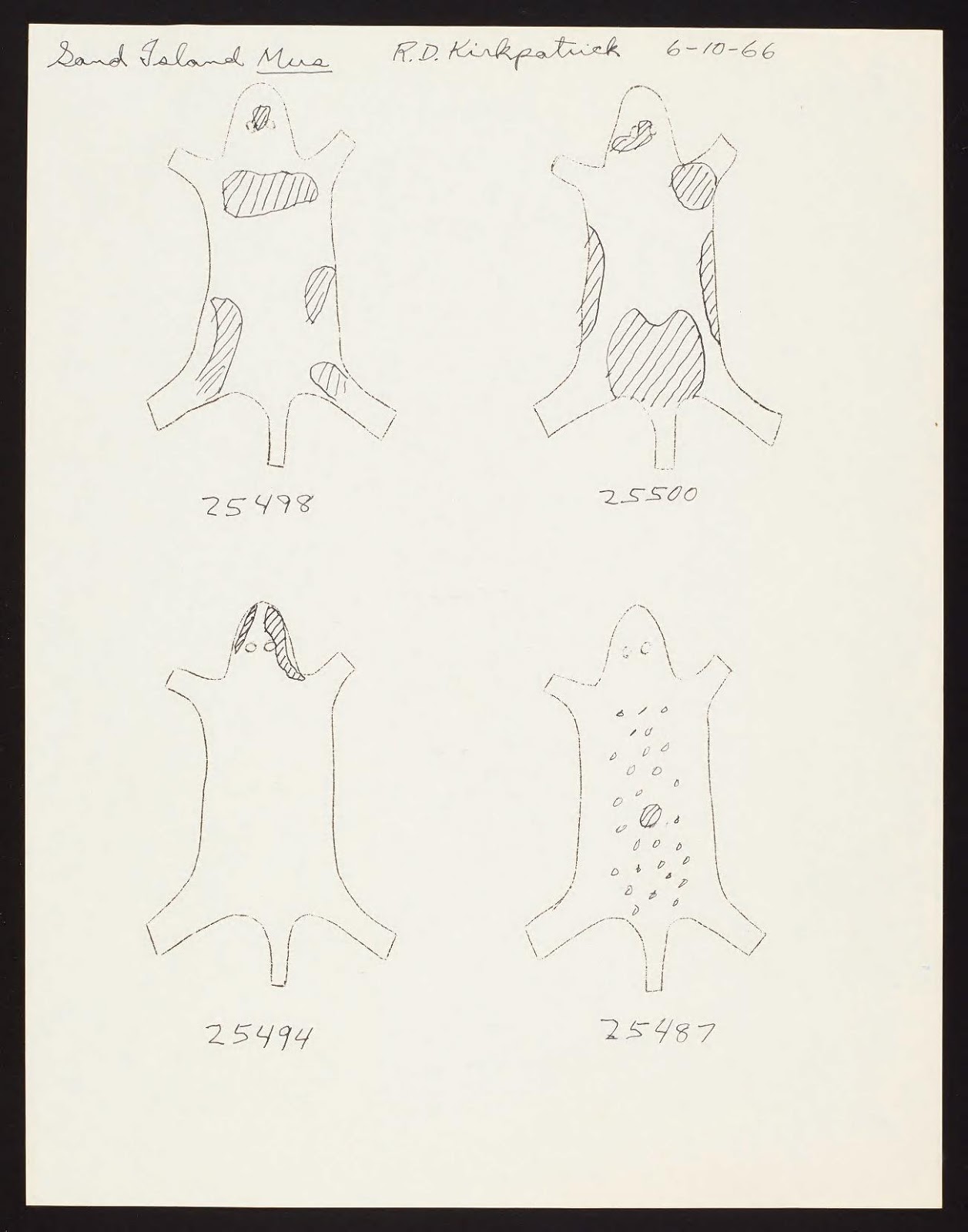
Mus autopsy data, 1966.
https://www.biodiversitylibrary.org/page/55373636

To date, nearly 300 field notes from the collection are readily available in BHL, and many more are in the final post-processing stages in preparation for BHL. Stay tuned for the complete set of notes in the upcoming months.

The BHL Field Notes Project is funded by the Council on Library and Information Resources (CLIR).

References
Finding Aid for “Record Unit 245, National Museum of Natural History, Pacific Ocean Biological Survey Program, Records, circa 1961-1973, with data from 1923”.

MacLeod, R. (2001). “Strictly for the Birds”: Science, the Military and the Smithsonian’s Pacific Ocean Biological Survey Program, 1963-1970. Journal of the History of Biology, 34(2), 315-352.

Rauzon, M J. (2006). “Live Ammo: Testing of Biochemical Agents on U.S. Sailors.” The Asia -Pacific Journal : Japan Focus, 4 (12).

Further Reading
Hunter, E. (2011). “Life in the Field: a Reflection on Cataloging Field Notes in the Pacific Ocean Biological Survey Program.” Smithsonian Field Book Project Blog.

Lamb, J. (2016).  “TheStrange Tale of the Pacific Ocean Biological Survey Program.” JSTOR Daily.

Parilla, L. (2013). “I Found It in a Field Book: Hawaiian Monk Seal Family Images.” Smithsonian Field Book Project Blog.Tennis, A. (2016). “Invasive Pests of the Pacific.” Smithsonian Field Book Project Blog.
March 1, 2018by mkahn
Blog Reel, Featured Books

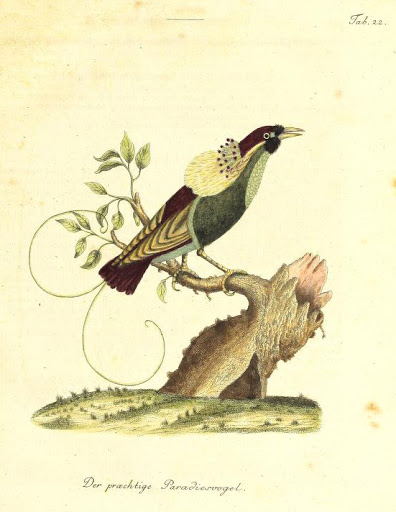
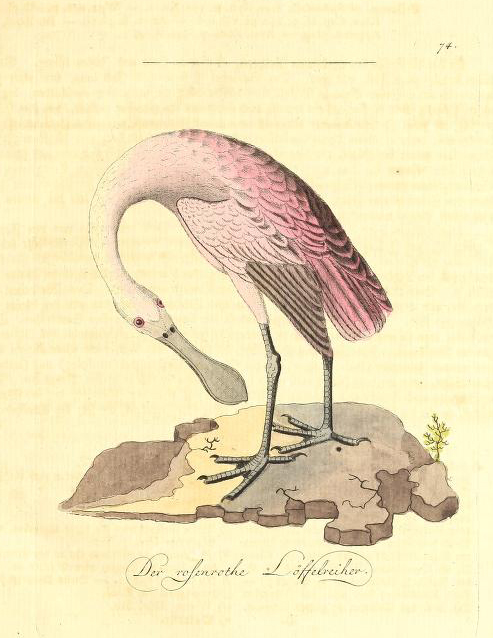
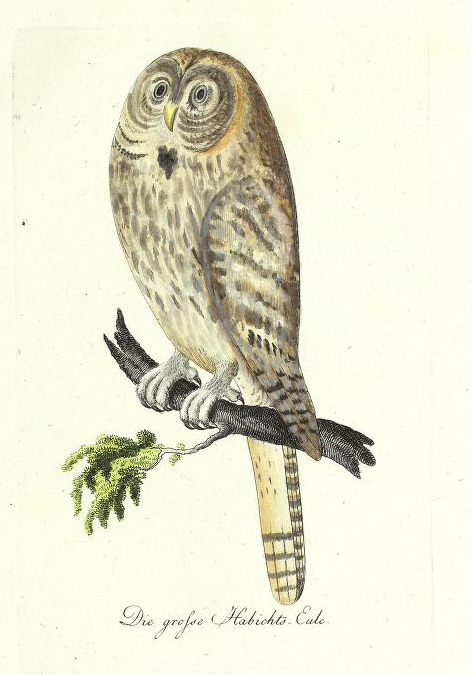
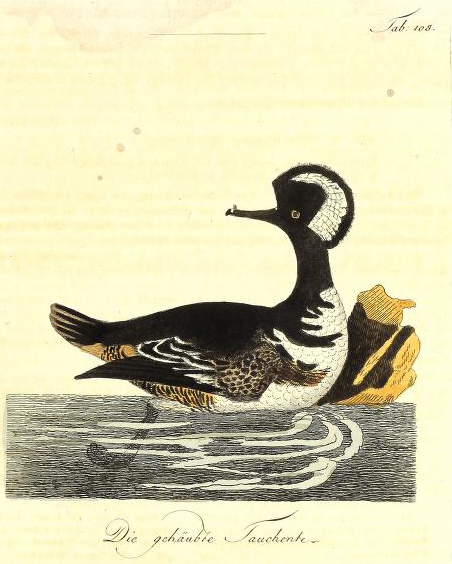
The Birds of the World, German Edition

View Full Size Image
Bechstein, Johann Matthäus. Johann Lathams allgemeine Uebersicht der Vögel. Bd.2:t.2 (1795). German translation of John Latham’s A General Synopsis of Birds. Digitized by Natural History Museum Library, London. http://s.si.edu/2hDSp9n.

At the end of the eighteenth century, the “father of German ornithology” began publishing a German translation of General Synopsis of Birds, an important work by John Latham, the “grandfather of Australian ornithology” [5][6].

This German edition, entitled Johann Lathams Allgemeine Uebersicht der Vögel ([1792] 1793-1812), was translated and edited by Johann Matthäus Bechstein (1757-1822). As his moniker suggests, Bechstein was a pioneer in German ornithology, having produced what is often regarded as the “first modern handbook of German birds,” Gemeinnèutzige Naturgeschichte [5]. With his translation of Latham’s work, Bechstein made descriptions of worldwide bird species more accessible to German readers.

View Full Size Image
Bechstein, Johann Matthäus. Johann Lathams allgemeine Uebersicht der Vögel. Bd.1:t.1 (1793). German translation of John Latham’s A General Synopsis of Birds. Digitized by Natural History Museum Library, London. http://s.si.edu/2gzJA0m.

Latham’s General Synopsis of Birds, published in three volumes between 1781-1785 followed by supplements in 1787 and 1801, not only provided a natural history of the birds of the world but also importantly presented many Australian species to the European public for the first time.

Born at Eltham, Kent, England in 1740, Latham trained as a physician and set up a medical practice in Darenth at the age of 23. After he was established, Latham began a more concentrated study of natural history, amassing a library and collection of specimens to support his research. By 1800, Latham had recorded around 3,000 bird species [3].

View Full Size Image
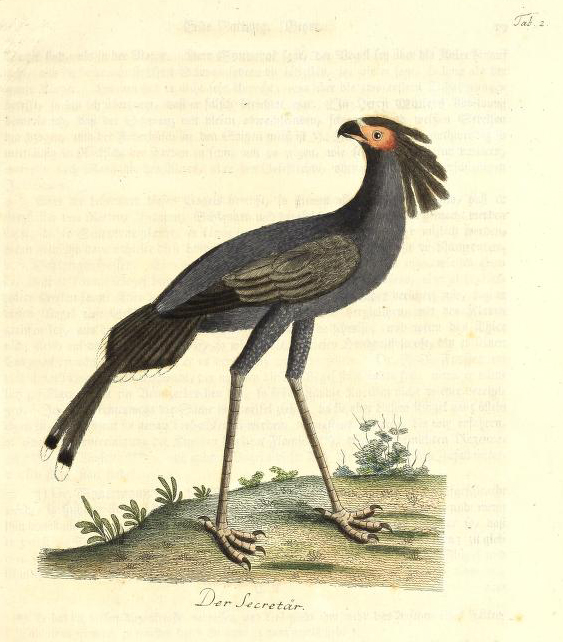
Bechstein, Johann Matthäus. Johann Lathams allgemeine Uebersicht der Vögel. Bd.1:t.2 (1793). German translation of John Latham’s A General Synopsis of Birds. Digitized by Natural History Museum Library, London. http://s.si.edu/2gB8gWx.

Latham’s period of ornithological study coincided with the arrival in England of a wealth of specimens and drawings from Australia. These collections, resulting from Captain Cook’s voyages to Australia and Polynesia (1769-75), included many new-to-science bird species [1]. As a friend and correspondent of many of England’s leading naturalists, Latham had access to these collections. He included descriptions and illustrations of many of these new species within his General Synopsis of Birds [2].

Latham provided only vernacular descriptions for the species in his General Synopsis and its first supplement. In 1790, after realizing that he would only receive credit for naming the species if he provided Latin binomials under the Linnaean system, Latham published Index Ornithologicus, a systematic catalog assigning binomial names and taxonomic classifications to the birds in the three volumes and first supplement of General Synopsis [7]. 

View Full Size Image
Bechstein, Johann Matthäus. Johann Lathams allgemeine Uebersicht der Vögel. Bd.3:t.1 (1796). German translation of John Latham’s A General Synopsis of Birds. Digitized by Natural History Museum Library, London. http://s.si.edu/2ziUgZ0.


Unfortunately, between 1788-1789, German naturalist Johann Friedrich Gmelin had published an expanded edition of Linnaeus’s Systema Naturae, providing Latin names for many of Latham’s birds. These names have priority over those published in Index Ornithologicus, and as such Gmelin is credited as the first to scientifically describe many of the species first introduced through Latham’s General Synopsis [2].

However, Latham is still the authority for many of the names in the Index and second supplement, and he is recognized as the first to scientifically describe many iconic species, such as the hyacinth macaw (Anodorhynchus hyacinthinus), and Australian species, including the emu (Dromaius novaehollandiae). His extensive contributions to Australian ornithology earned him the nickname the “grandfather of Australian ornithology” [2].

View Full Size Image
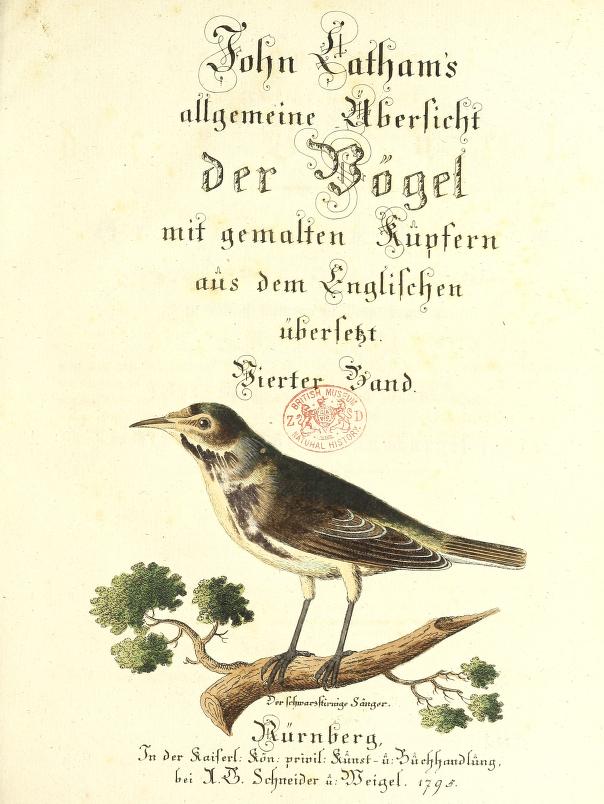
Bechstein, Johann Matthäus. Johann Lathams allgemeine Uebersicht der Vögel. Bd.4:t.1 (1811). German translation of John Latham’s A General Synopsis of Birds. Digitized by Natural History Museum Library, London. http://s.si.edu/2zkmEu0.

The four volumes of Bechstein’s Johann Lathams Allgemeine Uebersicht der Vögel constitute German translations of the three volumes and first supplement of General Synopsis as well as the Index Ornithologicus. In addition to the translation, Bechstein added “much additional matter” [7]. Each volume (or band) was issued in two parts (or theils). The plates are largely reproductions of those from General Synopsis, many of which Latham designed and etched himself [6].

Bechstein’s legacy extends well beyond his translation of Latham’s ornithological work. He was not only a pioneer in German ornithology, but he also contributed extensively to studies on forestry, founding the school of forestry at Waltershausen in 1795 and being named the director of the forestry school at Dreissigacker in 1800. He was also an early advocate for wildlife conservation, encouraging protection for many species then deemed pests, including bats [4].

View Full Size Image
Bechstein, Johann Matthäus. Johann Lathams allgemeine Uebersicht der Vögel. Bd.3:t.2 (1798). German translation of John Latham’s A General Synopsis of Birds. Digitized by Natural History Museum Library, London. http://s.si.edu/2i9JoZh.

You can browse more of Bechstein’s works in BHL.

Thanks to the Natural History Museum Library, London, you can freely explore all four bands, constituting eight volumes in total, of Johann Lathams Allgemeine Uebersicht der Vögel in BHL.


With contributions from:

Harriet Campbell Longley 
Researcher Services Assistant 
Natural History Museum Library and Archives, London

References

[1] Ashworth, William B. Jr., 2016. “Scientist of the Day – John Latham.” Linda Hall Library, February 4. http://www.lindahall.org/john-latham/.
[2] Calaby, J.H. “Latham, John (1740–1837).” Australian Dictionary of Biography, National Centre of Biography, Australian National University. Published first in hardcopy 1967. http://adb.anu.edu.au/biography/latham-john-2333/text3037.
[3] Jackson, Christine E., Ann Datta, and R.I. Vane-Wright. 2013. “Dr John Latham, F.L.S. and His Daughter Ann.” The Linnean, 29(1), pp. 15-30.
[4] Johann Matthäus Bechstein. UpClosed. https://upclosed.com/people/johann-matthaeus-bechstein/.
[5] Mey, Eberhard. 2003. “Johann Matthäus Bechstein: The Father of German Ornithology.” Rudolstädter nat. hist. Schr., 11, pp.63.
[6] Olsen, Penny. 2001. Feather and Brush: Three Centuries of Australian Bird Art. Collingwood: CSIRO Publishing. pp. 28.
[7] Zimmer, John Todd. 1926. Catalog of the Edward E. Ayer Ornithological Library, Part II. Chicago: Field Museum of Natural History. pp. 373-374.

October 26, 2017by michelle.underhill
Blog Reel, Featured Books

The Final Contribution of Sir William Jardine, Scottish Ornithologist

View Full Size Image
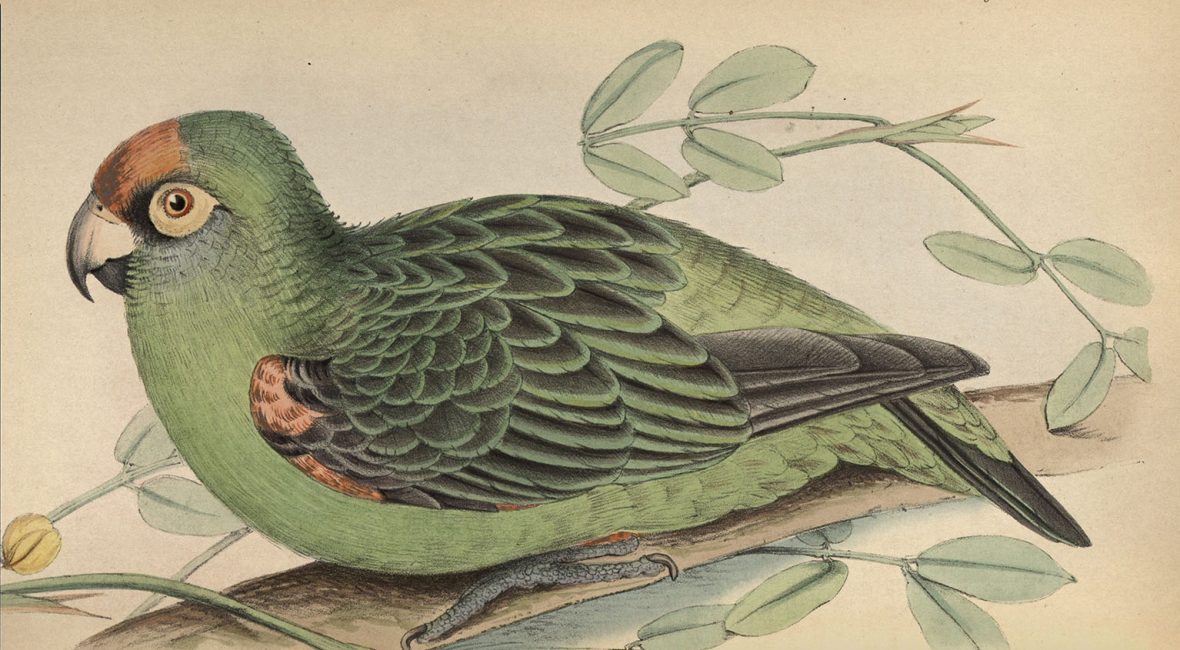
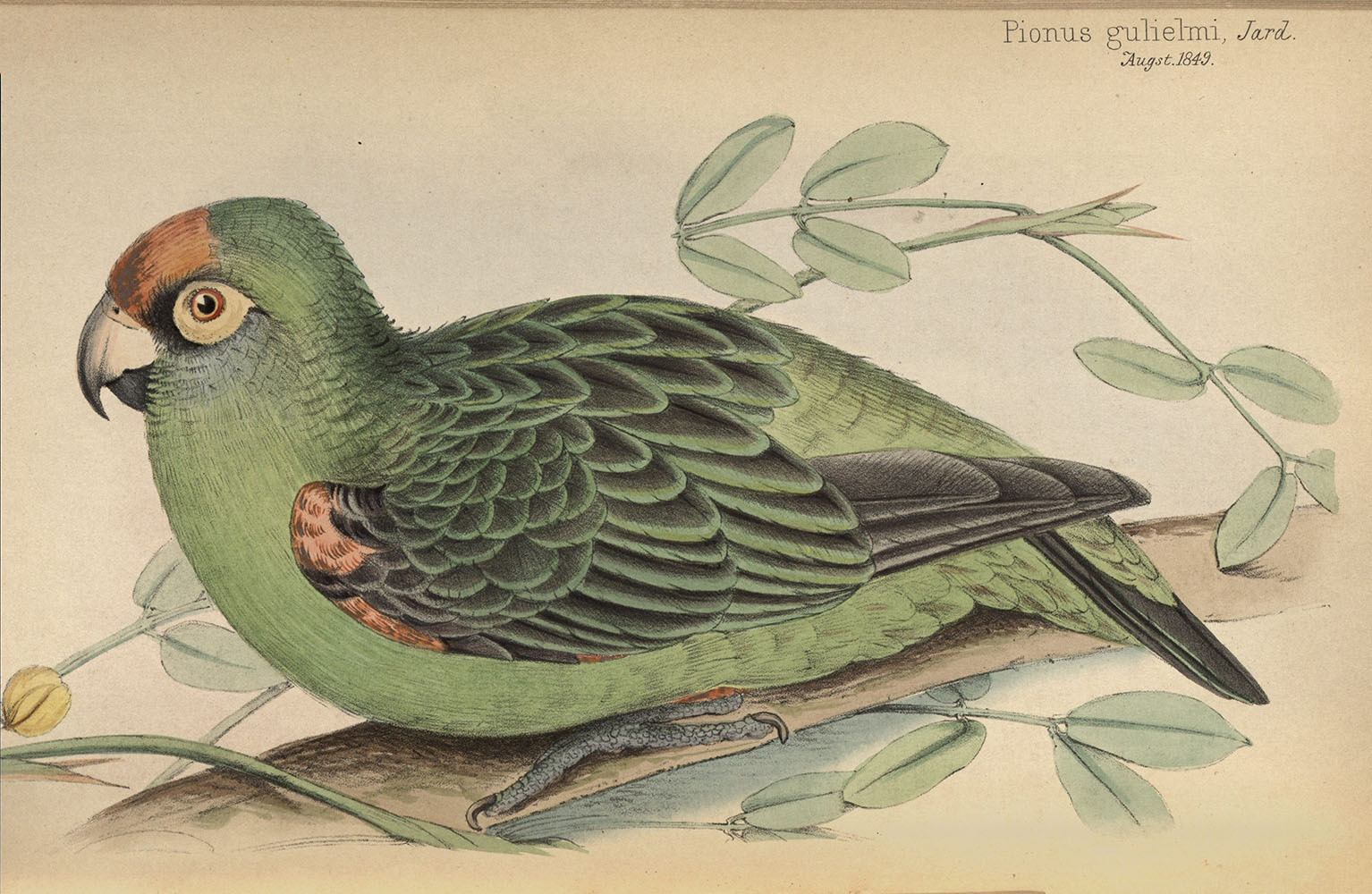
Jardine’s parrot or red-fronted parrot (Poicephalus gulielmi). Drawn from a specimen brought back from the Congo by Jardine’s son William, for whom it was named. Jardine, William. Contributions to Ornithology, Vol. 2. Edinburgh :W.H. Lizars, 1848-1853. Digitized by the Academy of Natural Sciences of Drexel University, Library and Archives. http://s.si.edu/2xpPC9Z.

As was the case for many of his contemporaries, Sir William Jardine, 7th Baronet of Applegarth, was a man of many talents. Ichthyology, botany, entomology and geology were all subjects in which Sir William was thoroughly knowledgeable, but it was ornithology that was his true passion.

It was out of this passion that Jardine produced two original works on ornithology: Illustrations of Ornithology and the annual periodical Contributions to Ornithology. Just five volumes of Contributions were produced from 1848-1852; the Academy of Natural Science’s library copy is bound in three volumes. Contributions is not only the first ornithological periodical produced in Britain, but one of Jardine’s finest natural history works…and his last.

View Full Size Image
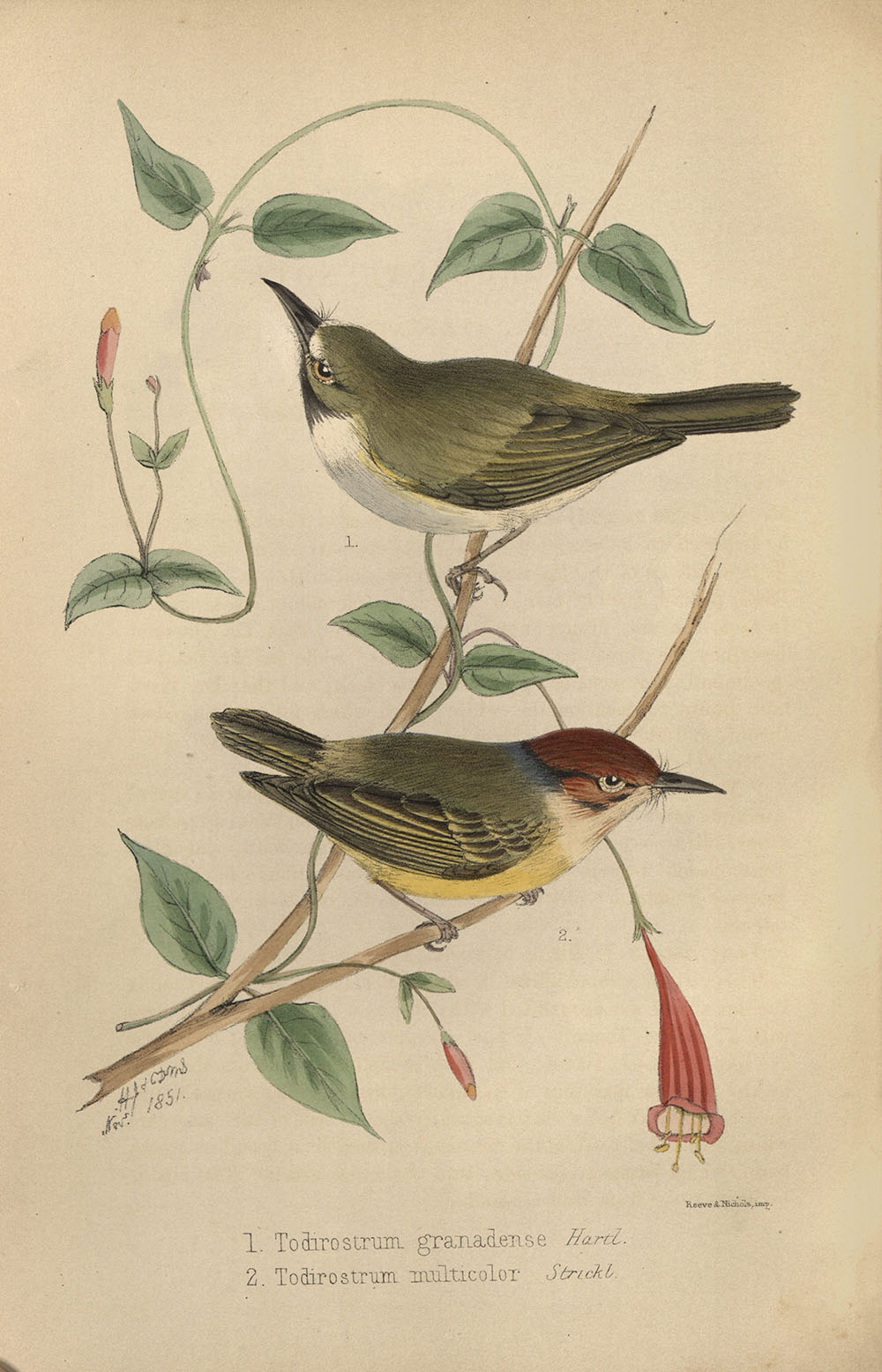
Two examples of the genus Todirostrum, drawn by Catherine Strickland. Jardine, William. Contributions to Ornithology, Vol. 5. Edinburgh :W.H. Lizars, 1848-1853. Digitized by the Academy of Natural Sciences of Drexel University, Library and Archives. http://s.si.edu/2vVN8lQ.

Born in Edinburgh on the 23rd of February, 1800 to Sir Alexander Jardine, 6th Baronet of Applegarth, and Jane Maule, Sir William Jardine grew up in a world of relative wealth and privilege. Not only was he afforded a title, but he stood to inherit Jardine Hall, a stately home located on an estate of over 5,000 acres of land along the banks of the River Annan. At the age of 18, he began medical training at Edinburgh University. Although his intended path was that of a medical doctor, his friendship with the school’s janitor and preserver of specimens for the university museum led him to his true calling of ornithology.

Upon his father’s death in 1821, Jardine not only inherited a title and an estate, but the necessary funds to purchase the ornithological specimens which would become the basis of his renowned collection, which would grow to over 12,000 skins. Despite his newfound obligations as Baronet, including overseeing over 900 parishioners and 11 farms, Jardine found ample time to produce several notable works on ornithology and other subjects.

View Full Size Image
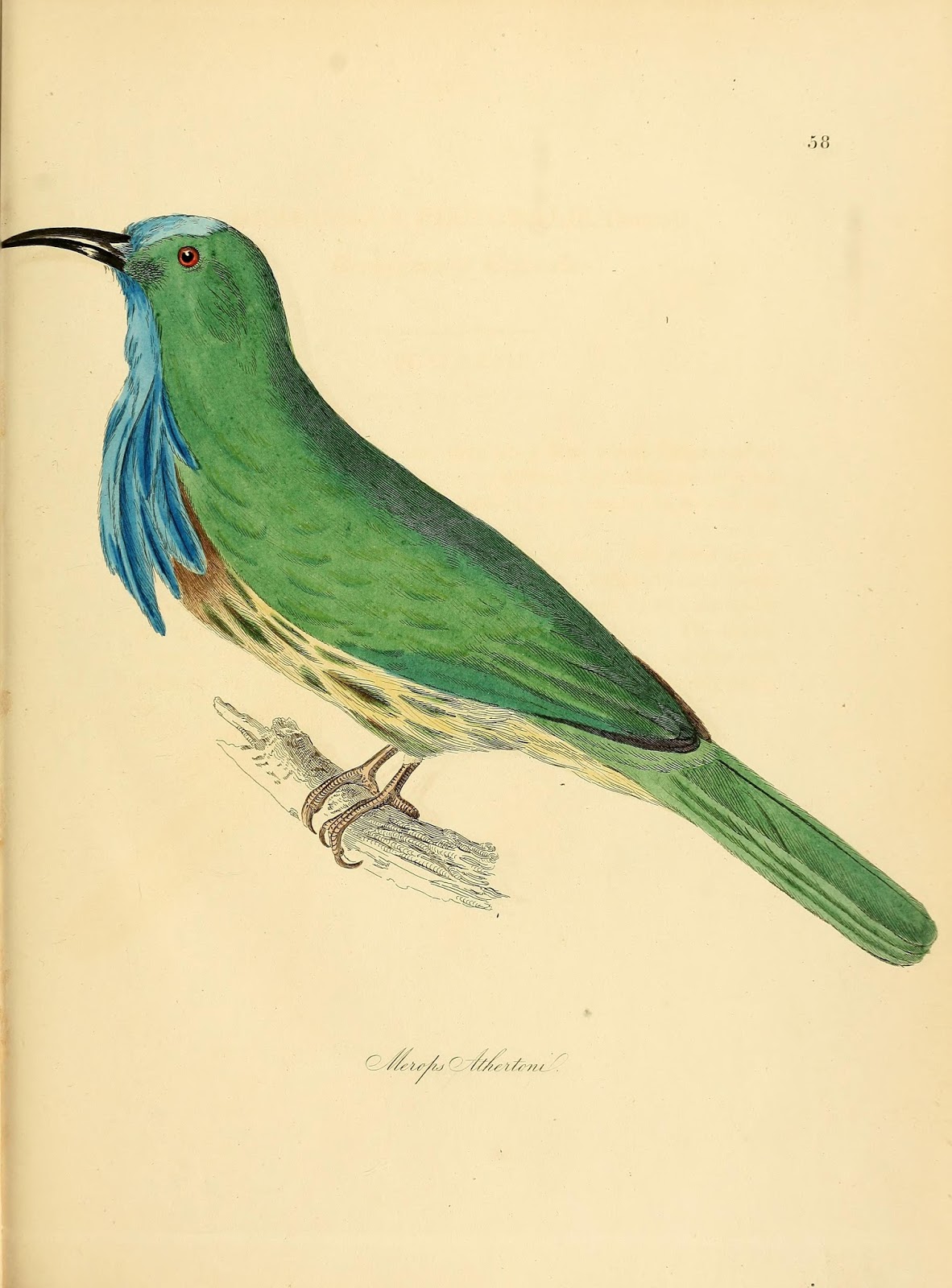
The blue-bearded bee-eater (Nyctyornis athertoni). William Jardine and Prideaux John Selby. Illustrations of ornithology, Vol. 2. Dublin :Longman, Rees, Orme, Brown, & Green, and S. Highley, [1826-1835]. Digitized by Smithsonian Libraries. http://s.si.edu/2wvltJV.

The first of these works, Illustrations of Ornithology, was a collaboration with fellow ornithologist Prideaux John Selby detailing non-British birds from around the world. Jardine and Selby saw a deficiency in previously published works on the subject, which typically only included an example from each genus. The work was organized mainly by Jardine, who also took on the Herculean task of obtaining the specimens from which the work’s illustrations would be produced. Jardine enlisted the help of 3 dealers, 12 collectors, and 4 naturalists from around the world in order to obtain the necessary specimens. The work was produced in three volumes from 1825 to 1835.

In 1848, Jardine embarked on what was to be his finest and last work, Contributions to Ornithology, an annual work which detailed recent advances in ornithology. Contributions was created from the efforts of multiple members of the Jardine clan. While Jardine was responsible for organizing the work and writing a majority of the text, he also had the assistance of his daughter Catherine’s husband, Hugh E. Strickland. Strickland helped expedite the production of the work while contributing multiple articles. It was Hugh E. Strickland himself that presented the Academy’s copy of Contributions to Ornithology.

Catherine was a keen illustrator and produced at least 42 of the 94 illustrations that appeared in Contributions. While Catherine had previously provided many illustrations for her father’s works, this was the first instance in which her initials appeared on the final printing.

View Full Size Image
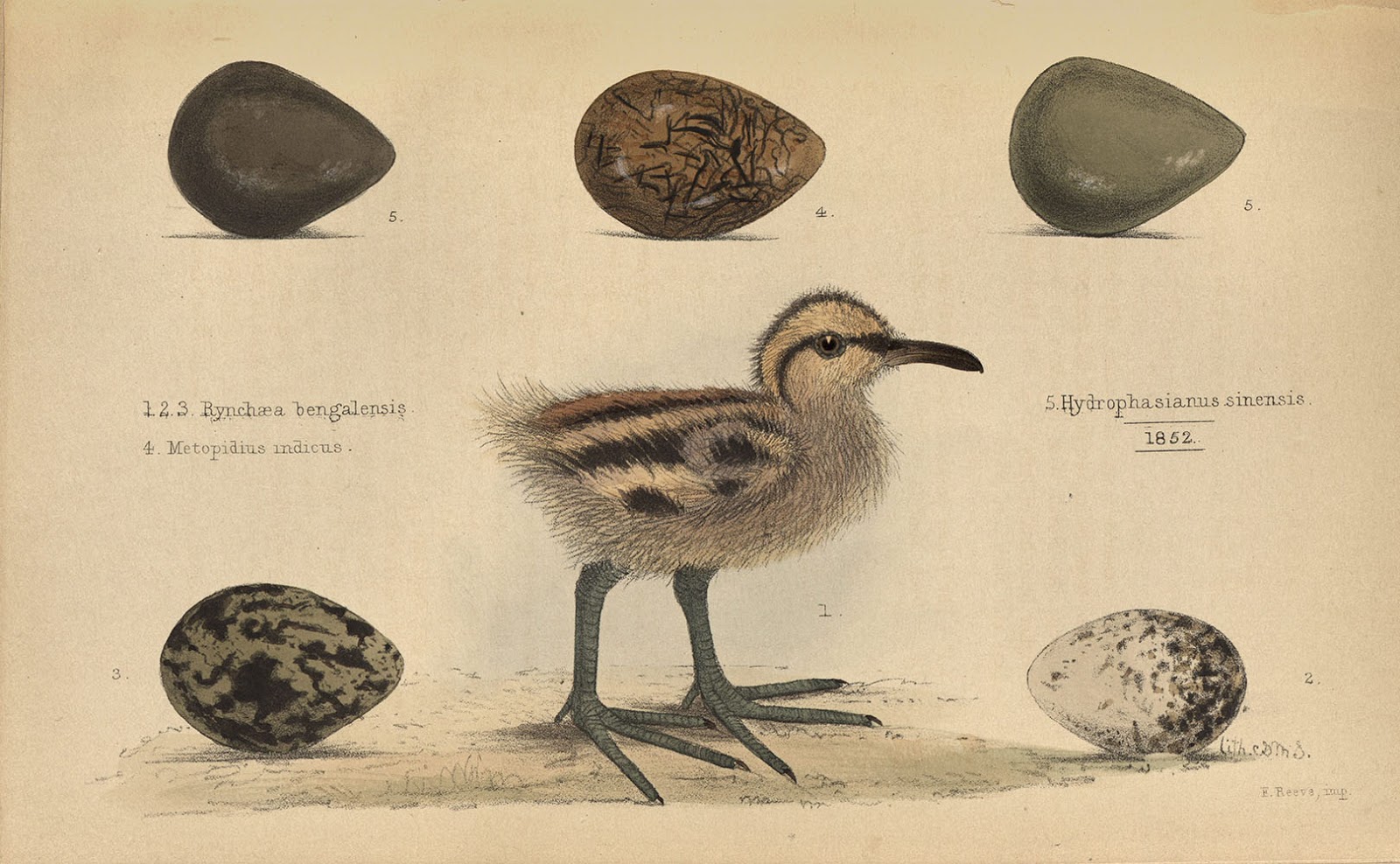
Juvenile bird and eggs, drawn by Catherine Strickland. Jardine, William. Contributions to Ornithology, Vol. 5. Edinburgh :W.H. Lizars, 1848-1853. Digitized by the Academy of Natural Sciences of Drexel University, Library and Archives. http://s.si.edu/2vVS5uL.

Jardine’s son William, a world traveler, sent his father many specimens to be included in the publication. Jardine’s brother in-law, W.H. Lizars, did the engravings.

The illustrations found in Contributions were perhaps the most remarkable element of the work. In addition to Catherine’s illustrations, Jardine also was responsible for some of the plates. It is also possible that one of Jardine’s other daughters, Helen, produced some plates or backgrounds for the work. The illustrations were created by a variety of means, including etching, lithography, and the relatively new papyrography. Jardine was so taken with the new method of papyrography that the first volume of Contributions included instructions on how the layman might achieve this method.

View Full Size Image
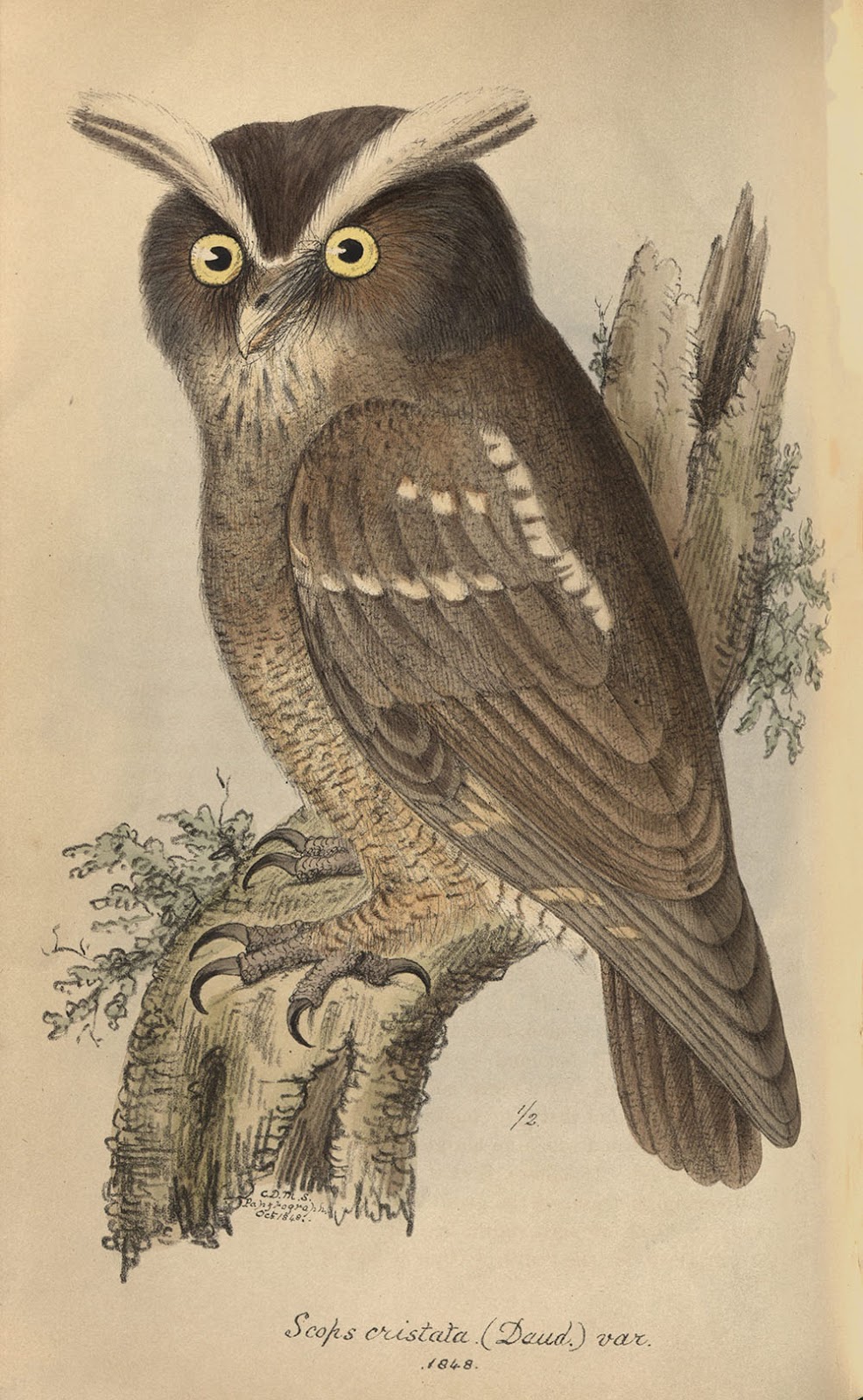
Crested owl (Lophostrix cristata) drawn by Catherine Strickland using papyrography. Her initials can be seen near the bottom of the illustration. Jardine, William. Contributions to Ornithology, Vol. 1. Edinburgh :W.H. Lizars, 1848-1853. Digitized by the Academy of Natural Sciences of Drexel University, Library and Archives. http://s.si.edu/2wBouYm.

The first article to appear in Contributions demonstrated Jardine’s desire and need for a plethora of new foreign bird specimens. “Hints for preparing and transmitting ornithological specimens from foreign countries” provided travelers, who might have previously abstained from collecting specimens due to lack of knowledge, with instruction on the tools and skills needed to produce bird specimens. Not only were step-by-step instructions on how to preserve birds provided, but also how to retain crucial observations about the bird.

Contributions also included articles by the who’s who of ornithologists of the day. John Gould contributed multiple times, including an article on three new species of hummingbirds, a topic on which he would later dedicate an entire work to. Charles Lucien Bonaparte, nephew of Napoleon, would also contribute a text on finches.

The production of Contributions was cut short in 1852 by the untimely death of Strickland, who had been struck by a train. His death devastated the two other principal organizers of the work, Jardine and Catherine Strickland. Jardine saw in Strickland a successor, someone who had the same interest in natural history that his sons did not. Jardine was so affected by Strickland’s death that he never produced another natural history work, only Strickland’s memoirs.

References

  • Jackson, Christine E. and Peter Davis. Sir William Jardine: A Life in Natural History. New York, NY: Leicester University Press, 2001.
  • Jardine, William. Contributions to Ornithology. Edinburgh: W.H. Lizars,1848-1853.
  • The Late Sir William Jardine. (1874). Nature, 11, p. 74.
August 24, 2017by ulib-libraryjobs
Blog Reel, Featured Books

Do Birds and Mammals Destroy Fish Populations? One 19th Century Naturalist Was Commissioned to Find Out.

View Full Size Image
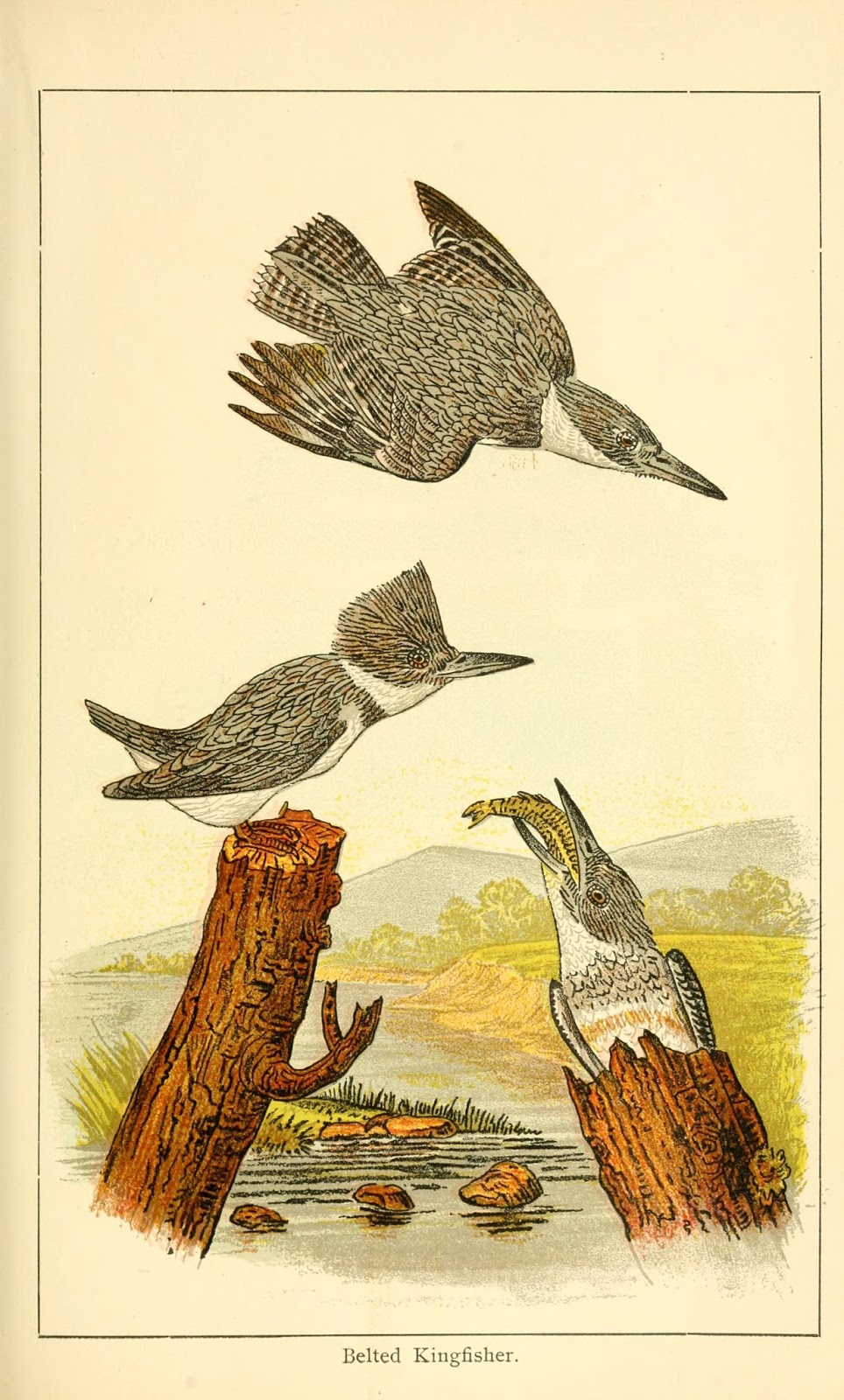
Belted Kingfisher. Warren, Benjamin Harry. Some Birds and Mammals which Destroy Fish and Game. Clarence M. Busch, state printer of Pennsylvania, 1897. Digitized by The Library of Congress. http://www.biodiversitylibrary.org/page/29736925. Illustration reproduced from Audubon’s Birds of America.

In the wake of the Quakers’ immigration to North America, a taste for the study of nature came “quietly” into being among descendants from the “tolerant” zones, notably the Commonwealth of Pennsylvania.

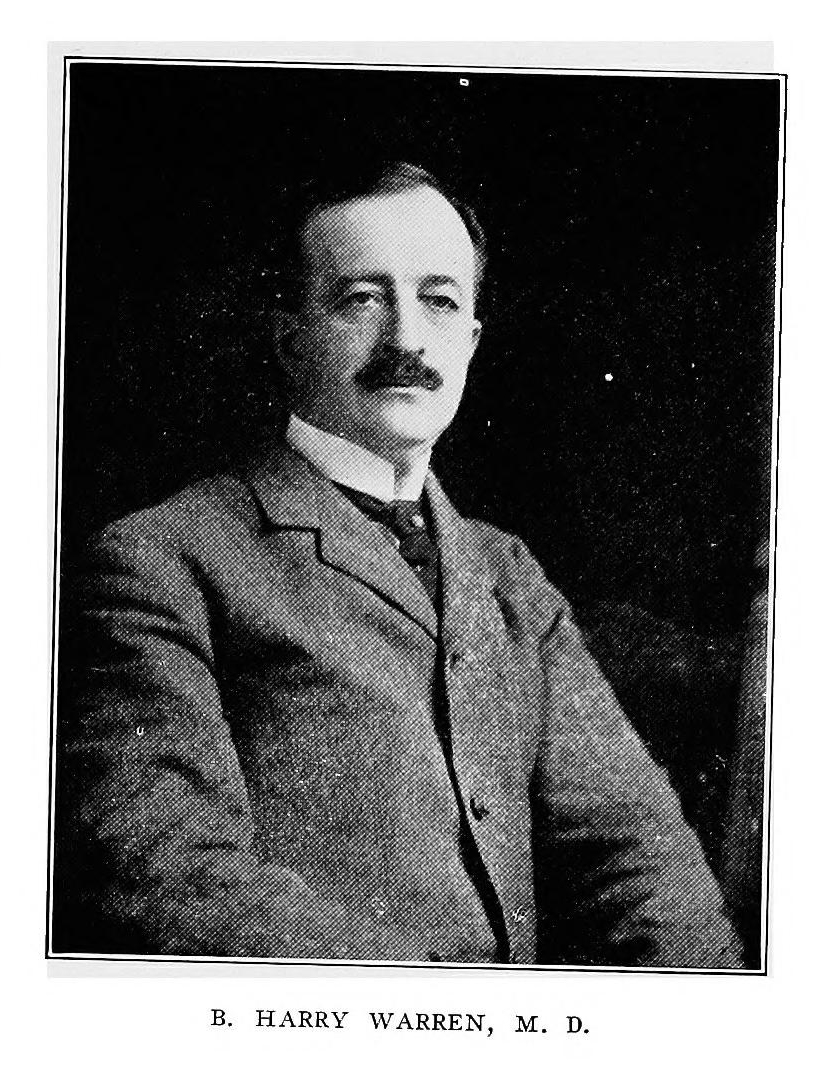
In the biographical notes from a 1919 introduction to the ornithology of Chester County, Pennsylvania, the active local ornithologists were concentrated in neighborhoods “settled largely by the English, Welsh, Scotch-Irish and German members of the Society of Friends, commonly called ‘Quakers’.” Publications in that period say the study of the natural sciences seemed “peculiarly agreeable.” Among these naturalists is Dr. Benjamin Harry Warren, the author of our featured book – Some Birds and Mammals which Destroy Fish and Game.

A West Chester native born in 1858, Warren was a productive ornithologists whose work was widely cited by ornithology monographs and papers during that period. During his youth, Warren had experienced an already bourgeoning field of Ornithology in Chester County. Since the late eighteenth century, some incipient ornithologists of the area had started searching for materials and accumulating specimens, with the help of taxidermists.

West Chester became home to the Chester County Cabinet of Science as early as the 1820s, and only about a decade later, the ornithological department acquired “the first nearly complete collection of local birds in the county”. There was, however, no catalogue of this collection; and the first county bird list was published much later in the 1860s. “If the second quarter of the nineteenth century failed of being the golden period of ornithology in Chester County,” the author of Chester Ornithology wittily remarked in the biographical notes, “it was due to Quaker modesty”.

View Full Size Image
Portrait of Benjamin Harry Warren. The Ornithology of Chester County, Pennsylvania. RG Badger, 1919. Digitized by Cornell University Library. http://www.biodiversitylibrary.org/page/37769995.

Before commissioned by the Department of Agriculture to investigate “the damage done by the fish-destroying birds and mammals”, Warren was already a professional “birder.” He published a list of 218 bird species in 1879-1880, and worked continuously to update the repository. Though his contemporary Witmer Stone – who served as president of the American Ornithologists’ Union (AOU), editor of the AOU’s periodical The Auk, and was also a botanist– may be a better-known ornithologist, Warren’s Report on the Birds of Pennsylvania was considered one of the first major works on Pennsylvania ornithology.

During Warren’s time, “birders” actively collected bird specimens – rather different from the aesthetics of the “non-collecting” birding preferred by modern ornithologists after the turn of the century. For his Report on the Birds of Pennsylvania, Warren, a medical doctor, dissected and examined over four thousand bird stomachs. In Some Birds and Mammals which Destroy Fish and Game, as the main research was to dissect the animal’s diet and evaluate if the species is piscivorous (fish-eating), post-mortem viscera examination was again the main approach.

To evaluate the extent to which birds and mammals damage the local fish populations, Warren spent three years collecting data from reliable sources. For this project, the Department of Agriculture reached out to the public by distributing circular notes asking for personal experiences related to the fish-damaging behavior of wild animals. Thus, Warren included in the report a number of correspondences with local farmers, fishermen and naturalists, in addition to his own study.

View Full Size Image
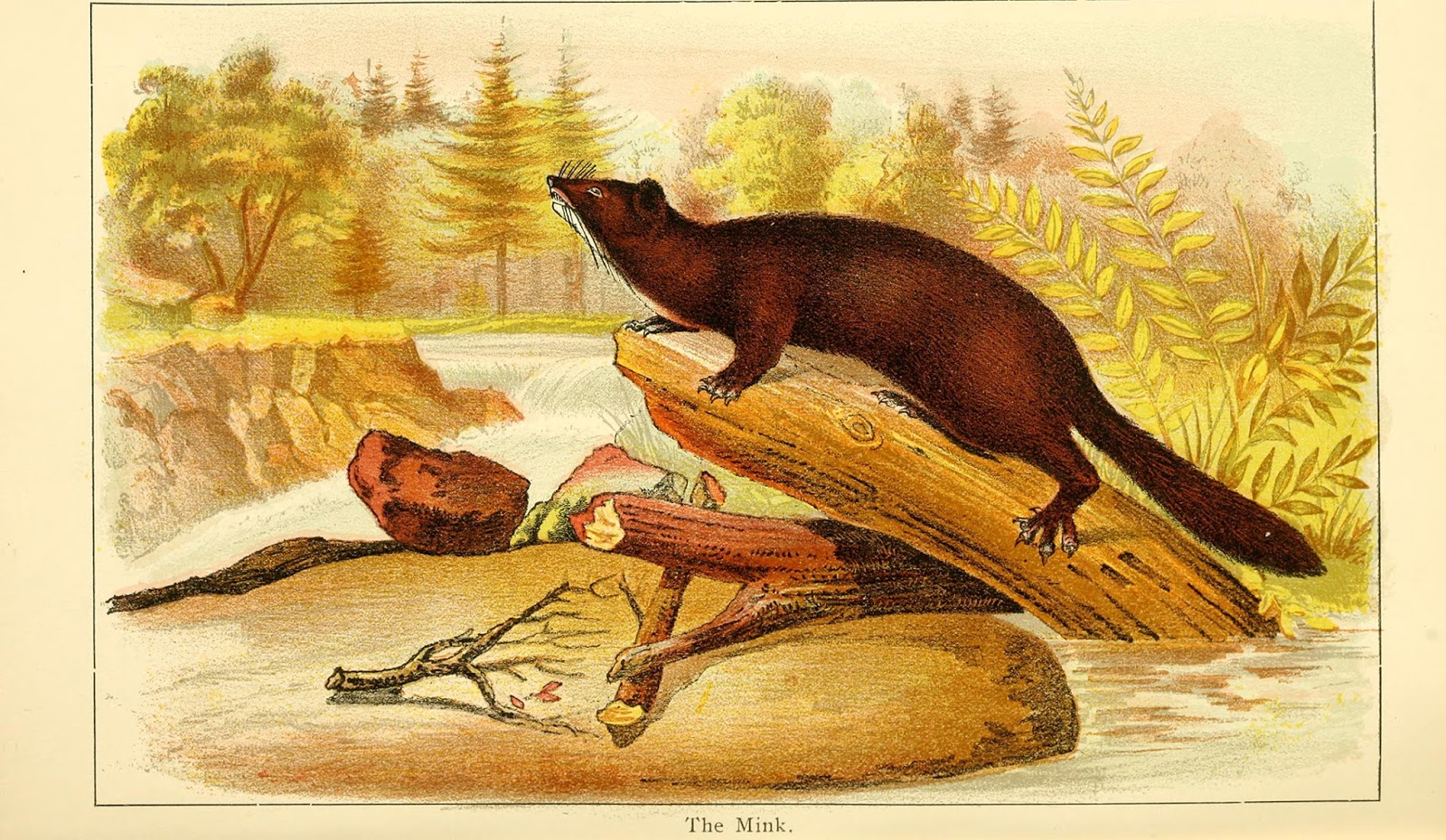
The Mink. Warren, Benjamin Harry. Some Birds and Mammals which Destroy Fish and Game. Clarence M. Busch, state printer of Pennsylvania, 1897. Digitized by The Library of Congress. http://www.biodiversitylibrary.org/page/29736933.

Warren concluded, from diet analyses and population survey, that birds and mammals overall played an insignificant role in fish decline. The real threat to local fish loss was illegal fishing. A long-standing misunderstanding, as it turned out, could only be effectively corrected by scientific evidence.

View Full Size Image
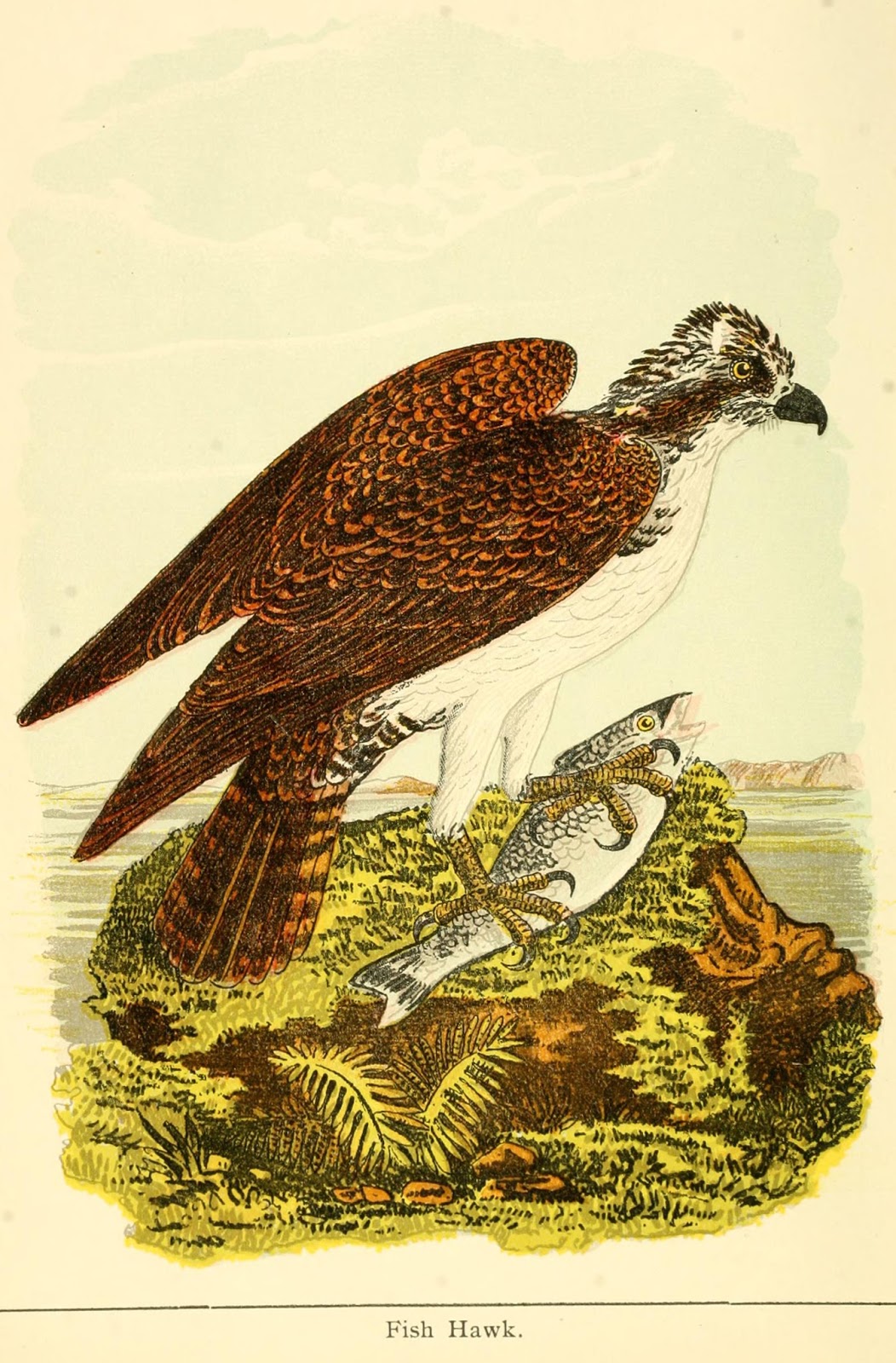
Fish Hawk. Warren, Benjamin Harry. Some Birds and Mammals which Destroy Fish and Game. Clarence M. Busch, state printer of Pennsylvania, 1897. Digitized by The Library of Congress. http://www.biodiversitylibrary.org/page/29736918.

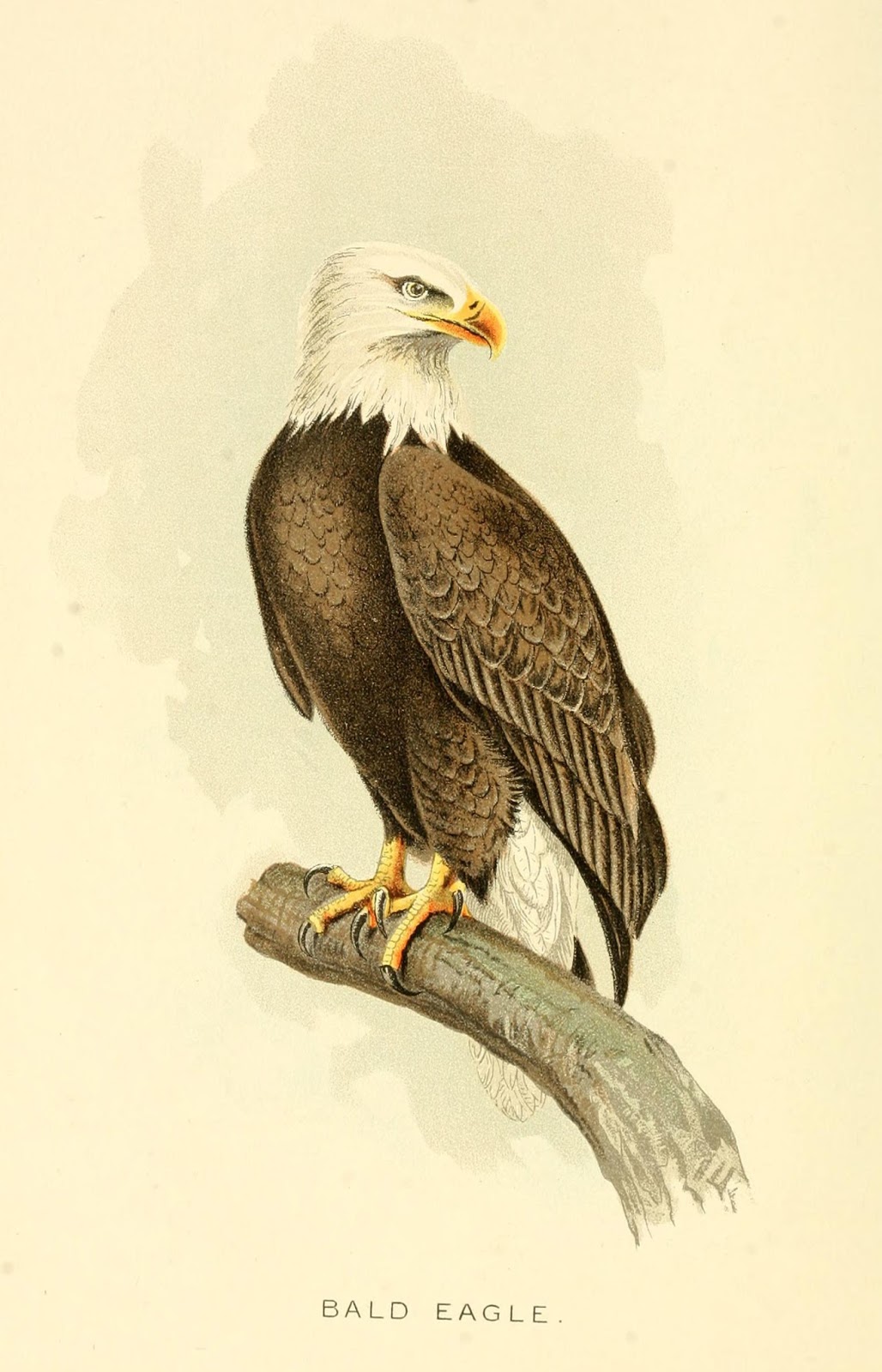
The initiative of this research appears anthropocentric, but through careful investigation, valuable information on morphology, diet and behavior of the local wildlife was gathered. Warren not only presented in detail the characters of each species with carefully drawn colored-illustrations (which were reproduced from other sources, including Audubon’s Birds of America), but also weaved vivid “behavioral dramas” into his artful account of species interactions. The excerpt below shows a gripping story exemplifying antagonism between two raptors:

“…Perched on some tall summit, in view of the ocean, or of some water-course, he (the Bald Eagle) watches every motion of the Fish Hawk while on wing. When the latter rises from the water, with a fish in its grasp, forth rushes the eagle in pursuit. He mounts above the Fish Hawk, and threatens it by actions well understood, when the latter, fearing perhaps that its life is in danger, drops its prey. In an instant the eagle, accurately estimating the rapid descent of the fish, closes his wings, follows it with the swiftness of thought, and the next moment grasps it.”

View Full Size Image
Bald Eagle. Warren, Benjamin Harry. Some Birds and Mammals which Destroy Fish and Game. Clarence M. Busch, state printer of Pennsylvania, 1897. Digitized by The Library of Congress. http://www.biodiversitylibrary.org/page/29736916.

In addition, readers could find bits of cultural elements sprinkled through the book – charming bird-lores and superstitions, such as the Tartars’ belief that touching a woman with a kingfisher’s feather would make her fall in love with them.

These cultural myths, beautiful yet unrealistic, remind us of the hidden theme of the book: the relationship between man and nature. Works like Warren’s Some Birds and Mammals which Destroy Fish and Game demonstrate the ardent and indefatigable efforts of early naturalists to capture these relationships and expand our knowledge of the natural world.

References

  • Warren, Benjamin Harry. Some Birds and Mammals which Destroy Fish and Game. Clarence M. Busch, state printer of Pennsylvania, 1897.
  • Warren, Benjamin Harry. Report on the Birds of Pennsylvania: With Special Reference to the Food Habits, Based on Over Four Thousand Stomach Examinations. EK Meyers, State Printer, 1890.
  • Burns, Franklin Lorenzo. The Ornithology of Chester County, Pennsylvania. RG Badger, 1919.
May 25, 2017by ulib-libraryjobs
Blog Reel, Featured Books

Notes from William Brewster: The Evolving Field of Zoology

As a part of the Field Notes Project, the Ernst Mayr Library is digitizing the journals, correspondences and photographs of William Brewster (1851-1919), a self-trained ornithologist and specimen curator at Harvard’s Museum of Comparative Zoology (MCZ), the first president of the Massachusetts Audubon Society, and a co-founder and president of the American Ornithologists’ Union.

Brewster recorded a lifetime of observations on wildlife and plants, changing landscapes, and daily weather, making his notes a valuable resource for modern scientists studying ecological change. After working as an animal specimen curator for the MCZ for many years, he also bequeathed his personal collection of birds and other animals to the museum.

As I’ve worked to digitize and transcribe the Brewster collection, I’ve been periodically sharing interesting finds in a blog post series on the Mayr Library website. These posts highlight entertaining animal encounters, beautiful descriptions, letters, and more.

View Full Size Image
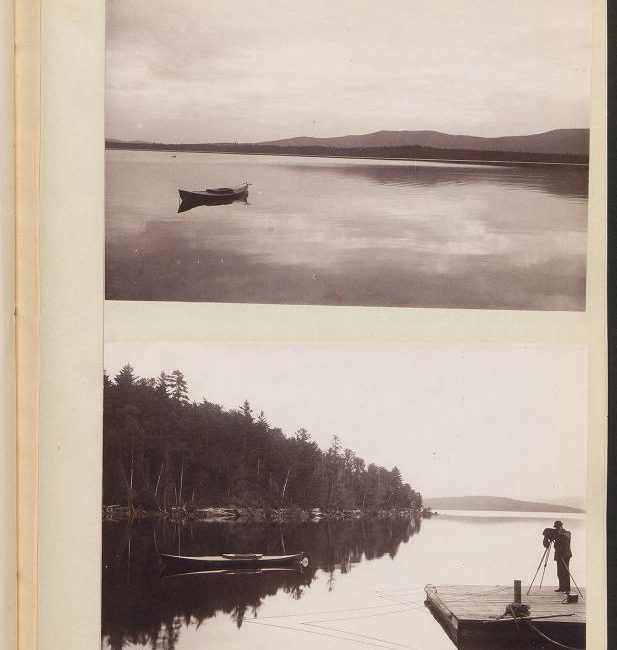
Lower image: Portrait of Brewster with his camera at
Lake Umbagog, Maine, likely captured by his assistant, Gilbert.
Journals of William Brewster, 1871-1919 (inclusive). (1898). http://biodiversitylibrary.org/page/45105729

I’ve been especially fascinated to track the development of Brewster’s thoughts on scientific collecting. I touched on this subject in a post on the Biodiversity Heritage Library blog, “Digging into the writings of a 19th century ornithologist”. As I’ve continued to scan and transcribe the Brewster collection, an interesting story has emerged. It was a complex job to juggle the hats of museum curator, scientific collector, and bird-lover.

In an 1886 letter, Brewster scoffed at the assertion that “the best was to study bird was with an opera glass!”[1] This was one decade before the Massachusetts Audubon Society for the Protection of Birds was founded, with Brewster as its first president. Despite his earlier reservations, journals from the 1890s show Brewster embracing new methods of data collection using binoculars and cameras, and reflecting critically on the future methods and goals in zoology.

While he continued to advocate for the importance of collecting wildlife specimens, Brewster increasingly felt that humans had an ethical responsibility to carefully mitigate human impact on wildlife – and this responsibility belonged to scientists, too.

View Full Size Image
Brewster returned for many years to make observations at Lake Umbagog, Maine, sometimes staying in his specially built house-boat.
The person standing on deck is probably his assistant, Gilbert. Journals of William Brewster, 1871-1919 (inclusive). (1898). http://biodiversitylibrary.org/page/45105746

In the 1890s Brewster began to consistently document a deep conflict between his desire to study nature and his desire to leave wildlife untouched. Because his field notes are typically more focused on data than on personal details, these comments really do stand out and signal that this became a matter of great concern to him. In 1892, he observes:

As on several former occasions when I have seen a Hawk catch a smaller bird and have listened to its expiring cries I was moved by deep pity and fierce wrath to an extent surprising on the part of one who, like myself, has killed thousands of birds without suffering more than an occasional slight qualm. But there is something peculiarly moving and piteous in the voice of a bird in the clutches of a Hawk – a quality of mingled pain and apprehension which the grasp of the human hand seldom or never elicits. [2]

Over the next few years, we find that he has gone from those aforementioned “occasional slight qualm[s]” to a daily struggle to complete his work. In 1896 he refers to collecting birds as “a most painful task”[3], and writes that he is sometimes “quite unable to bring [himself] to the point of doing it.” [4]

View Full Size Image
Close-up of a female moose Brewster sketched at Lake Umbagog, Maine. Journals of William Brewster, 1871-1919 (inclusive). (1896). http://biodiversitylibrary.org/page/44924677

It’s clear that Brewster saw a need for some change in the current scientific practices. Birds were generally being over-harvested, for fashion but also for science. And not only was nature conservation on his mind, but it seems that he felt personally dissatisfied by the limited scope of zoology. Brewster saw the need to legitimize observational studies of animal behavior in a scientific community that was focused primarily on taxonomy and building large collections. While he wrote many letters to colleagues debating the species and subspecies designation of specimens, his journals are brimming with descriptions and speculations about animal behaviors.

From his correspondences, we can see that his thinking was encouraged by Frank Michler Chapman, a younger friend and colleague working at the American Museum of Natural History. In 1890, Chapman had written to Brewster to express his concern that specimen collecting was destructively out of control:

This miserable collecting. It is the cause of all higher failing, it lowers a true love of nature through a desire for gain. I don’t mean a specimen here and there, but this shooting right and left, this boasting of how many skins have been made in a day or season. We are becoming pot-hunters. We proclaim how little we know of the habits of birds and then kill them at sight. Sometimes I am completely disgusted with our ways and myself in particular… I long for an outing where the gun will be secondary, recorded observations primary, where I shall be entirely alone or with a companion whose object is my object. 

We expect too much, that’s the trouble. Collecting, we have at the end of each day some tangible result to show for the day’s work. But it is useless to expect some novel or interesting incident for every day[‘]s observation. But listen to this final result: If I had gone down the Suwanee [River] to record what I saw, I could now have written a more or less interesting paper, as it is I have nothing to say, but I have a hundred or so skins. The question with me is, how am I going to change this? …We have degenerated to ‘gunners’; our success in the field is estimated by the size of our collections. 

… Will you embark with me on a novel ornithological expedition, whose aim shall be to really observe birds to learn something of them. Where the gun shall be a servant, not a master, where days may pass without a skin being made, where there will be time to speculate and discuss the habits of birds observed, where systematic observation of certain phaenomena may be attempted… Returning we could write a paper. How do you suppose this paper would compare with the ones we have to-day, where after a trip[‘]s experience all we can say concerning a given species is: Common, arrived ___.

Such a paper with your name attached to it would start a new epoch in the study of American birds. Imagine any one now-a-days making an extended trip for the sole purpose of observing birds. I know, I have several papers in mind which approach this – yours are nearest. Do you suppose we can reach that condition of mind where one good observation will be considered worth fifty skins, – as it really is. [Line breaks and emphasis added.] [5]

View Full Size Image
A page from William Brewster’s journal. Illustration reads “Made by Mr. Chapman from the feather of the ivory-bill shot March 24 and sent to me as a Christmas mount Dec. 25 1890.”
Journals of William Brewster, 1871-1919 (inclusive). (1890). http://biodiversitylibrary.org/page/44690675

Brewster was too busy with travel and fieldwork to respond directly (in writing, at least) to Chapman’s proposition, but he did reply a few weeks later, “I have been off in my canoe along the ‘South Shore’ of Mass for the past month & have made a good many valuable notes… I left the gun at home for the first time in my life and did not once regret it, either!” [6]

How amazing it was to find, in writing, a proposal to launch “a new epoch in the study of American birds”! While specimen collections are an important part of modern scientific work, it’s true that the study of zoology does look very different today than it did in the 19th century, and here we see the seeds of that change.

It would be easiest to paint Brewster as simply a taxidermist, or as an environmentalist, but as usual we find that the scientist was about as complex as the subjects he studied. Just as Brewster’s careful notes on species abundance and daily temperature are an invaluable resource for researchers, it’s enriching from a humanities perspective to uncover the personal stories that drove a major paradigm shift in the study and stewardship of natural world. While nothing quite compares to studying old documents in a quiet room, it’s exciting to be widening accessibility to these data and historical insights.

The BHL Field Notes Project is funded by the Council on Library and Information Resources (CLIR).
Images used in this post were previously digitized with funds from IMLS.

Citations:
[1] Correspondences, Letter to George Sennet, March 7, 1886. Soon to be available in BHL
[2] July 28. Journals of William Brewster, 1871-1919 (inclusive). (1892). http://biodiversitylibrary.org/page/44790847
[3] July 3. Journals of William Brewster, 1871-1919 (inclusive). (1896). http://biodiversitylibrary.org/page/44924596
[4] July 9. Journals of William Brewster, 1871-1919 (inclusive). (1896). http://biodiversitylibrary.org/page/44924608
[5] Correspondences, Frank Michler Chapman to William Brewster, June 15, 1890. Soon to be available in BHL
[6] Correspondences, William Brewster to Frank Michler Chapman, August 8, 1890. Soon to be available in BHL

Additional Resources:
To read more about Brewster’s encounter with the moose, read ‘Notes from William Brewster: Moose!‘
To learn more about how scientists use specimen collections today read ‘Natural history collections – why are they relevant?’ on The Guardian, or visit the page ‘Why Collections Matter’ on the Society for the Preservation of Natural History Collections’ website.

To learn more about the origins of the Massachusetts Audubon Society, read ‘Hats off to Audubon’ in Audubon Magazine, and the ‘History of Mass Audubon’ page on the society’s website.

April 6, 2017by lmyrick
Blog Reel, Featured Books

We All Remember the Hessian Mercenaries….

View Full Size Image
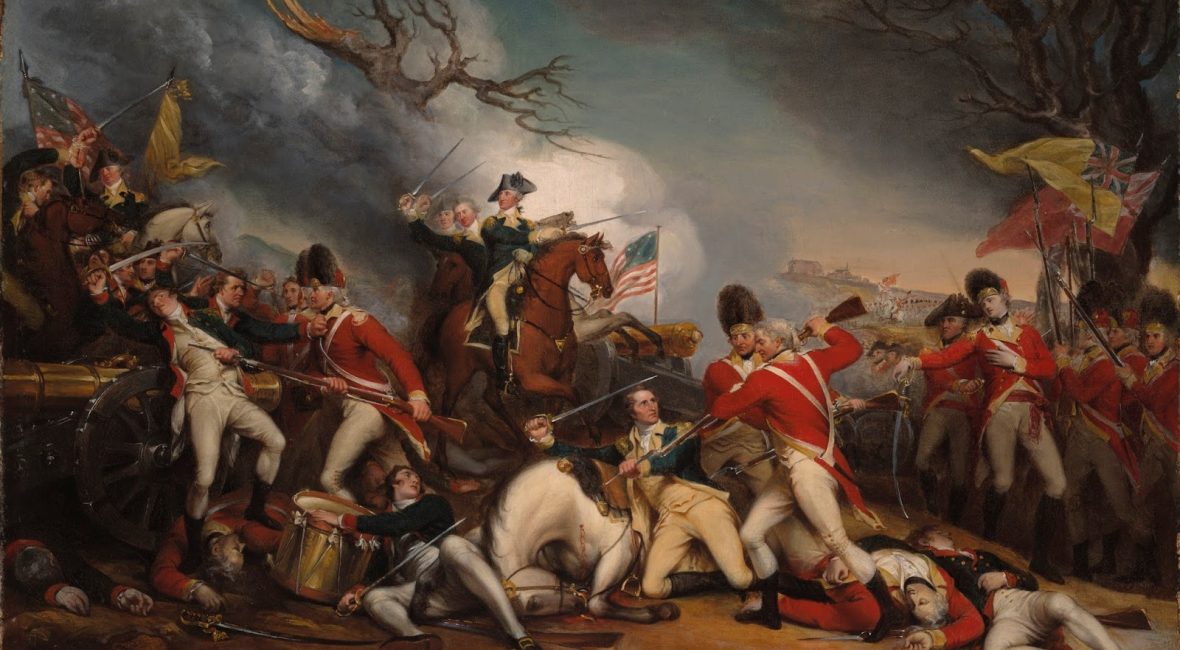
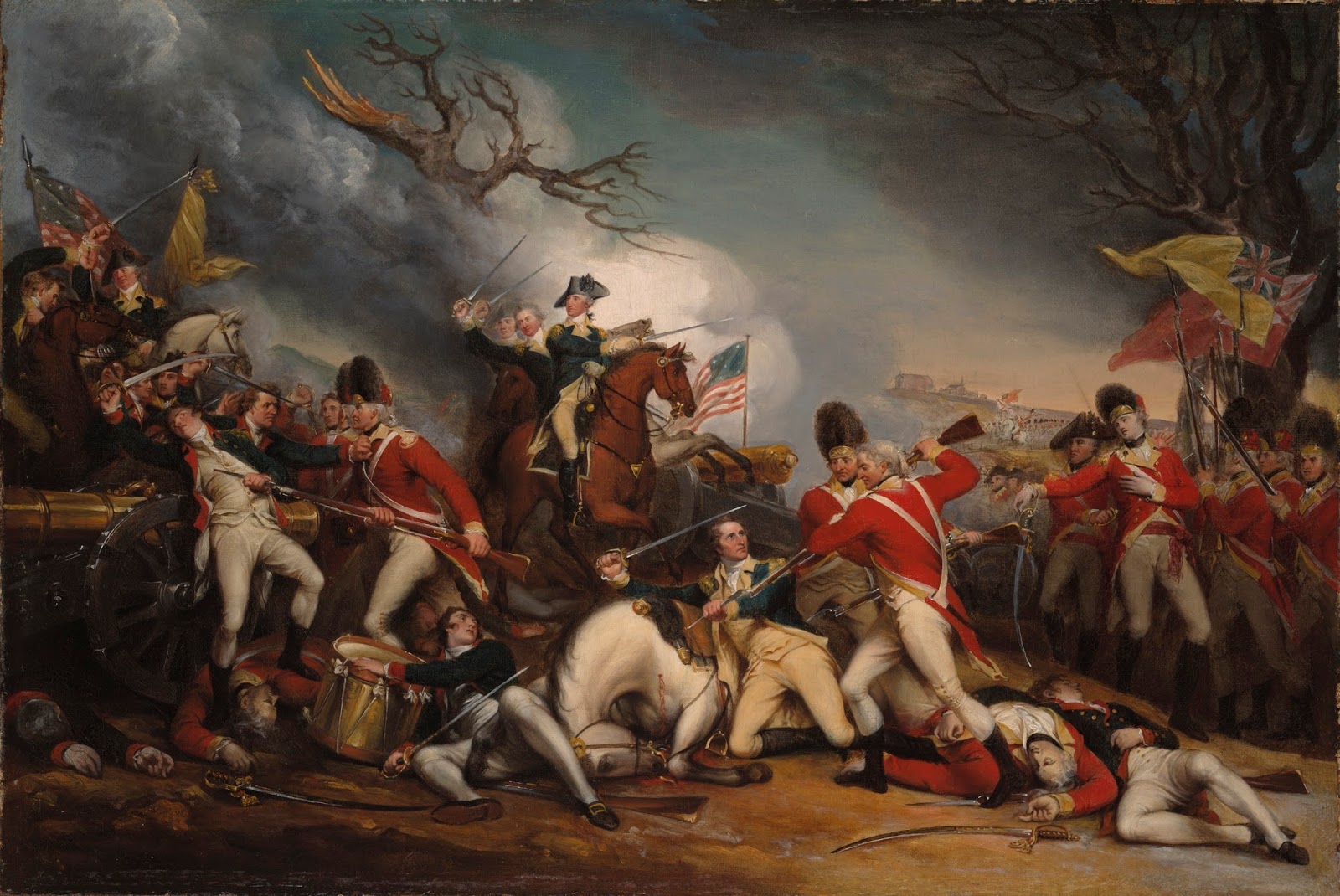
The Death of General Mercer at the Battle of Princeton, January 3, 1777. By John Trumbull. Depicting the death of the American General Hugh Mercer at the Battle of Princeton on January 3, 1777 during the American Revolutionary War. Source: Wikimedia Commons.

We all remember the Hessian mercenaries, those drunken, bayonet-wielding louts hired by George the Third to put down his rebellious American colonies. Every American schoolchild learns about these monsters, and how they suffered their come-uppance in Trenton in 1776, when their Christmas debauch came to an abrupt and bloody end in a battle their rum-blurred eyes never even saw coming.

View Full Size Image
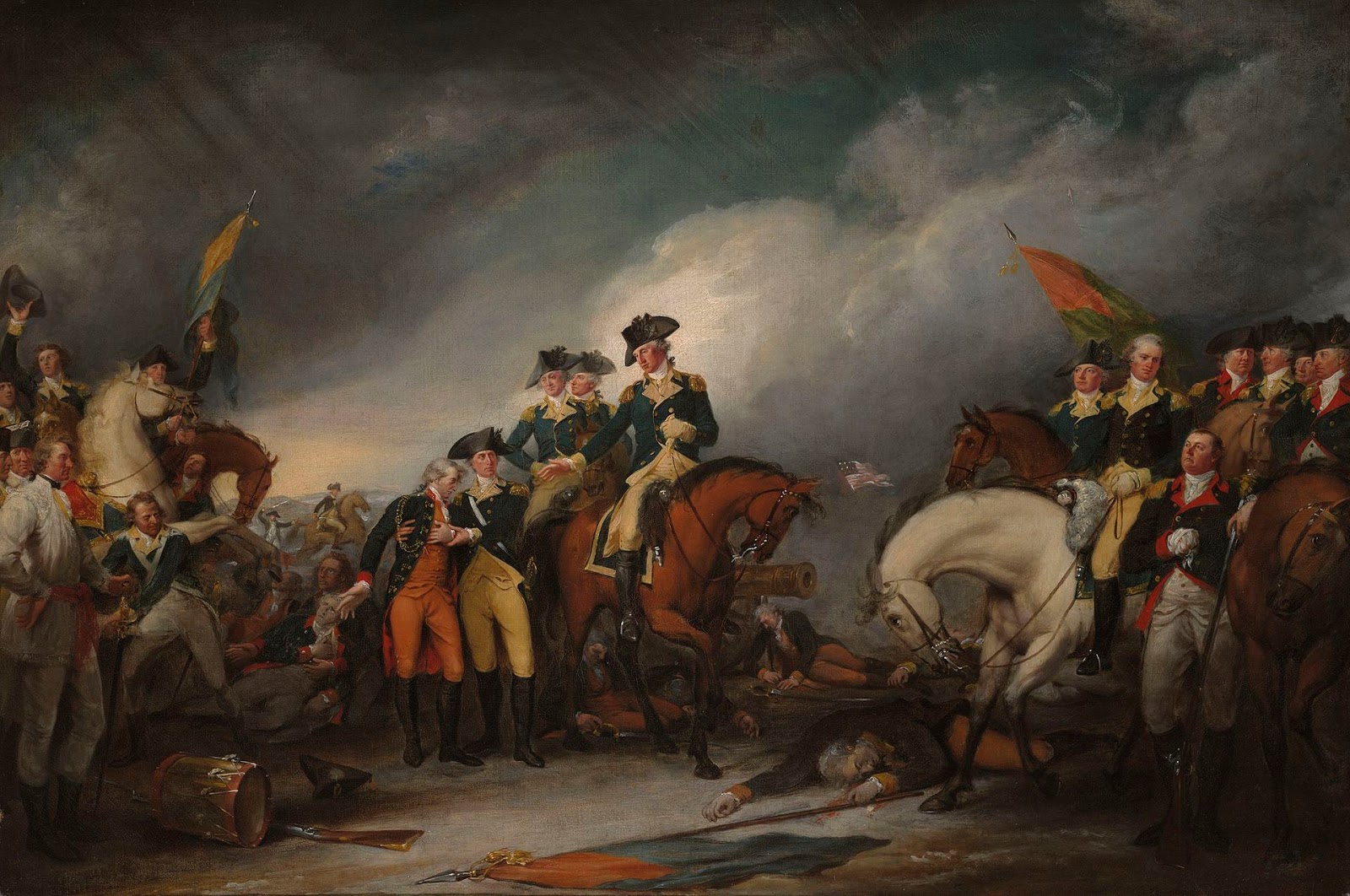
The Capture of the Hessians at Trenton, December 26, 1776. By John Trumbull. Depicting the capture of the Hessian soldiers at the Battle of Trenton on the morning of December 26, 1776 during the American Revolutionary War. Source: Wikimedia Commons.

For over 200 years, we’ve painted the German soldiers in America with a mighty broad brush. I’m sure that there were barbarians among them, but there were also educated men who spent their time on this side of the Atlantic studying this exotic continent and its inhabitants—when they weren’t drinking and fighting and skewering patriot children, that is.

View Full Size Image
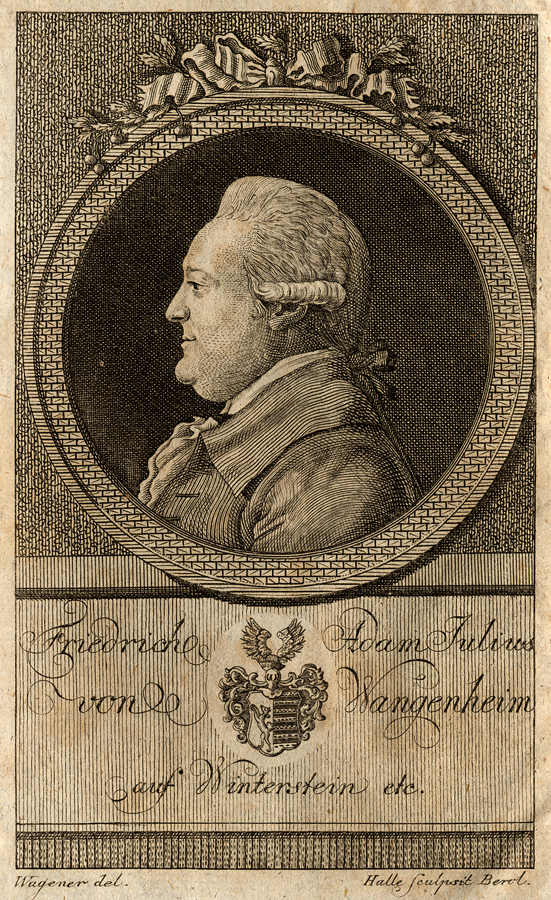
Portrait of Baron Friedrich Adam Julius von Wangenheim. Frontispiece of volume 39 of the Öconomische Enzyklopädie of 1787. Source: http://www.kruenitz1.uni-trier.de/.

The botanists among these scholarly soldiers are the best known today. Baron Friedrich Adam Julius von Wangenheim (1747/1749-1800), educated in forestry science in his native Saxony, arrived in New York in June 1777, and would eventually see combat on the British side at Brandywine and Charleston. When he wasn’t in battle, though, he wrote that:

“without neglecting my official duties, I spent every leisure hour in acquiring both a theoretical and a practical knowledge of the woody plants growing in that temperate region of North America.”

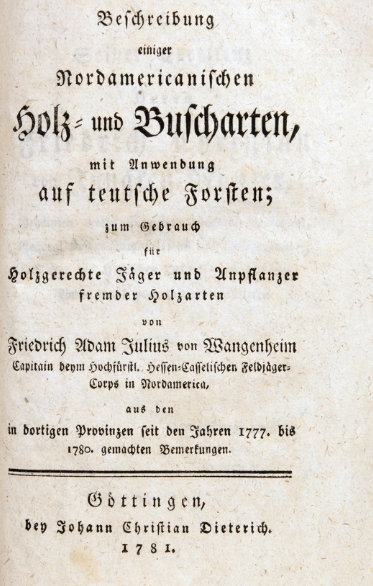
In May 1780, stationed in northern Manhattan, he completed his first book, A Description of Certain North American Trees and Shrubs, which appeared in print in 1781.

View Full Size Image
Title page, A Description of Certain North American Trees and Shrubs by Baron Friedrich Adam Julius von Wangenheim.

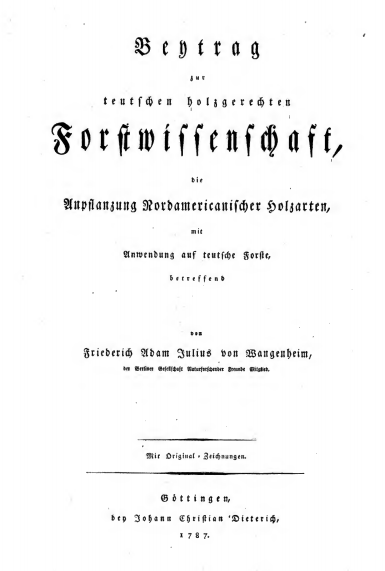
On returning to Europe in 1784, von Wangenheim expanded that work, which had covered 72 species, into a comprehensive treatise on the woody plants of North America and the possibility of transplanting them into German forests for timber and fuel.

View Full Size Image
Title page, Beytrag zur teutschen holzgerechten Forstwissenschaft, die Anpflanzung Nordamericanischer Holzarten mit Anwendung auf teutsche Forste. By Baron Friedrich Adam Julius von Wangenheim.

These publications and a mass of articles and essays made von Wangenheim a name and earned him an appointment as chief forester of East Prussia. There he made his most important contribution to zoology, a thorough study of the European elk in Lithuania.

View Full Size Image
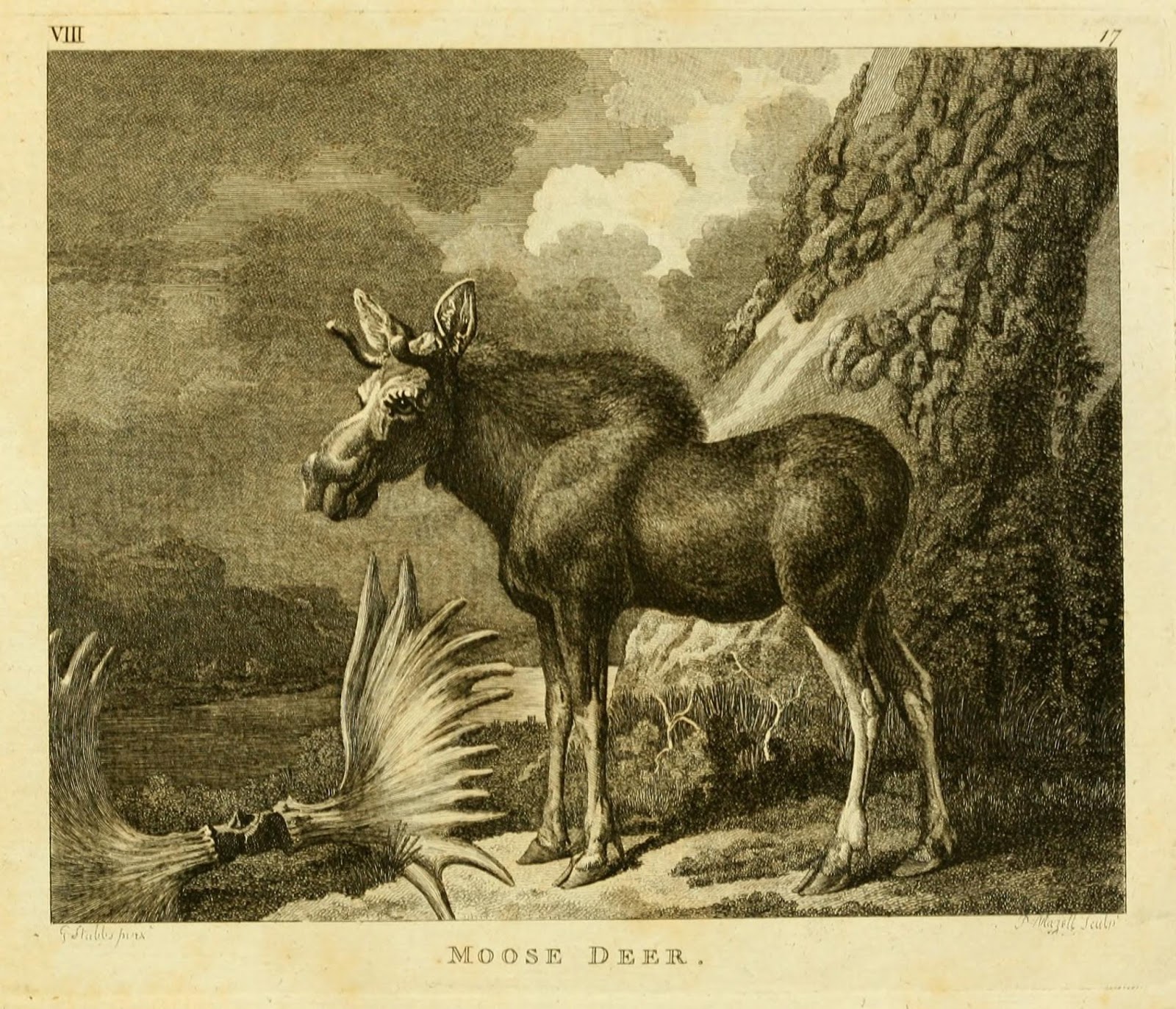
The “moose deer” or European elk (Cervus alces). From Pennant, Thomas. Arctic zoology. v. 1 (1874). http://www.biodiversitylibrary.org/page/29568042. Digitized by Smithsonian Libraries.

Von Wangenheim brought his American experience to bear in his account, noting in his practical way that the species is called the “moose deer” in the New World, where native Americans use its skin for clothing, gloves, moccasins, blankets, and tents.

View Full Size Image
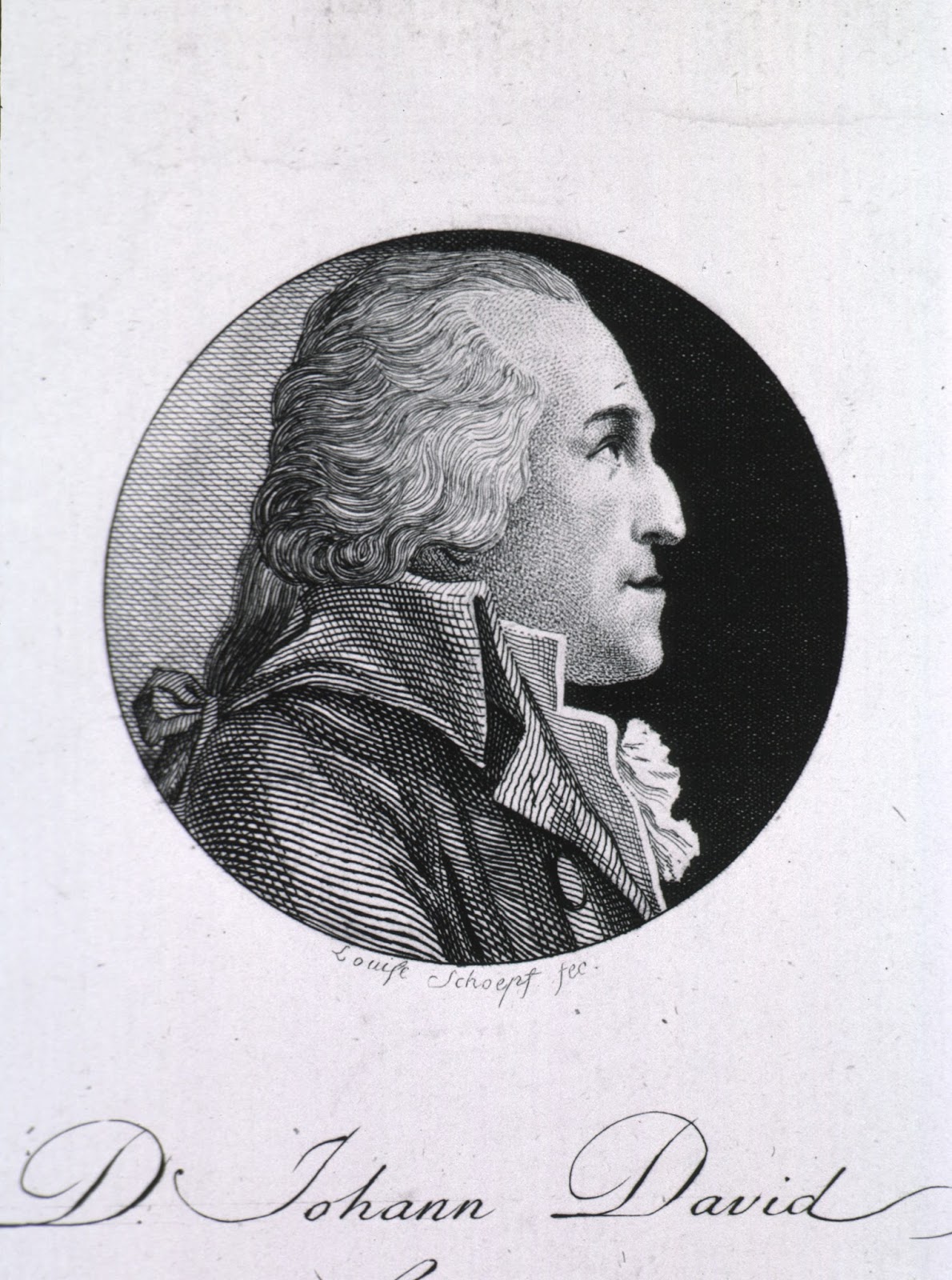
Portrait of Johann David Schoepf. Source: U.S. National Library of Medicine. https://collections.nlm.nih.gov/catalog/nlm:nlmuid-101428527-img.

More ambitious still, and less intensely focused on the economic use of the plants and animals around him, was Johann David Schoepf (1752-1800), field surgeon to one of the most notoriously bloodthirsty of the German regiments. Like von Wangenheim, Schoepf arrived in New York in June 1777. Once the war was over, inspired by the famous tours of Bartram and Catesby, Schoepf spent a year traveling west to Kentucky and south eventually to the Bahamas. Trained, like so many physicians of his day, in botany, Schoepf was naturally most interested in American plants and their medical uses; among the professional colleagues he most eagerly sought out were William Bartram and Henry Melchior Mühlenberg, but he also collected plant lore from native Americans, country doctors, and “old wives.”

View Full Size Image
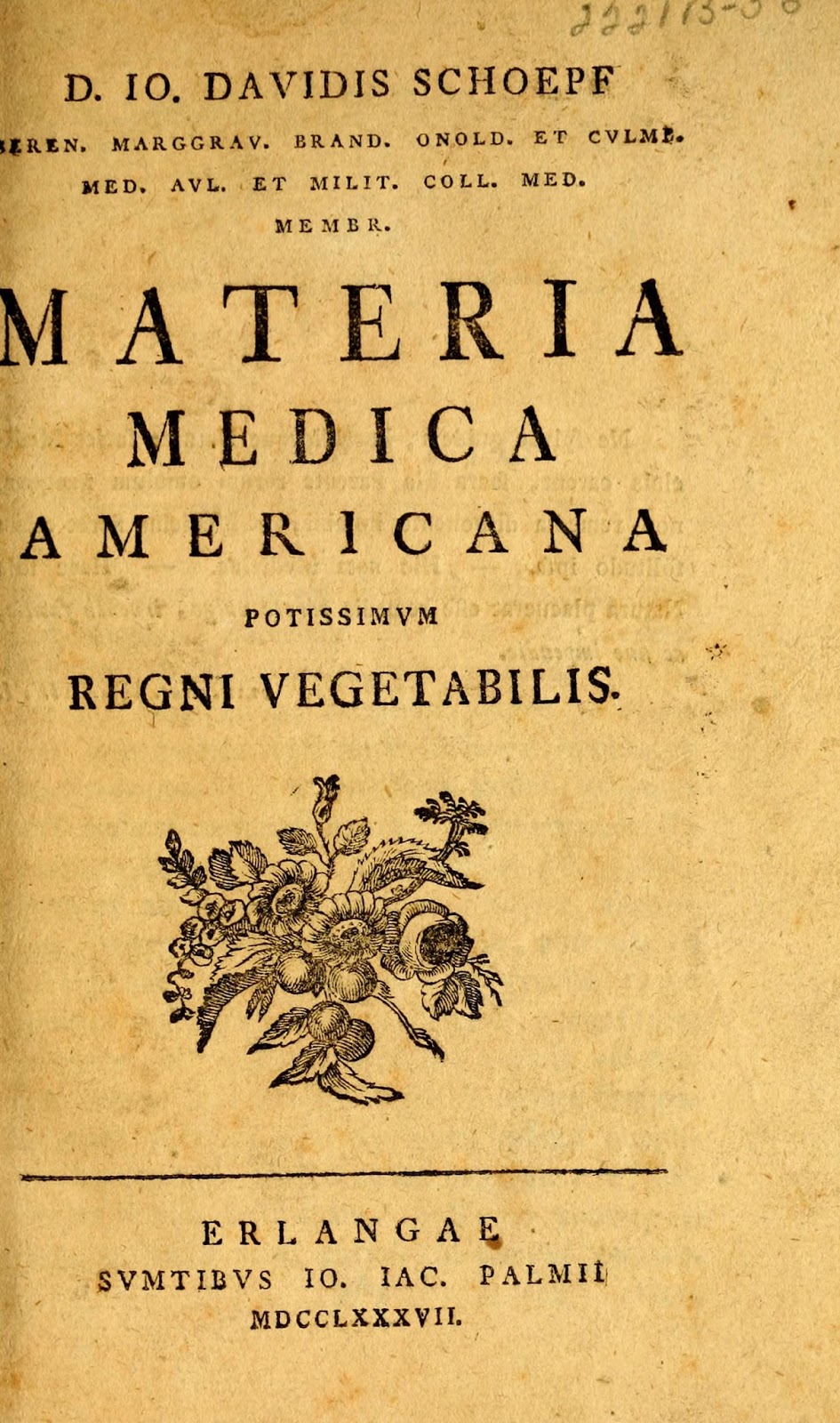
Title page of Materia medica americana potissimvm regni vegetabilis. (1787). By Johann David Schöpf. http://www.biodiversitylibrary.org/page/16502307. Digitized by University of Pittsburgh Library System .

Schoepf published his observations in 1787, in a comprehensive manual of the New World’s medicinal resources. Schoepf lists more than 350 plants, fungi, and lichens used in medicine, and ends his compendium with remarks on remedies derived from animal and mineral materials, ranging from human fat (an “obsolete, superstitious” practice) and dried rattlesnake flesh to amber and coal.

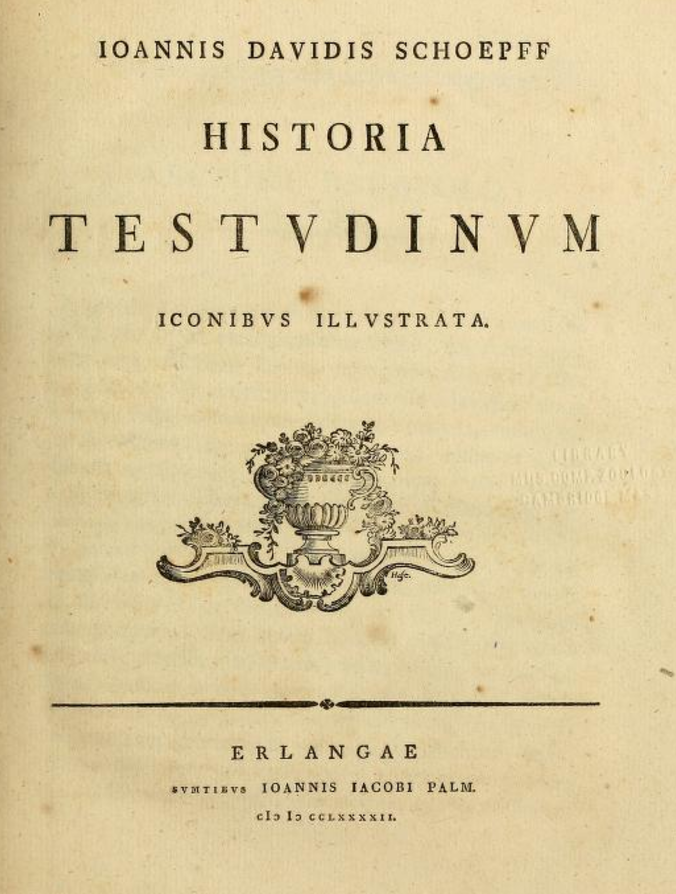
Today, Schoepf is most famous not for his pharmacopeia but for another book, the last he published before his early death in 1800. On his return to Europe in the summer of 1784, Schoepf took with him 64 live turtles, specimens that provided the basis for his Illustrated Natural History of the Turtles, published in Erlangen in 1792.

View Full Size Image
Title page of Ioannis Davidis Schoepff Historia testvdinvm iconibvs illvstrata. (1792) (“Illustrated Natural History of Turtles”). By Johann David Schöpf. http://www.biodiversitylibrary.org/page/32540981. Digitized by Harvard University, Museum of Comparative Zoology, Ernst Mayr Library.

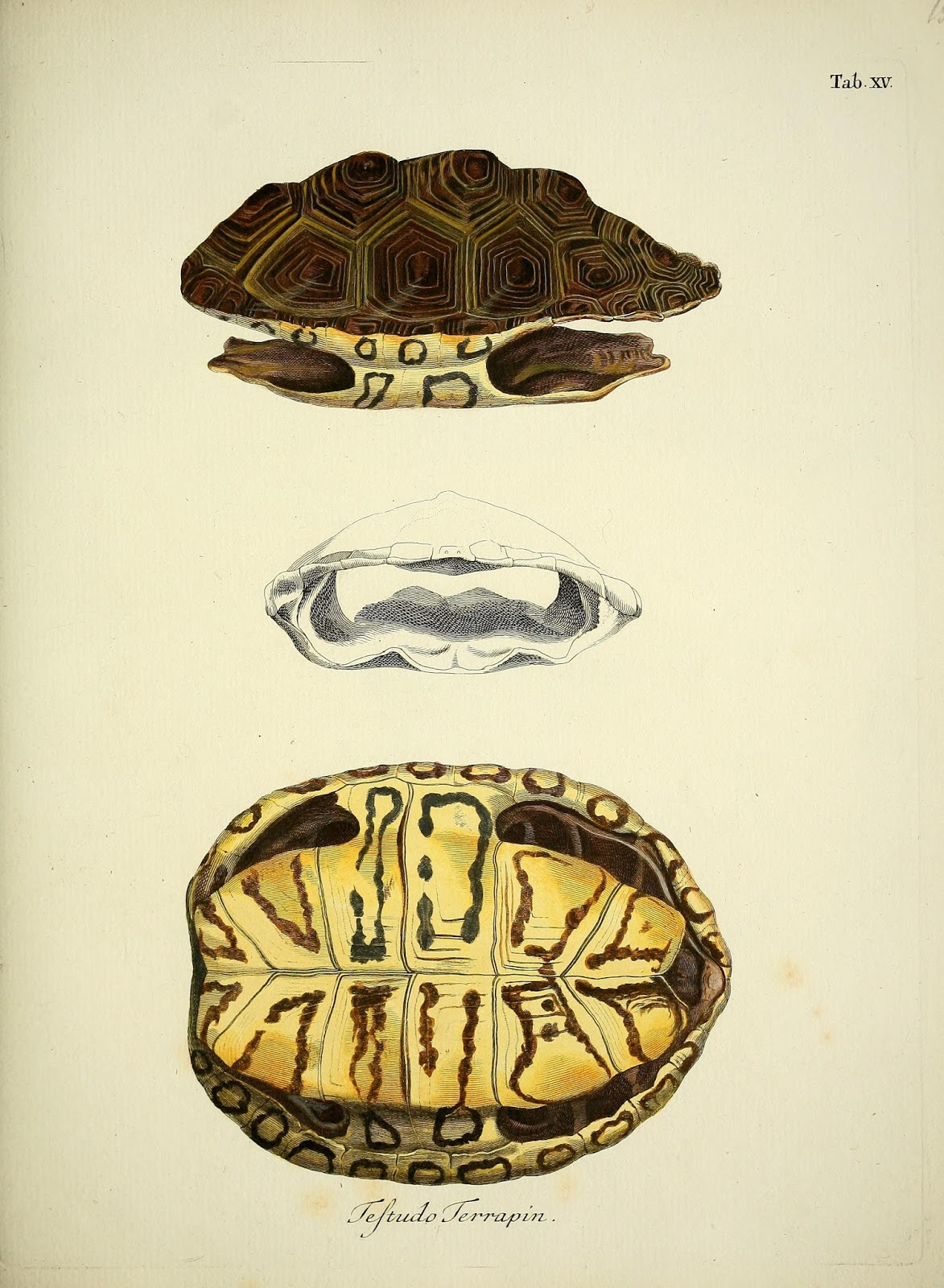
Among the species he treated there was one he named Testudo terrapin; Schoepf based his description and plate on two shells he had collected on Long Island and on two others sent him by Mühlenberg (perhaps from the market in Philadelphia).

View Full Size Image
Testudo terrapin. Naturgeschichte der Schildkröten. (1792-1801). By Johann David Schöpf. http://www.biodiversitylibrary.org/page/38925513. Digitized by Smithsonian Libraries.

This was the first scientific description of the handsome species now known as the diamondback terrapin.

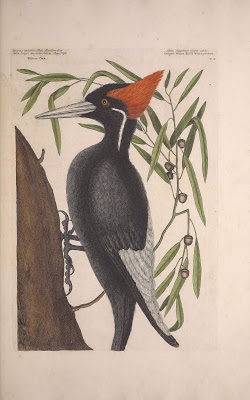
While von Wangenheim barely mentioned birds in his accounts of North American nature, Schoepf was more interested in things feathered. He found northern cardinals and blue grosbeaks in the Carolinas, and appears to have made close observations of turkey vultures, pointing out that the large, moist nostrils suggest that though “not proved, it is nevertheless likely” that they locate their aromatic prey by smell. Less credible is Schoepf’s claim that he and his companions encountered ivory-billed woodpeckers in eastern Pennsylvania.

View Full Size Image
Ivory-billed woodpecker (Campephilus principalis). Catesby, Mark. The Natural History of Carolina, Florida, and the Bahama Islands. Ed. 1, v. 1 (1729-1747). http://www.biodiversitylibrary.org/page/40753165. Digitized by Smithsonian Libraries.

The occasional misidentification aside, early American ornithology suffered a significant loss when Schoepf entrusted to Jacob Rubsamen his manuscript containing “numerous and precisely written descriptions of almost all the birds” he had seen in America. Rubsamen, a German immigrant whose Virginia gunpowder mill had been destroyed by the British at the end of the war, was to have sent those pages on to Schoepf in Charleston, but they never arrived.

One “Hessian” soldier who did make a significant contribution to American ornithology will probably remain forever anonymous.

View Full Size Image
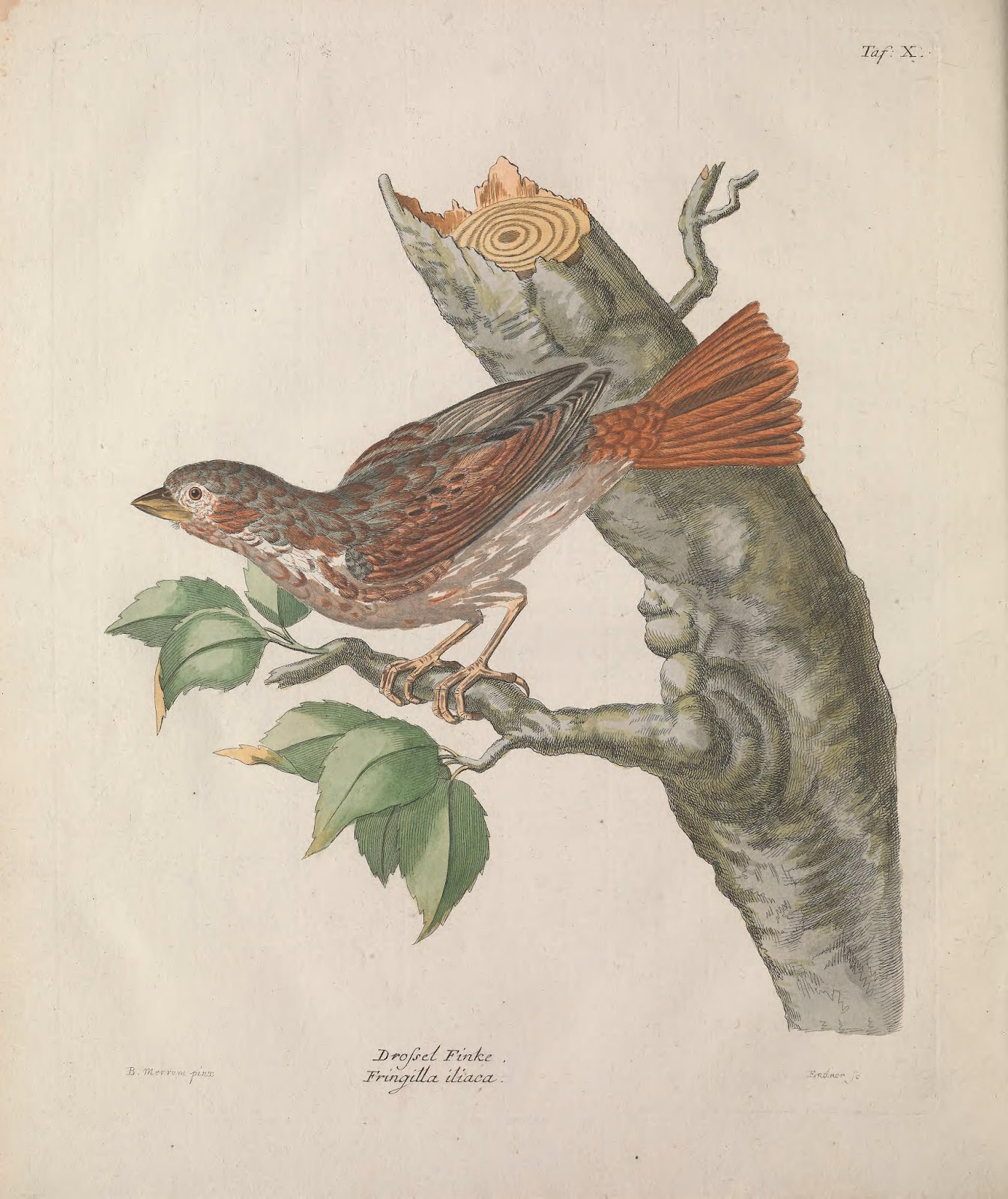
Fringilla iliaca. Avium rariorum et minus cognitarum. (1786). By Merrem, Blasius. http://www.biodiversitylibrary.org/page/46489269. Digitized by Smithsonian Libraries.

Sometime before 1786, this unknown naturalist shipped the preserved skin of a large and colorful bunting to Blasius Merrem, the first professor of zoology at the university of Marburg. Merrem recognized the specimen as the representative of a new species, which he named Fringilla iliaca for the heavy reddish chevrons marking its breast and side. Who knows how long science might have had to wait for a description of the red fox sparrow had George the Third not leaned on his teutonic cousins for help?

In February 1784, five months after the treaty ending the American Revolution was signed in Paris, the great Welsh litterateur Thomas Pennant regretted that the “fatal and humiliating hour” had not only “deprived Britain of power, strength, and glory,” but had “mortified” him into abruptly stopping work on what was to have been a new Natural History of North America. Horrified as he was at the historic turn of events, Pennant was nevertheless confident that “some native Naturalist” in the New World would complete the work that he had begun. Little did he know that some German soldiers fighting in America had been working alongside him all along.

March 31, 2017by ulib-libraryjobs
Blog Reel, Featured Books

The First Singapore Bird Book

Despite its relatively small size and urbanized environment, Singapore has a rich avifauna which has attracted interest since the 19th century. However, it was only in 1927 that the first book on the birds of Singapore was printed – The Birds of Singapore Island, co-authored by John Alexander Strachey Bucknill and Frederick Nutter Chasen, and published by the Raffles Museum.

View Full Size Image
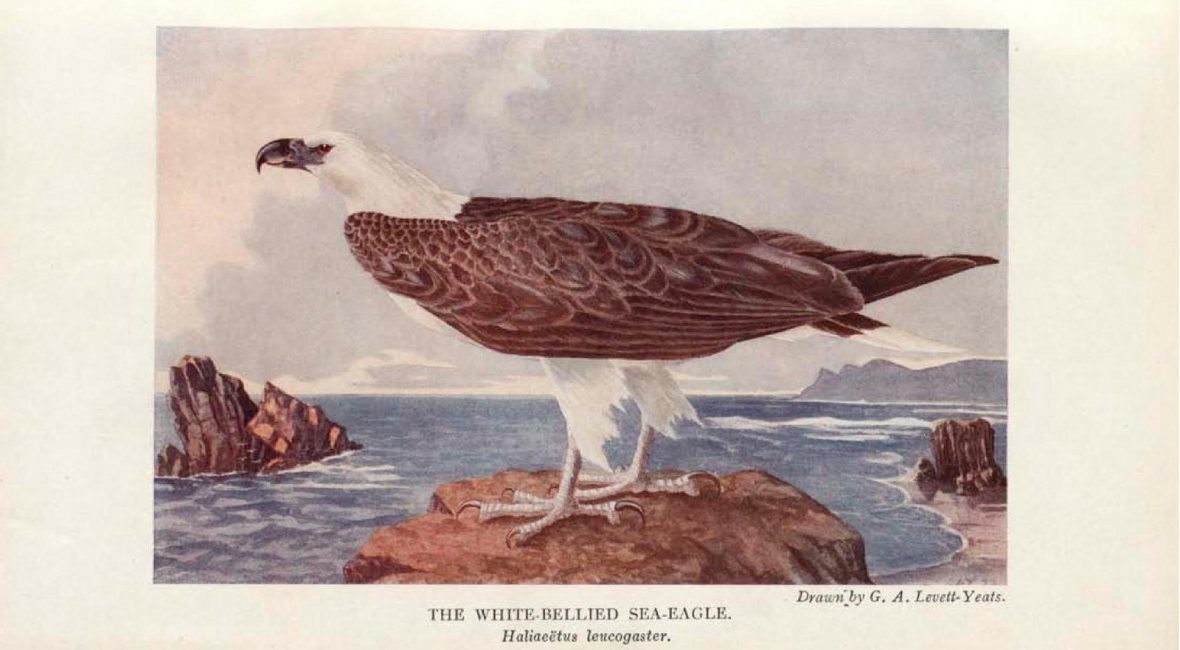
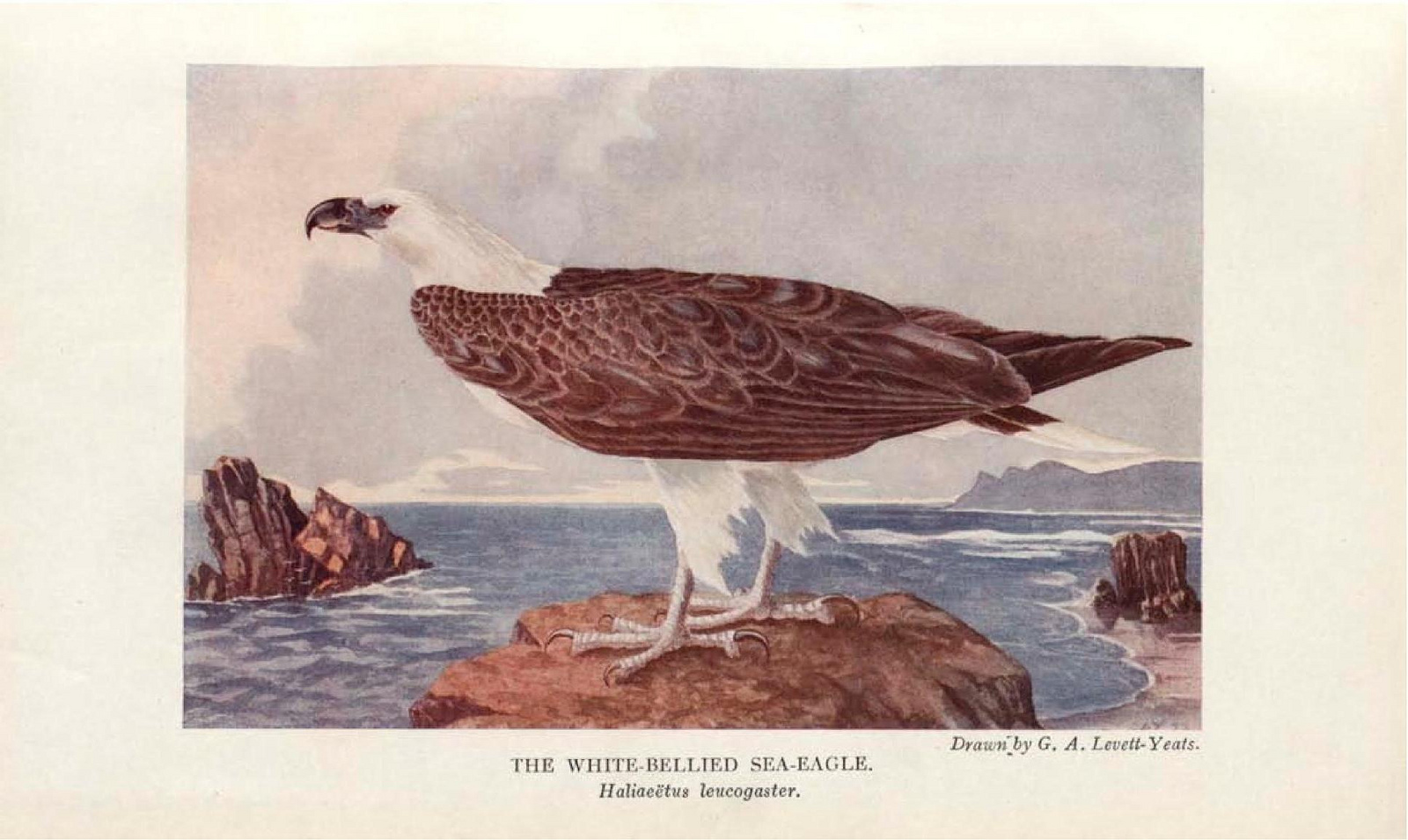
Plate VIII from The Birds of Singapore Island. http://biodiversitylibrary.org/page/47191313. Digitized by National Library Board, Singapore. The White-bellied Sea-eagle (Haliaeetus leucogaster) is a common resident bird of prey. When Singapore issued its “Bird” series of currency notes in 1976-1984, the White-bellied Sea-eagle was featured on the front of the highest denomination note – the $10,000 note.

Bucknill’s original collaborator for the book was Major John C. Moulton, a zoologist who was Director of the Raffles Museum and Library in Singapore from 1919 to 1923. In 1921, Moulton secured the assistance of Sir John Bucknill to produce a handbook on the common birds of Singapore which would be illustrated with attractive color plates. Bucknill was a former Chief Justice of the Straits Settlements and the Chairman of the Raffles Museum and Library Committee at that time. He was well-known for his interest in birds and had written and published several papers and books on the subject. To provide the illustrations for the book, an artist in India, Gerald Aylmer Levett-Yeats, was commissioned to paint the birds.

However, the publication of the book was delayed when Moulton was transferred to Sarawak as the chief secretary to the government in 1923. Owing to the pressure of other work, Moulton had to withdraw from the project, leaving Bucknill’s manuscript, the completed illustrations and his own notes in the hands of Cecil Boden Kloss, the new director of Raffles Museum and Library.

View Full Size Image
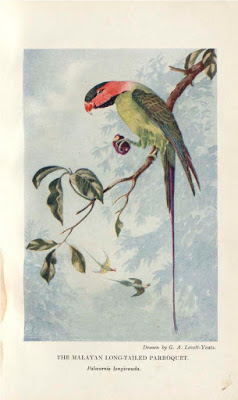
Plate XI from The Birds of Singapore Island. http://biodiversitylibrary.org/page/47191337. Digitized by National Library Board, Singapore. The Malayan Long-tailed Parakeet (Psittacula longicauda longicauda) is Singapore’s only native parakeet species.

A zoologist who specialized in small mammals, Boden Kloss felt that he lacked the “ability and the inclination” to write the book himself. The task of completing the book was taken up by Frederick N. Chasen, the curator of Raffles Museum (later its director). The scope of the book was extended to include not only the common birds of Singapore but also the less common birds. To keep the book within certain limits of size, Boden Kloss abridged the manuscript by reducing Bucknill’s notes on the species featured in the book.

View Full Size Image
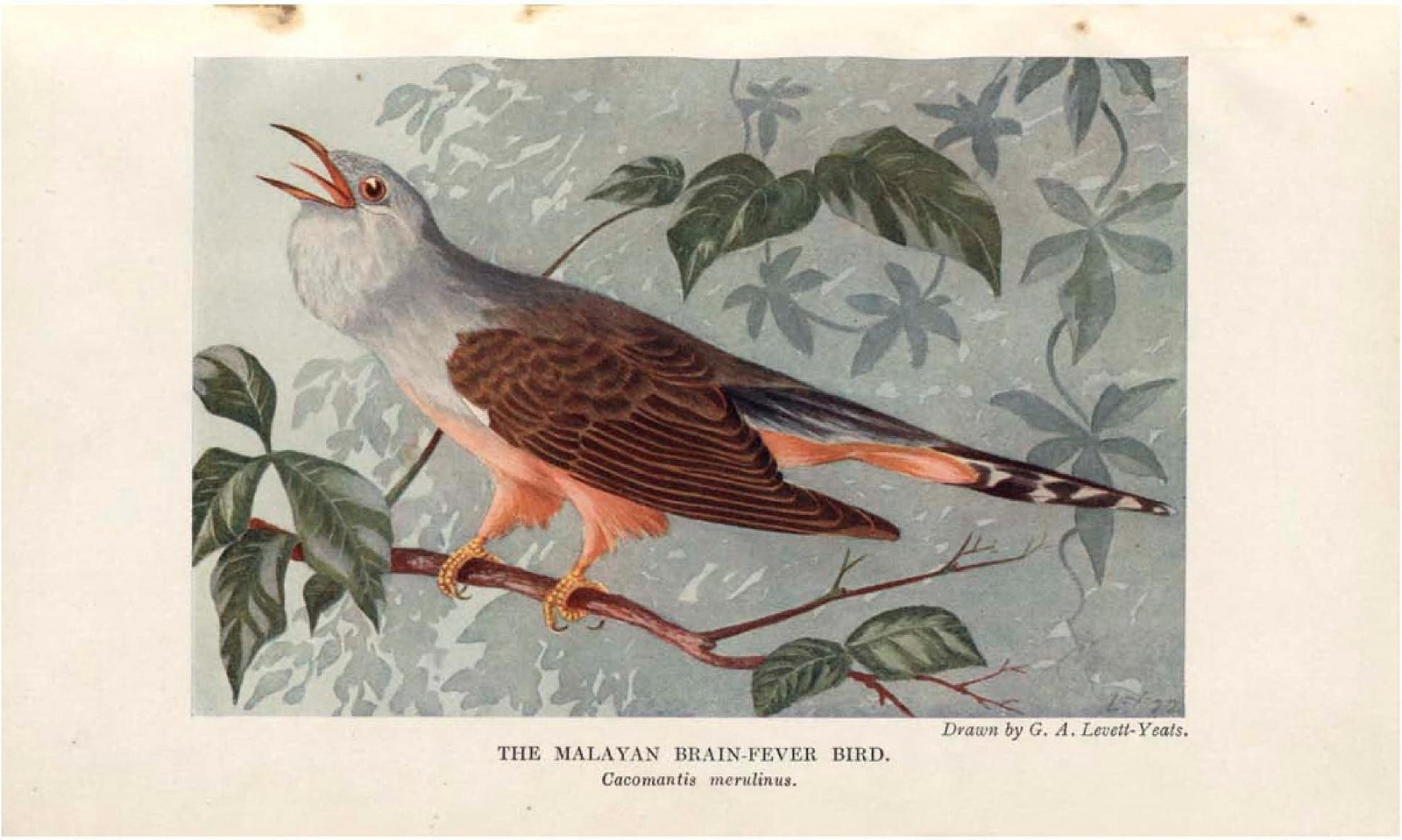
Plate XVII from The Birds of Singapore Island. http://biodiversitylibrary.org/page/47191383. Digitized by National Library Board, Singapore. The Malayan Brain Fever Bird (or the Plaintive Cuckoo) (Cacomantis merulinus) is an uncommon resident cuckoo species. Bucknill and Chasen noted that this bird has a Malay name which means “the deserted child” because its mournful voice “reminds one of the constant laments of someone bemoaning his fate”.

The book was finally published at the end of 1927. Sadly, both Bucknill and Moulton had passed away a year earlier in 1926.

The book covers all the common birds of Singapore and features 31 attractive color plates. Every bird is described in detail, including information on the status of each bird in Singapore. Written in a popular style, one of its notable features is the absence of technical terms. As stated in its preface, the book is “intended for the use of the uninitiated, both residents and visitors, who wish to know something of the birds they may see about them.” Despite being written for the lay person, the book provides a valuable source of historical information for the study of birds in Singapore.

View Full Size Image
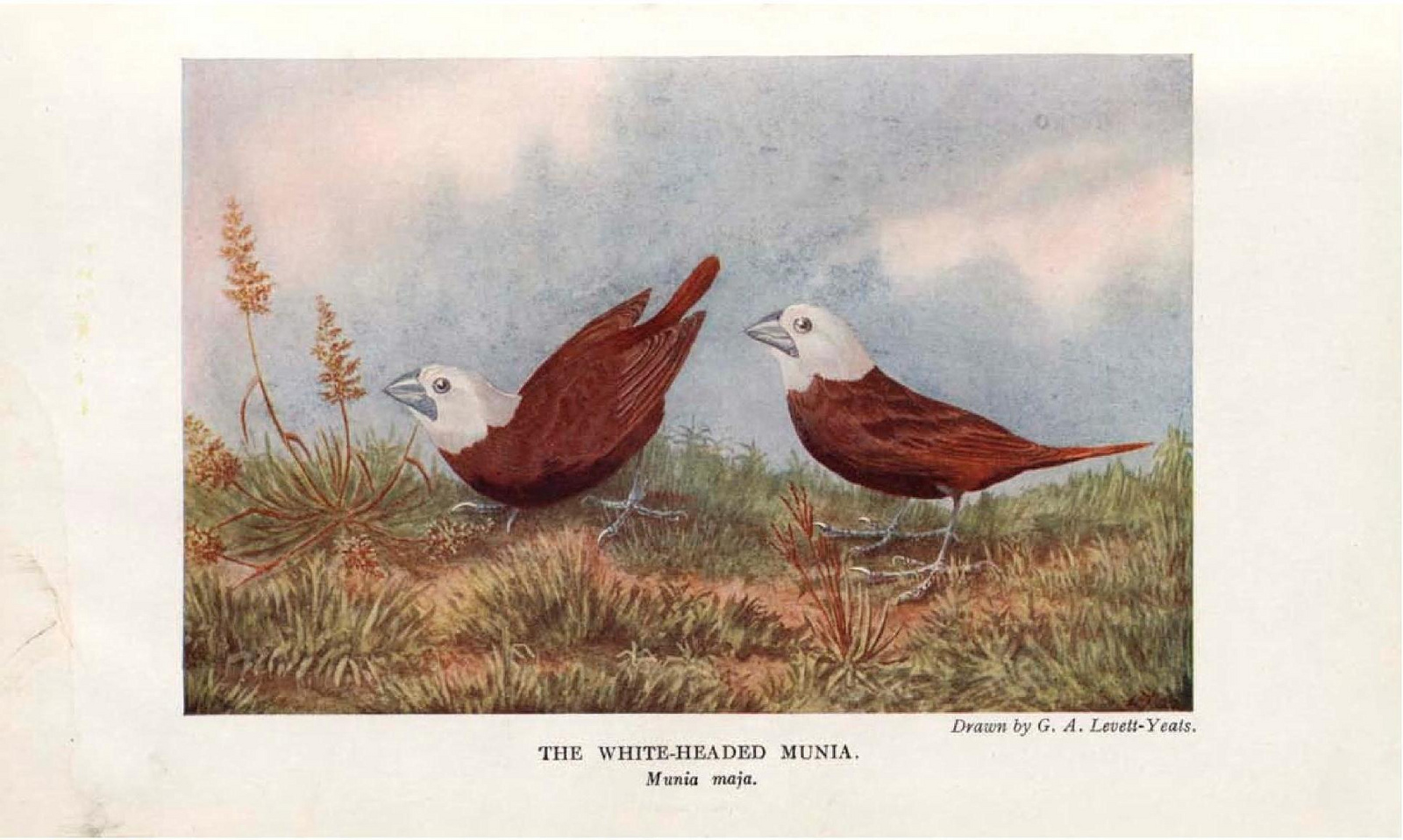
Plate XXVIII from The Birds of Singapore Island. http://biodiversitylibrary.org/page/47191469. Digitized by National Library Board, Singapore. A common resident, the White-headed Munia (Lonchura maja) was popularly known to Europeans in Singapore in the past as the “Cigar-bird” because its white head resembles a “partly smoked cigar.”

The Birds of Singapore Island (1927) has been digitized for BHL by National Library Board, Singapore.

You can view all of the illustrations from this book in Flickr, all of which have been taxon tagged with the name of the species they represent. You can learn more about BHL’s citizen science Flickr tagging initiative here.

References 


  • Bucknill, J. A. S. & Chasen, F. N. (1927). The birds of Singapore Island. Singapore : Printed at the Govt. Print. Office by W. T. Cherry, Govt. Printer. (Call no.: RRARE 598.295957 BUC)
  • Lim, K. S. (1997). Birds : an illustrated field guide to the birds of Singapore. Singapore : Sun Tree Pub. (Call no.: RSING 598.095957 LIM)
  • Lim, K. S. (2009). The avifauna of Singapore. Singapore : Nature Society (Singapore), Bird Group Records Committee. (Call no.: RSING 598.095957 LIM)
  • Liu, G. (1987). One hundred years of the National Museum : Singapore 1887-1987. Singapore : The Museum. (Call no.: RSING 708.95957 LIU)
  • Raffles Museum and Library. (1876-1955). Annual report. Singapore : The Museum. (Call no.: RRARE 027.55957 RAF)
  • Sim, C. H. (1994). Singapore money book. Singapore : Moneyworld Asia. (Call no.: RSING 769.5595957 SIN)
  • Yong, D. L. & Lim, K. C. (2016). A naturalist’s guide to the birds of Singapore. Oxford, England : John Beaufoy Publishing. (Call no.: RSING 598.095957 YON)
February 23, 2017by ulib-libraryjobs
Page 3 of 7« First...«2345»...Last »

Help Support BHL

BHL's existence depends on the financial support of its patrons. Help us keep this free resource alive!

search

About BHL

The Biodiversity Heritage Library (BHL) is the world’s largest open access digital library for biodiversity literature and archives. BHL operates as a worldwide consortium of natural history, botanical, research, and national libraries working together to digitize the natural history literature held in their collections and make it freely available for open access as part of a global “biodiversity community.”

Join Our Mailing List

Sign up to receive the latest news, content highlights, and promotions.

Subscribe Now

Subscribe to Blog via Email

Enter your email address to subscribe to this blog and receive notifications of new posts by email.

Join 319 other subscribers

Subscribe to Blog Via RSS

Subscribe to the blog RSS feed to stay up-to-date on all the latest BHL posts.

Access RSS Feed

Inspiring Discovery through Free Access to Biodiversity Knowledge.

The Biodiversity Heritage Library makes it easier than ever for you to access the information you need to study and explore life on Earth…for free, anytime, anywhere.


ABOUT | HARMFUL CONTENT | PRIVACY | SITE MAP | TERMS OF USE