Biodiversity Heritage Library - Program news and collection highlights from BHL
  • Home
  • News
  • Featured Books
    • All Featured Books
    • Book of the Month Series
    • BHL at 20
  • User Stories
  • Campaigns
    • Fossil Stories
    • Garden Stories
    • Monsters Are Real
    • Page Frights
    • Her Natural History
    • Earth Optimism 2020
  • Tech Blog
  • Visit BHL
Home
News
Featured Books
    All Featured Books
    Book of the Month Series
    BHL at 20
User Stories
Campaigns
    Fossil Stories
    Garden Stories
    Monsters Are Real
    Page Frights
    Her Natural History
    Earth Optimism 2020
Tech Blog
Visit BHL
  • Home
  • News
  • Featured Books
    • All Featured Books
    • Book of the Month Series
    • BHL at 20
  • User Stories
  • Campaigns
    • Fossil Stories
    • Garden Stories
    • Monsters Are Real
    • Page Frights
    • Her Natural History
    • Earth Optimism 2020
  • Tech Blog
  • Visit BHL
Biodiversity Heritage Library - Program news and collection highlights from BHL
BHL News, Blog Reel

Happy Earth Day 2012!

Portrait version of the Biodiversity Heritage Library logo.

Happy Earth Day 2012!

Here at BHL, we believe we can all make a difference to improve the health of our planet and its biodiversity. By providing researchers (and the public) with free access to literature about the world’s species, we’re empowering them with the knowledge necessary to better understand and protect life on earth. If you believe in the importance of this mission as much as we do, consider giving a gift to BHL. Together, we can make a difference for generations to come.

We couldn’t think of a better way to celebrate Earth Day than by showcasing its rich diversity of life, particularly through the brilliant illustrations we have in our collection. Thus, below we present some of our favorite (and most popular) images. You can find these, and nearly 30,000 more, free images by visiting our Flickr profile.

Now it’s your turn. How are you celebrating Earth Day this year?

April 22, 2012by Grace Costantino
Blog Reel, Featured Books

Book of the Week: The Birth of Microscopic Plant Anatomy

Portrait version of the Biodiversity Heritage Library logo.
View Full Size Image
There are groundbreaking biodiversity works that most of us are familiar with, including Systema Naturae and On the Origin of Species. Then there are other works that, though just as monumental for their impact on scientific knowledge, are less universally known than others. One such book is Anatomy of Plants, a seventeenth century work by Nehemiah Grew.

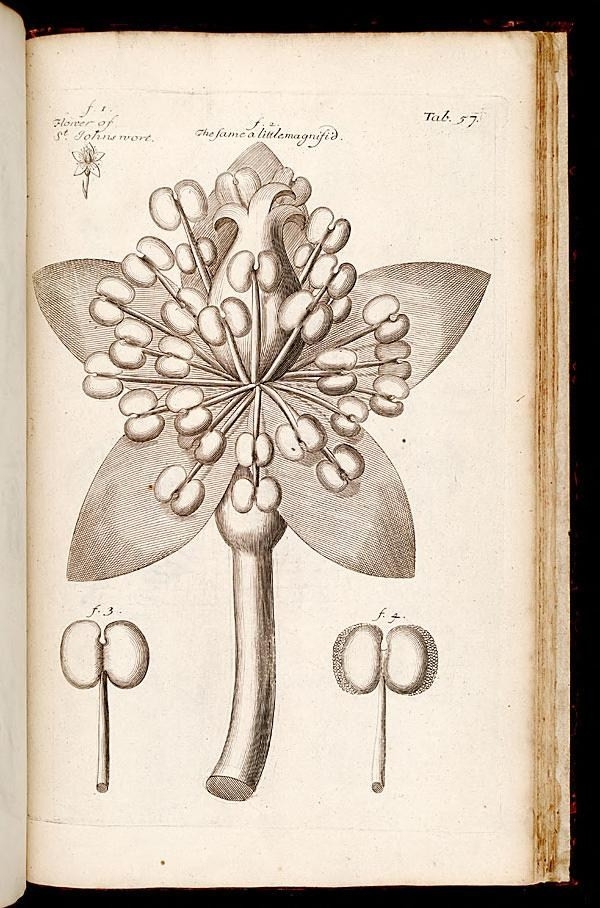
Many people have probably never heard of this work, and most probably have no idea what contribution it made to scientific discovery. Grew’s masterpiece, however, is significant not just because it depicts the first microscopic descriptions of pollen, but also because it is the first publication to note that a plant’s stamen is a male organ, with pollen as the seed. In fact, this work earned Grew, who was given the title “The Father of Plant Physiology,” the distinction of being one of the most celebrated scientists of the seventeenth century, and, together with Malpighi, he is considered the co-founder of plant anatomy.

Anatomy of Plants, published in 1682, was divided into four books, entitled Anatomy of Vegetables Begun, Anatomy of Roots, Anatomy of Trunks, and Anatomy of Leaves, Flowers, Fruits and Seeds. The work was largely a collection of Grew’s previous publications, many of which were presented to the Royal Society in the 1670s. Within the work, Grew describes the key differences between the morphology of stem and root, and, as previously mentioned, details the microscopic characteristics of pollen and hypothesized that stamen are the male organs of plants.

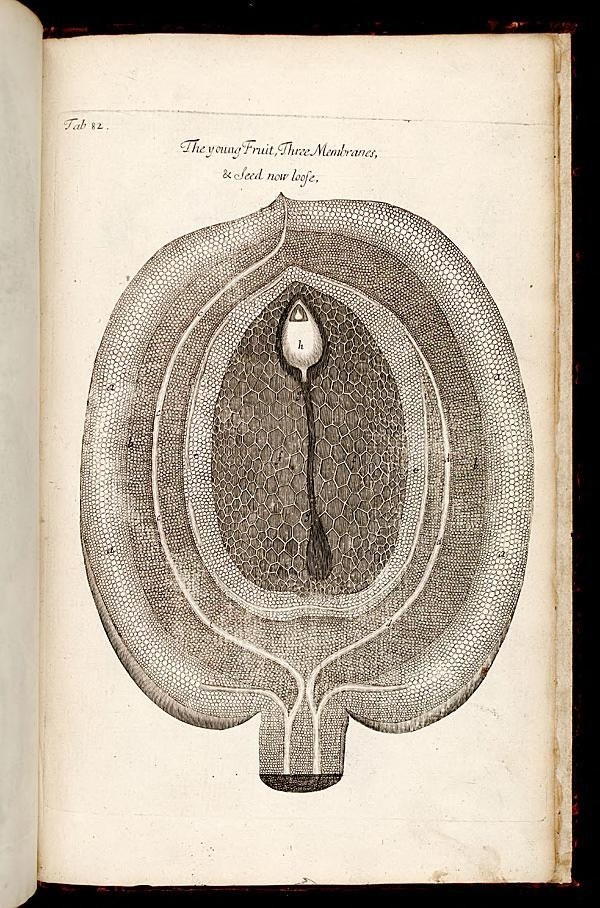
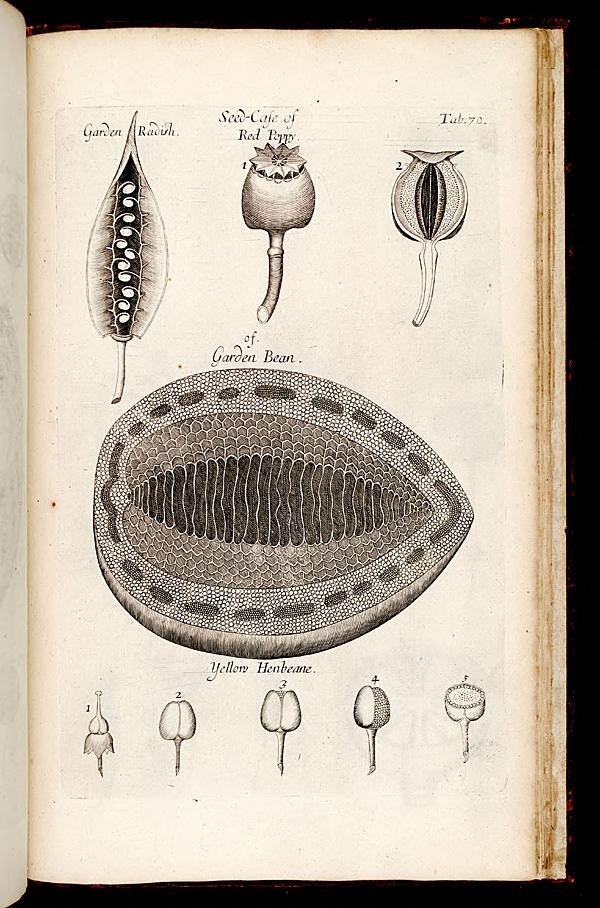
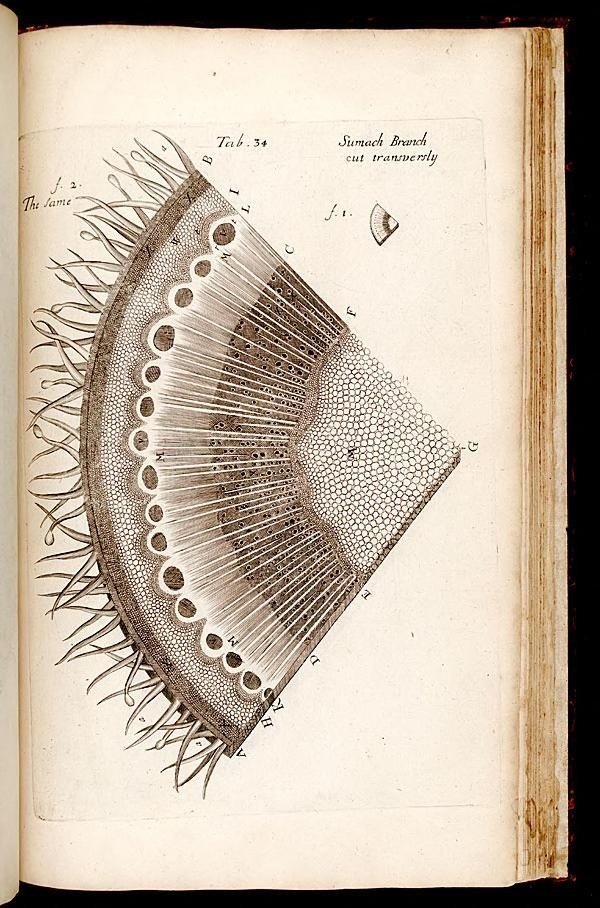
Despite the critical importance of the discoveries presented in this work, what is more likely to draw your attention to Grew’s Anatomy are the 82 exquisite engravings contained within. The illustrations depict in unprecedented detail the internal subtleties of roots, stems, tree trunks, and, not least of all, seeds. We’ve presented a few of our favorites in this post, but be sure to check out the entire collection on our Flickr account.

In 2006, a copy of Anatomy of Plants sold at auction for $7,557, nearly $5,000 over the estimate. Fortunately, you don’t have to have the budget of a used car to enjoy this work. As you’ve come to expect, it’s freely available in beautiful high resolution quality from the Biodiversity Heritage Library (in fact, it’s title #4 in BHL!). So be sure to spend some time with this title and add it to your repertoire of critical natural history works. It deserves to be among the Greats, keeping Darwin and Linnaeus company.

View Full Size Image
April 19, 2012by Grace Costantino
Blog Reel, User Stories

BHL and Our Users: Anders Hagborg

Portrait version of the Biodiversity Heritage Library logo.
View Full Size Image

This week, we’re proud to feature Anders Hagborg, an associate at the Field Museum with an academic background in theoretic and applied physics. Though his professional career centered on information technology, he took up an interest in botany after retirement and currently applies this newfound passion to work at the Field Museum. As an additional note of interest, Anders grew up, studied and worked in Sweden until moving to Chicago in 1985.

What is your title, institutional affiliation (or alternative place of employment), and area of interest?

I am an (unpaid) associate at the Botany department at the Field Museum, Chicago. I work gathering data about liverworts and hornworts. I am part of a team that is producing a global checklist for these phyla.

How long have you been in your field of study?

Since 2005

When did you first discover BHL?

Probably in 2007 (It seems that I have always used it)

What is your opinion of BHL and how has it impacted your research?

It is one of the repositories that I frequently use. BHL is probably the most important one – the others are Reál Jardin Botanico, Madrid, Gallica (Bibliothéque numérique), Google books, and some others less frequently.

How often do you use BHL?

At least a few times every month – sometimes much more than that.

How do you usually use BHL (read the titles online/download whole PDFs/Selecting Pages to Download for a custom PDF/Downloading High Resolution Images/Generating Taxonomic Bibliographies/etc.)

Almost exclusively PDF download.

If you could change one thing about BHL, what would it be, or what developmental aspect would you like the BHL team to focus on next?

It would be great if BHL could include other repositories in the search so I don’t have to search Madrid, Gallica, Google books and other sites separately. I like the BHL feedback format better than the other ones, especially better than Google books, which doesn’t handle periodicals well.

If you had to choose one title/item in BHL that has most impacted your research, or one item that you prefer above any other in BHL, what would it be and why?

That is really not the way I look at it. I have accessed and used several hundred different items at BHL and use many of them over and over again, but it does not make sense to single any of them out.
__________________________________________

Thank you, Anders, for taking the time to share some of your professional life with us. We appreciate feedback from our users, as we repeatedly use it to improve our services and guide our developmental priorities.

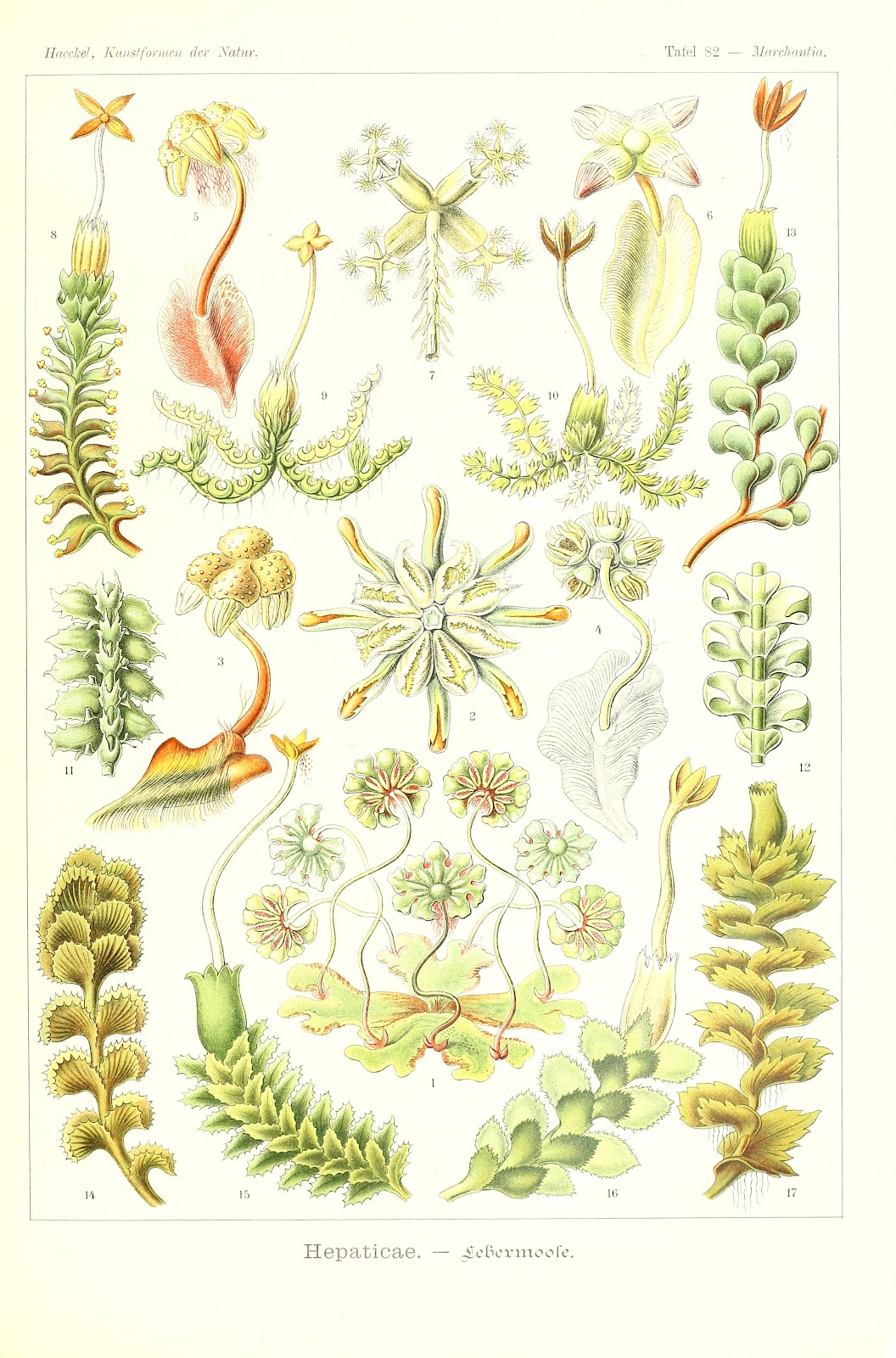
Learn more about Anders’ passions, liverworts (Marchantiophyta) and hornworts (Anthocerotophyta), in EOL, and check out this lovely illustration of liverworts from Kunstformen der Natur in BHL:

View Full Size Image
April 17, 2012by Grace Costantino
BHL News, Blog Reel

Introducing the Theodore Roosevelt iTunes U Collection

View Full Size Image

When most people think of Theodore Roosevelt, they think of the twenty-sixth President of the United States. Taking office in 1901 at the age of 42 after the assassination of William McKinley, he is the youngest president in American history. As President, Roosevelt is known for his work in the Progressive Movement, completing the Panama Canal, and negotiating an end to the Russo-Japanese War. However, while many remember him as the politician, Theodore Roosevelt was also an accomplished natural historian, touring in Africa and Europe and leading a major expedition to the Amazon jungles.

To honor this remarkable man, we’ve dedicated our newest iTunes U collection to him. Our iTunes U provider page, which offers free access to a selection of BHL books organized according to theme, previously consisted of 8 collections, including Extinct Species and The Curious and the Bizarre. We’re thrilled to add the Theodore Roosevelt collection, containing 18 titles by Roosevelt, to our repertoire. To celebrate this release, we’re featuring one of the books as our Book of the Week: African Games Trails (1910).

View Full Size Image
Roosevelt’s expedition to Africa in 1909 was a major endeavor, conducted in large part to collect specimens for the Smithsonian and American Museum of Natural History. During the venture, Roosevelt and his team collected more than 11,397 animals, ranging from insects to big game animals. Roosevelt also used the expedition to interact with many native people and local leaders. A detailed account of the expedition, including descriptions of the flora and fauna he collected, are presented in his book African Game Trails, published in 1910.

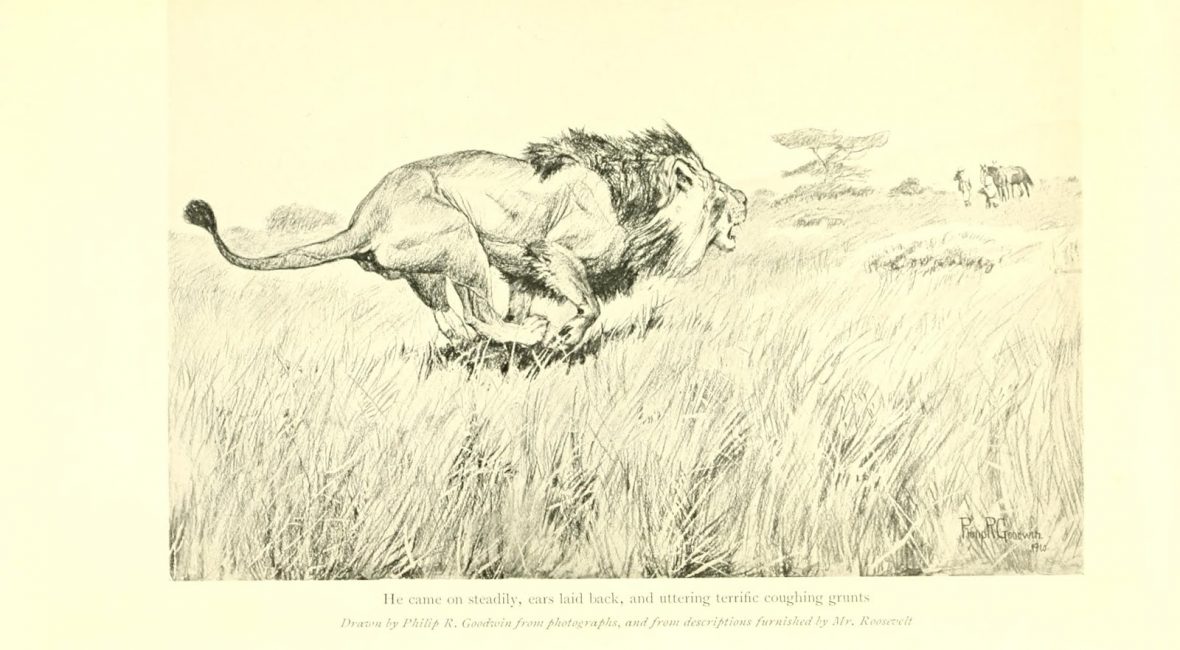
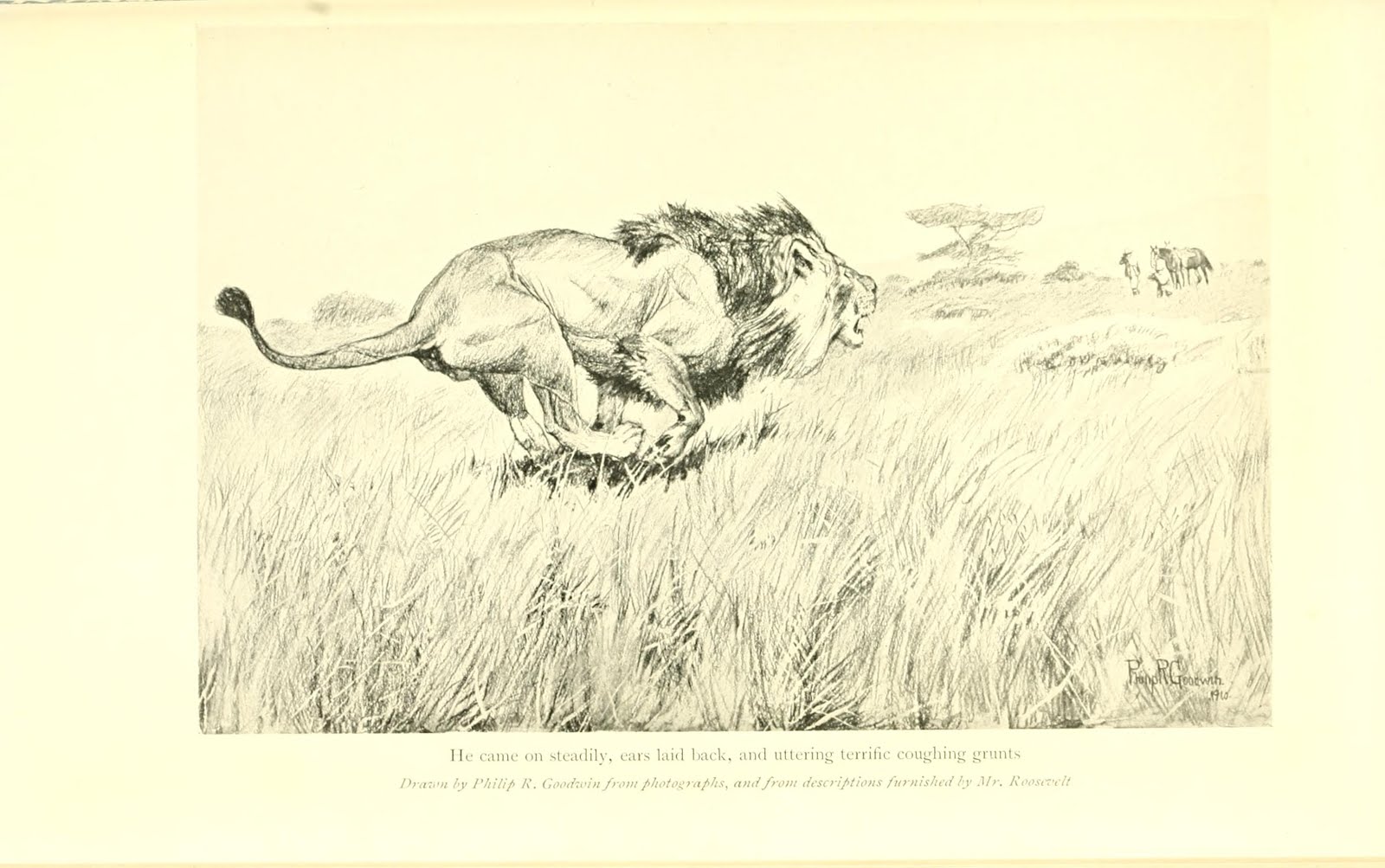
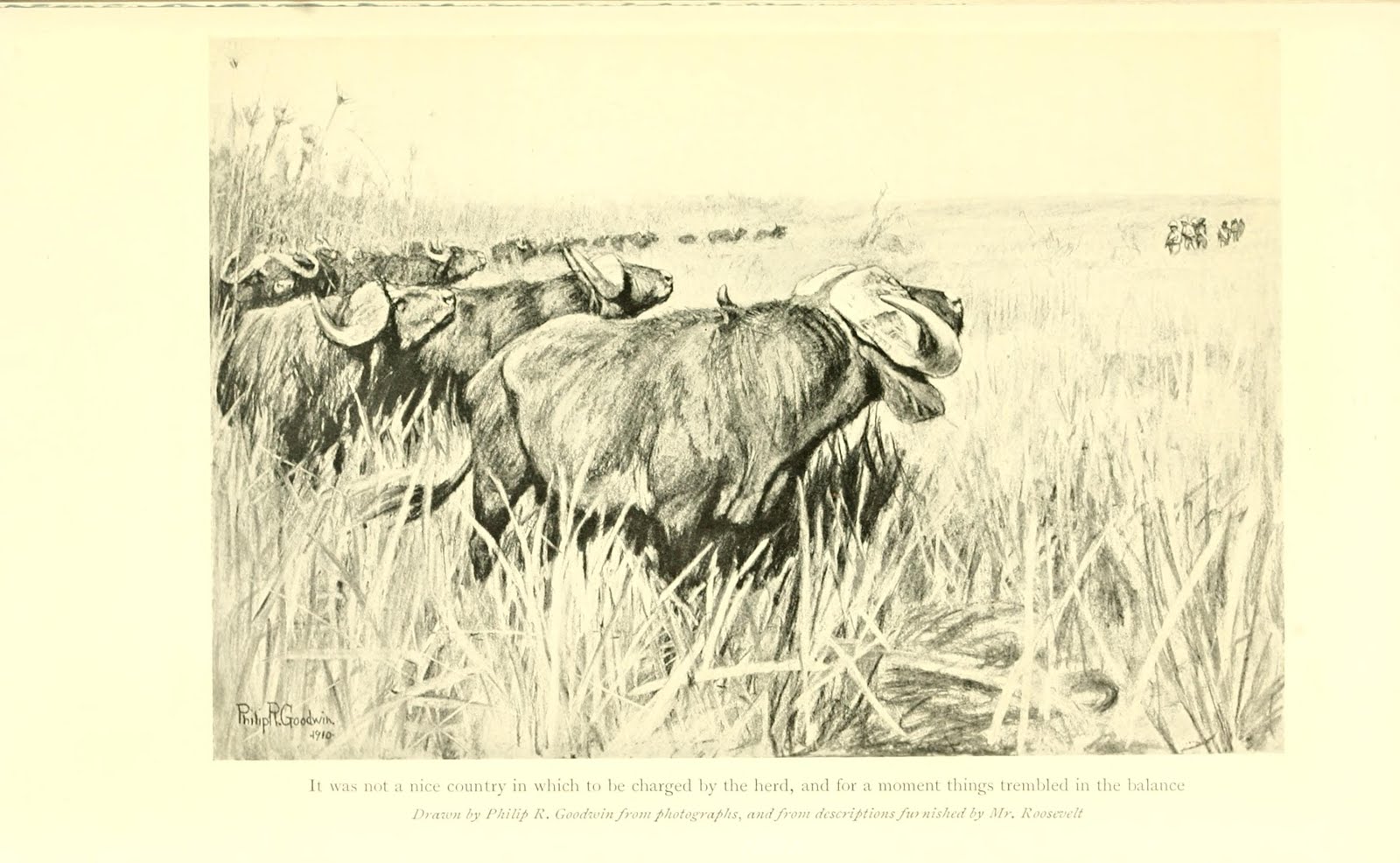
The work includes photographs taken by Roosevelt’s son, Kermit (to whom it is dedicated), as well as drawings by Philip R. Goodwin, an American artist best known for illustrating The Call of the Wild. African Game Trails contains accounts of such activities as lion hunting on the Kapiti Plains, encounters with the giant rhinoceros of the Lado, and the expedition’s trek down the Nile. Some of our favorite illustrations from the title include a herd of buffalo gazing with curiosity at the expedition team and a lion charging across the plain. A final item of interest worth noting is a map detailing the expedition’s route.

April 6, 2012by Grace Costantino
Blog Reel, User Stories

BHL and Our Users: Joachim Ladwig

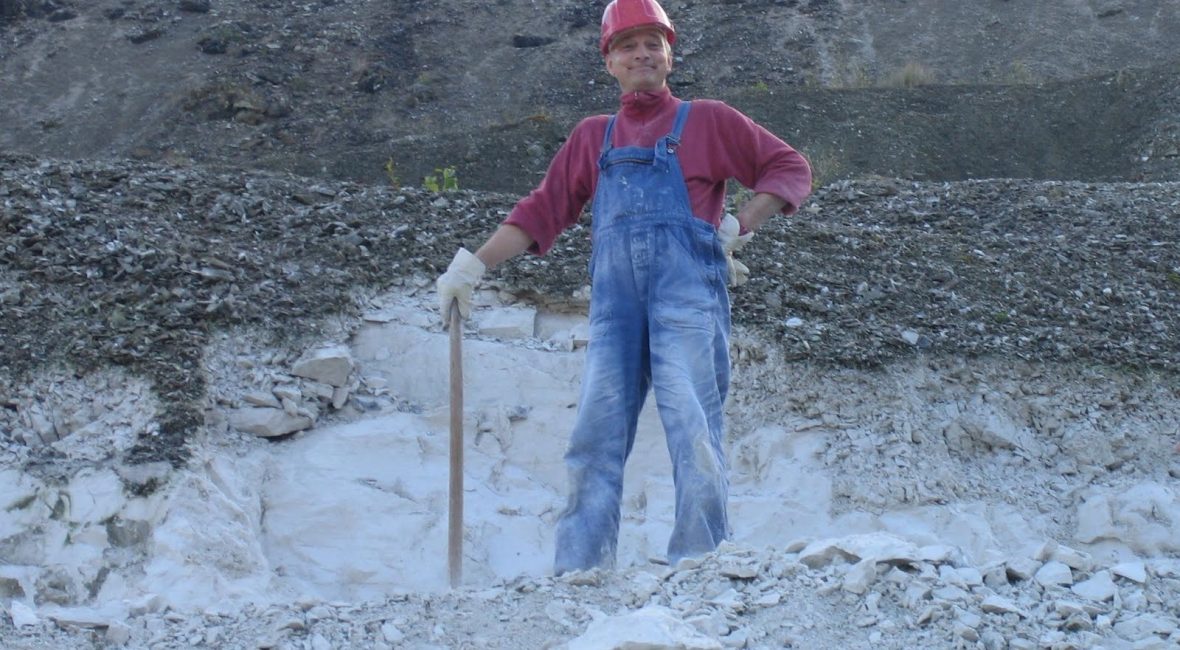
View Full Size ImageToday, we are excited to present Joachim Ladwig, a fossil collector in Germany with a passion for marine vertebrates. Though an amateur researcher, he has published a myriad of papers in amateur journals and holds among his repertoire of fossil finds the remains of a plesiosaur!

What is your title, institutional affiliation (or alternative place of employment), and area of interest?

I have no title or institutional affiliation! I work as a caretaker for a housing company in northern Germany and operate only as an amateur researcher.

I was born in 1962 and live in the federal state of Schleswig-Holstein. I’m a member of the “Gesellschaft für Geschiebekunde” (Society for Glacial Erratic Boulders), a cooperation of scientists (mainly from the Universities of Hamburg and Greifswald) and amateur collectors researching erratic boulders, which are the most important source of fossils in northern Germany.

How long have you been in your field of study?

I have been collecting fossils for more than 20 years. Soon after I began collecting, I undertook research (as an amateur) on fossil marine vertebrates, mainly from the Cretaceous period. One field of interest is sea-urchins, but I am especially interested in sharks and bony fish and their main fossil remains: teeth.

Some years ago I found the remains of a very great plesiosaur in a chalk-pit here in northern Germany. Since then I have been looking for literature on marine reptiles (mosasaurs and plesiosaurs), too.

When did you first discover BHL?

I think it was about 2 or 3 years ago, when I used Google to search for pdf-files of scientific papers on the internet.

What is your opinion of BHL and how has it impacted your research?

Because it was often very difficult to get old literature (and when you get it photocopied from your library the quality of the picture is miserable), it’s a great improvement to have access to pdf-files of these antique papers. To determine, for example, which species of fossil shark a find belongs to, it is necessary to take a look at the original descriptions. When you don’t have direct access to a university library, BHL is sometimes the only way to see these publications!

One concrete example: For 20 years I tried to find out which species the cow shark teeth in the northern German chalk belong to – Hexanchus microdon or Hexanchus gracilis. In BHL I found the original papers in which these species where described. Now I am very sure of the identification: My fossil cow shark teeth belong to Hexanchus microdon.

How often do you use BHL?

Several times a month.

How do you usually use BHL (read the titles online/download whole PDFs/Selecting Pages to Download for a custom PDF/Downloading High Resolution Images/Generating Taxonomic Bibliographies/etc.)

Generally, I download the whole pdf-file. I even print important papers. It’s not comfortable for me to read on the monitor; I prefer to read it on a piece of paper!

In the last years I have collected a whole hard-disk-drive of pdf files. They are not all from BHL, but many of the important and/or old ones are.

If you could change one thing about BHL, what would it be, or what developmental aspect would you like the BHL team to focus on next?

Very often I find that whole volumes of a journal are scanned as one file, but usually I only need one short paper. So I have to download an immense amount of data (806 pages!), while I cite only a small portion of it (for example, the work I cite in the next paragraph). It would be very useful to divide these big scans into smaller ones!

If you had to choose one title/item in BHL that has most impacted your research, or one item that you prefer above any other in BHL, what would it be and why?

I had looked for a long time for this paper:

“DAVIS, J.W. (1887): The fossil fishes of the Chalk of Mount Lebanon, in Syria. – The Scientific Transactions of the Royal Dublin Society, 3 (Series 2): 457 – 636, Taf. 14 – 38; Dublin”

I found it at BHL.

It contains the original description of Hexanchus gracilis, a species of cow shark, which is often found in the upper cretaceous layers in northern Europe. I was trying to find out if it is a valid species or not. The plates in this work are very beautiful. They are not only of scientific interest, but are an art, too. I’m very pleased that I can use a reproduction from one of these plates for a planned publication.

____________________________________________

Thank you, Joachim, for your contribution to the scientific realm and your willingness to share some of it with us! We are aware that article-level access to our content is a critical development for BHL, as it is one of our most user-requested improvements. We are currently working on models that will allow this level of access, but for the time-being you can find many BHL articles in our article repository Citebank.

Be sure to check out a bibliography of some of Joachim Ladwig’s publications below. We’re thrilled to know that BHL is helping him, and many others, identify and learn more about the fossilized remains of the magnificent biodiversity that lived ages ago.

A list of Joachim Ladwig’s former publications in amateur journals:

  • CLAUßEN, M. & LADWIG, J. (1997): Das Kieferfragment eines Mosasauriers aus dem Obercampan von Kronsmoor. – Der Geschiebesammler, 30 (3): 127 – 130, 3 Abb.; Wankendorf.
  • LADWIG, J. (1993): Fund eines Zahnes von Hexanchus gracilis. – Der Geschiebesammler, 26 (4): 161 – 163, 2 Abb.; Wankendorf.
  • LADWIG, J. (1994): Haizähne aus Oberkreide- und Dan-Geschieben. – Der Geschiebesammler, 27 (3): 105 – 110, 4 Abb.; Wankendorf.
  • LADWIG, J. (1995): Haizähne aus dem Obercampan von Kronsmoor. – Der Geschiebesammler, 28 (4): 143 – 152, 9 Abb.; Wankendorf.
  • LADWIG, J. (1997): Mosasaurierreste aus Schleswig-Holstein. – Fossilien, 1997 (6): 358 – 362, 8 Abb., 1 Zeichn.; Korb.
  • LADWIG, J. (1998): Fischreste aus dem Echinodermenkonglomerat. – Der Geschiebesammler, 31 (4): 177 – 186, 3 Abb., 1 Taf.; Wankendorf.
  • LADWIG, J. (2000a): Haizähne aus dem Obercampan von Kronsmoor. Teil 2. – Der Geschiebesammler, 33 (2): 77 – 90, 3 Abb., 3 Taf.; Wankendorf.
  • LADWIG, J. (2000b): Fischzähne aus dem Obercampan von Kronsmoor. – Der Geschiebesammler, 33 (3): 125 – 130, 4 Abb.; Wankendorf.
  • LADWIG, J. (2002): Möglicher Neufund von Protoxynotus misburgiensis HERMAN 1975. – Arbeitskreis Paläontologie Hannover, 30 (2): 36 – 41, 1 Abb.; Hannover.
  • LADWIG, J. (2003): Erstnachweis eines Zahnes von Ptychodus latissimus AGASSIZ 1843 aus dem Geschiebe. – Der Geschiebesammler, 36 (2): 43 – 46, 1 Abb.; Wankendorf.
  • LADWIG, J. (2006a): Haizähne aus dem Turonium von Wüllen. – Arbeitskreis Paläontologie Hannover, 34 (1): 1 – 9, 12 Abb.; Hannover.
  • LADWIG, J. (2006b): Fundbericht: Haizahn Cretolamna appendiculata aus Misburg. – Arbeitskreis Paläontologie Hannover, 34 (1): 10 – 11, 1 Abb.; Hannover.
  • LADWIG, J. (2008): Reste des rätselhaften kreidezeitlichen Fisches Cylindracanthus cretaceus (DIXON, 1850) aus Kronsmoor (Schleswig-Holstein). – Arbeitskreis Paläontologie Hannover, 36 (1): 12 – 22, 7 Abb.; Hannover.
  • LADWIG, J. (2009): Anmerkungen zur Seeigel-Gattung Bolbaster aus dem Danium von Dänemark. – Der Geschiebesammler, 42 (4): 165 – 173, 2 Abb., 2 Taf.; Wankendorf.
  • LADWIG, J. (2011a): Erstnachweis des Haies Gladioserratus aptiensis (PICTET, 1865) (Neoselachii, Hexanchiformes) aus der nordwestdeutschen Oberkreide. – Arbeitskreis Paläontologie Hannover, 39 (3): 99 – 104, 3 Abb.; Hannover.
  • LADWIG, J. (2011b): Der seltene Seeigel Galeaster bertrandi SEUNES, 1889 aus einem Dan-Geschiebe von Norderbrarup. – Der Geschiebesammler, 44 (2): 47 – 51, 1 Abb., 1 Taf.; Wankendorf.
  • LADWIG, J. (2012): Eine Exkursion ins Maastrichtium und Danium der Insel Seeland, Dänemark. – Arbeitskreis Paläontologie Hannover, 40 (1): 3 – 12, 9 Abb.; Hannover.
  • TÜXEN, H. & LADWIG, J. (1998): Ein Mosasaurierzahn aus einem weißgefleckten Feuerstein. – Der Geschiebesammler, 31 (3): 137 – 141, 2 Abb.; Wankendorf.

Some publications available for free download:

  • http://www.shark-references.com/images/meine_bilder/downloads/ladwig%202006%20-%20haizhne%20aus%20turonium%20wllen.pdf
  • http://www.shark-references.com/images/meine_bilder/downloads/ladwig%202002%20-%20neufund%20protoxynotus.pdf
April 3, 2012by Grace Costantino
Blog Reel, Featured Books

Celebrating the Wondrous Creatures of a Bygone Era in BHL

View Full Size Image

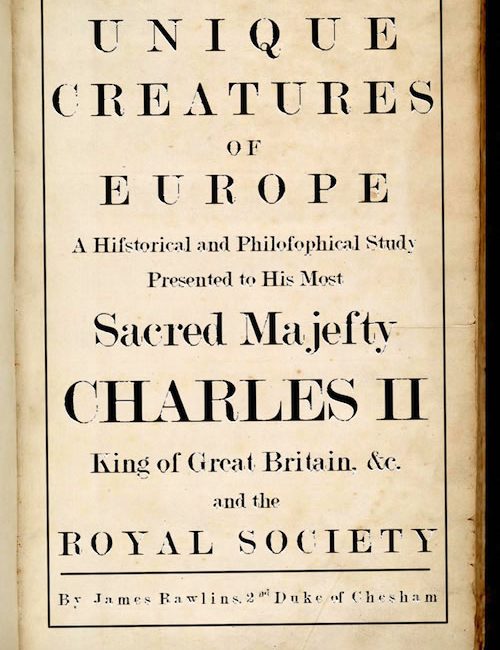
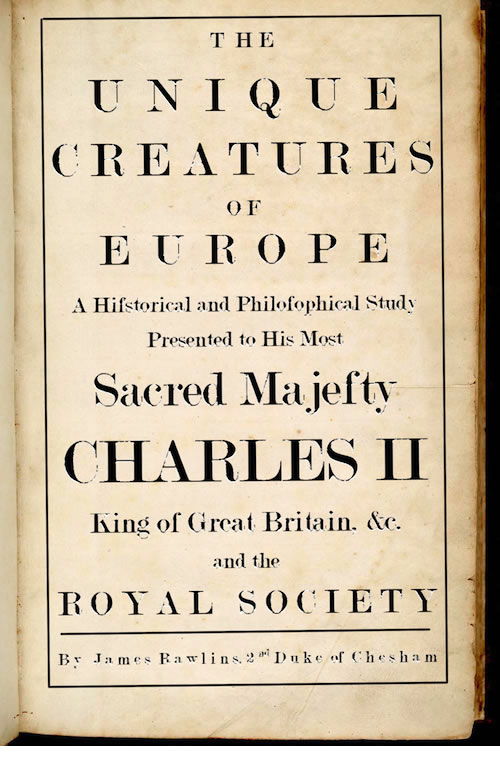
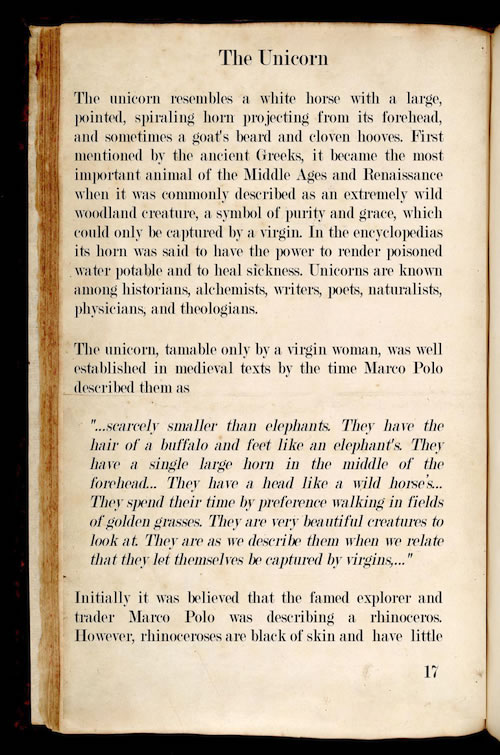
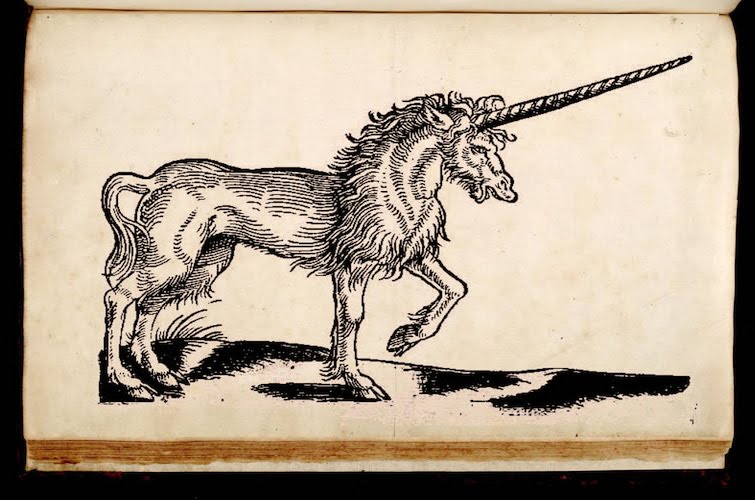
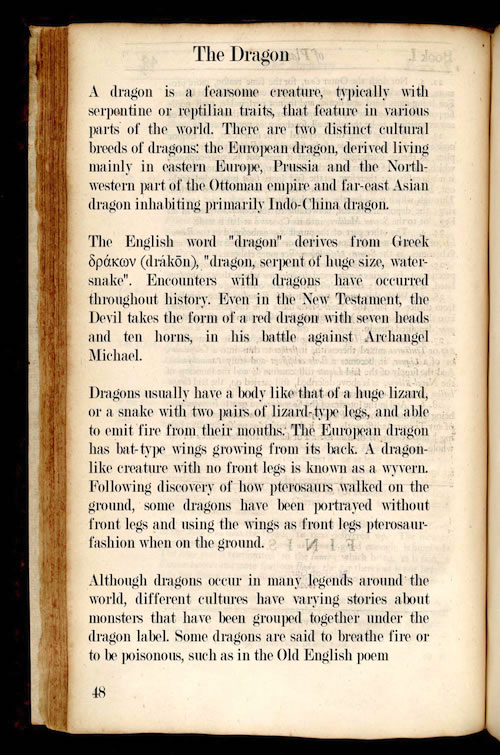
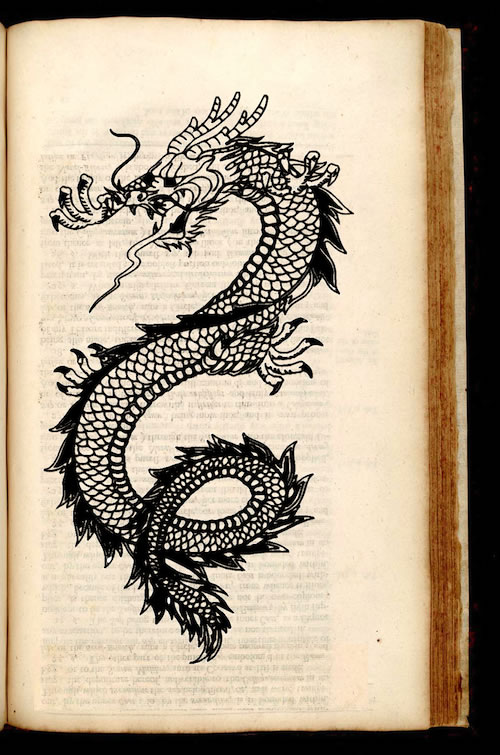
Roaming through the woods and hills of Eastern Europe 500-600 years ago, you would have encountered a deluge of enchanting creatures capable of captivating the mind and heart. Sadly, today many of these wondrous creatures are extinct, including Equus Einhorn and Draconis Nobilis. Though you may no longer chance upon them in the midst of a serene moonlight stroll, these species will live on forever in BHL. Through the bewitching description of E. einhorn, penned by Marco Polo, and the amalgamation of the collective knowledge on D. Nobilis (as of the mid-1600s), preserved for the benefit of posterity by James Rawlins, Duke of Chesham, in his 1689 work Unique Creatures of Eastern Europe, you can once again experience the wonder of the natural world in ways unknown to humankind since the Middle Ages. We celebrate this literary treasure by highlighting the aforementioned species’ excerpts from Rawlins’ work in this post, and we encourage you to explore the entire work in BHL to learn more about the amazing creatures now lost to earth but not to memory.

Equus Einhorn

View Full Size ImageView Full Size Image

Draconis Nobilis

View Full Size ImageView Full Size Image

* Special thanks to Joel Richard for providing literary expertise regarding Unique Creatures of Eastern Europe.

April 1, 2012by Grace Costantino
BHL News, Blog Reel

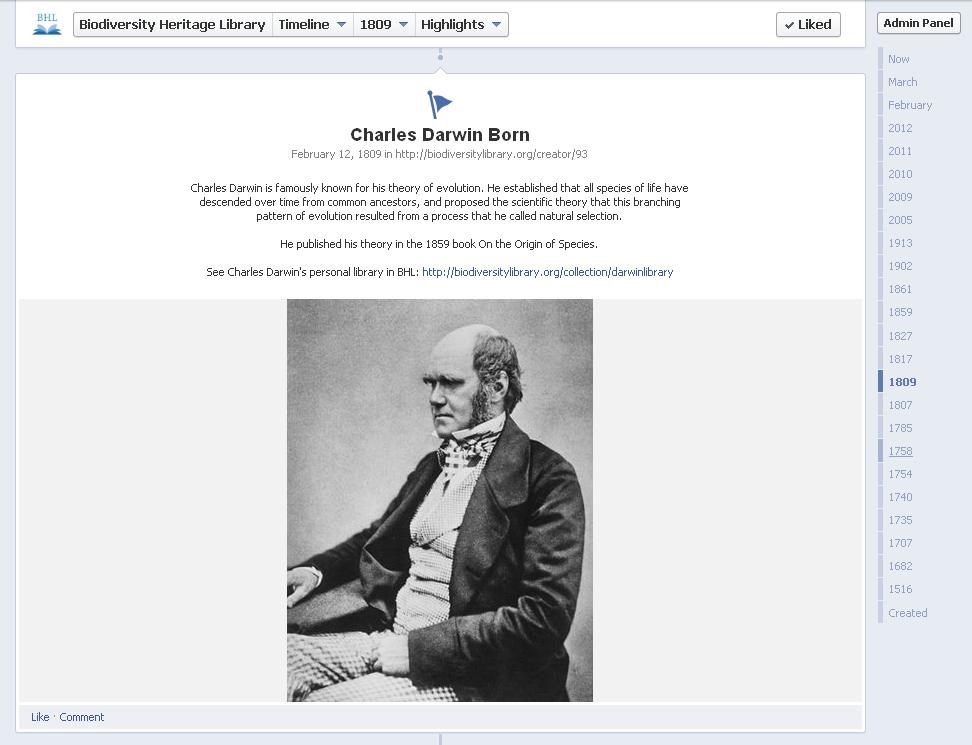
A Walk Down History Lane: Introducing the New BHL Facebook Timeline

View Full Size Image

In 1516, Conrad Gessner was born. His work Historiae Animalium is considered the beginning of modern zoology. In 1707, Carl Linnaeus, the Father of Modern Taxonomy, was born. In 1735, his monumental publication, Systema Naturae, forever changed the scientific world. In 1809, Charles Darwin, the force behind the Theory of Evolution, was born. His famous title On the Origin of Species revolutionized the way we think about the development of life when it was published in 1859.

Fastfoward to 2005. The Biodiversity Heritage Library was founded, with a website launch in 2007. Each of these events represent major milestones in the evolution of biodiversity research (if we may be so bold as to include ourselves among them). But these are just a few of the dates worth remembering, and more and more are occurring everyday as we build our scientific knowledge. How can we keep track of all these dates, we ask?

Cue the BHL Facebook Timeline!

View Full Size Image

Today, Facebook is rolling out its new timeline feature – a visual representation of the major milestones in a Facebook page owner’s life. Using the feature, page owners create entries for the noteworthy events in their lives/projects, and these entries are added in chronological order to the timeline. By scrolling further down the Facebook page, visitors are taken on a journey through the highlights of the person’s or project’s life. You can even fast-travel to a specific year by clicking on it in the bar on the right-hand side of the new page layout.

But while our page includes our important project milestones, we thought, “Why stop there?” Why not create a timeline that not only showcases our major accomplishments, but also the important achievements in scientific and taxonomic history? So that’s what we did. Scrolling through our timeline, you’ll see entries for both the birth of our project as well as the birth of people like Charles Davies Sherborn and Carl Linnaeus. Look further and you’ll discover markers for both the incorporation of new member libraries to the BHL consortium as well as the publication of ground-breaking works like Natural History of Carolina, Florida, and the Bahama Islands and Audubon’s The Birds of North America. The list goes on and on.

Our timeline is far from complete. We’ll be adding new events to the lineup regularly. Still, we think it’s a pretty cool start to the documentation of scientifically-important people and events, especially since each milestone entry also provides us with space to give a description of the event and provide links to content about it in BHL. And don’t worry; While the timeline is a cool new aspect of our page, you can still find the daily quizzes and news updates you’ve come to love.

So, take some time to explore our new Facebook page. You might be surprised at what you learn!

P.S. Got an idea for our Timeline? Tell us about it! Send us feedback, write a tweet to @BioDivLibrary, or post directly on our Facebook page!

March 30, 2012by Grace Costantino
Page 55 of 71« First...102030«54555657»6070...Last »

Help Support BHL

BHL's existence depends on the financial support of its patrons. Help us keep this free resource alive!

search

About BHL

The Biodiversity Heritage Library (BHL) is the world’s largest open access digital library for biodiversity literature and archives. BHL operates as a worldwide consortium of natural history, botanical, research, and national libraries working together to digitize the natural history literature held in their collections and make it freely available for open access as part of a global “biodiversity community.”

Join Our Mailing List

Sign up to receive the latest news, content highlights, and promotions.

Subscribe Now

Subscribe to Blog via Email

Enter your email address to subscribe to this blog and receive notifications of new posts by email.

Join 319 other subscribers

Subscribe to Blog Via RSS

Subscribe to the blog RSS feed to stay up-to-date on all the latest BHL posts.

Access RSS Feed

Inspiring Discovery through Free Access to Biodiversity Knowledge.

The Biodiversity Heritage Library makes it easier than ever for you to access the information you need to study and explore life on Earth…for free, anytime, anywhere.


ABOUT | HARMFUL CONTENT | PRIVACY | SITE MAP | TERMS OF USE