Biodiversity Heritage Library - Program news and collection highlights from BHL
  • Home
  • News
  • Featured Books
    • All Featured Books
    • Book of the Month Series
    • BHL at 20
  • User Stories
  • Campaigns
    • Fossil Stories
    • Garden Stories
    • Monsters Are Real
    • Page Frights
    • Her Natural History
    • Earth Optimism 2020
  • Tech Blog
  • Visit BHL
Home
News
Featured Books
    All Featured Books
    Book of the Month Series
    BHL at 20
User Stories
Campaigns
    Fossil Stories
    Garden Stories
    Monsters Are Real
    Page Frights
    Her Natural History
    Earth Optimism 2020
Tech Blog
Visit BHL
  • Home
  • News
  • Featured Books
    • All Featured Books
    • Book of the Month Series
    • BHL at 20
  • User Stories
  • Campaigns
    • Fossil Stories
    • Garden Stories
    • Monsters Are Real
    • Page Frights
    • Her Natural History
    • Earth Optimism 2020
  • Tech Blog
  • Visit BHL
Biodiversity Heritage Library - Program news and collection highlights from BHL
BHL News, Blog Reel

2012 Annual Institutional Council Meeting

View Full Size Image

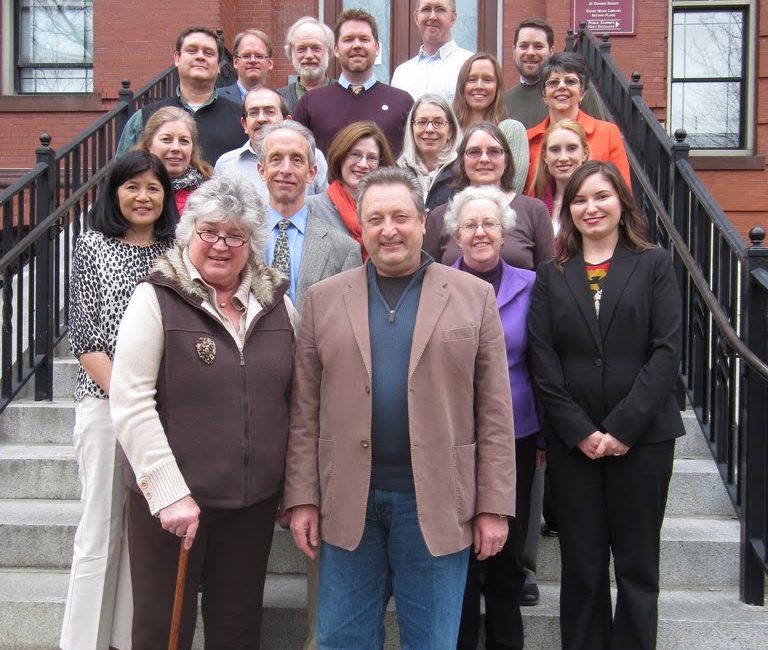
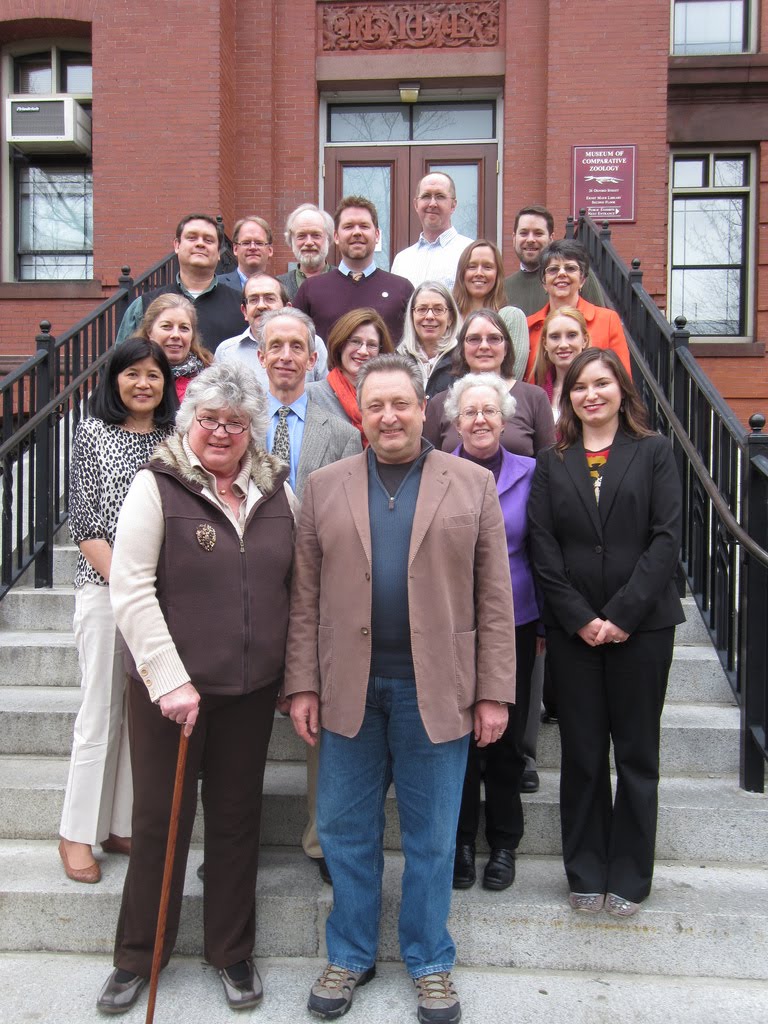
On March 15-16, 2012, the BHL Institutional Council convened at the Ernst Mayr Library of the Museum of Comparative Zoology at Harvard University for their sixth annual meeting.* The BHL Institutional Council is composed of the directors of the BHL member libraries. The annual meetings serve as an opportunity for council members to provide updates about BHL activities at their institutions, discuss governance issues, make funding decisions, and strategize about the future of BHL. It also allows BHL Administrative Staff to inform council members about BHL updates in their areas of expertise.

Not surprisingly, the meeting agenda was quite full, as there was much to discuss and only two days in which to do it. Most of meeting day one was devoted to providing BHL project updates. Common themes arising from council member updates included the need to develop strategies to incorporate existing scanned content digitized outside of traditional BHL scanning workflows and a variety of grant-funded internal projects producing deliverables of interest to BHL. A significant amount of time was also spent discussing the expansion of BHL outreach activities, including an agreement to develop an official BHL Marketing and Branding Plan. On day two of the meeting, the BHL Steering Committee engaged in initial discussions to develop a BHL spending plan for the next few years. A vital component of this plan will, of course, be an allocation for continued scanning, much of which will be driven by user requests and subject-oriented collections. Finally, the committee deliberated on policies for consortium and global growth.

Some final highlights from the meeting included the appointment of new BHL Executive Committee members and a few special titles awarded to some departing members of the BHL team. BHL Executive Committee appointments include: Nancy E. Gwinn (Smithsonian Institution Libraries), Chair; Connie Rinaldo (Ernst Mayr Library, Museum of Comparative Zoology, Harvard University), Vice-Chair; and Susan Fraser (LuEsther T. Mertz Library, New York Botanical Garden), Secretary.

This was also the final BHL meeting for three retiring core BHL members, including BHL’s Program Director, Tom Garnett. The BHL director since the project’s inception, Mr. Garnett is retiring at the end of March, 2012. His position will be filled by Martin Kalfatovic (Smithsonian Institution Libraries). In honor of Mr. Garnett’s contribution to BHL, the Institutional Council awarded him with the title of Founding Program Director, BHL. Also leaving the BHL team to enjoy retirement are Cathy Norton (MBLWHOI Library), former BHL Executive Committee Chair, and Graham Higley (Library, Natural History Museum, London), BHL Executive Committee Immediate Past Chair. The IC bestowed the title of BHL Member Emeritus on Cathy Norton and Founding Chair Emeritus on Graham Higley.

Of course, the IC Meeting wasn’t simply all work and no play. Attendees also took time to enjoy the Harvard campus. The meeting itself was held in the Agassiz room at the Museum of Comparative Zoology – a conference room dedicated to Louis Agassiz, the founder of the museum and a prominent 19th century natural historian (see works by Agassiz in BHL). Library staff gave tours of the Ernst Mayr Library, including a guided visit of the rare book room. On the night of March 15th, meeting attendees also enjoyed a catered dinner at the Harvard Faculty Club in a room decorated with prints by Alexander Wilson.

The Sixth Annual BHL Institutional Council Meeting was an excellent opportunity for the globally dispersed members of the BHL team to gather for a few short days to share the BHL successes and challenges at their institution and collaborate to develop policies and strategies that ensure the continued health and prosperity of the BHL project. We are anxious to implement the ideas and decisions reached at the meeting and look forward to the seventh annual meeting next year.

*First two BHL Institutional Council Meetings called “Directors Meetings.”
March 20, 2012by Grace Costantino
Blog Reel, User Stories

BHL and Our Users: Dr. Nathalie Yonow

View Full Size ImageThis week we’re excited to present a brand new BHL user. Dr. Nathalie Yonow just discovered BHL this year, and she has already used it to complete research for upcoming publications – research that, prior to BHL, took her a great deal of time, energy, and assistance from colleagues with access to large libraries. We are thrilled to hear from a user who is just discovering everything BHL has to offer.

What is your title, institutional affiliation, and area of interest?

Dr Nathalie Yonow, CERTS, Biosciences, College of Science, Swansea University. My areas of interest include opisthobranch taxonomy and biogeography (Indo-West Pacific).

How long have you been in your field of study?

25 years

When did you first discover BHL?

I first discovered BHL in January of 2012. I wish I had known about it when I was researching my book (Sea Slugs of the Red Sea) as I had lots of old publications and plates to trace and it took a lot of time and a lot of help from colleagues with access to better libraries.

What is your opinion of BHL and how has it impacted your research?
I just started using BHL, but it’s great for finding old publications – much of my research is based around digging up old references to check species identification, localities, spellings, etc. I am afraid I still keep a list of my references on index cards, and I have a batch filed under a question mark that I have been unable to find for 20 years!!

How often do you use BHL?

I have used it several times already since January.

How do you usually use BHL (read the titles online/download whole PDFs/Selecting Pages to Download for a custom PDF/Downloading High Resolution Images/Generating Taxonomic Bibliographies/etc.)

I am very new to BHL and on a steep learning curve! I have checked some species descriptions on line, but I tended to panic and save a whole paper to my computer in case I couldn’t find it again. More recently I selected only the pages I needed and BHL sent me a PDF!! That was marvelous, but for some images, I couldn’t read some of the figure legends. In reading this question, I now see that I can get Hi Res images and create species bibliographies as well, so I will definitely be having a go!!

What are your favorite features/services on BHL?

I’m not sure, as I haven’t used a lot of the services yet, but I think being able to select what I need (sea slugs often form part of a much larger work) and create a PDF of only those pages, will be a favorite feature. The Hi Res option will solve the only problem I have had so far with text readability.

If you could change one thing about BHL, what would it be, or what developmental aspect would you like the BHL team to focus on next?

I am still learning, and this experience has given me more ideas. I am not good at imagining scenarios, but maybe more obvious possibilities for the various services BHL has to offer, like presenting them as tabs or options? Simply by reading this questionnaire I have learned two things I will now try!!

If you had to choose one title/item in BHL that has most impacted your research, or one item that you prefer above any other in BHL, what would it be and why?

In the short time I have been using BHL, I found a paper by Rang 1828 which I have been chasing for the last YEAR to complete a synonymy and have now submitted my paper in its final version! Hooray!! and thank you!

______________________________________________

Welcome to the BHL family, Dr. Yonow! We hope that you will continue to be enthusiastic about the features and content BHL offers. For more information about some of these services, and instructions on how to use them (including a tutorial on how to download high resolution images from BHL), see our tutorials page.

For a list of some of Dr. Yonow’s current and upcoming publications, see the bibliography below:

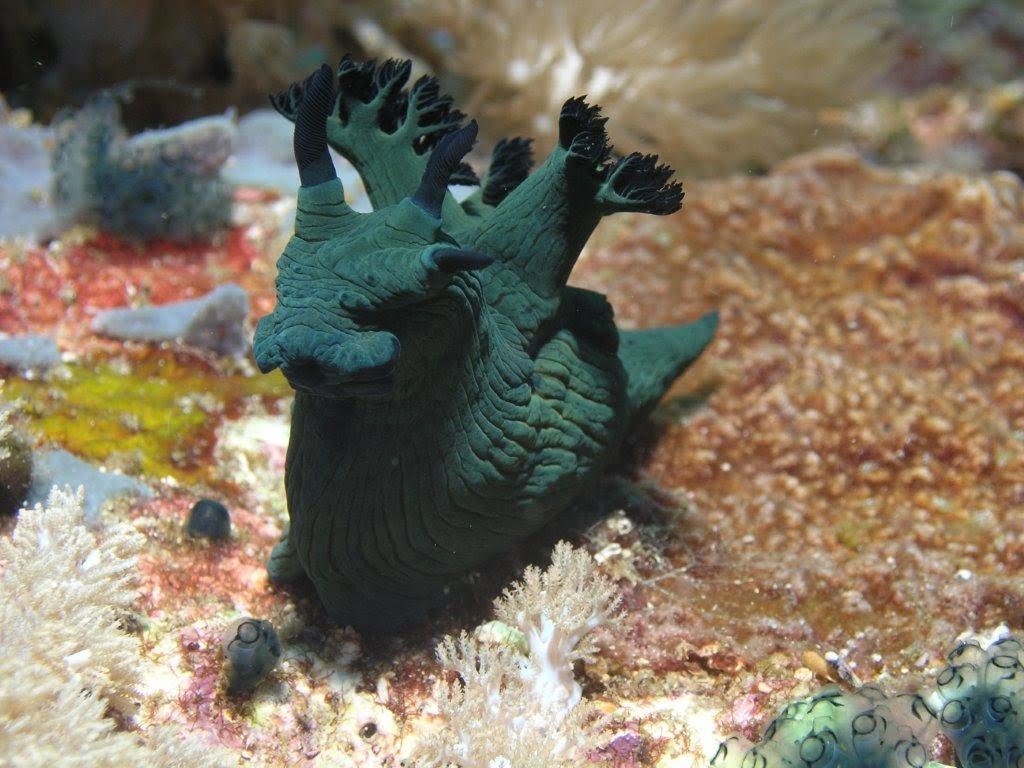
View Full Size ImageYonow, N. (2011) Results of the Rumphius Biohistorical Expedition to Ambon (1990) Part 15. The sub-order Doridina (Mollusca, Gastropoda, Opisthobranchia, Nudibranchia). Zoologische Mededelingen, Leiden 85: 905 -956. http://www.zoologischemededelingen.nl/85/nr04/a17

Photo Nembrotha milleri is from this paper (courtesy of Anja Blonk).

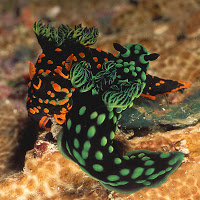
View Full Size ImageUpcoming Publication: Yonow, N. Opisthobranchs from the western Indian Ocean, with descriptions of two new species and ten new records (Mollusca: Gastropoda). ZooKeys. The journal link is http://www.pensoft.net/journals/zookeys/

Photo 21 Nembrotha guttata is from this paper (courtesy of H Voigtmann).


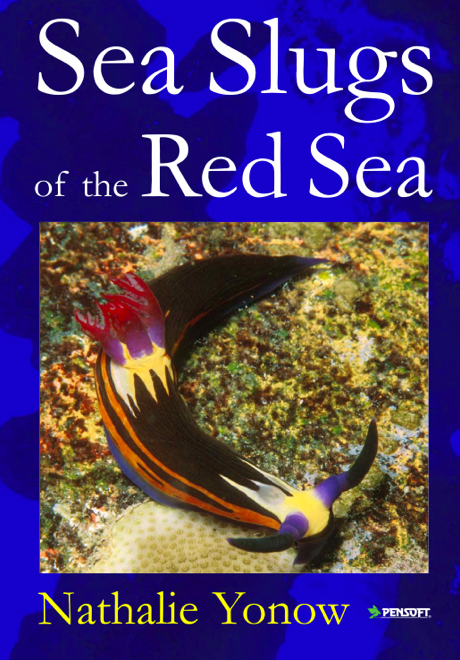
View Full Size ImageSea Slugs of the Red Sea
304 pages, more than 500 colour photos and illustrations
€ 75.00 (incl P&P;)
http://www.pensoft.net/book/9500/sea-slugs-of-the-red-sea

For more information on these publications or Dr. Yonow’s work, contact her at [email protected]

March 13, 2012by Grace Costantino
BHL News, Blog Reel

The United States Geological Survey Joins BHL!

Portrait version of the Biodiversity Heritage Library logo.

In November, 2011, at the Life and Literature Conference in Chicago, IL, BHL announced the addition of its fourteenth consortium member, the United States Geological Survey Library (see a list of member libraries on our wiki). Since the announcement, BHL staff have been diligently working with USGS to fully integrate our new library member into BHL workflows and procedures, and it won’t be long before you can access new USGS material in the BHL portal. We at BHL, along with our new colleagues at USGS, are thrilled about this important development in the BHL project.

When asked what contributions USGS could make to the BHL corpus, Richard Huffine, Library Director, replied, “The USGS mission has always spanned both the physical and life sciences. From our historical work in paleontology to our current research in ecosystems, we have collections that will definitely compliment the current holdings of the BHL.” The USGS is focusing their early contributions on filling gaps in BHL and adding a collection of rare research in paleobotany. As Huffine further added, “We’re excited to be part of this historic effort and are looking forward to seeing the BHL reflect the full breadth and depth of what biodiversity means.”

Created in 1879, the U.S. Geological Survey maintains one of the world’s largest libraries dedicated to the earth and natural sciences. Scientific research is a key part of the Survey’s mission, and this work is supported by a wide array of monitoring activities and scientific collections, more than 1,000 research scientists and a library with more than 2,000,000 volumes, 1,500,000 maps and 800 current serial titles. For more information about the U.S. Geological Survey, visit http://library.usgs.gov/.

We are thrilled to add the United States Geological Survey Library to the BHL ranks. We are confident they will contribute a unique array of important biodiversity texts to the over 102,ooo volumes and 38 million pages currently available. Welcome to the team, USGS!

March 12, 2012by Grace Costantino
Blog Reel, Featured Books

Book of the Week: Sarah Ann Drake & Women’s History Month

View Full Size Image

If you’ve been following us on Twitter or checking in on our Facebook page, you know that this month is Women’s History Month. BHL is celebrating by highlighting women throughout history who have played in important role in the progression of biodiversity research and knowledge. Each day, we’ve been tweeting about one or two of these remarkable heroines and each week we’ve been posting Facebook trivia challenging your knowledge about these famous women. Today, we’re featuring a woman who made an incredible contribution to botanical illustration: Sarah Ann Drake.

Sarah Ann Drake was born on July 24, 1803, in Skeyton, Norfolk. During her lifetime, she created more than 1500 botanical illustrations, yet we know next to nothing about her life with the exception of a few small details about her relationship with John Lindley.

View Full Size Image

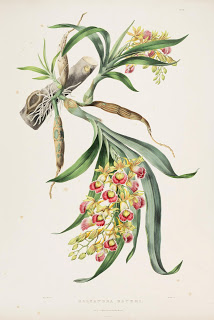
John Lindley was an English botanist who wrote a number of the important botanical works of the nineteenth century, many of which described new species and contained colored illustrations painted by his own hand. In 1830, Sarah Drake moved into the Lindley house in London and performed a variety of duties within the household, including governess to Lindley’s children. Eventually, however, her interests turned to botany and she illustrated many of the images in Lindley’s publications. Notable titles include Ladies’ Botany and Sertum Orchidaceum. Lindley even named a species in honor of Ms. Drake – The Western Australian Orchid genus Drakaea.

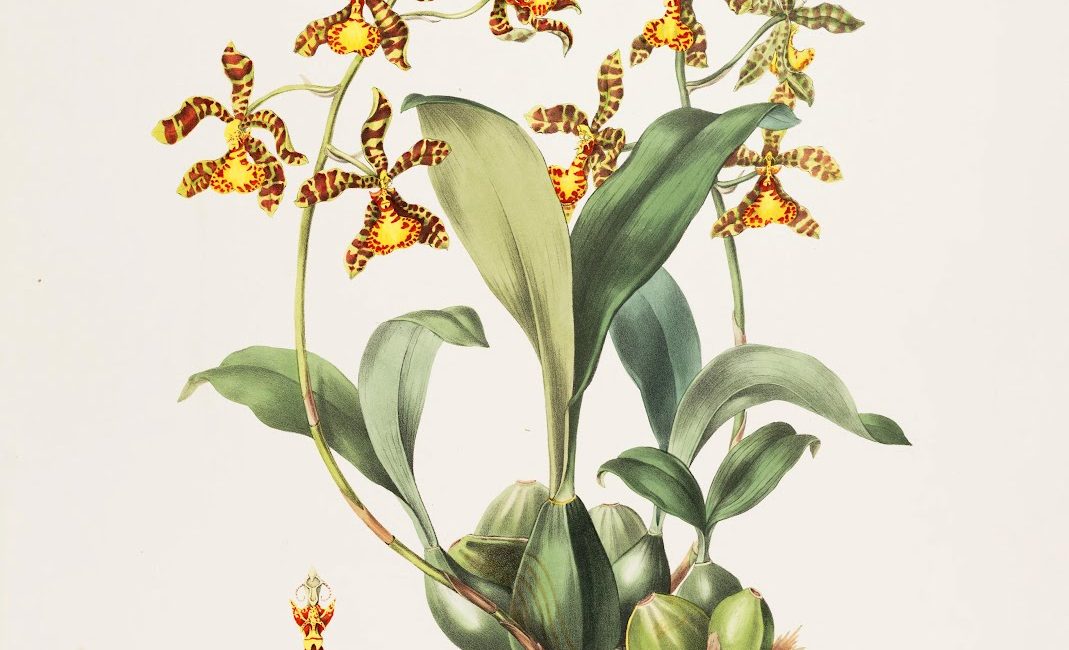
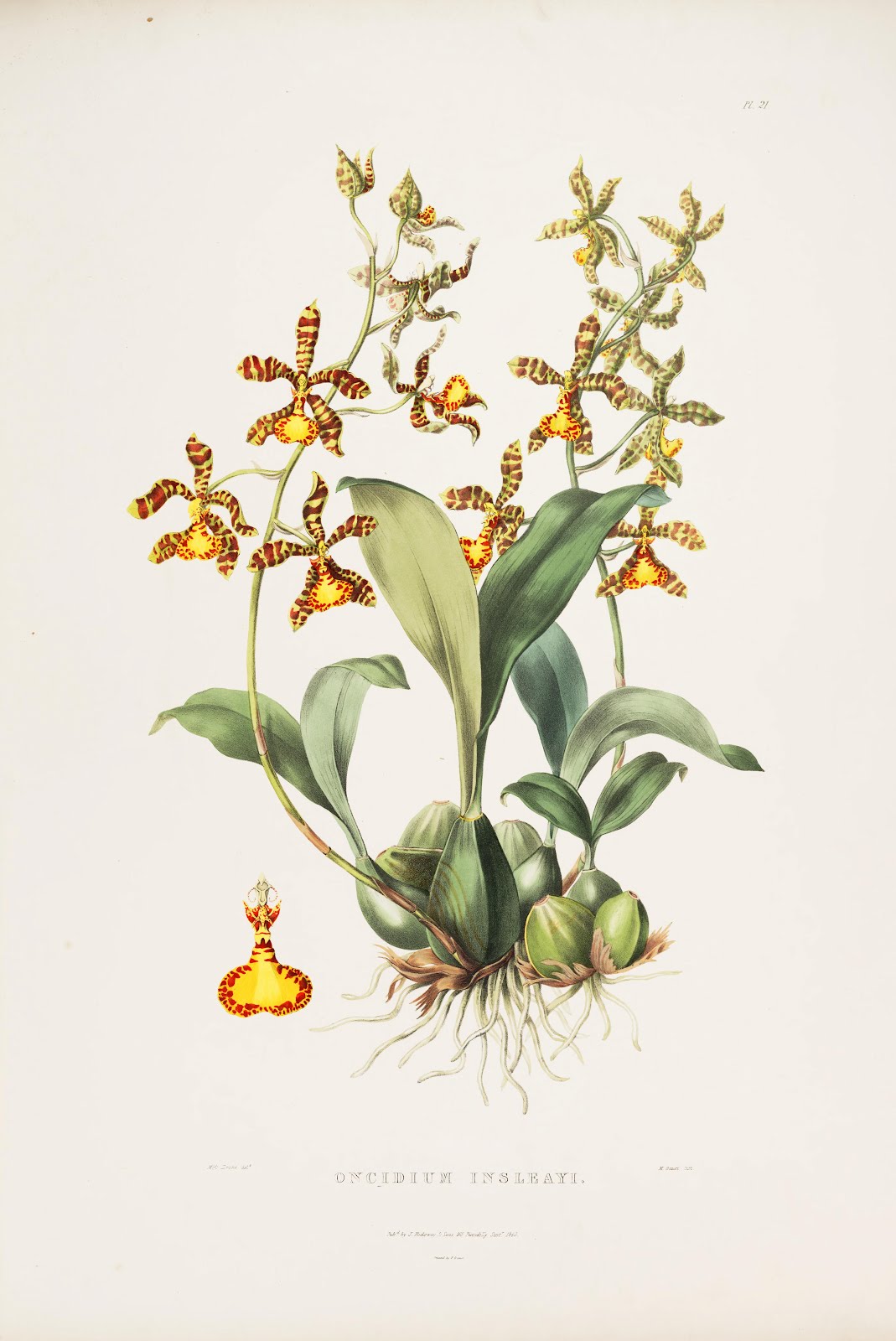
Sarah Drake illustrated a variety of titles for authors other than John Lindley as well, including plates from Sydenham Edwards’ The Botanical Register and our Book of the Week, Bateman’s The Orchidaceae of Mexico and Guatemala.

View Full Size Image

The Orchidaceae of Mexico and Guatemala contains forty folio plates dedicated to orchid species found in Central America. It is hailed as one of the rarest, most renowned, and most sought after orchid books ever published, with only 125 copies produced. In 2002, a copy of the work sold at Christie’s Auction House for 196,500 USD. According to W. Blunt in The Art of Botanical Illustration, this title is “probably the finest, and certainly the largest, botanical book ever produced with lithographic plates…In size and in splendour, Bateman’s giant folio eclipses the works of all who went before or came after him.” Bateman himself is also remembered as not only a pioneer in orchid culture, but also one of the first proponents of “cool” orchid cultivation.

Sarah Drake died in 1857, reportedly from diabetes, though some historians have suggested that she may have suffered from cumulative poisoning caused by her painting materials. As we honor the notable women of biodiversity history this month, we remember and applaud Sarah Ann Drake for the gorgeous artistic and scientific illustrations she contributed to botanical research.

View Full Size Image

Illustrations pictured in this post are by Sarah Ann Drake. Other illustrators for The Orchidaceae of Mexico and Guatemala include Augusta Withers, Jane Edwards and Samuel Holden.

March 8, 2012by Grace Costantino
Blog Reel

Flickr: BHL’s Unexpected Success Story

Portrait version of the Biodiversity Heritage Library logo.

In July, 2011, several members of the BHL staff began putting illustrations from BHL books on Flickr. It started as a simple way to flag favorite staff images and document the illustrations we were using in various outreach activities, like Twitter and Facebook. Today, our Flickr presence has grown to a collection of over 24,000 images and has become one of the most user-celebrated aspects of the BHL project, prompting such statements as “I think I’m in love” and “My favorite Flickr in the whole world!” Several people have asked us to share our experiences using Flickr as a component of BHL and discuss its growth from inception to the success it is now. We couldn’t think of a better place to do this than on our blog.

What’s In It for Us? The Benefits of Flickr

View Full Size Image

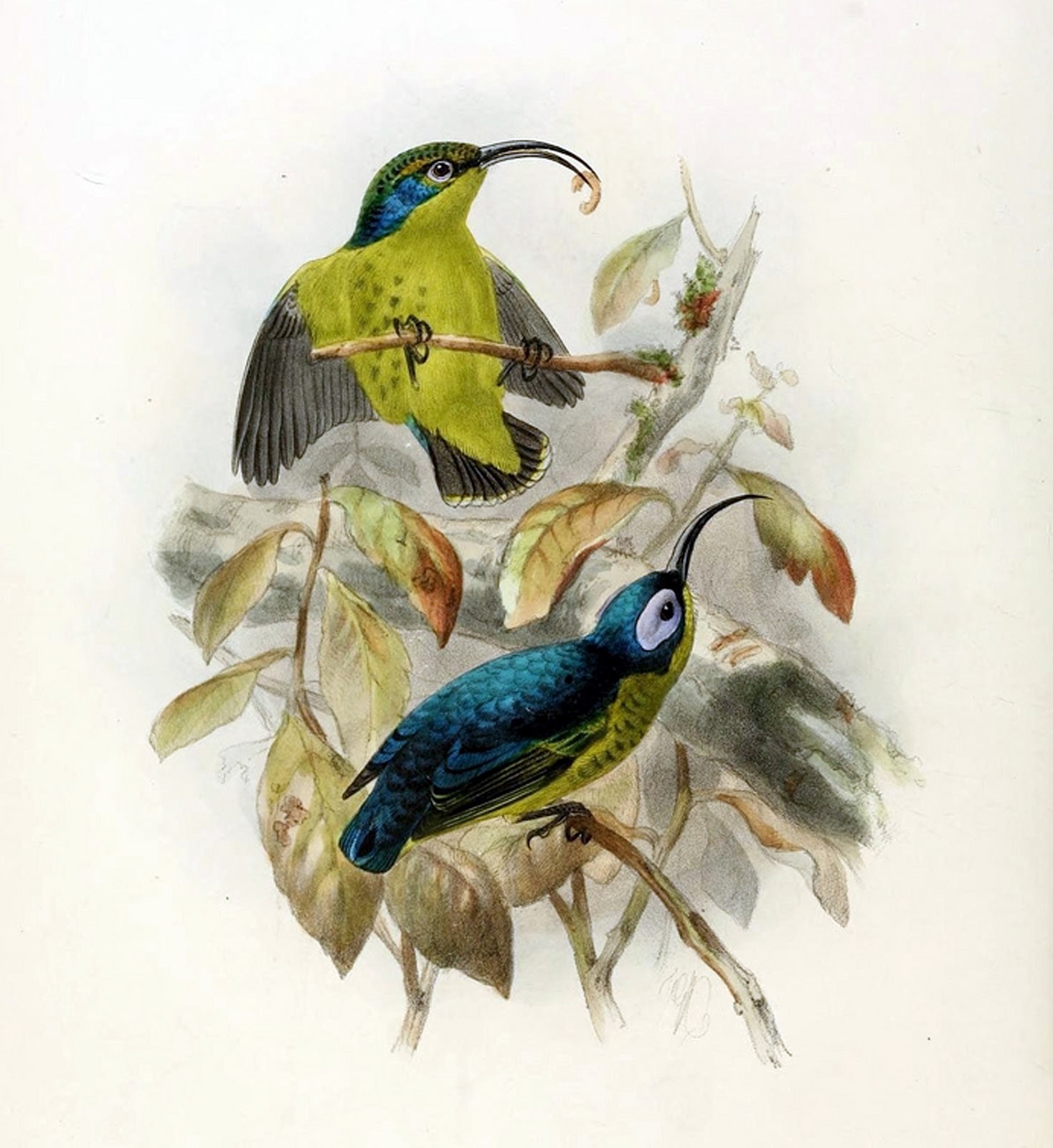
Using Flickr has generated a variety of benefits for the BHL project, many of which were unexpected. First and foremost, Flickr provides us with an easy way to showcase our amazing images – a BHL treasure that was all but hidden in our collection. Before Flickr, there was no simple way for users to access the images in BHL. Now, using Flickr sets and collections, users can go to one place and quickly browse thousands of images. And all of these images are available for free download and re-use, which is an excellent “selling” point for anyone interested in finding gorgeous natural history and botanical illustrations.*

Flickr also allows us to broaden our outreach potential, branching outside of our classic BHL interface and reaching our users on a new platform. The audience using Flickr is often quite different from our traditional user base, thus having a presence on Flickr means that we are able to reach a whole new group of people, including artists and k-12 educators.

View Full Size Image

Our Flickr group has also provided many unexpected benefits to BHL staff. Not only can users more easily find BHL images, but so can we! What started as a way to document those images we were already using in social media quickly became the source of much of this activity. Flickr images provide excellent fodder for our various social media activities, including tweets, facebook posts and trivia, and provide inspiration for many of our Book of the Week posts. Staff can now easily find illustrations to “spice up” BHL promotional materials, including brochures, business cards, banners, and merchandise, or even bring flair to events like donation campaigns. Plus, incorporating images into BHL reports transforms the otherwise boring white pages into alluring, eye-catching documents that people actually want to read.

The World of Tagging Images: Machine Tags

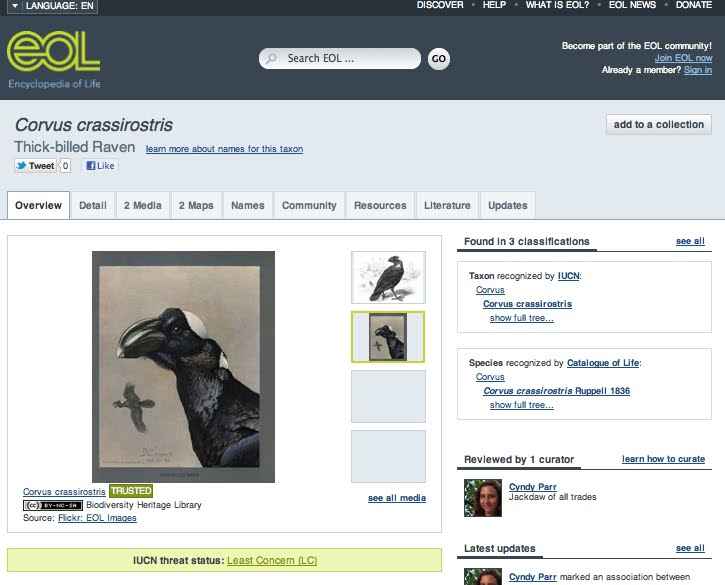
Through the use of machine tags, Flickr also allows us to collaborate more extensively with projects like EOL. Machine tags look like:

  • “taxonomy:binomial=Aegotheles savesi” (quotes required due to space b/w Genus & species)
  • taxonomy:family=Fabaceae
  • taxonomy:genus=Rhinoceros
  • taxonomy:common=Cardinal

Any time an image from our Flickr photostream is machine tagged, it becomes “flagged” for inclusion into the EOL Group Pool and will thus become a part of EOL species pages. (Images are added to the EOL pool on a monthly basis).

View Full Size Image

See this example of an EOL page for Corvus crassirostris. You’ll notice that the image of the Thick-billed Raven from the BHL Flickr set Album of Abyssinian Birds and Mammals is featured on the page. How cool is that?! In addition to the links from EOL pages (under the “Literature” tab) to taxonomic name occurrences in BHL, now BHL image content can be repurposed directly onto EOL species pages.

We would absolutely love your help tagging more of our images for EOL. For more information about machine tagging, please see the instructions provided by EOL here and feel free to contact us via Flickr mail, Twitter @BioDivLibrary, or our feedback form if you have any questions.

Please note that you have to have a Flickr profile to add tags to BHL images. If you are already a Flickr member or considering becoming one, and would like to have your own images of flora and fauna harvested to EOL species pages, please see the following for more information: http://www.flickr.com/groups/encyclopedia_of_life/rules/.

Proud Parents: Watching our Flickr Mature

View Full Size Image

Since the inception of our Flickr group, there have been many project milestones, the first of which (besides actually starting the account!) was implementing a basic organizational structure. Once it was clear that BHL wanted to fully participate in the Flickr environment, staff transformed a haphazard pool of images into organized sets and collections, with sets structured around individual titles and collections around subjects and content types (like “Mammals” or “Book of the Week“). Slightly later, staff capitalized on the opportunity Flickr offered us to celebrate specific events, organizing themed collections such as Halloween or the Holiday Season.

View Full Size Image
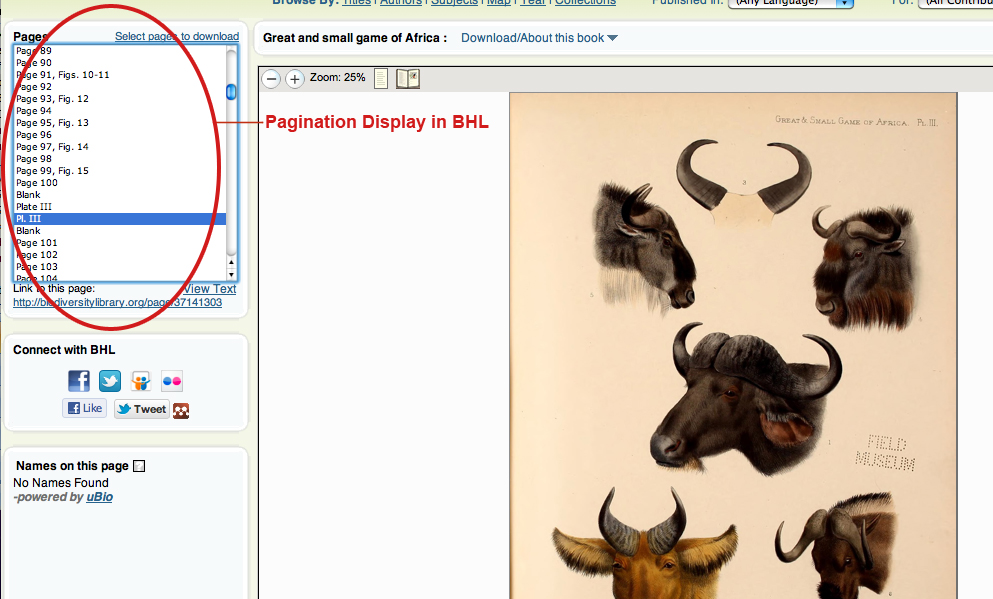
Pagination display on BHL

Eventually, staff realized that Flickr could help us target specific content in our collection for metadata improvement – specifically, pagination improvement. Pagination refers to the display of page numbering that you see on the left hand side of the BHL screen when viewing a book. Although very basic pagination is performed at the time of book scanning, BHL staff manually update this pagination with more helpful information such as identifying illustrations, designating articles, and embedding year and volume information. Learn more about BHL pagination in Gilbert Borrego’s post. Since those books featured on Flickr became some of the most popular in BHL, and since it was difficult to locate illustrations within these items without improved pagination, staff began to prioritize Flickr titles for pagination improvement. As of this week, all 450+ titles in Flickr have been manually paginated in BHL!

View Full Size Image

Our most recent milestone addresses one of the most common requests we’ve had regarding Flickr content. Until recently, images in Flickr only linked back to the volume level in BHL. This meant that the BHL urls associated with an image in Flickr did not link to the specific page in BHL, but instead to the “item” or book that contained the image. It was often difficult to then locate the image within the book, especially if the pagination had not yet been manually updated. Thanks to the Technical Development team at the Missouri Botanical Garden, all images in Flickr now have page-level links associated with them, allowing users to find the page within a BHL book with a single click.

This improvement came with an added benefit for BHL staff. Previously, to upload images into Flickr, staff had to first download the images from BHL, open them in Adobe Bridge to embed metadata, and then bulk upload to Flickr (more on the previous Flickr process in Gilbert Borrego’s post). Now, staff can flag illustrations directly within the BHL back-end administration portal. Software developed by the MOBOT team then automatically embeds book and page information to these images and uploads to Flickr.

For more information on the technical aspects of these improvements, see our FAQ page.

Overall, we’ve found that Flickr offers us an excellent opportunity to provide access to aspects of our content that were overlooked and under-appreciated. Reaching new audiences and demonstrating that BHL has much to offer outside the realm of taxonomy is a critical step in the growth of the project.

View Full Size Image

*All BHL images are public domain. However, Flickr does not provide a “public domain” license option. Therefore, our images are listed in Flickr as Attribution, Noncommercial, Share Alike.

March 1, 2012by Grace Costantino
Blog Reel

BHL and Our Users: Rebecca Morin, BHL Librarian

View Full Size Image

For our regular series “BHL and our Users,” we usually feature scientists who use BHL to conduct their research. However, there are many different kinds of BHL users, not the least of which are librarians that use BHL to help them execute their own work supporting the research needs of their library patrons. For many librarians, BHL means that they can save time answering reference questions, as all content is online; save wear and tear on their physical books by directing people to online versions of the content; and save time and money by avoiding ILL (Inter-Library Loan – sending copies of books held in one library to another that does not own a copy) costs, as again patrons can simply be directed to the item in BHL. Not surprisingly, these benefits extend to BHL staff who that also wear the hat of reference librarian at their respective institutions. This week we feature just such a librarian – Rebecca Morin, the User Services Librarian at the California Academy of Sciences (CAS). She not only serves CAS patrons in her librarian role but is also the driving force behind the digitization of CAS materials for BHL.
 
What is your title and institutional affiliation?
I am the User Services Librarian at the California Academy of Sciences in San Francisco. My main responsibilities are reference, instruction and outreach, acquisitions, and collection development for all areas of the Academy Research Division. I also oversee library systems, interlibrary loans, and the rare book collection.
 
How long have you been working in a library environment?
Almost 14 years. My first library job was working as an undergraduate in the Interlibrary Loan Department at the Margaret Clapp Library at Wellesley College. After graduating with an incredibly useful degree in music, I worked in libraries at UC Berkeley, here at the California Academy of Sciences, and in the Science & Engineering Division of the University of British Columbia Library in Vancouver. I received my MLIS and MAS (Master of Archival Studies) from the UBC School of Library and Information Studies in 2007.
 
When did you first discover BHL?
I have a hard time remembering not using BHL in my current position! It must have been shortly after launch. I used the Missouri Botanical Garden’s Botanicus portal quite a bit, so I think my adoption of BHL just flowed naturally from there. The California Academy of Sciences is not a founding member of BHL, but by the time we joined the consortium in May 2009 I was using BHL regularly as part of my reference and interlibrary loan duties.
 
What is your current level of involvement in BHL?
I spend approximately one day/week working on BHL. I am on the Staff Committee, the Collections Committee, and I was part of the Communications Committee for the Life & Literature Conference in November 2011. I’ve spoken about BHL quite a bit over the last several years, giving presentations at the 2010 meeting of the Society for the Preservation of Natural History Collections, the 2011 IMLS WebWise Conference, and the 2011 Museum Computer Network Conference. I’ve also taught BHL instructional sessions at the Academy and at the National Museum of Natural History. I’m finishing up a scanning project, and I serve as a Principal Investigator on an IMLS National Leadership Grant called Connecting Content: A Collaboration to Link Field Notes to Specimens and Published Literature, which will result in some field note materials being served via the BHL portal (among other outcomes). BHL is a big part of my professional life!
 
What is your opinion of BHL and what impact has it had on your duties as a librarian?
I am extremely proud of this project and so happy that I have the chance to be involved with it! The Library at CAS is separated from the rest of the Research Division by several floors, our graduate students attend schools that are anywhere from five to eighteen miles away, and I work with a large number of off-site research associates and affiliated scholars. It makes a HUGE difference that I can direct researchers to the material they need, instantly, free of charge, from anywhere with an internet connection. BHL is a game-changer.
 
How often do you use BHL?
Without exaggeration, every day. Since reference is my primary responsibility, I find myself using it to verify citations and species descriptions. I send links to articles and bibliographies generated via TaxonFinder to off-site researchers. I download papers that would otherwise require interlibrary loan. I use the BHL Flickr account to help fill the requests I get for beautiful scientific illustrations. BHL is my most-visited external website, ranking just behind Google (according to my browser history).
 
What has been the reaction of your patrons to BHL?
Some research staff were skeptical at first. Several years ago it was not uncommon for me to pull up an item in BHL only to have the patron insist on seeing a paper copy from my collection as well. But now that researchers have grown accustomed to acquiring the latest literature online via ejournal subscriptions, I find they have an increased comfort level in accessing BHL for legacy literature. Students and researchers who don’t live in the Bay Area or visit the Academy often are very enthusiastic about BHL, and patrons are increasingly viewing BHL as a trusted resource and a reliable source of information.
 
What services/features do you like most about BHL and which do you most like to point out to your patrons? Which services/features are your patrons most excited about/use the most often?
My absolutely favorite feature of BHL is that it is free and open. Scientific literature is so expensive, and access to older foundational literature can be so restrictive. I know a lot of visiting scholars and students are just thrilled with what BHL offers, and many are excited to share it with friends and colleagues who may not have easy access to rich library collections. Many of my patrons are big PDF-makers; they use the PDF creator to build their own literature libraries, kind of like an electronic reprint collection.
 
If you could change one thing about BHL, what would it be, or what developmental aspect would you like the BHL team to focus on next?
Full-text searching within items is something that my users really want to see. For students new to research in systematic biology, it can be hard to find one’s way around the text online. Tools for image retrieval would be incredibly helpful as well.
 
Is there a specific item on BHL that is most often requested by your patrons/that you use more than any other to fulfill ILL requests?
The publications of the Academy, such as the Proceedings of the California Academy of Sciences, are always popular. Our reference copies are difficult to photocopy, and Academy staff from the Research Division and beyond regularly consult the Proceedings. The Academy was founded just three years after California became a state, and the Academy is inextricably wrapped up in the history of California. Academy staff, students, collection managers, historians, genealogists, and scholars of all stripes constantly seek information from the Proceedings, and I usually refer them to BHL.
________________________________________________________
 
Thanks, Becky, for sharing your valuable insights, garnered from not only a reference librarian perspective, but a BHL staff member perspective as well. To date, the California Academy of Sciences library has contributed thousands of pages of taxonomic literature to BHL, and we look forward to the continued provision of material from this important academic and historical institution. These contributions are the direct result of work done by Becky and other library staff at CAS, and we are grateful for their commitment to the BHL project!
February 28, 2012by Grace Costantino
Blog Reel, Featured Books

Celebrating Nature’s Best with BHL

The 2011 Nature’s Best Photography Windland Smith Rice International Awards Exhibit opened at the Natural History Museum on March 30, 2012. We all know that photography is a strikingly compelling means of experiencing nature’s majesty. This concept is the driving force behind the Nature’s Best Photography competition, which operates under the mission to “celebrate the beauty and diversity of nature through the art of photography.” The museum’s exhibit features the winners in each award category, as well as a collection of some of the highly honored photographs submitted to the competition this year.

Not surprisingly, the species featured in the award-winning photographs from the Nature’s Best Exhibit can also be found illustrated within the BHL collection. To celebrate the exhibit, we’re highlighting some of the featured photographs and sharing more about the species captured in each snapshot through illustrations and scientific descriptions found in the BHL. You can also learn more about the species starring in the exhibit by visiting the Encyclopedia of Life Collection.

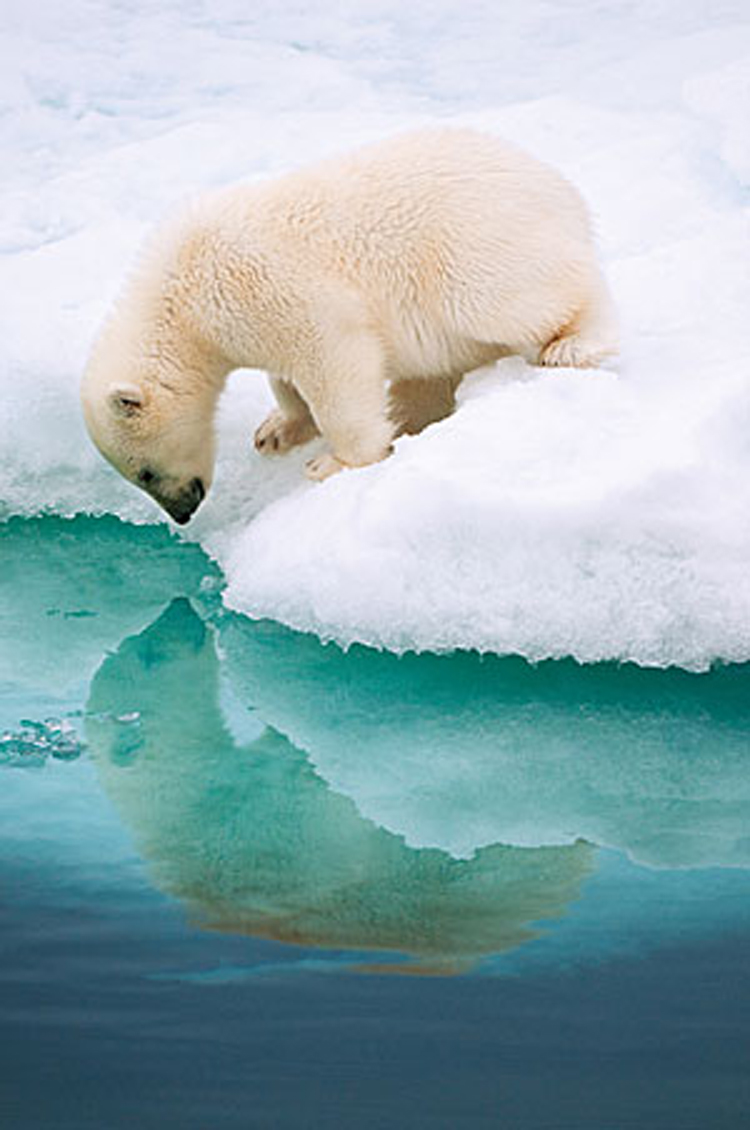
Polar Bear (Ursus maritimus)

View Full Size Image
Winner: Wildlife. Polar Bear Cub, Barents Sea, Norway. Florian Schulz.

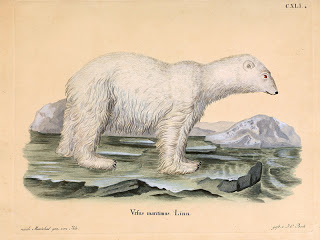
Constantine John Phipps, 2nd Baron Mulgrave, was the first to describe the polar bear, which he encountered during his 1773 expedition to the North Pole. He published the account in the 1774 publication A Voyage Towards the North Pole, and four years later in Die Säugthiere in Abbildungen nach der Natur featured an illustration of Ursus maritimus (below).

View Full Size Image
See the first description of the Polar Bear in BHL
See an illustration of the Polar Bear in BHL

Lion (Panthera leo)

View Full Size Image
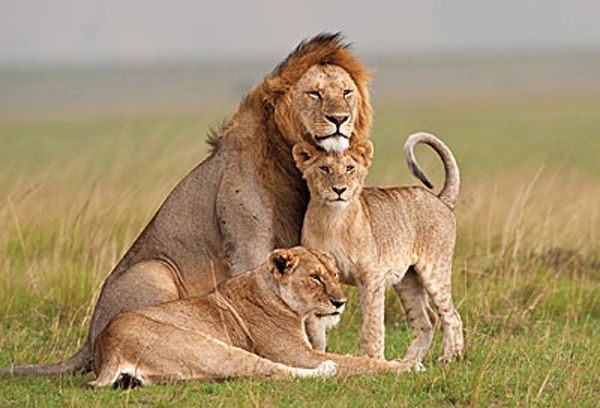
Highly Honored: African Wildlife. African Lions, Maasai Mara National Reserve, Kenya. Federico Veronesi.

The lion was first described by Carl Linnaeus, a famous Swedish botanist and zoologist who developed the schema of identifying organisms by genus and species names – a system known as binomial nomenclature. He is therefore referred to as the Father of Modern Taxonomy. The tenth edition of his revolutionary work, Systema Naturae, represents the birth of zoological nomenclature (using binomial nomenclature for animals). The Lion was scientifically described for the first time in this work.

View Full Size Image

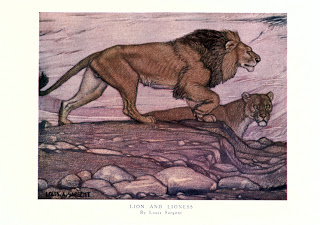
In 1909, Frank Finn’s work Wild Beasts of the World was published, containing 100 reproduced illustrations of nature drawings by Louis Sargent, Cuthbert E. Swan, and Winifred Austin. One of the drawings contained within the first volume was “Lion and Lioness,” by Louis Sargent (above).

See the first description of the lion in BHL
See Louis Sargent’s drawing in BHL


Stag Beetle (Lucanus cervus)

View Full Size Image
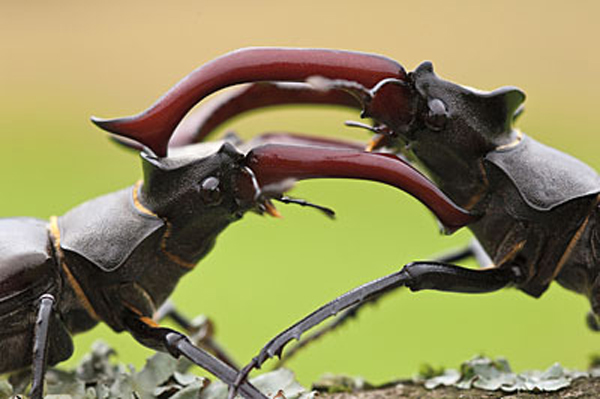
Highly Honored: Small World. Stag Beetles, Irún, Spain. Jose Grandío

The Stag Beetle was also first described by Carl Linnaeus in his tenth edition of Systema Naturae. The beetle’s common name comes from the resemblance of the species’ large mandibles to a deer’s antlers. Furthermore, male deer use their antlers when battling over territory and mates. The Stag Beetle uses its mandibles for the same purposes.

View Full Size Image

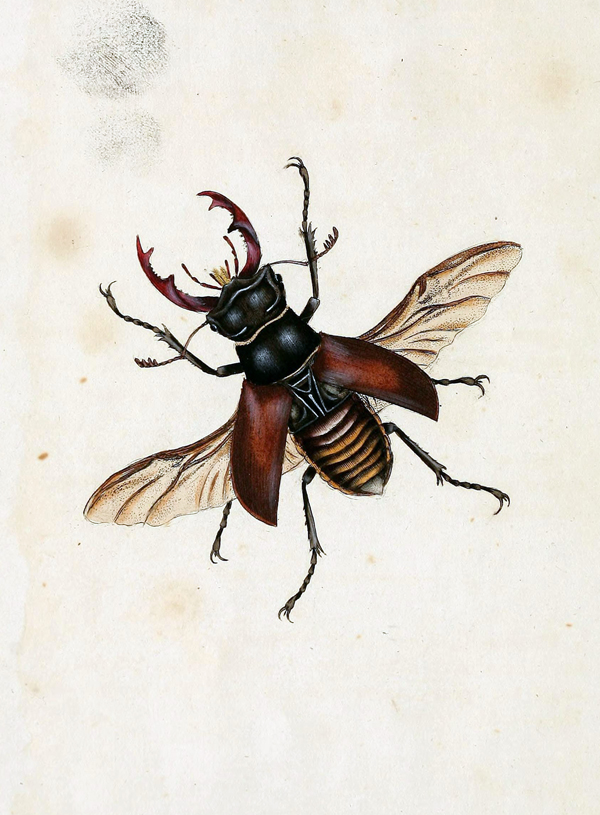
In 1792, Edward Donovan, an Anglo-Irish writer, illustrator and amateur zoologist, published the first volume of his sixteen volume work entitled The Natural History of British Insects. The series, published over a period of twenty-one years, contained 576 plates, 568 of which were colored. His depiction of the Stag Beetle, wings extended in flight, is particularly memorable (above).

See the first description of the Stag Beetle in BHL
See Donovan’s illustration of the Stag Beetle in BHL

If you happen to be in Washington, D.C., be sure to visit the Nature’s Best Photography Exhibit at the Natural History Museum, running March 30, 2012-January 6, 2013. You can find out more about the animals in the photographs by searching on the species name in BHL and visiting the Encyclopedia of Life Collection. See more illustrations of these species from BHL in our Flickr collection.

February 25, 2012by Grace Costantino
Page 56 of 71« First...102030«55565758»6070...Last »

Help Support BHL

BHL's existence depends on the financial support of its patrons. Help us keep this free resource alive!

search

About BHL

The Biodiversity Heritage Library (BHL) is the world’s largest open access digital library for biodiversity literature and archives. BHL operates as a worldwide consortium of natural history, botanical, research, and national libraries working together to digitize the natural history literature held in their collections and make it freely available for open access as part of a global “biodiversity community.”

Join Our Mailing List

Sign up to receive the latest news, content highlights, and promotions.

Subscribe Now

Subscribe to Blog via Email

Enter your email address to subscribe to this blog and receive notifications of new posts by email.

Join 319 other subscribers

Subscribe to Blog Via RSS

Subscribe to the blog RSS feed to stay up-to-date on all the latest BHL posts.

Access RSS Feed

Inspiring Discovery through Free Access to Biodiversity Knowledge.

The Biodiversity Heritage Library makes it easier than ever for you to access the information you need to study and explore life on Earth…for free, anytime, anywhere.


ABOUT | HARMFUL CONTENT | PRIVACY | SITE MAP | TERMS OF USE