Biodiversity Heritage Library - Program news and collection highlights from BHL
  • Home
  • News
  • Featured Books
    • All Featured Books
    • Book of the Month Series
    • BHL at 20
  • User Stories
  • Campaigns
    • Fossil Stories
    • Garden Stories
    • Monsters Are Real
    • Page Frights
    • Her Natural History
    • Earth Optimism 2020
  • Tech Blog
  • Visit BHL
Home
News
Featured Books
    All Featured Books
    Book of the Month Series
    BHL at 20
User Stories
Campaigns
    Fossil Stories
    Garden Stories
    Monsters Are Real
    Page Frights
    Her Natural History
    Earth Optimism 2020
Tech Blog
Visit BHL
  • Home
  • News
  • Featured Books
    • All Featured Books
    • Book of the Month Series
    • BHL at 20
  • User Stories
  • Campaigns
    • Fossil Stories
    • Garden Stories
    • Monsters Are Real
    • Page Frights
    • Her Natural History
    • Earth Optimism 2020
  • Tech Blog
  • Visit BHL
Biodiversity Heritage Library - Program news and collection highlights from BHL
Blog Reel

Book of the Week: X-Ray Vision

Have you ever wondered what a fish looks like inside? With the advent of x-ray technology, your curiosity can be sated, all without having to dissect a fish. And with the new Smithsonian exhibit, X-Ray Vision: Fish Inside Out, you can explore the evolutionary development of fish through a progression of x-rays from cartilaginous to bony fish. Our friends at EOL brought this exhibit to our attention through their online collection by the same name, which not only displays the incredible x-ray images seen in the Smithsonian exhibit, but also provides links to species pages providing more information about the fish showcased in each x-ray. Browsing through the EOL collection, we realized that one of the books in our collection features illustrations of a majority of the fish-types represented, and we thought that it would make a perfect book of the week post.

Celebrating the awesome power of x-rays, bringing us fish from the inside-out, we proudly present fish from the outside-in, aligning the Smithsonian and EOL exhibits X-Ray Vision with our book of the week: Our Country’s Fishes and How to Known Them: A Guide to all the Fishes of Great Britain (1902), by W.J. Gordon. In this post, we highlight just a few of the species featured in the exhibit, alongside portraits of them or members of their genus in our book of the week, and garnished with a few fun facts. Enjoy!

View Full Size Image

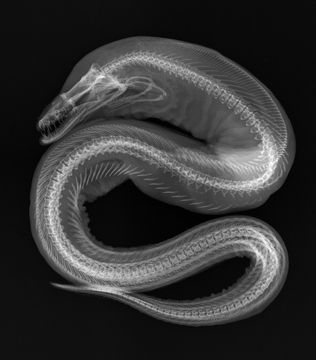
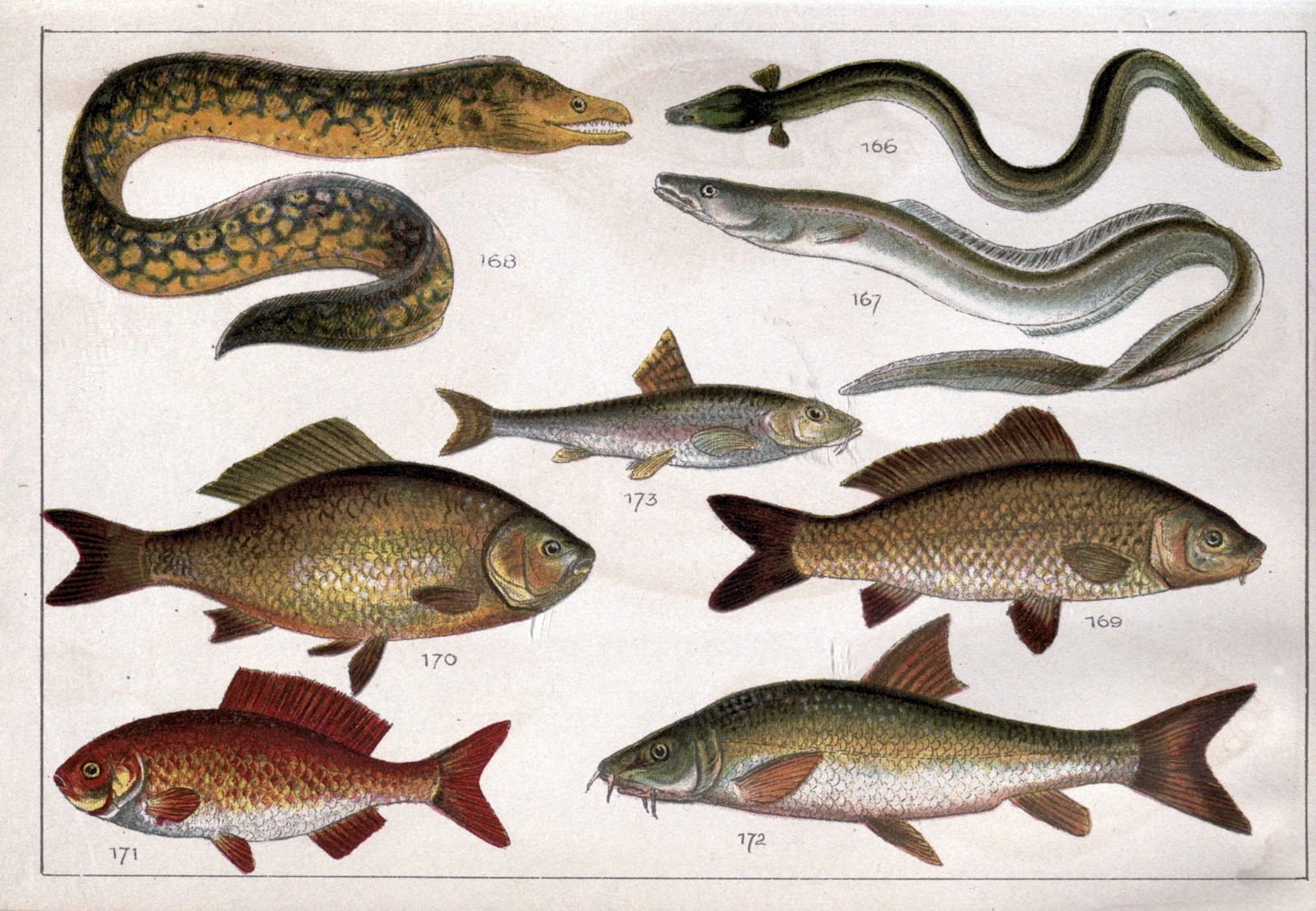
This is an x-ray of the Viper Moray, which is a Moray Eel of the family Muraenidae. The x-ray is presented alongside an illustration of the Mediterranean Moray (fig. 168).

Moray Eels are known for a second set of jaws, called pharyngeal jaws, found in the back of their throat. These jaws possess teeth, and when an eel bites down on its prey with its first set of teeth, the pharyngeal jaws come forward to grab the prey and drag it back down the throat towards the esophagus for swallowing.

_________________________________________________
View Full Size Image

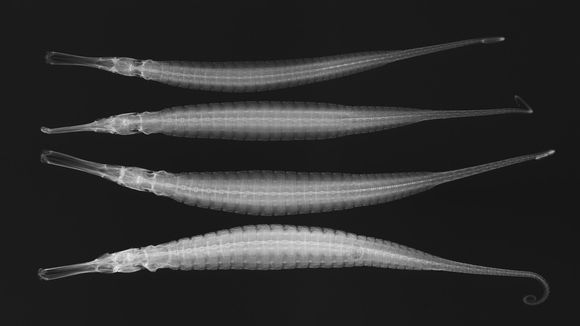
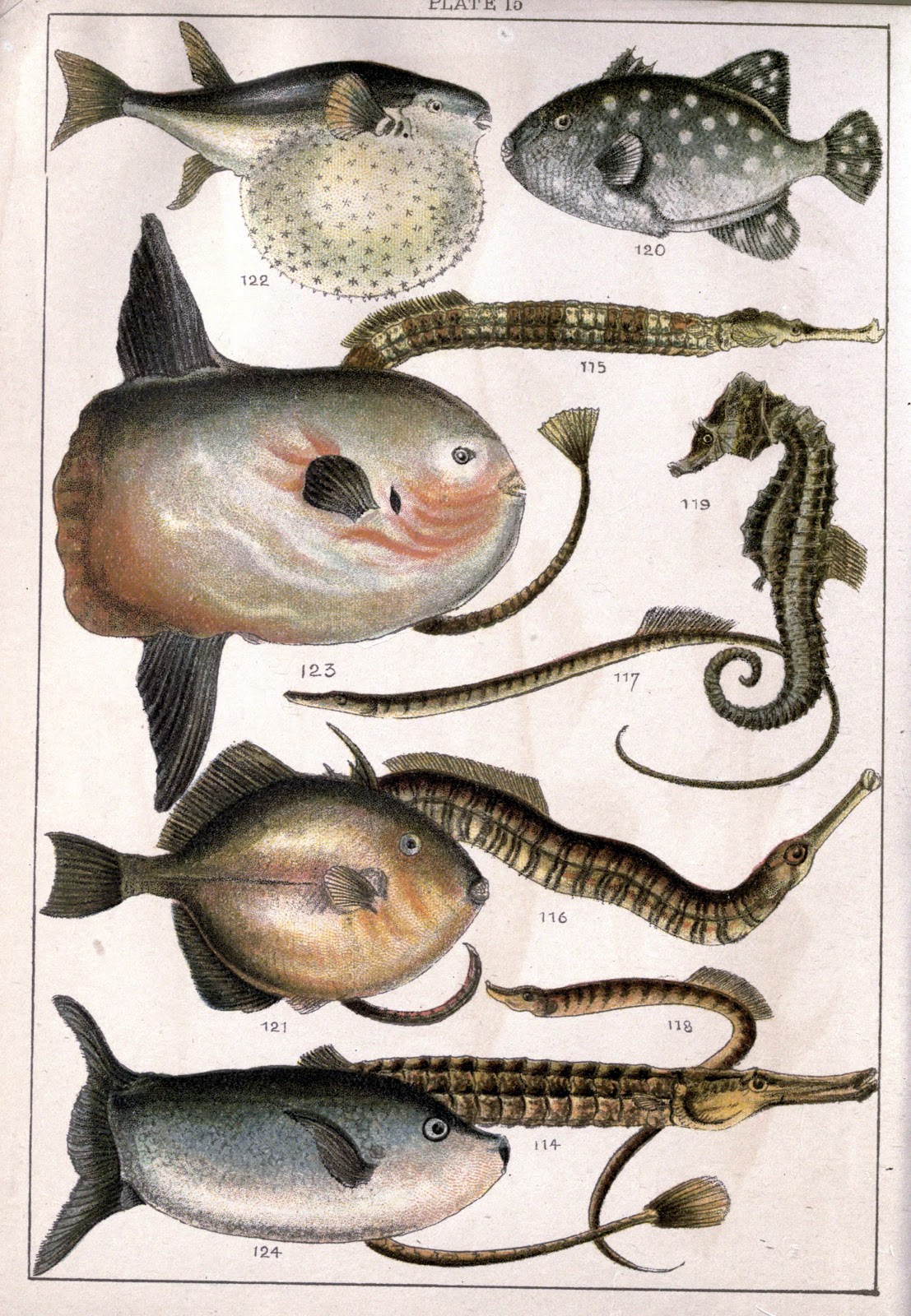
Seen here is an x-ray of an Alligator Pipefish, of the Syngnathidae family and in this case a member of the Syngnathoides genus. Accompanying the x-ray is an illustration of a variety of pipefish, including members of the Syngnathus genus and the Nerophis genus (figs. 114-118).

Sometimes thought of as “seahorses unfurled,” pipefish have a highly modified skeleton formed into armored plating. The numerous bony body rings are used to differentiate one species of pipefish from another.

_________________________________________________
View Full Size Image

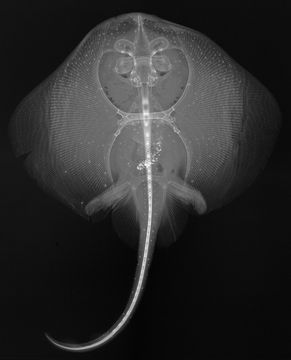
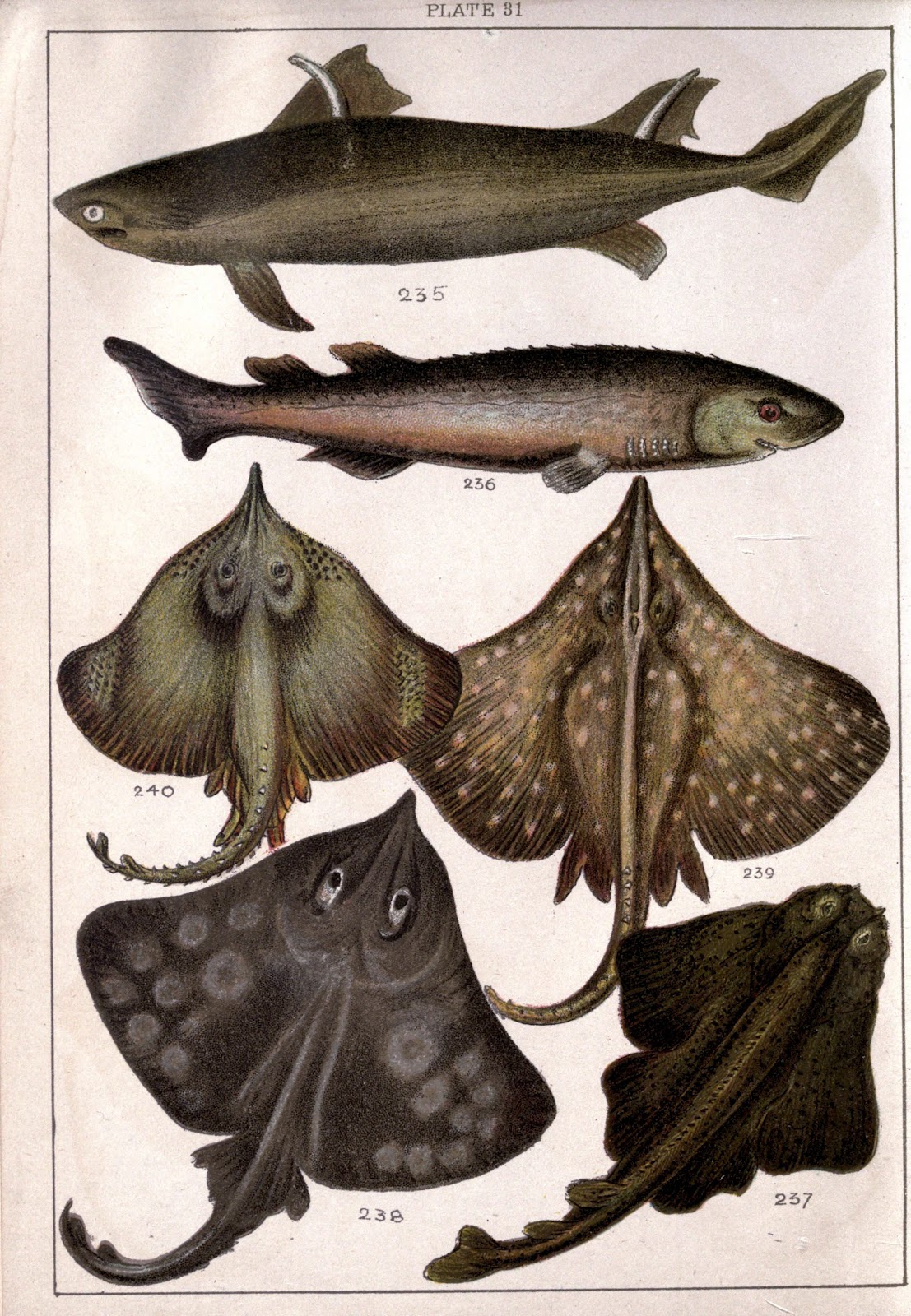
Presented here in lovely x-ray detail is the Monterey Skate, of the family Rajidae and genus Raja. This image is presented alongside illustrations of several other members of the skate family, including the flapper skate and white skate (figs. 239-240).

Skate mating typically occurs in the spring, when females lay numerous eggs which are encapsulated in leathery cases called “mermaid’s purses.” The fossil record dates skates back to the Upper Cretaceous period, 100-65 million years ago.

_________________________________________________
View Full Size Image

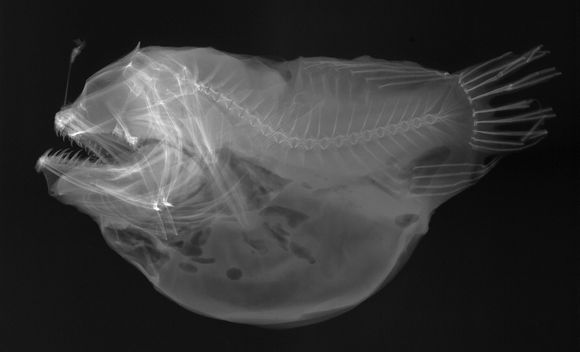
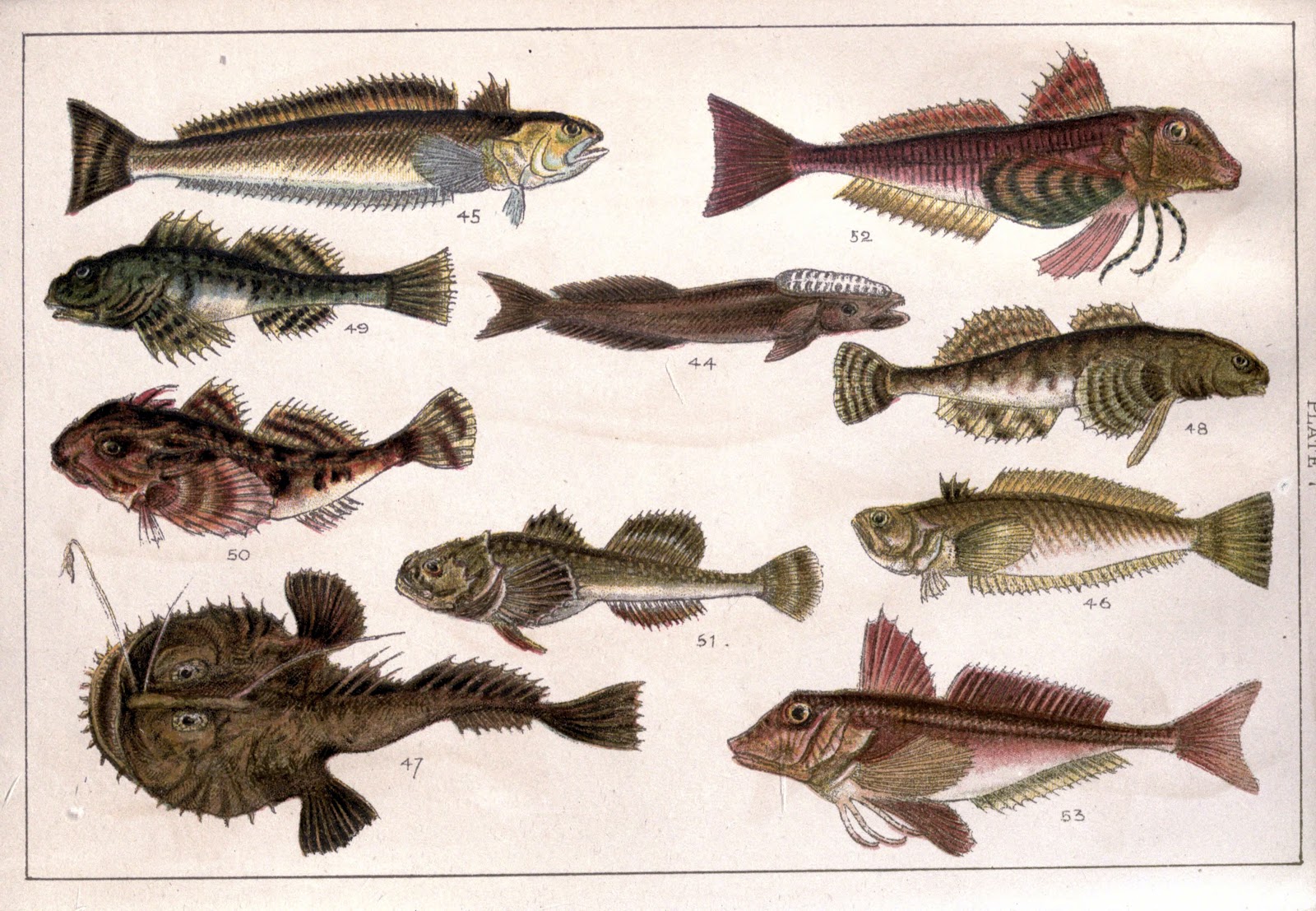
Our final featured x-ray is that of the Bulbous Deep Sea Angler, of the order Lophiiformes and the only species in the genus Dermatias. This species is known only from three specimens. In compliment to the x-ray, we feature Lophius piscatorius, or The Angler, sometimes known as a frog-fish or sea-devil (fig. 47). The Bulbous Deep Sea Angler is of the family Oneirodidae (deep-sea anglerfish), while The Sea-Devil is from the family Lophiidae, or Monkfish.

Anglerfish are so named because of their mode of predation, which involves luring prey with a fleshy lobe on top of the angler’s head. Anglerfish like those of the Ceratioid group exhibit extremely unusual mating practices. Male ceratioids, tiny in size compared with the females, become parasites attached to females. After locating a female anglerfish, the male will bite onto her, release an enzyme that digests the skin of his mouth and her body, and fuze to her at the blood vessel level. Over time, the male slowly atrophies, losing eyes, heart, and even brain, till he is nothing more than a pair of gonads that release sperm in response to hormones in the female’s bloodstream.

_______________________________________________

You can explore all of the wonders of X-Ray Vision: Fish Inside Out on the official website. Learn more about all of the species featured in the x-rays on EOL’s collection. Finally, browse all the beautiful illustrations in our book of the week on Flickr.

All x-ray images courtesy Smithsonian National Museum of Natural History.

February 23, 2012by Grace Costantino
Blog Reel, Featured Books

Book of the Week: The Cabinet of Natural History

Portrait version of the Biodiversity Heritage Library logo.
View Full Size Image
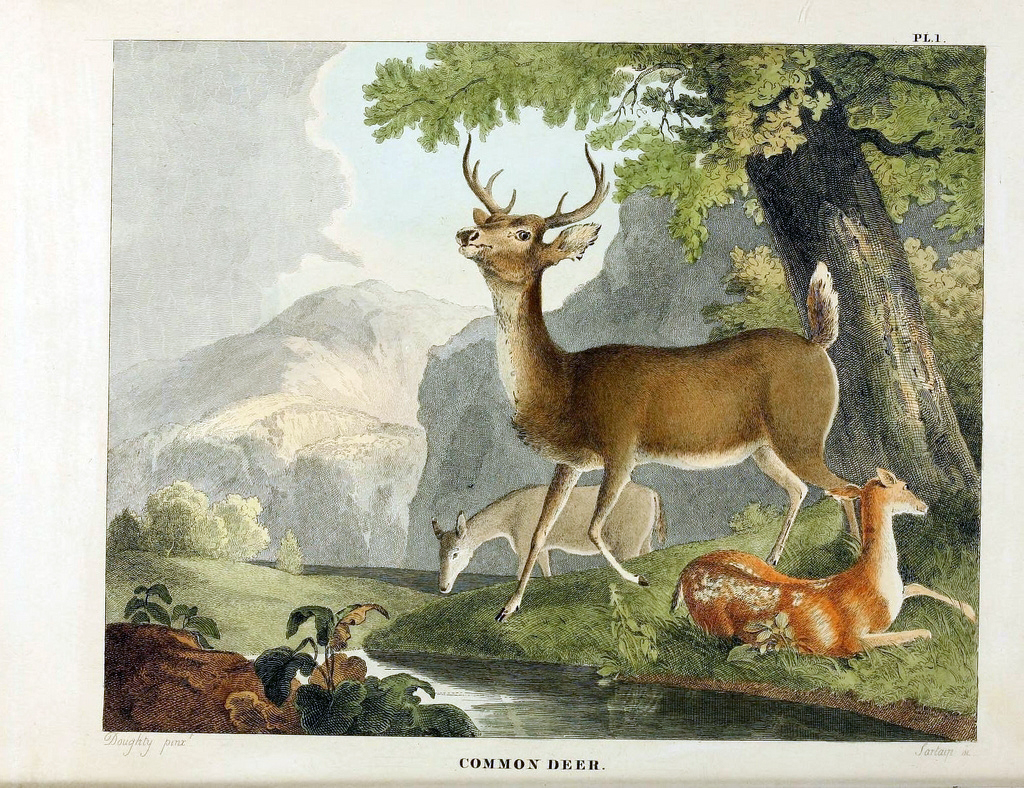
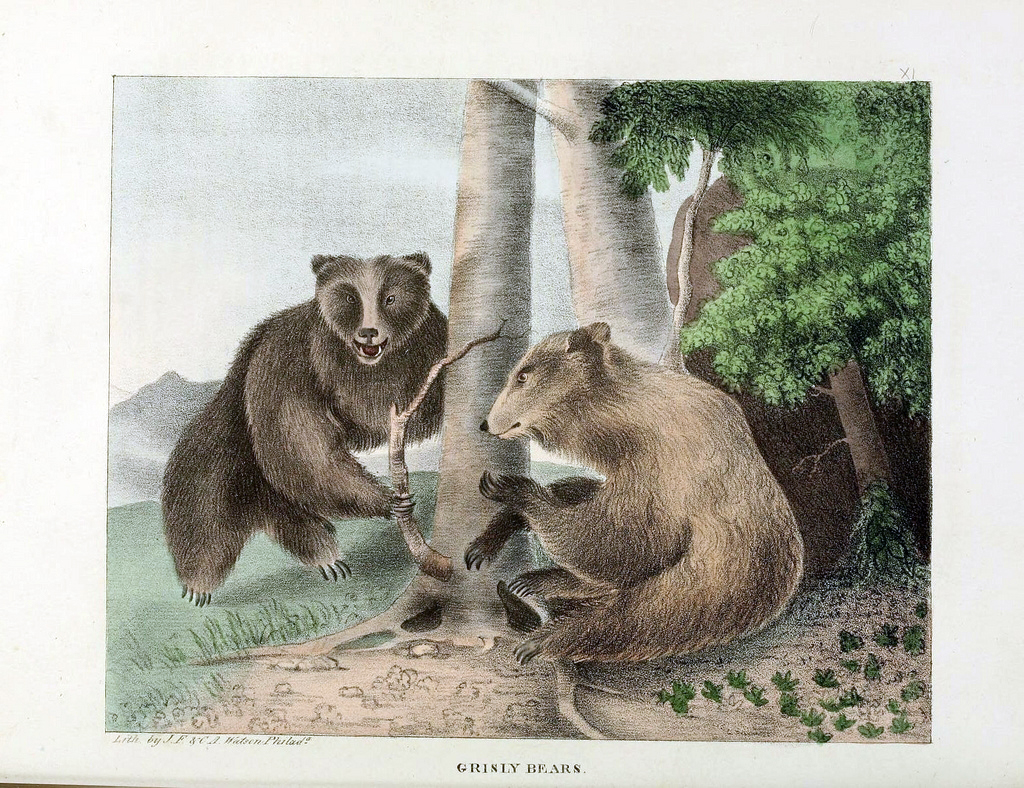
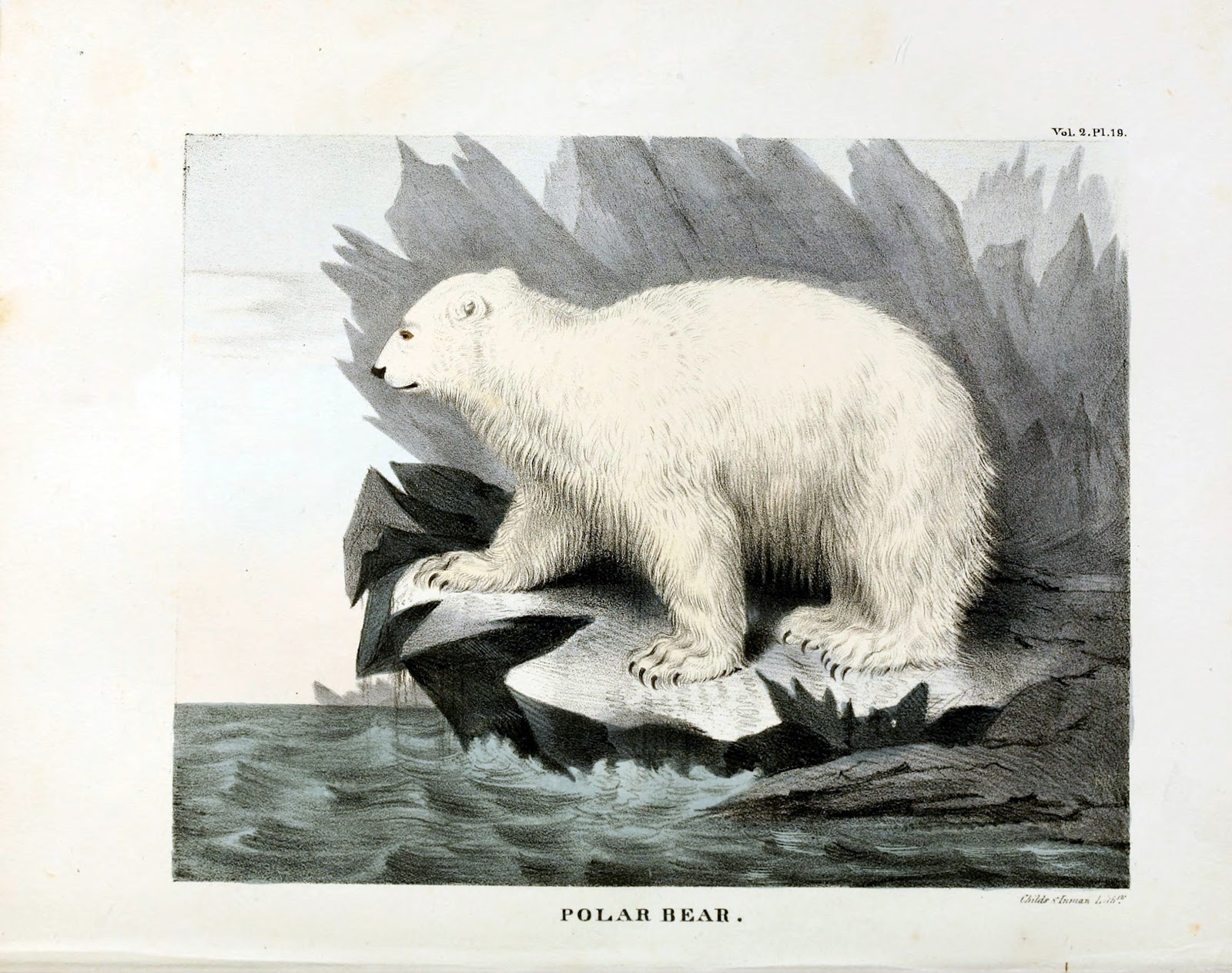
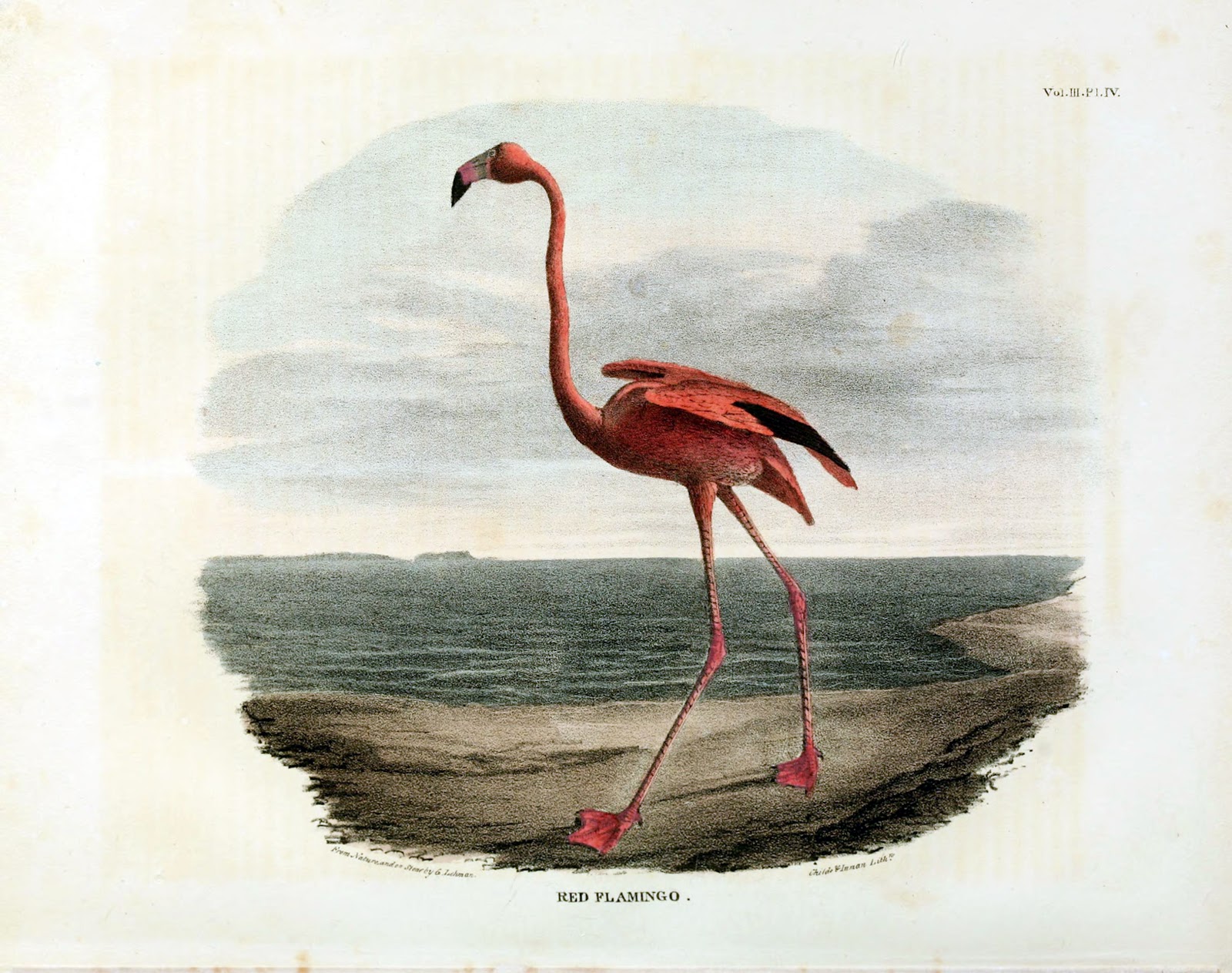
It’s hailed as “the first major print color book produced in America.” Some of the most influential artists of the nineteenth century worked on the illustrations, including Thomas Doughty, founder of the Hudson River School, and Titian Ramsay Peale, who is believed to be the first American artist to observe and paint the Indians and Buffalo of the Great Plains. The work sold at Christie’s Auction House for $5,750 in 1993 – nearly $3000 more than the high range estimate. As “the first major book of any kind with coloured lithographic plates printed in America,” the work “marks the beginning of dominance of lithography in book illustration.”

Have we whetted your appetite yet? Good! For our book of the week, we present The Cabinet of Natural History and American Rural Sports (1830-34), in three volumes.

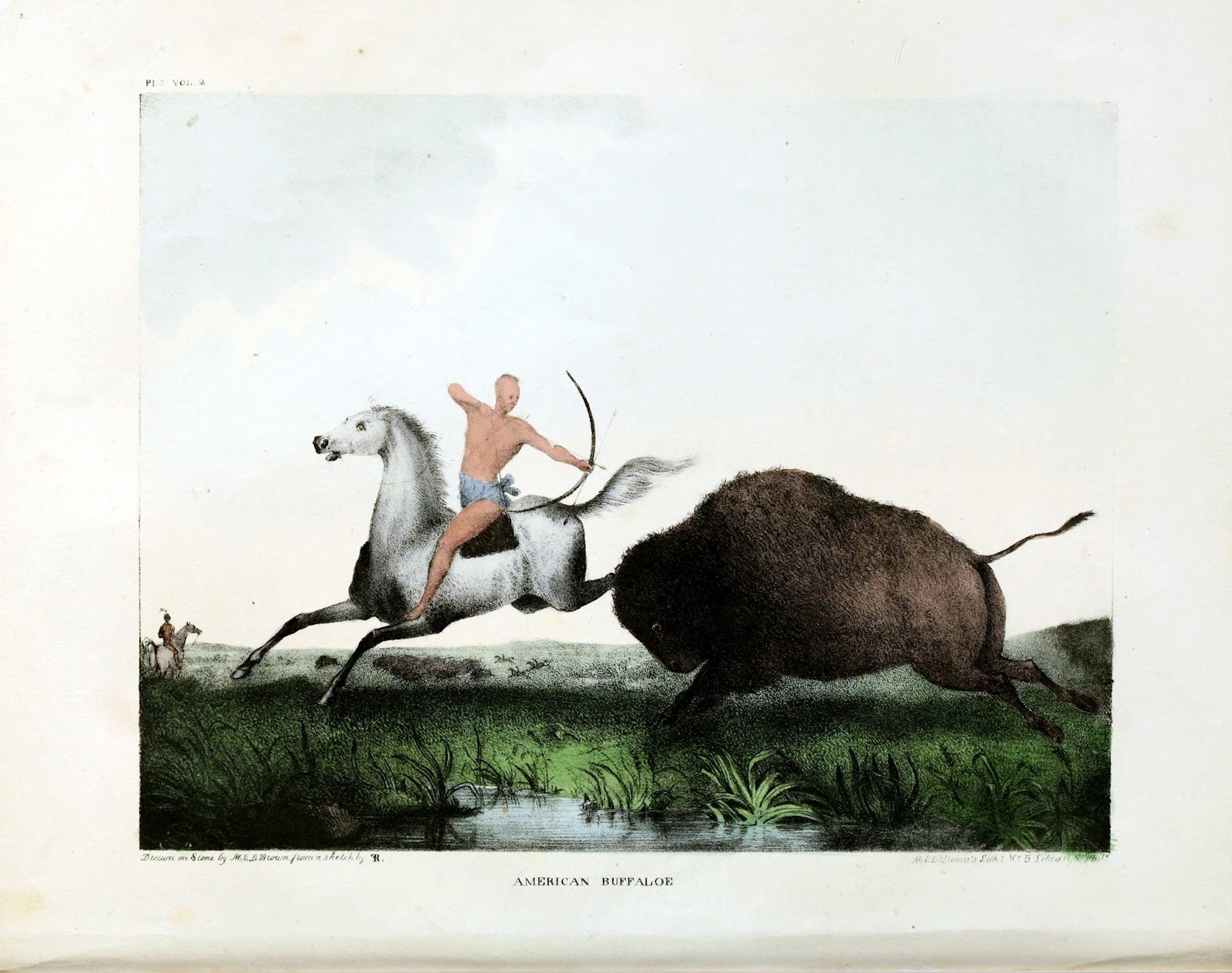
The Cabinet was a joint initiative begun by brothers Thomas and John Doughty. The three volumes of this work present the topics of natural history, sporting, travel, and general advice for the countryman, including first-hand accounts of hunting expeditions. It was issued in monthly parts from 1830-1834, and the first eight issues were particularly popular. The second volume contains a plate by Titian Ramsay Peale entitled “American Buffaloe,” depicting a Native American, mounted on horseback, hunting a buffalo, which was based on Peale’s sketches during an expedition led by Stephen H. Long to explore the Great Plains in 1819–1820. The sketches and paintings from the sketches represent the earliest first-hand depictions of the hunts.

View Full Size Image

While the work began as a joint effort between the Doughty brothers, by the third issue of the second volume, Thomas left the partnership to pursue his work as an artist. Nearly all of the plates of the first volume were the work of Thomas Doughty, and, as the heralded founder of the Hudson River School, are deemed the most important of the work. Thomas’ absence from the venture was deeply felt, and, just over a year after his departure, the publication ceased with v. 3, pt. 4 due to lack of subscription.

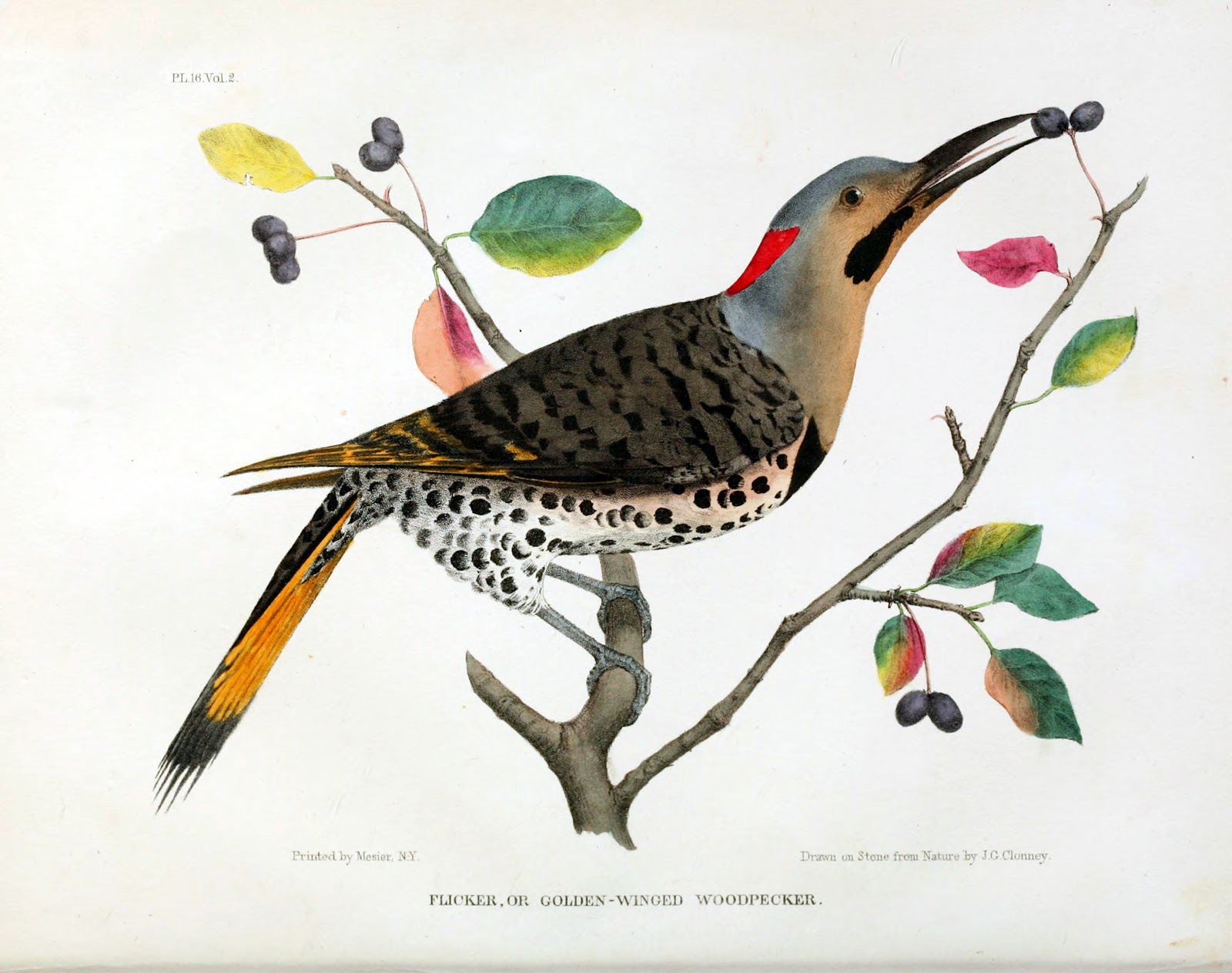
The magnificent lithographs and engraving within this title are the work of not only Thomas Doughty and Titian Ramsay Peale, but other artists including M.E.D. Brown, George Lehman, Edwin Landseer, and J.G. Cloney. The plates depict a broad range of animals, from typical game animals to polar bears and hunting dogs. The second volume itself contains 31 plates of American birds. We’ve featured some of our favorites in this post, and you can view the plates from the first volume on Flickr. Be sure to browse the title in BHL to experience the remarkable plates of the other volumes of this ground-breaking title.

View Full Size Image
February 17, 2012by Grace Costantino
Blog Reel, User Stories

BHL and Our Users: Alain Touwaide, Emanuela Appetiti and PLANT

View Full Size Image
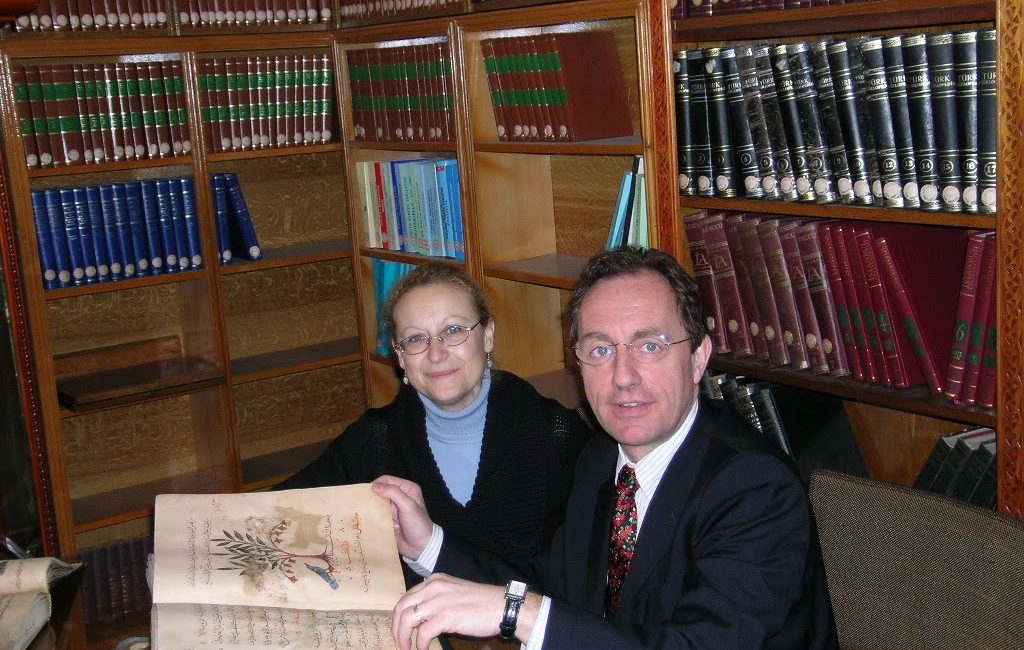
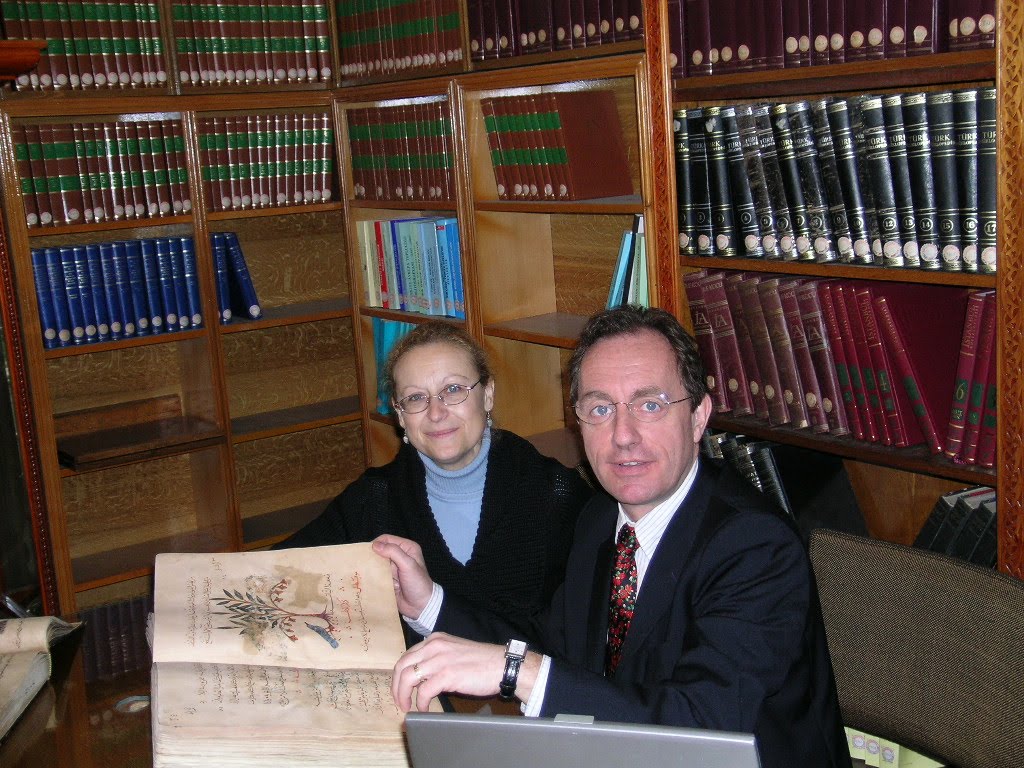
Touwaide and Appetiti analyzing the Ayasofia Codex 3703 in the 
Suleymaniye Kutuphanesi, a library rich in precious manuscripts, 
Istanbul, Turkey. 

Happy Valentine’s Day! We couldn’t think of a better day to feature devoted couple and colleagues Dr. Alain Touwaide and Emanuela Appetiti and their work on the PLANT project. Touwaide and Appetiti founded and continue to grow and support the PLANT website, which Dr. Touwaide presented about at the Life and Literature Conference in Chicago, IL, 14-15 November 2011. Conference attendees expressed great interest in the PLANT project – a project with goals and objectives not unlike BHL – and several requested that we feature the project on our blog. We thank Alain and Emanuela for sharing their expertise and experiences with us.

The PLANT website is a digital encyclopedia of historical botanical illustrations, with representations of plants from herbals, books on botany and medicinal plants printed between 1481 and 1650 and usually addressed to doctors and apothecaries. CLICK HEREto read more about Renaissance herbals. PLANT – an acronym for PLantarum Aetatis Novae Tabulae, which means in Latin Renaissance Botanical Illustrations – does not only refer to plants, but general Renaissance botanical illustration.

The website stems from the interest of couple Alain Touwaide and Emanuela Appetiti, who share not only life but also a passion for the history of botany. The site results from their desire to open this field to a wider audience and to make this patrimony accessible worldwide.

Touwaide and Appetiti contemplated such a collection for years and collected material worldwide for it in their Historia Plantarumcollection. In 2001, they submitted a proposal for funding to the Smithsonian Women’s Committee and were granted an award that allowed them to create a first prototype in order to assess the feasibility of their project and to develop a protocol.

Once the feasibility of the project was verified, Touwaide and Appetiti needed first to systematically inventory the herbals produced during the time period from 1481 to 1650, that is, from the first printed herbal to one century before Linnaeus. They then had to browse, analyse and digitize all such books, so as to create the encyclopedia they had planned, which will show the evolution (or involution) of botanical illustration and knowledge, including the possible introduction of new species or the disappearance of others. To this end, they asked and got permission to carry out this task in the holdings of the Biblioteca Nazionale Centrale di Roma (National Library of Rome), which, for historical reasons, has a particularly rich collection of Incunabula and Renaissance printed books (16th century and later). They also expanded their research to the Library of the Botanical Gardens of Padua to complete the collection of data. Padua has one of the most ancient botanical gardens in the world and also a valuable historical library that owns some of the rare editions not present in the collections of the National Library of Rome.
View Full Size Image
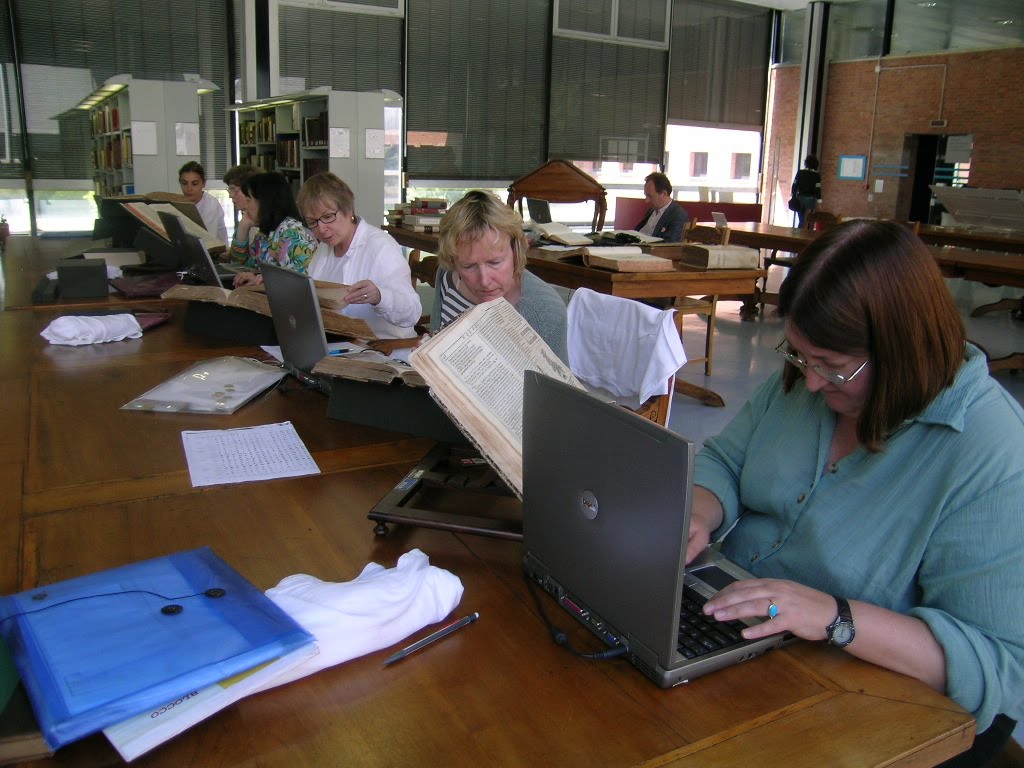
EW volunteers in the Biblioteca Nazionale Centrale di Roma,
Team I 2006

During the years 2003-2006, Touwaide and Appetiti were able to study and photograph all Renaissance herbals in the collections of the Rome and Padua libraries. In 2007, in collaboration with some 250 Earthwatch Institute volunteers who signed up to participate in this large-scale research [see 2004 field report here], they broadened their work to Washington DC. In total, they collected over 70,000 images and generated two dictionaries of plant names: one of the Medieval and Renaissance names listed in the volumes they studied (comprising 32,000 items in Arabic, Medieval Latin and vernacular languages), and the second with the names of plants in five modern languages (12,000+ items). Together with the dictionary of ancient names (Greek and Latin) that Touwaide has compiled for his Flora of Classical Antiquity, these dictionaries provide the names of all the plants mentioned in ancient texts and books from the most ancient scientific treatises to one century before Linnaeus and make it possible to link them with their current name.

Touwaide and Appetiti’s research goes beyond historical documentation, as they identify the plants according to contemporary taxonomy. In collaboration with the scientists in the Botany Department of the Smithsonian, they study the representations of the plants they collected from books and the texts that accompany these illustrations. Thus, they have been able to confirm the identifications made in previous literature or to suggest new ones, made possible due to cross-checking the representations and descriptions in a large quantity of material.

Since its very inception, Touwaide and Appetiti envisioned the PLANT website as much more than just a collection of illustrations, however beautiful they are. They provide users with an impressive collection of data, starting with a full description of the books (including publisher and place of publication) but also detailed biographies of the authors and publishers and portraits of the authors, as this information is often missing from other websites presenting ancient herbals. By researching and stuyding the bios of authors and publishers, they produced original texts based on first hand consultation of primary documentation, including searching for portraits of the authors in the collections — and with the help of — the History of Medicine Division of the National Library of Medicine and the Hunt Institute for Botanical Documentation.
View Full Size Image
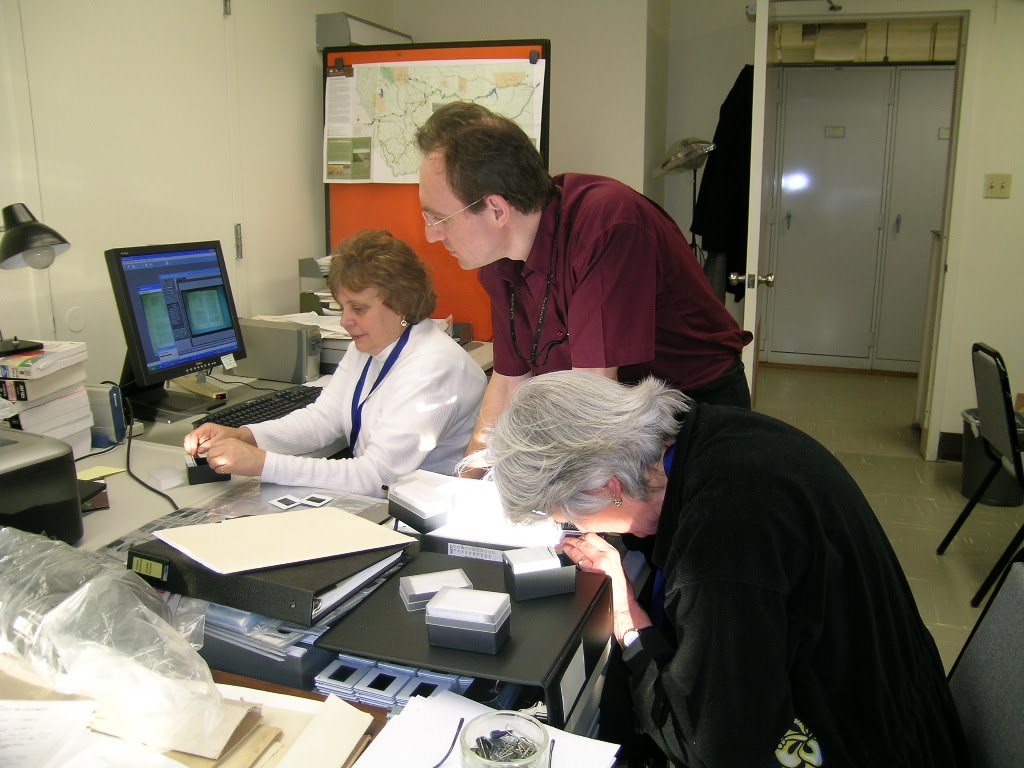
EW DC teams, at work with Touwaide at the National Museum
of Natural History, on the second phase of the PLANT Project.
Team A, 2006

Touwaide and Appetiti plan to provide a short bio-sketch of the publishers along with the list of the botanical books they have published, so as to highlight their contribution to the production of herbals and to follow the production of botanical knowledge throughout Europe. Geo-referencing of book production is made possible thanks to the identification of the places where books were produced. For all books on the website, place names on the title page are in Latin. When clicking on these names, a small window opens with the current name (both in the local language and in English) and country (Which is sometimes not so easy to discover, i.e. What city is Ebrodunum?).

The metadata provided on the site is more extensive than the explicit information that can be retrieved from books. Touwaide and Appetiti generate much implicit information aimed at illustrating the dynamics of an author’s production. For each ancient work on the site, they present the first edition. A link at the bottom of the page leads to an additional page listing subsequent editions and translations (listed in chronological order), so as to make it possible to see the continuity and diffusion of the work. Only subsequent editions containing pages with new or different illustrations, however, are reproduced. As a result, users can visualize the possible transformation of a work through time.

Similarly, it is possible to retrieve all the illustrations of the same plant in the Web site, displayed in chronological order, so as to visually follow the transformation of botanical drawing and knowledge. All the illustrations can be enlarged to study the plant in detail. This is an example. For each plant contained in the website it will be also possible in the future to display a digital image of a dry specimen from the US National Herbarium, and an image of the living plant in nature. Thus, users of the site will have tools to further study Renaissance illustrations: not only will they be able to appreciate the degree of exactness in Renaissance illustrations, but, by having access to the material, they can also study the methods of ancient illustrators and investigate the way ancient scientists analyzed and described plants.

Paired with the website on ancient manuscripts and texts that Touwaide and Appetiti are developing with the Institute for the Preservation of Medical Traditions, the PLANT website will constitute a unique collection of material illustrating the creation and development of botanical knowledge from the most remote antiquity to Linnaeus (1707-1778).

BHL makes it possible to go further. When Touwaide and Appetiti became aware of it, they immediately thought to link the Linnean literature digitized and posted in the BHL to the plants presented in the PLANT website. The connection will allow users to follow plant information from its early depiction in antiquity to the 15th and 16th century herbals, to Linnaeus, and then, through the BHL, from him to the 20th century.

Thanks to all its information and navigation possibilities, the website goes way beyond an encyclopedia of botanical illustrations. It contextualizes the books and the plants, and generates a new dimension in the history of botany, showing its transformation over time. Though on a modest basis, the PLANT web site provides depth to the BHL collection of material: it introduces, in a certain sense, a third dimension to the BHL as it collects all the material that led to the literature collected in the BHL. You cannot understand Linnaeus without Dioscorides, Mattioli, Laguna or Bauhin and Dalechamps, for example. PLANT contains all the readings of Linnaeus, the scientific context of his work, and what Linnaeus probably read.
View Full Size Image
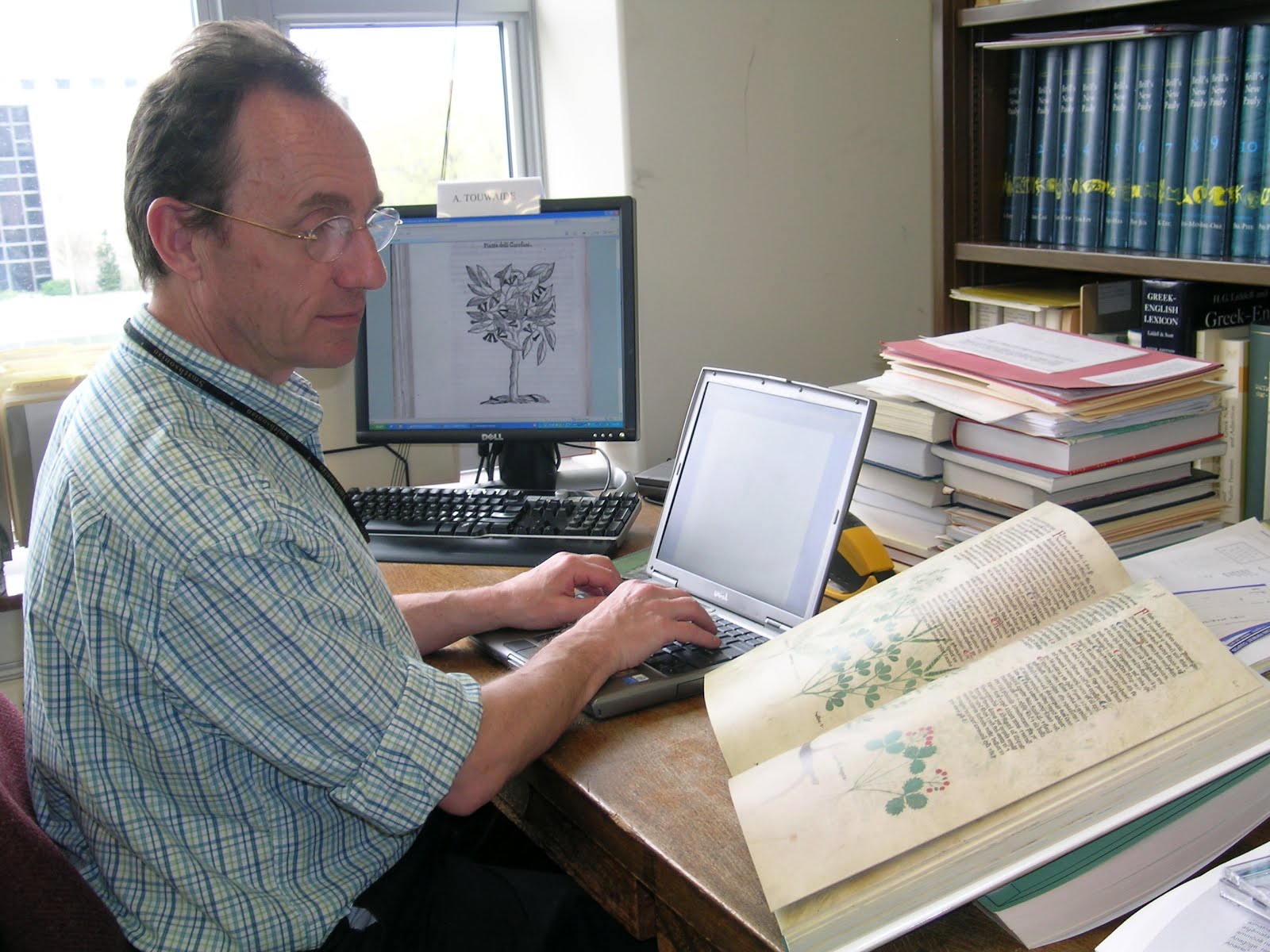
Alain at work in his office in the Botany Department at the 
National Museum of Natural History, Washington, D.C.

The PLANT website provides information to different audiences: from historians of medicine and botany, to historians of art and botanical artists; from classicists interested in the history and production of the book to botanists who need to trace a plant back in time, before Linnaeus. It may also appeal to curious Internet users with any background. For example, users interested in a plant of which they know only the common name will be able to locate it (together with all its other names, including the Linnean binomial designation) and start navigating through the PLANT website, the BHL or the website of the Institute for the Preservation of Medical Traditions, passing from Antiquity to the modern world, from Linnaeus to his predecessors, from books to nature, from living plants to dry specimina, in an imaginary travel that will be a journey through the construction of botanical science across centuries and cultures.

The PLANT program has been possible thanks to a consortium composed of Touwaide and Appetiti as the project authors and co-principal investigators, the libraries of Rome and Padua in Italy, and the Smithsonian Institution Libraries (SIL). Many contributors collaborated at different levels and helped create the PLANT Website, but without the passion and enthusiasm of the Earthwatch volunteers, nothing would have been achieved. The website is dedicated to them.

Find out more about Alain and Emanuela, and their ambitious project, in these past articles:
Smithsonian Magazine
Smithsonian Science
Smithsonian Science – Tuscany Shipwreck
ArtPlantae Today

February 14, 2012by Grace Costantino
Blog Reel, Featured Books

Book of the Week: Floral Masterpiece from Biodiversity Heritage Library on iTunes U

View Full Size Image
In case you missed our post earlier this week, the Biodiversity Heritage Library is now on iTunes U. From our provider page, you can now download select BHL content through iTunes to your desktop or mobile device, i.e. iPad, iPod touch, and iPhone. And, all for free, of course! We currently have 8 collections available, including:

  • Fungus Among Us
  • Floral Mania
  • Charles Darwin’s Library: Selections*
  • Extinct Species
  • Rarest of the Rare
  • Pillars of Biodiversity
  • Biota of Cape Cod
  • The Curious and the Bizarre

You can learn more about iTunes U through Apple’s website.

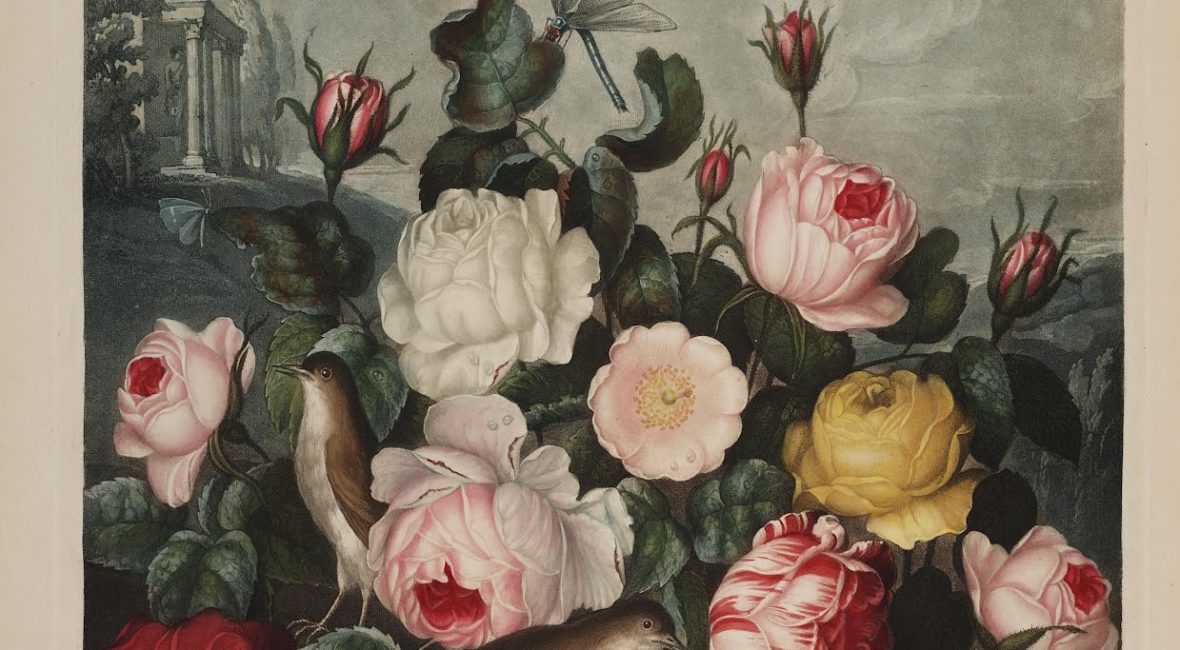
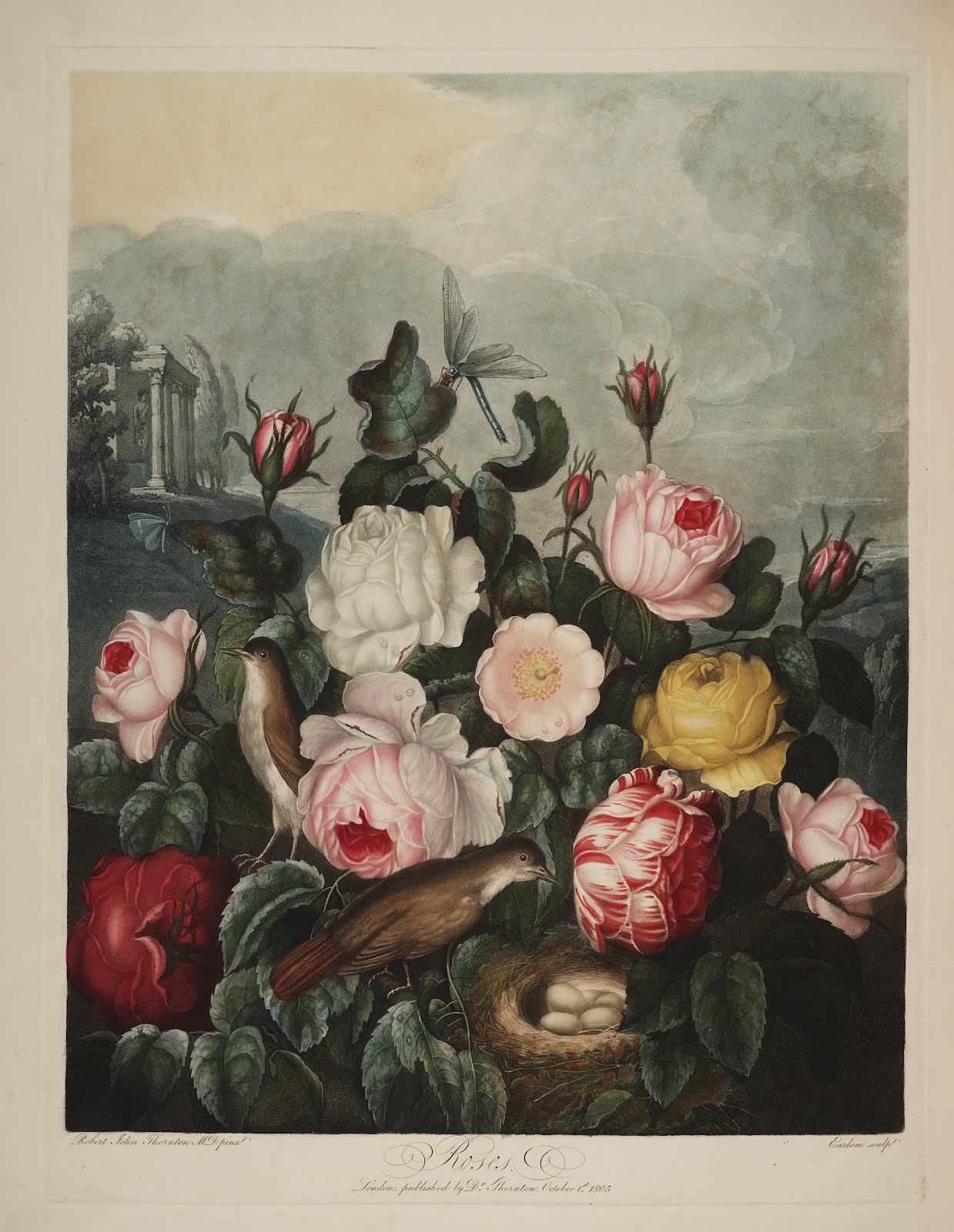
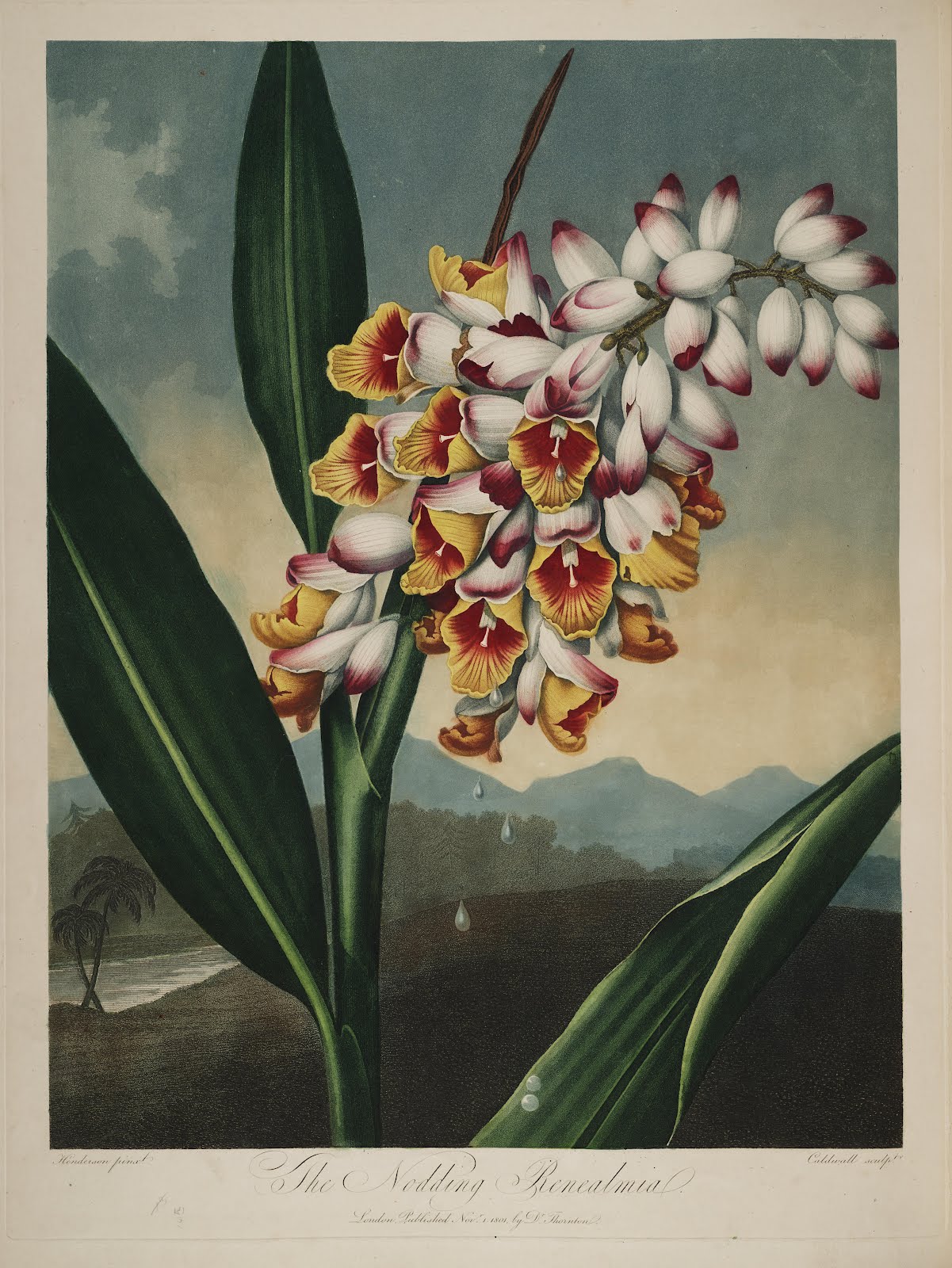
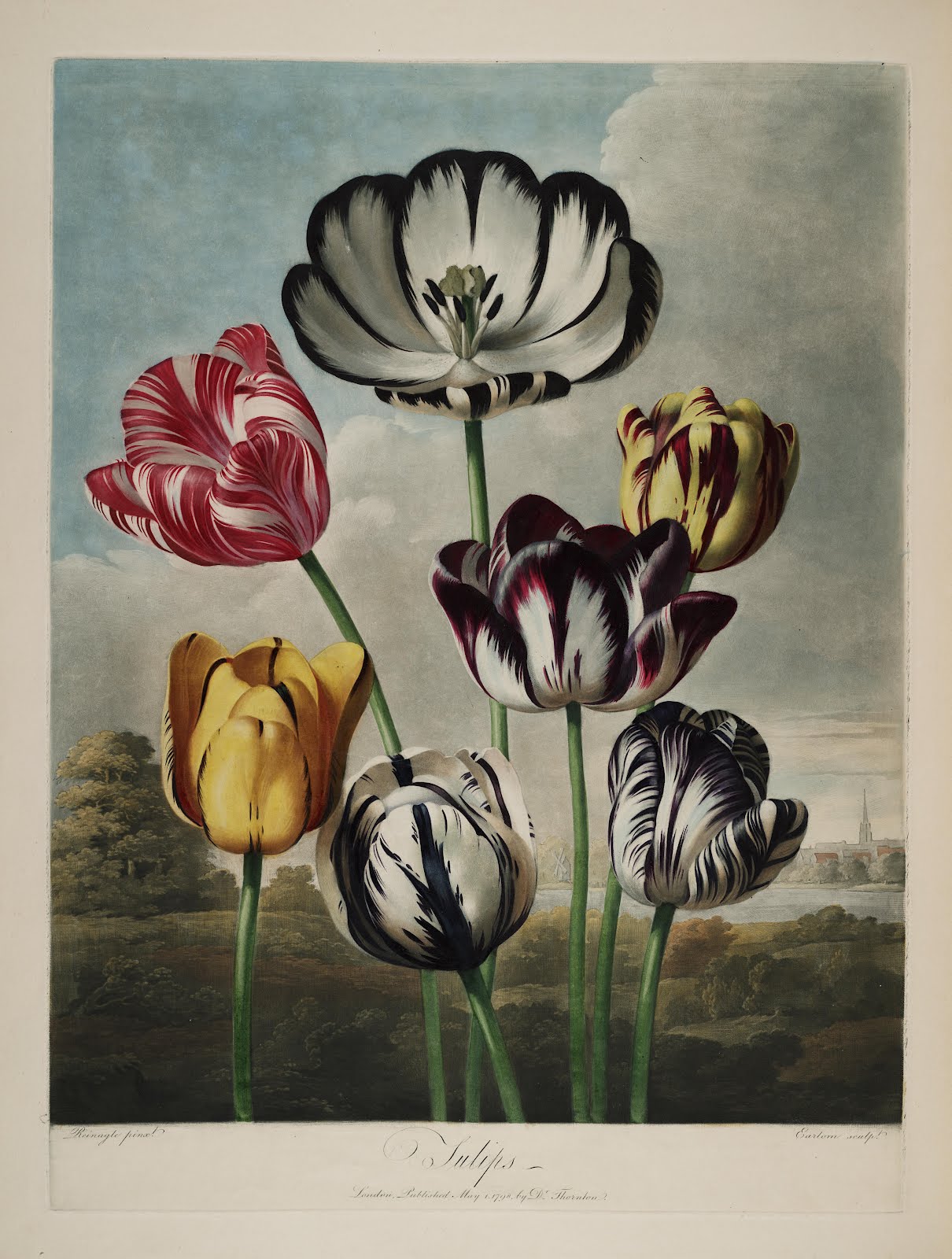
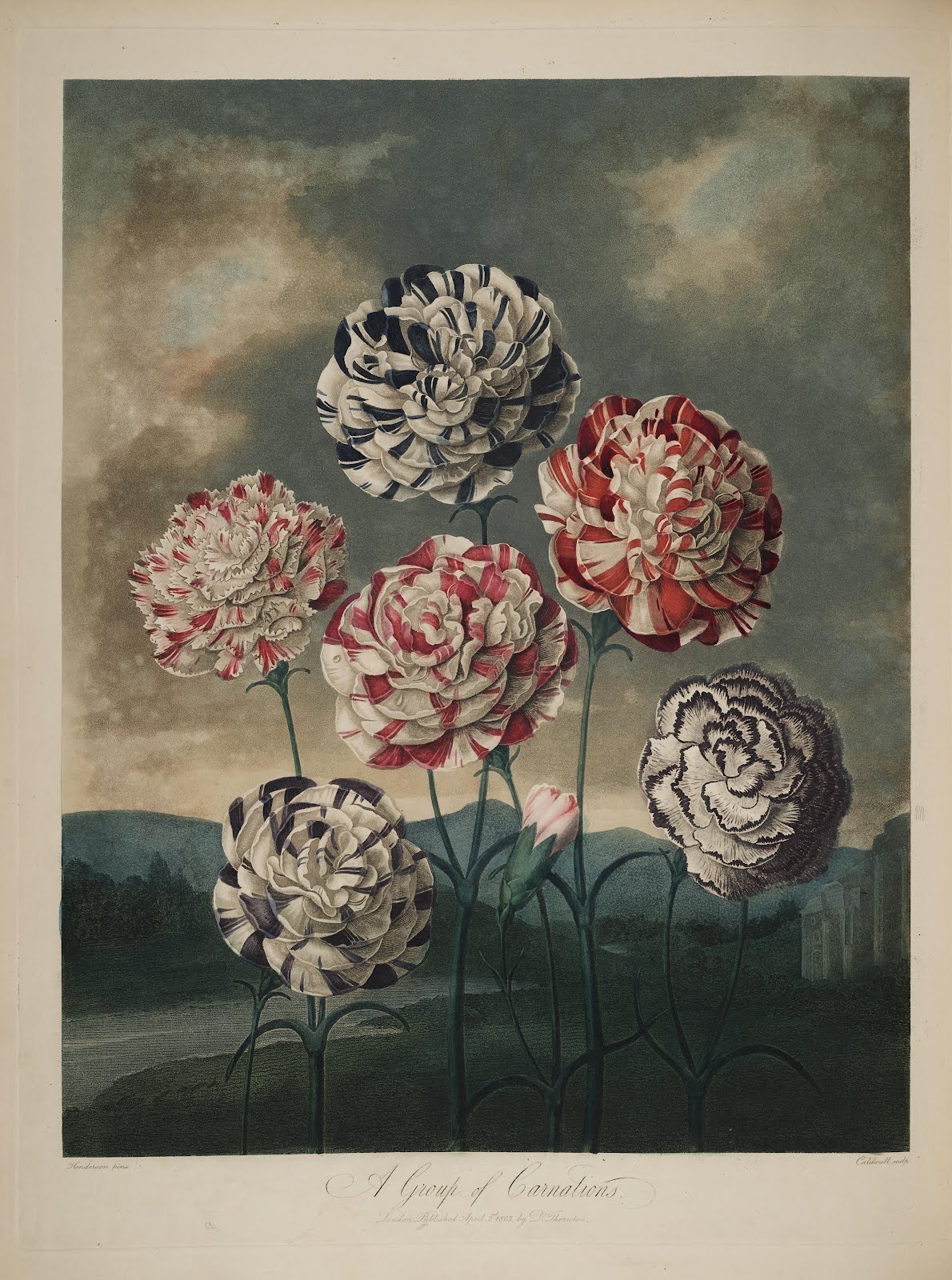
For our Book of the Week this week, we’re featuring one of the classics from our iTunes U collection Floral Mania, which consists of some of the most beautiful and unusual illustrations of flowering plants in BHL. Today, we present New Illustration of the Sexual System of Carolus von Linnaeus: and the Temple of Flora, or Garden of Nature (1807), by Robert John Thornton.

View Full Size Image

Robert John Thornton was an English physician and botanical writer. After hearing Thomas Martyn’s lectures on botany and Linnaeus, he decided to practice medicine rather than his previously-chosen profession in the church. He worked and lectured in medical botany at Guy’s Hospital in London, and at the end of the eighteenth century began working on his ambitious project New Illustration of the Sexual System of Carolus von Linnaeus.

New Illustration of the Sexual System of Carolus von Linnaeus is a three-part work, the third part (Temple of Flora) of which was intended to have seventy folio-sized plates. Work on the plates began in May 1798, and the first plates were engraved by Thomas Medland after paintings by Philip Reinagle. The plates were engraved in aquatint, stipple and line.

View Full Size Image
The work, unfortunately, proved to be Thornton’s demise. The expense of the project drained his financial assets, and Thornton was unable to generate significant public interest in the work. To save the project and ensure its completion, a public lottery and a dedication within the work to Queen Charlotte, patroness of botany and fine arts, were ventured, but without success. Only thirty-three colored plates were completed between 1798-1807, and Thornton died in destitution.

It is a tragedy that Thornton’s life ended so sadly when his work is now deemed a remarkable masterpiece. We pay him tribute for the incredible achievements of his life and are proud to feature just a few of the stunning illustrations from his creation in this post. You can access New Illustration of the Sexual System of Carolus von Linnaeus: and the Temple of Flora, or Garden of Nature (1807) on BHL and within the Floral Mania collection of iTunes U, both for free of course! See all of the illustrations from this masterpiece on our Flickr account and tell us which is your favorite.

View Full Size Image

February 9, 2012by Grace Costantino
Blog Reel, Featured Books

Book of the Week: Happy Groundhog Day!

One of the earliest mentions of Groundhog Day can be found in the diary of a Pennsylvania storekeeper named James Morris, who, on February 4, 1841, wrote:

Last Tuesday, the 2nd, was Candlemas day, the day on which, according to the Germans, the Groundhog peeps out of his winter quarters and if he sees his shadow he pops back for another six weeks nap, but if the day be cloudy he remains out, as weather is to be moderate.

Some one hundred and seventy years later, Groundhog Day, celebrated on February 2nd in the U.S. and Canada, is a spirited, suspenseful day on which we discover our winter fate, or our fate as the groundhog foresees it, anyway. If the groundhog sees his shadow, it’s another six weeks of winter.

The largest Groundhog Day celebration occurs in Punxsutawney, Pennsylvania, where it has been a local tradition since at least 1887. The star of the show, a very special, perhaps “immortal” groundhog named Punxsutawney Phil, is purported to be 126 years old – a remarkable feat considering the lifespan of most groundhogs in captivity is 9-14 years. But then again, Phil (in 2012) weighs twenty pounds, as opposed to the more typical thirteen pounds, indicating that he might not be an ordinary groundhog. Maybe. But, in any case, he at least makes a bigger target for producing a shadow easily visible to spectators.

And that’s exactly what Phil did today. According to what some deem the only official groundhog weather predictor, there will be six more weeks of winter. Learn more about the Punxsutawney Groundhog Day celebration on the official website.

Long before they found fame and fortune through Groundhog Day, these marmots were well-known within their sciurid family (which includes squirrels, chipmunks and prairie dogs) as the largest member within their geographic range, which incidentally, is North America. They generally grow to between 16-26 inches long, and, with plenty of food and few predators, can weigh up to 31 pounds, though one-third that weight is more typical. Other names for the charismatic creature include woodchuck, whistle-pig, and land-beaver.

View Full Size Image
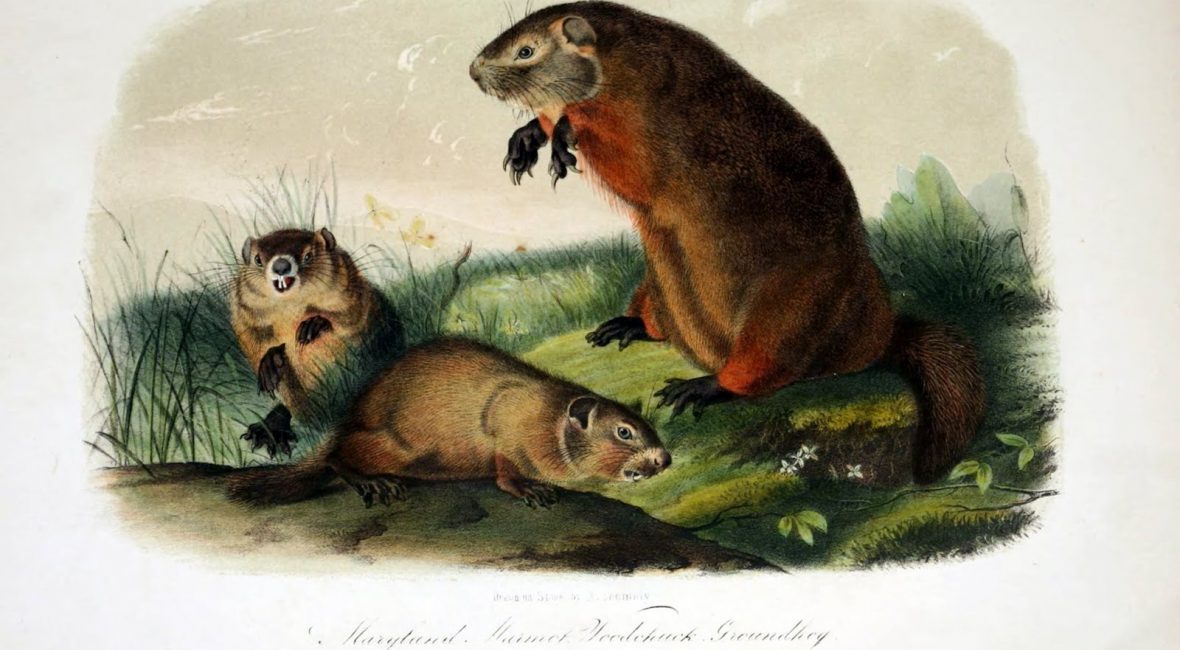
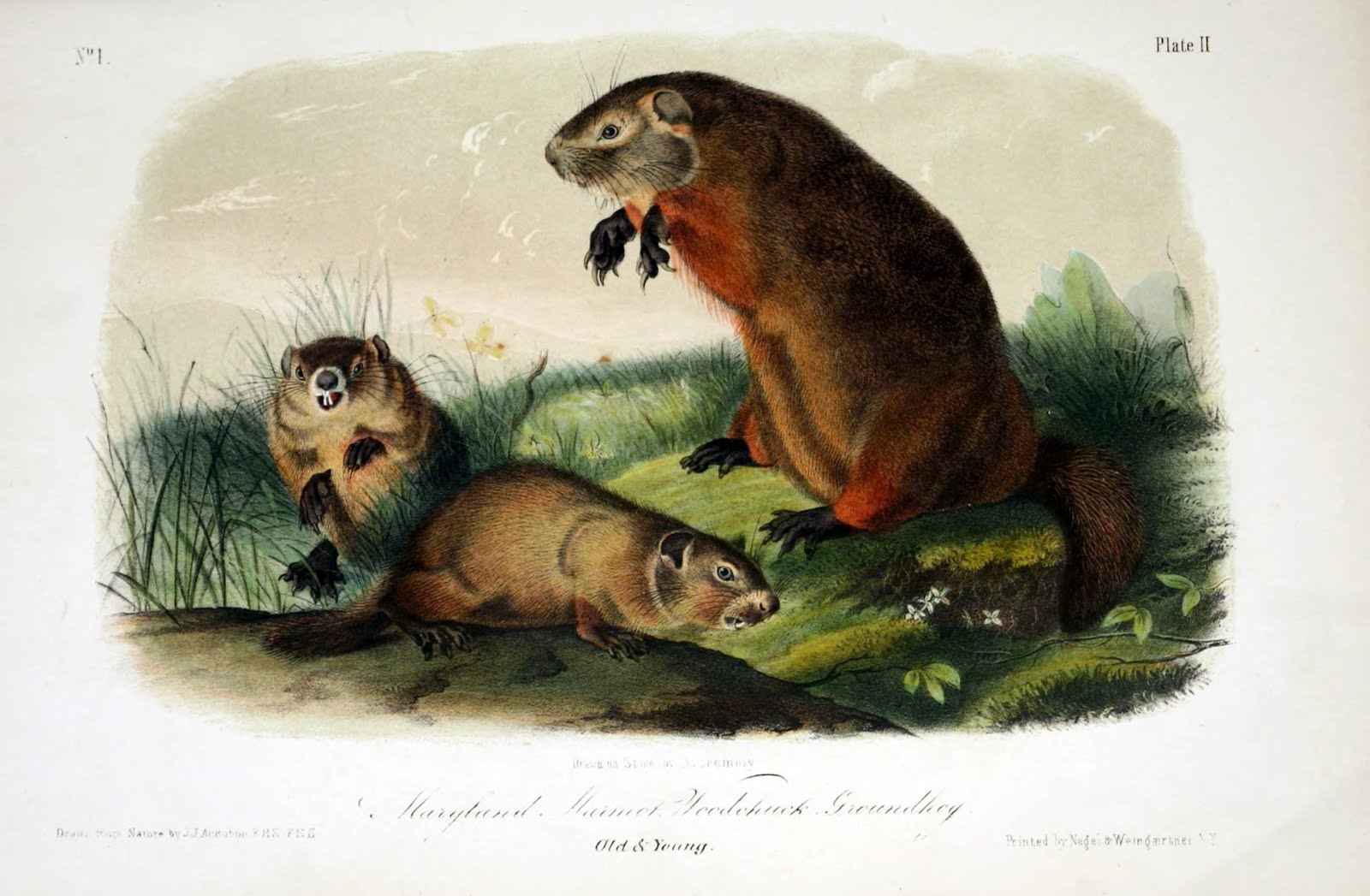
While combing through our collection looking for groundhogs, we came across this marvelous book entitled The Quadrupeds of North America, v. 1 (1851). The three volume work contains 153 colored plates, rendered by John James Audubon and the Rev. John Bachman. Of the illustrations, the authors write,

In our illustrations we have endeavored (we hope not without success) to place before the public a series of plates, which are not only scientifically correct, but interesting to all, from the varied occupations, expressions, and attitudes, we have given to the different species, together with the appropriate accessories, such as trees, plants, landscapes, &c.;, with which the figures of the animals are relieved; and we have sought to describe those represented, so as not only to clear away the obscurity which had gathered over some species, but to make our readers acquainted with their habits, geographical distribution, and all that we could ascertain of interest about them…

The groundhog is presented in this work as a family portrait, with a mother and her young set against the backdrop of their lowland habitat. Several pages of description, including everything from physical appearance to habitat and behavior, then follows. It’s a perfect excerpt for Groundhog Day!

Our book of the week is of course filled with beautiful illustrations depicting animals other than groundhogs, and you can view all of them on our Flickr account. For more groundhog and biodiversity fun, follow us on Twitter (@BioDivLibrary) and take our groundhog trivia challenge on our Facebook page today. Learn more about groundhogs on EOL.

February 2, 2012by Grace Costantino
BHL News, Blog Reel

Cornell University’s Albert R. Mann Library joins BHL!

Portrait version of the Biodiversity Heritage Library logo.

The Biodiversity Heritage Library welcomes the Albert R. Mann Library of Cornell University to our growing consortium. The Mann Library brings with it a fantastic team of librarians to the BHL workforce, as well as outstanding collections in the fields of agriculture, human ecology and life sciences. Next to Harvard University’s, the Ernst Mayr Museum of Comparative Zoology Library and the Botany Libraries, the Cornell University is now the second academic institution to join the BHL.

As reported at Cornell:

Mann Library Director, Mary Ochs explains, “our partnership with BHL will significantly increase the visibility and accessibility of Mann’s collections for a global community of researchers. I’m really pleased that this partnership will in turn help connect Cornell scholars with the amazing body of biodiversity-related literature available at all the remarkable institutions that make up the BHL consortium.”

The next focus of Mann’s participation will be the digitization of Cornell’s entomology collection, which is one of the largest and finest in the world. Mann has already digitized more than 190 titles from the Library’s special collections of rare entomology works — including beautifully illustrated gems such as Dru Drury’s 18th-century “Illustrations of Natural History” and Jacob Hübner’s late 19th-century “Geschichte Europäischer Schmetterlinge” — which will soon be added to the BHL site and will fill out a major area in BHL’s wide-ranging coverage universe of biodiversity literature.

A contributor to our scanning partner the Internet Archive, biodiversity related materials from the Cornell University Library have been integrated into the BHL collection. Nearly 4,000 agriculture and life sciences titles were added to BHL in early January, helping us surpass a major milestone:

The BHL collection now has over 100,000 volumes, 50,000 titles and over 37 million pages! Many thanks to Cornell University Library for bumping us above and beyond a major digitization goal. Of course, the BHL collection could not be where it is today without the hard work and dedication of its consortium members which have been digitizing volumes since 2007. Back then we had just over a mere 3200 volumes. It is amazing to look back and see how far the collection and the project have come in 5 years. Now a consortium of 14 libraries in the United States and the United Kingdom, the BHL is growing globally to include partners in Australia, Brazil, China, Egypt, and across Europe. Here’s to more improvements to the BHL portal, more partnerships, and more content over the next 5 years (and many more).

January 30, 2012by Grace Costantino
BHL News, Blog Reel

Our Experience at ALA Midwinter 2012

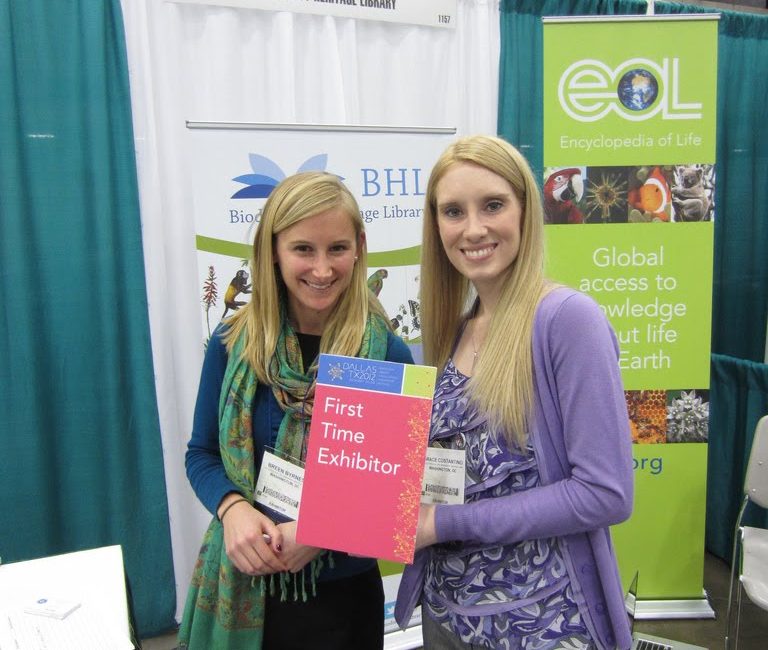
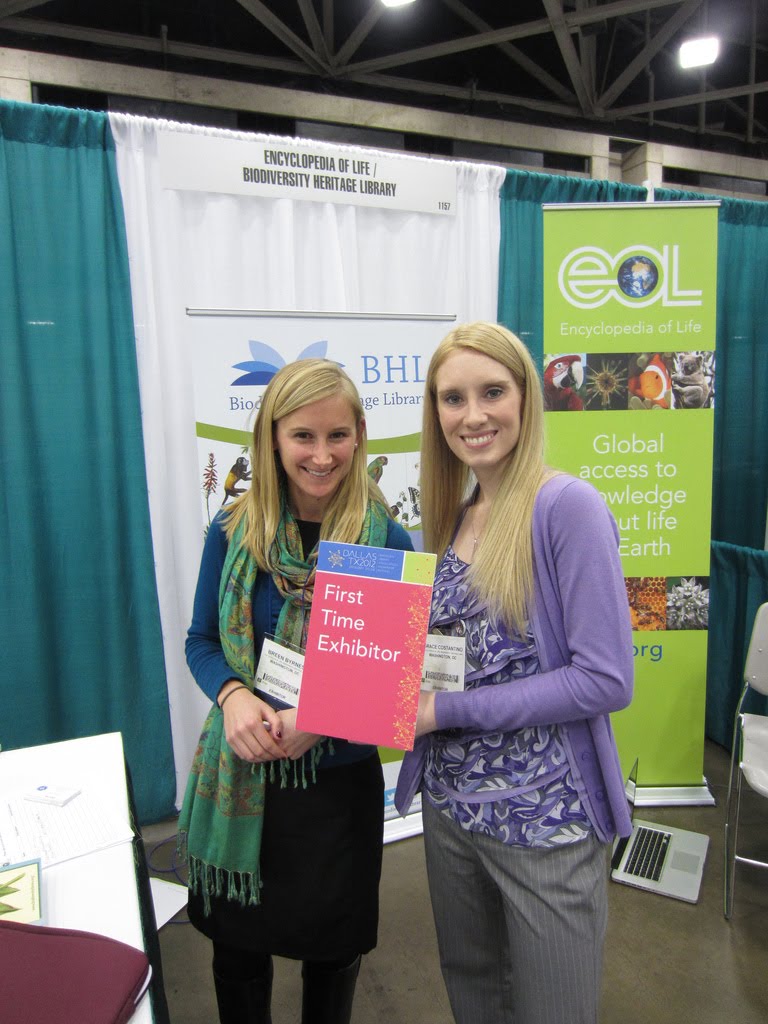
View Full Size ImageA few weeks ago, we posted about our upcoming booth at the ALA Midwinter 2012 meeting in Dallas, TX, 20-24 January. After an extremely successful experience, which included the opportunity to collaborate with our friends at EOL on the booth, as well as the chance for two of our BHL staff members to give talks at the conference, we wanted to briefly fill you all in on the experience.

The American Library Association (ALA) was founded in October 1876 and is the oldest and largest library association in the world. It’s mission is “to provide leadership for the development, promotion, and improvement of library and information services and the profession of librarianship in order to enhance learning and ensure access to information for all.” ALA hosts two meetings annually: the Midwinter and Annual meetings. The Midwinter meeting was a collection of
events, exhibits, and sessions aimed at discussing the challenges and opportunities facing libraries today. With 6,236 attendees and 3,693 exhibitors, it offered us a fantastic opportunity to showcase the resources available through both BHL and EOL.

BHL, along with EOL, collaboratively hosted booth 1157 at the Midwinter meeting. EOL staff member Breen Byrnes, BHL staff members Grace Costantino, Martin Kalfatovic, Chris Freeland, and Suzanne Pilsk, as well as Smithsonian Institution Libraries (SIL) staff member Mary Augusta Thomas, operated the booth throughout the four days of exhibits (Breen and Grace pictured above at booth). We not only engaged in meaningful conversations, answered a multitude of questions about the projects, and highlighted the beautiful images in our Flickr account, but we also gave away great goodies, including brochures, pens, notepads, Post-It notes, bags, cups, and, of course, candy.

Happily, many people were already familiar with BHL, and those that weren’t were shocked and thrilled to learn that we were a free, open access project. In the midst of so many commercial vendors, and with the reality of constant cuts to library budgets, the word “free” truly stands out. Eighty-five people signed up for the EOL and soon to be coming BHL newsletters. We also engaged in conversations with several librarians at diverse institutions that were interested in sharing their digitized content with BHL. BHL and EOL were particularly popular among librarians working in educational environments, one of which stated, “They’re free?! I can’t believe I wasn’t aware of these projects. My students will love them!”

BHL Technical Director Chris Freeland and SIL metadata librarian and BHL metadata guru Suzanne Pilsk gave talks about BHL at a panel discussion on scholarly communication, identifiers, and linked data.

Chris Freeland discussed the recent addition of DOIs to BHL content, and the struggles we went through to implement such identifiers. Most vendors, although recognizing the need for a policy to address the situation, were unable to work with a consortium (as opposed to a legal entity) that isn’t a publisher and doesn’t own all of the content it hosts. Furthermore, since not all of the content in BHL has an ISBN, an additional layer of complication is added to the mix. While CrossRefDOIs, available as Open Linked Data, are now available for BHL content, there are still many bugs to be worked out – bugs that are a direct result of issues mentioned above.

BHL: Assigning DOIs & Other Identifiers to Legacy Literature

View more presentations from Chris Freeland

Suzanne Pilsk discussed the recent Index Animalium and TL2 projects at SIL, both of which also involved BHL. She outlined how traditional librarianship (involving card cataloging and dusty volumes on shelves) was not meeting the needs of taxonomists and other researchers calling on libraries for help. But of course, libraries rose to the challenge, and SIL began digital projects for both Index Animalium and TL2, which linked the citations in these two works to the corresponding digitized texts, available via BHL.

Smithsonian Libraries Partnering in Research

View more presentations from SCPilsk

Thus, in short, our presence at ALA Midwinter 2012 was extremely successful. We shared our existence and resources with the nearly 10,000 people at the conference. We hope to host booths at future ALA events, the next of which is the ALA Annual Meeting in Anaheim, CA, 21-26 June, 2012. We hope to see you there!

January 26, 2012by Grace Costantino
Page 57 of 71« First...102030«56575859»6070...Last »

Help Support BHL

BHL's existence depends on the financial support of its patrons. Help us keep this free resource alive!

search

About BHL

The Biodiversity Heritage Library (BHL) is the world’s largest open access digital library for biodiversity literature and archives. BHL operates as a worldwide consortium of natural history, botanical, research, and national libraries working together to digitize the natural history literature held in their collections and make it freely available for open access as part of a global “biodiversity community.”

Join Our Mailing List

Sign up to receive the latest news, content highlights, and promotions.

Subscribe Now

Subscribe to Blog via Email

Enter your email address to subscribe to this blog and receive notifications of new posts by email.

Join 319 other subscribers

Subscribe to Blog Via RSS

Subscribe to the blog RSS feed to stay up-to-date on all the latest BHL posts.

Access RSS Feed

Inspiring Discovery through Free Access to Biodiversity Knowledge.

The Biodiversity Heritage Library makes it easier than ever for you to access the information you need to study and explore life on Earth…for free, anytime, anywhere.


ABOUT | HARMFUL CONTENT | PRIVACY | SITE MAP | TERMS OF USE