Biodiversity Heritage Library - Program news and collection highlights from BHL
  • Home
  • News
  • Featured Books
    • All Featured Books
    • Book of the Month Series
    • BHL at 20
  • User Stories
  • Campaigns
    • Fossil Stories
    • Garden Stories
    • Monsters Are Real
    • Page Frights
    • Her Natural History
    • Earth Optimism 2020
  • Tech Blog
  • Visit BHL
Home
News
Featured Books
    All Featured Books
    Book of the Month Series
    BHL at 20
User Stories
Campaigns
    Fossil Stories
    Garden Stories
    Monsters Are Real
    Page Frights
    Her Natural History
    Earth Optimism 2020
Tech Blog
Visit BHL
  • Home
  • News
  • Featured Books
    • All Featured Books
    • Book of the Month Series
    • BHL at 20
  • User Stories
  • Campaigns
    • Fossil Stories
    • Garden Stories
    • Monsters Are Real
    • Page Frights
    • Her Natural History
    • Earth Optimism 2020
  • Tech Blog
  • Visit BHL
Biodiversity Heritage Library - Program news and collection highlights from BHL
Blog Reel, Featured Books

Book of the Week: World Health Day & Medicinal Plants

April 7, 2011 is World Health Day. This year, the focus of World Health Day is Antimicrobial resistance, which is a type of drug resistance where microorganisms are able to survive exposure to antibiotics. To combat the spread of this problem, the World Health Organization is releasing a six-point policy package. These six points include:

  • Commit to a comprehensive, financed national plan with accountability and civil Society engagement
  • Strengthen surveillance and laboratory capacity
  • Ensure uninterrupted access to essential medicines of assured quality
  • Regulate and promote rational use of medicines, including in animal husbandry, and ensure proper patient care
  • Reduce use of antimicrobials in food-producing animals
  • Enhance infection prevention and control
  • Foster innovations and research and development for new tools

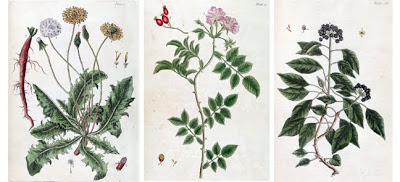
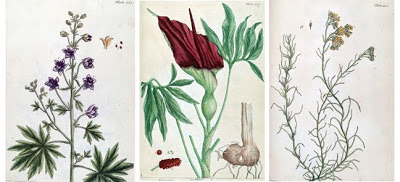
For our recognition of World Health Day, we thought we’d highlight one of our rare books on medicinal plants. So, this week we feature A Curious Herbal: Containing Five Hundred Cuts, of the Most Useful Plants, Which are Now Used in the Practice of Physick Engraved on Folio Copper Plates (1737-39), by Elizabeth Blackwell. The purpose of this work, as is stated in the Introduction, is,

“The Undertaker, being desirous to make this Work more useful to such as are not furnished with other Herbals, is resolved (for their sake) to give a short description of each plant, the place of growth, and time of flowering, with its common uses in physick, chiefly extracted from Mr. Joseph Miller’s Botanicum Officinale with his consent, and the ordinary names of the plant in different languages.”

For our post, we selected just a few of the five hundred plants discussed in this work, and present them to you. Take a look at these, examine the many other natural remedies not presented in this post, and read more about World Health Day and consider what you might be able to do to help.

View Full Size Image

  • Dandelion (Taraxacum)

Useful for “provoking urine and strengthening the stomach”

  • Wild Rose (Rosa carolina)

Strengthens the stomach, cools the heat of fevers, as well as useful in the treatment of “coughs, spitting of blood, and scurvey”

  • The Ivy Tree (Hedera)

“Mr. Boyle commends a large dose of the full ripe berries as a remedy against the plague. The gum is said to take spots and freckles out of the face.
  • View Full Size Image
  • Staves-acre (Delphinium staphisagria)

Can be used as a remedy for tooth-aches and to kill Lice

  • Dragons (Dracontium)

Useful for treatment of pestilential fevers, “and is useful to drive anything out from the heart, for which it is given in the small pox and measles”

  • Goldy-Locks (Helichrysum arenarium)

Useful for treating “obstructions of the liver and spleen,” and is used to “dissolve congealed blood and to provoke urine”

This week’s book of the week, A Curious Herbal: Containing Five Hundred Cuts, of the Most Useful Plants, Which are Now Used in the Practice of Physick Engraved on Folio Copper Plates (1737-39), by Elizabeth Blackwell, was contributed by the Missouri Botanical Garden.
April 7, 2011by Grace Costantino
BHL News, Blog Reel

Birds De-Evolving?

View Full Size Image

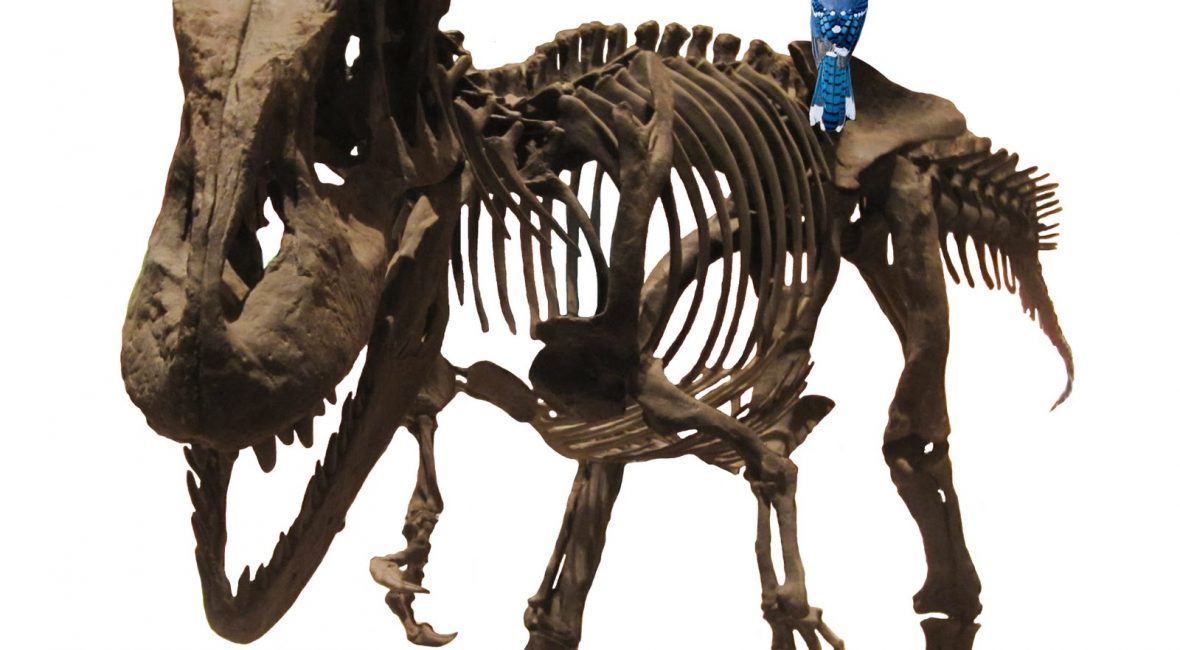
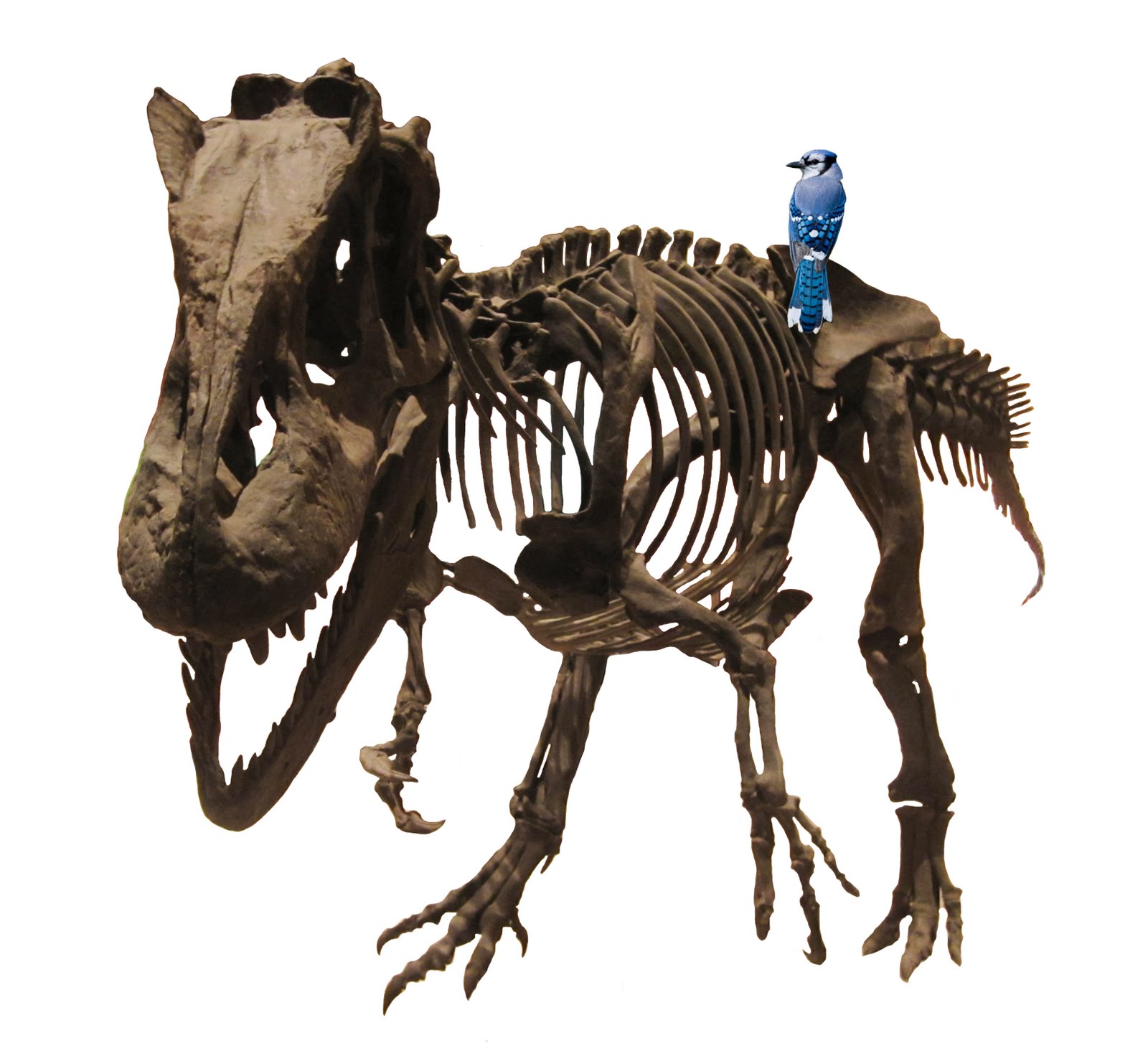
Scientific Breakthrough Alert! Recent studies have revealed that we may soon be seeing dinosaurs again in our modern age! How is this possible? One scientist has found that birds, the closest living relatives to the behemoths that have so completely captured the imagination of humans, are showing signs of de-evolution, reverting back to the forms of their dinosaur ancestors.

The evolutionary relationship between birds and dinosaurs is based upon their commonality in several distinct areas. Take, for instance, feathers. Many “feathered dinosaurs,” such as Archaeopteryx, have been discovered, displaying features intermediate between modern birds and modern reptiles. Such feathered dinosaurs are often considered the missing link between birds and dinosaurs. Recent discoveries regarding “protofeathers” even suggest that the Tyrannosauroids may have had feathers.

Skeletal evidence also supports the link between birds and dinosaurs. Bird and dinosaur skeletons display similarities in the neck, pubis, wrist, arm, pectoral girdle, shoulder blade, clavicle and breast bone. Furthermore, theropod dinosaurs, like birds, have been discovered to have hollow sacs in their skeletons into which air is pumped. And, of course, most people are aware of the similarity between dinosaurs and birds regarding their hollow skeletons.

So, while the development of dinosaurs to birds is well-established, what is happening now to suggest de-evolution back to dinosaurs? Dr. John Hammond believes he has the answer.

Dr. Hammond, in his studies on the Cyanocitta cristata, commonly known as the Blue Jay, has found that they are beginning to display dinosaur characteristics. In his recent study, many of the young he studied possessed on average fewer feathers and a stronger disposition to avoid flight in favor of hunting for food on the ground, using their legs instead of their wings. Their legs are also on average bulkier and stronger than those of their predecessors, while their wings display a decidedly weaker muscular structure. The blue jays are instead using their wings for “wing-assisted incline running,” which, in the past, may have led to the development of flight in the dinosaur-bird transition.

More importantly, however, Dr. Hammond has discovered what appears to be the beginnings of a raised sickle claw on the second toe of the Cyanocitta cristata young. Such an appendage was an iconic feature of the Velociraptors, and, in light of this in addition to the discoveries discussed earlier, Dr. Hammond believes that we may be witnessing a de-evolution of the Blue Jay back to something resembling the Rahonavis. Further study on this species and additional species of birds is needed, and there are still no concrete hypotheses as to why birds would be reverting back to their dinosaur roots.

In light of these discoveries, we felt it only appropriate to feature a book on our dinosaur friends, particularly if we will soon be sharing our planet with them. Thus, we feature Extinct Monsters: A Popular Account of Some of the Larger Forms of Ancient Animal Life (1893), by Rev. H.N. Hutchinson. Are we entering another Age of the Dragons, as our book of the week describes it? Will we remain on the top of the food chain? Will the nightmarish scenes of dinosaurs hunting and tearing humans limb from limb, which are so commonly depicted in film, become a brutal reality for the human race? Only time will tell, but learning more about our ferocious competitors, for instance by exploring our book of the week, may help even the odds. Good luck!

Oh, and, by the way, April Fool’s! 😉

This week’s book, Extinct Monsters: A Popular Account of Some of the Larger Forms of Ancient Animal Life(1893), by Rev. H.N. Hutchinson, was contributed by Harvard University, MCZ, Ernst Mayr Library.

– Special thanks to Erin Thomas for her assistance with this post.

April 1, 2011by Grace Costantino
Blog Reel, User Stories

BHL and Our Users: Dr. Frank Ferrari

View Full Size Image

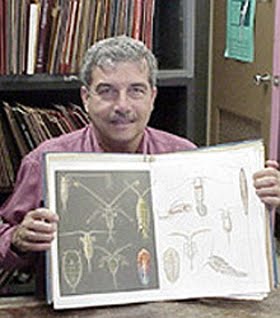
Today we feature another of our BHL users, and, in response to a question raised, reveal a little more about our content selection process. So, meet Dr. Frank Ferrari, a curator of Copepoda at the Smithsonian Institution!

Q: What is your title, institutional affiliation, and area of interest?

A: Research Zoologist in the Department of Invertebrate Zoology at the National Museum of Natural History (Smithsonian Institution). Specific areas of interest include the development of Copepods and related Crustaceans, patterning of Crustacean limbs, and taxonomy of Deep-Sea Copepods.

Q: How long have you been in your field of study?

A: Forty years

Q: When did you first discover BHL?

A: Shortly after it was established (2007)

Q: What is your opinion of BHL and how has it impacted your work?

A: An excellent resource. Particularly valuable for making available older publications/documents, especially those outside the immediate area of my expertise.

Q: How often do you use BHL?

A: On average, about once a month; more often when writing.

Q: How do you usually use BHL (read the titles online/download whole PDF/Select Pages to Download/etc.)

A: I usually read the publications/documents online and, as needed, download whole PDFs plus High Resolution Images.

Q: What are your favorite features/services on BHL?

A: Immediate access to the search engine upon accessing the website, and the clarity of the pages associated with a search.

Q: If you could change one thing about BHL, what would it be, or what developmental aspect would you like the BHL team to focus on next?

A: Add an explanation of the strategy guiding the selections that have been scanned. Explain how publications/documents are selected to be scanned, and particularly what kinds of publications/documents are NOT scanned.

Thank you, Dr. Ferrari, for your feedback! In response to your final request to learn more about the BHL content selection process, we have created a BHL Content Selection Page on our public wiki that describes our process. You can also learn why certain items may be removed from our collection on our Deaccession Policy page. We hope this brings some light to our project and processes.

To learn more about Dr. Ferrari, and see a list of his publications, visit his page on the National Museum of Natural History Invertebrate Zoology website.

March 29, 2011by Grace Costantino
Blog Reel, Featured Books

Book of the Week: Amphibians and Reptiles Galore!

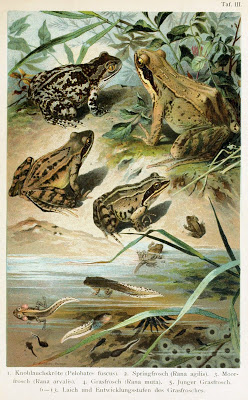
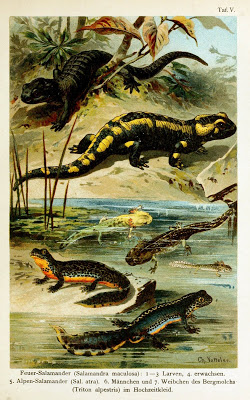
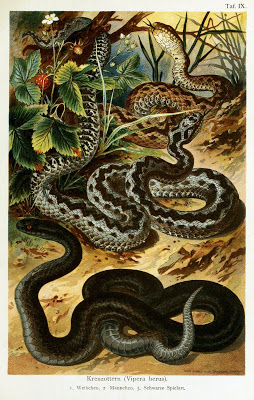
So often with scientific illustration, one finds that the depiction of species or specimens are limited to the isolated rendering of the subject in question, devoid of any habitat or environmental context that gives the reader a clear picture of what life is truly like for the animal in the wild. So, when we came across the illustrations in Deutschlands Amphibien und Reptilien. Eine Beschreibung und Schilderung sĂ€mmtlicher in Deutschland und den angrenzenden Gebietan vrokommenden Lurche und Kreichthiere (1897) by Bruno DĂŒrigen, we knew we had to highlight them. Plus, the plethora of reptile and amphibian species displayed seemed equally worthy of attention. So, enjoy these selected illustrations from our book of the week, learn more about the species depicted in each in EOL, and imagine what life might be like in the wild for our cold-blooded friends. Plus, don’t forget to take a look at the book in BHL to see all of the other illustrations that are not highlighted in this post!

View Full Size Image

1) Common Spadefoot (Pelobates fuscus/i>)
*More references in BHL

2) Agile Frog (Rana dalmatina, previously Rana agilis)
*More references in BHL.

3) Moor FrogRana arvalis
*More references in BHL.

4) European Frog (Rana temporaria, previously Rana muta)
More references in BHL.

5) Young European Frog

6) Spawn and Stages of Development of the European Frog

View Full Size Image

1) Fire Salamander (Salamandra maculosa)

1-3) Larval Stage

4) Adult
*More references in BHL.

5) Alpine Salamander (Salamandra atra)
*More references in BHL.

6) Male and 7) Female Alpine Newt (Mesotriton alpestris), previously Triton alpestris)
*More references in BHL.

View Full Size Image

Adder (Vipera sachalinensis, previously Vipera berus)

2) Male
3) Black Species Type
*More references in BHL.

This week’s book of the week, Deutschlands Amphibien und Reptilien. Eine Beschreibung und Schilderung sĂ€mmtlicher in Deutschland und den angrenzenden Gebietan vrokommenden Lurche und Kreichthiere (1897) by Bruno DĂŒrigen, was contributed by the Smithsonian Institution.

March 24, 2011by Grace Costantino
Blog Reel, User Stories

BHL and Our Users: Dr. Toby Musgrave

View Full Size Image
This week we feature another of our faithful BHL users, Dr. Toby Musgrave, whose work in horticulture has benefited greatly by his discovery of BHL. We asked him a few questions about how BHL has impacted his work, and we present them to you here in a traditional question and answer style.

Q: What is your title, institutional affiliation, and area of interest?

A: Independent Scholar, unsalaried Research Associate at Royal Botanic Garden, Edinburgh, UK; and unsalaried Group Member of Interdisciplinary Evolutionary Studies (IES) within the Institute of Philosophy and the History of Ideas at Aarhus University, Denmark.

Q: How long have you been in your field of study?

A: My PhD was in garden history and I have been a freelance/independent scholar since 1994.

Q: When did you first discover BHL?

A: 2009

Q: What is your opinion of BHL and how has it impacted your research?

A: A hugely useful resource that has made my research less time consuming and less expensive/

Q: How often do you use BHL?

A: At least monthly

Q: How do you usually use BHL (read the titles online/download whole PDFs/Select Pages to Download/etc.)

A: Download whole PDFs

Q: What are your favorite features/services on BHL?

A: The range of publications available and the ability to request titles to be scanned.

Q: If you could change one thing about BHL, what would it be, or what developmental aspect would you like the BHL team to focus on next?

A:

  • To have scanned and available every title listed by Blanch Henrey in her British Botanical and Horticultural Literature before 1800 (Oxford University Press, 1975)
  • Continue digitizing horticultural periodicals from the 19th century

Q: If you had to choose one title/item in BHL that has most impacted your research, or one item that you prefer above any other in BHL, what would it be and why?

A: Last year I threw down the gauntlet to [BHL staff] and asked if there was any possibility of BHL arranging to have made available the entire run (1841-1955) of the UK periodical The Gardeners’ Chronicle. I asked because there is nowhere in my country of residence (Denmark) that holds it, requiring that I make time consuming and expensive research trips to London or Cambridge in the UK should I wish to examine the periodical. I was amazed and delighted that BHL has achieved what I asked. This contribution to the BHL catalogue has been a real boon to my research, with the bonus of being able to keyword search the PDFs of annual volumes that often run to in excess of 800 pages of tiny print. Thank you!

And thank you, Dr. Musgrave, for your faithful use of BHL and for taking the time to communicate with us to tell us how we could improve BHL for you! We will get to work on Blanch Henrey’s list of botanical and horticultural works.

For more information about Dr. Musgrave, visit his website at www.TobyMusgrave.com.

And if you have suggestions on how to improve BHL, or if you would like to be featured in our BHL users series on this blog, let us know via our feedback form, send a tweet to @BioDivLibrary, or post on our Facebook wall. We look forward to hearing from our users and continuing to develop BHL in the directions most beneficial to them.

March 15, 2011by Grace Costantino
Blog Reel, Featured Books

Book of the Week: The Extinction of the Eastern Cougar

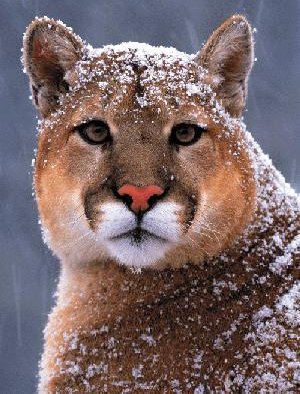
View Full Size ImageThe sad fate of the Eastern Cougar has now been officially declared by the U.S. Government – it is extinct. The status of this animal has long been a subject of controversy, with many, including the U.S. Government, declaring that the animal has been extinct since the 1930s. The disappearance of the Eastern Cougar is directly related to the arrival of settlers to the New World. This fact is clearly documented in this week’s book of the week, Extinct and Vanishing Mammals of the Western Hemisphere, with the Marine species of all the Oceans (1942), by Glover M. Allen:

“…It is clear that the eastern panther, though fairly common for so large a beast of prey, was exterminated from the more settled parts along the Atlantic coast in the colonial days, while in the wilder and more mountainous regions, as in Vermont and New Hampshire, the Adirondacks, and the Alleghenies, it persisted in some numbers till about the middle of the last century, after which the last surviving scattered individuals were gradually shot or trapped until they were exterminated, or practically so, by the last years of the nineteenth century.”

Indeed, early settlers were even offered rewards for the bodies of these unfortunate creatures:

“The catamount, or panther, as these big cats were usually called in New England, was not especially common even in early days but was nevertheless evidently troublesome to the first white settlers on our shores, for bounties were offered and many were killed though with little record…As early as 1694 Connecticut offered a bounty of 20 shillings apiece for catamounts and as late as 1769 paid for four or five. Massachusetts first offered a reward of 40 shillings for killing these animals in 1742. In 1753 this was increased to â‚€4. Probably by the time of the Revolution Panthers were fairly well gone from the three southern States of New England.”

Despite the declaration of extinction, some still claim to spot members of this species in the wild. The U.S. Fish and Wildlife Service asserts that these sightings are actually “wanderers from western breedings ranges or escaped captives.” It is interesting to note that a debate exists regarding whether the Eastern Cougar, and all other divisions of the cougar, are truly subspecies of the North American Cougar, or whether all North American species are a single subspecies. It was not until 1929 that the Eastern Cougar was declared a separate subspecies, and not until 1946 that Young and Goldman described all 15 subspecies. Despite calls to label all cougars in North America as a single subspecies, the U.S. Fish and Wildlife Service still maintains their distinction, declaring in 2011 that “While more recent genetic information introduces significant ambiguities, a full taxonomic analysis is necessary to conclude that a revision to the Young and Goldman (1946) taxonomy is warranted.”

As we consider the unfortunate fate of the Eastern Cougar, let this be a reminder that we have a responsibility to take action to preserve the biodiversity of our planet so that existing species will still be around for future generations. We hope that the literature made available through BHL will continue to unlock the knowledge contained in these important historical documents, thus continuing to enhance research into biodiversity conservation on our planet.

For more information on the U.S. Fish and Wildlife’s announcement regarding the Eastern Cougar, visit the press release page: http://www.fws.gov/northeast/ecougar/newsreleasefinal.html.

March 10, 2011by Grace Costantino
Blog Reel, Featured Books

Book of the Week: Frogs in Trousers?

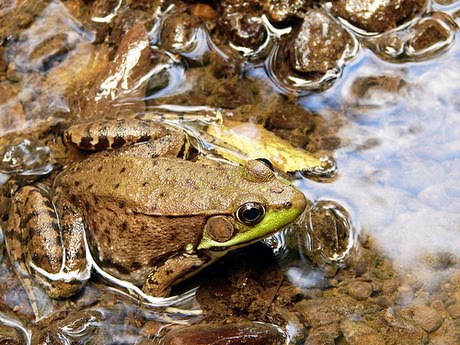
View Full Size ImagePer our user feature earlier this week on Dr. Charlotte Sleigh of the University of Kent, we feature a book that has been particularly important for Dr. Sleigh’s recent work: Dissertations relative to the natural history of animals and vegetables , volume 2 (1789), by Lazzaro Spallanzani. Dr. Sleigh’s current activities involve writing a book on the cultural history of frogs for Reaktion Books’ Animal series. In Dr. Sleigh’s own words regarding the importance of this title for her current endeavors:

“I had come across a reference to this book in relation to a strange experiment in which Spallanzani dressed his frogs in waxed taffeta trousers, to understand how fertilization took place. As hoped, I found the account of this curious experiment, alongside many more scientifically and culturally rich accounts of his work on frogs: a jumping-off point (if you’ll pardon the pun) for further research.”

Indeed, Lazzaro Spallanzani (1729-1799), an Italian Catholic priest, biologist and physiologist, made important contributions to the world of science with his work on animal reproduction, proving that it required both semen and an ovum in order to prosper. This discovery is in part due to his experiments with frogs and trousers. With such a curious experiment leading to such an important discovery, there was no doubt that this book should be featured, in all its glory, as our book of the week, and that the passage regarding frogs and trousers should be particularly highlighted.

Spallanzani had been experimenting on animal reproduction for some time before the incident with the trousers. His experiments were confined to a particular species of frog, which he identified as the “Green Aquatic Frog.” During his course of study, involving experimenting with various environmental and conditional effects on frogs for the success of fertilization, he received a letter from abbe Nollet regarding his work. In it, Nollet wrote,

“About thirty years ago, Mr. Reaumur and myself made many researches relative to this subject…I remember putting breeches of waxed taffeta on the male [frog], and watching a long time, without perceiving any appearance that denoted an act of secundation.”

Spallanzani was intrigued by the account given him by Nollet, and decided to reproduce the experiment. By his account,

“The idea of the breeches, however whimsical and ridiculous it may appear, did not displease me, and I resolved to put it in practice. The males, notwithstanding this incumbrance, seek the females with equal eagerness, and perform, as well as they can, the act of generation; but the event is such as may be expected: the eggs are never prolific, for want of having been bedewed with semen, which sometimes may be seen in the breeches in the form of drops. That these drops are real seed, appeared clearly from the artificial secundation that was obtained by means of them.”

By such means were the facts of reproduction secured, and we have the delightful image of frogs in trousers to thank for it.

Take some time to explore Spallanzani’s work on reproduction in this volume, and consider reading up on his important work on digestion, which is recounted in the first volume of this title. And let us praise the ingenuity of our forefathers, without which we might never have the opportunity to feature such delightful accounts of experiments in our books of the week!

February 28, 2011by Grace Costantino
Page 66 of 71« First...102030«65666768»70...Last »

Help Support BHL

BHL's existence depends on the financial support of its patrons. Help us keep this free resource alive!

search

About BHL

The Biodiversity Heritage Library (BHL) is the world’s largest open access digital library for biodiversity literature and archives. BHL operates as a worldwide consortium of natural history, botanical, research, and national libraries working together to digitize the natural history literature held in their collections and make it freely available for open access as part of a global “biodiversity community.”

Join Our Mailing List

Sign up to receive the latest news, content highlights, and promotions.

Subscribe Now

Subscribe to Blog via Email

Enter your email address to subscribe to this blog and receive notifications of new posts by email.

Join 319 other subscribers

Subscribe to Blog Via RSS

Subscribe to the blog RSS feed to stay up-to-date on all the latest BHL posts.

Access RSS Feed

Inspiring Discovery through Free Access to Biodiversity Knowledge.

The Biodiversity Heritage Library makes it easier than ever for you to access the information you need to study and explore life on Earth…for free, anytime, anywhere.


ABOUT | HARMFUL CONTENT | PRIVACY | SITE MAP | TERMS OF USEï»ż