Biodiversity Heritage Library - Program news and collection highlights from BHL
  • Home
  • News
  • Featured Books
    • All Featured Books
    • Book of the Month Series
    • BHL at 20
  • User Stories
  • Campaigns
    • Fossil Stories
    • Garden Stories
    • Monsters Are Real
    • Page Frights
    • Her Natural History
    • Earth Optimism 2020
  • Tech Blog
  • Visit BHL
Home
News
Featured Books
    All Featured Books
    Book of the Month Series
    BHL at 20
User Stories
Campaigns
    Fossil Stories
    Garden Stories
    Monsters Are Real
    Page Frights
    Her Natural History
    Earth Optimism 2020
Tech Blog
Visit BHL
  • Home
  • News
  • Featured Books
    • All Featured Books
    • Book of the Month Series
    • BHL at 20
  • User Stories
  • Campaigns
    • Fossil Stories
    • Garden Stories
    • Monsters Are Real
    • Page Frights
    • Her Natural History
    • Earth Optimism 2020
  • Tech Blog
  • Visit BHL
Biodiversity Heritage Library - Program news and collection highlights from BHL
Blog Reel, Featured Books

Happy Moth Week!

View Full Size Image

Happy Moth Week! National Moth Week is an annual event that celebrates the diversity and magnificence of moths. By partnering with online biological databases, National Moth Week encourages everyone to become a citizen scientist by helping map moth distributions and provide information about these amazing species.

BHL is celebrating moth week by highlighting select species gleaned from one of our favorite BHL books: Butterflies and Moths: Shown to the Children (1910), by Janet Harvey Kelman, with descriptions by Rev. Theodore Wood.

Satisfy all your moth curiosity with free moth images from BHL in our Flickr Moth Collection and books on moths in BHL. Learn more about Moth Week and find out how you can get involved.
View Full Size Image
http://biodiversitylibrary.org/page/42193530

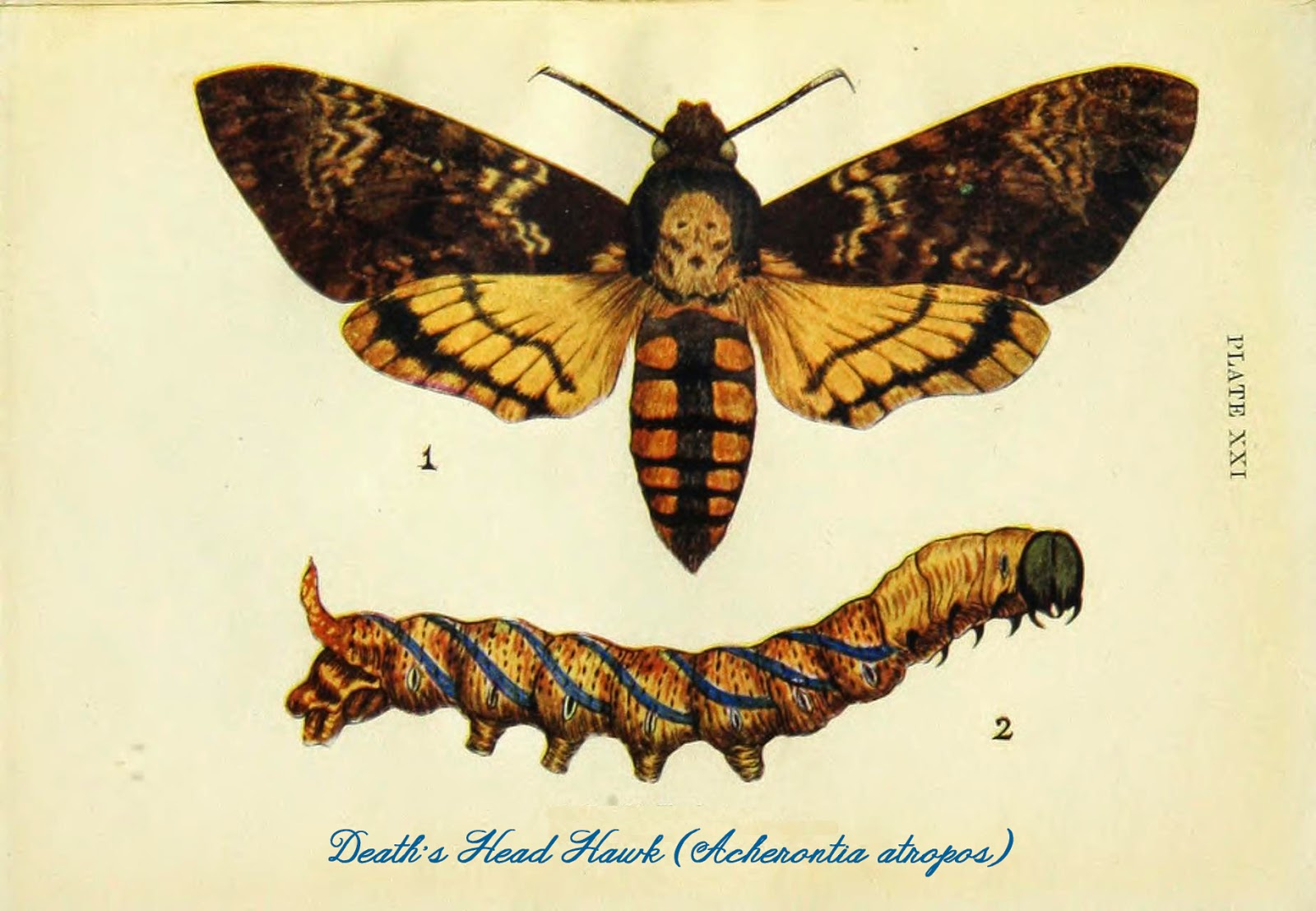
Death’s Head Hawk (Acherontia atropos)
There are three species of Death’s Head Hawk moths, but the European species is the best known. Characterized by the skull-shaped markings on its thorax, these are very large moths, with wingspans of 3.5-5 inches. The moth is capable of “squeaking” vocalizations, and commonly raids beehives for honey. By mimicking the scent of bees, it is able to prowl through the hives unmolested.

The moth’s association with death extends to its name. The genus name, Acherontia, is derived from the river Acheron in Greek mythology – one of the five rivers of the underworld associated with pain. The species name, atropos, comes from the name of one of the Greek Moirai, goddesses of fate and destiny.

Fun Quote from Butterflies and Moths
“And if you meet with [the Death’s Head Hawk], and pick it up, you will be surprised to find that it can squeak quite loudly! Stranger still, the chrysalis can squeak too, and so can the moth ! Indeed, if you pick up a Death’s Head Hawk Moth it will go on squeaking very much like a mouse all the time that you hold it in your hand!” (pg 39)
View Full Size Image
http://biodiversitylibrary.org/page/42193554

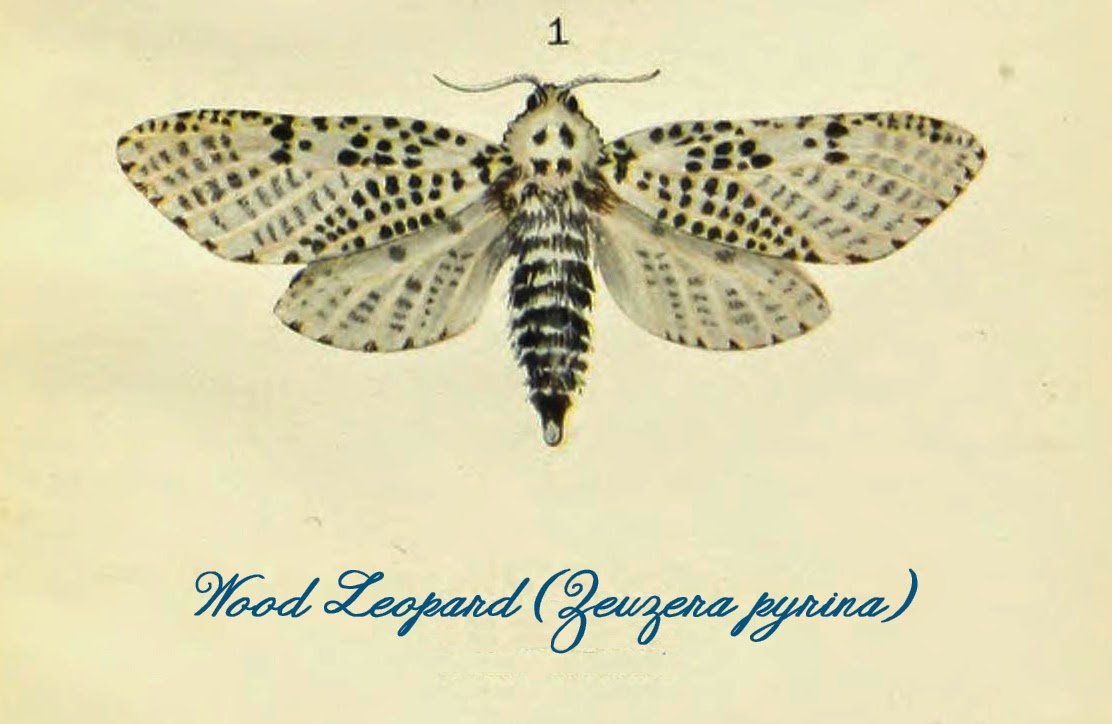
Wood Leopard (Zeuzera pyrina) 
Though found primarily in Europe and northern Africa, the Wood Leopard was introduced to America prior to 1879 and can now be found from Maine to Pennsylvania. With a wingspan measuring from just over 1 to just over 2 inches, this species boasts a distinctive, fury white thorax with six black spots and Dalmatian-esque black and white wings.

Fun Quote from Butterflies and Moths
“You may sometimes see [the Wood Leopard] resting on the trunks of trees in July and August. Then, if you examine the tree-trunk carefully, you are almost sure to find the entrance to the burrow out of which it came; for the caterpillar of this moth is one of those which feed on the solid wood of trees. The female moth lays her eggs in the crevices of the bark, and as soon as the little caterpillars appear they nibble their way into the trunk with their powerful jaws, and there live for several months, burrowing backwards and forwards, day after day, till sometimes the wood is almost honeycombed with their tunnels.” (pg 50)
View Full Size Image
http://biodiversitylibrary.org/page/42193610

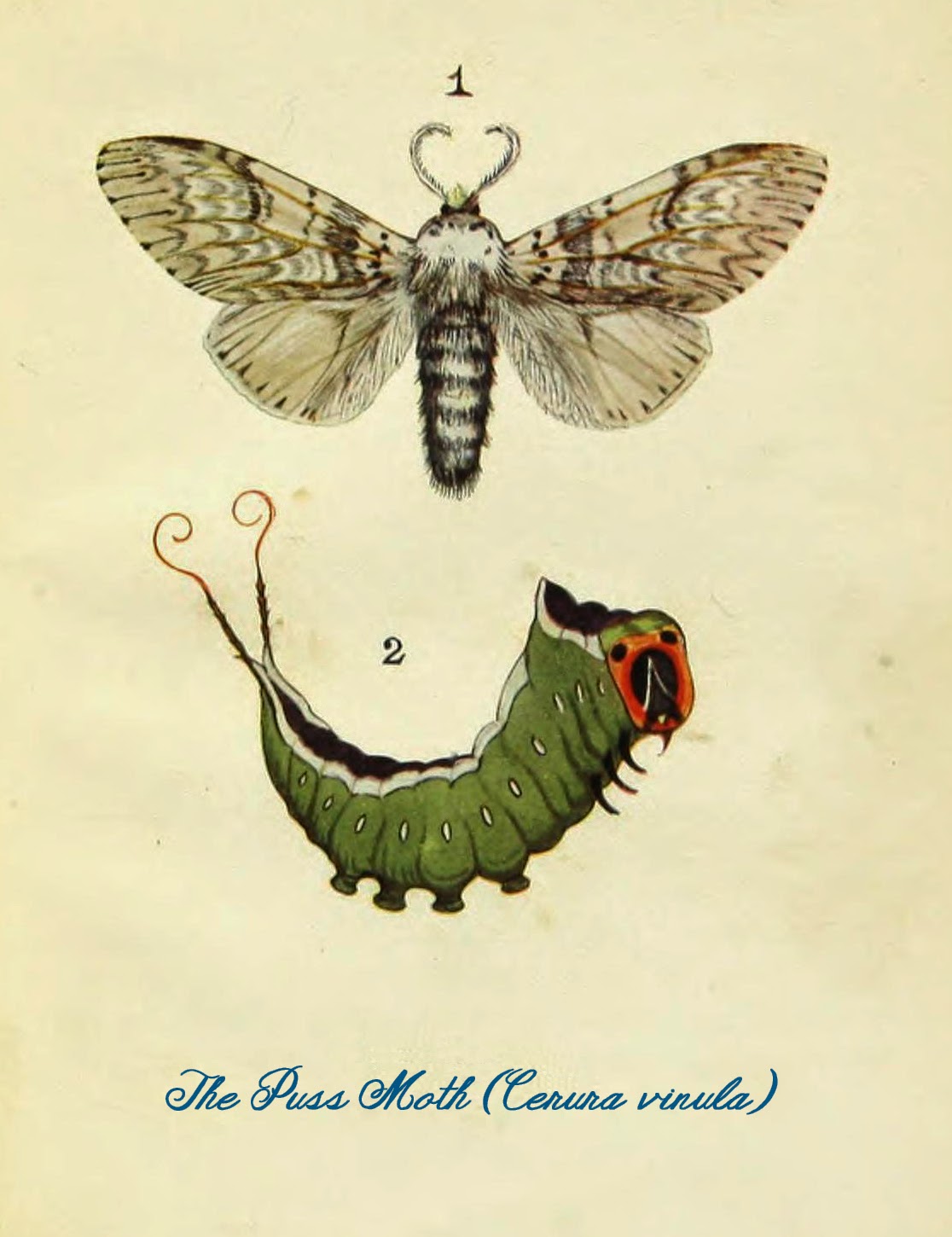
The Puss Moth (Cerura vinula)
Found throughout Europe, North Africa, and temperate Asia, the Puss Moth has a 2-3 inch wingspan and feeds on willows and poplars. With a flight period extending from April to August, the pupa winters the cold months in a wood-reinforced cocoon. The light green caterpillar exhibits a defensive pose that involves rearing its bright-red head and extendable flagellae on its rear (as seen in illustration). If a predator fails to regard this warning, the caterpillar will squirt formic acid.  

Fun Quote from Butterflies and Moths
“This fine and handsome moth is called the ‘Puss,’ because, when its wings are closed, it looks rather like a brindled cat. And there are two or three smaller moths which are a good deal like it; so these are known as ‘Kittens.'” (pg 79).
View Full Size Image
http://biodiversitylibrary.org/page/42193628

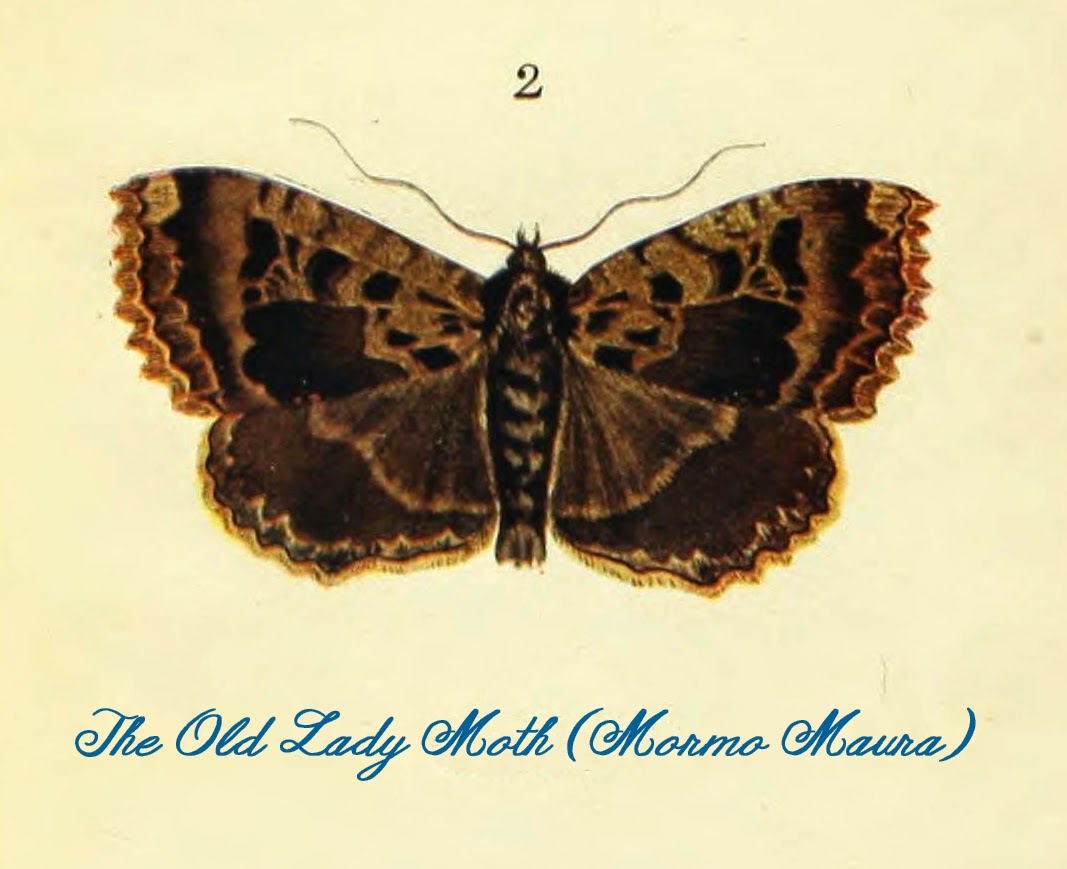
The Old Lady (Mormo Maura)
Found throughout northwestern Africa and Europe, the “Old Lady” or “Black Underwing” moth measures about 2-2.5 inches in wingspan. Found mostly near water, it hides by day and is not particularly attracted to light. It is, however, attracted to sugar, and feeds on the leaves of various fruit trees.   

Fun Quote from Butterflies and Moths
“If you were to ask me why this moth should be called the ‘Old Lady,’ I am not quite sure that I could tell you. But I think the reason must be that old ladies mostly dress in dark grey, or dark brown, or black, which are just the colours of the wings of the moth.” (pg 88)

Be sure to check out Butterflies and Moths: Shown to the Children in BHL for more fabulous moth (and butterfly) facts and images. Don’t forget to find out how you can become a citizen scientist as part of Moth Week this week!
View Full Size Image
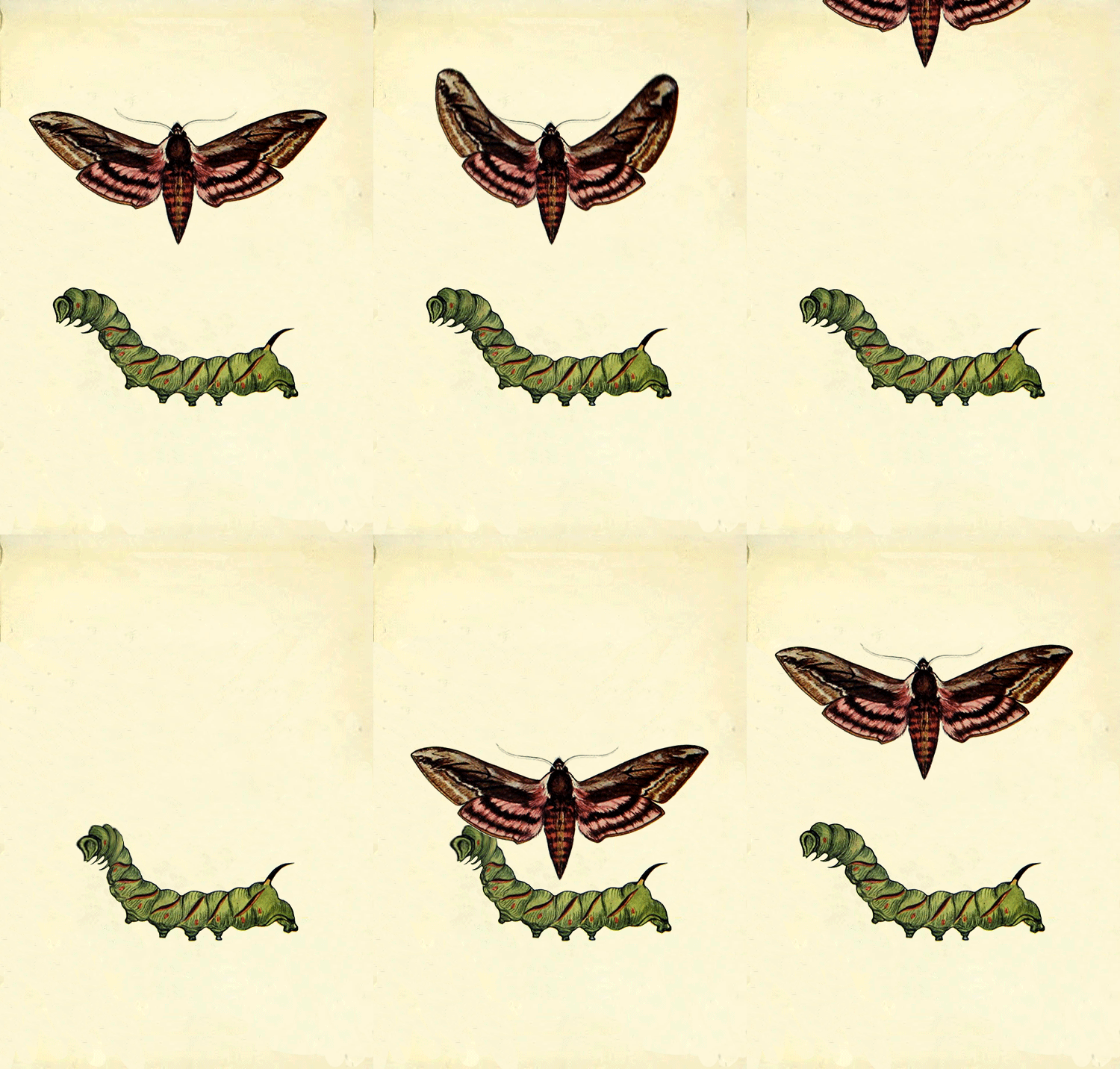
Privet Hawk Moth (Sphinx ligustri), which will hiss at you if you make him mad. http://biodiversitylibrary.org/page/42193534
July 22, 2014by Grace Costantino
BHL News, Blog Reel

Growing Globally: Digitization Developments in Africa

View Full Size Image
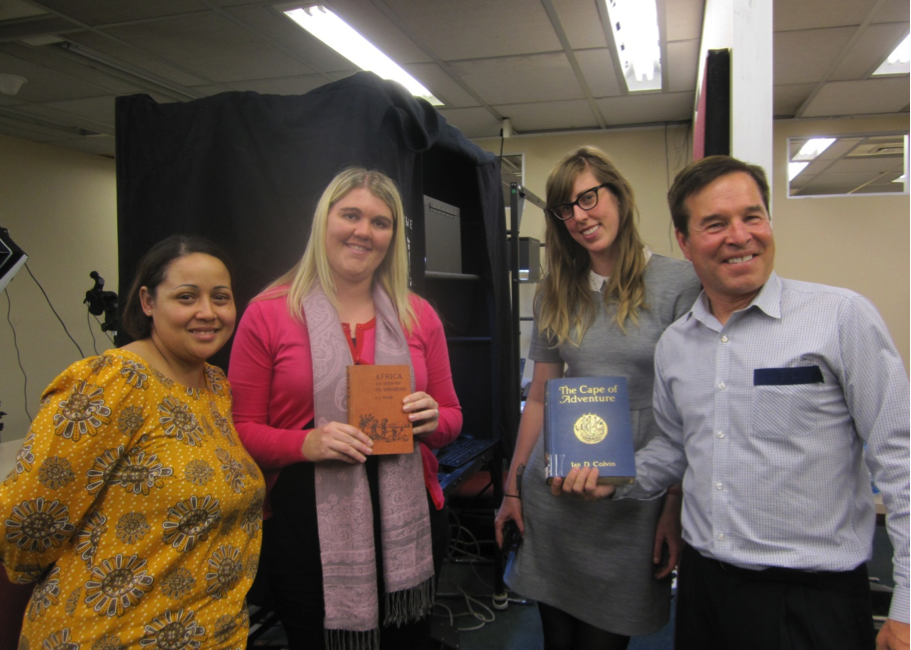
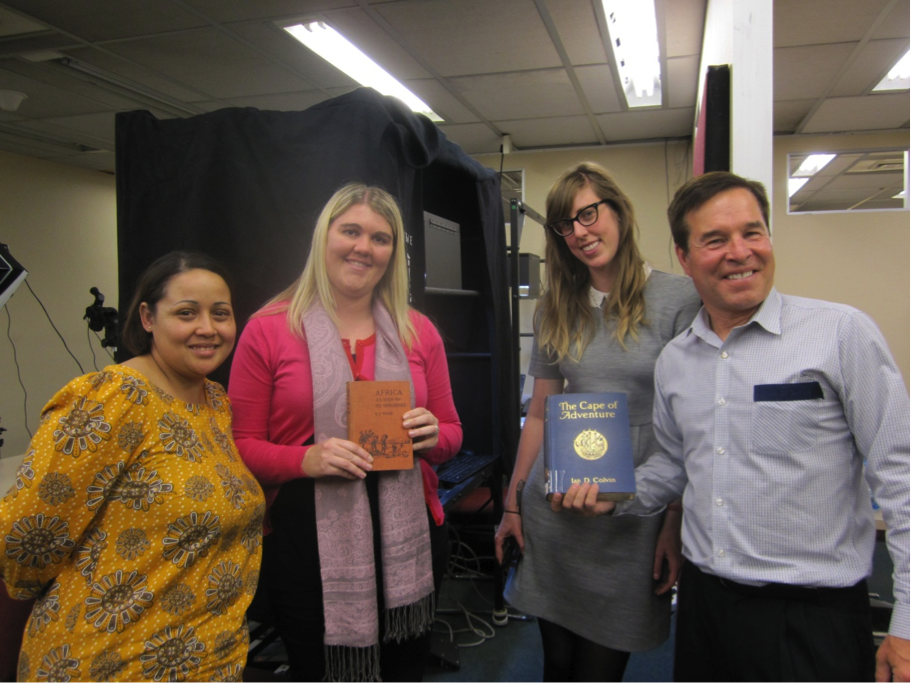
From left to right: Cindy-Lee Daniels  and Lidia Swart (staff at the Digitization Office, Library Services, University of Pretoria); Gemma Waterston (IA Satellite Coordinator) and Robert Miller (Director of Global IA)

On April 15, 2013, during a ceremony hosted at the South African National Biodiversity Institute (SANBI) at the Pretoria National Botanical Garden in Pretoria, South Africa, BHL-Africa officially launched as our sixth global node. Working within the BHL consortium, BHL-Africa aims to provide open access to the valuable information held in Africa’s biodiversity institutions. For the past two years, SANBI and the University of Pretoria in South Africa have been working with Internet Archive (IA) to contribute content to BHL through existing protocols and workflows.

In April, 2014, two Internet Archive scanning machines, called “scribes,” were shipped to the University of Pretoria to facilitate local digitization efforts. To help install the machines and provide operational training, Robert Miller (Director of Global IA) and Gemma Waterston (IA Satellite Coordinator) traveled to the University of Pretoria in June. The trip culminated in the successful scanning of the first BHL-Africa book digitized through an IA machine. Scanned in just 40 minutes, the 500-page book represents the first of many contributions soon to come. These contributions will be incorporated directly into the existing BHL corpus, expanding our extensive collection of over 43 million pages.

Following the South African trip, Miller journeyed to Nairobi, Kenya, where he presented to a coterie of our Kenyan colleagues vested in the BHL-Africa initiative. During a presentation at the Louis Leakey Auditorium, Miller highlighted collaborative opportunities for digitization that would allow Kenyan content to be incorporated into the BHL collection.

We are excited about these developments, and look forward to many more contributions from our colleagues in Africa! In celebration, enjoy this collection of BHL images highlighting African biodiversity.

Get the flash player here: http://www.adobe.com/flashplayer

var so = new SWFObject(“http://www.db798.com/pictobrowser.swf”, “PictoBrowser”, “500”, “500”, “8”, “#EEEEEE”); so.addVariable(“source”, “sets”); so.addVariable(“names”, “African Biodiversity Collection”); so.addVariable(“userName”, “BioDivLibrary”); so.addVariable(“userId”, “61021753@N02”); so.addVariable(“ids”, “72157633207738920”); so.addVariable(“titles”, “on”); so.addVariable(“displayNotes”, “on”); so.addVariable(“thumbAutoHide”, “off”); so.addVariable(“imageSize”, “medium”); so.addVariable(“vAlign”, “mid”); so.addVariable(“vertOffset”, “46”); so.addVariable(“colorHexVar”, “EEEEEE”); so.addVariable(“initialScale”, “off”); so.addVariable(“bgAlpha”, “32”); so.write(“PictoBrowser140716133303”);

July 17, 2014by Grace Costantino
Blog Reel, Campaigns, Featured Books

From Billions to None: The Story of the Passenger Pigeon

Ohio, 1854. A dense, black shadow begins to creep across the northern edges of the horizon, slowly but incessantly blotting out a bright cerulean sky. Residents take notice, and pour out of their homes and businesses to stare in wide-eyed awe and trepidation at the phenomena edging towards them.

Hours pass, and the sky is hurled into unwavering darkness. Finally, as the day fades, the sun itself succumbs to this nameless power.

Men and women fall to their knees in prayer, begging for deliverance from the Revelational apocalypse. A thundering roar, like the beating of a million drums, assaults the kneeling petitioners, and their fingers turn icy as an arctic gale whips around their bodies.

A lone figure, hunting rifle in hand, stands atop a hill and stares at the pitiful scene before him. Shaking his head, he lifts his muzzle, peers straight and true through his sights, and pulls the trigger. Dozens of shapes, like tiny meteors, break away from the mass overhead and plummet towards the earth. Swinging his weapon over his shoulder in satisfaction, he picks up a burlap sack and swaggers towards the fallen celestial bodies. As he stoops and retrieves one of the mysterious figures, a pair of slate wings unfurls. He stuffs the Passenger Pigeon unceremoniously into his bag and moves on to the next bird.

View Full Size Image
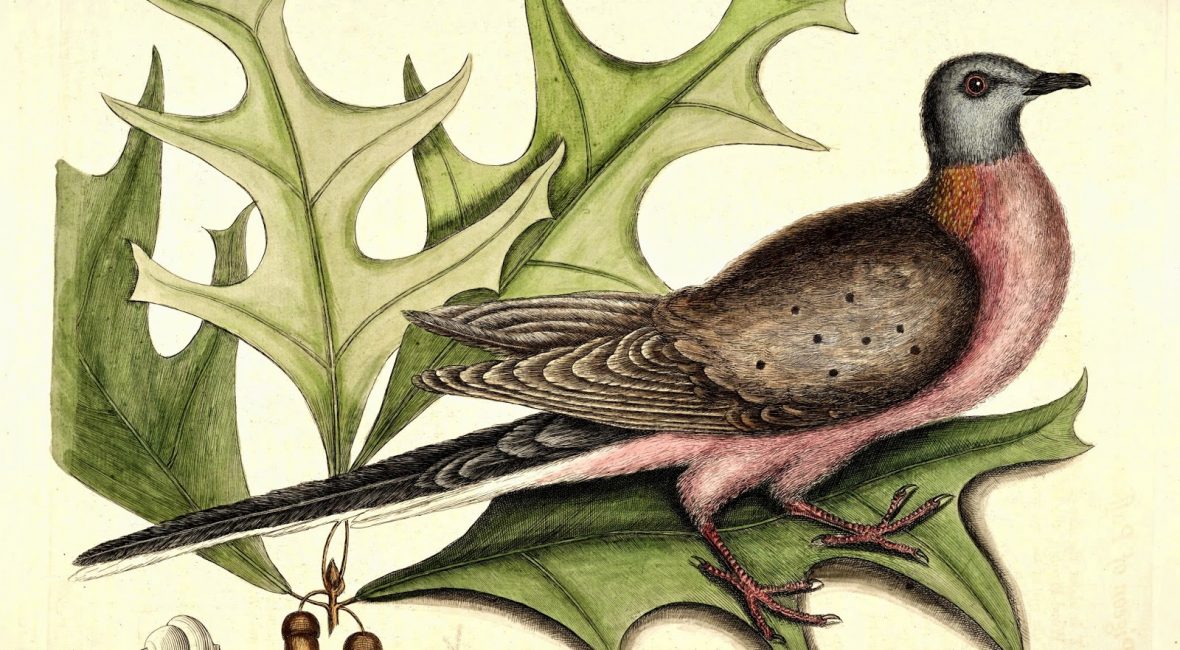
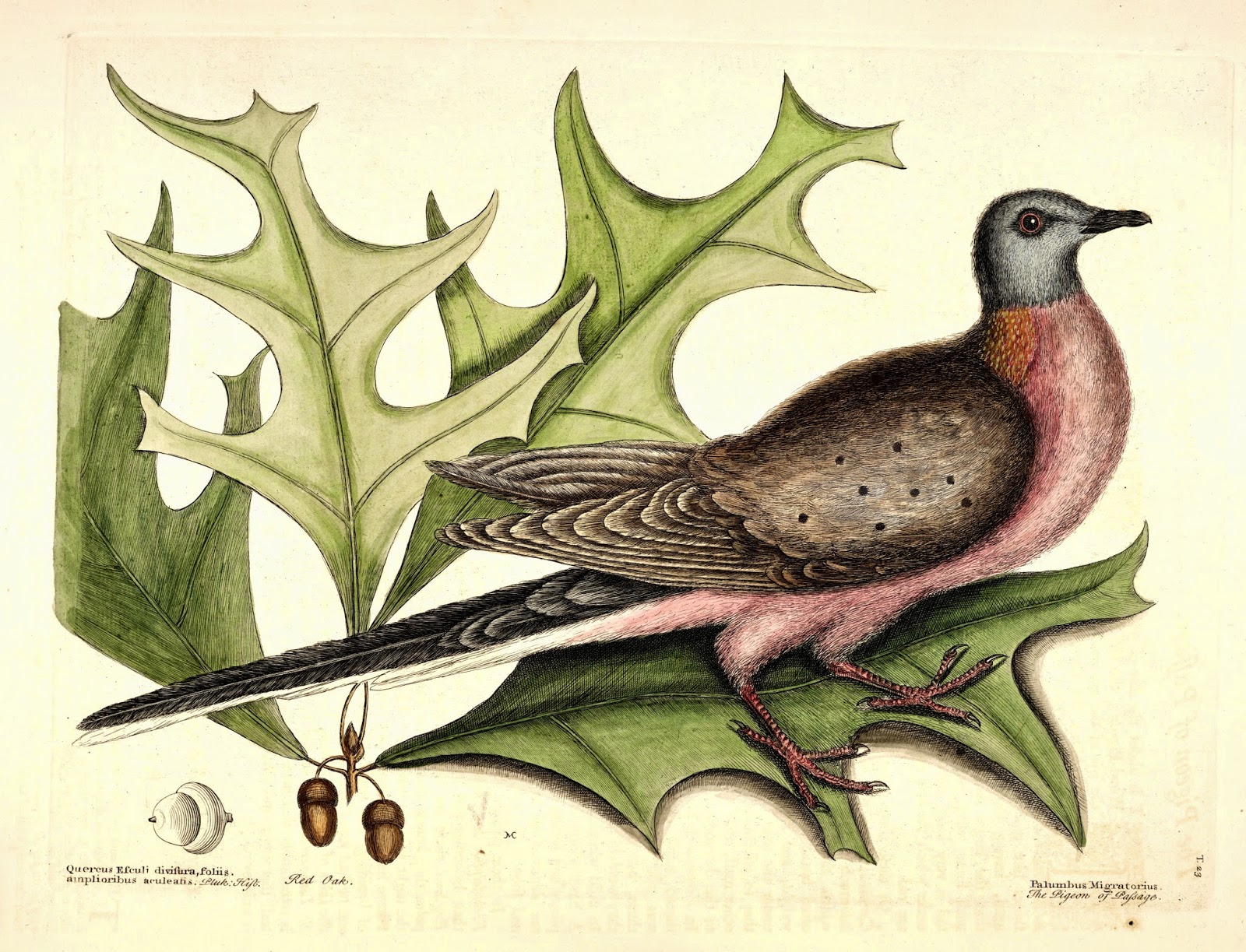
Mark Catesby’s 1754 illustration of the Passenger Pigeon is thought to be the first published depiction of the species. The Natural History of Carolina, Florida, and the Bahama Islands. v. 1. 1754. http://biodiversitylibrary.org/page/10900155

Ohio, July 1914. A ten year old boy sidles through a mob of men, women, and children ogling exotic animals at the Cincinnati Zoological Garden. Desperate to find a quite haven to escape the crowd, the child slips around the corner and finds himself staring directly into a pair of bulging eyes. Startled, he jumps back, and the eyes tilt sideways in response, as though curious about this new creature.

View Full Size Image
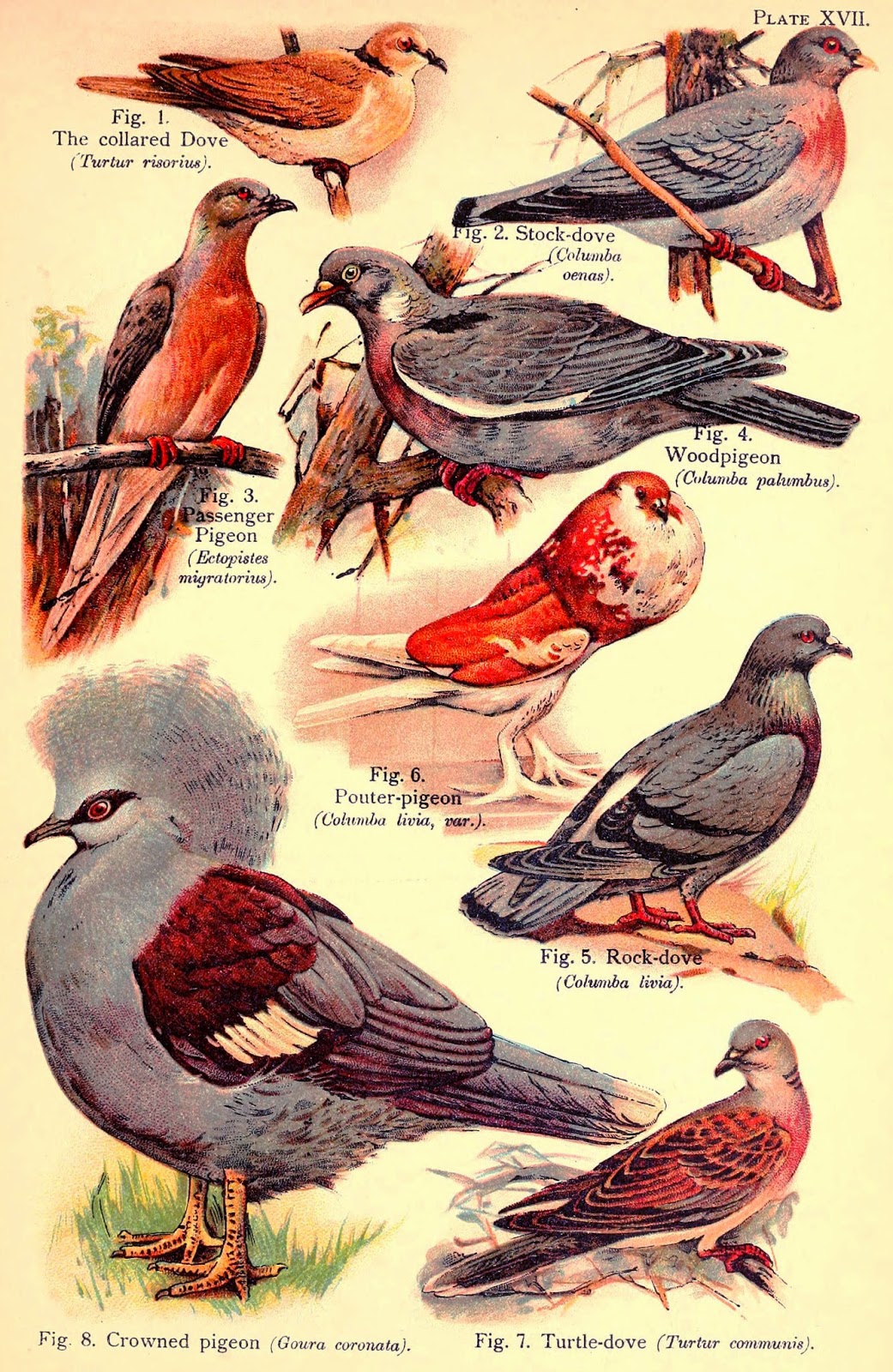
The Passenger Pigeon amongst some of her relatives. Pigeons and Doves together constitute the bird clave Columbidae, containing about 310 species. A Book of Birds. 1908. http://biodiversitylibrary.org/page/13504819

Brow furrowed, the boy takes a timid step forward, mesmerized. What he had momentarily mistaken for the glare of some ferocious predator he realizes is simply the quizzical stare of a rather drab looking bird. Her feathers, ever so slightly ruffled, are an unimposing brown dotted with gray and black. She stands with her back to him, her head facing him atop a neck turned 180 degrees like a broken porcelain doll.

“So I see you found Martha,” a deep voice rumbles behind him.

Startled again, the boy turns and finds a gray-haired, mustached zoo keeper standing behind him.

“Martha?” he responds, confused.

“Martha, our passenger pigeon. She’s the last of her kind, you know. When she dies, a whole species will go extinct.”

Frowning, the boy turns again to look with new appreciation into the eyes of this modest animal. Unexpectedly, he is filled with sorrow. She may not be as exciting as a dinosaur or as fierce as a saber-tooth tiger, but she looks very innocent and very lonely.

A surge of purpose rises up in his chest.

“Can’t we do anything to help her?” he asks fervently.

The man shakes his head sadly.

“It’s too late. Maybe we could’ve done something forty years ago, when people first realized they were in trouble. But now, there’s nothing we can do.”

The boy turns back despondently. She was the very last of her species, and it was too late to do anything to save her. Why hadn’t anyone done something when there was still time?

Losing interest in the boy, Martha turns her head, puffs up her chest, and tucks her beak tightly into her breast. She’d had enough of humans for one day.

The Fall of a Mighty Empire: The Passenger Pigeon

Two hundred years ago, the Passenger Pigeon (Ectopistes migratorius) was the most abundant bird species in North America. A population numbering in the billions, as much as 40% of all land birds on the continent shared the same genome as Martha. Migrating flocks were so large that they literally blocked out the sky, stretching up to a mile wide and 300 miles long and taking 14 hours to pass a single point. Flocks were so densely packed that a single shot could bring down dozens of birds. The beat of up to 3.5 billion pairs of wings literally created its own cold front below, and those unaccustomed to the marvel feared the end of the world was upon them.

View Full Size Image
So many Passenger Pigeons would pile into a single tree that branches would snap off or entire trees would tumble to the forest floor. The one in this picture looks to be leaning precariously…
The Birds of North America. 1903. http://biodiversitylibrary.org/page/35159567

Nesting colonies were just as large, covering several hundred square miles of forest. A single tree often contained up to 100 nests, causing many to topple over at the sheer weight of an aviary kingdom. By the end of the nesting season, blankets of pigeon droppings several inches thick saturated the forest floors. However, while colonies were staggeringly massive, a mating pair of passenger pigeons produced only one, occasionally two, eggs per season.

The Passenger Pigeon was nearly twice as large as the common city pigeon, with males averaging 16 inches in length and up to 12 ounces in weight. Frames built for speed and maneuverability, the birds could reach up to 60 mph, making them ideal targets for not only hunting parties but simple target practice. The onset of large-scale commercial hunting and railroads for distribution turned a sustainable hunting practice into a frenzied genocide. In 1869, Van Buren County, Michigan, alone shipped 7.5 million passenger pigeons to the east, where they sold for mere pennies.

The dangerous decline of the species was noted as early as the 1850s, but cheap meat and a seemingly endless supply of birds dampened any resolve to implement hunting restrictions. In 1896, a majority of the last wild flock of 250,000 birds were killed during a sporting event heralded as the “last chance to shoot the passenger pigeon in the wild.” On March 24, 1900, a 14-year old boy killed the last known wild Passenger Pigeon in Pike County, Ohio.

From billions to none in less than 100 years.

Remembering Martha

View Full Size Image
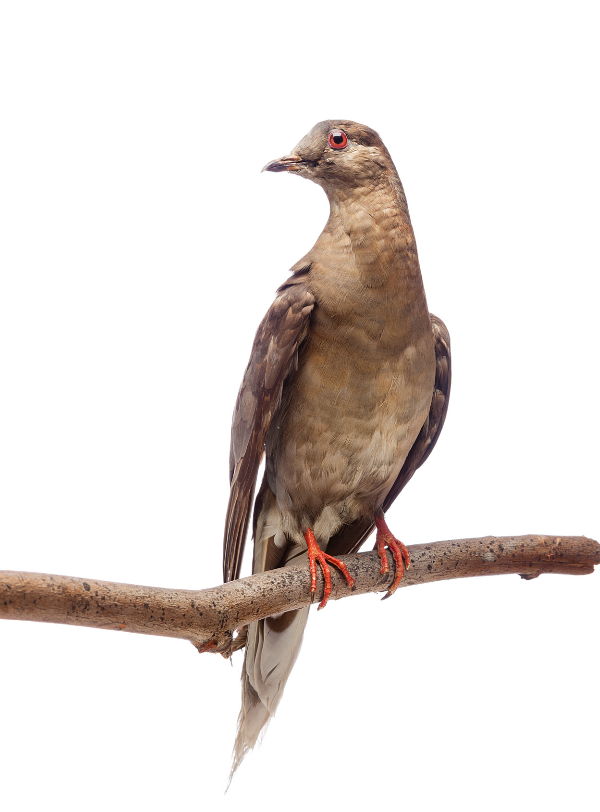
Martha is ready for her close-up! The Smithsonian Institution has created a 3D scan of Martha and made it available as an interactive 360 view online. Image author: Donald E. Hurlbert, 6/23/2014. Image copyright Smithsonian Institution. 

Martha the Passenger Pigeon is perhaps one of the most famous animals in the world, for she is a tangible reminder of the human capacity to decimate biodiversity. At nearly 30 years old, Martha, the very last of her species, died at the Cincinnati Zoological Garden at about 1pm on September 1, 1914. Immediately after her death, she was entombed in a 300 pound block of ice and shipped to the Smithsonian, where she was taxidermied.

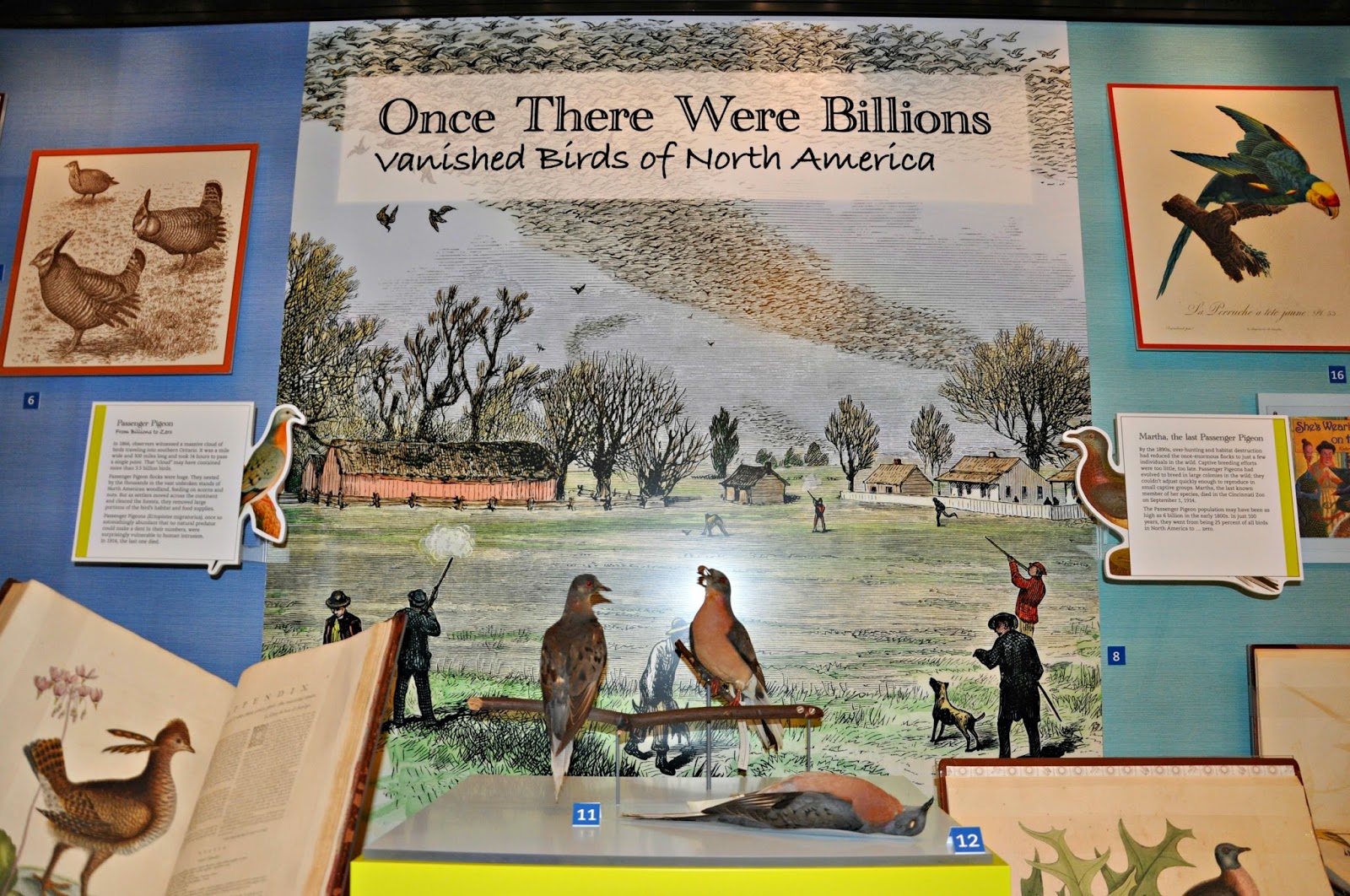
In remembrance of the centennial of her death, Martha is on display at the Smithsonian’s National Museum of Natural History until October, 2015, as part of  the joint BHL/Smithsonian Libraries exhibit: “Once There Were Billions.” The exhibit documents the tragic histories of four extinct North American birds: the Passenger Pigeon, Great Auk, Heath Hen, and Carolina Parakeet.

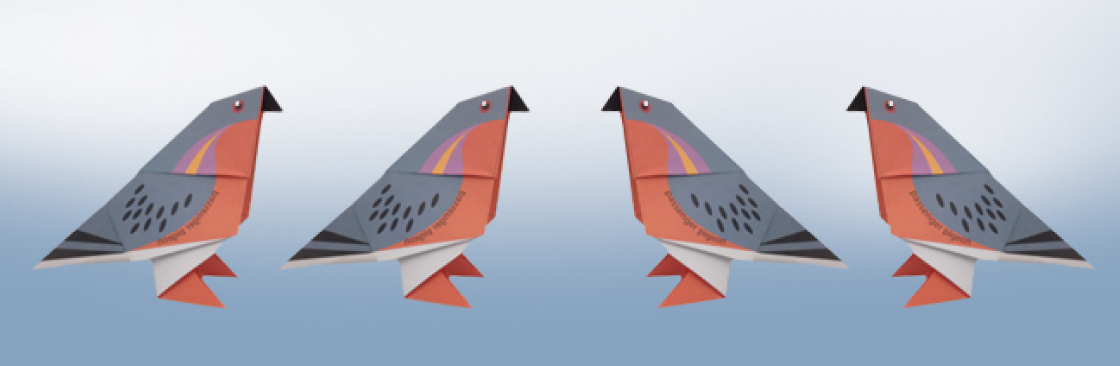
Millions of people have rallied to commemorate the Passenger Pigeon this year, and help raise awareness about endangered species, extinction, and the impact of human activity on healthy ecosystems. The “Fold the Flock” initiative is an effort to recreate the staggering passenger pigeon flocks of the 19th century through origami pigeons. “The Lost Bird Project” has created a film and book to investigate extinction and memory. Also as part of the project, Todd McGrain has crafted stunning bronze sculptures of extinct birds, including the passenger pigeon, which are on display across America.

View Full Size Image
Join the cause to recreate the Passenger Pigeon flocks of the 19th century with Fold the Flock!
Download the origami Passenger Pigeon file here and watch the instructions on how to fold.

Other initiatives like Project Passenger Pigeon, the film From Billions to None, and a multitude of exhibits nationwide are working to raise awareness about extinctions and excite action to prevent future biodiversity calamities.

Finally, as always, BHL is here to help! Find books about the Passenger Pigeon and illustrations of the species for free from BHL.

How Can Historic Literature Help Modern Scientists Save Species?

View Full Size Image
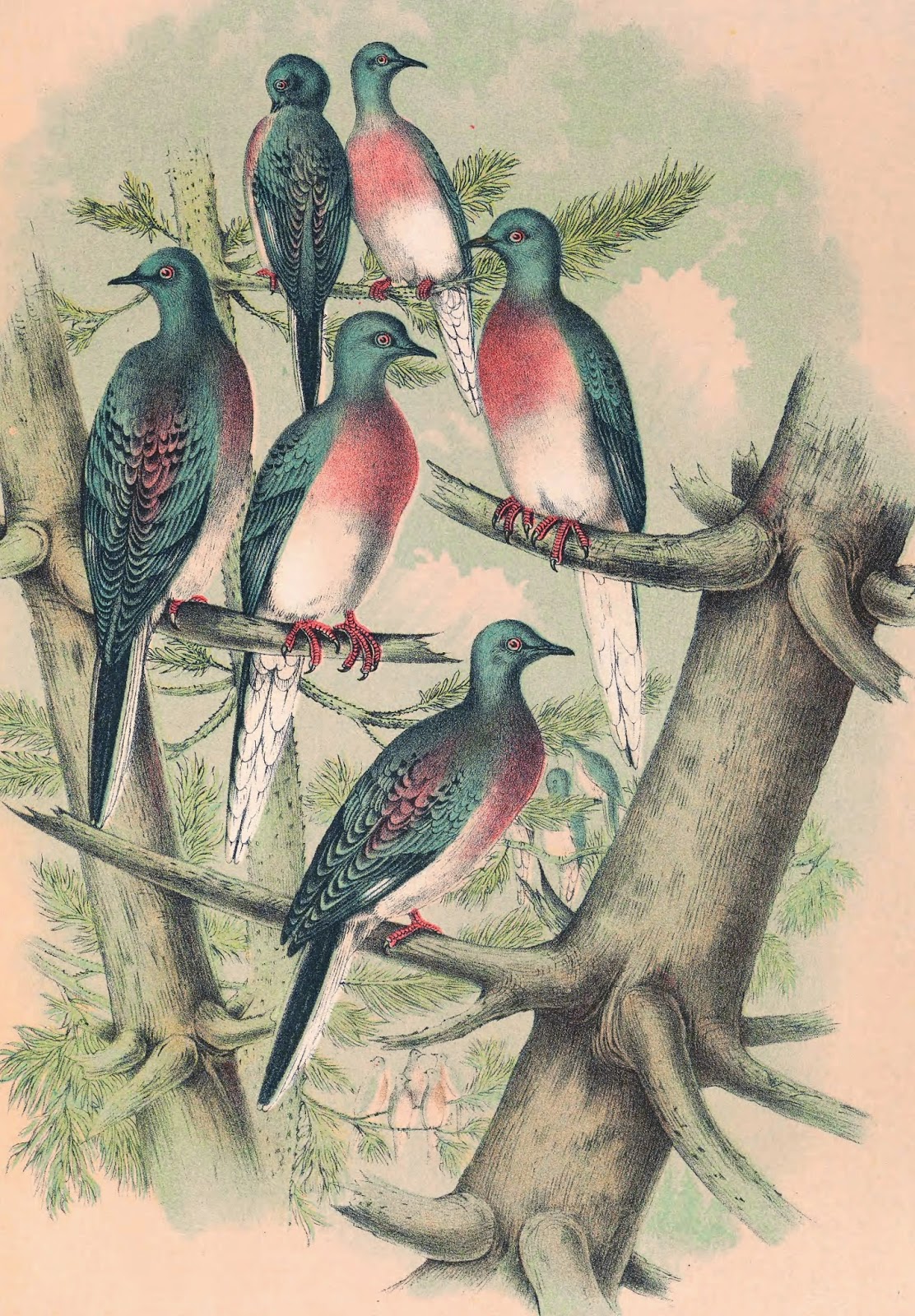
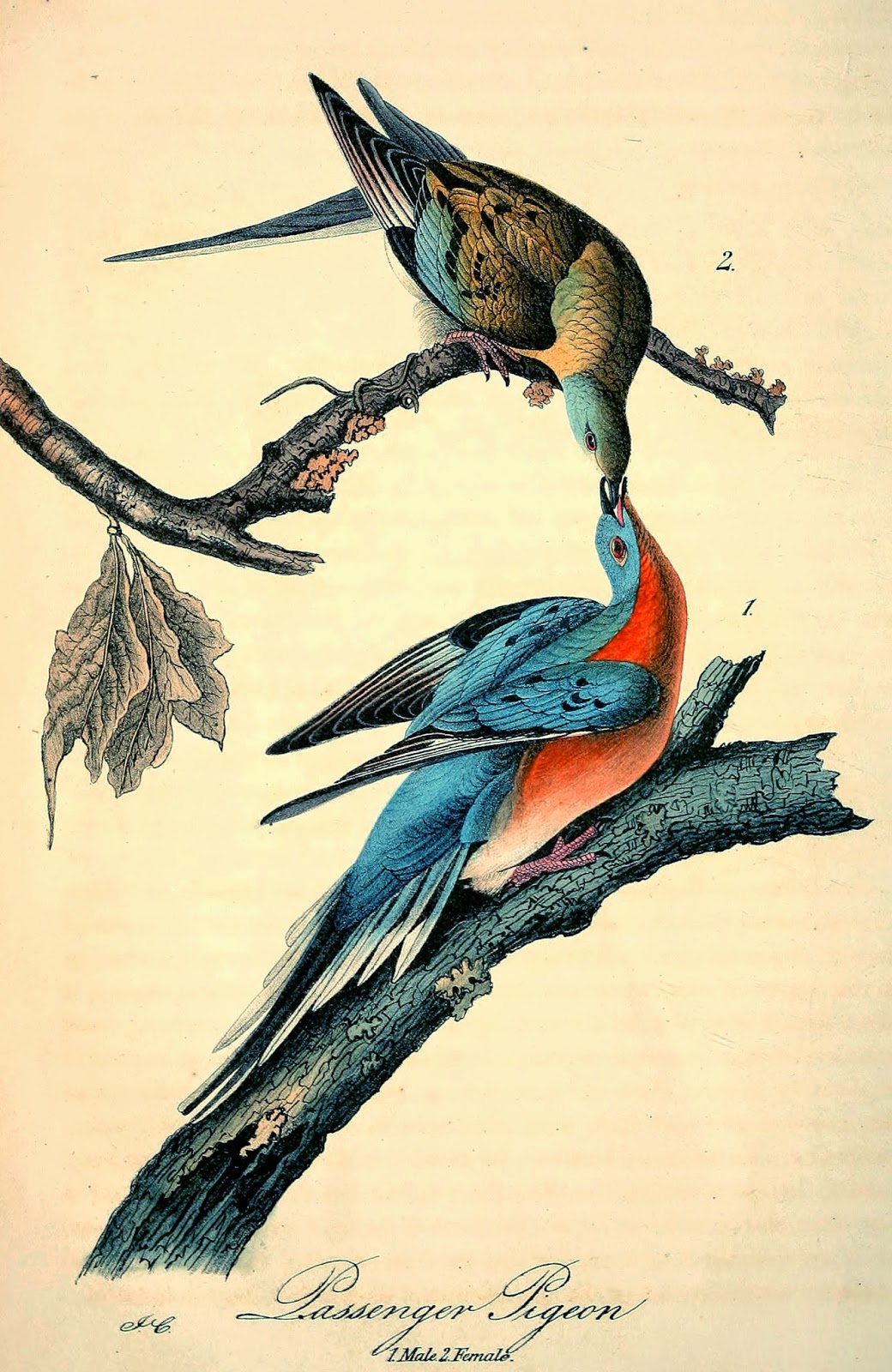
Male (lower) and female (upper) Passenger Pigeons. As with most bird species, the male is more brightly-colored than the female.
The Birds of America. v. 5. 1842. http://biodiversitylibrary.org/page/40419582

Reports, illustrations, and photographs in historic literature and taxidermied specimens are the only remaining record we have of extinct species. Thus, preserving this knowledge is important simply as a means of documenting the biodiversity we have lost. But retaining and providing access to this legacy literature is not just about creating a memorial for extinct species. It’s also about helping to prevent future extinctions.

Historical records allow scientists to study the morphology, behaviors, habitats, diet, and breeding patterns of species, which help determine where those species might be vulnerable and inform strategies for rehabilitating endangered populations. Similar information about extinct species, and an evaluation of the circumstances that led to their demise, can help scientists identify threats to similar species. Records of migration pathways and changes in distribution patterns allow scientists to provide educated recommendations to policy makers about the lands and species to protect.

Without a concrete evaluation of earth’s biodiversity history, and an understanding of the mistakes we have made in the past, we are doomed to repeat our darkest moments. But just as humans have a capacity to annihilate a species, so have we the power to save one (take the American Wolf, for example). Supporting initiatives like the Biodiversity Heritage Library gives scientists, policy makers, and concerned citizens the information they need to protect life on earth. Take a look at what your donation can do, and we hope you’ll consider giving a tax-deductible gift today.

July 15, 2014by Grace Costantino
BHL News, Blog Reel

Game Laboratory Tiltfactor Selected for the Purposeful Gaming and BHL Project

BHL and the Missouri Botanical Garden are pleased to announce a major milestone reached in the project, “Purposeful Gaming and BHL”. Dartmouth College’s Tiltfactor was chosen to design the game that will help improve access to texts from the Biodiversity Heritage Library (BHL).

View Full Size Image

The Purposeful Gaming and BHL project is based at the Missouri Botanical Garden (MOBOT) in St Louis, Missouri. In the fall of 2013, MOBOT was awarded a $449,641 grant by the Institute of Museum and Library Services (IMLS) to test new means of using crowdsourcing and gaming to support the enhancement of texts from the BHL. Grant funding began in December 2013 and ends in December 2015. The Garden is partnering with Harvard University, Cornell University and the New York Botanical Garden on the project.

Principal Investigator for the project, Trish Rose-Sandler, reports that the project received “several strong bids for the design of the game so it wasn’t an easy decision. We are very excited to have found a great partner for this project because the game will be the critical component to improving access to digitized texts of the BHL.” The project’s goal is to demonstrate whether or not online games are a successful tool for analyzing and improving digital outputs. Users will be presented words that are difficult for software to recognize as tasks in a game.

View Full Size Image
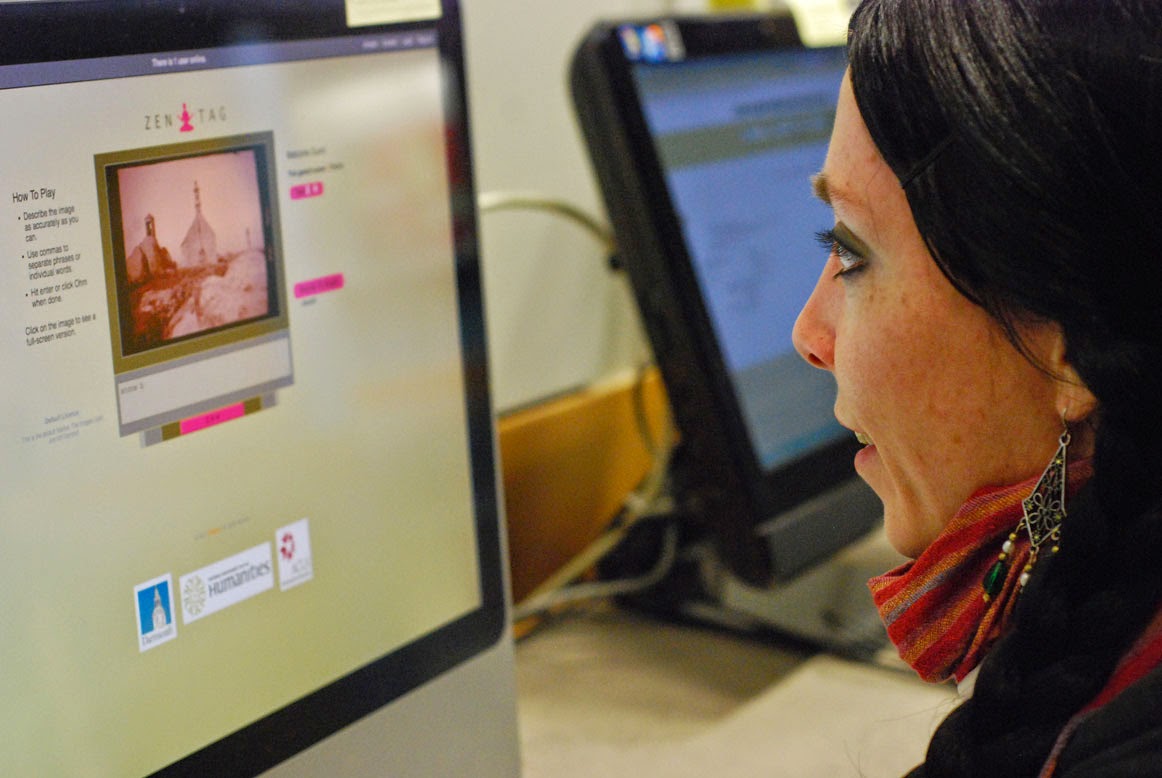
User engages with Zen Tag, one of Tiltfactor’s games available via the Metadata Games platform.

Tiltfactor had several strengths that made their bid stand out, including extensive experience designing games for the education sector. “We were also impressed that not only do they design games but they do extensive research into the impact of those designs on players from a psychological perspective – they even have two social psychologists on their design team,” states Rose-Sander. Tiltfactor’s greatest strength, however, is arguably their work with crowdsourcing metadata as demonstrated in their Metadata Games platform, which entices players to engage with and help improve access to archival content found in cultural heritage institutions.

The folks at Tiltfactor were interested in bidding on the project for several reasons. “The ‘Purposeful Gaming and BHL’ initiative extends our work with metadata games creation to bring in the public to meaningfully participate in our nation’s robust archives,” states Tiltfactor’s founding director, Dr. Mary Flanagan. “Games can be harnessed to provide fun experiences that also improve transcription and make bioheritage accessible to many more people. Tiltfactor is thrilled to work with BHL and their partners on an endeavor with such a high social return.”

The two teams will begin working collaboratively on the design of the game in July of 2014, and it is expected that the game will be released publicly sometime in early summer of 2015.

To learn more about project details see http://biodivlib.wikispaces.com/Purposeful+Gaming.

View Full Size Image

This project was made possible in part by the Institute of Museum and Library Services [LG-05-13-0352-13].

June 30, 2014by Grace Costantino
BHL News, Blog Reel, Campaigns

Breathing Life Into a Museum Exhibit About Extinction

View Full Size Image
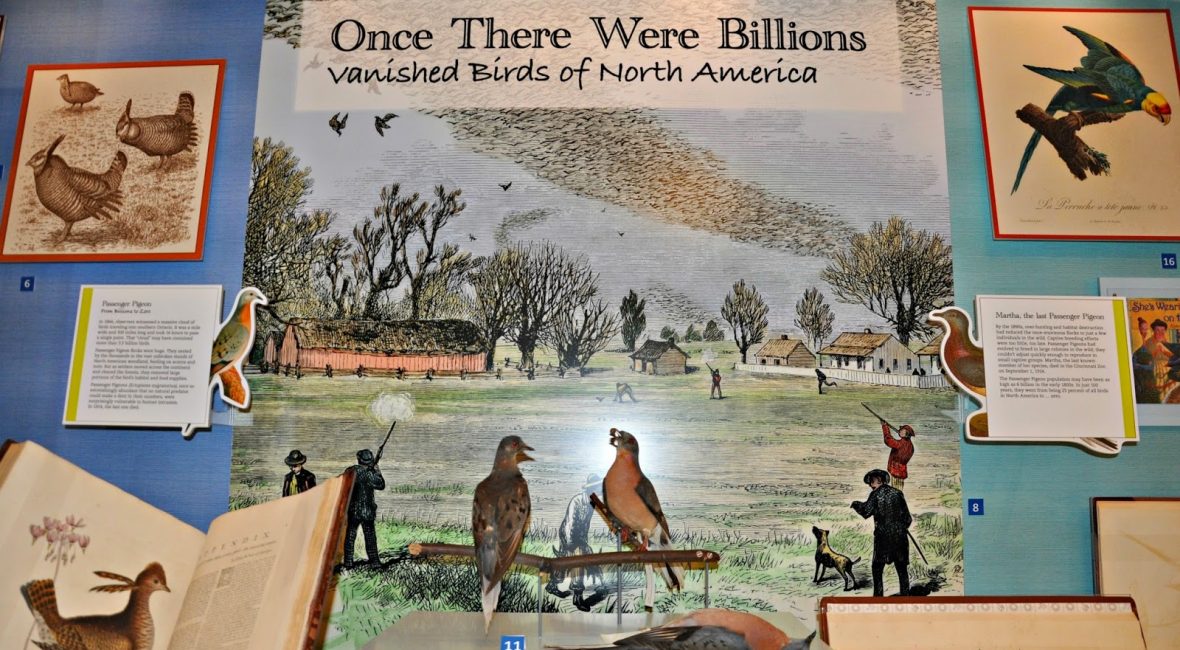
Once There Were Billions, the new Smithsonian Libraries/BHL exhibit at the National Museum of Natural History.  The Passenger Pigeon on the left, with her back to the viewer, is Martha, the last Passenger Pigeon that died 100 years ago in 1914.

You are living in the midst of earth’s sixth great extinction event. You’ve been living in it since you were born. So have your parents, your grandparents, your great-great-great-great-grandparents, and all of your ancestors for about 10,000 years. It dates back to the extinction of the mammoths and has been increasingly accelerating as human actions and climate change reshape the balance of our planet.  Within the next century, 75% of the conservatively estimated 8.75 million species on earth may be extinct.

When many of us think of extinctions, we think of the countless species disappearing in the Amazon rainforest, the ocean’s coral reefs, or the forests of South-east Asia. But the truth is that extinctions happen in every corner of the globe. Some are noticeably notorious, others occur without us even knowing that the species existed in the first place. One of the most infamous North American extinctions is the demise of the Passenger Pigeon.

By the time Europeans first came to the New World, approximately 40% of all land birds in North America were a member of the species Ectopistes migratorius, or the Passenger Pigeon. Their population numbered in the billions, and their abundance spurred intense human hunting in the mid-1800s. Less than a century later, the Passenger Pigeon was extinct.
View Full Size Image
Gilbert Borrego, co-curator of the Once There Were Billions exhibit.

The fate of the Passenger Pigeon, and three other extinct North American bird species (Great Auk, Carolina Parakeet, and Heath Hen), are the focus of the new joint BHL/Smithsonian Libraries‘ exhibit at the National Museum of Natural History: Once There Were Billions.

The exhibit represents the culmination of three years of work for its curators, Gilbert Borrego (former BHL Library Technician for Smithsonian Libraries) and Dr. Helen James (Curator in Charge, Division of Birds, National Museum of Natural History). The histories of these lost species are told through compelling narratives, taxidermied specimens (including Martha, the last Passenger Pigeon), books from the Smithsonian Libraries’ collection (many of which are available digitally in BHL), and images from BHL.

Most people are unaware of how involved and sometimes challenging building an exhibit can be. Several years, countless meetings, copious research, and dozens of individuals are required to bring an exhibit from conception to public launch. Sometimes the most difficult part can be simply honing in on the exact story you want to tell.

View Full Size Image
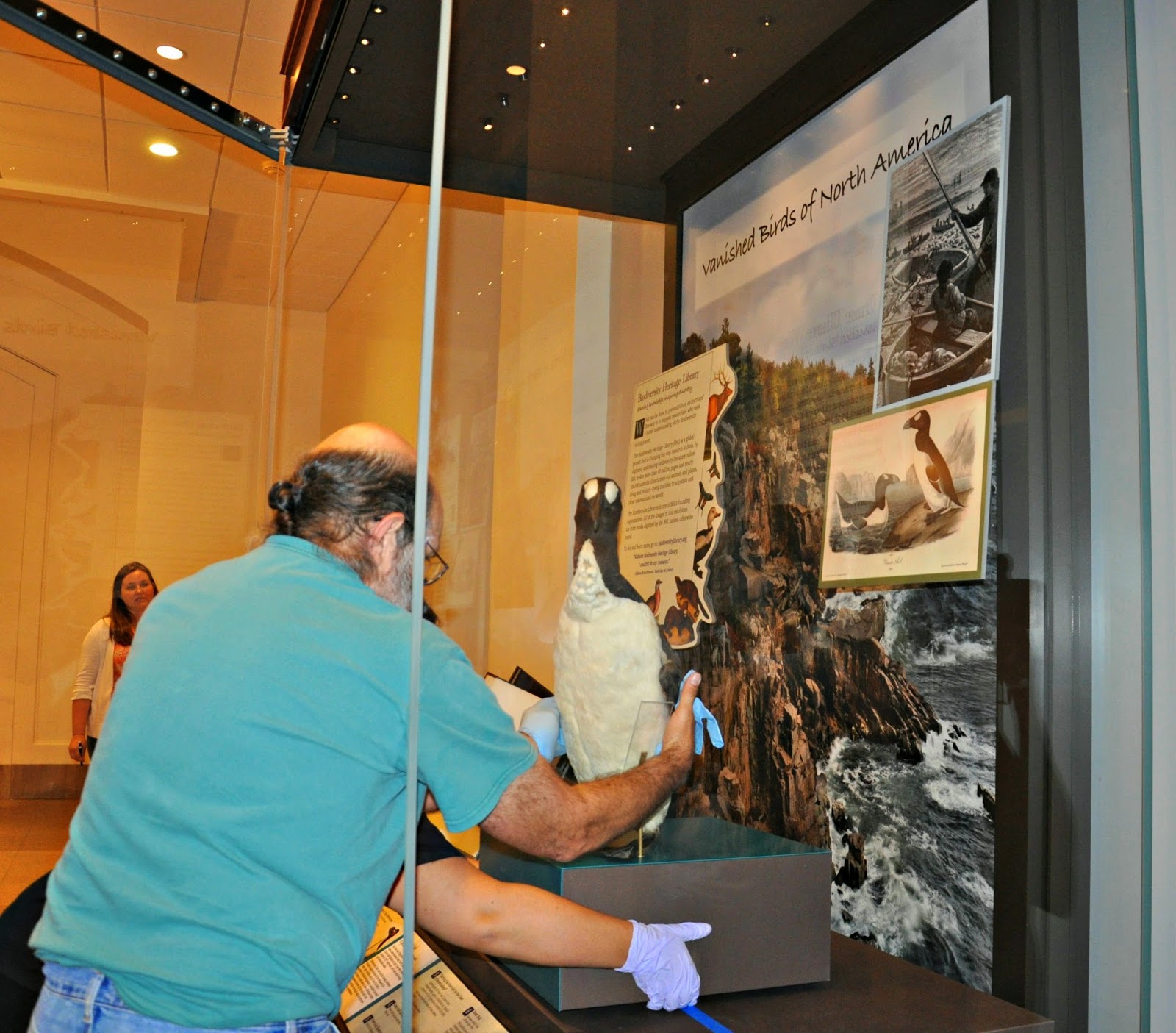
Positioning the Great Auk in the exhibit.

“The most challenging part of the exhibit was narrowing down our source material,” said Borrego. “The topic [of the exhibit] was originally much more general, focusing on extinct species. We knew Martha the Passenger Pigeon was to be included, but we looked at many other types of animals and plants before settling on the plight of birds from North America.”

Borrego first presented the proposal for “Once There Were Billions” in 2011, and since then he, James, and an army of scientists, librarians, and museum support staff defined the scope, drafted a script, selected specimens and images, and fashioned layouts for the physical and supplementary digital exhibits.
Once all the foundational work was complete, it was time to bring the exhibit to life. Plaques fresh off the press, freshly-cleaned bird specimens, and carefully conserved books were artistically arranged within two mammoth exhibit cases in the Evans Gallery on the Ground Floor of the National Museum of Natural History.
View Full Size Image
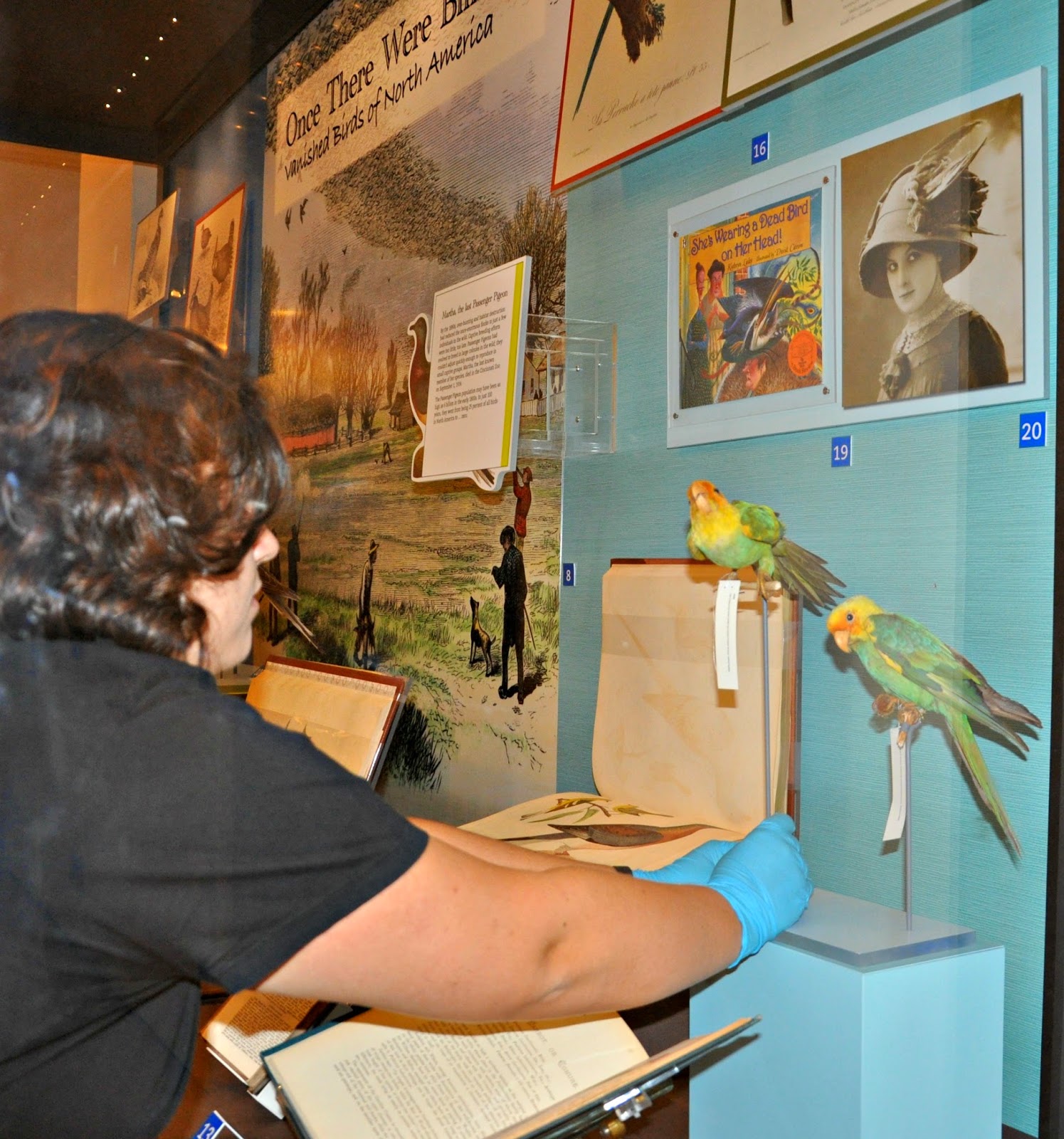
Adjusting the Carolina Parakeet specimens.

And voila! This specialized hub for extinction education opened to the public this past Monday, June 24, 2014, and will remain open until October, 2015.

If you’re visiting D.C., be sure to check out the exhibit. And if you’re an art fan, take some time to see the massive bronze sculptures of the birds crafted by artist Todd McGrain as part of “The Lost Bird Project” and situated around the Smithsonian grounds.
If you’re not in the area, you can still enjoy “Once There Were Billions” via the online exhibit, by browsing digital versions of select exhibit books in BHL, or by downloading free, spectacular illustrations of the featured species.
Educating each and every person about the plight of biodiversity on our planet, and the repercussions of doing nothing, is a critical part of ensuring that today’s species do not become just another extinction statistic. Exhibits like “Once There Were Billions” are just one way we can achieve this global awareness. But while you might not be in a position to build a museum exhibit, there are other ways you can help change the fate of doomed species. Supporting initiatives like BHL, which enable the research of scientists trying to document and conserve species around the world, helps prevent species decline.

Everyone can make a difference. What will you do to help curb the tide of the Sixth Great Extinction Event?

June 27, 2014by Grace Costantino
Blog Reel

Welcoming Grace Costantino, BHL Outreach and Communication Manager

View Full Size Image
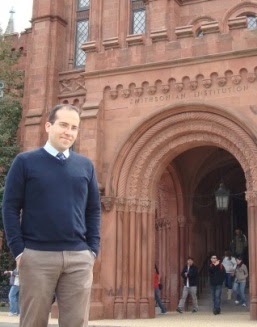
Grace Costantino, BHL Program Manager. Image Credit: MYH Photography.

We are pleased to announce that Grace Costantino has joined BHL as our new Outreach and Communication Manager!

Grace is no stranger to BHL. She started with the project back in 2008 as a BHL Librarian at the Smithsonian Libraries, after which she served as the BHL Program Manager from 2012-2013. Over her years on BHL, she has helped shape the program’s digitization workflow, assisted in the implementation and administration of the user feedback system, facilitated strategic planning efforts, organized evaluation and reporting policies, spearheaded marketing and promotional activities, performed financial administration, and developed and managed BHL’s outreach and communication strategy.

In her new capacity, Grace will further refine BHL’s outreach strategy, expand social media initiatives, supervise marketing and promotional activities, and engage with the public to excite audiences about the wealth of biodiversity heritage and knowledge available in BHL while also educating them about its critical importance to modern scientific, conservation, and informatics efforts.

View Full Size Image
Grace with her husband, Justin, and their dog, Jack.
Image Credit: MYH Photography.

Grace received her BA in Studio Art, Graphic Design, and Art History, as well as her Master’s degree in Information Systems and Management, from the University of Maryland, College Park. She currently resides in Crofton, Maryland, with her husband, Justin (a middle school art teacher), and their dog, Jack. Her hobbies include drawing, painting, reading, writing fiction, watching fantasy and sci-fi movies, and traveling. She hopes to one day travel to every US state and continent. She has 21 states and 4 continents to go…Come on BHL-Antarctica!

View Full Size Image The BHL Outreach and Communication Manager position is part of the BHL Secretariat, housed at the Smithsonian Libraries. The position is made possible in part through funding from the Institute of Museum and Library Services (Grant number LG-00-14-0032-14).
June 26, 2014by Grace Costantino
Blog Reel, User Stories

How BHL Helps Users Delve into the Wonderful World of Lepidoptera!

Today, we present an example of how BHL is being utilized to expand an award-winning database on the insect order Lepidoptera! 

Generic Names of Moths of the World: Generic Names and their Type-species by Brian Pitkin and Paul Jenkins is a catalogue of more than 32,000 genus-group names of the insect order Lepidoptera. First launched in July 2004, the site was awarded the Podalirius Star in November 2004. The catalogue has recently been updated, corrected where necessary and revitalised by the addition of links to scanned images of more than 58% of the cited references to the Biodiversity Heritage Library. The majority of the links are pre-1923 as a result of copyright restrictions on more recent publications.

Work on the electronic catalogue started by bringing together digital tag-delimited files on five and a half inch floppy discs of:

  • Hemming, 1967. Generic names of Butterflies of the World and their Type-species (Lepidoptera : Rhopalocera). Bull. Br. Mus. nat. Hist. (Ent.) Suppl. 9: 509 pp.,
  • Cowan, 1968 and 1970. Annotationes Rhopalogiques: 20 pp. Published privately, Clunbury Press, Berkhamsted, Herts.
  • Volumes 2-6 of Generic Names of Moths of the World, Trustees of the British Museum (Natural History), London by the senior author.
    • Volume 1 of Generic Names of the World was digitally scanned and converted to text using optical recognition software and then checked against the original by Paul Jenkins. All were then combined into a Paradox for DOS database which ultimately was converted to MS Access 97 by the senior author and subsequently MS SQL for web deployment.

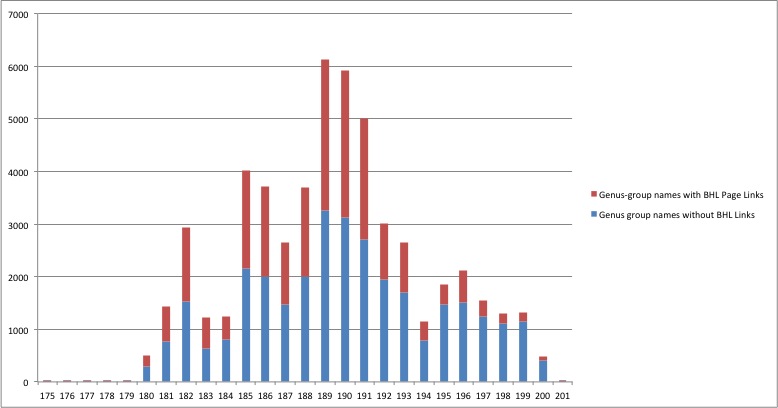
Links to BHL have since been added to the catalog, expanding the information available. 54% (17,479) of the 32,188 included genus-group names have links to BHL scanned images. 64% (17,976) of the 27,891 included type species have links to BHL scanned images. 58% (2,297) of the 3,944 included type species designations have links to BHL scanned images. The catalogue bibliography includes 8,863 references, of which 3,741 (42%) have been scanned by BHL.

View Full Size Image
Graph showing the number of genus-group names of unlinked (blue) and linked (red, n=17,553 or 54.75%) citations in Butterflies and Moths of the World by decade to BHL scanned images. (Genus-group names without citations are ignored). Click graph to enlarge.

The higher classification has also been updated as far as possible to follow van Nieukerken et al., 2011 Order Lepidoptera Linnaeus, 1758. Additional genus group names have been added from:

  •  Lamas. G., 2008. Genera and Genus-group Names of the Butterflies of the World. Excel Spreadsheet,
  • Pühringer, 2013. Checklist of the Sesiidae of the world (Lepidoptera: Ditrysia)
  • Gilligan, T. M., J. Baixeras, J. W. Brown & K. R. Tuck. 2012, T@RTS: Online World Catalogue of the Tortricidae (Ver. 2.0), by the senior author.

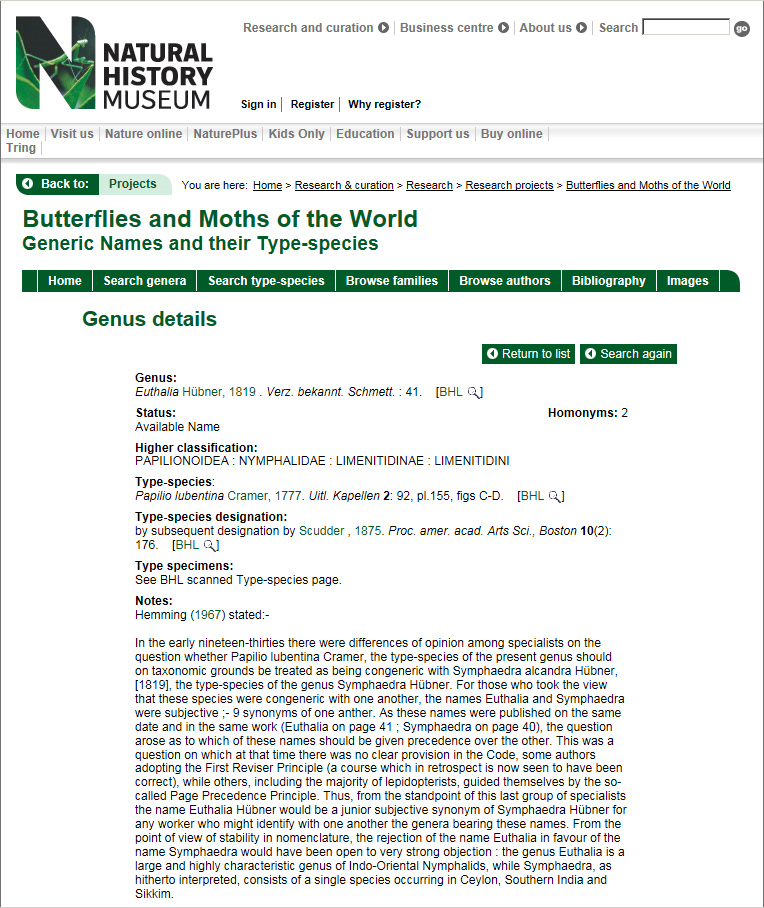
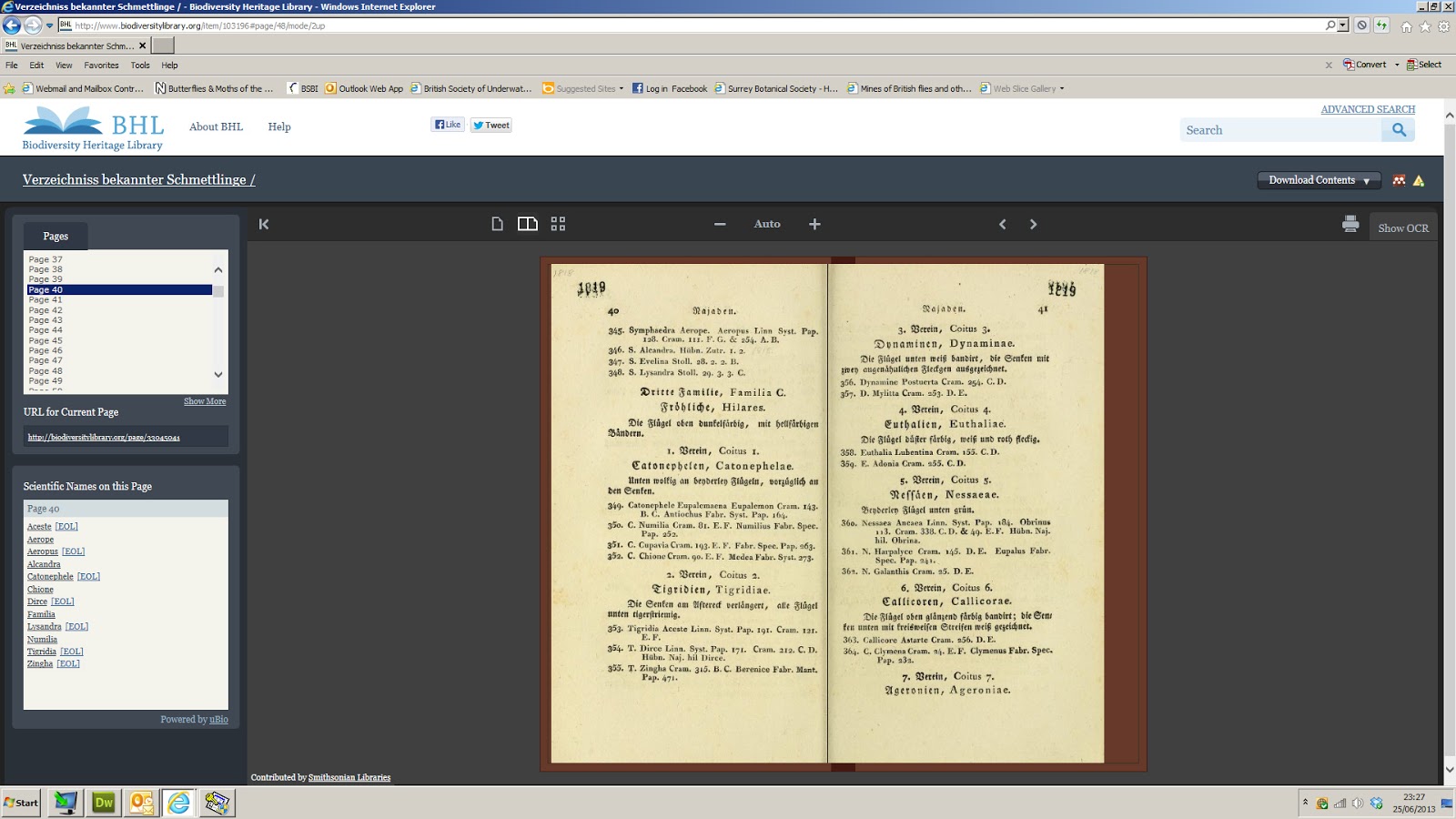
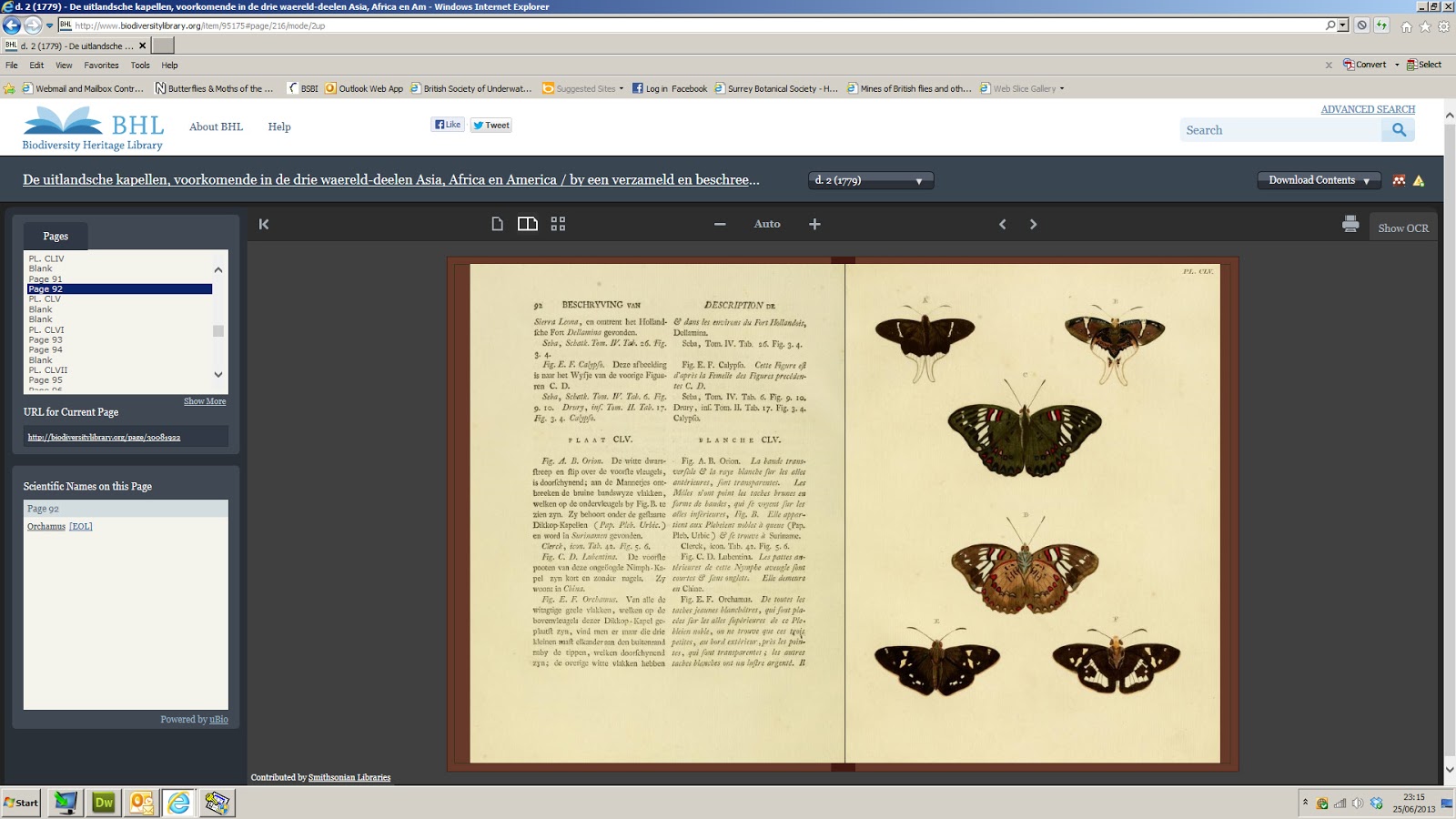
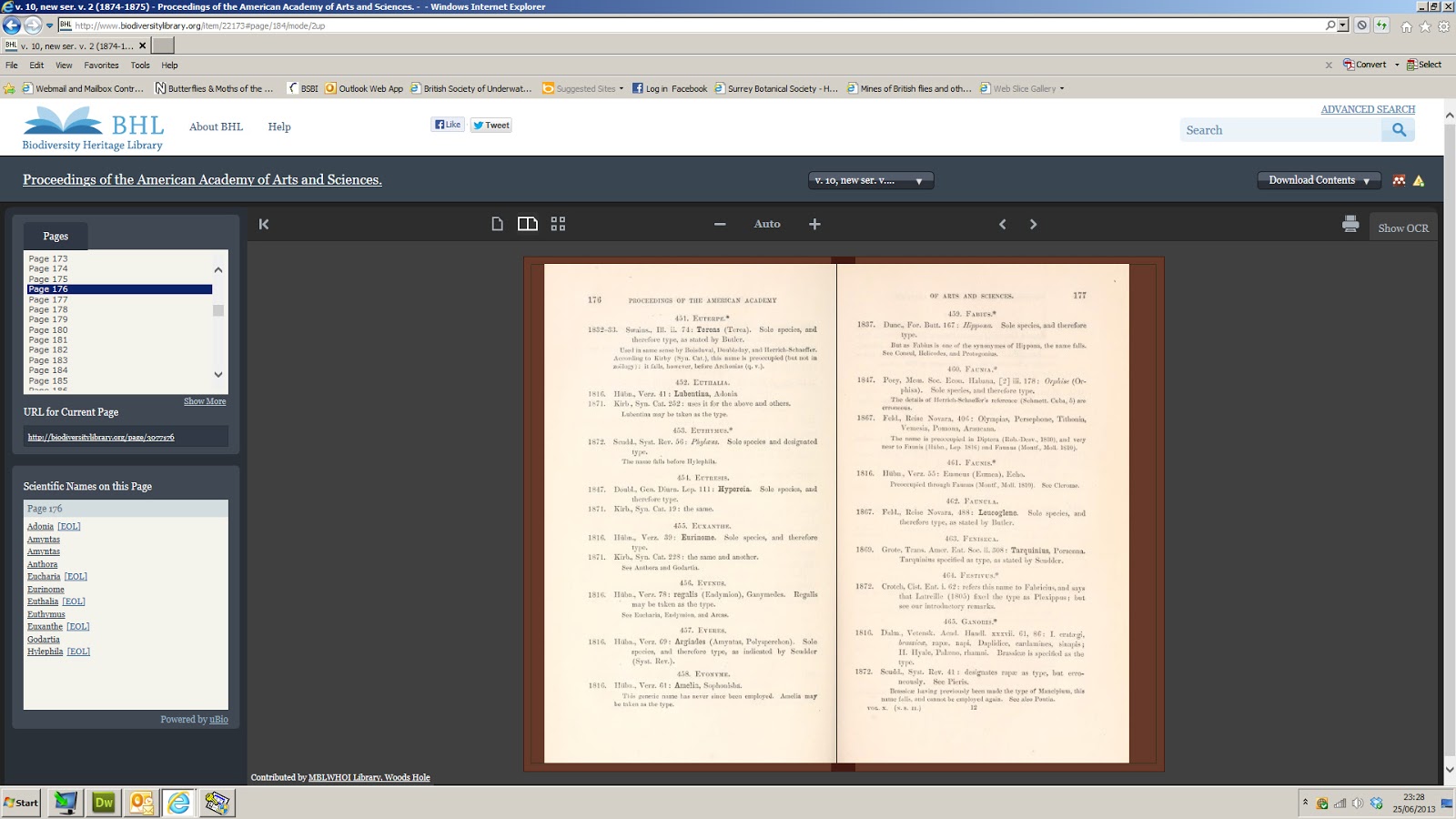
Below is an example of how Butterflies and Moths of the World links to relevant BHL scanned pages, in order to portray a history for a given species.

View Full Size Image
An example page from Butterflies and Moths of the World – Euthalia  Hübner, 1819 . Verz. bekannt. Schmett. : 41.
View Full Size Image
Linked BHL scanned page of the original description of Euthalia  Hübner, 1819 . Verz. bekannt. Schmett. : 41.
View Full Size Image
Linked BHL scanned page of the original description of the type-species of Euthalia – Papilio lubentina Cramer, 1777. Uitl. Kapellen 2: 92, pl.155, figs C-D.


View Full Size Image
Linked BHL scanned page of the original type-species designation by Scudder, 1875. Proc. amer. acad. Arts Sci., Boston 10(2): 176.

We love hearing about all the great ways BHL users like Dr. Pitkin are adding value to their own work using BHL content. Are you using BHL in new and interesting ways? We want to hear about it! Send us feedback or write to us at [email protected].

July 24, 2013by Grace Costantino
Page 45 of 71« First...102030«44454647»506070...Last »

Help Support BHL

BHL's existence depends on the financial support of its patrons. Help us keep this free resource alive!

search

About BHL

The Biodiversity Heritage Library (BHL) is the world’s largest open access digital library for biodiversity literature and archives. BHL operates as a worldwide consortium of natural history, botanical, research, and national libraries working together to digitize the natural history literature held in their collections and make it freely available for open access as part of a global “biodiversity community.”

Join Our Mailing List

Sign up to receive the latest news, content highlights, and promotions.

Subscribe Now

Subscribe to Blog via Email

Enter your email address to subscribe to this blog and receive notifications of new posts by email.

Join 319 other subscribers

Subscribe to Blog Via RSS

Subscribe to the blog RSS feed to stay up-to-date on all the latest BHL posts.

Access RSS Feed

Inspiring Discovery through Free Access to Biodiversity Knowledge.

The Biodiversity Heritage Library makes it easier than ever for you to access the information you need to study and explore life on Earth…for free, anytime, anywhere.


ABOUT | HARMFUL CONTENT | PRIVACY | SITE MAP | TERMS OF USE