Biodiversity Heritage Library - Program news and collection highlights from BHL
  • Home
  • News
  • Featured Books
    • All Featured Books
    • Book of the Month Series
    • BHL at 20
  • User Stories
  • Campaigns
    • Fossil Stories
    • Garden Stories
    • Monsters Are Real
    • Page Frights
    • Her Natural History
    • Earth Optimism 2020
  • Tech Blog
  • Visit BHL
Home
News
Featured Books
    All Featured Books
    Book of the Month Series
    BHL at 20
User Stories
Campaigns
    Fossil Stories
    Garden Stories
    Monsters Are Real
    Page Frights
    Her Natural History
    Earth Optimism 2020
Tech Blog
Visit BHL
  • Home
  • News
  • Featured Books
    • All Featured Books
    • Book of the Month Series
    • BHL at 20
  • User Stories
  • Campaigns
    • Fossil Stories
    • Garden Stories
    • Monsters Are Real
    • Page Frights
    • Her Natural History
    • Earth Optimism 2020
  • Tech Blog
  • Visit BHL
Biodiversity Heritage Library - Program news and collection highlights from BHL
Blog Reel, User Stories

Botanical Research in the Asian Tropics


View Full Size Image
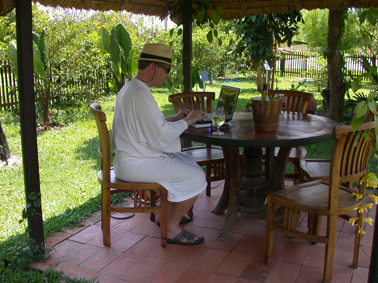
“If you intend to work at 40°C you need a bathrobe, a glass of cold, crispy dry, white wine and WiFi to access BHL.” Dr. Eric Danell, Director, Dokmai Garden, Chiang Mai, Thailand.

Nestled within the Hang Dong district, Chiang Mai, Thailand, is a 10 acre botanical garden called Dokmai Garden. Run by the Thai family Seehamongkol, it boasts over 1,000 plant species, including orchids, laurels, banana plants, birds-of-paradise plants, and gingers. The Seehamongkol family, and the garden’s biologist and Director, Dr. Eric Danell, have the lucky fortune of not only working in this garden, but also of calling it home.

While living amidst such a paradise is undeniably enchanting, for Dr. Danell, being a botanist in the Asian tropics also has its challenges. Access to taxonomic literature is scarce, and the closest library may still be many days away. Even if a researcher is able to gain access to local library collections, the breadth of these collections are often limited, lacking titles critical to enabling further research. For researchers in these situations, digital, open access projects like the Biodiversity Heritage Library are indispensable.

Dr. Danell began his botanical adventure in Sweden at an early age. “Born a botanist,” Eric spent the weekends of his youth at the Museum of Natural History in Stockholm, pursuing a lifelong love of plants that resulted in a PhD in Plant Physiology from Uppsala University in 1994. Following the degree, Danell taught at the Swedish University of Agricultural Sciences as an Associate Professor in Forest Microbiology.

Eric’s passion, however, is gardens. “Essentially, I am a gardener,” said Dr. Danell when asked about his chief area of interest. It comes as no surprise, then, that he left his teaching position for the opportunity to garden in the Asian Tropics at Dokmai Garden. Caring for over a thousand plant species (not to mention countless other varieties of birds, insects, reptiles and fungi that also call the ecosystem home), and conducting further botanical research, requires access to natural history literature collections, including many rare titles. As discussed, this access is often glaringly absent in developing countries.

Fortunately for Dr. Danell, a few years ago, he stumbled upon BHL via the Kew Gardens/Missouri Botanical Garden joint project,  The Plant List. It was love at first click. “[BHL] is a crucial tool since I am located in the Asian tropics. Although I have a private rare books collection in Sweden, I do not dare bring it here due to termites and moulds. Rare books can hardly be found at local university libraries,” articulated Danell.

Since discovering BHL, Eric uses it several times a week, typically verifying plant species descriptions online but occasionally also downloading PDFs. “We have frequent electricity cuts which would otherwise disconnect me from ongoing work,” explained Danell. “A laptop with battery keeps you focused in spite of tropical rainstorms!”

The true magic of BHL for Danell, however, is the truly global access it provides. “The fact that I can sit in a remote corner of the world and access rare books is awesome! BHL is my favorite.”

Being located in a developing country also provides opportunities for Dr. Danell to suggest improvements specific to users with varying Internet connectivity strengths. He suggests that the development of an interface specifically designed for old computers with poor Internet access would be particularly beneficial. This was a major discussion point at the recent BHL-Africa meetings, as much of Africa also has limited Internet connectivity. The development of a “BHL in a Box” application, which would allow some version of BHL to be installed on a local computer to limit the need for continuous internet availability, or the development of a text-based interface, were some options proposed. BHL and its African colleagues hope to pursue funding in the future to make this ambition a reality.

For many of our users, there is one special title in BHL that makes their knees weak and their hearts beat a little faster. For Dr. Danell, that book is Linnaeus Species Plantarum (1753, volumes 1-2). “This is the origin of plant research and so many important plants, also in the tropics, are described here. [Linnaeus’] spelling, his comments and his references are crucial to botanical research,” emphasized Danell.

Thanks to BHL, Eric can access his favorite eighteenth century botanical masterpiece while sitting in a fairy tale garden in the Asian tropics, dressed comfortably in his favorite bathrobe, sipping a glass of crisp white wine. All scientific research should be this perfect!

June 25, 2013by Grace Costantino
Blog Reel, Featured Books

Celebrating Oceans and Marine Biodiversity

50 Fish from American Waters (1870-1900). Allen and Ginter.

The Seafood Picture

View Full Size Image
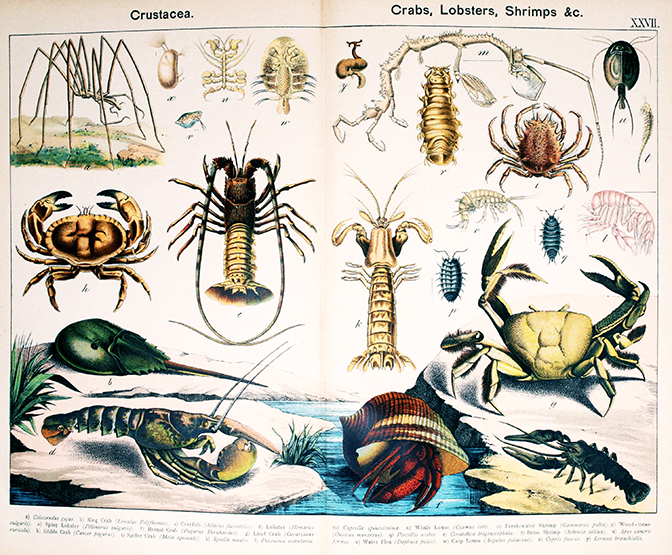
Shrimp (the most-consumed seafood in America) and other Crustaceans. Natural History of the Animal Kingdom for the Use of Young People.

This Saturday, June 8, is World Oceans Day, the UN-designated day for the global community to celebrate and take action to protect Earth’s oceans. 71% of the Earth’s surface is covered with water, and every living thing depends on water to survive. Sadly, according to the United Nations, with the world eating more seafood than ever before, approximately 2/3 of the ocean’s species are overfished.

According to NOAA, in 2009, Americans consumed 4.833 billion pounds of seafood – translating to 15.8 pounds of fish and shellfish per person. Approximately 50% of that seafood was wild-caught, and 50% was farm-raised.  The top ten most-consumed seafood in the U.S. in 2010 was:

  1. Shrimp (4.10 lbs)
  2. Canned Tuna (2.8 lbs)
  3. Salmon (1.84 lbs)
  4. Tilapia (1.34 lbs)
  5. Pollock (1.19)
  6. Catfish (0.92 lbs)
  7. Crab (0.61 lbs)
  8. Cod (0.44 lbs)
  9. Pangasius (0.43 lbs)
  10. Clams (0.341 lbs)
*lbs average per person

50 Fish from American Waters

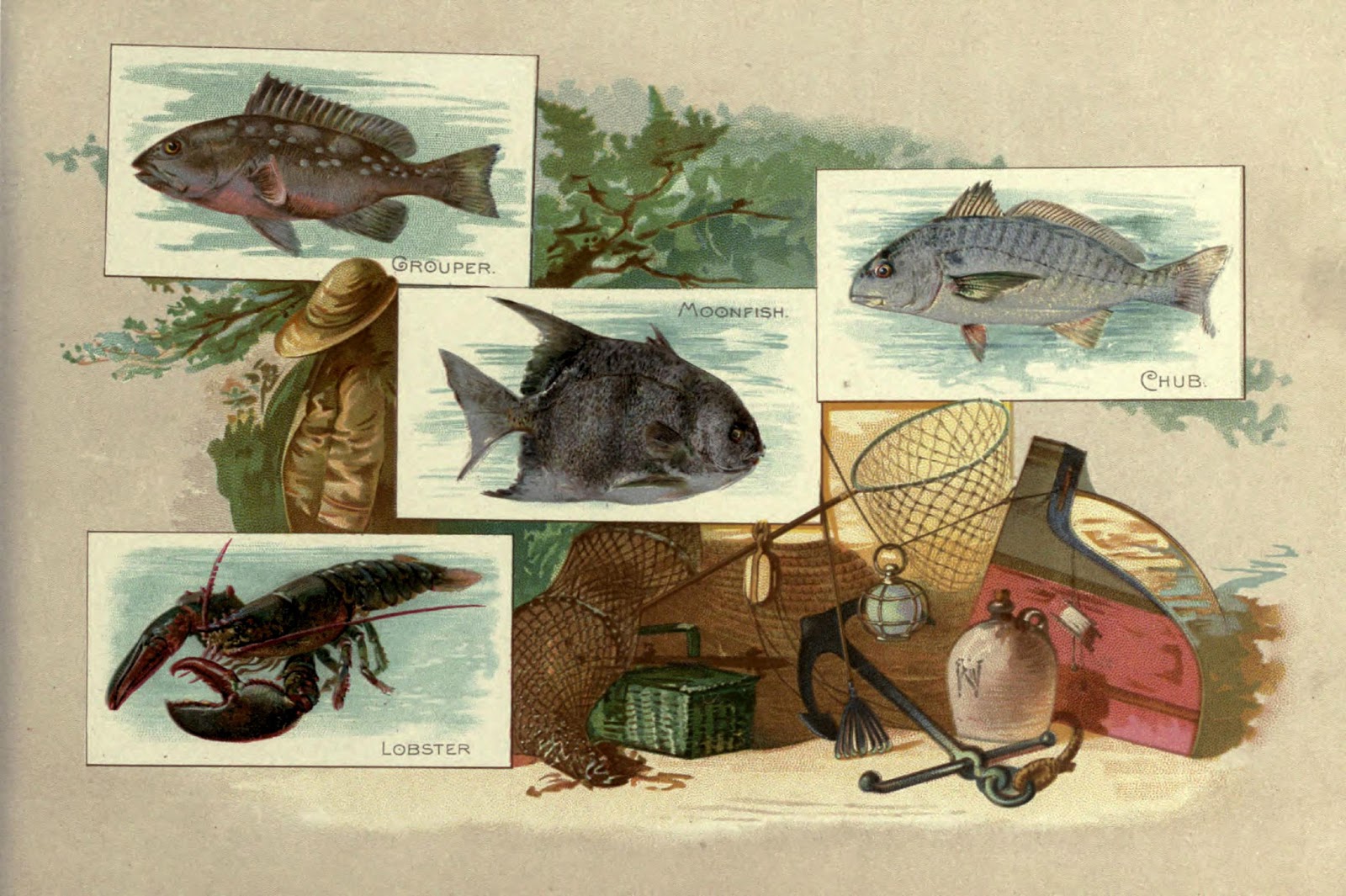
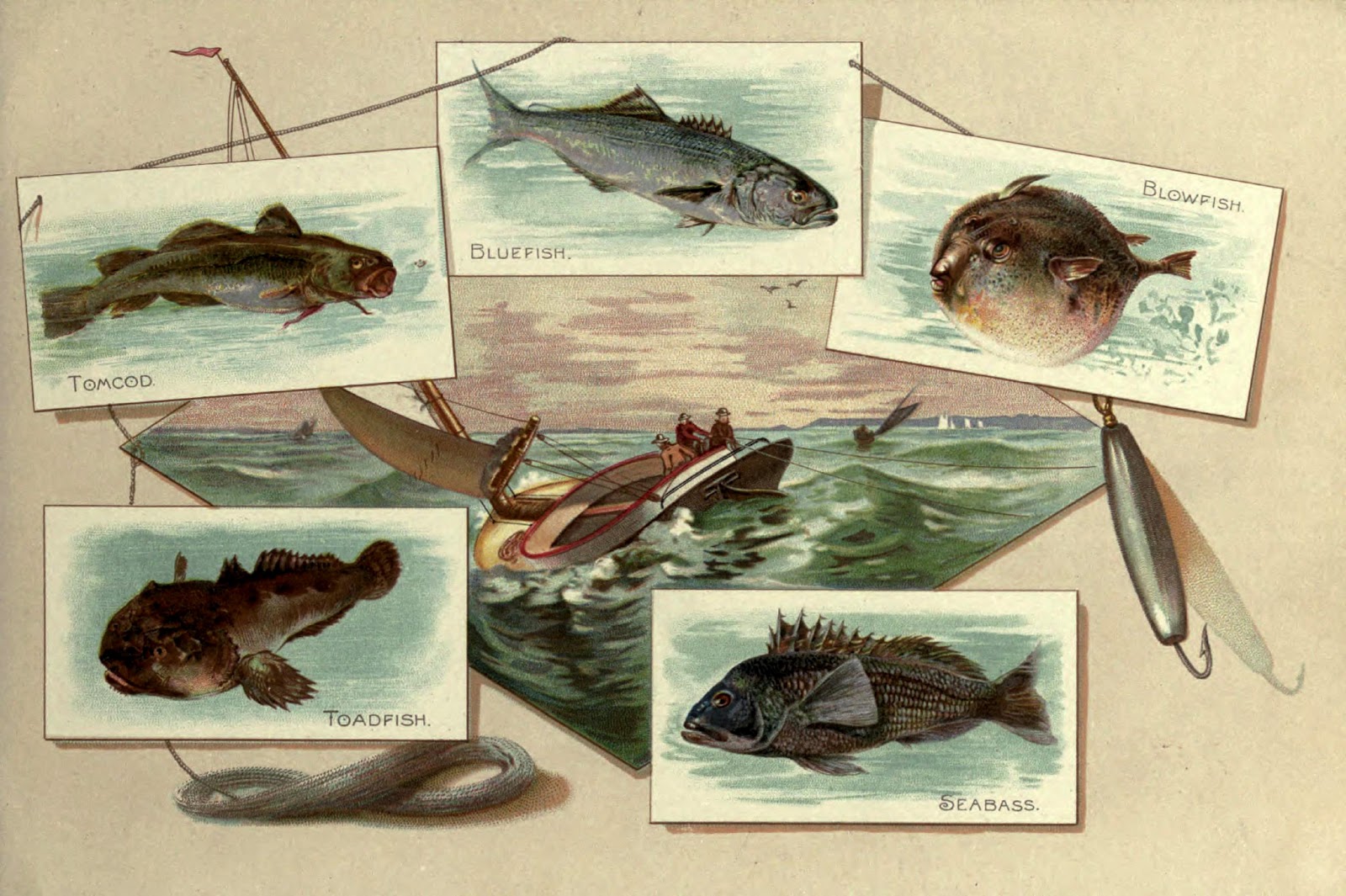
Have you ever wondered what marine species can be found in American waters? While not exhaustive, 50 Fish from American Waters is a pictorial work that presents a delightful collection of such species through illustrations.

Curiously, the fish illustrations in this book were originally published as individual cigarette cards for collecting and trading. The tobacco firm, Allen and Ginter of Richmond, Virginia, was the first firm to use tobacco trading cards as a means of advertisement in cigarette packages, and, between 1870-1900, select packages of Allen and Ginter Virginia Bright cigarettes contained one of the 50 varieties of American fish trading cards (see the poster advertising the cards from Library of Congress). All of the cards were later published in the book 50 Fish from American Waters.

View Full Size Image
Lobster, Grouper, Moonfish, and Chub. 50 Fish from American Waters.
View Full Size Image
Tomcod, Bluefish, Blowfish, Toadfish, and Seabass. 50 Fish from American Waters.
View Full Size Image
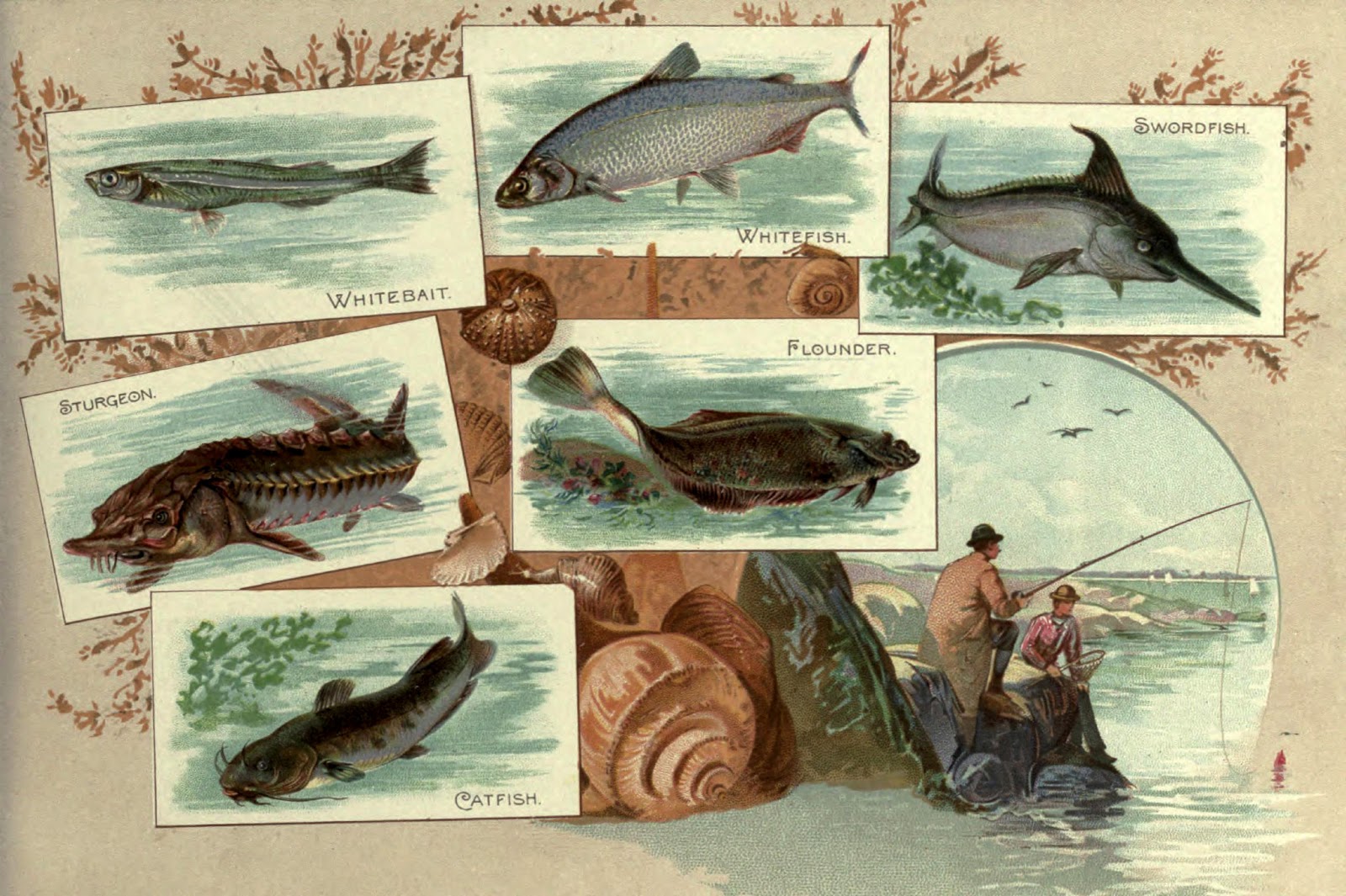
Whitebait, Whitefish, Swordfish, Sturgeon, Flounder, Catfish. 50 Fish from American Waters.
View Full Size Image
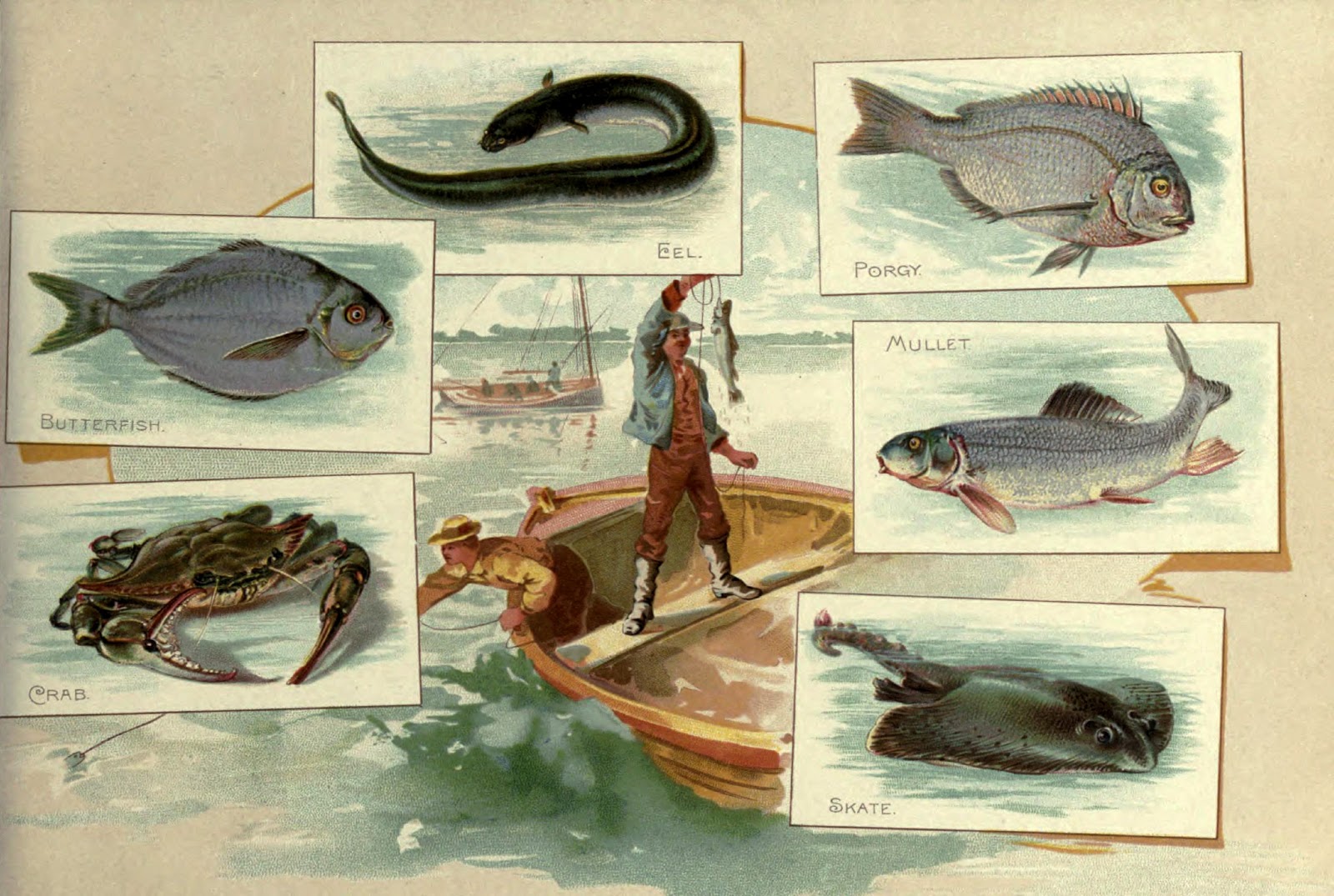
Butterfish, Eel, Porgy, Mullet, Skate, Crab. 50 Fish from American Waters.

View all images from 50 Fish from American Waters in Flickr.

What can you do to help?

According to the ongoing The Ocean’s Project survey, most Americans care about the ocean and want to protect it, but many feel that they themselves can make little impact on the ocean’s health and, interestingly, that American waters are less imperiled that foreign waters. While these may be somewhat troubling responses, on the bright side, 22% of the 30,000+ people surveyed said that they are active in the environmental movement and 57% expressed sympathy but not active involvement. Most indicated a high willingness to alter their seafood consumption habits to help protect the oceans.

So, what can you do to help? Worldoceansday.org provides some great examples of small actions you can take to help protect our oceans, including reducing seafood consumption in general, using re-usable grocery bags and water bottles, choosing abundant, farmed, and locally-caught species, reducing meat consumption (which reduces the demand for forage fish), and choosing sustainable seafood buyers and sellers.

Marine Biodiversity and BHL

View Full Size Image
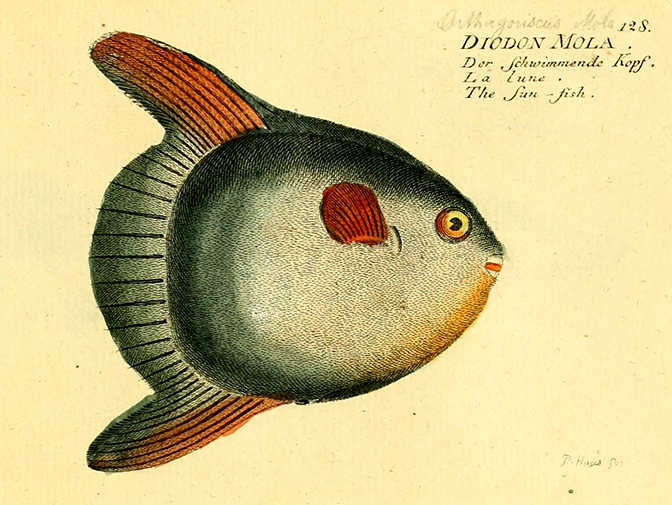
Ocean Sunfish. Ichthyologie.

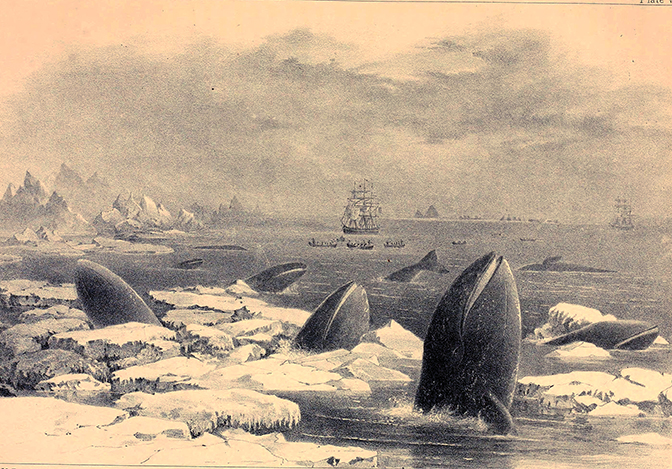
BHL is celebrating World Oceans Day by highlighting marine biodiversity on Facebook, Twitter, and Flickr.  For instance, did you know that the Gray Whale is more heavily infested with a greater variety of parasites than any other cetacean? Or that the Ocean Sunfish, the heaviest known bony fish, can grow up to 2300 kilograms, and that the Giant Oarfish, at up to 11 confirmed meters (and possibly 17 meters), is the world’s longest bony fish? Or that the adorable Common Blanket Octopus has been known to carry around tentacles of the Portuguese-Man-of-War as a defensive measure and means of capturing prey? Learn more about these species and get other watery factoids on Twitter and Facebook.

Be sure to check out our Marine Biodiversity Flickr collection with free images that you can download and reuse for your own World Oceans Day celebrations!

View Full Size Image
Gray Whales. The Marine Mammals of the North-west Coast of North America.

Are you a whale-lover? Then Smithsonian Libraries, one of BHL’s founding members, has an exhibit for you! Learn about whale research at the Smithsonian, and how research and fossils are translated into publications, in the new Whales: From Bone to Book exhibit at the National Museum of Natural History in Washington, D.C. Check out the books that support the exhibit in the BHL Collection and get fabulous whale illustrations in Flickr.

Remember, every living species requires water to survive, and our oceans play a huge part in our communal ecosystem. No matter where you live, your local water will eventually make its way to the ocean. We each have a responsibility to protect our oceans. Together, we can make a difference!

  • Find some World Oceans Day events near you.
  • Get some great promotional materials for World Oceans Day.
  • You can even get free Dr. Seuss-themed World Oceans Day materials!
June 6, 2013by Grace Costantino
Blog Reel, Featured Books

Monsters, the Scientific Revolution, and Physica Curiosa

Schott, Gaspar. Physica Curiosa (1662).

From Superstition to Scientific Reasoning

The seventeenth century was a time of great advancement for science, but it also presented a curious juxtaposition between superstition and science. A part of Europe’s Early Modern period and the birth of the Baroque cultural movement, the 1600s also encompassed the early years of the Scientific Revolution, when superstition and religion gave way to scientific reasoning. Furthermore, the Enlightenment, which attempted to replace ideas based on faith or tradition with scientific method, began to take hold later in the century.

View Full Size Image
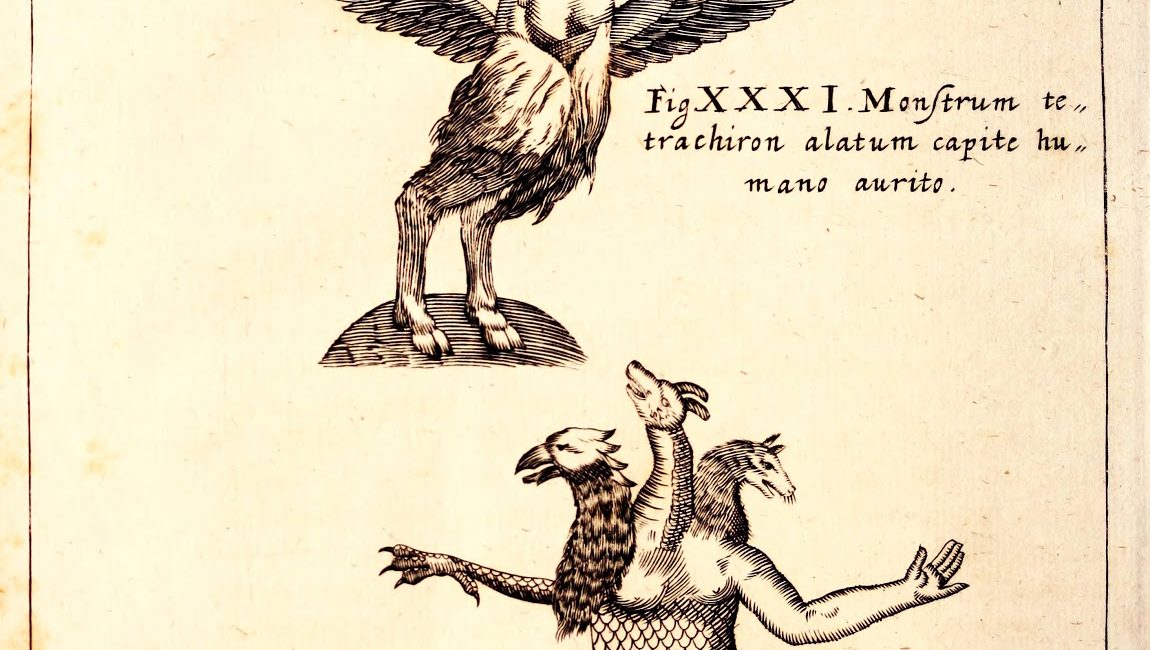
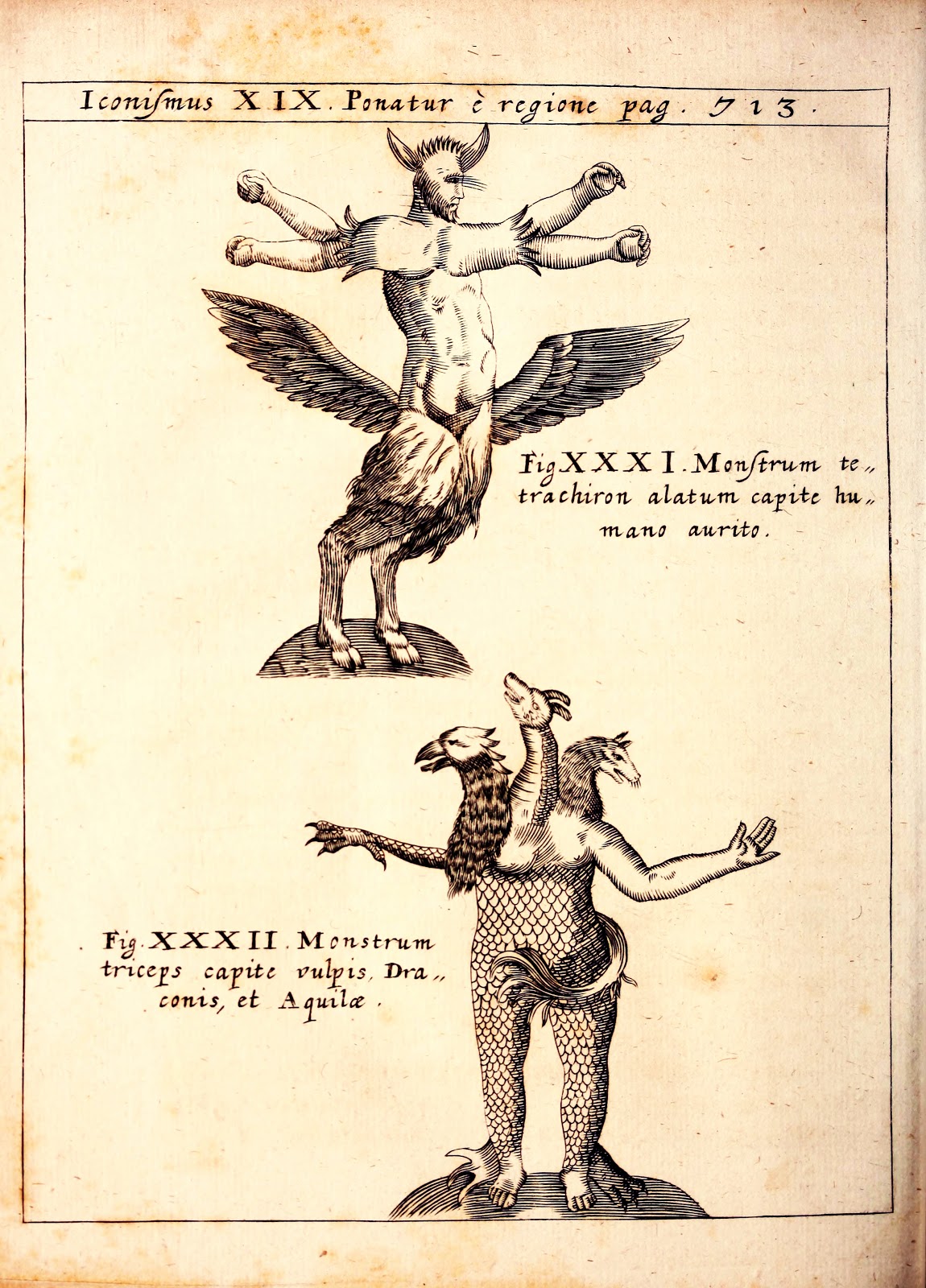
Monsters! Physica Curiosa.

By the end of the 17th century, electricity, the telescope and microscope, calculus, universal gravitation, Newton’s Laws of Motion, air pressure and calculating machines had entered the scene. And yet, as with all great shifts in cultural thinking, the transition from superstition to science was not instantaneous. Many of the era’s great thinkers attempted to reconcile previous beliefs with new discoveries. Case in point: Monsters.

Monsters and the 16th and 17th Centuries
View Full Size ImageMany of the publications of the 17th century, while beginning to embrace scientific method and conclusions based on experiments, still also accepted fantastical explanations for marvelous occurrences. Books depicting monsters were extremely popular, and many recycled the same illustrations repeatedly, introducing them to new generations (case in point: Gessner hydra, 1560; Aldrovandi hydra, 1640; Joannes Jonstonus hydra, 1657). Furthermore, global exploration had begun on an unprecedented scale, and those that traveled published accounts of biodiversity from regions they visited. However, they recorded not only the creatures they saw with their own eyes, but also those described by locals – many of which were beings of myth and folklore. While fantastic to us today, for most during this time, there was no division between magic and reality – they simply coincided. Thus, these fabulous beasts could be a reality. Many were based on briefly-glimpsed real creatures given religious or superstitious twists. What’s more, many “monsters” heralded during the time were actually humans or animals with deformities.

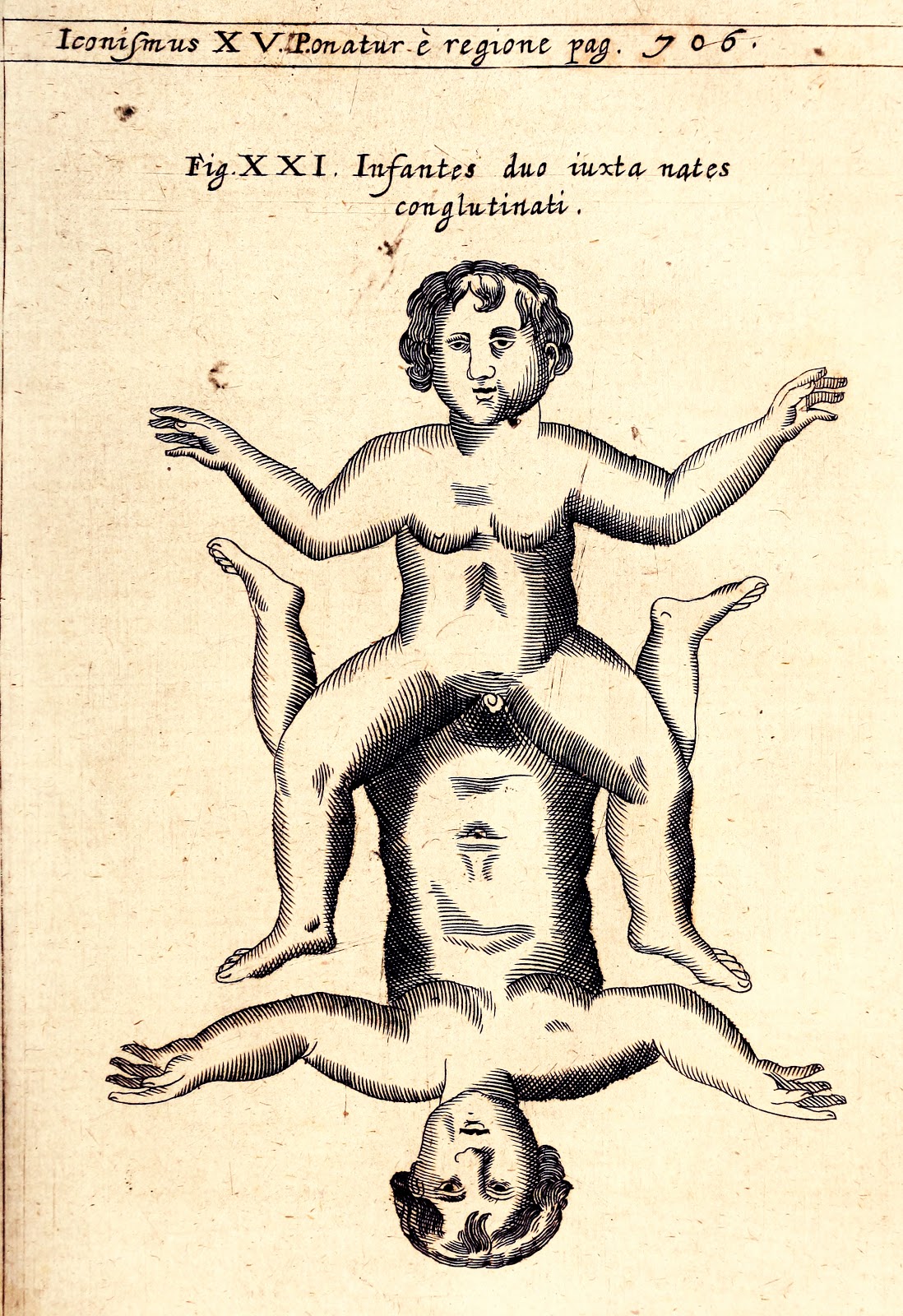
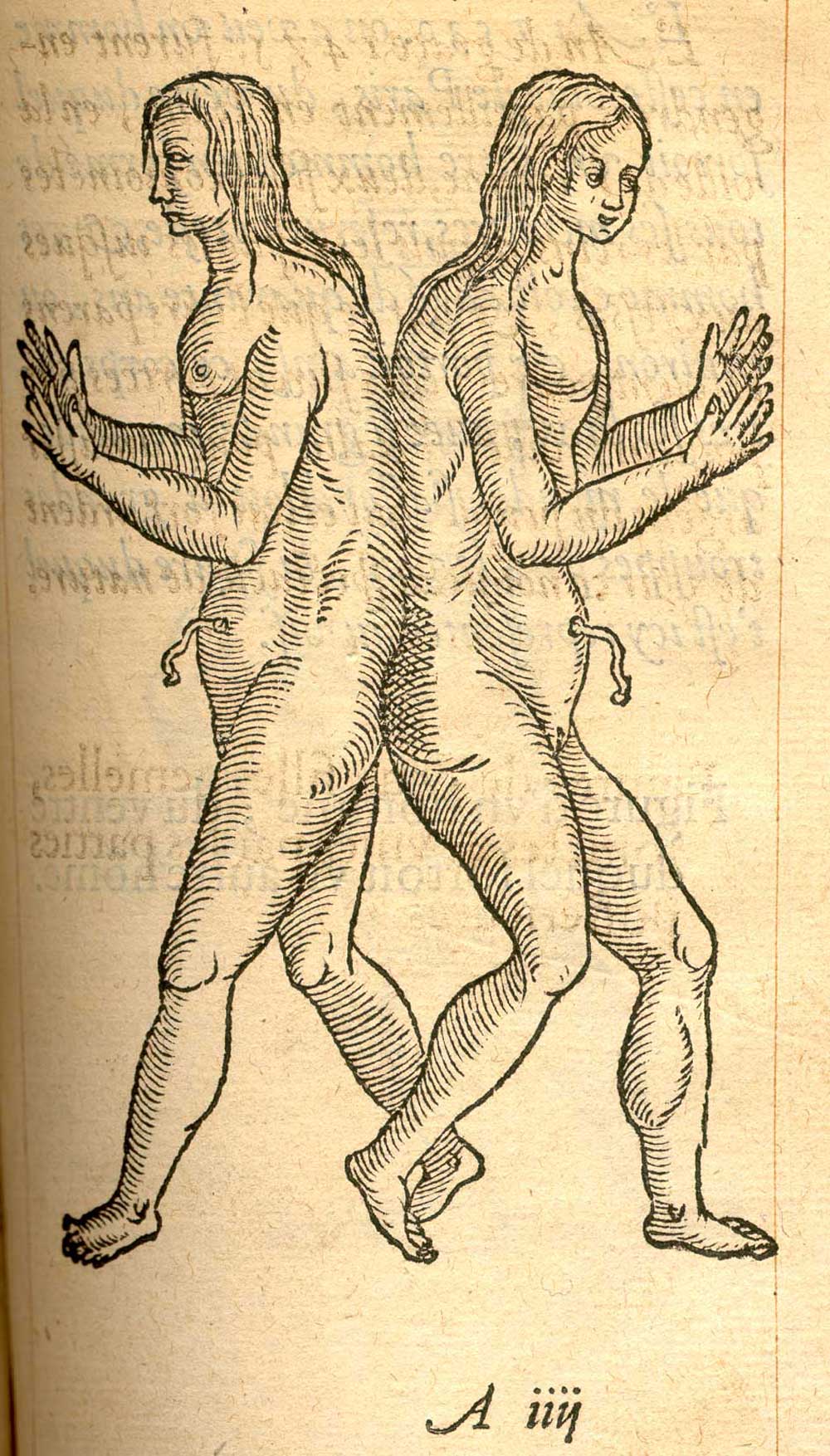
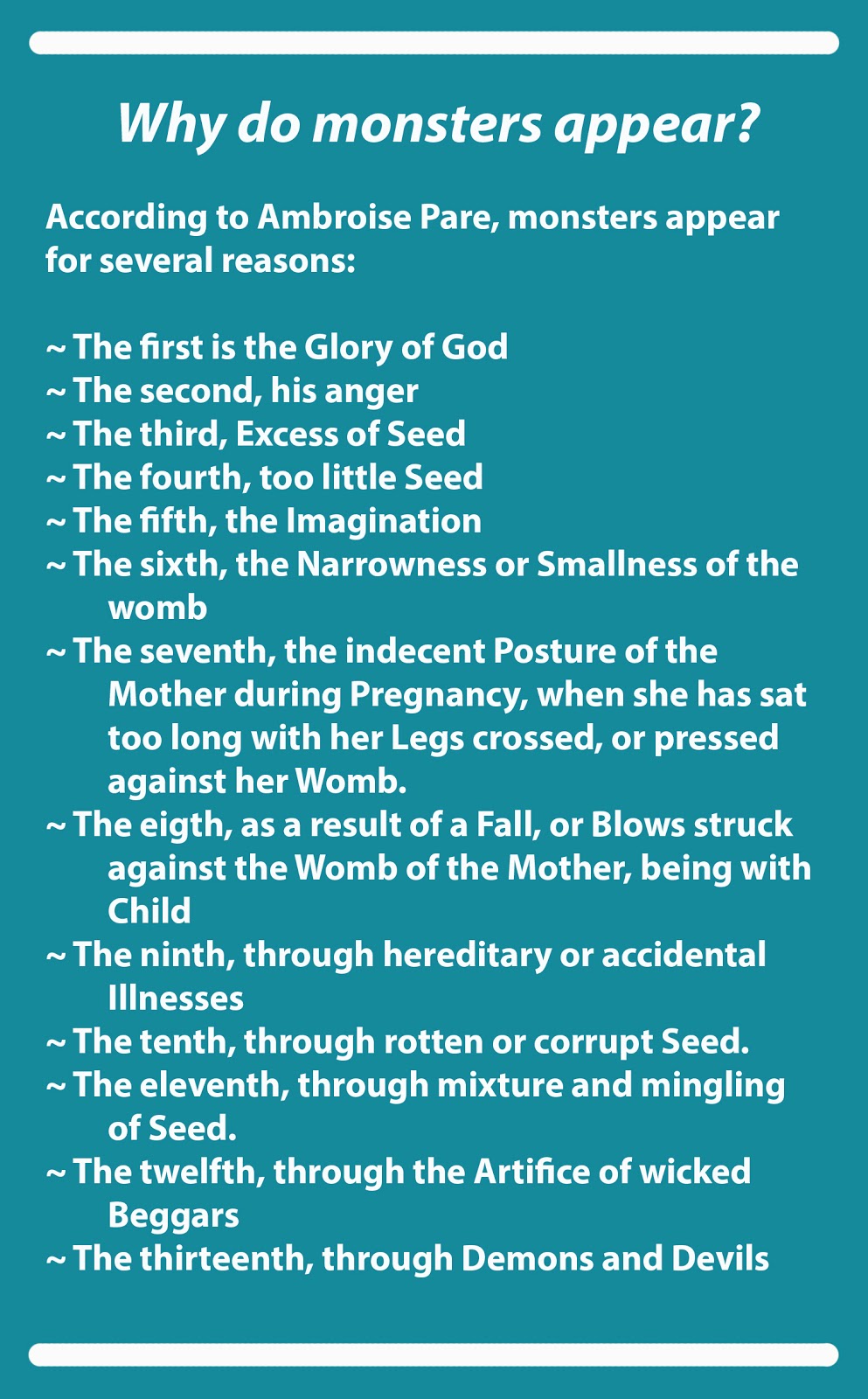
For example, Ambroise Paré, a surgeon of the 1500s, authored “the” monster book of the Renaissance: Des Monstres et Prodiges (1573). Translating to “Monsters and Marvels,” the work depicted malformed humans and animal-human hybrids. Conjoined twins were a popular example of human “monsters.” For instance, Paré illustrates a pair of 15th century female pygopagus conjoined twins that were exhibited in Italian cities for curious spectators.

View Full Size Image
Conjoined Twins. Physica Curiosa.

Gaspar Schott: Jesuit, Mathematician, Natural Historian, Monster Authority

An exceptional example of the “monsters” proliferated during the 17th century can be found in Gaspar Schott’s Physica Curiosa. Schott (1608-1666), a German scientist and Jesuit, specialized in the fields of physics, mathematics, and natural philosophy. He wrote extensively on the mechanical developments of his time, and produced the first published account on Otto von Guericke’s experiments on vacuums. His most famous works include Magia Universalis, Technica Curiosa, and Physica Curiosa – essentially encyclopedias magical, mechanical, and natural history knowledge. Schott was a great compiler, and relied on an extensive library for his own research. Most of Schott’s publications are aggregations of the writings and research existing on various topics.

Physica Curiosa

View Full Size Image
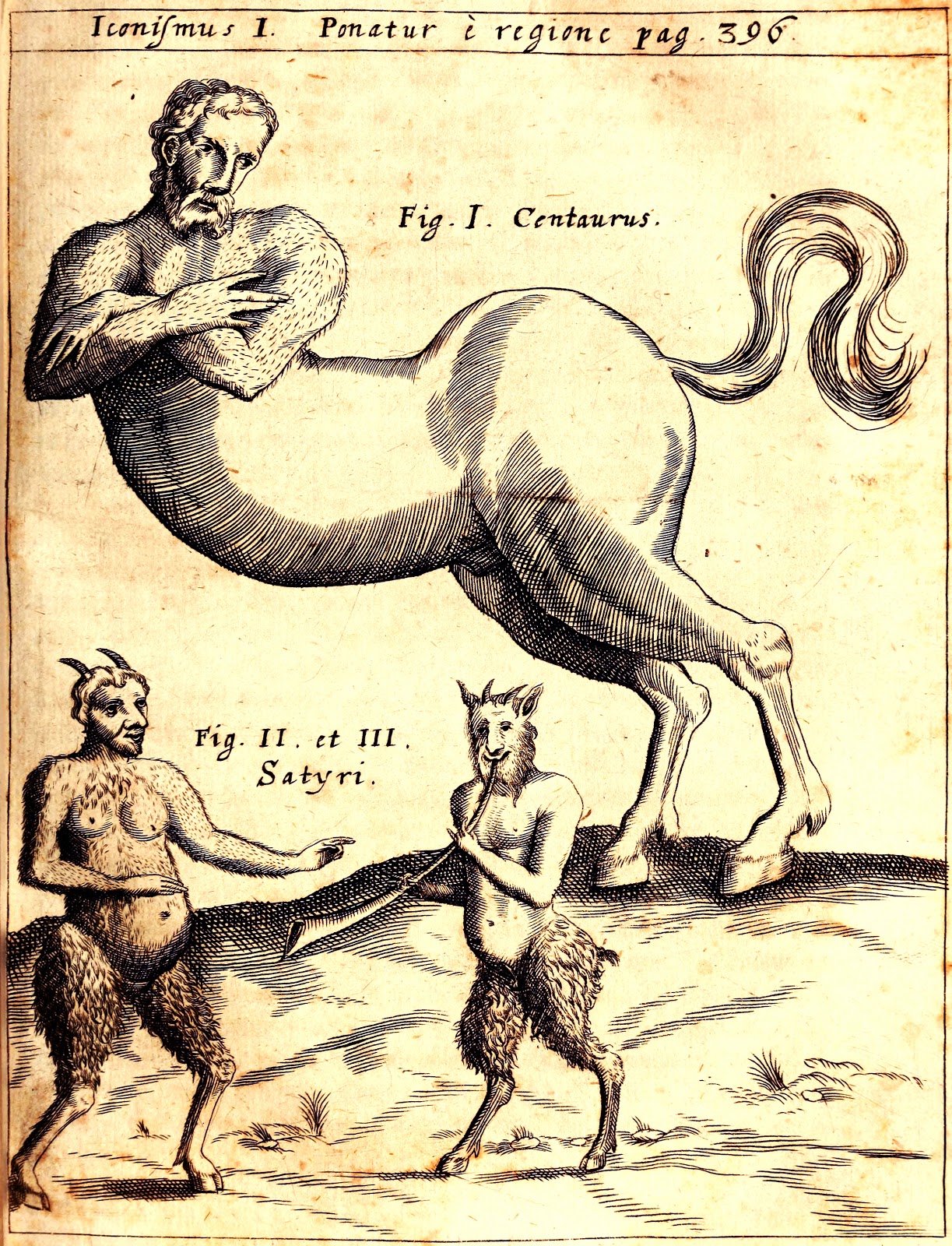
Centaur and Satyrs, Physica Curiosa.

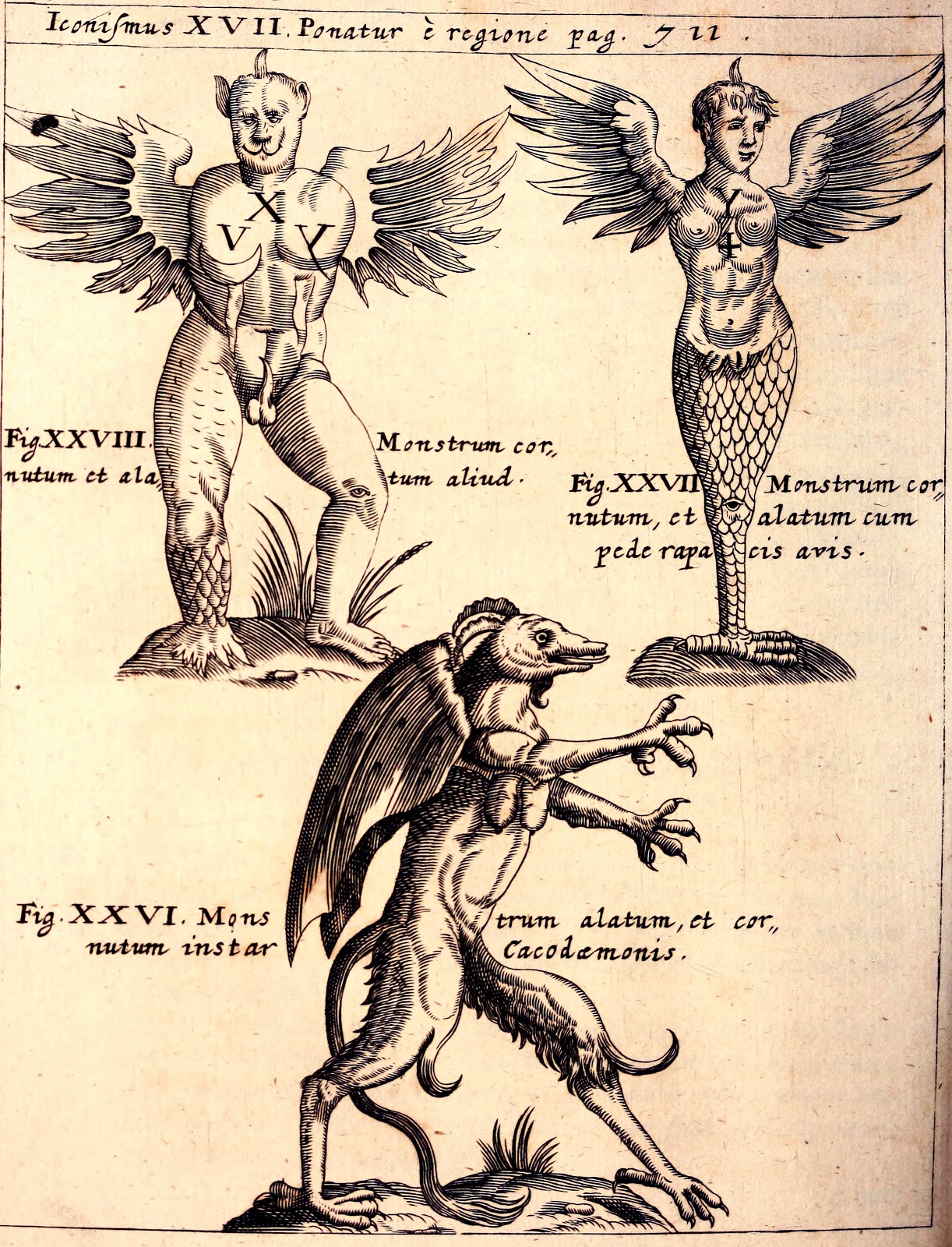
Physica Curiosa is an encyclopedia of the natural sciences of the age. In keeping with Schott’s character, it compiles many of the illustrations and literature previously published. As with many natural history publications of the era, it depicted fantastical creatures alongside real ones. Divided into twelve books, the first six books (digitized by the Smithsonian Libraries) are devoted to “miraculous” subjects, including Demons and Angels, spectres, demonic possessions, human and beastly monsters, and portents. The last six books deal with the “marvels” of nature – real creatures from exotic locales, such as elephants and rhinos.

Physica Curiosa‘s target audience was other scholars, educators, and the rich nobility of the time, as this was the demographic that could afford the publication. Though books were beginning to be more prolifically published in relation to the previous century, they were still made by hand and very expensive. The illustrations in this work are copper engravings, which were very practical for scientific illustration as they allowed for much more detail than wood blocks. A single printing of 500-1,000 copies concluded the run of this publication.

Monsters

View Full Size Image
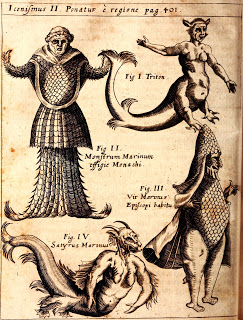
Monk Fish (Upper Left), Bishop Fish (Lower Right), Sea Devils (Upper Left, Lower Right).

Physica Curiosa begins with a discussion of diabolical magic – that of demons. In his publication Magia Universalis, Schott wrote that magic was once an honorific practice, but that legitimate magic was corrupted after the flood. The remaining natural magic was likely the result of a pact with a demon and was prohibited. He also asserts that demons are the cause of many of the world’s “monsters.”

Physica Curiosa not only depicts deformed humans as monsters, but also Centaurs, Satyrs, Monk and Bishop Fish, and Sea Devils, to name a few. Human deformities as monsters has been discussed at length, but many other creatures presented by Schott exemplify the practice of misrepresenting real creatures, or imposing religious elements on natural entities. For example, the monk and bishop fish, which were popular beings illustrated throughout the 16th-17th centuries, demonstrate how religious tensions resulted in the association of clerical figures with monsters. Nevertheless, many authors still purported these creatures to be real. In the late 1600s, Johann Zahn wrote that the bishop fish he illustrated in Specula Physico-Mathematico-Historica was fished out of the Baltic Sea in 1531.

The Sea Devil was also a popular monster, which Conrad Gessner, in the 16th century, recorded as having been captured in both Norway and Rome. Historians today postulate that this creature was actually based on the monk seal. Seals were extremely disliked by both fisherman and farmers as nuisances. Aristotle recorded accounts of seals raiding orchards, which Gessner and Ulisse Aldrovandi maintained.

Reality…Kind of

While Schott clearly saw a distinction himself between fantastical creatures and those found in the natural world (as evidenced by the division within his book), he still asserts some incredible beliefs associated with real animals. For instance, he claims that “both fish and bird are made from water,” barnacle geese are born from rotting wood, and that angels may have carried men and animals to the New World and distant islands. This demonstrates the tie between magic and science that still permeated Baroque Europe.

Impact on Science

View Full Size Image
Mermaids, Demons and Monsters, oh my!

It may seem, with extensive conversations about diabolical magic, demons, and monk fish, that Physica Curiosa is little more than a perpetuation of the superstition that characterized the Dark Ages. But believe it or not, Physica Curiosa played an important part in the development of scientific reasoning. For instance, while it still purports some “mystical” explanations for certain miraculous events, Schott also condemns a great deal of the accepted superstitions of the time. For instance, he discredits the use of divining rods to locate treasure, rejects the notion that a corpse bleeds in the presence of its murderer, and condemns drinking the blood of one’s beloved in order to cure infatuation. Indeed, within Physica Curiosa, Schott writes regarding many accepted beliefs, “I do not approve of all, because I know that some are doubtful, if not false; others superstitious; others perhaps even manifestly false.” Schott also acknowledges that many unexplained phenomena may indeed be scientifically true when he “implores the reader not to be so inhuman as to refuse to believe anything unless he sees it with his own eyes, [as] many things which antiquity thought fabulous are now proved true by frequent experiment.”

Thus, Physica Curiosa represented a critical step along the journey of accepting science over superstition. Furthermore, this work and the others of its time, by aggregating the fanciful beliefs of the era in a single publication, presented an excellent body of work against which those of the Enlightenment could react. By comprehensively recording what was accepted as truth during the time, the authors made it easier for future scholars to pinpoint and address widespread, unscientific doctrine.

In conclusion, the sixteenth and seventeenth centuries were a fascinating time in history, as we watch science battle superstition, and see scholars like Schott struggle to make sense of their cultures and their reasoning. Monsters were a inherent part in this discovery process. Deciphering truth from myth, and exploring medical and natural explanations for the unexplained, is what science is all about.

Physica Curiosa Illustrations

You can see more books about the Curious and the Bizarre in BHL. See a collection of fascinating “monster” illustrations in Flickr. See illustrations from the first six parts of Physica Curiosa in Flickr.

Special thanks to Lilla Vekerdy, Head of Special Collections, Smithsonian Libraries, for her consultation on this post. The Smithsonian Libraries’ collection contains 16 books by Schott. The version of Physica Curiosa digitized for BHL is from the Smithsonian Libraries’ collection.

References

  • Gillispie, CC. “Schott, Gaspar.” Dictionary of Scientific Biography. New York: Charles Scribner’s Sons, 1980.
  • Thorndike, L. A History of Magic and Experimental Science. New York and London: Columbia University Press, 1923. 596-608.
  • Michon, Scott. “Sea Monsters.” Strange Science, 16 May 2013. 17 May 2013. http://www.strangescience.net

May 24, 2013by Grace Costantino
BHL News, Blog Reel

The Latest News from BHL!

View Full Size Image
Latest BHL Quarterly Report

If you think all we do is digitize books, get ready to be surprised! Besides adding over 700,000 new pages of open access biodiversity literature to our collection in 2013 alone, we’ve launched a new website, celebrated the birth of another regional node – BHL-Africa, grown our consortium by adding the Library of Congress as our 15th member library, published two new iTunes U collections, received two prestigious awards, and hosted our seventh Annual Institutional Council Meeting, just to name a few things!

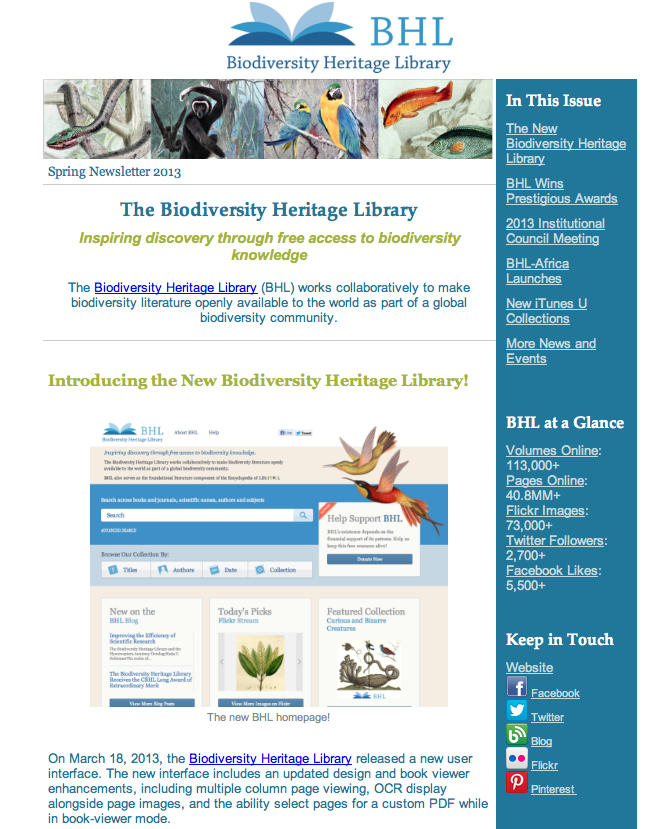
Learn all about these developments, and see how our project is performing, in the latest BHL Quarterly Report and Newsletter! Stay up to date in the future by subscribing to our quarterly newsletters.

We know you’ll be impressed at the ways we’re inspiring discovery through free access to biodiversity knowledge!

View Full Size Image
Spring 2013 BHL Newsletter


May 23, 2013by Grace Costantino
Blog Reel, User Stories

Improving the Efficiency of Scientific Research

The Biodiversity Heritage Library and the Hymenoptera Anatomy Ontology

View Full Size Image
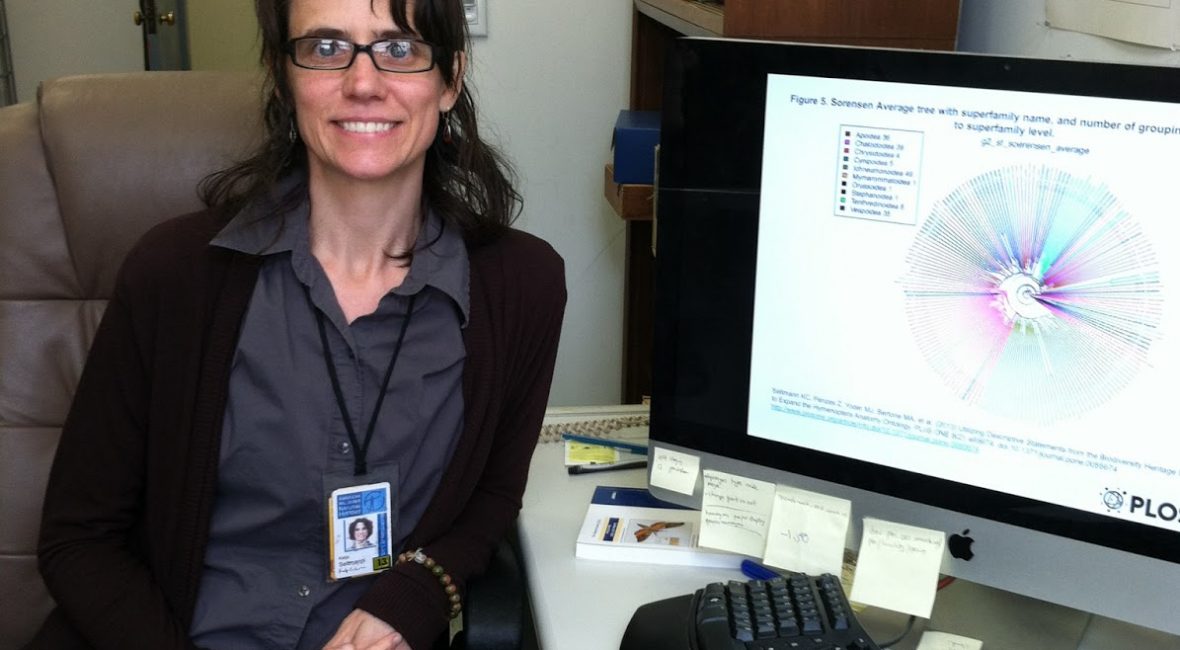
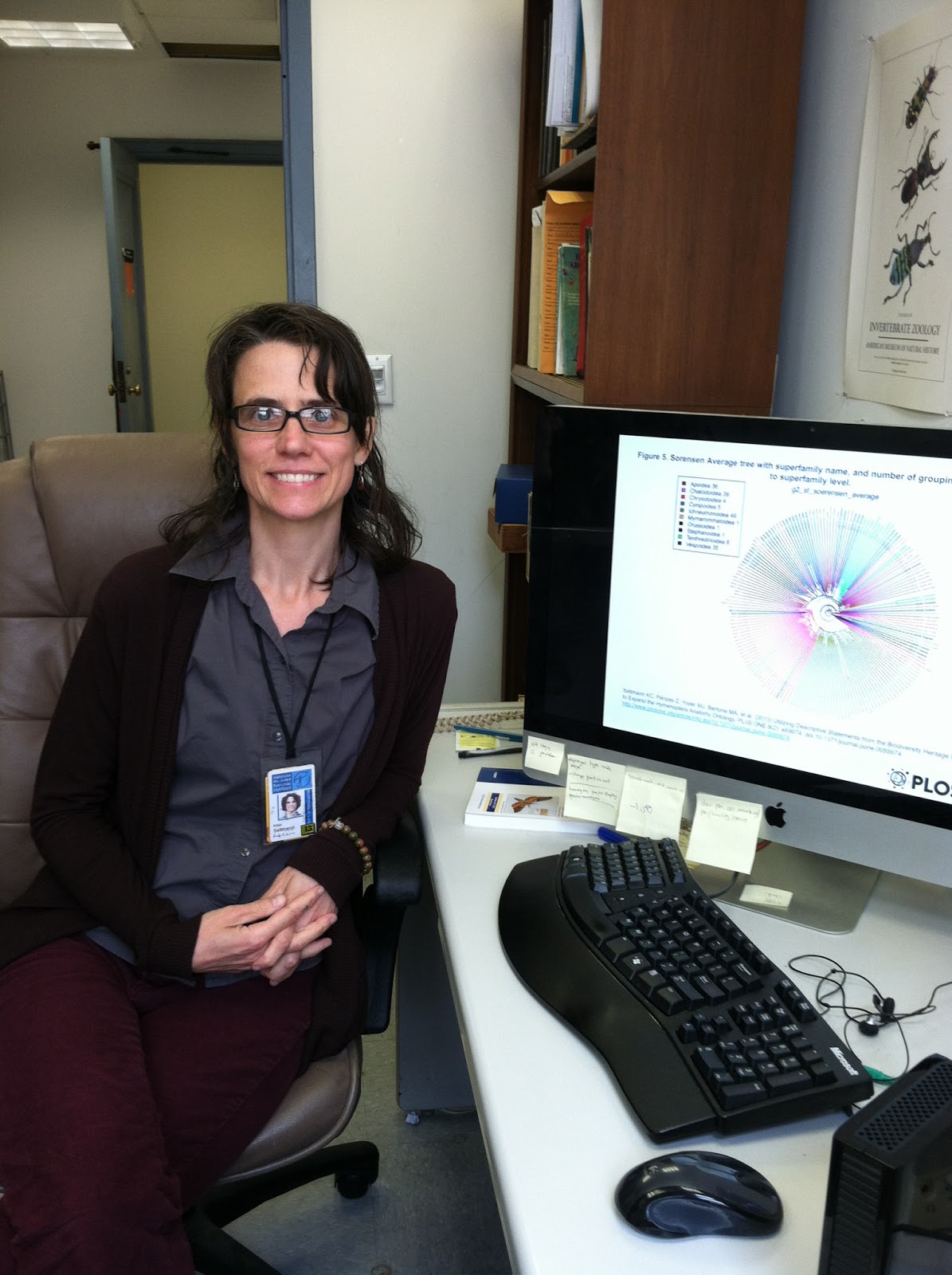
Katja C. Seltmann

The realm of ontology concerns the nature of reality, determining what exists, how it fits within a hierarchy, and how various elements are organized according to similarities and differences. Traditionally a philosophical question within metaphysics, today ontology has a firm application within systems biology as well.

Anatomy ontologies describe the structural and developmental relationships between the various parts of an organism. Defining anatomical ontologies reveals a complete list of distinguishing characteristics for that organism or group of organisms. The act of creating an anatomical ontology requires precise definitions of the terminology used to describe a variety of phenotypes.

Authors that have contributed to the past 250 years of taxonomic literature did not use standardized vocabularies. Katja C. Seltmann (Project Manager for the Tri-Trophic Thematic Collection Network at the American Museum of Natural History) desired to find a way to efficiently analyze this multi-century body of literature to create a single anatomical ontology, specifically for the insect order Hymenoptera. Accomplishing this feat required utilizing the Biodiversity Heritage Library (BHL).

Millions of pages of analog biodiversity literature, spanning the 15th-21st centuries, are digitized and made freely available online by the Biodiversity Heritage Library. Among the over 59,000 titles in the collection is the Journal of Hymenoptera Research (JHR), published by the International Society of Hymenoptera since 1992. Seltmann and a team of four other researchers utilized this publication from BHL to help build the Hymenoptera Anatomy Ontology (HAO).

View Full Size Image
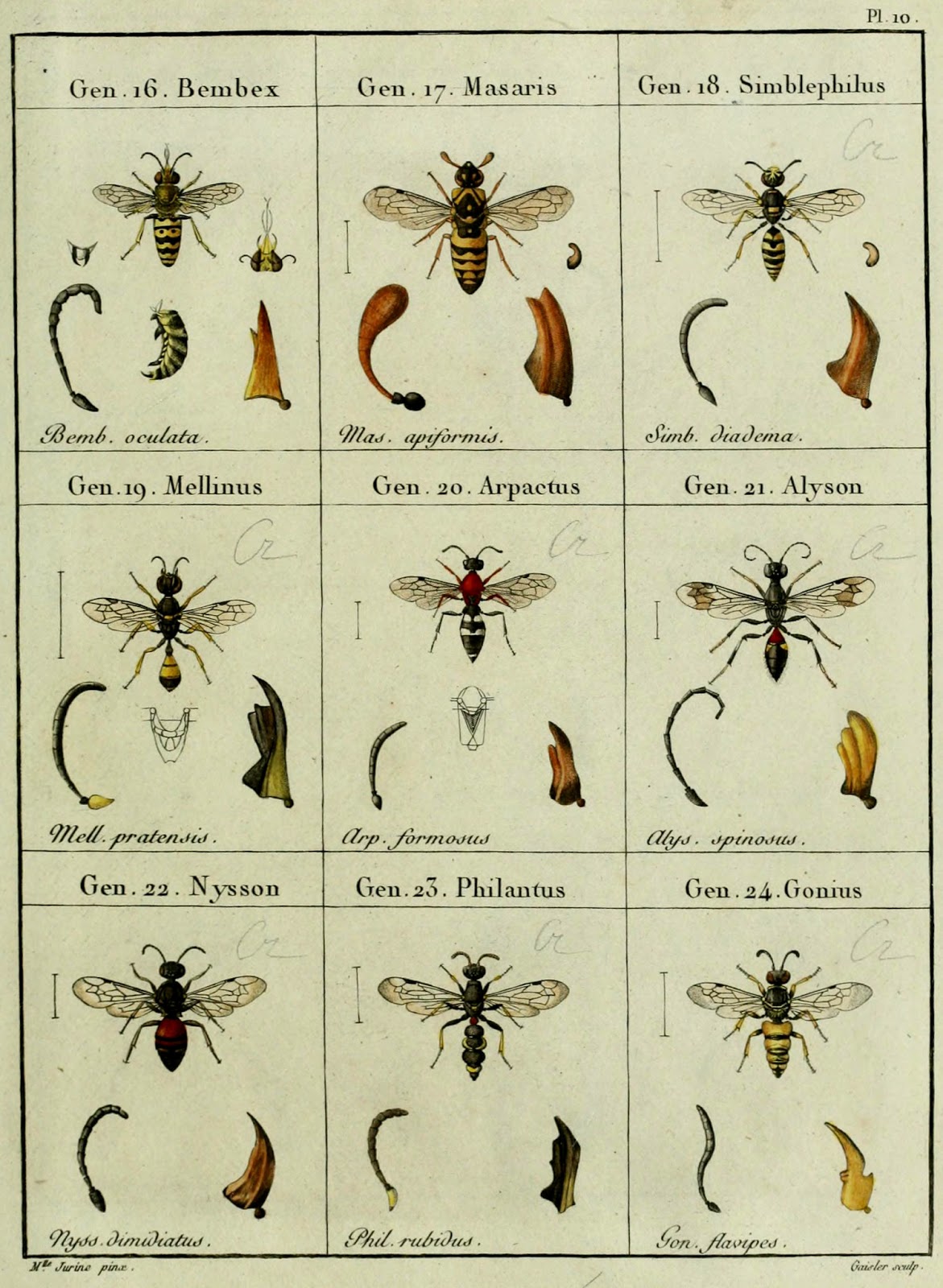
The Order Hymenoptera contains sawflies, wasps, bees and ants. Find this and other 1807 illustrations of the Order in Nouvelle méthode de classer les hyménoptères et les diptères.

The NSF-funded Hymenoptera Anatomy Ontology is based on a language recognition tool (called the “Proofer”), which can be implemented across biodiversity literature in order to discover domain-specific anatomy terms. Employing the tool across the OCR for JHR resulted in the discovery of nearly 1,200 new terms for HAO. Furthermore, the development of the ontology is iterative. As the “Proofer” is applied to new collections of literature, it finds matches to existing terms as well as proposes new terms to add to the ontology. A human is required to review the proposed terms, selecting those to be added to the growing database.

After creation, this ontology can be applied as a filter to the literature in order to reveal trends in term occurrence within species descriptions, ultimately allowing researchers to analyze hundreds of years worth of scientific publications without having to sift page by page through the texts. The tool is thus instrumental in improving the efficiency of scientific research, and the process and impact was detailed in the 2012 PLoS ONE article “Utilizing Descriptive Statements from the Biodiversity Heritage Library to Expand the Hymenoptera Anatomy Ontology” (Seltmann et al.).*

According to Seltmann, the Biodiversity Heritage Library plays a critical role in modern scientific research, including her own work:

“I am very fond of the BHL. It set a precedent for open access to literature that I feel initiated a cascading of change in our expectations. Sharing information, publications and open access is no longer the suspicious topic it used to be only a few years ago. Now, expectation is that publications, data and otherwise will be readily available. BHL, in my opinion, was truly one of the first examples of an open model becoming successful in the biological community, and, because it was useful, it changed attitudes.”

The process used to create the Hymenoptera Anatomy Ontology can be applied to other disciplines in order to build any phonotype-relevant ontology. However, as the PLOS article articulates,

“Natural language processing methods for biological data discovery is only possible through open access publications, and efforts such as the Biodiversity Heritage Library to make legacy literature freely available. This exercise to observe trends in the terminology illustrates how the accessibility to literature facilitates anatomy ontology construction.”

This use case thus provides a clear example of how the BHL is inspiring scientific discovery through free access to biodiversity knowledge.

Interested in telling us about how BHL has helped support your research? Send us feedback or write to [email protected].

* Seltmann KC, Pénzes Z, Yoder MJ, Bertone MA, Deans AR (2013) Utilizing Descriptive Statements from the Biodiversity Heritage Library to Expand the Hymenoptera Anatomy Ontology. PLoS ONE 8(2): e55674. doi:10.1371/journal.pone.0055674

May 21, 2013by Grace Costantino
BHL News, Blog Reel

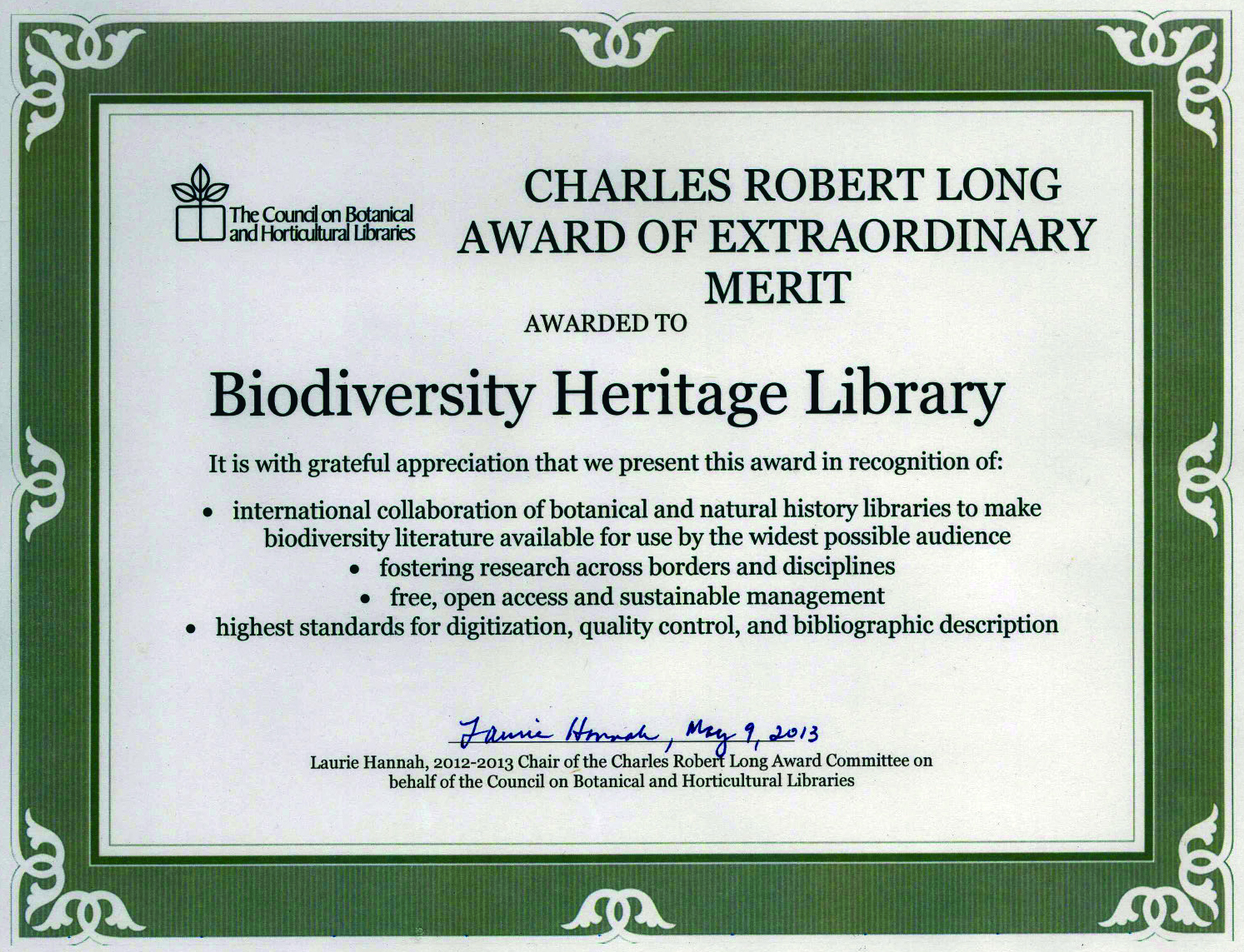
The Biodiversity Heritage Library Receives the CBHL Long Award of Extraordinary Merit

View Full Size Image

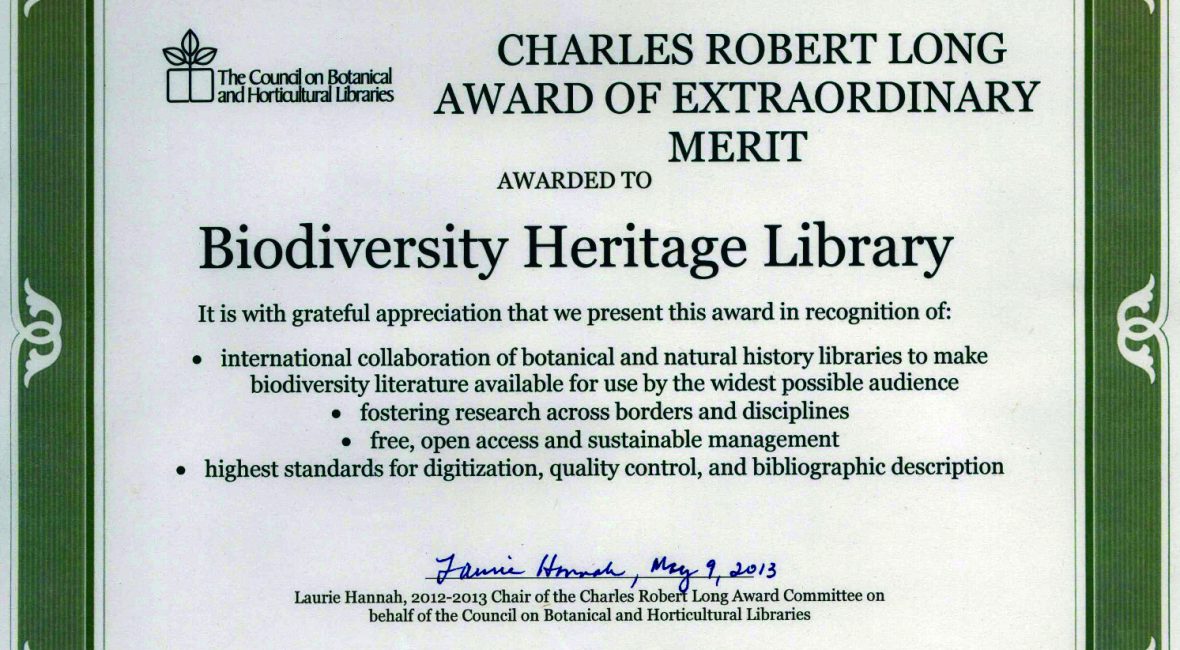
The Biodiversity Heritage Library is pleased to announce that it is the recipient of the Charles Robert Long Award of Extraordinary Merit from the Council on Botanical and Horticultural Libraries (CBHL).

The highest honor bestowed by CBHL, the Charles Robert Long Award for Extraordinary Merit was founded to honor outstanding contribution and meritorious service to CBHL or to the field of botanical and horticultural libraries or literature. Since 1988, only 14 people have received this award.

Receiving two separate nominations highlighting BHL’s global collaboration among libraries, innovative outreach, and exceptional bibliographic and technology standards, this year marks the first time an organization has won the award.

As the award letter articulates, “BHL envisions collaboration among botanical libraries on a scale not attempted previously. It fosters research across borders and disciplines and has made itself indispensible in many areas of the globe where botanical and biological libraries are unavailable to scholars. In an era that is increasingly focused on biodiversity, it has become an indispensible resource for many scholars, scientists and students.”

The award was announced during the CBHL Annual Business Meeting in East Lansing, MI, on May 9. Representatives from the Smithsonian Libraries, Harvard Herbarium Botany Libraries, and the New York Botanical Garden accepted the award on behalf of BHL. As part of the honor, BHL received a certificate and lifelong institutional membership to CBHL.

“We hope this [award] will encourage awareness of and further cross-collaboration between natural history libraries and CBHL,” said Laurie Hannah, Chair of the CBHL Long Award Committee.

About the Council on Botanical and Horticultural Libraries 

The Council on Botanical and Horticultural Libraries, Inc. (CBHL) is an international organization of individuals, organizations and institutions concerned with the development, maintenance and use of libraries of botanical and horticultural literature. The purpose of CBHL is to initiate and improve communication and coordinate activities and programs of mutual interest and benefit to its membership.

See the CBHL Press Release about the award.

May 17, 2013by Grace Costantino
BHL News, Blog Reel

Refining BHL: New Vision, Mission, and Goal Statements

Portrait version of the Biodiversity Heritage Library logo.

We are pleased to announce that the BHL Steering Committee has approved new vision, mission, and goal statements for the Biodiversity Heritage Library!

Vision:

Inspiring discovery through free access to biodiversity knowledge.

Mission:

The Biodiversity Heritage Library works collaboratively to make biodiversity literature openly available to the world as part of a global biodiversity community.

Goals:


Goal 1: Relevant Content 

Build and maintain the BHL as the largest reliable, reputable, and responsive repository of biodiversity literature and archival materials. 

Goal 2: Tools and Services 

Develop services and tools which facilitate discovery and improve research efficiency of BHL content. 

Goal 3: User Engagement 

Increase global awareness about the BHL through outreach, learning and education, and branding through engagement and collaboration with existing and new user communities. 

Goal 4: Membership and Partnerships 

Grow BHL consortia membership and partnerships while fostering cross-institutional collaboration that continues to serve as a model for digital library development. 

Goal 5: Financial Sustainability 

Ensure sustainability and relevance by being flexible, adaptable, and financially sound while the content and services remain openly and freely available.

Work on revising BHL’s vision, mission, and goals began at the September 2012 BHL Staff and Technical Meeting. During the meeting, BHL staff dedicated several hours to pinpointing exactly what the BHL project is about and translating that into elements for a BHL vision statement. Staff also dissected BHL’s existing goals, paring them down to simple statements outlining the most important objectives of the project.

Following the meeting, two staff subcommittees worked to take the resulting suggestions and mold those into draft vision and goal statements for BHL. The BHL Secretariat, including the BHL Program Director, Program Manager, and Collections Coordinator, then took all of the recommendations provided by staff and produced final draft vision, mission, and goal statements.

These statements were presented at the 2013 BHL Institutional Council Meeting, May 6-7, in Woods Hole, MA, where the BHL Steering Committee applied final revisions to the statements before approving them as BHL’s new official vision, mission, and goals!

You can now see BHL’s vision and mission on the homepage of our website, and our goals are clearly articulated on the BHL About page. We hope you find them as inspiring as we do!

May 13, 2013by Grace Costantino
Page 46 of 71« First...102030«45464748»506070...Last »

Help Support BHL

BHL's existence depends on the financial support of its patrons. Help us keep this free resource alive!

search

About BHL

The Biodiversity Heritage Library (BHL) is the world’s largest open access digital library for biodiversity literature and archives. BHL operates as a worldwide consortium of natural history, botanical, research, and national libraries working together to digitize the natural history literature held in their collections and make it freely available for open access as part of a global “biodiversity community.”

Join Our Mailing List

Sign up to receive the latest news, content highlights, and promotions.

Subscribe Now

Subscribe to Blog via Email

Enter your email address to subscribe to this blog and receive notifications of new posts by email.

Join 319 other subscribers

Subscribe to Blog Via RSS

Subscribe to the blog RSS feed to stay up-to-date on all the latest BHL posts.

Access RSS Feed

Inspiring Discovery through Free Access to Biodiversity Knowledge.

The Biodiversity Heritage Library makes it easier than ever for you to access the information you need to study and explore life on Earth…for free, anytime, anywhere.


ABOUT | HARMFUL CONTENT | PRIVACY | SITE MAP | TERMS OF USE